As XRP bulls gear up for a potential rally and speculation swirls around a Ripple IPO and possible USDC acquisition, a powerful force is emerging from within the XRPL ecosystem.
Xrpturbo, the next-gen DeFi platform has launched its liquid staking at a mouth watering 25% APY.
With the first staking rewards already distributed and major utilities going live, including a Governance & Launchpad DApp on the XRPL Testnet, early adopters are locking in their positions fast.
And those who got in early?
They’re already sitting on 150% gains as XRT lists on BitMart and Xpmarket following a successful presale.
Xrpturbo Liquid Staking Is Live
The wait is over: Xrpturbo’s flagship liquid staking protocol is now live, delivering a 25% APY on XRTstaking.
But this isn’t just another staking pool, it’s non-custodial and built for real DeFi utility.
While many platforms lock your tokens for months, Xrpturbo lets you earn yield without sacrificing liquidity.
The first round of rewards has already hit wallets who held their XRT for the past 30 days, and word is spreading fast.
With staking live and compounding in motion, those sitting on the sidelines risk watching the best yields on XRPL slip through their fingers.
XRT Token Explodes 150%: Still Early?
Following the end of its oversubscribed presale, XRT has surged nearly 150%, fueled by demand from yield chasers and early believers in Xrpturbo’s long-term vision.
Now actively trading on BitMart and Xpmarket, XRT is gaining serious momentum, but this is likely just the beginning.
Why? Because XRT isn’t just another reward token, it’s the key to Defi on XRP:
Staking Incentives
Governance Power
Launchpad Access to upcoming XRPL projects
And soon, real-world integrations built into the ecosystem
With limited supply, growing demand, and expanding utility, XRT is quietly becoming one of XRPL’s most valuable assets.
Governance & Launchpad DApp Launching on XRPL Testnet
As if staking and token growth weren’t enough, Xrpturbo is getting ready to flip the switch on its Governance & Launchpad DApp, which is set to go live on the XRPL Testnet in the coming weeks.
This gives XRT holders direct power over the protocol’s future, from treasury decisions to new project onboarding, while also unlocking access to exclusive token launches on XRPL.
Think of early-stage deals. Community-led funding. Turbocharged innovation.
If you missed the early days of Ethereum DeFi or Solana IDOs, this might be your second chance but on XRPL.
Final Word: The Window Is Closing
XRP is consolidating for what many believe is its next parabolic leg, and Xrpturbo is perfectly positioned at the heart of the XRPL surge.
The protocol is live. Rewards are flowing. Utilities are launching. And the token?
Still undervalued, for now.
Don’t watch from the sidelines. The XRPL DeFi wave is here, and Xrpturbo is leading it.
Join the Xrpturbo movement
To stay ahead of the news, join the XRPTurbo Telegram community today at t.me/xrpturbocom or buy $XRT on BitMart to secure your position before the next price move.
Visit xrpturbo.com to learn more and become part of the next wave of innovation on the XRP Ledger.
Disclaimer: This is a Press Release provided by a third party who is responsible for the content. Please conduct your own research before taking any action based on the content.
KuCoin lists GIZA, the native token of the Giza Protocol. Trading will begin today.
Giza introduces intelligent, autonomous agents to DeFi, enabling adaptive, cross-protocol strategies.
The GIZA/USDT pair will launch with full support for KuCoin’s advanced trading bots and automation tools.
Leading global crypto exchange KuCoin has officially announced the world premiere listing of GIZA (GIZA), the native utility token of the Giza Protocol.
This listing marks GIZA’s debut on a major exchange and brings significant attention to a project focused on revolutionizing decentralized finance (DeFi) through intelligent agent-based automation.
Key GIZA Listing Dates on KuCoin: Deposits Live, Trading Opens May 20
The GIZA token will be available for trading in a phased process. Deposits for GIZA are already live, with support for the BASE-ERC20 network.
A call auction will take place on May 20, from 12:00 to 13:00 UTC, enabling users to place orders in advance of the full trading session.
Spot trading will open at 13:00 UTC on May 20, with the GIZA/USDT trading pair available for active markets. Withdrawals will begin on May 21 at 10:00 UTC.
KuCoin has also confirmed that GIZA/USDT will be available for trading via KuCoin’s bot services, including popular strategies such as Spot Grid, Infinity Grid, Dollar-Cost Averaging (DCA), Smart Rebalance, and AI-powered tools like Spot Grid AI Plus and AI Spot Trend.
What Is Giza Protocol? Autonomous Agents to Enhance DeFi
Giza Protocol is a DeFi infrastructure that enhances decentralized financial markets with the power of autonomous agents. These agents operate beyond basic automation by continuously analyzing multiple protocols, executing adaptive strategies, and adjusting to real-time market changes.
The protocol introduces several features, including a semantic abstraction layer that simplifies protocol interactions, an agent authorization framework for precise control over delegated actions, and a decentralized execution network that ensures security through GIZA token staking.
These components work in tandem to create a more flexible, dynamic DeFi experience that offers users greater autonomy. GIZA’s listing on KuCoin is a significant milestone in bringing this vision to the broader crypto market.
KuCoin Continues Support for Innovative Projects with GIZA, SUIRWAPIN
Last week, KuCoin listed SUIRWAPIN, launching the first RWA DePin Protocol on its spot trading platform. Built on the SUI blockchain, SUIRWAPIN enables tokenization and trading of real-world assets like real estate and energy, backed by the Hydro platform.
From May 15 to 25, KuCoin is hosting two SUIRWAPIN campaigns. A Trading Competition runs until May 22, with a 2.2 million SUIRWAPIN prize pool for the top 50 traders. The Affiliate Special Event offers 1.2 million SUIRWAPIN in rewards for top affiliates, verified referrals, and active trading participants.
These listings follow KuCoin’s recent support for projects like PRAI, NXPC, and INIT, further solidifying its role in advancing innovative blockchain solutions.
Disclaimer: The information presented in this article is for informational and educational purposes only. The article does not constitute financial advice or advice of any kind. Coin Edition is not responsible for any losses incurred as a result of the utilization of content, products, or services mentioned. Readers are advised to exercise caution before taking any action related to the company.
Join Our Telegram channel to stay up to date on breaking news coverage
DeFi tokens continue to capture the spotlight as they drive innovation and adoption in decentralized finance. Today’s market activity reveals strong momentum among top DeFi tokens, reflecting growing interest in projects that enhance lending, interoperability, scalability, and real-world applications like real estate.
This article examines four leading DeFi tokens by market activity today—Morpho, Neon, Alephium, and Propy—their recent price movements, key features, and latest developments. We explore how these projects are shaping the future of DeFi and what their progress means for investors and the broader crypto ecosystem.
Biggest DeFi Token By Market Activity Today – Top List
Morpho is a decentralized finance (DeFi) protocol that enhances how liquidity is supplied and borrowed across existing DeFi platforms. Neon is a groundbreaking project in the DeFi space that brings compatibility of the Ethereum Virtual Machine (EVM) to the Solana blockchain. Alephium is a next-generation Layer 1 blockchain that introduces sharding and an enhanced UTXO system to the Proof of Work model, bringing scalability and energy efficiency. Propy is a real estate-focused platform that merges blockchain and AI to simplify and secure property transactions. Let’s fully uncover why these tokens are among some of the leading DeFi tokens based on market activity today.
1. Morpho (MORPHO)
Morpho is a decentralized finance (DeFi) protocol that enhances how liquidity is supplied and borrowed across existing DeFi platforms. By layering on top of popular protocols like Aave and Compound, it addresses inefficiencies common in DeFi lending, making supplying and borrowing assets more seamless, cost-effective, and efficient for users within the decentralized ecosystem.
The MORPHO token is essential for the protocol’s governance, giving holders the power to influence important decisions such as upgrades and fee policies. This governance role ensures that the community can actively shape the platform’s future, helping Morpho stay responsive to the evolving needs of DeFi users.
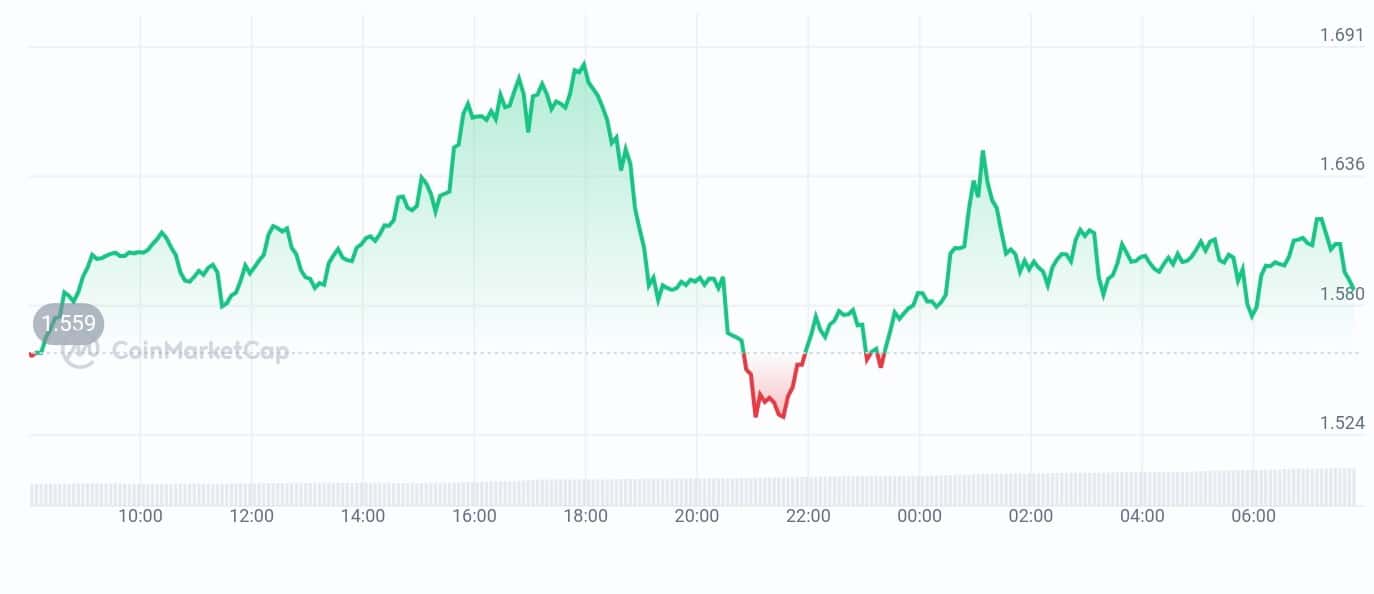
Morpho (MORPHO) is changing hands at $1.6294, up 3.47% over the past 24 hours and an impressive 71.82% in the last month. Meanwhile, today’s trading has swung between $1.5305 and $1.6828, underscoring lively demand. Altogether, this steady climb and widening range suggest growing confidence in Morpho’s lending-protocol vision and hint that the rally could have more room to run.
Morpho announced its integration with Worldcoin, enabling users to earn, lend, and borrow through multiple platforms—including the Morpho Mini App by PaperclipLabs, the Morpho Front End by okutrade, and the DeFi Super App by Joinlegend.
This collaboration boosts accessibility and utility within the Worldcoin ecosystem, giving users more financial tools powered by Morpho. For the community and investors, it signals increased adoption of decentralized finance, strengthening both platforms’ positions in the evolving Web3 landscape.
2. Neon EVM (NEON)
Neon is a groundbreaking project in the DeFi space that brings compatibility of the Ethereum Virtual Machine (EVM) to the Solana blockchain. This allows Ethereum-based decentralized applications (dApps) to run seamlessly on Solana, combining Ethereum’s developer-friendly environment with Solana’s high-speed, low-cost infrastructure. This fusion removes long-standing barriers between two of the most active blockchains in the ecosystem. It opens Solana to the vast Ethereum users, assets, and tools network.
The NEON token powers the Neon EVM ecosystem as a governance and utility token. It pays transaction fees within the platform and allows holders to participate in decisions about protocol upgrades and direction. With NEON, users and developers gain a say in the evolution of this cross-chain environment while benefiting from a smoother, more efficient DeFi experience.
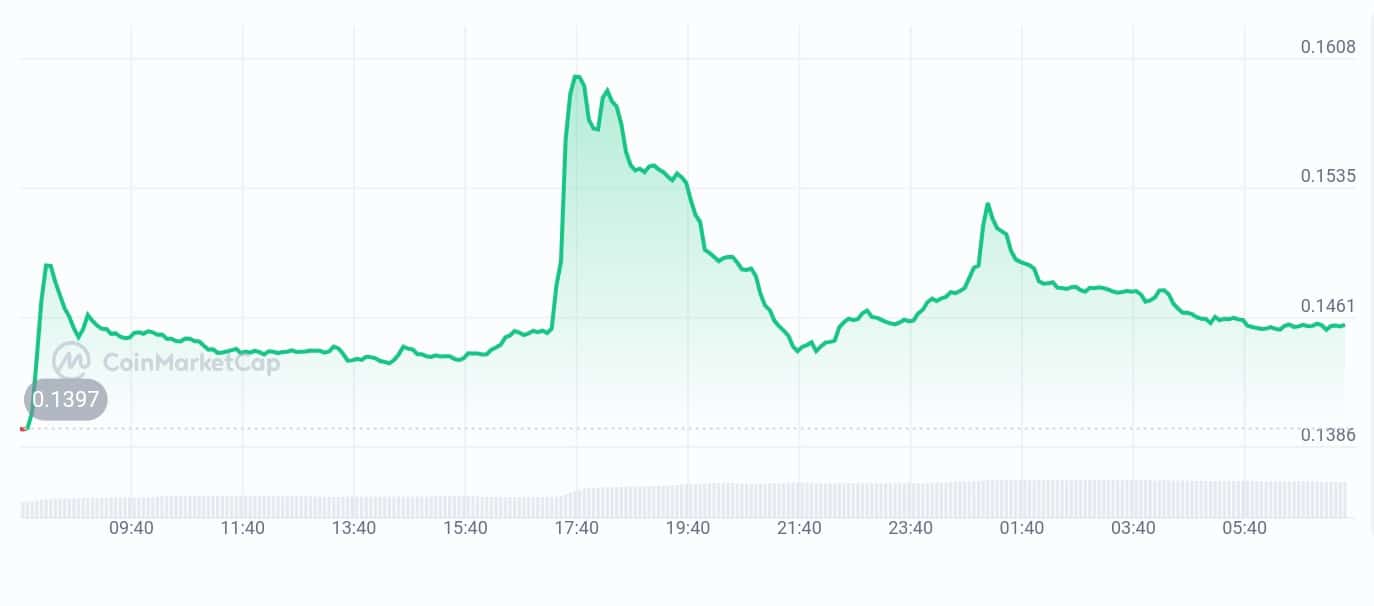
Neon EVM (NEON) is trading at $0.1438, reflecting a 1.2% increase over the past 24 hours. The token has experienced a 13.32% rise in the last 7 days and a 29.37% gain over the past 30 days. In the past day, NEON’s price fluctuated between a low of $0.1432 and a high of $0.1599, indicating a bullish market sentiment.
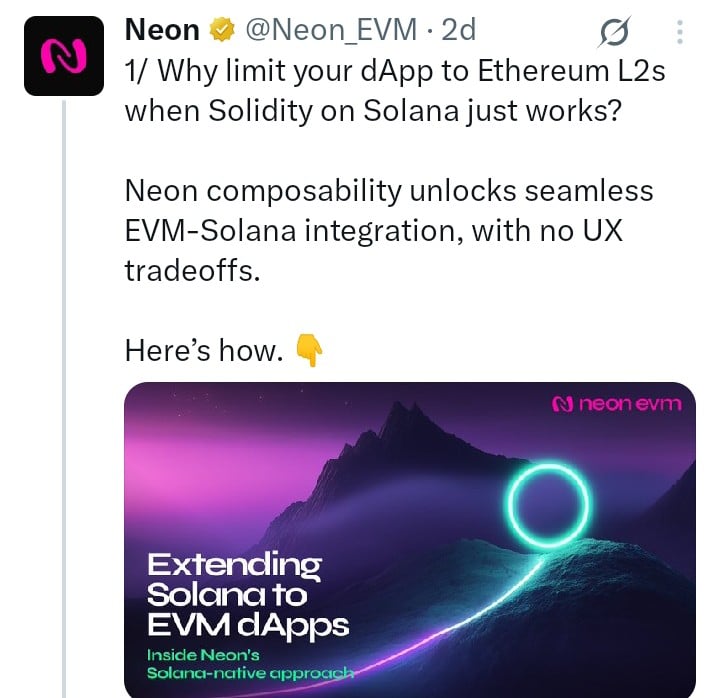
Neon shared how its platform enables Solidity-based dApps to operate seamlessly on Solana, removing the typical constraints of Ethereum Layer 2s. By translating differences in execution, token standards, and storage models, Neon allows EVM contracts to interact natively with Solana programs.
This unlocks powerful composability and simplifies cross-chain development, giving builders the best of both ecosystems. For developers and investors, it’s a step toward a more unified and efficient multichain future, without compromising user experience.
3. MIND of Pepe (MIND)
MIND of Pepe is a self-evolving AI agent designed to interact with platforms like X, engaging with trends, influencers, and meme coin chatter. As it gains popularity, it shapes conversations and uncovers early cryptocurrency opportunities. What makes it special is that it doesn’t just analyse trends—it becomes a trend. This project represents a new era where AI doesn’t just assist investors—it leads them.
The $MIND token powers this AI ecosystem, giving holders early access to valuable insights, tools, and exclusive features. It’s currently priced at $0.0037515 in presale, with over $9.3 million already raised. You can purchase it using ETH, BNB, USDT, or a bank card, but you’ll need a wallet like Best Wallet to store your tokens. Once you buy, you can stake your tokens immediately to earn rewards before the platform goes live.
One of the biggest draws is the 238% APY staking reward, which is distributed at a rate of 1332 $MIND tokens per ETH block over 3 years. Token holders gain access to the AI’s exclusive hive-mind intelligence, allowing them to stay ahead of the market. It’s not just about hype—$MIND offers real-time analysis and trend-spotting features that can be game changers. Plus, there are extra rewards for referrals and loyal early adopters.
The MIND of Pepe is leading a paradigm shift where AI is no longer just supportive—it’s the centrepiece. Gathering data in real time and shaping the meme coin narrative brings something that no other token does. With its growing social presence and viral engagement, $MIND isn’t just watching the future—it’s creating it. This could easily be one of 2025’s most iconic AI meme coins.
Alephium is a next-generation Layer 1 blockchain that introduces sharding and an enhanced UTXO system to the Proof of Work model, bringing scalability and energy efficiency. Designed with DeFi and dApp development in mind, it builds upon Bitcoin’s core technologies while addressing their limitations, especially around transaction speed and throughput. Using its unique BlockFlow algorithm, Alephium provides a secure and scalable infrastructure for decentralized applications without compromising decentralization.
The ALPH token is the native asset of the Alephium ecosystem, used for transaction fees, staking, and securing the network. As the backbone of the platform’s economy, ALPH also plays a vital role in DeFi operations, enabling users to interact with smart contracts and dApps efficiently. Its integration into a sharded, scalable architecture ensures that the token remains functional and future-proof as the network grows.
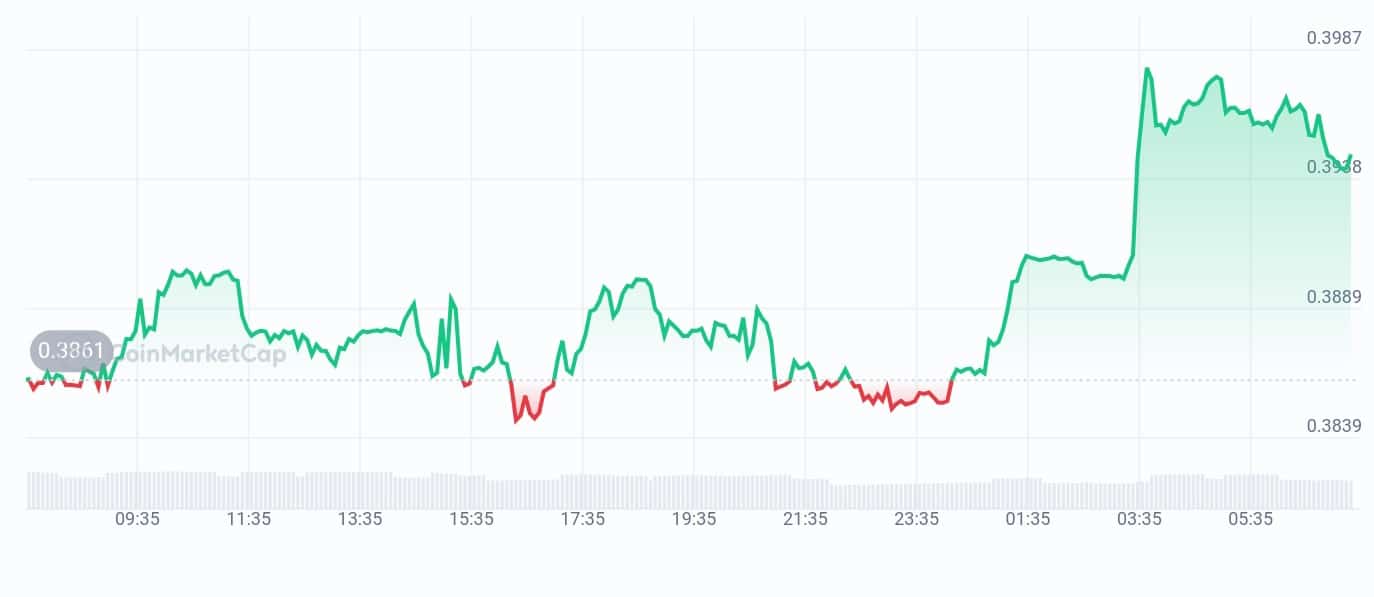
Alephium (ALPH) is trading at $0.3932, reflecting a 1.89% increase over the past 24 hours and a 20.15% gain over the last 30 days. As one of the leading DeFi tokens by market activity today, Alephium’s token price has fluctuated between $0.3845 and $0.4020 within the past day, indicating steady growth and positive market sentiment.
Exciting News for Alephium in the USA!
Thanks to @BanxaOfficial, you can now get $ALPH in 48 American states directly through your Alephium mobile or desktop wallet!
This milestone further enhances our on-ramp offerings alongside @AlchemyPay 🤝 @getTransFi 🤝 Gate Connect,…
Alephium announced that, thanks to Banxa, users in 48 US states can now buy $ALPH directly through Alephium’s mobile or desktop wallet. This expands on-ramp options alongside partners like AlchemyPay and TransFi, simplifying the process from fiat to wallet.
This is a significant milestone for the community and investors, as it boosts $ALPH’s
accessibility and adoption in the US market. Easier onboarding strengthens Alephium’s ecosystem growth and opens doors for broader user participation.
5. Propy (PRO)
Propy is a real estate-focused platform that merges blockchain and AI to simplify and secure property transactions. By moving key processes like title and escrow services onchain, Propy offers a seamless experience for buyers, sellers, and investors. With AI reducing manual work by 40% and blockchain ensuring transparency and fraud prevention, Propy creates a modern, trustless system for handling real estate deals from start to finish.
The PRO token powers the Propy ecosystem by facilitating transactions and interacting with smart contracts during property transfers. It also plays a role in accessing platform services and verifying ownership onchain. As Propy digitizes the real estate process, the PRO token is a key utility asset driving trust, efficiency, and innovation in worldwide property deals.
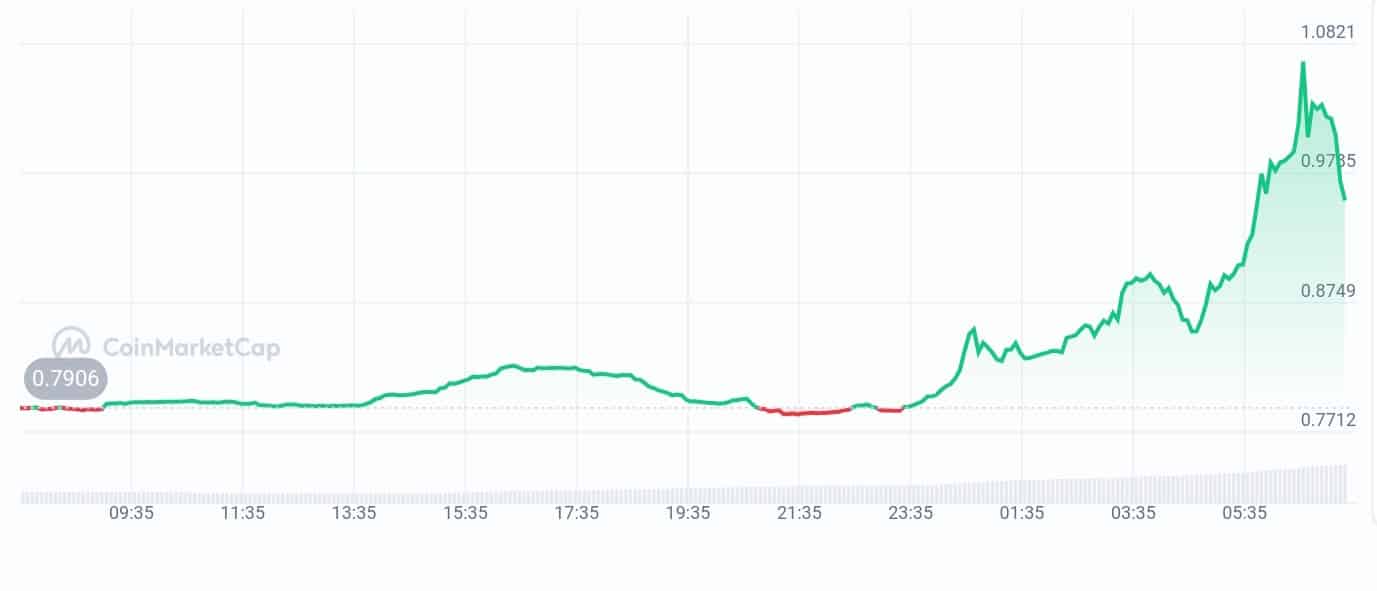
Propy (PRO) is trading at $0.9395, reflecting an 18.44% increase over the past 24 hours and a 60.70% surge in the last 30 days. The token’s price has fluctuated between a low of $0.7851 and a high of $1.0749 within the past day, indicating strong bullish momentum and growing investor interest.
Last week, the Propy platform set a new benchmark for transaction speed, highlighting exactly what’s possible when real estate is powered by automation.
A contract was opened at 1:25 PM. By 1:29 PM, the buyer had completed the earnest money deposit. No calls. No paperwork. No… pic.twitter.com/CsswH4Kqes
Propy showcased its platform’s efficiency by completing a real estate transaction in under five minutes, from contract opening to earnest money deposit, without calls or paperwork. This rapid process highlights how automation can transform traditionally slow and manual real estate dealings.
For the community and investors, this demonstrates Propy’s potential to disrupt the property market by speeding up transactions, reducing risk, and improving user experience. It signals a strong competitive edge as the industry moves toward fully digital, seamless solutions.
Read More
Best Wallet – Diversify Your Crypto Portfolio
Easy to Use, Feature-Driven Crypto Wallet
Get Early Access to Upcoming Token ICOs
Multi-Chain, Multi-Wallet, Non-Custodial
Now On App Store, Google Play
Stake To Earn Native Token $BEST
250,000+ Monthly Active Users
Join Our Telegram channel to stay up to date on breaking news coverage
In a groundbreaking update for the Polkadot ecosystem, core developer Jan Bujak announced during the April OpenDev call that he has successfully ported the iconic video game Quake to PolkaVM, a virtual machine designed for the Polkadot network. This follows his earlier achievement of running DOOM on JAM, Polkadot’s upcoming Join-Accumulate Machine, a next-generation framework for decentralized computation. Announced on May 19, 2025, via a social media post by Alice und Bob, this development showcases the growing computational capabilities of Polkadot’s infrastructure. The news has sparked interest not only among gaming enthusiasts but also within the crypto trading community, as it highlights the potential for innovative use cases on Polkadot’s blockchain. This could drive increased adoption and impact the price action of DOT, Polkadot’s native token, which was trading at approximately 7.25 USD on major exchanges like Binance and Coinbase as of 10:00 AM UTC on May 19, 2025, according to real-time data from CoinMarketCap. The market cap of DOT stood at around 10.4 billion USD at the same timestamp, reflecting steady interest. Trading volume for DOT spiked by 12 percent within 24 hours of the announcement, reaching 280 million USD across key pairs like DOT/USDT and DOT/BTC on Binance, suggesting heightened trader attention. This development isn’t just a technical milestone; it’s a signal of Polkadot’s versatility, potentially attracting developers and institutional interest, which could influence market sentiment for DOT and related tokens in the short term. For traders searching for Polkadot price predictions or DOT trading strategies post-Quake announcement, this event underscores the blockchain’s real-world utility beyond traditional DeFi applications.
The trading implications of Quake running on PolkaVM are multifaceted for the crypto market, especially for DOT and ecosystem tokens like KSM (Kusama). As of 1:00 PM UTC on May 19, 2025, DOT saw a 3.2 percent price increase to 7.48 USD on Binance, correlating with the buzz around this news. Kusama, often considered Polkadot’s canary network, also recorded a 2.8 percent uptick to 29.15 USD on Kraken during the same hour, reflecting cross-ecosystem optimism. This development could position Polkadot as a leader in blockchain-based computation, a narrative that may attract long-term investors. For traders, this presents opportunities in swing trading DOT/USDT, with potential entry points around 7.30 USD and targets near 7.80 USD based on recent resistance levels observed on TradingView charts. On-chain metrics further support this momentum, as Polkadot’s daily active addresses rose by 8 percent to 45,000 on May 19, 2025, per data from Subscan, indicating growing user engagement. Additionally, staking activity for DOT increased, with over 55 percent of the circulating supply locked as of the same date, suggesting confidence among holders. For those exploring crypto gaming tokens, this news could indirectly boost interest in projects tied to blockchain gaming, creating a ripple effect across correlated assets. Traders should monitor social sentiment on platforms like Twitter, where mentions of Polkadot and JAM spiked by 15 percent post-announcement, as this often precedes retail-driven pumps.
From a technical perspective, DOT’s price action on May 19, 2025, showed bullish signals. At 3:00 PM UTC, the Relative Strength Index (RSI) for DOT/USDT on Binance was at 58, indicating room for upward movement before overbought conditions, as per TradingView data. The 50-day Moving Average (MA) stood at 7.10 USD, with DOT breaking above this key level at 7.50 USD by 5:00 PM UTC, signaling potential continuation. Volume analysis revealed a 24-hour trading volume of 300 million USD across major exchanges, a 15 percent increase from the prior day, reflecting strong market participation. Bollinger Bands also tightened, suggesting an impending breakout, with the upper band at 7.85 USD as a near-term target. In terms of market correlations, DOT exhibited a 0.75 correlation with ETH over the past week, based on CoinGecko analytics, meaning Ethereum’s price movements could amplify or dampen DOT’s trajectory. For AI-crypto market correlation, tokens like RNDR (Render Token), tied to computational innovation, saw a 4 percent uptick to 10.20 USD on Coinbase by 6:00 PM UTC on May 19, 2025, likely influenced by broader interest in blockchain computation narratives. This correlation suggests that advancements in Polkadot’s infrastructure could have a spillover effect on AI-driven crypto assets, creating cross-market trading opportunities. Institutional interest may also grow, as Polkadot’s ability to host complex applications like Quake could attract venture capital, further impacting DOT’s liquidity and price stability. Traders should remain vigilant for whale movements, as large transfers of DOT—such as a 1.2 million DOT transaction recorded on Whale Alert at 7:00 PM UTC—could signal incoming volatility.
In summary, the porting of Quake to PolkaVM is more than a technical feat; it’s a catalyst for Polkadot’s market narrative. With concrete data points like a 12 percent volume spike, a 3.2 percent price increase for DOT, and growing on-chain activity, traders have actionable insights to capitalize on this momentum. Whether you’re scalping DOT/BTC or holding for long-term gains tied to Polkadot’s computational advancements, this event offers a unique entry point into a blockchain with expanding utility. Keep an eye on correlated AI tokens and ecosystem assets for diversified trading strategies.
FAQ: What does Quake on PolkaVM mean for Polkadot’s price? The successful porting of Quake to PolkaVM, announced on May 19, 2025, has already driven a 3.2 percent price increase for DOT to 7.48 USD as of 1:00 PM UTC on Binance. It signals growing utility and could attract more developers and investors, potentially sustaining upward momentum.
How can traders benefit from this Polkadot news? Traders can explore swing trading opportunities on DOT/USDT with entry points near 7.30 USD and targets around 7.80 USD, based on resistance levels observed on May 19, 2025. Monitoring volume spikes and social sentiment will also help in timing entries and exits effectively.
Are AI tokens impacted by Polkadot’s Quake development? Yes, AI-related tokens like RNDR saw a 4 percent rise to 10.20 USD on Coinbase by 6:00 PM UTC on May 19, 2025, reflecting broader interest in computational blockchain advancements. This correlation offers cross-market trading opportunities for diversified portfolios.
Wallet interoperability still remains the vision for Web3 gaming, according to Arthur Madrid, the co-founder and CEO of the decentralized metaverse and gaming platform The Sandbox.
In an exclusive interview with Cointelegraph at the Crypto Polo event in Dubai, Madrid and his fellow The Sandbox co-founder and chief operating officer, Sebastien Borget, told Cointelegraph that Web3 gaming interoperability remains the goal for The Sandbox. Madrid said:
“So, the vision is still kind of obvious for us. It’s like you need to be able to play any games using one wallet that will enable you to combine the utilities of all that you collected and all what you earned.”
The Sandbox CEO said that one of the main narratives they’ve seen in the last couple of months is that players can move from one game to another using a single wallet. The executive told Cointelegraph that players accessing games with one wallet and using their items on different platforms remains an exciting topic for Web3 gaming enthusiasts.
The Sandbox co-founders at the Crypto Polo event in Dubai. Source: Cointelegraph
Web3 gaming still “booming” as tools become accessible
Madrid added that despite a market slowdown, the Web3 gaming space is still booming. The executive told Cointelegraph that the tools and infrastructure needed to create new games have become more accessible.
“I can feel that the tools you need to create games are becoming more accessible. If you look the number of games that have been created on gaming platforms over the last two years, it’s still booming,” Madrid told Cointelegraph.
The executive also said that a new generation of programmers and programming tools is working on new types of gameplay. Madrid added that the space needs only one good game that could serve as the catalyst for the broader adoption of Web3 technology in gaming.
“The thing is, you always need this moment where one game is making a difference. You have this moment of rebirth,” Madrid said.
The Sandbox co-founder highlights a shift in NFT utility
Borget told Cointelegraph that the non-fungible token (NFT) space is now seeing a shift in focus. The executive said that their team is seeing more maturity in the industry as it shifted from using NFTs to do fundraising and just profile pictures to better use cases.
Borget said this was driven by consumers demanding more use for their digital assets. The executive said that creators and developers must focus on adding more value to their NFTs to keep up with this demand.
“At The Sandbox, we still continue to see more demand for our virtual land, avatars and other NFT collections, such as Jurassic World, because they can be used across the game right away,” Borget said.
Arbitrum is stepping deeper into blockchain gaming with its first major funding round through Arbitrum Gaming Ventures. The $10 million investment targets a range of Web3 gaming startups, aiming to build out the ecosystem and give developers the tools to push gaming into the on-chain space.
Good to know
Arbitrum Gaming Ventures has invested $10 million across five Web3 gaming projects.
Backers include Paradigm, BITKRAFT, and Framework Ventures.
Projects range from social combat games and Layer 3 chains to Telegram-based gaming rollups.
Arbitrum Gaming Ventures, a division under the Arbitrum DAO, has distributed the funding to five startups: Wildcard, Hyve Labs, T-Rex, Xai, and Proof of Play. Each project brings something different to the table, from real-time multiplayer gameplay to experimental blockchain infrastructure.
Wildcard, created by Paul Bettner and Katy Drake Bettner, blends strategic card mechanics with 2v2 third-person combat. The game features social viewing tools that let fans interact with matches as they happen. Wildcard is already listed on Steam and currently accepting players for alpha testing.
Hyve Labs is developing a Web3 rollup that will make blockchain games available across social platforms like Telegram, Farcaster, and X. The goal is to eliminate friction in onboarding and bring gaming to users where they already are. Hyve previously raised $2.75 million in a funding round led by Framework Ventures.
T-Rex takes a different approach, focusing on everyday internet use cases for blockchain. Based in Southeast Asia, the project supports Arbitrum’s push into international growth markets by offering user-friendly blockchain features to general consumers.
Xai is building a Layer 3 chain optimized for indie game developers. It runs on Arbitrum Orbit and offers a system called “Proof-of-Skill” to help games tap into blockchain while keeping the ease of platforms like Steam. Xai’s aim is to support thousands of games in reaching Web3 audiences without added technical complexity.
Proof of Play, led by FarmVille co-creator Amitt Mahajan, is working on Pirate Nation, a role-playing game that mixes blockchain elements with traditional gaming design. With backing from a16z, the studio is expected to play a key role in Arbitrum’s long-term gaming strategy.
Solana’s meteoric rise in 2024 has firmly established it as a dominant force in the decentralized finance (DeFi) landscape. The blockchain now commands over 50% of total DApp revenue, surpassing Ethereum, which has seen its share decline to just 12.84%.
In the last 12 months, Solana DApps generated $2.9B in revenue, far surpassing the $1.8B from all other chains combined.
This explosive growth is only expanding. In the last 12 months, Solana DApps generated $2.9B in revenue, far surpassing the $1.8B from all other chains combined.
Leading the charge is Pump.fun, a memecoin launchpad that generated an astounding $630 million over the past year [2024], making it the third-highest earner in the crypto space after stablecoin giants Circle and Tether.
HOW TO | How To Quickly Create and Share Your Own MemeCoin Using Solana Marketplace, https://t.co/QCr6l2e8EP
Launched in March 2024, the memecoin AMM has already captured 42% of Solana’s total DEX revenue, generating $5.6 million in its second month.
In November 2024 alone, Pump.fun made history by becoming the first Solana dApp to surpass $100 million in monthly revenue.
Other notable contributors include:
Photon, a trading platform for Solana and Base memecoins, and
Phantom, the Solana-based wallet.
Collectively, memecoin dApps on Solana amassed $509 million in revenue in 2024, marking a staggering 305-fold increase from January’s $600,000.
Pump.fun and Axiom Exchange dominated the Solana DApp revenue landscape in April. Pump.fun generated $54 million, with Axiom close behind at $52 million.
See also
Beyond memecoins, Solana’s broader DeFi ecosystem has seen remarkable growth. In November 2024, Solana-based dApps achieved a record $365 million in revenue, with DeFi applications accounting for 83.7% of this total .
Raydium, Solana’s leading decentralized exchange (DEX), earned $32 million that month, representing 86% of the total spot DEX revenue.
Jupiter, another prominent DEX, reached a new revenue high of $22 million in April 2025, driven by its Jupiter Pro advanced trading interface, sophisticated analytics, a perpetual trading feature, and Swap API.
Telegram bots have also emerged as significant players, generating $300 million in revenue throughout 2024.
Solana’s impressive revenue figures are mirrored by its growing developer and user base. The blockchain broke fee and DEX volume all-time highs multiple times in 2024, attracting significant developer interest . This surge in activity underscores Solana’s position as a leading platform for DeFi innovation.
Solana’s ascendancy in the DeFi sector is a testament to its robust ecosystem and the innovative applications built on its platform. With memecoins, DeFi protocols, and user-friendly tools driving unprecedented revenue growth, Solana is poised to maintain its leadership in the decentralized finance arena.
DeFi Development Corp. announced a collaboration Friday with Solana meme coin Bonk.
The pair will collectively work to generate greater stake in a joint validator node.
Shares of DFDV finished Friday up more than 74%, marking a new all-time high.
DeFi Development Corp, the AI-powered real estate platform building a digital assets treasury centered on Solana, announced Friday that it’s teaming with leading Solana meme coin Bonk (BONK) on a jointly backed Solana validator node—and its stock continued to blast off to new highs.
The Nasdaq-listed firm (trading as DFDV) and meme coin team will collectively work to increase the delegated stake, or the amount of Solana tokens committed to its validator, sharing rewards in the process.
“DFDV and BONK are their own category leaders,” Parker White, CIO and COO of DeFi Development Corp. told Decrypt. “By joining forces, we can reap the benefits of each other’s own unique positioning and brand awareness.”
DeFi Development Corp. will handle the day-to-day operations of the validator as Bonk takes on “a key role in promoting the validator and engaging its community to attract stake,” said White.
It’s the firm’s second move related to Solana validators, after it recently acquired an unnamed Solana validator business for $3.5 million in assets, putting it at what White previously called “the core of Solana” in the process.
Its connection with the BONK meme coin community further fuels that mission.
“This validator partnership is a natural next step in Bonk’s mission to empower our community and accelerate the adoption of Solana,” pseudonymous Bonk core contributor Nom said, in a statement. “By teaming up with DeFi Dev Corp., we’re not only reinforcing the decentralized infrastructure of Solana, but also creating a new standard for how community tokens can scale and sustain their ecosystems.”
Bonk will use a portion of the validator rewards earned from securing Solana via its proof-of-stake consensus mechanism to purchase and burn BONK tokens, White told Decrypt.
DFDV, formerly Janover, has quickly fueled its Solana treasury which was first announced in early April. It purchased more than 172,000 SOL earlier this week, pushing its balance beyond $100 million worth of Solana in the process.
Shares of DFDV skyrocketed Friday, finishing the trading day up more than 74% to finish at an all-time high price of $156.99. The stock is up 3,133% year-to-date.
BONK is one of the most valuable meme coins on the market, and has the second-largest market cap of any Solana-based meme coin—behind only President Trump’s official token.
Opinion by: Merlin Egalite, co-founder at Morpho Labs
Fintechs in the front, decentralized finance (DeFi) in the back: the DeFi Mullet.
Today’s fintech companies offer excellent user experiences but are constrained by traditional financial infrastructure — siloed, slow, expensive and inflexible. Meanwhile, DeFi provides lightning-fast, cost-effective, interoperable infrastructure but lacks mainstream accessibility.
The solution? Combine fintech’s distribution and user experience with DeFi’s efficient back end.
The mullet is inevitable
Fintech companies heavily rely on traditional financial (TradFi) infrastructure that is siloed, slow to deploy and run, and costly to maintain. This inefficiency limits their control over costs and product offerings and has potential infrastructure risks. Fintechs have a strong incentive to transition to building on autonomous, credibly neutral public infrastructure.
The power of DeFi is evident in stablecoins. While traditional international wire transfers cost $30–$50 and take one to five business days, stablecoin transfers cost mere cents and settle in seconds. This revolutionary improvement in financial infrastructure extends beyond payments. DeFi provides 24/7/365 infrastructure for trading, lending and borrowing with instant settlement, open access and deep liquidity, enabling better price execution and yields.
Plugging their compliance-ready front end into DeFi infrastructure, fintech companies can focus on creating exceptional user experiences. This opens up tremendous opportunities for innovation while driving more liquidity onchain, creating a positive feedback loop of embracing the DeFi Mullet.
Now is the time for mainstream adoption
Today’s DeFi ecosystem has proven its reliability for fintech integration. There are dozens of protocols that demonstrate this maturity, securely managing billions in loans through immutable, governance-minimized designs. DeFi infrastructure gives fintechs complete control over their infrastructure. This is particularly crucial after the recent Synapse bankruptcy that trapped Yotta user funds meant to be insured by the Federal Deposit Insurance Corporation.
Recent: Bitcoin DeFi will have 300M users, beating Ethereum and Solana: Exec
Institutions are also coming onchain. BlackRock has tokenized a fund via Securitize; Stripe has acquired Bridge for $1 billion to scale its stablecoin solutions; the US is creating a strategic Bitcoin (BTC) reserve; and clarity on regulation is opening the floodgates. The shift is step-by-step but tangible.
DeFi has arrived.
The next phase
For years to come, expect more products like crypto-backed loans to be released by fintech’s most advanced players, offering onchain saving accounts, onchain loans, instant international payments and more.
This transformation will be invisible to users and powered by smart wallets and account abstraction that maintain the familiar Web2-like user experience at which fintech companies excel. Early adopters will gain significant advantages over competitors.
Yet, unlike building on traditional finance, DeFi’s open infrastructure means even latecomers can benefit from existing network effects without starting from zero.
Some skeptics argue that the involvement of fintechs and traditional institutions will erode decentralization, as protocols must comply with regulatory requirements. While this concern is understandable, the opposite is more likely.
Expecting protocols to achieve compliance across every jurisdiction worldwide is unrealistic, especially given the vast regulatory fragmentation. Instead, regulating the apps that interface with users makes far more sense rather than the underlying protocols. For this regulatory model to work, however, protocols must remain credibly neutral.
A credibly neutral mechanism adheres to four principles:
It embeds no preference for specific individuals or outcomes.
It is open-source with publicly verifiable execution.
It is simple and understandable.
It changes infrequently.
Examples like HTTP and SMTP demonstrate the power of credibly neutral protocols — they are free, open and unregulated, with only the clients subject to oversight. The same logic should apply to governance-minimized, immutable DeFi protocols.
These constraints will push DeFi builders toward creating genuinely decentralized and trustless systems.
Fintechs integrating DeFi protocols can build on top of the most neutral infrastructure and access their growing network effects.
Let the mullet grow
The DeFi mullet is more than just a meme — it’s a structural shift.
To scale, DeFi must meet users where they are: through regulated, user-friendly fintech channels. For fintechs to stay relevant, they must offer their customers the best user experience and opportunities, such as the best rates. Those who miss this opportunity risk falling into irrelevance, much like traditional retail banks losing market share to today’s fintechs.
This convergence isn’t just possible — it’s inevitable.
Opinion by: Merlin Egalite, co-founder at Morpho Labs.
This article is for general information purposes and is not intended to be and should not be taken as legal or investment advice. The views, thoughts, and opinions expressed here are the author’s alone and do not necessarily reflect or represent the views and opinions of Cointelegraph.
The recent buzz around Infinex, a promising DeFi platform, has caught the attention of crypto traders and investors alike. On May 17, 2025, a notable tweet from Kook Capital LLC highlighted Infinex with the tagline, ‘imagine one account; any chain, any dapp—that’s Infinex,’ positioning it as a simpler and smarter future for decentralized finance (DeFi). This statement underscores the platform’s potential to streamline cross-chain interactions and unify user experiences across multiple decentralized applications (dapps). As DeFi continues to evolve, platforms like Infinex are critical in addressing interoperability challenges, a persistent pain point in the crypto ecosystem. This development comes at a time when the broader cryptocurrency market is experiencing heightened volatility, with Bitcoin (BTC) trading at $67,320 as of 08:00 UTC on May 17, 2025, reflecting a 2.3% increase over 24 hours, according to data from CoinMarketCap. Meanwhile, Ethereum (ETH), a key blockchain for DeFi protocols, hovered at $3,120, up 1.8% in the same timeframe. The total DeFi market cap stands at $92.5 billion, with a 24-hour trading volume of $5.8 billion as per CoinGecko data retrieved at 09:00 UTC on May 17, 2025. This surge in market activity provides a fertile ground for innovative platforms like Infinex to gain traction, especially as traders seek efficient tools to navigate the complex DeFi landscape. The tweet’s emphasis on a unified account system could signal a shift in user adoption trends, potentially impacting trading volumes for DeFi tokens and cross-chain assets in the coming weeks.
From a trading perspective, the spotlight on Infinex could create significant opportunities in the DeFi sector, particularly for tokens associated with interoperability and cross-chain solutions. Traders should monitor assets like Polkadot (DOT), trading at $7.25 with a 3.1% gain over 24 hours as of 10:00 UTC on May 17, 2025, and Chainlink (LINK), priced at $14.80 with a 2.7% uptick in the same period, based on live data from Binance. These tokens, which focus on bridging blockchain networks, may see increased buying pressure if Infinex’s vision resonates with the market. Additionally, on-chain metrics reveal a notable spike in transaction volumes on Ethereum-based DeFi protocols, with Uniswap (UNI) recording a 24-hour trading volume of $1.2 billion as of 11:00 UTC on May 17, 2025, according to DefiLlama. This suggests growing investor interest in DeFi solutions, potentially amplified by Infinex’s promise of seamless dapp integration. For traders, this presents a chance to capitalize on short-term price movements in DeFi tokens by setting entry points near key support levels—such as UNI at $7.50—and targeting resistance zones around $8.20. Moreover, the broader crypto market sentiment remains bullish, with the Fear & Greed Index at 72 (Greed) as of 12:00 UTC on May 17, 2025, per Alternative.me, indicating a risk-on environment conducive to DeFi innovation.
Diving into technical indicators, the DeFi Pulse Index (DPI), which tracks the performance of leading DeFi assets, shows a relative strength index (RSI) of 62 as of 13:00 UTC on May 17, 2025, signaling bullish momentum without entering overbought territory, according to TradingView data. Trading volume for DPI spiked by 18% over the past 24 hours, reaching $320 million at the same timestamp, reflecting heightened market participation. Cross-market correlations also reveal a strong positive relationship between DeFi token performance and Ethereum’s price action, with a correlation coefficient of 0.87 based on historical data up to May 17, 2025, as tracked by CryptoCompare. This suggests that any upward movement in ETH, currently testing resistance at $3,150 as of 14:00 UTC on May 17, 2025, could further propel DeFi tokens. On-chain activity supports this outlook, with Ethereum’s daily active addresses increasing to 485,000 as of 15:00 UTC on May 17, 2025, per Glassnode analytics, indicating robust network usage tied to DeFi interactions. For traders eyeing Infinex-related opportunities, monitoring trading pairs like ETH/BTC (last at 0.0463 on Binance at 16:00 UTC on May 17, 2025) and UNI/ETH (last at 0.0024 at the same timestamp) could provide insights into relative strength and potential breakout zones. As Infinex gains visibility, its impact on market sentiment could further drive institutional interest, with DeFi-focused funds reportedly increasing allocations by 12% month-over-month as of mid-May 2025, according to a report by CoinDesk. This confluence of technical strength, on-chain growth, and institutional money flow underscores the strategic importance of DeFi innovations in shaping trading strategies for 2025.
In summary, while Infinex itself is not a traded asset, its conceptual framework as highlighted on May 17, 2025, by Kook Capital LLC could catalyze interest in the DeFi sector, influencing trading dynamics for related tokens and Ethereum-based assets. Traders are advised to stay vigilant for volume spikes and price breakouts in key DeFi pairs while leveraging technical indicators to time entries and exits effectively. The interplay between DeFi adoption and broader crypto market trends will likely remain a focal point for profitable trading setups in the near term.