The main tag of NFT News Today Articles.
You can use the search box below to find what you need.
[wd_asp id=1]

20 11, 2025

Why must truly successful Web3 games break free from the “short-term player mindset”?The next generation of Web3 gaming ecosystems begins with PumpGame.

By |2025-11-20T18:55:54+02:00November 20, 2025|News, NFT News|0 Comments


The future of Web3 games won’t belong to short-term thinking
Looking back over the past few years, many GameFi projects appeared like shooting stars and disappeared just as quickly. On the surface, it seemed like market cooling and capital withdrawal were to blame. But the deeper reason is that many projects assumed from the start that players were only there to “speculate,” not to “stay.”

Three fatal flaws caused by short-term thinking
1. Extremely short user lifecycles
Many projects treat “new user deposits” as the core KPI. Once the token stops rising, players leave, and the game loses its meaning.

2. Economy dependent on external input
When rewards rely on new user contributions, any slowdown in funding causes the system to collapse.

3. Lack of long-term motivation
Players neither retain assets nor build content, achievements, or identity. Switching to another game comes at virtually no cost.

This isn’t a failure of GameFi—it’s a failure to distinguish “speculation” from “gaming.”

Truly sustainable Web3 games treat players as users, not miners
A sustainable Web3 game should:
Allow players’ “character growth” to persist on-chain
Not only assets, but also effort, skill, and identity should be tradable.

Generate rewards from “participation value,” not “pool injections”

Make players want to return, rather than just cash out and leave

This approach builds from the essence of gaming, not from a “financial arbitrage logic.”

Pump.Game is following this long-term path
Pump.Game does not lure miners with high APRs. Instead, it delivers value through:

Multi-chain NFT ecosystem

Caesar character progression system

True in-game closed-loop economy

X402 AI modules for intelligent operations

Every player contribution—whether time, effort, or assets—can accumulate on-chain, becoming a “player capital” that grows, circulates, and compounds.

In other words:
Pump.Game doesn’t teach players how to mine—it empowers them to truly own their gaming life.

Conclusion
Short-term thinking only produces short-lived projects.
Long-term value is what drives a genuine Web3 gaming revolution.

If you’re tired of the “mine-and-run” model,
Pump.Game shows a longer, steadier, and more worthwhile path to follow.

If you want, I can also craft a more marketing-friendly version that’s punchier and better suited for a global Web3 audience. Do you want me to do that?

Website: https://pump.game

Feed. Grow. Earn.
The next generation of Web3 gaming starts with Pump.Game.

Disclaimer: All news, information, and other content published on this website are provided by third-party brands or individuals and are for reference and informational purposes only. They do not constitute any investment advice or other commercial advice. For matters involving investment, finance, or digital assets, readers should make their own judgments and assume all risks. This website and its operators shall not be liable for any direct or indirect losses arising from reliance on or use of the content published herein.


Source link

20 11, 2025

Ripple Explores Staking for XRPL as DeFi Demand Grows — TradingView News

By |2025-11-20T16:55:03+02:00November 20, 2025|News, NFT News|0 Comments


Ripple is now exploring whether staking, a feature used in many major blockchains, could eventually be introduced to the XRP Ledger (XRPL). The idea came into focus after RippleX engineering head J. Ayo Akinyele explained how staking might strengthen network security and give XRP more real-world utility as global DeFi activity grows. Ripple says nothing is confirmed yet, but it is actively studying how staking could fit into the XRPL’s long-term development.

Why Ripple Is Considering Staking

According to Akinyele, staking could help the XRPL grow by encouraging more people to take part in validating and securing the network. Currently, XRP transaction fees are burned instead of being shared with participants. While this keeps the supply slightly deflationary, it does not reward those who support the ledger. Staking could change this by offering incentives, similar to what users see on networks like Ethereum, Solana, and Cosmos.

Ripple also wants the XRPL to stay competitive as more companies begin using XRP for treasury management and investment products. Adding a staking model would show that the network is adapting to a market where rewards, incentives, and token participation are becoming standard across DeFi.

Early Concepts, No Final Decision Yet

Ripple CTO David Schwartz shared two early concepts for how staking might work, but emphasized that both ideas are still in the research phase. One idea involves a two-layer structure where a smaller validator group receives staking rewards while the larger validator set continues managing the network. 

The second idea keeps the current consensus system in place but uses network fees to support “zero-knowledge proofs,” allowing participants to verify activity without revealing private information.

Schwartz made it clear that both options would require major changes and extensive testing. Because of this, staking will not be coming to the XRPL anytime soon.

Ripple Supports Moves to Modernize U.S. Crypto Payments

As Ripple studies staking, it’s also monitoring regulatory developments in the U.S. Earlier this month, Federal Reserve Governor Christopher Waller suggested that crypto firms, including stablecoin issuers, should get direct access to the Fed’s payment systems. Ripple welcomed the suggestion, saying it would reduce banking delays and improve stability for its stablecoin, RLUSD.

Ripple’s chief legal officer, Stu Alderoty, noted that direct access could help RLUSD compete with leading stablecoins like USDT and USDC by improving settlement speeds and redemption reliability. He also said that avoiding traditional banking intermediaries would make it easier to move between U.S. Treasuries and dollars.

XRP ETF Update

The staking discussion comes at a time when interest in XRP is picking up following the launch of Canary Capital’s spot XRP ETF, which has attracted more than $257 million since November 13. Despite this momentum, XRP is still down 13% over the past month as the market reacts to the recent U.S. government shutdown and uncertainty around upcoming Fed decisions.

Meanwhile, several third-party platforms are already offering staking-style rewards for XRP, showing that utility and demand may continue growing even without immediate changes to the XRPL.

FAQs

Is staking coming to the XRP Ledger?

Yes, Ripple is actively exploring staking for XRPL, but it’s still in the early research phase with no final decision or timeline yet.

Why is Ripple considering adding staking to XRP?

Staking would reward validators, boost network security, increase XRP’s real-world utility, and keep XRPL competitive in DeFi, where rewards are now standard.

When will staking be available on the XRP Ledger?

Not anytime soon—both proposed models require major changes and extensive testing; implementation is likely still years away.

How might staking actually work on XRPL?

Two early ideas: 1) A smaller rewarded validator tier on top of the current system, or 2) Using burned fees to fund zero-knowledge proof verification rewards while keeping consensus unchanged.

Can I already stake XRP and earn rewards today?

Yes—several trusted platforms (like Uphold, Nexo, and Binance) already offer staking-style yield on XRP through lending or wrapped versions, even without native XRPL staking.


Source link

20 11, 2025

Why must truly successful Web3 games break free from the “short-term player mindset”?The next generation of Web3 gaming ecosystems begins with PumpGame.

By |2025-11-20T14:53:55+02:00November 20, 2025|News, NFT News|0 Comments


The future of Web3 games won’t belong to short-term thinking
Looking back over the past few years, many GameFi projects appeared like shooting stars and disappeared just as quickly. On the surface, it seemed like market cooling and capital withdrawal were to blame. But the deeper reason is that many projects assumed from the start that players were only there to “speculate,” not to “stay.”

Three fatal flaws caused by short-term thinking
1. Extremely short user lifecycles
Many projects treat “new user deposits” as the core KPI. Once the token stops rising, players leave, and the game loses its meaning.

2. Economy dependent on external input
When rewards rely on new user contributions, any slowdown in funding causes the system to collapse.

3. Lack of long-term motivation
Players neither retain assets nor build content, achievements, or identity. Switching to another game comes at virtually no cost.

This isn’t a failure of GameFi—it’s a failure to distinguish “speculation” from “gaming.”

Truly sustainable Web3 games treat players as users, not miners
A sustainable Web3 game should:
Allow players’ “character growth” to persist on-chain
Not only assets, but also effort, skill, and identity should be tradable.

Generate rewards from “participation value,” not “pool injections”

Make players want to return, rather than just cash out and leave

This approach builds from the essence of gaming, not from a “financial arbitrage logic.”

Pump.Game is following this long-term path
Pump.Game does not lure miners with high APRs. Instead, it delivers value through:

Multi-chain NFT ecosystem

Caesar character progression system

True in-game closed-loop economy

X402 AI modules for intelligent operations

Every player contribution—whether time, effort, or assets—can accumulate on-chain, becoming a “player capital” that grows, circulates, and compounds.

In other words:
Pump.Game doesn’t teach players how to mine—it empowers them to truly own their gaming life.

Conclusion
Short-term thinking only produces short-lived projects.
Long-term value is what drives a genuine Web3 gaming revolution.

If you’re tired of the “mine-and-run” model,
Pump.Game shows a longer, steadier, and more worthwhile path to follow.

If you want, I can also craft a more marketing-friendly version that’s punchier and better suited for a global Web3 audience. Do you want me to do that?

Website: https://pump.game

Feed. Grow. Earn.
The next generation of Web3 gaming starts with Pump.Game.

Disclaimer: All news, information, and other content published on this website are provided by third-party brands or individuals and are for reference and informational purposes only. They do not constitute any investment advice or other commercial advice. For matters involving investment, finance, or digital assets, readers should make their own judgments and assume all risks. This website and its operators shall not be liable for any direct or indirect losses arising from reliance on or use of the content published herein.



Source link

20 11, 2025

Hyperliquid News Today: Hyperliquid’s Reduced Fees Ignite Growth in DeFi’s Overlooked Sectors

By |2025-11-20T12:52:33+02:00November 20, 2025|News, NFT News|0 Comments


Hyperliquid, a prominent decentralized exchange operating on-chain, has introduced HIP-3 Growth Mode, a new feature

intended to reduce trading fees by more than 90%

for markets that have just launched. This enhancement

is designed to make it easier for both market makers and traders to participate

, boosting liquidity for specialized and up-and-coming assets while competing with centralized platforms. With this update, taker fees—which are usually 0.045%—can fall to just 0.00144% for top traders, and

additional fee reductions are available for those who use compatible collateral or meet certain staking levels

. According to experts in the field, this marks

one of the most competitive fee models in DeFi

.

Growth Mode operates in a

permissionless manner, so deployers can enable it without needing approval from a central authority

. To be eligible,

new markets must not duplicate existing validator-run perpetuals

and must observe a 30-day fee lock to maintain stability. This mechanism

helps stop “parasitic” trading activity

and supports experimentation in less-served asset types, such as equity-linked derivatives and real-world assets.

For instance, Felix Protocol has recently introduced

a Tesla perpetual contract using HIP-3, demonstrating the platform’s adaptability.

This move by Hyperliquid comes as competition heats up in the decentralized perpetuals space.

Other protocols, including Aster and Lighter, have been competing for trading activity

, but Hyperliquid’s technological strengths—like its HyperBFT consensus and HyperEVM blockchain—give it an edge for long-term leadership.

The exchange

handles more than $10 billion in trades every day

, with some days seeing volumes above $30 billion. By making trading cheaper, Hyperliquid

hopes to draw both liquidity providers and individual traders

to new markets during their formative periods.

The launch has sparked considerable excitement on crypto social platforms, with many users

calling the update an “incredibly bullish” catalyst

for new developments.

Analysts suggest that these extremely low fees could lead to a surge

in innovative markets, such as tokenized government bonds and unconventional commodities, which traditional validators might avoid. Still,

the exchange has encountered obstacles

, including a $4.9 million bad debt event in November 2025. In reaction, Hyperliquid

implemented tighter market controls

and introduced 30-day fee locks to address risks from high leverage.

Even with ongoing volatility in the broader crypto market, Hyperliquid’s native token, HYPE, remains central to its economic model.

The exchange dedicates 97% of its trading income

to buying back HYPE through its Assistance Fund, supporting demand even during price drops. Although HYPE is currently trading below $40—a 6% decrease since the news—the platform’s $10 billion market capitalization highlights its leading position in DeFi.

Industry experts point out that Hyperliquid’s approach fits with the sector’s move toward open infrastructure and user rewards. By merging speed, decentralization, and lower fees, the platform is transforming how on-chain liquidity is provided. However,

whether Growth Mode succeeds

will depend on whether deployers can build up liquidity and attract traders to fresh markets.


Source link

20 11, 2025

METABORA GAMES Forms Strategic Partnership with NEOSTELLAGAMES To Co-Develop and Launch Web3 Games

By |2025-11-20T10:51:22+02:00November 20, 2025|News, NFT News|0 Comments


  • A strategic partnership with NEOSTELLAGAMES, a mobile game studio with strong global live-service capabilities
  • Co-developing a casual roguelike RPG for the global Web3 market with an H5 title
  • Enhancing BORA token utility through payment, rewards, and onboarding collaboration

SEOUL, South Korea, Nov. 20, 2025 /PRNewswire/ — METABORA GAMES (CEO Choi Se-hoon), a leading blockchain game developer, announced today that it has signed a partnership with NEOSTELLAGAMES (CEO Kim Tae-Kyun) to co-develop and globally launch a Web3 game built on HTML5 (H5).

NEOSTELLAGAMES is a mobile game studio founded by developers who have led a wide range of projects at major global companies including Line Play, Disney Interactive, and NCSOFT. The studio has extensive experience in commercial game development and global live service operations, and has built strong expertise in the casual and idle RPG genres. With additional experience in Web3 game development, the company has also secured capabilities for next generation hybrid game production.

Through this partnership, the two companies will collaborate on the launch of a next generation Web3 title that combines H5 accessibility with a Web3-driven, targeting for the global H5 game market. NEOSTELLAGAMES will lead development and live service operations for a casual roguelike RPG Web3 game, while METABORA GAMES will support tokenomics design optimized for synergy with the BORA ecosystem, along with global Web3 marketing and user engagement systems.

The new title jointly developed by the two companies will support in-app payments that allow players to purchase in game items using the BORA token. The game is also planned to introduce a gas abstraction feature, enabling players to pay gas fees with BORA even without holding KAIA tokens.

METABORA GAMES has been actively pursuing external collaborations to secure H5 based Web3 game titles. Through this onboarding partnership with NEOSTELLAGAMES, the company plans to expand its global lineup of H5 based Web3 games, strengthen the utility of the BORA token, and accelerate the growth of its ecosystem.

A representative from METABORA stated that the company will continue to expand its portfolio of H5 based titles across various genres, increase real use cases for the BORA token, and further enhance user engagement. 

About METABORA

METABORA is a casual game developer and the service operator of the blockchain platform BORA.

The BORA ecosystem brings together partners across various industries—ranging from tokenomics and content to blockchain technology—driving innovation and collaboration across games, sports, and entertainment.

BORA is a national game/entertainment token with a high liquidity in the market and reinforcing the accessibility of users and services abroad by increasing the listing on global cryptocurrency exchanges and expanding partnership.

Photo – https://mma.prnewswire.com/media/2827222/METABORA_GAMES_Forms_Strategic_Partnership_NEOSTELLAGAMES_To_Co_Develop_Launch_Web3.jpg


Source link

20 11, 2025

METABORA GAMES Forms Strategic Partnership with NEOSTELLAGAMES To Co-Develop and Launch Web3 Games

By |2025-11-20T08:50:28+02:00November 20, 2025|News, NFT News|0 Comments


  • A strategic partnership with NEOSTELLAGAMES, a mobile game studio with strong global live-service capabilities
  • Co-developing a casual roguelike RPG for the global Web3 market with an H5 title
  • Enhancing BORA token utility through payment, rewards, and onboarding collaboration

SEOUL, South Korea, Nov. 20, 2025 /PRNewswire/ — METABORA GAMES (CEO Choi Se-hoon), a leading blockchain game developer, announced today that it has signed a partnership with NEOSTELLAGAMES (CEO Kim Tae-Kyun) to co-develop and globally launch a Web3 game built on HTML5 (H5).

NEOSTELLAGAMES is a mobile game studio founded by developers who have led a wide range of projects at major global companies including Line Play, Disney Interactive, and NCSOFT. The studio has extensive experience in commercial game development and global live service operations, and has built strong expertise in the casual and idle RPG genres. With additional experience in Web3 game development, the company has also secured capabilities for next generation hybrid game production.

Through this partnership, the two companies will collaborate on the launch of a next generation Web3 title that combines H5 accessibility with a Web3-driven, targeting for the global H5 game market. NEOSTELLAGAMES will lead development and live service operations for a casual roguelike RPG Web3 game, while METABORA GAMES will support tokenomics design optimized for synergy with the BORA ecosystem, along with global Web3 marketing and user engagement systems.

The new title jointly developed by the two companies will support in-app payments that allow players to purchase in game items using the BORA token. The game is also planned to introduce a gas abstraction feature, enabling players to pay gas fees with BORA even without holding KAIA tokens.

METABORA GAMES has been actively pursuing external collaborations to secure H5 based Web3 game titles. Through this onboarding partnership with NEOSTELLAGAMES, the company plans to expand its global lineup of H5 based Web3 games, strengthen the utility of the BORA token, and accelerate the growth of its ecosystem.

A representative from METABORA stated that the company will continue to expand its portfolio of H5 based titles across various genres, increase real use cases for the BORA token, and further enhance user engagement. 

About METABORA

METABORA is a casual game developer and the service operator of the blockchain platform BORA.

The BORA ecosystem brings together partners across various industries—ranging from tokenomics and content to blockchain technology—driving innovation and collaboration across games, sports, and entertainment.

BORA is a national game/entertainment token with a high liquidity in the market and reinforcing the accessibility of users and services abroad by increasing the listing on global cryptocurrency exchanges and expanding partnership.

SOURCE METABORA GAMES


Source link

20 11, 2025

Bitcoin News Today: Connecting Custody with DeFi: Anchorage-Mezo Enhances Bitcoin’s Institutional Applications

By |2025-11-20T02:46:32+02:00November 20, 2025|News, NFT News|0 Comments


Anchorage Digital and Mezo have entered into a strategic alliance aimed at broadening institutional access to Bitcoin-based financial instruments, representing a notable advancement in the development of

Bitcoin

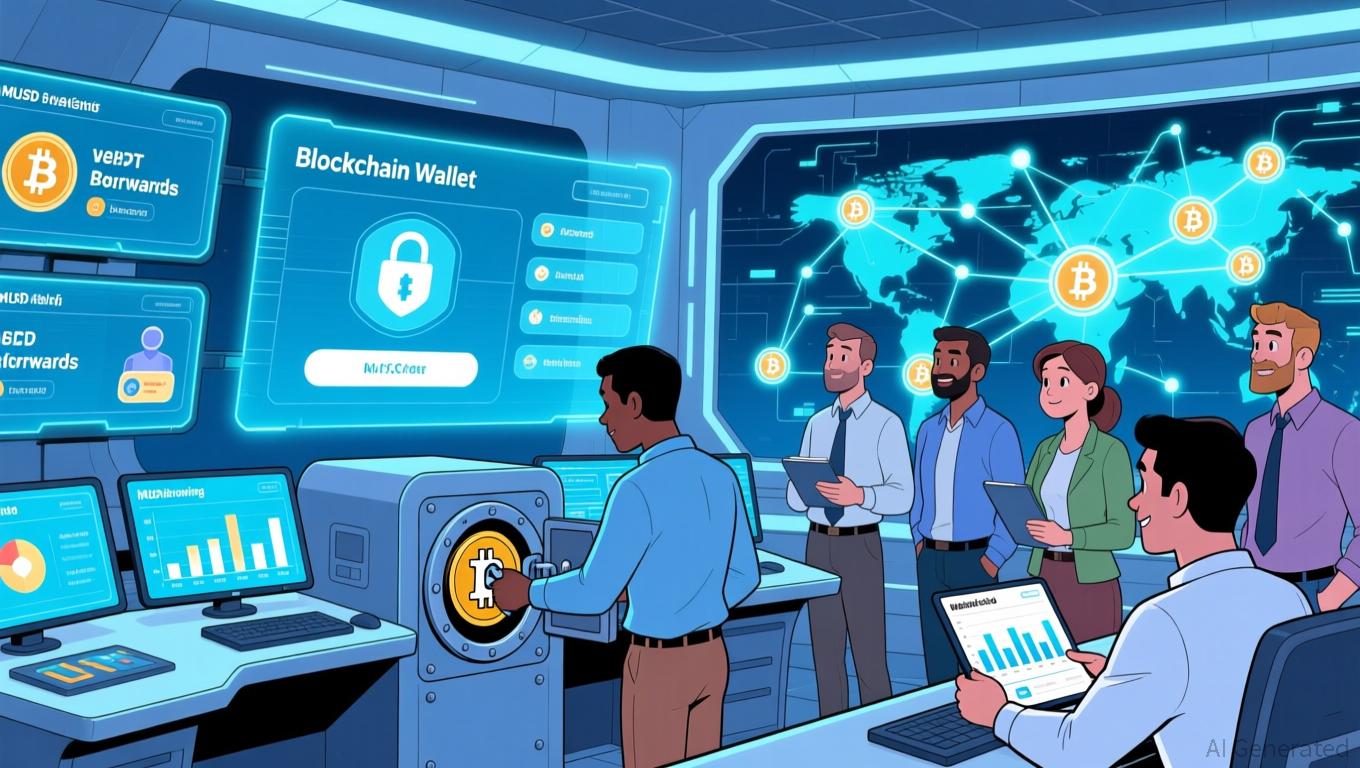
finance (BitcoinFi). Announced on November 19, 2025, this partnership allows institutional investors to secure loans using their Bitcoin as collateral through Mezo’s MUSD stablecoin at a fixed 1% interest rate and

earn returns via veBTC tokens

. The collaboration utilizes Anchorage Digital’s Porto, an institutional-grade self-custody wallet, to deliver a secure and regulatory-compliant framework for these offerings

according to industry analysis

.

This partnership addresses a significant market need: despite strong institutional interest in Bitcoin, its use for yield generation or liquidity access has been relatively constrained

according to market reports

. Mezo’s platform provides a solution by enabling users to lock up Bitcoin for durations ranging from 6 to 30 days, earning veBTC-based rewards. These incentives come from sharing on-chain network fees, with longer lockups offering greater returns and governance influence over the protocol’s economics

as detailed in a recent report

. The veBTC system is intended to make Bitcoin’s value distribution more accessible, aligning with Mezo’s goal of building a decentralized banking ecosystem

according to industry analysis

.

Anchorage Digital’s status as a federally regulated crypto bank, along with its global regulatory credentials—such as the Major Payment Institution License from Singapore’s Monetary Authority—further strengthens the partnership’s legitimacy

according to financial analysis

. This collaboration builds on Anchorage’s recent moves into Bitcoin-native DeFi, including its connection with BOB’s hybrid Bitcoin-Ethereum platform

as reported by industry sources

. By merging established custody solutions with decentralized finance, Anchorage and Mezo seek to unlock up to $45 billion in Bitcoin-backed lending opportunities by 2030,

according to a February 2025 market report

.

Institutional participation is already on the rise. In the last nine hours, Anchorage Digital has received 4,094

BTC

(approximately $405 million) from organizations such as Coinbase, Cumberland, and

Galaxy Digital

,

indicating sustained institutional engagement

. Meanwhile, Mezo CEO Matt Luongo highlighted the partnership’s significance in advancing Hal Finney’s vision of a Bitcoin-powered banking system, where users can issue digital money backed by Bitcoin without depending on centralized entities

according to market analysis

.

The immediate effects of the partnership are clear: borrowing with MUSD is now available on Porto, and veBTC rewards are set to launch in early 2026

as reported in official announcements

. For listed companies and digital asset treasury managers, this integration offers a compliant gateway into BitcoinFi, allowing them to enhance liquidity and returns without liquidating their Bitcoin reserves

according to industry experts

. As the total value locked in Bitcoin DeFi has surged from $200 million to over $8 billion in just 18 months

according to market data

, the Anchorage-Mezo partnership positions institutions to benefit from Bitcoin’s expanding influence in contemporary finance.


Source link

19 11, 2025

Maplestory Universe Fund Launches $50M Web3 Expansion

By |2025-11-19T22:44:29+02:00November 19, 2025|News, NFT News|0 Comments


The new builder economy expansion fund targets the MapleStory Universe ecosystem, aiming to connect gaming, digital finance, and AI into a sustainable Web3 platform.

How will the MapleStory Universe fund accelerate Web3 gaming?

On November 19, 2025 in Abu Dhabi, NEXPACE unveiled a new Ecosystem Fund that plans to deploy up to US$50 million to support long-term growth of both the MSU and wider NEXPACE ecosystem. The initiative is designed to boost gaming innovation and expand Web3 infrastructure around the franchise.

NEXPACE describes the vehicle as a cornerstone for building an open, self-sustaining Web3 platform. Moreover, it aims to provide financial rails and a builder foundation so communities can create digital worlds where play, creativity, and on-chain economies converge within the same network.

What is the strategic scope of the NEXPACE Ecosystem Fund?

Nexpace, an affiliate of global gaming leader Nexon, plans to invest across adjacent sectors that reinforce core ecosystem fundamentals. These include financial infrastructure, AI, tokenized real-world assets (RWAs), and the broader builder economy supporting next-generation interactive experiences.

The vision extends beyond any single game. Instead, the fund targets the operational and structural bottlenecks that have constrained traditional, siloed blockchain game ecosystems. However, any allocation will only be deployed following a formal internal review and approval process for each project.

“This initiative reflects our belief that the future of gaming experiences and interactive entertainment depends on real-world utility and sustainability,” said Sunyoung Hwang, CEO of NEXPACE. He added that the Ecosystem Fund is intended to catalyze expansion beyond games, accelerating the creation of a connected universe where digital finance, AI, and builder innovation underpin a sustainable, player-driven economy.

Which partners are backing the NEXPACE ecosystem fund?

To execute this strategy, NEXPACE has signed Memoranda of Understanding (MOUs) with a focused group of strategic advisory partners. These span venture capital, infrastructure, and research, and share the goal of developing a fundamentals-driven Web3 gaming infrastructure.

The advisers include Altos Ventures, Chainlink Labs, GSR, and Hashed Ventures. Their role centers on collaboration, not just capital. Moreover, they are expected to provide insight, mentorship, and network access to help identify opportunities, guide early-stage projects, and co-develop initiatives across the ecosystem.

These partners will prioritize ecosystem value creation over direct financial input, aligning their participation with NEXPACE’s long-term objectives. That said, their combined expertise in crypto markets, infrastructure, and venture scaling could materially shape how the fund supports the next phase of MSU growth.

How does NXPC strengthen the MapleStory Universe economy?

The NEXPACE ecosystem is anchored by the NXPC token and MapleStory N, which together underpin a player-centric economy. Through these, the MapleStory Universe ecosystem aims to provide true asset ownership, decentralized marketplaces, and community-driven platforms known as Synergy Apps.

Within this design, the legacy MapleStory IP serves as an “Infinite IP Playground,” constantly reimagined by player experimentation and builder creativity. Furthermore, the project introduces a concept called Metaplay, which gives users direct access to core game narratives and systems across web and mobile interfaces.

Metaplay spans features such as item enhancement and trading, enabling seamless participation and cross-IP innovation. This framework is intended to make in-game actions, ownership, and value transfer interoperable across experiences, moving away from closed, single-title ecosystems.

What role does Metaplay have in future MSU growth?

Beyond vertical expansion around MapleStory N, NEXPACE encourages its community to explore entirely new ways of engaging with the MapleStory intellectual property. As a result, players and builders can experiment with new forms of play and interaction that reach beyond traditional game boundaries.

According to Sunyoung Hwang, the Ecosystem Fund will be pivotal in anchoring ongoing MSU expansion and ushering in the next phase of this next-generation IP ecosystem. By combining gaming, digital finance, and AI under one collaborative umbrella, NEXPACE aims to set new benchmarks for what a sustainable Web3 universe can deliver.

External analysis from platforms like Messari research has already highlighted how NXPC and MSU’s design prioritize utility and content creation. This broader context underscores why targeted funding and strategic partnerships may significantly influence adoption.

How does NEXPACE position itself in Web3 gaming?

NEXPACE is a blockchain-focused company based in Abu Dhabi, leading an IP-expansion initiative that uses NFTs and smart contracts to build a community-driven content ecosystem. Its mission is to redefine interactive entertainment by giving players and creators a vibrant space to explore, share, and build new types of gameplay.

At the heart of NEXPACE’s model are the principles of transparency, security, and trust. Moreover, the company aims to empower creators to distribute ideas freely while enabling users to experience immersive, interoperable content. This long-term approach illustrates how the NEXPACE Ecosystem Fund and the MapleStory Universe roadmap are tightly aligned.

For more technical details on token performance and ecosystem metrics, market trackers such as coinbase data provide live pricing for NXPC and related assets. In parallel, media and research outlets including Metaverse Post coverage continue to monitor developments around the fund and its deployment.

What does this mean for the next phase of MapleStory Universe?

This new funding initiative signals NEXPACE’s long-term commitment to evolving MSU into a dynamic, player-driven digital economy. Ultimately, the combination of structured capital, advisory partnerships, and an interoperable IP framework may accelerate the next era of gaming, where technology, creativity, and on-chain finance converge.


Source link

19 11, 2025

DApp Developers at Appinventiv Building the Decentralized Future for Global Enterprises

By |2025-11-19T20:43:53+02:00November 19, 2025|News, NFT News|0 Comments


(Location), (Date): The conversation around decentralized applications has changed dramatically. What started as cryptocurrency experiments and NFT speculation has matured into something far more practical and potentially more valuable.

Today’s enterprises aren’t trying to rebuild their entire infrastructure on blockchain. They’re asking smarter questions: Can we track products more reliably through our supply chain? Could we automate royalty payments without the administrative headaches? Is there a better way to manage customer data that actually gives users control?

“This shift from hype to utility has created demand for developers who can bridge two worlds, understanding both smart contract architecture and the messy realities of corporate IT systems. That’s where DApp developers at Appinventiv come in.” -Peeyush Singh, Director and Co-founder at Appinventiv

Walk into most enterprise meetings about blockchain today, and you won’t hear much about revolutionizing finance or disrupting entire industries. The conversations are more grounded. Supply chain managers want immutable records to verify product authenticity. Media companies need transparent systems to pay content creators fairly. Gaming studios are exploring how actual ownership of in-game assets might change player engagement.

Appinventiv’s teams work across different blockchain platforms depending on what the business actually needs. Public-facing applications where transparency matters? They’ll use Ethereum or layer-2 solutions like Polygon. Private systems for healthcare or finance that require tight security controls? Hyperledger Fabric makes more sense.

The firm’s projects reflect this practical approach:

In digital media, they’ve built platforms where creators maintain verifiable ownership of their work on-chain. Smart contracts handle royalty distribution automatically—no more payment disputes, no administrative bloat.

For gaming, they’re developing economies where players truly own their digital assets as NFTs. These items can be traded on open markets, turning virtual achievements into actual value.

In finance, their DeFi protocols automate lending and exchange functions, cutting out intermediaries that slow things down and drive up costs.

“Our clients aren’t calling because they’re excited about crypto,” one of the lead blockchain architects explains. “They’re calling because they have trust problems. Fraud in their ticketing systems. Complexity in their licensing agreements. They want to know if a DApp can fix it.”

That’s where decentralization is proving its worth, not in grand visions of replacing banks or governments, but in solving stubborn problems that traditional centralized systems haven’t been able to crack. The future being built here isn’t flashy. It’s embedded in the operations of global enterprises, quietly making their systems more transparent, efficient, and trustworthy.


Source link

19 11, 2025

TokaCity Partners with SACHI for Immersive Web3 Gaming Ecosystem

By |2025-11-19T18:42:33+02:00November 19, 2025|News, NFT News|0 Comments


SACHI, the next-generation Web3 immersive gaming universe built on Unreal Engine 5, has entered a dynamic partnership to expand the boundaries of virtual worldbuilding with TokaCity, a leading innovator in iGaming and blockchain-integrated casino content. 

The SACHI-TokaCity collaboration plans to build the infrastructure for players to engage in an interconnected digital universe where entertainment, technology, and digital ownership leveraging SACHI’s dynamic, real-time universe and TokaCity’s creative footprint in social-casino and skill-based gaming.

Under the partnership, TokaCity’s established catalogue of casino and skill-based titles will be integrated into the SACHIverse, meaning players will be able to access premium casino experiences within SACHI’s visually rich, browser-based, instantly-accessible world – no downloads or high-end hardware required.

“TokaCity has been part of our journey from day one,” said Jonas Martisius, CEO of SACHI. “They bring decades of iGaming experience, proven performance, and an instinct for what players love. Now, we’re delighted to see them feature prominently in our future, where we’re building digital universes, integrating games, influencing social play, and reimagining the future of digital entertainment together.”

Sponsored

Sponsored

SACHI’s Ecosystem Expands with Entertainment Partner 

SACHI entered its partnership with TokaCity with a vision to merge its immersive blockchain-based gaming ecosystem with a market-renowned provider of content infrastructure and operational expertise. 

The long-term plan of the relationship is to tap the expertise of a reliable partner in SACHI’s vision to build, interoperable worlds that reward exploration and community participation. 

SACHI also expands its ecosystem, adding to a formidable complementary cast that already draws on collaborations with Microsoft Azure, Aethir, and Solana-based projects ahead of its upcoming BETA Game Launch.

The integration of TokaCity into the SACHI ecosystem marks a major step toward creating a connected entertainment universe – one that combines the thrill of iGaming with cloud-accessibility and blockchain-driven ownership.

About SACHI

SACHI is an immersive Web3 gaming universe combining AAA gameplay, social interaction, and blockchain economies. Built on Unreal Engine 5 and powered by pixel streaming, SACHI delivers console-quality gaming instantly on any device – uniting play, culture, and community in a single world of entertainment and innovation.

About TokaCity

TokaCity is a visionary iGaming company redefining social casino experiences through immersive, blockchain-powered content. With deep expertise in gaming operations and virtual world design, TokaCity is shaping the next generation of connected entertainment where gameplay, creativity, and community thrive together.

TokaCity and SACHI are building the future of iGaming, immersive, social, and instantly accessible.

Be part of it, register now for the Game Launch countdown: https://sachi.game/

Follow SACHI’s journey:

  • Visit our website: https://sachi.game/
  • Follow the movement on X (formerly Twitter): @join_sachi
  • Join the conversation on Telegram: t.me/sachigame


Source link

Go to Top