The main tag of NFT News Today Articles.
You can use the search box below to find what you need.
[wd_asp id=1]

22 08, 2025

MetaMask’s mUSD Aims to Bridge DeFi and Everyday Finance

By |2025-08-22T11:08:45+03:00August 22, 2025|News, NFT News|0 Comments


MetaMask, the world’s leading self-custodial crypto wallet, has announced the launch of its own stablecoin, MetaMask USD ($mUSD), marking the first instance of a self-custodial wallet issuing a native stablecoin. The stablecoin, backed 1:1 by dollar-equivalent assets and issued by Bridge, a Stripe company, is designed to streamline crypto transactions and facilitate broader adoption of decentralized finance (DeFi) and real-world payments. M0, a decentralized stablecoin infrastructure provider, powers the technical backbone of $mUSD, ensuring interoperability and composability across chains.

The launch of $mUSD aligns with increasing regulatory clarity in the U.S. following the passage of the GENIUS Act, which establishes federal standards for stablecoin issuers. This act, signed into law by President Donald Trump, requires stablecoins to be fully backed by high-quality reserves and introduces transparency measures for the industry. The new stablecoin is expected to launch on the Ethereum and Linea blockchains later in 2025, with Linea—a layer-2 network developed by MetaMask’s parent company, Consensys—playing a pivotal role in its integration within the DeFi ecosystem.

MetaMask’s product lead, Gal Eldar, emphasized that the stablecoin is a key step toward mass adoption of Web3, reducing friction and costs for users entering the self-custodial space. By integrating $mUSD into the MetaMask wallet, users will be able to perform on-ramps, swaps, and bridging across multiple blockchains, while also accessing real-world spending via the MetaMask Card—a Mastercard-powered debit card expected to support $mUSD transactions at millions of merchants globally by the end of the year. This dual functionality aims to blend the utility of DeFi with everyday usability, enabling users to hold, trade, and spend digital dollars in a seamless experience.

The issuance of $mUSD is part of a growing trend of custom stablecoin development, with platforms leveraging third-party infrastructure to manage compliance, reserves, and technical complexity. Bridge, now part of Stripe, has significantly reduced the time and effort required to launch a stablecoin, moving the process from over a year of integrations to a matter of weeks. This enables platforms like MetaMask to focus on user experience while ensuring regulatory compliance and asset-backed stability. M0’s co-founder and CEO, Luca Prosperi, highlighted that this partnership allows builders to customize their digital dollar stack, optimize for liquidity, and maintain full control over issuance options without the need for in-house infrastructure.

MetaMask’s Vice President of Product Strategy, Ajay Mittal, stated that the deep integration of $mUSD across the MetaMask ecosystem offers distinct advantages over other stablecoins, including lower costs, greater composability, and smoother transaction flows. The company aims for $mUSD to serve as a core liquidity layer not only within its own services but also across the broader DeFi landscape. By enabling users to deploy $mUSD into DeFi protocols, lending markets, and decentralized exchanges, MetaMask hopes to drive increased total value locked (TVL) and protocol activity across its supported networks.

The strategic move into stablecoin issuance also reflects Stripe’s expanding role in the crypto ecosystem. The payment giant, through its Bridge platform, has supported the issuance of digital dollars for other major players, including PayPal and World Liberty Financial. With the growing adoption of digital currencies and the regulatory green light provided by the U.S. government, MetaMask’s $mUSD is positioned to become a key player in the evolving stablecoin market. As the second half of 2025 approaches, the launch of $mUSD could represent a turning point in how users interact with crypto, bridging the gap between decentralized finance and everyday financial activities.

Source: [1] MetaMask announces stablecoin, MetaMask USD (https://metamask.io/news/metamask-announces-stablecoin-metamask-usd) [2] MetaMask to roll out wallet-native mUSD dollar stablecoin (https://cointelegraph.com/news/metamask-musd-stablecoin-launch-ethereum-linea-2025) [3] MetaMask Joins Stablecoin Race With mUSD, Backed by … (https://www.coindesk.com/business/2025/08/20/stripe-s-bridge-teams-up-with-m0-protocol-to-issue-stablecoins-starting-with-metamask-s-musd) [4] MetaMask Unveils mUSD Stablecoin on Ethereum and Linea … (https://finance.yahoo.com/news/metamask-unveils-musd-stablecoin-ethereum-120103482.html) [5] MetaMask to Launch Stripe-Issued mUSD Stablecoin on … (https://thedefiant.io/news/defi/metamask-to-launch-stripe-issued-musd-stablecoin-on-ethereum-linea-cca11178) [6] MetaMask Unveils mUSD Stablecoin on Ethereum and … (https://decrypt.co/336147/metamask-unveils-musd-stablecoin-ethereum-linea-teases-debit-functionality) [7] What to Know About MetaMask’s Upcoming mUSD Coin (https://coinpaper.com/10658/meta-mask-launches-its-own-stablecoin-here-s-what-it-means-for-crypto-users)


Source link

22 08, 2025

Dead Pixels NFT Surges to Fifth in Global Daily Sales

By |2025-08-22T09:07:51+03:00August 22, 2025|News, NFT News|0 Comments


The non-fungible token (NFT) market has shown signs of renewed momentum in August 2025, as trading activity across multiple blockchains experiences an uptick. Notably, the Dead Pixels NFT collection, a project launched in September 2021 on the Hedera blockchain, has captured significant attention following a surge in daily trading volume. According to Credible Crypto, a prominent crypto and NFT analyst with over 475,000 followers on X, Dead Pixels has recently outperformed several high-profile NFT projects in daily sales [1]. This marks a significant shift in the NFT landscape, where community-driven projects are gaining traction alongside established blue-chip collections.

Dead Pixels, also known as Dead Pixels Ghost Club, is a community-driven NFT project featuring a fixed edition of 10,000 digital art pieces, each displayed on a 100×100 canvas. The unique design of the collection revolves around the concept of a “Dead Pixel,” artistically reimagined as ghostly figures. The project, built on the Hedera blockchain, benefits from the platform’s high speed and low transaction costs, which are increasingly attractive as the NFT market evolves [1]. The collection had previously struggled with low visibility during the broader NFT market downturn, but recent trading data indicates a reversal of fortune.

On August 21, 2025, the Dead Pixels NFT collection climbed to the fifth position in the global NFT sales rankings. In just 24 hours, it achieved a trading volume of 1.6 million HBAR, surpassing well-known NFT projects such as Milady Maker, Azuki, and Mutant Ape. The collection’s performance outperformed all but four of the top-selling NFT collections: Moonbirds, Pudgy Penguins, Bored Apes Yacht Club, and CryptoPunks [1]. This achievement highlights a growing investor interest in NFTs that are not only unique in design but also backed by strong community engagement.

Moonbirds remained at the top of the NFT sales chart with a trading volume of 441 ETH, followed by Pudgy Penguins with 302 ETH and Bored Apes Yacht Club with 149 ETH. CryptoPunks secured the fourth position with a daily trading volume of 122 ETH. While these collections continue to dominate the market, the emergence of Dead Pixels in the top five suggests a broader diversification of investor preferences and a shift toward smaller, niche NFT projects [1].

Analysts have noted that the current resurgence in the NFT market is characterized by a more measured and focused approach from investors, contrasting with the speculative frenzy seen in earlier years. This trend indicates a potential shift toward a more sustainable phase for the NFT sector. The success of Dead Pixels underscores the role of innovation, community-driven initiatives, and creative design in driving NFT interest and sales [1].

The performance of Dead Pixels also reflects the increasing appeal of the Hedera blockchain as a platform for NFT projects. Its low costs and high-speed transactions make it a viable alternative for developers and collectors seeking efficient and scalable solutions. As the NFT market continues to evolve, platforms like Hedera are likely to play a key role in supporting the next wave of NFT innovation [1].

Source: [1] Hadera’s Dead Pixels NFT Collection, Tops In Daily Sales Volume (https://insidebitcoins.com/news/haderas-dead-pixels-nft-collection-tops-in-daily-sales-volume)


Source link

22 08, 2025

Lisk and Creo Engine Launch PowerPals, The First Web3 Game Deployed on the Lisk Network | Taiwan News

By |2025-08-22T07:06:53+03:00August 22, 2025|News, NFT News|0 Comments


ZUG, Switzerland, Aug. 22, 2025 /PRNewswire/ — Lisk, a leading Layer 2 Ethereum blockchain empowering builders in high-growth markets, is proud to announce the upcoming launch of Power Pals, the first-ever Web3 game deployed on the Lisk network developed in partnership with Nomina Games, an Indonesia-based gaming studio owned by CREO Engine, one of the biggest blockchain gaming platforms in Indonesia.

Power Pals is an interactive pet management and breeding game that combines nostalgic gameplay with cutting-edge blockchain mechanics. Players will raise unique virtual creatures, each with its own abilities, and engage in strategic breeding to enhance their pet’s power and unlock new traits. Integrated with Lisk’s Layer 2 blockchain, Power Pals provides a fast, scalable, and cost-effective experience for both players and developers.

“This launch is more than just a game, it’s the beginning of a new chapter for Lisk in the Web3 gaming space,” said Dominic Schwenter, COO of Lisk. “Power Pals demonstrates the power and potential of our Layer 2 technology while offering players a fun, approachable introduction to blockchain gaming.”

Lisk + Creo Engine: A Strategic Alliance for APAC Expansion

The launch follows Lisk’s recent partnership with Creo Engine, a leading game development company based in Indonesia. With a portfolio of over 150 live games and more than 20,000 registered wallets in the Asia-Pacific region, Creo Engine brings proven expertise and a robust community to the collaboration.

Together, Lisk and Creo Engine are targeting the booming APAC blockchain gaming market, offering a localized and culturally resonant gaming experience. The goal is to onboard millions of new users into Web3 through engaging, accessible gameplay.

Powering Adoption Through the Lisk Token

Power Pals will feature native integration of the LSK token, allowing players to use the cryptocurrency for trading pets, unlocking features, and enhancing gameplay. This integration not only supports in-game utility but also drives broader adoption of the Lisk token within the expanding Web3 gaming ecosystem.

“By bringing together a user-friendly game and the Lisk token, we’re making blockchain more accessible than ever,” said Darrel Wijaya, Co-Founder of Creo Engine. “This is the kind of real-world use case that can drive the next wave of crypto adoption.”

About Lisk
Lisk is a Layer 2 Ethereum blockchain dedicated to empowering web3 builders in high-growth markets. By leveraging cost-efficient, scalable, and innovative Layer 2 technology, Lisk enables real-world applications in high-growth markets to operate efficiently on Ethereum for the first time. Lisk’s founder-focused approach provides a comprehensive ecosystem of startup programs, tooling, seed liquidity, and knowledge bases to support local founders from inception to success.

As a long-standing Web3 infrastructure project, Lisk has been contributing toward democratizing blockchain accessibility for developers globally since 2016. As an original member of the Optimism Superchain, Lisk also plays a pivotal role in building the industry’s first truly interoperable supernetwork alongside Optimism, Base, Mode, and Worldchain.

About Creo Engine

Creo Engine is a leading web3 gaming ecosystem dedicated to making blockchain gaming accessible, rewarding, and enjoyable. With a focus on simplicity and inclusivity, Creo Engine bridges the gap between gamers and blockchain technology, empowering players and developers to seamlessly explore the world of web3.

Our platform gamifies the gaming experience while offering a range of tools to enhance community engagement and drive innovation. From intuitive, easy to use login systems to efficient web3 permissionless game mechanics, Creo Engine aims to create a vibrant ecosystem where users can effortlessly participate in and benefit from blockchain-based gaming.

With a mission to simplify web3 gaming for Indonesia and beyond, Creo Engine continues to drive adoption and innovation in the game-fi industry.

Lisk and Creo Engine Launch PowerPals, an interactive pet management and breeding game


Source link

22 08, 2025

MetaMask Mints a Stablecoin That Could Redefine DeFi Dollars

By |2025-08-22T05:05:49+03:00August 22, 2025|News, NFT News|0 Comments


MetaMask has launched a new stablecoin, MetaMask USD ($mUSD), marking the first time a self-custodial wallet has issued its own native stablecoin. The stablecoin is designed to integrate seamlessly into MetaMask’s ecosystem, offering users a dollar-denominated token for holding, transacting, and spending across decentralized finance (DeFi) platforms and real-world applications [1]. Developed in collaboration with Bridge, a Stripe company, and powered by M0’s decentralized stablecoin infrastructure, $mUSD is backed 1:1 by high-quality dollar-equivalent reserves, ensuring transparency and compliance [2]. This integration supports a range of functionalities, including on-ramps, swaps, bridging, and future integration with the MetaMask Card, which will allow users to spend the stablecoin at millions of Mastercard-accepting merchants by the end of 2025 [3].

The launch of $mUSD is positioned to deepen liquidity and utility within the DeFi space, particularly on Ethereum and Linea, the Ethereum Virtual Machine (EVM)-equivalent layer-2 blockchain developed by Consensys [4]. MetaMask expects the stablecoin to play a foundational role in the Linea DeFi ecosystem, where it will be used across lending markets, decentralized exchanges, and custodial platforms. Ajay Mittal, VP of product strategy at MetaMask, highlighted that the stablecoin’s native integration into the wallet will offer users advantages such as lower transaction costs and smoother cross-chain transfers compared to existing stablecoins [5]. The platform aims to leverage $mUSD as a bridge between traditional and decentralized finance, streamlining onboarding and reducing friction for new users entering the web3 space [1].

Regulatory clarity in the U.S. has been a critical enabler for the launch. The passage of the GENIUS Act, which established the first federal regulatory framework for payment stablecoins, has provided the legal foundation for $mUSD’s issuance [6]. This development aligns with broader industry trends, as stablecoins have become a cornerstone of the crypto economy, supporting nearly $1 trillion in monthly on-chain volume [7]. MetaMask’s entry into the stablecoin market comes amid growing competition from major players such as Tether and Circle, who dominate the sector with their widely used tokens, USDT and USDC. However, MetaMask aims to differentiate itself through its native wallet integration and the potential for expanded utility across DeFi protocols and real-world spending [8].

The technical infrastructure underpinning $mUSD is designed to support scalability and interoperability. Bridge, as the issuing platform, handles compliance, reserve management, and transaction monitoring, while M0 provides the liquidity and composability features that enable seamless cross-chain use. This collaboration allows MetaMask to offer a stablecoin that is both compliant and user-friendly, addressing concerns around transparency and security in the stablecoin space [1]. The platform also plans to release more technical details and user guides in the coming weeks, further enhancing accessibility for its 100 million global users [7].

Looking ahead, the introduction of $mUSD is expected to drive further adoption of stablecoins in both DeFi and traditional finance. By the end of 2025, users will be able to spend the stablecoin through the MetaMask Card, bridging the gap between on-chain and off-chain transactions [6]. Gal Eldar, Product Lead at MetaMask, emphasized that the stablecoin is a critical step in bringing the world “onchain,” enabling users to hold, earn, and spend digital value without sacrificing control or convenience [8]. With the support of M0 and Bridge, MetaMask aims to build a stablecoin that not only meets regulatory standards but also enhances the user experience across its ecosystem.

Source:

[1] MetaMask announces stablecoin, MetaMask USD (https://metamask.io/news/metamask-announces-stablecoin-metamask-usd)

[2] MetaMask to roll out wallet-native mUSD dollar stablecoin (https://cointelegraph.com/news/metamask-musd-stablecoin-launch-ethereum-linea-2025)

[3] MetaMask Unveils mUSD Stablecoin on Ethereum and Linea … (https://finance.yahoo.com/news/metamask-unveils-musd-stablecoin-ethereum-120103482.html)

[4] MetaMask Joins Stablecoin Race With Launch Of mUSD (https://stocktwits.com/news-articles/markets/cryptocurrency/meta-mask-joins-stablecoin-race-with-launch-of-m-usd/chsSvzNRdie)

[5] MetaMask Partners With Stripe to Launch Dollar-Backed … (https://yellow.com/news/metamask-partners-with-stripe-to-launch-dollar-backed-stablecoin-for-100-million-users)

[6] MetaMask Introduces Its Own Stablecoin, mUSD, Powered … (https://intellectia.ai/news/crypto/metamask-launches-its-own-stablecoin-musd-issued-by-bridge)

[7] MetaMask’s native mUSD stablecoin expected to launch on … (https://www.mitrade.com/insights/news/live-news/article-3-1059195-20250821)

[8] What is MetaMask USD (mUSD) and What Does it Mean … (https://www.onesafe.io/blog/metamask-usd-impact-stablecoin-integration)


Source link

22 08, 2025

Trezor Suite Integrates WalletConnect for 70,000+ Secure dApp Interactions

By |2025-08-22T03:05:02+03:00August 22, 2025|News, NFT News|0 Comments


Trezor, a pioneer in the crypto hardware wallet space, has introduced WalletConnect support in its Trezor Suite app, enabling users to securely interact with decentralized applications (dApps) without compromising the safety of their private keys [1]. This update expands the functionality of Trezor hardware wallets, allowing direct access to over 70,000 dApps across major blockchain networks such as Ethereum, Solana, and Bitcoin [1].

The integration eliminates the need for browser extensions or third-party hot wallets, as all interactions occur through a direct, encrypted connection between the wallet and the dApp. Users can now perform a wide range of activities—such as swapping tokens on Uniswap, borrowing and lending on Aave, staking with Lido, or trading NFTs on OpenSea—all while keeping their private keys safely stored within the hardware wallet [1]. This feature enhances the usability of Trezor Suite without compromising the fundamental security principles that the company has long emphasized [1].

A key aspect of this update is that every transaction initiated through a dApp still requires confirmation on the Trezor device itself. This ensures that users retain full control over their assets at all times. According to Trezor CEO Matej Zak, the goal is to provide users with the flexibility to engage with the expanding dApp ecosystem without sacrificing the benefits of self-custody [1].

WalletConnect, the protocol powering this integration, is already supported by more than 700 wallets and 70,000 apps across various blockchains. It offers multichain compatibility, faster pairing, and a streamlined user experience that makes connecting to dApps more intuitive [1]. This adoption by major platforms underscores WalletConnect’s role as a critical infrastructure layer in the blockchain industry, bridging the gap between secure wallets and active on-chain participation [1].

The enhancement aligns with the broader trend of hardware wallets integrating more flexible and user-friendly methods to remain competitive in an evolving crypto landscape. Trezor Suite, known for its strong security and open-source firmware, now further strengthens its position as a go-to solution for users who prioritize both safety and functionality [1]. This development is particularly relevant as users increasingly engage in complex DeFi transactions and cross-chain activities, where security and ease of use are both crucial [1].

The update also reflects the industry’s shift toward making hardware wallets more versatile. While traditionally seen as storage-only devices, they are now being designed to support a broader range of on-chain interactions. As more dApp developers adopt WalletConnect as a standard interface, hardware wallets like Trezor are well-positioned to offer a secure alternative to software wallets for everyday use [1].

By enabling such a large number of dApps within a single, secure environment, Trezor is addressing a clear user demand for a more integrated and secure experience in decentralized finance and digital ownership. This is likely to attract more advanced users—particularly those managing significant crypto balances—to adopt hardware wallets as a central tool in their digital asset management strategy [1].

Similar integrations have been introduced by other hardware wallet providers, such as Ledger, which offers dApp access through its Ledger Live platform and WalletConnect. While software wallets like MetaMask and Phantom dominate due to their convenience, hardware wallets like Trezor remain the preferred choice for users who prioritize security and are frequently interacting with dApps [2]. The distinction between hot and cold storage continues to influence user decisions, with hardware wallets like Trezor offering a balanced approach that prioritizes security without limiting functionality [2].

Source:

[1] title: Trezor Suite Adds WalletConnect for Secure dApp Access

url: https://www.cryptotimes.io/2025/08/22/trezor-suite-adds-walletconnect-for-secure-dapp-access/

[2] title: Top 10 Crypto Wallets to Use in August 2025

url: https://cryptoadventure.com/top-10-crypto-wallets-to-use-in-august-2025/


Source link

21 08, 2025

DAR Open Network Expands Web3 Gaming Ecosystem With Blockchain Tools and Play-to-Earn Model

By |2025-08-21T21:02:01+03:00August 21, 2025|News, NFT News|0 Comments


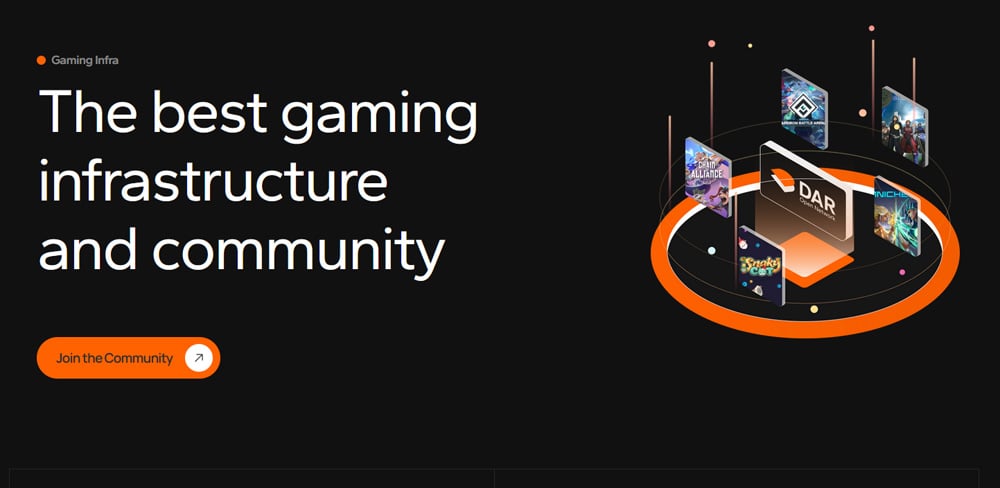
DAR Open Network is emerging as a pivotal infrastructure provider in the evolving Web3 gaming landscape, offering tools and platforms that enable developers and gamers to build, own, and monetize digital experiences. The network positions itself as a foundational layer for the future of Web3 gaming by emphasizing ownership, cross-platform compatibility, and decentralized innovation. At the core of DAR Open Network’s strategy is its commitment to empowering gamers through blockchain-based solutions, which allow them to truly own in-game assets and participate in a transparent and interconnected digital economy [1].

The transition from Web2 to Web3 is being accelerated by DAR Open Network’s suite of tools, including on-chain gaming, tokenization of in-game items, secure platforms, and a free-to-play model that supports a “play-to-earn” approach. These innovations address long-standing issues in traditional gaming, such as lack of ownership and control over in-game assets. By introducing blockchain technologies, DAR Open Network enables gamers to engage in a global economy where their contributions are recognized and rewarded [1].

A key example of DAR Open Network’s capabilities is Dalarnia Legends, a next-generation Web3 game that exemplifies the potential of the network. The game leverages blockchain to create a transparent gaming environment where players can own and trade assets across platforms. It also integrates secure and interconnected systems, allowing for a more immersive and rewarding experience for users [1].

The network has also demonstrated its scalability by transitioning from a single-title platform—Mines of Dalarnia—to a broader Web3 gaming ecosystem. In 2024, DAR expanded from one game to a full platform, and by the end of 2024, it launched Dalarnia Legends on testnet, with a mainnet release planned for 2025. The network also incubated Marble Rumble, with a planned launch on Telegram in early April 2025 [1].

To support global development, DAR Open Network offers a range of tools, including the Dalarnia Portal, a development suite with social logins and NFT marketplaces; DAR Citizenship, a premium membership that grants in-game benefits and access to new opportunities; and DAR ID, a next-generation authentication system that ensures backward compatibility for existing users. The network’s DAR Quest System further enhances user engagement by rewarding players with real-world value, while Dalarnia Nexus serves as a community hub and social gaming platform [1].

The network’s native token, $D, functions as both a governance token and a platform currency, offering additional utility through staking and passive earning opportunities. This multi-use model enhances the token’s appeal to both gamers and investors [1].

By fostering an open-source environment, DAR Open Network encourages innovation and rapid scaling through the contributions of global developers. Unlike traditional Web2 platforms, which require centralized control and internal design processes, Web3 gaming can evolve organically, driven by a decentralized community. This decentralized model is accelerating the adoption of Web3 technologies in the gaming industry, with DAR Open Network at the forefront of this shift [1].

The DAR Open Network’s evolution from a single game to a robust gaming infrastructure highlights its potential to shape the future of the industry. With a chain-agnostic approach, support for 15+ blockchains, and a growing presence on major exchanges such as Binance and Coinbase, the network is positioned to lead the next phase of Web3 gaming development [1].

Source: [1] DAR Open Network: Building the Infrastructure for Web3 Gaming’s Future (https://blockonomi.com/dar-open-network-building-the-infrastructure-for-web3-gamings-future/)


Source link

21 08, 2025

Binance Wallet Redefines Crypto Access by Bridging CeFi and DeFi

By |2025-08-21T19:01:27+03:00August 21, 2025|News, NFT News|0 Comments


Binance’s native wallet continues to gain traction among decentralized finance (DeFi) users, particularly in the token swap market, where it has emerged as a dominant player. According to recent data, the Binance Web3 Wallet facilitates seamless on-chain trading, supports multiple blockchains, and provides secure and efficient access to decentralized applications (dApps) without requiring users to leave the wallet environment. This integration of centralized and decentralized finance (CeFi and DeFi) features has positioned the wallet as a preferred tool for both seasoned traders and newcomers to the space [2].

The wallet’s growing popularity is also being driven by Binance’s ongoing focus on user experience and security. The platform utilizes advanced encryption and real-time risk monitoring, ensuring that user assets are safeguarded. Additionally, Binance maintains a Secure Asset Fund for Users (SAFU) valued at $1 billion, which further reinforces investor confidence in the platform [2].

In tandem with the wallet’s rising adoption, Binance has also launched several airdrop campaigns tied to new token offerings, which have led to notable surges in the value of certain tokens. These alpha airdrops are designed to distribute new tokens to a broad user base, often before public launch, thereby creating early liquidity and fostering community engagement. Analysts suggest that these strategies are helping to drive increased on-chain activity and wallet usage across the Binance ecosystem [2].

Binance continues to expand its user base, with over 250 million registered users globally. The platform supports more than 350 cryptocurrencies, including major assets like Bitcoin (BTC), Ethereum (ETH), and emerging tokens such as Pepe (PEPE) and Notcoin (NOT). The exchange has also integrated recurring investment options, price alerts, and trading bots to cater to a diverse range of investor preferences, from day traders to long-term holders [2].

The company’s aggressive expansion into Web3 has led to the development of a comprehensive suite of tools and services within the Binance app, including educational content, auto-invest functions, and support for yield farming and staking. These features, combined with a fast and secure KYC process, have made it easier for new users to enter the crypto market and begin earning passive income from their holdings. Binance’s focus on both utility and education has contributed to the broader adoption of its wallet and ecosystem [2].

As the crypto market continues to evolve, Binance remains at the forefront of innovation, leveraging its large user base and regulatory advancements to strengthen its position in the global digital asset landscape. However, it is important to note that while the platform offers a range of financial tools, all trading and investment activities carry inherent risk, and users are advised to invest only what they can afford to lose [2].

Source: [1] SHEL: Shell PLC – Stock Price, Quote and News (https://www.cnbc.com/quotes/SHEL) [2] Binance: Buy Bitcoin & Crypto – Apps on Google Play (https://play.google.com/store/apps/details?id=com.binance.dev) [3] Binance: Buy Bitcoin & Crypto 17+ – App Store (https://apps.apple.com/kn/app/binance-buy-bitcoin-crypto/id1436799971)


Source link

21 08, 2025

Binance Wallet’s 95% Swap Dominance Reveals DeFi’s Shift Toward One-Stop Hubs

By |2025-08-21T16:59:27+03:00August 21, 2025|News, NFT News|0 Comments


Binance Wallet has emerged as the dominant force in the decentralized finance (DeFi) space, capturing 95% of the global swap volume, according to recent data. This significant market share places it ahead of competing wallets such as MetaMask and Trust Wallet, which collectively hold the remaining 5% of the market. The surge in Binance Wallet’s popularity underscores its role as a central hub for token swaps and cross-chain transactions, leveraging the infrastructure and ecosystem of the Binance platform. As the DeFi landscape evolves, Binance Wallet’s dominance highlights the growing preference for multi-chain compatibility and integrated trading features among users seeking to optimize their digital asset management.

The wallet’s ability to support a vast array of blockchains—over 100 in total—has been a key factor in its appeal. This extensive compatibility allows users to seamlessly interact with multiple blockchain networks, including Ethereum, Binance Smart Chain, Solana, and others, without the need to switch between different wallet applications. Additionally, Binance Wallet integrates a DEX aggregator that enables users to execute token swaps across multiple decentralized exchanges (DEXs) within a single interface. This streamlined experience reduces the complexity of multi-chain DeFi activities, making it more accessible for both novice and experienced users.

Binance Wallet’s native staking functionality further enhances its competitive edge. It supports staking for over 25 cryptocurrencies, including major assets like Ethereum and Binance Coin. This feature not only simplifies the process of earning staking rewards but also eliminates the need for users to navigate external platforms or services. By consolidating key DeFi functions—such as trading, staking, and NFT management—within a single user-friendly interface, Binance Wallet aligns with the growing demand for efficiency and convenience in the decentralized finance ecosystem.

The wallet’s integration with Binance’s broader ecosystem, including access to the exchange’s fiat on-ramp services and staking pools, further strengthens its position in the market. Users benefit from a seamless transition between trading, staking, and asset management, all underpinned by Binance’s institutional-grade security infrastructure. The inclusion of biometric authentication and hardware wallet compatibility also bolsters its security profile, addressing one of the primary concerns of crypto users.

Despite its dominance, Binance Wallet faces competition from other leading wallets such as MetaMask and Trust Wallet. While MetaMask remains a popular choice for Ethereum and EVM-compatible networks, Trust Wallet has carved out a niche by emphasizing broad blockchain support and user-friendly features. However, Binance Wallet’s ability to combine DeFi functionality with a multi-chain approach and institutional-grade security has enabled it to attract a broader user base, particularly among those looking to maximize their engagement with the DeFi space.

Industry experts suggest that Binance Wallet’s success is partly due to the growing adoption of DeFi and the increasing demand for tools that support multi-chain interactions. As more users seek to participate in cross-chain DeFi protocols and token swaps, wallets that offer integrated DEX aggregators and broad blockchain compatibility are likely to gain further traction. This trend underscores the importance of user-centric design and feature integration in the evolving crypto wallet landscape.

The dominance of Binance Wallet also reflects broader shifts in the DeFi market. With decentralized applications (DApps) and token swaps becoming more mainstream, users are increasingly looking for wallets that simplify complex financial activities. Binance Wallet’s ability to aggregate liquidity and offer competitive trading rates across multiple exchanges has made it an attractive option for those seeking to optimize their DeFi strategies. Additionally, its support for NFTs and decentralized applications further enhances its utility, positioning it as a one-stop solution for managing a diverse range of digital assets.

As the DeFi sector continues to grow, the competition among crypto wallets is expected to intensify. While Binance Wallet currently holds a commanding lead, ongoing developments in open-source wallets and emerging platforms could influence market dynamics. Nonetheless, the current data highlights the wallet’s effectiveness in meeting the evolving needs of DeFi participants, combining security, usability, and functionality in a way that aligns with the broader industry trajectory.

Source: [1] MetaMask vs. Trust Wallet: Which Is Best In 2025? (https://www.koinx.com/blog/metamask-vs-trustwallet) [2] Top 10 Best Crypto Wallets: Safest and Most Secure Picks … (https://www.cryptoninjas.net/crypto/best-cryptocurrency-wallet) [3] 9 Best Crypto Wallets for 2025 (https://www.nerdwallet.com/p/best/investing/crypto-bitcoin-wallets)


Source link

21 08, 2025

DAR Open Network: Building the Infrastructure for Web3 Gaming’s Future

By |2025-08-21T14:58:47+03:00August 21, 2025|News, NFT News|0 Comments


Web3 gaming is here in a big way. Gamers can own online goods and participate on platforms that connect globally. The DAR Open Network makes developing new ideas possible, and has loads of features that work right now. If you think Web3 is the future of gaming, you need to know DAR Open Network!

Web3 Gaming is The Future

DAR Open Network sees the power of synergy in the Web3 gaming space. Before we discuss what DAR Open Network offers devs and gamers, let’s understand why Web3 gaming matters. The base of any economy is ownership. Until now, ownership in the gaming space wasn’t possible.

Large game developers controlled ownership on platforms, which made in-game items difficult to value. Big studios were able to dictate terms to gamers, who had no choice but to accept whatever regulations the studio created.

Web3 changes the game, and now gamers are empowered like never before.

Ownership And More

Ownership changes everything. The difference between a serf and a small land holder is ownership. So in the world of gaming, ownership lifts gamers from digital serfdom into smallholders in the global Web3 digital economy.

DAR Open Network knows that Web3 gaming is still getting started. Blockchain made ownership and cross-platform compatibility possible. Now, the push to own a digital life is taking hold.

Connections are powerful. DAR Open Network understands how much a globally connected Web3 gaming ecosystem is, and why gamers will support platforms that empower players. It’s an amazing opportunity for devs and gamers alike, and the tools that exist today are ready to grow.

A Model Web3 Gaming Economy

DAR Open Network’s Dalarnia Legends is a perfect example of how Web3 can be used to create an online ecosystem that empowers players. It uses next-generation Web3 tools to make gaming work for everyone, and foster a dynamic online world that grows with the gamers who populate the online world.

Here are a few things that make Dalarnia Legends a perfect example of a Web3 ecosystem:

  • On-chain gaming to total transparency
  • Tokenization so you can own your online life
  • Secure platforms to keep safe
  • Interconnected via DAR for totally integrated Web3 life
  • Free to play so anyone can enter the ecosystem
  • Play to earn gaming for an Web3 income stream

Wiping Out Web2 Gaming

Online gaming is a huge market that turns over billions in USD every year. Here is the problem, Web2 can’t compete with Web3 anymore. In the early days of blockchain gaming on-chain games were slower than Web2.

Now Web3 gameplay is quick, and players get all the benefits of blockchain-based gameplay!

Web3 gaming offers quick logins and fast gameplay, but it also delivers all the fun that built Web2 gaming into a massive global industry. Devs are looking for ways to use Web3 more, and the infrastructure that DAR Open Network delivers is attracting top-tier gaming devs.

DAR Open Network: Building the Infrastructure for Web3 Gaming’s Future

Scaling For Dominance

Web3 is basically open-source. It welcomes devs that want to create new aspects of the ecosystem. As long as the new ideas deliver high quality gaming options, all are welcome. The DAR citizenship program is a great way to vet new projects, but more on that down below.

Let’s think about why scaling is better in an open-source environment. A Web2 mega-platform has to keep its design process in-house. It needs to manage the design, and make sure its existing platform operates with the build-out.

In the Web3 environment, a lot less control is needed to scale an ecosystem. In fact, with thousands of devs around the world looking for projects, Web3 gaming is set to scale at a pace that would be impossible for a centralized system.

The DAR Open Network started as Mines of Dalarnia, so you know that it already operates at a high-level. With solid existing infrastructure, the DAR Open Network is the model for Web3 gaming development.

The Evolution of DAR Open Network

DAR Open Network has a lot to be proud of. Over the past few years, it grew from a gaming platform called Mines of Dalamia into the robust Web3 gaming infrastructure it is today.

As a chain-agnostic AI-fueled Web3 gaming ecosystem, DAR Open Network is primed to empower the next generation of global gaming development.

Here are some of the milestones its achieved along the way:

  • Launched Mines of Dalarnia in april 2022
  • Expanded from one game to a platform in 2024
  • Launched Dalarnia Legends on testnet by the end of 2024 with the mainnet launch planned for 2025
  • Incubated Marble Rumble with a planned launch for early April on Telegram
  • Listed on 60+ exchanges, including Binance and Coinbase
  • Started development of Dalarnia Nexus – a gamified social hub and gaming multiverse connecting all platform games. planned for open Alpha by the end of June 2025
  • Support of multiple chains for DAR ID (15+)

As you can see, DAR Open Network gets things done. Let’s dive deeper into the ecosystem, and see what it has on offer in 2025 and beyond.

The DAR Open Network Ecosystem

If you want to develop a Web3 gaming platform, start by looking at what The DAR Open Network ecosystem already offers. It is ready to go, and could cut loads of time off your development cycle.

Dalarnia Portal

The Dalarnia Portal is here to help creators bring their Web3 visions to life. It offers a gaming development suite that offers social logins, simplified player access and incentive systems. It also has a NFT marketplace and cross-chain asset bridges for top-tier asset creation and trade. It offers more tools as well, and should be a go-to platform for Web3 game devs.

DAR Citizenship

DAR Citizenship is premium membership that offers in-game perks and more. It unlocks features and helps keep players on the platform. Partners can use it to access new revenue streams and users for other Web3 opportunities.

DAR ID

DAR ID is the next-generation of authentication and social logins. It offers unified account management across platforms in the Web3 space. It also allows existing communities to translate credentials to the Web3 space, which is a must for backward compatibility.

You can read more about the power of DAR ID here!

DAR Quest System

The DAR Quest System keeps users engaged by building on their DAR ID. With quests that deliver real rewards, users are incentivized to stay in the ecosystem and reward devs and partners. Projects win big from the system as their projects gain more and more players!

Dalarnia Nexus And DeAI

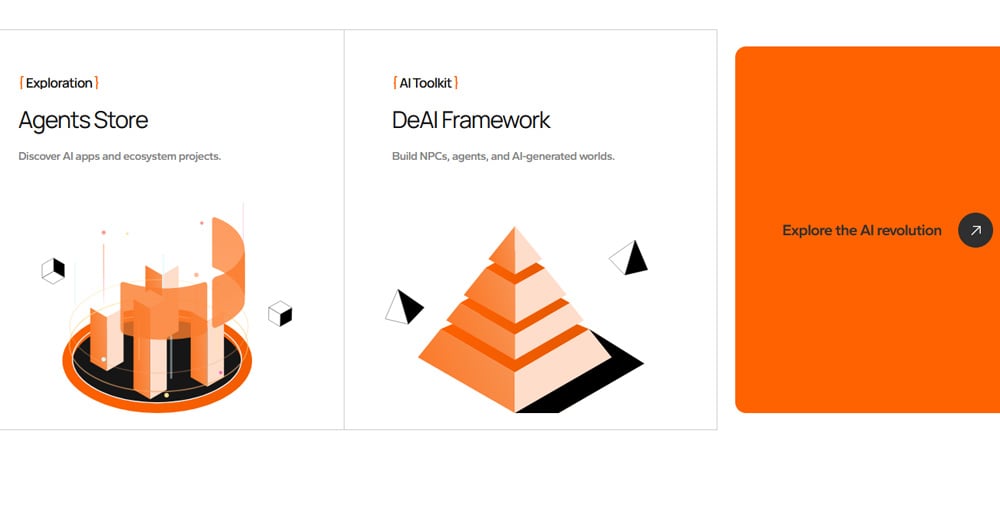
Dalarnia Nexus is where it begins for players on the DAR platform. It is a place for the community to come together and grow. DeAI is a multi-agent framework for devs to build and deploy collaborative AI agents. With so many existing tools, DAR Open Network is a winning option for both gamers and forward thinking Web3 devs.

$D Token

$D is the multi-use token for the DAR Open Network. It is used as a governance token, as well as the platform currency. It also offers staking opportunities for passive earning, which makes it an attractive option for investors even if they aren’t gamers.

DAR Open Network Empowers Web3

DAR Open Network has loads to offer the Web3 development space. Its existing tools are robust, and allow fast scaling. With great gameplay and innovative AI solutions, DAR Open Network is a driving force in Web3 gaming.

The vision of DAR Open Network is ready to revolutionize Web3 development with open, decentralized solutions for serious Web3 devs. It will allow people everywhere to share media and other ideas without borders to their creativity.

With unique games and powerful development tools, DAR Open Network is ready to make the future of Web3 gaming a reality!


Source link

21 08, 2025

Bitcoin Whale Shifts Empire from BTC to ETH—A DeFi Power Play

By |2025-08-21T10:55:51+03:00August 21, 2025|News, NFT News|0 Comments


A notable Bitcoin whale, identified through on-chain activity, has executed a significant swap of over 400 BTC into Ethereum (ETH) via Hyperliquid, a decentralized exchange. The whale, which previously withdrew 14,837 BTC valued at $94.9 million from an unknown source seven years ago, has now deposited 660 BTC into Hyperliquid, with the majority of the BTC sold and converted into ETH. This move reflects a strategic shift in the whale’s portfolio, as it liquidated BTC holdings and consolidated ETH assets to the tune of 11,744 ETH, valued at approximately $50.6 million. The activity has been attributed to the growing momentum in Ethereum markets, with the whale further opening leveraged long positions in ETH worth $295 million across four distinct wallets, using 3x and 10x leverage.

The whale’s actions are part of a broader trend in whale behavior, with long-term Bitcoin holders increasingly rotating into Ethereum, particularly as leveraged derivatives markets offer higher upside potential. Analysts and market observers have noted that Ethereum’s recent price volatility and sharp corrections have not deterred such large-scale portfolio repositioning. Despite a 200 basis point drop in BTC prices on Hyperliquid following the whale’s activity, the overall impact on the broader market remained limited. The whale’s transactions highlight the increasing interplay between Bitcoin and Ethereum in the context of decentralized finance (DeFi) platforms, with Hyperliquid emerging as a key venue for such large-volume swaps.

Ethereum’s recent performance has been marked by significant price swings, including a recent dip to $4,063 following heavy selling by major ETF providers such as BlackRock, Fidelity, and Grayscale, who collectively offloaded over $422 million worth of ETH within 24 hours. This has triggered a wave of forced liquidations and investor uncertainty, with data from SoSoValue indicating $678 million in cumulative ETF outflows over three days. Fidelity led the sell-off with $156 million in redemptions, followed by Grayscale with $122 million, further exacerbating downward pressure on Ethereum’s price. The market has seen partial recovery, with ETH trading near $4,223, but the broader trend suggests continued selling pressure and a potential shift in investor sentiment.

Bitcoin advocate Samson Mow has weighed in on Ethereum’s current trajectory, suggesting that the recent rally may set the stage for a reversal. Mow, CEO of Bitcoin adoption firm Jan3, pointed out that many long-term ETH holders, including early insiders from the ICO era, already hold substantial Bitcoin positions. According to Mow, these investors have been rotating BTC into ETH to capitalize on new narratives such as the emergence of Ethereum treasury companies. However, once Ethereum prices reach a sufficient level, he predicts that these investors will sell their ETH holdings, potentially leaving “new generational bagholders,” and reallocate their profits back into Bitcoin. Mow’s comments reflect a broader debate within the crypto community about the long-term value proposition of Ethereum and whether it can sustain its current momentum in the face of renewed Bitcoin dominance.

Hyperliquid, the platform through which the whale executed these transactions, has seen a surge in activity and market share in the decentralized perpetual trading space. The platform controls over 75% of the market and manages nearly $6.2 billion in user assets. Despite its rapid growth, Hyperliquid has maintained a decentralized and community-driven approach, rejecting venture capital funding and prioritizing protocol development over short-term exposure. Founder Jeff Yan emphasized the importance of building a product that delivers real value to users rather than chasing early exits or high valuations. The project’s token, HYPE, is currently valued at around $16 billion, placing it 13th among all crypto assets. Analysts expect Hyperliquid to continue gaining traction as more traders seek efficient and decentralized trading environments.

The whale’s strategic shift from Bitcoin to Ethereum underscores the evolving dynamics in the crypto market, where portfolio diversification and leveraged positioning play an increasingly important role. As institutional and retail investors continue to monitor market conditions and policy developments—such as the Federal Reserve’s upcoming interest rate decisions—the interplay between Bitcoin, Ethereum, and decentralized platforms like Hyperliquid will remain a key area of focus. The whale’s activity not only demonstrates the potential for cross-chain arbitrage and leveraged trading but also highlights the shifting priorities of long-term holders in response to market trends and technological advancements.

Source: [1] Ancient Bitcoin Whale Swaps Over 400 BTC to ETH on Hyperliquid (https://cryptonews.com/news/ancient-bitcoin-whale-swaps-over-400-btc-to-eth-on-hyperliquid/) [2] A certain ancient giant whale sold Bitcoin on Hyperliquid… (https://www.chaincatcher.com/en/article/2198926) [3] Bitcoin, Ethereum Rise After Fed Minutes Shed Light on Rate… (https://finance.yahoo.com/news/bitcoin-ethereum-rise-fed-minutes-200700323.html) [4] Bitcoin, Ethereum Slip as Crypto Markets Pull Back After Hitting… (https://finance.yahoo.com/news/bitcoin-ethereum-slip-as-crypto-markets-pull-back-after-hitting-2025-highs-155818704.html) [5] BTC, ETH, XRP, BNB, SOL, DOGE, ADA, LINK, HYPE, XLM (https://cointelegraph.com/news/price-predictions-8-20-btc-eth-xrp-bnb-sol-doge-ada-link-hype-xlm) [6] Founder Jeff Yan Explains Why Hyperliquid Said ‘No’ to… (https://www.blocmates.com/news-posts/founder-jeff-yan-explains-why-hyperliquid-said-no-to-vcs-and-still-won-big) [7] Top Crypto Gainers 2025: Cold Wallet, Hyperliquid, Solana… (https://coincentral.com/top-crypto-gainers-2025-cold-wallet-hyperliquid-solana-and-ethereum-show-strength/) [8] Hyperliquid (HYPE) Price Prediction: Bulls Defend $40… (https://bravenewcoin.com/insights/hyperliquid-hype-price-prediction-bulls-defend-40-support-as-fibonacci-levels-point-toward-64-70-extension)


Source link

Go to Top