The main tag of NFT News Today Articles.
You can use the search box below to find what you need.
[wd_asp id=1]

26 07, 2025

NFT Market Cap Climbs 66% Following $2.9M CryptoPunks Transaction

By |2025-07-26T20:34:45+03:00July 26, 2025|News, NFT News|0 Comments


The NFT market has witnessed a surge in activity, driven by high-profile transactions and a significant increase in market capitalization. A single buyer recently acquired six rare CryptoPunks NFTs—known for their “hoodie” trait—for over $2.9 million on OpenSea, a move that amplified trading volumes and pushed the market cap to $6 billion within 30 days, reflecting a 66% rise [1]. Concurrently, the floor price for top collections such as CryptoPunks, Pudgy Penguins, and Bored Ape Yacht Club climbed by 29%, 66.7%, and 9.8%, respectively, underscoring renewed investor interest [1].

This growth, however, remains below the $16.6 billion valuation peak observed in 2021–2022. The market’s trajectory has also seen shifts in platform dynamics, with X2Y2 ceasing operations after a sharp decline in trading activity, while remaining platforms have adapted strategies to sustain engagement [1]. Experts note that dominant collections like CryptoPunks act as barometers for market sentiment, with their price movements influencing broader trends [1].

The resurgence aligns with broader blockchain adoption, exemplified by Coinbase’s expansion into NFTs via a decentralized platform on the Solana blockchain. This initiative, leveraging Solana’s low transaction costs, aims to attract new participants to the market [3]. Yet, the sector faces volatility. According to 99Bitcoins’ Q2 report, NFT sales volume fell by 27% in the past month, following a June peak of $51 million, signaling challenges to long-term stability [4]. Analysts caution that while high-value transactions and rising floor prices reflect short-term optimism, sustainability hinges on resolving regulatory uncertainties and improving user accessibility [2].

The market’s current valuation of $6.6 billion—up 94% in July—reflects a more measured growth compared to earlier frenzies [2]. Investors are advised to monitor macroeconomic factors and on-chain activity to assess resilience amid mixed signals. Despite the recent rally, the sector’s ability to maintain momentum remains unproven, with experts emphasizing that institutional participation and technological innovation could shape its future [2].

Source: [1] [Crypto Whale Spends $4.3M on CryptoPunks as NFT Market Cap Climbs 66% in 30 Days](https://cryptoadventure.com/crypto-whale-spends-4-3m-on-cryptopunks-as-nft-market-cap-climbs-66-in-30-days) [2] [NFT Market Cap Surged to $6.6B in July: DappRadar](https://cryptoadventure.com/nft-market-cap-surged-to-6-6b-in-july-dappradar/) [3] [Coinbase Breaks New Ground with Solana’s Unique Altcoins](https://cryptorobotics.ai/news/news-report/coinbase-solana-altcoins-jitosol-mplx/) [4] [99Bitcoins’ Q2 State of Crypto Market Report](https://99bitcoins.com/report/state-of-crypto-q2-2025/)


Source link

26 07, 2025

DeFi Token MUTM Projects 1000% Gains as Whales Target Ecosystem Outpacing DOGE

By |2025-07-26T18:33:43+03:00July 26, 2025|News, NFT News|0 Comments


A DeFi token priced at $0.03 has emerged as a focal point for whale investors, with projections suggesting it could outpace the growth trajectory of DOGE by delivering potential 1,000% returns. Mutuum Finance’s native token, MUTM, is being positioned as a scalable decentralized finance ecosystem designed to leverage stablecoin infrastructure, peer-to-contract lending, and a layered roadmap for rapid adoption. Analysts and market participants are highlighting the project’s innovative mechanisms as a catalyst for significant value appreciation.

The platform’s decentralized stablecoin system is a cornerstone of its design. By allowing users to lock blue-chip assets like ETH as collateral, Mutuum aims to mint stablecoins while dynamically adjusting interest rates to maintain a $1 peg. The system will also burn stablecoins upon loan repayment to manage supply, creating a self-regulating framework for price stability [1]. This model, combined with arbitrage opportunities in external markets, is expected to reinforce the peg and drive demand for MUTM, the governance token underpinning the ecosystem.

A key attraction for investors lies in the Peer-to-Contract (P2C) lending model. Depositing 6,000 USDC generates 6,000 mtUSDC tokens, which accrue an estimated 11.5% APY in real time. Additionally, staking mtTokens in beta-phase smart contracts could unlock MUTM dividends funded by protocol revenue from open market buybacks. The platform also plans to offer liquidity at 70% LTV for blue-chip crypto assets, enabling users to access stablecoin without liquidating collateral. Separately, a Peer-to-Peer (P2P) lending channel targeting volatile assets like PEPE and FLOKI will offer APRs exceeding 30%, catering to risk-tolerant investors while isolating risk from the stablecoin pools [1].

Mutuum’s phased roadmap outlines aggressive expansion goals. Phase 3, currently underway, includes a testnet launch on a Layer 2 blockchain, security audits, and preparation for exchange listings. Phase 4 will see the live platform’s deployment, token listings, and institutional partnerships. The project’s growth potential is underscored by a hypothetical investment scenario: a $10,000 exit from DOGE at MUTM’s $0.01 presale price would yield 1 million tokens. At $0.03, this position is worth $30,000, with projections suggesting a $0.06 target doubles it to $60,000. A $0.30 price point—a “conservative” target based on current growth assumptions—would elevate the investment to $300,000, a 30× return [1]. Long-term projections indicate a $1 price could deliver a 100× return, positioning MUTM as a potential outlier in the crypto space.

The project’s appeal stems from its execution-focused roadmap and utility-driven tokenomics. Unlike many DeFi initiatives that prioritize hype over tangible use cases, Mutuum’s stablecoin infrastructure and hybrid lending models are already operational in test phases. By addressing liquidity access and yield generation simultaneously, the platform aims to capture market share in both risk-averse and high-yield segments. However, as with all crypto assets, performance remains contingent on market conditions and regulatory clarity.

Source: [1] [Preferred by whales: This $0.03 DeFi token could explode 1000% faster than DOGE] [https://invezz.com/news/2025/07/26/preferred-by-whales-this-0-03-defi-token-could-explode-1000-faster-than-doge/]


Source link

26 07, 2025

AurealOne Presale Targets $50M as Investors Pursue 100x Gains in Web3 Gaming

By |2025-07-26T16:31:48+03:00July 26, 2025|News, NFT News|0 Comments


The cryptocurrency market continues to attract investors seeking high-growth opportunities, with pre-sale projects emerging as a focal point for those aiming to identify the next Bitcoin-like success. Among these, AurealOne (DLUME) has drawn attention as a Web3 gaming platform leveraging blockchain technology to create a transparent and skill-based esports ecosystem. The project’s presale, priced at $0.0013 per token, aims to raise up to $50 million across 21 stages, positioning it as a potential 100x play for early adopters [1].

AurealOne’s core innovation lies in its proprietary Aureal Chain, which logs all in-game activities on-chain to ensure verifiable gameplay history and anti-cheat mechanisms. The platform enables users to participate in 1v1 contests, tournaments, and NFT-based rewards, emphasizing performance-driven outcomes over luck. Notably, the project plans to transition to a decentralized governance model by Q4 2025, enhancing its long-term sustainability [1].

While Bitcoin’s meteoric rise has cemented its status as the foundational asset of the crypto market, newer projects like AurealOne represent a shift toward niche, utility-driven applications. Unlike Bitcoin’s speculative appeal, AurealOne’s value proposition is rooted in its integration of blockchain into competitive gaming, a sector projected to grow as decentralized finance (DeFi) and play-to-earn models mature. However, the project faces challenges typical of pre-sale tokens, including market volatility and execution risks [1].

Analysts caution that the success of pre-sale projects hinges on their ability to deliver functional use cases and community adoption. AurealOne’s focus on scalability, compliance, and real-world utility distinguishes it from speculative meme coins, but its presale’s high returns remain contingent on the platform’s development progress and broader market sentiment. Comparatively, other pre-sale projects like DexBoss and Bitcoin Solaris highlight the diversification of crypto innovation, yet none offer the same structured approach to gaming and NFT integration as DLUME [1].

Investors considering AurealOne must weigh its ambitious roadmap against the inherent risks of early-stage crypto assets. The project’s $50 million fundraising target reflects strong investor confidence, but its ultimate performance will depend on the execution of its governance transition and the adoption of its gaming ecosystem. As the crypto market evolves, projects that combine tangible utility with scalable infrastructure may emerge as the next wave of high-growth assets, though caution remains essential in navigating speculative opportunities [1].

Source: [1] [New Crypto Coins: Bitcoin Created Millionaires—Can AurealOne Be Your Life-Changing 100x Play?](https://cryptonewsland.com/new-crypto-coins-bitcoin-created-millionaires-can-aurealone-be-your-life-changing-100x-play/)


Source link

26 07, 2025

Dai (DAI) as a Strategic Stablecoin for DeFi and Passive Income in 2025

By |2025-07-26T14:30:54+03:00July 26, 2025|News, NFT News|0 Comments


In an era where financial innovation is increasingly driven by decentralization and algorithmic precision, Dai (DAI)—now rebranded as USDS under the Sky Protocol—has emerged as a standout asset for investors seeking both stability and active participation in the DeFi ecosystem. As of July 2025, the 4.5% yield offered by the Sky Savings Rate (SSR) module, combined with DAI’s DAO-driven governance and deep integration into DeFi protocols, positions it as a compelling alternative to centralized stablecoins like USDC and Tether.

Decentralization: The Foundation of Trust

Dai’s strength lies in its governance model. Unlike USDC (issued by Circle) or Tether (issued by Tether Limited), which rely on centralized entities to manage reserves and enforce policies, DAI is governed by a Decentralized Autonomous Organization (DAO). Token holders collectively vote on critical parameters such as stability fees, collateral ratios, and risk management strategies. This model aligns with the ethos of DeFi, where trust is derived from code and community consensus rather than corporate assurances.

The DAO’s transparency—visible on-chain voting records and open-source smart contracts—ensures that governance decisions are not subject to opaque corporate hierarchies. For investors, this means reduced counterparty risk and a system that resists manipulation. In contrast, while USDC provides monthly audits and Tether has improved reserve disclosures, neither offers the same level of participatory control.

Yield Generation: Sky Protocol’s 4.5% Advantage

The rebranding of DAI to USDS under the Sky Protocol has unlocked new opportunities for passive income. As of mid-2025, users who upgrade their DAI to USDS (a 1:1 swap) can deposit the upgraded tokens into the SSR module, earning a 4.5% annualized yield. This yield is generated through the protocol’s dynamic minting of new USDS tokens, which are distributed to depositors as interest.

This mechanism is particularly attractive in a low-yield environment, where traditional banking offers negligible returns. For context, the average yield on USDC or Tether in similar DeFi platforms typically hovers between 3% and 4%. The Sky Protocol’s rate not only outpaces these competitors but also demonstrates the scalability of algorithmic governance in optimizing returns.

DeFi Integration: Beyond a Stablecoin

Dai’s utility extends beyond its role as a medium of exchange. Its programmable nature and non-custodial design make it a cornerstone of the DeFi ecosystem. In 2025, DAI is the second-largest stablecoin by daily trading volume ($20.619 billion), underscoring its adoption in lending, borrowing, and liquidity provision. Protocols like Aave, Compound, and Uniswap frequently use DAI as a base asset for yield farming and automated market-making.

This deep integration creates a flywheel effect: the more DAI is used in DeFi, the more value accrues to its governance token (SKY) and, by extension, its stakeholders. In contrast, USDC and Tether, while dominant in liquidity and cross-exchange trading, lack the same level of on-chain programmability. Their centralized structures also limit their appeal in protocols where autonomy and censorship resistance are non-negotiable.

Strategic Considerations for Investors

For investors prioritizing autonomy and ecosystem participation, DAI/USDS offers a unique value proposition:
1. Governance Participation: By holding SKY tokens, investors can influence protocol upgrades and risk parameters, directly shaping the future of the stablecoin.
2. Yield Optimization: The 4.5% yield on USDS provides a competitive edge over centralized alternatives, particularly for those with a medium-term horizon.
3. DeFi Synergy: DAI’s role in lending and liquidity pools enhances portfolio diversification, reducing reliance on traditional financial systems.

However, risks remain. The DAO’s reliance on community consensus can lead to slower decision-making in crises, and the need to upgrade DAI to USDS introduces a friction point for new users. Additionally, regulatory scrutiny of algorithmic stablecoins could impact adoption.

Conclusion: A Decentralized Future with DAI

As the DeFi ecosystem matures, the demand for stablecoins that balance stability with decentralization will only grow. Dai’s rebrand to USDS and its 4.5% yield through the Sky Protocol address both passive income and governance participation, differentiating it from centralized peers. While USDC and Tether will likely retain their market dominance in trading and settlement, DAI’s alignment with DeFi’s core principles makes it an indispensable asset for investors seeking to future-proof their portfolios.

In a world where financial systems are increasingly digitized, the strategic advantage of DAI lies not just in its yield potential but in its ability to empower individuals to co-own and co-govern the infrastructure of the new financial order. For those who prioritize autonomy, transparency, and innovation, the case for DAI is as compelling as it is timely.


Source link

26 07, 2025

Cryptocurrency Investors Shift to Early-Stage Presales Amid DeFi and AI Trends 2025

By |2025-07-26T12:30:09+03:00July 26, 2025|News, NFT News|0 Comments


Investor attention in the cryptocurrency market has shifted toward early-stage presales in July and August 2025, with several projects drawing interest for their innovative approaches and potential scalability. Among the most discussed are Hexydog (HEXY), Nexchain (NEX), BlockchainFX, Jetbolt, and Snorter Token (SNORT), each targeting distinct segments of the blockchain ecosystem. These projects reflect broader trends in decentralized finance (DeFi), including cross-chain interoperability, AI integration, and niche market applications [1].

Hexydog stands out for its focus on the $250 billion global pet care industry, combining a decentralized marketplace with a payment platform called Hexypay. The project’s presale has raised over $500,000, with a current token price of $0.0036. By integrating with Ethereum, Solana, and BNB Chain, Hexydog aims to create a low-cost, multi-chain infrastructure for pet-related transactions. Its roadmap includes expansion to Polygon and TRON, alongside plans for a centralized exchange listing, potentially on Binance. The American Pet Products Association has verified the project’s authenticity, adding credibility to its market positioning [1].

Nexchain is another notable presale, designed to automate DeFi liquidity pools through an AI-governed ecosystem. The platform’s modular architecture allows developers to build cross-chain tools, addressing gaps in interoperability. While still under the radar, Nexchain’s automated yield strategies appeal to investors seeking DeFi innovations. Its presale phase remains open, offering early entry before potential mainstream adoption [1].

BlockchainFX targets tokenized foreign exchange trading, bridging traditional finance with decentralized protocols. The project’s beta stage and niche focus on fiat pairs make it attractive to investors exploring DeFi’s expansion into conventional markets. Its long-term potential hinges on maturation of the product and adoption of on-chain instruments [1].

Jetbolt, a Layer 1 blockchain, emphasizes high throughput and scalability, aiming to compete with networks like Avalanche and Base. Despite delays in validator recruitment and community building, the project’s technical ambitions position it as a high-risk, high-reward opportunity for Layer 1 investors [1].

Snorter Token, a meme-based project, leverages micro-utility features such as NFT collections and community rewards. Its presale rounds are progressing quickly, indicating early traction among speculative investors. However, its reliance on a volatile market segment and limited utility compared to the other projects make it a riskier bet [1].

The presale landscape highlights a growing appetite for projects with clear use cases but limited market saturation. Analysts note that presales like Hexydog and Nexchain address gaps in blockchain infrastructure and DeFi tools, while others, such as Snorter Token, cater to speculative demand [6]. Despite this, risks remain significant, including regulatory uncertainties and the absence of standardized metrics to evaluate long-term viability. For instance, while Coindoo ranks Hexydog as a top pick [1], other sources like 99Bitcoins emphasize Bitcoin Hyper’s $4.83M presale funds as a key differentiator [13].

Investors are advised to prioritize due diligence, focusing on tokenomics, development roadmaps, and community engagement. Projects with transparent partnerships or product launches, such as Hexydog’s planned Binance listing, may outperform peers. However, the fragmented nature of investor sentiment—driven by speculative narratives rather than technical fundamentals—complicates risk assessment [3].

Source:

[1] [5 Best Crypto Presales Still Early in July and August] [https://coindoo.com/5-best-crypto-presales-still-early-in-july-and-august/]

[3] [Best Crypto Presales To Invest In July 2025] [https://coingape.com/best-crypto-presales/]

[6] [Best Altcoins to Invest in July 2025] [https://www.coinspeaker.com/guides/best-altcoins-to-invest/]

[13] [13 Best Crypto Presales to Invest in 2025] [https://99bitcoins.com/cryptocurrency/crypto-presales/]


Source link

26 07, 2025

My Lovely Planet Becomes First Web3 Game Recognized by Google’s #WeArePlay Campaign

By |2025-07-26T10:28:34+03:00July 26, 2025|News, NFT News|0 Comments


The game is turning casual play into climate action – users have already planted more than 380,000 trees worldwide

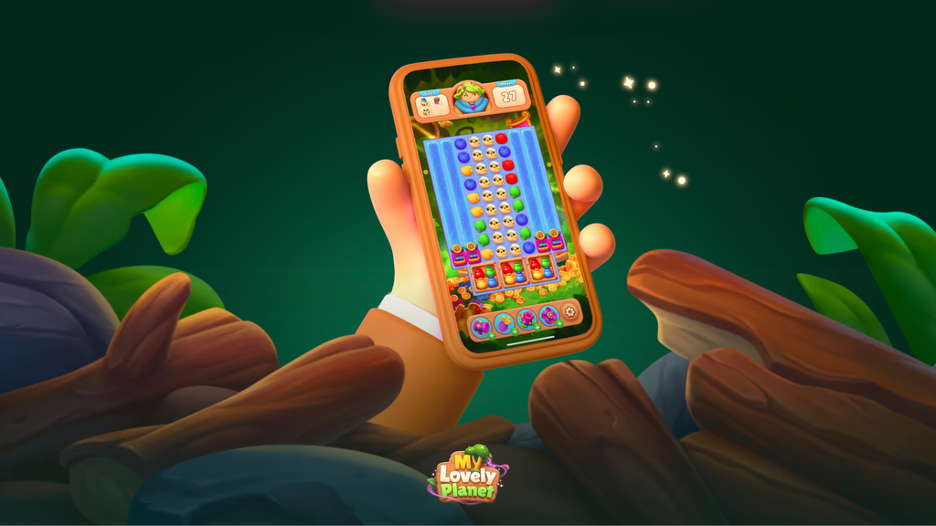
Our digital age is dominated by fleeting trends and throwaway apps, so when a mobile game is proving that entertainment can have a great cause – it becomes an impressive narrative. My Lovely Planet, a Web3-powered mobile puzzle game with an ambitious environmental mission, has been selected by Google for its prestigious #WeArePlay campaign. This marks a historic moment as the first-ever Web3 game to receive such recognition from the tech giant. More than just a game, My Lovely Planet is pioneering a new frontier where blockchain technology meets ecological stewardship—mobilizing gamers to plant trees and combat climate change with every level they complete.

Gaming for Good — A New Paradigm in Mobile Play

At its core, My Lovely Planet offers a relaxed and accessible gaming experience, reminiscent of the most popular casual puzzle titles. But unlike its peers, each milestone in the game contributes directly to environmental action. For every 100 levels completed by a player, the company commits to planting a real tree—thanks to its collaborations with trusted NGOs such as Graine de Vie in Madagascar. As of today, over 380,000 trees have been planted through this model.

Behind this engaging interface is a deeper vision: to make mobile gaming a tool for global sustainability. Clément Le Bras, the CEO and founder of My Lovely Planet, has long believed in the power of digital platforms to create real-world change. “Mobile gaming is a powerful platform for change,” he stated following the Google recognition. “We hope this inspires a new wave of purpose-driven mobile games focused on sustainability.”

This approach represents a significant departure from the exploitative microtransaction models prevalent in mobile gaming today. Instead of encouraging endless spending for cosmetic items or faster progress, My Lovely Planet incentivizes impact. The more a user plays, the more they contribute to tangible ecological restoration efforts.

Google’s inclusion of the game in its #WeArePlay campaign further underscores its growing influence. The campaign highlights the most inspiring apps and the developers behind them, drawing global attention to innovations that merge tech and social purpose. For the blockchain and Web3 sectors—often scrutinized for their environmental impact—this is a breakthrough moment. My Lovely Planet stands as proof that blockchain-based games can be both sustainable and socially responsible.

$MLC — A Token for the Planet

Fueling the game’s ecosystem is $MLC (My Lovely Coin), a Web3 utility token that not only supports in-game rewards but also empowers players to make decisions about real-world environmental investments. This multi-functional token forms the backbone of the My Lovely Planet community, aligning financial value with ecological integrity.

Players who stake at least $100 worth of $MLC gain access to a reward system that lets them convert their in-game diamonds into tokens. This feature gamifies not only progress but investment—offering players a direct economic incentive to stay engaged. More importantly, $MLC holders gain governance rights within the game’s decentralized treasury. That means they can vote on how the game’s earnings are allocated—whether toward reforestation, carbon credits, or clean energy projects.

Since its launch, $MLC has seen impressive growth, jumping 261% in value, a clear indicator of user confidence and a strong product-market fit. Now aiming for a $1 billion market cap, My Lovely Planet is poised to become one of the world’s largest sustainable investment platforms—powered not by institutions, but by an active and committed gaming community.

This innovative model turns players into stakeholders in the fight against climate change. Every download, every level, every token—each element is designed to foster real-world outcomes. And with Google now spotlighting the app on a global stage, the potential for growth and impact is only accelerating.

Le Bras summed up the sentiment best: “It’s a win not just for us, but for every player who’s helping reforest the planet—one level at a time.”


Source link

26 07, 2025

Binance Launches Web Wallet Beta for BSC and Solana to Boost DeFi Onboarding

By |2025-07-26T08:27:31+03:00July 26, 2025|News, NFT News|0 Comments


Binance has launched a web wallet beta for the Binance Smart Chain (BSC) and Solana, enabling users to trade and engage in decentralized finance (DeFi) activities directly from the platform’s homepage without requiring a dedicated application. The beta, introduced on July 25, 2025, offers real-time portfolio tracking, customizable layouts, and support for high-demand tokens such as Meme Rush and Binance Alpha. This update aims to streamline onboarding by leveraging Solana’s low fees and BSC’s established user base, aligning with Binance’s broader strategy to reduce barriers to blockchain participation [1][3].

The wallet beta includes features like real-time trading analytics and portfolio management tools, which simplify user interaction with DeFi protocols. Community feedback has been largely positive, with users highlighting the convenience of managing portfolios and engaging in tokenized economies through an accessible interface. Binance has also launched the Wallet Booster Campaign in partnership with BitlayerLabs, offering 5.7 million BTR tokens to incentivize adoption. This initiative underscores the platform’s focus on boosting on-chain activity and fostering user engagement [1][3].

Market observers note that BNB, Binance’s native token, has seen a 2.99% increase in 24-hour price to $784.91, with a 90-day price rise of 29.18% despite a 11.10% decline in 24-hour trading volume. Analysts suggest that the beta phase could serve as a testing ground for features tailored to diverse user segments, though long-term success will depend on user retention and ecosystem integration [1].

The launch coincides with broader trends in the crypto market, including surging interest in tokenized assets and crypto ETFs. For instance, Ethereum spot ETFs recorded $231 million in net inflows over 15 days, while Bitcoin ETFs saw $227 million in inflows after a period of outflows. These dynamics reflect heightened market participation and the growing appeal of user-friendly tools [1].

However, Binance faces competition from platforms like REX-Osprey, which have introduced staking ETFs with similar functionalities. Historical data indicates that Total Value Locked (TVL) often remains stable post-launch of such products, emphasizing the need for differentiation through speed and accessibility. Regulatory developments, such as the U.S. “GENIUS Act” addressing stablecoin frameworks, may further influence institutional adoption, though Binance’s user-centric model appears to strengthen its position in a competitive DeFi landscape [1][2].

The web wallet’s beta phase represents a strategic step in Binance’s efforts to democratize blockchain access. By removing app installation barriers and prioritizing convenience, the platform aims to attract both retail and institutional users to high-growth networks like Solana. As the crypto market evolves, innovations like this will likely remain critical in assessing the balance between usability, scalability, and regulatory readiness.

Source: [1] Binance. (2025, July 10). Binance Wallet web version Beta launched, initially … https://www.binance.com/square/post/27412462863810

[2] ChainCatcher. (2025, July 12). The beta version of the Binance Wallet web interface is … https://www.chaincatcher.com/en/article/2193277

[3] AInvest. (2025, July 23). Binance Launches Web Wallet Beta for BSC and Solana … https://www.ainvest.com/news/solana-news-today-binance-launches-web-wallet-beta-bsc-solana-boost-defi-onboarding-5-7m-btr-rewards-2507/


Source link

26 07, 2025

Forexus’ NFT Collection Sells Out in Minutes Surpasses 4,000 ETH in 24 Hours on MegaETH Testnet

By |2025-07-26T06:26:21+03:00July 26, 2025|News, NFT News|0 Comments


Forexus, a 36-year-old 3D artist based in Ecuador, has launched a non-fungible token (NFT) collection titled Brass Coin on the MegaETH testnet, selling out during its public phase within minutes. The project generated over 4,000 ETH in 24 hours, with NFTs granting holders early access to Forexus’ upcoming mainnet release on the MegaETH blockchain, slated for Q4 2025. The collection was minted on Rarible, a multi-chain NFT marketplace supporting Ethereum, Tezos, Polygon, Solana, and Immutable X. Social media activity highlighted the NFTs’ utility as a gateway to Forexus’ mainnet debut, with one collector noting the floor price had risen to 194 ETH within hours [1].

Forexus, known for his photorealistic 3D art and chaotic, Web3-infused style, has previously collaborated with platforms like Rarible on projects such as the animated Rise of Abstract. His technical expertise in tools like Cinema 4D and Redshift, combined with his role as an OG member of RARI DAO, positions him as a bridge between traditional art and blockchain innovation. The Brass Coin collection emphasizes dynamic textures, lighting, and a fusion of abstract aesthetics with Web3 concepts, appealing to niche audiences valuing technical mastery [1].

The rapid sell-out underscores growing demand for Web3-native art, particularly from creators who blend conceptual creativity with technical execution. The project aligns with broader NFT market trends where artists leverage blockchain to monetize digital works and engage directly with collectors. The use of MegaETH’s testnet—a Layer 2 solution designed to process 100,000 NFT transactions per second—reflects efforts to address Ethereum’s scalability challenges. This infrastructure also signals strategic momentum ahead of MegaETH’s mainnet launch, which aims to enhance transaction speed and reduce costs for NFT interactions [1].

Analysts suggest the success of Brass Coin highlights a maturing NFT ecosystem where collectors prioritize long-term utility over speculative hype. The limited supply and exclusive access rights embedded in the NFTs exemplify how artists are creating tiered engagement models. The integration of scalable blockchain solutions like MegaETH further supports sustainable adoption, as projects combining artistic innovation with technical efficiency attract sustained interest from both collectors and institutional players. Forexus’ background in 3D modeling and active participation in Web3 communities reinforce his role as a figure driving innovation in the space [1].

Source: [1] [Forexus Drops An NFT Coin – Public Phase Sells Out In Minutes] [https://insidebitcoins.com/news/forexus-drops-an-nft-coin-public-phase-sells-out-in-minutes]


Source link

26 07, 2025

BlockDAG Surpasses Cardano with $351M Presale, Targets 233% DApp Growth by 2026

By |2025-07-26T04:23:56+03:00July 26, 2025|News, NFT News|0 Comments


BlockDAG (BDAG), a blockchain project leveraging directed acyclic graph (DAG) technology and a $351 million presale, has emerged as a notable contender in the race for blockchain innovation, drawing comparisons to Cardano (ADA), a long-standing Layer-1 chain known for its research-driven development. While Cardano has prioritized methodical upgrades and peer-reviewed research over the past decade, BlockDAG is emphasizing rapid deployment of decentralized applications (dApps) and accessible mining tools. The project’s ecosystem has attracted over 4,500 developers, who have initiated more than 300 projects spanning artificial intelligence, decentralized finance (DeFi), and digital payments, with a goal of reaching 1,000 dApps by 2026 [1].

The core differentiator lies in the technological approach. Cardano’s proof-of-stake model, underpinned by its Hydra protocol for scaling, emphasizes stability and energy efficiency. However, its incremental updates and delayed feature rollouts have drawn criticism for being slow relative to market demands. In contrast, BlockDAG’s DAG-based architecture allows concurrent processing of transactions, enabling faster scalability and lower latency. This structure also supports mobile mining via the X1 App, alongside hardware options like the X10 miner, broadening accessibility for users [1]. The project’s presale success—selling 24.3 billion tokens at $0.0016—reflects strong early demand, with proceeds tied to real-world use cases such as developer incentives and infrastructure development.

Cardano remains a top Layer-1 chain due to its institutional-grade security and governance mechanisms, including on-chain voting and native asset support. Its upcoming Reeve platform aims to enhance user interaction, and a July 24 AMA session could provide further clarity on future plans. However, ADA’s community has faced calls for increased engagement, particularly from large stakeholders, to accelerate development and fund initiatives [1]. While Cardano’s focus on long-term sustainability is laudable, the market is increasingly valuing agility and immediate results.

BlockDAG’s momentum is driven by tangible outcomes rather than speculative hype. Its ecosystem includes 300 active projects, with developers incentivized through hackathons and ongoing collaboration. The project’s August 11 launch will provide a critical test of its ability to convert early-stage enthusiasm into sustained adoption. Meanwhile, Cardano’s next phase hinges on maintaining its reputation for academic rigor while addressing delays in scaling solutions.

Analysts suggest that BlockDAG’s focus on developer onboarding and user-friendly tools positions it as a strong candidate for rapid adoption, particularly among Web3 newcomers. The DAG architecture’s potential for parallel processing could address scalability challenges that have plagued earlier blockchain iterations [1]. For investors, the key question remains whether BlockDAG can sustain its growth trajectory while delivering on its 2026 dApp target.

Source: [1] [Explore How BlockDAG, with Advanced DAG Tech & $351M Presale, Has Strong Potential to Beat Cardano in the Long Run] [https://cryptonewsland.com/explore-how-blockdag-with-advanced-dag-tech-351m-presale-has-strong-potential-to-beat-cardano-in-the-long-run/]


Source link

26 07, 2025

aPriori Founder Flags Latency and Sequencing Bottlenecks Blocking DeFi From Matching TradFi Speeds

By |2025-07-26T02:23:05+03:00July 26, 2025|News, NFT News|0 Comments


Ray S., founder of aPriori, has identified latency and the absence of fair sequencing as critical infrastructure challenges limiting decentralized finance’s (DeFi) ability to achieve execution speeds comparable to traditional finance (TradFi). In an interview with Benzinga, S. emphasized that these bottlenecks hinder the scalability and efficiency of blockchain-based trading systems, particularly on Ethereum Layer 2 (L2) solutions and alternative Layer 1 (L1) networks. He highlighted that decentralization, especially censorship resistance, is an underappreciated but vital factor deterring institutional players from deploying capital on-chain due to anti-money laundering (AML) and compliance risks [1].

S. pointed to emerging blockchains like Monad as potential solutions, noting their capacity to scale performance while maintaining decentralization. aPriori, which recently launched Swapr—a high-performance decentralized exchange (DEX) aggregator—aims to bridge this gap by offering tools typically reserved for elite trading desks. Swapr’s features include real-time orderflow segmentation, behavior-driven wallet clustering, and low-latency routing, which S. described as essential for optimizing execution quality. “Swapr’s segmentation engine classifies swaps in milliseconds, routing clean flow to venues like Capricorn that reward it, while diverting toxic flow where it can be safely absorbed,” he stated [1].

The aggregator’s routing engine is vertically integrated with aPriori’s MEV (maximal extractable value) stack, enabling MEV-protected trades and optimized execution for non-toxic flow. S. underscored the importance of using flow analytics to improve execution quality rather than extract value from users, drawing a clear line: “If analytics are used to extract value from users, they’re intrusive. In aPriori’s case, we use flow analysis strictly to improve execution quality for non-toxic flow” [1].

Looking ahead, S. sees stablecoin adoption as a pivotal bridge for institutional participation. “Users looking for simple conversions should achieve the same execution quality on-chain as on CEXs,” he said, adding that aPriori is focused on identifying organic orderflow. Governance safeguards for MEV remain a challenge, which S. described as an evolving “cat-and-mouse game.” He argued that economic incentives are the most effective alignment mechanism as dominant players grow large enough to internalize the health of the chain [1].

Swapr’s development team includes veterans from Jump Trading, Coinbase, Citadel Securities, and Alphabet Inc.’s Google, reflecting a blend of DeFi and TradFi expertise. Future updates to the platform will prioritize deeper DEX integrations, cross-chain wallet embeddings, and latency improvements. S. also emphasized execution quality as the ultimate benchmark for AI-driven trade-classification models. “How many basis points of price improvement do users see compared to other venues? That’s the signal that matters,” he noted [1].

The launch of Swapr marks a significant step in aPriori’s mission to deliver TradFi-level infrastructure to DeFi while preserving its core principles. As S. outlined, overcoming latency and sequencing issues is not just a technical challenge but a strategic imperative for attracting institutional capital and fostering broader adoption.

Source: [1] [aPriori Founder Flags Latency, Fair Sequencing As Key Bottlenecks Blocking DeFi From Matching TradFi Speeds] [https://www.benzinga.com/crypto/cryptocurrency/25/07/46645582/apriori-founder-flags-latency-fair-sequencing-as-key-bottlenecks-blocking-defi-from-matching-tradfi-speeds?utm_source=coingecko&utm_campaign=partner_feed&utm_medium=partner_feed&utm_content=site]


Source link

Go to Top