The main tag of NFT News Today Articles.
You can use the search box below to find what you need.
[wd_asp id=1]

17 07, 2025

NFT Market Surges 62% as Blue-Chip Collections Gain Value

By |2025-07-17T14:33:50+03:00July 17, 2025|News, NFT News|0 Comments


The global non-fungible token (NFT) market, particularly blue-chip collections, has experienced a significant resurgence in recent days. This revival is marked by a shift from the initial hype surrounding digital art towards more practical applications. Notable NFT collections such as Pudgy Penguins and CryptoPunks have seen substantial increases in their trading sales volume, with Pudgy Penguins leading the way with a +60% surge in floor price over the past seven days.

Data from a renowned crypto market data aggregator indicates that the NFT market has witnessed a major comeback in recent days. Over the past week, the market has generated a trading sales volume of $167 million, representing a 62% increase from the previous week. This resurgence is driven by renewed interest in digital assets and increased trading activity.

During this market rally, Ethereum has reclaimed its dominance as the most traded NFT blockchain network, surpassing Immutable and Polygon, which had previously led the global NFT market in June 2025. Ethereum-based NFT collections have amassed a trading sales volume of $80 million in the past seven days, a 200% increase from the previous week. Ethereum is known for hosting a majority of blue-chip NFT collections, contributing to its market dominance.

Bitcoin, renowned for the popular Ordinal NFT collection, is the second most-traded blockchain network in the NFT market. In the past seven days, Bitcoin-based NFT collections have generated a trading sales volume of $26 million, a 98% increase from the previous week. This surge highlights the growing interest in Bitcoin-based NFTs.

Data from a leading crypto and NFT market aggregator shows that floor prices for certain NFT collections, particularly blue-chip projects and those within the Bitcoin ecosystem, have increased in recent days. This resurgence is driven by renewed interest in digital assets, increased trading volume, and specific project developments.

Pudgy Penguins, a globally acknowledged NFT collection featuring 8,888 cute penguin birds hosted on the Ethereum blockchain, has seen its floor price surge in recent days. Over the past seven days, the Pudgy Penguins NFT floor price has risen from 8.8 ETH to as high as 14.4 ETH, a 60% increase. This surge is indicative of the growing interest and value in blue-chip NFT collections.

CryptoPunks, another globally acknowledged NFT series featuring 10,000 pixilated digital items, has also seen its floor price rise. In the past seven days, the CryptoPunks NFT floor price has increased from 38 ETH to 43.49 ETH, with its current floor price standing at 42.94 ETH. This increase reflects the enduring popularity and value of the CryptoPunks collection.

Bored Ape Yacht Club, a leading NFT collection featuring 10,000 bored ape PFPs hosted on the Ethereum network, has also experienced a surge in its floor price. Over the past seven days, the Bored Ape Yacht Club NFT floor price has increased from 10 ETH to as high as 11.94 ETH. This rise underscores the continued demand and value of the Bored Ape Yacht Club collection.


Source link

17 07, 2025

Ethereum Surges 15% Since July, Eyes $3,300 Mark SUI Rises 20% on DeFi Activity, Targets $5 BlockDAG Presale Raises $340 Million, Coin Price Jumps 2,660%

By |2025-07-17T12:32:53+03:00July 17, 2025|News, NFT News|0 Comments


Ethereum has maintained a strong position above $2,970 following a week of solid gains. The cryptocurrency briefly reached $3,074 on July 15 before experiencing a slight pullback, indicating a potential pause. Despite this minor setback, Ethereum has seen a more than 15% increase since early July and remains above a crucial support level near $2,945. Experts are closely monitoring the $3,060 to $3,100 range, as a clear break above this zone could propel Ethereum toward $3,300 or higher. Technical indicators such as the Relative Strength Index (RSI) and Moving Average Convergence Divergence (MACD) suggest there is room for further upward movement if buyers re-enter the market. This momentum is partly driven by growing institutional interest, particularly after a recent surge in spot ETH ETF assets.

SUI has also gained significant momentum, rising nearly 20% since mid-July to reach approximately $3.94. This surge followed a break through the $3.89 resistance level, paving the way for a potential move toward the $4.30 to $5.00 range. The rally is largely attributed to increased DeFi activity on the Sui Network, with the total value locked now exceeding $2.2 billion. Projects like NAVI and Cetus have played a pivotal role in attracting more users and liquidity. Technical indicators also support this upward trend, with the RSI showing strong momentum in the overbought zone and the MACD remaining bullish. If this trend continues, SUI could soon challenge the $5 mark, positioning it as one of the top performers in the current market rally.

BlockDAG, on the other hand, is gaining strength not just in price but also in its foundational aspects. With a $340 million presale, a unique Buyer Battles feature, and a growing list of global partners, BlockDAG is positioning itself as a top player in the market. The Buyer Battles feature, where 50 million BDAG coins are given out daily to reward the top buyers, has created a competitive and engaging community environment. This has not only increased daily trading activity but also fostered a closer-knit community. Over 23.8 billion BDAG coins have been sold, raising $340 million, and the coin price has surged by 2,660% from the initial batch price of $0.001 to the current price of $0.0276. BlockDAG is currently offering a special limited-time price of $0.0016, providing new buyers with a rare opportunity to join near the early price and potentially boost their returns. With the GLOBAL LAUNCH release scheduled for August 11, BlockDAG continues to attract new buyers and maintain high levels of excitement within the community. The project’s steady rewards, strong presale results, and active community support position it as one of the most promising cryptocurrencies of the year.


Source link

17 07, 2025

Toncoin Surges 20% as TAC Mainnet Launch Boosts DApp Adoption

By |2025-07-17T06:29:02+03:00July 17, 2025|News, NFT News|0 Comments


The launch of the TAC mainnet on Tuesday has sparked significant interest in the cryptocurrency community, particularly for Toncoin (TON). This development is expected to facilitate interaction between Telegram’s one billion users and Ethereum Virtual Machine (EVM) decentralized apps (DApps) directly within the messenger. This integration is anticipated to lower the technical barrier for mainstream users, potentially boosting DApp adoption and asset inflows into the TON network.

Analysts have noted that TON has shown early signs of a breakout, which could pave the way for a rally to $3.50. The cryptocurrency has risen above its moving averages and is approaching the downtrend line of a descending triangle pattern. The 20-day exponential moving average (EMA) has started to turn up, and the relative strength index (RSI) has entered positive territory, indicating a buyer’s advantage. However, sellers are expected to defend the downtrend line vigorously, as a break above it could invalidate the negative setup and propel the TON/USDT pair to $3.69.

On the four-hour chart, both moving averages have started to turn up, and the RSI remains in positive territory, suggesting that bulls have the upper hand. Buyers are likely to attempt to push the price to the downtrend line, which could present a substantial challenge. If the price turns down from the downtrend line but bounces off the 20-day EMA, it indicates a bullish sentiment, increasing the likelihood of a break above the downtrend line. In this scenario, the pair could rally to $3.40 and then to $3.50.

Conversely, if the price turns down sharply from the downtrend line, it suggests that bears remain sellers on rallies, potentially keeping the pair within the triangle for an extended period. Sellers will gain the upper hand if they push the price below the $2.75 support. Similarly, a drop below the moving averages suggests that bulls are losing their grip, and the pair may slump to $2.90.

It is important to note that this analysis is based on technical indicators and does not constitute investment advice or recommendations. Every investment and trading move involves risk, and individuals should conduct their own research when making decisions.


Source link

17 07, 2025

Altcoins Drive 60% DeFi Growth With Advanced Tools

By |2025-07-17T04:28:21+03:00July 17, 2025|News, NFT News|0 Comments


In July 2025, several altcoins are gaining attention for their innovative approaches to decentralized finance (DeFi), particularly through the implementation of advanced trade alert engines and wallet tracking tools. These developments are contributing to a reported growth of over 60 percent in platform activity, indicating a surge in user engagement and strategic maneuvers within the DeFi space. Despite the unpredictable volatility and macroeconomic factors, these altcoins are driving a shift towards greater accessibility and efficiency in managing DeFi protocols.

Key projects under scrutiny include AurealOne (DLUME), Algorand (ALGO), Worldcoin (WLD), and Sei (SEI). Each of these platforms offers unique technical architectures and strategic approaches to on-chain data and execution. Analysts are focusing on the increased reliance on automation, data precision, and behavioral tracking that these platforms provide. The adoption of real-time alerts and enhanced wallet analytics is enabling faster trade execution and more informed decision-making, which is particularly beneficial for users navigating the complex DeFi landscape.

AurealOne (DLUME) is notable for its integration of privacy-enhanced smart contracts with wallet-level analytics. DLUME employs a layered architecture that offers both anonymous asset management and precise trade notifications, a combination that some analysts view as unmatched in current DeFi infrastructure. As of early July, DLUME reported a 61% increase in weekly wallet interactions compared to the previous month, highlighting the effectiveness of its privacy and tracking features.

Algorand (ALGO), known for its speed and scalability, has integrated an internal trade alert system across DeFi protocols within its ecosystem. This tool allows for the tracking of market signals and the broadcasting of alerts tied to specific asset movements. Algorand’s activity has increased steadily, with smart contract usage up by 58% in the third quarter so far, according to on-chain data providers. This integration underscores Algorand’s commitment to real-time DeFi tools and its role in enhancing user experience.

Worldcoin (WLD) is incorporating biometric ID verification into its wallet tracking systems, aligning user identity with asset movement. Although this approach is controversial, it has resulted in a sharp 67% spike in verified DeFi wallet activations. Analysts note that Worldcoin’s combined identity and financial tracking systems offer a robust framework for compliance-aware DeFi applications, addressing regulatory concerns while maintaining user engagement.

Sei (SEI), recognized for its high-performance trading infrastructure, has implemented adaptive trade alert logic tailored for on-chain order flow. Data shows that Sei’s trading engine saw a 65% increase in throughput in the past 30 days, driven by demand for precision-based trading strategies powered by real-time data feeds. This development positions Sei as a leader in optimizing trading signals within the DeFi space, catering to users seeking efficient and accurate trading tools.

Overall, the shift towards automation and behavioral data in DeFi infrastructure signals a new phase of efficiency-focused innovation. These advancements are not only enhancing user retention and smart contract interactions but also addressing key themes such as privacy, speed, and regulatory alignment. As the DeFi sector continues to evolve, these altcoins are at the forefront of revolutionizing how users engage with decentralized financial protocols, paving the way for a more accessible and efficient DeFi ecosystem.


Source link

16 07, 2025

Ripple Introduces New Metadata Standard for XRPL to Boost DeFi Capabilities

By |2025-07-16T22:23:50+03:00July 16, 2025|News, NFT News|0 Comments


Ripple developers have introduced a new metadata standard proposal for the XRP Ledger (XRPL), with the aim of enhancing its tokenization capabilities. This development is part of Ripple’s broader strategy to expand institutional decentralized finance (DeFi) on the XRPL by 2025. The proposal underscores Ripple’s ambition to strengthen its position in the DeFi landscape, potentially increasing the demand for its native token, XRP.

Ripple Labs, under the leadership of CEO Brad Garlinghouse, has emphasized the importance of institutional DeFi capabilities on the XRPL. Although there have been no official statements from Ripple’s leadership regarding the proposal, developers anticipate that the new standard will bring increased flexibility and compliance to the network. This could make the XRPL more attractive to institutional investors, who are increasingly looking for secure and compliant blockchain solutions.

The new metadata standard is designed to allow for more detailed and structured metadata to be included in transactions. This could enable a variety of use cases, such as tracking the origin of funds, verifying the authenticity of transactions, and enabling more complex smart contract functionality. By providing a more robust framework for metadata, developers will be able to build more sophisticated applications and services on top of the XRPL, potentially leading to increased adoption and usage of the network.

The proposal has been met with positive feedback from the developer community, who see it as a significant step forward in the evolution of the XRPL. However, the implementation of the new standard will require significant effort from developers and may take some time to fully integrate into the existing ecosystem. Nonetheless, the proposal represents a significant development for the XRPL and could have far-reaching implications for the future of the network.

If the new standard enhances tokenization on the XRPL, it could boost the demand for XRP. This development also sets the XRPL in potential competition with other platforms like Ethereum, which could further drive its adoption. Ripple’s focus on enhancing the XRPL’s capabilities aligns with its institutional DeFi roadmap, and the success of the proposal could attract more institutional investment into the XRPL ecosystem, positively impacting XRP demand.

The potential regulatory impacts of the XRPL’s metadata standard proposal align with the industry’s emphasis on compliance. Enhanced tokenization capabilities could see increased adoption, building on the historical backdrop of blockchain innovation. Regulatory adherence remains a focal point for Ripple as they progress, and increased institutional usage might lead to broader recognition and legitimacy within financial spaces.


Source link

16 07, 2025

Bitlayer Launches BitVM Bridge Boosting Bitcoin Interoperability

By |2025-07-16T20:21:40+03:00July 16, 2025|News, NFT News|0 Comments


Bitlayer, a Bitcoin decentralized finance (DeFi) infrastructure startup backed by Franklin Templeton, has launched its smart contract bridge on mainnet. The bridge, called BitVM, is designed to enhance Bitcoin’s interoperability across multiple blockchain networks. BitVM allows users to deposit Bitcoin (BTC) into a smart contract, where it is held in escrow and converted into Peg-BTC (YBTC), a tokenized version of Bitcoin that can interact with smart contract platforms. This innovation aims to make native BTC liquidity accessible on networks that support smart contracts and more complex applications, without requiring changes to Bitcoin’s base layer.

Bitlayer has already secured partnerships to integrate the bridge with networks including Sui, Base, and Arbitrum. The company describes Peg-BTC as a solution that facilitates programmability and crosschain compatibility. Security has been a significant concern for crosschain bridges, which are often targeted by hackers due to exploitable vulnerabilities. In 2022, a hacker stole $321 million from a Wormhole bridge, though over $225 million was later recouped. Bitlayer’s bridge was built on previous models’ trust assumptions to beef up security. Whereas many bridges rely on a multisig trust model, BitVM uses a single signer, which is intended to enhance security.

While other blockchains such as Ethereum and Solana are more known for decentralized finance, the world’s oldest public blockchain has been attracting more DeFi protocols lately. For many Bitcoin investors, the tantalizing possibility of earning yield on their coins has whetted an appetite for these services. Bitlayer’s competitors in the Bitcoin DeFi space include BabylonChain, a proof-of-stake protocol that allows for investors to stake Bitcoin, Stacks, which rewards Bitcoin miners and BounceBit, which is a restaking protocol wherein users can delegate wrapped BTC to node operators.

As of Tuesday, the Bitlayer protocol has $384 million in value locked onchain, generating $1.7 million in fees in June. The Babylon Protocol has a much greater TVL, with $5.2 billion locked on the network. There are currently about 30 DeFi projects building within the Bitcoin ecosystem, a trend accelerated by two major developments: the Taproot upgrade and the introduction of Inscriptions. Taproot, implemented in November 2021, enhanced Bitcoin’s scripting capabilities, paving the way for more scalable and privacy-focused applications. Inscriptions, popularized with the launch of the Ordinals protocol in early 2023, allowed users to embed arbitrary data, including images and code, directly onto the BTC network, unlocking new use cases for Bitcoin.


Source link

16 07, 2025

BitMEX Co-Founder Declares Ethereum Era Begun With DeFi NFT Growth

By |2025-07-16T18:20:49+03:00July 16, 2025|News, NFT News|0 Comments


Arthur Hayes, the co-founder of BitMEX, has declared that the era of Ethereum (ETH) has begun, emphasizing the significance of decentralized finance (DeFi) and non-fungible tokens (NFTs) on the BitMEX platform. Hayes, a former Deutsche Bank trader and a graduate of Wharton, co-founded BitMEX in 2014, which has since become a prominent player in the cryptocurrency exchange landscape. His recent statements underscore the growing importance of Ethereum in the broader cryptocurrency ecosystem, particularly in the realms of DeFi and NFTs.

Hayes’ declaration comes at a time when Ethereum is increasingly being recognized as a strategic asset for corporate treasuries. This shift is driven by the platform’s robust infrastructure, which supports a wide array of financial applications and services. Ethereum’s smart contract capabilities have enabled the development of DeFi protocols, which offer decentralized alternatives to traditional financial services. These protocols allow users to lend, borrow, and trade assets without the need for intermediaries, thereby reducing costs and increasing efficiency.

In addition to DeFi, Ethereum has also become a hub for NFTs, which are unique digital assets that represent ownership of various items, including art, collectibles, and virtual real estate. The NFT market has seen significant growth, with platforms like BitMEX providing users with the tools to create, trade, and manage these digital assets. Hayes’ emphasis on NFTs highlights the potential of this emerging market to revolutionize the way digital ownership is perceived and managed.

The integration of DeFi and NFTs on the BitMEX platform reflects a broader trend in the cryptocurrency industry towards decentralization and innovation. By leveraging Ethereum’s technology, BitMEX aims to provide users with a comprehensive suite of financial services that are secure, transparent, and accessible to anyone with an internet connection. This approach aligns with the core principles of blockchain technology, which prioritize decentralization, security, and transparency.

Hayes’ declaration also underscores the evolving role of cryptocurrencies in the global financial system. As more institutions and individuals recognize the potential of Ethereum and other cryptocurrencies, the demand for decentralized financial services is likely to continue to grow. This trend is supported by the increasing adoption of blockchain technology by traditional financial institutions, which are exploring ways to integrate cryptocurrencies into their existing systems.

In conclusion, Arthur Hayes’ declaration that the era of Ethereum has begun is a significant development in the cryptocurrency industry. By highlighting the importance of DeFi and NFTs on the BitMEX platform, Hayes has underscored the potential of Ethereum to revolutionize the way financial services are delivered and managed. As the demand for decentralized financial services continues to grow, Ethereum is poised to play a central role in shaping the future of the global financial system.


Source link

16 07, 2025

Excellion Finance and Arkis Achieve 32.6% APR in 91 Days with DeFi Strategy

By |2025-07-16T16:19:32+03:00July 16, 2025|News, NFT News|0 Comments


In the ever-changing landscape of decentralized finance (DeFi), achieving consistent and predictable yields remains a significant challenge for investors. Traditional DeFi strategies, such as liquidity provision and lending, often fluctuate with market conditions and lack the predictability that many investors seek. However, a recent collaboration between Excellion Finance, a DeFi hedge fund, and Arkis, a private credit platform, has demonstrated a novel approach to generating stable yields in this volatile environment.

According to a recently published report, the partnership between Excellion Finance and Arkis implemented an investment strategy that delivered a net annual percentage rate (APR) of 32.6% over a 91-day period. This strategy leveraged Principal Tokens (PTs) and private credit to achieve a fixed yield, providing a more stable investment option compared to traditional DeFi strategies.

The strategy involved several key components. Principal Tokens (PTs) are created through a process called yield tokenization, which separates a yield-bearing asset into two distinct components: the Principal Token (PT) and the Yield Token (YT). PTs are redeemable 1:1 for the underlying asset at maturity and typically trade at a discount, allowing holders to access a predefined, fixed yield if held until maturity. For example, a PT offering a 10% APR over a one-year term would allow the holder to redeem the token at par value and realize the yield implied by the initial purchase discount.

Arkis, on the other hand, is a digital asset prime brokerage credit protocol that facilitates interactions between institutional borrowers and lenders in a zero-trust environment. Arkis provides fixed-term credits to finance DeFi strategies with up to 5x leverage and accepts a wide range of collaterals. By utilizing private credits from Arkis, Excellion was able to significantly boost income for investors and realize complex DeFi strategies with attractive yield opportunities.

The strategy was executed through a series of steps. Excellion identified eUSDe Principal Tokens (PTs) as an opportunity, which offered an implied fixed APR typically ranging between 7% and 10%. Credit was structured via Arkis with terms that included up to 3x leverage and a 12% fixed borrowing rate. PTs were used as collateral within a smart contract framework operating on whitelisted protocols. Borrowed capital was then used to acquire additional eUSDe PTs, increasing exposure to the fixed-yield position. The position was held over a 91-day term, during which performance and risk metrics were continuously monitored. At maturity, PTs were redeemed at par, the credit facility was repaid, and net returns were calculated based on the spread between the fixed yield earned and the borrowing costs.

The strategy, based on modeled assumptions, aimed to achieve a net annualized return (APR) of approximately 30.6% over a 91-day term. Modeled outcomes indicated relatively low volatility during the holding period. The return profile, if realized as projected, would compare favorably with yields reported in certain DeFi and fixed-income strategies over similar timeframes.

Risk management considerations included a fixed borrow rate, which eliminated exposure to interest rate volatility and the risk of position liquidation. Asset-backed collateral ensured that yield-generating assets (PT tokens) were used as collateral. The maturity lock maintained yield predictability by holding PT tokens until maturity, in accordance with the terms of the fixed-rate structure. Counterparty risk was mitigated through Arkis’ zero-trust institutional environment, minimizing credit risk. Credit was opened via a special smart-contract where borrowers could only trade with whitelisted tokens on whitelisted protocols.

The collaboration between Excellion Finance and Arkis represents an effort to explore structured strategies that apply fixed-yield instruments and private credit mechanisms within a DeFi context. The model is designed to enhance capital deployment efficiency and seek yield stability, potentially aligning more closely with fixed-income characteristics than traditional variable-rate DeFi strategies.

Excellion Finance specializes in market-neutral crypto investment strategies designed to deliver consistent yield while minimizing risk. Their approach is built on institutional-grade security, robust risk management, and advanced trading strategies, ensuring stable and sustainable returns regardless of market conditions. The collaboration with Arkis highlights their commitment to innovation and their ability to adapt to the evolving DeFi landscape.


Source link

16 07, 2025

Whatever happened to NFTs?

By |2025-07-16T10:02:27+03:00July 16, 2025|News, NFT News|0 Comments


In 2021, NFTs were everywhere, from pixelated punks to bored apes, they dominated headlines and drew billions in investment. By 2022, celebrities and brands were all in, buying JPEGs on the Ethereum network and even hyping metaverse real estate.

But by June 2025, the hype has all but vanished. Floor prices have collapsed, trading volumes have plunged, and the NFT market is now a shadow of its former self. So, what happened to NFTs?

Read more: Crypto live prices

Yahoo Finance UK sat down with Nansen Research Analyst Nicolai Sondergaard, to find out whether the market is dead, what lessons were learned, and if NFTs left anything of real value behind.

NFTs, or non-fungible tokens, are unique digital assets stored on the blockchain, which signify ownership or authenticity of a specific item. They differ from cryptocurrencies like bitcoin (BTC-USD) in that they are indivisible and irreplaceable. Their uniqueness gave them value, especially in the world of digital art, music, collectibles, and gaming.

Read more: Bored Ape Bar – Inside the $100,000 membership exclusive NFT club in London

With the NFT boom, a new digital creator economy briefly flourished. Artists tokenised their work. Musicians experimented with fan-owned tracks. Enthusiasts traded memes. What began as a niche use of blockchain technology quickly turned into a global cultural movement, but also a speculative bubble.

“Instead of being used for the potential that NFTs still have, they became memeified and, as such, were instruments for speculation,” Sondergaard said. “This is the reason why many, to this day, still do not touch NFTs, they only see and remember the people that got rich quick and the ones that got burned.”

The collapse has been dramatic. According to analysis reported by NFT Evening, around 96% of NFT collections are now considered “dead”, meaning they show no trading activity, sales, or community engagement. For context, only 30% were considered inactive back in 2023, highlighting just how steep the decline has been.

New NFT mints continue to fall month after month. As NFT Evening also reports, weekly trading volume on Ethereum-based marketplaces stands at around $90m, a fraction of the multi-billion-dollar peaks seen in 2021–2022.

So, what caused the NFT craze to fizzle out so rapidly, and what does it reveal about how investors engage with hype-fueled technologies?

According to Nicolai Sondergaard, the downfall wasn’t due to a flaw in the underlying tech, but rather how it was used. “They became memeified… traded for pure speculation. Many were fully unaware of what NFTs could be used for aside from minting a collection of pixels,” Sondergaard said.


Source link

16 07, 2025

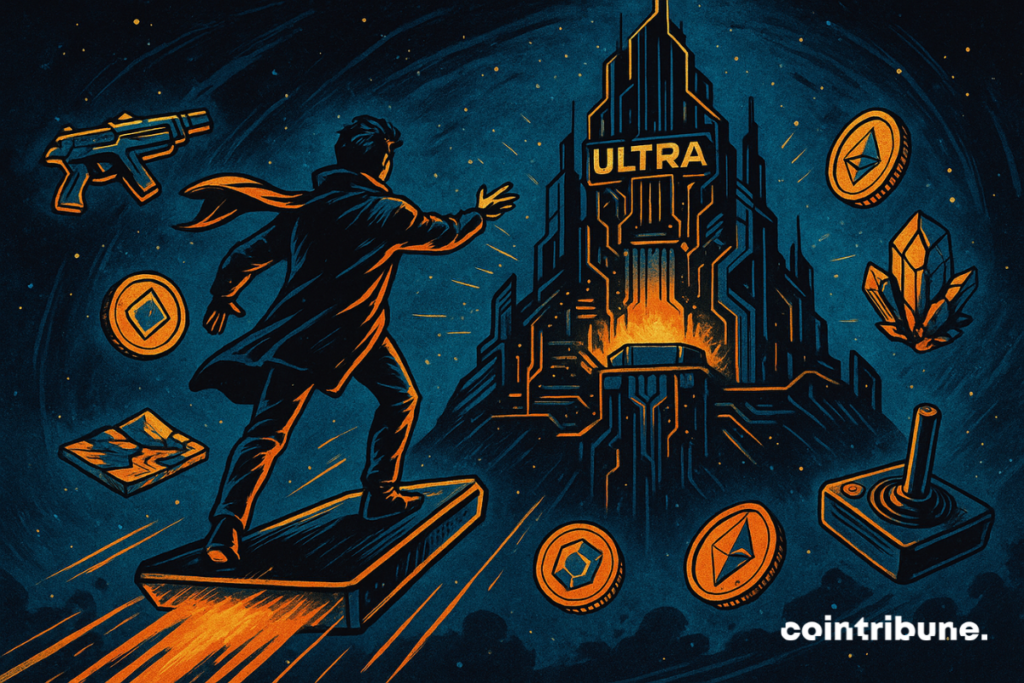
Ultra is redefining the gaming economy: Exclusive interview with Gus van Rijckevorsel

By |2025-07-16T00:06:47+03:00July 16, 2025|News, NFT News|0 Comments


The video game industry is undergoing a transformation. Traditional monetization models are crumbling, giving way to new ecosystems driven by technology, creativity, and community participation. At the heart of this shift is Ultra, a pioneering platform that connects Web2 and Web3 without causing division. Gus van Rijckevorsel, CEO of Ultra, shares his vision in an exclusive interview with Cointribune. He discusses the launch of EMPIRES, the evolving role of players, and an economy where everyone can become a value creator. Here is how Ultra lays the foundation for a Web3 that is finally accessible, practical, and sustainable.

Ultra is redefining the gaming economy: Exclusive interview with Gus van Rijckevorsel

In Brief

  • Ultra creates a smooth bridge between Web2 and Web3 without sacrificing user experience.
  • Players become producers of value through AI, digital ownership, and a collaborative economy.
  • With EMPIRES and Citadels, Ultra offers an ecosystem where playing, creating, and earning are interconnected.

An Industry in Transition: From Blockbusters to Micro-Studios

Gus van Rijckevorsel immediately draws a parallel between the film and video game industries. Large productions costing several hundred million coexist today with a boom in micro-studios. Like Danish series on Netflix, small innovative games are emerging alongside giants like GTA VI. The mid-range is disappearing: a game either aims for global blockbuster status or bets on agility, targeted quality, and rapid deployment.

Ultra does not position itself as the Netflix of Gaming in format, but in its ability to reinvent distribution and value creation. The goal: to give developers more freedom and offer players new ways to engage.

Player 3.0: Play, Watch, Create

The player is no longer just a gamer. Today, users play, watch, and create content. Each of these activities generates value. Viewers represent an economic pillar through advertising. Content creators leverage videos, comments, and mods. The player becomes a component of a new trinity shaping the gaming economy.

This change forces platforms and studios to rethink their models. You can no longer design a game without including the creators who enrich it, the viewers who amplify it, and the communities who adopt it.

The Mirage of Pure Web3 Gaming

Pure Web3 gaming still does not attract real gamers. As Gus says in the interview: “If you find a Web3 gamer, tell them to call me“. Web3 remains obsessed with monetization, while the majority of players seek fun, competition, or social interaction. Result: a small speculative bubble, self-referential, without a true gaming culture.

Ultra proposes a hybrid path. Web3 should not replace Web2 but augment it. It becomes an invisible layer that strengthens the experience without disrupting it.

Ultra, EMPIRES & Citadels: The Web2/Web3 Integration Model

The interconnection between Ultra, EMPIRES, and Citadels embodies this vision. Citadels is an ultra-realistic FPS meeting Web2 standards. Its economy relies on a deeply integrated Web3 layer: EMPIRES, where players produce resources (ore, weapons, land) then used by Citadels players, thus influencing the Web2 game economy. Meanwhile, Ultra orchestrates transactions, takes a commission, and ensures smooth operation of the whole.

For example: when a Citadels player dies and needs new equipment, they buy it through a traditional in-game shop, but this item was produced by an EMPIRES player.

One plays, the other profits.

A New Revenue Sharing Model

Traditionally, publishers captured most of the profits. Ultra reverses this logic. Web3 players, as owners or producers of digital assets, can now generate income. This opens the way to a participatory economy where studios no longer control the entire value chain.

Users can create weapons, develop environments, or extend gameplay. DevOps becomes collaborative, shared between developers and players. Welcome to the era of Open Source, community-driven, and economically virtuous gaming.

Artificial Intelligence: A Creative Catalyst

In this ecosystem, AI plays a key role. It lowers entry barriers, empowers non-technical creators, and accelerates content production. A player can now create a skin, write a story, or build an environment without mastering modeling or coding.

According to Gus, AI doesn’t provide solutions, it creates bridges between problems and ideas. With simple tools, anyone can bring complex concepts to life. Combined with Web3, AI becomes a powerful force to democratize creativity.

A Cultural and Generational Evolution

Video gaming is no longer a niche. Today, a father and son can play the same game, each in their own way. From Candy Crush to Counter-Strike, all genres are part of a shared cultural space. This democratization also transforms marketing. Brands can no longer ignore it.

Strategic partnerships, like those planned with Red Bull, illustrate this evolution. By combining emotion, storytelling, and gameplay mechanics, brands reach a wide, engaged, and multi-generational audience. Games become media, players targets, and the gaming economy extends to all sectors.

With EMPIRES, Ultra launches more than a game: a new way to conceive, produce, and experience gaming. By merging the power of Web2 and the potential of Web3, the platform offers a practical, inclusive, and sustainable model. Players are no longer mere participants: they become economic drivers. Thanks to AI and a participatory vision, Ultra redraws the sector’s boundaries. To be part of this revolution, visit Ultra.io, try EMPIRES, and discover what “playing together” means in the age of decentralized gaming. You can also follow @Ultra_io on X and listen to the full interview in French on Spotify, Deezer, Apple Podcast, Amazon Podcast… or in English with auto-generated subtitles on YouTube.

Maximize your Cointribune experience with our “Read to Earn” program! For every article you read, earn points and access exclusive rewards. Sign up now and start earning benefits.

La Rédaction C. avatarLa Rédaction C. avatar

La Rédaction C.

The Cointribune editorial team unites its voices to address topics related to cryptocurrencies, investment, the metaverse, and NFTs, while striving to answer your questions as best as possible.

Disclaimer:

The contents and products mentioned on this page are in no way approved by Cointribune and should not be interpreted as falling under its responsibility.

Cointribune strives to communicate all useful information to readers, but cannot guarantee its accuracy and completeness. We invite readers to do their research before taking any action related to the company and to take full responsibility for their decisions. This article should not be considered as investment advice, an offer, or an invitation to purchase any products or services.

Investment in digital financial assets carries risks.

Read more


Source link

Go to Top