The main tag of NFT News Today Articles.
You can use the search box below to find what you need.
[wd_asp id=1]

14 07, 2025
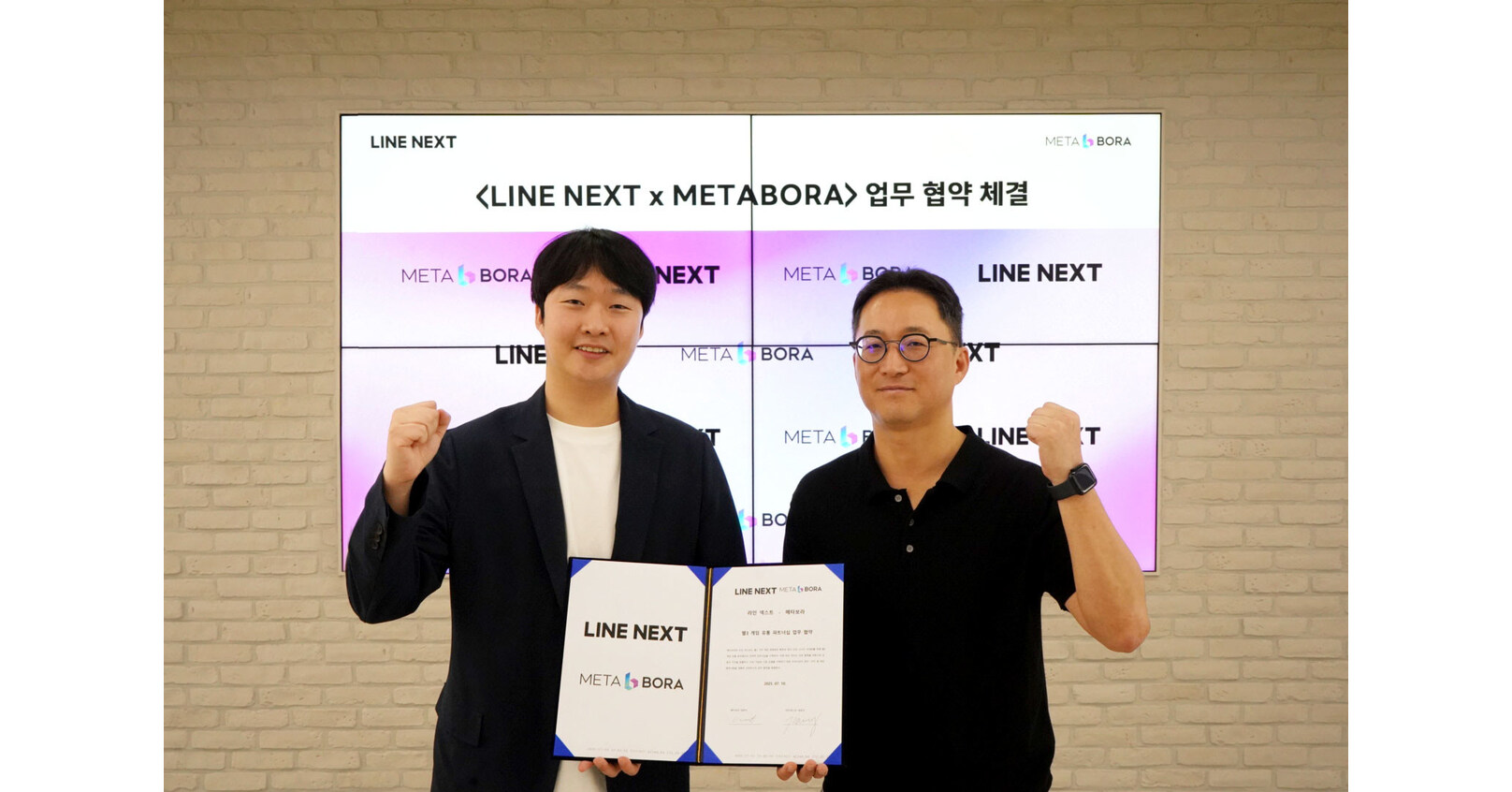
METABORA Partners with LINE NEXT to Distribute Web3 Games via Mini Dapp

By |2025-07-14T07:10:18+03:00July 14, 2025|News, NFT News|0 Comments


  • METABORA becomes core partner in web3 game development for LINE NEXT’s Dapp Portal
  • BORA Utility to Expand through in-game payments and gas abstraction Implementation

SEONGNAM, South Korea, July 13, 2025 /PRNewswire/ — METABORA (Co-CEOs Lim Young-Jun and Choi Se-hoon), a global casual game developer and blockchain project operator, today announced a strategic partnership with LINE NEXT Inc. (CEO Youngsu Ko), LINE’s venture dedicated to developing and expanding the global Web3 ecosystem. Through this partnership, METABORA will distribute Web3 games via the LINE Messenger–based Dapp Portal, expanding its reach in the Web3 gaming space.

The Dapp Portal is a platform built on the KAIA ecosystem that offers Mini Dapps (decentralized applications) directly within the LINE Messenger app. Users can enjoy a variety of Mini Dapps—ranging from games to social features—without needing to install separate applications. Since its launch in January this year, the platform has garnered significant attention, surpassing 100 million cumulative users.

Through this new partnership, METABORA and LINE NEXT will work closely to accelerate the growth of the Mini Dapp’s gaming ecosystem. Leveraging its network of development partners and global experience in game development and publishing, METABORA will supply Web3 games to the Dapp Portal. LINE NEXT will expand accessibility to Web3 games and support marketing of these games through its platform.

As part of the collaboration, METABORA will also expand the utility of its BORA token within the LINE Messenger–based Mini Dapp ecosystem. The company plans to implement a payment infrastructure that enables users to purchase in-game items currently planned for upcoming titles to be released under the BORA brand. Additionally, METABORA will apply Gas Abstraction technology, allowing users to make in-app purchases with BORA without needing KAIA tokens to cover gas fees. This feature is expected to be fully implemented in the second half of the year.

By expanding the utility of the BORA token, METABORA aims to elevate its value beyond the confines of the BORA Chain, laying the groundwork for broader integration across the Web3 ecosystem.

In addition, METABORA and LINE NEXT plan to continue their collaboration by researching and developing infrastructure to support the use of stable coins such as USDT, further enhancing the Web3 gaming experience within the LINE ecosystem centered on the Dapp Portal.

Lim Youngjun, Co-CEO of METABORA, said, “We’re pleased to partner with LINE NEXT, a company making remarkable strides in the global Web3 gaming market with its vast user base. Through our strong network of development partners, we will carefully select and bring high-quality games to the Dapp Portal, working together to create a leading example of Web3 gaming reaching a mainstream audience.”

Kim Woosuk, CSO at LINE NEXT, said, “Through this partnership with METABORA, we look forward to creating a major success case for Mini Dapp. Moving forward, we will continue working closely together across multiple fronts, including enabling USDT stablecoin support to improve game onboarding and the overall user payment environment.”

About METABORA

METABORA is a casual game developer and the service operator of the blockchain platform BORA.

The BORA ecosystem brings together partners across various industries—ranging from tokenomics and content to blockchain technology—driving innovation and collaboration across games, sports, and entertainment.

Through the BORA Network, METABORA operates the BORA Portal, which offers GameFi-optimized services such as NFT trading, token conversion, and DeFi features. With BORA listed on major global cryptocurrency exchanges, METABORA continues to enhance accessibility and expand the usability of its content across the Web3 landscape.

SOURCE METABORA



Source link

14 07, 2025

Ethereum Dominates DeFi with 55% TVL as Modular Approach Outpaces Solana

By |2025-07-14T05:08:42+03:00July 14, 2025|News, NFT News|0 Comments


As decentralized finance (DeFi) continues to evolve and integrate with mainstream financial systems, the debate between Ethereum and Solana has intensified. The core question revolves around the type of infrastructure that will underpin the future of finance. By 2025, this decision will be shaped by two competing architectural visions: Ethereum’s modular, decentralization-first stack and Solana’s high-performance, monolithic approach.

Ethereum, often referred to as the bedrock of modern DeFi, is where secure, composable applications thrive. It is the preferred choice for institutional players seeking to tokenize assets with confidence. Ethereum’s dominance is evident, with over 55% of the total value locked (TVL) across major chains residing on its platform. Unlike Solana’s one-size-fits-all Layer 1, Ethereum has adopted a modular scaling approach. Layer 1 serves as the core foundation, while Layer 2s handle specific workloads, preserving decentralization while enabling scale. The rollout of Proto-Danksharding in early 2025 has significantly reduced Layer 2 transaction costs, further cementing Ethereum’s lead in modular architecture.

However, Ethereum’s reliance on Layer 2s introduces fragmentation. Some DeFi primitives need to live on Layer 1 for full composability, and while isolated applications can function on Layer 2s, these solutions often feel temporary. Truly integrated DeFi demands synchronous, on-chain composability, which works best when everything operates at the same base layer. Ethereum’s greatest strength lies in its uncompromising commitment to decentralization, making it one of the most politically neutral blockchains. This neutrality is crucial in an increasingly regulated environment. Speed and user experience can be optimized over time, but decentralization is a founding principle that, once compromised, is nearly impossible to restore.

Developer experience is another edge for Ethereum. Writing smart contracts on Ethereum is simpler than on Solana, enabling developers to produce secure, well-tested code. This maturity is part of the reason why Ethereum developers are comfortable making contracts immutable, with confidence in the security. Nearly every major DeFi innovation originated on Ethereum, with over 1,388 deployed protocols compared to Solana’s 232. When security, composability, and developer confidence align, the entire ecosystem benefits.

Solana, on the other hand, addresses the scaling challenge with a monolithic architecture that keeps everything on a single Layer 1. This offers tangible benefits such as extremely fast transactions, low fees, and a seamless user experience. Solana is capable of processing 3,000–4,000 transactions per second (TPS) today, with expectations of reaching over 1 million TPS through the upcoming Firedancer validator. However, this performance comes with trade-offs. Solana’s design includes a leader node that sequences transactions, introducing centralization risks. The network is distributed but not truly decentralized, a distinction that matters, especially for institutions prioritizing political neutrality and censorship resistance.

Despite Solana’s momentum, Ethereum remains the platform of choice for what is referred to as “serious money.” The core DeFi debate in 2025 centers on whether the sector should optimize for structural integrity or mass adoption. Chasing adoption without structural soundness is short-sighted. If protocols compromise on security or decentralization, regulators will inevitably impose the same constraints that burden traditional finance, losing the promise of DeFi. Institutional capital continues to favor Ethereum, and this preference is expected to hold. Neutrality and security must be built into the base layer from the start.

If DeFi is to outlast the hype cycles and form the backbone of a new global financial order, Ethereum offers the most robust path forward. It provides the best shot at building financial rails that are resilient, secure, and unco-optable. The choice between Ethereum and Solana will shape the architecture of tomorrow’s global financial systems, with decentralization potentially surpassing speed in DeFi’s next chapter.


Source link

14 07, 2025

XRP Surges 88% on Institutional Interest and Legal Wins Solana’s 120% Gain Driven by Transaction Speed and NFT Adoption Sui’s 74% Rise Attracts Developers and Institutional Investors

By |2025-07-14T03:06:09+03:00July 14, 2025|News, NFT News|0 Comments


XRP has shown remarkable resilience and growth in recent months, driven by increasing institutional interest and favorable legal developments. The cryptocurrency has seen an 88% increase since March 2025, bolstered by positive court rulings in its ongoing regulatory disputes and a surge in investor confidence. This growth is further supported by a record-high on-chain transaction volume, indicating heightened utility and real-world applications. XRP’s infrastructure, enhanced with advanced interoperability solutions, continues to attract high-scale financial institutions seeking reliable cross-border settlement options. As of June 2025, XRP’s average daily trading volume has increased by 47%, reflecting growing engagement from both retail and institutional investors. Analysts predict that XRP’s price trend could remain favorable, especially if macroeconomic conditions continue to support digital asset adoption over traditional fiat systems.

Solana has emerged as a top performer in the crypto market, with a 120% increase since the start of Q2 2025. Its rapid transaction speed, innovative NFT adoption, and significant developer growth have contributed to its phenomenal rise. The Solana ecosystem has witnessed a surge in DeFi protocol deployments and on-chain activity, which are crucial for long-term price stability. The network’s low transaction costs remain a key advantage as it scales to support more applications. Solana’s recent partnerships and entry into tokenized real-world assets have been described as revolutionary, positioning it as a premier hub for decentralized applications. As of June, Solana is processing over 60 million daily transactions, an all-time high. Recent network upgrades have stabilized its performance, making it a top-tier platform in the ongoing crypto infrastructure race.

Sui, though less known, is gaining recognition for its innovative network design and profitable performance. Launched in 2023, the token has seen a 74% rise since April 2025, driven by growing developer support and rising total value locked (TVL). Sui’s architecture, which separates consensus and execution, allows for parallel processing of transactions, offering users a unique speed advantage. The token’s groundbreaking Move programming language is attracting projects from Ethereum and Binance Smart Chain, making it a potentially lucrative long-term investment. With over 100 dApps now hosted on its dynamic network, Sui’s influence within the layer-1 space continues to expand. Institutional investors have also taken notice, with several venture-backed funds adding exposure as part of their strategic crypto portfolios. Despite facing scaling challenges, Sui’s current trajectory and market momentum suggest continued growth through late 2025.

This report highlights a developing situation across the crypto sector as major projects release substantial token volumes into circulation. Investors are encouraged to monitor project announcements, on-chain metrics, and exchange flows to assess how these exceptional unlocks will influence broader market sentiment. The momentum behind XRP, Solana, and Sui reflects a broader trend of increasing real-world use cases and favorable legal outcomes, which are driving institutional interest and developer activity in the crypto space.


Source link

14 07, 2025

Chorus One Launches TON Pool Dapp After Successful Audit

By |2025-07-14T01:04:26+03:00July 14, 2025|News, NFT News|0 Comments


Chorus One, a seasoned provider of institutional-grade staking services for over 60 Proof-of-Stake (PoS) blockchain networks, has announced the launch of its TON Pool Dapp following a successful smart contract audit by Spearbit. The TON Pool Dapp is designed to make Toncoin staking more accessible and user-friendly for all investors.

The TON Pool, which was launched in the fourth quarter of 2024, has already accumulated a total value locked (TVL) of 10.7 million Toncoins, valued at over $31 million. This significant growth underscores the increasing interest and trust in the TON ecosystem. Chorus One has prioritized security to ensure a seamless and secure staking experience, especially for institutional investors. The blockchain technology, still in its nascent stages, presents various security challenges, including the presence of malicious actors globally.

To address these security concerns, Chorus One collaborated with Spearbit, a leading web3 security firm. The Spearbit team conducted a thorough analysis of the TON Pool smart contracts, identifying two critical vulnerabilities. The first vulnerability, known as the pool locking error, could lead to an inconsistent contract state, potentially making users’ funds inaccessible indefinitely. The second vulnerability, the pool draining error, could be exploited by attackers to siphon users’ funds.

Both vulnerabilities were successfully mitigated in the Chorus One’s TON Pool, ensuring the safety of users’ funds. However, these issues remain unaddressed in the original Ton Whales contract, posing a risk to users staking with Ton Whales. The Chorus One team emphasized the importance of these mitigations, noting that users staking with Ton Whales should be aware of the potential risks to their stakes.

Following the successful audit, Chorus One unveiled the next phase of its platform with the launch of the TON Pool Dapp on July 10. This new product is designed to simplify the staking process, allowing users to stake a minimum of 10 TON. The TON Pool Dapp enables users to connect their wallets through TONConnect, offering up to 5 percent APY with automated delegation. This development is part of Chorus One’s commitment to building products that enhance the mainstream adoption of digital assets, making staking more accessible and secure for all users.


Source link

13 07, 2025

Web3 Under The Hood: The Future of Player-Centric Worlds

By |2025-07-13T23:02:49+03:00July 13, 2025|News, NFT News|0 Comments


Disclaimer: This article is for informational purposes only and does not constitute financial advice. BitPinas has no commercial relationship with any mentioned entity unless otherwise stated.

📬 Get the biggest crypto stories in the Philippines and Southeast Asia every week — subscribe to the BitPinas Newsletter.

What does it really take to build a web3 game that players actually want to play?

In this episode, we go inside EVE Frontier, the new blockchain-powered survival MMO from CCP Games, the studio behind EVE Online.

Known for its player-run economy, EVE is a masterclass in how virtual societies function. But what if blockchain had been there from the start? EVE Frontier is now giving players real power to shape the game world, a direction even traditional game journalists are taking seriously.

Watch the Webcast on Facebook or Below:


Advertisement

Web3 Under The Hood: The Future of Player-Centric Worlds

Joining us:

  • Ben Sisson (CCP Jötunn – Community Developer) and Scott McCabe (CCP Overload – Product Manager): EVE Frontier Development Leads
  • Jeth Ang: Co-founder of Sovrun, winner of CCP’s Project Awakening, building alongside CCP to shape the future of gaming through AI, blockchain & autonomous worlds.

Together, we’ll explore:

  • How the financial history of EVE Online shaped the design of EVE Frontier.
  • Lessons from decades of emergent gameplay, scams, and trust issues, and how blockchain aims to fix them.
  • CCP’s activities in the Philippines together with YGG and the growing interest in Filipino guilds and builders.
  • Why game journalists are watching EVE Frontier closely
  • For the local scene: how Filipino players and builders can get involved

See you in the frontier.

Tuesday. July 15th, 2025, 8pm (UTC +8)

This article is published on BitPinas: Web3 Under The Hood: The Future of Player Centric Worlds

What else is happening in Crypto Philippines and beyond?


Source link

13 07, 2025

Trump Signs Order Lifting Crypto Restrictions Boosting DeFi and Stablecoins

By |2025-07-13T05:50:36+03:00July 13, 2025|News, NFT News|0 Comments


On January 23, 2025, President Donald Trump signed an executive order introducing a new federal approach to digital assets, marking a significant shift in U.S. cryptocurrency policy. This initiative aims to lift previous crypto-related restrictions, particularly those affecting decentralized finance (DeFi) platforms and stablecoins. The Federal Reserve supported this move by withdrawing prior guidelines, signaling a more permissive regulatory environment.

The Trump administration, in collaboration with the Securities and Exchange Commission (SEC) and other regulatory bodies, has removed several previous crypto restrictions. This includes repealing Internal Revenue Service (IRS) DeFi broker reporting rules and scaling back enforcement actions, which significantly impacts Ethereum (ETH) and DeFi governance tokens by reducing compliance requirements. The regulatory shift is expected to boost industry confidence and growth by providing clearer guidelines and fewer hurdles for compliance.

Experts anticipate that the crypto market will benefit from reduced restrictions and increased clarity. DeFi platforms and stablecoins now face fewer compliance hurdles, which is likely to encourage institutional participation and enhance market stability. The Trump administration’s actions are expected to influence the technology and finance sectors by promoting innovation-friendly policies, potentially leading to increased investment and industry growth.

One of the key outcomes of these policy changes is the potential for increased institutional confidence and capital inflows. The administration is considering the establishment of a national Bitcoin reserve, which could solidify federal stakes in digital assets and profoundly affect the technological and financial outlook. Historical precedents suggest that such policies can lead to increased investment and industry growth, fostering a more dynamic and innovative digital asset landscape.

In addition to the executive order, the legislative push includes the introduction of the GENIUS Act, led by French Hill. This act aims to establish guardrails and consumer protections for stablecoins, ensuring they hold adequate reserves and comply with legal standards. The GENIUS Act is part of a broader effort to reshape the financial landscape by impacting small and medium-sized enterprises (SMEs), fintech startups, and overall innovation in the crypto sector. The act seeks to provide regulatory clarity, ensuring that digital assets are treated fairly and consistently under existing laws.

However, the regulatory changes have sparked intense debate among lawmakers. House Democrats, led by Congresswoman Maxine Waters and Congressman Stephen Lynch, have expressed significant concerns. They argue that the legislation lacks necessary consumer protections and national security guardrails, and that it could legitimize what they describe as “President Trump’s crypto corruption.” Waters has specifically highlighted concerns about Trump’s involvement in cryptocurrency, suggesting it could enrich his circle by a substantial amount. The GENIUS and CLARITY acts are central to this conflict, as they could redefine how major cryptocurrencies like ETH and BTC, as well as stablecoins, are regulated. Critics worry that these changes could undermine traditional financial guardrails.

Despite the Democrats’ efforts, the GENIUS Act has already passed the Senate and is awaiting a vote in the House. The CLARITY Act and Anti-CBDC Act are still under debate on the House floor. The outcome of these votes will significantly impact the future of digital asset regulation in the United States, with potential implications for innovation, consumer protection, and national security. The intense debate underscores the complex and evolving nature of cryptocurrency regulation, as lawmakers grapple with the challenges and opportunities presented by this emerging technology.

The immediate reactions from major cryptocurrency exchanges and developers have been limited. Government entities, including the SEC, have not issued recent statements on the matter. Historically, similar legislative efforts have impacted crypto markets, prompting debates and revisions. The emphasis on regulatory clarity aims to protect consumers, although achieving consensus remains challenging. Periods of regulatory uncertainty often correlate with heightened market volatility, and stablecoins and DeFi projects have previously faced scrutiny during similar legislative debates. As regulations evolve, tracking changes remains vital for stakeholders across all levels of the crypto ecosystem.


Source link

12 07, 2025

NFT Market Surges 20.67% to $122.6 Million Despite 80% Drop in Users

By |2025-07-12T22:21:11+03:00July 12, 2025|News, NFT News|0 Comments


The NFT market has seen a significant surge in sales, with a 20.67% increase to $122.6 million over the past week. This growth was driven by substantial gains in top collections such as f(x) wstETH and Pudgy Penguins, which experienced explosive increases despite an over 80% collapse in buyer and seller participation. Ethereum reclaimed its top position in blockchain sales with $50 million, while Bitcoin jumped to second place with $15.5 million in sales. The market’s paradox is evident: soaring valuations amidst a shrinking user base.

Ethereum’s dominance was further solidified with a 133.36% spike in sales, reaching $50 million. However, wash trading on Ethereum doubled, rising 101.59% to $3.9 million. Bitcoin’s performance was also impressive, with a 50.12% increase in sales to $15.5 million, marking a significant improvement from its previous sixth-place position. Polygon (POL) fell to third place with $14.6 million in sales, a decline of 41.86%, while Mythos Chain held the fourth position with $14 million. BNB Chain (BNB) ranked fifth with $7.8 million, and Immutable (IMX) dropped dramatically to sixth place with $6.3 million in sales.

The buyer count declined across all blockchains, with Ethereum leading the drop at 86.74%, followed by Polygon at 88.87% and Bitcoin at 80.22%. Despite the overall decline in participation, top collections like f(x) wstETH and Pudgy Penguins saw substantial gains. f(x) wstETH took the top spot in collection rankings with $15.8 million in sales, driven by institutional activity with only 26 buyers and 1 seller. Pudgy Penguins entered the top five with $3.2 million, surging 130.49% and doubling its transactions, buyers, and sellers.

Notable high-value sales from this week included Autoglyphs #195 sold for 95 ETH ($283,623), Otherdeed Expanded #7 sold for 100 WETH ($278,128), and Autoglyphs #194 sold for 215,000 USDC ($215,000). These sales highlight the continued interest in high-value NFTs despite the overall decline in market participation. The market’s paradox of soaring valuations amidst a shrinking user base suggests a shift towards institutional activity and high-value trades, driving the market’s growth.


Source link

12 07, 2025

AurealOne Raises $3 Million in Presale for Web3 Gaming Platform

By |2025-07-12T20:15:37+03:00July 12, 2025|News, NFT News|0 Comments


AurealOne, a pioneering Web3 gaming platform, is making significant strides in the blockchain gaming sector. The platform integrates blockchain technology to create a skill-based economy where players can earn crypto rewards based on their gaming prowess. The DLUME token serves as the backbone of the AurealOne ecosystem, facilitating all activities within the system. AurealOne’s unique features include a skill-to-earn economic model, advanced anti-cheat technology, and the Aureal Chain, which permanently records gameplay data. The platform has already raised $3 million in its presale, with the DLUME token priced around $0.0013, making it an attractive investment option for those interested in blockchain gaming.

DexBoss, another innovative platform, is designed for traders within the Solana ecosystem. It acts as a data transformer, converting blockchain data into actionable insights for traders. DexBoss offers extensive wallet tracking features and customizable alerts, making it a valuable tool for traders aiming to stay ahead. The presale of its native $DEBO token is ongoing at approximately $0.011, with the goal of raising $50 million. This token not only unlocks premium features but also participates in the distribution of staking rewards to users. Given the flourishing Solana network, an investment in DexBoss could be promising, especially with the anticipated rise of decentralized finance activities.

Bitcoin, the first cryptocurrency, continues to be a cornerstone in the crypto world. It utilizes blockchain technology to facilitate secure and decentralized transactions, allowing users to send money without intermediaries. With a supply capped at 21 million coins, Bitcoin is often referred to as “digital gold.” Its proof-of-work consensus mechanism enables miners to verify transactions, enhancing network security. Bitcoin serves various transaction types, including online purchases and remittances, and provides a hedge against inflation for investors. Currently, Bitcoin is experiencing notable price action, reflecting growing institutional interest.

Injective is a decentralized exchange protocol designed for cross-chain trading without intermediaries. It allows users to execute trades without paying gas fees, providing a seamless experience on a layer-2 network. By adopting novel order types and connecting with multiple blockchains, Injective improves market efficiency while maintaining security. Users can create and trade infinite derivatives, and the platform’s decentralized structure ensures liquidity. Additionally, Injective’s community-driven governance model allows users to participate in decision-making processes that drive the ecosystem forward.

Toncoin, the original cryptocurrency of the TON blockchain created by Telegram, is designed for executing transactions and accessing scalable applications compatible with various decentralized services. Utilizing an innovative sharding mechanism, TON drastically improves throughput, supporting a large number of transactions effortlessly. Its presence in the expanding decentralized applications world, along with strong community governance, positions it solidly in the competitive crypto market. The project aims for the mass market by employing convenient and secure interfaces.

In the dynamic crypto landscape, savvy investors are seeking opportunities that blend innovation, technology, and fundamental value. AurealOne and DexBoss are leading the pack with their pioneering approaches in gaming and trading tools, respectively. Diversifying a portfolio with these promising cryptocurrencies can help capitalize on high returns in the digital finance revolution. Meanwhile, established players like Injective and Toncoin are exhibiting notable price action, reflecting current crypto trends. Bitcoin remains a reliable asset for long-term growth and decentralized security, while emerging tokens like AurealOne and DexBoss offer early-stage growth, real-world utility, and future upside. Conducting thorough research and considering market conditions are crucial when making investment decisions.


Source link

12 07, 2025

Ethereum Targets $6,500 by 2025, Driven by DeFi and Scalability Ozak AI Offers 200x Upside with $1 Price Target

By |2025-07-12T18:14:38+03:00July 12, 2025|News, NFT News|0 Comments


Ethereum is projected to reach $6,500 by 2025, driven by enhanced scalability, widespread adoption of decentralized finance (DeFi), and the recent Pectra upgrade, which has improved staking and transaction efficiency. This bullish outlook is supported by the growing traction of Layer 2 scaling solutions like Arbitrum and Optimism, which are stabilizing network fees and increasing transaction volumes. Additionally, corporate interest in Ethereum-based tokens and decentralized applications remains robust, further bolstering the network’s fundamentals.

According to analysts’ forecasts, Ethereum’s price could double from its current levels around the mid-$3,000s, reaching $6,500 by the end of 2025. This projection is underpinned by three key factors: institutional adoption, the continued utility of DeFi, and Ethereum’s commitment to scalability through future upgrades like “Shanghai” and event-driven improvements. The growing number of spot Ethereum ETFs and increasing attention from institutional capital further support this optimistic outlook. However, while Ethereum’s growth is steady and reliable, it lacks the volatility-driven jumping power that early-stage tokens can offer.

In contrast, the emerging AI token Ozak AI is generating significant excitement. Priced at just $0.005 in its fourth presale phase, Ozak AI combines predictive AI with decentralized infrastructure, aiming for a $1 price point—offering a potential 200x upside. With over $1.2 million raised and listings already secured on major platforms, Ozak AI is being recognized as a breakout project in the AI-driven crypto space, potentially outperforming even Ethereum in terms of return on investment (ROI).

Ozak AI merges artificial intelligence with decentralization, offering Prediction Agents, automated data libraries, and secure DePIN-enabled architecture—all designed for practical, on-chain applications. If Ozak AI reaches its ambitious target of $1 during or after platform launch, early backers stand to gain a 200× return—an order of magnitude beyond Ethereum’s projected gains. The token’s utility roadmap, including partnerships, DeFi integrations, and real-world dataset licensing, could unlock this rapid price appreciation. Early token scarcity amplifies the effect: hitting $1 requires only a modest market cap relative to other major tokens, making it a high-potential play for aggressive investors.

Ethereum offers a balanced, risk-moderate profile, providing reliable upside fueled by mainstream use and institutional interest. Its pathway to $6,500 is well-founded, though not explosive. Ozak AI, however, presents a speculative yet compelling alternative. Priced at $0.005, it offers asymmetric upside with practical development underway. Hitting $1 would reshape portfolios—but only if the project can execute and navigate market challenges. Ethereum’s returns are more predictable; Ozak AI’s potential—while uncertain—could be transformative.

By the end of 2025, Ethereum may comfortably trade around $6,500, reflecting its deep-rooted value in DeFi, smart contracts, and institutional ecosystems. Meanwhile, Ozak AI could emerge as a speculative star: if it executes flawlessly, clearing $1 is conceivable—and with it a 200× return for early investors. The difference between a 2× and a 200× return encapsulates the classic choice in crypto investing: build for steady gains or chase the moonshot.

Ozak AI is a blockchain-based crypto task that provides an innovative platform focusing on predictive AI and advanced data analytics for financial markets. Through machine learning algorithms and decentralized community technologies, Ozak AI enables real-time, accurate, and actionable insights to help crypto enthusiasts and corporations make informed decisions.


Source link

12 07, 2025

Farmsent Reveals its Superapp: A Swiss Knife dApp for Smart Agriculture with Wallet Abstraction and .grow Domains

By |2025-07-12T14:11:41+03:00July 12, 2025|News, NFT News|0 Comments


Indonesia –– Farmsent, a leading innovator in agricultural blockchain technology, today announced the launch of its groundbreaking Farmsent Superapp — a one-stop-shop dApp for farmers around the world. The Superapp is designed as a comprehensive toolkit for farmers, handling everything from onboarding and managing their commodities for sale to facilitating payment receipt for their produce and managing day-to-day microtransactions. This intuitive, non-custodial mobile application seamlessly integrates cutting-edge Web3 functionalities, including on-chain wallet abstraction powered by Arcana, and .grow Web3 domains, bringing unprecedented simplicity and security to agricultural trade.

The Farmsent Superapp works as a powerful non-custodial wallet that ensures farmers retain full control over their digital assets, a core principle of Web3 empowerment. For its initial launch, the Superapp supports the peaq, Polygon, and Ethereum networks, enabling broad interoperability across the decentralized ecosystem.

A cornerstone of the Superapp’s user experience is its integrated on-chain wallet abstraction, powered by Arcana. This innovative solution dramatically simplifies the complex world of crypto wallets by allowing farmers to log in using familiar methods like email or Google login, abstracting away the need for traditional seed phrases and private key management. This lowers the barrier to entry for millions of farmers, enabling seamless participation in the digital agricultural economy.

Farmsent, a groundbreaking blockchain-based platform, is revolutionizing agriculture by empowering farmers directly. Having already onboarded over 200,000 farmers, it cuts out intermediaries, ensuring they receive fairer prices for their produce and gain control over their livelihoods. By integrating real-time data from soil sensors and weather stations, alongside transparent Decentralized Product Passports (DePPs), all available via the Superapp, Farmsent optimizes crop management and builds consumer trust. The platform also focuses on financial inclusion and streamlined logistics, fostering a thriving, farmer-centric ecosystem, with an ambitious goal of onboarding 2 million farmers by 2026.

“Our vision at Farmsent has always been to empower farmers by bringing them directly into the modern economic landscape, cutting out unnecessary middlemen and ensuring fair value for their hard work,” said Sim Khela, Co-founder of Farmsent. “The Farmsent Superapp, with its intuitive design and robust Web3 integrations, is a monumental step towards achieving that. It’s technology serving humanity, putting food security front and center.”

The Superapp further enhances user experience through the integration of .grow Web3 domains. Farmers can use easy-to-remember, human-readable domain names (e.g., ‘yog.grow’) linked directly to their decentralized wallet, simplifying transactions and making digital payments as straightforward as sending an email.

Sandy Carter, COO of Unstoppable Domains, added, “The integration of .grow domains into the Farmsent Superapp is a perfect example of how Web3 domains create a truly user-friendly and inclusive internet. Giving farmers a simple, memorable ‘.grow’ identity to manage their digital assets and transactions is key to mass adoption and building the future of decentralized agriculture.”

Budi, an Indonesian farmer, one of the 600 people currently using the beta version of the Superapp, shared his excitement: “Before, crypto wallets seemed very complicated, with long addresses and seed phrases. With the Farmsent Superapp, I just log in with my email, and it’s so easy to manage my sales and receive payments. Using my ‘.grow’ address makes it even simpler for buyers. This truly helps me focus on what I do best: farming.”

Mayur Relekar, Founder of Arcana, praised the collaboration: “Arcana is thrilled to see our wallet abstraction SDK being utilized to onboard farmers onto the Web3 ecosystem through the Farmsent Superapp. Our goal is to make Web3 accessible to everyone, and by abstracting away the complexities of traditional crypto, Farmsent is pioneering financial inclusion for a vital global industry.”

The Farmsent Superapp promises to deliver unparalleled transparency, efficiency, and empowerment to the agricultural sector, showcasing the transformative potential of Web3 technologies in addressing real-world challenges.

*** END OF THE PRESS RELEASE ***

About Farmsent: Farmsent revolutionizes agriculture by combining a cutting-edge blockchain platform with advanced agricultural technology solutions. Their platform directly connects farmers and buyers, fostering transparency, sustainability, and fair trade. Simultaneously, their innovative sensors and data analytics provide real-time insights for optimized crop management and efficiency. By ensuring traceability and fair pricing, Farmsent empowers farmers, builds consumer trust, and promotes a more ethical and sustainable food system.

For more information, visit Farmsent, follow farmsent on Twitter/X for updates, and join the conversation on Discord.

About Arcana Network: Arcana Network is a full-stack platform for Web3 app development, offering modular SDKs that enable seamless onboarding, identity, and privacy solutions. Their wallet abstraction solutions make Web3 accessible to mainstream users by simplifying wallet management and transactions.

www.arcana.network

About Unstoppable Domains: Unstoppable Domains is a leading platform for Web3 domains, building decentralized digital identities for users on the blockchain. These domains simplify crypto addresses, replace complex usernames, and provide universal login across Web3 applications.

www.unstoppabledomains.com

About peaq

peaq is the Machine Economy computer and operating system leading a global infrastructure revolution, empowering people to own and earn from the devices, robots, vehicles, and infrastructure they use. peaq is designed to be the go-to backbone for the human-centric Machine Economy, and is already home to more than 60 applications in 20+ industries and to the millions of devices and machines that run on them. peaq serves as permissionless, borderless digital infrastructure for increasingly intelligent machines to serve all of humanity in the Age of AI and automation. An economy that anyone can opt-in to and share in the Age of Abundance.

For more information, visit peaq or follow peaq on Twitter/X for updates.

For Media Inquiries: Sim Khela Co-Founder, Farmsent sim@farmsent.io


Source link

Go to Top
