

Category: Forex News, News
WTI Steadies Near $65 As Brent Tests $70 On Iran Risk
Oil Price Outlook – WTI CL=F And Brent BZ=F Around $65–$70 As Risk Premium Rebuilds
WTI Crude CL=F – $65 Holds Despite A 13.4 Million Barrel U.S. Inventory Build
WTI crude CL=F is trading near $65.01 per barrel, up $1.05 on the day for a 1.64% gain, with front-month futures earlier marked around $64.85 in European trade. The contract is sitting in a tight band around $65 even after the American Petroleum Institute estimated a huge 13.4 million barrel build in U.S. crude inventories for the week ending February 6, reversing the prior week’s 11.1 million barrel draw. On pure fundamentals, a double-digit stock build would normally pressure prices, but the tape shows the opposite: the market is willing to pay higher flat prices because the driver today is risk premium, not immediate scarcity. That tells you the marginal barrel is being priced on geopolitical risk around flows, not on the comfort of tanks onshore in the U.S.
U.S.–Iran tension is the core trigger for that premium in WTI CL=F. Washington is considering seizing sanctioned tankers carrying Iranian oil and has openly discussed sending a second aircraft carrier if negotiations break down. In parallel, Israel’s prime minister is in Washington, seeking strict limits on Iranian uranium enrichment, ballistic missiles and support for Hamas and Hezbollah. The combination of carrier threats, tanker-seizure talk and nuclear diplomacy is exactly what pushes risk models to reprice the odds of disruption in the Gulf. The key point is that none of this has yet removed barrels from the market, but it forces traders to assign a higher probability that something goes wrong in the shipping lanes that matter for Atlantic Basin balances.
The clash between a 13.4 million barrel U.S. build and a 1.64% gain in CL=F defines today’s structure: physical balances are comfortable for now, but paper markets are unwilling to ignore the geopolitical tail risk. That caps the move for WTI in the mid-$60s rather than launching it into an immediate breakout, but also prevents any slide back to the low-$60s while the Gulf situation remains unresolved.
Brent Crude BZ=F – Just Under $70 As Tanker And Sanctions Risk Lift The Global Benchmark
Brent crude BZ=F is trading close to $69.82 per barrel, up $1.02 or about 1.48% on the day, with earlier prints around $69.69. The benchmark is repeatedly testing, but not convincingly clearing, the $70 level. That price action tells you the market is repricing risk, not panicking. Traders are adding a measured premium for shipping lanes, sanctions and refinery targets, but they do not yet see a genuine supply shock that would justify pricing $80 or more in the front month.
A string of policy and sanctions headlines reinforces that premium in BZ=F. EU authorities are escalating oil sanctions with a broader ban on shipping services. Washington is targeting tankers that keep Iranian barrels moving, while Ukraine’s strikes on Russian refineries underline how quickly product supply can be hit when critical assets are damaged. At the same time, the U.S. is allowing domestic firms to provide services for Venezuelan oil, a move that could eventually normalise part of Venezuela’s export stream. The net effect is a constant reshuffling of flows rather than a clean increase or decrease in total supply, which naturally feeds into Brent’s status as a global pricing anchor.
Brent’s failure to break decisively above $70, despite a solid 1%–1.5% intraday rally, also shows that positioning still respects downside scenarios. If U.S.–Iran talks stabilise, if tanker seizures do not materialise, or if alternative barrels from Russia, Venezuela and others reroute efficiently, some of today’s premium can disappear quickly. That is why BZ=F is grinding higher in a controlled way rather than pricing a crisis.

Physical Benchmarks – Murban, OPEC Basket, Louisiana Light And Mars US Confirm A Controlled Risk Repricing
Murban crude is marked around $69.89, up $0.87 or 1.26%, tracking Brent BZ=F almost one-for-one and confirming that Middle Eastern light sweet barrels are reflecting the same geopolitical premium without yet signalling a real shortage. The OPEC Basket at roughly $66.65, up $1.71 or 2.63%, is actually outperforming both WTI and Brent in percentage terms, which indicates that the group’s diversified mix of grades is gaining relative value as sanctions, tanker risk and route reconfiguration push buyers towards barrels under the OPEC+ umbrella.
On the U.S. side, Louisiana Light is trading close to $65.94, up $2.99 or about 4.75%. That is a much sharper move than WTI’s 1.64% gain and reflects both its quality and its export positioning out of the Gulf Coast. These barrels are priced directly off seaborne demand into Europe and the Americas, so they respond more aggressively when seaborne risk premium rises. In contrast, Mars US, at about $69.79 and down $0.88 or 1.25%, shows pressure on heavier sour grades, where refinery demand, sour differentials and specific refinery maintenance cycles matter more than headline geopolitics.
Refined products are aligned with, but not amplifying, the crude move. Gasoline is quoted around $1.982 per gallon, up $0.022 or 1.14%. That is a modest gain compared with Louisiana Light’s 4.75% but broadly in line with the 1%–2% move in CL=F and BZ=F. The absence of a disproportionate spike in gasoline suggests that the rally is still centred on crude risk premium, not on a sudden panic about product availability.
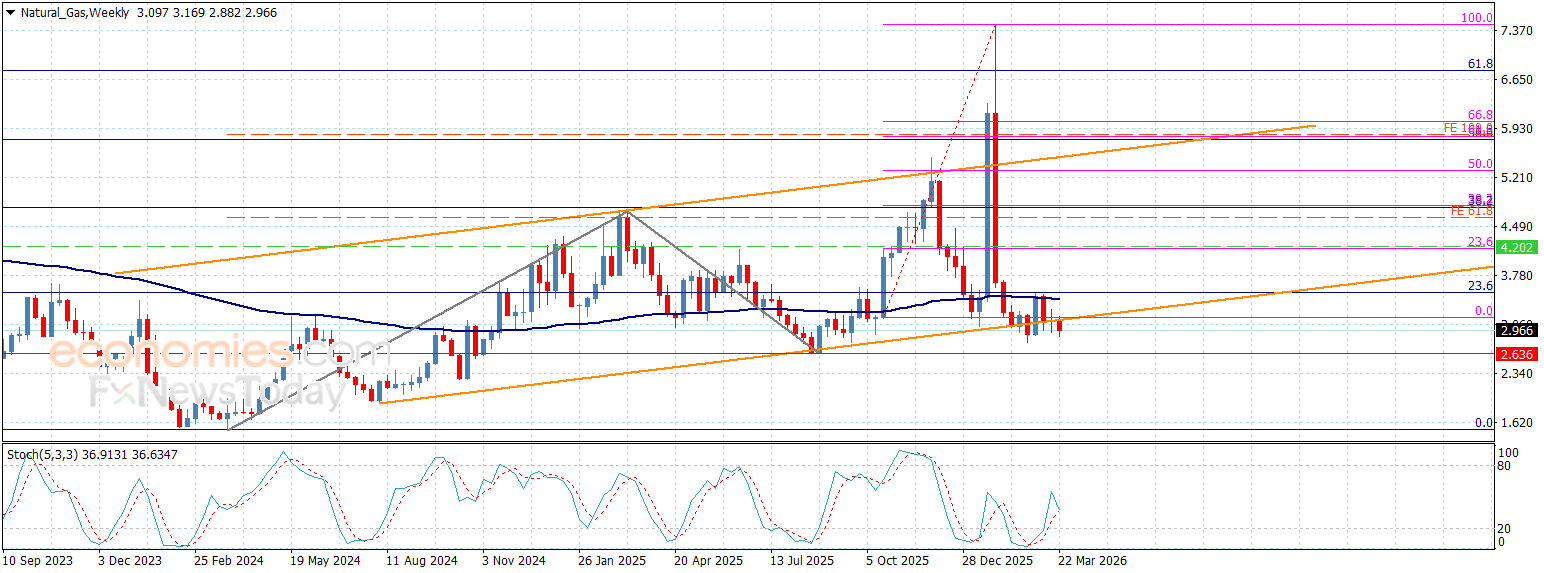
Natural Gas – Pricing Around $3.155 Supports A Broad Energy Bid Without Distorting The Oil Signal
Natural gas is trading near $3.155, up $0.040 on the day for a 1.28% increase. The scale of that move is almost identical to the gains in WTI CL=F and Brent BZ=F, signalling that macro risk appetite and cross-commodity flows are lifting energy as an asset class. However, the drivers are clearly different. Gas is reacting to weather patterns, LNG trade and power demand, while crude is being remapped around geopolitical stress in the Gulf and evolving sanctions.
The key point is that there is no major divergence inside the energy complex. Gas is not collapsing while oil rallies, and refined products are not decoupling from crude. This coherence across contracts strengthens the interpretation that today’s move is a rational repricing of risk, rather than speculative dislocation in one corner of the market. For directional positioning in CL=F and BZ=F, it means the geopolitical premium is not being contradicted by hostile signals from gas or products.
Geopolitics – U.S.–Iran Confrontation, Gulf Shipping Risk And The Diplomacy Premium In CL=F And BZ=F
The geopolitical layer driving WTI CL=F around $65 and Brent BZ=F around $70 is straightforward: the probability of disruption in the Gulf has risen, and the futures curve is recalibrating. U.S.–Iran negotiations remain fragile. The White House is weighing more aggressive enforcement on sanctioned Iranian crude, including the option of seizing tankers. Israel’s leadership is pressing in Washington for stricter limits on Iran’s nuclear and regional activities, while Iran has a history of responding asymmetrically through harassment of shipping and pressure on strategic chokepoints.
The U.S. president’s signal that a second aircraft carrier could be deployed if talks fail raises the odds of miscalculation at sea. The market does not need actual damage to infrastructure to reprice; it only needs a credible trajectory towards higher insurance costs, longer routes and a higher chance that marginal barrels are delayed or stranded. The fact that WTI and Brent are both up over 1% even with a 13.4 million barrel U.S. crude build shows that traders are consciously paying for that diplomatic uncertainty.
At the same time, the market is well aware that risk premium can evaporate if a deal is struck or if enforcement softens. That is why the move is contained to the mid-$60s for CL=F and just shy of $70 for BZ=F, rather than a runaway spike into the $80s. Price today is simply the midpoint between comfortable supply and elevated political stress.
Policy, Sanctions And Flows – Venezuela, Russia, India And The Global Crude Map Behind Prices
The policy tape matters because it reshapes flows even if total supply does not change overnight. Washington’s decision to allow U.S. firms to provide services for Venezuelan oil opens the door for gradual rehabilitation and higher reliability of Venezuela’s output, which has been constrained by years of underinvestment and sanctions. Parallel to that, EU measures targeting shipping services and U.S. enforcement moves against tankers carrying Russian or Iranian barrels increase the friction cost of moving those barrels, even if they still find buyers through alternative routes.
India is at the centre of this reshuffling. On one side, it is signalling plans to slash imports of Russian oil after a U.S. trade deal, while on the other it is raising purchases from the Middle East and West Africa to avoid over-dependence on discounted Russian barrels. China, meanwhile, continues to hoard crude and has been a key backstop for Russian flows, keeping a floor under exports despite Western sanctions. Every one of these shifts affects freight rates, voyage times and differentials, which feed back into Brent BZ=F as the clearing benchmark for seaborne barrels.
For WTI, the implication is that U.S. crude must stay competitive on a netback basis into export markets while still clearing domestic inventories. A 13.4 million barrel build shows that, for now, inland supply is comfortable. But as sanctions and trade deals change who can buy Russian, Iranian and Venezuelan barrels at what discount, U.S. exports can either accelerate or slow, influencing how long CL=F can hold $65 without a deeper drawdown in stocks.
Santos ASX: STO – Gas-Heavy 2P Reserves, 17-Year Life And CCS Capacity In A Transitioning Energy Mix
The Santos Limited (ASX: STO) reserves update slots into the oil narrative as a reminder that long-duration gas and carbon capture are becoming structural pillars next to liquid crude. Santos closed 2025 with 1,484 million barrels of oil equivalent (mmboe) of proved plus probable (2P) reserves. Before accounting for 88 mmboe of production, 2P reserves increased by 13 mmboe, mainly from the Cooper Basin and Papua New Guinea. On a reported basis, the headline 2P number is lower than the 1,559 mmboe in 2024, but the underlying story is one of steady resource maturation and portfolio optimisation rather than depletion.
Proved reserves (1P) are 913 mmboe, with a 95% 1P replacement ratio, while the 2P replacement ratio stands at 15%, reflecting a year focused on turning resources into developed barrels more than chasing large new finds. Gas dominates the book, representing 83% of 2P reserves versus 17% for liquids. Developed reserves now account for 62% of the 2P total, up sharply from 40% a year earlier, which improves visibility on future cash flows. At 2025 production rates, the 2P reserve life is 17 years, a significant planning horizon in a world where many buyers are signing long-dated LNG offtake agreements.
On the contingent side, 2C resources have eased from 3,338 mmboe to 3,212 mmboe after the divestment of the Petrel and Tern fields offshore Northern Australia, partially offset by additions in the Cooper Basin, Western Australia and Alaska. In parallel, Santos is building a sizeable carbon capture position. Proved plus probable CO₂ storage capacity has declined to 8 million tonnes after 1 million tonnes were injected, but 2C CO₂ storage resources have grown by 24 million tonnes to 202 million tonnes, entirely in the Cooper Basin. That supports expansion of the Moomba CCS project and gives Santos a credible route to monetise decarbonisation demand from industrial clients and LNG buyers.
Financial guidance reinforces the cash-flow orientation. Santos expects about $4.94 billion in product sales revenue for 2025, with cost of sales between $3.25 and $3.30 billion, net finance costs of $250–$265 million and an effective tax rate around 31%. Impairment charges, including additional second-half hits, are flagged at roughly $137 million. Put together, this is a gas-anchored, long-life reserve base with increasing CCS leverage—exactly the kind of profile that will interact with oil demand over time by influencing gas-for-oil substitution in power and industry.
Saudi Aramco – iktva 70% Local Content, $280 Billion GDP Contribution And Supply Chain Control Behind Brent
Saudi Aramco’s progress on its In-Kingdom Total Value Add (iktva) program explains part of the structural confidence in long-term supply behind Brent BZ=F. The company has reached 70% local content in its procurement, meaning that seven out of every ten dollars spent on goods and services now goes to Saudi-based suppliers. The target is to lift that figure to 75% by 2030, deepening domestic industrial capacity in parallel with upstream and downstream expansion.
The scale is material. Since iktva’s launch, Aramco estimates that it has contributed more than $280 billion to Saudi GDP, attracted $9 billion in inward investment and catalysed over 350 investments from 35 countries. Forty-seven strategic products are being manufactured locally for the first time, and the program has identified more than 200 localisation opportunities across 12 sectors, representing about $28 billion of annual market potential. That spend is concentrated in manufacturing, services and energy-related equipment that underpin upstream, downstream and chemicals projects.
For the global oil market, the key implication is supply chain resilience. By anchoring critical manufacturing and services in-Kingdom, Aramco reduces its exposure to global logistics bottlenecks, shipping shocks and imported cost spikes—the very disruptions that rattled energy supply during the pandemic and subsequent geopolitical crises. A more self-sufficient supply chain raises confidence that Saudi Arabia can deliver on its role as the world’s leading swing producer, adjusting production in line with OPEC+ strategy without being constrained by external fabrication or equipment lead times.
This industrial base also positions Saudi Arabia as a regional manufacturing hub for oilfield services and heavy equipment, with implications for international service companies that lack a local footprint. For Brent BZ=F, a credible long-term capacity and project-execution story in Saudi Arabia stabilises the back end of the curve. It signals that while front-month prices will move with risk premium, the structural ability to expand or maintain supply remains intact.

Sentiment, Positioning And Verdict – CL=F And BZ=F Skewed Buy-Biased At $65–$70 With Clear Event Risk
Putting the numbers together—WTI CL=F around $65.01, Brent BZ=F near $69.82, Murban at $69.89, the OPEC Basket at $66.65, Louisiana Light at $65.94, Mars US at $69.79, gasoline at $1.982, natural gas at $3.155, a 13.4 million barrel U.S. crude stock build, Santos with 17 years of 2P reserves and 202 million tonnes of 2C CO₂ storage, and Saudi Aramco at 70% local content targeting 75% by 2030—the structure is clear. The world is not short of hydrocarbons today, but it is short of certainty about how those barrels move and how sanctions, diplomacy and conflicts will interact with shipping lanes and refineries.
On the supportive side, you have a 1%–1.6% rally in CL=F and BZ=F, an OPEC Basket up 2.63%, Louisiana Light surging 4.75%, persistent U.S.–Iran tension, threats of tanker seizures, and a sanctions landscape that keeps several million barrels per day under legal or logistical pressure. On the limiting side, you have a large U.S. inventory build, pockets of weakness in specific grades such as Mars, and the clear possibility that negotiations or policy shifts knock dollars off crude if they de-escalate the Gulf.
At $65–$70, the balance of probabilities favours a Buy-biased stance on both WTI CL=F and Brent BZ=F, rather than a Sell or flat call. The upside scenario—negotiations fail, sanctions tighten, or a shipping incident occurs—would likely push the front of the curve significantly higher from current levels. The downside scenario—diplomatic progress or softer enforcement—would remove part of the premium but is cushioned by robust demand, OPEC+ management and the time it takes for new barrels from places like Venezuela to stabilise. In other words, the market is paying for a higher risk premium, but not yet for a crisis, leaving room for further upside if the geopolitical path deteriorates from here.
That’s TradingNWES



Written by : Editorial team of BIPNs
Main team of content of bipns.com. Any type of content should be approved by us.



Share this article: