
The Matcha Craze Is Real—And Complicated
From the Bar to the Pastry Case
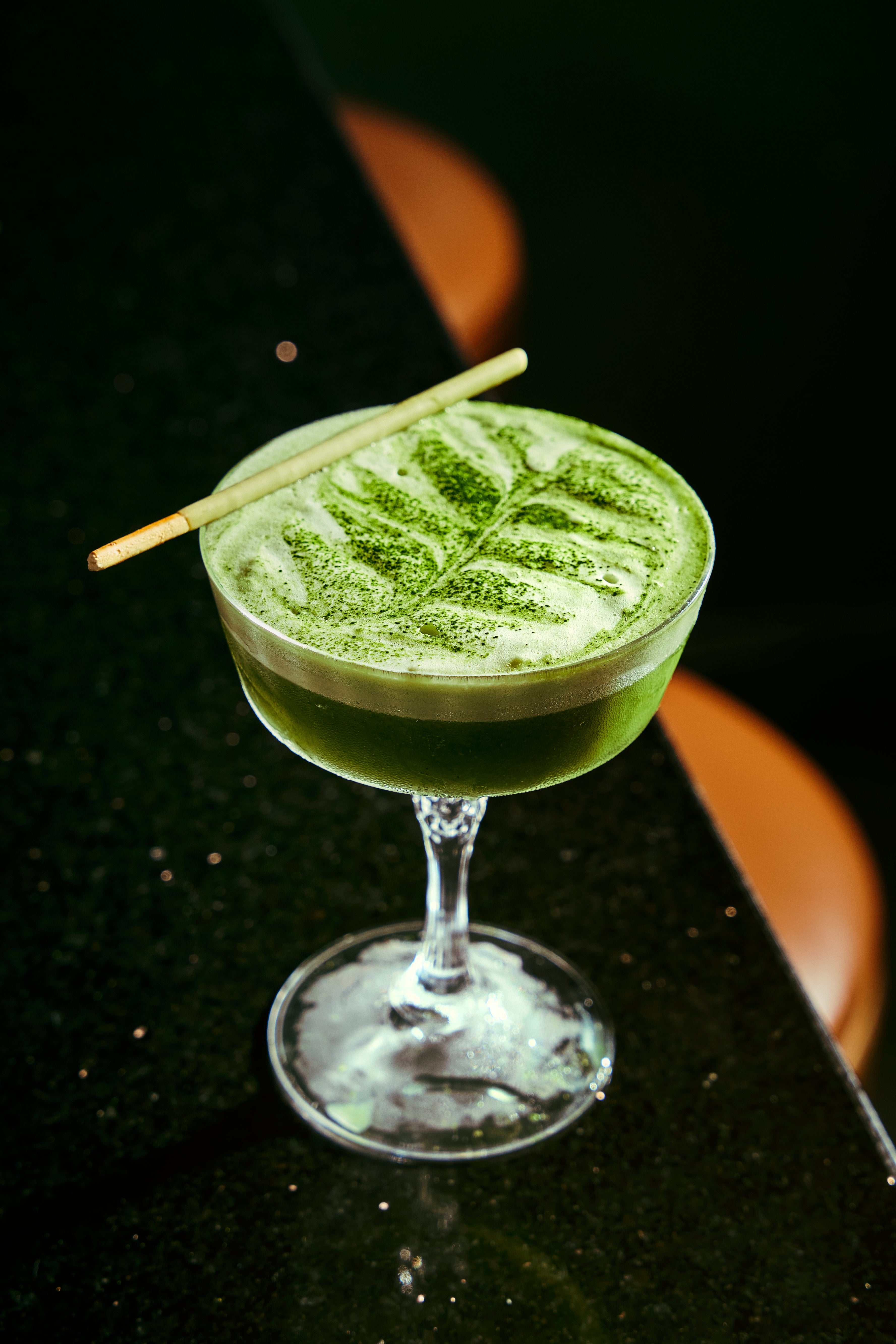
Matcha has made its way onto cocktail menus, including at Philadelphia’s Almanac—an intimate bar located above the city’s most high-end omakase counter, Ogawa. There, matcha is treated with both reverence and playfulness. Measured on a scale and whisked fresh at the bar, the Sadōtini is garnished with a single stick of Matcha Pocky.
Head bartender Rob Scott and drinks consultant Danny Childs originally considered a dirty matcha martini—essentially an espresso martini with matcha—but scrapped it. “It looked kind of hideous and didn’t do either flavor justice,” said Scott. Instead, they leaned into the fresh, grassy sweetness people love in a matcha latte. To achieve creaminess without cream, they created a base of amazake, fermented with koji and rice porridge in-house, then added matcha, Roku Japanese gin, sweet potato shochu, and egg white for texture.
“Sadōtini” is a portmanteau of “martini” and sado (also called chado), the word for Japanese tea ceremony. “We always make the matcha fresh for every drink,” said Scott. “It’s a small, emblematic part of the tea ceremony. This isn’t a true tea ceremony, but it’s a nod.”
“It’s our most labor-intensive cocktail,” he added. “It’s been number one since day one. While we’ve streamlined other drinks, it’s nice to let people see a bit of the process. In a lot of bartending, we’ve removed some of the showmanship. It’s nice to have principled ones [like the Sadōtini] showing our ethos and process.”
Matcha also stars on the dessert menu at New York’s 53, but its rising popularity has forced chef Mark Yu to rethink how much of it he can use. “It’s been hard to source,” said Yu. “When we first opened in 2022, we had a matcha ganache dessert with black tea crumble and black cardamom mousse. It took a lot of matcha to make—it was our signature. But it became so difficult to source.”
At its peak, 53 sold about 30 matcha ganaches per night. When they tried to bring the dish back, they couldn’t get enough matcha to meet demand. The current seasonal offering—a matcha strawberry semifreddo sandwich with thyme—uses less matcha, and sells about 15 to 20 each night.
“We had to figure out a dessert that didn’t use as much matcha,” said Yu. Three years ago, he was buying 1-kilo bags of culinary matcha. Now he buys 2-ounce packs. “Prices have gone up about 15 to 20 percent. It’s like toilet paper. People freak out,” he said. “And it’s not just America. The craze is everywhere. You can’t store it—some people hoard it and ruin it for everyone else.”
But as a chef who worked through the pandemic, Yu added: “We’re used to shortages.”
Like ramps, truffles, and caviar, matcha has joined the ranks of ingredients we’ve collectively lost our minds over. Everyone wants it—even if it means consuming it to the last leaf. Might we consider seaweed? Fig leaves? Something a little more sustainable?
Still, Siemons sees hope in where the craze is headed. “The only direction we can go is up,” she said. “Matcha pop-ups are huge right now. People are craving a better format for matcha. What I see slowly emerging is a true care for matcha.”
If we’re currently in the Starbucks Frappuccino era, she believes it will eventually give way to more thoughtful sourcing—just as Starbucks paved the way for better coffee.
“You have to start with good product in the food world,” said Siemons. “You can’t turn rotten lemons into lemonade.”
Source link







Share this article: