
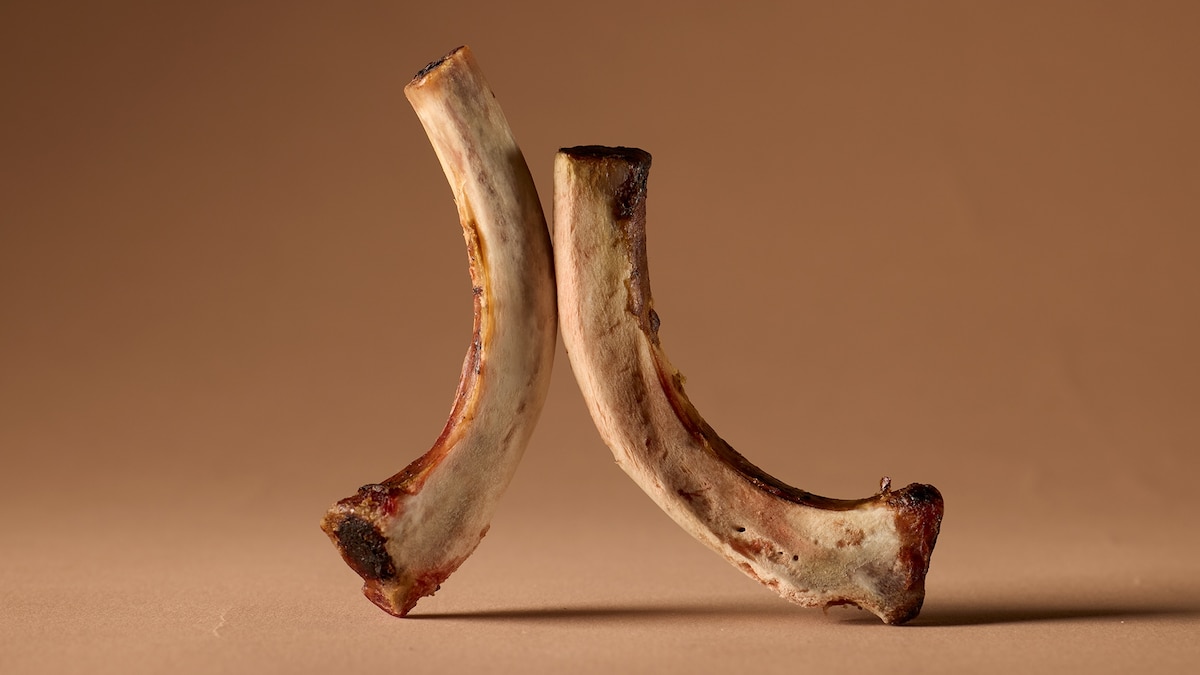
The scientific case for eating more bones
Years ago, a friend told me about a meal she had while doing field work in rural west sub-Saharan Africa. It started simple: Her host village killed and stewed a chicken. But after finishing the meat, they then ate the bones—not just gnawing on them to get at lingering tendon and cartilage, as cultures across the globe do, but actually crunching into the hard bits.
Her story piqued my interest. Thanks to America’s recent obsession with carnivore and paleo diets, many folks are familiar with the traditional practice of boiling bones to draw out their collagen protein—which makes up 25 to 33 percent of the average animal’s protein content, largely locked up in bones, skin, and connective tissue—and transform it into broths and gelatins. Many people are likely also familiar with the practice of cracking them open to get at their rich, fatty marrow. But I’m a certified offal stan, and I’d never heard of someone eating bones whole—nor had any of the other hardcore offal lovers I knew.

(Is bone broth really a ‘liquid miracle’? Here’s what science says.)
I’m always eager to explore new culinary techniques, textures, and flavors. So I made it a mission to learn more about edible bones. In the process, I’ve discovered that many cultures cook and eat bone, for many compelling reasons—the practice is just less visible in the West.
The perils and promises of eating bones
There’s more value in bones than collagen and marrow, explains Cornell University food scientist Joe Regenstein. They’re primarily made of calcium and phosphate, and rich in minerals like iron, magnesium, and potassium. Nutritional profiles vary across species, the type of bone you’re working with, the age and condition of an animal, and the way you render and prepare its parts.











Share this article: