
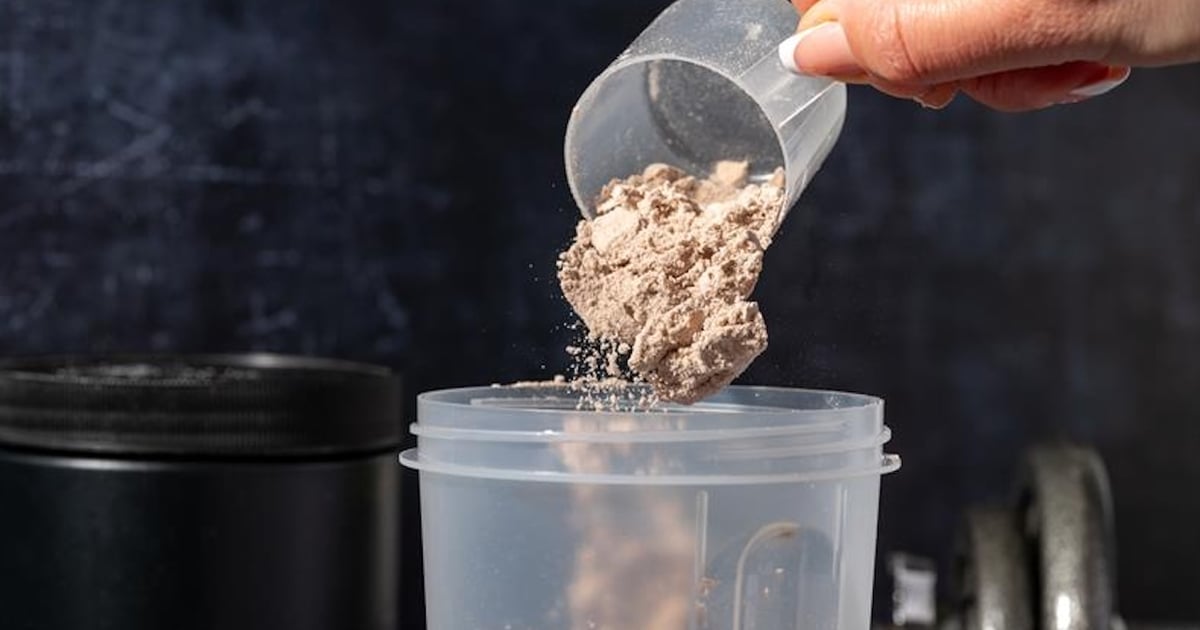
Protein lead report used dicey benchmark
A report from a consumer watchdog group concerning lead levels found in protein powders has created a false sense of risk by applying standards that are not used by any regulator, industry sources say.
Yesterday, Consumer Reports, the nonprofit consumer advocacy agency founded in 1936, released a report of testing it did on 23 protein powders and ready-to-drink beverages. The group said the tests revealed that the products “carry troubling levels of toxic heavy metals.”
The products were purchased anonymously online from Amazon, Walmart as well as from brick-and-mortar outlets like health food stores and supermarkets in New York state. Multiple lots of each product were purchased and tested over a period of months starting in November 2024.
The products were tested for total protein, but also arsenic, cadmium, lead and mercury.
Most products exceeded CR’s own lead standard
All of the products tested met their protein content label claims. As for the heavy metals, lead emerged as the major concern. About three-quarters of the products had 120% or more of CR’s “level of concern” for lead, which the organization has set at 0.5 micrograms per day.
The U.S. Food and Drug Administration and the Centers for Disease Control note that there is no safe level of lead consumption. But official sources do stress that children and pregnant and nursing mothers are the highest risk subpopulations, and FDA has set an IRL (interim reference level) for lead consumption by pregnant and nursing women at 8.8 mcg of lead per day.
Consumer Reports listed two products as ones that consumers should avoid. Those were Naked Nutrition Vegan Mass Gainer and Huel Black Edition. These exceeded CR’s own lead limit by 1,572% and 1,288% respectively.
A number of other products were listed as best limited to once-a-week consumption, while others were listed as “okay to eat occasionally” or “better choices for daily consumption.” Only one product, Muscle Tech 100% Mass Gainer, showed no detectable level of lead.
CRN: Detection does not mean harm
The Council for Responsible Nutrition (CRN) noted that supplement manufacturers are already required to test the levels of contaminants in their products. CRN highlighted an issue that also plagues the testing of supplements for levels of performance-enhancing drugs (PEDs), namely, that testing methods are getting better all the time, so extraneous substances are now being found at levels that weren’t possible before.
“The mere detection of heavy metals such as lead, cadmium or arsenic does not equate to a health hazard. Modern testing methods are extraordinarily sensitive and capable of identifying trace amounts of naturally occurring elements that are found broadly in soil, water and plants,” CRN said in a press statement.
CRN noted that while it is in favor of rigorous and transparent testing of products in the marketplace, it has some questions regarding the report’s methodology.
“While we appreciate that Consumer Reports has published some detail on its methodology, we note that important context is missing — specifically how products were selected, whether testing reflected typical consumer use, and how its ‘levels of concern’ were derived.
“Without harmonization to established federal benchmarks, or even actual safety risk, such proprietary thresholds can overstate risk and cause unnecessary alarm,” the organization said.
“By contrast, Consumer Reports’ use of its own internal ‘Level of Concern’ benchmarks — standards not recognized by any regulator — creates a misleading impression of risk. A finding that a product exceeds CR’s self-imposed threshold is not the same as exceeding a government safety limit, nor is it evidence of any safety risk to consumers,” CRN concluded.
NPA: Toxicologists have downplayed risk
Daniel Fabricant, Ph.D., president and executive director of the Natural Products Association (NPA), said FDA has already set levels of lead in foods intended for infants and young children that “are achievable and protect the public.”
Fabricant referenced a study published in 2020 by toxicology experts that concluded “the typical intake of dietary supplements would not result in adverse health effects due to heavy metals.”
“FDA’s position is clear: There’s a difference between detection and danger,” Fabricant said. “Consumer Reports knows that, but it doesn’t fit its narrative,” Fabricant said.










Share this article: