
Category: Forex News, News
AI Gold Price Forecast 2026 Outlook: Gold price prediction, Jan. 30: Gold could hit $10,000 an ounce by April, AI predicts — here’s how silver, platinum, and copper are reacting to gold’s rally
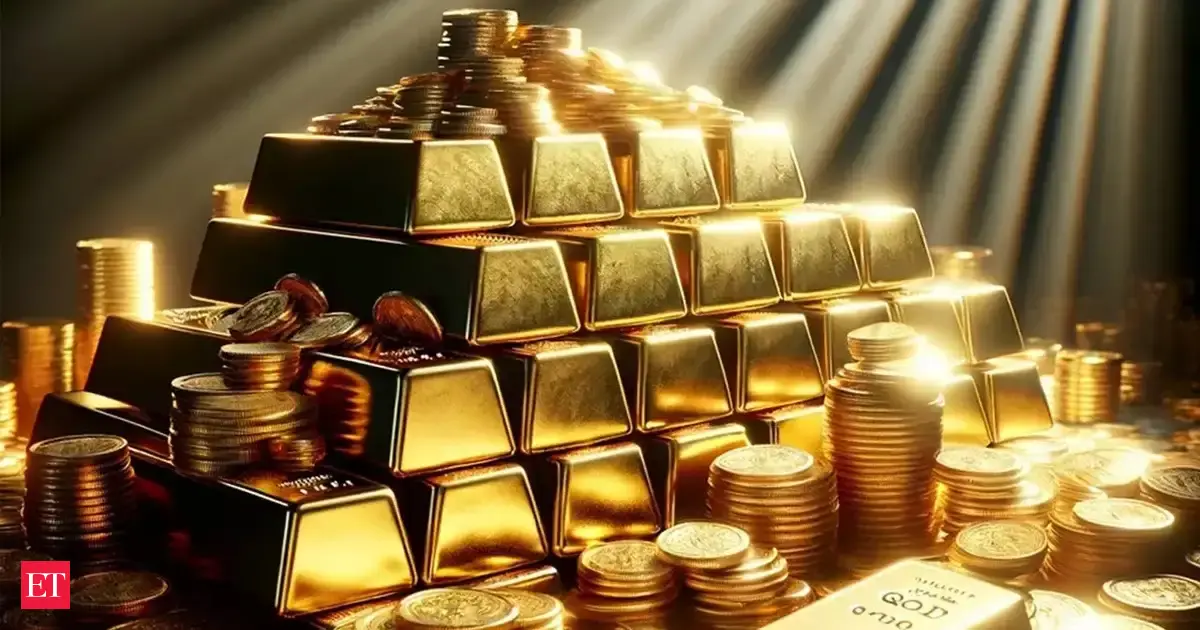
Spot gold recently touched an all-time high above $5,360 per ounce before consolidating. That move capped a rally of more than 100% over the past year. Demand has come from both institutions and retail buyers, with physical gold seeing renewed interest as investors seek protection from inflation, debt expansion, and financial system risk.
What makes the current outlook notable is the scale of the projections. One long-term AI pricing model points to gold reaching approximately $10,500 per ounce by April, followed by further acceleration later in the year. December targets in that model approach $19,700 per ounce, a level that would redefine global asset allocation frameworks.
While those numbers sit well above mainstream forecasts, the underlying drivers are not speculative. Central banks are buying at record levels. Real yields are declining. Confidence in fiat currencies is weakening. And gold’s role in portfolios is changing, from a hedge to a structural reserve asset.
Major financial institutions remain bullish, even if more conservative. UBS expects gold to end the year near $5,400. Yardeni Research projects $6,000. Jefferies sees upside toward $6,600. The gap between AI forecasts and traditional models highlights how rapidly assumptions around gold are evolving.
While gold captures the headlines, the broader precious metals complex is experiencing an even more volatile re-rating. Silver is currently trading at $102.14, having recently touched a high of $121.78. The gold-to-silver ratio, a key metric for commodity traders, is beginning to compress, suggesting that silver may eventually outperform gold on a percentage basis.
The industrial demand for silver—driven by the 2026 surge in green energy infrastructure and AI hardware—is creating a physical deficit that hasn’t been seen in decades. Similarly, Platinum (PL00) is holding at $2,345.70. Although it saw a $272.60 decline in the latest session, its role in high-tech manufacturing and as a “cheaper” alternative to gold for retail investors provides a solid floor. The 10.41% drop in Platinum and 10.74% drop in Silver are indicative of a high-beta market where traders are using leverage, leading to sharp but temporary “washouts” that clear the way for the next leg up.
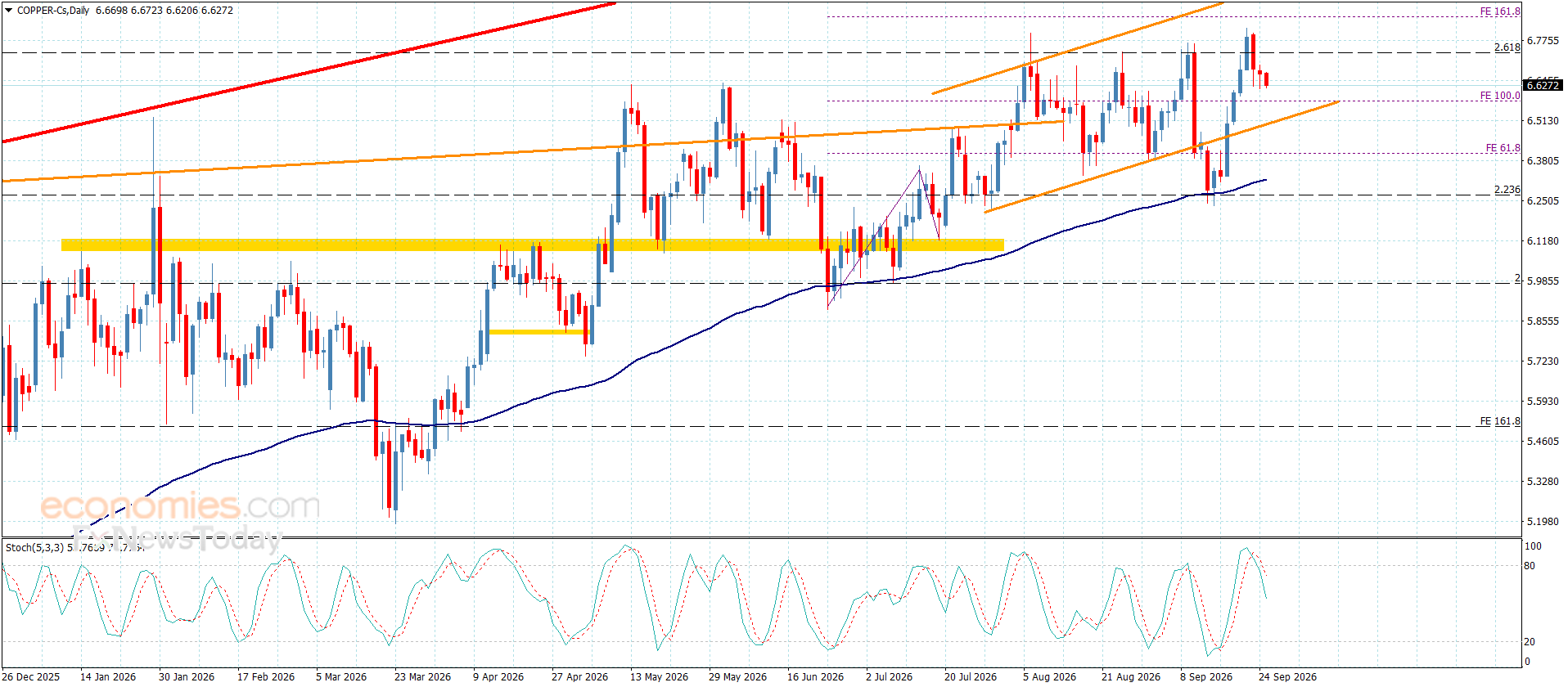
Copper (HG00), often called “Dr. Copper” for its ability to diagnose economic health, is trading at $6.08, down slightly by 1.97%. This stability in industrial metals suggests that the global economy isn’t in a traditional recession, but rather a “currency reset.
Gold price surge explained: why gold is breaking records in 2026
Gold’s rise has been steady but relentless. After spending years capped below $2,100, prices began accelerating as inflation risks proved more persistent than expected and global debt levels surged. By early 2026, spot gold crossed the $5,300 mark, with futures briefly testing even higher levels during bouts of market stress. The rally has coincided with falling real yields, a weaker U.S. dollar trend, and heightened geopolitical uncertainty.

Real yields are a crucial driver. Gold does not pay interest, so when inflation-adjusted bond yields fall, the opportunity cost of holding gold drops. In recent months, real yields across major economies have declined as inflation expectations remain elevated while growth data softens. This environment historically favors gold, and the current cycle is following that pattern, only on a larger scale.
Currency dynamics have also played a major role. Persistent fiscal deficits and rising debt servicing costs have raised concerns about long-term currency stability. As a result, gold’s role as a hedge against fiat currency risk has strengthened. This narrative has resonated not just with investors but also with policymakers, reinforcing demand at multiple levels of the market.
Central bank gold buying and the shift away from fiat risk
One of the most powerful forces behind gold’s rally is central bank demand. Over the past few years, official sector purchases have remained near record highs. Emerging market central banks, in particular, have been increasing gold reserves as a way to diversify away from traditional reserve currencies. This trend has continued into 2026, providing a steady source of structural demand that is largely insensitive to short-term price swings.
Central banks are not chasing momentum in the way hedge funds might. Their buying reflects long-term strategic decisions about reserve safety, geopolitical risk, and currency exposure. That makes their demand especially important for price stability. When official institutions absorb supply during periods of volatility, downside pressure is often limited.
At the same time, the broader shift toward de-dollarization, while uneven, has added psychological support to gold. Even modest changes in reserve allocation can have outsized effects on a market with limited new supply growth. Global mine production has increased only marginally, meaning incremental demand must be met largely through higher prices.
AI forecasts versus Wall Street targets: is $10,000 gold realistic?
The idea of $10,000 gold has gained traction largely through AI-based models that extrapolate current trends under extreme scenarios. These forecasts typically assume a combination of aggressive monetary easing, sustained currency debasement, and elevated geopolitical risk. Under such conditions, gold’s historical relationship with real yields and money supply growth could, in theory, justify much higher prices.
However, mainstream Wall Street forecasts remain far more conservative. Many major banks see gold trading in a broad $5,000 to $6,500 range over the next year, with some bullish scenarios extending toward $7,500 or even $8,500 if financial stress intensifies. These projections already represent historically high levels and assume continued support from central banks and investors.
The gap between AI predictions and institutional targets highlights the uncertainty embedded in the current market. A move to $10,000 would likely require a significant catalyst, such as a sharp loss of confidence in major currencies, a severe recession combined with rapid rate cuts, or a systemic financial event. Without such a trigger, the path to five-figure gold prices remains speculative rather than probable.
Investor positioning, volatility, and what comes next for gold prices
Despite record prices, investor exposure to gold remains relatively low compared with past peaks. Exchange-traded fund holdings have not surged to the levels seen during previous crises. This suggests that much of the rally has been driven by structural buyers rather than speculative excess. For bulls, this is a key argument that the cycle still has room to run.
Volatility, however, is likely to remain high. Recent trading sessions have shown sharp intraday swings, with gold falling hundreds of dollars before rebounding as buyers step in. Such moves reflect a market that is both crowded with long-term conviction and sensitive to short-term macro headlines. Corrections are possible, especially if real yields rise temporarily or risk appetite improves.
Looking ahead, gold’s trajectory will depend on how inflation, monetary policy, and currency markets evolve through 2026. If real yields continue to fall and central bank demand stays firm, prices could grind higher even without a crisis. If confidence in fiat currencies erodes further, the upside scenarios grow more plausible. But if growth stabilizes and policy tightens, gold could consolidate at elevated levels rather than explode higher.
FAQs:
Q: What is driving AI forecasts that predict gold prices could exceed $10,000 per ounce in 2026? A: AI models factor in record central bank gold purchases, declining real interest rates, and rising global debt levels. They also account for currency risk, geopolitical instability, and constrained mine supply. These conditions historically align with sharp upward repricing cycles.
Q: How do Wall Street gold forecasts compare with AI-driven projections for 2026?
A: Major banks remain bullish but cautious, projecting year-end gold prices between $5,400 and $6,600. AI models forecast much higher levels, reflecting structural monetary risks rather than short-term trading factors. The divergence highlights uncertainty around inflation, currency stability, and long-term demand.
Source link


Written by : Editorial team of BIPNs
Main team of content of bipns.com. Any type of content should be approved by us.




Share this article: