
Category: Forex News, News
Coffee prices today May 30: Domestic prices fall sharply, the world turns around and becomes “red”
Domestic coffee prices today
The domestic coffee market this morning, May 30, 2026, experienced a sharp downward adjustment as pressure from the world market spread directly to purchasing agents.

In all key provinces, the price of raw coffee beans simultaneously lost 1,800 VND/kg compared to yesterday’s trading session.
Specifically, in Dak Nong province (old), the purchase price retreated to 87,400 VND/kg, continuing to be the locality with the highest price in the whole region.
In Dak Lak and Gia Lai provinces, coffee prices both decreased to 87,300 VND/kg.
Meanwhile, in Lam Dong, the purchase price also dropped to the threshold of 86,800 VND/kg.
Along with the decline of coffee, pepper prices today stood still at the level of 141,000 VND/kg, while the USD/VND exchange rate at Vietcombank recorded a slight decrease of 10 VND, falling to 26,085 VND/USD.
World coffee prices
On international futures exchanges, panic was overwhelming as coffee prices fell sharply from the short-term peak set the day before.
On the London exchange, the price of Robusta for July delivery (RMN26) decreased by 78 USD, equivalent to 2.19%, closing the session at 3,476 USD/ton.
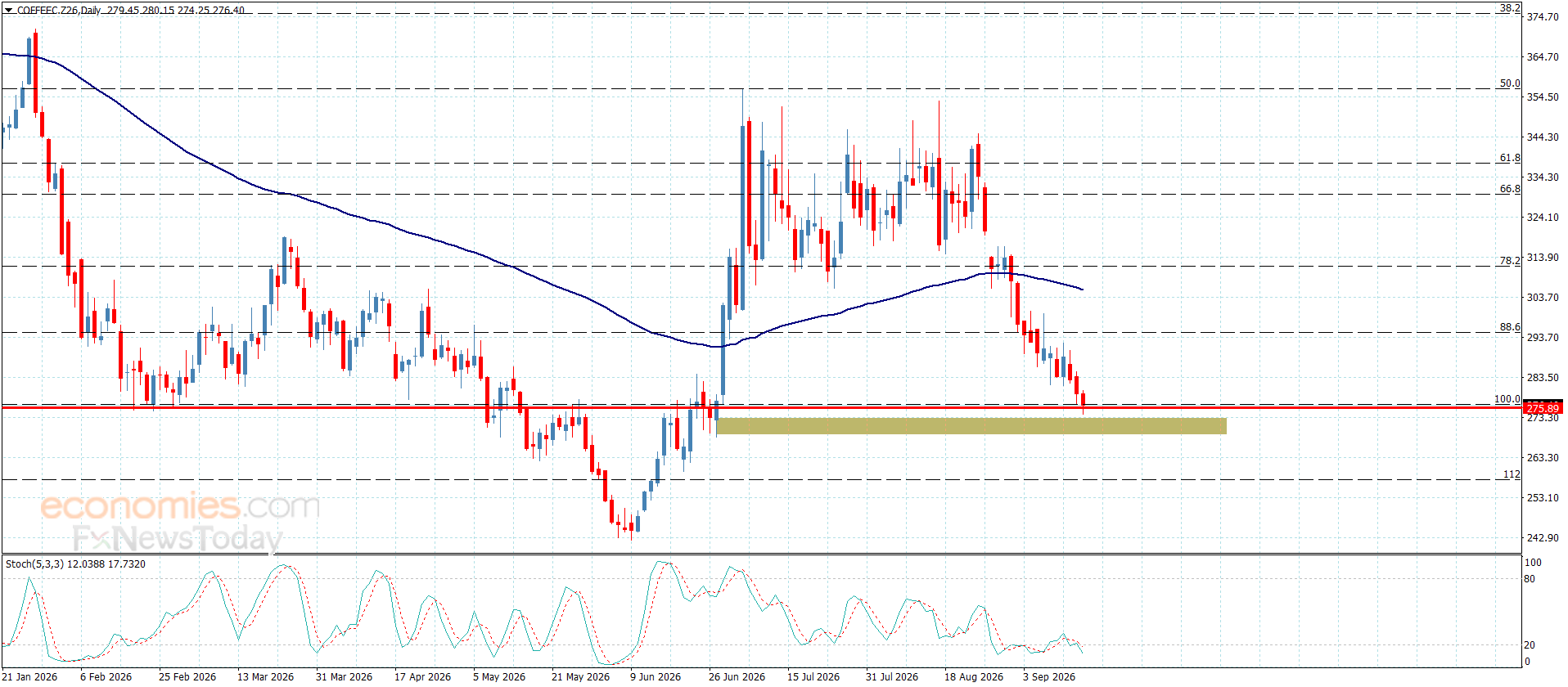
Similarly, the New York Stock Exchange witnessed the price of Arabica for July delivery (KCN26) plummeting 8.65 cents, equivalent to 3.15%, closing at 265.60 cents/lb. The simultaneous decline on both exchanges reflects the aggressive profit-taking sentiment of speculators in the face of the latest weather signals in South America.
Coffee price assessment
The direct cause of this decline stems from the latest weather forecasts showing that dry conditions will soon return to Brazil’s key coffee growing areas next week. This information helps harvesting – which was interrupted by heavy rain last week – to be expected to return to normal soon, thereby relieving concerns about short-term supply shortages.
However, the long-term supply and demand picture is still uncertain as Arabica inventories on the ICE exchange continue to fall to the lowest level in the past 3.5 months, along with the prolonged drought in the Central Highlands still being a major barrier to production prospects.
Before the strong and unpredictable fluctuations from both weather factors and speculative capital flows, farmers in this period should be very calm. It is understandable that the market adjusted down after a hot uptrend.


Written by : Editorial team of BIPNs
Main team of content of bipns.com. Any type of content should be approved by us.





Share this article: