
Category: Forex News, News
Euro To Pound Forecast Next 6-12 Months: 0.84 This Year, 0.87 In 2027
EUR/GBP Forecast: Société Générale Targets 0.87 by September 2027
Pound Sterling’s recent gains mask an increasingly expensive currency, Société Générale says, as UK fiscal tightening threatens support against the Euro.
Foreign exchange analysts at Société Générale expect the Euro to recover to 0.87 against the Pound by the end of the third quarter of 2027, arguing that Pound Sterling‘s strength is becoming harder to justify as UK prices outpace those elsewhere in Europe.
The bank still forecasts EUR/GBP at 0.84 at the end of 2026, allowing for further Euro weakness before the recovery.

At the time of writing, the Euro to Pound exchange rate was near 0.8449, little changed on Tuesday but around 1.1% lower since the end of September.
Euro to Pound (EUR/GBP): 0.844925 (+0.01%)
Pound to Dollar (GBP/USD): 1.324361 (+0.25%)
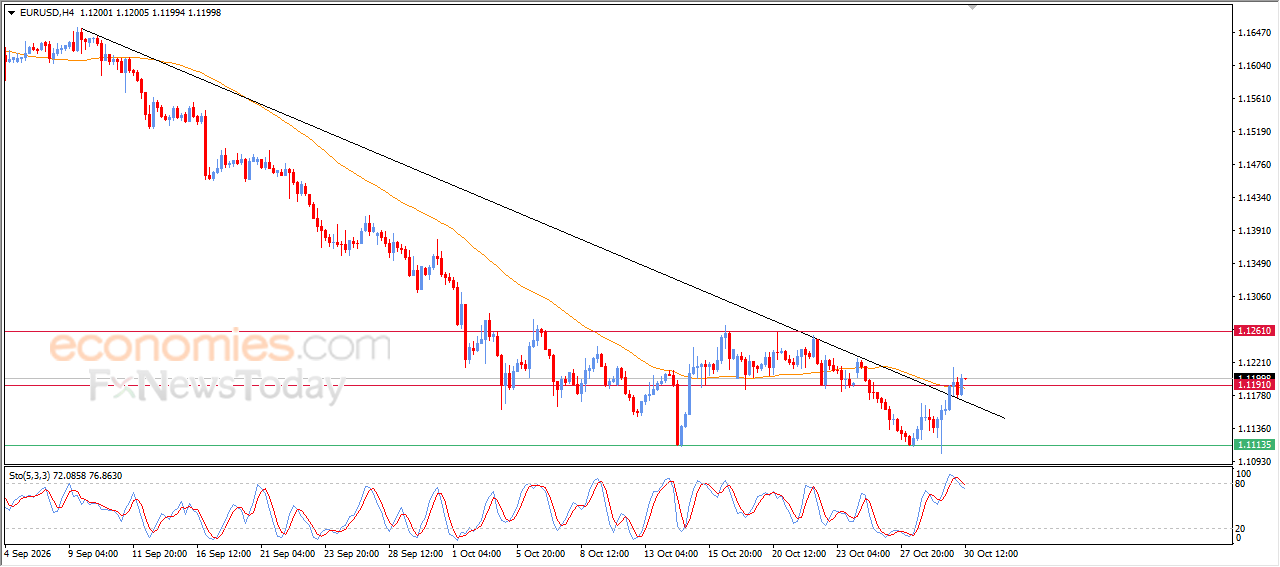
Euro to Dollar (EUR/USD): 1.118986 (+0.27%)
Kit Juckes, Société Générale’s currency strategist, acknowledges the support Sterling has enjoyed: “The widening in European yield differentials of recent days has given GBP support and dragged EUR/GBP down close to last summer’s lows.”


A steady exchange rate can conceal an expensive Pound
Juckes puts today’s valuation in the context of the past decade: “More recently, EUR/GBP has spent a decade trading within a relatively narrow range, equivalent to between FRF 7 and FRF 8, or 0.82 to 0.94 in EUR/GBP terms. The challenge facing sterling is that, over this ten-year period of range-bound trading, its real, inflation-adjusted value has appreciated by around 20%.”
Faster domestic price rises make British output more expensive relative to overseas competitors unless the currency weakens to compensate.
Juckes writes: “This has made foreign holidays (Switzerland excluded) feel more affordable, but it has also weighed on exporters.”
Juckes adds: “Tighter fiscal policy is coming; the balance of payments remains a threat and the pound is getting steadily more expensive in real effective terms as inflation exceeds levels elsewhere in Europe.”
The 28 October Budget will put those fiscal choices before investors.
Higher taxes or restrained spending could reassure government lenders while also weakening demand, limiting the economic support behind Sterling.
The Euro (EUR) has obstacles of its own
An expensive Pound does not make a Euro rebound immediate.
In its assessment of the single currency, Société Générale writes: “Higher bond yields, globally, have sent French and Italian yields higher and revived concerns about fiscal sustainability. Elevated energy prices are as bad for the euro now as they were in 2022/2023. In short, the backdrop is unambiguously negative, and for now, the euro remains vulnerable.”
Our recent coverage of France’s fiscal problems limiting the Euro’s appeal examined the same difficulty for investors seeking an alternative to Sterling before the UK Budget.
Société Générale also sees limits to further selling, pointing to large bearish Euro positions in futures markets.
Juckes writes: “The size of the position, combined with the extent of the bad news already priced in, suggests that although downward pressure on the euro will persist as long as oil prices remain elevated and government bond markets remain unsettled, further downside in EUR/USD may be limited.”
That observation concerns the Euro against the Dollar, but provides a qualification to the bank’s broader pessimism about the single currency.
EUR/GBP exchange rate FAQ
What is Société Générale’s Euro to Pound forecast?
The bank forecasts EUR/GBP at 0.84 at the end of 2026 and 0.87 at the end of the third quarter of 2027.
Why does Société Générale expect the Euro to recover?
It argues that Sterling has become increasingly expensive after adjusting for inflation, while tighter UK fiscal policy and external financing risks could constrain the Pound.
Does the forecast imply an immediate Euro rebound?
No. The bank allows for further weakness this year before a recovery in 2027, with European fiscal concerns and high energy prices still weighing on the Euro.


Written by : Editorial team of BIPNs
Main team of content of bipns.com. Any type of content should be approved by us.




Share this article: