
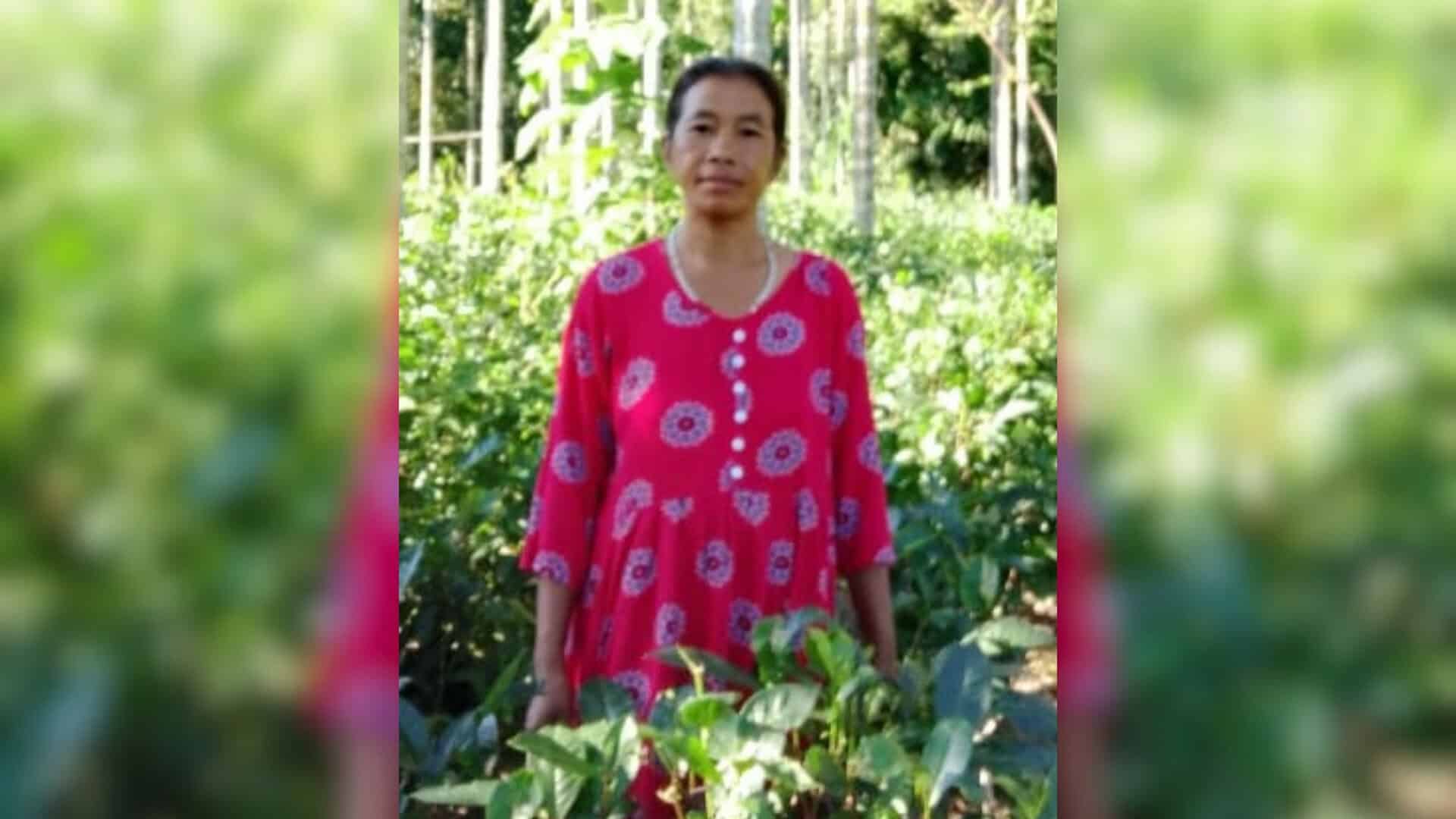
A bridge to a new future: How Maloti Terangpi became a green tea entrepreneur
Maloti Terangpi’s journey begins in Dakiram Ronghang, a remote village tucked inside Karbi Anglong’s Rongmongve Block in Assam. For years, she cultivated tea on her small plot of land, selling raw leaves at just ₹15 per kilogram.
Every day, she and other women in her village carried heavy sacks of freshly plucked leaves across a narrow footbridge over the Nadia River—the only connection to the nearest market. Transportation was slow, unsafe, and exhausting.

Despite her hard work, Maloti earned barely ₹8,000 a month, with little hope of breaking out of the low-profit cycle.
Her turning point arrived on April 10, 2025, when she joined the Udyamini Rural Women Entrepreneurship Programme (RWEP) with an initial investment of only ₹4,000.
Soon after, Transform Trade’s technical partner, Grassroot Tea Corporation (GTC), conducted a series of Focus Group Discussions in the Dolamara area.
The conversations revealed a simple truth: women like Maloti had land, skill, and determination but lacked processing technology, market access, and opportunities to move up the value chain.
To bridge this gap, GTC supported Maloti and 11 other women to form a cluster and established a home-based, handcrafted green tea processing unit inside their own village.
For the first time, tea processing shifted from faraway factories to their households, eliminating transportation barriers and cutting dependence on middlemen. What once felt impossible—producing their own high-value tea—became achievable within walking distance of their homes.
Through intensive training under the Dolamara Cluster, Maloti learned every step of handcrafted green tea production: identifying ideal plucking standards, mastering steaming and rolling techniques, ensuring proper drying, and maintaining strict moisture control.
She and the other women were also trained in regenerative farming practices, learning to make NADEP compost and natural biopesticides from locally available materials. This helped them grow chemical-free leaves, reduce input costs, and improve the long-term health of their tea gardens.
Today, Maloti produces Premium Karbi Artisanal Green Tea—an elegant, carefully crafted product made from the first four days of new leaf growth. It takes 5 kilograms of raw leaves to make just 1 kilogram of finished tea, which now sells for ₹450 per kg.
This shift from selling raw leaves to producing a value-added product has transformed her income potential. Her goal—to earn ₹2 lakh annually—no longer feels distant.
More importantly, Maloti has earned dignity, confidence, and recognition as a rural woman entrepreneur. Her story shows how access to technology, skill development, and local processing can redefine possibilities for women in remote regions.
Maloti is one among hundreds of Rural Women Entrepreneurs (RWEs) who will participate in the Rural Udyamita Conference 2025 on December 12 at NEDFi, Guwahati.
The event will bring together women like her—leaders of micro-enterprises, tea growers, weavers, artisans, farmers, and innovators—who are driving silent but powerful transformations in their communities.
The conference is organised by the Council for Social and Digital Development (CSDD), Digital Empowerment Foundation, North East Development Foundation, and Unifiers Social Ventures.
It serves as a national platform where policymakers, development experts, financial institutions, and grassroots entrepreneurs come together to deliberate on what a sustainable and supportive ecosystem for rural women should look like.
Co-organised by the Udyamini RWEP Collaborative and supported by UNDP and the Assam State Rural Livelihoods Mission (ASRLM), the event highlights the role of digital inclusion, decentralised production systems, and collective action in shaping the next generation of rural entrepreneurship.
For women like Maloti, the conference is more than an event—it is a celebration of resilience, innovation, and the belief that even from the most remote corners of Assam, powerful stories of change can emerge and inspire the nation.
Also Read: Assam: Children most at risk as study exposes rabies threat in tea estates
Related











Share this article: