About Editorial team of BIPNs

Main team of content of bipns.com. Any type of content should be approved by us.
27 06, 2025

The EURJPY provide sideways trading– Forecast today – 27-6-2025

By |2025-06-27T14:50:37+03:00June 27, 2025|Forex News, News|0 Comments

Copper price took advantage of the positive factors by confirming the obstacle at $4.8900, to notice by the above image, forming a strong bullish rally achieving the main targets by reaching $5.0700 level and settles around it.


By the above image, we notice forming $5.1000 level to previous liquidity grab zones, to form an extra barrier against the bullish trading in the current period, to expect the price affection by the domination of the sideways bias domination temporarily, while the continuation of the fluctuation below this barrier might increase the chance for activating the bearish correctional track, which might target $4.9100 level.


The expected trading range for today is between $4.9600 and $5.1000


Trend forecast: Fluctuated with the bullish track


Source link

27 06, 2025

Can Ingredients Help Be. Stand Out In A Sea Of 400+ Nutraceutical Brands

By |2025-06-27T14:45:19+03:00June 27, 2025|Dietary Supplements News, News|0 Comments


To be, or not to be was no longer a question for husband-wife duo Atul and Deeksha Rajani and Angela Toppo, it was rather a point to prove, when they entered India’s $42.97 Bn (around INR 37,000 Cr) thriving market for nutritional and dietary supplements.

Robust demand from youths, who seemed to have far shot past 371.4 Mn in count by 2021, rising disposable incomes in a $2.4 Tn consumer market, which is growing to be the world’s second largest at $4.3 Tn by 2030, and growing awareness in health and wellness across demographic divide have fuelled an exponential surge in nutritional supplements.  

They are everywhere – be it a pharmacy or a supermarket or an ecommerce marketplace – in snazzy packaging and attractive promises across the world, driving a $520 Bn market at 8-9% a year. 

The founders of Be Life chose to look at life at large when it joined the fray five months back. 

“We built the brand true to what we had desired – clinically sound, emotionally intelligent, and committed to longevity. Our products support a deeper wellness journey, better sleep, stronger hair, healthier skin, and more energy – not just for today, but for the long run,” Deeksha said.

The founders positioned Be Life – often called Be. – as a science-backed nutraceutical brand that offers clean, high-quality supplements designed for the modern-day lifestyle. They claimed that the products are formulated by pharmacists and health experts, and targets specific aspects like sleep, energy, beauty, and vitality. 

“What sets Be apart is its mix of quality and local manufacturing that ensures purity, safety, and effectiveness,” she said. The product portfolio includes Be. Alpha, Be. ON DND, Be. Sexy, and Be. Glossy. “All these are free from GMOs, preservatives, glutens, artificial sweeteners, or gelatins.” 

Similar claims are not unheard of in a market where more than 30 nutraceutical startups came up every year through the last 10 years, pushing the industry on an 8.1% annual growth track to reach $68.43 Bn (around INR 58,700 Cr) by 2030. 

“A core flaw in the nutraceutical space is that most products are either too basic, built around one trending ingredient, or simply ineffective. For example, sleep supplements often use melatonin as a cure-all, when in reality, melatonin alone doesn’t address the complexity of sleep. However, our sleep product was designed using a holistic, 360° formulation approach. It includes ingredients to calm the body, induce sleep, support deep sleep cycles, and crucially, enable recovery. Users wake up refreshed, not groggy,” Atul explained.

In less than six months, the bootstrapped startup has achieved an average order value (AOV) of INR 3,800 and boasts a returning customer rate of approximately 28%. It claims a month-on-month growth rate exceeding 25%.

How They Planned It To Be

The backstory of Be Life is a blend of a personal journey and a scientific mind. 

A green technologist and pharmaceutical veteran, Atul brought in over 25 years of experience in developing sustainable drug synthesis methods at Dalas Biotech, which is India’s largest and the world’s third-largest antibiotic manufacturer. 

The journey dates back to 2015 when the idea of Be. was born, but the turning point came when the Rajanis were plagued by some personal reasons. After years of pushing his body through intense fitness regimens and managing chronic stress with pharmaceuticals, Atul ended up in a hospital. “This was a wake-up call for me, and I vowed to never rely on synthetic solutions again and began crafting functional, natural formulations to support long-term health and recovery,” he said.

Around the same time, Deeksha was navigating her own health battle. After a challenging journey to conceive a baby, a tough pregnancy, and a deeply depleting postpartum period, she found herself hormonally imbalanced and nutritionally drained, despite prioritising wellness above all. “Solving something as basic as hairfall meant juggling multiple brands, products with little synergy, and zero education about long-term outcomes,” she said.

For Atul, who had been pursuing his interest in nutraceuticals by reading up more than 2,000 clinical papers, developing formulations, and exploring how natural compounds could bring in physiological results, Deeksha’s experience in brand strategy and understanding of consumer behaviour came handy.

“Our mission is to help people reach their maximum genetic potential through evidence-based formulations and real-world experience, shared with integrity,” Deeksha said.

Be Life was built around the expectations of the top 1% of the consumer class – not just in terms of economic status, but also in terms of awareness. The duo devoted most of their time to research until they registered the company in July 2024 and Angela joined them as a cofounder.

After 18 months, Be. came to life as a direct-to-consumer (D2C) brand in January this year. 

How Is It To Be In A Cluttered Market?

When Be. entered the nutraceuticals space, more than 400 brands were racing for a slice of the market pie. 

The brand aimed for the Tier I consumers at the time of launch. Within 40-50 days, however, orders began pouring in from tier II cities. “People from smaller towns weren’t just purchasing, they were deeply engaging, investing in the products, and sharing heartfelt testimonials,” Deeksha said. 

The trio realised that the demand for high-quality health solutions wasn’t limited to geographies or incomes since people were not looking for discounts, instead, they wanted products that delivered real value.

Be. shares the niche space in nutraceuticals with competitors like MuscleBlaze, Nutrabay, OZiva, Auric, and Setu Nutrition. The segment sees spiralling demand from an upwardly mobile, 560 Mn-strong middle class, earning between INR 6 Lakh and INR 36 Lakh a year. “We have designed our products for this segment where wellness is neither overlooked, nor unaffordable,” Atul said.  

Healthkart and Kapiva dominate the $1.79 Bn market for sports nutrition products, which is on course to hit $3.31 Bn by 2033, as more and more Indians change their dietary habits to stay fit.

According to Deeksha, most supplement brands focus only on single ingredients, instead of effective combinations. Even the quantum of those ingredients is often insufficient. “For post-partum hairfall, I had to supplement biotin and other vitamins through three to four different brands and products. There was no one-stop solution,” she recounted. “That was because such a solution didn’t exist earlier, the per-dose quantity was too low to show results for advanced conditions, and the ingredient quality was often subpar.”

With six SKUs, the brand’s core differentiator lies in its science-backed, outcome-oriented formulations that address real, everyday concerns with precision and efficacy. “We don’t create generic supplements. We build evidence-led solutions rooted in functional medicine, ingredient bioavailability, and clean-label integrity,” Deeksha claimed.

These SKUs are formulated with exact combinations of ingredients, and offered at the specific, clinically backed quantum for each ingredient, he said. “No other brand in India provides 500 mg of glutathione per serving along with 8,330 mg of Japanese marine peptides and approximately 7.9 grams of protein per serving. This isn’t just a vanity-driven consume-for-better-skin product.”

Be. Sexy, according to him, is specifically designed to deliver visible results not only for skin health, but also to support joint and cartilage restoration and overall wellness.

Its bestselling products include Be. Alpha, a testosterone booster for men, Be. Sexy, Japanese marine collagen with glutathione for both men and women, and Be. ON DND, a sleep support supplement formulated with melatonin, magnesium, ashwagandha, and chamomile. So far, the brand has acquired a little over 1,900 users through its D2C channel.

Will The Four-Point Blueprint Be A Success

“The industry is replete with misinformation, miseducation, and misnomers,” Angela said. Be Life drew up the blueprint for business on four pillars that they call the foundational philosophy. 

The first pillar is science. “While international figures like Andrew Huberman and Joe Rogan have made science more accessible to global audiences, India lacks a similar voice. Be aims to fill this gap by simplifying complex scientific ideas and making them easy to understand. Whether it’s through product packaging, labels, social media posts, our brand ensures that science is clear, relatable, and never overwhelming,” she explained. 

The commitment to deliver real results without the fluff makes the second pillar. Be claims that its products are designed to build real, lasting habits using transparent and purposeful formulations. She gave the example of Be.  Alpha, a plant-based testosterone booster and a multi-ingredient formulation.

“It doesn’t cause a habit and supports natural testosterone production. It contains Siberian ginseng, gokshura, ashwagandha, and genugreek in a four-tablet daily dose, formulated specifically for men to support energy, stamina, stress resilience, natural hormone balance, and mental clarity.” 

Third, instead of relying on complicated medical jargon, Be communicates in a tone that’s more friendly and fathomable. “Whether it’s social media reels, carousel posts, or YouTube videos – we ensure that messaging makes people feel included, empowered, and informed. Here, science isn’t a flex – it’s a tool to help.”

The fourth pillar is built on a health-conscious consumer mindset that questions conventional pharmaceuticals, and spots empty wellness promises. 

Unlike Wellbeing Nutrition, Power Gummies and HealthKart, Be doesn’t indulge in aggressive marketing. “We’re receiving incredible feedback within barely five months of existence,” Deeksha said. Users, including individuals with chronic insomnia or past reliance on prescription medication, have reported transformative results with Be. On DND. 

Be. On DND is the highest grosser in the Be Life bouquet, along with Be. Alpha and Be. Sexy. 

The brand follows a 50-50 approach, where the products are deeply rooted to clinical research and the communication is simple and engaging. The company claims to have achieved a 27.65% customer retention rate, despite minimal influencer marketing or large-scale distribution. In the D2C space, anything between 30% and 40% is considered a good retention rate. For a six-month-old brand, anything hovering on 30% is commendable. 

What’s Likely To Be Ahead

At least 71% Indian consumers take nutraceuticals on a regular basis, a LocalCircles study showed. Vitamins, minerals, fibres, omega-3 fatty acids and herbs have been found to be the highest grossers. 

Be. and its peer startups in the nutraceuticals space are riding on this wave. Many of them such as Wellbeing Nutrition, OZiva, and Kapiva have even surpassed the INR 100 Cr mark in revenue. Be. claims to have sold over 3,000 products through its website in six months and is now aiming at a revenue of INR 5–6 Cr in FY26 and INR 25 Cr by the end of the next fiscal. 

Upbeat on an impressive retention rate, the brand aims to launch 15 products in one year to make deeper inroads into the market. “These launches will span core wellness needs and emerging lifestyle concerns, keeping longevity, bio-optimisation, and efficacy at the centre,” Atul said. 

Its products feature in the premium price range, which invites higher scrutiny. “Trust isn’t something you can demand – it has to be earned. We are completely transparent and disclose every ingredient and explain every function and keep on listening to the consumer. It helps customers understand what goes into a formulation and what to choose,” Atul said.

It’s still early for the bootstrapped D2C wellness brand to carve out a meaningful presence in this cluttered and largely fragmented market, but the way the founders have positioned Be Life, it has the leverage of growing awareness among consumers. 

The tailwinds are strong. But the headwinds too are gathering strength with more and more players making similar claims of science-backed, clean-label, or performance-driven credentials in the booming market for nutraceuticals.

[Edited by Kumar Chatterjee]


Source link

27 06, 2025

Platinum price faces the main resistance– Forecast today – 27-6-2025

By |2025-06-27T12:50:34+03:00June 27, 2025|Forex News, News|0 Comments


Copper price took advantage of the positive factors by confirming the obstacle at $4.8900, to notice by the above image, forming a strong bullish rally achieving the main targets by reaching $5.0700 level and settles around it.


By the above image, we notice forming $5.1000 level to previous liquidity grab zones, to form an extra barrier against the bullish trading in the current period, to expect the price affection by the domination of the sideways bias domination temporarily, while the continuation of the fluctuation below this barrier might increase the chance for activating the bearish correctional track, which might target $4.9100 level.


The expected trading range for today is between $4.9600 and $5.1000


Trend forecast: Fluctuated with the bullish track


Source link

27 06, 2025

The EURGBP catches its breath – Forecast today – 27-6-2025

By |2025-06-27T12:49:23+03:00June 27, 2025|Forex News, News|0 Comments

Despite the neediness of the GBPJPY pair to the positive momentum, but the main stability within the bullish channel’s levels that pushed it to form a new positive move, to hit the target at 198.80, facing 66.8%Fibonacci correction level as appears in the above image.


The current trading scenario depends on the strength of 198.80 level, if it settles we expect forming bearish correctional trading that might push it to suffer some losses by reaching 197.40 and 169.85, while the price success in achieving the breach and providing a positive close above it, will reinforce the chances for recording extra gains by its rally to 199.55.


The expected trading range for today is between 197.40 and 198.80


Trend forecast: Bearish


Source link

27 06, 2025

Matcha is having a moment — and it’s putting pressure on Japan’s tea industry

By |2025-06-27T12:44:31+03:00June 27, 2025|Dietary Supplements News, News|0 Comments


Nadiia Semenichenko, a regional manager at the Toronto café 10 Dean, sifts matches through a small sieve. Global demand for the tea — usually sourced from Japan, and unmistakable for its vivid green colour and earthy taste — has exploded in popularity, leading to a global shortage. (Pelin Sidki/CBC – image credit)

It’s the latest beverage du jour — and for people needing their morning pick-me-up, matcha tea increasingly beats espresso as their caffeine fix of choice.

“I worked on the bar a few weeks ago and I think past a certain point, you don’t just skim milk, you don’t pull shots. Everything you do is matcha,” said Nadiia Semenichenko, regional manager at 10 Dean, a café and bar in Toronto.

Demand for the finely powdered tea — usually sourced from Japan and unmistakable for its vivid green colour and earthy taste — has gone supernova since the fall, mostly thanks to the legions of influencers swearing by it on social media and viral videos that are racking up millions of views, say experts who spoke to CBC News.

But that fervour has shaken up matcha’s delicate supply chain, ultimately leading to a global shortage that is putting pressure on Japan’s tea industry to ramp up production of the scarce commodity.

Semenichenko’s cafe has sought out new suppliers to keep up with the demand, noting that one of them has put a cap on how much matcha the café could buy each month.

“By the end of this year, we’ll feel substantial price increases in matcha, for sure,” she said, referring to the café’s costs.

And those who follow the Japanese tea industry say it’s only a matter of time before customers who love the foamy, verdant drink get hit by a serious price hike.

WATCH | How a matcha frenzy upended a delicate supply chain: 

A sudden shortage

Matcha is made from ground tencha, a type of green tea leaf that is shade-grown — giving it a more intense flavour and a deeper colour — before being steamed, dried, destemmed and passed through a milling machine to produce a powder.

The highest-grade version of matcha, used for Japanese tea ceremonies, is harvested in spring. It’s passed through a stone mill, making it a time and resource-consuming process that produces only a small quantity of the final product.

Semenichenko says using ceremonial matcha as a baking ingredient or in lattes is like “if you buy really expensive whiskey and put it in whisky and Coke.”

But when demand for matcha ticked sharply upward last fall, people were suddenly rushing to buy the high-grade version of the product. “Even tea ceremony schools in Japan suddenly couldn’t find the matcha they would usually buy,” said Anna Poian, a co-founder of the Global Japanese Tea Association.

Some of the most popular matcha brands in Japan — including Ippodo Tea, Yamasan and Marukyu Koyamaen — published apology notes to their customers and announced they would have to put limits on how much and what kind of matcha products they would sell to their buyers.

At that time, matcha producers “were not really facing a real shortage, but they didn’t expect so much demand,” explained Poian.

But the onslaught of matcha-related viral videos combined with record-high tourism to Japan — induced by a weak yen — had people clamouring for the tea, ultimately leading to a run on existing supply and a production shortage.

Now, the craze has spurred major coffee shops and restaurant chains to step up their matcha offerings so they can cash in, too.

Most Starbucks locations have served matcha drinks for years, but the coffee giant added a whole suite of specialty matcha drinks last summer. Matcha is on the menu at Booster Juice, Tim Hortons and McDonalds, too, though the companies didn’t respond when asked when they added it.

Big retailers aren’t immune to the shortage, either. Second Cup, which added another matcha latte to its menu in April, has recently dealt with delays in receiving its matcha supply, a spokesperson told CBC News.

Nadiia Semenichenko, regional manager at 10 Dean, a café and bar in Toronto, says the retailer's matcha beverages now make up a third of their total drink sales.
Nadiia Semenichenko, regional manager at 10 Dean, a café and bar in Toronto, says the retailer’s matcha beverages now make up one-third of their total drink sales. (Pelin Sidki/CBC)

Changing tides in Japan’s tea-farming industry

The shortage is also a product of changes in Japan’s domestic tea industry over the last two decades.

Within the country, both the consumption and production of tea have declined, and its tea-farming population is aging with few successors to take over.

“They don’t see much of a future because the Japanese tea industry has been in decline for the past 15 to 20 years, due to the decrease in local consumption,” explained Poian, whose organization publishes monthly reports on the industry.

Japan's tea farming population is growing old with few successors to take over their businesses.
Japan’s tea-farmers are aging, with few successors to take over their businesses. (Kametani Tea)

Conversely, exports of Japanese tea to other countries are on the rise. In April 2025, total exports of Japanese tea were up 85.7 per cent from the same month the previous year, according to data from an industry group.

Canada’s own intake of green tea from Japan has increased by 118 per cent since 2015, a spokesperson for Global Affairs told CBC News.

Compounding the problem is the fact that matcha makes up just six per cent of Japan’s total tea production, according to Poian. “More farmers are shifting and focusing their production to matcha, but this unfortunately is not an easy switch,” she said.

Countries like China and Vietnam produce matcha, too, but the Japanese version is considered premium. The Japanese government’s farming ministry, in an effort to ramp up matcha production for the export market, is reportedly recommending that farmers replace their sencha — another type of green tea leaf — with tencha.

Tencha leaves, which are dried and powdered to make matcha, are shown in this photo.
Tencha leaves are dried and powdered to make matcha. (Kametani Tea)

That shift isn’t easy, even for the industry’s experienced workforce, says Jason Eng, head of business development and partnerships at Kametani Tea, a tea production company based in Nara, Japan.

“Many of these farmers don’t have the resources to do that — to upgrade all the machines or just change the machines altogether. So the investment costs a lot,” he said.

Kametani Tea, which exports about 25 to 30 per cent of its product to international beverage companies, suppliers and wholesalers, will have to raise prices once the next harvest is ready. And those price shocks will eventually trickle down to matcha-loving consumers at cafés.

“It’s gonna be really hard to digest, I think, for the consumers at the end with this huge surge of demand,” he said.

‘It just gets sold out’

After developing a taste for matcha, Cheena Lerum started posting recipe videos on her TikTok account. But the Toronto content creator noticed earlier this year that she got more views when she offered recommendations for where to buy and source matcha.

“You know when bubble tea became really famous a few years ago?” she said, referring to the Taiwanese tea drink that exploded in popularity during the mid-2010s. “Matcha’s becoming that now.”

Lerum, who has almost 30,000 followers on the platform, said she thinks “all the time” about whether she’s contributing to the matcha shortage. She posts about the tea less frequently on social media now, partly because she hasn’t been able to find her favourite products.

“They say don’t gate-keep, but sometimes there are brands that you like and then it becomes too popular and it just gets sold out,” Lerum explained. She’s also noticed prices creeping up: a 30-gram tin of matcha powder that she used to buy online for $35 now costs almost $50, she said.

Back at the café, a few customers are sipping on matcha lattes. “I just find that it’s a much better alternative to coffee,” said Danielle Pineda, who says matcha energizes her without giving her coffee-like jitters. She has her own matcha whisk and often makes the drink at home.

Tommy Tanga, another customer at the cafe, said he finds the current price of matcha reasonable — a café order usually costs about $5 to $7, depending on the type of drink. It’s been his go-to order ever since he tried it during a trip to Japan.

“I’m worried that it’s going to get more expensive,” he said.


Source link

27 06, 2025

Here’s How High XRP Price Could Rise if XRP Surges 50x According to This Prediction

By |2025-06-27T12:43:22+03:00June 27, 2025|Crypto News, News|0 Comments

Social media personality Jake Gagain sheds light on how much one XRP will be worth if the token soars 50x or 5,000% from its current price. 

He provided the estimate in response to a bold claim from Carl Moon, the host of Moon Show. In an X post yesterday, Carl issued a direct call to his 1.5 million X followers, urging them to purchase altcoins immediately. 

The message suggests that the prices of altcoins are poised to surge soon. He projected that altcoin prices will spike by 50x on average from their current levels.

Carl’s bold prediction elicited mixed reactions from market participants. While some users expressed excitement about the bold prediction, others seemed skeptical about the forecast. 

XRP Price If It Soars 50x

As the debate continued, Gagain provided insight into how much top altcoins, including XRP, could be worth if they were to record 50x growth from their current prices. 

According to Gagain, a 50x surge will take XRP’s price to $106.5. This indicates that XRP was trading at $2.13 when Gagain did the calculation. The estimated price target of $106.5 will serve as a new all-time high for XRP, surpassing the previous record of $3.84 by a significant margin.

Notably, if XRP clinches a price target of $106.5 and its circulating supply remains at 59 billion tokens, its market cap will increase to $6.28 trillion. 

Meanwhile, Gagain also provided estimates for other top altcoins, including Ethereum, BNB, Solana, and Cardano. He indicated that a 50X rally would propel BNB to $32,266, Ethereum to $122,350, Cardano to $27.50, and Solana to $7,100. 

Given how high the prices of top altcoins could reach, Gagain questioned, “What is Carl talking about?”

He believes the 50x prediction for altcoins is wildly optimistic. 

XRP to $100 Predictions 

Nonetheless, several community members believe XRP is capable of hitting the $100 target. Founder of Alpha Lions Academy, Edoardo Farina, expects XRP to reach the $100 milestone in the future, insisting that not even World War III would force him to sell below that level.

Crypto YouTuber “Modern Investor” also stated that XRP’s price below the $100 region indicates the market is still in its early stages. He suggested that there is still time for new investors to acquire the token before its price skyrockets above $100.

Last year, Moonshilla, a pseudonymous market commentator, teased that XRP could reach the $100 milestone if Bitcoin price soars to around $350,000. This way, Moonshilla believes XRP would still rank behind Bitcoin in the global crypto ranking. 

Meanwhile, Changelly sets a timeframe of 2035-2039 for the $100 price to materialize. However, Telegaon believes XRP will hit a triple-digit price of at least $100 between 2036 and 2039. 

Key drivers behind the $100 target include XRP’s utility for cross-border settlements, the prospect of XRP spot ETFs launching in the U.S., and the token’s potential integration into global financial systems. 

DisClamier: This content is informational and should not be considered financial advice. The views expressed in this article may include the author’s personal opinions and do not reflect The Crypto Basic opinion. Readers are encouraged to do thorough research before making any investment decisions. The Crypto Basic is not responsible for any financial losses.


Source link

27 06, 2025

Cauliflower, Reinvented: 5 Recipes by Liana Werner‑Gray

By |2025-06-27T11:49:28+03:00June 27, 2025|Fitness News, News|0 Comments


Smart, satisfying, and nutrient-dense, cauliflower is a must-have in the kitchen for those who prioritize wellness without compromising on flavor. This powerhouse vegetable is rich in fiber, antioxidants, and essential vitamins like C and K, making it ideal for supporting digestion, hormonal balance, and overall health. Its mild flavor and adaptable texture make it the perfect ingredient for guilt-free comfort foods and creative low-carb swaps.

Whether you’re meal-prepping, managing macros, or simply nourishing your body with clean ingredients, these cauliflower recipes by Chef Liana Werner‑Gray are designed to fuel your goals—deliciously.

5 Cauliflower Recipes by Chef Liana Werner‑Gray

Cauliflower “Cheese” Fries

Total time: 50 minutes

Ingredients:

Fries

  • 4 large organic potatoes cut into fries
  • 1 Tbsp. Celtic sea salt
  • 2 Tbsp. Bob’s Red Mill Potato Starch
  • 1 Tbsp. olive oil
  • 1 tsp. Redmond Real Salt Organic Onion Salt
  • 1 tsp. Emperors Kitchen Organic Chopped Garlic

Cauliflower “Cheese”

  • 3 cups chopped cauliflower
  • 1 cup Unsweetened Milkadamia Macadamia Milk
  • 1/4 cup Bragg Premium Nutritional Yeast Seasoning
  • 1 Tbsp. lemon juice
  • 1 Tbsp. olive oil
  • 1/4 tsp. thyme
  • 1/2 tsp. Redmond Real Salt Ancient Sea Salt
  • 1/4 black pepper
  • 1/4 tsp. rosemary
  • 1/2 tsp. Vitacost Tapioca Flour
  • 1/4 tsp. Bob’s Red Mill Potato Starch
  • 1/2 tsp. garlic salt

Instructions:

  • Preheat oven to 450 degrees F.
  • In a large pot, bring water and salt to a boil. Add potatoes. Reduce heat; simmer 10 minutes.
  • Meanwhile, bring a small pot of water to a boil. Cook cauliflower florets 10 to 15 minutes, until soft. Drain.
  • In a blender, combine cooked cauliflower and remaining cauliflower-cheese ingredients. Blend on high until creamy and smooth. In a small pot over low heat, simmer the cauliflower cheese to keep warm.
  • On a baking tray, arrange potatoes; season with onion salt, garlic, and olive oil. Sprinkle potato starch over fries until well covered, ensuring there are no chunks of potato starch sitting on fries.
  • Bake 10 to 15 minutes, until golden brown.
  • Serve fries covered in cauliflower cheese.

Cauliflower Gnocchi

Cauliflower, Reinvented: 5 Recipes by Liana Werner‑Gray

Total Time: 45 minutes

Serves: 4

Ingredients:

  • 4 cups cauliflower, cut into small pieces
  • 1-1/8 cups tapioca flour divided
  • 1/4 cup cassava flour
  • 1/4 cup Organic Coconut Flour
  • 1 tsp. sea salt
  • 1 Tbsp. Organic Coconut Oil with Buttery Flavor
  • 1 Tbsp. olive oil
  • 2 tsp. minced garlic
  • 2 Tbsp. fresh parsley diced
  • 1 Tbsp. fresh thyme diced

Instructions:

  • Boil or steam cauliflower until soft, about 10 minutes; drain. Pat the cauliflower dry, squeezing out excess moisture.
  • In a blender, combine cauliflower, 1 cup tapioca flour, cassava flour, coconut flour, and sea salt; process until as smooth as possible. If the dough becomes too sticky and wet, add tapioca one teaspoon at a time.
  • On the cutting board, sprinkle the remaining tapioca flour. Roll dough into four ½”-thick ropes. Cut ropes into ½” pieces. Press fork into each piece to make a gnocchi pattern.
  • Bring a large pot of water to boil; cook gnocchi about 2 minutes, until they float. Drain.
  • In a medium pan over medium heat, combine coconut oil, olive oil, and garlic. Cook gnocchi in a single layer 4 to 6 minutes, flipping halfway through cooking time.
  • Sprinkle with fresh parsley and thyme.

Cauliflower Alfredo & Spinach Pasto Lasagna (Gluten-Free)

Total Time: 1 hour

Servings: 4

Ingredients:

Pesto Sauce

  • 1 cup fresh basil leaves
  • 1/2 cup spinach
  • 2 cloves garlic, peeled
  • 3 Tbsp. pine nuts
  • 1/3 cup nutritional yeast
  • 1/3 cup olive oil
  • 1/4 tsp. sea salt

Cauliflower Alfredo Sauce

  • 1 Tbsp. Nutiva Organic Coconut Oil with Buttery Flavor
  • 2 tsp. crushed garlic
  • 1 shallot, thinly sliced
  • 1 cup Milkadamia Unsweetened Macadamia Milk
  • 2 cups vegetable broth
  • 3 cups cauliflower florets
  • 1/4 cup nutritional yeast
  • 1 Tbsp. lemon juice
  • 1 Tbsp. olive oil
  • 1/4 tsp. thyme
  • 1/4 tsp. oregano
  • 1/4 tsp. sea salt
  • 1/4 tsp. pepper

Lasagna

  • 1 pkg. (8 oz.) Explore Cuisine Green Lentil Lasagna Sheets
  • Nutritional yeast
  • Pine nuts

Instructions:

  • Preheat oven to 375 degrees F.
  • In a food processor, pulse together pesto ingredients until emulsified.
  • In a medium saucepan over medium heat, sauté garlic and shallot in buttery coconut oil until fragrant and golden.
  • Stir in milk and vegetable broth. Increase the heat and bring to a low boil.
  • In a saucepan, add cauliflower florets. Lower heat to medium, cover, and cook 10 minutes or until cauliflower is soft.
  • In a blender, combine the cauliflower mixture and the remaining Alfredo ingredients. Blend on high until creamy and smooth.
  • In a square baking dish, spread a layer of Alfredo sauce. Over sauce, layer lasagna sheets, Alfredo sauce, and pesto sauce until lasagna sheets are all used.
  • Over the final layer of lasagna sheets, spread pesto sauce; sprinkle additional nutritional yeast and pine nuts on top.
  • Bake 40 minutes, until noodles are cooked through.

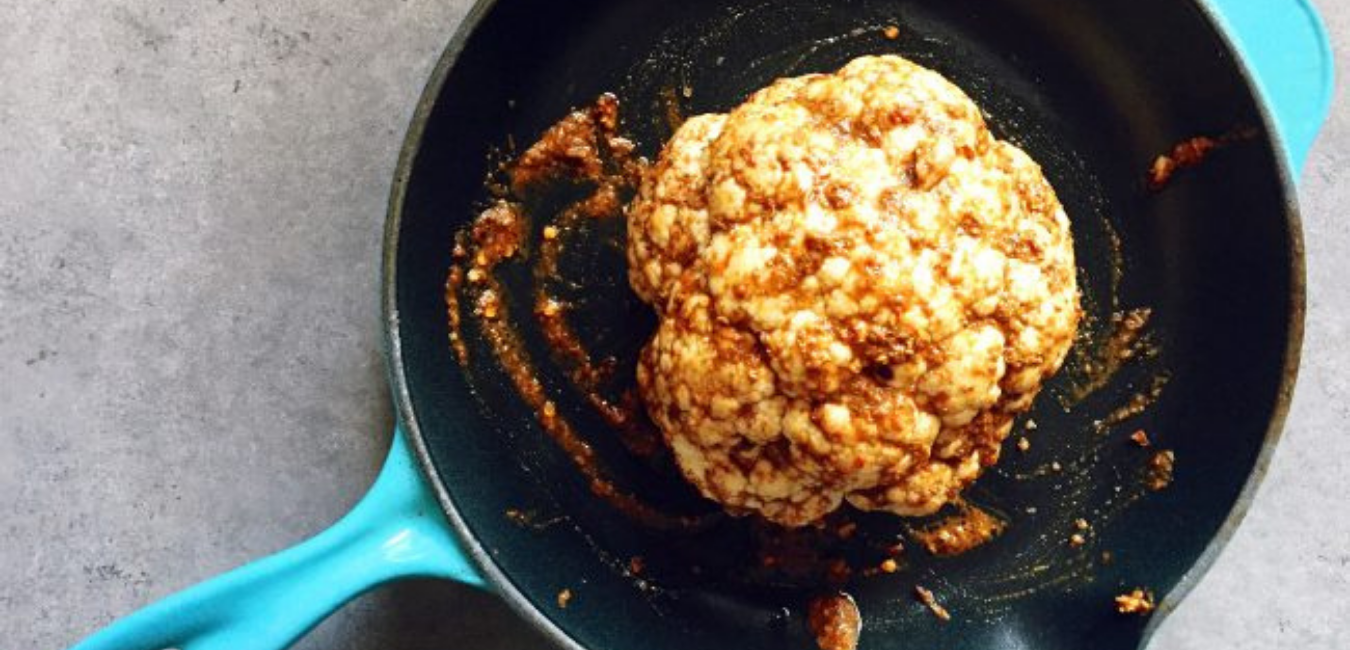
Whole-Roasted Seasoned Cauliflower

Servings: 4-6

Ingredients:

  • 1 head of cauliflower
  • 1/4 cup lemon juice
  • 2 tsp. lemon zest
  • 1/2 cup Nutiva Coconut Oil with Buttery Flavor
  • 1 tsp. minced garlic
  • 1/2 tsp. ground cumin
  • 1/4 tsp. turmeric
  • 1/4 tsp. black pepper
  • 1 tsp. dill
  • 1/4 tsp. Selina’s Celtic Sea Salt
  • 3 Tbsp. fresh parsley, diced
  • Water

Instructions:

  • Preheat oven to 350 degrees F. Fill the baking dish with 1/2” of water and place it on the bottom rack of the oven.
  • In a bowl, melt the coconut oil; mix in all remaining ingredients (except cauliflower).
  • On a separate baking tray, thoroughly cover the cauliflower in the marinade. Cook for 1 hour and 10 minutes.
  • Tip: To brown cauliflower edges, broil for the last 3-5 minutes of cooking.

Cauliflower Cream Lentil Pasta with Chicken & Mushrooms

Total time: 35 minutes

Serves: 4

Ingredients:

  • 1 box Explore Cuisine Green Lentil Penne cooked per package instructions
  • 1 lb. organic chicken tender strips
  • 2 Tbsp. Nutiva Organic Coconut Oil with Buttery Flavor
  • 1 tsp. crushed garlic
  • 1/4 tsp. Redmond Real Salt Ancient Sea Salt
  • 1/4 tsp. black pepper
  • 1 cup mushrooms sliced
  • 1 cup spinach
  • Fresh basil
  • Cauliflower cream sauce
  • 1 cup Sproud Plant-Based Milk
  • 1/4 cup vegetable broth
  • 3 cups cauliflower florets
  • 1/4 cup nutritional yeast
  • 1 Tbsp. lemon juice
  • 1 Tbsp. olive oil
  • 1/4 tsp. thyme
  • 1/4 tsp. oregano
  • 1/4 tsp. sea salt
  • 1/4 tsp. ground pepper

Instructions:

  • In a large pot, boil cauliflower. In a blender, combine cooked cauliflower and remaining cream sauce ingredients. Blend until completely smooth.
  • In a frying pan, cook garlic in buttery coconut oil 1 minute. Mix in chicken, salt, and pepper; stir fry until chicken becomes white. Mix in mushrooms and spinach; continue cooking a few more minutes, until mushrooms are soft.
  • Stir cream sauce into chicken; combine well. Mix in pasta. Garnish with fresh basil.

About the author:

Liana Werner-Gray is a certified nutritionist, natural food chef, and four-time best-selling author best known for founding The Earth Diet. Originally from Australia and now based in New York City, she turned to natural healing after being diagnosed with a precancerous tumor in her early twenties. Embracing a whole-food, earth-based diet, she documented her journey online, which led to her first book and a global following. Today, Liana empowers others to heal through nutrition and lifestyle changes, blending Indigenous wisdom with modern wellness.

Disclaimer
The Content is not intended to be a substitute for professional medical advice, diagnosis, or treatment. Always seek the advice of your physician or other qualified health provider with any questions you may have regarding a medical condition.


Source link

27 06, 2025

GaFin And Decimated Collaborate To Start New Era Of Web3 Gaming

By |2025-06-27T10:50:39+03:00June 27, 2025|News, NFT News|0 Comments


GaFin, an advanced gaming infrastructure company, has commenced its exclusive collaboration with Decimated, a much-awaited post-apocalyptic survival MMO game built utilizing Unreal Engine 5 and Web3 technology. The partnership focuses on merging the enthusiastic gaming community of GaFin with DECIMATED’s chaotic, brutal world. The platform took to social media to provide the details of this collaboration.

GaFin Partners with Decimated to Redefine Web3 Gaming

As included in this partnership, the players of DECIMATED can anticipate seamless livestreams, unique in-game events, community-designed campaigns, and high-stakes rewards. DECIMATED is a cutting-edge game that lets players explore a dystopian wasteland. In the game, the players need real-time decision-making, grit, and strategy for survival.

In addition to this, Decimated presents stunning graphics as well as rich storytelling. Apart from that, it also utilizes the blockchain technology to deliver a notable player experience. Hence, the players can have true ownership of assets, transparent progression, and token-based economies. These features are reportedly the hallmarks of the advanced Web3 gaming sector.

Delivering Cross-Platform Experiences Like Community Challenges, Behind-the-Scenes Content, And More

As per GaFin, the collaboration is anticipated to unveil exclusive cross-platform experiences, taking into account community challenges, behind-the-scenes content, and NFT-based cosmetics and gear. The players can access all these things only via the ecosystem of GaFin. Amid the continuous revolution in the Web3-powered gaming market, such collaborations indicate the increasing momentum of player-focused, decentralized platforms. Overall, the combination of the community tools and infrastructure offered by GaFin and the narrative depth, along with immersive gameplay provided by DECIMATED, is set to redefine MMO.


Source link

27 06, 2025

Pound to US Dollar Forecast: GBP must hold above 1.3595

By |2025-06-27T10:48:22+03:00June 27, 2025|Forex News, News|0 Comments

June 27, 2025 – Written by James Fuller

The easing of immediate Middle East fears has put the focus firmly back on underlying fundamentals with the dollar sliding amid fresh fears that Fed independence will be compromised.

Following the latest salvo against Fed Chair Powell from President Trump, there has been increased speculation that there will be an early nomination of the next chair and fresh talk that Powell could be dismissed by Trump.

The dollar index has slumped to the lowest level since February 2022 while the Pound to Dollar (GBP/USD) exchange rate has surged to 44-month highs above 1.3750.

MUFG commented; “Broad-based US dollar weakness helped to lift EUR/USD and cable overnight as they continue to move back closer towards the highs set back in late 2020/early 2021 when they peaked at just above 1.2000 and 1.4000.”

Markets will be looking to attack 1.40 in GBP/USD, although there is tough resistance close to current levels and the dollar is potentially oversold.

ING commented; “Downside risks for the dollar persist, but another 1-2% plunge in DXY will look stretched without any dovish repricing in Fed expectations or tariff/deficit concerns resurfacing.”

UoB noted resistance near 1.3750 and added; “To sustain the buildup in momentum, GBP must hold above the ‘strong support’ level, currently at 1.3595.”


Fed Chair Powell maintained a cautious stance in his second round of testimony to Congress. The rejection of a near-term rate cut has triggered another blast of criticism from President Trump who has again threatened to fire Powell and name a successor quickly.

MUFG noted a Wall Street Journal report that a successor to Powell could be named by September at the latest and potentially next month.

The bank added; “It highlights how an early pick could be used as way to try to undermine the Fed’s policymaking under Chair Powell providing a further potential trigger for a loss of investor confidence in the US dollar.”

There have been reports that Trump is considering former Fed governor Kevin Warsh, National Economic Council director Kevin Hassett and Treasury Secretary Scott Bessent as potential candidates.

According to MUFG; “Other contenders include former World Bank President David Malpass and Fed governor Christopher Waller.”

The bank summarised; “A candidate who is perceived as being more open to lowering rates in line with President Trump’s demands would reinforce the US dollar’s current weakening trend.”

IG market analyst Tony Sycamore commented; “I think it’s a given that Trump’s pick to succeed Powell, when it comes, will be one that sits at the highly dovish end of the spectrum and will support Trump’s agenda of lowering interest rates.”


He added; “The issue with this is it will resurface questions from earlier in the year around the Fed’s independence, which, as we saw, undermines confidence in the Fed and the USD.”

There has been a shift in market pricing with a rate cut by September now seen as inevitable with markets also seeing the most likely outcome as three rate cuts by the end of 2025.

In contrast, markets are pricing in two Bank of England rate cuts by the end of 2025 which would help underpin the Pound on yield grounds.

Like this piece? Please share with your friends and colleagues:


International Money Transfer? Ask our resident FX expert a money transfer question or try John’s new, free, no-obligation personal service! ,where he helps every step of the way,
ensuring you get the best exchange rates on your currency requirements.

TAGS: Pound Dollar Forecasts

Source link

27 06, 2025

Heart Health Supplements Market Valued to Grow at US$ 16.71 Bn

By |2025-06-27T10:42:15+03:00June 27, 2025|Dietary Supplements News, News|0 Comments


The global heart health supplements market has emerged as a vital segment within the broader nutraceutical industry, reflecting consumers’ growing awareness of preventive healthcare and proactive wellness. In recent years, sedentary lifestyles, rising stress levels, and dietary imbalances have collectively led to a surge in cardiovascular-related ailments. As individuals increasingly seek natural ways to support heart health, dietary supplements have gained significant traction as a complementary preventive approach. According to market projections, the heart health supplements market is expected to grow at a steady value CAGR of 4.5% during the forecast period (2023 to 2033), expanding from a value of US$ 10,765.80 million in 2023 to approximately US$ 16,718.95 million by 2033.

Get a Sample PDF Brochure of the Report (Use Corporate Email ID for a Quick Response):

https://www.persistencemarketresearch.com/samples/5771

The leading segment within the market is the liquid form of heart health supplements, gaining momentum due to growing consumer aversion to pill-based formats and ease of consumption. Meanwhile, North America dominates the global landscape, with a market share of 44.9% in 2022. The region’s supremacy is attributed to heightened consumer awareness, a well-established supplement industry, and a rising prevalence of lifestyle-related cardiovascular diseases.

Key Highlights from the Report:

➤ The heart health supplements market reached US$ 10,765.80 million in 2023 and is projected to grow to US$ 16,718.95 million by 2033.

➤ North America held the largest share (44.9%) of the global market in 2022, driven by consumer awareness and lifestyle disorders.

➤ Online retail is the fastest-growing sales channel, forecasted to grow at a CAGR of 6.6%.

➤ Liquid supplements are expected to expand at a CAGR of 4.8%, outpacing traditional pill-based formats.

➤ Rising demand for non-GMO and naturally sourced supplements is shaping purchasing trends.

➤ Manufacturers are increasingly focusing on mergers, acquisitions, and innovations to expand product portfolios and regional reach.

Market Segmentation

The heart health supplements market is categorized based on form, ingredients, and sales channels. In terms of form, the market is segmented into powders, liquids, soft gels, and pills. Liquid forms are gaining preference due to increasing pill fatigue among consumers and a demand for more palatable and easily absorbed formats.

By ingredients, the market includes vitamins and minerals, botanical supplements, amino acids, and others, such as Coenzyme Q10 and omega-3 fatty acids. These compounds are widely recognized for their cardiovascular benefits, including improved cholesterol levels, arterial function, and overall heart performance.

Regarding distribution, the market is segmented into hypermarkets/supermarkets, drug and specialty stores, online retail, and other retail formats. Online retail is forecasted to grow at the fastest pace, as consumers seek convenience, compare pricing, and explore global supplement options with ease.

Regional Insights

North America continues to lead the global heart health supplements market due to a combination of consumer awareness, technological advancement, and the widespread presence of established supplement brands. The U.S. particularly benefits from a strong healthcare infrastructure, preventive wellness programs, and increasing elderly population concerned with cardiovascular health.

In contrast, emerging markets such as China, India, Brazil, and Indonesia are witnessing a rapid surge in demand, fueled by rising disposable income, growing urbanization, and an increasing incidence of heart-related ailments. Additionally, these regions have seen a boost in e-commerce platforms, making supplements more accessible to a broader consumer base.

Europe holds a steady share of the market, driven by rising demand for natural and botanical supplements. Countries like Germany, France, and the U.K. are seeing an uptick in cardiovascular disease prevention initiatives, further encouraging the use of dietary supplements.

Market Drivers

One of the primary factors driving growth in the heart health supplements market is the increasing global awareness surrounding cardiovascular health. Sedentary lifestyles, poor diets, and rising obesity rates have contributed to a higher prevalence of cardiovascular diseases, prompting consumers to adopt preventive measures such as dietary supplementation.

The growing preference for non-GMO and natural ingredients further supports market expansion. Consumers are increasingly skeptical of genetically modified organisms and synthetic ingredients, opting for clean-label products that align with holistic health values.

Technological advancements in supplement delivery formats and formulations also boost the market. Innovations such as liquid shots, and chewables have improved consumer compliance and product accessibility.

Market Restraints

Despite the promising outlook, the heart health supplements market faces challenges that could hinder its growth trajectory. The increasing penetration of synthetic dietary supplements poses a concern, especially among consumers seeking natural, plant-based alternatives. Synthetic supplements may not offer the same efficacy or bioavailability as natural ingredients, and in some cases, they may lead to side effects if consumed in excess.

Moreover, regulatory inconsistencies and quality control issues in some developing regions can affect consumer trust. The lack of standardization in supplement labeling, dosages, and ingredient transparency may also lead to skepticism, limiting adoption among cautious buyers.

Market Opportunities

The rising global inclination toward personalized nutrition offers ample growth opportunities for the heart health supplements market. As consumers seek tailored health solutions, manufacturers can leverage AI-driven diagnostics and DNA-based assessments to create customized heart health regimens.

E-commerce and direct-to-consumer models provide significant potential for growth, especially in underpenetrated regions. Digital platforms not only facilitate consumer education but also allow brands to offer subscription-based services and loyalty programs to enhance retention.

Additionally, collaborations between nutraceutical companies and pharmaceutical giants open doors for innovative product development and wider market access. This cross-industry approach supports the creation of science-backed, clinically tested formulations that inspire consumer confidence.

Frequently Asked Questions (FAQs):

◆ How big is the heart health supplements market globally?

◆ What is the projected growth rate of the heart health supplements market from 2023 to 2033?

◆ Which region is estimated to dominate the heart health supplements industry through the forecast period?

◆ What is the market forecast for heart health supplements by 2033?

◆ Who are the key players in the global heart health supplements market?

Get a Sample PDF Brochure of the Report (Use Corporate Email ID for a Quick Response):

https://www.persistencemarketresearch.com/samples/5771

Company Insights

• Bayer AG

• USANA Health Sciences, Inc.

• Sanofi

• Koninklijke DSM N.V.

• Pfizer Inc.

• Abbott Laboratories

• Herbalife Nutrition Ltd.

• GNC Holdings Inc.

• Chr. Hansen Holding A/S

• BASF SE

• Amway

• NOW Health Group, INC.

• Nutramax Laboratories, INC.

• The Nature’s Bounty Co.

• Nature’s Way Products, LLC.

• Viva Naturals

• NutraMarks, Inc.

• Vitabiotics Ltd

• Vitamin Shopee, Inc.

• Pure Encapsulations, LLC

Contact Us:

Persistence Market Research

G04 Golden Mile House, Clayponds Lane

Brentford, London, TW8 0GU UK

USA Phone: +1 646-878-6329

UK Phone: +44 203-837-5656

Email: sales@persistencemarketresearch.com

Web: https://www.persistencemarketresearch.com

About Persistence Market Research:

At Persistence Market Research, we specialize in creating research studies that serve as strategic tools for driving business growth. Established as a proprietary firm in 2012, we have evolved into a registered company in England and Wales in 2023 under the name Persistence Research & Consultancy Services Ltd. With a solid foundation, we have completed over 3600 custom and syndicate market research projects, and delivered more than 2700 projects for other leading market research companies’ clients.

Our approach combines traditional market research methods with modern tools to offer comprehensive research solutions. With a decade of experience, we pride ourselves on deriving actionable insights from data to help businesses stay ahead of the competition. Our client base spans multinational corporations, leading consulting firms, investment funds, and government departments. A significant portion of our sales comes from repeat clients, a testament to the value and trust we’ve built over the years.

This release was published on openPR.


Source link

Go to Top