About Editorial team of BIPNs

Main team of content of bipns.com. Any type of content should be approved by us.
5 06, 2025

Ethereum (ETH) Price Prediction for June 4 — TradingView News

By |2025-06-05T01:46:57+03:00June 5, 2025|Crypto News, News|0 Comments

Market growth remains the most likely scenario for most of the coins, according to CoinMarketCap. CoinMarketCap”>

ETHUSD

The rate of Ethereum ETHUSD has gone up by 0.88% over the last 24 hours.TradingView”>

On the hourly chart, the price of ETH has made a false breakout of the formed resistance of $2,647. 

If the daily bar closes far from that mark, bears may come back to the game, which may lead to a drop to the $2,600 range.TradingView”>

On the longer time frame, bulls are trying to seize the initiative. If the daily candle closes around current prices or above, the upward move is likely to continue to the $2,700 mark.TradingView”>

From the midterm point of view, one should focus on the weekly bar’s closure in terms of the $2,738 level. If its breakout happens, the accumulated energy might be enough for a test of the vital $3,000 area.

Ethereum is trading at $2,636 at press time.

Source link

5 06, 2025

Physical symptoms of grief – HealthyWomen

By |2025-06-05T00:59:55+03:00June 5, 2025|Fitness News, News|0 Comments


When Katja Faber learned her 23-year-old son, Alex, had been brutally murdered, she felt a physical pain, as if her body had been hit by a truck. “From the moment that the police stood at my door and told me the news that he had been killed, I felt altered, not only emotionally, but also neurologically and physically,” Faber said. “It was painful to breathe; my nerve endings were on fire. They say that grief is an all-body experience, and I can certainly confirm that.”

When we think about grief, we often focus on the emotional toll — the sadness, anger and confusion that follow the death of a loved one. But grief isn’t just a mental experience. It can manifest physically in profound ways, long after loss.

Why grief affects us physically

The reason grief affects our physical well-being is because “we co-regulate with our loved ones,” said Mary-Frances O’Connor, Ph.D., professor at the University of Arizona, clinical psychologist specializing in grief research and author of The Grieving Body.

“To think about grief, we really have to think about love and bonding. When we bond with our spouse or our child, we form a dynamic system with them, and it means that each person is an external pacemaker for the other person’s heart,” O’Connor explained. “When a loved one is amputated from our life, our body has to figure out how to regulate without that external pacemaker.”

This sudden disruption forces our physiological systems to adapt, creating a cascade of physical symptoms.

Common physical symptoms of grief

iStock.com/TatyanaGI

The way grief shows up physically can range widely depending on the person and what existing conditions they may have. Common symptoms can include chest pain, insomnia, appetite changes, digestive issues, a “lump in the throat” feeling, as well as cognitive effects.

But it can also have a significant impact on immune function. “Bereavement is associated with all-cause morbidity and mortality,” O’Connor noted, “which is a fancy way of saying that all the different diseases and causes of death increase when you’re grieving.”

This includes increased rates of chronic obstructive pulmonary disorder (COPD), stroke, pneumonia, sepsis and flu, O’Connor said. “As I was doing research, I wondered, How can it be that every system could be impacted? But if we think about the fact that our immune system affects every organ in the body, then it might start to make a little more sense.”

Research from O’Connor’s lab and others has shown that inflammation increases following the death of a loved one. A study published in Psychoneuroendocrinology found that people experiencing intense grief showed significantly higher levels of inflammation compared to those with lower grief severity.

This systemic inflammation can affect the immune system and manifests differently depending on a person’s existing health conditions or predispositions. For example, in someone with rheumatoid arthritis, it might present as worsening joint pain, while someone with asthma might experience more breathing difficulties.

O’Connor experienced this herself: About a year after her mother’s death, she developed symptoms that were later diagnosed as multiple sclerosis. While her mother’s death didn’t cause her MS — it runs in her family and she had other risk factors — the intense stress of grief may have contributed to its emergence at that particular time.

What is broken heart syndrome?

Some experience “broken heart syndrome,” or what is officially called “takotsubo cardiomyopathy” — a weakening of the left ventricle of the heart, which can create the symptoms of a heart attack even when there are no arterial blockages. Nine out of 10 cases are reported in women, and most of those are in women over 50. Takotsubo is not typically fatal, O’Connor said, but it does require medical attention.

Still, others experience more serious heart problems as a result of grief, distinct from takotsubo cardiomyopathy. A study published in the Journal of the American Medical Association found that in the first three months after losing a spouse, people over 65 have nearly twice the risk of experiencing a heart attack or stroke. An older study in the American Heart Association journal Circulation found the danger of a heart attack was highest in the first 24 hours after the death of a loved one, particularly for those who have existing heart conditions.

O’Connor’s research shows that blood pressure rises during waves of grief, with the most significant increases occurring in those having the most difficulty processing their grief.

In the first weeks and months following her son’s death, Faber’s symptoms included extremely high blood pressure, heart palpitations, muscle spasms and headache attacks. She additionally suffered from memory loss, chronic fatigue, a weakened immune system, inability to sleep, PTSD, panic attacks and stress-induced early-onset osteopenia, or low bone-density.

“I had been healthy, yet from one day to the next, I aged 1,000 years,” said Faber. Ten years later, she continues to have issues with her blood pressure and bone loss.

Studies show that cardiovascular disease markers like blood pressure and heart rate tend to return to baseline within about six months for most people. However, O’Connor emphasized that this timeline varies greatly between individuals. For those experiencing chronic grief stress — where the intensity and frequency of grief waves haven’t diminished — physical symptoms may persist, causing additional wear and tear on the body.

Managing grief’s physical impact

Physical symptoms of grief – HealthyWomeniStock.com/LukaTDB

O’Connor stressed that experiencing physical symptoms during grief is entirely normal. “You are not broken because you feel grief in your body,” she said. Still, because bereavement is a time of increased medical risk, these symptoms shouldn’t be ignored.

For those experiencing the physical toll of grief, O’Connor and Faber offered some advice.

  1. Get regular medical care: Many people who were caring for a terminally ill loved one have neglected their own health. Schedule routine checkups to identify issues like hypertension early.
  2. Consider both conventional and alternative treatments: Faber found a combination approach helpful. She visited her healthcare provider and got medication to lower her blood pressure, but also sought alternative, holistic treatments. She found that water therapy (exercising in a hospital pool), gardening, hiking in the forest and Pilates helped her process.
  3. Connect with nature and gentle movement: “I spent as much time as I could in nature, planting trees and working in the vegetable garden in the gentle company of my cats and dogs,” Faber shared. Research supports this approach, finding that nature-based activities can help reduce stress hormones.
  4. Find community support: “Find a support network where you can fully express your grief, be it by regularly attending grief sessions with others, or online grief groups,” Faber advised. “Repressed grief will only surface later and inevitably makes us ill.”
  5. Be aware of harmful coping mechanisms: “Avoid alcohol; try not to self-medicate,” Faber cautioned, echoing O’Connor’s warning that using substances to numb grief feelings can add physical strain to an already stressed body.
  6. Practice self-compassion: Give yourself extra time, attention and understanding during this physically demanding time.

A journey, not a recovery

“Learning to live again following traumatic loss is not about recovery or survival,” Faber said. “It is about slowly doing painful and exhausting grief work so as to arrive at a point of acceptance, a place where we can both grieve and find joy in life again.”

O’Connor similarly suggests that paying attention to our physical responses helps us honor our connections. “We really honor our loved one by noticing how our bodies changed in their absence,” she said.

For those currently experiencing grief’s physical toll, Faber emphasized that there’s no timeline for healing. “In these 10 years, my grief has not subsided, but has become softer; it lies just below the surface,” Faber said. “It doesn’t take much for me to touch the deep sorrow I feel in knowing that my son is no longer alive, yet in some ways I live more intensely now and appreciate every moment of every day.”

From Your Site Articles

Related Articles Around the Web


Source link

5 06, 2025

XAU/USD gearing up for another leg north

By |2025-06-05T00:00:58+03:00June 5, 2025|Forex News, News|0 Comments


XAU/USD Current price: $3,372.92

  • Dismal US data and trade tensions weighed on the US Dollar.
  • ECB monetary policy decision and US NFP report coming up next.
  • XAU/USD keeps pressuring weekly highs, break beyond $3,400 at sight.

Spot Gold resumed its advance on Wednesday, although XAU/USD trades below the weekly high set at $3,392.22. The bright metal hovers around $3,370, helped by a fresh round of US Dollar (USD) selling after the release of discouraging United States (US) data.

On the one hand, the country reported that the private sector added measly 37K new job positions in May, according to the ADP Employment Change report. Additionally, the ISM Services Purchasing Managers’ Index (PMI) contracted to 49.9 in the same month, down from the 51.6 posted in April and below the 52 anticipated.

The USD came under modest selling pressure with the news, as speculative interest awaits first-tier releases scheduled for the upcoming days. The European Central Bank (ECB) will announce its decision on monetary policy on Thursday, while the US will publish the May Nonfarm Payrolls (NFP) report on Friday.

In the meantime, US President Donald Trump and his Chinese counterpart, Xi Jinping, engaged in another round of mutual accusations. Trump claimed that his Xi Jinping was “extremely hard” to make a deal with, while Beijing’s Foreign Minister Wang Yi called on the US to “meet China halfway.” A hinted call within the next few days between the two leaders partially cooled concerns, which, anyway, keep the mood contained. At the time being, US indexes are marginally up, suggesting market participants are holding on to modest hopes.

XAU/USD short-term technical outlook

The daily chart for the XAU/USD pair shows it keeps consolidating recent gains, and that the risk skews to the upside. It keeps developing above a flat 20 Simple Moving Average (SMA) currently at around $3,293.30. The Momentum indicator eases from its intraday peak but holds well above its midline, while the Relative Strength Index (RSI) indicator consolidates at around 57. Finally, XAU/USD remains far above bullish 100 and 200 SMAs, which reflect the dominant bullish trend regardless of the ongoing consolidation.

The 4-hour chart favors a bullish extension, although the momentum is missing. Technical indicators hold within positive levels, but with uneven strength. At the same time, a bullish 20 SMA keeps providing intraday support while advancing beyond flat 100 and 200 SMAs.

In the near term, and according to the 4-hour chart, XAU/USD maintains its positive bias. The pair bounced from a mildly bullish 20 SMA, which advances beyond directionless 100 and 200 SMAs. Finally, technical indicators eased from their recent peaks, but consolidate within positive levels, far from suggesting a steeper decline.

Support levels: 3,361.20 3,346.55 3,333.10

Resistance levels: 3,382.60 3,394.05 3,408.45


Source link

4 06, 2025

Shocking discovery made inside popular protein powders as study issues warning to consumers – Health

By |2025-06-04T23:48:04+03:00June 4, 2025|Dietary Supplements News, News|0 Comments


An extensive study into some of the most popular protein powders on the market made a harrowing discovery about the products.

The study is called the ‘Protein Study 2.0’ and it was carried out by the team at The Clean Label Project.

Focused on transparency from manufacturers about the purity of their food and consumer products, the non-profit organisation utilises science and data in attempts to set the bar in safety, while awarding brands that go out of their way to be upfront with customers.

The study focused on figures gathered across 2023-24, with protein powder being considered one of the most popular dietary supplements in the US.

US protein supplements generated upwards of $9.69 billion (£7 billion) across the year, with many gym-goers and fitness nuts using it to help with putting on muscle, cutting weight, or general health.

It is often used to compliment a lifestyle, but what is actually in these protein products?

What did the study set out to test?

Do you really know what you’re putting into your body? (Getty Stock Image)

The team were looking out for heavy metals, such as arsenic, cadmium, lead, and mercury, and Bisphenols.

Bisphenols are chemical compounds that are used to make polycarbonate, epoxy resins, and other hard plastics.

While it is found in food and drink packaging, it has also raised question marks about its long-term health effects.

It’s worth pointing out that compared with the US, the UK has stricter measures that must be followed, as protein powders are regulated as food items on this side of the pond, which includes labelling requirements when it comes to ingredients and allergens.

On the other hand, America classifies protein powder as dietary supplements, meaning they are regulated differently, with the Food and Drug Administration (FDA) not responsible for approving claims or labelling before use.

Of the top brands in the US back in 2023, they tested 70 of them, along with 160 products which altogether, represented 83 percent of the market share.

In the end, they amassed 35,862 data points and tested 258 different chemicals and metals.

What did the study find in popular protein powders?

Protein powders in the US contain some unwanted ingredients (Getty Stock Image)

Protein powders in the US contain some unwanted ingredients (Getty Stock Image)

The non-profit revealed that they found a large number of positive results when it came to testing for arsenic, cadmium, lead, and mercury.

Almost half of the products tested (47 percent) exceeded one or more federal or state regulatory set for safety.

As stated on the official website for the Office of Environmental Health Hazard Assessment in California, CA Prop 65, or California Proposition 65, essentially requires businesses to warn residents of any significant exposures to chemicals.

The harmful chemicals in question could cause cancer, birth defects or other reproductive harm, but it was found that 29 percent of the chocolate protein powder samples were over twice the allowed CA Prop 65 levels.

Bisphenols, such as BPA and BPS, had also been found, with studies such as Moonet al., 2015, linking it to affecting insulin tolerance, undermining athletic training, and Le Magueresse-Battistoni et al., 2018 linking it to increasing the risk of type 2 diabetes.

Luckily, while they were found in 55 percent of products in 2018, just three of 160 protein powder products had Bisphenols.

Organic products were found, on average, to have three times as much lead in comparison to non-organic products.

This was attributed to plant-based protein powders containing more contaminants, five times as much cadmium than whey-based protein powders.

Chocolate flavouring was reported as high-risk, and was found to have 110 times more cadmium than vanilla-flavoured powders, according to the study.

Where do the contaminants come from?

While the heavy metals found are elements that can be found in our planet’s crust, they make our way into our food sources through events such as volcanic eruptions and soil erosion, before accumulating in air, water, and soil.

The US currently doesn’t have any federal regulations in place for the concentration of these metals in food products.

It is stated that the two primary sources of contaminants in protein powders are contaminated soil where ingredients are grown, and the packaging in which the products are stored in.

Consumers have been urged to look out for certain things when buying protein powder (Getty Stock Image)

Consumers have been urged to look out for certain things when buying protein powder (Getty Stock Image)

What should consumers look out for when buying protein?

It is advised that protein product users in the US prioritise both quality and safety when looking for dietary supplements.

According to the findings in the study, it was found that plant-based protein powders should be avoided due to their sky-high levels of detected contaminants, in comparison to whey or collagen-based protein powders.

This is because the latter two, as long as they aren’t flavoured with chocolate, have the least lead in them.

Who should be taking protein and what are the warnings against using it?

While many may associate protein powder with gym-goers or bodybuilders exclusively, it has become a supplement that can benefit several groups over the years.

Athletes are still included, though older adults, vegetarians, and individuals with specific dietary needs or conditions can benefit from taking protein powder.

According to Medical News Today, there are a number of health benefits that can come from taking it, such as muscle growth, weight management, recovery after exercise, and added nutrition.

Not everyone needs protein powder though, as it is advised that it is only used as a supplement in a balanced diet and not a replacement for food sources of protein.

Taking too much protein powder can cause issues, such as kidney and liver damage.

Heavy metals and contaminants that can be found in certain protein powders could bring on allergic reactions, while The British Dietetic Association says some experts think too much protein can damage your bones, as well as possibly causing nausea.


Source link

4 06, 2025

Doge Coin Price Prediction by a Number of the Leading Crypto Analysts

By |2025-06-04T23:45:55+03:00June 4, 2025|Crypto News, News|0 Comments

DOGE Price Predictions: What’s Next for Dogecoin?

Dogecoin (DOGE), the beloved meme-coin that started as a playful joke, continues to capture both investors’ imaginations and market headlines. The past week has brought fresh enthusiasm, speculation, and ambitious predictions. Let’s dive into what top analysts and experts have recently said about DOGE’s future.

DOGEUSD just over 19 cents at the time of writing

🐶 Short-Term Outlook: $0.20 and Beyond?

CoinDesk (June 4) highlights that institutional investors are fueling a bullish breakout, with DOGE comfortably above the critical $0.195 resistance. Analysts pinpoint strong support at $0.194, with expectations to test the psychological $0.20 mark soon.

Echoing this optimism, U.Today (June 3) notes DOGE’s steady gains, emphasizing the crucial support at $0.1932. If bulls maintain this level, DOGE might comfortably rally into the $0.20 territory in the coming days.

In a similar vein, FXStreet’s Vishal Dixit emphasizes a strong bullish signal from a short-term range breakout, projecting DOGE targeting $0.2145 soon, with resistance at the 200-day EMA ($0.2074).

Watch the DOGEUSDT price range of ) 18.5 cents to 22 cents

But Wait — Expect Some Volatility for DOGE coin!

Interestingly, not everyone forecasts an immediate straight path upwards. CoinCodex’s algorithmic model suggests short-term volatility could briefly pull DOGE to around $0.1866 before a strong bounce toward $0.225, suggesting a healthy upside of roughly 17% within a month.

Moreover, CryptoTicker’s scenario analysis outlines a balanced view:

  • 40% chance: Bullish breakout toward $0.24–$0.25

  • 30% chance: Short-term slip toward $0.18

  • 30% chance: Consolidation around $0.19

🚀🚀 Mid-Term Rocket Potential for DOGEUSD

Bullish sentiment continues to dominate, especially with increased whale activity and growing open interest. Cointelegraph projects DOGE potentially rallying to $0.23 and even up to $0.26 if bulls defend key moving averages successfully.

Supporting this bullish mid-term narrative, AMBCrypto highlights rising accumulation from influential whales despite recent liquidity dips. A break above $0.20 might ignite a 25% rally to approximately $0.25—provided key levels hold.

DOGE is Full of Moonshots & Long-Term Dreams

DOGE’s history of spectacular rallies prompts some optimistic (and wildly ambitious) predictions:

  • Crypto Kaleo via NewsBTC boldly claims historical patterns and strong whale accumulation could trigger a jaw-dropping 1,000% rally, potentially propelling DOGE to the $1–$2 range by the end of 2025.

  • CoinLore takes a more tempered yet still optimistic stance, predicting DOGE hitting around $0.76 by late 2025, relying on historical network metrics and market behaviors.

  • On the extreme end, Mitrade Insights sourced from Cryptopolitan entertains an outlier scenario with DOGE potentially reaching a staggering $12, implying a nearly $1.8 trillion market cap. While intriguing, this prediction remains firmly in speculative territory.

Where Does This Leave Us, Crypto HODL’ers?

investinglive Doge coin prediction

Stripping away the extremes and focusing on consensus, most analyses cluster DOGE’s short-term price targets between $0.20 and $0.26, with a comfortable median around $0.245. If DOGE can decisively surpass $0.20 and sustain momentum, $0.25 is highly achievable this summer.

For year-end targets, a realistic trimmed average suggests $0.45–$0.50 is within reach. However, if broader market sentiment shifts positively, significantly higher targets ($1+) could come into play, appealing to those looking for moonshot gains.

Key Levels for DOGE Traders:

  • Support: $0.193–$0.194

  • Short-Term Resistance: $0.20–$0.2074 (200-day EMA)

  • Bullish Targets: $0.2145, $0.23–$0.26

  • Year-End Conservative Target: $0.45–$0.50

So, Crypto Enthusiasts…

Dogecoin remains exciting, volatile, and brimming with potential—perfectly encapsulating crypto’s allure. Traders should monitor key support and resistance closely, prepare for volatility, and remain open-minded about DOGE’s ambitious potential moves.

📩 Stay Updated with investingLive Crypto!

Join investingLive Crypto’s Telegram channel for real-time alerts, tradeCompass insights, and valuable crypto gems—without the spam.

👉 Join Now for Free!

Later this year,
ForexLive.com
is evolving into
investingLive.com, a new destination for intelligent market updates and smarter
decision-making for investors and traders alike.

Source link

4 06, 2025

Pound to Dollar Forecast: GBP’s Momentum is “Firmly in Bullish Territory”

By |2025-06-04T21:58:57+03:00June 4, 2025|Forex News, News|0 Comments

June 4, 2025 – Written by Frank Davies

The Pound-to-Dollar exchange rate (GBP/USD) found support close to 1.3500 on Wednesday and was initially held in tight ranges.

Weaker-than-expected US data, however, triggered renewed dollar losses with GBP/USD surging to just above 1.3550. Traders will be targeting 39-month highs close to 1.3600.

Scotiabank is still bullish on the Pound; “the multi-month trend is bullish, and momentum is firmly in bullish territory with an RSI at 60. The DMI’s are providing confirmation, along with the MACD. The near-term range is defined by support below 1.3450 and resistance above 1.3550.”

According to UoB; “the likelihood of GBP closing above 1.3600 will grow in the next few days as long as the ‘strong support’ level at 1.3470 is intact.

The US ADP jobs data recorded an increase in private payrolls for May of 37,000 for May compared with consensus forecasts of a 111,000 increase.

The April increase was also revised marginally lower to 60,000 from the flash estimate of 62,000.

There was an increase in jobs for medium-sized businesses, but losses on the month for small and large companies.


According to ADP chief economist Dr. Nela Richardson; “After a strong start to the year, hiring is losing momentum. Pay growth, however, was little changed in May, holding at robust levels for both job-stayers and job-changers.”

The ISM non-manufacturing business confidence index dipped to an 11-month low of 49.9 for May from 51.6 previously and well below consensus forecasts of 52.0.

There was a sharp decline in orders, but employment did edge higher on the month.

Prices increased at a faster rate with the strongest reading since December 2022.

The data will reinforce fears over stagflation in the US economy with a weaker economy combined with increased inflation. Markets are also still fretting over tariffs.

The 50% tariffs on aluminium and steel imports went into effect on Wednesday, further increasing underlying uncertainty.

According to the UK government, it will not be subjected to 50% tariffs on steel and aluminium with these remaining at 25% for the time being, but this may be of small comfort.


Paul Donovan, chief economist at UBS Global Wealth Management, commented, “UK steel exports were supposed to incur no tariff, so Trump’s abrupt change may cause UK negotiators to question the value of ‘agreements’ made.”

Scotiabank commented on the global dimension; “Meanwhile, the shifting sands of US tariff policy have to make it harder for countries to negotiate effectively with the US.

It added; “There’s another 5 weeks of the current tariff reprieve to run but there’s no real sense that certainty for businesses will improve anytime soon.”

According to Commerzbank; “One of the most important arguments against the greenback is the unpredictable US (tariff) policy, which could cause considerable damage to the US economy. But the uncertainty goes both ways: it is just as conceivable that the US president will do a U-turn again – we have seen that often enough. Let us remember, for example, the reduction in tariffs on China, albeit only for 90 days, which led to a significant rally in the dollar.”

It added; “So it is not the case that, alongside the USD doomsday scenarios, USD-positive scenarios are completely unthinkable.”

Earlier, the UK PMI services-sector index was revised higher to 50.9 from the flash reading of 50.2 and above the April reading of 49.0 which suggested limited expansion in the economy.

Like this piece? Please share with your friends and colleagues:


International Money Transfer? Ask our resident FX expert a money transfer question or try John’s new, free, no-obligation personal service! ,where he helps every step of the way,
ensuring you get the best exchange rates on your currency requirements.

TAGS: Pound Dollar Forecasts

Source link

4 06, 2025

Last Update Could Trigger 22% Push Along With This Utility Coin

By |2025-06-04T21:44:55+03:00June 4, 2025|Crypto News, News|0 Comments

Cardano (ADA) has achieved a significant milestone by surpassing 110 million total transactions. This development highlights a major surge in network activity and usage, despite the current market challenges. Technically, the network growth has been attributed to recent collaborations, network modifications, and the growing usage of Smart Contracts.

Alongside partnerships with leading firms, a few days ago, Cardano announced the release of Node v.10.4.1, which included Unspent Transaction Output – High Density (UTXO-HD), which is designed to improve the speed and scalability of blockchains.

According to ADA coin’s recent market data, the asset has fallen below a key support level of $0.70, trading at $0.68 at press time. On the weekly and monthly price charts, ADA coin fell by 9% and 1%, respectively. Meanwhile, ADA coin is attempting to reverse its current bearish trend on its daily price chart with a 2.2% increase.

Looking at the Relative Strength Index (RSI), ADA coin looks to have entered bearish territory with a value of 42. This is consistent with the MACD chart, indicating that traders remain concerned. In contrast, the asset’s 24-hour trading volume increased by 9% to $614 million.

Despite these challenges, ADA whales appear to have taken advantage of the recent downturn by acquiring a huge amount of the token, signaling a bullish Cardano price prediction. This type of setback allows late buyers to join the rise at a significantly cheaper price.

As whales join the market, Cardano price predictions turn bullish, forecasting the next leg up for ADA might propel the ADA coin to new highs, with a potential push above $1.

Source link

4 06, 2025

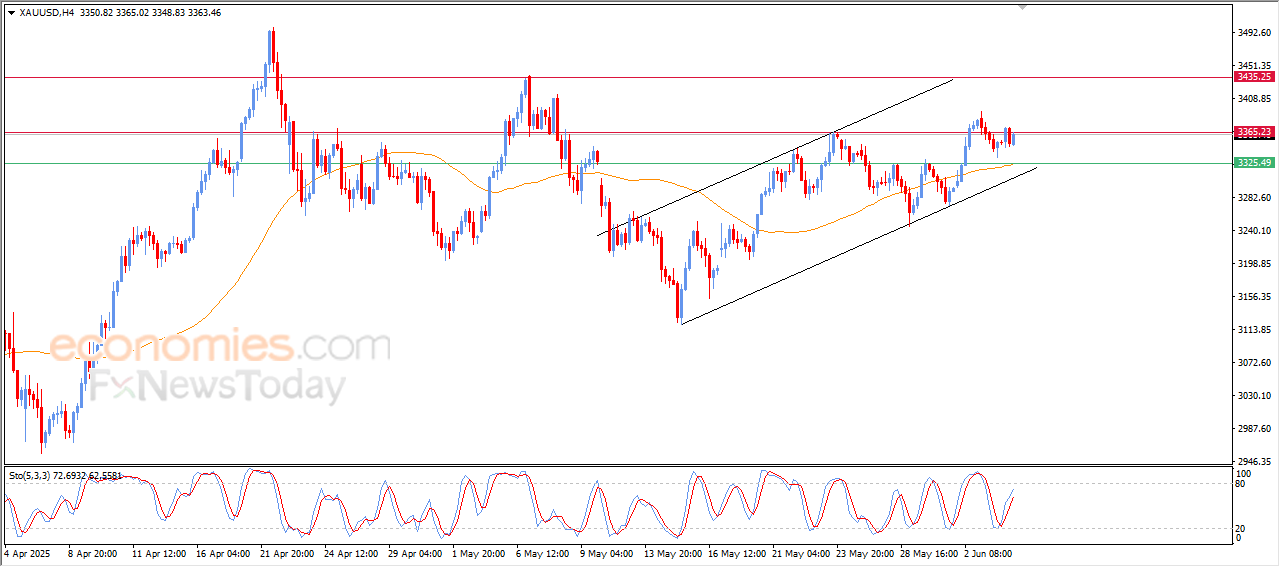
Forecast update for Gold -04-06-2025

By |2025-06-04T19:59:00+03:00June 4, 2025|Forex News, News|0 Comments


Natural gas prices haven’t moved anything since yesterday’s trading, to repeat forming sideways trading near $3.710, reinforcing the chances for renewing the negative attempts that depend on the stability of the resistance at $3.87.


We recommend waiting for breaking the initial support at $3.600, reinforcing the chances for forming strong bearish waves, to target $3.450 and $3.320 level, while breaching the resistance and holding above it will confirm its move to the bullish track by its rally to $3.960 initially.


The expected trading range for today is between $3.550 and $3.800


Trend forecast: Bearish


Source link

4 06, 2025

EUR/USD Analysis Today 04/06: Trading Under Pressure (chart)

By |2025-06-04T19:57:00+03:00June 4, 2025|Forex News, News|0 Comments

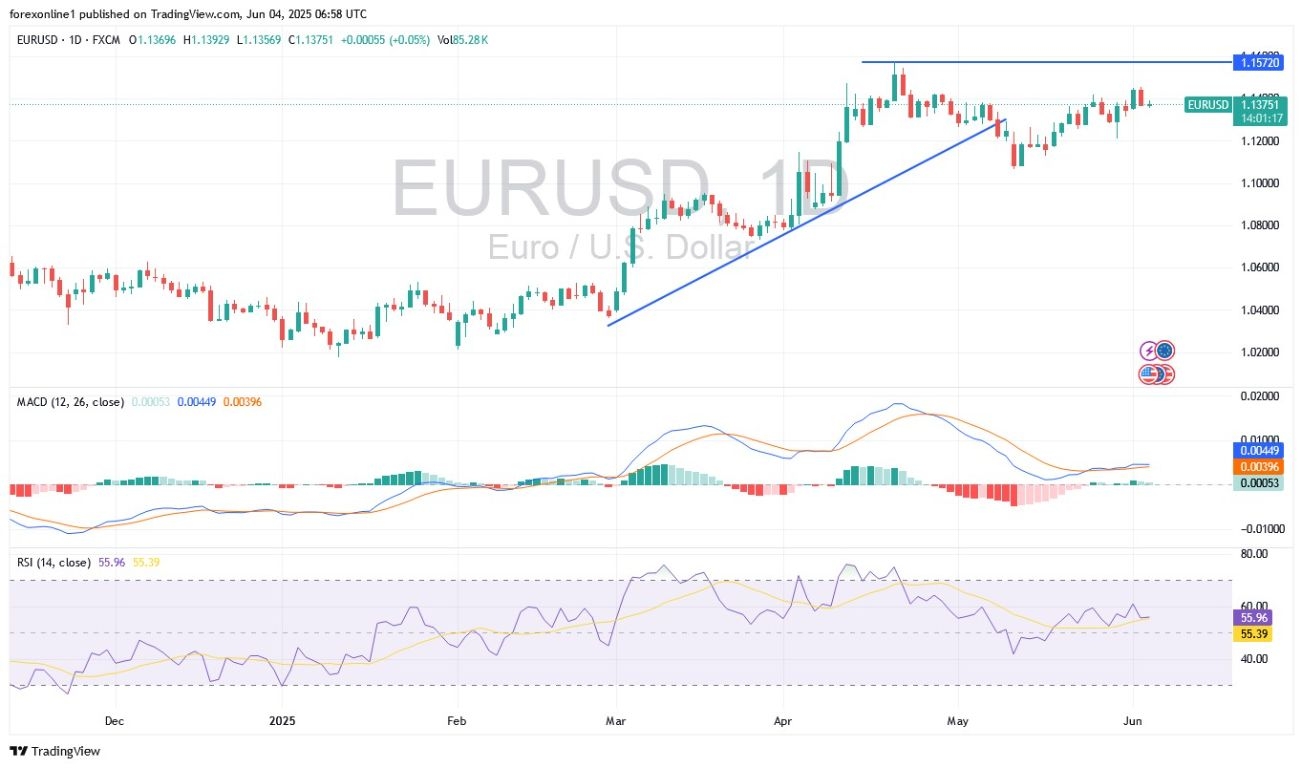
EUR/USD Analysis Summary Today

  • Overall Trend: Upward.
  • Today’s Euro-Dollar Support Levels: 1.1330 – 1.1270 – 1.1190.
  • Today’s Euro-Dollar Resistance Levels: 1.1460 – 1.1500 – 1.1580.

EUR/USD Trading Signals:

  • Buy Euro-Dollar from the 1.1290 support level with a target of 1.1420 and a stop-loss of 1.1200.
  • Sell Euro-Dollar from the 1.1500 resistance level with a target of 1.1200 and a stop-loss of 1.1610.

EUR/USD Technical Analysis Today:

The gains for the EUR/USD currency pair halted at the 1.1455 resistance level, with the pair quickly retreating to the 1.1356 support level during Wednesday’s trading. This movement followed weaker-than-expected European inflation data, a reduction in global growth forecasts by the Organisation for Economic Co-operation and Development (OECD) and escalating political uncertainty in the Netherlands.

According to economic calendar data, Eurozone consumer prices rose by 1.9% year-on-year in May, falling short of the 2.0% forecast. This reinforced expectations that the European Central Bank (ECB) will cut interest rates by 25 basis points later this week – likely the last cut before a pause in the monetary easing cycle. Meanwhile, the OECD lowered its global economic growth forecasts, projecting GDP growth to slow from 3.3% in 2024 to 2.9% in both 2025 and 2026, citing escalating trade tensions.

In the Netherlands, political instability intensified after the government collapsed due to disagreements over immigration policy, prompting far-right leader Geert Wilders to withdraw his party from the ruling coalition. Overall, trade policy uncertainty remained a key focus, with reports indicating that the United States is demanding final offers in ongoing negotiations by Wednesday – just days after President Donald Trump threatened to double tariffs on steel and aluminium.

Trading Advice:

We still recommend selling the EUR/USD on any strong upward bounce, but without taking risks and waiting for the reaction to this week’s important events and data.

Today’s Technical Levels for Euro-Dollar:

Based on the daily timeframe chart, despite the selling pressure, the overall trend for the EUR/USD currency pair remains upward, supported by the move towards and above the 1.1400 resistance. Currently, the 14-day Relative Strength Index (RSI) is trending upwards and still has room for further gains before reaching overbought territory. Obviously, this could occur at the 1.1520 and 1.1600 resistance levels, respectively. At the same time, the MACD indicator lines are also trending upward, assuring bulls that they can target higher peaks if US jobs data comes in lower than expected and if the ECB this week abandons its dovish tone.

Euro-Dollar trading today will react to the announcement of the Services Purchasing Managers’ Index (PMI) readings for European economies, starting with the Spanish reading at 10:15 AM EEST, followed by the German reading at 10:55 AM EEST, and the Eurozone aggregate reading at 11:00 AM EEST. Then, more crucially, the US ADP Non-Farm Employment Change will be announced at 3:15 PM EEST, and the US ISM Services PMI reading at 5:00 PM EEST.

Tomorrow, the European Central Bank is expected to cut interest rates in its decision, but recent inflation figures may increase the likelihood of another rate cut afterward.

Ready to trade our daily Forex analysis? We’ve made a list of the best online forex trading platform worth trading with.

Source link

4 06, 2025

Best Vitamins and Supplements for Healthy Eyes This Summer

By |2025-06-04T19:45:57+03:00June 4, 2025|Dietary Supplements News, News|0 Comments


The sun-filled months can do wonders for your mental health. However, the increase in allergens, such as pollen and harmful UV rays can put your eyes at risk. In addition to paying attention to allergies and wearing sunglasses, vitamins and supplements are another way to protect your eyes this late spring and early summer. 

Having a balanced diet is important for more than just your nutrition and gut health. Everything you eat can impact specific organs, like your eyes. Fortunately, that means you can incorporate specific vitamins, supplements and foods into your diet to support your eye health and vision. 

Whether you simply want more eye-boosting vitamins and supplements into your diet or have dietary limitations or nutrient deficiencies, talk to your doctor before making any changes. They can help you figure out what a balanced diet looks like for you, especially if you want to focus on a specific aspect of your health. 

The best vitamins and supplements for eye health

Vitamin bowls

Getty Images

In addition to a balanced diet, here are the best vitamins and supplements for your eyes. Luckily, you can get most of these added supplements for less than $10.

Vitamin A

Assortment of high vitamin A foods like carrots, nuts, broccoli, butter, cheese, seeds and eggs.

vaaseenaa/Getty Images

Vitamin A supports your vision, immune system, heart, lungs and overall growth and development. Specifically, vitamin A helps you see a full spectrum of light, as the vitamin produces pigments in the retina. It can also keep your eyes from drying out. You can find vitamin A in foods such as salmon, broccoli, eggs, carrots and fortified breakfast cereals.

You have probably heard of the magic of carrots. Yes, it’s true: Carrots are great for your eyes. Carrots (and other vividly colored fruits and vegetables) are high in beta-carotene, which is a compound that your body uses to make vitamin A. Beta-carotene is also available in a supplement form, although it isn’t as common as vitamin A and is often more expensive.

Vitamin C

gettyimages-962637196

Vitamin C is found in foods like citrus fruit, bell peppers and tomatoes.

Getty Images

Vitamin C is like sunscreen for your eyes: It helps protect them from UV damage. The more time you spend outside and under the sun, the greater the risk for damage. According to the American Academy of Ophthalmology, too long in the sun can cause irreversible damage. Vitamin C can also lower your risk of cataracts, a disease that causes the lens of your eyes to become cloudy.

While a recent study found that vitamin C supplementation was effective in patients who were already vitamin C deficient, more studies are needed to truly understand the relationship between vitamin C and a lower risk of cataracts. In addition to getting enough vitamin C, avoid tanning beds, and if you are outside, wear sunglasses and a hat to protect your eyes.

Omega-3s

A plate of salmon, avocado, spinach and nuts

Fcafotodigital/Getty Images

Optometrists regularly recommend their patients consume omega-3s, and if a patient isn’t getting enough of these fatty acids in their diet, try a supplement. Omega-3s are mainly found in fatty fish such as tuna, salmon, mackerel or herring and some nuts and seeds.

The American Optometric Association points to omega-3s as a nutrient that can slow the progress of age-related macular degeneration. Studies have also found that they can help prevent dry eye disease. These nutrients are great for both conditions due to their anti-inflammatory effects.

Vitamin E

Vitamin E it's food sources

yulka3ice/iStock/Getty Images

Another powerful antioxidant, vitamin E is vital to all our cells and cell functions. It helps to protect our bodies from cancer-causing free radicals and plays an important role in vision. Studies have shown that vitamin E can help protect the retinas from free radicals that can cause eye disease.

Vitamin C, another antioxidant, has more properties that help regeneration. Vitamin E can only help to protect the cells already there. But vitamin E can slow the progression of age-related macular degeneration. The American Optometric Association recommends 400 IU of vitamin E a day.

Zinc

Zinc is found in almost all multivitamins because it is such an essential nutrient to the body. It is used to boost the immune system and help the body heal from wounds quickly. Zinc also aids in eye health.

Zinc helps vitamin A create melanin (a pigment that protects the eyes) and may shield the eyes from age-related macular degeneration. The American Optometric Association recommends 40 to 80 mg a day to slow the progression.

Read more: Best Zinc Supplements

Lutein and zeaxanthin

Lutein and zeaxanthin are known to be important to our eyes. Lutein and zeaxanthin are carotenoids found in red and yellowish fruits and vegetables, as these compounds give the produce their vibrant colors. Carotenoids, also powerful antioxidants, are vital to eye health. They protect the eyes from free radicals that can cause damage. Lutein and zeaxanthin, specifically, have been found to prevent damage to retinas.

These carotenoids can also slow the progression of age-related macular degeneration. The American Optometric Association recommends a daily amount of 10 mg of lutein and 2 mg of zeaxanthin. While you can find lutein and zeaxanthin in supplement form, one bottle is on the pricier side. You may find it better, easier and more affordable to just eat more fruits and vegetables.

Vitamins and supplements found in foods

Vitamin/supplement Foods
Vitamin A Salmon, broccoli, eggs, carrots and fortified breakfast cereals
Vitamin C Kale, broccoli, oranges, lemons, strawberries and Brussels sprouts
Omega-3s Tuna, salmon, herring, mackerel, chia seeds, flaxseed and walnuts
Vitamin E Sunflower seeds, almonds, peanuts, collared greens, red bell peppers, mangoes and avocados
Zinc Meat, shellfish, chickpeas, lentils, pumpkin seeds, cashews, almonds, eggs, cheese and milk
Lutein and zeaxanthin Kale, spinach, peas, broccoli, orange juice, red peppers, honeydew melons and grapes

What to consider

CNET Health Tips badge art

Most vitamins and supplements are generally considered safe for people to take, as they’re nutrients your body naturally requires. You should always talk to your doctor before starting any supplements. Some vitamins and supplements can interact with various medications. Check with your doctor or pharmacist before taking any new vitamins or supplements in conjunction with certain medications. Especially if you are pregnant or breastfeeding, consult a medical provider first. Your doctor should be able to safely guide you to the best vitamins and supplements for eye health, as well as proper dosages.

Eye health tips

In addition to the best vitamins and supplements for eye health, there are other ways you can protect your eyes and preserve your vision health:

  • Wear sunglasses: Sunglasses block harmful UV light, decreasing your risk of cataracts, eye cancer and sunburn.
  • Screen breaks: The American Optometric Association recommends the 20-20-20 rule, which states that every 20 minutes, you look away from your screen at something 20 feet away for 20 seconds.
  • Physical activity: The American Academy of Ophthalmology reported on a study that found a correlation between exercise and eye damage prevention, though more studies are needed.
  • Avoid smoking: Smoking cigarettes can lead to eye diseases that result in vision loss and blindness, according to the Food and Drug Administration.
  • Get regular eye exams: Even if you have perfect vision, it is important to regularly get an eye exam to catch potential issues early. How often you should get an eye exam depends on your age. For instance, people ages 20 to 39 should get an eye exam every five years, while those ages 65 and up should get an eye exam every one to two years.
  • Remove your makeup: Before bed, always remove your makeup to prevent eye irritation and inflammation.

Best vitamins for eye health FAQs

What is the best vitamin for the eyes?

Vitamin A, vitamin C, vitamin E, omega-3s, zinc, lutein and zeaxanthin are all important vitamins for the eyes. If you’re curious which vitamins you need more of, consult your doctor.

What vitamin is lacking for your eyes?

This can vary from person to person, but the best way to find out what vitamin is lacking for your eyes is to consult your doctor. Your doctor can schedule tests to help determine whether you are lacking a certain vitamin that could be beneficial for your eye health.

Does vitamin B12 improve eyesight?

According to Eye MD Monterey, vitamins B12 and B6 can improve eye health, support the optic nerve, reduce your chances of having blind spots and reduce the chances of having age-related macular degeneration, which causes blurred vision.

Do vitamins for the eyes really work?

Vitamins for your eyes are especially helpful when you are deficient in any essential vitamins for vision. These include vitamin A, vitamin C, vitamin E, omega-3s, zinc and lutein and zeaxanthin. Studies have found that these vitamins and nutrients can help protect your eyes and even slow the process of age-related eye diseases. While these supplements are not a cure, they support eye health.

What supplements can I take to improve my eyesight?

You can take vitamin A, vitamin C, vitamin E, omega-3s, zinc and lutein and zeaxanthin. While all are available in supplement form at various prices, you can naturally obtain these vitamins and nutrients in a balanced diet.


Source link

Go to Top