About Editorial team of BIPNs

Main team of content of bipns.com. Any type of content should be approved by us.
16 12, 2025

Tuesday’s Daily Dose: New libido drug, changes in supplement labels and study of nail fungus

By |2025-12-16T19:41:56+02:00December 16, 2025|Dietary Supplements News, News|0 Comments


FDA approves drug for women’s sexual health concerns, a new study examines nail fungus impact on athletic performance while supplement labeling rules reviewed.

CLEVELAND — The Food and Drug Administration has approved expanded use of Addyi, a medication designed to address low sexual desire in women, now including post-menopausal women under age 65.

Sprout Pharmaceuticals, the drug’s manufacturer, said the approval represents a significant development in understanding women’s sexual health. Addyi treats hypoactive sexual desire disorder, a condition characterized by persistently low sexual desire. The FDA initially approved the medication in 2015 for premenopausal women. Six years later, Health Canada approved its expanded use for post-menopausal women, paving the way for this U.S. approval.

In separate FDA news, the agency is considering changes to dietary supplement labeling requirements that could affect how consumers see safety warnings. Currently, supplement packages must display a disclaimer next to every health claim stating the FDA has not evaluated the statement and the product is not intended to diagnose, treat, cure or prevent disease. The proposed change would require this warning only once per package rather than repeating it with each claim.

The FDA says the modification would reduce label clutter and costs for manufacturers. However, some medical experts express concern that consolidated warnings could be easier for consumers to overlook. The change carries particular significance given that more than three-quarters of Americans take dietary supplements, and unlike prescription drugs, these products are not reviewed for safety and effectiveness before reaching store shelves. Approximately 100,000 supplement products are currently available nationwide.

Meanwhile, researchers at Case Western Reserve University and University Hospitals have launched the first comprehensive study examining nail fungus in athletes. The condition affects athletes at rates 2.5 times higher than the general population, according to research published in the Journal of the American Academy of Dermatology.

Dr. James Voos, chairman of Orthopedic Surgery at University Hospitals, explained that nail fungus can alter athletic performance by affecting gait, reducing training consistency and impacting competitive outcomes. The six-month study will survey 100 to 200 collegiate and professional athletes across multiple sports, gathering data on how the fungal infections affect daily activities, confidence and athletic function.

Dr. Mahmoud Ghannoum, director of the Center for Medical Mycology at Case Western Reserve and the study’s lead researcher, noted there is limited data showing prevalence rates across different sports despite high-risk factors. Athletes face increased exposure due to warm, moist environments created by intense training, restrictive footwear and shared facilities. Initial results are expected by June, with findings potentially benefiting military personnel and other groups facing similar risk factors.


Source link

16 12, 2025

Why Bitcoin Is Going Down Today? BTC Price Falls 4 Days Straight and Targets 2025 Lows at $74K — TradingView News

By |2025-12-16T19:32:33+02:00December 16, 2025|Crypto News, News|0 Comments

Bitcoin (BTC) price fell to $85,266 today (Tuesday), December 16, 2025, declining 2.06% from the previous day and extending its losing streak to four consecutive sessions.

The world’s largest cryptocurrency has dropped 30% from its October all-time high of $126,000 and now trades 18% below year-ago levels. This persistent weakness comes despite the Federal Reserve’s third rate cut of 2025, as hawkish forward guidance and elevated correlation with correcting tech stocks override traditional liquidity narratives.

In this article, I answer the question of why Bitcoin is going down today by analyzing the BTC/USDT chart and presenting a current Bitcoin price outlook, drawing on my more than 10 years of experience as an analyst and trader.

Why Bitcoin Is Going Down Today?

At the moment, one Bitcoin is trading at 87,251, although the intraday lows are clearly lower. The price has posted four consecutive declining sessions and has moved decisively away from the 94,000 level that was still observed last week.

Bitcoin price today. Source: CoinMarketCap.com

Federal Reserve Hawkish Pivot Undermines Rally

The Federal Reserve delivered its third consecutive 25-basis-point rate cut on December 10, bringing the target range to 3.50-3.75%, the lowest in three years. However, the central bank’s signal of a potential easing pause in 2026 has triggered risk-off sentiment across digital assets, with Bitcoin proving particularly vulnerable.

“From a macro standpoint, crypto continues to trade in close alignment with traditional risk assets, particularly U.S. equities,” Joel Kruger, crypto strategist at LMAX, explains the macro headwinds. “Correlations remain elevated, reinforcing bitcoin’s role as a proxy for broader risk sentiment. Interest rates, real yields, and the U.S. dollar remain key variables for crypto pricing.”

Ten-year U.S. Treasury yields climbed to 4.2%, the highest since early September, creating unfavorable conditions for non-yielding assets like Bitcoin. The disconnect between rate cuts and rising yields reflects market concerns about persistent inflation and fiscal sustainability, pressuring growth assets across the board.

How Low Can BTC Price Go? Death Cross Pattern Signals Extended Decline

Bitcoin’s technical structure has deteriorated significantly since mid-November when the dreaded “death cross” pattern emerged. On November 16, the 50-day moving average crossed below the 200-day moving average while Bitcoin traded around $93,000-$94,000. This bearish signal remains active as of December 16, with the 50 EMA currently residing near $94,000 and the 200 EMA above $103,000.

According to my technical analysis, the price action shows Bitcoin consolidating at local support between $84,000-$85,000, levels that coincide with lows from April, November, and December. Recent daily data confirms the weakness: Bitcoin fell from $92,494 on December 12 to $86,413 by December 16, testing multi-week lows.

Resistance has formed between $92,000-$94,000, representing May highs and the 61.8% Fibonacci retracement level where the 50 EMA acts as a ceiling. My chart structure suggests bears maintain control, with moving averages aligned in a bearish configuration supporting further downside.

My technical analysis of the Bitcoin chart. Source: Tradingview.com

“Bitcoin is consolidating at multi-month lows, and the chart structure with moving averages suggests bears have the advantage, not bulls,” Arkadiusz Jóźwiak, Editor-in-Chief at Comparic.pl, reinforces the bearish outlook. “Although we could move in either direction from this consolidation, I lean more toward a downside breakout scenario moving toward April minimums.”

BTC Targets $74,000: Capitulation Zone Ahead

Using Fibonacci extensions, the primary technical target sits at $74,000, representing the 161.8% extension of the recent corrective wave and coinciding with 2025 yearly lows. This level represents an expected full capitulation zone where weak hands exit and institutional reaccumulation begins.

Historical data shows Bitcoin testing progressively lower levels: $90,257 on December 14, $88,230 on December 15, and $86,413 on December 16. The critical support level to monitor is $80,000, a sustained break below this threshold would flip market structure decisively bearish and potentially trigger forced liquidations from institutional treasuries and ETF holders defending their balance sheets.

BTC Year-End Dynamics and Reversal Scenarios

Holiday season illiquidity may extend the current consolidation between $84,000-$94,000 before the next directional move materializes. The Bank of Japan meeting on December 19 represents a potential catalyst, as any hawkish tilt could trigger broader currency market volatility and additional pressure on risk assets.

Kruger from LMAX expects range-bound but volatile trading: “Looking ahead, markets are likely to remain reactive to macroeconomic data and policy commentary this week. Absent a clear crypto-specific catalyst, price action may remain range-bound but volatile. Overall, bitcoin and ethereum are expected to trade as high-beta expressions of global risk conditions.”

Despite the bearish technical setup, my bearish scenario would be invalidated by a sustained breakout above $94,000, where the 61.8% Fibonacci retracement and 50 EMA converge. Ultimate bullish confidence returns only with a break above $103,000, where the 200 EMA resides, confirming the death cross reversal.

Changpeng “CZ” Zhao, former Binance CEO, offered perspective on market cycles via Twitter: “If you were ever jealous of people buying crypto on the cheap, and able to hold them through the cycles, think about what they did in moments like this.”

If you were ever jealous of people buying crypto on the cheap, and able to hold them through the cycles, think about what they did in moments like this.

Dec 16, 2025

FAQ: Bitcoin Price Analysis Questions

Why is Bitcoin falling today?

Bitcoin is falling due to the Federal Reserve’s hawkish 2026 guidance despite December rate cuts, elevated correlation with correcting Nasdaq tech stocks, active death cross pattern since November 16, and capital rotation from crypto to gold as safe-haven preference intensifies. The 10-year Treasury yield at 4.2% creates unfavorable conditions for non-yielding digital assets.

How low can Bitcoin go in 2025?

Technical analysis using Fibonacci extensions identifies $74,000 as the primary target, representing the 161.8% extension and 2025 yearly lows where full capitulation and institutional reaccumulation is expected. Critical support sits at $80,000, a break below triggers bearish market structure flip. Current consolidation between $84,000-$85,000 represents April/November/December lows.

Will Bitcoin crash further?

The bearish scenario toward $74,000 remains probable while Bitcoin trades below $94,000 resistance and the death cross pattern stays active. Historical death cross patterns precede extended declines, though Bitcoin must fail to bounce within seven days of testing support to confirm another leg down. Sustained breakout above $94,000 (50 EMA, 61.8% Fibonacci) invalidates the bearish thesis.

What is Bitcoin price prediction for 2026?

Current technical setup suggests capitulation at $74,000 before institutional reaccumulation begins. Bullish reversal requires sustained breakout above $103,000 (200 EMA) to confirm death cross invalidation and trend change. Year-end holiday illiquidity may extend $84,000-$94,000 consolidation before next directional move.

When will Bitcoin recover?

Sustained breakout above $94,000 where the 50 EMA and 61.8% Fibonacci retracement converge negates the bearish scenario. Full bullish confidence returns above $103,000 (200 EMA), confirming death cross reversal. The Bank of Japan meeting December 19 could provide near-term catalyst for volatility in either direction.

Before you go, you can also check my previous Bitcoin price predictions:


Source link

16 12, 2025

Cardano Foundation CTO Flags Major Price Rebound Triggers — TradingView News

By |2025-12-16T18:26:36+02:00December 16, 2025|News, NFT News|0 Comments


Cardano’s Foundation Chief Technology Officer (CTO), Giorgio Zinetti, has expressed optimism about a possible cryptocurrency market rebound. In a post on X, Zinetti noted that there are clear indications of this based on prevailing market conditions.

Shift toward AI leaves DeFi building in ailence

According to Zinetti, the volume of Bitcoin active addresses is at a 12-month low, signaling decreased network activity. 

Additionally, Bitcoin miners have recorded a 20% drop in revenue as they are earning less, which suggests pressure on the market.

Meanwhile, in the last 70 days, Bitcoin has plunged by over 32% after it hit an all-time high (ATH) of $126,198. This is another clear indication that momentum has waned and sentiment is cooling.

Bitcoin active addresses hit a 12-month low, signaling decreased network activity. Miner revenue down 20% from Q3, indicating potential stress on mining operations. 70 days since the 126K top and we’re down 32%.

Everyone’s talking about AI.

Nobody’s talking about DeFi.

That’s…

Dec 16, 2025

Zinetti observed that the current setup is because attention has shifted away from cryptocurrency to artificial intelligence (AI). He maintains that with attention focused on AI, the decentralized finance (DeFi) sector is quietly building.

He noted that the “best DeFi protocols of 2026” are being built right now by different founders. 

Zinetti believes that now that attention has shifted to other sectors, the next cycle of winners is laying a solid foundation that could yield massive returns in 2026.

Patience and infrastructure may drive next cycle

In essence, the Cardano Foundation CTO is encouraging market participants to remain patient and ignore the noise and fluctuations. 

He wants holders to remember that crypto cycles only reward those who build and invest when no one is paying attention. Overall, Zinetti opines that the DeFi product being shipped can fuel a market rebound heading into 2026.

Interestingly, on Dec. 12, Cardano Founder Charles Hoskinson made an unexpected post that fueled widespread reaction. Notably, he addressed the XRP community regarding the possibility of hosting an XRP DeFi summit⁠⁠⁠⁠⁠⁠⁠⁠⁠⁠⁠⁠⁠⁠, and who should make the list.

Hoskinson’s post suggests possible alignment for interoperability in the altcoin space. It might be the kind of “building” that Zinetti referred to earlier, as attention stays on AI in the interim.

In November, Hoskinson had hinted at an ambitious plan to integrate DeFi into Bitcoin, a move meant to bridge the two blockchains. The aim is to make things easier for users so they can interact with decentralized apps by spending Bitcoin directly.


Source link

16 12, 2025

Spot Near $1,830 as Supply Deficit Talk and EU Auto Policy Headlines Lift the Market

By |2025-12-16T18:21:02+02:00December 16, 2025|Forex News, News|0 Comments


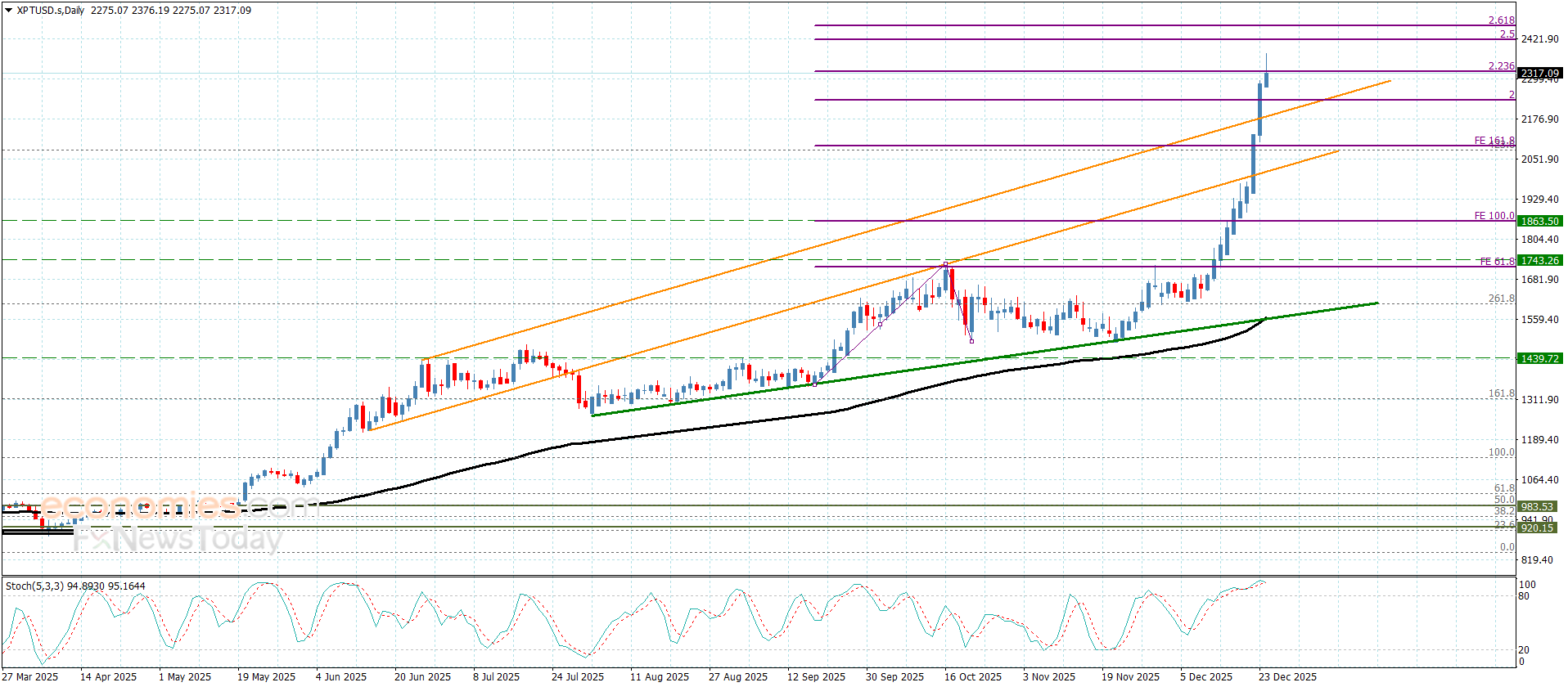
Platinum prices are extending a standout 2025 rally on Tuesday, December 16, 2025, with spot quotes hovering around the $1,800–$1,830 per ounce zone in early trading—levels last seen in 2011. Data from major bullion dealers showed spot platinum around $1,828/oz in the morning (U.S. time), up roughly 1.6% over 24 hours[1]

Platinum’s move is notable because it’s happening even as gold cools from recent highs ahead of key U.S. labor-market releases. In one of the day’s most closely watched macro setups, Reuters reported that investors were positioned cautiously ahead of delayed U.S. jobs data, while platinum still pushed higher—helped by both tight-physical-market narratives and fresh focus on European auto-policy decisions that could influence long-term demand for catalytic converters.  [2]

Below is a complete, publication-ready roundup of today’s platinum price action, the news drivers moving the market, and the latest forecasts and analyst views shaping expectations into 2026—all based on information available on 16.12.2025.


Platinum price today: spot and futures levels (December 16, 2025)

Because platinum trades around the clock and pricing differs slightly by venue (spot vs. futures), today’s headlines are best understood as a range rather than a single print.

  • Spot platinum: APMEX quoted $1,828.40/oz, showing a +$29.90 (+1.64%) move over the prior 24 hours (timestamped 12/16/2025 8:13 AM ET).  [3]
  • Spot market snapshot (Kitco): Kitco listed platinum around $1,810 bid / $1,820 ask at 08:02 EST, with an indicated intraday low near $1,774 and high near $1,840[4]
  • Platinum futures (Investing.com): Investing.com’s platinum futures page showed ~$1,845 with a stated daily trading range of $1,804.20 to $1,861.60, and a 52‑week range of $885.00 to $1,861.60[5]

What this means for readers: “Platinum price today” is best framed as roughly $1,810–$1,830 spot, while actively traded futures were probing the mid‑$1,800s, with the day’s top end brushing the $1,860 area.  [6]


Why platinum is rising today: the three big drivers on 16.12.2025

1) “Highest since 2011” momentum is attracting fresh attention

Reuters described platinum as hitting its highest level since September 2011, even while other precious metals were mixed. In Reuters’ pricing snapshot, spot platinum rose about 1.3% to $1,805.85 during the session, reinforcing the sense that platinum has become a new focal point in the broader precious-metals complex.  [7]

That “multi‑year high” label matters in real markets: it tends to pull in momentum traders, systematic strategies, and generalist investors who previously ignored platinum because it spent years lagging gold.

2) Macro backdrop: traders are braced for U.S. jobs data and rate expectations

On Tuesday, gold softened as markets waited for delayed U.S. employment reports (covering October and November) and later-week inflation releases—data that can shift expectations about the Federal Reserve’s 2026 rate path. Reuters noted that the jobs release would be missing some details due to disruptions in U.S. data collection following a government shutdown, but it still sits at the center of near-term rate expectations.  [8]

Why this matters for platinum specifically:

  • Platinum is part precious metal (sensitive to the U.S. dollar and real yields) and part industrial metal (sensitive to growth expectations and manufacturing demand).
  • When markets lean toward lower rates or a weaker dollar, precious metals often benefit. Even if gold pauses, platinum can outperform if its industrial story is improving at the same time.

3) Europe’s auto-policy headlines: possible shift on the 2035 combustion-engine ban

One of the most platinum-relevant headlines in today’s news cycle is coming out of Brussels.

  • Reuters reported that Europe’s carmakers were looking for a reprieve as the European Commission was expected to unveil an auto sector package on Tuesday (Dec. 16), potentially watering down the effective ban on new combustion-engine cars currently slated for 2035[9]
  • In the precious-metals market wrap, Reuters quoted a strategist who said a backtrack would likely be supportive for internal combustion vehicles, which use platinum and palladium (notably in catalytic converters).  [10]

This doesn’t guarantee a sudden surge in platinum demand—policy details and timelines still matter—but it helps explain why platinum can rally on a day when investors are otherwise cautious ahead of U.S. macro data.


Platinum supply story: deficits, inventories, and why the market feels “tight”

Platinum’s 2025 strength hasn’t been driven by one factor. A recurring theme is tightness in physical availability—and today’s analysis stream added fresh detail.

Nornickel-linked forecast: deficit still expected in 2025

A Commerzbank note highlighted by FXStreet said Russia’s largest palladium producer published updated forecasts indicating:

  • Platinum deficit of ~300,000 ounces in 2025 excluding investment demand
  • Deficit of ~400,000 ounces including investment demand  [11]

That same note emphasized a key nuance: different organizations model “investment demand” differently, and conclusions about whether higher prices are justified can change depending on what you assume about ETFs, bars and coins, and exchange inventory flows.  [12]

WPIC’s baseline: big 2025 deficit, moving toward balance in 2026 (if trade tensions ease)

The World Platinum Investment Council (WPIC) recently projected:

  • 2025 platinum market deficit of 692 koz, alongside constrained supply
  • A move to a small 20 koz surplus in 2026conditional on easing trade fears and changes in exchange/ETF flows  [13]

WPIC also pointed to indicators of tightness in the market (lease rates and backwardation), arguing that tight conditions can persist even after a big price run.  [14]

Bottom line: Today’s market is balancing two truths at once—(1) platinum has already rallied sharply, and (2) multiple credible outlooks still describe a market that is structurally constrained, even if 2026 trends toward balance.


Platinum price forecast and outlook: what major analysts are saying right now

Morgan Stanley’s 2026 call: platinum at $1,775/oz

In a broader precious-metals outlook published today, Reuters reported that Morgan Stanley forecasts platinum at $1,775/oz in 2026 (with palladium at $1,325), citing structural imbalances and different demand drivers across the complex.  [15]

That projection is important for two reasons:

  1. It’s a mainstream bank forecast released on Dec. 16, so it will be widely referenced.
  2. It sits close to today’s spot price area, which implicitly suggests the bank expects slower gains (or consolidation) after 2025’s surge, even if longer-term fundamentals remain supportive.

Commerzbank/Nornickel comparison: divergence comes down to “investment demand” assumptions

The FXStreet/Commerzbank commentary stressed that when you exclude investor demand, WPIC’s framework can even imply oversupply, which would not support further price gains—highlighting why the next phase for platinum may depend heavily on whether investors keep adding exposure via ETFs, bars, coins, and exchange inventory changes.  [16]

Technical signals: “Strong Buy,” but levels are getting stretched

Technical dashboards won’t tell you why platinum is moving, but they do reveal how crowded the trend may be.

  • Investing.com’s futures page stated the daily technical signal was “Strong Buy” and highlighted how close price is to the top of the 52‑week range.  [17]

With futures printing up to the mid‑$1,800s and the day’s trading range extending toward $1,861, traders are watching whether the market can hold above the psychologically important $1,800 zone without sharp pullbacks.  [18]


What to watch next: the catalysts that could move platinum after today

U.S. macro calendar (immediate)

Reuters emphasized that markets were focused on U.S. employment data (October and November) and upcoming inflation releases (CPI and PCE). These prints can quickly swing the U.S. dollarreal yields, and risk appetite—all of which can feed into platinum prices.  [19]

Europe’s policy follow-through (near-term)

If the European Commission’s auto-sector package or related political messaging materially changes expectations for the pace of ICE phaseouts, it could influence longer-run projections for catalytic converter demand—especially for platinum and palladium.  [20]

Inventory signals and the investment channel (ongoing)

The market is acutely sensitive to whether “tightness” is being eased by above-ground stocks, ETF flows, or exchange inventory movements—exactly the variables analysts are debating in today’s research notes.  [21]


The takeaway for December 16, 2025

Platinum’s surge in 2025 is no longer flying under the radar. Today’s pricing shows a metal trading around $1,810–$1,830 spot and mid‑$1,800s in futures, holding near its highest levels since 2011[22]

The day’s narrative is being driven by:

  • a macro market braced for U.S. jobs and inflation data[23]
  • fresh attention to EU auto policy and what it may mean for future PGM demand,  [24]
  • and renewed debate over whether the platinum market remains in a deficit (and how much that depends on investor behavior).  [25]

Meanwhile, the forecast picture is becoming more nuanced: Morgan Stanley’s $1,775/oz 2026 view implies a slower pace after the rally, even as structural constraints remain a core part of the bull case.  [26]

Note: Prices are quoted in U.S. dollars per troy ounce and can change rapidly. This article is informational and not investment advice.

References

1. www.apmex.com, 2. www.reuters.com, 3. www.apmex.com, 4. www.kitco.com, 5. www.investing.com, 6. www.apmex.com, 7. www.reuters.com, 8. www.reuters.com, 9. www.reuters.com, 10. www.reuters.com, 11. www.fxstreet.com, 12. www.fxstreet.com, 13. www.prnewswire.com, 14. www.prnewswire.com, 15. www.reuters.com, 16. www.fxstreet.com, 17. www.investing.com, 18. www.investing.com, 19. www.reuters.com, 20. www.reuters.com, 21. www.fxstreet.com, 22. www.kitco.com, 23. www.reuters.com, 24. www.reuters.com, 25. www.fxstreet.com, 26. www.reuters.com


Source link

16 12, 2025

EUR/USD Analysis 16/12: Crucial Trading Session (Chart)

By |2025-12-16T17:49:31+02:00December 16, 2025|Forex News, News|0 Comments

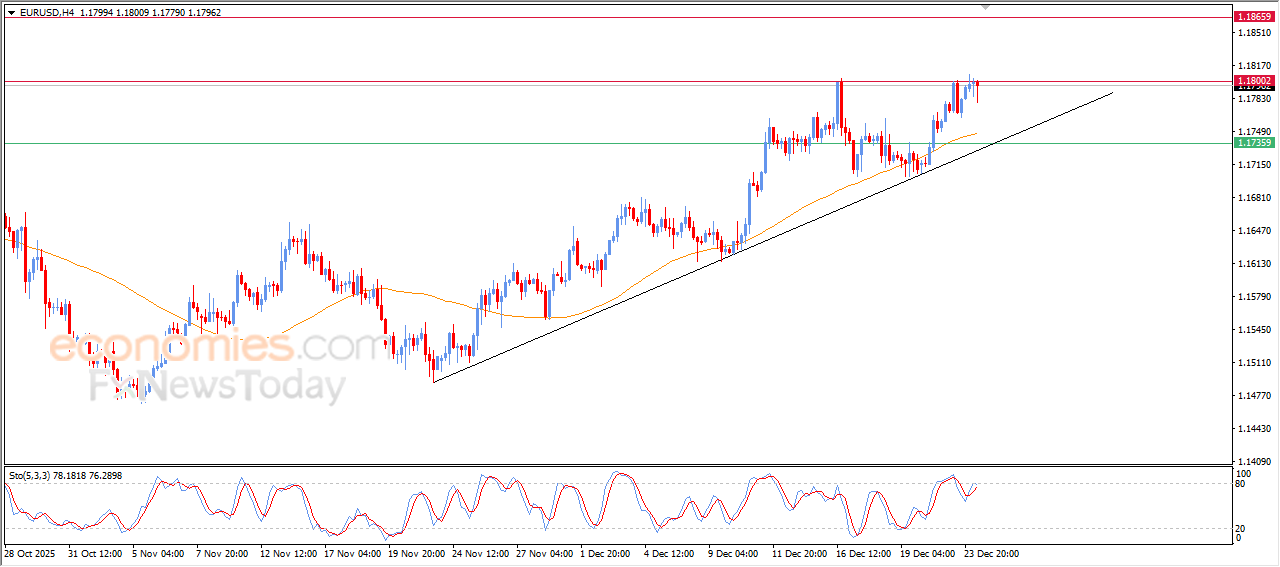
EUR/USD Analysis Summary Today

  • Overall Trend: : Within a technical correction upward.
  • Support Levels for EUR/USD Today: 1.1710 – 1.1660 – 1.1580
  • Resistance Levels for EUR/USD Today: : 1.1790 – 1.1830 – 1.1900

EUR/USD Trading Signals:

  • Buy EUR/USD from the support level of 1.1640 with a target of 1.1850 and a stop-loss at 1.1580.
  • Sell EUR/USD from the resistance level of 1.1810 with a target of 1.1500 and a stop-loss at 1.1900.

Technical Analysis of EUR/USD Today:

For three consecutive trading sessions, the EUR/USD price has stabilized around its recent upward rebound gains, hovering near the resistance level of 1.1768—the highest for the pair in two months. Overall, based on performance across reliable trading platforms, the rise witnessed in the EUR/USD exchange rate this month indicates it is approaching overbought territory, making it a candidate for a correction amid profit-taking sales.

Technically: The rapid rise in the Euro price recently is pushing the Relative Strength Index (RSI) toward the 70 threshold, the level at which EUR/USD is officially considered overbought. The RSI tends to revert to the mean upon reaching this zone, implying an eventual decline. For this to occur, we need the EUR/USD price to enter a sideways path or a slight downward retreat.

In short, we believe Euro trading will see a slight dip after a strong rally; we would not be surprised to see a pullback below 1.17 this week before the next upward wave. However, charts can only offer limited information in a week marked by major economic data releases.

Important and Influential Events for the EUR/USD

According to Forex market trading, the EUR/USD exchange rate will be affected by the Eurozone PMI results for December, expected today, Tuesday, starting at 10:15 AM Egypt time. These are expected to confirm continued positive momentum for the region’s economy through the end of the year. Generally, the Eurozone Services PMI is expected to print at 53.3, while the manufacturing sector recovery is expected to confirm a slight rise to 49.9, placing it on the verge of returning to growth.

Overall, strong economic data would support the view that no further interest rate cuts are necessary from the European Central Bank. In fact, a better-than-expected Purchasing Managers’ Index (PMI) reading would reinforce expectations of continued interest rate hikes.

However, the US Dollar’s path will be the primary driver for EUR/USD during this trading week. The release of US labor market data is the standout event in global financial markets. Notably, this data was delayed by the US government shutdown, meaning it will fill a significant data gap. US November jobs data will be released today, Tuesday, at 15:30 Egypt time, with expectations pointing to an increase of 50,000 jobs and an unemployment rate of 4.4%. If the numbers fall below expectations, the market will increase bets on Fed rate cuts in 2026, negatively affecting US bond yields and the Dollar price today.

Conversely, if the data exceeds expectations, these expectations of an interest rate cut will diminish, and the US dollar may rise and potentially continue its gains for the remainder of the week, potentially hindering the euro’s appreciation against the US dollar.

Furthermore, keep an eye on US Retail Sales data, also scheduled for release today at the same time, which will indicate the strength of demand in the economy. Expectations suggest a figure exceeding 0.2% monthly for October. On Thursday, US Inflation (CPI) data will be released, with expectations of a rise to 3.1% annually in November, compared to 3.0% previously.

Obvioulsy, this trend appears unsatisfactory for the Federal Reserve. Any figure higher than expected will cast doubt on market expectations for rate cuts next year, thereby supporting the US Dollar.

Trading Tips:

Today’s trading session is crucial in determining the fate of the EUR/USD for the remainder of 2025 and will shape the start of the new year’s trading. Be cautious, as we may witness strong and rapid changes in currency prices.

Ready to trade our EUR/USD daily forecast? Here’s a list of some of the top forex brokers in Europe to check out.

Source link

16 12, 2025

PureWell Sciences Launches Psychobiotics Targeting Gut-Brain Axis

By |2025-12-16T17:40:32+02:00December 16, 2025|Dietary Supplements News, News|0 Comments


Las Vegas, Nevada–(Newsfile Corp. – December 16, 2025) –  PureWell Sciences announced the launch of its Psychobiotics supplement recently. This new formula combines prebiotics, probiotics, postbiotics and L-Glutamine in one capsule. It targets the gut-brain axis to support mental wellness.

PureWell Sciences Psychobiotic

To view an enhanced version of this graphic, please visit:
https://images.newsfilecorp.com/files/8871/277580_69fd66fad441cabc_001full.jpg

Gut health leads the wellness trends for 2026. The global market for these supplements has grown to over $150 million. Recent data shows that 92% of consumers prioritize mental health and they want natural solutions. PureWell Sciences answers this call.

Standard probiotics focus only on digestion. But PureWell Sciences Psychobiotics reach the vagus nerve. This major nerve links your gut directly to your brain. The formula works in three ways:

  • Prebiotics: Food that fuels healthy bacteria.
  • Probiotics: Specific strains that help regulate your stress response.
  • Postbiotics: Compounds that support your immune system immediately.
  • L-Glutamine: An Amino acid that repairs gut lining and reduces inflammation.

“Every formula we make is shaped by real research and real experience – including mine. PureWell Sciences isn’t just a supplement brand. It’s proof that you don’t have to live in survival mode,” says Serhii Bohoslovskyi, Partner at PureWell Sciences. “At PureWell Sciences, science is the foundation of everything we do. Our formulas are guided by the latest research in nutrition, gut-brain health, and cellular support. We combine rigorous clinical studies with carefully selected ingredients to create effective, safe, and synergistic products that truly make a difference.”

You can buy PureWell Psychobiotics online from purewellsciences.com or on Amazon.

About PureWell Sciences

PureWell Sciences is a health and wellness company focused on creating science-backed, natural supplements that support mind, body, and long-term vitality.

To view the source version of this press release, please visit https://www.newsfilecorp.com/release/277580

info

Source: PRNews OU


Source link

16 12, 2025

MATIC Price Prediction: Targeting $0.45-$0.52 Recovery Within 6 Weeks Despite Current Consolidation

By |2025-12-16T17:31:48+02:00December 16, 2025|Crypto News, News|0 Comments


Terrill Dicki
Dec 16, 2025 09:26

MATIC price prediction suggests potential 18-37% upside to $0.45-$0.52 range by January 2025, contingent on breaking $0.58 resistance with current support holding at $0.35.


Polygon (MATIC) finds itself at a critical juncture as December 2025 draws to a close, with the cryptocurrency trading at $0.38 amid mixed technical signals. Our comprehensive MATIC price prediction analysis suggests the token is positioned for a potential recovery toward the $0.45-$0.52 range within the next 4-6 weeks, provided key resistance levels are broken and critical support zones hold firm.

MATIC Price Prediction Summary

MATIC short-term target (1 week): $0.40-$0.42 (+5-11%)
Polygon medium-term forecast (1 month): $0.45-$0.52 range (+18-37%)
Key level to break for bullish continuation: $0.58
Critical support if bearish: $0.35

Recent Polygon Price Predictions from Analysts

The latest analyst consensus reveals a cautiously optimistic outlook for MATIC, with multiple forecasts converging on similar price targets. Recent predictions from Blockchain.News consistently point to a MATIC price target range of $0.42-$0.58 across various timeframes, with most analysts maintaining medium confidence levels.

The December 6th Polygon forecast identified $0.42-$0.50 as the medium-term target, emphasizing that critical support at $0.35 remains intact despite current bearish momentum. Earlier predictions from November showed slightly higher ambitions, with some analysts targeting the $0.45-$0.58 range, contingent on breaking the crucial $0.58 resistance level.

What’s particularly noteworthy is the consistency across multiple analyst reports regarding the $0.58 resistance level as the key determinant for MATIC’s next major move. This level has repeatedly emerged as the make-or-break point that could either trigger a 53% rally or send the token retreating to $0.35 support.

MATIC Technical Analysis: Setting Up for Consolidation Breakout

The current Polygon technical analysis reveals a token in consolidation, trading near the lower end of its recent range. With MATIC positioned at $0.38, the price sits below all major moving averages except the 7-day SMA ($0.37), indicating underlying weakness that requires careful navigation.

The RSI reading of 38.00 places MATIC in neutral territory but leaning toward oversold conditions, potentially setting up for a relief bounce. However, the MACD histogram at -0.0045 confirms bearish momentum remains intact, with the MACD line (-0.0246) still below its signal line (-0.0202).

Perhaps most telling is MATIC’s position within the Bollinger Bands, where the token trades with a %B position of 0.2879, suggesting it’s closer to the lower band ($0.31) than the upper band ($0.56). This positioning often precedes either a breakdown below support or a mean reversion toward the middle band at $0.43.

The Stochastic oscillator readings (%K: 25.19, %D: 19.74) indicate MATIC is approaching oversold territory, which historically has provided buying opportunities for patient investors willing to wait for confirmation.

Polygon Price Targets: Bull and Bear Scenarios

Bullish Case for MATIC

The optimistic MATIC price prediction scenario envisions a staged recovery beginning with an initial move toward $0.42-$0.45, representing the first significant resistance cluster. This upside case relies heavily on MATIC maintaining support above $0.35 while gradually building bullish momentum.

Should MATIC successfully reclaim the 20-day SMA at $0.43, the next logical target becomes the $0.48-$0.50 zone, which aligns with analyst price targets and represents the convergence of the 50-day SMA ($0.45) and psychological resistance levels.

The ultimate bullish MATIC price target remains the critical $0.58 level, which has consistently appeared in analyst forecasts as the gateway to more substantial gains. Breaking this resistance could potentially trigger the 53% rally mentioned in previous predictions, targeting the $0.72 region.

Bearish Risk for Polygon

The bearish scenario for our Polygon forecast centers around a failure to hold the $0.35 support level that analysts have repeatedly identified as critical. A breakdown below this level could trigger a cascade toward the next major support at $0.33, representing the 52-week low territory.

Given MATIC’s current distance of over 70% from its 52-week high of $1.27, further downside could potentially test the lower Bollinger Band at $0.31. This scenario would likely be accompanied by deteriorating market sentiment and continued bearish momentum as indicated by current MACD readings.

The bearish case gains credibility if MATIC fails to reclaim the 20-day SMA at $0.43 within the next two weeks, as this would suggest the current consolidation is more distribution than accumulation.

Should You Buy MATIC Now? Entry Strategy

For investors considering whether to buy or sell MATIC, the current technical setup presents a complex decision matrix. The token’s position near critical support levels offers both opportunity and risk in equal measure.

Conservative entry points should focus on the $0.35-$0.37 range, where strong support has historically emerged. This approach allows for tight risk management with stop-loss orders placed just below $0.33, limiting downside to approximately 8-12%.

More aggressive traders might consider scaling into positions on any bounce toward $0.40-$0.42, using this level as a launching pad for the anticipated move toward our medium-term MATIC price target of $0.45-$0.52.

Risk management remains paramount given the mixed signals in current technical indicators. Position sizes should be kept modest until MATIC demonstrates clear directional bias, preferably through a decisive break above $0.43 or below $0.35.

MATIC Price Prediction Conclusion

Our comprehensive analysis suggests a cautiously optimistic MATIC price prediction for the coming weeks, with the token positioned for a potential 18-37% recovery toward the $0.45-$0.52 range by January 2025. This Polygon forecast carries a medium confidence level, contingent on maintaining support above $0.35 and eventually breaking resistance at $0.58.

Key indicators to monitor include RSI movement above 45 for bullish confirmation and MACD histogram turning positive to signal momentum shift. The critical timeline for this prediction spans the next 4-6 weeks, during which MATIC must demonstrate its ability to reclaim key moving averages and build sustainable upward momentum.

Traders should watch for volume confirmation on any breakout attempts, as the current 24-hour volume of $1.07 million suggests limited institutional interest that must improve for any sustained rally to materialize.

Image source: Shutterstock


Source link

16 12, 2025

Brent Slips Below $60 as Ukraine Peace Hopes and China Demand Worries Fuel 2026 Glut Fears

By |2025-12-16T16:19:39+02:00December 16, 2025|Forex News, News|0 Comments


Oil prices fell again on Tuesday, December 16, 2025, pushing Brent crude below the closely watched $60-a-barrel level and keeping West Texas Intermediate (WTI) pinned in the mid-$50s. The move extends a months-long slide driven by a market that is increasingly focused on one question: Will 2026 be defined by a supply glut—especially if geopolitics turns less restrictive for Russian barrels—just as demand growth cools?  [1]

At around 12:14 GMTBrent crude futures were down about 1.3% at roughly $59.75 a barrel, while WTI was down nearly 1.5% near $55.98, according to Reuters.  [2]


Oil price today: Where Brent and WTI are trading on Dec. 16, 2025

Crude benchmarks are hovering near multi-month lows:

  • Brent: traded below $60 and hit the weakest levels seen since May 2025, per Reuters reporting.  [3]
  • WTI: traded in the mid-$50s, with the market treating the mid-to-high $50s zone as a critical battleground for year-end sentiment.  [4]

Bloomberg’s broader markets wrap (published Dec. 16) also described Brent dipping below $60 for the first time since May, underscoring the “risk-off” tone across assets ahead of key U.S. macro releases.  [5]


Why oil is down today: Peace-talk optimism meets soft China signals

1) Russia–Ukraine peace headlines are pressuring the “sanctions premium”

The biggest immediate catalyst is rising optimism around potential Russia–Ukraine peace talks—an outlook that markets interpret as increasing the odds of eased sanctions or reduced logistical friction for Russian crude flows. Reuters reported that the U.S. offered NATO-style security guarantees for Kyiv and that European negotiators flagged progress, though Russia also signaled it was unwilling to make territorial concessions.  [6]

From the market’s perspective, even a small perceived increase in “effective supply” can hit prices when balances already look loose. Rystad Energy’s Janiv Shah said the market is assessing whether a peace deal could make additional Russian volumes available and worsen oversupply.  [7]

2) Weak Chinese data is reviving demand anxiety

On the demand side, traders are digesting softer Chinese indicators. Reuters highlighted that China’s factory output growth slowed to a 15‑month low, and retail sales growth was the weakest since December 2022—data points that reinforce concerns about consumption momentum in the world’s largest crude importer.  [8]

That matters because, in a well-supplied market, oil prices tend to react sharply to any sign demand growth is wobbling—particularly out of China.

3) Supply disruptions are being “outvoted” by glut expectations

Even tensions and disruptions that would typically support crude—such as U.S.-Venezuela-related developments—have struggled to lift the tape. Reuters noted that the impact of the U.S. seizure of a tanker near Venezuela was limited by abundant floating storage and shifts in buying patterns.  [9]

In short: today’s tape is less about “what could go wrong” and more about “how much extra oil the world may have next year.”


China is buying more oil—but it’s going into storage, not necessarily consumption

One of the most important (and nuanced) themes in today’s oil market is that China’s import strength doesn’t automatically translate into stronger end-demand—because a growing share may be headed into inventories.

A Reuters analysis published Dec. 16 estimated China’s “surplus crude” (crude available minus refinery runs) at about 1.88 million barrels per day in November, the highest in six months. Imports were estimated around 12.43 million bpd(a 27‑month high), while refinery throughput was about 14.86 million bpd[10]

Reuters also noted the price incentive: Brent peaked near $82.63 in mid-January but fell toward the low $60s by December, encouraging opportunistic buying and stockbuilding.  [11]

Why this matters for oil price today:
If China is stockpiling into weakness, it can cushion the downside at times—but it can also make the demand picture harder to read. Stockbuilding can fade quickly if prices rebound or if policy shifts, adding uncertainty to 2026 forecasts.  [12]


The bigger story behind oil price today: The market is pricing a 2026 surplus

Oil isn’t falling in a vacuum. Multiple major forecasters—and the futures curve itself—have been warning for months that supply growth may outpace demand into 2026.

IEA: A surplus measured in millions of barrels per day

The International Energy Agency (IEA) has been among the most-cited sources behind “glut” talk. In its December 2025 Oil Market Report, the IEA said observed global inventories rose to four-year highs and highlighted that its balances imply a ~3.7 million bpd average surplus from 4Q 2025 through 2026, even after accounting for market opacity and mismatches across crude, NGLs, and products.  [13]

Separately, Reuters reported on Dec. 11 that the IEA trimmed its 2026 surplus estimate but still projected supply exceeding demand by about 3.84 million bpd in 2026—still close to 4% of world demand in scale.  [14]

EIA: Brent down toward $55 in early 2026

The U.S. Energy Information Administration (EIA), in its Short-Term Energy Outlook (STEO), forecast that rising global inventories could keep pressure on prices and projected Brent averaging about $55 per barrel in Q1 2026, staying near that level for much of the year.  [15]

That forecast is a key anchor for the bearish narrative because it ties the price outlook directly to inventory accumulation.

OPEC: A more optimistic demand view

OPEC has maintained a more constructive demand stance than the IEA. Argus reported (from OPEC’s latest Monthly Oil Market Report coverage) that OPEC expects global oil demand to grow by about 1.38 million bpd in 2026 to roughly 106.52 million bpd, and it estimates the “call on OPEC+ crude” around 43 million bpd in 2026.  [16]

Reuters also noted that OPEC’s view implies a much tighter balance than the IEA’s.  [17]

Translation: If you’re wondering why oil price forecasts diverge so sharply, it often comes down to different assumptions about (1) demand growth, (2) non-OPEC supply, and (3) how disciplined OPEC+ will be if prices weaken further.


What banks and analysts are forecasting: $55–$65 Brent in 2026 (with big dispersion)

Today’s price action is also being amplified by the range of credible, widely cited forecasts now clustering below (or not far above) current levels:

  • Barclays (via Reuters): Analysts expect Brent to average about $65/bbl in 2026, slightly above the forward curve, arguing that a surplus they estimate at ~1.9 million bpd is already largely priced in.  [18]
  • Goldman Sachs (via Reuters): Forecasts Brent averaging $56 and WTI $52 in 2026, citing a large surplus and “long-cycle” projects coming online alongside OPEC’s unwind of cuts.  [19]
  • Reuters poll (Nov. 28): A survey of economists and analysts forecast Brent averaging $62.23 and WTI $59.00 in 2026—down from the prior month’s expectations—while warning swelling supply would keep prices under pressure.  [20]

Analysts quoted by Reuters also highlighted a key psychological threshold: PVM Oil Associates suggested Brent could make a fresh year-to-date low, but in their view might not break below $55 before year-end—framing $55 as an important line in the sand for the market narrative.  [21]


The OPEC+ factor: Can producer policy stop the slide?

OPEC+ policy is central to whether today’s weakness becomes a deeper downcycle.

Reuters reported earlier this quarter that OPEC+ agreed to pause output increases for January–March 2026 after boosting targets by around 2.9 million bpd since April, reflecting rising concerns about an oversupplied market.  [22]

That pause is one reason some forecasters believe the market may stabilize—at least temporarily—if producers remain willing to slow or stop additional barrels.

But here’s the tension: as prices fall, some producers may want to defend revenue by pumping more, while others may want to defend price by cutting. That internal push-pull is one reason volatility tends to rise when Brent trades near “policy-sensitive” levels like $60 and below.


What happens next: Key catalysts that could move oil prices this week

Oil price today is being driven by headlines, macro data, and forward-looking balances—so the next moves may come from a few specific channels:

Russia–Ukraine negotiations and sanctions policy

Any concrete progress toward a ceasefire—or signals about sanctions enforcement and shipping restrictions—can move crude quickly because it changes the perceived availability and routing of Russian supply.  [23]

China demand vs. inventory behavior

If China continues importing heavily primarily for stockbuilding, it can support seaborne flows but may not confirm stronger end-demand. Reuters’ storage calculations highlight how important this distinction has become for forecasters.  [24]

U.S. macro data and the “dollar + growth” link

Broader markets on Dec. 16 were focused on incoming U.S. jobs data and what it implies for rate policy and risk appetite—factors that can feed into oil via growth expectations and currency moves.  [25]

Inventory trajectory

Both the IEA and EIA are explicitly linking their bearish price outlooks to the expectation that global inventories continue rising through 2026. If inventory builds accelerate, it strengthens the bearish case; if they slow, it can relieve pressure.  [26]


Bottom line: Oil price today is less about shocks—and more about surplus math

On December 16, 2025, crude is trading like a market that believes supply growth will outpace demand into 2026, and that any easing of Russia-related constraints would only add to that imbalance.  [27]

That doesn’t mean prices must fall in a straight line—OPEC+ policy, geopolitics, and China’s buying behavior can still create sharp rallies. But for now, the dominant theme behind oil price today is clear: glut fears are overwhelming disruption fears, and the market is treating sub-$60 Brent as a signal that the next chapter will be fought over how quickly (and how far) inventories build. 

References

1. www.reuters.com, 2. www.reuters.com, 3. www.reuters.com, 4. www.reuters.com, 5. www.investmentnews.com, 6. www.reuters.com, 7. www.reuters.com, 8. www.reuters.com, 9. www.reuters.com, 10. www.reuters.com, 11. www.reuters.com, 12. www.reuters.com, 13. www.iea.org, 14. www.reuters.com, 15. www.eia.gov, 16. www.argusmedia.com, 17. www.reuters.com, 18. www.reuters.com, 19. www.reuters.com, 20. www.reuters.com, 21. www.reuters.com, 22. www.reuters.com, 23. www.reuters.com, 24. www.reuters.com, 25. www.investmentnews.com, 26. www.eia.gov, 27. www.reuters.com


Source link

16 12, 2025

The GBPJPY attacks the support– Forecast today – 16-12-2025

By |2025-12-16T15:48:32+02:00December 16, 2025|Forex News, News|0 Comments

The GBPJPY pair continued providing negative trading, affected by forming extra barrier at 208.10 level, with the negative momentum that comes from stochastic below 50 level, attacking the support at 206.90 that formed the suggested target in the previous report.


The effect of the temporary sideways bias dominance, however facing the negative pressures that might push it to resume the corrective decline, to target 206.25 and 205.80 level, while renewing the bullish attempts requires forming strong bullish attack, to settle above 208.10 then begin targeting new positive stations by its rally towards 209.15.


The expected trading range for today is between 206.25 and 207.65


Trend forecast: Bearish


Source link

16 12, 2025

Global Tea Market Outlook (2026-2035): Growth Drivers,

By |2025-12-16T15:39:31+02:00December 16, 2025|Dietary Supplements News, News|0 Comments


The global tea market was valued at USD 59.59 billion in 2025 and is projected to grow at a CAGR of 6.20% during the forecast period of 2026-2035, reaching USD 108.75 billion by 2035. This growth is driven by factors such as increasing consumer awareness about health benefits, growing tea consumption in emerging markets, and product innovations. However, the market faces challenges related to climate change, competition from other beverages, and price volatility of raw materials.

Get a Free Sample Report with Table of Contents: https://bit.ly/4rVsZ9z

Key Growth Drivers in the Tea Market

1. Rising Health Consciousness

The increasing awareness of health and wellness is one of the key factors propelling the growth of the tea market. Tea, particularly varieties like green tea, herbal tea, and black tea, is recognized for its health benefits, including antioxidants, anti-inflammatory properties, and its role in improving heart health and digestion. As consumers become more health-conscious, tea is increasingly replacing sugary soft drinks, making it a popular alternative for those seeking to improve their overall health.

The demand for functional teas, which offer specific health benefits, such as detoxification, immunity boosting, and weight management, is also increasing, particularly among the younger demographic. This trend is significantly contributing to market growth.

2. Growing Tea Consumption in Emerging Markets

The demand for tea is rising significantly in emerging markets, particularly in Asia-Pacific, Africa, and parts of Latin America. In countries like India, China, and Brazil, tea is deeply ingrained in daily culture, and the growing urban population and increasing disposable incomes are leading to a surge in consumption. As these regions become more urbanized, there is a greater demand for both traditional and premium tea products.

In India, the world’s largest producer and consumer of tea, the market is expanding due to an increase in domestic consumption, while China continues to dominate global tea production and export. These markets are expected to contribute significantly to the overall growth of the global tea industry.

3. Product Innovation and Diversification

Innovations in tea flavors and blends are driving the demand for specialty teas. Companies are introducing new flavors, such as chai, iced tea, and flavored green teas, to cater to the evolving preferences of consumers. Additionally, ready-to-drink (RTD) tea has gained immense popularity, particularly among millennials and health-conscious consumers, providing convenience without sacrificing taste and quality.

The rise of organic tea and sustainably sourced tea is also reshaping the market as consumers become more concerned about ethical sourcing and environmental impact. Brands offering these products are meeting the growing demand for premium and eco-conscious tea options.

Read Full Report with Table of Contents: https://bit.ly/4kM6AGT

4. Growth of Tea Cafés and Specialty Tea Retailers

The expansion of tea cafés and specialty tea retailers has significantly impacted the global tea market, particularly in Western countries. These establishments are introducing consumers to a wide variety of high-quality teas, leading to a shift away from traditional coffeehouse culture. Popular chains and independent tea houses are boosting the global appeal of premium teas, further fueling market growth.

Challenges in the Tea Market

1. Climate Change and Its Impact on Tea Production

Tea production is highly susceptible to climate change. Variations in temperature, rainfall patterns, and extreme weather events can significantly affect the yield and quality of tea leaves. Flooding, droughts, and changing growing seasons are increasing challenges for tea growers worldwide, especially in traditional growing regions such as India, Sri Lanka, and China.

Climate-related disruptions can result in fluctuating prices and supply shortages, impacting the stability of the global tea market and leading to unpredictable market dynamics.

2. Intense Competition from Other Beverages

While tea is a popular beverage worldwide, it faces intense competition from a variety of other drinks, including coffee, soft drinks, and energy drinks. In particular, the increasing popularity of coffee culture in many regions poses a challenge for tea, especially in markets where coffee has historically dominated the beverage landscape.

Moreover, with the rise of ready-to-drink beverages across the beverage industry, tea must compete not only with coffee and soft drinks but also with other ready-to-consume drinks, such as plant-based beverages and fruit juices, which appeal to health-conscious consumers.

3. Price Volatility of Raw Materials

Tea prices can be volatile due to fluctuations in the price of raw materials, such as tea leaves and packaging materials. Factors like crop yields, labor shortages, and economic conditions in tea-growing countries can affect the supply and cost of tea. As a result, manufacturers may face challenges in maintaining consistent pricing, which could affect consumer purchasing behavior and profitability for producers.

Read More Reports:

India Plant‐Based Nutraceuticals Market- https://bit.ly/3X4Gq8U

Digital Content Creation Market- https://bit.ly/46t7cxA

Media Contact:

Company Name: Claight Corporation

Contact Person: Sophia Grace, Business Consultant

Email: sales@expertmarketresearch.com

Toll Free Number: US +1-415-325-5166 | UK +44-702-402-5790

Address: 30 North Gould Street, Sheridan, WY 82801, USA

Website: https://www.expertmarketresearch.com

About Us

Acquire unparalleled access to critical industry insights with our comprehensive market research reports, meticulously prepared by a team of seasoned experts. These reports are designed to equip decision-makers with an in-depth understanding of prevailing market trends, competitive landscapes, and growth opportunities.

Our high-quality, data-driven analysis provides the essential framework for organisations seeking to make informed and strategic decisions in an increasingly complex and rapidly evolving business environment. By investing in our market research reports, you can ensure your organisation remains agile, proactive, and poised for success in today’s competitive market.

Don’t miss the opportunity to elevate your business intelligence and strengthen your strategic planning. Secure your organisation’s future success by acquiring one of our Expert Market Research reports today.

This release was published on openPR.


Source link

Go to Top