About Editorial team of BIPNs

Main team of content of bipns.com. Any type of content should be approved by us.
14 04, 2025

Best Time of Day to Take Vitamin B12 for Maximum Absorption

By |2025-04-14T13:46:30+02:00April 14, 2025|Dietary Supplements News, News|0 Comments


The red blood cells that course through your veins, the protective covering that surrounds your nerve fibers and the genetic information that is tightly packed into your cells all rely on one key nutrient—vitamin B12. Yet nearly 12.5% of the people in the U.S. aged 19 or older are not getting enough of this essential vitamin. This is particularly common among older adults, people who follow a vegetarian or vegan diet and individuals with certain digestive disorders. If you fall into one of these groups, you may have been advised to take a vitamin B12 supplement. However, in order to unlock your supplement’s full potential, timing may be just as important as the supplement itself. So, we asked dietitians for their expertise on the best time to take vitamin B12 for maximum absorption.

Types of Vitamin B12 Supplements

You can find vitamin B12 supplements in four different forms: cyanocobalamin, methylcobalamin, hydroxocobalamin and adenosylcobalamin. Edwina Clark, M.S., RD, CSSD, a registered dietitian, highlights their unique properties:

  • Cyanocobalamin: The most common, cost-effective and stable form with a well-established record for safety and efficacy. It is synthetically produced and must be converted into active forms that the body can readily use.
  • Methylcobalamin: An active form naturally found in animal foods that is readily used by the body. It also has a strong track record for safety and efficacy.
  • Hydroxocobalamin: Often given as an injection, this form of vitamin B12 lasts longer in the bloodstream and is used to treat severe deficiencies.
  • Adenosylcobalamin: A naturally active form that is present in the mitochondria (powerhouse of the cell) and involved in energy production. However, it is less commonly available and not as well studied as other forms.

“The dosage and delivery (supplement vs. intramuscular injection) should be personalized to the individual and adjusted as lab levels change. For those with malabsorption issues, intramuscular B12 injections may be necessary. For others, oral B12 supplements can be effective for raising vitamin B12 and typically cost far less,” Clark explains.

Oral B12 supplements can vary in form, with options ranging from tablets and sprays to drops placed under the tongue. Studies suggest there is no difference in efficacy between the different delivery methods.

Optimal Timing for Vitamin B12 Intake

While research hasn’t nailed down a set-in-stone time for optimal absorption, taking your vitamin B12 supplement in the morning before breakfast is often recommended. Here’s why: Alexandra Caspero, M.A., RD, a registered dietitian specializing in plant-based nutrition, shares that vitamin B12 absorption peaks around 7 hours after taking it, which is why many practitioners suggest incorporating it into your morning routine to reap its benefits throughout the day.

To make it easier to remember, Clark recommends pairing your B12 supplement with an existing habit, like brushing your teeth in the morning. After all, B12 is a water-soluble vitamin, meaning it doesn’t stick around in your body. Therefore, consistency is crucial for keeping your B12 levels up and correcting any deficiency.

Factors Affecting Vitamin B12 Absorption

Getting the timing right is just one part of the equation. Other factors can either help or hinder the absorption of vitamin B12.

Factors That Enhance Absorption

When it comes to enhancing vitamin B12 absorption, the dose matters. “B12 is absorbed differently than other B vitamins, and that’s because of intrinsic factor, a protein found in the stomach that is needed for proper B12 absorption. We only absorb about 1 microgram of B12 at a time, though that number can vary based on the dose,” says Caspero. For this reason, you will notice that vitamin B12 supplements contain a higher amount of B12 than is normally found in food.

“For those who consume B12 throughout the day from animal products, this isn’t usually a concern. However, for vegans and vegetarians, if taking only a single supplement, then a higher dose is needed,” Caspero explains. As such, she suggests that adults take at least 25 micrograms of vitamin B12 daily, with higher doses of 50 to 250 micrograms during pregnancy and lactation to support absorption and address deficiencies. However, it’s always best to consult your health care provider to evaluate your B12 levels and determine the dosage that’s right for you.

Factors That Prevent Absorption

Absorbing vitamin B12 isn’t always a smooth process, as there are several factors that can complicate its uptake in the body. For instance, inadequate stomach acid and intrinsic factor can hinder absorption. “Stomach acid helps cleave B12 from food, and intrinsic factor is essential for transporting B12 into the small intestine. However, various conditions and medications can reduce stomach acid and intrinsic factor, raising your risk of B12 deficiency,” says Clark. These include pernicious anemia, certain medications like antacids and metformin, gastric bypass surgery and even older age. Additionally, Clark points out that gastrointestinal (GI) conditions, such as celiac disease, Crohn’s disease and ulcerative colitis, can impair absorption in the small intestines, contributing to low B12 levels.

Potential Side Effects and Considerations

Vitamin B12 supplements are well-tolerated and safe for most people. In fact, the Food and Nutrition Board hasn’t set a Tolerable Upper Intake Level (UL) for B12, which is the maximum safe dose unlikely to cause adverse health effects. This is because B12 is water-soluble, so your body uses what it needs and flushes the rest out through your urine. Therefore, even in large doses, B12 is considered safe.

However, Clark highlights that, on rare occasions, some people experience adverse reactions after taking vitamin B12, including diarrhea and itchy skin. Caspero adds that there have also been reports of acne-like symptoms when vitamin B12 is taken in large, daily doses over 1000 micrograms.

The Bottom Line

Optimal levels of vitamin B12 are required for red blood cell formation, DNA synthesis and to protect nerve fibers. Supplementation is often recommended for those following a plant-based eating pattern, older adults and individuals with digestive conditions. To get the most out of your supplement, dietitians recommend taking it first thing in the morning. However, the most important factor is to remember to take your supplement consistently. Just be sure to consult with your health care provider to discuss potential medication interactions and determine the best form and dosage for your individual needs.


Source link

14 04, 2025

Can XRP defend $2 support ahead of move to $3

By |2025-04-14T13:43:37+02:00April 14, 2025|Crypto News, News|0 Comments

  • XRP bulls put effort into defending the $2.00 support as the crypto market recovers from tariff-triggered drawdowns.
  • Whales embark on a fresh risk-on mode, scooping more XRP tokens ahead of a possible climb to $3.00.
  • A MACD buy signal and an uptrending RSI reinforce the bullish momentum on Monday.
  • A 2.75% drop in the derivatives’ open interest calls for caution among traders and suggests potential downside risks.

Ripple (XRP) price grinds higher and trades at $2.15 during the early European session on Monday. The token sustained a bullish outlook throughout the weekend supported by bullish sentiment from the 90-day tariff suspension in the United States. XRP relies on the immediate $2.00 support to collect more liquidity as whales launch a new buying spree, taking advantage of the recent drawdowns in the crypto market.

XRP whales go on a buying spree as risk-off sentiment fades 

Global markets, including crypto, have suffered under heightened liquidity and sustained drawdowns since April 2, when United States (US) President Donald Trump announced reciprocal tariffs. Digital assets like Bitcoin (BTC), Ethereum (ETH), and XRP started recovering mid-last week, as President Trump changed his tune on tariffs, suspending the new policy for 90 days. 

However, the President turned the tariff war a notch higher on China, levying the Asian economic giant a 145% duty on goods exported to the US. China, not relenting, retaliated with a 125% duty on United States goods, adding that it would fight to the end. 

President Trump made another surprise move on Friday, exempting certain goods, including smartphones, computers, and devices like semiconductors, from his reciprocal tariffs, according to a CNBC article.

The cryptocurrency market continued to trade positively over the weekend despite President Trump clarifying that exemptions are not permanent. Moreover, he said goods will still attract the existing 20% fentanyl tariffs.

XRP whales responded positively to the tariff news from the middle of last week, increasing their holdings. Per Santiment’s data, wallets with between 1 million and 10 million XRP have grown to hold 9.27% of the total supply. Similarly, addresses between 10 million and 100 million accounted for 11.61% of the total supply. These wallets’ gradual but steady growth hints at rising risk appetite among the whales. If the uptake of XRP continues, bullish momentum could soar, lifting XRP price towards the $3.00 level.

XRP price on the cusp of a breakout 

XRP holds between two key levels highlighted by the 200-day Exponential Moving Average (EMA) at $1.95 as support and the short-term confluence resistance showcased by the 50-day EMA and the 100-day EMA at $2.25.

A buy signal from the Moving Average Convergence Divergence (MACD) indicator further affirms the bullish outlook. As the MACD recovers toward the mean line and histograms flip green, the path of the least resistance clears, targeting previously tested resistance levels at $2.75 and $3.00.

The Relative Strength Index (RSI) indicator, holding neutral at 49.95 while trending higher, upholds the bullish outlook. Traders could seek more exposure as the RSI steadies into the upper neutral half. Note that breaching the descending trendline resistance in the RSI indicator would further reinforce the bullish grip.

XRP/USD daily chart

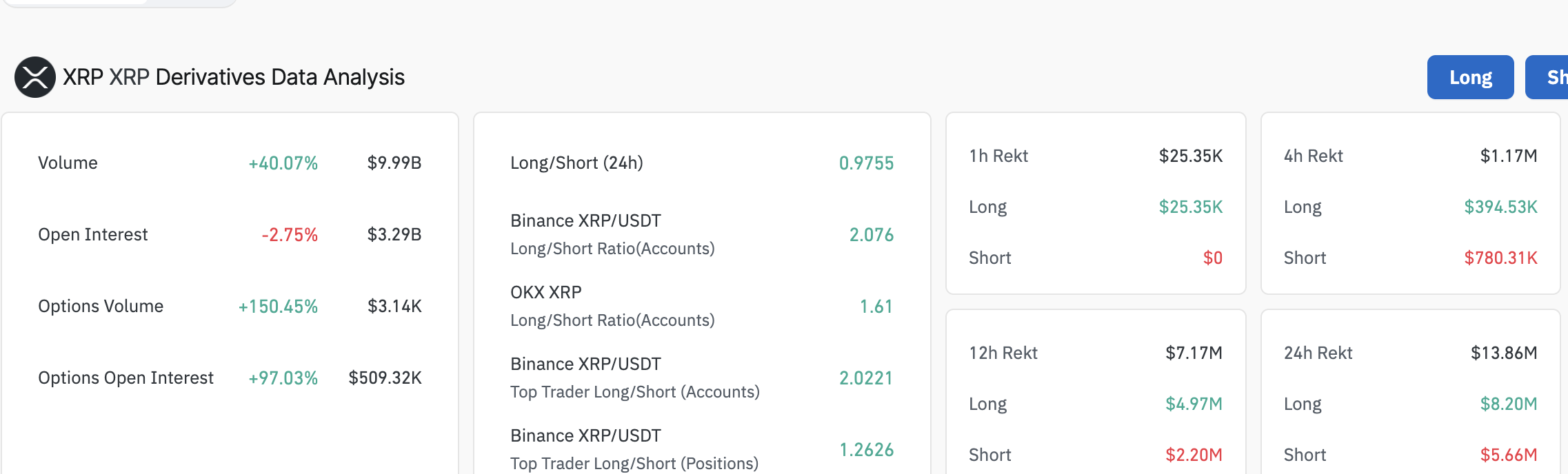
On the other hand, traders must be cautious not to overexpose their capital, considering the drop in the derivatives’ Open Interest (OI) by 2.75% in the last 24 hours to $3.29 billion. A 40% drop in volume to $9.99 billion in the same timeframe could mean that existing positions are closed significantly, dampening bullish momentum.

XRP derivatives data | Source: Coinglass

Liquidations hit $13.86 million in the last 24 hours, with long positions being the hardest hit at $8.2 million amid $5.66 million in short positions. As the price increases, long position holders may choose to take profit, reducing their exposure. Moreover, a decline in OI suggests that traders lack the conviction to open new positions.

Cryptocurrency prices FAQs


Source link

14 04, 2025

Platinum price is waiting for surpassing the obstacle– Forecast today – 14-4-2025

By |2025-04-14T11:50:07+02:00April 14, 2025|Forex News, News|0 Comments


No news for Platinum price by its repeated fluctuations below the obstacle at $950.00, which forces it to provide weak sideways trading, delaying the waited bullish rally.


Note that stochastic attempt to reach the overbought level supports the chances for gaining positive momentum, to keep waiting for breaching the current obstacle to ease achieving the extra gains, which are located near $963.00 and$976.00, while the failure of the breach will confirm the domination of the sideways scenario, with a chance for retesting the initial support at $920.00 before any attempt to reach the previously suggested targets.


The expected trading range for today is between $935.00 and $963.00


Trend forecast: Bullish


Source link

14 04, 2025

Euro holds ground despite overbought conditions

By |2025-04-14T11:48:50+02:00April 14, 2025|Forex News, News|0 Comments

  • EUR/USD stays in positive territory near 1.1400 on Monday.
  • The near-term technical outlook points to overbought conditions for the pair.
  • The US Dollar struggles to rebound despite easing trade tensions.

EUR/USD gained more than 3.5% in the previous week and touched its highest level in over three years above 1.1470 on Friday. Following a technical correction heading into the weekend, the pair started the week slightly lower but didn’t have a difficult time regaining its traction. At the time of press, EUR/USD was trading in positive territory at around 1.1400.

Euro PRICE Last 7 days

The table below shows the percentage change of Euro (EUR) against listed major currencies last 7 days. Euro was the strongest against the US Dollar.

USD EUR GBP JPY CAD AUD NZD CHF
USD -3.87% -2.28% -1.76% -3.00% -4.73% -5.24% -4.55%
EUR 3.87% 1.94% 2.82% 1.54% -0.96% -0.80% -0.09%
GBP 2.28% -1.94% -0.41% -0.39% -2.85% -2.70% -2.00%
JPY 1.76% -2.82% 0.41% -1.22% -2.08% -2.33% -2.50%
CAD 3.00% -1.54% 0.39% 1.22% -2.13% -2.31% -1.87%
AUD 4.73% 0.96% 2.85% 2.08% 2.13% 0.16% 0.87%
NZD 5.24% 0.80% 2.70% 2.33% 2.31% -0.16% 0.72%
CHF 4.55% 0.09% 2.00% 2.50% 1.87% -0.87% -0.72%

The heat map shows percentage changes of major currencies against each other. The base currency is picked from the left column, while the quote currency is picked from the top row. For example, if you pick the Euro from the left column and move along the horizontal line to the US Dollar, the percentage change displayed in the box will represent EUR (base)/USD (quote).

Although easing tensions surrounding the US-China trade conflict seems to be helping the market mood improve at the beginning of the week, the US Dollar (USD) finds it difficult to attract buyers.

US President Donald Trump’s administration granted some technology imports, including smartphones, computers, laptops and disc drives, exemptions from the steep 125% additional tariffs imposed on China. These products will reportedly still be subject to the 20% existing tariffs, which were imposed initially because of the fentanyl crisis in the US.

Over the weekend, US Commerce Secretary Howard Lutnick said that technology imports, alongside semiconductors, will face separate new levies within the next two months.

Reflecting the positive shift in risk sentiment, US stock index futures rise between 0.9% and 1.8% in the European morning.

The economic calendar will not feature any high-tier data releases on Monday. Later in the American session, several Federal Reserve (Fed) policymakers will be delivering speeches. The CME FedWatch Tool shows that markets are currently pricing in about a 20% probability of a 25 basis points Fed rate cut at the May policy meeting. In case Fed officials reiterate the need to remain patient regarding policy-easing, the USD could stay resilient against its peers and limit EUR/USD’s upside.

EUR/USD Technical Analysis

The Relative Strength Index (RSI) indicator on the 4-hour chart holds above 70, suggesting that EUR/USD remains technically overbought.

In case EUR/USD stabilizes above 1.1400 (psychological level, static level), 1.1470 (static level) could be seen as next resistance before 1.1500 (round level). Looking south, first support could be spotted at 1.1340 (static level) ahead of 1.1300 (static level, round level) and 1.1250 (static level).

Euro FAQs

The Euro is the currency for the 19 European Union countries that belong to the Eurozone. It is the second most heavily traded currency in the world behind the US Dollar. In 2022, it accounted for 31% of all foreign exchange transactions, with an average daily turnover of over $2.2 trillion a day.
EUR/USD is the most heavily traded currency pair in the world, accounting for an estimated 30% off all transactions, followed by EUR/JPY (4%), EUR/GBP (3%) and EUR/AUD (2%).

The European Central Bank (ECB) in Frankfurt, Germany, is the reserve bank for the Eurozone. The ECB sets interest rates and manages monetary policy.
The ECB’s primary mandate is to maintain price stability, which means either controlling inflation or stimulating growth. Its primary tool is the raising or lowering of interest rates. Relatively high interest rates – or the expectation of higher rates – will usually benefit the Euro and vice versa.
The ECB Governing Council makes monetary policy decisions at meetings held eight times a year. Decisions are made by heads of the Eurozone national banks and six permanent members, including the President of the ECB, Christine Lagarde.

Eurozone inflation data, measured by the Harmonized Index of Consumer Prices (HICP), is an important econometric for the Euro. If inflation rises more than expected, especially if above the ECB’s 2% target, it obliges the ECB to raise interest rates to bring it back under control.
Relatively high interest rates compared to its counterparts will usually benefit the Euro, as it makes the region more attractive as a place for global investors to park their money.

Data releases gauge the health of the economy and can impact on the Euro. Indicators such as GDP, Manufacturing and Services PMIs, employment, and consumer sentiment surveys can all influence the direction of the single currency.
A strong economy is good for the Euro. Not only does it attract more foreign investment but it may encourage the ECB to put up interest rates, which will directly strengthen the Euro. Otherwise, if economic data is weak, the Euro is likely to fall.
Economic data for the four largest economies in the euro area (Germany, France, Italy and Spain) are especially significant, as they account for 75% of the Eurozone’s economy.

Another significant data release for the Euro is the Trade Balance. This indicator measures the difference between what a country earns from its exports and what it spends on imports over a given period.
If a country produces highly sought after exports then its currency will gain in value purely from the extra demand created from foreign buyers seeking to purchase these goods. Therefore, a positive net Trade Balance strengthens a currency and vice versa for a negative balance.

Source link

14 04, 2025

Tea Market Size, Share | CAGR of 6.8%

By |2025-04-14T11:45:37+02:00April 14, 2025|Dietary Supplements News, News|0 Comments


Report Overview

Global Tea Market is expected to be worth around USD 88.6 billion by 2034, up from USD 45.9 billion in 2024, and grow at a CAGR of 6.8% from 2025 to 2034. Rising consumption and cultural preference drive tea demand across Asia-Pacific 41.3%, holding market leadersh

Tea is a natural beverage made by steeping the processed leaves of the Camellia sinensis plant in hot water. It has been consumed for centuries for its calming properties, cultural value, and health benefits. Depending on how it’s processed, tea can be classified into green, black, oolong, white, or fermented varieties, each with its own flavor and antioxidant profile. It’s enjoyed both hot and cold, often with regional variations in preparation.

Tea Market Size, Share | CAGR of 6.8%

The tea market refers to the global industry focused on the cultivation, processing, packaging, distribution, and sale of tea in various forms. It includes loose-leaf tea, tea bags, instant tea, ready-to-drink products, and flavored blends. This market connects rural tea-growing regions with urban consumers across the world, bridging tradition and innovation through retail chains, cafés, and online platforms.

A major growth factor is increasing awareness about tea’s health benefits. More people are switching from sugary beverages to herbal tea and green teas due to their antioxidant and anti-inflammatory properties. This wellness shift is fueling demand in both developed and developing nations, especially among younger consumers looking for healthier lifestyle choices.

The Tea Development & Promotion Scheme has been launched with a total budget of ₹664.09 crore to support the overall growth of India’s tea industry. This scheme is designed to cover the entire value chain—from cultivation and processing to branding and marketing—ensuring a comprehensive “field to cup” approach.

A key focus of the scheme is the promotion of Indian teas, especially premium varieties like Darjeeling and other Geographical Indication (GI)-certified teas. For this, ₹72.42 crore has been specifically allocated to enhance the visibility of these teas in global markets through targeted export promotion activities. .

Key Takeaways

  • Global Tea Market is expected to be worth around USD 88.6 billion by 2034, up from USD 45.9 billion in 2024, and grow at a CAGR of 6.8% from 2025 to 2034.
  • In the Tea Market, Black Tea led the type segment with a strong 44.3% share.
  • Tea Bags dominated the product form in the Tea Market, capturing a 43.3% share globally.
  • The Tea Market saw 67.3% of sales coming from the Conventional category in 2024.
  • Hypermarkets and Supermarkets held a 36.4% distribution share in the global Tea Market segment.
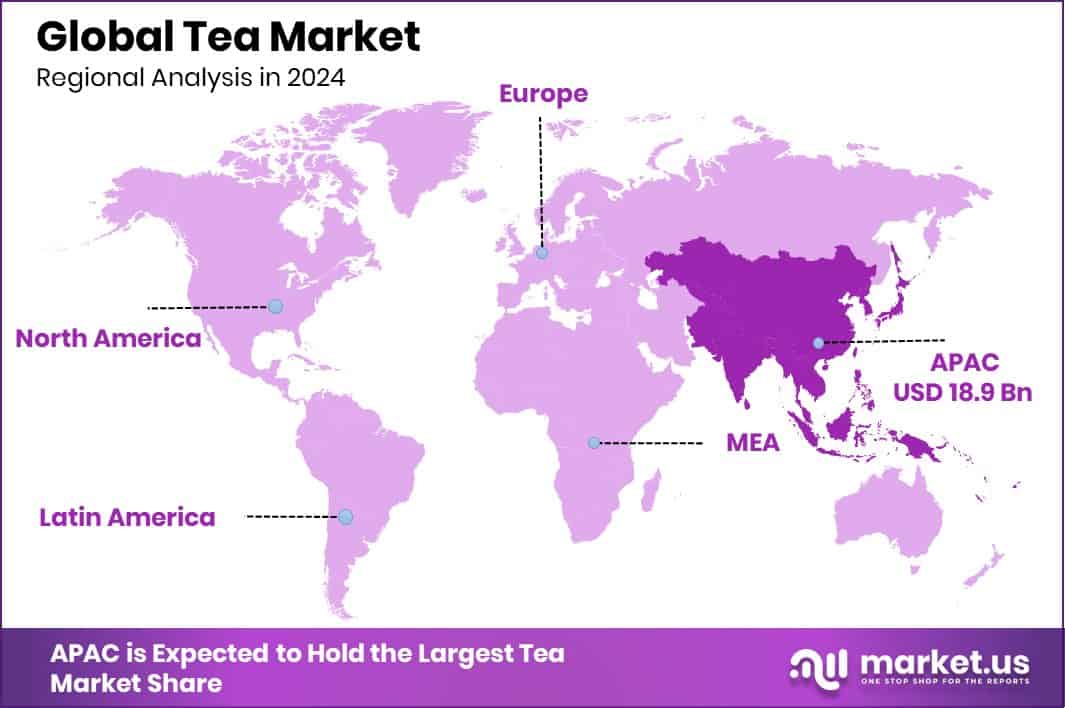
  • The Asia-Pacific tea market reached a value of USD 18.9 Bn in 2024.

By Type Analysis

In Tea Market, Black Tea holds a 44.3% share, showing strong global consumer preference.

In 2024, Black Tea held a dominant market position in the By Type segment of the Tea Market, with a 44.3% share. This leadership can be attributed to its widespread global acceptance, bold flavor profile, and cultural integration in major tea-consuming countries. Black tea continues to be a staple in daily consumption patterns, especially in regions with traditional tea-drinking habits.

Its longer shelf life compared to green or herbal variants also contributes to its popularity in retail and export markets. Additionally, its use in blended and flavored formats, such as masala chai and iced teas, supports demand across both traditional and contemporary beverage formats.

Consumer loyalty towards black tea remains strong, particularly in regions where it is consumed as part of daily routines. Moreover, its cost-effectiveness and ease of preparation make it a preferred choice for households, foodservice chains, and institutional buyers.

Although other varieties like green and herbal teas are rising in popularity due to health trends, black tea continues to retain its dominance due to its rich taste, caffeine content, and pairing flexibility with milk or spices.

By Product Form Analysis

Tea Market sees Tea Bags dominate with a 43.3% share due to ease and convenience.

In 2024, Tea Bags held a dominant market position in the by-product form segment of the Tea Market, with a 43.3% share. This segment continues to lead due to its high convenience, portion control, and widespread availability across retail shelves. Tea bags offer a mess-free brewing experience, making them ideal for both home and office consumption. Their compact packaging also supports easy storage and transportation, increasing their appeal among urban consumers with fast-paced lifestyles.

The popularity of tea bags is further driven by their affordability and suitability for single-serve preparation. Consumers value the consistency in flavor and strength they offer, along with the reduced preparation time compared to loose-leaf variants. Innovations in biodegradable and eco-friendly tea bag materials are also helping brands address sustainability concerns without compromising user experience. The format is especially favored in developed markets where consumers prioritize convenience and hygiene.

Tea bags are also a preferred format for flavored and herbal blends, enabling companies to experiment with ingredients while maintaining quality and shelf stability. Their dominance reflects a balanced mix of tradition and innovation, making them a reliable choice across both mass-market and premium tea categories. This consistent demand secures their leadership in the product form segment.

By Category Analysis

Conventional tea leads the Tea Market category with a 67.3% share, reflecting traditional buying habits.

In 2024, Conventional held a dominant market position in the By Category segment of the Tea Market, with a 43.3% share. This segment continues to outperform due to its widespread availability, lower pricing, and strong consumer familiarity.

Conventional tea is deeply embedded in the daily routines of consumers across regions, particularly in price-sensitive markets where affordability plays a crucial role in purchasing decisions. Its broad distribution across supermarkets, local retailers, and food service outlets also supports higher volume sales.

The consistent taste profile and long-standing consumer trust in conventional tea products further boost their dominance. Unlike organic tea, which often comes at a premium, conventional tea offers budget-friendly options for everyday consumption. It is commonly available in bulk formats, tea bags, and ready-to-drink variants, catering to a wide demographic base.

Additionally, the conventional segment benefits from economies of scale in both production and distribution, allowing for greater market penetration. Although demand for organic and specialty teas is rising, particularly in urban and health-conscious consumer groups, conventional tea maintains a firm hold in the mainstream market.

By Distribution Channel Analysis

Hypermarkets/Supermarkets drive the Tea Market distribution, capturing a 36.4% share through mass retail availability.

In 2024, Hypermarkets/Supermarkets held a dominant market position in the By Distribution Channel segment of the Tea Market, with a 36.4% share. This dominance is driven by the widespread accessibility, organized retail infrastructure, and extensive shelf space available in these outlets. Consumers prefer purchasing tea from hypermarkets and supermarkets due to the ability to compare various brands, packaging formats, and pricing in a single visit.

The segment benefits from strong consumer footfall, especially in urban and semi-urban areas where weekly or monthly grocery shopping is common. Hypermarkets and supermarkets ensure greater product visibility and also serve as prime locations for promotional campaigns and in-store tastings, which help influence buying decisions. Additionally, their partnerships with both domestic and international tea brands allow them to maintain a wide and diverse product range.

This retail format also supports impulse purchases and introduces consumers to newer product lines like flavored, herbal, or ready-to-drink teas. While online and convenience store sales are growing, the structured layout, direct product experience, and price transparency in supermarkets continue to make them the most preferred channel in the tea market’s distribution segment.

Tea Market ShareTea Market Share

Key Market Segments

By Type

  • Black Tea
  • Green Tea
  • Oolong Tea
  • White Tea
  • Herbal Tea
  • Others

By Product Form

  • Loose Tea
  • Tea Bags
  • Instant Tea
  • Compressed Tea

By Category

  • Conventional
  • VSS compliant
  • Potentially VSS Compliant

By Distribution Channel

  • Hypermarkets/Supermarkets
  • Convenience Stores
  • Specialty Stores
  • Online
  • Others

Driving Factors

Health Awareness is Boosting Global Tea Demand

A major driving factor in the tea market is rising health awareness. People are becoming more mindful of what they consume and are switching from sugary drinks to healthier options like green, herbal tea and black tea.

Tea is known for its antioxidants, anti-inflammatory compounds, and natural calming effects, which attract health-conscious consumers. Many choose tea to support digestion, weight loss, and stress relief.

With increasing lifestyle diseases and focus on wellness, tea fits into daily routines without being too expensive. This shift is strong in both developed and developing countries, as tea is widely available and offers a natural health boost. The demand for low-calorie, plant-based beverages is helping tea grow fast.

Restraining Factors

Fluctuating Climate Conditions Impact Tea Production

One major challenge in the tea market is unstable weather patterns. Tea plants are very sensitive to climate, needing specific rainfall and temperatures to grow well. But with increasing droughts, floods, and unpredictable seasons, tea plantations are facing serious risks.

When growing conditions are poor, the quality and quantity of tea leaves drop, which raises costs for producers. Some regions even report declining yields year after year.

This directly affects supply chains and can lead to higher prices for consumers. Farmers may also face income losses, making it harder for them to sustain production. As climate change worsens, the tea market will need to find solutions to protect crops and maintain a consistent supply.

Growth Opportunity

Rising Demand for Organic and Premium Teas

A key growth opportunity in the tea market is the rising demand for organic and premium-quality teas. More consumers now prefer clean-label and chemical-free products that are ethically sourced and environmentally friendly.

Organic teas, free from pesticides and artificial flavors, are gaining popularity among health-conscious buyers. Premium blends, including handpicked leaves, rare herbs, or exotic infusions, also appeal to tea lovers willing to pay extra for better taste and quality.

This shift is especially strong in urban areas, where people are open to trying new flavors and care about the origin of what they drink. Brands that focus on transparency, sustainability, and unique offerings can grow quickly in this high-value segment.

Latest Trends

Functional Teas Gain Popularity Among Consumers

In 2025, a notable trend in the tea market is the growing consumer interest in functional teas. These are teas enhanced with ingredients that offer specific health benefits, such as boosting immunity, aiding digestion, or promoting relaxation. The shift toward health and wellness has led consumers to seek beverages that not only taste good but also contribute to their overall well-being. Functional teas often incorporate herbs, vitamins, and natural compounds known for their therapeutic properties.

This trend reflects a broader movement towards preventive health measures and natural remedies. As awareness of the health benefits associated with certain tea ingredients grows, the demand for functional teas is expected to continue rising, offering opportunities for innovation in product development and marketing strategies.

Regional Analysis

Asia-Pacific led the tea market in 2024 with a 41.3% share dominance.

In 2024, Asia-Pacific dominated the global tea market, accounting for 41.3% of the total share, with a market valuation of USD 18.9 billion. This stronghold is attributed to the region’s deep-rooted tea culture, especially in countries like China, India, and Japan, where daily consumption is significantly high. The region benefits from both strong domestic demand and large-scale production capacities.

In contrast, Europe holds a substantial share due to the rising preference for specialty and herbal teas among health-conscious consumers. North America is witnessing steady growth, driven by the increasing demand for organic and ready-to-drink (RTD) tea products. The Middle East & Africa market is gradually expanding as tea becomes a staple beverage in countries like Egypt and the UAE, with consumption rising across various demographics.

Meanwhile, Latin America is showing moderate growth supported by the rising adoption of iced teas and flavored variants among younger consumers. Across all regions, evolving consumer preferences and innovation in flavors and packaging are reshaping retail strategies and boosting market penetration.
Tea Market RegionTea Market Region

Key Regions and Countries

  • North America
  • Europe
    • Germany
    • France
    • The UK
    • Spain
    • Italy
    • Rest of Europe
  • Asia Pacific
    • China
    • Japan
    • South Korea
    • India
    • Australia
    • Rest of APAC
  • Latin America
    • Brazil
    • Mexico
    • Rest of Latin America
  • Middle East & Africa
    • GCC
    • South Africa
    • Rest of MEA

Key Players Analysis

​In 2024, the global tea market experienced significant growth driven by health-conscious consumers and a shift toward premium and organic products. Key players like Tata Consumer Products, Unilever PLC, and Associated British Foods plc (ABF) played pivotal roles in shaping market dynamics.​

Tata Consumer Products leveraged its strong presence in emerging markets, particularly India, to expand its wellness-oriented portfolio. The introduction of products like Tata Tea Tulsi Green and Tata Tea Gold Care catered to the growing demand for health-centric beverages. Additionally, the reformulation of Tetley Green Tea with added Vitamin C highlighted Tata’s commitment to functional beverages. This strategic focus on health and wellness positioned Tata favorably in the competitive landscape.

Unilever PLC, through its extensive brand portfolio, including Lipton and Pukka Herbs, capitalized on the rising demand for organic and specialty teas. The company’s emphasis on sustainability and ethical sourcing resonated with environmentally conscious consumers. Unilever’s global reach and investment in digital marketing further strengthened its market position, allowing it to tap into diverse consumer segments.

Associated British Foods plc (ABF), owner of Twinings, maintained its premium brand image by focusing on high-quality blends and innovative flavors. ABF’s commitment to sustainability and ethical sourcing practices appealed to a growing segment of consumers valuing transparency and responsibility.

Top Key Players in the Market

  • Tata Consumer Products 
  • Unilever PLC
  • Associated British Foods plc
  • Twinings
  • Apeejay Surrendra Group
  • Celestial Seasonings, Inc.
  • Bettys & Taylors Group Ltd.
  • The Republic of Tea
  • Bigelow Tea Company
  • Reily Foods Company
  • Gujarat Tea Processors and Packers Limited
  • Finlays
  • Mcleod Russel
  • Future Generation Co. Ltd
  • Vinatea
  • Other Key Players

Recent Developments

  • In February 2024, Hain Celestial initiated the “Hain Reimagined” program, aiming to focus on five key areas: Snacks, Baby & Kids, Beverages, Meal Preparation, and Personal Care. This strategic initiative is designed to streamline operations and invest in growth opportunities across these categories.
  • In January 2024, Tata Consumer Products signed agreements to acquire up to 100% of Organic India, a brand known for its organic teas and herbal supplements. This move aims to strengthen Tata’s presence in the health and wellness segment, leveraging Organic India’s strong farmer network and certified organic supply chain.

Report Scope


Source link

14 04, 2025

Here Are Top News and XRP Price Predictions for the Previous Week

By |2025-04-14T11:42:47+02:00April 14, 2025|Crypto News, News|0 Comments

The previous week in the crypto industry saw major reports surrounding XRP and bullish developments related to the coin.

Although the price of XRP has been slow to react to these developments, proponents remain hopeful that the token’s future is bright and that higher prices will eventually emerge.

Major XRP Development from Ripple’s Lawsuit

One of the most pivotal XRP-related events from last week was the agreement between Ripple and the SEC to pause their appeal processes. Both parties are now pursuing agreeable settlement terms.

Notably, Ripple has negotiated reduced fines from the SEC as well as the lifting of its ban on future XRP sales to institutions. While the agency has temporarily agreed to this request, the agreement is still subject to a vote from the SEC commissioners.

Final approval would end the nearly five-year-long lawsuit, an outcome many see as highly bullish for XRP.

Ripple’s Biggest Deal Ever and What It Means for XRP

Beyond legal developments, XRP also experienced a major milestone on the partnership front last week. The most significant of these was Ripple’s announcement of its largest acquisition to date: the purchase of Hidden Road for $1.25 billion.

Ripple’s Chief Technology Officer, David Schwartz, confirmed that the acquisition would significantly benefit XRP’s blockchain, the XRP Ledger (XRPL), and, by extension, its native token, XRP.

Some analysts have speculated that this development could allow the XRP Ledger to handle $1.5 trillion in annual transaction volume. Such a high level of capital flow through XRPL is viewed as highly bullish for the XRP coin.

Interestingly, XRP enthusiasts have highlighted Ripple CEO Brad Garlinghouse’s comment that the deal could help financial institutions like BlackRock enter the crypto space more easily. His mention of BlackRock sparked speculation about a potential partnership.

XRP ETF Debut

Additionally, an XRP ETF debuted in the U.S. market last week with significant momentum. Notably, this was the XXRP, a 2x leveraged ETF by Teucrium. On its first day of trading, it recorded a massive $5.4 million turnover, even in a largely bearish market. This figure was four times higher than that of a Solana ETF on its debut day.

This impressive ETF launch attracted industry-wide attention, with many interpreting it as further confirmation that demand for XRP products in the U.S. is underestimated. Commentators like John Deaton used the moment to suggest that XRP could rise in value to become the second-largest cryptocurrency after Bitcoin.

Bold Price Prediction from a Multinational Bank

Also last week, the XRP community welcomed bold price predictions from Standard Chartered, a multinational bank. Notably, the bank projected that XRP could reach $5.50 in 2025, which would mark a new all-time high. Looking further ahead, the bank forecasted that XRP could surpass $12 by 2028.

DisClamier: This content is informational and should not be considered financial advice. The views expressed in this article may include the author’s personal opinions and do not reflect The Crypto Basic opinion. Readers are encouraged to do thorough research before making any investment decisions. The Crypto Basic is not responsible for any financial losses.

Source link

14 04, 2025

How Blockchain Technology Can Bridge the Digital Divide

By |2025-06-27T16:03:21+03:00April 14, 2025|Featured Articles, Guest Post|0 Comments

30 seconds summary

  • Blockchain technology can help bridge the digital divide by providing decentralized access to financial services, identity verification, and secure data sharing—especially in underserved or remote areas.
  • It removes the need for intermediaries, enabling people without traditional bank accounts or government-issued IDs to participate in the digital economy.
  • Through transparent, low-cost systems, blockchain can empower communities with tools for education, healthcare, and governance, fostering greater digital inclusion and economic opportunity.

How Blockchain Technology Can Bridge the Digital Divide


The digital divide refers to the growing gap between those who have ready access to modern information and communication technology and those who do not. This divide encompasses differences in internet access, technological infrastructure, digital literacy, and access to digital tools and services. While the problem has been long-standing, it has become even more apparent with the advent of digital transformation in nearly every sector — from education to finance to healthcare.

In this context, blockchain technology emerges as a potentially transformative force that can help bridge this divide. Often associated with cryptocurrencies, blockchain is a decentralized and secure digital ledger that can record transactions and data in a transparent and immutable manner. But beyond digital currencies, blockchain holds promise for inclusive, decentralized systems that can democratize access to services and knowledge. This essay explores how blockchain can bridge the digital divide, improve digital inclusion, and empower underserved communities worldwide.

Understanding the Digital Divide

The digital divide is not just about the availability of hardware or internet connections; it’s about inequitable access to the opportunities the digital world offers. This includes education, financial services, government services, employment opportunities, and more.

Key factors contributing to the digital divide include:

  1. Geographical location – Rural and remote regions often lack basic digital infrastructure.
  2. Economic disparities – Low-income households cannot afford devices or stable internet.
  3. Educational inequality – Lack of exposure to digital tools results in low digital literacy.
  4. Language barriers – Many digital tools are not localized for global languages.
  5. Gender and cultural norms – In some areas, women and marginalized groups are discouraged from using technology.

These gaps mean that millions are excluded from the digital economy, limiting their socio-economic development. Blockchain technology offers innovative solutions to address these challenges.

What is Blockchain Technology?

At its core, blockchain is a distributed ledger technology (DLT) that allows data to be stored across a network of computers, making it virtually tamper-proof. Each block in the chain contains data, a timestamp, and a cryptographic hash of the previous block, linking them securely.

Key characteristics of blockchain include:

  • Decentralization: No single point of control.
  • Transparency: All transactions are visible to participants.
  • Security: Cryptographic principles ensure data integrity.
  • Immutability: Once entered, data cannot be changed.

These characteristics allow for trustless systems, meaning people can transact and interact securely without relying on central authorities.

1. Financial Inclusion Through Blockchain

One of the most immediate ways blockchain helps bridge the digital divide is through financial inclusion.

Over 1.4 billion people globally are unbanked, primarily in developing regions. Many of these individuals lack access to traditional banking due to lack of documentation, poor infrastructure, or distrust in institutions.

Blockchain-based Solutions:

  • Cryptocurrencies like Bitcoin and Ethereum provide decentralized financial tools that can be accessed via mobile phones.
  • Decentralized Finance (DeFi) allows people to lend, borrow, and earn interest without a bank.
  • Stablecoins, pegged to fiat currencies, offer a stable medium of exchange for those in hyperinflationary economies.
  • Cross-border payments using blockchain are faster and cheaper, benefitting migrant workers and their families.

Example: In Kenya, BitPesa (now AZA Finance) allows users to send and receive money internationally using blockchain, bypassing expensive remittance services.

2. Digital Identity for the Undocumented

Nearly 1 billion people globally lack a formal identity. Without it, they can’t open bank accounts, receive government aid, enroll in school, or vote.

Blockchain and Self-Sovereign Identity (SSI):

Blockchain enables self-sovereign identities — digital IDs that individual’s control. These IDs are:

  • Secure and private
  • Portable across borders
  • Verifiable by third parties

Projects like ID2020 and uPort are already working with governments and NGOs to provide blockchain-based digital IDs for refugees and undocumented individuals.

Example: The World Food Programme’s Building Blocks project uses blockchain to manage and verify aid distribution to Syrian refugees, many of whom lack formal identification.

3. Education and Digital Literacy Support

Education is a foundational tool in bridging the digital divide. However, many regions lack schools, teachers, or learning resources. Blockchain can support decentralized education platforms that are accessible, transparent, and verifiable.

Blockchain for Education:

  • Credential Verification: Students can store academic records on blockchain, which can be verified globally without fear of tampering.
  • Micro-credentials and MOOCs: Learners can earn verified certificates for online courses, which employers can trust.
  • Transparent Funding: Blockchain ensures that educational aid and grants reach intended recipients without corruption.

Moreover, blockchain initiatives can directly support digital literacy support programs. By creating incentive-based learning environments, blockchain can reward users for completing modules, participating in online forums, or contributing educational content.

Example: Platforms like BitDegree integrate blockchain and gamification to teach coding and digital skills while offering cryptocurrency rewards.

4. Agricultural and Land Ownership Transparency

In many parts of the world, farmers lack legal ownership of their land or face disputes due to corrupt land registries. Blockchain can store land titles immutably, ensuring transparent and secure property rights.

Benefits include:

  • Reducing land disputes
  • Enabling landowners to use their property as collateral
  • Encouraging investment in rural areas

Example: Propy and Bitland are using blockchain to record land ownership in countries like Ghana and Ukraine.

For agriculture, blockchain also helps in supply chain transparency, allowing farmers to trace products, access fair pricing, and reduce exploitation by intermediaries.

5. Decentralized Internet and Connectivity

While blockchain itself does not provide internet, it can support decentralized infrastructure projects aiming to make connectivity more accessible.

Key Initiatives:

  • Helium Network: A blockchain-powered wireless network that rewards users for sharing bandwidth using tokens.
  • RightMesh: A mesh networking solution that allows devices to connect without centralized infrastructure, ideal for remote areas.

Such initiatives could help bring affordable connectivity to off-grid communities, a necessary step in closing the digital divide.

6. Transparent Governance and Anti-Corruption

Corruption is a major barrier to development in many countries. Aid and resources often fail to reach those in need due to opaque systems.

Blockchain’s transparency can:

  • Ensure fair distribution of aid and subsidies
  • Prevent fraud in public procurement
  • Enable secure, transparent elections
  • Track government expenditures in real-time

Example: In Sierra Leone, blockchain was used in a pilot election project to improve transparency and trust in voting outcomes.

When citizens can trust digital systems and participate in governance, it strengthens democracy and civic engagement — key components in overcoming the digital divide.

7. Employment and Gig Economy Access

The gig economy offers new employment opportunities, especially for youth and freelancers. However, traditional platforms charge high fees and require formal documentation.

Blockchain-based marketplaces can:

  • Connect workers directly to employers
  • Use smart contracts for fair payment
  • Store work history and ratings on-chain

Platforms like Ethlance and Braintrust allow users to earn crypto for freelance work. This model empowers people in underdeveloped areas to participate in the global economy without intermediaries.

8. Health Access and Data Ownership

Access to quality healthcare is limited in many parts of the world. Blockchain can support:

  • Medical record sharing across borders securely
  • Telemedicine platforms with patient-controlled data
  • Vaccination and outbreak tracking

Blockchain also empowers patients with control over their health data, a shift from the centralized systems that often exclude rural or undocumented populations.

Example: Estonia uses blockchain to secure the health records of its citizens, offering a model for digital health access globally.

Challenges and Considerations

While the potential is immense, blockchain is not a silver bullet. Several challenges must be addressed:

  1. Energy consumption: Some blockchains (e.g., Bitcoin) are energy-intensive.
  2. Usability: Many platforms are not user-friendly, especially for low-literacy populations.
  3. Regulation: Legal uncertainty can stifle innovation or lead to misuse.
  4. Access to devices: Blockchain still requires smartphones or computers.
  5. Digital literacy: Users need education to navigate blockchain tools safely.

This is where digital literacy support becomes critical. Governments, NGOs, and private sectors must collaborate to educate users, simplify interfaces, and offer multilingual platforms.

The Role of Policy and Partnerships

To ensure blockchain fulfills its promise, policymakers must:

  • Promote open-source and inclusive blockchain projects
  • Support digital infrastructure development
  • Provide digital ID frameworks
  • Encourage public-private partnerships for scale

Meanwhile, global institutions like the UN, World Bank, and regional development banks can fund and pilot blockchain programs tailored to underserved communities.

Conclusion

Blockchain technology offers a path to a more equitable digital world. From financial inclusion to education, governance to identity, it can empower individuals who have long been excluded from traditional systems. While not without challenges, blockchain’s decentralized nature aligns with the principles of access, transparency, and user empowerment — all essential to closing the digital divide.

However, technology alone is not enough. Success will depend on thoughtful implementation, community engagement, robust digital literacy support, and a commitment to equity. If embraced responsibly, blockchain can be a bridge — not a barrier — to a connected, inclusive digital future.

14 04, 2025

Bancor Network (BNT) – Carbon DeFi Stream

By |2025-04-14T10:01:34+02:00April 14, 2025|News, NFT News|0 Comments


Bancor’s Carbon DeFi Stream is a significant event because it touches on a DeFi sector now gaining traction. With real-time interactions from the COTI community, it’s a chance to influence market sentiment around BNT. If new functionalities or partnerships are announced, it could stimulate investor interest and push BNT’s price upward. However, failure to impress during the stream might lead to stagnation or decline. Investors should watch for reactions from key market participants during this event. source


Source link

14 04, 2025

GBP/JPY Forecast Today 14/04: Key Levels Ahead (Chart)

By |2025-04-14T09:47:35+02:00April 14, 2025|Forex News, News|0 Comments

  • The British pound initially fell against the Japanese yen during trading on Friday, only to turn around and show signs of life, as the market has seen quite a bit of volatility.
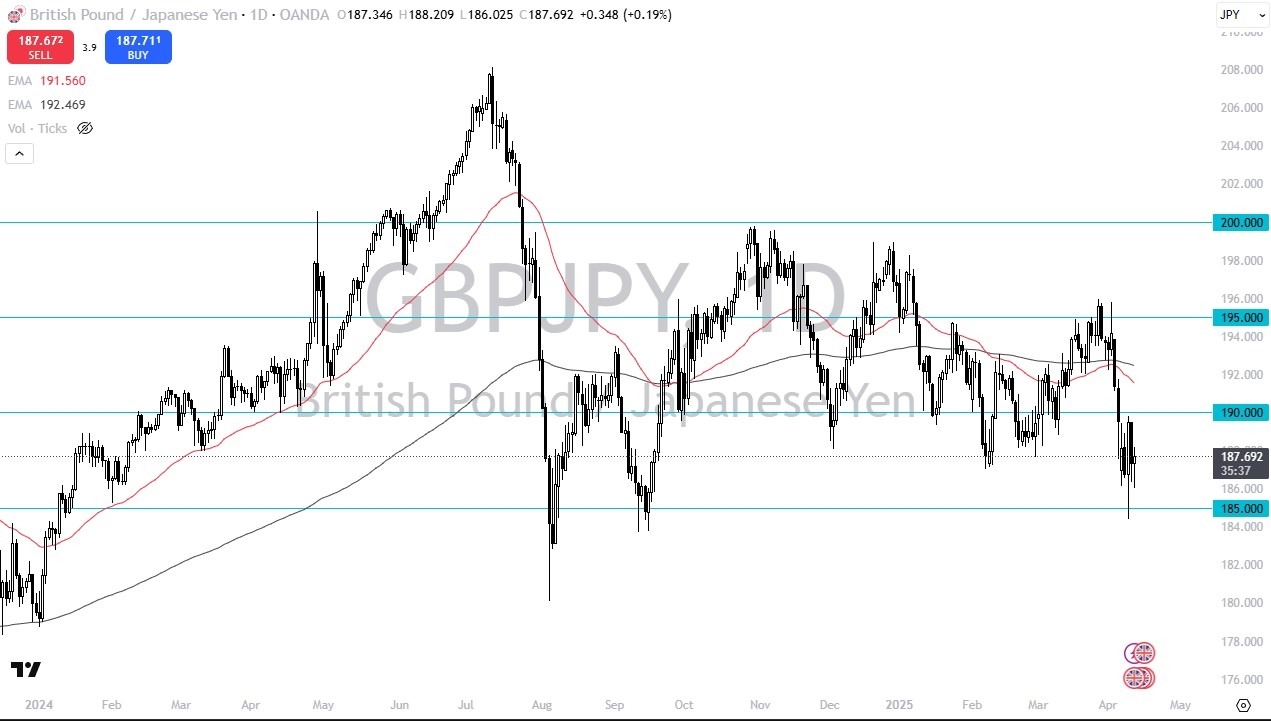
  • At this point in time, the GBP/JPY pair continues to look at the ¥187 level.
  • With that being said, the market is likely to continue to be very noisy, but I do think that the ¥185 level will be important, as it has been important multiple times in the past, and I think that will be the way forward at this juncture. As long as we can stay above there, then I think the British pound has a chance to turn things around and show signs of life.

Technical Analysis

This is a market that I think given enough time we will have to sort out what was to do next, but in the meantime, I think we should probably look at this as being in the middle of a consolidation pattern, with the ¥185 level on the bottom in the ¥190 level on the top. As we are basically hanging around the ¥187.50 level, we are essentially in the middle of this range, and therefore you can make an argument that we are basically at “fair value.”

If we were to break above the ¥190 level, then I think we have a real shot at this pair going much higher, perhaps to the ¥195 level, and also I think you could see the Japanese yen get hammered against most currencies, not just this one. On the other hand, if this pair were to break down below the ¥185 level, then there’s a real shot that the Japanese yen strengthens against almost everything else as well. At this point, it seems like it’s all about the Japanese yen and the safety trade, which of course the Japanese yen is considered to be a “safety currency.” Until things settle down, it’s probably somewhat sluggish to the upside.

Begin trading our daily forecasts and analysis. Here is a list of Forex brokers in Japan to work with.

Source link

14 04, 2025

Heavy Whale Accumulation Suggests We Could See $3 For XRP In April

By |2025-04-14T09:41:38+02:00April 14, 2025|Crypto News, News|0 Comments

The XRP price prediction has entered another bullish frontier with the recent correction away from the bear that has plagued the market in the last few months. Opinion polls suggest the XRP price prediction could be more appropriately pegged at $3 before the end of April. However, while the new prediction stands on a bullish path, the market’s response has not been strong enough to warrant a quick pump.

In another light, the projected XRP price of $3 currently constitutes a 42% Pump from its current price. But as investors continue to search for other coins with surge potential, there is a new PayFi coin that analysts believe could see 100x following a market surge this year.

Why XRP Price Prediction Suggests $3 In April

XRP has continued to join the list of the top-performing coins in the last few months, posting a 500% pump in a run that lasted until January this year. However, with the market going bearish, the XRP price prediction, which was mostly bullish earlier in the year, has been bearish. The drop in the price also follows the rise in panic selling from holders and investors.

However, the recent response to the Trump tariff pause has seen bull activity return to the market. This has triggered a lot of buying, showing that the price could resume a bullish breakout. Furthermore, according to a Crypto Feednews analysis, the SEC appeal to pause their case against Ripple Lab is another factor that could add to the bullish outlook.

Technical Analysis Shows XRP On A Breakout

There has been rising analysis, with results pointing to a bullish breakout for Ripple’s price this month. While the crypto feednews analysis does not suggest a direct price on its XRP price prediction, it shows the coin. The analysis shows that the price has already broken its resistance. This points to a bullish potential for the XRP price to find new support, making the $3 range a much likely zone to settle this April.

As the selling pressure continues to drop, investors have returned to buying the dip, which is now creating a bullish pattern for the Ripple coin. However, the whole arrangement on the XRP price chart requires the coin to hold strong to the current zone to create a strong zone that other traders can trust.

Here Is Why Remittix 100x Potentials Is Growing Stronger This April

While the Remittix token has continued its presale rounds in the last few months, these last few weeks have seen the coin achieve a new record. The Remittix ICO has crossed the $14.4M mark, showing the growing interest in this new token from investors across the world. Furthermore, the buying pressure hitting the presale has now seen the ICO sell over 560,000,000 tokens from the 700,00,000, signaling that the presale could be ending soon.

AD 4nXcGU9FUWWuiyjdCIjqQHXVdEjLL5VscTbD3jGZW1R9oM5BKDVnFicuc4aodgnUmM35AX7qqM1z0DRmOi2VERnxCTswm72mqjZgAD 4nXcGU9FUWWuiyjdCIjqQHXVdEjLL5VscTbD3jGZW1R9oM5BKDVnFicuc4aodgnUmM35AX7qqM1z0DRmOi2VERnxCTswm72mqjZg

However, one of the fundamental factors that has continued to help the Remittix token hit this rising trust from investors is its surge potential attached to real-world use cases. The Remittix exchange is a next-level crypto trading platform introducing a new solution that is revolutionising crypto payments.

The solution helps users convert and send crypto as a FIAT currency to any bank worldwide. This means the exchange solution can now help crypto users make crypto a part of their everyday spending.

This solution has continued gathering new followers, helping the Remittix token sell out fast. With just about 150,000,000 tokens remaining missing, buy the Remittix token today, or you could see yourself miss out on this high-value token. Analysts predict the coin could hit 100x before December, making Remittix one of the best crypto to start buying now. 

Find out more information about the Remittix presale using the links below.

Website: https://remittix.io/ 

Socials: https://linktr.ee/remittix

Source link

Go to Top