About Editorial team of BIPNs

Main team of content of bipns.com. Any type of content should be approved by us.
4 02, 2026

Posts modest gains near 183.50, further consolidation cannot be ruled out

By |2026-02-04T08:19:36+02:00February 4, 2026|Forex News, News|0 Comments

The EUR/JPY cross posts modest gains near 183.50 during the early European session on Tuesday. The Euro (EUR) edges higher against the Japanese Yen (JPY) as the European Central Bank (ECB) is expected to maintain its current policy through 2026, while the Bank of Japan (BoJ) faces reduced urgency for further rate hikes following a sharp drop in Tokyo CPI inflation in January. 

Furthermore, Japanese Prime Minister Sanae Takaichi has called for a snap general election on February 8. Political uncertainty in Japan and expectations of Takaichi’s reflationary policies could weigh on the JPY and create a tailwind for the cross.

On the other hand, the upside for EUR/JPY might be limited amid potential intervention from Japanese authorities. Japan’s Finance Minister Satsuki Katayama stated on Tuesday that she will continue to closely coordinate with US authorities as needed, based on a joint Japan and US statement issued in September last year, and respond appropriately. 

Technical Analysis:

In the daily chart, EUR/JPY holds above the 100-day EMA, underscoring a still-positive medium-term bias. Price consolidates around the 20-day SMA at 184.00, and a close back above this pivot could restore topside momentum. RSI at 49.22 sits near neutral, confirming the recent loss of impulse.

Bollinger Bands are starting to narrow, with the pair holding below the middle band, pointing to reduced volatility and a mild downward skew. The upper band at 185.80 caps rallies, while the lower band at 182.20 supports. A topside break would open room for continuation, whereas a close beneath support would turn focus to the rising 100-day EMA at 180.08.

(The technical analysis of this story was written with the help of an AI tool.)

Japanese Yen FAQs

The Japanese Yen (JPY) is one of the world’s most traded currencies. Its value is broadly determined by the performance of the Japanese economy, but more specifically by the Bank of Japan’s policy, the differential between Japanese and US bond yields, or risk sentiment among traders, among other factors.

One of the Bank of Japan’s mandates is currency control, so its moves are key for the Yen. The BoJ has directly intervened in currency markets sometimes, generally to lower the value of the Yen, although it refrains from doing it often due to political concerns of its main trading partners. The BoJ ultra-loose monetary policy between 2013 and 2024 caused the Yen to depreciate against its main currency peers due to an increasing policy divergence between the Bank of Japan and other main central banks. More recently, the gradually unwinding of this ultra-loose policy has given some support to the Yen.

Over the last decade, the BoJ’s stance of sticking to ultra-loose monetary policy has led to a widening policy divergence with other central banks, particularly with the US Federal Reserve. This supported a widening of the differential between the 10-year US and Japanese bonds, which favored the US Dollar against the Japanese Yen. The BoJ decision in 2024 to gradually abandon the ultra-loose policy, coupled with interest-rate cuts in other major central banks, is narrowing this differential.

The Japanese Yen is often seen as a safe-haven investment. This means that in times of market stress, investors are more likely to put their money in the Japanese currency due to its supposed reliability and stability. Turbulent times are likely to strengthen the Yen’s value against other currencies seen as more risky to invest in.

Source link

4 02, 2026

Bank of America’s Ominous Bearish Signal as Option Flow Shifts Dramatically

By |2026-02-04T04:19:04+02:00February 4, 2026|Forex News, News|0 Comments

BitcoinWorld

EUR/GBP Forecast: Bank of America’s Ominous Bearish Signal as Option Flow Shifts Dramatically

Quantitative analysts at Bank of America have issued a significant bearish signal for the EUR/GBP currency pair, marking a notable shift in institutional positioning and market sentiment for early 2025. This development emerges as option flow data reveals substantial changes in derivatives market activity, potentially foreshadowing directional moves in one of Europe’s most closely watched currency crosses.

EUR/GBP Technical Analysis Reveals Bearish Momentum

Bank of America’s quantitative research team has identified multiple concerning signals within the EUR/GBP technical structure. The currency pair recently broke below its 200-day moving average, a critical long-term support level that had held firm throughout much of 2024. Furthermore, momentum indicators including the Relative Strength Index (RSI) and Moving Average Convergence Divergence (MACD) have entered bearish territory, confirming the weakening technical picture.

Historical data analysis reveals that similar technical breakdowns in the past have preceded sustained directional moves. The current price action suggests potential support levels at 0.8400 and 0.8320, with resistance now established at the previous support-turned-resistance level of 0.8520. Market participants should monitor these levels closely for confirmation of the bearish thesis.

Option Flow Data Signals Institutional Positioning Shift

Derivatives market activity provides compelling evidence supporting the bearish outlook. Recent option flow data shows a notable increase in put option volume for EUR/GBP, particularly in the 1-3 month expiration range. This indicates institutional investors are increasingly hedging against or positioning for euro weakness relative to the British pound.

The put-call ratio, a key sentiment indicator, has shifted decisively in favor of puts, reaching levels not seen since the third quarter of 2023. Additionally, volatility skew analysis reveals higher implied volatility for downside protection, suggesting options traders are pricing in greater risk of euro depreciation than appreciation in the coming months.

Quantitative Models and Historical Precedents

Bank of America’s quantitative models incorporate multiple data streams beyond traditional technical analysis. These models analyze:

  • Cross-asset correlations with European and UK equity markets
  • Interest rate differentials between the European Central Bank and Bank of England
  • Macroeconomic surprise indices for the Eurozone and United Kingdom
  • Positioning data from CFTC commitment of traders reports

Historical analysis shows that when these quantitative indicators align in their current configuration, the EUR/GBP has experienced directional moves averaging 3-5% over the subsequent three-month period. The current signal strength ranks in the 85th percentile of historical observations, suggesting above-average conviction in the bearish outlook.

Fundamental Drivers Behind the Currency Pair Movement

Several fundamental factors contribute to the evolving EUR/GBP dynamic. The European Central Bank maintains a relatively dovish stance compared to the Bank of England, creating interest rate differentials that favor sterling. Additionally, economic growth projections for 2025 show the UK economy potentially outperforming the Eurozone, particularly in services and technology sectors.

Political developments also influence the currency pair. Upcoming European Parliament elections and ongoing trade negotiations create uncertainty for the euro, while UK economic policy appears increasingly stable following post-Brexit adjustments. These factors combine to create fundamental headwinds for EUR/GBP in the medium term.

Comparative Analysis with Other Major Currency Pairs

Currency Pair Current Trend Institutional Sentiment Key Driver
EUR/GBP Bearish Increasingly Negative Interest Rate Differentials
EUR/USD Neutral to Bearish Mixed Fed vs ECB Policy
GBP/USD Bullish Positive UK Economic Resilience

This comparative analysis reveals that EUR/GBP represents one of the clearest directional plays among major currency pairs, according to institutional positioning data. The divergence between euro and pound sentiment has widened significantly in recent weeks, creating potential trading opportunities for informed market participants.

Market Impact and Trading Implications

The bearish signal from Bank of America’s quantitative team carries significant implications for various market participants. Currency traders may consider adjusting their EUR/GBP exposure, while multinational corporations with euro-pound currency risk should review their hedging strategies. Portfolio managers with European equity exposure might evaluate currency-hedged positions to mitigate potential translation losses.

Historical volatility patterns suggest that currency pairs experiencing similar quantitative signals have shown increased volatility in the 30-60 days following the signal. Market participants should therefore prepare for potentially larger daily moves and consider appropriate position sizing and risk management strategies.

Conclusion

Bank of America’s quantitative analysis presents a compelling bearish case for EUR/GBP, supported by shifting option flow data, technical breakdowns, and fundamental divergences. The convergence of these factors suggests potential euro weakness against sterling in the coming months. While currency markets remain inherently unpredictable, the weight of quantitative evidence warrants careful consideration by all EUR/GBP market participants as they navigate the evolving 2025 currency landscape.

FAQs

Q1: What specific option flow changes triggered Bank of America’s bearish signal?
The analysis identified increased put option volume, particularly in 1-3 month expiries, and a significant shift in the put-call ratio favoring downside protection. These changes suggest institutional investors are increasingly positioning for or hedging against euro weakness.

Q2: How reliable are quantitative signals for currency pair forecasting?
Quantitative models have demonstrated varying reliability depending on market conditions. Bank of America’s models show approximately 65-70% accuracy for directional signals over three-month horizons when multiple indicators converge, though past performance doesn’t guarantee future results.

Q3: What time horizon does this EUR/GBP forecast cover?
The analysis primarily focuses on the 1-3 month horizon, though some indicators suggest potential trends extending through the first half of 2025. Currency forecasts typically have decreasing accuracy beyond three months due to changing fundamentals.

Q4: How does this analysis compare to other major bank forecasts for EUR/GBP?
Several other institutions have expressed cautious or neutral views, making Bank of America’s bearish stance relatively distinctive. Divergence among analyst views often indicates genuine market uncertainty and potential trading opportunities.

Q5: What key support levels should traders monitor for EUR/GBP?
Technical analysis identifies 0.8400 and 0.8320 as critical support levels. A sustained break below these levels would confirm the bearish technical structure and potentially trigger further selling pressure.

This post EUR/GBP Forecast: Bank of America’s Ominous Bearish Signal as Option Flow Shifts Dramatically first appeared on BitcoinWorld.

Source link

4 02, 2026

Natural gas price today rebounds as weather swings keep traders on edge

By |2026-02-04T00:24:40+02:00February 4, 2026|Forex News, News|0 Comments


New York, February 3, 2026, 13:52 EST — Regular session underway.

  • Natural gas prices held steady following a steep fall in the previous session, as traders adjusted their bets on weather risk.
  • Gas-linked stocks and funds followed the rebound, though the market remained uneasy over supply and demand cues.
  • LNG export headlines and the upcoming U.S. storage report will set the near-term tone.

U.S. natural gas prices climbed Tuesday, with shares of the United States Natural Gas Fund edging higher after a sharp drop the day before linked to warmer forecast updates. March Henry Hub futures gained about 2.6%, settling near $3.32 per million British thermal units (mmBtu). UNG shares rose 1.1% to $12.84 in afternoon trading. EQT Corporation and Cheniere Energy each added roughly 0.7%. (Barchart)

This shift is crucial as the gas market struggles to stabilize following a period of sharp, volatile moves. Weather models have regained their role as the key driver, and the tape remains unforgiving.

A Reuters report on Monday highlighted that rising output and demand are expected to ease later in February, despite the country facing another cold snap. LSEG put Lower 48 production at 106.6 billion cubic feet per day (bcfd) in early February, while projecting total demand—including exports—to drop from 159.3 bcfd this week to 147.1 bcfd next week. It also flagged near-record 30-day close-to-close volatility and noted Waha Hub cash prices slipping below zero again amid pipeline bottlenecks in the Permian Basin. (BOE Report)

Fuel challenges remained in the spotlight in the power market. PJM Interconnection projected generation outages of 25.72 gigawatts for Tuesday, rising sharply from Monday’s 19.96 GW. At the same time, eastern gas prices in Pennsylvania dropped to $3.79 per mmBtu for Tuesday delivery, down from $5.69 on Monday, according to Reuters. (Reuters)

Liquefied natural gas — LNG, chilled for shipment — has shifted recently. A January freeze knocked U.S. LNG exports down to 11.3 million metric tons from December’s 11.5 million, Reuters reported. This came after Freeport LNG partly went offline and Kinder Morgan’s Elba Island LNG terminal stopped taking feedgas, tapping rare cargoes from Trinidad and Tobago. (Reuters)

Commonwealth LNG announced Tuesday it signed a 20-year deal to deliver 1 million tonnes per year of LNG to Mercuria Energy Trading S.A., paired with a matching gas supply agreement. “These agreements mark a significant strategic partnership,” said David Lawler. Brian Falik added the deal aligns with Mercuria’s drive for “long-term, reliable LNG supply.” (PR Newswire)

The longer-term narrative centers on demand driven by export projects. Yet, in the near term, the market’s focused on the upcoming forecast update, the next production figures, and if LNG feedgas can withstand colder weather pressures.

The downside risk is straightforward. Should forecasts stay mild and output rebound fully, storage draws might ease, cash prices could weaken, and futures might lose their recent gains. But a new round of freeze-offs would change the game in an instant—the price moves have already proven how quickly that can happen.

Coming up next is the U.S. Energy Information Administration’s weekly natural gas storage report, set for February 5, 2026. This report tends to shake up prices whenever the data catches the market off guard. (Eia)


Source link

4 02, 2026

GBP/USD Forecast: Pound Sterling Steady Near $1.37 Ahead of BoE

By |2026-02-04T00:17:47+02:00February 4, 2026|Forex News, News|0 Comments


– Written by

The Pound to US Dollar exchange rate (GBP/USD) traded sideways on Tuesday, with limited conviction on either side as a partial US government shutdown disrupted the flow of economic data.

At the time of writing, GBP/USD was hovering around $1.3667, little changed from the opening levels of the session.

The US Dollar (USD) struggled to gain momentum after confirmation that January’s key labour market releases would be delayed due to the ongoing government shutdown.

The US Bureau of Labor Statistics confirmed that the non-farm payrolls report and associated employment data will not be published until funding is restored, likely pushing the release into next week at the earliest.

The disruption left USD traders cautious, with many reluctant to take fresh positions amid the lack of timely economic signals.

The Dollar also faced pressure from an improvement in global risk appetite, following President Donald Trump’s decision to lift tariffs on India. The easing of trade tensions reduced demand for traditional safe-haven assets, further weighing on the ‘Greenback’.

The Pound (GBP) meanwhile traded steadily, showing resilience against most major counterparts.

Save on Your GBP/USD Transfer

Get better rates and lower fees on your next international money transfer.
Compare TorFX with top UK banks in seconds and see how much you could save.


Compare the Best GBP/USD Rates »

Sterling activity remained subdued as investors positioned ahead of the Bank of England’s upcoming policy decision on Thursday. While interest rates are widely expected to be left unchanged, the recent uptick in UK inflation has prompted speculation that the BoE’s guidance could strike a slightly more hawkish tone.

GBP/USD Forecast: Can US Services PMI Revive the Dollar?

Looking ahead, volatility in the Pound to US Dollar exchange rate could pick up following the release of the latest ISM services PMI.

If January’s services data mirrors the resilience seen in the manufacturing sector, it could lend the US Dollar support by reinforcing expectations that the Federal Reserve will delay rate cuts well into 2026.

Attention will also turn to the UK’s final services PMI. Confirmation that activity expanded to a fresh 21-month high at the start of the year may offer the Pound some modest support, although markets are likely to remain sensitive to broader risk sentiment and US political developments.

Like this piece? Please share with your friends and colleagues:


International Money Transfer? Ask our resident FX expert a money transfer question or try John’s new, free, no-obligation personal service! ,where he helps every step of the way,
ensuring you get the best exchange rates on your currency requirements.

TAGS: Pound Dollar Forecasts

Source link

3 02, 2026

XAU/USD nears $5,000 on lingering political woes

By |2026-02-03T20:23:39+02:00February 3, 2026|Forex News, News|0 Comments


XAU/USD Current price: $4,955

  • A partial US government shutdown interrupts the release of employment data.
  • US President Donald Trump announced a trade deal with India, reducing tariffs.
  • XAU/USD aims to resume its haven rally, $5,000 under assault.

Spot Gold managed to recover ground after falling sharply for two days in a row, trading well above the $4,900 mark in the American session on Tuesday. The US Dollar (USD) lost its recent momentum, although losses against other currencies are limited.

Market participants paused their early optimism amid fresh waves of uncertainty. On the one hand, the United States (US) Bureau of Labor Statistics (BLS) announced on Monday that it will not be publishing the usual employment reports given the US government’s partial shutdown. That means the BLS skipped publishing the JOLTS Job Openings report and will not release weekly employment figures or the January Nonfarm Payrolls (NFP) report on Friday.

On the other hand, trade tensions returned. The European Union signed a trade deal with India last week, prompting US President Donald Trump to announce a trade agreement with the Asian country. The new deal includes reduced tariffs from 25% to 18%, and India’s oil purchases to both the US and Venezuela, the latter in the hands of Trump.

Finally, market participants seem to be taking back bets that the upcoming US Federal Reserve (Fed) Chair, Kevin Warsh, will be utterly hawkish, as Trump demands. Indeed, Warsh has advocated for lower rates in the last few months, arguing that tech progress will boost growth without triggering worrisome inflation.

Ultimately, concerns remain the same, resulting in increased haven demand.

XAU/USD short-term technical outlook

From a technical point of view, the 4-hour chart for the XAU/USD pair shows it recovered above all its moving averages, currently struggling around a 20-period Simple Moving Average (SMA), the latter at $4,922. The 100-period and 200-period SMAs head modestly higher at $4,869 and $4,649, respectively. At the same time, the Momentum indicator resumed its advance but remains right below its midline, while the Relative Strength Index (RSI) indicator hovers at around 50, neutral, not enough to confirm another leg north.

In the daily chart, XAU/USD seems poised to extend its current recovery. The pair surged above all its moving averages, with the 20-day SMA climbing above the longer ones and currently at $4,802.57. At the same time, the technical indicators have bounced from around their midlines, with the RSI indicator currently at 56 and aiming north. A sustained advance pushing Gold through $5,000 is likely to anticipate a steeper upside extension.

(The technical analysis of this story was written with the help of an AI tool.)


Source link

3 02, 2026

USD/JPY Forecast 03/02:US Dollar Continues to Creep

By |2026-02-03T20:16:42+02:00February 3, 2026|Forex News, News|0 Comments

The US dollar continues to see a lot of noise, as traders have recently tried to push the Federal Reserve into perceived rate cuts coming quickly. This is something the trading community has been wrong about for some side.

USD/JPY

The US dollar has risen slightly against the Japanese yen, gaining about 0.5% during the trading session on Monday as we are now threatening the 50-day EMA.

Quite frankly, I think the bulk of traders out there got caught on the wrong side of the Federal Reserve guestimate of the month. We’ve seen this multiple times previously where the market starts getting hyper-excited about the idea of interest rate cuts. While we do see them recently, the reality is they’re not going to be as quick as people think.

Furthermore, it’s not as if the Federal Reserve balance sheet is going to suddenly explode. The nominee, Kevin Warsh, is somebody who’s been a little bit hawkish over the longer term, so he probably brings a little bit of uncertainty to traders instead of the prayers of loose monetary policy that we’ve seen over the last couple of years that the market’s consistently gotten wrong.

Bank of Japan Constraints

On the other side of this equation, we have the Bank of Japan, which really can’t raise rates much, if at all, because they have too much debt. So, with all of that being said, I do think we eventually creep our way back towards the 158-yen level again, collecting swap along the way.

I like the idea of buying dips; I don’t necessarily want to chase this trade. But you’ve been watching me for months be bullish on this pair despite the fact that we saw some type of intervention. The reality is, it looks like we’re going to try to make our way back up to this battlefield again.

Want to trade our USD/JPY forex analysis and predictions? Here’s a list of forex brokers in Japan to check out.

Christopher Lewis has been trading Forex and has over 20 years experience in financial markets. Chris has been a regular contributor to Daily Forex since the early days of the site. He writes about Forex for several online publications, including FX Empire, Investing.com, and his own site, aptly named The Trader Guy. Chris favours technical analysis methods to identify his trades and likes to trade equity indices and commodities as well as Forex. He favours a longer-term trading style, and his trades often last for days or weeks.

Source link

3 02, 2026

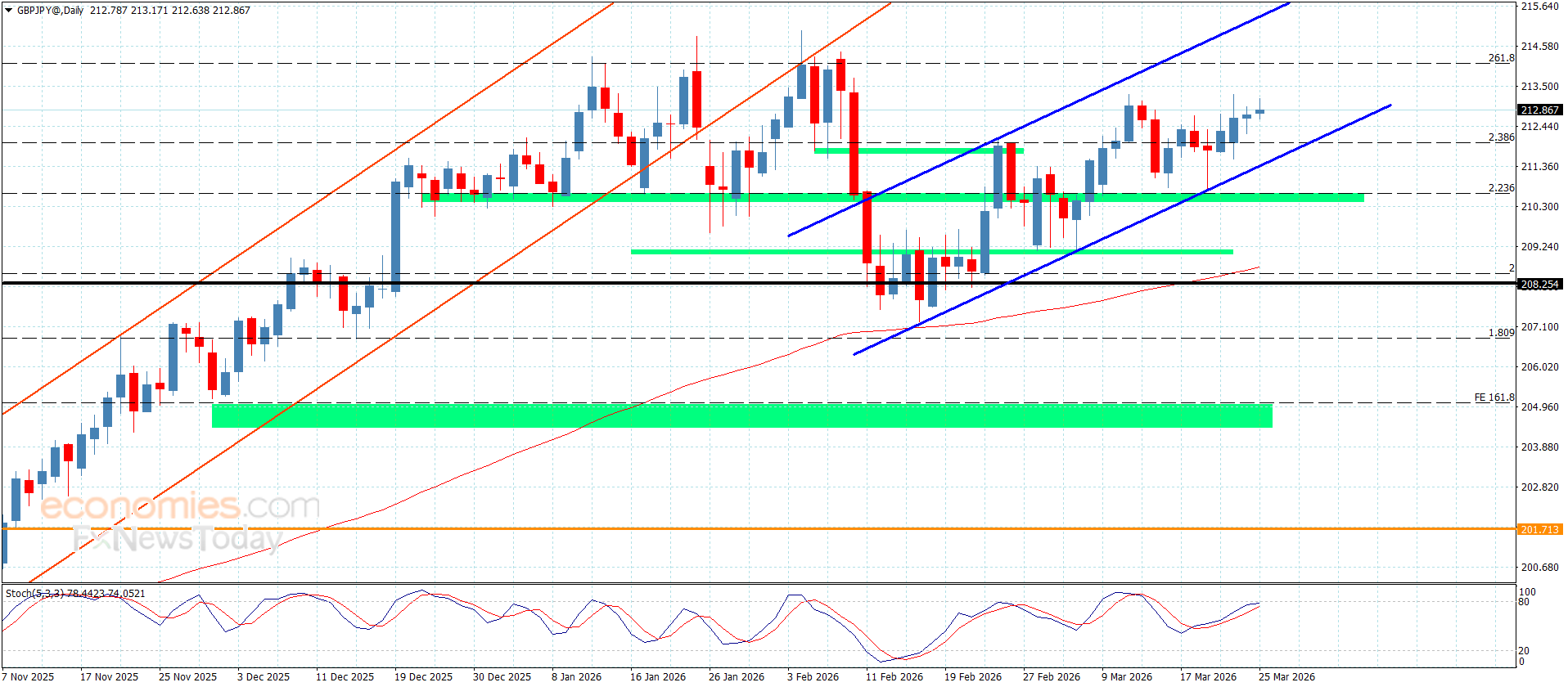
The GBPJPY faces strong barrier– Forecast today – 3-2-2026

By |2026-02-03T16:22:49+02:00February 3, 2026|Forex News, News|0 Comments


Copper price activated with the temporary negative pressures yesterday, forming more corrective waves, hitting the previously waited target at $5.5100, facing an important support to bounce higher towards $5.8500.


The stability above $5.5100 level confirms the continuation of the bullish scenario, therefore, we will keep waiting for gathering extra bullish momentum, to ease the mission of its rally towards $59700, to press on the resistance at $6.2000.


The expected trading range for today is between $5.7100 and $6.0000


Trend forecast: Bullish


Source link

3 02, 2026

EUR/USD Forecast Today 02/02Euro Falls Again on Monday

By |2026-02-03T16:15:48+02:00February 3, 2026|Forex News, News|0 Comments

The euro did try to rally a little bit during the early hours here on Monday but simply cannot hang onto gains at the moment as the Federal Reserve Chairman nominee has the markets rethinking things.

EUR/USD

The euro did try to rally a little bit during the early hours here on Monday but then turned around to show signs of weakness as we are testing the 1.18 level, an area that is going to be important for our next move.

The 1.18 level is an area that I think a lot of people will be watching and with that being said I think this is a market that is going to continue to play based on the central banks around the world specifically the European Central Bank which is doing nothing and then the Federal Reserve which of course has just got itself back into the headlines due to Kevin Warsh being nominated.

Central Bank Impact and Technical Levels

That’s a little bit more conservative than I think people thought was going to be the case. With that there is some doubt as to how many Federal Reserve rate cuts there are going to be and with that I think we have to look at this as a market so that if it breaks down below the 1.18 level we could be re-entering consolidation. This would be typical euro/dollar behavior to be honest.

If we turn around and take out the 1.1875 level above, then I think you have a real shot at this market rallying perhaps to the 1.20 level followed by the 1.23 level which is what the implied move from the consolidation range suggests.

Lots of things are going on and then on top of that we have the employment figures later this week.

Ready to trade our EUR/USD analysis and predictions? Here are the best European brokers to choose from.

Christopher Lewis has been trading Forex and has over 20 years experience in financial markets. Chris has been a regular contributor to Daily Forex since the early days of the site. He writes about Forex for several online publications, including FX Empire, Investing.com, and his own site, aptly named The Trader Guy. Chris favours technical analysis methods to identify his trades and likes to trade equity indices and commodities as well as Forex. He favours a longer-term trading style, and his trades often last for days or weeks.

Source link

3 02, 2026

XAG/USD trades around $82.00 after paring recent gains

By |2026-02-03T12:21:42+02:00February 3, 2026|Forex News, News|0 Comments


Silver price (XAG/USD) rebounded during Asian trading on Tuesday, recovering from losses exceeding 32% over the prior two sessions to trade near $81.90 per troy ounce. The non-yielding metal had slumped after US President Donald Trump nominated Kevin Warsh as the next Federal Reserve Chair, a move markets viewed as signaling a more disciplined and cautious stance on monetary easing. The drop was amplified by a swift unwinding of speculative positions by Chinese investors, though the same group could support prices again if dip-buying emerges.

The grey metal surged to a record high of $121.66 on January 29, driven by elevated geopolitical and economic uncertainty, currency debasement concerns, and fears over the Federal Reserve’s independence, which had previously fueled strong safe-haven demand.

A structural supply deficit in the Silver market, combined with rising investment inflows, especially from Chinese speculators, further fueled the rally.

Easing geopolitical tensions weighed on safe-haven demand for Silver, as the US and Iran held weekend talks, with President Donald Trump expressing hope for a deal despite Supreme Leader Ayatollah Ali Khamenei warning that a US attack could spark a broader regional conflict.

Silver also softened amid cautious Fed commentary. St. Louis Fed President Alberto Musalem said further rate cuts are unnecessary, calling the 3.50%–3.75% policy range broadly neutral, while Atlanta Fed President Raphael Bostic urged patience, stressing policy should remain somewhat restrictive.

Silver FAQs

Silver is a precious metal highly traded among investors. It has been historically used as a store of value and a medium of exchange. Although less popular than Gold, traders may turn to Silver to diversify their investment portfolio, for its intrinsic value or as a potential hedge during high-inflation periods. Investors can buy physical Silver, in coins or in bars, or trade it through vehicles such as Exchange Traded Funds, which track its price on international markets.

Silver prices can move due to a wide range of factors. Geopolitical instability or fears of a deep recession can make Silver price escalate due to its safe-haven status, although to a lesser extent than Gold’s. As a yieldless asset, Silver tends to rise with lower interest rates. Its moves also depend on how the US Dollar (USD) behaves as the asset is priced in dollars (XAG/USD). A strong Dollar tends to keep the price of Silver at bay, whereas a weaker Dollar is likely to propel prices up. Other factors such as investment demand, mining supply – Silver is much more abundant than Gold – and recycling rates can also affect prices.

Silver is widely used in industry, particularly in sectors such as electronics or solar energy, as it has one of the highest electric conductivity of all metals – more than Copper and Gold. A surge in demand can increase prices, while a decline tends to lower them. Dynamics in the US, Chinese and Indian economies can also contribute to price swings: for the US and particularly China, their big industrial sectors use Silver in various processes; in India, consumers’ demand for the precious metal for jewellery also plays a key role in setting prices.

Silver prices tend to follow Gold’s moves. When Gold prices rise, Silver typically follows suit, as their status as safe-haven assets is similar. The Gold/Silver ratio, which shows the number of ounces of Silver needed to equal the value of one ounce of Gold, may help to determine the relative valuation between both metals. Some investors may consider a high ratio as an indicator that Silver is undervalued, or Gold is overvalued. On the contrary, a low ratio might suggest that Gold is undervalued relative to Silver.


Source link

3 02, 2026

The EURJPY fails to surpass the barrier– Forecast today – 3-2-2026

By |2026-02-03T12:14:39+02:00February 3, 2026|Forex News, News|0 Comments

The EURJPY pair failed to breach 184.00 barrier, obstructing the attempts to resume the bullish trend, which forces it to form sideways trading by its fluctuation near 183.55.


Reminding you that the bullish scenario will remain valid by the stability of the trading above the bullish channel’s support at 182.75, confirming the importance of surpassing the barrier, to ease the mission of recording extra gains by its rally towards 184.85 and 185.45, while breaking the bullish channel’s support and holding below it will force it to form strong bearish waves to suffer several losses by reaching 181.50.


The expected trading range for today is between 183.00 and 184.00


Trend forecast: Sideways 


Source link

Go to Top