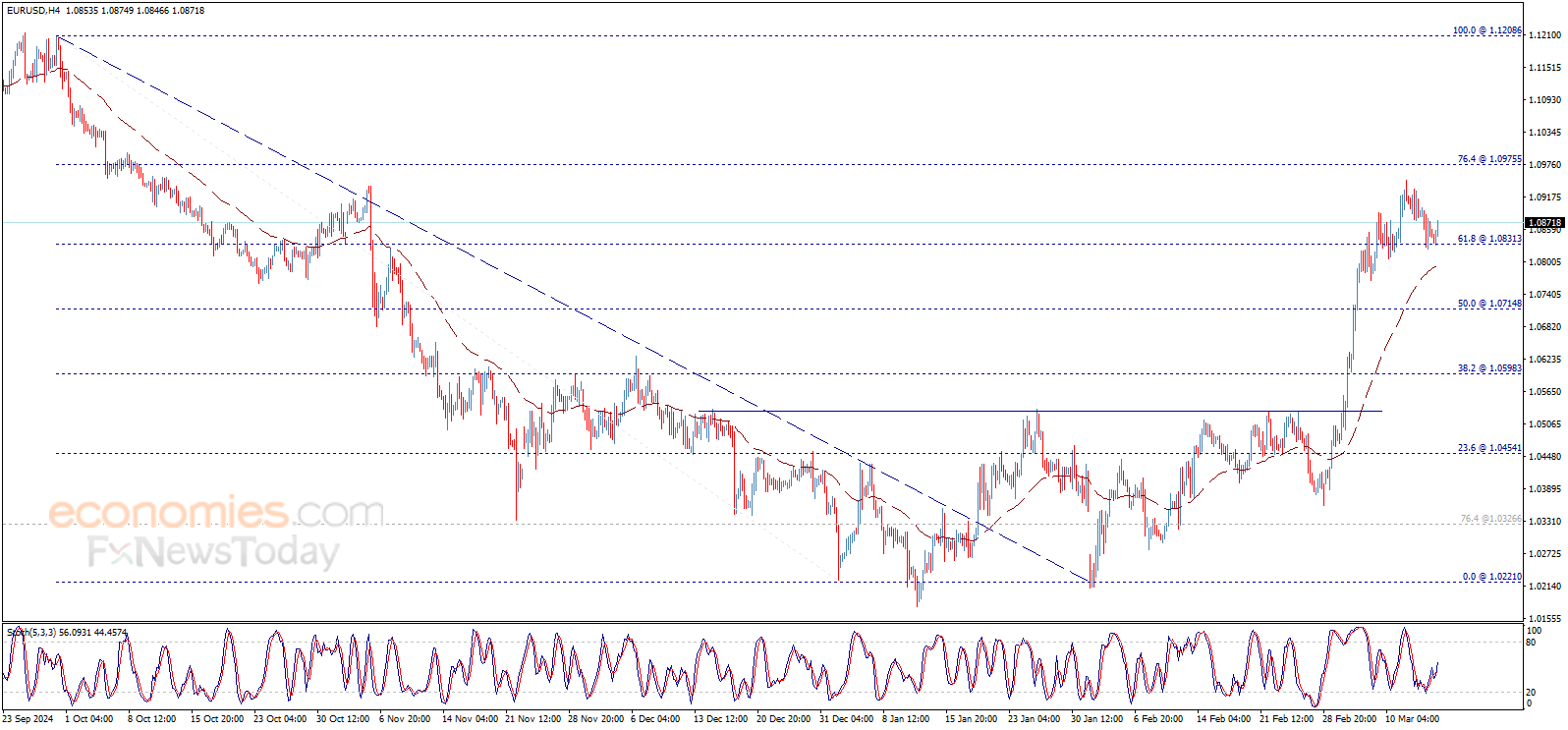
The EURJPY pair formed new decline yesterday to achieve the first negative target at 160.00, forming new additional support line, to push it to form temporary positive rebound and settle near 161.05.
Now, stochastic attempt to provide the negative momentum and the stability of 161.60 barrier allow us to keep the negative overview, waiting to attack 160.00 level again, while breaking it will open the way to target new negative stations that might extend towards 159.30 and 158.85 levels.
The expected trading range for today is between 160.00 and 161.60
The XRP market has been buzzing with new price predictions as analysts forecast a significant price surge in the coming months.
While XRP has struggled to break free from its bearish trend, experts are increasingly optimistic about its performance, pointing to an impending “cycle top” as a potential catalyst for a major rally in XRP price.
Key Resistance Levels and Market Conditions
As XRP holds steady above the $2 mark, investors and analysts are closely monitoring key resistance levels, particularly around $2.20. This level is seen as a critical threshold to determine whether XRP can escape its current stagnation.
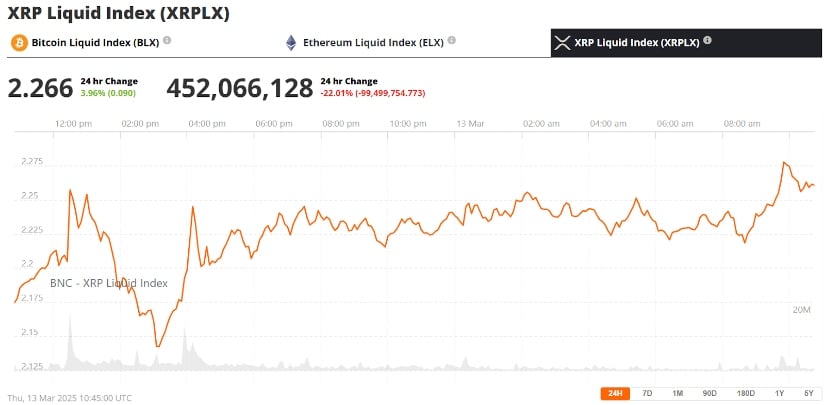
XRP price is holding above the $2.25 support following a fresh bullish momentum. Source: JolieJan on TradingView
On March 11, XRP briefly dipped to $1.89 before reclaiming the $2 threshold. However, investor sentiment remains cautious, as broader market conditions continue to weigh heavily on cryptocurrency prices.
Despite these fluctuations, many still believe that XRP has the potential for significant growth in the near future, especially as some analysts predict that the token could surge beyond its current price levels. As the XRP price moves in tandem with overall market trends, its future performance remains closely tied to ongoing developments in both the crypto space and the ongoing XRP lawsuit with the SEC.
EGRAG Crypto’s Long-Term Outlook
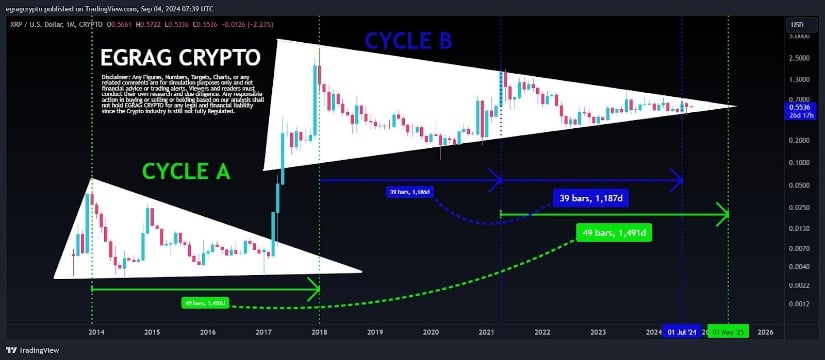
Renowned cryptocurrency analyst EGRAG Crypto has been one of the most prominent voices in XRP’s price prediction. EGRAG recently updated his long-term price model, which now follows a historical pattern known as “Cycle A,” which dates back to the 2014-2018 period. This adjustment suggests that XRP’s price could continue to rise into late 2025, with the cycle potentially peaking in September 2025.
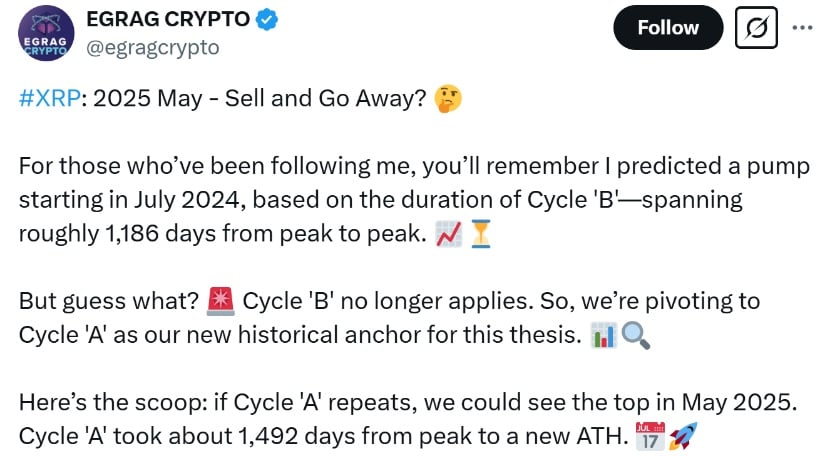
Analyst expects a major price peak for XRP by May 2025, shifting from the previous prediction based on Cycle ‘B’ to Cycle ‘A’ for a new forecast. Source: EGRAG Crypto via X
EGRAG previously speculated that XRP could reach up to $27 at the peak of the cycle. His revised projection sees the token possibly reaching its all-time high (ATH) later than expected, offering an extended period for potential gains. “If Cycle A plays out, we could see the peak in September 2025,” EGRAG stated. His outlook aligns with the broader view that XRP news will continue to drive price momentum as the market evolves.
Analysts now predict XRP’s price surge could peak in May 2025, following the historical pattern of Cycle ‘A,’ replacing the previously anticipated Cycle ‘B. Source: EGRAG Crypto via X
Potential Short-Term Risks for XRP
Despite the optimistic long-term outlook, XRP has short-term challenges. Dom, a well-known crypto analyst, has indicated that unless XRP remains supported above $2.20, it could drop back to lower levels, as low as $1.60. The token’s price has been weighed down by XRP SEC updates and overall market uncertainty, and most investors are holding in the uncertainty.
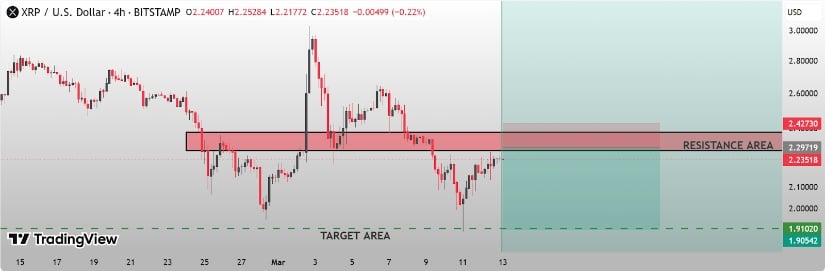
XRP price must break through the immediate resistance around $2.29 to continue its upward rally. Source: Soam_Pro_Trader on TradingView
Technical analysis also shows the potential for further declines. MMBTrader, a TradingView analyst, accurately predicted XRP’s decline to below $2 and now is forecasting a potential crash to $1.50. The reason behind this prediction is the formation of a “Head and Shoulders” pattern on the daily chart, a common indication of a bearish reversal. Still, MMBTrader also offers a counter-argument that if XRP can find support close to $2, a powerful rally could propel the cryptocurrency toward $4 or even $5.
Whale Activity and Market Dynamics
Even amid such turbulent market patterns, whales have been increasingly engaged in the XRP market, buying enormous volumes of XRP tokens. As recently as this week, one whale acquired 167 million XRP tokens at a cost of approximately $368 million when the market fell. Such huge trades signal a ballooning optimism regarding the long-term prospects of XRP, especially with Ripple crypto continuing to attract institutional investors’ interest.
Besides, across the short-term volatility, market forces are supporting future price development. With increasing institutions like Ripple Bank of America still strengthening cooperation, Ripple is certainly going towards a dominant position in worldwide payments.
The Road Ahead for XRP
Looking forward, XRP is at a crossroads. While the road ahead is fraught with volatility, both short-term risks and long-term opportunities are shaping its future. With exchange volume increasing and key developments in the ongoing Ripple lawsuit, the digital asset remains one to watch. Analysts are keenly observing support and resistance levels as indicators of whether XRP will break out or face another downturn.
EGRAG Crypto’s long-term outlook remains positive, particularly as Ripple price USD could see a significant upside. “It’s a choice to be in the next 1%, or end up like the top 1% who got wrecked. My choice is simple – I’m sticking with this generational trade,” EGRAG noted.
As the XRP price prediction plays out, the coming months will be pivotal. Whether XRP USD can achieve the expected surge, or whether broader market conditions and ongoing litigation hinder progress, remains uncertain. Nonetheless, XRP is positioned to play a crucial role in the future of the cryptocurrency market.
Welcome to another edition of Crypto NFT Today! The past two weeks have been full of must-know events that will define the future of blockchain, cryptocurrency, and NFTs.
With Binance token jumping after reports of Trump family discussions, and more, there’s lots of essential news you should know about. So, let’s dive in and see what’s happening!
Binance Token Jumps After Report of Trump Family Discussing Stake
Binance’s BNB token rose 4% on Thursday, bucking the broader crypto downturn, following a Wall Street Journal report that the Trump family has discussed securing a financial stake in the U.S. arm of the exchange.
Such a deal would tie the Trumps to a company that pleaded guilty to violating anti-money laundering laws in 2023.
The report states that Binance first approached Trump allies last year with a proposal to help the struggling exchange regain its footing in the U.S. Meanwhile, Binance founder Changpeng Zhao (CZ) has been seeking a presidential pardon after serving four months in prison for anti-money laundering violations.
MoonPay is further expanding its reach in the enterprise market by acquiring Iron, a stablecoin infrastructure startup focused on API solutions.
This marks MoonPay’s second major acquisition in two months, highlighting its strategy to dominate the growing stablecoin payments sector.
“We believe everyone will eventually have a digital currency wallet, whether through a bank or independently. Our goal is to ensure compatibility with the traditional financial system,” MoonPay Co-Founder and CEO Ivan Soto-Wright told CNBC’s Squawk Box in an exclusive interview.
MoonPay already simplifies entry into the crypto economy by supporting traditional payment methods like debit cards, bank accounts, PayPal, Venmo, Apple Pay, and Google Pay.
Russia Turns to Cryptocurrencies for Oil Trade, Sources Report
Russia is reportedly using cryptocurrencies in its oil trade with China and India to bypass Western sanctions, according to four sources familiar with the matter.
While Russia has publicly supported the use of digital currencies and passed a law last summer permitting crypto payments in international trade, this use in the country’s oil sector has not been previously disclosed.
Some Russian oil companies are using Bitcoin, Ether, and stablecoins like Tether to facilitate the conversion of Chinese yuan and Indian rupees into Russian roubles. This practice is a small but growing segment of Russia’s oil trade, which was valued at $192 billion last year, according to the International Energy Agency.
Barclays on Friday lowered its 2025 Brent oil price forecast by $9 per barrel to $74 per barrel, citing a softer demand outlook amid elevated economic uncertainty.
Brent crude futures were trading around $70 a barrel on Friday, after settling 1.5% lower in the previous session. U.S. West Texas Intermediate crude CL1! was at around $67 a barrel.
“We turn neutral on oil prices relative to the curve and consensus, as we revise down our 2025 demand outlook 510,000 barrels per day due to soft high-frequency indicators and elevated economic uncertainty,” analysts at Barclays said in a note.
“However, we do not turn bearish relative to the curve, as inventories are low and still declining, and risks to the supply outlook are also skewed to the downside, due to price-sensitive producers pulling back and geopolitical tensions,” it said.
The International Energy Agency warned on Thursday that global oil supply could exceed demand by around 600,000 barrels per day this year, due to growth led by the U.S. and weaker-than-expected global demand.
Barclays, which expects U.S. crude output to rise by 200,000 barrels per day by the end of the fourth quarter from the year-earlier period, also lowered its oil demand outlook sharply and now expects growth of 900,000 barrels per day for the full year.
The EURJPY pair formed new decline yesterday to achieve the first negative target at 160.00, forming new additional support line, to push it to form temporary positive rebound and settle near 161.05.
Now, stochastic attempt to provide the negative momentum and the stability of 161.60 barrier allow us to keep the negative overview, waiting to attack 160.00 level again, while breaking it will open the way to target new negative stations that might extend towards 159.30 and 158.85 levels.
The expected trading range for today is between 160.00 and 161.60
Everyone knows protein is essential for a balanced diet – but as protein supplements and protein-enriched products rise in popularity, creating a multi-billion-dollar global industry, 1News digital reporter Emma Hildesley got the scoop on how they work and whether we really need them.
During the throes of Auckland’s epic Covid-19 lockdown in 2021, when the gyms were deserted and many exercise regimes were tossed out the window, I started consistently lifting weights for the first time in my life. I was working out, feeling good, and hungrier than ever.
Protein in the form of a powder is increasingly common. (Source: istock.com)
Every day after our workout, my partner would make himself some kind of protein-packed snack, such as oats or a shake with a scoop of vanilla-flavoured whey protein powder in it. It smelt like ice cream, and my dairy-hating tummy would rumble with envy. It sparked my curiosity, and prompted me to look into plant-based protein powder alternatives for myself.
Protein sources including meat, fish, dairy products, nuts, legumes, and grains. (Source: istock.com)
But while plenty of the foods in our everyday diets contain protein (meat, fish, eggs, dairy, nuts, legumes and soy-based products such as tofu) there’s been a notable push in recent years towards supplementing our diets with intense amounts of protein in the form of powders, gummies, bars and ready-to-drink shakes – thanks in part to social media trends.
Protein is big, big business
The global protein supplement industry is enormous. In 2024 it was worth US$28.15 billion (NZ$49.46 billion). By 2032, it’ predicted to be worth US$55.32 billion ($NZ$97.2 billion).
While a high-protein diet is traditionally associated with meat and eggs, the shift toward more plant-based diets among western cultures hasn’t been excluded from the protein supplement trend. Plant-based protein supplements derived from ingredients such as soy, pea, and rice are a big part of the industry. Typically these products have a higher fibre content than animal alternatives and (tapping into another current dietary buzzword) promise to promote smoother digestion and support a healthy gut microbiome.
Variety of vegan, plant based protein sources including tofu, soy beans, tempeh, green vegetables, nuts, seeds, quinoa, oatmeal and spirulina. (Source: istock.com)
The industry also taps into the low-carb, anti-sugar trends of the past decade or two, with protein once again the dietary hero (as it was before the low-fat, high carb 1980s.)
With all of this push toward protein, it’s no wonder the word is leaping out from the packaging, usually accompanied by adjectives such as “high”, “extra” and “packed” – with a price tag to match. It begs the question: can protein targets be met from food alone? Or could exploring diet supplements be a beneficial, and convenient way to achieve better health?
Women and protein
Women are increasingly being influenced to eat more protein because, among other things, it’s said to help regulate their hormones and play a role in mood and sleep.
Nicki Bezzant, a journalist focusing on diet and health and the author of two books about menopause, says upping protein intake has been trending for a long time. However she’s noticed it has “really ramped up in the last year or so in the social media space in particular”.
And while Bezzant is generally one to call out hype, she doesn’t entirely dismiss the protein push. “We absolutely need to prioritise protein as especially as women, and especially if we’re entering perimenopause or menopause and getting older.”
How much protein do we actually need?
Food researcher and Massey University professor Paul Moughan specialises in mammalian protein metabolism processes.
He says people’s protein needs vary depending on factors like age, activity level, muscle mass, and overall health. Typically, an adequate daily protein intake for an average adult is about 0.8 grams per kilogram of body weight.
Professor Paul Moughan (Source: Riddet Institute )
“If you’re just a regular run-of-the-mill adult who’s not worried about any particular aspect of your life, you’re probably getting enough utilisable protein [from ordinary foods] to meet what you need,” he says. “But if you’re a person trying to lose weight, an elderly person, an elite sports person, or if you’ve had surgery or are critically ill, you may have a different protein requirement”
Moughan says if the goal is to lose weight, “you may want to have a much higher protein intake than normal, because you want to lose fat, you don’t want to lose lean muscle mass.”
He says most people don’t understand that humans don’t actually need protein per se – we need amino acids, which break down to help the body grow and repair. “The amino acids are supplied by proteins, and some proteins are better at supplying the key amino acids than others are. So we can’t just talk about [the amount of] protein, we’ve also got to talk about protein quality.”
“Some of the protein supplements available, things like whey protein isolate for example, they’re very, very high-quality proteins as they provide all of the essential amino acids that we need in highly bioavailable forms and with a plentiful supply.”
Bioavailable means they can be easily absorbed into the blood and used by the body.
“And some of those other [protein sources] like dairy, meat, high-quality soybean, they’re very high-quality proteins, but there’s other proteins, which often may be vegetable protein, that are lower in quality.”
How do we know what’s high-quality?
Current food labelling in New Zealand shows only protein quantity, not quality.
The Digestible Indispensable Amino Acid Score, or DIAAS, is the worldwide gold standard for evaluating protein quality, he says. In this measure, products were given a ‘score’ out of 100% for how consumed amino acids were absorbed and utilised by the body.
“You’ve got a lot of vegetable proteins that have got DIAAS values anywhere between 50% to 80% – so not great – whereas most of the animal proteins are 100%,” he says.
With so many supplement choices available, I ask Moughan how consumers are supposed to know what’s actually good for us, and what’s simply good marketing.
“More and more particularly for supplements, companies are beginning to put on labels with what the DIAAS is, and if they don’t, you should ask the supplier. If they don’t know, it tells you something about the product.”
Attention: all those over 60
Of the three macronutrients – protein, carbohydrates and fats – protein likely ranks as the most important one to keep tabs on as you age.
Moughan says people tend to lose lean body mass as we get older, and therefore it ‘s “critically important” to get protein intake right as older people are more susceptible to sarcopenia, which is an advanced muscle loss condition.
Older people need protein to counter the muscle loss that occurs with age. (Source: istock.com)
He points to a Dutch study in which a high proportion of elderly participants were not meeting protein requirements.
“Of course that was associated with frailty, loss of function, loss of cognitive function. All these things where protein is very, very important. So, I think when you’re talking about the elderly, it’s critically important that we get it right.”
From the age of about 60, Moughan says people should look at upping both their quantity and quality of protein intake.
“Normally it’s people who are getting into their late 70s, 80s and 90s when it becomes a real problem, but it begins a lot earlier,” he said.
“The proportion of elderly people in our population is growing, so it’s going to become more of an issue and there’s also quite a lot of evidence to suggest that for older people, 70-plus, the actual requirement for protein is higher compared to a 40-year-old.”
He says alongside introducing more high-quality proteins into their diets, older people can benefit from a supplement.
“Maybe a milkshake with whey or soy bean in it to give them a protein boost could be a really good thing because they may find it harder to chew meat, or they might have an aversion to certain foods, that sort of thing.”
Remember: it’s a ‘supplement’
Nikki Bezzant says she uses a protein supplement “from time to time” but she doesn’t base her diet around it.
“You really need to treat them like a supplement to the food you’re eating,” she says. “And not rely on them and not use them to displace other things in the diet…
“It’s really not a good idea to prioritise protein over other things that we need, like vegetables and fruit and plants. You know, we need those too. So it’s kind of a balance.”
Also, check the quality of your supplement, says Bezzant. “Some of the processed foods that are being used as supplements might not be ideal, like a lot of the protein bars are are super highly processed.”
When meat’s off the table
Growing up as a competitive swimmer, Auckland business owner Kelsi Boocock, 26, said her coaches were always pushing her toward a high-protein diet, however there few options availablefor supplements on the market then – especially for a vegetarian like Boocock.
Last year, Boocock, who has gained an online following with her vegetarian recipes, has developed a plant-based protein powder and canned vegan protein shake and launched a business.
Shnack co-founders Kelsi Boocock and Andrew Trembath. (Source: Supplied)
Boocock believes people can get enough protein from plant-based meals alone, but she wanted to provide a high-protein, dairy-free supplement option that tasted good. “People are always looking for convenience,” she says.
Moughan agrees, saying taste and convenience would be huge factors in people opting for supplements.
“It’s got to fit in with the lifestyles, and it is probably true of elderly people as well. They might have more time on their hands, but they want things to be easy and they want the food to be easily consumed, and easy to prepare.”
But are plants really enough?
People who follow vegetarian diets excluding meat, or vegan diets which exclude dairy and eggs too, miss out on all the foods that are said to content the highest levels of easily absorbed proteins.
Moughan says: “There’s also quite a bit of evidence that there’s a high proportion of vegans not meeting their requirements, and that’s the concern because when you don’t meet your amino acid requirement, you don’t suddenly wake up and feel terrible, or not be able to function. It’ll be over a long period of time that you’ll see the ill effects. So it’s important but it may not be immediately obvious.”
But, he says it’s entirely possible for people to get enough protein and all the amino acids required from plant-based foods alone it just takes more work.
There’s nothing wrong with plant-based protein supplements, he says. However they tend to be of lower quality because vegetable proteins in general are less digestible and not as utilisable when absorbed. “Therefore you need to consume more of them, or you need to be more careful that you’ve got your balance right.”
But the arguments for and against plant-based supplements are “not usually black and white” and it isn’t about demonising one and glorifying the other, he says. “It’s not a case of ‘is this better than that?’ It’s a case of using both together wisely to get the most efficient way of using resources long term for the world.”
For those who feel exhausted by the idea of measuring the grams of protein in their diet and purchasing supplements, Nikki Bezzant suggests a simple approach to ensuring you eat enough of it. “Try not to obsess about it and just make sure that you’re getting some foods that have protein in them in every meal and every snack and you’re probably going to be fine.”
Moughan also suggests living by a simple philosophy when it comes to consuming protein. “I think a lot of plant, with a little bit of animal, is probably the most efficient and effective.”
The information in this article is general in nature and should not be read as medical advice.
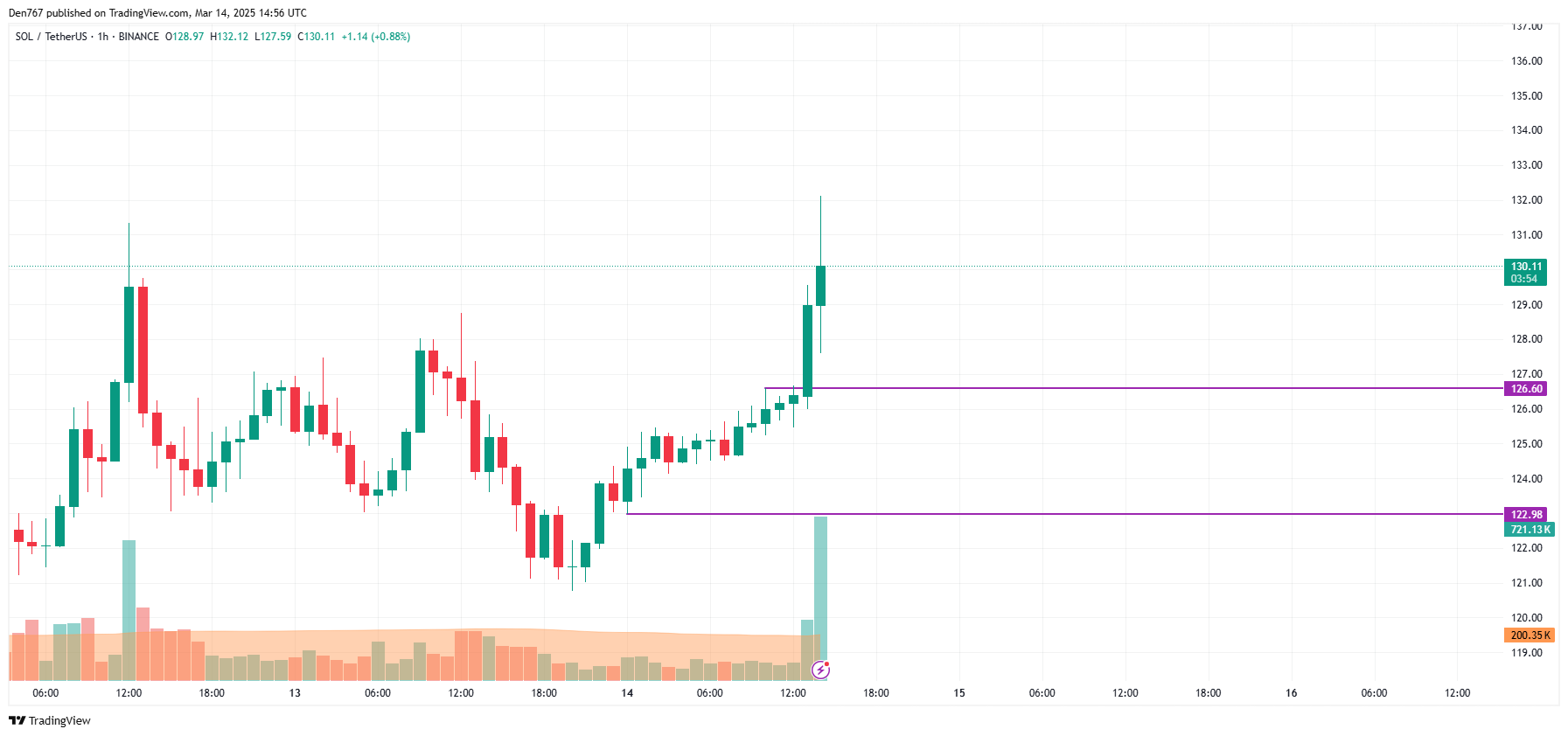
On the hourly chart, the rate of SOL is rising after a breakout of the local resistance of $126.60. If bulls can hold the gained initiative, the upward move is likely to continue to the $135 area.
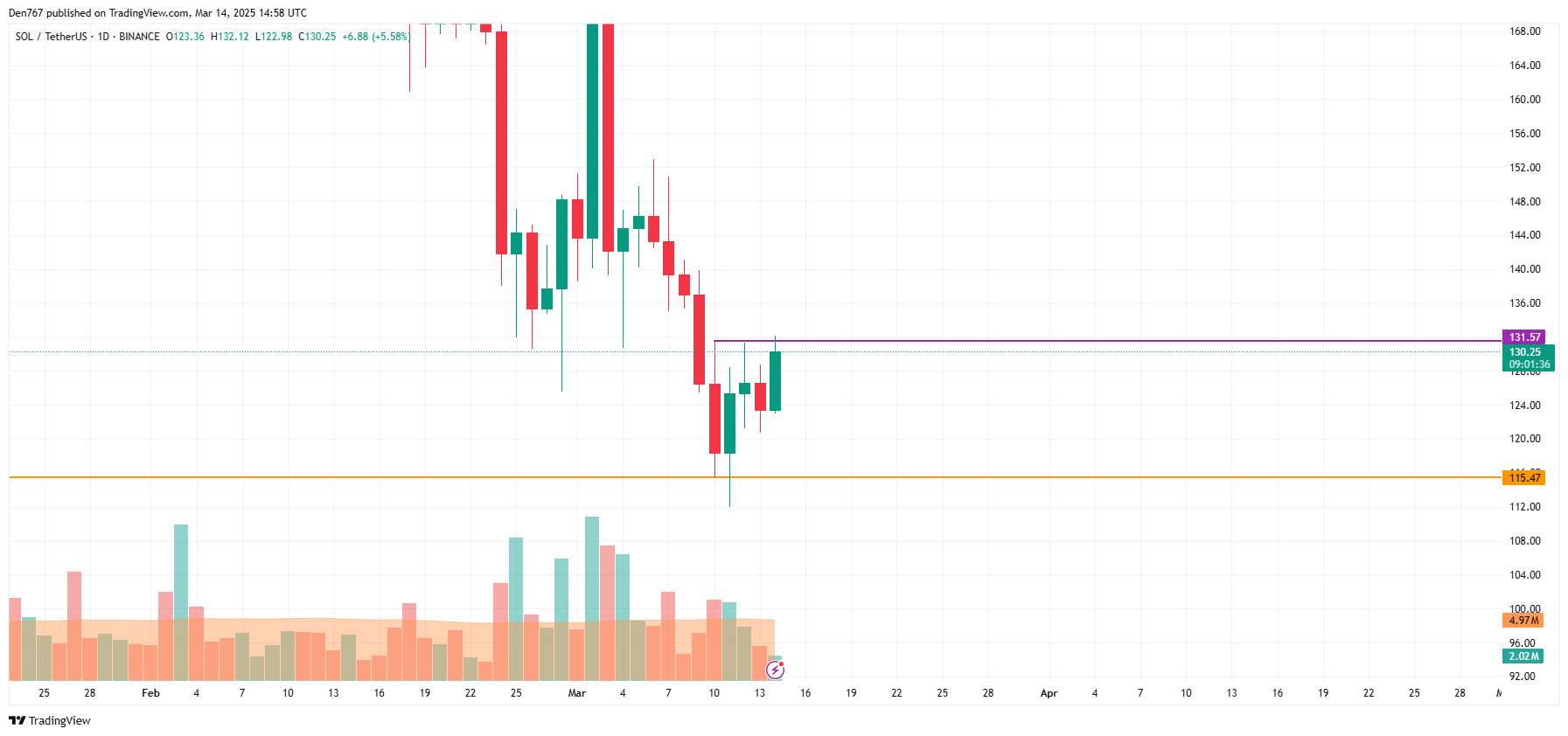
On the bigger time frame, one should focus on the candle’s closure in terms of the $131.57 level. If it happens around it and with no long wick, the accumulated energy might be enough for a move to the $140 range.
Sofia, Bulgaria, March 14, 2025 – Sugarverse, the innovative gaming studio dedicated to creating sustainable and rewarding in-game economies, has achieved a major milestone by successfully closing a $1 million USD funding round. Funds raised during the round will be used by Sugarverse to continue its mission of revolutionizing blockchain gaming by developing games that reward loyal players via a unique sustainable rewards model. The studio also announced today that the first of its upcoming mobile casual Web3 games, Sugar Match, will launch on the Tezos Layer-2, Etherlink, this summer.
The Web3 gaming space has seen rapid growth but also faces major challenges, particularly in the sustainability of in-game economies. Having launched more than 10 successful Web2 games, collectively boasting a player base exceeding 60 million people, Sugarverse is leveraging its extensive experience in mobile gaming and implementing a model that ensures fair and continuous rewards for players.
“Our goal is to create a game economy that doesn’t just reward early adopters but provides long-term value for all players,” said Nikolay Mitev, Co-Founder and CEO of Sugarverse. “Many Web3 games struggle with declining token value and unsustainable reward structures. We have a proven approach that brings balance to in-game economies, ensuring that players at every stage have equal opportunities to benefit.”
Sugar Match will be the first game to release following Sugarverse’s transition to become a Web3 studio, and the first in a five-game saga of mobile casual Web3 games designed to bridge the gap between traditional gaming and Web3.
“Mobile gaming is the fastest-growing sector, and we believe Web3 games should be accessible and easy to play,” Mitev added. “Our approach minimizes barriers to entry, allowing players to engage first and explore the Web3 features organically.”
Sugarverse’s funding will be directed toward addressing three key challenges in Web3 gaming:
Enhanced Gameplay & Engagement – Sugarverse prioritizes fun and engagement with high-quality game design and data-driven optimization, unlike many Web3 games that focus solely on blockchain mechanics.
Seamless Onboarding – Players can start instantly with a guest mode, easing into Web3 features gradually for a smooth transition and higher adoption.
Sustainable Rewards Model – Inspired by online poker, Sugarverse’s economy ensures long-term, balanced rewards, avoiding the decline seen in traditional Play-to-Earn models
“Sugarverse’s experience in mobile gaming brings a familiar and accessible approach to Web3. The launch of Sugar Match on Etherlink is a natural step in expanding the Tezos ecosystem with more casual gaming experiences. We’re excited to see how their approach to game economies plays out in the space,” said Efe Kucuk, Head of Gaming at Trilitech.
The launch of Sugar Match on Etherlink comes at a moment of rapid ecosystem expansion on the Tezos Layer-2. Players of Sugar Match will benefit from Etherlink’s fast transaction times and low fees, as well as the inherited security and decentralized governance model of the Tezos L1.
“This funding is just the beginning of our journey toward making Web3 gaming a mainstream success. Our community is growing rapidly, and we’re excited to share more details about other upcoming games soon,” concluded Mitev.
Sugarverse is building a unique Game Saga with 5 integrated mobile casual games with a self-sustaining Play & Earn economy, where players can monetize their gaming experience using their native token CNDY.
About Etherlink
Etherlink is a non-custodial, EVM-compatible Layer 2 blockchain powered by Tezos Smart Rollups. Etherlink is permissionless, inherits the technology of Tezos’ Layer 1, and features a decentralized governance model, fraud proofs, and censorship resistance. https://www.etherlink.com/
About Tezos
Tezos is an open-source and energy-efficient blockchain designed to empower institutions, developers, and businesses and facilitate value transfer in a digital environment. It is designed for the scalable deployment of decentralized applications. As one of the first Proof of Stake blockchains, Tezos is globally supported and valued for its strong governance, long-term upgradability, and smart contract capabilities. For more information about Tezos, visit http://www.tezos.com.
Gold price set to clinch second weekly gain, with eyes on $3,000.
US Dollar and Treasury yields rebound on government shutdown aversion news.
Gold price stays bullish as an ascending triangle breakout remains in play.
Gold price is hanging close to a new record high set on Thursday, biding time before the next move higher to clinch the $3,000 threshold for the first time.
Gold price primes for another leg up
Amid another record-rally, Gold price will likely book the second weekly gain, up roughly 2.5% so far this week. US President Donald Trump’s induced trade war, along with increased expectations of monetary policy easing by the US Federal Reserve (Fed), sponsored the Gold price upsurge.
However, Gold buyers appear to turn cautious as the recent rally paused just shy of the $3,000 psychological hurdle. Traders could use that as an excuse to take profits off the table on their Gold long positions before next week’s Fed policy announcements.
The renewed demand from the US Dollar (USD) and the US Treasury bond yields also act as a headwind to the upbeat momentum in Gold price. The improvement in risk sentiment on an aversion to the US government shutdown and hopes of a US-Canada trade truce diminish the demand for the US government bonds, lifting the US Treasury bond yields and the USD.
US Senate Democratic Leader Chuck Schumer said late Thursday, “I will vote to keep the government open, and not shut it down.” Meanwhile, Ontario Premier Doug Ford said there will be another meeting next week between Canadian and American trade officials, following his meeting with US Commerce Secretary Howard Lutnick.
Doug added, “we’re having very productive conversations and they’re turning out very, very well.”
In the day ahead, it remains to be seen if risk sentiment remains in a sweet spot as escalating trade tensions between the US and the European Union (EU) could haunt markets, reviving the safe-haven appeal of the Gold price.
Amid an escalating trade war, the EU responded to blanket US tariffs on steel and aluminium by imposing a 50% tax on American whiskey exports, prompting Trump to threaten a 200% tariff on imports of European wines and spirits.
If fears over global trade war intensify, they will likely raise risks of a recession and the odds of the Fed lowering rates further, fuelling a fresh downswing in the USD while boosting Gold price to fresh lifetime highs.
Markets also weigh in on the US-Russia talks for a ceasefire in the Ukraine conflict. Russian President Vladimir Putin said on Thursday that he agreed in principle with US proposals to halt the fighting but said he wanted to address the “root causes of the conflict”.
“We need to discuss this with our American partners – perhaps a call with Donald Trump,” Putin added.
The US Consumer Sentiment and Inflation Expectations data will play second fiddle to the tariff and geopolitical headlines heading into the weekend.
Gold price technical analysis: Daily chart
Gold price confirmed an upside break of an ascending triangle formation after closing Thursday above the horizontal trendline resistance at $2,956.
Gold buyers need to scale the $3,000 psychological barrier to extend the record-rally toward the $3,050 mark.
The 14-day Relative Strength Index (RSI) sits just beneath the overbought region, which is currently near 68 and keeps buyers hopeful.
Therefore, any retracement in Gold price will likely be quickly bought amid bargain hurting.
On a corrective downside, Gold price could challenge the previous triangle resistance-turned-support at $2,919.
The last line of defense for buyers is at the triangle support line, pegged at $2,898.
Tariffs FAQs
Tariffs are customs duties levied on certain merchandise imports or a category of products. Tariffs are designed to help local producers and manufacturers be more competitive in the market by providing a price advantage over similar goods that can be imported. Tariffs are widely used as tools of protectionism, along with trade barriers and import quotas.
Although tariffs and taxes both generate government revenue to fund public goods and services, they have several distinctions. Tariffs are prepaid at the port of entry, while taxes are paid at the time of purchase. Taxes are imposed on individual taxpayers and businesses, while tariffs are paid by importers.
There are two schools of thought among economists regarding the usage of tariffs. While some argue that tariffs are necessary to protect domestic industries and address trade imbalances, others see them as a harmful tool that could potentially drive prices higher over the long term and lead to a damaging trade war by encouraging tit-for-tat tariffs.
During the run-up to the presidential election in November 2024, Donald Trump made it clear that he intends to use tariffs to support the US economy and American producers. In 2024, Mexico, China and Canada accounted for 42% of total US imports. In this period, Mexico stood out as the top exporter with $466.6 billion, according to the US Census Bureau. Hence, Trump wants to focus on these three nations when imposing tariffs. He also plans to use the revenue generated through tariffs to lower personal income taxes.
GBP/USD stays below 1.2950 after posting small losses on Thursday.
Disappointing macroeconomic data releases from the UK make it difficult for Pound Sterling to gather strength.
The near-term technical outlook highlights a loss of bullish momentum.
After closing marginally lower on Thursday, GBP/USD stays on the back foot and trades below 1.2950 in the European session on Friday. Although the near-term technical outlook is yet to point to a buildup of bearish momentum, the pair could have a difficult time staging a rebound after disappointing data releases from the UK.
British Pound PRICE This week
The table below shows the percentage change of British Pound (GBP) against listed major currencies this week. British Pound was the weakest against the Euro.
USD
EUR
GBP
JPY
CAD
AUD
NZD
CHF
USD
-0.37%
-0.12%
0.55%
0.37%
0.01%
-0.09%
0.51%
EUR
0.37%
0.22%
0.92%
0.76%
0.47%
0.25%
0.77%
GBP
0.12%
-0.22%
0.65%
0.50%
0.26%
-0.02%
0.62%
JPY
-0.55%
-0.92%
-0.65%
-0.18%
-0.47%
-0.72%
0.04%
CAD
-0.37%
-0.76%
-0.50%
0.18%
-0.40%
-0.46%
0.11%
AUD
-0.01%
-0.47%
-0.26%
0.47%
0.40%
-0.22%
0.35%
NZD
0.09%
-0.25%
0.02%
0.72%
0.46%
0.22%
0.68%
CHF
-0.51%
-0.77%
-0.62%
-0.04%
-0.11%
-0.35%
-0.68%
The heat map shows percentage changes of major currencies against each other. The base currency is picked from the left column, while the quote currency is picked from the top row. For example, if you pick the British Pound from the left column and move along the horizontal line to the US Dollar, the percentage change displayed in the box will represent GBP (base)/USD (quote).
The data published by the UK’s Office for National Statistics (ONS) showed early Friday that the UK’s Gross Domestic Product (GDP) contracted by 0.1% on a monthly basis in January. This reading followed the 0.4% growth recorded in December and came in below the market expectation for an expansion of 0.1%.
The ONS further reported that Industrial Production and Manufacturing Production fell by 0.9% and 1.1%, respectively, on a monthly basis. Both of these prints came in worse than analysts’ estimates, weighing on Pound Sterling.
The US economic calendar will feature the University of Michigan’s preliminary Consumer Sentiment Index data for March. A noticeable deterioration in consumer confidence could cause the US Dollar to come under pressure and allow GBP/USD to limit its losses.
Meanwhile, US stock index futures rise between 0.5% and 0.1% in the European session on Friday. So far, Pound Sterling has failed to benefit from improving risk mood. Nevertheless, a risk rally in the American session could hurt the USD and support GBP/USD.
GBP/USD Technical Analysis
GBP/USD’s last candle on the 4-hour chart closed below the 20-period Simple Moving Average (SMA). Additionally, the Relative Strength Index (RSI) indicator retreated to 50, reflecting a lack of buyer interest.
On the downside, 1.2900 (round level, static level, mid-point of the ascending regression channel) aligns as first support before 1.2850 (static level) and 1.2800 (200-day SMA). Looking north, resistances could be spotted at 1.2970 (static level), 1.3000 (round level, static level) and 1.3040 (upper limit of the ascending channel).
Pound Sterling FAQs
The Pound Sterling (GBP) is the oldest currency in the world (886 AD) and the official currency of the United Kingdom. It is the fourth most traded unit for foreign exchange (FX) in the world, accounting for 12% of all transactions, averaging $630 billion a day, according to 2022 data. Its key trading pairs are GBP/USD, also known as ‘Cable’, which accounts for 11% of FX, GBP/JPY, or the ‘Dragon’ as it is known by traders (3%), and EUR/GBP (2%). The Pound Sterling is issued by the Bank of England (BoE).
The single most important factor influencing the value of the Pound Sterling is monetary policy decided by the Bank of England. The BoE bases its decisions on whether it has achieved its primary goal of “price stability” – a steady inflation rate of around 2%. Its primary tool for achieving this is the adjustment of interest rates. When inflation is too high, the BoE will try to rein it in by raising interest rates, making it more expensive for people and businesses to access credit. This is generally positive for GBP, as higher interest rates make the UK a more attractive place for global investors to park their money. When inflation falls too low it is a sign economic growth is slowing. In this scenario, the BoE will consider lowering interest rates to cheapen credit so businesses will borrow more to invest in growth-generating projects.
Data releases gauge the health of the economy and can impact the value of the Pound Sterling. Indicators such as GDP, Manufacturing and Services PMIs, and employment can all influence the direction of the GBP. A strong economy is good for Sterling. Not only does it attract more foreign investment but it may encourage the BoE to put up interest rates, which will directly strengthen GBP. Otherwise, if economic data is weak, the Pound Sterling is likely to fall.
Another significant data release for the Pound Sterling is the Trade Balance. This indicator measures the difference between what a country earns from its exports and what it spends on imports over a given period. If a country produces highly sought-after exports, its currency will benefit purely from the extra demand created from foreign buyers seeking to purchase these goods. Therefore, a positive net Trade Balance strengthens a currency and vice versa for a negative balance.