Pound Sterling underperforms US Dollar as Trump’s fresh tariffs dampen market mood
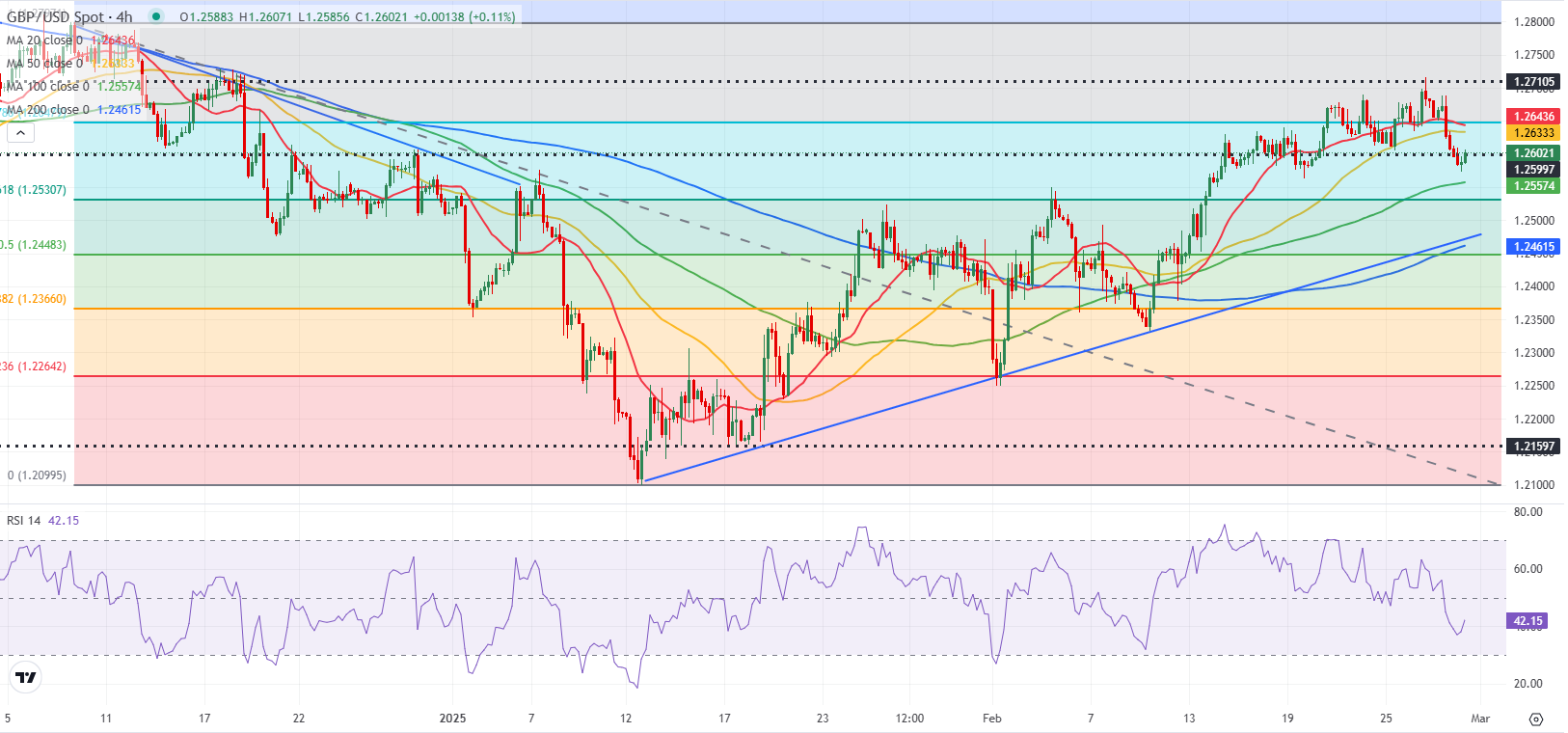
The Pound Sterling (GBP) extends its downside move to near 1.2570 against the US Dollar (USD) in Friday’s European session. The GBP/USD pair faces pressure as the US Dollar gains further amid a risk-off market mood. The US Dollar Index (DXY), which tracks the Greenback’s value against six major currencies, moves higher to 107.45.
Market participants are cautious as President Donald Trump has announced more levies on China and provided more clarification on the timeline for 25% import duties on Canada and Mexico and reciprocal tariffs. Read more…
GBP/USD Forecast: Pound Sterling could struggle to gather bullish momentum
GBP/USD seems to have entered a consolidation phase near 1.2600 after losing more than 0.5% on Thursday as investors move to the sidelines while waiting for January inflation data from the US.
The US Dollar (USD) benefited from safe-haven flows in the American session on Thursday and gathered strength against its major rivals. Read more…
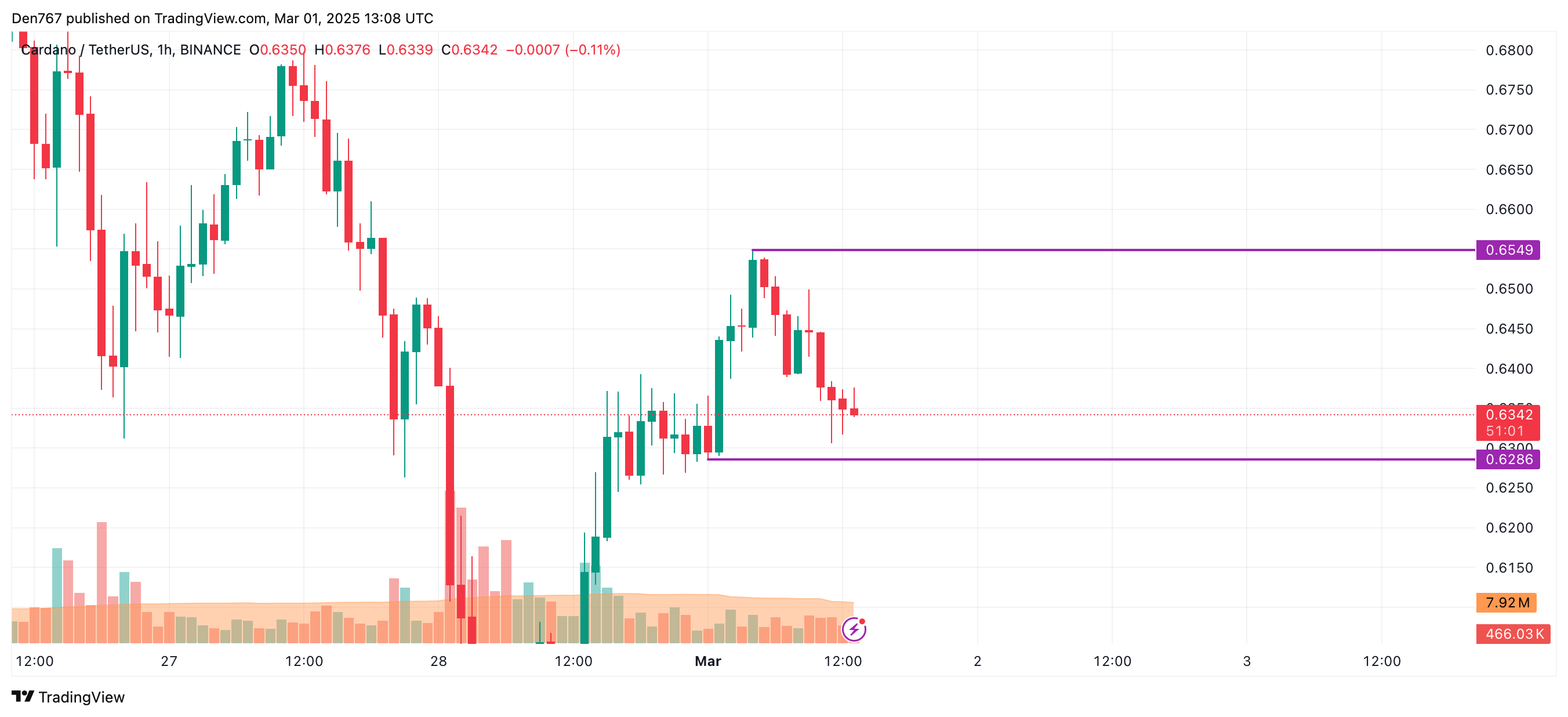
On the hourly chart, the price of ADA is on the way to the local support of $0.6286. If the daily candle closes around that mark, there is a chance of a level breakout, followed by a further decline to the $0.62 range.
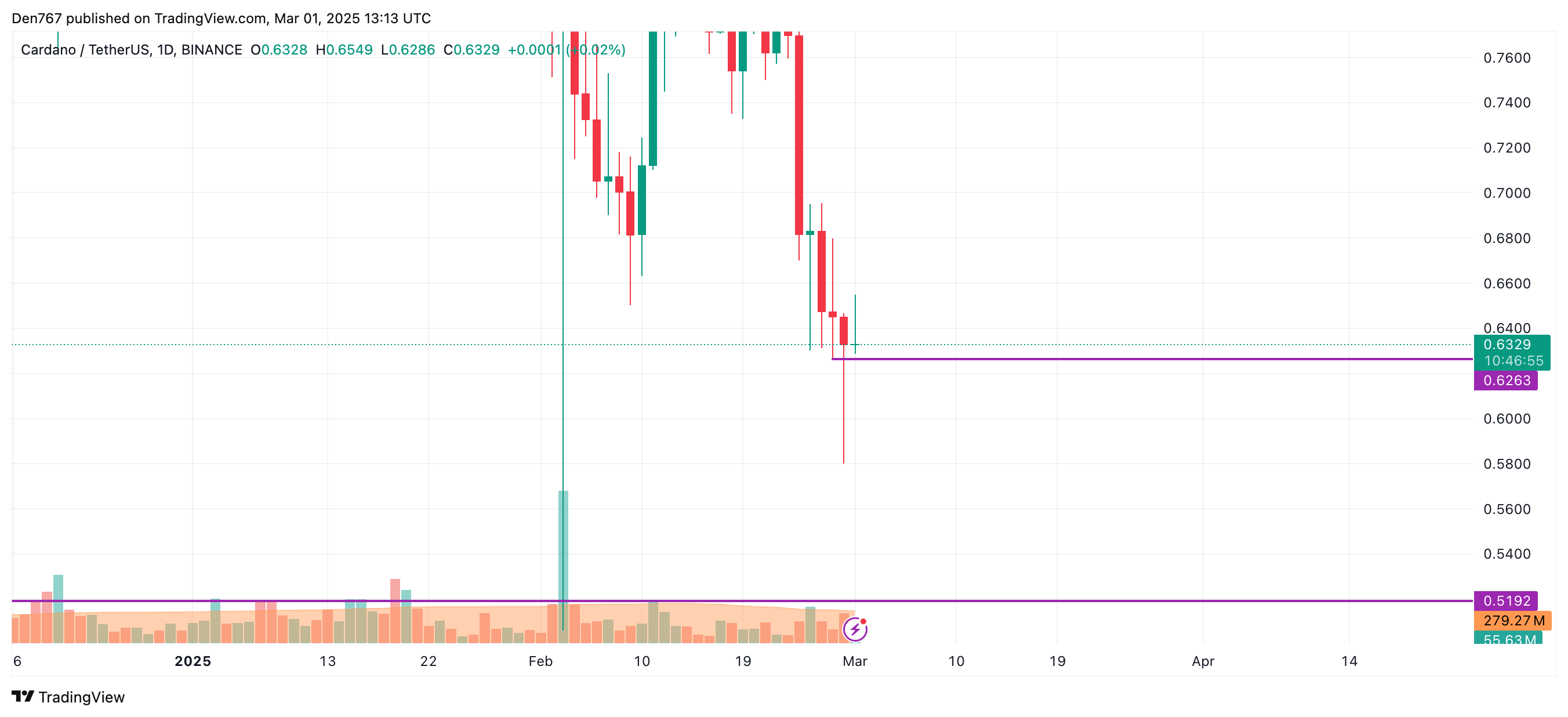
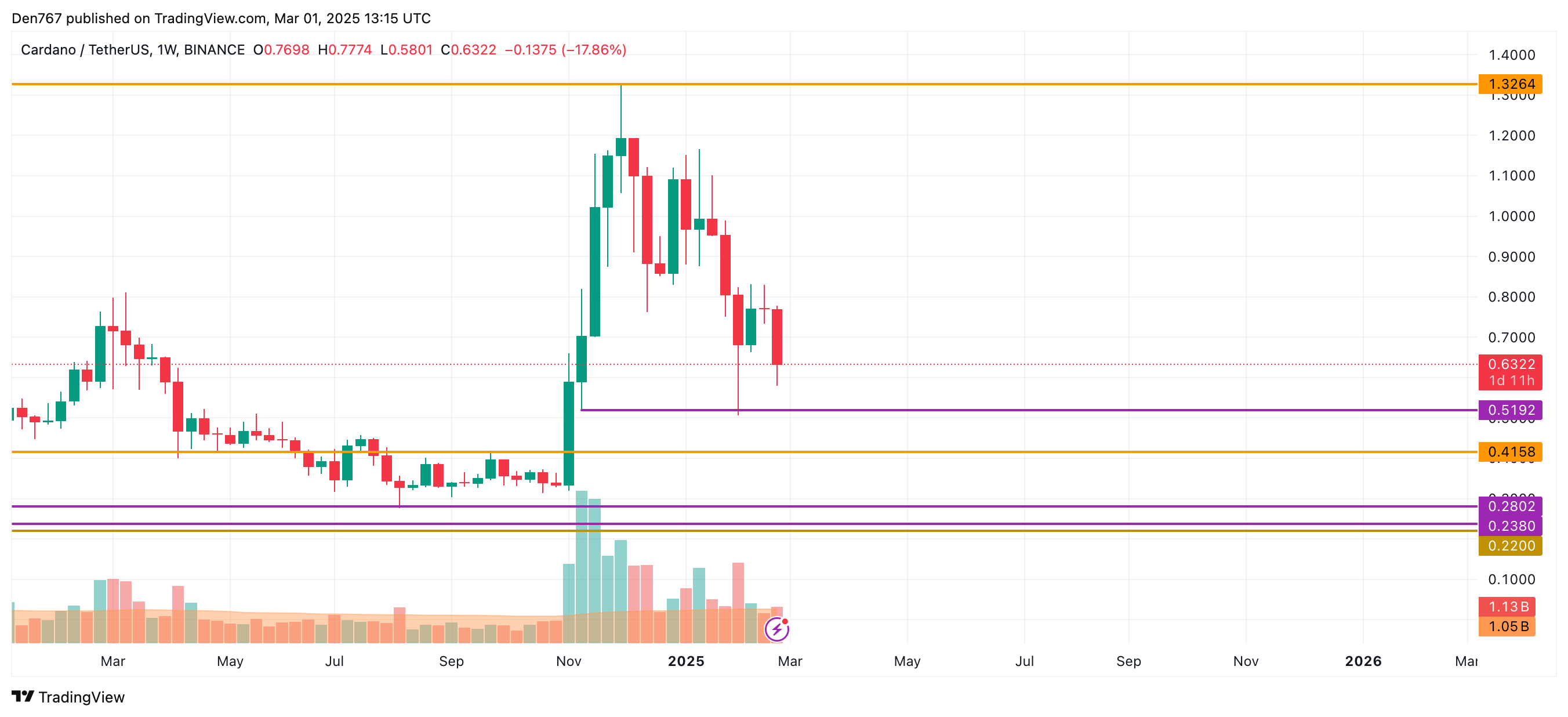
From the midterm point of view, there are no reversal signals yet. If a return to the nearest zone of $0.70 does not happen, the correction is likely to continue to the $0.5192 level.
SBI Holdings, a major Ripple partner, has released a financial report packed with surprising insights about XRP. The report not only reveals how much XRP is currently in circulation but also highlights its rising market value and long-term growth. Even more interesting, XRP’s value has multiplied over time, showing its strength in the crypto market.
SBI’s report also dives into Ripple’s XRP holdings, the impact of XRP’s burn mechanism, and how shareholder rewards in XRP have skyrocketed in value.
With SBI and Ripple deepening their partnership, XRP’s future looks more promising than ever. Here’s a closer look at the key takeaways from the report.
XRP Supply: Circulating, Held, and Locked in Escrow
According to SBI’s financial report for the fiscal year ending March 2025, around 57.76 billion XRP were in circulation as of February 2, 2025. Since XRP has a maximum supply of 100 billion, a large portion remains in reserve.
The report also states that Ripple currently holds 4.79 billion XRP, while 37.43 billion XRP is locked in escrow. This escrow system ensures a controlled release of XRP over time, preventing oversupply in the market.
Another key detail in the report is XRP’s burn mechanism. Each transaction fee burns a small amount of XRP, gradually reducing the total supply. So far, around 0.01 billion XRP have been burned.
This system not only decreases supply but also helps keep the XRP Ledger secure and efficient by discouraging spam transactions.
SBI’s Shareholder Rewards in XRP
SBI has also been rewarding its shareholders with XRP since March 2020. So far, shareholders have received XRP on five occasions, totaling 796 XRP per shareholder.
When the rewards were first given, the total value was about 8,000 Japanese Yen, based on an average price of 50.2 Yen per XRP. By February 6, 2025, XRP’s price had jumped to 354.6 Yen per token—nearly seven times its original value. This sharp increase highlights XRP’s strong market performance and growing adoption.
SBI and Ripple’s partnership continues to grow. SBI, which owns a 9% stake in Ripple, has played a major role in promoting XRP adoption. In 2016, they launched SBI Ripple Asia to improve cross-border payments in the Asia-Pacific region.
In 2021, SBI Remit introduced Japan’s first international remittance service using XRP. Now, the two companies are expanding into the NFT space, with plans to launch NFTs on the XRP Ledger at Expo 2025 in Osaka, Japan.
SBI is also strengthening its presence in digital assets with the launch of RLUSD, a stablecoin tied to the US dollar. With its growing initiatives, SBI continues to push XRP forward as a key player in the evolving crypto market.
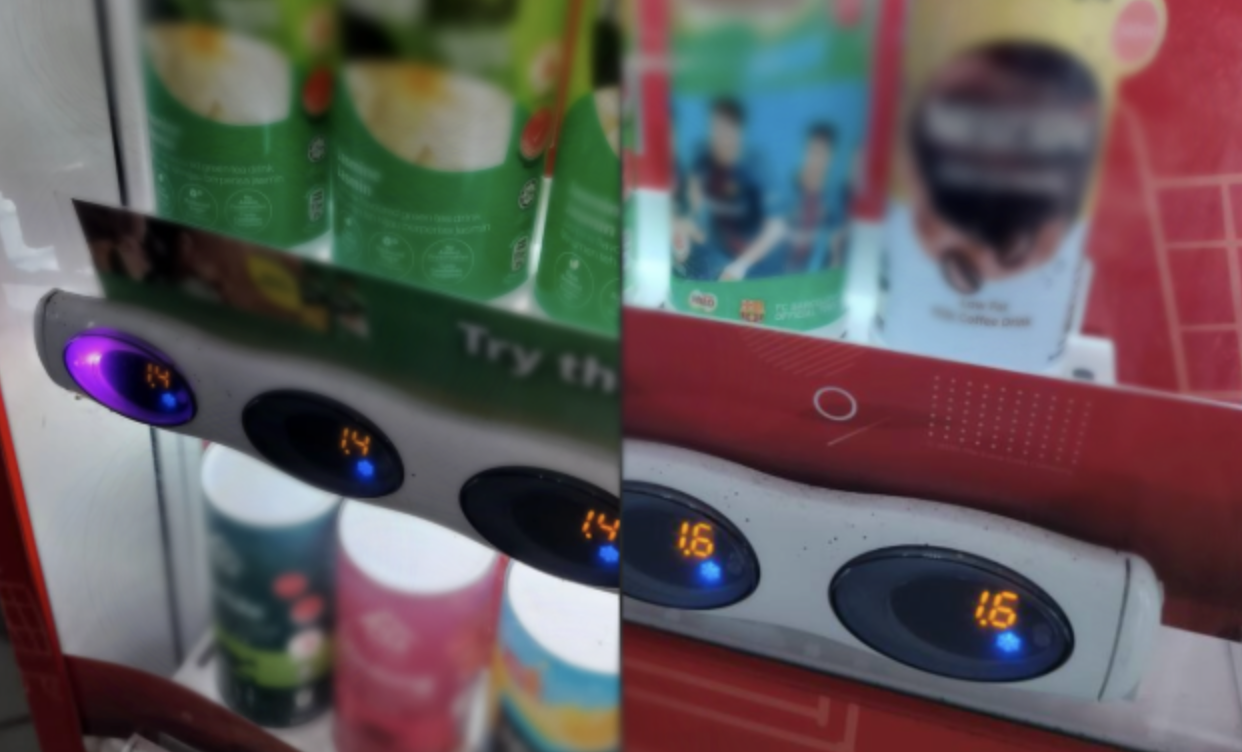
SINGAPORE: An online user recently expressed frustration over a $0.20 price increase for two particular drinks from a vending machine: green tea and a Milo drink.
“I want to complain,” the netizen wrote in a complaint group on Thursday (Feb 27). According to the writer, before Chinese New Year, the green tea drink cost $1.20, and the Milo drink cost $1.40. The post compared this to the current prices of $1.40 and $1.60 respectively. “They’re just drinks, le,” the post read.
A couple of online users responded to the post sharing their sentiments on the matter. “Yah, see the price not thirsty anymore,” said one. Another wrote, “Better not to consume these kinds of drinks. Stay away from diabetes and other illnesses. Too much sugars added.”
In recent news, Singaporeans took the time to respond to an online user who asked, “Why are Singaporeans stressed and worried when our standard of living is very high?”
He shared his thoughts in a forum on Wednesday (Feb 26). “Legitimate question,” he said. “Today, we have clean water to drink, food to eat, almost everyone has a smartphone, access to entertainment, quality healthcare, no natural disaster. Compared to many other countries, we are considered to be in good hands already.”
“Whilst job security, high cost of living, and high inflation are not unique to Singapore, I thought Singaporeans should be more assured and secure when facing international and domestic pressures. Are there any underlying reasons why it felt that our future is gloomy and bleak in the midst of an uncertain world?”
Many Singaporeans responded to the post, expressing their concerns about stress and anxiety despite the country’s high living standards. They highlighted several key issues contributing to their worries, including financial strain, job uncertainty, and demanding work environments.
“The stress comes from knowing that the prices keep getting higher and higher, purchasing power may or may not be able to keep up,” said one. “Just look at the cost of an HDB (Housing & Development Board) flat today and also compare rentals in Singapore versus other parts of the world also with a pretty good standard of living.”
PAWS is designed to reward users for their engagement within the Telegram ecosystem, leveraging the platform’s extensive user base.
PAWS is designed to reward users for their engagement within the Telegram ecosystem, leveraging the platform’s extensive user base. Built by a team known for their success in other Telegram-based games, such as Notcoin and DOGS, PAWS aims to create a user-friendly experience that encourages community interaction through simple tasks.
The app allows users to earn PAWS tokens by participating in activities like joining Telegram groups, following social media channels, and inviting friends. With over 25 million users within the first ten days of its launch, PAWS has quickly established itself as an accessible entry point into the world of crypto and blockchain gaming.
This guide aims to provide comprehensive information about the PAWS airdrop, including eligibility criteria, steps to participate, tokenomics, price predictions, and essential considerations for potential investors.
PAWS is a Telegram-based application designed to reward users for their engagement within the Telegram ecosystem. It operates on the TON blockchain, known for its fast transactions and low fees.
The app encourages community interaction through a user-friendly interface, allowing participants to earn PAWS tokens by completing various tasks. With a rapid user base growth, PAWS aims to create a rewarding experience for both new and existing Telegram users.
Reward System: Users can earn PAWS tokens by completing tasks such as joining groups, engaging with social media channels, and inviting friends to the platform.
Community Engagement: The app rewards active users, offering incentives for account longevity and participation in related projects.
Referral Program: Users receive 10% of the rewards earned by friends they refer, promoting organic growth within the community.
TON Blockchain Integration: This integration ensures secure transactions with minimal fees.
The PAWS airdrop is a significant incentive for early adopters, providing free tokens to users who meet specific criteria. This section outlines the details surrounding the airdrop.
Eligibility Criteria of PAWS Airdrop
To qualify for the PAWS airdrop, users must meet the following requirements:
Active Participation: Users must actively engage with the PAWS mini-app on Telegram.
Task Completion: Tasks include joining Telegram groups, following channels, and referring friends to the app.
Wallet Connection: Users must connect a TON-compatible wallet prior to the snapshot date to be eligible for token distribution.
Snapshot Event
A snapshot was conducted on December 30, 2024, to determine eligibility for the airdrop. Participants were advised to ensure all tasks were completed and their wallets properly linked before this date.
To participate in the PAWS airdrop, follow these detailed steps:
Step 1: Access the PAWS Mini-App
Open Telegram: Launch the Telegram app on your device.
Find the PAWS Bot: Search for the official PAWS bot (@PAWSOG_bot) and initiate a chat.
Verify Authenticity: Ensure you are using the legitimate PAWS mini-app to avoid scams.
Step 2: Connect Your Wallet
Select Wallet Connection: Look for the wallet connection option within the app.
Connect TON Wallet: Link your TON-compatible wallet to the application.
Confirm Connection: Make sure your wallet connection is secure.
Step 3: Complete Available Tasks
Navigate to Earn: Visit the ‘Earn’ section within the app.
Review Tasks: Examine the list of available tasks and their corresponding rewards.
Engage Actively: Complete tasks to accumulate PAWS points.
Step 4: Set Up Referrals
Access Friends Section: Go to the ‘Friends’ section of the app.
Copy Invite Link: Retrieve your referral link.
Share Your Link: Distribute your link to friends and acquaintances to boost your rewards.
To optimize your potential earnings from the PAWS airdrop, consider the following strategies:
Engage Fully: Participate in all available social tasks to maximize your reward points.
Utilize Referrals: Share your referral link actively to increase your earnings from invited friends.
Track Your Progress: Keep an eye on your referral earnings and overall task completion within the app.
Understanding the token distribution and its implications is crucial for investors. Here’s a breakdown of the PAWS tokenomics:
62.5%: Allocated for PAWS applications and future airdrops.
12%: Reserved for ecosystem sustainability and partnerships.
10%: Set aside for the innovation team.
8%: Dedicated to liquidity for market stability.
7.5%: Allocated to strengthen ties with the Solana OG community.
This transparent allocation aims to ensure the long-term viability of the PAWS project while fostering community engagement.
The initial price prediction for PAWS tokens is estimated to fall between $0.0072 and $0.0078. However, actual prices will be influenced by several factors:
User Interest: The level of engagement and interest from the crypto community will significantly influence the demand for the token.
Total Supply of Tokens: Specific details regarding the final distribution of tokens are still pending, which may affect the token’s market valuation.
Sentiment After Token Generation Event (TGE): Investor confidence in the aftermath of the TGE will also play a crucial role in determining price stability.
PAWS distinguishes itself from other similar mini-apps, such as Hamster Kombat, by emphasizing user engagement and simplicity. While Hamster Kombat peaked at 300 million users but faced challenges due to its complexity and regional restrictions, PAWS adopted a straightforward “tap-to-earn” model.
This approach has led to a rapid increase in users, reaching nearly 50 million by late 2024, demonstrating its stability and appeal in the competitive mini-app ecosystem.
While PAWS presents a promising opportunity, investors should approach with caution. Here are some critical considerations:
Volatility: Like many meme-themed tokens, expect significant price fluctuations, especially during the initial trading phase.
Pending Information: Details such as total token supply and allocation percentages are still unannounced.
Security Measures: Always use official links and verified wallets to mitigate the risk of scams.
The PAWS airdrop offers a unique opportunity for users within the cryptocurrency and Telegram communities. By participating in this airdrop, users can earn tokens and engage meaningfully in a growing ecosystem. However, potential participants should remain informed and cautious, ensuring they comply with eligibility criteria and best practices for security.
As PAWS prepares for its official launch, the questions surrounding its long-term viability and price stability remain. Conducting thorough research and staying connected to official channels will be essential for maximizing this opportunity.
This guide is intended for informational purposes only and does not constitute financial advice. Cryptocurrency investments carry risks, and readers should conduct their research before participating in any airdrop or investment opportunity. It is essential to exercise caution and prioritize security when engaging with crypto platforms.
Always verify the authenticity of any project and avoid sharing sensitive information, such as private keys, with unverified sources. Additionally, consider consulting with a financial advisor to align your investment strategies with your financial goals.
This article contains links to third-party websites or other content for information purposes only (“Third-Party Sites”). The Third-Party Sites are not under the control of CoinMarketCap, and CoinMarketCap is not responsible for the content of any Third-Party Site, including without limitation any link contained in a Third-Party Site, or any changes or updates to a Third-Party Site. CoinMarketCap is providing these links to you only as a convenience, and the inclusion of any link does not imply endorsement, approval or recommendation by CoinMarketCap of the site or any association with its operators.
This article is intended to be used and must be used for informational purposes only. It is important to do your own research and analysis before making any material decisions related to any of the products or services described. This article is not intended as, and shall not be construed as, financial advice.
The views and opinions expressed in this article are the author’s [company’s] own and do not necessarily reflect those of CoinMarketCap.
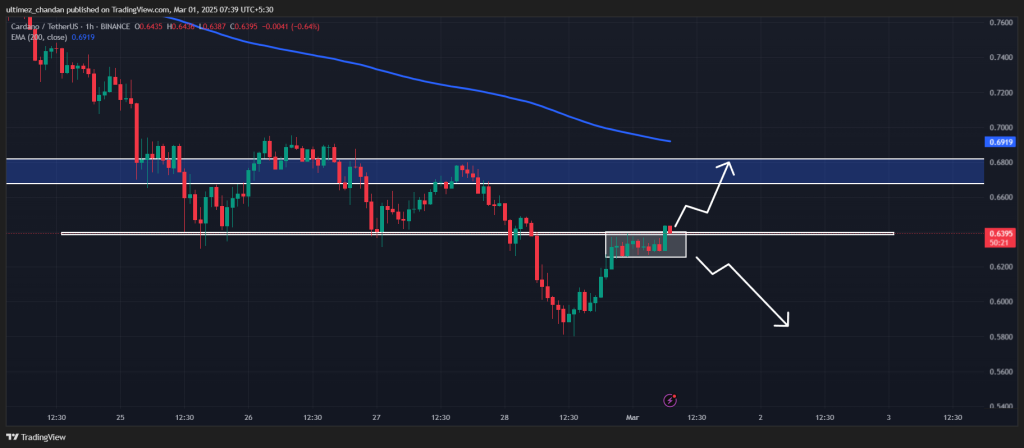
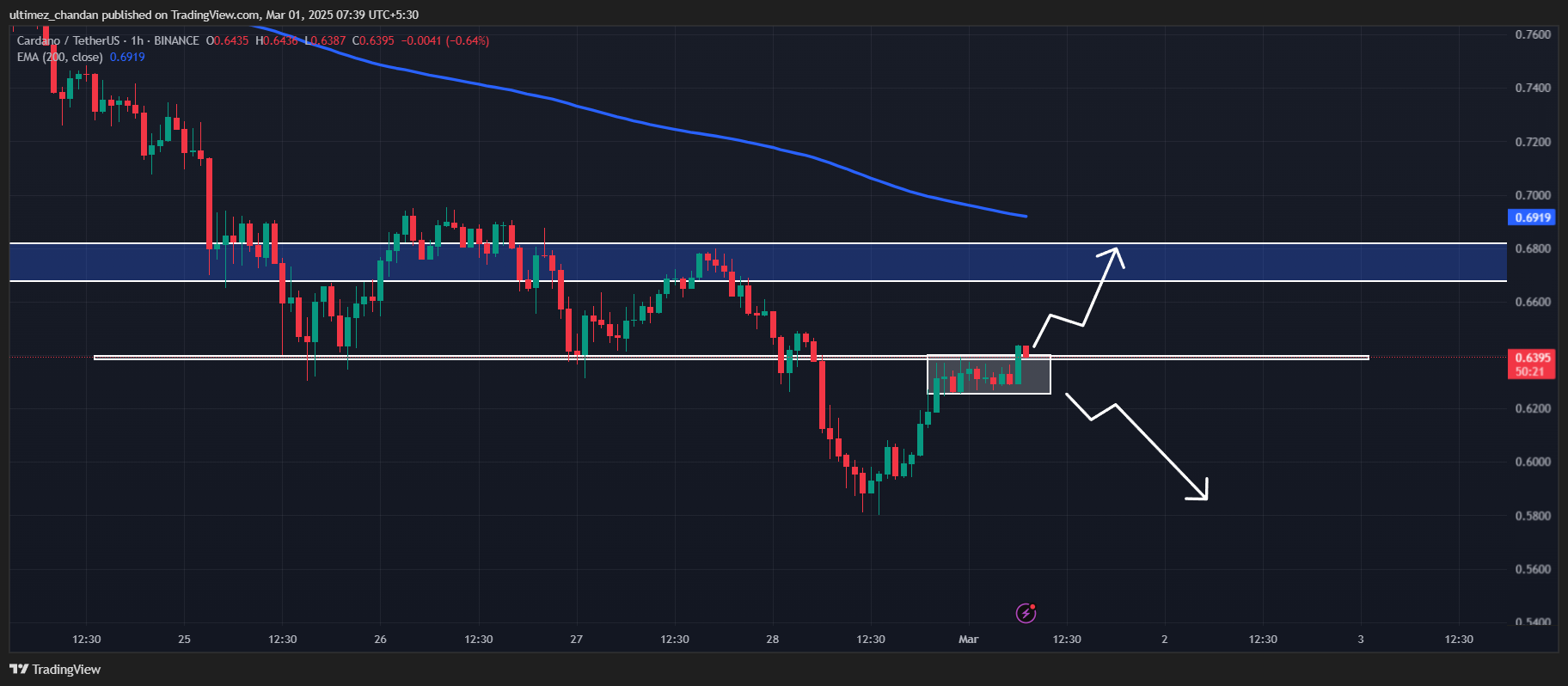
While the crypto market sees a broad recovery, Cardano (ADA) remains stuck below a key resistance. As of today, March 1, 2025, ADA has gained 2% and is currently trading near $0.63, fluctuating within a tight range between $0.625 and $0.64.
Cardano (ADA) Short-Term Price Analysis
With modest upside momentum, ADA is still trading below its key level of $0.65. Over the past 24 hours, the price attempted to rally but failed to gain traction. According to expert technical analysis, ADA remains in a bearish zone, continuing to trade below the critical $0.65 level.
Despite these factors, if the asset breaks out of its ongoing consolidation and closes four consecutive candles above $0.6425, there is a strong possibility it could soar by 5.50%, reaching the $0.67 level.
Source: Trading View
Additionally, if the asset fails to breach the upper boundary of consolidation and closes a daily candle below the $0.62 mark, ADA could see a 7% price drop to $0.58, with the potential for further decline.
Bullish On-Chain Metrics
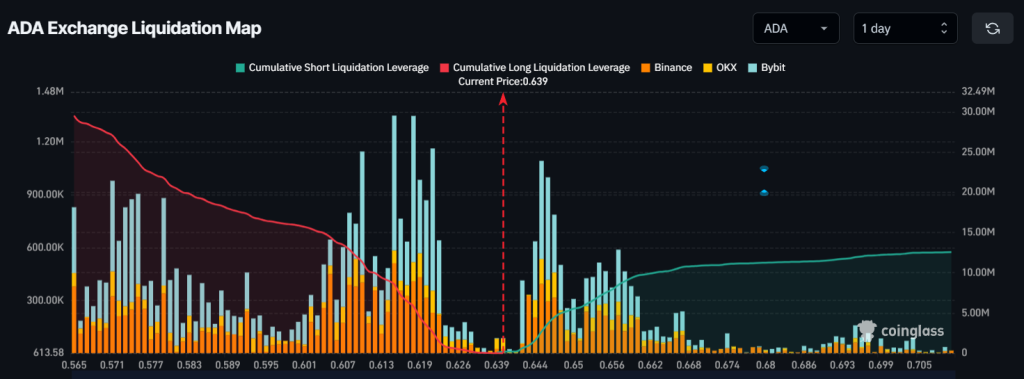
Looking at the current market sentiment, it appears that bulls are returning to support the asset. Amid this, traders and investors have been engaging in bullish activity, as reported by the on-chain analytics firm Coinglass.
Over-Leveraged Levels
Data from Coinglass reveals that ADA traders betting on long positions are over-leveraged at $0.618, holding $5.90 million worth of long positions. Meanwhile, $0.645 is another over-leveraged level, where traders betting on short positions have built $3.67 million worth of positions.
Source: Coinglass
When combining these on-chain metrics, it appears that a shift in market sentiment has begun. This notable participation on the bullish side could push ADA in an upward direction.
$14.65 Million Worth of ADA Outflow
Meanwhile, investors and long-term holders have been accumulating tokens during the same period, as reported by the on-chain analytics firm Coinglass. Data from spot inflow/outflow reveals that exchanges have witnessed a significant outflow of $14.65 million worth of ADA tokens.
When examining these on-chain metrics alongside technical analysis, it appears that investors and traders are driving the asset toward a rally, aiming to regain the crucial $0.65 level.
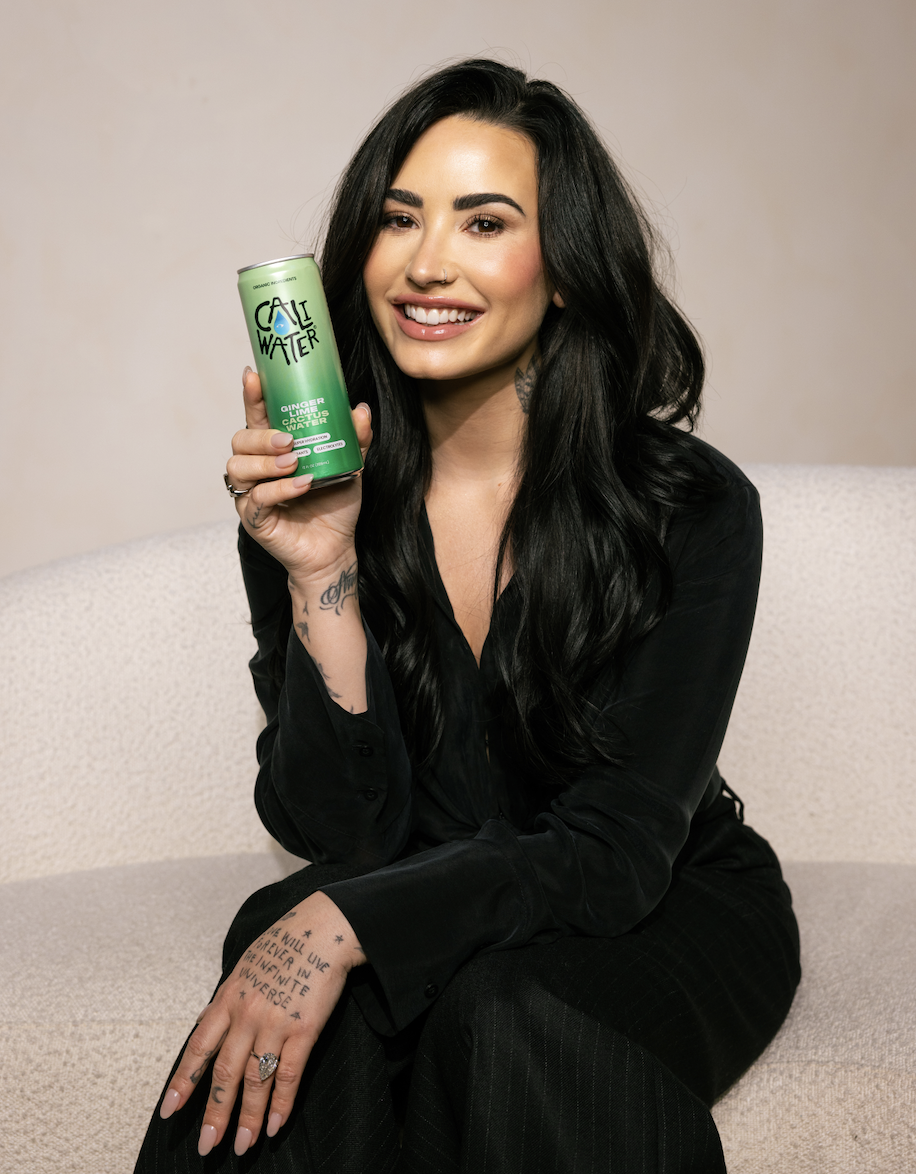
The Innovative, Fast-Growing Functional Beverage Leader, CaliwaterⓇ, Welcomes Grammy-Nominated Global Superstar Demi Lovato
CaliwaterⓇ, the all-natural cactus water super hydration beverage founded by actress Vanessa Hudgens and health mogul Oliver Trevena, is excited to welcome Grammy-nominated global superstar Demi Lovato to the team. Known for her dedication to health and wellness, Demi joins CaliwaterⓇ as a Brand Partner, Investor, and Ambassador, with a goal to inspire people everywhere to make mindful choices with the beverages they consume.
CaliwaterⓇ is sourced directly from the prickly pear cactus in the Sonoran Desert and is packed with five naturally occurring electrolytes, antioxidants, and essential nutrients to support hydration and other health benefits. CaliwaterⓇ offers a delicious choice of beverage that is only half the calories and sugar compared to coconut water.
Demi Lovato has long been a champion of wellness, sharing her journey toward health and balance with her fans. Now, in partnership with CaliwaterⓇ, Demi is bringing that passion for wellness to a broader audience, promoting healthy choices and self-care through hydration. Adds Demi, “I have been a fan of CaliwaterⓇ for a while now, and I am excited to partner with the brand. Caliwater is a delicious way to feel good, stay hydrated, and make sure I am getting the electrolytes, antioxidants, and essential nutrients that my body needs to stay healthy.” – Demi Lovato
“We’re thrilled to have Demi Lovato join the CaliwaterⓇ family,” said co-founder Oliver Trevena. “Her authentic commitment to health and wellness mirrors what we stand for at CaliwaterⓇ. Together, we hope to offer consumers better choices in the beverage space, whether that’s choosing a refreshing CaliwaterⓇ or finding joy in a healthy lifestyle.”
The global electrolyte market is projected to reach $46.5 billion by 2028, with plant-based hydration beverages accounting for $13.9 billion of that market. 75% of American adults are chronically dehydrated, and more than 50% of all US kids. Solving this crisis has led to an increased interest in hydration beverages.
The brand will also be exhibiting at the Natural Products Expo West in Anaheim next week, March 4-7, 2025, and debuting the new can design seen in the Demi Lovato campaign images. Founders Vanessa Hudgens and Oliver Trevena will be making an appearance on March 6th at their exhibitor booth.
About Caliwater
CaliwaterⓇ is an all-natural functional cactus water beverage founded by actress Vanessa Hudgens and health mogul Oliver Trevena. Sourced from the prickly pear cactus in the Sonoran Desert, CaliwaterⓇ is rich in antioxidants, five naturally occurring electrolytes, vitamins, and minerals. CaliwaterⓇ transcends the boundaries of mere hydration and, through its prickly pear core ingredient, provides numerous benefits for health and well-being, such as immunity support, digestion, and skin health. With a commitment to wellness and sustainability, Caliwater promotes a healthy lifestyle that is good for you– and the planet. Caliwater is also officially partnered with American Forests. By aligning Caliwater’s commitment to healthy living and sustainability with American Forests’ nearly 150-year legacy of leadership in forest restoration and conservation, this partnership seeks to inspire action and support for reforestation efforts across cities and landscapes. Learn more about the brand at www.drinkcaliwater.com and follow @caliwater on social platforms.
About Demi Lovato
Demi Lovato is a Grammy-nominated and award-winning musician, actor, advocate, and New York Times best-selling author. First known for her onscreen talents, Demi soon became a musical phenomenon for her remarkable vocal ability. With over 50 billion streams earned worldwide, Demi has released eight original studio albums, all of which debuted in the Top 10 of the Billboard 20,0, and four boast over one billion streams on Spotify. Most recently, Demi made her directorial debut with her acclaimed Hulu documentary Child Star. As an actor, Demi can next be seen in Stephanie Laing’s Tow alongside Octavia Spencer, Ariana DeBose, Rose Byrne and Dominic Sessa. With an audience of over 266 million on social media, Demi has established herself as a global sensation. linktr.ee/demilovato
The brand, Caliwater Cactus Water, which also just recently added Sprouts and Albertsons to its national retail portfolio (in addition to retail partners like GNC, Gelsons, Ralphs, HEB, Wegmans, Giant Market District, and more), was launched in 2021 by Vanessa Hudgens and Oliver Trevena. Caliwater has 5 core skews and a kids’ line of cactus water pouches. Investors include founders Vanessa Hudgens and Oliver Trevena, Glen Powell, Alexander Ludwig, Aaron Rodgers, Gerard Butler, Cody Belinger, Ryan Tedder, Frank Grillo, Claudia Gadelha, Nikki Reed, Brooke Burke, Roslyn Sanchez, Fourward Ventures, Mangusta Capital, Dhiren and Neelima Jhaveri, Aaron Keay, and more. www.drinkcaliwater.com
Follow on social media @caliwater @ddlovato
Disclaimer The Content is not intended to be a substitute for professional medical advice, diagnosis, or treatment. Always seek the advice of your physician or other qualified health provider with any questions you may have regarding a medical condition.
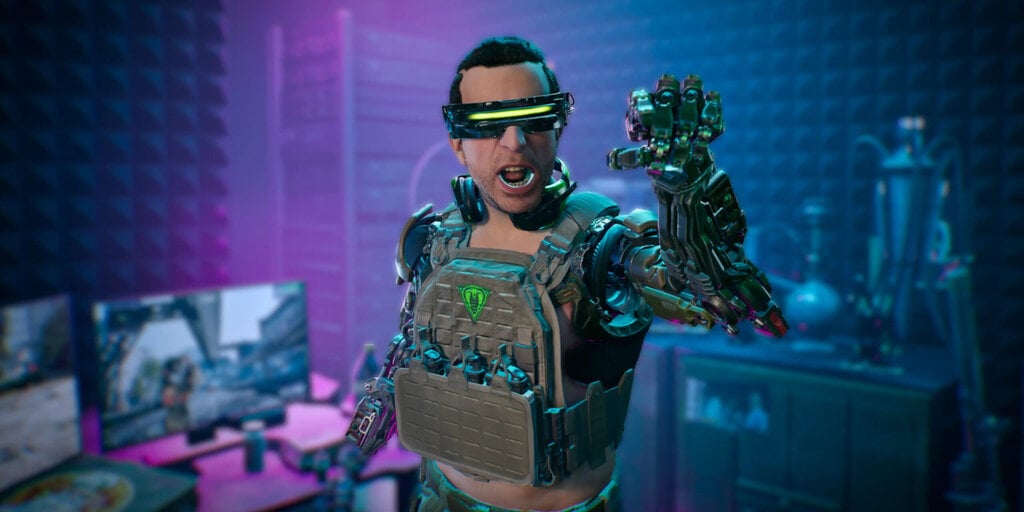
Blockchain-driven battle royale shooter Off the Grid has launched what Gunzilla Games is calling its “biggest update yet” by unlocking a region of the map, adding a new cyberlimb into the game, and debuting a new “street event.”
In December, Off the Grid launched an update that focused on reworking elements of the game while boosting performance. But this latest update instead looks to add exciting new features to the experience in an effort to keep players coming back for more.
“Biggest update we have EVER done,” Gunzilla Games Director of Web3 Theodore Agranat told Decrypt, echoing the announcement calling it the “biggest update yet.”
Teardrop has just deployed its BIGGEST UPDATE YET!
🌏 New Region: Midtown Harbour 🦾 New Cyberlimb: MaxiGun 🔥 First Street Event: Nuestros Diablos Gang 🎵 New Side Mission: Combat DJ 💎 New Content Pack & Battle Pass Upgrade 🏃 Movement & Jetpack Improvements … and more! pic.twitter.com/priKzSiqMd
Firstly, the “industrial hell hole” of Midtown Harbour has been unlocked as a playable region on the Teardrop Island map. Gunzilla told Decrypt back in December that only 20% of the map was playable at the time, as it looked to open it up throughout 2025. Midtown Harbour is the first step towards unlocking this goal.
Inside this new region, the Mexican Nuestros Diablos gang has set up shop and will relentlessly defend it. This new “street event” will see players fight it out with the non-playable characters, or NPCs, in order to grab a hex—which can then be extracted in exchange for weapons, cyberlimbs, or skins.
On top of this, the game’s first side mission—called “Combat DJ”—has been added to the game. In this mission, squads will fight to control the area surrounding a DJ booth as music blares out; if a team “dominates” the zone, they will earn loot and XP.
The most game-changing addition, perhaps, is the new MaxiGun cyberlimb, which is essentially a fully-automatic mini gatling gun strapped to your arm. How effective this will be remains to be seen, but it’s sure to shake up how players strategize their loadouts.
And if you’re just here for the refreshed cosmetics, the update also adds a Nuestros Diablos content pack as well as the Pacifist Character Set to the battle pass.
It is also worth noting that the update also includes a significant amount of bug fixes, weapon improvements, and user interface changes. Although, according to patch notes reviewed by Decrypt, it appears there has been no weapon balancing this time around.
Right now, Off the Grid’s crypto elements are working in the background on the GUNZ testnet, a dedicated L1 network on the Avalanche blockchain. Over the long-term, the game is looking to open a marketplace similar to Valve’s Steam marketplace where weapons, cyberlimbs, and skins can be freely traded.
While this update has been branded as its biggest yet, the much-anticipated launch of in-game crypto elements and the impending GUN token could bring a more substantial change that industry advocates believe will help drive crypto gaming adoption.
Researchers who have investigated the role of creatine supplementation on health and performance and the International Society of Sports Nutrition have become increasingly concerned about reports that government agencies are attempting to restrict the sale of dietary supplements, including dietary supplements containing creatine, to children and adolescents. Creatine is a naturally occurring compound found in every cell in the human body that plays a critical role in cellular metabolism. The daily turnover of creatine is about 2-4 grams/day, depending on muscle mass and physical activity levels (1,2). About half of the daily need for creatine is synthesized in the body from amino acids (arginine, glycine, methionine) and stored as free creatine or phosphocreatine in muscle, brain, heart, and other tissues (1). The remaining daily need to maintain normal cell and tissue levels of creatine primarily comes from consuming meat and fish. For example, one pound (16 oz.) of red meat and fish contains about 1-2 grams of creatine. In the cells, creatine changes into phosphocreatine, a compound vital in maintaining cellular energy availability, particularly during metabolically stressful conditions like intense exercise, periods of injury or illness, and some metabolic diseases with applications for diverse populations across a wide age range.
Creatine is essential to promote normal energy metabolism and healthy growth and maturation in children and adolescents. Low dietary creatine intake has been associated with slower growth, less muscle mass, and higher body fat in children and adolescents. Adolescents have been reported to consume lower than recommended amounts of creatine in the diet. Despite common misconceptions, creatine has a well-supported safety profile and has been repeatedly shown to be safe, even with long-term supplementation (3,4). Additionally, there is no evidence that children and adolescents purchasing and taking creatine-containing supplements cause adverse health effects and/or increase the likelihood of eating disorders or use of performance-enhancing drugs. Conversely, individuals who take creatine are interested in improving health, exercise performance, gaining muscle mass, and improving their physique. Since meat and fish are expensive and high-calorie sources of creatine, dietary supplementation of creatine monohydrate or supplements and foods fortified with creatine monohydrate are a cost-effective way to ensure that children and adolescents obtain enough creatine in their diet to promote healthy growth and maturation. Creatine supplementation has also been shown to be safe and have clinically meaningful benefits in pediatric disorders, including acute lymphoblastic leukemia, Duchenne muscular dystrophy, and disorders of creatine metabolism.
Legislation restricting the sale of creatine-containing products to children and adolescents is not based on scientific evidence which strongly supports the importance of creatine in the diet and its safety as a supplement. Moreover, creatine supplementation is not associated with eating disorders (5), and any claim suggesting the contrary is not rooted in scientific evidence. These false claims and reckless speculation regarding the dangers of creatine supplementation may discourage the use of creatine by minors, parents of minors, and healthcare professionals from recommending creatine supplementation, a nutrient that offers a plethora of health and performance-related benefits for all populations. This may further reduce the availability of creatine in children’s and adolescents’ diets, impairing growth and maturation and negatively impacting the development of a healthy body composition. Lobbying groups and legislatures should base laws on the available science, not speculation, unfounded hypotheses, or politics. We provide the following scientific facts about creatine to help those proposing legislative efforts to limit the availability of creatine in children and adolescents make more informed legislation.
Creatine Facts
Creatine is a naturally occurring compound that is a primary constituent of phosphocreatine stored in cells and is needed to provide cellular energy.
The daily need for creatine is about 2-4 grams/day, depending on muscle mass and physical activity levels. About half of the daily need for creatine is synthesized in the body from the amino acids arginine, glycine, and methionine. The remainder must be obtained from the diet and/or dietary supplements.
The best sources of creatine in the diet are meat and fish, which contain about 1-2 grams of creatine per pound. Since meat and fish are expensive (about $4.00 to $18.00 USD per pound) and contain large amounts of protein and fat (i.e., about 450 to 1,400 kcals/pound), dietary supplementation of creatine monohydrate (about $0.03 – $0.05 USD per gram) is a more cost-effective way to ensure individuals obtain enough creatine in their diet to meet daily needs (1).
Creatine supplementation can also be an effective dietary strategy for vegans or vegetarians who often do not consume enough creatine in their diet (6).
Analysis of the National Health and Nutrition Examination Survey (NHANES) database revealed that 4,291 boys and girls aged 2-19 years (7) consumed an average of 1 gram/day of creatine in their diets, and higher dietary intake of creatine (> 1.5 grams/day) was associated with greater height and weight compared to those consuming diets lower in creatine. Dietary creatine intake was also positively correlated with lean mass and bone mineral content while negatively correlating with fat mass and body fat percentage in 1,273 children and adolescents between the ages of 8 and 19 years (8). These findings indicate that the dietary availability of creatine in children and adolescents may positively affect growth, maturation, and body composition. Yet, in recent years, younger populations have been reported to have decreased dietary creatine intake (9), underscoring the need for children and adolescents to consume more creatine in their diets.
The adequate intake (AI) for creatine is 7 mg/day for infants aged 0-6 months who are exclusively breastfed and 8.4 mg/day for infants aged 7-12 months (10).
The NHANES database also revealed that lower dietary creatine intake (i.e., < 0.95 grams/day) was associated with poorer cognitive function test performance among 1,340 adults >60 years compared to those consuming diets with less than 0.95 grams per day (11). Additionally, analysis of dietary creatine intake among 1,500 adults > 65 years revealed that 70% of this cohort consumed less than recommended amounts of creatine in their diets (< 0.95 grams per day), and low dietary creatine intake was associated with a greater risk of angina pectoris and liver conditions compared to those consuming >1.0 grams per day of dietary creatine (12). These findings highlight the need for older individuals to increase dietary intake of creatine.
High-quality creatine monohydrate is Generally Recognized as Safe (GRAS) by the Food and Drug Administration (13) and is considered safe for human consumption in dietary supplements in the United States, Canada, Europe, Australia, South Korea, Japan, and China. Efforts are underway to fortify creatine in food and to position it as a conditionally essential nutrient.
Over 680 peer-reviewed clinical trials have been conducted on creatine supplementation (95% as creatine monohydrate) since the 1970s, involving over 12,800 study participants administered creatine supplements in dosages up to 30 grams per day for 14 years in populations ranging from infants to very elderly individuals in both healthy and clinical populations. No clinical adverse events were reported in any clinical trial study, and the minor side effects reported were infrequent and not significantly different from over 13,500 participants consuming placebos in these studies. This includes a comparison of studies conducted on children and adolescents (< 18 years), young adults (19-45 years), middle-aged adults (46-65 years), and older adults (>65 years). Moreover, an analysis of over 28.4 million adverse event reports in the United States, Canada, Australia, and Europe, using SIDER 4.1 over the last 50 years, reveals that creatine has rarely been mentioned (about 0.0007%) despite billions of doses taken worldwide over the past 30 years. While adverse event reports do not imply causality, the lack of reports worldwide supports findings from clinical trials that creatine is safe for individuals of all ages.
Creatine monohydrate supplementation (e.g., 0.3 grams/kg/day for 5-7 days and 0.05 to 0.15 grams/kg/day thereafter) is the most effective nutritional strategy to increase and maintain tissue creatine content (1). Many studies indicate that creatine monohydrate supplementation increases gains in strength, high-intensity exercise performance, and muscle mass during resistance-exercise training (4,14). It is considered the most effective nutritional strategy for individuals wanting to maintain and increase strength (4). Creatine supplementation has also been reported to reduce the risk of injury, including the severity of concussion and traumatic brain injury (2). Restricting the availability of creatine to children and adolescents may put them at risk for injury or compromise recovery following injury or disease management for neurocognitive disorders.
Emerging evidence indicates that creatine monohydrate supplementation possesses a number of health benefits during pregnancy and infancy (15), for children and adolescents (16), for women (17), for adults involved in exercise training (4), and for older populations (18). Additionally, there is evidence that creatine monohydrate supplementation enhances immunity (19) and can promote heart (20), vascular (21), and brain health (22). Therapeutic benefits have been reported in the management of diabetes (23), sarcopenia (24-27), osteoporosis (25,28), patients with neuromuscular diseases (29), and rehabilitation (3,24,30-36). Furthermore, data shows that creatine slows the progression of some forms of cancer (37,38) and may have therapeutic benefit in helping cancer patients maintain muscle mass (39) and prevent body fat accumulation during maintenance chemotherapy that includes corticosteroids (40). For this reason, it is recommended that all individuals consume 2-3 grams per day of creatine to promote general health (2,4,41).
Several studies, particularly in older populations, have shown that consuming diets higher in creatine (>0.95 grams/day) is associated with better cognition (6) and that creatine supplementation may improve cognitive function (42-45).
No evidence is available to demonstrate that consuming creatine monohydrate increases the prevalence of eating disorders or adversely affects individuals being treated for psychiatric conditions (5). Conversely, analysis of the NHANES database among 22,692 adults indicates that low dietary creatine intake is associated with a greater incidence of depression (45), which is often related to eating disorders and/or poor body image perceptions (46). Furthermore, creatine supplementation has been suggested as a potential nutritional adjunctive strategy to help manage depression and reduce suicidal ideations in individuals unresponsive to some psychiatric medications (47).
Given all the known benefits and favorable safety profile of creatine supplementation reported in the scientific and medical literature, we believe that government legislatures and sports organizations that restrict and/or discourage the use of creatine may be placing athletes at greater risk—particularly in contact sports where there is a risk of head trauma and/or neurological injury, thereby opening themselves up to legal liability. This includes children and adolescent athletes participating in sports that expose them to a risk of head and/or spinal cord injury. Imposing unnecessary restrictions on creatine may reduce the amount of creatine in the diets of children and adolescents, mislead public perception about the safety of creatine supplementation, and discourage healthcare professionals from recommending creatine supplementation to their patients, negatively impacting their health and quality of life. Moreover, proposing to restrict the sale of a healthy nutrient like creatine to children and adolescents while they can readily purchase high-fat and high-calorie foods, high-calorie caffeinated beverages, and engage in unhealthy behaviors without restrictions reinforces poor health and eating behaviors while simultaneously limiting access to a conditionally essential nutrient that offers numerous health benefits.
In summary
The robust body of evidence supports the safety and multifaceted benefits of creatine supplementation across all age groups. We urge lobbyists, policymakers, and health agencies to consult with leading creatine scientists and the International Society of Sports Nutrition and to consider the full spectrum of scientific data before implementing restrictions that would have adverse public health and performance implications.
*See the full list of ISSN members, international creatine researchers, and scholars who support this statement, as as well as conflicts of interest here.