About Editorial team of BIPNs

Main team of content of bipns.com. Any type of content should be approved by us.
14 02, 2025

These Are the Supplements to Take for Every Single Travel Woe That Wrecks Your Skin

By |2025-02-14T19:21:04+02:00February 14, 2025|Dietary Supplements News, News|0 Comments


For many women, femininity is tied to our hair even before we begin to retain memories: the bows tied around our infant heads, the cartoons we watch featuring characters with waist-length hair, and the decorative clips placed carefully into our braids. As we get older, our hair continues to be a symbol of womanhood and even overall health. We spend thousands of dollars giving it haircuts, highlights, at-home treatments, etc. So, when the first signs of hair loss appear, the feeling can be daunting for many. For many women, losing hair isn’t just an aesthetic concern—it can feel like losing part of our identities. 

Female hair loss is way more common than you might think. A 2023 study found that more than half of women will experience hair thinning in their lifetime, and another study found that 32 percent of women will experience female-pattern hair loss. In the United States alone, there are currently 21 million women experiencing hair loss—just slightly less than the entire population in Florida. Despite these crushing numbers, most treatments to reverse hair loss are overwhelmingly marketed to men. As such, the taboo and shame surrounding female hair loss can feel heavier and lonelier when it happens to us. 

While genetics is the biggest culprit of female hair loss, board-certified dermatologist Doris Day, M.D., adds that hormonal changes—such as PCOS, menopause, and pregnancy—are also common triggers for hair loss. These transitions can cause damage to the hair follicles, disrupt their life cycle, and/or prevent the necessary nutrients and oxygen levels from reaching the follicle. 

Apart from that, your metabolism, nutrition, age, lifestyle, and stress levels could lead to exacerbated hair loss and thinning. In fact, one of the most significant contributors to hair loss is stress. A 2021 study found that increased cortisol levels (aka the stress hormone) cause hair to enter the phase telogen for extended periods, preventing new hair from forming. Certain medical conditions and their treatments, such as chemotherapy, are also known to cause hair loss. Consistently wearing tight hairstyles like braids, buns, and weaves can also lead to traction alopecia. While not nearly as dramatic, Kseniya Popova, the executive director of R&D and innovation at The Rootist, says the products you use on your scalp and exposing your scalp to excessive heat can also lead to damage that causes hair loss. 

In most cases, hair loss reverses within a few months, but in more severe instances, women are unable to grow it back naturally. One study found that even a small amount of hair loss can impact someone’s self-esteem and feelings of self-worth, and another found that many people even limit their social lives to avoid confronting feelings of embarrassment or shame. To reclaim their strands and the confidence that comes with it, sometimes their best option is to get a hair transplant. 

Getting a female hair transplant can feel daunting, but this is likely because of the lack of conversation and education surrounding them. (For context, surgical procedures such as rhinoplasties and breast augmentations, involve general anesthesia but may feel more approachable because we’ve grown accustomed to talking about them in the cultural zeitgeist.) So, we’re here to clarify the many questions surrounding this procedure and help you understand whether or not you may be a candidate. We’ll start from the top: 

What is a hair transplant? 

A hair transplant is a minimally invasive surgical procedure that takes hair follicles from one area of your head and are placed to the balding/thinning areas. The donor area typically comes from the back part of the head as it usually has more hair density and can cover any extraction scars naturally. Hair transplant procedures are performed under local anesthesia—meaning you’re awake the whole time—and can take several hours depending on how many follicles are harvested (taken from the donor site) and grafted (implanted). 

Hair transplants can provide a more permanent solution to hair loss by redistributing hair follicles to thinning areas, and while this solution has mainly been marketed to men, Zafer Çetinkaya, MD, a surgeon at Este Nove, a leading hair transplant clinic in Istanbul, assures that women can reap the benefits of it as well. 

For women, hair transplants typically tackle the widow’s peak area and the top of the head. Mehmet Ziroğlu, MD, another surgeon at Este Nove, explains that the first step for this treatment involves a thorough consultation in which your doctor will review your medical history, discuss your hair goals, and design a natural-looking hairline according to your facial proportions. For the best results, he recommends patients bring “before” photos of themselves to try and mimic what they originally had. 

On the day of your surgery, Dr. Çetinkaya explains your doctor will give you local anesthesia to numb the treatment area, which both doctors agree is the most uncomfortable part of the treatment. Your doctor will shave a small rectangular section of your hair off that’s less than an inch above the nape of your neck—aka the donor area—and will extract hair follicles individually from there.

Patients are placed under local anesthesia, laying on their stomachs while their surgeon extracts hair grafts from the donor area. Then, they will be asked to turn around and lay on their back while their surgeon implants the hair grafts into the desired treatment area. The total time of surgery depends on how many implants they receive, but it lasts a few hours.

What are the most popular hair transplant methods for women? 

Not all hair transplants are the same. FUE (follicular unit extraction) is a popular choice for men, but experts say that it may not be the best approach for women. 

Craig Ziereng, DO, a California-based hair transplant surgeon, says he prefers FUT (follicular unit transplantation) since FUE “requires that the entire back and sides of the head be shaved short for the donor harvest, so it is typically not suggested for women as it thins out the hair in the back and sides of the head.” With FUT, only a thin strip—”usually about 1 to 1.5 centimeters wide and 15 to 30 centimeters long”—of the designated donor zone is shaved. Once the donor tissue strip is excised, the wound is closed and then covered by the hair above, which has been left long. From there, he says the donor strip of tissue is slivered and dissected into the naturally occurring follicular units of one to four hairs. “Next, the hair transplant surgeon creates tiny recipient sites according to the agreed hair transplant design,” Dr. Ziereng concludes. 

For women, Dr. Çetinkaya says they typically use the DHI (direct hair implantation) method where individual follicular units are extracted directly from the donor area using a specialized handheld tool called a Choi implementer pen, without the need for a strip of skin. He prefers this because it “allows for hyper-precision and minimal scaring.” Furthermore, it tends to have a higher success rate as the finesse of this technique reduces the amount of trauma to the follicles. 

How should women with textured hair know before getting a hair transplant? 

While some say that there is no real difference to consider for different hair textures seeking transplants, others say that there are things to consider. On one side, Dr. Ziering says having afro-textured or curly hair is an advantage since “the natural coarseness and curl of the hair [means] these patients often achieve visible results with fewer hair grafts, meaning a smaller-size surgery may deliver the desired result.” However, scarring can be more visible for people with afro-textured hair as they tend to have more melanated skin. So, in the same way that you would seek a hairstylist who has experience with your hair, Dr. Ziering encourages you to do the same with your transplant surgeon. 

Hair transplant aftercare

As with any surgical procedure, proper aftercare is essential to healing and ensuring the best results. For hair transplants, most of the focus is on minimizing discomfort, reducing swelling, and avoiding follicle friction. As such, your surgeon will provide you with antibiotics, pain medication, and a list of dos and don’ts to follow. 

For swelling, doctors recommend good ole’ ice packs. While icy headbands are often seen sported by men post-surgery, it’s typically only used for women who treat their Widow’s Peak since it’s at the front of your hairline. Your surgeon will also recommend you sleep on an angled pillow to reduce swelling overnight and to keep from moving around in your sleep, which Dr. Ziroğlu explains could lead to friction and, therefore, the weakening (and consequential fallout) of your fresh grafts.

To avoid irritating the sensitive incision points, he also recommends using baby shampoo as they’re paraben, sulfate, and fragrance-free. Obviously, your scalp is delicate, so he recommends gently tapping the shampoo into the scalp—no harsh scrubbing or side-to-side motions—and rinsing it off. The first two weeks are the most important for retaining your new grafts, so avoiding hairstyling products, wearing hats, using hairdryers, or styling your hair in any way that would create tension on the scalp is also recommended.

It’s important to note that many grafts will fall out, and that’s to be expected and isn’t cause for alarm. “The transplanted hairs will fall out around the two-week post-op mark and then slowly begin regrowing and following the natural hair growth cycle,” shares Dr. Ziering. “For most women, the mature result can be expected between 12 to 18 months post-surgery.”

Potential side-effects

It’s always important to thoroughly vet your surgeons before going into the type of treatment to ensure you’re getting the best care and that it is in the hands of a specialist. In this case, choosing a licensed doctor specializing in hair transplants is vital. (After all, surgeries are no joke, and you want to make sure you go to someone who won’t leave you with scars.) 

Once you’ve found a doctor you trust and whose work you like, Dr. Çetinkaya says that the most common side effect is post-surgical swelling—as mentioned above—which can last up to two weeks. Your doctors should provide you with a special pillow to keep your head in place while you sleep at a 45-degree angle during this time, as well as antibiotics and medication for any added discomfort, such as itching. 

How long do results last? 

The only hair loss treatment that renders permanent results are hair transplants, but you still need to maintain a healthy lifestyle to keep your new hair strong and in place. Dr. Ziroğlu explains that new hair will act like regular hair, so factors like the type of water a person showers with, their diet, and their psychological state can impact longevity.  

What hair loss treatments should you try before getting a transplant? 

Depending on where you’re at in your hair loss journey, there are different approaches you can take. First, though, it’s important to understand the life cycle of hair and at what point it stops. It has four phases: anagen, catagen, telogen, and exogen. Anagen refers to the growth phase, and roughly 85 percent of our hair is at this stage at any given time. Catagen refers to the period when a hair follicle loses its blood supply. Telogen is the resting phase where hair begins to shed, and exogen is the active shedding phase. Then it all circles back and repeats itself. 

People experiencing early-stage hair loss, aka thinning, can begin treatment with topicals and supplements. “At this stage, women should consider lifestyle changes, dietary supplements, and topical treatments such as minoxidil to promote hair growth and prevent further thinning,” says Marc Dauer, M.D., the medical director of Dauer Hair Restoration. We recommend Nutrafol’s Hair Growth Neutraceutical ($88) as Dr. Day says it can “fill nutrient gaps you may be experiencing, lower stress levels within the body, and support balanced hormones.” All of this will encourage the hair growth cycle and lead to better hair health.

In terms of products, Popova says to first analyze what you already have and use. Harsh shampoos, volumizing sprays, dry shampoos, and conditioners applied to the scalp can weaken the scalp’s barrier, impacting hair follicles. Furthermore, she says high heat can also contribute to hair loss. Popova recommends looking for products that nourish the scalp and its microbiome and says The Rootist’s BioBrew Strengthening Serum ($48) targets the roots, scalp, and hair. Once it’s strong and healthy, Nulastin’s Vibrant Scalp Treatment ($129) will activate the follicle and encourage thick hair growth. 

Those experiencing moderate hair loss, characterized by notable yet not extensive loss or thinning, can take several approaches to regain hair thickness and stimulate hair growth before going under anesthesia. “When hair loss becomes more apparent, treatments like PRP (platelet-rich plasma) therapy or laser treatments can be effective,” says Dr. Dauer. “These treatments can help stimulate hair growth and improve hair density.”

PRP treatments involve drawing blood from the patient, processing it in a centrifuge machine to separate red blood cells and platelet-poor plasma from platelet-rich plasma, and then injecting those back into the scalp to stimulate hair growth and increase its density. Dr. Dauer says that for the best results, he typically recommends a series of three to four treatments spaced about a month apart.

While prices vary depending on where you’re located and the doctor you go to, PRP is definitely an investment. “Generally, patients can expect to invest in the range of several hundred to a few thousand dollars per session,” says Dr. Dauer. However, results improve hair thickness and growth, and they can be observed within a few months of starting treatment. 

Another solution is LED light therapy. Nicole Ruth, DO, a board certified dermatologist based in New York City, says that it stimulates cellular activity in hair follicles, increases blood circulation to the scalp, and reduces inflammation. All this helps prolong the growth phase of the hair cycle, prevents hair thinning, and encourages new hair growth. In fact, a recent study proved that this type of low-level laser therapy (LLLT) was as effective in stimulating hair regrowth as topical minoxidil. For the best results, she says to use CurrentBody’s Skin LED Hair Growth helmet ($859) in tandem with a holistic health-boosting approach. For even faster and quicker results, the study also suggests using topical minoxidil. Dr. Dauer says that this approach can increase hair density and reduce hair loss with ongoing treatment.

Get all the latest in wellness, trends, food, fitness, beauty, and more delivered right to your inbox.


Source link

14 02, 2025

Can Solana Surpass $1,000 as JetBolt Intensifies

By |2025-02-14T19:18:12+02:00February 14, 2025|Crypto News, News|0 Comments

While Solana smashing the $1K milestone is unlikely at the moment, the new altcoin is hyping up the crypto community with its astonishing growth and over 320 million tokens sold. JetBolt is packed with a range of remarkable features, with its most prominent being zero-gas technology.

More than gas-fee-free interactions, JetBolt incorporates artificial intelligence (AI) into its futuristic ecosystem with its AI-aggregation tool feature. This AI-driven tool delivers blockchain news, crypto trending stories, and Web3 content, categorized by bullish or bearish market sentiment.

JetBolt’s integrated Web3 wallet system ensures a straightforward transaction experience, thanks to its biometrics, facial recognition, and self-custodial control features granting freedom to users. Moreover, JetBolt offers lightning-fast transactions and near-instant finality attributes to further enhance users’ transactions.

Beyond tech, JetBolt allows users to earn more crypto rewards by logging in daily, staking their tokens, and connecting with other users on the platform. Aside from upgrading the typical staking process, this feature is also driving users’ engagement on the platform.

Early adopters can receive when they purchase Alpha Box packages or batch token deals. Meanwhile, JetBolt’s token price increases daily, and buyers are rushing to acquire JBOLT tokens before the next price rise.

Its zero-gas technology, Web3 wallet, and staking rewarding system fuel JetBolt’s surging momentum as crypto buyers explore altcoins beyond Solana.

Source link

14 02, 2025

XAG/USD rallies above $33 despite Trump tariff fears ease

By |2025-02-14T17:38:09+02:00February 14, 2025|Forex News, News|0 Comments


  • Silver price soars to near $33.30 despite multiple headwinds.
  • US Trump didn’t reveal a detailed reciprocal tariff plan on Thursday.
  • The Fed is expected to hold interest rates steady in the next three policy meetings.

Silver price (XAG/USD) surges over 2.5% to near $33.30 in Friday’s North American session, the highest level seen in more than three months. The white metal soars even though risks of a global trade war have paused temporarily and the Federal Reserve (Fed) is expected to maintain a restrictive monetary policy stance for longer.

US President Donald Trump seems short of imposing reciprocal tariffs than what market participants had anticipated. Investors had expected that Trump could unveil a detailed plan of reciprocal tariffs on Thursday. The assumption was based on his tweet at his Truth Social account that “Three great weeks, perhaps the best ever, but today is the big one: reciprocal tariffs!!! Make America great again!!!”, which came in early North American trading hours on Thursday.

However, Trump only passed an order to the Commerce and Treasury departments to prepare a plan on reciprocity, which confirmed that tariffs are not happening, at least for now.

This scenario diminished fears of global uncertainty, which is technically not favorable for the Silver price.

The impact of a delay in Trump’s reciprocal tariffs is visible on the US Dollar (USD), with the US Dollar Index (DXY) revisiting the four-week low around 106.80.

According to the CME FedWatch tool, the Fed is expected to keep interest rates steady in the next three policy meetings.

Silver technical analysis

Silver price breaks strongly above the key resistance of $32.50, which is plotted from the December 9 high. The outlook of the white metal was already bullish as the 20-day Exponential Moving Average (EMA) has been sloping higher, which trades around $31.60.

The 14-day Relative Strength Index (RSI) oscillates in the 60.00-80.00 range, suggesting that the momentum is strongly bullish.

Looking down, the December 9 high of $32.50 will be the key support for the Silver price. While, the October 31 high of $33.90 will be the key barrier.

Silver daily chart

Silver FAQs

Silver is a precious metal highly traded among investors. It has been historically used as a store of value and a medium of exchange. Although less popular than Gold, traders may turn to Silver to diversify their investment portfolio, for its intrinsic value or as a potential hedge during high-inflation periods. Investors can buy physical Silver, in coins or in bars, or trade it through vehicles such as Exchange Traded Funds, which track its price on international markets.

Silver prices can move due to a wide range of factors. Geopolitical instability or fears of a deep recession can make Silver price escalate due to its safe-haven status, although to a lesser extent than Gold’s. As a yieldless asset, Silver tends to rise with lower interest rates. Its moves also depend on how the US Dollar (USD) behaves as the asset is priced in dollars (XAG/USD). A strong Dollar tends to keep the price of Silver at bay, whereas a weaker Dollar is likely to propel prices up. Other factors such as investment demand, mining supply – Silver is much more abundant than Gold – and recycling rates can also affect prices.

Silver is widely used in industry, particularly in sectors such as electronics or solar energy, as it has one of the highest electric conductivity of all metals – more than Copper and Gold. A surge in demand can increase prices, while a decline tends to lower them. Dynamics in the US, Chinese and Indian economies can also contribute to price swings: for the US and particularly China, their big industrial sectors use Silver in various processes; in India, consumers’ demand for the precious metal for jewellery also plays a key role in setting prices.

Silver prices tend to follow Gold’s moves. When Gold prices rise, Silver typically follows suit, as their status as safe-haven assets is similar. The Gold/Silver ratio, which shows the number of ounces of Silver needed to equal the value of one ounce of Gold, may help to determine the relative valuation between both metals. Some investors may consider a high ratio as an indicator that Silver is undervalued, or Gold is overvalued. On the contrary, a low ratio might suggest that Gold is undervalued relative to Silver.


Source link

14 02, 2025

GBP/USD Price Analysis: UK GDP, Tariff Delays Boost Pound

By |2025-02-14T17:23:02+02:00February 14, 2025|Forex News, News|0 Comments

  • The GBP/USD price analysis shows a brighter outlook for the UK economy.
  • The UK economy expanded by 0.1% in the fourth quarter of last year.
  • Market participants have lowered expectations for Fed rate cuts.

The GBP/USD price analysis shows a brighter outlook for the UK economy after GDP data revealed an unexpected expansion in Q4 last year. Meanwhile, the dollar remained fragile as the impact of Trump’s tariff threats faded.

–Are you interested in learning more about STP brokers? Check our detailed guide-

Data on Thursday revealed that the UK economy expanded by 0.1% in the fourth quarter of last year. This figure came above estimates of a 0.1% contraction. The British economy has slowed down significantly, putting pressure on the Bank of England to lower borrowing costs. The upbeat report eased some of that pressure, boosting the pound. Market participants are now pricing 54-bps of rate cuts this year by the Bank of England. If the economy shows more bright spots, rate-cut bets will drop.

On the other hand, market participants have lowered expectations for Fed rate cuts due to upbeat inflation data. Both consumer and wholesale inflation figures came in above estimates, suggesting higher rates for longer in the US. Initially, the more hawkish outlook boosted the dollar.

However, the focus shifted to Trump tariffs, leading to a drop in the US currency. Reports revealed that there will be delays in implementing Trump’s reciprocal tariff. As a result, market participants believe this will give countries time to negotiate better trading deals.  

GBP/USD key events today

  • US core retail Sales m/m
  • US retail sales m/m

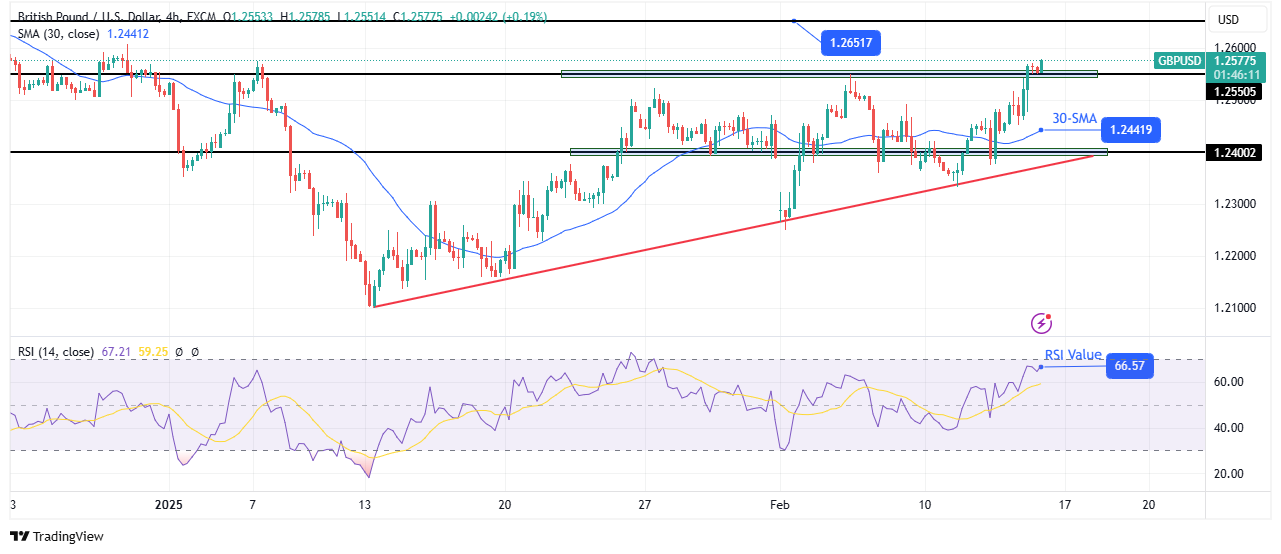
GBP/USD technical price analysis: Bulls reach a new high above 1.2550

GBP/USD Price Analysis: UK GDP, Tariff Delays Boost Pound
GBP/USD 4-hour chart

On the technical side, the GBP/USD price has broken above the 1.2550 resistance level to make a new high in the bullish trend. Moreover, the price trades far above the 30-SMA, and the RSI is nearing the overbought level, indicating solid bullish momentum. If the rally continues, the price will reach the 1.2651 level. 

–Are you interested in learning more about making money with forex? Check our detailed guide-

However, the price has maintained a shallow uptrend on a larger scale. As a result, when the price forms a new high, it is near the previous high. This means the price returns to the bullish support trendline soon after making a new high. 

If this is the case, the price will soon reverse to break below the 30-SMA and retest the support trendline. Nevertheless, it will keep making higher highs if it stays above the trendline.

Looking to trade forex now? Invest at eToro!

68% of retail investor accounts lose money when trading CFDs with this provider. You should consider whether you can afford to take the high risk of losing your money.

Source link

14 02, 2025

Starbucks Ginza House opens in Japan, with exclusive matcha drinks you can’t get anywhere else

By |2025-02-14T17:20:03+02:00February 14, 2025|Dietary Supplements News, News|0 Comments


Chain’s 2,000th store brings things full circle for the green mermaid in Japan.

On 2 August 1996, Starbucks opened its very first branch outside of the U.S., setting up shop in Japan, in Tokyo’s Ginza district.

In the nearly thirty years since, the chain has grown to include branches in every prefecture of the country, and now it’s bringing things full circle by opening its 2,000th Japanese store… back in Ginza. Called Starbucks Teavana Store Ginza Marronnier Street, this 2,000th store will deliver a wider variety of tea experiences to the public when it opens on 17 February.

It will be located on the first basement floor of Starbucks’ Ginza Marronnier Street branch, which currently takes up the first and second floors of the building. With the Teavana opening, the three floors will collectively be known as “Starbucks Ginza House“, where you can enjoy products that offer a Starbucks experience unique to Ginza.

In the Starbucks Reserve on the first and second floors, you’ll find rare coffees selected from all over the world, as well as the Princi bakery, which serves up Milanese-style breads and baked goods. The interior of the new Teavana store expresses the “glamour of tea” with a reverence for Japanese tea culture, complete with a bar-style counter and stone mill so you can enjoy the aroma of green tea as it’s freshly ground in front of you.

Starbucks says this location will serve as the starting point for developing and expanding rich tea experiences and products to Teavana stores across the country. In addition to a wide variety of coffee, food and tea products, Ginza House will also offer five signature products, marked “Ginza”, which are only available at this location.

▼ The Ginza Double Tall Caramel Macchiato (884 yen [US$5.79] for takeout, 900 yen for dine-in)

Available at the Roastery, this macchiato combines vanilla-flavoured syrup and steamed milk with smooth, foamed milk, a double shot of espresso and a delicious caramel sauce topping. A special feature of this drink is you can choose your preferred beans for the espresso, so the price will vary, depending on your selection.

▼ The Ginza Cornetti Boccone Matcha (530 yen for takeout, 540 yen for dine-in)

This sweet treat is designed to give you perfect bites of flavour every time, with the crunchiness of the buttery pastry melding beautifully with the moist, bittersweet matcha cream filling.

▼ The Ginza Stone Ground Matcha Tea Latte (available hot or iced, in a Tall size only; 1,080 yen for takeout, 1,100 yen dine-in)

This tea latte combines stone-ground Uji matcha with milk and wasanbon (refined Japanese sugar). This style of sugar helps to bring out the rich aroma of matcha, adding a mellow, elegant sweetness akin to traditional Japanese confectionery.

▼ The Ginza Stone Ground Matcha Frappuccino (Tall size only; 1,178 yen for takeout, 1,200 yen for dine-in)

This Frappuccino combines stone-ground Uji matcha and milk, with the two components blending together for an irresistibly smooth texture and rich flavor.

▼ The Ginza Stone Ground Matcha Mousse Tea & Strawberry (Tall size only; 1,453 takeout, 1,480 yen for dine-in)

This drink also features Uji matcha, but only a limited number are available each day as the matcha is freshly ground in-store. Containing layers of sweet and sour strawberry sauce, fresh cream, and white chocolate syrup in the base, you can enjoy different strengths of fruity, creamy matcha flavour as you stir the components together, making for a very decadent drink.

With Ginza’s reputation as a fancy district, home to many Japanese retailers specialising in traditional Japanese products, these drinks will fit right in to the neighbourhood’s high-end aesthetic. So if you’re looking for a classy Starbucks experience, Ginza House is where it’s at, and you’ll find some Princi-exclusive sakura sweets at the bakery for a limited time as well.

Source, images: Press release
● Want to hear about SoraNews24’s latest articles as soon as they’re published? Follow us on Facebook and Twitter! 


Source link

14 02, 2025

Here is Potential Dogecoin Price If DOGE Overtakes Solana and Ethereum in Market Cap

By |2025-02-14T17:17:04+02:00February 14, 2025|Crypto News, News|0 Comments

In a major rally where Dogecoin surges by 167% and 792%, it could surpass Solana and Ethereum in market cap.

Dogecoin took the crypto market by storm in the last quarter of 2024 when it engineered a 3X price gain in just two weeks. During this time, the performance of Solana and Ethereum paled in comparison.

Although Dogecoin has lost some of these gains, it still boasts a more impressive one-year performance than Solana (SOL) and Ethereum (ETH). In particular, with a floor price of $0.2532, Dogecoin is up by 211%, while SOL is up by 90%. Meanwhile, Ethereum’s position is much worse, seeing only 6.5% yearly growth.

With Dogecoin showing strong potential to stage more impressive price performance than SOL and ETH, this article explores the potential market value of DOGE in the hypothetical scenario where it overtakes Solana and Ethereum in market cap.

Dogecoin Price if It Overtakes Solana

As of today, Dogecoin ranks as the eighth-largest crypto asset by market cap, with a valuation of $37 billion. Meanwhile, Solana is three steps ahead, ranking as the fifth-largest crypto with a cap of $98 billion.

For Dogecoin to approach the level of Solana, its market cap must expand nearly threefold. Specifically, if Dogecoin attains a $100 billion market cap, considering its supply of 148 billion tokens, this would equate to a unit price of $0.6757 for DOGE.

With Dogecoin trading at $0.2532, attaining $0.6757 demands growth of 167%. Essentially, should Dogecoin see a rally of 167% while Solana fails to see a similar growth rate, it risks losing its market ranking to DOGE.

Dogecoin Price if It Overtakes Ethereum

Meanwhile, for Dogecoin to approach the level of Ethereum, the altcoin king, the meme coin has a more formidable journey ahead. Presently, Ethereum boasts a market cap of $320 billion with a unit price of $2,655.

Considering Dogecoin’s $37 billion cap, it would need nearly 10X growth to attain Ethereum’s current level. In particular, to surpass Ethereum with a market cap of $330 billion, Dogecoin’s market cap must grow by 792%.

This magnitude of growth would elevate Dogecoin’s unit price to $2.23. Notably, numerous analysts have estimated this price range and beyond as realistic expectations for Dogecoin this year.

In other words, in the hypothetical scenario where Dogecoin stages a massive 800% price surge and Ethereum maintains a largely stable position, the meme coin could overtake Ethereum as the second-largest crypto. 

Meanwhile, Dogecoin could face resistance in its race to this lofty position from other well-performing crypto assets like XRP.

DisClamier: This content is informational and should not be considered financial advice. The views expressed in this article may include the author’s personal opinions and do not reflect The Crypto Basic opinion. Readers are encouraged to do thorough research before making any investment decisions. The Crypto Basic is not responsible for any financial losses.

Source link

14 02, 2025

ClearpoolFin Leads FlareNetworks DeFi Ecosystem in TVL, Dominated by Real-World Assets | Flash News Detail

By |2025-02-14T15:51:01+02:00February 14, 2025|News, NFT News|0 Comments


On February 14, 2025, IntoTheBlock reported that the ClearpoolFin protocol has emerged as the leading protocol within the FlareNetworks DeFi ecosystem, with a focus on real-world assets (RWAs) contributing to the highest Total Value Locked (TVL) on the network [IntoTheBlock, February 14, 2025]. Specifically, at 10:00 AM UTC on February 14, 2025, ClearpoolFin’s TVL stood at $45.6 million, which represents a significant 12% increase from the previous week’s TVL of $40.7 million [DeFi Llama, February 14, 2025]. The dominance of RWAs in FlareNetworks is evidenced by the fact that as of February 14, 2025, at 11:30 AM UTC, RWAs accounted for 68% of the total DeFi TVL on the network [FlareNetworks Analytics, February 14, 2025]. This surge in TVL can be attributed to the recent integration of new RWA tokenization projects on ClearpoolFin, which was announced on February 10, 2025 [ClearpoolFin Blog, February 10, 2025]. These projects have attracted significant institutional interest, leading to increased liquidity and investor confidence in the platform’s capabilities to manage real-world assets effectively.

The trading implications of ClearpoolFin’s dominance in FlareNetworks are multifaceted. As of February 14, 2025, at 12:00 PM UTC, the FLR/CPOOL trading pair on the decentralized exchange SushiSwap saw a 7% increase in trading volume over the past 24 hours, reaching a volume of 1.2 million FLR [SushiSwap, February 14, 2025]. This surge in trading volume can be attributed to the increased interest in the CPOOL token, which is the native token of ClearpoolFin. Additionally, the FLR/USD pair on Coinbase experienced a 3% price increase to $0.034 from $0.033 at 1:00 PM UTC on February 14, 2025, following the announcement of ClearpoolFin’s TVL growth [Coinbase, February 14, 2025]. The increased TVL and trading volumes indicate a bullish sentiment towards ClearpoolFin and its potential to drive further growth in the FlareNetworks ecosystem. Traders might consider taking long positions on CPOOL or FLR, given the positive market sentiment and the increasing institutional interest in the platform.

Technical indicators and volume data further support the bullish outlook for ClearpoolFin and FlareNetworks. As of February 14, 2025, at 2:00 PM UTC, the Moving Average Convergence Divergence (MACD) for the CPOOL token on a 4-hour chart showed a bullish crossover, with the MACD line crossing above the signal line, indicating potential upward momentum [TradingView, February 14, 2025]. The Relative Strength Index (RSI) for CPOOL was at 62, suggesting that the token is not yet overbought and still has room for potential growth [CoinGecko, February 14, 2025]. On-chain metrics for FlareNetworks also showed positive developments, with a 15% increase in daily active addresses to 10,500 at 3:00 PM UTC on February 14, 2025, indicating heightened network activity and engagement [FlareNetworks Explorer, February 14, 2025]. The trading volume for the FLR/BTC pair on Binance increased by 5% to 250 BTC at 4:00 PM UTC on February 14, 2025, further reinforcing the bullish sentiment in the market [Binance, February 14, 2025]. These technical indicators and volume data suggest that traders should closely monitor the CPOOL and FLR tokens for potential trading opportunities.

In the context of AI-related developments, while there are no direct AI integrations within ClearpoolFin or FlareNetworks at this time, the broader crypto market sentiment influenced by AI advancements can still impact these assets. As of February 14, 2025, at 5:00 PM UTC, the AI-driven trading platform, Numerai, reported a 10% increase in its trading volume on the Ethereum network, which could signal a growing interest in AI-driven trading strategies [Numerai, February 14, 2025]. This increased volume in AI-driven trading might indirectly influence investor sentiment towards DeFi platforms like ClearpoolFin, as traders seek to leverage AI technologies for better trading outcomes. Additionally, the correlation between major AI tokens like AGIX and the broader crypto market, including FLR, was observed to be positive, with AGIX experiencing a 5% price increase to $0.50 from $0.475 at 6:00 PM UTC on February 14, 2025 [CoinMarketCap, February 14, 2025]. This correlation suggests that positive developments in the AI sector could lead to increased interest and investment in related DeFi ecosystems, potentially benefiting platforms like ClearpoolFin and FlareNetworks. Traders should monitor these AI developments closely, as they could present new trading opportunities in the AI-crypto crossover space.


Source link

14 02, 2025

XAU/USD risks profit-taking after this week’s record rally

By |2025-02-14T15:37:02+02:00February 14, 2025|Forex News, News|0 Comments


  • Gold price takes a breather on Friday as traders brace for profit-taking.
  • The US Dollar licks wounds with US Treasury yields on cautious optimism and dovish Fed bets.
  • Gold price could retreat to the daily support line at $2,892 amid overbought RSI.

Gold price is taking a breather while holding near $2,930 early Friday, having witnessed two straight days of impressive gains.

Gold price consolidates weekly gains          

Despite the pause, Gold price remains on track to book its seventh straight weekly gain, mainly supported by US President Donald Trump’s reciprocal tariffs updates and increased expectations that the US Federal Reserve (Fed) could stick with its easing trajectory this year.

Following a hot January US Consumer Price Index (CPI) data, the Producer Price Index (PPI) also surprised markets to the upside. However, the index’s components cooled down, reinforcing dovish expectations around the Fed’s rate cut prospects.

Reuters reported, “Following the PPI data, US rate futures priced in 31 basis points (bps) of easing this year, compared with 27 bps late on Wednesday, according to LSEG calculations. The next rate reduction is expected either at the October or December meeting.”

This led to a sharp sell-off in the US Treasury bond yields and the US Dollar (USD), benefiting the non-yielding Gold price.

Additionally, the narrative that the plan for Trump’s reciprocal tariffs is in the works and would not be imposed immediately relieved global stocks and weighed heavily on the haven demand for the USD across the board, pushing Gold price northward.

Gold traders shrugged off prospects of Russia-Ukraine peace talks as the focus remained on Trump’s tariffs and the US inflation data.

On Thursday, the Kremlin came out with a statement that “there is a political will on both sides to engage in dialogue and search for a settlement when asked about a possible Russia-Ukraine peace deal.

Looking ahead, Gold price could see a profit-taking decline as traders cash in their Gold longs after this week’s record rally and heading into a long weekend. Fresh developments surrounding Trump’s tariffs and the broader market sentiment will continue playing a pivotal role in the Gold price direction.

The high-impact US Retail Sales data will be also closely followed for fresh cues on the Fed’s policy outlook and the value of the USD, eventually impacting Gold price.

Gold price technical analysis: Daily chart

The daily chart shows that Gold price could pull back briefly toward the rising trendline support at $2,892.

The 14-day Relative Strength Index (RSI) has turned flat while holding within the overbought territory, suggesting a fresh dip could be in the offing.

If the selling pressure intensifies below the abovementioned support level, the Gold price could accelerate the downside toward the $2,850 psychological barrier.

Conversely, if the upside momentum regains traction, Gold buyers will challenge the record high of $2,943.

The next relevant resistance is seen at the $3,000 round level.

Gold FAQs

Gold has played a key role in human’s history as it has been widely used as a store of value and medium of exchange. Currently, apart from its shine and usage for jewelry, the precious metal is widely seen as a safe-haven asset, meaning that it is considered a good investment during turbulent times. Gold is also widely seen as a hedge against inflation and against depreciating currencies as it doesn’t rely on any specific issuer or government.

Central banks are the biggest Gold holders. In their aim to support their currencies in turbulent times, central banks tend to diversify their reserves and buy Gold to improve the perceived strength of the economy and the currency. High Gold reserves can be a source of trust for a country’s solvency. Central banks added 1,136 tonnes of Gold worth around $70 billion to their reserves in 2022, according to data from the World Gold Council. This is the highest yearly purchase since records began. Central banks from emerging economies such as China, India and Turkey are quickly increasing their Gold reserves.

Gold has an inverse correlation with the US Dollar and US Treasuries, which are both major reserve and safe-haven assets. When the Dollar depreciates, Gold tends to rise, enabling investors and central banks to diversify their assets in turbulent times. Gold is also inversely correlated with risk assets. A rally in the stock market tends to weaken Gold price, while sell-offs in riskier markets tend to favor the precious metal.

The price can move due to a wide range of factors. Geopolitical instability or fears of a deep recession can quickly make Gold price escalate due to its safe-haven status. As a yield-less asset, Gold tends to rise with lower interest rates, while higher cost of money usually weighs down on the yellow metal. Still, most moves depend on how the US Dollar (USD) behaves as the asset is priced in dollars (XAU/USD). A strong Dollar tends to keep the price of Gold controlled, whereas a weaker Dollar is likely to push Gold prices up.


Source link

14 02, 2025

Euro could extend uptrend if risk flows continue to dominate markets

By |2025-02-14T15:22:12+02:00February 14, 2025|Forex News, News|0 Comments

  • EUR/USD trades at its highest level in over two weeks above 1.0450.
  • The US economic calendar will feature Retail Sales data for January.
  • US stock index futures trade marginally higher on the day.

EUR/USD gathered bullish momentum in the late American session on Thursday and gained nearly 0.8% on the day. After touching its highest level since January 28 above 1.0470 in the Asian session on Friday, the pair seems to have entered a consolidation phase near 1.0460 in the European morning.

Euro PRICE This week

The table below shows the percentage change of Euro (EUR) against listed major currencies this week. Euro was the strongest against the Japanese Yen.

  USD EUR GBP JPY CAD AUD NZD CHF
USD   -1.47% -1.51% 0.90% -0.89% -0.98% -0.69% -0.65%
EUR 1.47%   0.03% 2.54% 0.73% 0.49% 0.88% 0.90%
GBP 1.51% -0.03%   2.34% 0.65% 0.46% 0.85% 0.88%
JPY -0.90% -2.54% -2.34%   -1.81% -1.80% -1.58% -1.52%
CAD 0.89% -0.73% -0.65% 1.81%   -0.07% 0.17% 0.20%
AUD 0.98% -0.49% -0.46% 1.80% 0.07%   0.39% 0.41%
NZD 0.69% -0.88% -0.85% 1.58% -0.17% -0.39%   0.03%
CHF 0.65% -0.90% -0.88% 1.52% -0.20% -0.41% -0.03%  

The heat map shows percentage changes of major currencies against each other. The base currency is picked from the left column, while the quote currency is picked from the top row. For example, if you pick the Euro from the left column and move along the horizontal line to the US Dollar, the percentage change displayed in the box will represent EUR (base)/USD (quote).

EUR/USD edged lower in the early American session on Thursday after US President Donald Trump hinted in a social media post that they could announce reciprocal tariffs.

Later in the day, Trump refrained from imposing new tariffs, instead he signed a memo ordering his economics team to devise a plan for reciprocal tariffs on every country that charges duties on US imports. Markets breathed a sigh of relief with this development, allowing risk flows to return and causing the USD to weaken. In turn, EUR/USD gained traction and closed the day decisively higher.

Meanwhile, Trump’s trade adviser, Peter Navarro, called German auto tariffs “grossly unfair” and a White House official said that Trump will no longer tolerate the EU’s value-added tax. 

In the second half of the day, January Retail Sales data will be featured in the US economic calendar. Markets expect a decrease of 0.1% on a monthly basis. A positive surprise could help the USD stay resilient against its rivals with the immediate reaction. Nevertheless, EUR/USD’s losses are likely to remain limited in case risk flows continue to dominate the action in the financial markets. At the time of press, US stock index futures were trading marginally higher on the day.

EUR/USD Technical Analysis

The Relative Strength Index (RSI) indicator on the 4-hour chart stays above 70, suggesting that EUR/USD correct lower before extending its uptrend.

On the upside, 1.0500-1.0510 (round level, Fibonacci 78.6% retracement of the latest downtrend) could be seen as the resistance area before 1.0550 (static level) and 1.0600 (static level, beginning point of the downtrend). Looking south, first support could be spotted at 1.0440 (100-period Simple Moving Average (SMA), Fibonacci 61.8% retracement) ahead of 1.0400 (Fibonacci 50% retracement) and 1.0350-1.0360 (Fibonacci 38.2% retracement, 200-period SMA).

Euro FAQs

The Euro is the currency for the 19 European Union countries that belong to the Eurozone. It is the second most heavily traded currency in the world behind the US Dollar. In 2022, it accounted for 31% of all foreign exchange transactions, with an average daily turnover of over $2.2 trillion a day. EUR/USD is the most heavily traded currency pair in the world, accounting for an estimated 30% off all transactions, followed by EUR/JPY (4%), EUR/GBP (3%) and EUR/AUD (2%).

The European Central Bank (ECB) in Frankfurt, Germany, is the reserve bank for the Eurozone. The ECB sets interest rates and manages monetary policy. The ECB’s primary mandate is to maintain price stability, which means either controlling inflation or stimulating growth. Its primary tool is the raising or lowering of interest rates. Relatively high interest rates – or the expectation of higher rates – will usually benefit the Euro and vice versa. The ECB Governing Council makes monetary policy decisions at meetings held eight times a year. Decisions are made by heads of the Eurozone national banks and six permanent members, including the President of the ECB, Christine Lagarde.

Eurozone inflation data, measured by the Harmonized Index of Consumer Prices (HICP), is an important econometric for the Euro. If inflation rises more than expected, especially if above the ECB’s 2% target, it obliges the ECB to raise interest rates to bring it back under control. Relatively high interest rates compared to its counterparts will usually benefit the Euro, as it makes the region more attractive as a place for global investors to park their money.

Data releases gauge the health of the economy and can impact on the Euro. Indicators such as GDP, Manufacturing and Services PMIs, employment, and consumer sentiment surveys can all influence the direction of the single currency. A strong economy is good for the Euro. Not only does it attract more foreign investment but it may encourage the ECB to put up interest rates, which will directly strengthen the Euro. Otherwise, if economic data is weak, the Euro is likely to fall. Economic data for the four largest economies in the euro area (Germany, France, Italy and Spain) are especially significant, as they account for 75% of the Eurozone’s economy.

Another significant data release for the Euro is the Trade Balance. This indicator measures the difference between what a country earns from its exports and what it spends on imports over a given period. If a country produces highly sought after exports then its currency will gain in value purely from the extra demand created from foreign buyers seeking to purchase these goods. Therefore, a positive net Trade Balance strengthens a currency and vice versa for a negative balance.


Source link

14 02, 2025

Cardiovascular Health Supplements Market to Surpass

By |2025-02-14T15:19:04+02:00February 14, 2025|Dietary Supplements News, News|0 Comments


New Delhi, Feb. 14, 2025 (GLOBE NEWSWIRE) — The global cardiovascular health supplements market was valued at US$ 10.27 billion in 2024 and is projected to reach US$ 22.12 billion by 2033, expand at a CAGR of 8.9% during the forecast period 2025–2033.

Cardiovascular health supplements have emerged as a focused segment within the broader nutritional products industry, reflecting growing awareness of heart disease risk factors and the need for targeted interventions. Across the globe, consumers seek science-backed methods to address cholesterol management, blood pressure regulation, and general heart health. As lifestyles become increasingly sedentary and processed foods common, dietary shortfalls intensify, prompting many individuals to explore specialized supplements that fill nutritional gaps. Omega-3 fatty acids, plant sterols, and Coenzyme Q10 (CoQ10) are just a few of the popular ingredients that promise cardiovascular benefits when utilized in the proper dosages.

Request Sample Report: https://www.astuteanalytica.com/request-sample/cardiovascular-health-supplements-market

Simultaneously, the demographic landscape in the cardiovascular health supplements market highlights a diverse market demand, spanning elderly populations who require ongoing support for existing conditions and middle-aged adults looking to forestall emerging risk factors. Increased public health awareness—fueled by widespread information from digital platforms—has accelerated interest in preventative strategies, including dietary supplements. Leading manufacturers have responded by investing in research, quality control, and marketing campaigns to address various consumer segments. This includes men with a pronounced focus on cholesterol and blood pressure and women seeking comprehensive cardiovascular support. Well-structured distribution strategies, from e-commerce channels to traditional brick-and-mortar stores, ensure that these products reach a global audience.

As cardiovascular disease (CVD) prevalence continues to mount and mortality rates remain a global concern in the cardiovascular health supplements market, supplements function as one part of a broader strategy encompassing medical treatment, dietary adjustments, and lifestyle changes. Successful suppliers of cardiovascular health supplements often expand their offerings to include complementary products or bundle them with wellness solutions that highlight the role of heart health. In the sections that follow, we will explore key statistics on cardiovascular disease prevalence, examine the array of ingredients and formulations consumed by various demographics, and discuss notable industry players who shape innovation and distribution across the international market.

Key Findings in Cardiovascular Health Supplements Market

Market Forecast (2033) US$ 22.12 billion
CAGR 8.9%
Largest Region (2024) Asia pacific (37%)
By Type   Natural (70%)
By Form Softgel (37%)
By Ingredients Omega Fatty Acids (27.30%)
By Distribution Channel   Offline (70%)
Top Drivers
  • Rising cardiovascular disease prevalence globally
  • Increasing consumer awareness of preventive healthcare
  • Growing demand for natural and organic supplements
Top Trends
  • Surge in plant-based and omega-3 formulations
  • Personalized nutrition tailored to individual health needs
  • Expansion of e-commerce platforms for supplement sales
Top Challenges
  • Stringent regulatory requirements for product approvals
  • Intense competition from established and emerging brands

Key Ingredients in Cardiovascular Health Supplements Market

A range of active ingredients underpins the efficacy of cardiovascular health supplements. Omega-3 fatty acids, derived primarily from fish oils and certain plant sources, are among the most recognizable and widely studied. They are known for reducing triglyceride levels and potentially supporting healthy blood pressure. Plant sterols, including beta-sitosterol, campesterol, and stigmasterol, often feature prominently in formulations aimed at lowering LDL cholesterol. These compounds can be formulated into capsules, tablets, or included in functional foods, offering an adaptable approach for diverse consumer preferences. Coenzyme Q10 (CoQ10), typically taken in doses of 100 to 200 mg daily, is another ingredient lauded for its antioxidant properties and potential to enhance energy production in cells, which may benefit individuals with hypertension or other heart-related conditions.

Garlic supplements also provide interesting possibilities for consumers concerned about heart health. Historically regarded for its medicinal properties, garlic has been investigated for potential benefits in treating hyperlipidemia, hypertension, and type 2 diabetes mellitus—factors closely influencing cardiovascular disease risk in the cardiovascular health supplements market. The versatility of these ingredients allows supplement brands to create multi-component products that address various aspects of heart wellness. As nutritional science advances, new studies further validate the synergy among different ingredients, prompting many companies to develop combination formulas aimed at lowering LDL cholesterol, improving arterial function, or offering broad-spectrum cardiovascular support. Thorough quality control measures in raw material sourcing and manufacturing processes remain critical, as levels of active components can vary drastically among different sources. Ultimately, smart ingredient integration anchored in credible scientific research is the cornerstone for supplement brands that endeavor to aid consumers in managing the intricacies of heart health.

Analysis of Production and Consumption Trends

Production in cardiovascular health supplements market is both widespread and specialized, with several countries stepping forward as manufacturing hubs. The United States remains a major producer, supported by its robust research infrastructure and high consumer demand. In Europe, countries such as Germany, the UK, France, Italy, and Spain collectively contribute to a substantial output of heart-focused nutraceuticals. Meanwhile, the Asia-Pacific region, notably China, Japan, and India, has gained prominence as an emerging contributor to the supply of these supplements. Collectively, this global framework ensures that ingredients like Omega-3 oils, plant sterols, and CoQ10 reach consumers across continents. Quality assurance remains a priority, as precise manufacturing protocols are essential to maintain ingredient potency.

On the consumption side, demographic factors significantly affect the demand for cardiovascular supplements. The elderly population, with an increased incidence of hyperlipidemia and hypertension, represents a sizable consumer base. Middle-aged adults in the cardiovascular health supplements market, cognizant of the looming risk of heart disease, often adopt these supplements as preventive measures. Gender-specific patterns also emerge: men frequently seek products targeting cholesterol management and blood pressure regulation, while women emphasize overall cardiovascular support. Heightened health consciousness fuels interest among individuals who follow sedentary lifestyles or have poor dietary habits. Demand is particularly notable in regions with advanced healthcare infrastructures, such as North America, which encourages proactive heart health regimens. Meanwhile, rising urbanization in Asia-Pacific fosters a growing awareness of preventive health. Supplements focusing on reducing LDL cholesterol and regulating blood pressure draw strong interest, especially in areas facing high prevalence of familial hypercholesterolemia or hypertension. Such dynamic consumption patterns drive ongoing production and innovation.

Customize this report to your needs: https://www.astuteanalytica.com/ask-for-customization/cardiovascular-health-supplements-market

Forms of Cardiovascular Health Supplements

Cardiovascular health supplements are available in a variety of forms, each offering unique advantages regarding absorption, convenience, and user preference. Tablets remain a mainstay due to precise dosages and straightforward manufacturing processes. Capsules are similarly widespread, offering a suitable way to encapsulate oils, liquids, or powdered ingredients. These two formats, along with others, ensure consumers can find a method that fits individual needs and lifestyles. Liquid supplements, for instance, cater to those who experience difficulty swallowing pills or prefer a faster absorption rate. In contrast, powders may be mixed into smoothies or drinks, though they are less prevalent overall.

Softgels have also become particularly notable within cardiovascular health supplements market. They can deliver higher bioavailability for certain fat-soluble nutrients like Omega-3 fatty acids. This form can mask the flavor of potent ingredients such as fish oil, making them more palatable for consumers. Each format aims to optimize the distinct ingredients used for blood pressure support, cholesterol management, or more comprehensive cardiovascular benefits. Certain ingredients, like garlic extract or CoQ10, can exhibit enhanced assimilation when combined with carrier oils in softgel form. As companies continue to refine manufacturing processes, they often develop new delivery mechanisms to increase efficacy and user compliance. Thus, the method of presentation—whether tablet, capsule, liquid, powder, or softgel—plays a critical role in meeting consumer expectations and ensuring that essential ingredients retain potency. Product variety ultimately supports individuals seeking a comfortable and personalized way to incorporate heart-focused supplements into their daily routines.

Top Players, Distribution, and Operational Insights

Major industry players in the cardiovascular health supplements market influence product innovation, global reach, and overall consumer perception in the cardiovascular health supplements space. Amway Corporation is widely recognized for its considerable footprint in the dietary supplement sector, including a dedicated range of heart-focused products. Similarly, Herbalife International of America, Inc. offers health and wellness formulations that support cardiovascular needs, leveraging its network of distributors and coaches. Thorne has built a reputation for scientific rigor and quality, with a notably strong presence in specialized markets looking for validated formulations. Swisse Wellness Pty Ltd, hailing from Australia, rounds out the top contenders, known for premium product lines that address heart health among other wellness areas. These companies underscore the industry’s emphasis on research-driven solutions and robust distribution channels.

Distribution and operational strategies are continually adapting to modern consumer tendencies. E-commerce in the cardiovascular health supplements market has played a critical role, with many brands establishing integrated online platforms to serve global customers. Brick-and-mortar stores and pharmacies remain vital for those who prefer face-to-face purchasing, though online sales are accelerating in tandem with internet penetration. The logistics sprawl, including the move of warehouses to suburban zones, influences how companies manage supply chains and optimize last-mile delivery. Multi-stage distribution processes—covering procurement, fulfillment, and customer delivery—are integral for ensuring product quality and availability. Enhanced quality control, from sourcing raw materials of known potency to stringent manufacturing checks, has become a hallmark of top-tier companies. Many also employ regulatory compliance teams to navigate the complex legal frameworks governing nutritional supplements worldwide. Meanwhile, personalized nutrition, collaborations with healthcare professionals, and novel delivery methods are rising trends, reflecting a sector constantly seeking to refine and respond to consumer demands.

Global Cardiovascular Health Supplements Market Major Players:

  • GNC Holdings, LLC
  • DaVinci Laboratories of Vermont
  • Amway Corp.
  • InVite Health
  • Nordic Naturals
  • NOW Foods
  • Nestlé Health Science (Pure Encapsulations, LLC.)
  • Bright Lifecare Private Ltd (Truebasics.com)
  • Thorne
  • Natural Organics, Inc.
  • Other Prominent Players

Key Segmentation:

By Type

  • Natural Supplements
  • Synthetic Supplements

By Ingredient

  • Vitamins & Minerals
  • Omega Fatty Acids
  • Herbs & Botanicals
  • Coenzyme Q10 (CoQ10)
  • Others

By Form

  • Liquid
  • Tablet
  • Capsules
  • Softgels
  • Powder
  • Others

By Distribution Channel 

By Region 

  • North America
  • Europe
  • Asia Pacific
  • Middle East & Africa
  • South America

Inquire about this report before purchasing: https://www.astuteanalytica.com/inquire-before-purchase/cardiovascular-health-supplements-market

About Astute Analytica

Astute Analytica is a global market research and advisory firm providing data-driven insights across industries such as technology, healthcare, chemicals, semiconductors, FMCG, and more. We publish multiple reports daily, equipping businesses with the intelligence they need to navigate market trends, emerging opportunities, competitive landscapes, and technological advancements.

With a team of experienced business analysts, economists, and industry experts, we deliver accurate, in-depth, and actionable research tailored to meet the strategic needs of our clients. At Astute Analytica, our clients come first, and we are committed to delivering cost-effective, high-value research solutions that drive success in an evolving marketplace.

Contact Us:
Astute Analytica
Phone: +1-888 429 6757 (US Toll Free); +91-0120- 4483891 (Rest of the World)
For Sales Enquiries: sales@astuteanalytica.com
Website: https://www.astuteanalytica.com/
Follow us on: LinkedIn | Twitter | YouTube


Source link

Go to Top