Hedera’s currency price (HBARUSDT) rose in the intraday levels, while trying to recoup some recent losses, as it also vented off oversold saturation in the RSI with positive signals coming out of it, amid the dominance of the downward correctional wave in the short term, with negative pressure due to trading below the 50-day SMA.
Therefore we expect the price to return lower, targeting the support of $6.928, provided it settles firmly below the resistance of $9.818.
NEW YORK, Feb. 12, 2025 /PRNewswire/ — Report on how AI is driving market transformation – The global ginseng market size is estimated to grow by USD 195.03 million from 2024-2028, according to Technavio. The market is estimated to grow at a CAGR of 5.05% during the forecast period. Rising awareness of health benefits of ginseng is driving market growth, with a trend towards increased demand for organic ginseng products. However, high susceptibility of ginseng plants to pests and diseases poses a challenge. Key market players include AOS Products Pvt. Ltd., Auragin LLC, Bio Botanica Inc., Botalys SA, Herbal Creations, KAVYA PHARMA, Korea Ginseng Corp., MotherTree Nutra Pvt. Ltd., Natures Way Brands LLC, Nestle SA, Uniray Life Sciences, Velnex Medicare, Zoic Pharmaceuticals Pvt. Ltd., Bob Ginseng LLC, Canada Royal Enoch Phytomedicine Ltd., Ethical Naturals Inc., FREDERIC M, and G and G Century M Sdn Bhd.
Technavio has announced its latest market research report titled Global Ginseng Products Market 2024-2028
AI-Powered Market Evolution Insights. Our comprehensive market report ready with the latest trends, growth opportunities, and strategic analysis- View Free Sample Report PDF
Forecast period
2024-2028
Base Year
2023
Historic Data
2018 – 2022
Segment Covered
Distribution Channel (RS and CS and Online), Application (Dietary supplements, Pharmaceutical products, and Functional food and beverage processing), and Geography (APAC, North America, Europe, South America, and Middle East and Africa)
Region Covered
APAC, North America, Europe, South America, and Middle East and Africa
Key companies profiled
AOS Products Pvt. Ltd., Auragin LLC, Bio Botanica Inc., Botalys SA, Herbal Creations, KAVYA PHARMA, Korea Ginseng Corp., MotherTree Nutra Pvt. Ltd., Natures Way Brands LLC, Nestle SA, Uniray Life Sciences, Velnex Medicare, Zoic Pharmaceuticals Pvt. Ltd., Bob Ginseng LLC, Canada Royal Enoch Phytomedicine Ltd., Ethical Naturals Inc., FREDERIC M, and G and G Century M Sdn Bhd
Key Market Trends Fueling Growth
The ginseng market is thriving due to increasing consumer health awareness and the belief in ginseng’s health benefits. Key areas of growth include stress relief, immune system support, and natural remedies for conditions like diabetes, anxiety, and erectile dysfunction. The industry is driven by trends in the health and wellness sector, with food manufacturers incorporating ginseng into functional foods and beverages. Ginseng’s adaptogenic properties make it a popular choice for vitality and longevity, with traditional Asian medicine and natural supplements leading the market. Korea is a significant player, with high-quality Korean ginseng in demand for its immune-boosting properties and cognitive benefits. The ginseng extract industry is also growing, focusing on digestive health and sustainable cultivation practices. The United States and Asia Pacific markets are major consumers, with the US market showing a preference for wild ginseng and the Asia Pacific market favoring cultivated ginseng. Government support, product innovation, and quality control are essential for ensuring the industry’s sustainability and addressing concerns over overharvesting and low yields. Consumers seek natural and herbal solutions, with veganism and dietary supplements driving sales. The ginseng market is expected to remain healthy and high, offering opportunities for innovation and growth.
The global ginseng market is witnessing a significant growth in demand for organic ginseng products. Consumers are increasingly seeking natural and health-conscious options, leading to a preference for organic ginseng. This product is cultivated without synthetic pesticides, herbicides, or chemical fertilizers. The shift towards organic ginseng reflects a desire for sustainable and eco-friendly farming practices. Consumers are becoming more conscious of the origin and production methods of the products they consume, driving the demand for organic ginseng. Organic ginseng offers health benefits and peace of mind, knowing that it is free from harmful chemicals. This trend is expected to continue as consumers prioritize their health and the environment.
Insights on how AI is driving innovation, efficiency, and market growth- Request Sample!
Market Challenges
The ginseng market is thriving due to growing consumer health awareness and the increasing demand for natural remedies. Key health benefits associated with ginseng include stress relief, immune system support, and vitality. Ginseng is also known for its adaptogenic properties, which help the body cope with anxiety and fatigue. In the health and wellness industry, ginseng is used to boost cognitive functions and improve digestive health. The ginseng industry is seeing product innovation with the creation of high-quality ginseng extracts for pharmaceutical products and dietary supplements. Food manufacturers are also incorporating ginseng into functional foods for overall wellbeing. The challenges for the ginseng market include ensuring sustainability and quality control, as wild ginseng is often overharvested, leading to low yields and inconsistent potency. Government support and source traceability are crucial to maintaining the industry’s reputation for high-quality, natural and herbal ginseng. In the United States and Asia Pacific, ginseng sales are on the rise, with Korean ginseng being a popular choice due to its traditional use in Asian medicine for longevity and vitality. The ginseng market is expected to continue growing as consumers seek natural alternatives for managing stress, diabetes, and other health concerns.
Ginseng market faces significant challenges due to pest infestations and diseases that negatively impact ginseng cultivation. The root-knot nematode (Meloidogyne spp.) is a common pest, infesting ginseng roots, causing damage, and reducing yields. Fungal diseases, such as Alternaria blight (caused by Alternaria panax) and root rot (often caused by various Phytophthora species), also pose threats. Alternaria blight manifests as dark lesions on leaves, impacting photosynthesis and overall plant health. These issues can lead to lower-quality ginseng roots, affecting market demand and prices. Producers must employ effective pest management strategies to mitigate these risks and ensure a healthy ginseng crop.
This ginseng market report extensively covers market segmentation by
Distribution Channel
Application
Dietary Supplements
Pharmaceutical Products
Functional Food And Beverage Processing
Geography
APAC
North America
Europe
South America
Middle East And Africa
1.1 RS and CS- In the global ginseng market, supermarkets and convenience stores significantly influence product distribution. Supermarkets, such as Walmart Inc., Tesco PLC, and Carrefour S.A., offer a wide range of ginseng supplements, teas, and other products, providing consumers with a one-stop shopping experience. Convenience stores, including 7-Eleven, Circle K, and Wawa, offer easy access to ginseng-infused beverages and other products for consumers with busy lifestyles. Both retail channels contribute to the market’s growth by making ginseng products readily available in various retail environments as consumer demand for health and wellness products continues to increase.
Download complimentary Sample Report to gain insights into AI’s impact on market dynamics, emerging trends, and future opportunities- including forecast (2024-2028) and historic data (2018 – 2022)
Research Analysis
The ginseng market is experiencing significant growth due to increasing consumer health awareness and the desire for natural remedies. Ginseng, a popular herb in traditional Asian medicine, is known for its adaptogenic properties, which help the body cope with stress. It is also believed to have immune-boosting properties, making it a popular choice for supporting overall health and wellbeing. Ginseng is used to treat various health conditions, including anxiety, erectile dysfunction, and diabetes. The ginseng industry is thriving, with sales of ginseng extracts and natural supplements on the rise. Food manufacturers are also incorporating ginseng into functional foods and beverages for its healthy and high cognitive benefits. The United States and Korea are major players in the ginseng market, with the extract industry seeing particular growth. Ginseng is known for its vitality and longevity benefits and is a natural supplement that can support the immune system and digestive health.
Market Research Overview
The Ginseng market is experiencing significant growth due to increasing consumer health awareness and the recognition of ginseng’s numerous health benefits. This natural supplement, known for its adaptogenic properties, is used to combat stress, improve vitality, and boost the immune system. Ginseng is also known to help with erectile dysfunction, diabetes, anxiety, and cognitive benefits. The industry is thriving in both traditional Asian medicine markets, particularly in Korea, and in the Western world, with the United States being a major consumer. The ginseng market includes food manufacturers incorporating ginseng into functional foods and high-quality dietary supplements. The extract industry is also a significant player, providing immune system support and digestive health benefits. The industry is innovating with vegan ginseng options and sustainable cultivation practices. However, concerns around overharvesting and quality control persist, with the need for government support and regulations to ensure high-quality, consistent ginseng products. Ginseng is prized for its adaptogenic properties, which help the body cope with stress and promote overall wellbeing. It is also known for its immune-boosting properties, making it a popular natural remedy for fighting colds and flu. The ginseng market is expected to continue growing, with potential for expansion into new markets and product categories. Ginseng is a natural herbal supplement that has been used for centuries for its health benefits. It is known to have adaptogenic properties, which help the body cope with stress and promote overall vitality and longevity. Ginseng is also believed to have immune-boosting properties, making it a popular natural remedy for fighting colds and flu. The ginseng industry is thriving, with sales increasing due to consumer health awareness and the recognition of ginseng’s numerous health benefits. The market includes food manufacturers incorporating ginseng into functional foods, high-quality dietary supplements, and the extract industry providing immune system support and digestive health benefits. The market for ginseng is diverse, with demand coming from both traditional Asian medicine markets and the Western world. Korea is a major player in the market, with the United States being another significant consumer. The industry is innovating with vegan ginseng options and sustainable cultivation practices. However, there are concerns around the sustainability of the ginseng industry, with the need for government support and regulations to ensure high-quality, consistent ginseng products. Overharvesting and quality control are also major issues, with the need for transparency and traceability to ensure that consumers are getting the best possible product. Despite these challenges, the ginseng market is expected to continue growing, with potential for expansion into new markets and product categories. The industry is also exploring new uses for ginseng, such as in pharmaceutical products and cosmetics, making it an exciting and dynamic market to watch. Ginseng is a natural supplement that comes in various shapes, sizes, and consistencies. It is grown in different regions, with Korea being a major producer. The cultivated segment of the ginseng market is growing, with efforts being made to ensure sustainability and high yields. The ginseng industry is also exploring new technologies to improve the potency and consistency of ginseng products. This includes the use of ginseng extracts and standardization of ginseng grades. These innovations are helping to make ginseng more accessible and affordable to consumers, making it a popular choice for those seeking natural and herbal health solutions. In conclusion, the ginseng market is a dynamic and growing industry, driven by consumer health awareness and the recognition of ginseng’s numerous health benefits. The market includes food manufacturers, dietary supplements, extract industry, and pharmaceutical products. The industry is facing challenges around sustainability, overharvesting, and quality control, but is also innovating with new technologies and product categories to meet consumer demand. With its adaptogenic and immune-boosting properties, ginseng is expected to continue being a popular choice for those seeking natural and herbal health solutions.
7 Customer Landscape 8 Geographic Landscape 9 Drivers, Challenges, and Trends 10 Company Landscape 11 Company Analysis 12 Appendix
About Technavio
Technavio is a leading global technology research and advisory company. Their research and analysis focuses on emerging market trends and provides actionable insights to help businesses identify market opportunities and develop effective strategies to optimize their market positions.
With over 500 specialized analysts, Technavio’s report library consists of more than 17,000 reports and counting, covering 800 technologies, spanning across 50 countries. Their client base consists of enterprises of all sizes, including more than 100 Fortune 500 companies. This growing client base relies on Technavio’s comprehensive coverage, extensive research, and actionable market insights to identify opportunities in existing and potential markets and assess their competitive positions within changing market scenarios.
Ripple’s XRP is currently down by more than three percent and is trading at $2.40 levels. The altcoin has shown sideways action after an impressive recovery on February 3. At present, XRP is in a sideways range, and there’s speculation it could form into a triangle or possibly a continuation pattern. The market is currently in a waiting phase, and the next few days will determine whether XRP can break above resistance or fall further.
This week, two important events are happening that could impact XRP holders: the release of the Consumer Price Index (CPI) on Wednesday, February 12th, and the Producer Price Index (PPI) on Thursday. While XRP is currently consolidating, these reports might temporarily affect its price, especially with ongoing market uncertainties and fears.
Key Support and Resistance Levels
Critical Support Levels:XRP is currently testing key support near $1.95 (mid term). A break below $1.95 could mean further weakness in the price action.
Resistance Levels: To confirm a bullish move, XRP needs to break above $2.72, which is the resistance point for the current price structure. A break above $2.72 could lead to a move towards higher levels, potentially testing the all-time high near $3.40 (long term).
Key Considerations for Bullish Movement
Important Trend Reversal Levels: A move above $2.72 could signal the start of the next leg up. However, for this to be sustained, the price must also break above the $2.79–$2.80 range.
Potential Risk Zones: Until a confirmed breakout above resistance or support occurs, there’s a possibility that XRP may continue in the current range. Patience is essential, as a sudden downward move could lead to further risk, while a breakout to the upside could present trading opportunities.
Orbler, a prominent Web3 marketing firm, has recently announced its latest partnership with Gamerge, a popular Binance Smart Chain-based GameFi aggregator. The collaboration focuses on redefining the gaming market. The partnership brings an advanced fun-to-play-to-earn model for massive crypto rewards. Overall, this unique model provides an immersive player experience. Consumers can expect the latest GameFi solutions as a result of this partnership.
Orbler Joins Forces with Gamerge to Enhance Web3 Gaming
Orbler focuses on revolutionizing the gaming sector as a part of its collaboration with Gamerge. Its community-led approach pushes it to delve into new developments to facilitate the users. It pays a significant attention to filling the gap between the audiences in the Web3 and Web2 spheres.
This partnership leverages the fun-to-play-to-earn model of Orbler to deliver immersive experiences as well as real crypto rewards. As a part of this collaboration, Orbler utilizes the advanced GameFi solutions of Gamerge.
Gamerge and Orbler Elevate GameFi Experience, Benefiting Developers and Players
Gamerge operates as a pioneering player in the GameFi sector. It delivers a seamless ecosystem to connect blockchain enthusiasts, developers, and gamers. Additionally, it aggregates the prominent blockchain games and improves accessibility to enhance user experience.
Moreover, it also provides exclusive opportunities for earning viable digital assets to increase user engagement. Via this collaboration, Gamerge and Orbler intend to work together to benefit developers and players alike.
According to Orbler, the partnership will permit the players to have better access to enhanced reward mechanisms and quality games. Apart from that, the players will also have exclusive opportunities for engagement with the expanding Web3 community. Moreover, the developers will be able to leverage new resources and tools to improve their projects as well as reach a broader audience.
Oil markets are bracing for impact as President Trump’s aggressive trade and energy policies create fresh uncertainty. Prices have been on a rollercoaster ride in recent weeks, with Brent crude trading a month ago at $76.30, shooting up to $82, then falling back down on Tuesday to $75.95 per barrel (+0.07%). But the real storm may still be ahead, as the White House aims to squeeze Iranian oil exports to zero and slap a 25% tariff on imports from Canada and Mexico.
Wall Street Banks Adjust Their Oil Forecasts
Major Wall Street banks are adjusting their expectations accordingly—but that was before Tuesday’s crackdown on Iran.
According to a Wall Street Journal survey—which includes projections from Goldman Sachs, JPMorgan, and Morgan Stanley—Brent is now expected to average $73.01 per barrel in 2025, while WTI is forecast at $68.96. This is an increase from the previous estimates, but the expectations are still below $80.
Goldman Sachs notes that while Trump’s policies may initially tighten the oil market, his broader push for energy independence could keep a lid on long-term prices. “U.S. policy risks reinforce our view that the risks to our $70-$85 Brent range forecast are skewed to the upside in the short term, but to the downside in the medium-term because of high spare capacity and because broad tariffs could hurt demand,” Goldman analysts said.
The Iran Factor: Maximum Pressure Returns
Trump’s latest move against Iran could be a game-changer. His administration is reviving the “maximum pressure” campaign, aiming to cut off Tehran’s crude sales entirely. If successful, this could eliminate up to 1.3 million barrels per day (bpd) from the global market, primarily exports to China.
This is not the first time Trump has taken such an approach. When his administration ramped up sanctions on Iran in 2018, oil prices surged beyond $80 per barrel. The market remembers, and traders are once again watching closely to see if Washington follows through with secondary sanctions—restrictions that would punish countries and companies that continue to buy Iranian crude.
Of course, oil traders are not new to this game. Iran has been adept at skirting sanctions through ship-to-ship transfers and sales to intermediaries in China. But a serious U.S. crackdown could change the equation, especially if Washington actually gets aggressive with enforcement.
Tariff Turmoil: Will Canadian and Mexican Oil Be Targeted?
At the same time, Trump’s tariff war is making investors nervous. His tariff on Canadian and Mexican imports, which was supposed to take effect last weekend, was expected to havoc on North American energy flows, sending oil prices higher. Canada supplies nearly 4 million bpd to U.S. refiners, making it America’s top crude supplier. Mexico contributes another 500,000 bpd. The tariffs, however, were paused after concessions given by the two countries—although the pause is for now only for a month.
Leading up to the tariffs, the question was, would oil be included in the tariff list? If so, it would significantly disrupt refining margins, particularly in the Midwest, which is heavily dependent on Canadian heavy crude. Canadian Foreign Minister Mélanie Joly has already warned that U.S. refiners might have to pivot to Venezuelan crude—an ironic twist given Trump’s efforts to isolate Venezuela. Ultimately, the tariff on Canadian oil was only 10% instead of the feared 25%.
Goldman Sachs believes policymakers will do what they must to avoid Brent prices soaring above $85 per barrel, as this would push U.S. gasoline prices past the politically sensitive $3.50 per gallon mark. However, if Canadian and Mexican crude become costlier due to tariffs, refiners will be forced to look elsewhere, potentially tightening the market and driving up fuel costs.
More Uncertainty Ahead
Here’s another wrinkle: Trump has hinted at tougher sanctions on Russia, too, potentially targeting its oil exports. Russia is still a major crude supplier to global markets.
Meanwhile, the Trump administration had previously signaled openness to allowing Chevron to continue limited operations in Venezuela, but a policy reversal could once again restrict Venezuelan oil from reaching the U.S. This would further tighten the supply picture, particularly for Gulf Coast refiners that rely on heavier crude grades.
The Fed, The Dollar, and Demand Concerns
Beyond the world of geopolitics, the U.S. Federal Reserve’s interest rate stance also has a role to play in the oil market, making it even more difficult for the prognosticators to pinpoint just where oil is headed.
Hopes of an imminent cut were dashed when the Fed recently decided to keep rates steady. Higher rates generally strengthen the U.S. dollar—making oil more expensive for foreign buyers. If rates remain high, demand could take a hit.
There are also lingering concerns about China’s economy, which has shown signs of slowing. As the world’s largest oil importer, any sustained weakness in Chinese demand could cap price gains. Goldman Sachs has noted that while U.S. sanctions and tariffs may push prices higher in the short term, demand-side risks could limit long-term upside.
Where Do Oil Prices Go From Here?
Right now, oil markets are caught between conflicting forces. Trump’s energy and trade policies are creating bullish supply risks, while demand uncertainties, OPEC+ decisions, and a strong dollar are acting as counterweights.
If the U.S. enforces strict sanctions on Iran and Russia, and tariffs disrupt North American supply chains, oil prices could easily breach the $80 mark again. But if OPEC+ increases production or economic concerns weigh on demand, prices may remain range-bound in the $70-$85 per barrel corridor that many analysts expect.
According to the WSJ survey, Brent was forecast at $75.33 in the first quarter, with estimates for $71.22 per barrel for WTI. The second quarter will see a drop to $74.02 and $70, respectively, and to $73.10 and $68.91 in the third, the survey showed.
Hedera’s currency price (HBARUSDT) rose in the intraday levels, while trying to recoup some recent losses, as it also vented off oversold saturation in the RSI with positive signals coming out of it, amid the dominance of the downward correctional wave in the short term, with negative pressure due to trading below the 50-day SMA.
Therefore we expect the price to return lower, targeting the support of $6.928, provided it settles firmly below the resistance of $9.818.
Japan’s Kobayashi Pharmaceutical reported a plunge in annual net profit following the recall of a dietary supplement linked to health disorders. The decline is the first since it went public 25 years ago in 1999.
Profit in 2024 fell by more than half from the previous year to 10 billion yen, or 65 million dollars.
The supplement containing yeast-fermented rice known as “beni-koji” has been linked to kidney ailments and other health problems among users. The firm took an extraordinary charge of 12.7 billion yen, or 83 million dollars, for the recall and to cover compensation.
Kobayashi Pharmaceutical President Yamane Satoshi said the company places top priority on compensation to customers who have suffered health problems and to business partners that have been inconvenienced.
The recall hurt sales of the company’s overall healthcare products, including other supplements.
However, it projects a 4.3 percent rise in net profit this year, citing demand from inbound tourists.
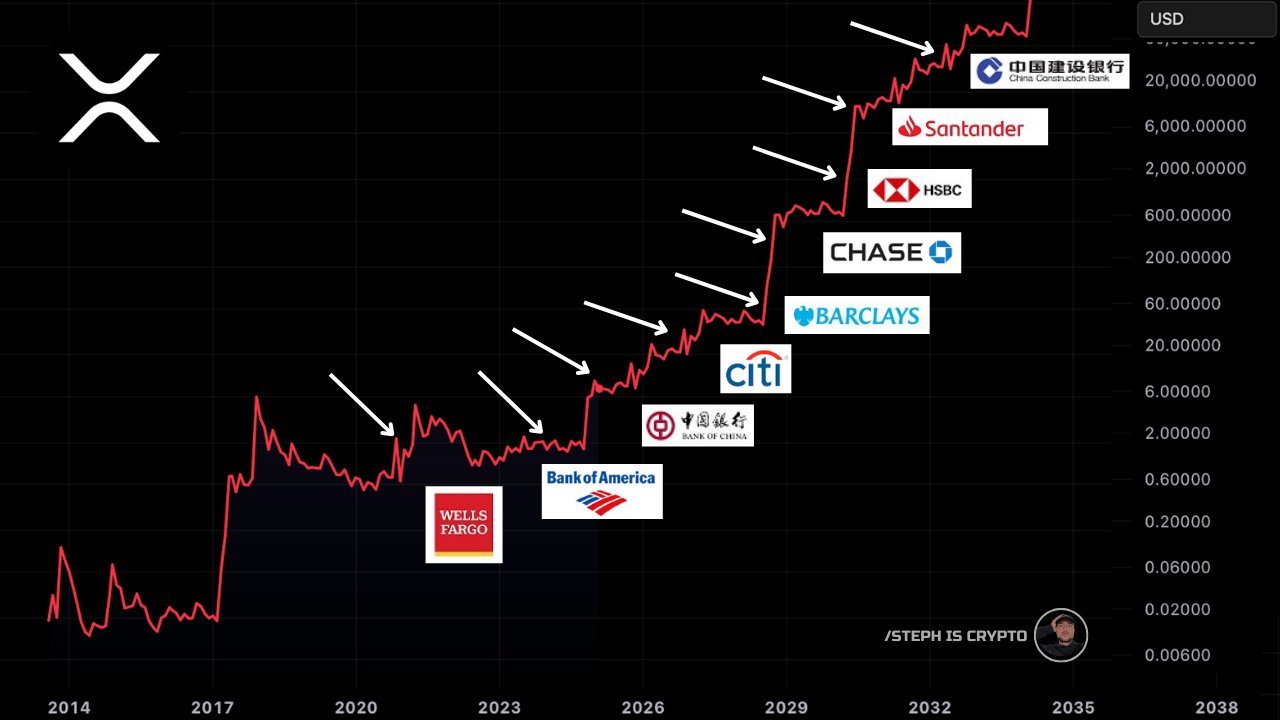
XRP could witness a massive price spike due to supply shock if nine of the largest global banks invest only 0.5% of their total assets.
Notably, discussions around the potential adoption of XRP by the banking system has gained momentum amid positive regulatory changes. For one, the U.S. SEC’s recent change in leadership has triggered speculations of an imminent settlement in the Ripple vs. SEC case.
This could completely lift any regulatory cloud over XRP, leading to greater institutional adoption. Amid these discussions, market analyst Steph recently suggested that if some of the world’s largest banks adopted XRP, the impact on its price could be massive.
In an accompanying chart, he called attention to such possible adoption by nine of these banks. However, his disclosure lacked specific figures. Notably, a more streamlined analysis provides a clearer picture of how this could unfold.
Steph is Crypto on X
Massive Institutional Capital Flowing Into XRP
Data from CompaniesMarketCap.com shows the sheer scale of assets held by these financial giants. Particularly, the China Construction Bank controls $5.837 trillion, while the Bank of China holds $4.859 trillion.
Meanwhile, JP Morgan follows with $4.210 trillion, and Bank of America has $3.324 trillion. HSBC’s total assets amount to $3.098 trillion, Wells Fargo’s to $1.922 trillion, Citigroup’s to $2.430 trillion, Banco Santander’s to $2.013 trillion, and Barclays’ to $2.049 trillion. Combined, these banks control a staggering $29.74 trillion in assets.
If each of them allocated just 0.5% of their total assets to purchasing XRP, the capital injection would surpass $148.7 billion. At XRP’s current price of $2.3, this would result in substantial acquisitions.
Specifically, China Construction Bank alone could purchase 12.69 billion XRP, while Bank of China would obtain 10.56 billion XRP. JP Morgan’s allocation would translate to 9.15 billion XRP, and Bank of America’s to 7.23 billion XRP.
Further, HSBC would secure 6.73 billion XRP, while Wells Fargo, Citigroup, Banco Santander, and Barclays would acquire 4.18 billion, 5.28 billion, 4.38 billion, and 4.45 billion XRP, respectively. In total, these banks would accumulate 64.66 billion XRP, representing nearly 65% of the liquid supply.
The Ripple Effect on XRP Price
With XRP’s total supply at 100 billion, removing 64.66 billion XRP from the market would create an extreme supply shock. Notably, a purchase of this scale would likely drive prices higher. However, the extent of this price surge remains uncertain, so we sought insights from ChatGPT.
The AI chatbot first used a market cap formula to estimate the impact of this potential capital influx. Given that the purchase would inject $148.7 billion into XRP, its market cap would more than double.
If the price followed this increase proportionally, ChatGPT estimates XRP could rise to at least $4.6. However, this estimate assumes the market reacts in a linear fashion.
XRP Price Prediction | ChatGPT
In reality, several factors could drive the price even higher. The chatbot noted that a supply squeeze, combined with surging demand, could send XRP’s value soaring well beyond $10. It also projected that XRP could climb to $20 or even $50, depending on how aggressive the market response is.
DisClamier: This content is informational and should not be considered financial advice. The views expressed in this article may include the author’s personal opinions and do not reflect The Crypto Basic opinion. Readers are encouraged to do thorough research before making any investment decisions. The Crypto Basic is not responsible for any financial losses.
The new report di DappRadar offers an in-depth analysis of the decentralized applications (dapp) ecosystem in the month of January 2025.
The cryptocurrency market experienced a beginning of the year marked by a downturn, with a decrease of 6% in daily active wallets compared to December, settling at 26.7 million unique users.
The DappRadar Report 2025
The dapp market has experienced a general contraction, with declines in the gaming, artificial intelligence, and NFT sectors, while the only segment in growth was DeFi, which captured 28.1% of the total active wallets, slightly surpassing the gaming sector at 27.8%.
The Total Value Locked (TVL) of the main blockchains has experienced a significant decline, with Ethereum losing 23.5%, dropping to 112.9 billion dollars, while Solana recorded a more contained reduction of 4%, settling at 21.4 billion dollars.
Despite a decrease of 27% in trading volumeNFT, almost reaching a billion dollars, the number of sales dropped by only 6%, indicating still sustained interest. Ethereum maintained the lead with 586.3 million dollars in NFT transactions, despite a decline of 37% compared to December.
An interesting fact concerns the Base blockchain, which has seen its NFT trading volume double, demonstrating significant growth. Additionally, some collections like Azuki and Milady Maker have withstood the market contraction thanks to strategic airdrop, which have stimulated user activity and kept the value of the assets high.
AI dapps: the new rising sector
The segment of AI dapps has emerged as one of the main trends of January, with 2.2 million active wallets interacting with these applications, representing 8.5% of total users.
This data indicates a growing interest in dapps based on intelligenza artificiale, with development prospects that go far beyond the current implementations.
The integration between AI and blockchain could mark a new phase of growth in the sector, with possibilities ranging from the creation of AI-generated content to the automation of processes on smart contracts.
“`html
Conclusions
“`
The report by DappRadarfor January 2025 highlights a month of transition for the dApp market, with a general decline in activity but also signs of resilience and innovation. While the NFT sector faces a phase of stabilization, the adoption of AI dapps could represent a new growth engine in the blockchain landscape.
A reclaim of the 50-Day MA was a sign of strength but the next target was hit at $3.58, followed by intraday signs of resistance. If demand can be retained, then natural gas looks likely to at least tap the 20-Day MA at $3.60 to test it as resistance. Moreover, the 20-Day line is declining and will likely converge with today’s high at $3.58 soon.
If the 20-Day line continues to fall, it risks dropping below the 50-Day MA. That would be a sign of weakness. As noted above, a daily closing price above the 50-Day line would show greater strength than a close below it. And a stronger close increases the chance that the 20-Day MA can be reclaimed as well.
Sustained Resistance at 50-Day MA Could Lead to Pullback
If the price area around the 50-Day MA continues to show signs of resistance, a bearish pullback to test support levels becomes a possibility. There are a couple key price levels to watch if that is the case. There is a minor swing low at $3.30 from last Friday, which is followed by a more significant swing low at $3.16.
That $3.16 swing low is more significant given its importance to the rising trend structure of higher swing lows and higher swing highs. It is marked (C) as a prime component of the rising ABCD pattern. Also, notice the small rising trendline marking dynamic support rising from the $2.99 swing low (A). That line can be watched for initial signs of weakness. As it looks now, today’s low at $3.43 can be used as a proxy for the trendline.
For a look at all of today’s economic events, check out our economic calendar.