About Editorial team of BIPNs

Main team of content of bipns.com. Any type of content should be approved by us.
7 02, 2025

Platinum price tends towards the positivity – Forecast today – 6-2-2025

By |2025-02-07T06:04:55+02:00February 7, 2025|Forex News, News|0 Comments


Bitcoin price (BTCUSD) shows bearish bias to head towards potential test to the key support 95195.00$, which represents one of the next trend keys besides 100000.00$ resistance, and as we mentioned yesterday, the price needs to breach one of these levels to detect its next destination clearly, which makes us continue with our neutrality until now.


Are you looking for more exclusive insights? Join Economies.com VIP Club Channel on Telegram and get access to:

  • Price Range for Today
  • Bullish/Bearish Trend Forecast for Today
  • Mid-day and End-of-day Analysis Updates
  • Live updates
  • Special In-Depth Analysis
  • Major Economic Events News and Updates
  • Exclusive Educational Content for All Levels of Expertise
  • Exclusive Webinars by Top Industry Experts
  • Exclusive Brokers Promotions
  • Competitions and Exceptional Rewards
  • and more…

Subscribe now to our channel on Telegram and join the Economies VIP Club to get ahead in the market. Limited Spots Available.


Source link

7 02, 2025

These are the 8 best protein powders of 2025, according to a dietitian

By |2025-02-07T05:01:49+02:00February 7, 2025|Dietary Supplements News, News|0 Comments


Protein powders aren’t just for bodybuilders and athletes — they’ve become a pantry essential for millions of Americans. Entire stores are dedicated to dietary supplements, and there’s no shortage of options online, so finding the best protein powder isn’t always easy. From dessert-inspired flavors (hello, double chocolate brownie) and plant-based blends to whey isolates high in branched-chain amino acids (BCAAs), there are products to suit most diets, health goals and taste buds.

Why protein powders? For busy parents, athletes, commuters and students, getting enough protein can be an uphill battle, explains Emily Hulse of Emily Grace Nutrition, a registered dietitian and nutritionist. And it’s not just the young and active who benefit. With their increased protein needs, older adults might find protein powders an easy way to combat muscle loss and promote strong bones. “Protein powder can help counteract age-related muscle loss (sarcopenia) and support bone health,” explains Marjorie Nolan Cohn, a registered dietitian and nutritionist and clinical director of Berry Street, an online platform that connects patients with dietitians. Plus, protein powders are shelf-stable and adaptable, fitting into almost any routine.

However, decoding the benefits of protein powders and selecting the right one can be daunting. To make it easier, we sought advice from three registered dietitians. As a registered dietitian myself, I also evaluated over 20 brands and tested 18 products firsthand. Continue reading to find the best protein powders that deserve a place in your shaker bottle.

A note on supplements

The products on this list are dietary supplements. Supplements are regulated far less stringently by the Food and Drug Administration than medications, with little evaluation of safety or effectiveness before they go to market. Supplements may also interact with medications and aren’t appropriate for all populations or health conditions. While our health writers select and test evidence-based products, it’s important to talk to your health care provider before adding a dietary supplement to your routine.

Best protein powder overall for 2025

Other top protein powders we recommend for 2025

Types of protein powders

Choosing the right protein powder is no small task. Here’s a breakdown of the most common types to help you decide which one might be the best fit for you:

  • Whey protein: Whey is a protein in cow’s milk rich in amino acids, especially BCAAs like leucine. Whey protein is best known for its effectiveness in increasing muscle mass and strength. It’s also been shown to help improve blood pressure and blood sugar levels.

  • Whey protein isolate: This highly refined form of whey protein boasts a higher protein concentration while containing significantly less lactose and fat than whey concentrate. Its lower lactose content makes it a gentler option for those with lactose sensitivity. However, it is typically more expensive and may not retain some of the beneficial nutrients present in less processed whey concentrate.

  • Whey protein concentrate: This less processed form of whey protein is a more budget-friendly option than whey isolate. While it retains more of the beneficial nutrients found in whey, it has a lower protein content and higher levels of lactose and fat, which might not suit everyone, particularly those with lactose sensitivity.

  • Casein: This is the dominant protein in cow’s milk, prized for its slow digestion and absorption. This makes it an excellent choice for muscle recovery during rest periods, such as overnight. Many take casein supplements before bed to ensure a steady supply of amino acids to aid muscle repair while sleeping.

  • Collagen: Collagen is a protein found in connective tissue, bones, cartilage, tendons and skin. It’s often used topically or orally as a supplement to improve hair, skin and nail health.

  • Pea protein: Derived from yellow split peas, pea protein is a rare plant-based protein source that provides all nine essential amino acids. It’s known for being gentle on the digestive system and is less likely to cause gastrointestinal issues than other options. However, pea protein powders can be relatively expensive and often have a mildly earthy flavor, which may not appeal to everyone.

  • Rice protein: These powders are typically more budget-friendly than other vegan protein options. However, rice protein isn’t a complete protein, as it lacks one of the essential amino acids. Additionally, rice-based powders may carry a higher risk of heavy metal contamination, so choosing a trusted brand is crucial.

  • Plant-based blends: These vegan protein powders are formulated with two or more plant-based protein sources and often contain all nine essential amino acids.

Factors to consider when choosing a protein powder

Finding the best protein powder involves weighing several factors to ensure it meets your nutritional needs and fits your lifestyle. Here are the key things to keep in mind when you’re shopping:

  • Protein source: Start by deciding which protein best suits your needs, such as whey, casein or plant-based options. Each has its benefits and drawbacks, so consider your dietary restrictions and preferences.

  • Protein content per serving: The amount per serving should match your daily protein needs. Around 20 grams per serving is a solid baseline for most healthy adults. However, active individuals, athletes and adults over 65 may benefit from powders that offer 25-30 grams of protein per serving.

  • Calories: Most protein powders contain 100-200 calories per serving. To build muscle or gain weight, consider a mass gainer with extra calories and carbohydrates. Otherwise, select a powder that matches your daily calorie requirements.

  • Vitamins and minerals: Some protein powders are fortified with vitamins and minerals. For example, some plant-based powders contain additional iron, a nutrient sometimes lacking in a vegan diet. Consider your diet and supplement routine to determine whether you need a powder with additional micronutrients.

  • Carbs and fat: Choose products with carb and fat levels that suit your dietary preferences and nutritional needs. For instance, if you’re on a low-carb diet, opt for a powder with 7 grams of carbs or less per serving.

  • Intended use: Consider your primary goal. Are you looking to build muscle, lose weight or fill nutritional gaps? Choose a product formulated to support that specific purpose.

  • Taste and mixability: A powder’s taste and how well it mixes are crucial for long-term use. Many companies offer sample-size packets, letting you test flavors and consistency before committing to a full-size product.

  • Additives, artificial ingredients: When possible, opt for powders with minimal artificial additives, such as flavors, colors, sweeteners, emulsifiers and fillers. Shorter ingredient lists often mean cleaner, higher-quality products.

  • Dietary restrictions: If you have food allergies or follow a specific diet, ensure your chosen product is compatible. Certifications like certified vegan or gluten-free can help you quickly identify suitable options.

  • Third-party testing: Dietary supplements are not regulated like pharmaceuticals. To ensure a product contains the types and amounts of ingredients listed on the label, look for protein powders that have been third-party tested by a reputable organization, such as NSF or Informed Choice.

  • Value: While you don’t need to splurge on the most expensive option, it’s essential not to sacrifice quality either. Several protein powder brands offer moderately priced products with good-quality ingredients. Most of our top picks fell somewhere between $1 and $3 per serving.

How we chose the best protein powders

With over 13 years of experience as a registered dietitian (and countless protein shakes under my belt), I’ve researched and tested a wide range of protein powders. To refine this list, I collaborated with three other registered dietitians to better understand what makes a protein powder stand out based on different dietary needs and preferences.

Combining our expertise, we reviewed products from more than 20 brands, narrowing them down to 18 top contenders. Our selection process focused on ingredient quality, nutritional profiles, third-party certifications, insights from online reviews and personal recommendations from friends and family.

For the first round of testing, I mixed a single serving of each powder with 12 ounces of water (or the amount recommended on the label) in a blender bottle, shaking for at least 30 seconds. I evaluated each product based on how well it mixed, texture, flavor and aftertaste.

To gain a more comprehensive sense of these powders’ versatility, I retested each product over the following weeks, incorporating them into blender bottle shakes with oat milk, smoothies and overnight oats. This method allowed me to assess how each powder performed in different scenarios, ultimately helping me determine which ones deserve a spot on your shelf.

Other protein powders we tested

We tested 18 protein powders to determine our top pick. (Kelli McGrane)

  • BEAM Vegan Protein: Be Amazing (BEAM) Vegan Protein comes in seven dessert-inspired flavors, is third-party tested and contains a relatively short list of ingredients. During testing, its Birthday Cake recipe was a favorite for its smooth texture and on-point vanilla cake flavor. The biggest downside is the use of sucralose, which some experts warn could have long-term adverse health effects.

  • Factor Form Whey Protein Powder: Factor Form, widely recognized for its prepared meal delivery service, offers a whey protein powder that’s smooth, creamy and flavorful — particularly the chocolate. However, it has a higher price tag and is only available in single-serve packets.

  • Groove Whey Protein Isolate: Groove is a newcomer to the protein powder scene. The company’s whey protein isolate offers 25 grams of protein and only 2 grams of carbs, making it a good option for a low-carb diet. Although it contains stevia, it isn’t overly noticeable, especially in the Mexican Chocolate flavor. However, it is expensive and only available on the company’s website.

  • Just Ingredients Vegan Protein: Unlike Just Ingredients’ whey-based powder, the company’s vegan option fell flat. I tried the Roasted Chocolate and was surprised by its bitterness and overpowering cinnamon flavor. The texture was also very grainy.

  • Ka’Chava All-in-One Nutrition Shake: Essentially a protein powder and multivitamin in one, Ka’Chava is a dietary supplement with gorgeous packaging. I liked the ingredients and quality, but the texture was too grainy and the taste was too earthy. These factors and the high price tag kept Ka’Chava from making our top list.

  • Momentous 100% Plant Protein: This option is NSF Certified for Sport and formulated to support muscle growth and recovery. While the powder has mixed reviews online, I enjoyed the chocolate flavor. Because it has a thinner consistency and milder flavor, I found it refreshing after a hard workout. The Vanilla Chai, on the other hand, wasn’t as enjoyable. While there were notes of cinnamon, it didn’t deliver on the promise of chai spice.

  • Neue Theory Plant-Based Probiotic Protein Powder: This powder is specially formulated to be easy to digest. It includes probiotics, digestive enzymes and all nine essential amino acids, making it a good source of complete plant-based protein. The vanilla flavor was one of my favorites, thanks to its creamy texture and rich vanilla bean taste. The downside is the high price — roughly $3.25 per serving.

  • Optimum Nutrition Gold Standard 100% Whey: This widely available whey powder has long been a favorite in the sports supplements industry. With 24 grams of protein per serving and an impressive variety of flavors, it’s a solid choice. The Extreme Milk Chocolate flavor delivers richness and sweetness, but the artificial taste and aftertaste were less appealing. Additionally, this powder contains more additives than the other products we tested.

  • OWYN Plant-Based Protein Powder: This vegan powder is certified allergen-friendly, meaning it’s free from eight of the major food allergens. While it has a loyal following, I noticed a strong chemical taste and aftertaste that was hard to ignore. The texture was also very grainy, even when I combined this powder with oat milk.

  • Vega Premium Sport Protein: This powder is a solid option for athletes dedicated to a vegan lifestyle. It is NSF Certified for Sport and delivers an impressive 30 grams of complete protein per serving. It also includes 5 grams of BCAAs and tart cherry extract to aid muscle recovery. It’s available in five stevia-sweetened flavors — a potential downside for those sensitive to stevia’s distinct taste, which is prominent in this formulation.

Protein powder FAQs

How much protein powder should I take per day?

Whole foods alone can meet the daily protein needs of most healthy adults. However, if you supplement your diet with protein powder, sticking to 1 to 2 servings daily is generally safe and sufficient.

When is the best time to drink protein shakes?

“The best time to drink a protein shake depends on your goals,” says Jessica Kelly, a registered dietitian with Nutrition That Heals. She explains that for building muscle, consuming a protein shake within 30 minutes after a workout can support muscle recovery and growth.

On the other hand, if your focus is weight management or hunger control, protein shakes can serve as an excellent meal replacement or a satisfying snack. They help you curb your appetite and maintain stable blood sugar levels throughout the day.

Can protein powder help with weight loss?

“Yes, protein powder can support weight loss by promoting satiety, preserving lean muscle mass and stabilizing blood sugar levels,” explains Kelly.

However, it’s important to remember that protein powder isn’t a magic solution for shedding pounds. Since it adds calories to your diet, consuming too much could lead to weight gain if it pushes you beyond your daily calorie requirements.

Is it safe to use protein powder every day?

Protein powders are typically safe for daily use. However, consuming too much protein from powders or other sources can strain your kidneys. To avoid potential issues, healthy adults should limit their daily protein intake to no more than 2 grams per kilogram of body weight.

What is the difference between whey isolate and concentrate?

“Whey isolate is more processed, resulting in a higher protein content (90% or more) and lower fat and lactose levels,” Kelly says. She explains that this makes whey isolate an excellent choice for individuals looking for a cleaner protein source or those with lactose sensitivity.

In contrast, whey concentrate contains slightly less protein (70%-80%) and retains more natural fats and carbohydrates, offering a creamier texture and additional nutrients.

There’s also a price difference: Whey isolate protein powders are typically more expensive than whey concentrate powders.

Meet our experts

Our health content is for informational purposes only and is not intended as professional medical advice. Consult a medical professional on questions about your health.


Source link

7 02, 2025

Solana Price Prediction, Why SOL May Be Way Closer Than You Think

By |2025-02-07T05:00:24+02:00February 7, 2025|Crypto News, News|0 Comments

Solana’s strong institutional demand, an expanding ecosystem, and technical indicators all point toward a potential breakout. 

At the same time, PlutoChain ($PLUTO) may bring features that could redefine Bitcoin. As a Layer-2 solution, it offers near-instant transactions, significantly lower fees, and seamless Ethereum compatibility.

Here’s all you need to know about both projects.

Solana Price Prediction: Can Solana (SOL) Break Past $600 Sooner Than Expected?

As of now, Solana (SOL) is valued at roughly $235, reflecting a 1.9% increase in the past 24 hours. The RSI sits at 46, which indicates that while SOL is in neutral territory, it is edging closer to oversold conditions.

Solana’s expanding ecosystem is a major factor. Thanks to its low fees, high-speed transactions, and developer-friendly network, more projects are launching on Solana than ever before. The introduction of the Token-2022 standard has made the network even more attractive for DeFi, NFTs, and other blockchain-based applications.

From a technical perspective, SOL’s recent price action suggests a bullish setup. The token is currently trading within an ascending triangle pattern, which often signals a strong upward move. Crypto analyst Bob Loukas believes that Solana is building up momentum and, once that pressure is released, it could surge rapidly to $600 within the next eight weeks. 

How PlutoChain ($PLUTO) Could Give Bitcoin an Upgrade With Instant Transactions, Lower Fees, and Seamless Ethereum Integration

Bitcoin faces long-standing issues that include slow transaction speeds, high fees, and network congestion. While blockchains like Ethereum and Solana have introduced innovative scaling solutions, Bitcoin has yet to fully evolve to meet the growing demands of the market.

PlutoChain ($PLUTO), a cutting-edge Layer-2 solution, could be the key to unlocking Bitcoin’s next phase of adoption. Designed to improve efficiency and usability, PlutoChain could operate alongside Bitcoin to ease congestion and optimize transaction processing without altering Bitcoin’s core infrastructure.

PlutoChain offers 2 seconds block time on its own L2 chain compared to Bitcoin’s standard 10-minute block time. PlutoChain could also tackle Bitcoin’s expensive transaction fees. By dramatically reducing fees, it could lower barriers for users looking to adopt Bitcoin for everyday use. 

As a fully Ethereum Virtual Machine (EVM)-compatible network, PlutoChain could allow Ethereum-based applications, including DeFi protocols, NFT marketplaces, and AI-driven platforms, to seamlessly integrate with Bitcoin. 

This could redefine Bitcoin’s role and expand it from a simple store of value to a multi-functional asset within the broader ecosystem. PlutoChain has already demonstrated its potential during its testnet phase by successfully handling 43,200 transactions in a single day without any network disruptions. 

Security is also a top priority, the platform has undergone rigorous audits by SolidProof, QuillAudits, and Assure DeFi. It also performs regular code reviews and stress testing to reinforce its reliability. Instead of relying solely on developers or central authorities, it empowers the community to propose and vote on key decisions, from protocol upgrades to strategic partnerships.

With its lightning-fast transactions, lower fees, cross-chain functionality, and decentralized governance, PlutoChain could be the missing piece that finally makes Bitcoin more scalable, efficient, and ready for mass adoption.

Final Thoughts

Solana’s ecosystem continues to expand. With bullish technical indicators and growing market confidence, SOL could be on the verge of a major breakout toward $600.

Meanwhile, PlutoChain ($PLUTO) might be able to tackle Bitcoin’s biggest challenges head-on. Its Layer-2 solution offers instant transactions, lower fees, and Ethereum compatibility, which could make Bitcoin more scalable and usable. 

Disclaimer: This Press release article is provided by the Client. The Client is solely responsible for this page’s content, quality, accuracy, products, advertising, or other materials. Readers should conduct their own research before taking any actions related to the material available on this page. The Crypto Basic is not responsible for the accuracy of info and any damage or loss caused or alleged to be caused by the use of or reliance on any content, goods, or services mentioned in this press release article.

Please note that The Crypto Basic does not endorse or support any content or product on this page. We strongly advise readers to conduct their own research before acting on any information presented here and assume full responsibility for their decisions. This article should not be considered investment advice.

DisClamier: This content is informational and should not be considered financial advice. The views expressed in this article may include the author’s personal opinions and do not reflect The Crypto Basic opinion. Readers are encouraged to do thorough research before making any investment decisions. The Crypto Basic is not responsible for any financial losses.

Source link

7 02, 2025

Crude Oil Price Forecast: Bearish Momentum Builds Amid Correction

By |2025-02-07T04:04:09+02:00February 7, 2025|Forex News, News|0 Comments


Measured Move Targets $68.52

It is interesting to note that a falling measured move completes at $68.52. The first measured decline began from the October swing high. Following that high the price of crude oil dropped by $12.24 or 15.5%. There will be a match in the two declines based on the price change if the $65.52 price target is reached.

Since that potential target is close to the $67.72 target, as well as the lower uptrend line, and bearish momentum is continuing, it seems like a good chance the lower price levels may eventually be reached before the current correction is complete. Moreover, crude oil could continue to fall further until it triggers a bearish breakdown on a drop below the uptrend line initially, with weakness confirmed on a drop below the $67.11 minor swing low from December 6.

78.6% Retracement Could See Support

Despite the potential bearish scenario, if support is seen around the 78.6% retracement area, a bounce could follow. In that situation, potential resistance would be around the 50-Day MA, now at $72.61. That price level is followed by $73.27, which was both support and resistance previously. Further up is the 200-Day MA at $74.83 and the 20-Day MA at $75.69. Keep in mind that the moving averages are dynamic and that the price represented will change.

Overhead Resistance May Stunt Rallies

Be aware that 200-Day MA is angled down and that the 20-Day only recently turned down after rising for approximately 35 trading days. Further, both moving averages are a little below a bottom boundary line for a large symmetrical triangle pattern. Together, these indicators show potentially significant resistance around the 20-Day MA, since it is above the 200-Day line currently.

For a look at all of today’s economic events, check out our economic calendar.


Source link

7 02, 2025

USD/JPY Analysis Today 06/02: Hits 2-Month Low (Chart)

By |2025-02-07T03:02:57+02:00February 7, 2025|Forex News, News|0 Comments

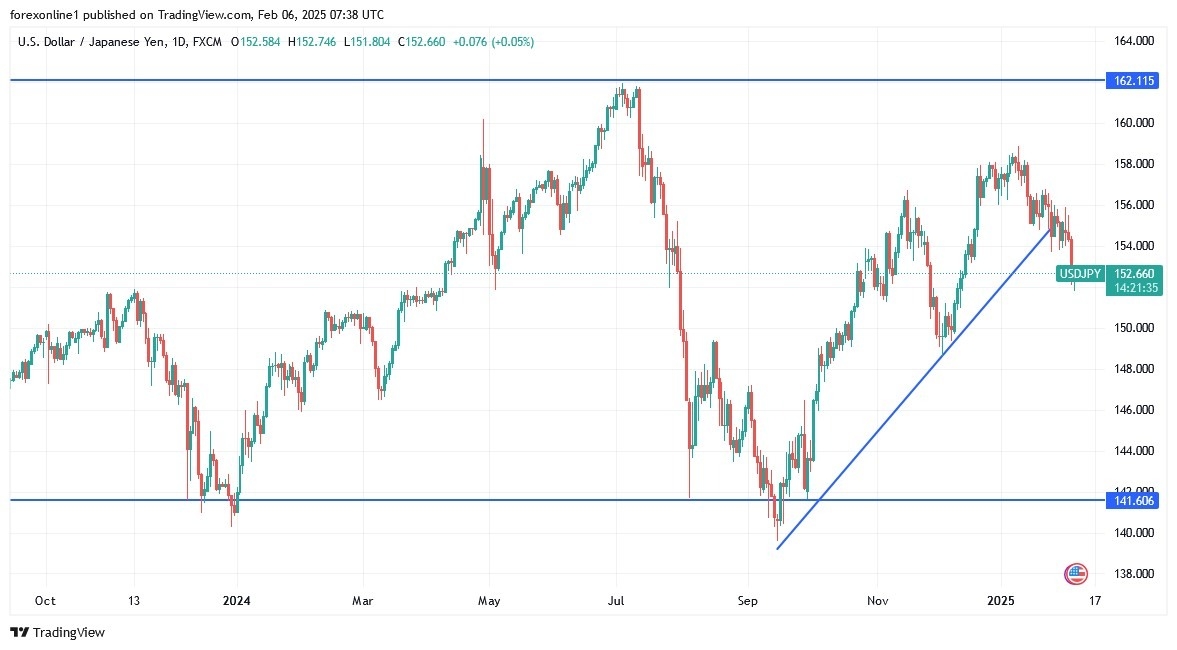
  • The USD/JPY currency pair has been under selling pressure, dropping to a two-month low of 151.80 before stabilizing around 152.60 at the time of writing.
  • Furthermore, the Japanese Yen has gained significant strength due to risk-off sentiment and signals from the Bank of Japan.

Japanese Yen Benefits from BoJ Tightening

According to the forex market trading. The Japanese yen gained strong positive momentum against the rest of the major currencies amid strong signals of the Bank of Japan’s readiness to tighten. In this regard, a member of the Board of Directors of the Bank of Japan, Naoki Tamura, stated that the Japanese central bank should raise the interest rate to at least 1% in the latter part of the fiscal year 2025. Also, Finance Minister Katsunobu Kato warned that inflation may continue to rise.

Moreover, recent economic data has highlighted strong wage growth, providing momentum to expectations that the Bank of Japan will continue to raise interest rates this year. According to the results of the economic calendar data, real wages in Japan rose for the second consecutive month in December, with nominal wage growth reaching its highest level in nearly three decades, driven largely by higher winter bonuses.

For its part, the Bank of Japan raised interest rates in January and indicated its willingness to raise them further if economic trends and prices are in line with its expectations. Also, the yen’s rise was supported by broad weakness in the US dollar, lower Treasury yields, amid mixed US economic data and easing concerns about a global trade war.

Trading Tips:

The Japanese yen is one of the most prominent safe havens, and increasing uncertainty may increase its gains.

Japanese stocks are the strongest today

During Thursday’s trading, and through stock trading platforms, the Nikkei 225 index of Japanese stocks rose by 0.6% to close at 39066, while the broader Topix index rose by 0.25% to 2752, marking the third consecutive day of gains for Japanese stocks. Obviously, these moves followed positive trends in US stock markets on Wall Street as concerns about a global trade war eased amid cautious measures by the US and China. Nvidia and other AI-related stocks also recovered losses associated with the DeepSeek disaster.

USD/JPY Technical analysis and Expectations Today:

According to the daily chart, the USD/JPY pair is moving within a recently formed downward channel. Technically, the bears’ success in moving towards the psychological level of 150.00 will reinforce the downward trend, and with it the technical indicators are moving towards strong oversold levels. We still prefer to buy USD/JPY from every downward level, but without risk, and the closest support levels currently are 151.60 and 150.90, respectively. On the other hand, and in the same time frame, moving towards and above the resistance of 156.00 will reinforce the bulls’ control over the trend again.

The currency pair will remain in a cautious wait-and-see mode until the US jobs numbers are announced, which will have a reaction to the future of the US Federal Reserve’s policies, in addition to the reaction to Trump’s continued imposition of more tariffs.

Want to trade our USD/JPY forex analysis and predictions? Here’s a list of forex brokers in Japan to check out.

Source link

7 02, 2025

The Future of Dietary Supplements Under Trump’s FDA

By |2025-02-07T02:59:45+02:00February 7, 2025|Dietary Supplements News, News|0 Comments


Failed to save article

Please try again

Fish oil vitamin with EPA and DHA. (Sasirin Pamai via iStock)

Guests:

Dr. S Bryn Austin, social epidemiologist and professor of Social and Behavioral Sciences, Harvard School of Public Health

Nicholas Florko, staff writer, The Atlantic

Marily Oppezzo, behavioral and learning scientist, registered dietician, Stanford Prevention Research Center


Source link

7 02, 2025

Cardano on Edge of Massive Breakout Versus Bitcoin

By |2025-02-07T02:58:33+02:00February 7, 2025|Crypto News, News|0 Comments

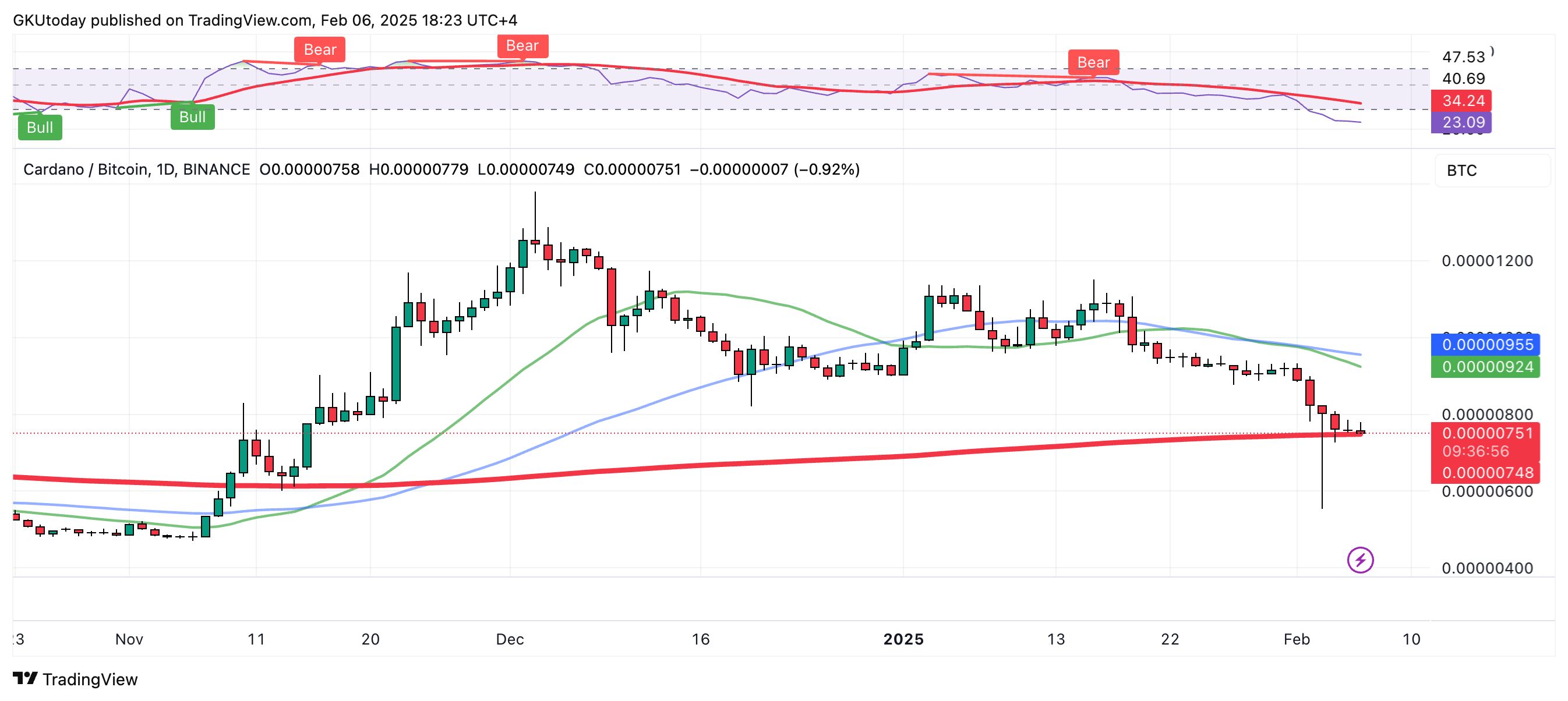
The price of popular cryptocurrency Cardano (ADA) may see explosive price performance against the leading coin, Bitcoin (BTC), in the near future. At least that is what the ADA/BTC chart suggests. After surging nearly 200% against BTC at the end of last year, the price of ADA peaked at 0.000014 BTC. 

Since then, the altcoin started to lose its position on the crypto market, eventually going on a 45% downtrend, at one point experiencing a 60% drop against BTC.

Related

Currently, the Cardano token is trading at 0.0000075 BTC, where it finds strong support from the 200-day moving average. The price of ADA has refused to break this level for three consecutive days, which can be seen as an indicator of strength against the leading cryptocurrency. 

Article image
Source: TradingView

Furthermore, if we look at the Relative Strength Index (RSI) indicator, we can see that it has dropped to its lowest level since October. This RSI position, combined with support at the 200-day moving average, could signal a possible convergence of technical indicators, indicating a possible bullish reversal for Cardano against BTC. 

Can Cardano finally drop ball on Bitcoin?

Analysts cannot deny that this is a powerful combination for the token, suggesting that ADA may be on the verge of a bullish trend. However, it is important to note that nothing is set in stone in the crypto market and volatility remains a factor. 

Related

Cardano Founder Predicts Crypto Bull Market After $710 Billion Liquidations

As small signals accumulate, they may form a larger picture that could lead to significant price action in the near future. Whether this is just a coincidence or a sign of a larger trend will soon become clear as the market develops.

Source link

7 02, 2025

Natural Gas Price Forecast: Advance Trend, Eyes $3.51 Upside Target

By |2025-02-07T02:02:53+02:00February 7, 2025|Forex News, News|0 Comments


Next Upside Target is $3.51

The first upside target is shown on the chart at $3.51 to $3.52. It starts with the 38.2% Fibonacci retracement and is followed by the 50-Day MA. Note that the price represented by the 50-Day line may change slightly before it is reached. Also, be aware of the internal downtrend line near to today’s price action.

Although it may not provide a clear price to gauge from, it can help as a guide. The next more significant potential resistance zone above the 50-Day line is around the 20-Day MA, currently at $3.67. Notice that the 20-Day line has been falling recently and has entered the price range discussed previously from the $3.64 peak in 2023, and the 50% retracement at $3.67.

Rising ABCD Pattern Points to $3.58

An interim upside target has been added to the chart since as of today there is a higher swing high for the developing ABCD pattern (light blue) starting from the recent $2.99 low (A). The initial target from the patten is $3.58, approximately halfway between the 50-Day and 20-Day MAs. Further up is the 127.2% extended target from the pattern at $3.69. Therefore, that higher price target can be added to the price range around the 20-Day MA.

Wide Range Week Consolidation

Since this week’s price action is contained with a wide range from last week, it would not be surprising to see natural gas continue to slowly advance and fill more of that range. Last week’s range goes from a low of $2.99 to a high of $3.83. Last week’s high marks the next higher potential target area above the $3.69 price level.

For a look at all of today’s economic events, check out our economic calendar.


Source link

7 02, 2025

Bank of England: GBP Losses vs EUR and USD, Markets Expect Three More Rate Cuts in 2025

By |2025-02-07T01:02:15+02:00February 7, 2025|Forex News, News|0 Comments

February 6, 2025 – Written by Ben Hughes

Pound Sterling traded lower against the Euro and US Dollar into the Bank of England (BoE) decision, not helped by a weaker-than-expected reading for the construction PMI index.

Sterling dipped sharply following the BoE cut to 4.50% with markets considering that there is scope for more rate cuts this year. Markets are now pricing in around a 20% chance of a further cut in March.

Domestic and global factors will be crucial with the BoE more likely to want to wait until May.

The Pound to Dollar (GBP/USD) exchange rate slumped to lows at 1.2360 before a tentative recovery to 1.2400 as the dollar pared gains and compared with 4-week highs at 1.2550 on Wednesday.

According to Scotiabank, “Short-term price action suggests a minor peak at least formed yesterday at 1.2550.”

SocGen commented, “A pullback is underway. October 2023 low of 1.2090/1.2035 is a key support zone.”

ING still expects dollar strength will help drive GBP/USD to 1.19/20 later in the year.

Advertisement


The Pound to Euro (GBP/EUR) exchange rate also dipped sharply to 1.1950 from 1.2000 before settling around 1.1970.

Danske Bank still recommends buying GBP/EUR dips to the 1.1900 area.

The Bank of England cut interest rates by 25 basis points to 4.50%, which was in line with expectations.

There was a surprise on the vote split with a 7-2 vote for the decision.

ING commented, “There’s nothing unusual or unexpected about the Bank of England’s decision to cut rates by 25 basis points to 4.50% this month. As for the vote split, well that’s anything but.”

Dhingra and Mann both voted for a 50 basis-point cut to 4.25%. Mann’s decision was notably surprising given her fears over inflation.

ING added, “Not only has Mann ended her fight against rate cuts, but she has doubled down with a vote to slash rates by 50bp. Though not directly attributed to Mann, the meeting minutes suggest that she saw a need to give a “clear signal” on where interest rates need to get to, whilst still recognising policy needs to stay restrictive for some time to come.”

There was a small net decline in the UK 10-year yield while the FTSE 100 index hit a record high with a daily gain of over 1.5%.

The growth forecasts were downgraded with the BoE now predicting GDP growth of 0.75% in 2025 compared with the 1.5% forecast in November.

According to Luke Bartholomew, deputy chief economist at abrdn, “The fact that two MPC members voted to deliver a bumper 50 basis-point cut, despite revising up near-term inflation forecasts, gives a sense of how concerned some policymakers are about the headwinds to growth.”

There were, however, upgrades to the 2026 and 2027 GDP growth forecasts to 1.5% from 1.25% as the budget measures take effect.

Looking at inflation, the bank warned that it is likely to rise to 3.7% over the first half of this year due to the increase in utility prices.

The forecast in 2-year times is now 2.3% from 2.2% in November.

According to the bank, “Domestic inflationary pressures are moderating, but they remain somewhat elevated, and some indicators have eased more slowly than expected.”

In this context, it commented, “the Committee will pay close attention to any consequent signs of more lasting inflationary pressures.”

Governor Bailey reiterated that the bank will take a gradual and careful approach to cuts.

According to Bailey “We expect to be able to cut bank rate further as the disinflation process continues, but we will have to judge meeting by meeting, how far and how fast.”

On the international dimension, he noted, “We live in an uncertain world, and the road ahead will have bumps on it.”

He added; “The judgment we will have to make at our future meetings is whether underlying inflationary pressures in the UK economy are easing enough to allow further cuts in bank rate.”

MUFG commented, “we expect the BoE to stick to their “gradual approach to removing monetary policy restraint” which has been consistent with a rate cut every quarter since the easing cycle started in August. We expect the BoE to deliver 100bps of easing this year.”

According to ING; Weaker growth, higher market rates and relatively limited scope to credibly trim public spending projections suggest further tax hikes are inevitable in the autumn. A more fragile jobs market and the prospect of better news on services inflation in the spring should also help cement a gradual string of rate cuts from the Bank of England this year.

Following the decision, traders are now pricing in three further rate cuts this year.

ING added, “That feels to us like the path of least resistance, though today’s vote split does suggest there’s an outside chance the Bank still moves faster.”

Investec Chief Economist Philip Shaw commented; “Fairly plainly, it is a dovish set of minutes overall and although Catherine Mann’s decision to back a 50-bp cut was a surprise, she has warned for a while that she is a supporter of monetary policy activism.”

He added, “The divergent views on the committee may make it more difficult to chart the course of interest rates over the remainder of 2025, but for now, we stand by our view that there will be three further 25bp cuts to 3.75% by the end of this year.”

According to Capital Economics, “the Bank of England showed some signs that it may cut rates faster and further than our forecast of a decline to 3.50% by early 2026.”

KPMG Chief Economist Yael Selfin expressed some caution; “The tone in the minutes signals a clear easing bias for all MPC (Monetary Policy Committee) members and leaves the door open for further interest rate cuts this year. Nonetheless, domestic uncertainty remains with the upcoming tax rises and the increase in the National Living Wage.”

She added, “The Bank will assess the second-round effects of these policy changes and whether they lead to a rebound in domestic price pressures. This will likely mean the pace of cuts will be gradual, and overall, we expect only two further cuts, leaving base rates at 4% by the end of 2025.”

Neil Birrell at Premier Miton Investors noted the structural challenges which could dampen Pound sentiment; “The Bank of England cut its base rate to give the economy a boost that is much needed. The fact that two members voted for a 0.5% cut is telling, clearly showing concern over the parlous state of economic growth, which is not something the government will appreciate.”

He added, “With growth under threat and inflation remaining higher than hoped, that provides a combination that is likely to see the word “stagflation” being banded around.”

Like this piece? Please share with your friends and colleagues:


International Money Transfer? Ask our resident FX expert a money transfer question or try John’s new, free, no-obligation personal service! ,where he helps every step of the way,
ensuring you get the best exchange rates on your currency requirements.

TAGS: Pound Sterling Forecasts

Source link

7 02, 2025

Best Time To Take Creatine Supplements, According To Dietitians

By |2025-02-07T00:58:29+02:00February 7, 2025|Dietary Supplements News, News|0 Comments


If you’re a dedicated exerciser, you probably like to keep an eye out for things that can help you work out more efficiently. With that, you may have heard about using the supplement creatine to try to help create stronger muscles and better workout sessions. So when exactly is the best time and method to take creatine for optimal results? Asked and answered here.

It’s always a good idea to check in with a healthcare provider before starting a new supplement, including creatine. If you got the greenlight, we tapped dietitians for their take on the best time to take creatine and what to know before trying it.

Meet the experts: Jessica Cording, RD, is a dietitian the author of The Little Book of Game-Changers: 50 Healthy Habits For Managing Stress & Anxiety. Albert Matheny, RD, CSCS, is a dietitian the co-founder of SoHo Strength Lab.

What is creatine and what does it do for the body?

Creatine is a compound that comes from three amino acids, explains Jessica Cording, RD, a dietitian and author of The Little Book of Game-Changers: 50 Healthy Habits For Managing Stress & Anxiety. “Creatine essentially provides energy for our muscles,” she says.

“It’s naturally produced in your body,” adds Albert Matheny, RD, CSCS, a dietitian and co-founder of SoHo Strength Lab. “The average person’s liver, pancreas, and kidneys produce about a gram of creatine a day.” About 95 percent of the body’s creatine is stored in the muscles in the form of phosphocreatine.

You can get creatine from foods you eat, including seafood and red meat, Cording says, but plenty of people also take creatine in supplement form (usually as a powder or capsule). This is especially popular among athletes and bodybuilders, but they aren’t the only ones who can benefit.

Benefits Of Creatine

Creatine supplementation has several health and therapeutic benefits throughout the lifespan and plays a critical role in cellular metabolism, according to a recent study in Nutrients. That said, the perks of creatine usually revolve around exercise performance and cognitive function, Cording says. Here are some of the biggest benefits:

It can help enhance your workouts.

Creatine may allow people to do a little more work in reps or sprints, which can ultimately lead to you becoming stronger, Matheny says. Taking creatine supplements may also can provide some muscle and performance benefits for older adults, according to a recent literature review in the Journal of the International Society of Sports Nutrition.

It can give you an energy boost (and reduce fatigue).

Using a creatine supplement may also help you feel a little more energized on a regular basis. “If you’re using creatine, you’re filling up the energy system tank a little more,” Matheny says.

It may also help with tiredness: An early study found that creatine supplementation led to increased energy and reduced fatigue for those with sleep deprivation, and another study on college-age women determined that taking creatine helped reduce the onset of neuromuscular fatigue following a cycling test. More research is needed, but if you work out a lot and get super tired afterward, taking a creatine supp may help.

It may improve your cognitive health.

Taking creatine has been linked to better performance on cognitive tasks, especially in older adults, Cording says. Creatine plays an important role in brain health and function, according to older research on intelligence and working memory. Your brain also needs a significant amount of adenosine triphosphate (ATP) to perform difficult tasks, and creatine supplements may help your brain produce more of it.

When is the best time to take creatine?

Some workout-enhancing supplements are designed to be used right before you exercise, and you may be wondering if creatine works the same way. The answer? Not really.

Research has consistently found that timing doesn’t seem to matter with creatine. Factors like the type of exercise you do and your age are more important in how well creatine works for you, one scientific review in the journal Nutrients found. Male and female athletes who took creatine and found that timing didn’t matter over an eight-week study period, in another study in Frontiers.

“You can take it whenever you want,” Matheny says. “You can have it in the beginning, middle, or end of the day—you just need to have gas in that tank.”

As for whether or not to take it with food…while people used to think creatine supplements were absorbed better with carbohydrates, one small study found that carbs are unnecessary. Ultimately, it doesn’t matter if you have it with food or not, Matheny says.

Are there potential risks for taking creatine?

Creatine is thought to be a pretty safe supplement, Cording says, but there are a few things to keep in mind before trying it.

“We don’t have enough evidence to show how safe creatine is for things like kidney and liver disease,” Cording says. It’s also not recommended that you take creatine when you’re pregnant or breastfeeding.

“If you take too much, you can have an upset stomach or diarrhea,” Matheny adds.

Using creatine with caffeine could also decrease the supplement’s efficiency, Cording says—so if you’re constantly chugging coffee, it may not be the best idea to combine the two.

How To Add Creatine To Your Routine

Adding creatine to your supplement stack really comes down to whatever is easiest for you, Cording says. “If you’re someone who wants to have it before a workout, I find that creatine powders are convenient,” she says. “You can add them to a food or shake, or can include it with pre-workout.”

You can even have creatine in a post-workout meal or smoothie, she says. But if you don’t necessarily care about timing the supplement with your workouts, Cording recommends adding creatine powder to oatmeal, yogurt, or chia pudding.

Interested in adding a creatine supplement to your life? Consider these options:

Thorne Creatine Monohydrate
Credit: Thorne

This powder is free of gluten and dairy. It’s also NSF certified, meaning it’s tested for the presence of banned substances before it goes up for sale. The powder is colorless and odorless, so you can mix it with just about anything.

NOW Creatine Monohydrate Powder
Credit: NOW Sports

Now’s creatine powder is free of artificial colors and flavors, and uses nano-particle nutrients to help fuel your day. It’s also unflavored, so you can blend it into just about anything. Now is third-party tested to make sure no harmful ingredients end up in your creatine powder.

BULKSUPPLEMENTS.COM Creatine Monohydrate Powder
Credit: BulkSupplements.com

If you’re looking to save on cost, consider this option from BulkSupplements. It’s third-party tested for extra ingredients and is unflavored. It’s vegan-friendly and gluten-free.

BARE PERFORMANCE NUTRITION Creatine Monohydrate
Credit: Bare Performance Nutrition

This powder features Creapure, the most widely studied type of creatine. It’s third-party tested for impurities, too. The powder is unflavored, making it a great addition to smoothies and shakes.

Klean ATHLETE Klean Creatine
Credit: Klean Athlete

Klean Athlete Klean Creatine is NSF Certified for Sport, meaning it’s been tested for safety. The powder is GMO-free and doesn’t have any artificial colors, flavors, or sweeteners. Just mix it with water, pre-workout, or your go-to smoothie and enjoy.

Creatine can be a helpful tool in allowing you to build strength and may help with brain health, energy, and more. If you’re interested in trying it, just check in with your doctor first to make sure you don’t have any health conditions or medications that would keep this from being helpful for you.

Headshot of Albert Matheny, RD, CSCS

Albert Matheny, RD, CSCS, is the founder of Promix Nutrition and Co-Founder of SoHo Strength Lab in New York City. As a track and field athlete at the University of Florida and with USA Triathlon, Albert earned a master’s of science in exercise physiology and dual bachelor’s in food science and human Nutrition and human performance. Albert consults as a registered dietitian with everyone from Olympic Gold Medals to High School Medals.

Headshot of Korin Miller

Korin Miller is a freelance writer specializing in general wellness, sexual health and relationships, and lifestyle trends, with work appearing in Men’s Health, Women’s Health, Self, Glamour, and more. She has a master’s degree from American University, lives by the beach, and hopes to own a teacup pig and taco truck one day.


Source link

Go to Top