About Editorial team of BIPNs

Main team of content of bipns.com. Any type of content should be approved by us.
8 12, 2025

Brent Near $64 as Fed Rate Cut Bets and Asian Demand Support Crude

By |2025-12-08T14:39:16+02:00December 8, 2025|Forex News, News|0 Comments


On Monday, December 8, 2025, oil prices are holding close to two‑week highs, with Brent crude trading just under $64 per barrel and U.S. West Texas Intermediate (WTI) hovering around $60 per barrel in early trade. [1]

The market is being pulled in two directions:

  • Supportive near‑term drivers – expectations of a U.S. Federal Reserve rate cut this week and strong oil demand data from India and China. [2]
  • Bearish medium‑term outlooks – major agencies and Wall Street banks are warning of a sizable global oil surplus and lower prices in 2026. [3]

Below is a detailed look at where prices stand today, what’s driving the market on December 8, 2025, and how forecasts for 2026 and beyond are shaping trader sentiment.


Oil Prices Today: Brent and WTI Snapshot

As of Monday:

  • Brent crude (front month) is trading in the $63.5–$63.9 per barrel range, near its highest levels since mid‑November. [4]
  • WTI crude (front month) is around $59.8–$60.2 per barrel, edging slightly higher but still capped near the $60 mark. [5]

Both benchmarks are consolidating gains after notching their strongest closes in about two weeks at the end of last week. [6]

Even with today’s bounce, prices remain well below the $80+ levels seen in 2024, aligning with U.S. Energy Information Administration (EIA) estimates that Brent averaged around $81 per barrel last year. [7]


Why Oil Prices Are Holding Near Two‑Week Highs

1. Fed Rate Cut Expectations Are Lifting Risk Appetite

Oil is trading like a macro asset again, and today’s pricing is heavily influenced by expectations that the Federal Reserve will cut interest rates by 25 basis points at its December meeting.

  • Futures markets put the probability of a quarter‑point cut at about 84%, according to LSEG data cited by Reuters. [8]
  • Lower borrowing costs tend to weaken the dollar and support commodities priced in dollars, while also improving the outlook for global growth and energy demand. [9]

Analysts quoted by Reuters say the market is in “wait‑and‑see” mode ahead of the Fed decision: strong confirmation of a rate‑cutting cycle could keep crude supported, while a more hawkish tone could quickly knock prices lower. [10]


2. Geopolitics: Russia, Venezuela, and Ukraine Keep a Risk Premium in the Market

Geopolitical risk remains a key ingredient in today’s price:

  • Russia–Ukraine war:
    Ongoing Ukrainian attacks on Russia’s energy infrastructure and uncertainty around peace talks continue to cast a shadow over future Russian exports. [11]
  • G7 and EU Russian oil measures:
    Group of Seven countries and the EU are debating whether to replace the Russian oil price cap with broader maritime service bans, a shift that could make it harder to ship Russian crude and tighten supply. [12]
  • Venezuela sanctions risk:
    U.S. officials are also weighing tougher action on Venezuela, which could disrupt flows from the OPEC member and add to supply risk in the Atlantic Basin. [13]

At the same time, Russia is assuring key buyers that supply will keep flowing. President Vladimir Putin recently pledged “uninterrupted” fuel shipments to India, underlining how Moscow is leaning on Asian markets to absorb barrels barred from Western buyers. [14]

The net effect: geopolitics is supportive for prices today, even as longer‑term forecasts point to oversupply.


Demand Side: India and China Are Driving Today’s Bullish Tone

Fresh data from Asia, released today, is another reason oil is firming.

India: Fuel Demand Hits a Six‑Month High

Reuters data show that India’s fuel demand in November climbed to 21.27 million metric tons, a six‑month peak: [15]

  • Up 5.5% month‑on‑month and 3% year‑on‑year.
  • Diesel consumption, a key proxy for freight and industrial activity, jumped 12.2% from October and 4.7% versus a year earlier. [16]
  • India remains the world’s third‑largest oil consumer and importer and the biggest buyer of Russian seaborne crude, capitalizing on discounted barrels. [17]

These numbers tell traders that demand in one of the world’s fastest‑growing economies is still robust, helping offset weak spots elsewhere.

China: Crude Imports Surge to a 27‑Month High

China’s customs data, also reported today, show crude oil imports of 50.89 million metric tons in November, equivalent to 12.38 million barrels per day – the highest daily level since August 2023. [18]

  • Imports were up 4.9% year‑on‑year and 5.2% month‑on‑month. [19]
  • Arrivals rose particularly from Saudi Arabia and Iran, while Russian arrivals dipped as some refiners bumped against import quota limits. [20]

Interestingly, refinery utilization rates actually eased and refined product output fell by about 5.7% month‑on‑month, meaning Chinese refiners are stocking up on cheap feedstock ahead of 2026 import quotas rather than responding to a sudden consumption boom. [21]

For the oil market, this data suggests that Asian buyers are still absorbing large crude volumes, but part of today’s demand is opportunistic stocking – something that could soften later if prices or quotas move.


Supply, Surplus and 2026: Agencies See a Glut Forming

Behind today’s relatively firm prices is an increasingly bearish supply–demand balance for 2026.

OPEC: From Deficit to Small Surplus

  • In its November report, OPEC shifted its 2026 outlook from a modest deficit to a small surplus of about 20,000 barrels per day, assuming OPEC+ continues to pump at October’s rate. [22]
  • The group expects global oil demand to rise by around 1.3 million barrels per day in 2025 and slightly faster in 2026, but it now assumes stronger non‑OPEC+ supply, especially from the U.S. and Brazil. [23]
  • OPEC+ plans to pause production hikes in Q1 2026, acknowledging fears of oversupply. [24]

In the longer term, the OPEC World Oil Outlook 2025 projects that global oil demand does not peak this decade, instead rising toward about 123 million barrels per day by 2050 in its central scenario. [25]

IEA: A Much Bigger Surplus

The International Energy Agency (IEA) is considerably more bearish for the mid‑2020s:

  • Its November Oil Market Report estimates that the global oil market could face a 2026 surplus of about 4.09 million barrels per day, roughly 4% of world demand. [26]
  • The IEA expects global supply to rise by 3.1 million barrels per day in 2025 and 2.5 million barrels per day in 2026, outpacing demand even after modest upward revisions. [27]
  • Global oil inventories are already swelling, with total stocks approaching 8 billion barrels and waterborne storage climbing sharply. [28]

In short: the IEA sees the market “increasingly lopsided”, with supply forging ahead while demand growth looks modest by historical standards. [29]

EIA: Brent Seen Dropping to Mid‑$50s in 2026

The U.S. EIA’s latest Short‑Term Energy Outlook adds a clear price tag to this oversupply story:

  • Brent crude is forecast to average about $69 per barrel in 2025, then fall to around $55 per barrel in 2026, with Q1 2026 around $54 as inventories keep building. [30]
  • The EIA frames this as a return to significantly lower prices, consistent with expectations that global oil stocks will grow throughout 2026. [31]

Put together, the big three – OPEC, IEA and EIA – all now see some level of surplus in 2026. The disagreement is over how big that glut will be.


Banks and Analysts: A Market Anchored Around $60… For Now

Wall Street and bank research desks are broadly aligned with the agencies:

  • J.P. Morgan Research has cut its Brent forecasts to $66 per barrel for 2025 and $58 for 2026, reflecting softer demand growth and robust non‑OPEC supply. [32]
  • Goldman Sachs expects prices to slide through 2026 amid a supply surge, then gradually recover toward $80 Brent and $76 WTI by late 2028 as low prices discourage investment and new projects. [33]
  • A broader survey of major banks, reported at the end of November, finds many expecting oil in the low‑to‑mid $50s in 2026, with some warning of a return to price levels last seen during the COVID‑era downturn if oversupply becomes extreme. [34]

Today’s Reuters piece also highlights analysis from the Commonwealth Bank of Australia: the bank sees oversupply fears eventually materializing, especially as Russian crude and refined products increasingly work around sanctions. Its base case is for futures to “gradually track towards $60 per barrel through 2026.” [35]

Given that Brent and WTI are trading very close to that $60 handle today, the market is behaving as if current prices are roughly in line with the medium‑term equilibrium, with limited conviction about a sustained move much higher or lower in the near term.


Short‑Term Risks to Watch After Today

From today’s vantage point (December 8, 2025), traders are focused on a handful of catalysts that could quickly shift prices away from the current ~$60–64 band:

  1. This Week’s Fed Decision
    • smaller‑than‑expected cut or a hawkish message could hit risk assets, strengthen the dollar and pressure oil.
    • clearer easing path could support crude by boosting demand expectations. [36]
  2. Russia‑Ukraine Developments
    • A credible peace roadmap could unlock more than 2 million barrels per day of additional Russian supply, according to ANZ estimates cited by Reuters – a decisively bearish outcome.
    • Conversely, sustained damage to Russian oil infrastructure would reinforce the bullish geopolitical risk premium. [37]
  3. Sanctions and Maritime Restrictions on Russian Oil
    • If G7 and EU governments move from a price cap to sweeping maritime services bans, shipping and insuring Russian barrels will become more complicated, potentially disrupting flows and lifting prices. [38]
  4. OPEC+ Policy Tweaks
    • Although OPEC+ plans to pause production hikes in early 2026, it could still adjust quotas or announce new cuts if prices fall more sharply than members can tolerate. [39]
  5. Asian Demand Surprises
    • India’s and China’s latest data are bullish, but if their economies slow or if stocking fades, import demand could soften. On the other hand, stronger growth or more generous 2026 import quotas would keep the demand side supportive. [40]

What Today’s Oil Price Means for Consumers and Businesses

For Consumers

The combination of $60–64 crude and a 2026 outlook in the mid‑$50s suggests that:

  • Retail fuel prices are likely to remain notably lower than in 2022–2023 and lower than much of 2024, barring a major supply shock. [41]
  • The EIA expects average U.S. gasoline prices to drift toward around $3 per gallon by 2026, offering some relief to households compared with earlier inflation spikes. [42]

For Producers and Oil‑Linked Businesses

  • Upstream producers face an awkward mix of decent current prices but weak forward curves, which may limit aggressive investment and drilling plans, particularly in higher‑cost basins. [43]
  • Refining and petrochemical players may benefit from cheaper crude feedstock if 2026 forecasts materialise, provided end‑user demand holds up. [44]
  • Import‑dependent economies like India benefit from today’s relatively moderate prices, especially as they negotiate discounts on sanctioned barrels from Russia and Iran. [45]

As always, none of this should be considered personalized investment advice. Oil remains a highly volatile asset class, and sudden geopolitical or macro shocks can overwhelm even the best‑informed forecasts.


Quick FAQ: Oil Price Today – December 8, 2025

Q: What is the oil price today, December 8, 2025?
A: Brent crude is trading just under $64 per barrel, while WTI is around $60 per barrel, near two‑week highs. [46]

Q: Why are oil prices up today?
A: Prices are supported by expectations of a Fed rate cut, which could boost global growth, and by strong demand signals from India and China, alongside ongoing geopolitical risks around Russian supply and potential new sanctions. [47]

Q: Will oil prices rise or fall in 2026?
A: Most major forecasters – including the IEA, EIA, OPEC and large banks – see a market surplus in 2026 and expect Brent to average around the mid‑$50s, below today’s levels, though opinions differ on the scale of the glut. [48]

Q: What are the biggest risks to the current outlook?
A: The main wildcards are the Federal Reserve’s policy pathRussia‑Ukraine developments, the severity of sanctions on Russian and Venezuelan oil, and the strength of Asian demand. A large supply disruption or unexpectedly strong growth could push prices higher than forecast; a deeper glut could push them lower. [49]

References

1. www.reuters.com, 2. www.reuters.com, 3. www.reuters.com, 4. www.reuters.com, 5. www.reuters.com, 6. www.reuters.com, 7. www.foxbusiness.com, 8. www.reuters.com, 9. accesswdun.com, 10. www.reuters.com, 11. www.reuters.com, 12. www.reuters.com, 13. www.reuters.com, 14. www.bloomberg.com, 15. www.reuters.com, 16. www.reuters.com, 17. www.reuters.com, 18. www.reuters.com, 19. www.reuters.com, 20. www.reuters.com, 21. www.reuters.com, 22. www.reuters.com, 23. www.reuters.com, 24. www.reuters.com, 25. www.energyconnects.com, 26. www.reuters.com, 27. www.reuters.com, 28. www.reuters.com, 29. www.reuters.com, 30. www.eia.gov, 31. www.eia.gov, 32. www.jpmorgan.com, 33. www.reuters.com, 34. finance.yahoo.com, 35. www.reuters.com, 36. www.reuters.com, 37. www.reuters.com, 38. www.reuters.com, 39. www.reuters.com, 40. www.reuters.com, 41. www.eia.gov, 42. www.foxbusiness.com, 43. www.reuters.com, 44. www.ief.org, 45. www.reuters.com, 46. www.reuters.com, 47. www.reuters.com, 48. www.reuters.com, 49. www.reuters.com


Source link

8 12, 2025

Bulls are testing 207.35 resistance area

By |2025-12-08T14:09:05+02:00December 8, 2025|Forex News, News|0 Comments

The Pound has opened the week on a mild positive note, while the Japanese Yen drops across the board amid the positive market mood. The pair is trending higher, after bouncing at 206.20 lows on Friday, with bulls eyeing 17-month highs, at 207.35.

The fundamental context remains pound-supportive. Investors are moderately lenient to risk, and, in the UK, the tax-rising budget released by Chancellor Rachel Reeves last week has soothed concerns about the UK’s fiscal deficit, increasing speculative demand for the Pound.

Technical analysis: GBP/JPY is at the top of an ascending triangle pattern

The pair remains bid in a doleful week opening, with bulls aiming to retest the top of an ascending triangle pattern at the 207.35 area, which has capped upside attempts several times in late November and early December. 

The 4-hour chart shows the pair trading at 207.10 at the time of writing, showing marginal gains on a daily basis. The Moving Average Convergence Divergence (MACD) remains flat around the zero line, reinforcing a neutral tone, while the Relative Strength Index (RSI), at 58.64, is positive without an overbought stretch.

A successful breach of the mentioned 207.35 area clears the path towards the 2024 peak, which coincides with the 127.2% Fibonacci extension of the November 20-26 rally at the 208.15 area. Further up, the 161.8% extension of the same cycle is at 209.15. The triangle’s measured target is at 210.30.

To the downside, the rising trend line from the November 21 low underpins the bias, offering support near 206.00, with horizontal backup at 205.18 (December 1 low) and the mentioned November 21 low, at the 204.30 area.

(The technical analysis of this story was written with the help of an AI tool).

Pound Sterling Price Today

The table below shows the percentage change of British Pound (GBP) against listed major currencies today. British Pound was the strongest against the Japanese Yen.

USD EUR GBP JPY CAD AUD NZD CHF
USD -0.06% 0.09% 0.09% -0.05% 0.03% -0.21% 0.00%
EUR 0.06% 0.15% 0.14% 0.00% 0.09% -0.15% 0.07%
GBP -0.09% -0.15% 0.00% -0.14% -0.06% -0.30% -0.10%
JPY -0.09% -0.14% 0.00% -0.12% -0.05% -0.29% -0.09%
CAD 0.05% -0.01% 0.14% 0.12% 0.08% -0.17% 0.04%
AUD -0.03% -0.09% 0.06% 0.05% -0.08% -0.24% -0.04%
NZD 0.21% 0.15% 0.30% 0.29% 0.17% 0.24% 0.20%
CHF -0.00% -0.07% 0.10% 0.09% -0.04% 0.04% -0.20%

The heat map shows percentage changes of major currencies against each other. The base currency is picked from the left column, while the quote currency is picked from the top row. For example, if you pick the British Pound from the left column and move along the horizontal line to the US Dollar, the percentage change displayed in the box will represent GBP (base)/USD (quote).

Source link

8 12, 2025

Green Tea Polyphenols Market | Global Market Analysis Report

By |2025-12-08T14:03:14+02:00December 8, 2025|Dietary Supplements News, News|0 Comments


Green Tea Polyphenols Market Forecast and Outlook 2025 to 2035

The global green tea polyphenols demand is valued at USD 0.5 billion in 2025 and is forecasted to reach USD 1.1 billion by 2035, with a CAGR of 8.7%. Growth reflects consistent utilization of catechin-rich extracts in skin-care formulations designed for antioxidant, anti-ageing, and inflammation-control benefits. Commercial adoption aligns with a broader shift toward natural actives supported by safety validation and established consumer familiarity with tea-derived ingredients.

Skin care is the leading application category. Green tea polyphenols are incorporated into serums, masks, lotions, and sunscreens to support environmental defence, photoprotection, and collagen stability. Manufacturers integrate encapsulation technologies to improve bioavailability and maintain formulation transparency without compromising functional concentration.

Quick Stats for Global Green Tea Polyphenols Demand

  • Global Green Tea Polyphenols Sales Value (2025): USD 0.5 billion
  • Global Green Tea Polyphenols Forecast Value (2035): USD 1.1 billion
  • Global Green Tea Polyphenols Forecast CAGR (2025 to 2035): 8.7%
  • Leading Application in Global Green Tea Polyphenols Demand: Skin Care
  • Key Growth Regions in Global Green Tea Polyphenols Demand: Asia Pacific, Europe, North America
  • Top Players in Global Green Tea Polyphenols Demand: BASF SE, Croda International, Evonik Industries, Symrise, Dow

What is the Growth Forecast for the Green Tea Polyphenols Market through 2035?

Asia Pacific, Europe, and North America record the highest consumption due to strong personal-care manufacturing footprints and increasing alignment with clean-label preferences. Demand concentrates within premium and dermocosmetic product lines that emphasize efficacy supported by published research. Major suppliers include BASF SE, Croda International, Evonik Industries, Symrise, and Dow. Their focus involves process optimization for high-purity catechin extraction, clinical performance substantiation, and compatibility with multi-functional cosmetic ingredient systems.

A saturation point assessment for the global green tea polyphenols industry indicates that growth is steady but increasingly influenced by maturity in core supplement categories. Dietary supplements represent the most established segment, where high consumer awareness of antioxidant and anti-inflammatory benefits has already converted a large portion of health-focused users. This reduces headroom for rapid volume expansion and signals an approach toward partial saturation in developed regions.

Food and beverage applications provide incremental growth but also show limits, since product development depends on masking bitterness and maintaining ingredient stability, which slows broader adoption. Personal care remains less saturated, although usage is widespread in anti-aging and skin protection formulas. This segment still offers medium-term headroom because demand for natural actives continues to rise. Pharmaceutical and functional medical nutrition are the least saturated areas, reflecting ongoing research into metabolic, cardiovascular, and cognitive benefits. Stronger clinical evidence could delay saturation and unlock new therapeutic positioning. Regional saturation varies, with Asia Pacific being the most mature due to long-standing consumption patterns. North America and Europe offer more extension potential through clean label innovation and targeted health claims.

Green Tea Polyphenols Market Key Takeaways


Metric Value
Market Value (2025) USD 0.5 billion
Market Forecast Value (2035) USD 1.1 billion
Forecast CAGR (2025-2035) 8.7%

Why is the Demand for Green Tea Polyphenols Growing Globally?

Demand for green tea polyphenols is increasing worldwide because nutraceutical and beverage companies focus on ingredients that support metabolic health, antioxidant protection and cognitive wellness. Polyphenols such as catechins are widely used in dietary supplements targeting weight management, heart health and immune function, which align with growing interest in preventive health habits. Functional drink manufacturers include concentrated extracts in ready to drink teas, wellness shots and powdered blends to provide measurable health benefits in convenient formats.

Cosmetic producers adopt green tea polyphenols in anti-aging and anti-inflammation skincare products due to their potential role in reducing oxidative stress and supporting skin barrier resilience. Research continues to examine polyphenols in sports recovery and brain-health applications, encouraging broader product development in active lifestyle categories. Global expansion in clean label and plant derived ingredients strengthens adoption, supported by established supply from major tea growing regions.

Standardized extraction improves potency consistency for regulated markets in North America, Europe and Asia Pacific. Constraints include cost variations linked to tea leaf supply and the need for stability management in finished products that are sensitive to heat or light. Scientific validation remains important for health claims in highly regulated sectors.

Which End-Use Applications and Product Forms Lead Global Demand for Green Tea Polyphenols?

Global demand for green tea polyphenols is driven by their antioxidant strength, anti-inflammatory support, and UV-protective capabilities. Beauty and personal-care brands integrate these actives to address aging, pigmentation, sensitivity, and environmental stress. Formulations highlight catechin-rich extracts for pollution defense and soothing benefits. Premium dermocosmetic and men’s grooming launches further support adoption, along with hybrid wellness products positioned for sensitive-skin compatibility. Innovation focuses on stability enhancement, bioavailability improvements, and clean-label compliance across global cosmetic regulations.

By End-Use Application, Skin Care Holds the Largest Share

Green Tea Polyphenols Market Analysis By End Use Application

Skin care represents 10.1% of global consumption. Anti-aging, redness reduction, and improved skin texture remain primary claims, leading to deployment in serums, moisturizers, and essence-based systems. Body-care categories leverage antioxidants for firming and anti-pollution positioning. Hair-care formulations use catechins for scalp soothing and follicle protection from oxidative damage. Sun-care applications connect UV exposure defense with melanin-moderation benefits, while color cosmetics explore functional pigment stabilization. Men’s grooming benefits from sebum-balancing and after-shave soothing efficacy, and baby & kids care relies on gentler botanical protection. Dermocosmetic usage expands as brands prioritize clinical efficacy with minimal irritation.

Key Points:

  • Skin-care demand driven by anti-aging and sensitivity repair claims
  • Growing relevance in scalp defense and sun-care performance positioning
  • Dermocosmetic adoption accelerates premium, clinically referenced use

By Product Form, Powder Holds the Largest Share

Green Tea Polyphenols Market Analysis By Product Form

Powder format accounts for 15.5%, driven by enhanced stability, high active concentration, and seamless integration into solid and water-based formats. Powders support wide regulatory acceptance and long shelf durability across regions. Liquid solutions enable better bioavailability in high-absorption serums and ampoules, while concentrated liquid extracts target functional dosing in premium categories. Dispersions, gels, and emulsions enhance sensorial performance and allow controlled release in soothing masks. Oil-based and paste variants focus on occlusion and scalp-repair benefits. Product-form decisions align with targeted delivery, formulation stability, and compatibility with natural preservatives.

Key Points:

  • Powders dominate due to stability, potency, and cost-efficient handling
  • High-active liquids support advanced dermocosmetic innovation
  • Diverse sensorial forms increase adoption across skin- and hair-focused SKUs

What are the Drivers, Restraints, and Key Trends of the Global Green Tea Polyphenols Market?

Rising consumer demand for antioxidants, growing interest in wellness and expanded use across food, beverages and nutraceuticals drive demand.

Worldwide, green tea polyphenols, especially catechins such as EGCG are valued for antioxidant effects, supporting market growth in dietary supplements, functional beverages, and fortified foods. Increasing awareness of oxidative stress, cardiovascular health, and healthy aging encourages consumers in North America, Europe, and Asia to adopt polyphenol-based products. Beverage manufacturers integrate green tea polyphenols into ready-to-drink teas, juices, and energy drinks. Nutraceutical and dietary supplement producers market capsules, tablets, and powders targeting immunity, metabolism, and skin health. Growth in health-conscious lifestyles and rising middle-class purchasing power across emerging economies expand the target consumer base globally.

Variability in raw material quality, regulatory constraints on health claims, and possible negative perception of caffeine restrain growth.

Green tea polyphenol concentration varies depending on tea cultivation region, harvest timing, and extraction method, which complicates standardization for manufacturers. Regulatory authorities in different regions apply strict rules to health claims related to antioxidant or disease-prevention benefits. This limits marketing messaging and may reduce perceived value among informed consumers. Additionally, concerns about caffeine content and possible interactions with medications lead some individuals, especially those sensitive to stimulants to avoid polyphenol-rich formulations. These factors constrain rapid expansion in mature and regulated markets.

Shift toward standardized high-purity extracts, increased incorporation into non-beverage formats, and rising demand for clean-label natural antioxidants define key trends.

Suppliers are producing standardized green tea polyphenol extracts with verified catechin profiles to improve consistency and support regulatory compliance. Food and personal-care brands incorporate polyphenols into snacks, bakery items, skincare products, and oral-care formulations to leverage antioxidant and anti-inflammatory properties beyond traditional tea beverages. Demand for antioxidant supplements without synthetic additives supports growth of clean-label, vegan, and non-GMO certified products. Emerging research on polyphenol benefits in metabolic health, skin aging, and cognitive support drives product innovation and broader application. These developments suggest sustained, multi-segment demand for green tea polyphenols across global health, food, beverage, and personal care markets.

Analysis of the Green Tea Polyphenols Market by Key Country

The global green tea polyphenols market is growing as consumers seek botanical antioxidants for metabolic regulation, cognitive support, skin health, and heart-wellness. Food, beverage, nutraceutical, and cosmetics manufacturers continue to expand applications using standardized extracts containing EGCG, catechins, and flavonoids. India registers 11.8% CAGR, driven by dietary supplement growth and herbal beverage premiumization.

China follows at 10.9%, supported by deep manufacturing integration and global export capability. Japan posts 10.1% with strong scientific validation and healthy-aging demand. The United Kingdom grows at 9.2% through preventive-nutrition categories. Germany records 8.3%, reinforcing regulated supplement use, while the United States expands at 7.4% through functional beverage innovation and clean-label positioning.

Green Tea Polyphenols Market Cagr Analysis By Country


Country CAGR (%)
India 11.8%
China 10.9%
Japan 10.1%
UK 9.2%
Germany 8.3%
USA 7.4%

How is India driving expansion of the Green Tea Polyphenols Market?

India grows at 11.8% CAGR, reinforced by expanding nutraceutical manufacturing, Ayurveda-guided antioxidant positioning, and rapid adoption of wellness beverages. Standardized EGCG extracts are increasingly incorporated into weight-management, blood-sugar balance, and immune-support capsules targeting young professionals and fitness-focused users. Herbal tea brands emphasize catechin content and natural caffeine alternatives, influencing purchasing decisions in urban retail channels. Cosmetic manufacturers adopt polyphenols for anti-pollution serums and hair vitality formulations. Indian tea-growing states provide consistent raw-leaf supply, enabling cost-efficient extraction for both domestic and export markets. Clean-label claims and vegan formulations drive higher-value SKUs in e-commerce channels.

  • Ayurvedic positioning supporting preventive-wellness usage
  • Functional weight-management blends driving volume
  • Domestic cultivation securing raw-material continuity
  • Cosmetics integration boosting antioxidant ingredient demand

How is China strengthening its leadership in polyphenol production?

China achieves 10.9% CAGR, supported by its extensive green-tea agricultural base and large-scale polyphenol extraction facilities distributed across Zhejiang and Fujian. Beauty-from-within categories grow rapidly, with EGCG-based ingestible products positioned for skin brightening, detox support, and fatigue reduction. Pharmaceutical-adjacent companies explore polyphenols for cardiovascular and metabolic-health outcomes. Domestic beverage producers introduce RTD teas and functional health drinks with quantified catechin content. Regulatory monitoring of pesticide and heavy-metal compliance supports global export acceptance. Proprietary extraction methods improve purity ratios and dissolution performance for tablets and drink powders.

  • National supply dominance supporting low-cost scaling
  • Ingestible beauty and metabolic health categories expanding
  • Manufacturing innovation improving purity consistency
  • Export compliance enhancing overseas market access

How is Japan expanding high-science adoption for polyphenols?

Green Tea Polyphenols Market Japan Market Share Analysis By End Use Application

Japan grows at 10.1% CAGR, driven by healthy-aging priorities, clinical research focus, and consumer trust in green-tea bioactives. EGCG-based formulations target oxidative-stress management, skin rejuvenation, liver support, and cognitive maintenance for senior populations. Ready-to-drink health beverages, sachets, and powder sticks enable daily low-dose consumption aligned with local preferences. Supplement procurement requires validated bioavailability data, shelf-stability testing, and allergen-safe certifications suited for Japan’s regulatory environment. Collaboration between beverage manufacturers and research institutions sustains category credibility.

  • Aging-population needs guiding antioxidant consumption
  • Clinical-validation strategy shaping procurement decisions
  • Convenient wellness beverage formats maintaining routine adherence
  • High-purity standards enhancing brand trust at retail

How is the United Kingdom developing consumer-centric demand?

The United Kingdom posts 9.2% CAGR, led by preventive-nutrition interest and premium clean-label supplements. Brands promote green tea polyphenols for weight management, immune resilience, and skin support, packaged in capsules and flavored gummies tailored to habit-based supplementation. Supermarket and online subscription channels maintain consistent consumer access. Formulation diversity includes hybrids with collagen, vitamin C, probiotics, and minerals for targeted outcomes. Regulatory expectations around contaminant safety and oxidative marker stability shape supplier selections.

  • Preventive-wellness mindset strengthening category traction
  • Multi-ingredient blends expanding premium price bands
  • Retail + subscription models supporting repeat purchases
  • Clean-label and safety compliance driving procurement

How is Germany sustaining regulated nutraceutical growth?

Green Tea Polyphenols Market Europe Country Market Share Analysis, 2025 & 2035

Germany expands at 8.3% CAGR, driven by regulated supplement pathways emphasizing cardiometabolic and weight-support benefits. Pharmacist-guided sales contribute to steady adoption of standardized EGCG capsules with traceable analytical profiles. Beverage and functional-food applications remain niche but expanding under controlled claim frameworks. Manufacturers prioritize solvent-free extraction, low-residue guarantees, and validated polyphenol stability. Recyclable packaging and sustainability certifications support procurement aligned with environmental governance expectations.

  • Medicalized purchasing environment improving trust
  • Stability-verified catechin content ensuring regulatory alignment
  • Focus on proven metabolic-support claims
  • Sustainability credentials influencing brand selection

How is the United States enabling diversified application expansion?

Green Tea Polyphenols Market Country Value Analysis

The United States grows at 7.4% CAGR, led by strong functional beverage development, sports-nutrition adoption, and antioxidant dietary supplements. Product labels highlight catechin concentration, caffeine synergy, and oxidative-stress protection to appeal to active lifestyle consumers. Gummies, powders, and liquid shots expand flavor-driven engagement. Skincare brands integrate polyphenols into anti-aging and anti-pollution formulations using green-tea-derived concentrates. Retailers require non-GMO, allergen-free, and organic certifications for premium shelf placement. Scientific storytelling supports category visibility in digital marketing and practitioner-recommended channels.

  • Functional energy drinks and powders driving trial rates
  • Skincare and ingestible beauty combinations increasing demand
  • Certification-based differentiation influencing shelf rotation
  • Performance-wellness positioning boosting consumer adoption

What does the global competitive structure for green tea polyphenol demand show?

Green Tea Polyphenols Market Analysis By Company

Global demand for green tea polyphenols spans nutraceutical, skincare, and functional beverage applications. Selection criteria emphasize EGCG concentration, oxidative-stability control, and traceability of leaf sourcing, particularly from Japan and China. Regulatory compliance requires suppliers to demonstrate contaminant testing, solvent-residue management, and accurate botanical identity. Buyers in North America, Europe, and East Asia prioritize predictable performance in formats targeting metabolic support, immune resilience, and environmental-stress defense for skin.

BASF SE holds roughly 11.7% share. It supplies tested extracts suitable for dermocosmetic lines and fortified nutrition products where validated antioxidant activity and shelf-life compatibility are required. Croda International supports premium skincare and personal-care formulations through concentrated actives designed for pollution-exposure routines and tone-support concepts. Evonik Industries and Symrise maintain influence in cosmetic channels by integrating polyphenols with delivery technologies that stabilize catechin activity under variable pH and temperature conditions.

Dow supports higher-volume wellness and beverage applications with reliable ingredient documentation and compatibility data. Ashland and Clariant supply clean-label-focused extracts that meet sustainability audits and environmental standards. Broader participation from Seppic, Lubrizol, Lonza, Inolex and related botanical specialists drives innovation in capsules, gummies, and skin defense serums. Competitive strength depends on controlled EGCG standardization, taste-profile optimization for beverages, and proven stability for topical use.

Key Players in the Green Tea Polyphenols Market

  • BASF SE
  • Croda International
  • Evonik Industries
  • Symrise (incl. IFF/Givaudan actives)
  • Dow / Dow Inc.
  • Ashland
  • Clariant
  • Others (Seppic, Lubrizol, Lonza, Inolex etc.)

Scope of the Report


Items Values
Quantitative Units USD billion
End Use Application Skin Care, Body Care, Hair Care, Sun Care, Color Cosmetics, Men’s Grooming, Baby & Kids Care, Dermocosmetic / Professional Care
Product Form Powder, Granules / Agglomerates, Flakes, Pellets / Prills, Liquid (Solution), Concentrate (High-active Liquid), Dispersion / Suspension, Emulsion, Paste, Gel, Wax / Solid Block, Oil
Regions Covered Asia Pacific, Europe, North America, Latin America, Middle East & Africa
Countries Covered India, China, USA, Germany, South Korea, Japan, Italy, and 40+ countries
Key Companies Profiled BASF SE, Croda International, Evonik Industries, Symrise (incl. IFF/Givaudan actives), Dow / Dow Inc., Ashland, Clariant, Others (Seppic, Lubrizol, Lonza, Inolex etc.)
Additional Attributes Dollar sales by application and product form; influence of antioxidant and anti-inflammatory benefits in cosmetic and personal care formulations; strong sourcing and supply chains from green tea-producing Asia Pacific countries; demand acceleration in anti-aging, UV-protection, and sensitive-skin products; increasing usage in premium and dermocosmetic categories; regulatory compliance for EGCG content standards; competitive developments in high-purity extraction and stabilization technologies.

Green Tea Polyphenols Market by Segment

End Use Application:

  • Skin Care
  • Body Care
  • Hair Care
  • Sun Care
  • Color Cosmetics
  • Men’s Grooming
  • Baby & Kids Care
  • Dermocosmetic / Professional Care

Product Form:

  • Powder
  • Granules / Agglomerates
  • Flakes
  • Pellets / Prills
  • Liquid (Solution)
  • Concentrate (High-active Liquid)
  • Dispersion / Suspension
  • Emulsion
  • Paste
  • Gel
  • Wax / Solid Block
  • Oil

Region:

  • Asia Pacific

    • China
    • Japan
    • South Korea
    • India
    • Australia & New Zealand
    • ASEAN
    • Rest of Asia Pacific

  • Europe

    • Germany
    • United Kingdom
    • France
    • Italy
    • Spain
    • Nordic
    • BENELUX
    • Rest of Europe

  • North America

    • United States
    • Canada
    • Mexico

  • Latin America

    • Brazil
    • Chile
    • Rest of Latin America

  • Middle East & Africa

    • Kingdom of Saudi Arabia
    • Other GCC Countries
    • Turkey
    • South Africa
    • Other African Union
    • Rest of Middle East & Africa

Frequently Asked Questions

How big is the green tea polyphenols market in 2025?

The global green tea polyphenols market is estimated to be valued at USD 0.5 billion in 2025.

What will be the size of green tea polyphenols market in 2035?

The market size for the green tea polyphenols market is projected to reach USD 1.1 billion by 2035.

How much will be the green tea polyphenols market growth between 2025 and 2035?

The green tea polyphenols market is expected to grow at a 8.7% CAGR between 2025 and 2035.

What are the key product types in the green tea polyphenols market?

The key product types in green tea polyphenols market are skin care, body care, hair care, sun care, color cosmetics, men’s grooming, baby & kids care and dermocosmetic / professional care.

Which product form segment to contribute significant share in the green tea polyphenols market in 2025?

In terms of product form, powder segment to command 15.5% share in the green tea polyphenols market in 2025.


Source link

8 12, 2025

Why Crypto Is Going Up Today? Bitcoin, XRP Price, Ethereum and Dogecoin Jump Ahead of Fed Decision This Week

By |2025-12-08T13:52:08+02:00December 8, 2025|Crypto News, News|0 Comments

The
cryptocurrency market is flashing green during Monday’s trading session, 8
December, 2025, prompting investors to ask why crypto is going up today.
Major assets like Bitcoin, Ethereum, XRP, and Dogecoin are posting gains,
driven by a relief bounce from recent lows.

However,
despite today’s optimism, my technical analysis suggests this is likely a
temporary pause before further declines. Below you can find a detailed
breakdown of the charts for Bitcoin, Ethereum, XRP, and Dogecoin.

Why Crypto Is Surging
Today?

The crypto
market is seeing a recovery as volatility begins to normalize. According to
Paul Howard, Director at Wincent, the market is currently establishing a
trading range rather than entering a full-blown bull run.

“We
continue to see cryptocurrency prices closely correlated with global
macro-economic events. Whilst BTC CME volatility has gradually risen the past
few weeks, the return to high 40s is welcome from many traders,” he said.

Bitcoin is
currently supported mainly by the weakening U.S. dollar, which has
fallen to its lowest level since October, as well as a renewed appetite for
risk assets, including equities. The S&P 500 ended last week at 6,870,
its highest level in six weeks
.

This week,
investors are focused on the Federal Reserve, which will announce its
interest rate decision on Wednesday.

How does
the technical picture look on the charts? I examine it in the following section
of the analysis.

Bitcoin Price Analysis:
Why I Believe BTC Will Drop to $74,000

BTC Current
Price:
$92,000
(+1.8%)

During
Monday’s session, Bitcoin (BTC) is trading around $92,000, marking a
second consecutive day of gains. However, according to my technical analysis,
this sideways movement is merely a pause before a continuation of the downtrend
toward my ultimate target: the
April lows of $74,000.

Currently,
I see Bitcoin trapped below a critical resistance zone of $92,000 – $94,000.
On my chart, the price has already printed bearish sell signals twice at this
height, most recently a bearish engulfing pattern between December 3rd and 4th.

Bitcoin technical analysis. Why BTC price is going up today? Source: Tradingview.com

Furthermore,
I am closely watching the “Death Cross” (50-day EMA crossing below
the 200-day EMA) that
formed on November 16
. To me, this is a clear signal that current levels
will not hold. I expect the recent lows to be breached, with Bitcoin eventually
descending to my target of $74,000. Only after flushing out the “weak
hands” at that level do I expect a slow re-accumulation and a eventual
return to All-Time Highs, though almost certainly not this year.

“In my
assessment, it is far too early to pop the champagne and announce that the
worst is over,” Arkadiusz Jóźwiak, Crypto Analyst and Editor-in-Chief at
Comparic.pl, said, backing my outlook. “From a technical point of view,
the downtrend will continue as long as Bitcoin does not break new higher
peaks.”

Please also check
my other articles with Bitcoin price predictions and analyses:

Ethereum Price Technical
Analysis Points to a Fall Below $1,500

ETH Current
Price:
~$3,156
(+3%)

Ethereum
(ETH) is recovering above the psychological $3,000 level, but my
analysis suggests caution. As I observe on the chart, ETH remains stuck in a
month-long consolidation between support at $2,750 and resistance at $3,400.

Similar to
Bitcoin, the moving averages on my chart show a Death Cross, confirming a
dominant downtrend. Consequently, I am betting on a breakdown from this
consolidation rather than a breakout.

If my
bearish scenario plays out, the price will slide toward the June lows of $2,100.
My ultimate bearish target for Ethereum aligns with the April lows, meaning I
see a high probability of ETH falling below $1,500
.

Ethereum technical analysis. Why ETH price is going up today? Source: Tradingview.com

XRP Price Forecast: Why I
Am Targeting $1.25?

XRP Current
Price:
$2.09
(+2.6%)

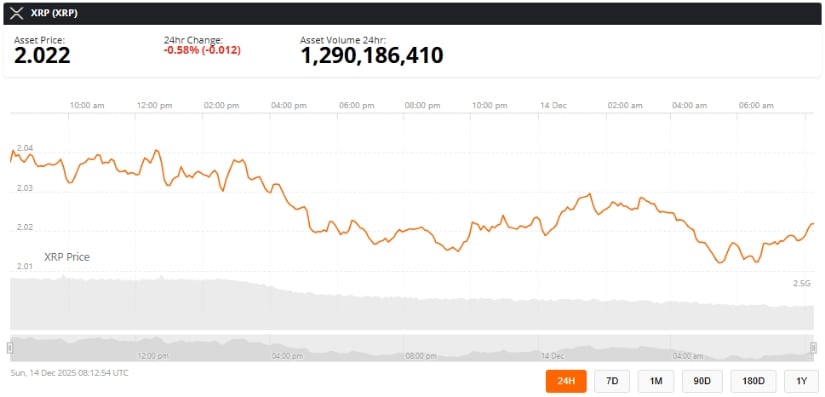
XRP is
enjoying a bounce, but I remain skeptical of this rally. My analysis identifies
a local resistance zone starting at $2.00 and extending to $1.90,
where declines halted in late November.

While the
June lows at this level previously triggered a massive rally to $3.60, the
technical situation today is vastly different. I see strong sell signals,
including another Death Cross, which supports the bears. If the current local
support fails, I assume further depreciation for XRP.

My first
target is $1.61, followed
by an ultimate slide to $1.25
, the lowest levels since November
2024.

What would
change my mind? For me to flip bullish, XRP would need to reclaim the
resistance zone between $2.20 and $2.30. The optimal bullish scenario
would require a breakout above $2.70, but until then, I remain bearish.

XRP technical analysis. Why XRP price is going up today? Source: Tradingview.com

Dogecoin Price Prediction:
DOGE May Crash to $0.10

DOGE Current
Price:
$0.1436
(+3.6%)

Dogecoin (DOGE)
is up 3.6% today, but on my chart, the damage has already been done. DOGE
officially broke through the major support zone I had marked based on the lows
of March, April, and June.

On November
21, the price dipped to $0.1332, proving to me that the buying pressure
has evaporated. In my opinion, the fact that the zone widened without a dynamic
rebound is a significant weakness. The pressure remains strongly bearish as
sellers have pushed the price below key technical levels.

Dogecoin technical analysis. Why DOGE price is going up today? Source: Tradingview.com

  • Breakdown:
    On November 21, the price dipped as low as $0.1332, widening the support zone
    but failing to trigger a dynamic rebound.
  • Trend:
    Moving averages indicate a downtrend.
  • Recovery Hurdle: To relieve selling pressure, DOGE must return to at least $0.20
    (psychological level + 200-day MA). Only then could a move toward $0.30 be
    considered.

For
Dogecoin to relieve this selling pressure, it would need to return to at least $0.20
on my chart. Until that happens, I am treating this as a “hunt for
lows.” If the current fragile support gives way, I
expect a crash toward $0.10
, testing the flash-crash levels from
October 10.

FAQ: Common Questions
About Today’s Crypto Market

Why is crypto going up
today?

The crypto
market is rising today due to a relief bounce and stabilizing global macro
sentiment, as noted by Wincent Director Paul Howard. However, despite the green
charts, technical indicators suggest this is a temporary correction within a
broader downtrend rather than the start of a new bull run.

What is the Bitcoin price
prediction for late 2025?

While
Bitcoin has recovered to $92,000, technical analysis predicts a drop to $74,000
in the coming weeks. A “Death Cross” formation and resistance at
$94,000 suggest that Bitcoin will likely revisit its April lows before any
sustainable long-term recovery begins.

Will Ethereum go back up
to $4,000?

No, it is
unlikely in the short term. Ethereum is currently trapped in a bearish
consolidation between $2,750 and $3,400. Technicals point to a high probability
of a breakdown toward $2,100, with a potential ultimate bottom below $1,500
if the bearish trend confirmed by the 50/200 MA cross continues.

Is Dogecoin a good
investment right now?

Yes, but caution
is advised. Despite today’s 3.6% gain, Dogecoin has broken major support levels
from earlier this year. Unless DOGE reclaims the $0.20 level, the chart
favors a “hunt for lows” strategy with a price target of $0.10.

Why is XRP price falling
despite the rally?

Although
XRP is up slightly today, the broader trend is bearish due to a “Death
Cross” signal. Unless XRP breaks above resistance at $2.20-$2.30,
analysts forecast a decline to $1.61 and potentially as low as $1.25.

The
cryptocurrency market is flashing green during Monday’s trading session, 8
December, 2025, prompting investors to ask why crypto is going up today.
Major assets like Bitcoin, Ethereum, XRP, and Dogecoin are posting gains,
driven by a relief bounce from recent lows.

However,
despite today’s optimism, my technical analysis suggests this is likely a
temporary pause before further declines. Below you can find a detailed
breakdown of the charts for Bitcoin, Ethereum, XRP, and Dogecoin.

Why Crypto Is Surging
Today?

The crypto
market is seeing a recovery as volatility begins to normalize. According to
Paul Howard, Director at Wincent, the market is currently establishing a
trading range rather than entering a full-blown bull run.

“We
continue to see cryptocurrency prices closely correlated with global
macro-economic events. Whilst BTC CME volatility has gradually risen the past
few weeks, the return to high 40s is welcome from many traders,” he said.

Bitcoin is
currently supported mainly by the weakening U.S. dollar, which has
fallen to its lowest level since October, as well as a renewed appetite for
risk assets, including equities. The S&P 500 ended last week at 6,870,
its highest level in six weeks
.

This week,
investors are focused on the Federal Reserve, which will announce its
interest rate decision on Wednesday.

How does
the technical picture look on the charts? I examine it in the following section
of the analysis.

Bitcoin Price Analysis:
Why I Believe BTC Will Drop to $74,000

BTC Current
Price:
$92,000
(+1.8%)

During
Monday’s session, Bitcoin (BTC) is trading around $92,000, marking a
second consecutive day of gains. However, according to my technical analysis,
this sideways movement is merely a pause before a continuation of the downtrend
toward my ultimate target: the
April lows of $74,000.

Currently,
I see Bitcoin trapped below a critical resistance zone of $92,000 – $94,000.
On my chart, the price has already printed bearish sell signals twice at this
height, most recently a bearish engulfing pattern between December 3rd and 4th.

Bitcoin technical analysis. Why BTC price is going up today? Source: Tradingview.com

Furthermore,
I am closely watching the “Death Cross” (50-day EMA crossing below
the 200-day EMA) that
formed on November 16
. To me, this is a clear signal that current levels
will not hold. I expect the recent lows to be breached, with Bitcoin eventually
descending to my target of $74,000. Only after flushing out the “weak
hands” at that level do I expect a slow re-accumulation and a eventual
return to All-Time Highs, though almost certainly not this year.

“In my
assessment, it is far too early to pop the champagne and announce that the
worst is over,” Arkadiusz Jóźwiak, Crypto Analyst and Editor-in-Chief at
Comparic.pl, said, backing my outlook. “From a technical point of view,
the downtrend will continue as long as Bitcoin does not break new higher
peaks.”

Please also check
my other articles with Bitcoin price predictions and analyses:

Ethereum Price Technical
Analysis Points to a Fall Below $1,500

ETH Current
Price:
~$3,156
(+3%)

Ethereum
(ETH) is recovering above the psychological $3,000 level, but my
analysis suggests caution. As I observe on the chart, ETH remains stuck in a
month-long consolidation between support at $2,750 and resistance at $3,400.

Similar to
Bitcoin, the moving averages on my chart show a Death Cross, confirming a
dominant downtrend. Consequently, I am betting on a breakdown from this
consolidation rather than a breakout.

If my
bearish scenario plays out, the price will slide toward the June lows of $2,100.
My ultimate bearish target for Ethereum aligns with the April lows, meaning I
see a high probability of ETH falling below $1,500
.

Ethereum technical analysis. Why ETH price is going up today? Source: Tradingview.com

XRP Price Forecast: Why I
Am Targeting $1.25?

XRP Current
Price:
$2.09
(+2.6%)

XRP is
enjoying a bounce, but I remain skeptical of this rally. My analysis identifies
a local resistance zone starting at $2.00 and extending to $1.90,
where declines halted in late November.

While the
June lows at this level previously triggered a massive rally to $3.60, the
technical situation today is vastly different. I see strong sell signals,
including another Death Cross, which supports the bears. If the current local
support fails, I assume further depreciation for XRP.

My first
target is $1.61, followed
by an ultimate slide to $1.25
, the lowest levels since November
2024.

What would
change my mind? For me to flip bullish, XRP would need to reclaim the
resistance zone between $2.20 and $2.30. The optimal bullish scenario
would require a breakout above $2.70, but until then, I remain bearish.

XRP technical analysis. Why XRP price is going up today? Source: Tradingview.com

Dogecoin Price Prediction:
DOGE May Crash to $0.10

DOGE Current
Price:
$0.1436
(+3.6%)

Dogecoin (DOGE)
is up 3.6% today, but on my chart, the damage has already been done. DOGE
officially broke through the major support zone I had marked based on the lows
of March, April, and June.

On November
21, the price dipped to $0.1332, proving to me that the buying pressure
has evaporated. In my opinion, the fact that the zone widened without a dynamic
rebound is a significant weakness. The pressure remains strongly bearish as
sellers have pushed the price below key technical levels.

Dogecoin technical analysis. Why DOGE price is going up today? Source: Tradingview.com

  • Breakdown:
    On November 21, the price dipped as low as $0.1332, widening the support zone
    but failing to trigger a dynamic rebound.
  • Trend:
    Moving averages indicate a downtrend.
  • Recovery Hurdle: To relieve selling pressure, DOGE must return to at least $0.20
    (psychological level + 200-day MA). Only then could a move toward $0.30 be
    considered.

For
Dogecoin to relieve this selling pressure, it would need to return to at least $0.20
on my chart. Until that happens, I am treating this as a “hunt for
lows.” If the current fragile support gives way, I
expect a crash toward $0.10
, testing the flash-crash levels from
October 10.

FAQ: Common Questions
About Today’s Crypto Market

Why is crypto going up
today?

The crypto
market is rising today due to a relief bounce and stabilizing global macro
sentiment, as noted by Wincent Director Paul Howard. However, despite the green
charts, technical indicators suggest this is a temporary correction within a
broader downtrend rather than the start of a new bull run.

What is the Bitcoin price
prediction for late 2025?

While
Bitcoin has recovered to $92,000, technical analysis predicts a drop to $74,000
in the coming weeks. A “Death Cross” formation and resistance at
$94,000 suggest that Bitcoin will likely revisit its April lows before any
sustainable long-term recovery begins.

Will Ethereum go back up
to $4,000?

No, it is
unlikely in the short term. Ethereum is currently trapped in a bearish
consolidation between $2,750 and $3,400. Technicals point to a high probability
of a breakdown toward $2,100, with a potential ultimate bottom below $1,500
if the bearish trend confirmed by the 50/200 MA cross continues.

Is Dogecoin a good
investment right now?

Yes, but caution
is advised. Despite today’s 3.6% gain, Dogecoin has broken major support levels
from earlier this year. Unless DOGE reclaims the $0.20 level, the chart
favors a “hunt for lows” strategy with a price target of $0.10.

Why is XRP price falling
despite the rally?

Although
XRP is up slightly today, the broader trend is bearish due to a “Death
Cross” signal. Unless XRP breaks above resistance at $2.20-$2.30,
analysts forecast a decline to $1.61 and potentially as low as $1.25.

Source link

8 12, 2025

Copper price keeps the bullish scenario– Forecast today – 8-12-2025

By |2025-12-08T12:38:07+02:00December 8, 2025|Forex News, News|0 Comments


Copper price confirmed the stability of the bullish scenario by its attempt to settle above $5.3200 level, reinforcing the chances of recording new gains in the near sessions, the continuation of providing positive momentum by stochastic will ease the mission of reaching the next target at $5.5000, monitoring it as it formed extra barrier as appear in the above image.


Reaching below $5.3200 and providing negative close might force it to provide corrective trading, which forces it to decline towards $5.1500 before reaching the previously waited target.


The expected trading range for today is between $5.2500 and $5.5000


Trend forecast: Bullish


Source link

8 12, 2025

The EURJPY repeats the sideways fluctuation– Forecast today – 8-12-2025

By |2025-12-08T12:08:07+02:00December 8, 2025|Forex News, News|0 Comments

The EURJPY pair remains affected by the dominance of the sideways bias, due to the contradiction between the main indicators, keeping their stability within the sideways track that is represented by 179.40 support, while 181.75 keeps forming strong barrier against bullish attempts.


The main stability within the bullish channel’s levels makes us wait to gather bullish momentum, motivating the bullish attempts by its rally towards 181.35, to attempt to breach the barrier to begin recording new gains by reaching 182.35 and 183.10.


The expected trading range for today is between 180.20 and 181.70


Trend forecast: Fluctuating


Source link

8 12, 2025

Algae Products Market Size, Share

By |2025-12-08T12:02:07+02:00December 8, 2025|Dietary Supplements News, News|0 Comments


Report Overview

The Global Algae Products Market size is expected to be worth around USD 9.6 billion by 2034, from USD 5.1 billion in 2024, growing at a CAGR of 6.5% during the forecast period from 2025 to 2034.

The algae products industry covers biomass-derived ingredients used across food, feed, nutraceuticals, cosmetics, pharmaceuticals, biofertilizers, and sustainable materials. Algae products include proteins, lipids, pigments, hydrocolloids, and functional extracts. Consequently, this market connects climate efficiency with supply security, purity control, and scalable fermentation or cultivation economics.

Algae Products Market Size, Share

Algae deliver concentrated nutrition and functional performance using limited land and water. Moreover, microalgae and macroalgae offer rapid biomass cycles supporting year-round output stability. Therefore, businesses value algae for clean-label positioning, traceability, and formulation flexibility across protein enrichment, natural colourants, omega oils, and texture modifiers.

  • Long-term growth drivers reflect structural food and climate pressures. According to the Food and Agriculture Organisation, the global population is projected to reach 9 billion by 2050, increasing food demand by 70%. Consequently, algae emerge as scalable nutrition sources that reduce dependence on arable land and freshwater.

Scientific efficiency strengthens this case. Including NASA-referenced studies, algae account for nearly 50% of Earth’s photosynthesis, converting sunlight into biomass faster than terrestrial crops. Therefore, producers benefit from higher productivity per area with predictable, controllable yields.

Climate performance metrics further support market expansion. One acre of algae can absorb up to 2.7 tons of CO₂ daily, while requiring about 1.87 kilograms of CO₂ per kilogram of algae biomass produced. Hence, algae products align commercial growth with decarbonization goals, strengthening long-term market opportunity.

Key Takeaways

  • The Global Algae Products Market is projected to grow from USD 5.1 billion in 2024 to USD 9.6 billion by 2034, registering a 6.5% CAGR during 2025–2034.
  • Macroalgae lead the market by source with a dominant share of 56.2% in 2024, driven by large-scale cultivation and broad food and industrial usage.
  • Dry algae products account for the largest share at 69.3% due to longer shelf life and ease of storage, and transportation.
  • Lipids hold the leading position with a market share of 23.4%, supported by rising demand for omega-rich ingredients.
  • Food and Beverages dominate application-wise, capturing 33.7% of the total market in 2024, driven by clean-label and functional nutrition trends.
  • North America is the leading regional market, holding a 45.7% share and valued at USD 2.3 billion in 2024.

By Source Analysis

Macroalgae dominate with 56.2% due to their large-scale cultivation, high biomass yield, and strong acceptance across food, feed, and industrial applications.

In 2024, Macroalgae held a dominant market position in the By Source Analysis segment of the Algae Products Market, with a 56.2% share. This leadership is driven by easy coastal farming, faster growth cycles, and broad usability. Moreover, macroalgae support stable supply chains for food ingredients and hydrocolloids.

Microalgae play a vital supporting role, mainly used in nutraceuticals and functional foods. It offers higher nutrient density and controlled indoor cultivation advantages. However, relatively higher processing costs and infrastructure needs limit its overall share compared to macroalgae.

Blue-Green algae, often used for pigments and supplements, continues to see focused demand. Its role remains niche, supported by antioxidant and protein-rich properties. Still, scalability challenges and regional production constraints impact wider adoption.

By Form Analysis

Dry dominates with 69.3% due to longer shelf life, easier transportation, and suitability for large-scale food and feed processing.

In 2024, Dry held a dominant market position in the By Form Analysis segment of the Algae Products Market, with a 69.3% share. This dominance reflects its storage stability, reduced microbial risk, and strong compatibility with powders and blended formulations.

The dry form is widely preferred by manufacturers due to cost efficiency and simplified logistics. Moreover, drying allows algae products to retain core nutrients while enabling flexible use across food, supplements, and animal nutrition sectors. Liquid algae products serve applications requiring immediate bioavailability and easy mixing.

These forms are gaining gradual interest in beverages and cosmetics. However, limited shelf life and higher transportation costs restrict faster expansion. Despite slower growth, liquid forms remain important for specialized formulations. Their role continues to support innovation-driven demand, particularly where functional performance outweighs storage efficiency.

By Type Analysis

Lipids dominate with 23.4% due to rising demand for omega-rich ingredients in nutrition, feed, and bio-based applications.

In 2024, Lipids held a dominant market position in the By Type Analysis segment of the Algae Products Market, with a 23.4% share. Growth is driven by increasing use in dietary supplements, functional foods, and sustainable lipid alternatives.

Carotenoids remain important due to their coloring and antioxidant properties. They are widely used in food products and personal care applications. However, production complexity keeps their market share moderate. Carrageenan and alginates are essential for texturizing and stabilizing applications.

Their presence is strong in food processing and industrial uses, supported by consistent demand for natural hydrocolloids. Algal proteins and other types address emerging plant-based nutrition needs. While demand is growing, these segments continue to evolve as production technologies improve and costs gradually reduce.

By Application Analysis

Food and Beverages dominate with 33.7% due to strong demand for natural, functional, and clean-label ingredients.

In 2024, Food and Beverages held a dominant market position in the By Application Analysis segment of the Algae Products Market, with a 33.7% share. Consumers increasingly prefer algae for its nutritional value and natural origin. Dietary supplements represent a growing application, supported by wellness trends and rising interest in plant-based nutrients. Algae-based capsules and powders are gaining steady traction among health-focused consumers.

Animal feed applications benefit from algae’s protein and lipid content, improving feed efficiency and nutritional balance. Adoption remains steady as producers seek sustainable feed ingredients. Cosmetics, pharmaceuticals, and other applications contribute incremental demand. These segments focus on bioactive compounds and functional benefits, supporting diversified growth across the overall market.

Algae Products Market ShareAlgae Products Market Share

Key Market Segments

By Source

  • Macroalgae
  • Microalgae
  • Blue-Green
  • Others

By Form

By Type

  • Lipids
  • Carotenoids
  • Carrageenan
  • Alginates
  • Algal Proteins
  • Others

By Application

  • Food and Beverages
  • Dietary Supplements
  • Animal Feed
  • Cosmetics and Personal Care Products
  • Pharmaceuticals
  • Others

Emerging Trends

Shift Toward Plant-Based and Eco-Friendly Products Shapes Market Trends

A clear trend in the algae products market is the shift toward plant-based lifestyles. More consumers are reducing animal-based foods and choosing algae as a natural protein source. This trend supports steady demand across food and supplement categories. Clean-label and transparency trends also influence the market.

  • Global average protein intake still falls below recommended levels in over 30% of low- and middle-income countries, creating interest in dense, natural protein sources such as algae. Algae stand out because some species contain over 60% protein by dry weight, while also providing iron, iodine, and omega-3 fatty acids.

Consumers want to know where ingredients come from and how they are produced. Algae brands highlighting sustainable sourcing gain stronger trust and preference. Innovation in product formats is another trend. Algae are now available in gummies, ready drinks, and flavored powders, improving taste and convenience. These formats attract first-time users and younger consumers.

Drivers

Rising Demand for Natural and Sustainable Nutrition Drives Algae Products Market Growth

Growing interest in natural, plant-based nutrition is a major driver for algae products. Consumers are looking for clean-label foods with simple ingredients, and algae fit this need well. Products such as spirulina and chlorella are rich in protein, vitamins, and minerals, making them popular in daily diets. Health-conscious consumers prefer algae because they support immune function, digestion, and energy levels.

  • The FAO reports that agriculture uses around 70% of global freshwater withdrawals, while climate stress is reducing crop yields in many regions. Algae grow without soil and require significantly less freshwater, making them attractive to food manufacturers seeking stable supply sources.

Algae are also widely used in dietary supplements. Busy lifestyles have increased demand for easy-to-use nutritional sources, and algae powders and tablets are easy to consume. This trend supports steady market growth. In addition, algae-derived ingredients are used in functional foods and beverages, helping brands offer added health benefits.

Restraints

High Production Costs Limit Widespread Adoption of Algae Products

Despite strong demand, high production costs remain a key restraint in the algae products market. Growing algae requires controlled conditions, specific nutrients, and regular monitoring. These factors increase operating expenses, especially for small and mid-sized producers. As a result, algae products are often priced higher than conventional ingredients.

  • After harvesting, algae need drying, extraction, and purification to meet quality standards. These steps require advanced equipment and skilled labor, adding to the final product cost. This limits affordability in price-sensitive markets. The International Energy Agency, energy can account for up to 40% of total operating costs in controlled algae cultivation systems such as photobioreactors.

Limited consumer awareness also restricts growth in some regions. Many consumers still lack a clear understanding of algae benefits, leading to hesitation in adoption. Without proper education, algae-based foods may struggle to reach mainstream acceptance.

Growth Factors

Expanding Functional Food and Feed Applications Create New Growth Opportunities

The expanding functional food sector presents strong growth opportunities for algae products. Food companies are actively adding algae ingredients to snacks, beverages, and ready-to-eat meals. Algae help enhance nutritional value without major formulation changes, making them attractive to manufacturers.

Animal feed is another high-potential area. Algae improve feed quality and support animal health, especially in aquaculture and poultry farming. As demand for high-quality protein rises, algae-based feed ingredients are gaining attention. The cosmetics and personal care industry also offers opportunities.

Algae extracts are used in skincare products for hydration, anti-aging, and skin repair benefits. Natural beauty trends support this growing use. Emerging markets present long-term growth potential. As income levels rise and health awareness improves, demand for nutrient-rich products increases. Local algae cultivation projects can reduce costs and improve access.

Regional Analysis

North America Dominates the Algae Products Market with a Market Share of 45.7%, Valued at USD 2.3 billion

North America holds the leading position in the global algae products market due to strong demand from the food, dietary supplement, and animal nutrition sectors. In 2024, the region accounted for a dominant 45.7% share, reaching a value of USD 2.3 billion, supported by high awareness of plant-based nutrition and clean-label ingredients. Regulatory support for sustainable protein sources and continued investment in algae-based research further strengthen market adoption.

Europe represents a stable and steadily growing market for algae products, driven by strong sustainability goals and a preference for natural ingredients. The region shows increasing use of algae in organic foods, cosmetics, and nutraceuticals, supported by strict regulations favoring eco-friendly raw materials. Consumer interest in vegan diets and low-carbon food sources continues to support long-term growth.

Asia Pacific is emerging as a high-growth region for algae products, supported by large population levels and traditional consumption of algae-based foods. Demand is rising across food processing, aquaculture feed, and dietary supplements, especially in coastal economies. Expanding middle-class income levels and awareness of algae’s nutritional benefits are encouraging wider adoption. The region also benefits from favorable climatic conditions for algae cultivation.

The Middle East and Africa region is gradually expanding in the algae products market, mainly due to increasing interest in sustainable food sources and water-efficient crops. Algae-based solutions are gaining attention for animal feed and nutrition security in arid regions. Government-backed food resilience initiatives and pilot-scale algae cultivation projects support early-stage market growth. However, commercialization remains at a developing stage.

Algae Products Market RegionAlgae Products Market Region

Key Regions and Countries

North America

Europe

  • Germany
  • France
  • The UK
  • Spain
  • Italy
  • Rest of Europe

Asia Pacific

  • China
  • Japan
  • South Korea
  • India
  • Australia
  • Rest of APAC

Latin America

  • Brazil
  • Mexico
  • Rest of Latin America

Middle East & Africa

  • GCC
  • South Africa
  • Rest of MEA

Key Players Analysis

In 2024, ACCEL Carrageenan Corporation continues to strengthen its position in the hydrocolloid-based algae products space, particularly for food, dairy, and processed meat applications. The company benefits from established supply chains in key seaweed-growing regions and focuses on consistent quality and functional performance, which makes it a preferred partner for formulators seeking texture, stability, and clean-label positioning in both mature and emerging markets.

Algatechnologies Ltd remains a reference player in high-value microalgae ingredients, especially for astaxanthin and other premium nutraceutical applications. In 2024, the company’s strategy revolves around capacity optimization, advanced cultivation technologies, and strong branding around science-backed health benefits, positioning it well in the fast-growing segments of healthy aging, sports nutrition, and eye-health supplements.

Algenol is an important innovation-driven participant, focusing on utilizing algae for biofuels, carbon capture, and related industrial applications. In 2024, its value lies less in sheer volume and more in technology platforms, IP, and pilot-to-commercial pathways that demonstrate how algae can contribute to decarbonization, circular carbon utilization, and energy diversification strategies for governments and large industrial customers.

Archer-Daniels-Midland Company brings scale, global reach, and integrated agricultural supply chains to the algae products market in 2024. Leveraging its capabilities in ingredients, processing, and formulation support, the company is well placed to embed algae-derived components into food, feed, and specialty ingredient portfolios, while aligning them with macro trends around alternative proteins, sustainability, and value-added nutrition for both human and animal markets.

Top Key Players in the Market

  • ACCEL Carrageenan Corporation
  • Algatechnologies Ltd
  • Algenol
  • Archer-Daniels-Midland Company
  • BASF SE
  • Caldic B.V.
  • Cargill Incorporated
  • Cellana Inc
  • Corbion N.V.
  • Cyanotech Corporation
  • DuPont de Nemours Inc
  • DSM Firmenich
  • TBK Manufacturing Corporation

Recent Developments

  • In 2025, Algenol’s platform for integrating CO₂ utilization with the co-production of biofuels and valuable pigments from cyanobacteria was recognized by the U.S. Environmental Protection Agency (EPA) as a model for scalable biorefineries, highlighting its potential in carbon capture and sustainable fuel production from algae.
  • In 2025, BASF incorporated Chlorella vulgaris microalgae extracts into moisturizers and anti-aging creams, leveraging their antioxidant and polyunsaturated fatty acid content for skin rejuvenation, hydration, and wrinkle reduction, as validated in clinical skincare trials. This positions BASF as a key player in eco-friendly cosmetics.

Report Scope


Source link

8 12, 2025

BTCUSD price prediction: could Bitcoin price reach $100K in 2026?

By |2025-12-08T11:51:04+02:00December 8, 2025|Crypto News, News|0 Comments


Risk Warning: this article represents only the author’s views and is for reference only. It does not constitute investment advice or financial guidance, nor does it represent the stance of the Markets.com platform.When considering shares, indices, forex (foreign exchange) and commodities for trading and price predictions, remember that trading CFDs involves a significant degree of risk and could result in capital loss.Past performance is not indicative of any future results. This information is provided for informative purposes only and should not be construed to be investment advice. Trading cryptocurrency CFDs and spread bets is restricted for all UK retail clients. 

Source link

8 12, 2025

Goldman keeps upbeat 2026 US gas price outlook, followed by decline

By |2025-12-08T10:37:03+02:00December 8, 2025|Forex News, News|0 Comments


Please Register or Sign in to view this content.

Quantum Commodity Intelligence is a premium paid subscription service for professionals in the oil, biofuels, carbon, ammonia and hydrogen markets.

Quantum Oil service subscribers have access to:

  • Daily price assessments
  • Market news and price commentary
  • Fundamental trade data
  • Quantum Oil Daily – market report sent to your email

Get in touch with us for subscription information on all Quantum platforms, or help with the service.


Source link

8 12, 2025

Pound-to-Dollar Forecast: Will GBP/USD Rally on FED This Week?

By |2025-12-08T10:07:31+02:00December 8, 2025|Forex News, News|0 Comments


– Written by

The Pound to Dollar exchange rate (GBP/USD) stalled above 1.3350 after a strong run, with both the Fed and BoE poised to cut rates this month.

Long-term forecasts diverge sharply, with some banks expecting gains toward 1.45 while others see a slide back to 1.30 by 2026.

Direction now hinges on how aggressively the Fed eases next year and whether a new Chair injects political risk into US policy.

GBP/USD Forecasts: Rate cuts imminent

Credit Agricole forecasts that GBP/USD will retreat to 1.30 by the end of 2026, although it does see gains to 1.40 by the end of the following year.

In contrast, Bank of America forecasts that GBP/USD will strengthen to 1.45 at the end of 2026.

According to Bank of America; In reality, markets have been reluctant to price in good news, preferring to trade bearish GBP news into the budget.

Save on Your GBP/USD Transfer

Get better rates and lower fees on your next international money transfer.
Compare TorFX with top UK banks in seconds and see how much you could save.


Compare the Best GBP/USD Rates »

GBP/USD posted net gains to 5-week highs above 1.3350 before stalling.

Federal Reserve policy will be a key element for currency markets. Traders are pricing around 86% odds of Fed cut this week, and potentially 2-3 more reductions next year.

There will also be a new Fed Chair from May which could trigger a notable shift in direction.

There has been increased speculation that President Trump will nominate Director of the National Economic Council Kevin Hassett to be the next Chair.

Such an appointment would increase concerns over increased political influence.

ING also noted potential risks to the US currency; “We are mildly bearish on the dollar into 2026 as the Fed brings the policy rate down to neutral. We see risks skewed to the dollar’s downside should a more politically minded Fed take US real rates a lot lower or even be dragged into a scheme to target longer-dated Treasury yields.”

Danske Bank has adjusted its forecast; “We expect the Fed to cut rates by 25bp in December, March and June (prev. January, April and July), and then maintain the terminal rate of 3.00-3.25% through the rest of 2026 and 2027.”

It noted a high degree of uncertainty; “Sudden slowdown in private consumption could tilt the Fed towards resuming more aggressive rate cuts, but the persistent fiscal easing could also force the Fed to maintain rates at a structurally higher level than we assume.”

Credit Agricole, however, expects no cuts in 2026; “Policy uncertainty to fade and dovish Fed market expectations to be put to the test by a resilient US economy and sticky inflation that would further render any fiscal dominance attempts costlier for the Trump administration ahead of the all-important US mid-term elections.”

There are also strong expectations that the Bank of England will cut rates in December while 2026 policy decisions will be a key element.

Barclays commented; “The BoE is expected to slow the pace of policy easing in 2026, this is contingent on inflation remaining contained and the labour market staying stable”

The bank did add; “some slack is starting to appear in the labour market. Should the unemployment rate surpass 5%, the central bank may ease more aggressively in a bid to support real disposable income and consumption.”

Like this piece? Please share with your friends and colleagues:


International Money Transfer? Ask our resident FX expert a money transfer question or try John’s new, free, no-obligation personal service! ,where he helps every step of the way,
ensuring you get the best exchange rates on your currency requirements.

TAGS: Pound Dollar Forecasts

Source link

Go to Top