About Editorial team of BIPNs

Main team of content of bipns.com. Any type of content should be approved by us.
27 01, 2025

Is it Covid, RSV or the Flu?

By |2025-01-27T20:32:52+02:00January 27, 2025|Fitness News, News|0 Comments

Is it Covid, RSV or the Flu? Infographic. Click to view PDF

Every year, respiratory viruses like flu, Covid and RSV cause millions of people to get sick and thousands of people to die. 

You can lower your risk by getting vaccinated. 

Did you know? 

People over 65 and those who are immunocompromised should get a 2nd Covid vaccine 6 months after their first dose.


Who is at risk for respiratory infections?

Everyone is at risk for respiratory infections, but some people are at higher risk for severe disease or hospitalization.

You are considered high risk for a severe case of flu or Covid if you:

  • Are 65 years or older

  • Are pregnant

  • Have a weakened immune system 

  • Have certain health conditions, such as:

    • Heart disease

    • Obesity

    • Asthma

You are considered high risk for a severe case of RSV if you:

  • Are 75 years or older

  • Are 60–74 years old and living in a long-term care facility

  • Have certain health conditions, such as: 

    • Heart, lung & kidney disease

    • Obesity

    • Diabetes

    • Asthma


How can you tell the difference between these infections?

The flu, Covid and RSV all cause similar symptoms that can range from mild to deadly. 

The common symptoms of these 3 viruses include:

  • Fever

  • Cough

  • Headache

  • Runny or stuffy nose


Other symptoms are more common in certain viruses than others.


Flu

Covid

RSV

Muscle pain/body aches

Often

Sometimes

Rarely

Difficulty breathing

Rarely

Often

Sometimes

Fatigue or weakness

Often

Often

Rarely

Fever

Often (can be h igh, up to 103 or 104)

Sometimes (mild fever of 99 or 100)

Sometimes (mild fever of 99 or 100)

Loss of taste or smell

Rarely

Sometimes

Rarely

Sore throat

Sometimes

Often

Rarely

Wheezing

Rarely

Rarely

Often

Chills

Often

Often

Rarely

Sneezing

Sometimes

Sometimes

Sometimes

Diarrhea/vomiting

Sometimes

Sometimes

Rarely


One way to help you figure out which virus you have is how quickly symptoms come on.

  • Flu comes on quickly and is felt all over the body

  • Covid and RSV often start slowly with sniffles, followed in the next day or two by cough and headac he

The only way to know for sure is to get tested.


Vaccines to protect you from flu, Covid and RSV

Vaccines can help keep symptoms mild and help prevent severe disease and hospitalization.

Flu and Covid vaccines are recommended for:

  • Everyone 6 months and older

It is especially important to get vaccinated if you are 65 and older or are at high risk for severe disease.

The RSV vaccine is recommended for adults:

  • Age 75 and older

  • Ages 60 or older in nursing homes or with certain health conditions

  • 32 – 36 weeks pregnant during RSV season


This educational resource was created with support from Novavax, a HealthyWomen Corporate Advisory Council member.


Source link

27 01, 2025

Art History Buff? The Met Museum’s Ethereum Game Serves Up NFT Rewards

By |2025-01-27T20:04:13+02:00January 27, 2025|News, NFT News|0 Comments


New York’s Metropolitan Museum of Art is using Web3 gaming and NFT rewards to encourage visitors to explore the world of art history. The new game, called Art Links, invites players to identify common threads and connections between more than 140 works of art from The Met’s collection, with new challenges to be released weekly.

It is built on Coinbase’s Base blockchain in collaboration with start-up TR Labs. In the game, players must create a chain consisting of seven artworks and six connections. They have four attempts to complete each chain.

The game offers multiple types of potential connections, such as the artistic movement the work was part of or the materials used. For example, a player could establish a link by correctly identifying that two pieces were physically made from the same materials or were part of the “cubist” movement.

Players can also connect artworks through “emojis,” shared signs, and symbols. Upon successfully finding art-based connections—or “chains”—between works, players can then claim free NFT badges and earn achievements.

Players who earn these achievements can unlock real-life rewards, such as discounts at The Met Store or private, curator-led in-person tours. Art Links also includes built-in learning moments, available via clickable icons, so users can brush up on their their art history knowledge.

The game is available now on The Met’s website and will run for 12 weeks in total.

Source: The Met

This isn’t the museum’s first foray into blockchain, but it is a bit different. Back in 2023, the Met The Met teamed up with the gaming platform for Replica, an augmented reality quest-based app (available for iOS and Android) that’s linked to a Met experience within the Roblox metaverse. The app—created with technology partner Verizon—guided visitors via an interactive map to 37 selected physical artworks spread around the museum, which they can further discover by scanning the pieces in question.

In return, players could score digital collectibles—like Van Gogh’s famous straw hat—for their avatars.

Themes explored in the game include “Objects in Disguise,” highlighting artworks made from surprising and deliberately deceptive materials, such as Paper Med No. 18 by Su Xianzhong. The game also explores “Art x Tech,” showcasing works that explore artists’ dialogue with technological innovation over time, including Matthew Jensen’s The 49 States.

The Met’s show of faith in blockchain technology comes at a time when demand for NFT art has largely cooled. NFT trading volumes on marketplace Magic Eden are down 91% compared to all-time highs, and the mainstream art world appears to be turning its attention elsewhere.

Record-holding digital artist Beeple said in December that the NFT market had “come back down to Earth” and that speculators have “moved on,” though he noted that “there is still very much a lot of enthusiasm around this stuff.”

Nonetheless, intersections between high-profile art institutions and the NFT space continue to crop up.

In October, Christie’s London hosted an auction for Ascend, a dynamic digital artwork inscribed on Bitcoin’s Ordinals protocol—a first for the auction house.

Edited by Stacy Elliott.

GG Newsletter

Get the latest web3 gaming news, hear directly from gaming studios and influencers covering the space, and receive power-ups from our partners.


Source link

27 01, 2025

XAU/USD extends corrective decline towards $2,730

By |2025-01-27T19:48:10+02:00January 27, 2025|Forex News, News|0 Comments


XAU/USD Current price: $2,731.61

  • Stock markets lead the sentiment ahead of central banks’ announcements.
  • The Chinese January Purchasing Managers’ Indexes came in worse than anticipated.
  • XAU/USD is bearish in the near term, could approach the $2,700 mark before bouncing.

Spot Gold is under strong selling pressure at the beginning of the week, trading around the $2,730 mark in the American session. The bright metal was unable to advance against a battered US Dollar (USD) despite a dismal market mood.

 News coming from China undermined the market sentiment. On the one hand, the country reported that business output declined in January. The NBS Manufacturing Purchasing Managers Index (PMI) printed at 49.1, below the 50.1 posted in December. The Non-Manufacturing PMI came in at 50.2, down from the previous 52.2.

Asian stock markets gained amid news related to AI developments while weighing on their overseas counterparts. DeepSeek, a Chinese AI company, gained traction and dragged alongside the tech sector. The same rally, however, fueled concerns about cheaper AI from China threatening US tech dominance. At the time being, Wall Street remains in the red, albeit most major indexes trimmed a good chunk of their early losses.

Speculative interest will now shift the focus to the upcoming central banks’ decision. The Federal Reserve (Fed) will announce its decision on monetary policy on Wednesday, while the European Central Bank (ECB) will follow on Thursday. At the same time, the United States (US) will release the preliminary estimate of the Q4 Gross Domestic Product (GDP). Annualized growth is foreseen at 2.8%, easing from the 3.1% posted in Q3 yet still indicating healthy progress.

XAU/USD short-term technical outlook

From a technical point of view, XAU/USD seems to be correcting overbought conditions. In the daily chart, technical indicators retreat from extreme peaks, heading firmly lower albeit well above their mid-lines, not enough to support a sustained bearish continuation. At the same time, the 20 Simple Moving Average (SMA) maintains a bullish slope, providing dynamic support at around $2,687.70. The 100 and 200 SMAs, in the meantime, have lost their upward strength, far below the shorter one.

In the near term, and according to the 4-hour chart, XAU/USD is poised to extend its slide. The pair accelerated sharply lower once it broke below a now bearish 20 SMA. At the same time, technical indicators head south almost vertically within negative levels without showing signs of downward exhaustion. Still, Gold remains far above its 100 and 200 SMAs, supporting the case of an ongoing correction rather than anticipating a continued slide.

Support levels: 2,724.60 2,712.90 2,700.00

Resistance levels: 2,747.30 2,764.85 2,777.30


Source link

27 01, 2025

Pound Sterling to Dollar Rate Hits 1.247 as UK Government Talks up Economy

By |2025-01-27T18:44:47+02:00January 27, 2025|Forex News, News|0 Comments

January 27, 2025 – Written by David Woodsmith

The Pound to Dollar exchange rate (GBP/USD) hit 20-day highs just above 1.2520 before settling just above 1.2500.

The government’s shift in stance to talk up the economy and put renewed focus on the growth outlook had some impact in supporting Pound sentiment, although there are still important reservations over the near-term outlook.

COT data, released by the CFTC also recorded a net short position in speculative Pound positions, the first short position since May 2024.

This suggests the potential for short covering if the UK economic news is more positive.

According to Scotiabank. The GBP/USD outlook is bullish with the third leg of a bullish morning star candle pattern on the weekly chart.

It added; “Solid gains again today so far, at least, support the more positive technical outlook and the prospect of a retracement towards the 1.26/1.27 range.”

In contrast, ING and MUFG both expect GBP/USD gains will stall below 1.2600.

Advertisement


The dollar jumped overnight due to the US-Colombia spat over the return of illegal immigrants.

President Trump threatened to impose 25% tariffs on Colombian exports to the US after the Colombian government refused to allow flights to land.

The dollar lost ground after Colombia backed down and the dollar then lost further ground as US yields dipped lower.

US equities came under pressure after Chinese company DeepSeek stated that it could produce a low-cost, low-power AI system.

There were concerns that this would pose a threat to US tech dominance with the Nasdaq index sliding 3%.

The Pound to Euro exchange rate (GBP/EUR) consolidated just below the 1.1900 level.

Domestically, research firm Incomes Data Research (IDR) found that 69% of employers are likely to slow wage growth, with over half “extremely likely” to do so. One-third may cut jobs, while others will absorb costs through lower profits.

There are very strong expectations that the Bank of England will cut interest rates next week, although the medium-term outlook remains extremely uncertain.

Within Europe, the German IFO index improved to 85.1 for January from 84.7 previously and marginally above consensus forecasts of 84.9.

There was a net improvement in current conditions, but the expectations component declined marginally, limiting Euro support.

Markets expect that the ECB will announce a further 25 basis-point interest rate cut this week, taking to deposit rate to 2.75%.

Like this piece? Please share with your friends and colleagues:


International Money Transfer? Ask our resident FX expert a money transfer question or try John’s new, free, no-obligation personal service! ,where he helps every step of the way,
ensuring you get the best exchange rates on your currency requirements.

TAGS: Pound Dollar Forecasts

Source link

27 01, 2025

These are the 8 best protein powders of 2025, according to a dietitian

By |2025-01-27T18:38:32+02:00January 27, 2025|Dietary Supplements News, News|0 Comments


Protein powders aren’t just for bodybuilders and athletes — they’ve become a pantry essential for millions of Americans. Entire stores are dedicated to dietary supplements, and there’s no shortage of options online, so finding the best protein powder isn’t always easy. From dessert-inspired flavors (hello, double chocolate brownie) and plant-based blends to whey isolates high in branched-chain amino acids (BCAAs), there are products to suit most diets, health goals and taste buds.

Why protein powders? For busy parents, athletes, commuters and students, getting enough protein can be an uphill battle, explains Emily Hulse of Emily Grace Nutrition, a registered dietitian and nutritionist. And it’s not just the young and active who benefit. With their increased protein needs, older adults might find protein powders an easy way to combat muscle loss and promote strong bones. “Protein powder can help counteract age-related muscle loss (sarcopenia) and support bone health,” explains Marjorie Nolan Cohn, a registered dietitian and nutritionist and clinical director of Berry Street, an online platform that connects patients with dietitians. Plus, protein powders are shelf-stable and adaptable, fitting into almost any routine.

However, decoding the benefits of protein powders and selecting the right one can be daunting. To make it easier, we sought advice from three registered dietitians. As a registered dietitian myself, I also evaluated over 20 brands and tested 18 products firsthand. Continue reading to find the best protein powders that deserve a place in your shaker bottle.

The products on this list are dietary supplements. Supplements are regulated far less stringently by the Food and Drug Administration than medications, with little evaluation of safety or effectiveness before they go to market. Supplements may also interact with medications and aren’t appropriate for all populations or health conditions. While our health writers select and test evidence-based products, it’s important to talk to your health care provider before adding a dietary supplement to your routine.

Amazon

Protein per serving: 25 g | Serving size: 2 scoops (30 g) | Nutrition facts (unflavored): 120 calories, 3 g carbs, 2 g fat | Sweeteners: None (unflavored), organic coconut sugar (flavored) | Cost per serving: $1.25

Naked Whey earns our best overall pick thanks to its impressively short ingredient list, third-party certification and reasonable price. The powder mixes easily and is available in five flavors, plus an unflavored variety. Each two-scoop-size serving provides an impressive 25 grams of protein to support muscle synthesis and is relatively low in calories and saturated fat.

I’ve tried several Naked Whey flavors over the years (RIP, Naked Matcha) and am continually impressed by the smooth consistency and solid flavor profiles. Because I don’t like the taste (or aftertaste) of stevia and sugar alcohols, Naked Whey earned extra points for being sweetened with organic coconut sugar. That said, because it’s sweetened with real sugar, flavored varieties contain 3-5 grams of added sugar per serving, which may be a deal-breaker if you’re following a low-carb diet or trying to manage your blood sugar levels.

Naked Whey is made from pasture-fed cow’s milk and is third-party certified by Informed Choice. It’s also gluten-free and contains zero artificial additives. Its unflavored option is made from just one ingredient: whey protein concentrate. Keep in mind that whey concentrate contains more lactose than isolate and may cause unwanted GI side effects in some people. That said, many reviewers report no such problems. One five-star Amazon reviewer enthuses, “All I can say is … wow! This has changed my day and been a value add to my life. It tastes great, I feel so satiated and am no longer snacking at all, no intolerance issues and no gas. I have consistent energy levels through the day.” 

Pros

  • Third-party certified
  • Short ingredient list with no artificial additives
  • Naturally sweetened with coconut sugar
  • Impressive taste and little aftertaste
  • Multiple flavors, including unflavored
  • Easy to mix
  • Moderate per-serving price
Cons

  • Flavored varieties include added sugar
  • Whey concentrate may be harder to digest for some
  • Not vegan-friendly

$95 at Amazon

Amazon

Protein per serving: 25 g | Serving size: 2 scoops (38 g) | Nutrition facts (chocolate): 160 calories, 8 g carbs, 4 g fat | Sweeteners: None (unsweetened), organic coconut sugar (flavored varieties) | Cost per serving: 76 cents

Building muscle on a vegan diet? It’s not as tricky as you think — especially with our favorite plant-based protein powder. Offering a hefty 25-27 grams of protein per serving and containing all nine essential amino acids, Naked Pea is a powerhouse for those looking to gain or maintain muscle while sticking to a plant-based lifestyle. Add to that a clean ingredient list, natural coconut sugar sweeteners, a low per-serving price and no artificial additives, and you’ve got a powder that checks all the right boxes.

One of the most surprising aspects of Naked Pea is its flavor. Unlike many vegan protein powders that taste overly sweet or have a gritty texture, Naked Pea is refreshingly clean and subtly sweet. Both the chocolate and vanilla flavors are enjoyable even when mixed only with water — no artificial aftertaste here. Plus, its mild flavor makes it versatile and easy to blend into smoothies, shakes or baked goods.

Reviewers agree. One Amazon user said, “I was initially concerned about how much peaness I would taste when I mixed it into things, but its natural flavor is really very mild. The first time I tried it, I thought the peaness would overwhelm me, but it was very manageable. So far, the unflavored pea protein seems a great fit for more savory dishes, but I imagine it will mix into smoothies and sweeter things fine.”

Naked Pea’s pea protein is generally easier to digest and less likely to cause GI side effects than some other plant-based proteins. That said, the powder does have a slightly earthy flavor, which is less noticeable when it’s paired with other ingredients, such as oat milk or fruit.

Pros

  • Third-party certified
  • Short ingredient list with no artificial additives
  • Multiple flavors, including unflavored
  • Provides all nine essential amino acids
  • Easy to mix
  • Not overly sweet
  • No stevia or other sugar substitutes
  • Low per-serving price
Cons

  • Slight earthy flavor
  • Some may find the flavors too mild

$58 at Amazon

Just Ingredients

Protein per serving: 24 g | Serving size: 1 scoop (33 g) | Nutrition facts (chocolate): 140 calories, 3 g carbs, 4g fat | Sweeteners: Stevia and monk fruit extract | Cost per serving: $2

Flavor can make or break a protein powder — no one wants to dread their daily shake! A great-tasting protein powder encourages consistency, making it easier to meet your nutritional goals. That’s where Just Ingredients excels.

What sets this brand apart is its ability to deliver consistently tasty flavors across its impressive lineup of options, all of which I enjoyed. From rich Vanilla Bean to indulgent Mint Chocolate, each tastes natural and balanced. This is no small feat, as protein powders often rely on artificial sweeteners and flavorings that leave a bitter or overly sweet aftertaste. Just Ingredients avoids that by using natural ingredients like cacao, strawberries and peppermint oil.

Another key advantage is how the powder is sweetened. It uses stevia and monk fruit, which provide a subtle sweetness without the cloying aftertaste often associated with stevia. Even for someone who typically avoids stevia-based products, the flavor profile here feels smooth and satisfying.

Beyond taste, the formulation is thoughtful and clean. With a unique blend of grass-fed whey isolate, grass-fed collagen, chia seed and pumpkin seed proteins, it’s ideal for people looking for a high-quality product free from artificial flavors, colors and additives. It’s versatile too — you can blend it into a smoothie, mix it with oats or simply shake it up with water. Another bonus is no unpleasant side effects. An Amazon reviewer notes, “It’s also easy on the stomach, so no bloating or discomfort after drinking it.” 

That said, at about $2 per serving, it’s pricier than some alternatives. It also contains 4.5 grams of saturated fat per serving, about 25% of your recommended daily intake. These factors may be worth weighing, depending on your priorities.

Pros

  • Third-party tested for purity, potency
  • No added sugars
  • Short ingredient list with no artificial additives
  • 21 flavors, including unflavored
  • Consistently impressive taste; little aftertaste
  • Smooth consistency; easy to mix
  • Whey isolate is easy to digest
Cons

  • Higher per-serving price
  • High in saturated fat
  • Not vegan-friendly

$60 at Just Ingredients

Amazon

Protein per serving: 20 g | Serving size: 1 scoop (26.2 g) | Nutrition facts (chocolate): 90 calories, 2 g carbs, fat not listed | Sweeteners: Monk fruit extract and stevia | Cost per serving: $2.71

Building muscle requires high-quality protein and the right amino acid profile to fuel recovery and growth. Our top choice for muscle gain checks all of the boxes Cohn recommends for big gains.

Specifically, it contains 20 grams of protein per serving from a high-quality protein source — grass-fed whey isolate. It’s also high in branched-chain amino acids (BCAAs); with more than 2 grams of leucine per serving, it helps muscles get the fuel they need for growth and recovery. Plus, it’s NSF Certified for Sport, which ensures it’s free from banned substances and meets high purity standards, making it suitable for competitive athletes.

One happy Amazon reviewer called it “one of the best whey protein supplements I’ve used.” They added that it’s great-tasting and, “I’ve noticed less soreness following a workout and the gains are more than I am accustomed to.”

I was impressed by how easily this powder mixed with water in my blender bottle. After just a few vigorous shakes, the mixture was completely smooth with zero gritty or chalky texture. Flavorwise, chocolate is the way to go. It isn’t the richest or creamiest chocolate protein powder on our list. However, I appreciated it for its solid flavor and zero artificial taste or aftertaste. The vanilla was a bit of a mixed bag for me. While it wasn’t artificial-tasting, the stevia was more noticeable. Also worth considering: the relatively high price per serving.

If you follow a plant-based diet, the company’s vegan powder is worth considering. Similar to its whey counterpart, Momentous 100% Plant Protein has 20 grams of protein per serving, contains all nine essential amino acids and is high in BCAAs to support muscle synthesis. I particularly enjoyed the chocolate, which was smooth and refreshing after an afternoon workout session.

Pros

  • Certified pure for athletes
  • High in BCAAs, including leucine
  • Whey isolate is easy to digest
  • Short ingredient list with no artificial additives
  • Multiple flavors, including unflavored
Cons

  • Higher per-serving price
  • Taste gets mixed reviews

$55 at Amazon

Amazon

Protein per serving: 20 g | Serving size: 2 scoops (40 g) | Nutrition facts: 150 calories, 13 g carbs, 2 g fat | Sweeteners: Organic coconut sugar | Cost per serving: $1.61

If you’ve tried plant-based protein powders before, you’ve probably dealt with gritty texture or weirdly sweet or dirtlike flavors. That’s why this moderately priced Orgain option takes the top spot as the best-tasting plant-based powder — it’s a refreshing change! Made with just a few simple ingredients and naturally sweetened with coconut sugar, it tastes clean and doesn’t leave that artificial aftertaste so many other powders do.

The flavor? So good. Chocolate and vanilla both have a rich, slightly nutty taste that feels like a treat instead of something you’re forcing yourself to drink. The chocolate is creamy and satisfying, perfect for when you’re craving something sweet, and the vanilla is light and smooth. I loved mixing it into a smoothie with frozen banana, spinach and oat milk for a healthy twist on a milkshake. However, because it has a thick, full-bodied flavor and consistency, the powder was perfectly enjoyable when combined with just plain old water or plant-based milk too.

“Great taste and NO STEVIA,” said one Amazon reviewer. “The cool thing here is that you get all the benefits of a vegan protein powder but no stevia and a relatively low sugar content. … It’s really tasty, holds me until lunch (roughly four hours), and keeps my energy level on an even keel.”

Each serving gives you 20 grams of protein from a blend of pea, rice, peanut, almond, pumpkin seed and chia seed proteins. This powder is also certified organic and plant-based. One downside to note is that while Orgain conducts in-house testing for purity, the brand doesn’t utilize third-party testing, something that might be important to some buyers.

Pros

  • Naturally sweetened with coconut sugar
  • Short ingredient list with no artificial additives
  • Rich, nutty flavor
  • Easy to mix
  • Certified organic and plant-based
  • Provides all nine essential amino acids
  • Moderate per-serving price
Cons

  • Not third-party tested for purity or potency
  • No unflavored option
  • Not suitable for those with peanut or tree nut allergies

$21 at Amazon

Amazon

Protein per serving: 20 g | Serving size: 1 scoop (22.3 g) | Nutrition facts: 85 calories, 1 g carbs, fat not listed | Sweeteners: None | Cost per serving: $2.98

Unflavored protein powders allow you to add protein to your diet without altering the taste of your favorite foods or drinks. They’re ideal for blending into smoothies, shakes or recipes like overnight oats without clashing with other flavors. Plus, unflavored options often have fewer additives, making them a cleaner choice for those who prefer simplicity in their supplements.

This Klean Athlete powder takes the top spot in the unflavored category for its high-quality whey isolate protein and versatility. Each serving delivers 20 grams of protein, including all nine essential amino acids and a healthy dose of BCAAs to support muscle recovery and growth. It’s NSF Certified for Sport, so it’s free from banned substances, a huge bonus for competitive athletes. Of course, this comes at a cost — the highest per-serving price on our list.

During testing, the powder mixed effortlessly in a blender bottle, though it did have a slightly chalky texture. This made it a better fit for recipes and blended drinks rather than stirring into plain beverages. As one reviewer said, “Great for smoothies,” adding, “I was looking for a protein powder for my smoothies, this one works well. Doesn’t have the horrible aftertaste a lot of them do. Mixes in nice without any clumps.”

While I didn’t try it in coffee, several reviewers mention that the powder isn’t the best for stirring into beverages — in other words, it’s best shaken, not stirred!

Pros

  • Certified pure for athletes
  • No artificial flavors or sweeteners
  • Mixes well using an electric blender or blender bottle
  • Undetectable when combined with other ingredients
Cons

  • Slightly gritty texture
  • Higher per-serving price
  • Not vegan-friendly

$60 at Amazon

Amazon

Protein per serving: 23 g | Serving size: 2 scoops (31 g) | Nutrition facts: 130 calories, 3 g carbs, 3 g fat | Sweeteners: Monk fruit extract | Cost per serving: $2.50

If you’re on the hunt for an organic protein powder that doesn’t compromise on quality or taste, Ora is a top choice. This USDA-certified organic powder is packed with all-natural, plant-based ingredients, offering a complete amino acid profile. Plus, it’s certified vegan.

One reason this powder earned its spot as the best organic option is Ora’s recent reformulation. Listening to customer feedback, the brand revamped the recipe to remove stevia and improve its consistency. The result is a protein powder that’s smooth and versatile. During testing, the vanilla flavor stood out for its silky texture and mild, natural sweetness, while the Vanilla Chai offered a spiced twist, though it did have a slightly grainy texture that required extra shaking.

Reviewers love this powder too. In fact, one five-star reviewer called it the “best protein powder on the market.” They added, “Very clean protein powder with no weird additives. I buy the unflavored, which I put not only in smoothies but in my morning oatmeal with blueberries.”

Another notable feature is 5 grams of iron per serving, which provides 27% of the daily value for women under 50. This can be a major perk if you want to boost your iron intake, especially since plant-based eaters are more prone to iron deficiencies. However, if you’re already meeting your iron needs or have low iron requirements, this might be an unnecessary addition. The relatively high price is also worth noting.

Pros

  • Third-party tested for purity, potency
  • Certified vegan and organic
  • Multiple flavors, including unflavored
  • No added sugar or artificial additives
  • Naturally sweetened with monk fruit
  • Provides all nine essential amino acids
  • Smooth consistency; easy to mix
  • Impressive taste and little aftertaste
Cons

  • Superfood and Greens Blend may not be appropriate for people taking certain medications
  • May be too high in iron for some, especially women over 50 and men
  • Higher per-serving price

$50 at Amazon

Amazon

Protein per serving: 20 g | Serving size: 2 scoops (29 g) | Nutrition facts: 110 calories, 4 g carbs, 1.5 g fat | Sweeteners: Fermented cane sugar (Reb-M) | Cost per serving: $2

Our best-with-collagen pick is formulated to support healthier hair, skin and nails thanks to its unique combination of bovine collagen peptides, hyaluronic acid, vitamin C, biotin and zinc. While research is ongoing, collagen supplements have been shown to help promote healthier skin and support hair and nail growth. Similarly, hyaluronic acid supplements have been linked with benefits for aging skin, including a reduction of wrinkles and fine lines.

While I didn’t test the powder long enough to notice benefits for my hair, skin or nails, I can vouch for the taste and consistency. Infused with real vanilla bean, the vanilla flavor delivered a rich, authentic taste without the artificial aftertaste common in many vanilla protein powders. I also loved how effortlessly it blended in my shaker bottle, creating a smooth, enjoyable consistency even when mixed with water.

Unlike many other powders from Naked Nutrition, Ella is free of added sugars. Instead, it’s sweetened with fermented cane sugar (Reb-M), a zero-calorie sweetener made through a patented fermentation process.

The biggest downside is the lack of an unflavored option, especially if you prefer to add collagen to your morning coffee. Additionally, because it includes 50% or more of the daily value for vitamin C, biotin and zinc, the powder shouldn’t be combined with a multivitamin.

Pros

  • Third-party tested for purity, potency
  • No artificial sweeteners, colors or flavors
  • Formulated to support hair, skin and nail health
  • Mixes easily
  • Pleasant flavor with no aftertaste
Cons

  • No unflavored option
  • Relatively expensive
  • Cannot be combined with multivitamins
  • Higher per-serving price

$40 at Amazon

Choosing the right protein powder is no small task. Here’s a breakdown of the most common types to help you decide which one might be the best fit for you:

  • Whey protein: Whey is a protein in cow’s milk rich in amino acids, especially BCAAs like leucine. Whey protein is best known for its effectiveness in increasing muscle mass and strength. It’s also been shown to help improve blood pressure and blood sugar levels.

  • Whey protein isolate: This highly refined form of whey protein boasts a higher protein concentration while containing significantly less lactose and fat than whey concentrate. Its lower lactose content makes it a gentler option for those with lactose sensitivity. However, it is typically more expensive and may not retain some of the beneficial nutrients present in less processed whey concentrate.

  • Whey protein concentrate: This less processed form of whey protein is a more budget-friendly option than whey isolate. While it retains more of the beneficial nutrients found in whey, it has a lower protein content and higher levels of lactose and fat, which might not suit everyone, particularly those with lactose sensitivity.

  • Casein: This is the dominant protein in cow’s milk, prized for its slow digestion and absorption. This makes it an excellent choice for muscle recovery during rest periods, such as overnight. Many take casein supplements before bed to ensure a steady supply of amino acids to aid muscle repair while sleeping.

  • Collagen: Collagen is a protein found in connective tissue, bones, cartilage, tendons and skin. It’s often used topically or orally as a supplement to improve hair, skin and nail health.

  • Pea protein: Derived from yellow split peas, pea protein is a rare plant-based protein source that provides all nine essential amino acids. It’s known for being gentle on the digestive system and is less likely to cause gastrointestinal issues than other options. However, pea protein powders can be relatively expensive and often have a mildly earthy flavor, which may not appeal to everyone.

  • Rice protein: These powders are typically more budget-friendly than other vegan protein options. However, rice protein isn’t a complete protein, as it lacks one of the essential amino acids. Additionally, rice-based powders may carry a higher risk of heavy metal contamination, so choosing a trusted brand is crucial.

  • Plant-based blends: These vegan protein powders are formulated with two or more plant-based protein sources and often contain all nine essential amino acids.

Finding the best protein powder involves weighing several factors to ensure it meets your nutritional needs and fits your lifestyle. Here are the key things to keep in mind when you’re shopping:

  • Protein source: Start by deciding which protein best suits your needs, such as whey, casein or plant-based options. Each has its benefits and drawbacks, so consider your dietary restrictions and preferences.

  • Protein content per serving: The amount per serving should match your daily protein needs. Around 20 grams per serving is a solid baseline for most healthy adults. However, active individuals, athletes and adults over 65 may benefit from powders that offer 25-30 grams of protein per serving.

  • Calories: Most protein powders contain 100-200 calories per serving. To build muscle or gain weight, consider a mass gainer with extra calories and carbohydrates. Otherwise, select a powder that matches your daily calorie requirements.

  • Vitamins and minerals: Some protein powders are fortified with vitamins and minerals. For example, some plant-based powders contain additional iron, a nutrient sometimes lacking in a vegan diet. Consider your diet and supplement routine to determine whether you need a powder with additional micronutrients.

  • Carbs and fat: Choose products with carb and fat levels that suit your dietary preferences and nutritional needs. For instance, if you’re on a low-carb diet, opt for a powder with 7 grams of carbs or less per serving.

  • Intended use: Consider your primary goal. Are you looking to build muscle, lose weight or fill nutritional gaps? Choose a product formulated to support that specific purpose.

  • Taste and mixability: A powder’s taste and how well it mixes are crucial for long-term use. Many companies offer sample-size packets, letting you test flavors and consistency before committing to a full-size product.

  • Additives, artificial ingredients: When possible, opt for powders with minimal artificial additives, such as flavors, colors, sweeteners, emulsifiers and fillers. Shorter ingredient lists often mean cleaner, higher-quality products.

  • Dietary restrictions: If you have food allergies or follow a specific diet, ensure your chosen product is compatible. Certifications like certified vegan or gluten-free can help you quickly identify suitable options.

  • Third-party testing: Dietary supplements are not regulated like pharmaceuticals. To ensure a product contains the types and amounts of ingredients listed on the label, look for protein powders that have been third-party tested by a reputable organization, such as NSF or Informed Choice.

  • Value: While you don’t need to splurge on the most expensive option, it’s essential not to sacrifice quality either. Several protein powder brands offer moderately priced products with good-quality ingredients. Most of our top picks fell somewhere between $1 and $3 per serving.

With over 13 years of experience as a registered dietitian (and countless protein shakes under my belt), I’ve researched and tested a wide range of protein powders. To refine this list, I collaborated with three other registered dietitians to better understand what makes a protein powder stand out based on different dietary needs and preferences.

Combining our expertise, we reviewed products from more than 20 brands, narrowing them down to 18 top contenders. Our selection process focused on ingredient quality, nutritional profiles, third-party certifications, insights from online reviews and personal recommendations from friends and family.

For the first round of testing, I mixed a single serving of each powder with 12 ounces of water (or the amount recommended on the label) in a blender bottle, shaking for at least 30 seconds. I evaluated each product based on how well it mixed, texture, flavor and aftertaste.

To gain a more comprehensive sense of these powders’ versatility, I retested each product over the following weeks, incorporating them into blender bottle shakes with oat milk, smoothies and overnight oats. This method allowed me to assess how each powder performed in different scenarios, ultimately helping me determine which ones deserve a spot on your shelf.

  • BEAM Vegan Protein: Be Amazing (BEAM) Vegan Protein comes in seven dessert-inspired flavors, is third-party tested and contains a relatively short list of ingredients. During testing, its Birthday Cake recipe was a favorite for its smooth texture and on-point vanilla cake flavor. The biggest downside is the use of sucralose, which some experts warn could have long-term adverse health effects.

  • Factor Form Whey Protein Powder: Factor Form, widely recognized for its prepared meal delivery service, offers a whey protein powder that’s smooth, creamy and flavorful — particularly the chocolate. However, it has a higher price tag and is only available in single-serve packets.

  • Groove Whey Protein Isolate: Groove is a newcomer to the protein powder scene. The company’s whey protein isolate offers 25 grams of protein and only 2 grams of carbs, making it a good option for a low-carb diet. Although it contains stevia, it isn’t overly noticeable, especially in the Mexican Chocolate flavor. However, it is expensive and only available on the company’s website.

  • Just Ingredients Vegan Protein: Unlike Just Ingredients’ whey-based powder, the company’s vegan option fell flat. I tried the Roasted Chocolate and was surprised by its bitterness and overpowering cinnamon flavor. The texture was also very grainy.

  • Ka’Chava All-in-One Nutrition Shake: Essentially a protein powder and multivitamin in one, Ka’Chava is a dietary supplement with gorgeous packaging. I liked the ingredients and quality, but the texture was too grainy and the taste was too earthy. These factors and the high price tag kept Ka’Chava from making our top list.

  • Momentous 100% Plant Protein: This option is NSF Certified for Sport and formulated to support muscle growth and recovery. While the powder has mixed reviews online, I enjoyed the chocolate flavor. Because it has a thinner consistency and milder flavor, I found it refreshing after a hard workout. The Vanilla Chai, on the other hand, wasn’t as enjoyable. While there were notes of cinnamon, it didn’t deliver on the promise of chai spice.

  • Neue Theory Plant-Based Probiotic Protein Powder: This powder is specially formulated to be easy to digest. It includes probiotics, digestive enzymes and all nine essential amino acids, making it a good source of complete plant-based protein. The vanilla flavor was one of my favorites, thanks to its creamy texture and rich vanilla bean taste. The downside is the high price — roughly $3.25 per serving.

  • Optimum Nutrition Gold Standard 100% Whey: This widely available whey powder has long been a favorite in the sports supplements industry. With 24 grams of protein per serving and an impressive variety of flavors, it’s a solid choice. The Extreme Milk Chocolate flavor delivers richness and sweetness, but the artificial taste and aftertaste were less appealing. Additionally, this powder contains more additives than the other products we tested.

  • OWYN Plant-Based Protein Powder: This vegan powder is certified allergen-friendly, meaning it’s free from eight of the major food allergens. While it has a loyal following, I noticed a strong chemical taste and aftertaste that was hard to ignore. The texture was also very grainy, even when I combined this powder with oat milk.

  • Vega Premium Sport Protein: This powder is a solid option for athletes dedicated to a vegan lifestyle. It is NSF Certified for Sport and delivers an impressive 30 grams of complete protein per serving. It also includes 5 grams of BCAAs and tart cherry extract to aid muscle recovery. It’s available in five stevia-sweetened flavors — a potential downside for those sensitive to stevia’s distinct taste, which is prominent in this formulation.

Whole foods alone can meet the daily protein needs of most healthy adults. However, if you supplement your diet with protein powder, sticking to 1 to 2 servings daily is generally safe and sufficient.

“The best time to drink a protein shake depends on your goals,” says Jessica Kelly, a registered dietitian with Nutrition That Heals. She explains that for building muscle, consuming a protein shake within 30 minutes after a workout can support muscle recovery and growth.

On the other hand, if your focus is weight management or hunger control, protein shakes can serve as an excellent meal replacement or a satisfying snack. They help you curb your appetite and maintain stable blood sugar levels throughout the day.

“Yes, protein powder can support weight loss by promoting satiety, preserving lean muscle mass and stabilizing blood sugar levels,” explains Kelly.

However, it’s important to remember that protein powder isn’t a magic solution for shedding pounds. Since it adds calories to your diet, consuming too much could lead to weight gain if it pushes you beyond your daily calorie requirements.

Protein powders are typically safe for daily use. However, consuming too much protein from powders or other sources can strain your kidneys. To avoid potential issues, healthy adults should limit their daily protein intake to no more than 2 grams per kilogram of body weight.

“Whey isolate is more processed, resulting in a higher protein content (90% or more) and lower fat and lactose levels,” Kelly says. She explains that this makes whey isolate an excellent choice for individuals looking for a cleaner protein source or those with lactose sensitivity.

In contrast, whey concentrate contains slightly less protein (70%-80%) and retains more natural fats and carbohydrates, offering a creamier texture and additional nutrients.

There’s also a price difference: Whey isolate protein powders are typically more expensive than whey concentrate powders.

Our health content is for informational purposes only and is not intended as professional medical advice. Consult a medical professional on questions about your health.


Source link

27 01, 2025

Cardano Price Prediction: ADA to Surge to $1.5 as Shiba Inu, Polygon, and Aptos Show Market Strength

By |2025-01-27T18:36:41+02:00January 27, 2025|Crypto News, News|0 Comments

The cryptocurrency market is poised for significant shifts, fueled by recent endorsements from high-profile leaders. US President Donald Trump declares the US to be a crypto hub and Coinbase CEO Brian Armstrong talks up crypto at Davos. Despite that, the market is still cautious.

Altseason has been delayed and the altseason index by CoinMarketCap is at 46, which means the market still favours Bitcoin over altcoins.

Meanwhile, other coins like Polygon (MATIC) and Aptos (APT) are moving. These coins are making moves that could change their position in the next few days.

Cardano: ADA Set to Surge Towards $1.5

As the cryptocurrency market encounters a period of consolidation, all eyes are on Cardano’s ADA, which has maintained a stable price despite notable fluctuations in the broader market.

Amid these conditions, ADA traded at $0.98, reflecting a minor decline over the past 24 hours. This stability comes at a time when Bitcoin and other major cryptocurrencies are experiencing stagnation around key resistance levels.

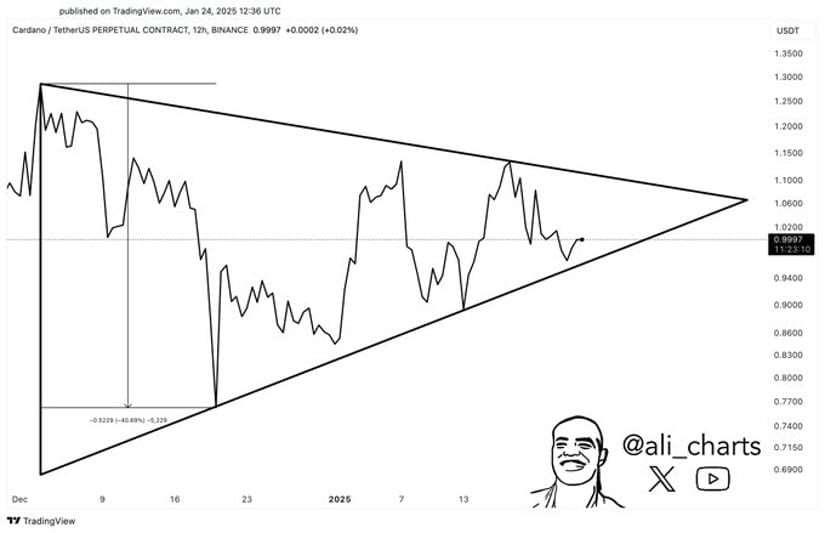
Cardano’s price action is currently constrained within a symmetrical triangle pattern, often indicating a potential breakout in either direction. Analysts estimate that a 40% move could follow once ADA breaks out of its consolidation range. The community and analysts are closely watching the $1.5 price mark as a feasible short-term target if bullish conditions prevail.

Cardano (ADA) weekly price chart. Source: Brave New Coin

The recent market activities involve significant whale transactions, with noted crypto analyst Ali Martinez reporting varying whale behaviors. Earlier in the month, Martinez highlighted a consolidation on ADA charts, awaiting a 40% price move as it forms a symmetrical triangle.
Cardano Price Prediction: ADA to Surge to .5 as Shiba Inu, Polygon, and Aptos Show Market Strength

Source: X

With the Plomin hard fork approaching, scheduled for full implementation by January 29, Cardano is set to enhance its blockchain capabilities significantly. This upgrade, focused on governance and infrastructure, is anticipated to bolster investor confidence and potentially catalyze a price surge.

Shiba Inu: A Meme Coin with a Breakout Forecast

Shiba Inu (SHIB) has drawn attention as a meme coin with significant upside potential. Shiba Inu, the renowned meme coin, has captured the attention of the crypto community, showing potential for a significant rally.
Shiba Inu: A Meme Coin with a Breakout Forecast

Shiba Inu price action. Source. Brave New Coin

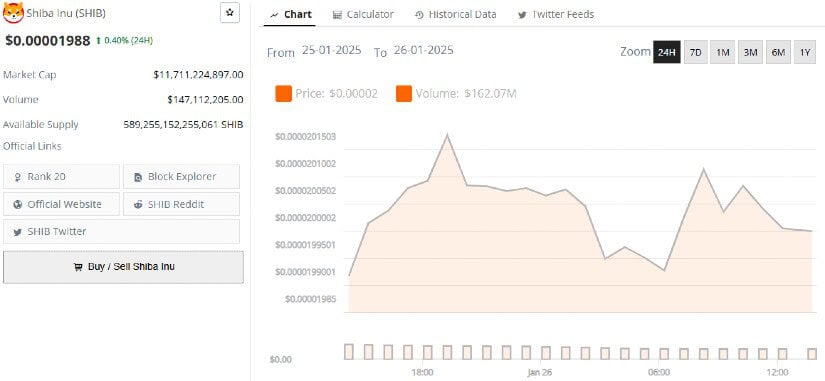
Recently, the coin experienced a 12% drop, reaching a low of $0.00001954, but quickly recovered slightly to trade at $0.00002035. Despite being 77% down from its all-time high, the Shiba Inu community remains hopeful for a recovery that could see the token eliminate a zero from its price.

A pivotal factor for SHIB’s potential rally is the notable outflow of tokens from exchanges, signaling a shift towards long-term holding. Over $32 million worth of SHIB tokens were moved off exchanges in the last 48 hours, indicating a reduction in immediate selling pressure.

Additionally, technical analysis suggests that SHIB is trading within a parallel channel pattern, with a possible uptrend that could lead to a 20% increase if it reaches the upper boundary of the channel.

According to insights from InvestingHaven on X, SHIB has established firm support at $0.0000177, aligned with the 61.8% Fibonacci level, and identifies a critical breakout point at $0.0000211, positioned at the 50% Fibonacci level. These points are vital for sustaining bullish trends.

Shiba Inu: A Meme Coin with a Breakout Forecast

Source: X

Looking ahead to 2025, SHIB aims for targets between $0.0000355 and $0.0000888, indicating the potential for significant price increases if it can overcome existing resistance. SHIB’s strong potential is bolstered by a significant reduction in circulating supply due to a 5,785% increase in the token’s burn rate, enhancing its scarcity and value potential.

Polygon: Strengthening Scalability and Whale Confidence

Polygon (MATIC) has cemented its reputation as a leader in scalability solutions. By utilizing sidechains, the Plasma framework, and Proof-of-Stake (PoS) consensus, Polygon has addressed Ethereum’s challenges of high transaction costs and low speeds. The network’s compatibility with the Ethereum Virtual Machine (EVM) simplifies dApp migration, boosting adoption.

Polygon introduced zkEVM, a Layer-2 solution employing zero-knowledge proofs to enhance privacy and scalability. This innovation is poised to attract privacy-focused developers and projects, further solidifying Polygon’s position as a top-tier blockchain platform.

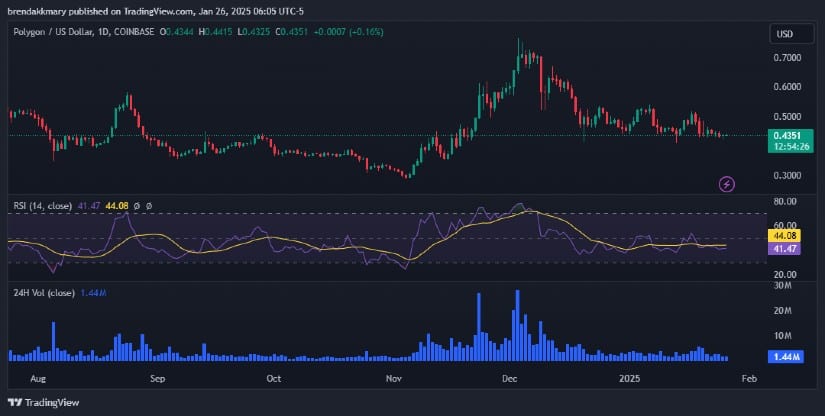
Whale activity in Polygon’s ecosystem has surged, with recent purchases totaling over $80 million worth of MATIC. Despite trading at $0.443, Polygon’s price has faced resistance, with bearish signals emerging on key technical indicators.
Polygon: Strengthening Scalability and Whale Confidence

Polygon MATIC daily price. Source: Trading View

However, analysts suggest that if whales continue to accumulate, MATIC could soon test resistance at $0.6753, paving the way for a potential rally.

Polygon’s short-term outlook hinges on breaking resistance at $0.6753. The Momentum Indicator and MACD levels suggest bearish sentiment, but whale activity indicates confidence in Polygon’s long-term growth.

Aptos: Pioneering Scalable Blockchain Technology

Aptos (APT), developed by former Facebook engineers, is making strides in blockchain innovation. Leveraging the Move programming language, Aptos has optimized performance and scalability, attracting decentralized application (dApp) developers seeking efficiency.

In late 2024, Aptos rolled out updates to improve transaction throughput, reducing user costs and enhancing network utility. The ecosystem’s growth is evident in its partnerships with fintech and gaming sectors, including a collaboration to integrate blockchain rewards in gaming platforms. These developments have fueled user adoption, with the network adding 2.1 million new users in just one week.

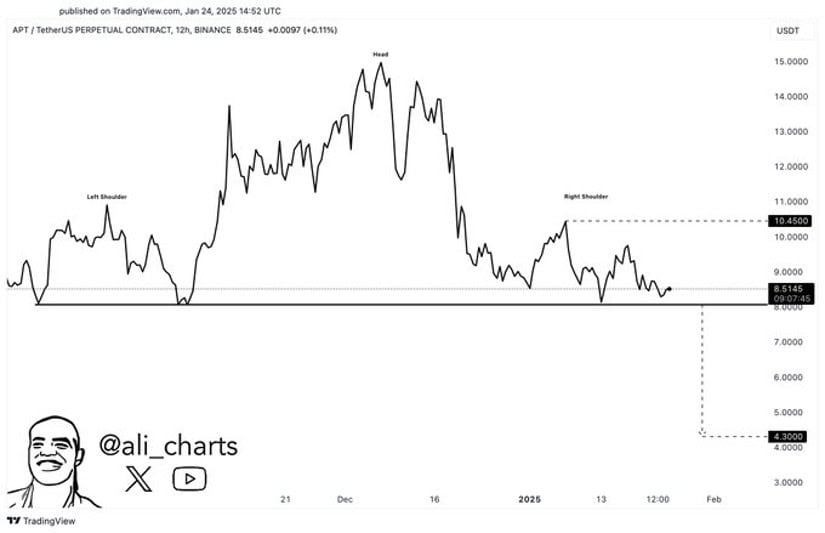
Despite these advancements, Aptos’ native token, $APT, faces a mixed technical outlook. The emergence of a head-and-shoulders pattern suggests a potential downside, with prices potentially dropping to $4.30. However, a sustained close above $10.50 could invalidate this bearish scenario.
Aptos: Pioneering Scalable Blockchain Technology

Source: X

Aptos’ price faces a pivotal test at $10.50. Breaking this resistance could signal strength, invalidating bearish formations. Conversely, a drop toward $4.30 would raise concerns.

Conclusion

Cardano, Shiba Inu, Polygon, and Aptos present diverse investment opportunities, each with unique strengths. Cardano’s robust ecosystem and whale activity suggest potential gains, while Shiba Inu’s $SHIBI offers high-risk, high-reward prospects. Polygon’s scalability solutions and zkEVM developments position it as a leading Layer-2 solution, and Aptos’ focus on scalability and partnerships underscores its growth potential.


Source link

27 01, 2025

Pregnancy and Cervical Cancer – HealthyWomen

By |2025-01-27T18:32:11+02:00January 27, 2025|Fitness News, News|0 Comments

About 11,500 people in the United States are diagnosed with cervical cancer every year.

Cervical cancer happens often in the reproductive years. Almost 4 out of 10 people diagnosed with this disease are 45 and younger. The cervix plays an important role in pregnancy by helping keep the baby inside the uterus. If your cervix is removed or weakened during treatment for cervical cancer, it can make it difficult or impossible to conceive or carry a pregnancy to term. However, it is still possible for some people to conceive after having had cervical cancer.

We reached out to experts to find out more about getting pregnant when you have cervical cancer.

What are fertility-sparing treatments for cervical cancer?

There are a lot of considerations for healthcare providers (HCP) to take into account when treating cervical cancer while trying to protect someone’s fertility, said Rachel Mandelbaum, M.D., a board certified reproductive endocrinologist at HRC Fertility. This includes the cancer stage, whether treatments such as radiation and chemotherapy are needed, and whether treatments will affect the ovaries and uterus.

Fertility-sparing surgeries treat cervical cancer but don’t affect your ability to get pregnant in the future. They’re usually done when cervical cancer is in its early stages, when the cancer hasn’t spread outside of the cervix, according to Ira Winer, M.D., a gynecologic oncologist at Barbara Ann Karmanos Cancer Institute.

Fertility-sparing surgeries include cone biopsy, also called cervical conization, and trachelectomy. Cone biopsies involve cutting a cone-shaped area of cancer cells out of the cervical tissue. Most people who have had this procedure and have no other fertility issues can go on to have a normal pregnancy and vaginal delivery.

A trachelectomy removes the entire cervix, the upper vagina and a small area of surrounding tissue. This procedure still allows for the possibility of becoming pregnant in the future. Because a trachelectomy means your HCP needs to place a stitch, called a cervical cerclage, on the lower part of the uterus, you’ll need to have a cesarean section if you get pregnant in the future.

Can you freeze your eggs for the future?

Yes. Even if you still have your uterus, radiation therapy to the pelvic area could damage the ovaries and affect your fertility. For some women, ovarian transposition, which moves the ovaries away from the field of radiation, may be an option. If not, egg freezing or embryo freezing can be done before treatment begins.

Egg freezing is a process where a reproductive endocrinologist, or a healthcare provider that specializes in fertility testing and treatments, surgically removes multiple eggs from the ovaries. Eggs can be frozen until you’re ready to use them. According to a 2022 study, the chance of having a baby after freezing your eggs is over 50% if you freeze them before age 38.

What are fertility treatment options after cervical cancer?

If you’re unable to get pregnant on your own after cervical cancer, the good news is that there are plenty of options to have a baby with fertility treatments.

In vitro fertilization (IVF) is a type of fertility treatment that involves freezing your eggs. After eggs are retrieved, they can either be frozen or combined with sperm to fertilize into embryos. If you aren’t able to use your own eggs or your partner’s sperm, you also have the option of using an egg donor, sperm donor, or both. The embryos themselves can either be frozen for later use or transferred to the uterus.

When is a surrogate or gestational carrier needed?

If you have frozen eggs or embryos and your uterus has been removed, you have the option of using a gestational carrier. “If you’ve had extensive radiation, the uterine lining may also not grow and function normally to support a pregnancy,” said Mandelbaum. If your uterus can not support a pregnancy, a gestational carrier would be necessary.

A gestational carrier, or surrogate, is a person who carries and gives birth to your baby after undergoing IVF. This person doesn’t have a genetic link to the baby because they use your eggs or embryos. Some people may also use donor eggs or sperm.

“The steps to building a family may look different for many cancer survivors, even amongst those who may have had the same type of cancer,” Mandelbaum said. If you’re facing a cervical cancer diagnosis and want to get pregnant, talk with your HCP and care team about your options.

How do cancer and fertility treatments impact women of color?

Race, ethnicity and socioeconomic factors can negatively affect both cervical cancer and fertility treatment success.

Black women are twice as likely as white women to have difficulty getting pregnant regardless of whether they have cancer. They are also 50% less likely to seek help in getting pregnant.

Insurance status can further create racial disparities as one 2024 study showed. Medicaid doesn’t cover fertility treatments, and Black and Hispanic people are more likely to be covered by Medicaid than white people.

Another study showed Black women and women from other historically marginalized communities were more likely to be diagnosed with cervical cancer in later stages, when it’s harder to treat. Study participants who were uninsured or had Medicaid were less likely to have regular cervical cancer screenings.

This educational resource was created with support from Merck.

From Your Site Articles

Related Articles Around the Web


Source link

27 01, 2025

Ethereum price (ETHUSD) forecast update

By |2025-01-27T17:47:07+02:00January 27, 2025|Forex News, News|0 Comments


Ethereum price (ETHUSD) declined strongly to succeed touching our suggested negative target at 3017.30$, and the way seems open to surpass this level and suffer additional losses on the intraday and short-term basis, noting that confirming the break will push the price towards 2765.00$ as a next negative station.


On the other hand, we should note that the consolidation of 3017.30$ level against the current negative pressure will lead the price to attempt to recover and build bullish wave that targets testing 3222.00$ areas initially.


The expected trading range for today is between 2950.00$ support and 3200.00$ resistance.


Trend forecast: Bearish


Source link

27 01, 2025

USD/JPY Analysis Today 27/01: Post-BOJ Rate Hike (Chart)

By |2025-01-27T16:44:04+02:00January 27, 2025|Forex News, News|0 Comments

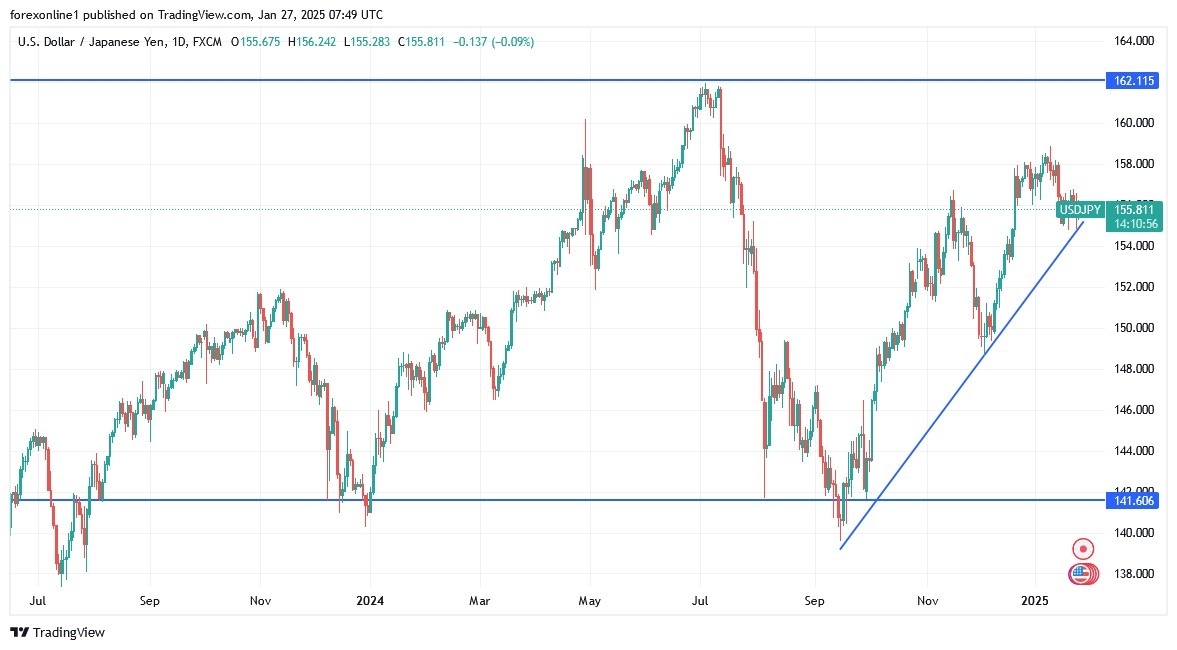
  • The USD/JPY currency pair experienced a significant decline towards the support level of 154.84 at the end of last week, before settling around 155.96.
  • The pair was subject to selling pressure following the Bank of Japan’s decision to raise interest rates to their highest level in nearly 20 years.
  • The Japanese Yen has made a strong start to 2025, potentially reversing the dramatic slide of the previous year.

Historic Bank of Japan Announcement

The Bank of Japan recently raised interest rates to their highest level since the 2008 global financial crisis and revised inflation forecasts upward. The benchmark interest rate was raised by 25 basis points to 0.5%. This was the first interest rate increase since July. Kazuo Ueda, the Governor of the Bank of Japan, affirmed that monetary authorities will continue to raise rates amid higher-than-expected consumer price and wage inflation pressures. However, Ueda noted that the Bank of Japan is not on a predetermined path. He added, “We don’t have any predetermined idea. We will decide at each policy meeting by considering economic developments, prices and risks

Overall, Japan, the world’s fourth-largest economy, has suffered years of deflation and stagnant growth. With U.S. President Donald Trump’s tariffs likely to cast uncertainty over the global economy, Tokyo and others may have to respond.

For now, Ueda notes that there is no clear plan from the United States yet. “Various data shows that the U.S. economy is doing well. Meanwhile, Markets have been stabling as the general direction of Trump’s policies becomes clearer. There is very high uncertainty. Once there is more clarity, we will take that into account and reflect it in our policy decision,” Ueda said.

Following the Japanese rate hike, yields on Japanese government bonds rose, the yields on five- and 10-year bonds rose to 0.91% and 1.23%, respectively.

Trading Tips:

The recent gains of the Japanese yen will be on an important US date this week that may determine attempts to change the direction to a downside.

USD/JPY Technical Analysis and Expectations Today:

The USD/JPY currency pair may consolidate in its recent trajectory pending the market’s reaction and investors’ response to the US Federal Reserve’s announcement this week. Especially, after Trump’s indications that he prefers to lower US interest rates. Therefore, investors may compare the Bank of Japan’s announcement with the US Federal Reserve’s announcement this week to determine the direction of the US dollar against the Japanese yen.

Technically, Friday’s decline pushed the USD/JPY currency pair slightly below the 100-hour moving average line. As a result, the currency pair avoided rising to the overbought levels of the 14-hour Relative Strength Index. In the short term, the bears will seek to extend the recent decline towards the support levels of 155.40 and 154.90 respectively. In the same time frame, the bulls will target the resistance levels of 156.20 and 156.80 respectively.

In the long term, according to the performance on the daily chart, the USD/JPY pair is trading within an ascending channel formation. However, the 14-day RSI has recently declined to avoid entering overbought levels. Therefore, the bears will target further movement towards lower levels, the closest of which is currently 154.20 and then the support 151.60 respectively. In the same time frame, the bulls’ most important targets will be the resistance levels of 158.50 and 161.00 respectively. Moreover, these are enough to push the technical indicators towards strong overbought levels. Decisively, the event increases with it the Japanese intervention in the forex markets to prevent further collapse of the Japanese yen exchange rate.

Want to trade our USD/JPY forex analysis and predictions? Here’s a list of forex brokers in Japan to check out.

Source link

27 01, 2025

A Matcha Lover’s Guide to the Best Matcha on Oʻahu

By |2025-01-27T16:36:24+02:00January 27, 2025|Dietary Supplements News, News|0 Comments


I quit drinking coffee more than 10 years ago. I was only in high school, but I was consuming copious amounts of the stuff. One afternoon, after a serious bout of jitters, I decided to go cold turkey and drop coffee completely. And I’ve never looked back. I made it through four years of college without drinking a drop of it and I don’t crave it, either .

But like many people, I still seek an extra kick of caffeine in the morning. Now, my go-to beverage is matcha. From making my own lattes to adding it to smoothies or oatmeal, I appreciate the energy boost and earthy flavor of this green tea. And my favorite place to enjoy a matcha latte is at a local café.

At coffee shops across Oʻahu, matcha is on the menu. And some cafés serve only matcha beverages and products. Whether you’re obsessed with this green tea or just looking for an alternative to coffee, here are five spots on Oʻahu serving top-notch matcha beverages.

1. Daily Whisk Matcha

Located in the hip neighborhood of Kaimukī, the Daily Whisk Matcha fits right in. The matcha stand is nestled on the patio of clothing boutique Ten Tomorrow, thanks to the business’s owner and designer, Summer Shiigi, who decided to add a café to the shopping experience. The stand offers classic matcha lattes, along with matcha lemonade and matcha lilikoʻi soda. You can also add flavors like Lāʻie vanilla, Maui lavender and Hawaiʻi Island Honey to your matcha beverages.

1114 11th Ave., Honolulu, dailywhiskmatcha.com

READ MORE: These are 5 of the Coolest Cafés in Kaimukī

2. Nana’s Green Tea

Nana’s Green Tea in Waikīkī serves matcha lattes, creamy soft serve and parfaits.
Photo: Catherine Toth Fox

This tea shop has more than 80 locations in Japan. But on Oʻahu, Nana’s Green Tea can be found in only one spot: Stix Asia. The underground food hall is in Waikīkī and Nana’s Green Tea is worth the search—and worth returning to. You can grab your matcha latte in the morning and then come back for dessert. From creamy matcha soft serve to decadent matcha parfaits, Nana’s Green Tea is a must-visit whether you’re craving a matcha latte or a sweet treat.

2250 Kalākaua Ave., Suite 5, Lower Level 100, Honolulu, global.nanasgreentea.com

READ MORE: Stix Asia Food Fall Brings 17 New Asian Restaurants to Waikīkī

3. Pōʻai by Pono Potions

A Matcha Lover’s Guide to the Best Matcha on Oʻahu

The alohamora from Pōʻai is a coconut lover’s dream with a coconut milk base, coconut syrup and topped with coconut foam.
Photo: Grace Maeda

It’s no surprise that this Chinatown café packs flavor into its beverages, including its matcha concoctions. Pōʻai is the flagship location of Pono Potions, a natural syrup company. Here, the matcha drinks are one of a kind thanks to those syrups. If you’re craving something fruity, the matcha manakō (mango) features li hing mui syrup, mango purée and a dusting of li hing powder. The alohamora is a coconut lover’s dream. With coconut milk as the base, the matcha is flavored with coconut syrup and topped with a lilikoʻi foam.

1119 Smith St., Honolulu, ponopotions.com

READ MORE: Taste the Islands’ Fresh Flavors with Pono Potions

4. Neko Koneko

Nekokoneko

Neko Koneko specializes in bottled lattes.
Photo: Grace Maeda

This cute hole in the wall in Liliha prepares bottled lattes. Every bottle—from matcha to cold brew—comes with a cup of ice, so you’re paying for a full 16 ounces of your drink of choice. The lattes are made with oat milk, resulting in a pleasant creamy texture.

1658 Liliha St., Honolulu, nekokonekocafe.com/home

5. Mele Mele Bakery

Melemelebakery

Mele Mele Bakery is tucked in a silo in Waialua. The business boasts an extensive list of matcha beverages.
Photo: Grace Maeda

Tucked in a silo at the old Waialua Sugar Mill, Mele Mele Bakery is truly a hidden gem on the North Shore. Along with fresh baked goods, the café boasts an extensive list of matcha beverages that are made to order. From a rose matcha latte to matcha yuzu lemonade, the drinks are made with organic Uji matcha sourced from Yamasan in Kyoto, Japan. The café is a cozy spot to sip on your matcha and relax.

67-106 Kealohanui St., Waialua, melemelebakery.com 


Source link

Go to Top