About Editorial team of BIPNs

Main team of content of bipns.com. Any type of content should be approved by us.
18 12, 2024

How To Lose Fat And Gain Muscle At The Same Time, From Experts

By |2024-12-18T21:28:53+02:00December 18, 2024|Dietary Supplements News, News|0 Comments


There you are in the gym with your headphones in, listening to your perfectly curated playlist as you tackle steps on the treadmill and reps at the weight rack. You’re on your way to achieving your annual fitness goals (atta girl!), but you may be curious if you’re experiencing weight loss and muscle gain at the same time—otherwise referred to as body recomposition. Let’s get into it.

Body recomposition is “probably the thing I work on most with clients,” says Phil Catudal, a NASM-certified personal trainer. At baseline, your muscles are important to help you do everyday normal activities and keeping them strong and in good working order is never a bad thing. What’s more, though is that “muscles also have a higher metabolic rate than fat,” says Mir Ali, MD, medical director of MemorialCare Surgical Weight Loss Center at Orange Coast Medical Center in Fountain Valley, California. “The more muscle you have, the more calories you burn at a resting state.” So, body recomposition is a huge help when it comes to weight management.

Benefits Of Body Recomposition

  • Improved cardiovascular health
  • Decreased risk of cardiovascular and cerebrovascular events
  • Improved blood pressure, lipids, and blood sugar control
  • Improved mood
  • Decreased musculoskeletal ailments such as arthritis and falls

Meaning, that adding more muscle to the mix can help you to burn more calories—and ultimately lose more fat—when you’re not exercising than you did before you built up your muscle strength. Now, for how to make body recomposition happen..

4 Important Tweaks To Lose Fat And Gain Muscle Simultaneously

1. Eat more protein than you think you need.

        Protein is the G.O.A.T. when it comes to build muscle and lose fat because two of its main roles in the body are repairing and building muscle. So, it should be a component of every single meal, Catudal says.

        In fact, around 30 percent or more of your calories should come from protein, Catudal goes on. “If you’re not getting enough protein while doing heavy weight training, you will not recover from your workouts enough to perform well, which means that you will not put on as much muscle or burn as much fat,” he explains.

        Let’s take a 1,800-calorie diet for example. If you want to consume 30 percent of that in protein, you’ll multiply that number by 0.30 to get 540 calories and then divide it by four (4 calories equals 1 gram of protein), which will put you at 135 grams. Most people aiming for 30 percent of their calories from protein will have a protein intake of 100 to 150 grams a day, Catudal says.

        Meet the experts: Phil Catudal is a NASM-certified personal trainer and nutrition expert. Erin Oprea is a celebrity trainer and founder of the Pretty Muscles workout app. Dina Khader, RD, CDN, is a registered dietitian and integrative nutrition consultant. Bryant Walrod, MD, is a sports medicine physician at The Ohio State University Wexner Medical Center and head team physician for The Ohio State Buckeyes football team. Mir Ali, MD, is the medical director of MemorialCare Surgical Weight Loss Center at Orange Coast Medical Center in Fountain Valley, California. Fatima Cody Stanford, MD, MPH, MPA, is an associate professor of medicine and pediatrics at Harvard Medical School and an obesity medicine physician at Massachusetts General Hospital.

        While there are plenty of proteins to choose from, Dina Khader, RD, CDN, prefers plant-based proteins (think: pea or sprouted rice protein powder). But if you’re a meat and fish kind of person, Khader recommends lean meats like chicken and turkey. Other great protein sources from the experts include wild fish and beans. If you’re a fan of red meat like beef, have it occasionally (once or twice a week), considering the fat consistency.

        Celebrity trainer Erin Oprea also loves to add in some eggs and for clients worried about boredom, she recommends focusing on seasonings. Her literal secret sauce? Coconut aminos. “It has a similar taste to teriyaki sauce.”

        If you need a little help planning your protein-packed meals, Women’s Health has crafted the perfect protein guide just for you.

        2. Stay on top of your sleep schedule.

          “If people are poor sleepers they will not burn fat as efficiently, and it’s much harder to build muscle,” says Khader. The nutritionist also pointed out that people who don’t get enough sleep are always hungry, which means they are at risk for consuming above and beyond the amount of calories they really need.

          3. Stay hydrated.

            Your emotional support water bottle is a vital sidekick to keep handy throughout the day as hydration is also super important in body recomposition and in everyday life.

            “Being hydrated and sleeping are so critical to basic human function. If you do all these things and you’re not drinking water or you’re sleeping four hours a night, it’s either not going to work at all or work so much slower than if your body is in a good state,” Catudal says.

            4. Consider tracking your calories.

            Remember, calories give your body the energy it needs to function, but can also be stored as fat. To keep that from happening, you have two options: Reduce your calorie intake or increase your physical activity.

            If you’re looking to lose weight (rather than stay at the same weight but increase muscle while decreasing fat), consider creating a calorie deficit. You’ll first want to determine the baseline number of calories per day your body needs. If you want a more specific analysis, Khader recommends having a dietitian perform a bioelectrical impedance analysis (BIA), a highly accurate test for body fat and muscle mass done through electrodes to determine how many calories your body needs. “You don’t want go below 1,200 calories a day, because then you also start to break down muscle,” says Khader.

            You can also try calorie cycling (sometimes referred to as metabolic confusion), which involves changing up how many calories you aim to eat every day. There are a number of ways to implement the strategy—you may opt for a high-calorie day followed by a low-calorie day, or have an entire week of high-calorie days before having another week of low-calorie days (or somewhere in between). The thinking is that, by changing up your caloric intake, you confuse your body (and metabolism), encouraging it to burn more energy than if you just stayed at the same calorie intake each day.

            In order to lose weight, “the whole idea is to be in a calorie deficit overall,” Dr. Ali notes. “You can do that intermittently, but different schedules and techniques work differently for different people.” For some, it’s better to be in a calorie deficit every day; For others, calorie cycling feels more approachable, he says.

            If you don’t want to focus too heavily on calories, that’s definitely an option too, according to Oprea. “I never want my clients to be obsessing over their calorie intake,” she says. “I personally don’t count calories and numbers, but I focus on correct serving size and to make sure every time you eat, you get a complex carb and a protein.”

            The Best Workouts For Fat Loss And Muscle Building

            Weightlifting and HIIT training are key for muscle gains and shedding fat. It may sound daunting to get into lifting, but “don’t be scared of weight training,” Oprea says. It’s actually a major part in accomplishing fat loss and muscle gains at the same time because “weights help you to put on more muscle mass and burn more calories” and fat more efficiently says Khader.

            There are a few different workout schedules that the experts recommend for body recomposition. Catudal recommends three to four days a week of 45-minute strength and weight-training workouts with 60-second rest periods in between exercises.

            Oprea’s go-to is a Tabata workout where each round lasts four minutes. You’ll do 20 seconds of all-out intensity, followed by 10 seconds of rest, repeated eight times.

            Aerobic exercise can be helpful, too, Dr. Ali adds: “It’s a good idea to have a combination of aerobic and resistance-type exercises—aerobic can help you burn calories and is good for cardiovascular health, while resistance training helps to build muscle.” Whether you enjoy going for 30-minute walks with your dog, swimming laps at the gym, or hopping on your Peloton for a ride, these aerobic exercises are all worthwhile for your muscle-gaining journey.

            How To Measure Fat Loss And Muscle Gain

            Fatima Cody Stanford, MD, MPH, MPA, an associate professor of medicine and pediatrics at Harvard Medical School and an obesity medicine physician at Massachusetts General Hospital, suggests getting a simple tape measure and checking your waist circumference. (The CDC has detailed information on exactly where to measure yourself.)

            A waist circumference of greater than 35 inches could mean that you have a higher risk of developing obesity-related conditions, the CDC says.

            There are body composition scales that can break this down for you, but Dr. Ali points out that it can be tough to know how reliable they are. Similarly, a formal body composition test, such as a dual-energy X-ray absorptiometry (DEXA) can help, says Bryant Walrod, MD, a sports medicine physician at The Ohio State University Wexner Medical Center and head team physician for The Ohio State Buckeyes football team. Just know that these tests can be expensive.

            Luckily, you may be able to find a body composition test at a gym near you. Various Planet Fitness, YMCA, Edge Fitness, etc. locations offer InBody scan, a non-invasive test that assesses body muscle, fat, and water. Your gym may offer this for free or at a discounted rate. Plus, you can find an InBody scan location near you with their handy map feature.

            Overall, you may want some personalized guidance to help get your muscle gain journey started and see you through. Your primary care doctor can make sure you’re healthy enough to go on a new exercise and diet plan, while a fitness trainer can help you find specific exercises that feel right for you, Dr. Ali says. (Most local gyms will offer an introductory session for free to get you started.) A nutritionist can also help you to come up with an eating plan that meets your nutritional needs while feeling doable for you, he says.

            Maria Serra (she/her) is a freelance sex and relationships writer who covers topics relating to butts, boobs, and everything in between. After secretly getting a degree in human sexuality (sorry, parents), she began covering general and sexual health topics for Her Campus, Spoon University, and Women’s Health magazine. In her spare time, she’s probably listening to trashy emo music with her chihuahua-pug, Bobbie. Follow her on Instagram and Twitter.

            Headshot of Korin Miller

            Korin Miller is a freelance writer specializing in general wellness, sexual health and relationships, and lifestyle trends, with work appearing in Men’s Health, Women’s Health, Self, Glamour, and more. She has a master’s degree from American University, lives by the beach, and hopes to own a teacup pig and taco truck one day.


Source link

18 12, 2024

SOL to $850? Analysts Share Bold Solana Price Prediction for This Cycle

By |2024-12-18T21:27:36+02:00December 18, 2024|Crypto News, News|0 Comments

SPONSORED POST*

Solana (SOL) has made a name for itself with super-fast transactions, super-low fees, and a growing world of NFTs and DeFi projects. 

Some Binance analysts think it could hit $850 this cycle, thanks to its scalability and rising adoption. 

Of course, challenges like competition and market swings could get in the way. 

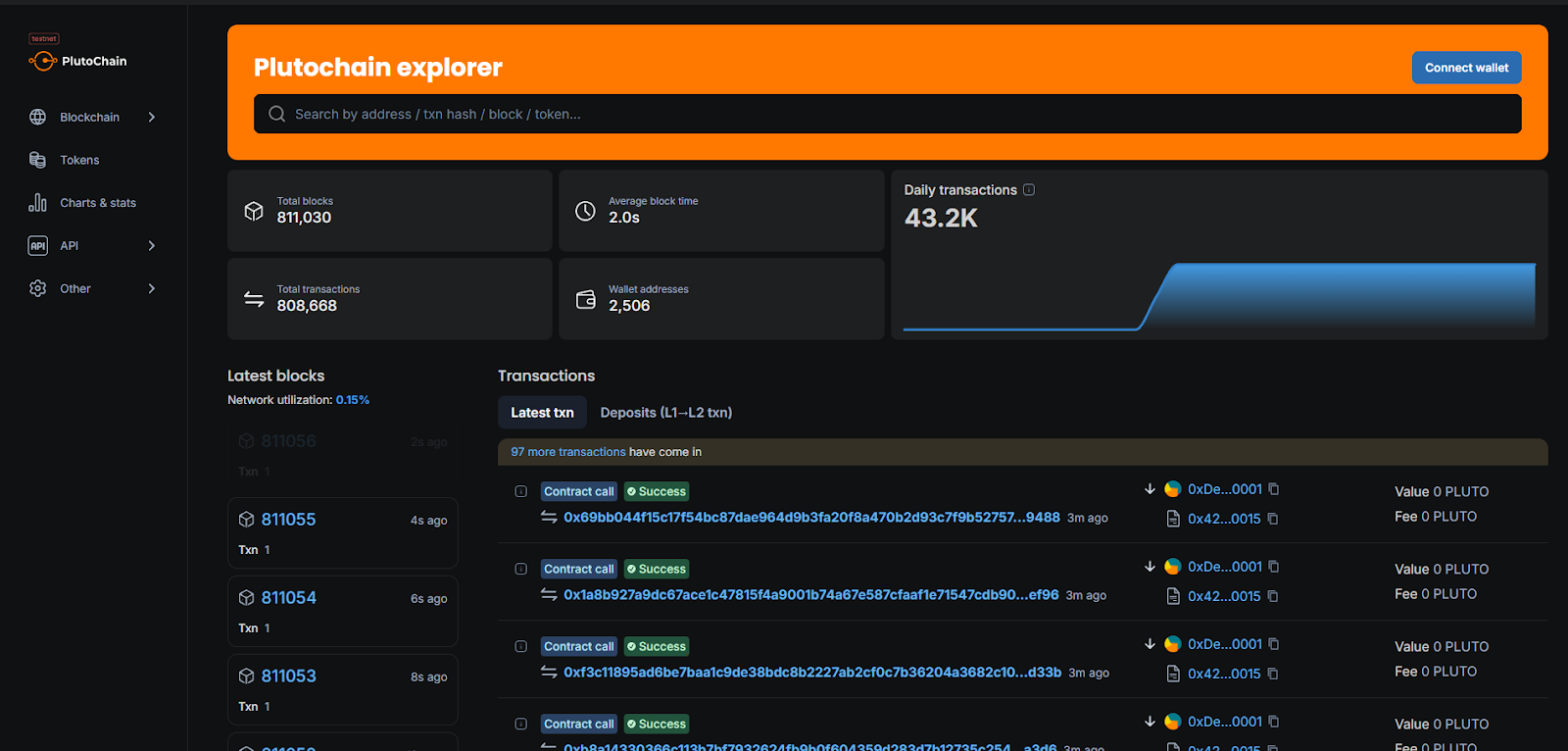
On the other hand, PlutoChain ($PLUTO) could be interesting to watch because of its own Layer-2 blockchain, which comes with a quick 2-second block time. 

This project could enhance Bitcoin’s utility by potentially enabling smart contracts on its network.

Let’s dive into what’s driving Solana’s potential first.

Can Solana (SOL) Reach $850 in This Cycle?

Solana’s rise has been nothing short of impressive, and hitting $850 this cycle feels ambitious but not impossible. Let’s break down the factors that could make or break this prediction.

First, scalability is Solana’s biggest strength. It can handle 65,000 transactions per second (TPS), which leaves many competitors like Ethereum far behind. This speed, combined with low transaction fees, makes it a go-to blockchain for developers and users alike. 

Projects in DeFi and NFTs flock to Solana for exactly these reasons.

Speaking of projects, Solana’s ecosystem keeps growing. Its dominance in NFTs is a standout—marketplaces like Magic Eden thrive on Solana, while major collections boost trading volume. 

Partnerships like those with big tech companies and gaming platforms add another layer of growth. DeFi on Solana is expanding, too, with Total Value Locked (TVL) steadily climbing as new protocols launch.

Metrics also point to a healthy outlook. TVL is solid, staking adoption continues to grow, and trading volume shows consistent demand. These numbers reflect a blockchain that’s thriving in a competitive market.

Of course, external trends play a role as well. 

If institutional interest in blockchain keeps growing, Solana could be one of the first to benefit. Macroeconomic factors, like a bullish crypto market fueled by favorable policies or rising Bitcoin prices, might also give SOL a push.

Technical analysis provides more clues. Analysts watch the RSI (Relative Strength Index) to gauge whether SOL is overbought or oversold. Resistance levels at $250, $500, and beyond could challenge its momentum, while strong support levels around $150 offer stability. 

Trading volume and moving averages often signal whether a breakout is near.

Binance analysts seem cautiously optimistic. While some predict $850 is achievable with the right catalysts, others believe a more realistic target might sit closer to $500. It’s a bold call, but with Solana’s track record, the pieces might just fall into place.

PlutoChain ($PLUTO) Might Expand Bitcoin’s Ecosystem with EVM Compatibility and Scalable, Community-Driven Innovation

PlutoChain ($PLUTO) could take Bitcoin’s functionality to a whole new level and transform it from a store of value into a robust platform for decentralized finance (DeFi), non-fungible tokens (NFTs), and even AI-driven applications. 

It might open the doors that were previously exclusive to blockchains like Ethereum and Solana, which makes Bitcoin a competitive force in advanced blockchain applications.

One of PlutoChain’s standout features is its Ethereum Virtual Machine (EVM) compatibility. 

This allows Ethereum-based applications to integrate effortlessly with Bitcoin’s ecosystem, which could create a bridge between two of the most prominent blockchain networks. Developers can build apps that could combine Bitcoin’s security with Ethereum’s flexibility, which may offer the best of both worlds.

What truly sets PlutoChain apart is its own hybrid Layer-2 blockchain. 

Unlike Bitcoin’s traditional block time of 10 minutes, PlutoChain operates with a 2-second block time, which enables lightning-fast transactions and efficient processing. 

This enhancement could solve some of Bitcoin’s long-standing issues, like slow speeds and high transaction fees, while maintaining the network’s renowned security.

PlutoChain’s testnet currently handles an impressive 43,000 daily transactions, which likely showcases its scalability and readiness for real-world applications. 

On the security front, PlutoChain has undergone rigorous audits by SolidProof, AssureDeFi, and QuillAudits, which ensures trust and reliability for developers and users alike.

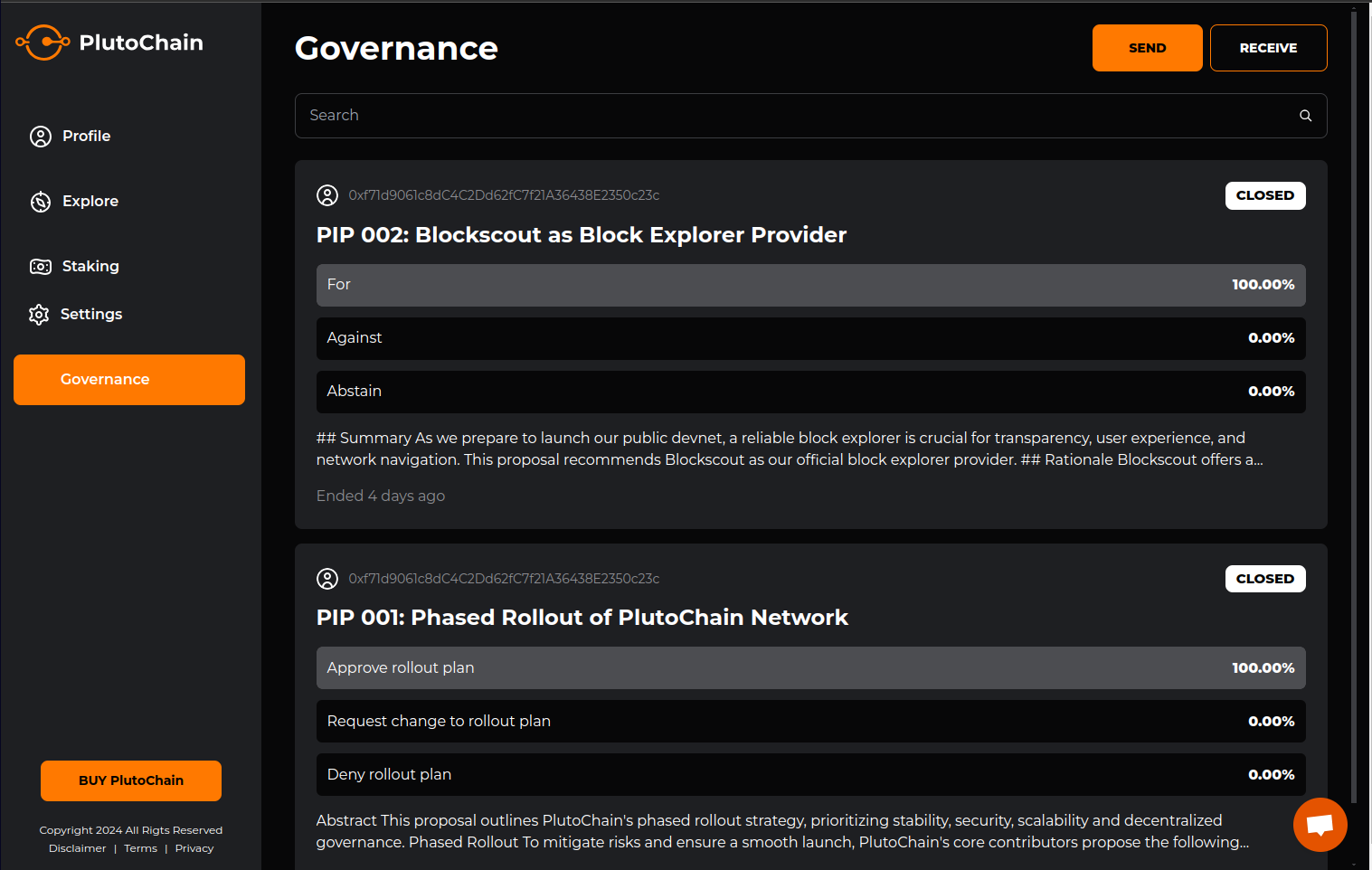
Community governance is another area where PlutoChain shines. Holders play an active role in shaping the project’s future while also voting on protocol upgrades and key decisions. 

This decentralized approach might promote a sense of ownership and collaboration, which aligns the network’s growth with the community’s vision.

Final Words

Solana shows strong potential to reach $850 this cycle, which is driven by its scalability, growing ecosystem in NFTs and DeFi, and rising adoption across multiple sectors. 

Its ability to process 65,000 transactions per second gives it a competitive edge, which attracts both developers and institutional interest.

Meanwhile, PlutoChain could emerge as a groundbreaking Layer-2 solution for Bitcoin, and potentially bring Ethereum-like capabilities such as DeFi and NFTs to the world’s most secure blockchain. 

With its own fast and efficient blockchain, PlutoChain might reshape the blockchain landscape. 

Stay updated on its progress by following PlutoChain on Twitter, Discord, and Telegram.

———————

Please remember that this article is purely informational and not financial advice. Any and all cryptocurrencies are volatile, with prices prone to rapid changes. Always do your own research and consult an expert before joining any crypto venture. We are not liable for any outcomes based on the information in this article. Statements about the future entail risks and may not reflect updates.

*This article was paid for. Cryptonomist did not write the article or test the platform.

Source link

18 12, 2024

XAG/USD slumps to near $30.30 amid uncertainty ahead of Fed policy meeting

By |2024-12-18T20:50:57+02:00December 18, 2024|Forex News, News|0 Comments


  • Silver price slumps to near $30.30 as investors turn cautious ahead of the Fed’s policy meeting.
  • Traders have fully priced in a 25-bps interest rate cut by the Fed.
  • Economists see the Fed cutting interest rates three times in 2025.

Silver price (XAG/USD) falls to near $30.30 in the North American session on Wednesday. The white metal drops as investors turn cautious ahead of the Federal Reserve’s (Fed) monetary policy announcement at 20:00 GMT.

According to the CME FedWatch tool, traders have priced in a 25-basis points (bps) interest rate reduction, which will push borrowing rates lower to 4.25%-4.50%. Therefore, investors will pay close attention to the Fed’s dot plot, which shows where policymakers see Federal Fund Rates heading in the medium and long term.

A Bloomberg survey from December 6 to 11 showed that economists see the Fed reducing interest rates three times next year, assuming that progress in the disinflation process has slowed more than anticipated. The survey also indicated that economists have become more worried about upside risks to inflation than downside risks to employment, given incoming President-elect Donald Trump’s policies, including mass deportations, higher import tariffs, and tax cuts.

Ahead of the Fed meeting, the US Dollar Index (DXY), which tracks the Greenback’s value against six major currencies, consolidates around 107.00. Meanwhile, 10-year US Treasury yields rise to nearly 4.40%. Higher yields on interest-bearing assets weigh on non-yielding assets, such as Silver, because they increase their opportunity costs.

Silver technical analysis

Silver price slides to a fresh two-week low near $30.20 on Wednesday. The white metal weakens after breaking below the 20-day Exponential Moving Average (EMA), which trades around $30.95.

The 14-day Relative Strength Index (RSI) oscillates inside the 40.00-60.00 range, suggesting a sideways trend.

Looking down, the upward-sloping trendline around $29.50, which is plotted from the February 29 low of $22.30 on a daily timeframe, would act as key support for the Silver price. On the upside, the horizontal resistance plotted from the May 21 high of $32.50 would be the barrier.

Silver daily chart

Silver FAQs

Silver is a precious metal highly traded among investors. It has been historically used as a store of value and a medium of exchange. Although less popular than Gold, traders may turn to Silver to diversify their investment portfolio, for its intrinsic value or as a potential hedge during high-inflation periods. Investors can buy physical Silver, in coins or in bars, or trade it through vehicles such as Exchange Traded Funds, which track its price on international markets.

Silver prices can move due to a wide range of factors. Geopolitical instability or fears of a deep recession can make Silver price escalate due to its safe-haven status, although to a lesser extent than Gold’s. As a yieldless asset, Silver tends to rise with lower interest rates. Its moves also depend on how the US Dollar (USD) behaves as the asset is priced in dollars (XAG/USD). A strong Dollar tends to keep the price of Silver at bay, whereas a weaker Dollar is likely to propel prices up. Other factors such as investment demand, mining supply – Silver is much more abundant than Gold – and recycling rates can also affect prices.

Silver is widely used in industry, particularly in sectors such as electronics or solar energy, as it has one of the highest electric conductivity of all metals – more than Copper and Gold. A surge in demand can increase prices, while a decline tends to lower them. Dynamics in the US, Chinese and Indian economies can also contribute to price swings: for the US and particularly China, their big industrial sectors use Silver in various processes; in India, consumers’ demand for the precious metal for jewellery also plays a key role in setting prices.

Silver prices tend to follow Gold’s moves. When Gold prices rise, Silver typically follows suit, as their status as safe-haven assets is similar. The Gold/Silver ratio, which shows the number of ounces of Silver needed to equal the value of one ounce of Gold, may help to determine the relative valuation between both metals. Some investors may consider a high ratio as an indicator that Silver is undervalued, or Gold is overvalued. On the contrary, a low ratio might suggest that Gold is undervalued relative to Silver.


Source link

18 12, 2024

Pound Sterling ignores inflation data, focus shifts to Fed

By |2024-12-18T19:29:38+02:00December 18, 2024|Forex News, News|0 Comments

  • GBP/USD trades below 1.2700 in the European morning on Wednesday.
  • Annual CPI inflation in the UK rose to 2.6% in November as expected. 
  • The Fed will announce the interest rate decision and publish the revised dot plot.

After closing the second consecutive day in positive territory on Tuesday, GBP/USD edges lower early Wednesday and trades below 1.2700. Investors eagerly await the Federal Reserve’s (Fed) monetary policy announcements.

British Pound PRICE Last 7 days

The table below shows the percentage change of British Pound (GBP) against listed major currencies last 7 days. British Pound was the weakest against the US Dollar.

  USD EUR GBP JPY CAD AUD NZD CHF
USD   0.29% 0.67% 1.18% 1.06% 1.03% 1.16% 1.22%
EUR -0.29%   0.38% 0.90% 0.76% 0.74% 0.87% 0.93%
GBP -0.67% -0.38%   0.49% 0.38% 0.35% 0.48% 0.54%
JPY -1.18% -0.90% -0.49%   -0.12% -0.14% -0.02% 0.05%
CAD -1.06% -0.76% -0.38% 0.12%   -0.02% 0.10% 0.16%
AUD -1.03% -0.74% -0.35% 0.14% 0.02%   0.13% 0.19%
NZD -1.16% -0.87% -0.48% 0.02% -0.10% -0.13%   0.07%
CHF -1.22% -0.93% -0.54% -0.05% -0.16% -0.19% -0.07%  

The heat map shows percentage changes of major currencies against each other. The base currency is picked from the left column, while the quote currency is picked from the top row. For example, if you pick the British Pound from the left column and move along the horizontal line to the US Dollar, the percentage change displayed in the box will represent GBP (base)/USD (quote).

The UK’s Office for National Statistics reported in the European morning that annual inflation in the UK, as measured by the change in the Consumer Price Index (CPI), rose to 2.6% in November from 2.3% in October, as anticipated. The core CPI rose 3.5% on a yearly basis, up from the 3.3% increase recorded in October but below analysts’ estimate of 3.6%. These figures failed to trigger a noticeable market reaction.

The Fed is set to cut the policy rate by 25 basis points (bps) to the range of 4.25%-4.5% following the last meeting of the year. As such a decision is already fully priced in, it is unlikely to influence the US Dollar’s (USD) valuation in a significant way. Instead, investors will pay close attention to the revised Summary of Economic Projections (SEP), the so-called dot plot.

In case the dot plot suggests that policymakers project at least a rate reduction of 100 bps in 2025, the USD is likely to struggle to find demand. On the flip side, GBP/USD could turn south if the SEP shows that policymakers foresee less than 100 bps of rate cuts next year.

Starting at 19:30 GMT, Fed Chairman Jerome Powell will deliver the policy statement and respond to questions in a press conference. If Powell notes there is growing uncertainty surrounding the inflation outlook on potential tariffs, investors could see this as a sign that the Fed will adopt a more gradual approach to policy easing, boosting the USD.

GBP/USD Technical Analysis

GBP/USD faces immediate resistance at 1.2700 (100-period Simple Moving Average (SMA), Fibonacci 38.2% retracement of the latest downtrend) ahead of 1.2730 (200-period SMA) and 1.2750 (Fibonacci 50% retracement).

Looking south, first support could be spotted at 1.2670 (20-period SMA) before 1.2620 (Fibonacci 23.6% retracement).

Pound Sterling FAQs

The Pound Sterling (GBP) is the oldest currency in the world (886 AD) and the official currency of the United Kingdom. It is the fourth most traded unit for foreign exchange (FX) in the world, accounting for 12% of all transactions, averaging $630 billion a day, according to 2022 data. Its key trading pairs are GBP/USD, also known as ‘Cable’, which accounts for 11% of FX, GBP/JPY, or the ‘Dragon’ as it is known by traders (3%), and EUR/GBP (2%). The Pound Sterling is issued by the Bank of England (BoE).

The single most important factor influencing the value of the Pound Sterling is monetary policy decided by the Bank of England. The BoE bases its decisions on whether it has achieved its primary goal of “price stability” – a steady inflation rate of around 2%. Its primary tool for achieving this is the adjustment of interest rates. When inflation is too high, the BoE will try to rein it in by raising interest rates, making it more expensive for people and businesses to access credit. This is generally positive for GBP, as higher interest rates make the UK a more attractive place for global investors to park their money. When inflation falls too low it is a sign economic growth is slowing. In this scenario, the BoE will consider lowering interest rates to cheapen credit so businesses will borrow more to invest in growth-generating projects.

Data releases gauge the health of the economy and can impact the value of the Pound Sterling. Indicators such as GDP, Manufacturing and Services PMIs, and employment can all influence the direction of the GBP. A strong economy is good for Sterling. Not only does it attract more foreign investment but it may encourage the BoE to put up interest rates, which will directly strengthen GBP. Otherwise, if economic data is weak, the Pound Sterling is likely to fall.

Another significant data release for the Pound Sterling is the Trade Balance. This indicator measures the difference between what a country earns from its exports and what it spends on imports over a given period. If a country produces highly sought-after exports, its currency will benefit purely from the extra demand created from foreign buyers seeking to purchase these goods. Therefore, a positive net Trade Balance strengthens a currency and vice versa for a negative balance.


Source link

18 12, 2024

Our Editors’ favorite articles of 2024

By |2024-12-18T19:28:11+02:00December 18, 2024|Dietary Supplements News, News|0 Comments


The end of the year is the ideal time to reflect, and reacquaint ourselves with the many articles that consumed our days in 2024. Each member of the NutraIngredients-USA editorial team picked their favorite articles of the year. We hope you enjoyed reading them as much as we enjoyed writing them!

Asia Sherman, Deputy Editor, selected:

A look back at the Proxmire Amendments and A look back at the OTC botanical drug route

“In an industry of products that often seems to move full speed ahead, these ‘look back’ articles provide an opportunity to learn about and appreciate how things came to be,” said Asia. “The first piece explored the makings of the Proxmire Amendments and the profound impact they had on the preservation and propulsion of the dietary supplement industry.

“The second considered the concerted efforts to establish an over-the-counter botanical drug route for botanicals prior to the enactment of the Dietary Supplement Health and Education Act of 1994, an article that should probably have a part two. Most memorable from the process on both of these were the people involved, and I am looking forward to working on more in this series to revive some of the many stories that contributed to creating this industry,” she added.

Trace expands capacity to remineralize the world

Asia explained that her reporting for this article started with an initial light-bulb demonstration of the power of trace minerals at the SupplySide West trade show in October 2023 and culminated in a visit of the Trace facilities in Utah in June 2024.

“Earlier in the year, The New York Times had published a piece that painted a haunting picture of a giant toxic dust bowl should the Great Salt Lake dry up,” she said. “This piqued interest in covering Trace, a 50-year-old mineral supplement company that extracts its brine from the lake and educates about the need to remineralize a world afflicted by a broken food system.

“Overall, the experience gave me a valuable in-person and in-depth view of how a good actor operates within the supplement industry and a wider world that must continually negotiate the balance between wants, needs and resources.”

Claudia Adrien, Senior Correspondent, selected:

In an uncertain market, can advances in personalized nutrition democratize health, wellness?

“To the surprise of many, personalized nutrition company Care/of closed operations earlier this year as parent company Bayer said ceasing investment in the company would allow it to support future innovations for personal health,” said Claudia.

“The shuttering of Care/of raised a litany of additional questions about the state of the personalized nutrition industry. What does personalization even mean? Are companies that offer personalized nutrition solutions appealing only to a wealthy consumer base? Also, can the processing of collective consumer data through AI minimize the need for invasive laboratory tests?

“The adoption of personalization in health, nutrition and lifestyle management has become more and more mainstream. The ultimate question is how will society embrace personalized tools to promote wellness for the most number of people.”

Dietary supplement industry considers the future of U.S.-China tariffs

Claudia said: “The dietary supplement industry substantially relies on its relationship with Chinese suppliers to provide the raw ingredients for nutraceuticals. As we reported in November, this relationship may be strained by the implementation of additional U.S. tariffs against goods from China. President-elect Donald Trump promises he will raise tariffs against China by more than what he implemented in his first presidential term.

“Some within the supplement industry argue that this America-first position will lead to better long-term financial outcomes for American companies. Other firms we spoke with said tariffs will be detrimental to consumers by raising prices on goods as well as pushing several companies out of business. Still, some within the industry make the case that U.S.-China relations call for a more nuanced economic approach rather than all-out tariffs.”

Danielle Masterson, Editor, selected:

Why Utah?

Danielle said: “As a journalist writing about the dietary supplement industry, I often noticed many of the companies I wrote about had ties to Utah. I wasn’t sure what or how exactly, but I knew there was a rich story waiting to be told, and I wanted to be the one to tell it.

“I spent nearly a week in the Beehive State, touring multiple supplement facilities, conducting tours and interviewing some of the trailblazers who helped make the industry what it is today. In between the breathtaking mountain views and deep conversations, I found myself going down a fascinating rabbit hole of family feuds, herbs, clandestine codes, geopolitics, call centers, regulations and Mormon missionaries.

“To understand the future, look to the past”

“With the recent 30th anniversary of the Dietary Supplement Health and Education Act of 1994 (DSHEA) and the passing of many of the dietary supplement champions such as Sen. Orrin Hatch, I felt it was crucial to tell this story not only because it’s remarkable, but for the younger generations of the industry.

“I think this story leaves viewers with a better understanding of Utah and its supplement pioneers, as well as a new appreciation for an industry that was well ahead of its time. The infrastructure, well-connected salesforce and collective effort certainly make for a complex ecosystem. But how all these people, herbs and circumstances found each other is nothing short of far-fetched. The entire story is truly miraculous.”

What’s Up with Pumps: Networking one pump at a time

“I will be the first to admit that waking up at 5 a.m. anywhere—let alone in Vegas—is not ideal,” said Danielle. “But I knew there was much more to ‘What’s Up with Pumps’ than what meets the eye. So I sucked it up, got ready and went to the infamous Dragon’s Lair Gym before the sun even came up. I recall being in my Uber, with the strip fading into the background, asking myself, ‘Am I crazy??’

“Crazy for a good story.

“‘What’s Up With Pumps’ combines fitness and professional networking for everyone at all fitness levels and was dubbed a ‘networkout’. In between pumps, you can find attendees passing out business cards, engaging in push-up competitions and comparing pre-workout formulas.

“The best part about this story? I learned WUWP originated at the Sports & Active Nutrition Summit! Dave Slagle told the story of how a small, spontaneous group of gym-goers with high gym expectations in San Diego went to a local gym rather than settling for the hotel gym. That workout session transformed into a networking movement that has captivated the supplement industry and led to a cross-country movement.”

Stephen Daniells, Editor-in-Chief, selected:

Retracted! Journal pulls DNA barcoding paper that sparked 2015 NYAG herb investigation

Stephen said: “The retraction of a scientific paper is rarely something to celebrate, but this one was different. For those of us who lived through the 2015 investigation into herbal supplements by the then-NY AG Eric Schneiderman, this one felt personal.

“That investigation can trace its roots to a 2013 paper by scientists at the University of Guelph that alleged widespread quality failings in herbal dietary supplements based on DNA analysis. When it was first published, there were notable expert voices who questioned the methodology and the data, with the American Botanical Council leading the way and calling for the paper’s immediate retraction.

“The authors stood by their data, and it should be stressed that four of the five authors disagreed with the journal’s eventual retraction. What is undeniable is that the paper cast a long shadow over the category, and the retraction—11 years after the paper’s publication—was a bitter-sweet moment for many.”

The DSHEA Summit in pictures

Thirty years in the making, NutraIngredients-USA’s DSHEA Summit marked an important milestone in the U.S. dietary supplements industry.

Supported by the United Natural Products Alliance (UNPA), the DSHEA Summit brought together the architects of the law and key industry stakeholders to discuss the past, present and future of the U.S. dietary supplements industry.

Stephen said: “We assembled an amazing list of industry leaders, and it’s unlikely these folks will ever all be in the same room again. What was clear from the Summit was that DSHEA is not going anywhere, and it has provided an impressively robust and resilient framework for the industry.

“This gallery article allowed me to weave together the best photos and quotes from the event into what will be a historically important documentary of the summit.”


Source link

18 12, 2024

DOGE Price Rallies as XRP Price Analysis Signals a Turnaround – Could BlockDAG Dominate in 2025 with a $1 Price Prediction?

By |2024-12-18T19:26:14+02:00December 18, 2024|Crypto News, News|0 Comments

The crypto sphere is buzzing with anticipation and bold forecasts, drawing enthusiasts to uncover promising prospects.

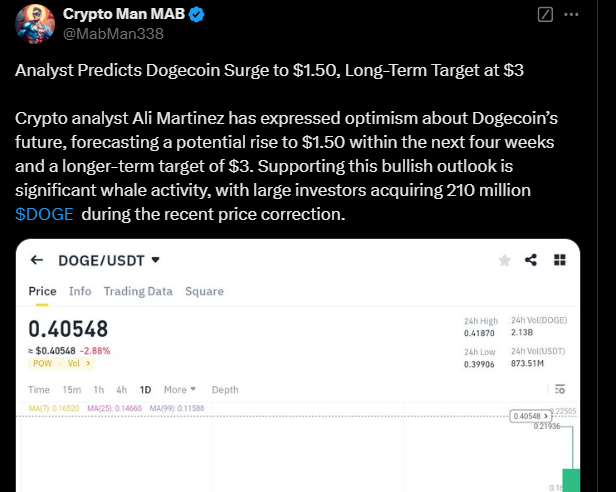
The Dogecoin price rally is capturing widespread attention, with predictions pointing to an uplift to $1.50 soon, fueled by robust whale activity. Concurrently, XRP price analysis suggests a rebound to $2.4, igniting discussions about its upward trajectory.

On another front, the emerging BlockDAG (BDAG) is at the forefront with its groundbreaking innovation and $1 forecast. Having collected over $168.5 million in its presale and offering early participants a phenomenal 2240% price surge in mere months, BlockDAG is setting records as the largest presale crypto to date.

As these top crypto assets gain momentum, the burning question is: which could catalyze the next major crypto wave? Let’s dive in.

XRP Price Analysis: Signs of a $2.4 Rebound

XRP’s bounce back to $2.4 after a dip to $1.95 has reignited interest, prompting analysts to consider scenarios for its sustained ascent. Still, concerns about market saturation and regulatory scrutiny cast shadows over its prospects. While aiming for a $100 milestone seems hopeful, it’s a stretch in the current climate.

DOGE Price Rallies as XRP Price Analysis Signals a Turnaround – Could BlockDAG Dominate in 2025 with a  Price Prediction?

Short-term trends underscore XRP’s reactivity to global events, such as the recent dip following Google’s quantum chip news. The XRP price analysis shows a possible climb, yet it faces formidable challenges.

Dogecoin Price Rally: Set for a $1.50 Surge?

Crypto commentator Ali Martinez is upbeat about Dogecoin’s path forward, projecting a potential surge to $1.50 in the upcoming weeks, aiming for $3 long-term. This optimistic outlook is bolstered by recent whale purchases of 210 million DOGE during market dips.

With a current price of around $0.40, Dogecoin has seen significant growth this year, yet it struggles with crucial resistance at $0.48 and $0.50. Despite the Dogecoin price rally underlining its prospects, doubts about its speculative nature and market dependence linger.

BlockDAG’s Rapid Climb: Will It Reach $1 Soon?

BlockDAG is currently the buzz of the crypto market, hinting at its potential to spark the next big crypto wave in 2025. This rising star isn’t showing any signs of slowing down—it has collected an impressive $168.5 million during its presale in just a few months and has seen its native coin BDAG soar in value.

In only 26 presale stages, early BDAG holders have seen a phenomenal 2240% increase in their assets, with the coin’s price skyrocketing from a mere $0.001 to $0.0234 in the current batch. Experts suggest BDAG might reach $1 shortly after its debut, making this the prime time for traders to get in early and potentially secure substantial profits.

BlockDAG’s increasing influence is rooted in its ecosystem, crafted to democratize blockchain access. Its low-code/no-code platform enables even those without a tech background to easily craft NFTs, decentralized apps (dApps), and meme tokens.

With user-friendly templates and an intuitive interface, BlockDAG significantly reduces the complexity of blockchain development, welcoming a wider array of creators and developers. This distinctive feature establishes BlockDAG as a central platform for emerging meme coins and blockchain initiatives.

The sharp ascent of the BDAG coin is a clear indicator of the project’s expansive potential. With its price still within reach, those aiming to leverage the 2025 crypto surge will see BlockDAG at the forefront, merging innovation and expansion.

However, the window to engage with this emerging crypto powerhouse at a lower price is quickly closing as the current presale batch is nearing completion, and the upcoming one will see a notable price increase. Now is the ideal time to get involved with this swiftly growing venture before entry becomes more challenging.

The Bottom Line

While projections of a Dogecoin price rally to $1.50 and XRP price analysis suggesting a rise to $100 capture attention, BlockDAG is forging its own path among the top crypto assets with its groundbreaking ecosystem and impressive presale achievements.

The project’s momentum is unmistakable, with BlockDAG having raised over $168.5 million and BDAG’s price increasing by 2240% since the presale began. With the current presale phase almost complete and the next expected to introduce significant price hikes, BlockDAG presents a significant opportunity for those targeting the upcoming major crypto expansion.

Presale: https://purchase.blockdag.network

Website: https://blockdag.network

Telegram: https://t.me/blockDAGnetworkOfficial

Discord: https://discord.gg/Q7BxghMVyu 


Source link

18 12, 2024

The First Holiday Without My Dad Was Hard but Support Helps

By |2024-12-18T19:22:11+02:00December 18, 2024|Fitness News, News|0 Comments


As told to Jacquelyne Froeber

I hosted Thanksgiving this year, just as I’d done for the past eight years. I made the giant turkey, mashed potatoes and all the traditional favorites. The dessert table — my dad’s favorite spot to sneak off to when no one was looking — was overflowing with decadent pies and sugary treats.

I made enough food to feed an army — or in this case my big Italian family. My parents had seven of us in eight years and, over time, we’ve added spouses and 26 grandkids.

As usual, I kept myself busy cooking and chatting and refreshing drinks as people arrived. But then I passed by Dad’s seat at the head of the dinner table, and I immediately burst into tears. That’s the thing about grief. One minute you’re OK and the next — surprise! — you’re not.

Thanksgiving was our first holiday celebration without Dad. He passed away at 92, so his death wasn’t unexpected, but it was still hard.

Read: Expert Advice on Getting Through Your First Holiday Season After the Loss of a Loved One >>

Dad was the patriarch of our family — the nucleus — and we all revolved around him. My mother passed away from breast cancer when she was 56, so it was my dad who kept our family close and the traditions going.

Every year, we’d take a family photo with Dad seated in the middle surrounded by all his kids and grandkids and great grandkids. It was such a beautiful tradition when he was with us, but I felt absolutely crushed when my brother wanted to do the photo again this year.

2023

“I don’t want to do the picture,” I protested. I was emotional. I didn’t want a photo without Dad in the middle where he’d always been.

My brother said he understood, and he had a plan. “I’m going to make a collage of all the memorabilia with Dad and it’s important for us to see the void when he’s not in the picture because it makes you appreciate what we had,” he said.

My brother was right. We were blessed to have so many years with our dad and so many great memories, and that was something we wanted to keep going. We took the photo and it was tough — there were a lot of tears on my part — but it helped us open up to share and laugh and cry and talk about Dad. We talked about the holidays and the crazy times when something went wrong, the time Dad burned the turkey or when someone fell and broke their arm while dancing. By the time we finished talking and recalling all the crazy stories, everybody was laughing and we felt lighter.

The First Holiday Without My Dad Was Hard but Support Helps2024

The holidays have always been really important to my family — and this was especially true for Dad. His favorite holiday tradition was the Feast of the Seven Fishes, which is a big Italian celebration on Christmas Eve. Our feast was a big production. Whoever was hosting it that year had to rent a tent, hire staff and get the food for at least 60 people. It was a lot of work, but Dad loved it and we’d do anything for him. After he passed, my siblings and I decided not to get together for the seven fishes — it was just too much to do.

But a few weeks later, our brother called and said he’d changed his mind. “Let’s carry on the tradition for Dad — let’s gather together for him,” he said.

My sisters and I realized at that moment that he needed support. We’d all been there for each other through phone calls and text messages and whatever we could do, but our brother needed the tradition this year. So, we didn’t think twice about it — on Christmas Eve, we’re having the feast. My sister will fly in from Chicago and we’ll all gather together under the tent the way we did when Dad was here with us.

It’s been difficult for me to get excited about the holidays because I know Dad won’t be there. He won’t give me a wink when he wants me to put on a pot of coffee after dinner or help me plan our next family gathering. His death has left a tremendous hole in my heart and sometimes the grief is overwhelming, especially during this time of year that he loved so much. But I’ve learned you have to share the grief and talk about loss and lean on other people for help. This Christmas Eve won’t be the same, but we’ll get through it together. And that’s what Dad has always wanted.

Have your own Real Women, Real Stories you want to share? Let us know.

Our Real Women, Real Stories are the authentic experiences of real-life women. The views, opinions and experiences shared in these stories are not endorsed by HealthyWomen and do not necessarily reflect the official policy or position of HealthyWomen.

From Your Site Articles

Related Articles Around the Web


Source link

18 12, 2024

Re-examining DeFi: The current status and future of the most mature track of Web3 business model

By |2024-12-18T19:15:48+02:00December 18, 2024|News, NFT News|0 Comments


As the crypto industry becomes more compliant in the United States, will they consider taking some blue-chip DeFi projects, such as Aave and Uni, as a merger or acquisition for these traditional financial companies, or at least as a potential equity investment target?

Moderator: Alex, Research Partner at Mint Ventures

Guest: Mindao, founder of dForce

Hello everyone, welcome to WEB3 Mint To Be initiated by Mint Ventures. Here, we continue to ask questions and think deeply, clarify facts, explore reality, and find consensus in the WEB3 world. We clarify the logic behind hot topics, provide insights that penetrate the events themselves, and introduce multiple perspectives.

This episode is the second episode of the “Current Status and Future of Web3 Track” podcast series. Let’s talk about the present and future of Defi, the most mature track of Web3 business model. In the last episode, we talked about the topic of Crypto AI. In the subsequent series of programs, we will invite corresponding guests to talk about Meme, public chain, Depin, games & social, Payfi, and related topics of web3 policy.

Alex : In this podcast, let’s talk about DeFi. We invited Mr. Mindao, an OG in the DeFi field. He has participated in our podcast before and talked about AAVE and stablecoins. First, please let Mr. Mindao say hello to our listeners.

Mindao : Hello everyone, I’m very happy to be here at Mint Ventures again today to talk about DeFi. It’s been a while since our last chat, and the entire DeFi track has changed a lot. I think I can take this opportunity to give you a summary and share some observations.

Understanding and interpretation of Defi

Alex : Okay, I’m looking forward to it. There are many friends in our program audience who have not officially entered this industry, and there are also many new friends who are interested in Web3. So the first topic we want to talk about is for those friends who have not officially entered this industry. Teacher Mindao actually started practicing in the field of DeFi a few years ago. If you have friends who are not very familiar with encryption or Web3, and they ask you what DeFi is, how would you introduce it in a language that they can understand?

Mindao : Actually, I face this problem every cycle, which is how to explain Bitcoin, Ethereum, and DeFi. Because Bitcoin has reached a new high at this point in time, many people who have entered the circle will ask me what DeFi is. I think the good thing about this point is that many people have a concept of Bitcoin. It is a non-sovereign currency, or electronic gold, and a decentralized system. So now these friends ask me, if they know about Bitcoin itself, my simple explanation is: Bitcoin is a currency, we regard it as a decentralized currency, then DeFi is an expanded version of Bitcoin. In addition to currency, all the financial systems that we can access in traditional finance, such as transactions, payments, loans, and banking services, can actually be realized in the expanded DeFi field. You can think of it as an expanded version of Bitcoin, an application version of Bitcoin. This is what I am explaining to my friends now, and many of them can get it. Of course, if you don’t know Bitcoin at all, you may need to introduce it again from the level of decentralization and non-permission, but I think that now basically most people can easily get some of the essence of DeFi itself if they use this analogy.

Alex : Yes, then they often add a question, that is, Bitcoin is understandable, it is an electronic gold, a non-sovereign asset, but most of our current traditional financial services seem to be quite convenient, what is the additional value provided by DeFi? If they ask this question, how do you think you can summarize it?

Mindao : Because I come from traditional finance, I think people who work in traditional finance also know that the regulation of traditional finance is completely over-regulated, which is why it is so difficult to open a bank account now. There is a lot of debate in the United States now that many technology companies, especially some entrepreneurs in the cryptocurrency circle, have been so-called debanked (canceled banking services) and have no banking services at all. I think if we really compare it with 10 or 15 years ago, traditional financial services are becoming more and more difficult to use, the threshold is getting higher and higher, and the resistance is getting greater and greater. So I think the biggest difference between DeFi and our traditional financial TradeFi is that in essence, I think DeFi returns to the essence of finance, which is an information network. Our traditional finance completely fragments this information network. Different regulations in various countries, banks’ own supervision, and policy differences have led to the fact that information transmission is completely fragmented, and the resistance is particularly great. DeFi restores it, and finance is information. So whether you are doing transactions, issuing assets, or lending, it is returning to the transmission between information and information, without any obstacles, the so-called non-permission. This is also what I think is the biggest improvement of traditional finance in DeFi. As long as your information can be transmitted at the speed of light without any obstacles, the capital efficiency is thousands of times higher than that of traditional finance. And we are actually seeing this now, that is, in DeFi applications, if you compare it with traditional finance, such as lending and banks, trading and exchanges, the US stock exchanges have holidays and are not open on weekends. Accounts must be opened between countries and licenses must be obtained. As an ordinary person, you cannot trade US stocks, domestic stocks, and Russian stocks at the same time. But in DeFi, national boundaries no longer exist. So I actually think that DeFi is to restore finance to an information theory perspective, it is information. So DeFi is to make information transmitted most efficiently, at the speed of light. But in traditional finance, you find that information is not the speed of light, and I even think it cannot even reach the speed of sound, because it has checkpoints everywhere, checkpoints at national borders, checkpoints at regulatory levels, and checkpoints between banks. So in terms of efficiency, in fact, returning to the most fundamental principle, DeFi must be many times higher than traditional finance.

Views on the current status of the Defi track

Alex : Got it. Let’s talk about a more in-depth topic. In fact, to date, we can say that DeFi has developed for more than two cycles. The last round of applications that really flourished was in 2020 and 2021, which we call the first year of DeFi, or DeFi Summer. A large number of new projects emerged, but in fact, very few of them have survived to this day. And judging from the current number, the number of innovative new projects in this round is far less than that in the previous round. Mr. Mindao, how would you evaluate the current overall status of the DeFi track?

Mindao : Actually, I think the entire DeFi track is very similar to the innovation in the technology field, especially in the financial field. At the beginning, a hundred flowers bloomed and various narratives emerged. Because people have not yet recognized this narrative itself, during the DeFi Summer, there were really new financial gameplays every day. But you will find that after sufficient competition, a few tracks will be settled, which is what we call the verified track. In fact, looking at these two cycles, I think the foundation of the big DeFi, we say primitives, has not surpassed that of 2019. In 2019, we happened to be the first wave of DeFi. You can imagine that in 2019, there were Uniswap, MakerDAO, and Compound. Compound was the first to do pool lending. Aave was still another name Etherlend at the time, which was doing P2P lending. Its approach was wrong. Later, it copied Compound’s approach and then rose. So at that time, the entire DeFi primitives were those three: stablecoins, AMMs, and lending. Let’s look back to now. The foundation of the entire DeFi is still these three. There are some variants on top, such as some order books, some including concentrated liquidity, and then AMM to make some improvements. In addition to the current pool lending, there is also this kind of isolated pool lending, but in essence, I think it has not deviated from these three methods. So the situation of the entire track now is that I think from the perspective of two cycles, there are now two particularly interesting changes. One change is that DeFi has been commercialized on a large scale. Every new chain and every Layer2 that comes out are the three major things: stablecoins, lending, and AMM swaps. These three major things, each chain, are commercialized on a large scale. Of course, a lot of them are copied from the codes of the existing projects in the market, because they are open source. Uniswap and Aave use these codes. But at the same time, another very interesting phenomenon is that while being commercialized on a large scale, the concentration is also increasing. For example, Uniswap’s share of spot transactions and Aave’s share in the lending field, these concentrations are going up. So this actually reflects that in the DeFi track, I think commercialization and increased concentration are happening at the same time. In fact, there are still many new DeFi applications in the past few years. Of course, this is also based on the change in everyone’s perception of DeFi. From the traditional so-called DeFi with decentralization as the core, to the current De-CeFi combined applications, there are many. So I am not saying that there is no innovation. In fact, the track has been highly standardized at the basic primitive level, just the three major items, and these three major items are also very much commercialized, and the concentration is increasing. But in addition, at the subdivision level, some new DeFi applications and tracks have also emerged. I think this is a very interesting phenomenon that has emerged after the infrastructure has been built.

Alex : Yes, you just mentioned the three major things: stablecoins, lending, and AMM swaps. And derivatives, in fact, have been making a lot of products since the last round. What do you think of the category of derivatives? Is it suitable for DeFi? Are you optimistic about its subsequent development?

Mindao : This point may be related to another question, that is, what is the underlying logic of the evolution of the entire DeFi track. I have always mentioned a so-called first principle of DeFi in my previous sharing. What is the first principle? First of all, it must be in the place with the greatest resistance, and applications will appear first. For example, in the past, Ethereum Layer1, you can think that its main force of the medium is very large. Even if it is transmitted to Ethereum at the speed of light, because of its gas fee and its throughput is very small, the DeFi that can occur on the Ethereum main network is limited, which is the first few we talked about. For example, why did Aave fail to do P2P lending before, and why did it succeed in the pool model? It is because P2P lending, which has high gas and low throughput, cannot be played on the main chain at all. Its efficiency is too low, and the efficiency of individual matching is too low. Similarly, why does order book not work on the Ethereum main network? At that time, dYdX did order book on the main network, but later withdrew and went to StarkNet to do it. Now it is doing it on an appchain. You find that order book does not work on the Ethereum main network, but AMM is established. In fact, I think the establishment of all DeFi applications follows a principle: from low-frequency applications, such as lending, such as AMM, its frequency is not that high, and stablecoins are also large-scale low-frequency transactions. Later, when the performance of layer2 or new layer1 comes out, you will find that medium-frequency and high-frequency applications begin to appear immediately. Then why is the so-called perpetual part we just talked about now, rather than the previous Ethereum mainnet? Because centralized exchanges are a place where the highest frequency applications can come out, and perpetual can only be produced in this environment. But what we see at this time is that the new high-performance layer1 and high-performance layer2, as well as appchain, appear at the same time. We are talking about perpetual trading, and the scale is very large. For example, in Base, Synthetix Futures, and Arbitrum like GMX, and now Hyperliquid, which is very popular recently, is doing Cosmos SDK like dYdX. You will find that the so-called perpetual applications are high-frequency applications, and they must have a high-frequency infrastructure to support them. This is why we see a lot of perpetuals in this cycle. I think the perpetuals in this cycle may not be able to compete with centralized exchanges such as Binance or OKX, because they still have many performance issues. But I think with layer1, including Hyperliquid, you can think of it as an appchain that is very close to the experience of centralized exchanges. With the emergence of this application chain, I think it is entirely possible to compete with centralized exchanges in the future in the perpetual field. Of course, you can’t make a one-to-one comparison here, and you don’t need to. After all, one exists in a DeFi or non-permissioned mode, and the other has KYC and other things, which is more like a centralized exchange model. But in terms of performance comparison, I think it may be infinitely close to the experience of centralized exchanges.

Defi’s potential and evolution

Alex : Actually, you just said that from 2019 to now, the three major components of DeFi or the most market-proven application types have not changed much. So many people say that the basic innovation of DeFi has actually been completed, and they think there may not be too many surprises in the future. It seems that we haven’t seen such eye-catching products in this round as in the last round. But some people still think that the potential of DeFi is far from being released. What do you think of this view? If DeFi still has a lot of room for growth in the future, what do you think are its driving factors? How might it evolve?

Mindao : Actually, at the basic level, because the entire DeFi is based on the architecture of blockchain, it is block by block, so we see why there is not much innovation at the basic paradigm level. In essence, whether it is the Ethereum mainnet, layer2, or Solana, the underlying infrastructure is still built in a block-by-block mode. However, the change in the entire DeFi cycle and the previous two cycles is that everyone’s understanding of DeFi has changed a lot. The previous DeFi was called decentralized finance, but I think now everyone has completely stopped considering decentralization as a core component. More importantly, permissionless. In this cycle, I have seen relatively innovative ones, such as Pendle and Ethena. Pendle is an agreement for swapping fixed and floating interest rates, a similar agreement to fixed income. Ethena is a typical stablecoin for USDE. In fact, its strategy for stablecoins is what I have been doing since 2014 when we entered the currency circle, which is the so-called basis point arbitrage. In terms of the entire trading strategy, the market has been doing it since the emergence of Bitcoin, which is nothing more than how to do basis arbitrage between spot and futures. Ethena turns this thing into a token, and then completely democratizes the so-called in-house strategy that was previously only used by some traders, and then allows the market to capture the so-called basic returns of the fluctuations of Bitcoin or other currencies in this market. If you ask people in the last few cycles, no one would think that Ethena is a DeFi project, because its entire infrastructure is added to the centralized exchange for arbitrage, and although the assets are custodial, this custody itself is not custodial in the contract, but through a custodian. So from the architectural level, it is actually not DeFi. But from its tokenization, from the level that everyone can use its coins to mint it and swap its existing tokens, it is DeFi. So I think everyone can call it De-CeFI or Ce-DeFI. There are many applications like this in this cycle, such as some projects in the Bitcoin ecosystem and some projects in liquid-staking, many of which are similar to this path. So I think we have greatly expanded the definition of DeFi at this time. Then you will find that the TVL contribution of the entire DeFi that has emerged in the past cycle includes a large number of projects like liquid staking, such as Ethena, and projects on the chain such as RWA. In fact, for the entire DeFi revival, its total TVL contribution accounts for a very large proportion. So I think the evolution of DeFi is the evolution of the entire concept, from the purest so-called decentralized finance in the past, to open finance, and now it is actually a hybrid, with centralization and decentralization mixed together. So from this perspective, I think the opportunities for subdivision later may produce many very interesting combinations. Of course, if you are purely from the most primitive, at the fundamentalist DeFi level, there are really not many options. Because in the past, for example, no one was doing the decentralized stablecoin track, or in other words, there were basically no projects doing the Ponzi stablecoin track like the previous Degen. Unlike the DeFi Summer that year, there were a lot of decentralized stablecoins with on-chain governance. So I think after the entire definition changed, you will find that many new applications have emerged in the DeFi track, and the TVL is growing very fast.

Limiting Factors of DeFi Development on Solana

Alex : Just now, Professor Mindao mentioned that the first thing is that the definition of DeFi has changed. Another thing that DeFi really provides is that the value has changed from so-called decentralization to permissionlessness, and then there is convenience, and everyone can reach it. I have always had a question before. For example, the Solana chain is actually very different from Ethereum in that Solana’s nodes may be relatively few and concentrated, and V God has been emphasizing that Ethereum’s nodes are decentralized and have stronger censorship resistance. But now we return to the user experience. Decentralization is not that important. In fact, in terms of accessibility, that is, technical availability, and experience, Solana is actually very good. But even in this cycle of Solana, we found that its DeFi evolution is not very resonant with the business data of its entire ecosystem. We look at its DeFi TVL, the stablecoins on the chain, and some TVLs of DeFi projects. It seems that none of them have evolved very fast compared to Ethereum’s business data. For chains like Solana, their DeFi is relatively slow to evolve. What do you think are the possible reasons or limiting factors?

Mindao : Actually, I think this is because everyone may have a big misunderstanding about DeFi, thinking that as long as a chain is fast enough, funds can be transferred to it immediately. Because we have been doing DeFi since 2019, I think DeFi is the same as all financial companies. The longer it runs, the greater its stickiness. The so-called stickiness of financial companies is actually a security threshold that is constantly increasing. For example, how do you test whether the DeFi of a system is strong enough? For example, the entire DeFi system of Ethereum is now close to 200 billion US dollars in TVL. It means that there is a bounty of 200 billion US dollars in the ecosystem, that is, funds are on it for various hackers to attack. The TVL here is not out of thin air. It is because Ethereum has paid nearly tens of billions of dollars in losses in the past that such a high moat has appeared. So why can’t Solana migrate this thing over? In fact, the entire trust cost and security cost stickiness are very high. This is also why the value of Ethereum lies in that as long as there is enough time to move forward, these TVLs are difficult to migrate. And I think there is another key issue. Because I have used new applications in these ecosystems, I think from the perspective of interactive experience, I don’t think chains like Base or Arbitrum will lose much to Solana. The gas fee is actually lower than Solana, so use it on Base. What is the only downside? I think it is in the user’s perception. There is no layer 1 or layer 2 in Solana, so there will be no so-called confusion. But there are too many Ethereum chains, such as Arbitrum, OP, Base, and Superchain. Conceptually, I think retail investors may be confused when going to the market. Back to the question you just asked, why its TVL and DeFi cannot be migrated there so quickly, I think this network effect, including Solidity as a development language, first has the most complete tools, then has the most audit cases, and has the most components. In this regard, I think it is very difficult for chains like Solana to completely copy. And back to the most fundamental question is, why does Ethereum go to Layer 2 and what are the advantages of Layer 2 in competing with single chains like Solana in the future? In fact, I think if more companies want to launch chains in the future, you can’t expect that like Bank of America or JP Morgan, I will build all my financial infrastructure on Solana, and they will definitely launch a chain. In this case, you will definitely choose a large public chain to support it, for example, it is possible to build a Layer 2 on Ethereum. Under this premise, if you can find more TVL and combined applications, from this point of view, if Solana wants to leverage Ethereum’s TVL, I think it will be more difficult. So you find that the network effects between TVLs are mutually restrained. It is not simply that if the currency of my chain rises, all the applications of my TVL will pass. Including an interesting phenomenon I have seen recently is USDT. USDT is now integrating all the coins of its chains and migrating a lot of USDT issuance rights of other Layer1 to the Ethereum mainnet. In fact, it is also based on security considerations. Therefore, as for the stickiness and security of this so-called DeFi, I think it will be difficult for other new Layer2s to gain this advantage in a short period of time, no matter how good the experience is. Not to mention that on Ethereum, as I just said, there are actually many Layer2s that are not inferior to these new Layer1s in terms of performance.

Advantages of MOVE language

Alex : I understand. As we see now, many public chains using the MOVE language, including some EVM-compatible Move L2, have already been released. Recently, Movement has just been listed on Binance. For the MOVE language, their value proposition is that using the MOVE language to build DeFi is safer than using the Solidity language for various financial services. As a developer and entrepreneur, do you think this advantage of the MOVE language is so attractive to developers?

Mindao : We have seen all these ecosystems, including Solana, whose team we have known for a long time. They all use Rust. In fact, many people say that Rust is much better than Solidity in terms of expressiveness and can do many things. Not only MOVE, but many new public chains like Tezos have come up with their own new languages, and they also use various so-called formal verifications. But you will find that these new languages disappear very quickly. I think the core problem is that it is difficult to strictly say which language really has a great inherent advantage in terms of architecture. I think for a developer, the most critical thing is time, that is, your timing. The earlier you use it, the more likely that all the problems that should be made and problems that should arise in Solidity will have been filled by our developers with real money. In this case, do you say it is more unsafe? At least from our development perspective, I don’t see this issue that way. Because it has enough cases, enough tool support, enough automated auditing things, enough audit companies to cover, and enough hackers. For example, it is very simple. If I issue a bounty, there may be tens of thousands of white hat hackers who can do it in the scope of Solidity, but there may be only a few hundred or a few thousand in the MOVE and Solana ecosystems. So I think security itself is a variable, and there is no absolutely so-called safe language. The biggest problem is how a new language can build its own moat in the future. If there is not enough potential energy to start, it will actually enter a state in the end, just like burning wood, the wood is wet and will never reach the ignition point. In this case, its own security may not be a certain thing, unlike Solidity, which has enough cases to verify it. So I think there is no so-called absolute advantage or disadvantage in the language itself. On the contrary, I think it is very difficult for a language to be replaced if it reaches a network effect. This is why we have recently seen that Monad wants to use EVM for compatibility with Solana’s high-performance underlying architecture. You can see that there are many new infrastructures of Layer1 coming from that route, that is, how to make some new and higher-performance public chain infrastructures, such as EVM compatible with this execution environment, or to create a new public chain. There are actually quite a lot of projects along this route now.

The impact of political changes in the United States on the crypto space

Alex : I understand. Monad and Movement, which you just mentioned, seem to be in this direction. And this year, there was actually a big policy change. Starting from November, Trump won the presidency and the Republican Party also won the majority of seats in both the Senate and the House. In particular, the United States seems to have greatly changed its expectations for the development of the crypto industry. Recently, the Fifth Circuit Court of the United States ruled that the previous OFAC sanctions on Tornado Cash were illegal. What do you think about the impact of the current political changes in the United States on DeFi and even the entire crypto field? What are the optimistic parts and what are the possible risk factors?

Mindao : I think from an optimistic perspective, it has exceeded my most optimistic expectations. I didn’t expect it to be so fierce, that is, during the Trump bull market, Trump’s children directly entered the market to do DeFi projects. I think the entire Crypto has penetrated the Trump administration from family members, such as Donald Trump Jr., whose children have done DeFi projects, and Baron because another child, who is still studying, is also in the Defi NFT field. I think it may have a particularly large impact on Trump’s core circle. In addition, Vance, and not to mention David Sacks, are all infiltrated by people from the PayPal mafia. So you can see that in the circle of roles that Trump can involve, basically all are Pro Crypto people. So I think at the political level, there is no doubt that it is more optimistic than I expected, and I think it may be overly optimistic. This is what I am more worried about, including whether Bitcoin will be included in the US reserves. From an optimistic perspective, I think there is indeed no ceiling for this cycle, but this optimism itself may break the so-called 4-year cycle of the previous currency circle. I think there is a high probability that a regulatory framework will be issued at the legislative level that is completely aimed at Crypto, rather than forcibly incorporating Crypto into the so-called security law system for regulation like the current SEC. I think there may be a completely independent regulatory system. If this happens, I think it may not only be for DeFi, but also for the development of the entire Web3. From a pessimistic perspective, it is actually obvious now that cryptocurrency itself is no longer a so-called non-partisan political issue. I think it has become a question of party alignment. This is what I am more worried about. After the entire election, the Republicans and Democrats have formed a front in Crypto and Against Crypto. I think cryptocurrency has now become a divisive issue in bipartisan politics. What if the Republican Party cannot get ahead after Trump’s four years? Will these policies be changed again? This is a topic that is difficult to return to neutrality now. It is a core issue of alignment between the Republicans and the Democrats.

Alex : Yes, Trump may not last until the fourth year, but maybe until the mid-term election in 26. It will be a challenge whether the Republican Party can win so many seats in Congress.

Mindao : Yes, but I think the good thing is that the entire operation this time, not only Trump’s coming to power, but also the lobby of the Senate and the House of Representatives, actually the American political arena has already been a little awed by the entire Crypto Lobby. I don’t necessarily mean this a compliment, it may be a derogatory word, that is, I think the impact is too great. In particular, the several lobby teams supported by Ripple’s organization have an 85% winning rate in the election of the US Senate. The senators he backs, these Crypto Senators have an 85% winning rate of 100 people, which is a very high winning rate. So this is actually quite scary, which means that all these people against crypto may not have the opportunity to enter the US legislative agreement in the future. From this point of view, I think it may also trigger some counterattacks from people such as the Democratic Party or Anti Crypto.

Alex : Yes, I see that Fair Shake is already preparing for the 2026 midterm elections and has raised tens of millions of dollars in advance.

Mindao : Yes, of course this is a good thing. Not only from the administrative level, but also from the legislative level, it has penetrated very deeply.

Speculations on the process of Bitcoin entering national finance

Alex : From your current observation, one of the most concerned narratives about this cycle is the process of Bitcoin entering the national treasury. Now not only at the national level, but also at the state level, Bitcoin preparation bills are being enacted. I see that the faster states like Pennsylvania and California have already submitted legislation at the House level. Are you optimistic about whether it can be legislated at the national level in the next four years?

Mindao : I think it may not be that easy to legislate at the US level. If it is at the state level, I think it is easier to do, because the scope of finance that can be controlled at the state level is relatively small. If it is put at the national level, I think it may be difficult. One of the reasons is that I think there is still a very strong faction in the United States. Although Bitcoin is now called electronic gold, many people still regard it as a non-sovereign currency. This positioning itself, I think the most fundamental is to fight against the so-called debasement of legal currency, the so-called devaluation of legal currency. So from the fundamental purpose, it is in conflict with the desire of most Americans to regard the United States as the only international reserve. In fact, many people in the US political arena hold this view. They think that Bitcoin, although it is called electronic gold, competes with gold, but they think that it will eventually compete with the US dollar. And it is indeed, it competes with all legal currencies, because the debase of legal currencies will give Bitcoin room for growth. So in this regard, I think the resistance is still quite large. Of course, this depends on how much political belief Trump has to push this forward, it is hard to say. According to his style, he may really push it very hard. But this does not mean that the US President can just push it; it also needs to be passed at the legislative level.

Alex : Yes, I agree with the point you just made, because in fact, I have seen many countries sanctioned by the United States, including Russia and Iran, now regard Bitcoin as a potential option for national reserves, and their imaginary enemy is the US dollar, which means that it is better to use Bitcoin as a reserve. This will indeed challenge the status of the US dollar as a basic reserve asset.

Mindao : Yes, so now everyone actually defines Bitcoin as electronic gold, which is actually a very pleasing strategy. Let’s say we are competing with gold, first increase it to 13 trillion or 15 trillion, and then we will compete with gold. Now no one mentions competing with the US dollar, but I think the bottom line is still the same. You want to talk about gold, but you are electronic gold, which can be divided infinitely, so what is the difference between it and currency? There is no difference. But the currency circle is not willing to put this issue on a particularly important level. But I think the US Treasury Department or the financial circle also understands these things very well.

The possibility of large companies purchasing Defi projects

Alex : Let’s talk about a topic that focuses more on DeFi. Now we have Bitcoin ETFs and Ethereum ETFs. It is no longer a big news for listed companies or even government finances to hold BTC. It is normal for most companies to buy Bitcoin. In your opinion, as the crypto industry becomes more compliant in the United States, will they consider taking some blue-chip projects in DeFi, such as Aave and Uni, as a merger or acquisition of these traditional financial companies, or at least a potential equity investment target? Do you think this is likely to happen in the next one to two years?

Mindao : This is also a very interesting topic. We now see that the relationship between Bitcoin ETF and Wall Street or traditional finance is that they only regard it as another trading asset, such as electronic gold. In fact, it is still separated from traditional finance, that is, it is only regarded as part of AUM, part of the asset management scope, and I will give it to the user if he wants it. But I think there have been several interesting changes in this cycle. One is that, in addition to the two completely independent entities we just talked about, there is actually no difference between Bitcoin and gold. My company Blackrock also provides different products to my users, and the others are actually not related to Blackrock itself. But Bitcoin and MicroStrategy are more interesting. MicroStrategy is also a traditional company. It is a software company, but now it is a financial company. You can think of it that way, right? But its relationship with Bitcoin is actually the relationship between ETF and Blackrock we talked about earlier. They are completely independent entities. Now Bitcoin and MicroStrategy are twin relationships. Why are they twin relationships? The key point connecting the two twin brothers here is volatility. The volatility of Bitcoin and the volatility of MicroStrategy’s stocks are connected. Bitcoin fluctuates, and its stocks fluctuate. Its stock volatility will also affect the volatility of Bitcoin. So I think this is a particularly interesting phenomenon, that is, Bitcoin and US listed companies actually established such a dual-token mechanism, one of which is Bitcoin, and the other is the stock of the listed company, just like we play this dual-token in DeFi, the sub-token and the parent coin are linked to each other’s economic model. What is particularly interesting is that Bitcoin and MicroStrategy have formed a dual-token mechanism to some extent, that is, to establish a connection between the stock price volatility of traditional stocks and Bitcoin. So back to the level of DeFi, if Blackrock buys Aave and Uniswap tokens, I don’t think this is sexy enough. I predict that in the next three to five years, there will be a twin relationship between DeFi and listed companies similar to the twin relationship between Bitcoin and MicroStrategy. What does it mean? It means that a DeFi protocol controls a listed company. This listed company may be a bank, may do lending, and can do banking. It can open a fiat currency channel to Aave, or a listed exchange can directly call its fiat currency to a DeFi on a chain. This is why I really think that there is a possibility of forming twin currencies between DeFi and Wall Street companies. I think this is what is really likely to happen in the next cycle. Because now we see that in addition to MicroStrategy, including Marathon, there are also many mining machine companies that have started to buy Bitcoin. Using the strategy of MicroStrategy is actually equivalent to saying that its stock is not only related to the difficulty of Bitcoin’s computing power, but also to the price of Bitcoin. So I think the greater possibility and more interesting point of DeFi in the future is what we call “first listed company and then DeFi”. Your listed company serves as another channel for my DeFi to issue bonds, do equity financing, and do things like bank licenses, and then connect these two worlds. I think according to Trump’s gameplay, for example, the World Liberty DeFi he is doing now, the next step may be to issue stablecoins, and the next step is whether he will also get a bank license, and whether it is possible to install it in his own listed company. This is completely possible. I really think it is likely to happen in the next three to five years, in the cycle when he takes office. Of course, in addition to him, traditional DeFi projects may also make some attempts in that direction. I think this is more interesting, that is, how to really establish a relationship between “coins” and “stocks” in the economic model. Your DeFi makes money, my stock shareholders will benefit, and then the expansion of my stock balance sheet will also help my DeFi to obtain more traditional funds. I think this is a more interesting combination.

Alex : This view is indeed something I have never heard of before, and it feels very novel and imaginative. Previously there were stock versions of BTC and MicroStrategy, and later there are DeFi versions of listed companies. I think this is really interesting. Let’s go back to the views of those large financial institutions on DeFi. They may now be more like what you said, configuring a Bitcoin channel so that their customers can buy it, and they are more of an asset management. Do you think it is likely that they will go out and do DeFi-related financial applications, such as making a possibly better version of Aave, and do such business? For example, like BlackRock or some other financial institutions.

Mindao : In fact, we see that traditional banks like JPMorgan Chase have their own blockchain system. Of course, this is not connected to the public chain. The most used one is for foreign exchange settlement. You can think that its entire model is not much different from Curve’s model, or in the Uniswap pool, there is not much difference. But this type of application is actually more about inter-bank settlement, and I think this is the first step he may take. Then the next step is how to push it to the public chain and use the public chain’s infrastructure to do it. This also goes back to what we said earlier. In fact, I think the entire public chain competition, such as Solana’s single chain model, or our Ethereum multi-layer model, the most critical point is how these financial companies will access the public chain in the future. If he wants to do it in a controllable way, he must issue a layer2 or layer3 himself, and then connect to the public network. So I think if he wants to enter DeFi in the future, it must be controllable, that is, in a permission chain. I think it may be very similar to the current model of Coinbase and Kraken, but it will be more conservative than them. This is the core of their gameplay. They are more conservative than them. Because Coinbase is still a company in the cryptocurrency circle after all. But you will find that Coinbase is actually more conservative than Binance. When Binance was doing BSC, many of its gameplays were actually more radical than Coinbase. Why radical? Because Binance may have some DeFi projects of its own, which may be incubated or done by itself, but Coinbase basically does not really want to incubate such projects. So I think if financial institutions enter the market in the future, it is likely to be similar to Coinbase and Kraken. He will deploy a layer2, and then build some components of DeFi. And it is likely that some open source codes like Uniswap will be used. It’s just that their permissions, access, whitelists and other things may be added to his entire logic. I think it is likely to unfold in this way.

Alex : I understand. In fact, whether it is Coinbase or Kraken, they have basically chosen OP’s stack without exception, and have basically entered the Superchain ecosystem. From what you said earlier, I actually think that if such large financial institutions want to build their own chains, they are more likely to choose the Ethereum ecosystem, right?

Mindao : Yes, I think that in fact, regarding the performance of the chain you mentioned, the performance of Ethereum’s current Layer 2, including the performance after future improvements, I think it can fully meet the needs of these financial institutions. The most critical point is that I think the strategies of Ethereum Layer 2, including the two Layer 2s of OP and Arbitrum, are very different. For example, OP has now built a lot of Layer 2 Superchain ecosystems. In the end, it may be necessary to solve how to combine the liquidity between Layer 2s, that is, to have inter-chain communication so that transactions can be completed in different Superchain’s Layer 2s in one transaction, solving the so-called current Layer 2 split liquidity problem. I think that after this problem is solved, it will bring another network effect, more people will be willing to join in, and the liquidity network effect will be particularly strong. Then there is another thing that it may become difficult for other people to leave this network. This is why I am not worried about whether Coinbase will independently develop Layer 1. As long as there are enough chains, the liquidity and network effects between chains are established, it is not so easy for you to leave it. If you break away and become an isolated Layer 1 island, you may not get better value than in the modern Layer 2 architecture.

Impressive projects and evaluation criteria

Alex : I think this is the most in-depth thing I have heard recently. It is a very novel and insightful view on what is the moat of the Ethereum ecosystem compared to SOL. You just mentioned that we have seen some new products in this round. So in the past year, which products have left a deep impression on you, whether it is the new development of old projects or the emergence of new projects.

Mindao : I mentioned two new projects, Pendle and Ethena. In fact, I think the Pendle model is quite bumpy, because at the beginning they came out to make so-called fixed and floating interest rate products, and I looked at it at that time. Because I came from traditional finance, I think its particularly bad design is that it has an expiration date. I have always had a very big prejudice. I think that making products with expiration dates in DeFi is basically a dead end and will definitely not work. Including many options trading or futures trading options products with expiration dates before, basically none of them took off later. So when they came out to make such so-called fixed income products with expiration dates, I didn’t look at it at that time. I think this doesn’t seem to be very valid in Crypto. But this time, after the LSD, Restaking protocol came out, I think they really found this very niche market. At least at this stage, a large number of these pledge agreements and re-pledge agreements have indeed introduced two groups of gamers. One is the big players who are interested in fixed income and don’t want to bet on the rise and fall of Utoken or the number of points. In addition, it satisfies the speculative demand of some retail investors or those who are just trying to make money from U tokens. I think it is a good combination of these two groups. I think in this regard, at least at this stage, they have indeed found the market demand point. So I think there are many DeFi narratives that we may easily deny when we see them. Of course, I don’t think that the Pendle model is the final model. I think whether it is interest rate swaps or fixed income products, there may still be a perpetual type in the end, such as the separation of fixed income and variable income in perpetual products. It is a bit like a perpetual contract, where everyone can trade all the time, instead of having to roll my position again after expiration. I think it is possible that Pendle is also doing something new. I think this track really seems to have found a very important application of what he calls product market fit in this cycle. In addition, Ethena, I think it has turned a trading strategy that we are accustomed to into something that the general public can use, and it has now grown to a position of 5 billion US dollars. I think that they have indeed tokenized the entire yield market. From the perspective of tokens and retail investors, they are doing the best. And now we see that after their product came out, all exchanges are doing it, including Binance, which has also launched FDUSD. I also saw that OKX and Binance, their lending market interest rates are basically anchored to the basic return of this rate arbitrage. So in fact, exchanges are also learning this strategy. So I think these two products can really find a better foothold in terms of innovation in this cycle. In addition, the on-chain of treasury bonds, in fact, in this cycle, we see that DeFi is completely different from DeFi summer. In DeFi summer, everyone really relied on subsidies, and there was no so-called real yield. But we see that in this cycle, MakerDAO now relies on the underlying treasury bond income to conduct a large amount of income. This point also goes back to what we said earlier, is this thing actually called DeFi? According to the traditional definition, it is not called DeFi. But this cycle is what we call the combination of De-CeFi. For example, we just talked about Ethena. All of its positions are in centralized exchanges, and all of MakerDAO’s treasury bonds are held in offline trusts. In theory, they are also very centralized. But you will find that this so-called combination of centralization and semi-centralization actually solves many real income problems, because these are real income, one from the leveraged market, and the other from the income of US treasury bonds. Then, through the distribution of this real income through DeFi, users can obtain it. So I think the evolution of the entire DeFi, from the pure so-called fundamentalist definition to the current more pragmatic hybrid, is also a very interesting point in this cycle. In addition, a phenomenon that has emerged in the past year or so is that we used to see that DeFi all had coins and must issue coins. Now we see that Polymarket and Pump.fun have very strong so-called income needs when they do not issue coins. What trend does this indicate? It is that if there is no good infrastructure, Polymarket and Pump.fun cannot come out. Both applications rely on a good infrastructure. Polymarket is based on Polygon, and Pump.fun is based on Solana. So we can see that as the performance of what we call Layer 2 and new strategies gets better and better, there will be a lot of DeFi applications that do not need tokens, or may not need tokens at all, but at the same time provide enough use value. This is particularly obvious to us now. Going back to what I just said, I said that the first principle of DeFi is that as the performance gets better and better, some applications that need to rely on this high-performance chain will emerge. For example, we just said that Polymarket and Pump.fun are typical applications of this type. I think there may be a lot of this in the future. Including now we see a lot of Trading Bots that don’t have coins, but Trading Bots are very profitable. Like Pump.fun, it can make 1 million or 2 million US dollars a week. I think this is very different from the previous two cycles we talked about. In the previous two cycles, if there were no tokens, it was basically difficult to start a project. But now we see a lot of this type of application, which actually does not need tokens at all, and has found its market demand.

Alex : As an investor, when you invest in a DeFi project, which dimensions will you focus on? Or what do you think are the moats of typical DeFi projects?

Mindao : I think it depends on the length of the investment cycle. If we only look at the cycle of one or two years, it may be narrative driven, that is, narrative driven will be more, such as investing in some popular DeFi projects with some mechanisms. But from my perspective, I look at longer cycles, that is, cross-cycles. If we look at it from a long-term perspective, we need projects that can truly survive for several cycles. In the past, I thought that the community was very important, and it seemed that there must be a strong community drive, but now I find that the community may not be the most critical for DeFi projects. Because we now see that the DeFi projects with the highest valuations and the highest moats may not have much to do with the community. For example, Uniswap now has a market value of tens of billions of US dollars. Uniswap has a large number of users, but it is difficult to say that it has a community. AAVE is different. AAVE has a certain community, and you can see the discussion in the forum. But I think Uniswap, including AAVE and Maker, has two major moats in the end. One is of course continuous innovation, and each time it is an innovation that goes further than the cycle. Another key point is that their brand is particularly powerful. Now anyone can fork Uniswap, V1 V2 V3, and fork it up. I think that among the current market value of Uniswap, 60% to 70% is brought by its brand. And this is something that others cannot fork, and I think these projects have basically achieved it. Of course, in DeFi, if you want to have a brand, it depends on two things. One is the continuous innovation I just mentioned. But you may not be the first to innovate. For example, AAVE is not the first to innovate, but it has been doing it from 2019 to now, while Compound has not done it. The founder of Compound has now gone out to do another project. After the real DAO, Compound has very few innovations, but AAVE is actually still innovating in every cycle. Another is DeFi. I think the core is security. Uniswap has never had a security incident, while Compound, Maker and AAVE have all had it, but at least these security incidents did not stop them from getting up. So I think when these two points are achieved, its brand value is actually constantly strengthened with each cycle. This point I think is its biggest moat. It is difficult for you to see other projects below, and the projects that you can see are becoming more and more concentrated now are all projects with very high brand awareness.

Principles for configuring Defi projects

Alex : In terms of your specific secondary asset allocation, in addition to BTC and Ethereum, are some of the so-called blue-chip options, such as DeFi, especially some leading projects, included in your investment allocation list? Let’s talk about the long cycle.

Mindao : I basically don’t have any. The fundamental reason why I don’t have any is that we are already doing DeFi and have invested time and energy in this setup. So this may be a big difference between me and other investors, that is, we don’t need to double this thing, and we will have more configuration in the public chain.

Alex : I understand. If an ordinary Web3 investor has BTC, Ethereum, and some public chain tokens in his portfolio, do you think projects like DeFi should become part of the investment of most ordinary investors?

Mindao : Actually, I have shared before that I think the investment portfolio is very important in investment. For example, when I entered the cryptocurrency circle in 2013, I said at that time that in addition to Bitcoin, 30% of my investment portfolio was invested in some random projects, which must be non-Bitcoin projects. I invested a lot at that time. In 2014, I invested in Ethereum’s ICO, and I bet on Ethereum. In addition to Ethereum’s ICO, there were many other ICOs, about three or four at that time. At that time, there were very few ICOs, especially in 2013 and 2014. There might be a few ICOs a year, and I basically invested in every one of them, of course, the allocation ratio was different. I think if you are a retail investor, the construction of the investment portfolio is the most critical, and you can’t go all in Bitcoin and Ethereum. Of course, I mean that you really need to rely on this coin to turn things around, not to double your money. If you want to turn things around, I think the first thing you can’t do is go all in mainstream coins. For example, some radical people are 100% in altcoins. I know that there are people around me who lose 100%. If his ability to make money is strong enough, he takes out the funds to allocate, and doesn’t care about the loss, then I think this strategy is not wrong. I think it is okay to go all in, even into meme coins and degen coins. If you are building an investment, I think at least 30% of it should be invested in so-called alternatives, that is, other than mainstream coins. DeFi is definitely a track worth investing in. In addition to DeFi, I don’t know what other types of applications in Crypto have real value capture. Now all the so-called real yield and real income are DeFi applications. So in this regard, I think if you really don’t consider mainstream coins and only consider altcoins, DeFi must account for a large proportion, I think at least 50%. Then the remaining 50% may be supplemented with some degen coins, memes or other types of tracks.

Alex : Okay, thank you very much to Mr. Mindao for sharing with us today. He has a very wide range of topics. Next time, we welcome Mr. Mindao to share more of his insights and opinions on DeFi and Crypto. Thank you for your time.

Author :Mint Ventures

This article reflects the opinions of PANews’s columnist and does not represent the stance of PANews. PANews does not assume legal responsibility. The article and opinions do not constitute investment advice.

Image Source :
Mint Ventures
If there is any infringement, please contact the author to remove it.


Source link

18 12, 2024

Analysts Are Bearish on Crude Oil in 2025

By |2024-12-18T18:50:14+02:00December 18, 2024|Forex News, News|0 Comments


Rising non-OPEC+ production and only modest growth in global oil demand will leave the market well-supplied next year, analysts say, as they remain cautiously bearish on crude oil prices amid a myriad of uncertainties in 2025.

At the end of 2024, investment banks said they expect oil prices to stay around the current levels for 2025—in the low $70s per barrel Brent—with risks skewed to the downside on potential escalation of trade tensions.

Analysts and traders are aware that the only certain thing about oil price forecasts is that they turn out to be wrong. But with the current market fundamentals and geopolitical events, experts are more bearish than bullish on oil prices next year.

Bearish Views

The oil market will see a surplus next year even if OPEC+ begins to unwind its production cuts in April 2025 as currently planned, most analysts and investment banks say.

In early December, the OPEC+ group decided to delay the start of the easing of the 2.2 million bpd cuts to April 2025, from January 2025. The group also extended the period in which it would unwind all these cuts into the following year, until September 2026.

Due to the OPEC+ decision, next year’s surplus may not be as large as previously feared, but a surplus we will see, banks say.

“For now, we expect the oil market to be in surplus next year – although much will depend on OPEC+ production policy,” ING commodities strategists Warren Patterson and Ewa Manthey wrote in a recent note.

Oil demand growth will stay “fairly modest” in 2025 due to both cyclical and structural factors, the strategists said.

“In addition, we see another year of strong non-OPEC supply growth while OPEC still sits on a significant amount of spare production capacity, which should continue to provide comfort to the market,” they added.

The International Energy Agency (IEA) has long been predicting a large surplus in 2025.

Related: U.S. Shale Nears Limits of Productivity Gains

Even if OPEC+ keeps its oil production as-is for the whole of 2025, there would still be a surplus in supply of 950,000 barrels per day (bpd) next year, the IEA said in its monthly report last week.

If OPEC+ does begin unwinding the voluntary cuts from the end of March 2025, this glut will swell to 1.4 million bpd, according to the agency.

Global oil demand is set to rise by 1.1 million bpd next year, but it wouldn’t be able to absorb all the non-OPEC+ growth in supply coming mainly from the United States, Brazil, and Guyana, the IEA says.

OPEC also acknowledges demand has been lower this year than initially expected due to disappointing consumption figures coming out of China. The cartel last week revised down its demand growth projection for 2024 for a fifth consecutive month.

The unwinding of the OPEC+ cuts, if it is executed as planned at the latest meeting of the group, would lead to an average global inventory build of 100,000 bpd beginning in the second quarter, the EIA said in its Short-Term Energy Outlook (STEO) for December.

“We forecast that inventory builds will put some downward pressure on crude oil prices later in 2025, with Brent falling from an average of $74/b in 1Q25 to an average of $72/b in 4Q25,” the EIA said.

The administration expects an average annual Brent Crude price of $74 per barrel in 2025, down from an average of $80/b this year.

Analyst polls in recent months have also shown this trend—experts have been downgrading oil price forecasts amid weaker demand and strong supply growth.

Brent Crude prices are set to average $74.53 per barrel next year as weaker global demand growth and enough supply would offset the impact of a potential delay to the OPEC+ cuts, said 41 analysts and economists in the Reuters monthly survey for November.

Stricter U.S. sanctions against Iran under Donald Trump and geopolitical tensions could provide some support to prices early next year, but overall, expected tepid demand will weigh down on oil prices, according to analysts.

China’s looser monetary policy could revive the economy and boost demand for oil, but President-elect Trump’s promise to raise tariffs on China could weigh on economies, with tit-for-tat tariffs presenting a further downside risk to trade, economic growth, and oil demand growth.

The latest Chinese stimulus and potential further loosening of the monetary policy “could also be key for China to offset tariff threats from the US in 2025 and the move shows determination in quest to avoid a sharp economic slowdown,” Saxo Bank said last week.

Wild Cards

The incoming Trump Administration and geopolitics with the Middle East and the Russia-Ukraine war are the biggest wild cards for the world and economies next year.

Tariff threats and escalating trade tensions between the U.S. and all its trade partners – including Canada – present downside risks to oil prices. So does a strengthening U.S. dollar, amid all the tariff talk, as crude would become more expensive for holders of other currencies.

The uncertainties in 2025 could propel gold prices to new record highs, as gold would be a move to safe-haven assets amid escalating trade tensions, ING says.

“Overall, we hold a somewhat bearish view on large parts of the commodities complex for 2025 on the back of relatively comfortable fundamentals, while expectations of a stronger USD should also provide some headwinds,” ING’s strategists note.

“In addition, external risks facing markets appear to be skewed to the downside.”

By Tsvetana Paraskova for Oilprice.com

More Top Reads From Oilprice.com


Source link

18 12, 2024

USD/JPY Forecast: Buyers Enter as Markets Eye Policy Signals

By |2024-12-18T17:29:03+02:00December 18, 2024|Forex News, News|0 Comments

  • The USD/JPY pair rebounded as markets awaited a hawkish FOMC policy meeting.
  • The US retail sales report showed an unexpected jump of 0.7% in November.
  • Japanese exports increased faster than expected in November.

The USD/JPY forecast shows a rebound hours before the FOMC policy meeting. The dollar recovered after upbeat sales data pointed to continued resilience in the US economy, while the yen eased ahead of the Bank of Japan policy meeting. 

If you are interested in automated forex trading, check our detailed guide-

After dipping in the previous session, the USD/JPY pair rebounded as markets awaited a hawkish FOMC policy meeting. Traders expect the central bank to lower borrowing costs by 25-bps. However, policymakers might take a hawkish stance on the future due to economic resilience and looming Trump policy changes. 

The US economy has remained strong, with most economic reports beating expectations. On Tuesday, the US released its retail sales report, which showed an unexpected jump of 0.7% in November. Meanwhile, economists had predicted a 0.6% increase. This resilience has led to more cautious remarks by policymakers that have supported the dollar in recent weeks. 

At the same time, the Trump administration will take office in January. Markets expect policy changes that will likely support the economy and boost inflation. Therefore, the Fed might have to assume a gradual pace for rate cuts. 

In Japan, data on Wednesday revealed that exports increased faster than expected in November. Nevertheless, it was not enough to change the policy outlook. Markets expect the Bank of Japan to maintain rates this week, which might weaken the yen. However, a hawkish outlook from policymakers could boost the currency.

USD/JPY key events today

  • Federal Funds Rate
  • FOMC Economic Projections
  • FOMC Statement
  • FOMC Press Conference

USD/JPY technical forecast: Bears retest the 30-SMA support

USD/JPY Forecast: Buyers Enter as Markets Eye Policy Signals
USD/JPY 4-hour chart

On the technical side, the USD/JPY price is bouncing higher after retesting the 30-SMA as support. The bullish bias is strong since the price has traded above the SMA since the trend reversed. At the same time, the RSI has stayed above 50 in bullish territory. 

If you are interested in guaranteed stop-loss forex brokers, check our detailed guide-

Bulls paused near the 154.00 key resistance level, and bears triggered a pullback to retest the 30-SMA support. If bulls remain in charge, the price will soon breach the 154.00 resistance to target the next hurdle at 156.00. Meanwhile, if the 154.00 holds firm, bears might breach the SMA to retest the 152.00 support level.

Looking to trade forex now? Invest at eToro!

67% of retail investor accounts lose money when trading CFDs with this provider. You should consider whether you can afford to take the high risk of losing your money.

Source link

Go to Top