Silver posts a 1.33% gain on Friday, yet records a weekly loss of 2.30%.
Technical outlook neutral with a potential bullish pivot if Silver clears $31.00 resistance.
Downward risk persists if Silver falls below $30.35, targeting next support at $30.00.
Silver price advanced on Friday and finished the session with gains of over 1.33%, yet printed losses of 2.30% in the week. A weak US Dollar sponsored a leg up in the grey metal, which has cleared the 100-day Simple Moving Average (SMA) of $30.35. At the time of writing, the XAG/USD trades at $30.60.
XAG/USD Price Forecast: Technical outlook
The grey metal is neutral to downward biased, consolidated, and fluctuated around the 100-day SMA. Neither buyers nor sellers have been able to move Silver’s price outside of the $29.64-$31.52 range.
Oscillators such as the Relative Strength Index (RSI) remain bearish, though there have been signs that buyers are gathering steam.
Hence, for a bullish continuation, buyers must clear the $31.00. Once cleared, the next stop would be the top of the range at $31.52 before buyers could target the 50-day SMA at $31.74, ahead of the $32.00 figure.
On the other hand, if XAG/USD drops below the 100-day SMA of $30.35, the next support would be the $30.00 mark. On further weakness, sellers could aim to the 200-day SMA at $29.10.
XAG/USD Price Chart – Daily
Silver FAQs
Silver is a precious metal highly traded among investors. It has been historically used as a store of value and a medium of exchange. Although less popular than Gold, traders may turn to Silver to diversify their investment portfolio, for its intrinsic value or as a potential hedge during high-inflation periods. Investors can buy physical Silver, in coins or in bars, or trade it through vehicles such as Exchange Traded Funds, which track its price on international markets.
Silver prices can move due to a wide range of factors. Geopolitical instability or fears of a deep recession can make Silver price escalate due to its safe-haven status, although to a lesser extent than Gold’s. As a yieldless asset, Silver tends to rise with lower interest rates. Its moves also depend on how the US Dollar (USD) behaves as the asset is priced in dollars (XAG/USD). A strong Dollar tends to keep the price of Silver at bay, whereas a weaker Dollar is likely to propel prices up. Other factors such as investment demand, mining supply – Silver is much more abundant than Gold – and recycling rates can also affect prices.
Silver is widely used in industry, particularly in sectors such as electronics or solar energy, as it has one of the highest electric conductivity of all metals – more than Copper and Gold. A surge in demand can increase prices, while a decline tends to lower them. Dynamics in the US, Chinese and Indian economies can also contribute to price swings: for the US and particularly China, their big industrial sectors use Silver in various processes; in India, consumers’ demand for the precious metal for jewellery also plays a key role in setting prices.
Silver prices tend to follow Gold’s moves. When Gold prices rise, Silver typically follows suit, as their status as safe-haven assets is similar. The Gold/Silver ratio, which shows the number of ounces of Silver needed to equal the value of one ounce of Gold, may help to determine the relative valuation between both metals. Some investors may consider a high ratio as an indicator that Silver is undervalued, or Gold is overvalued. On the contrary, a low ratio might suggest that Gold is undervalued relative to Silver.
Dogecoin has solidified its position as a dominant force in the crypto market, briefly becoming the first meme to enter the top 5 earlier this quarter following an astonishing 200% surge. This rise has been fueled by renewed investor interest in established meme coins and Donald Trump’s triumphant election victory as the first pro-cryptocurrency president in charge of the world’s largest economy.
The bullish momentum in Dogecoin was further cemented when Donald Trump announced his proposed Department of Government Efficiency (DOGE), co-led by Elon Musk, and speculations started coming in on whether Dogecoin has mainstream relevance. Some other recent bullish developments include the launch of the Valour Dogecoin ETP in Sweden, the first exchange-traded product for Dogecoin in the Nordic region.
Over the past week, Dogecoin also hit a three-year high, bolstered by speculation over the potential integration of crypto payment features into Elon Musk’s X platform. While its price has since stabilized at $0.4, Dogecoin recently outpaced Porsche in market capitalization, highlighting Dogecoin’s expanding fame and influence in the mainstream consciousness.
Once considered unfathomable, the possibility of a Dogecoin spot ETF in the US has further fueled optimism among investors, with some analysts viewing it as the next logical step following Bitcoin and Ethereum ETFs. With Dogecoin’s ability to attract institutional interest and retail enthusiasm in equal spades, analysts believe these factors position Dogecoin for steady growth in the current bull market cycle, and some analysts predict that Dogecoin can hit $10 by the peak of the bull run.
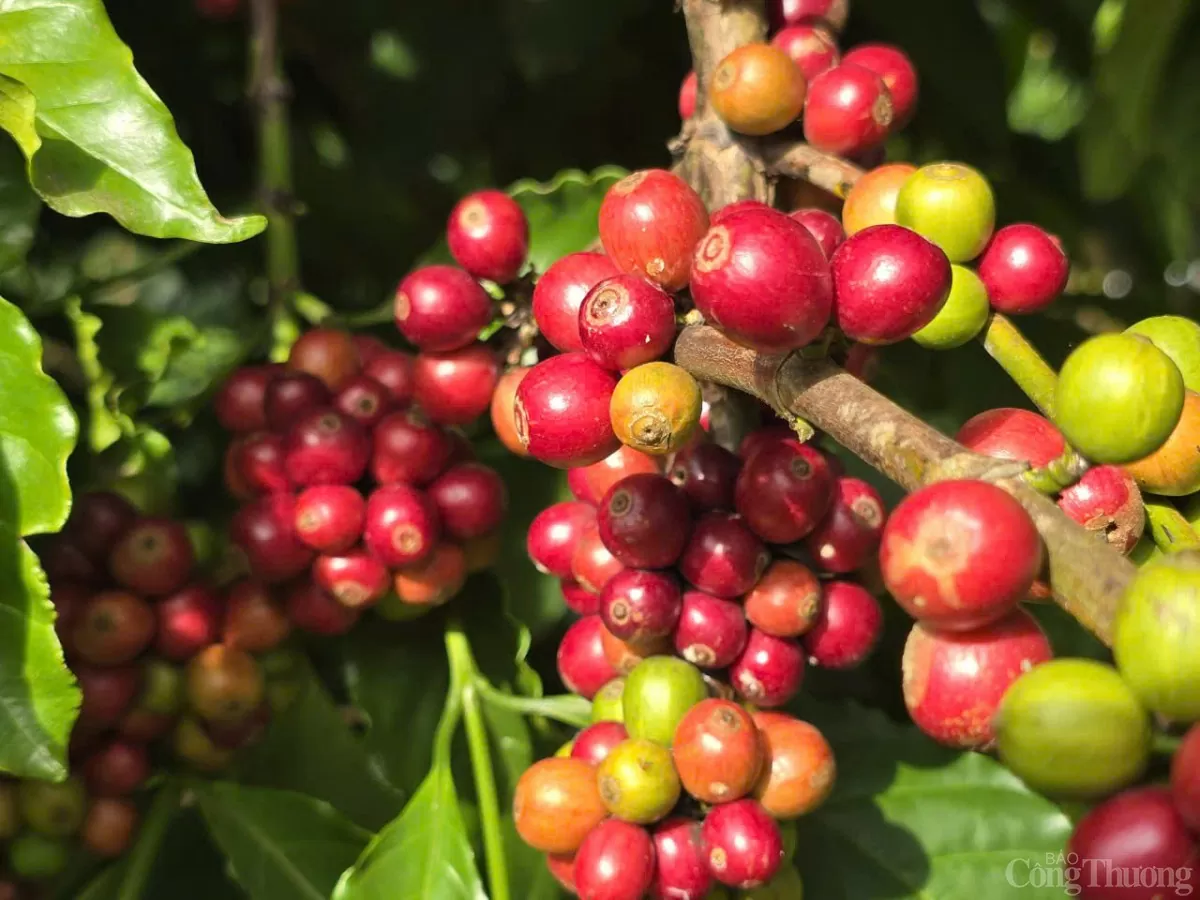
Coffee price today November 29, 2024 on the market world, at 4:30 am updated on the Vietnam Commodity Exchange MXV (world coffee prices are continuously updated by MXV, matching with world exchanges, the only channel in Vietnam that continuously updates and links with world exchanges). Today’s online coffee prices of the three main coffee futures exchanges ICE Futures Europe, ICE Futures US and B3 Brazil are continuously updated by Y5Cafe during the trading hours of the exchange, updated as follows:
At the end of the trading session, the price of Robusta coffee on the London floor at 4:30 a.m. on November 29, 2024 continued to increase slightly compared to the previous trading session, an increase of 10 – 32 USD/ton, ranging from 2.277 – 5.613 USD/ton. Specifically, the monthly delivery term January 2025 was 5.565 USD/ton (up 32 USD/ton); the monthly delivery term March 2025 was 5.528 USD/ton (up 32 USD/ton); the monthly delivery term May 2025 was 5.454 USD/ton (up 20 USD/ton) and the monthly delivery term July 2025 was 5.370 USD/ton (up 10 USD/ton).
On 29/11, the New York Arabica Coffee Exchange was closed for Thanksgiving. At the end of the previous trading session, coffee prices on the New York Stock Exchange were quite high. Specifically, the monthly delivery term March 2025 was 323.05 cent/lb; the monthly delivery term May 2025 was 320.70 cent/lb; the monthly delivery term July 2025 was 315.70 cent/lb and the monthly delivery term September 2025 was 310.20 cent/lb.
At the end of the trading session, on the morning of November 29, 2024, the price of Brazilian Arabica coffee increased and decreased mixedly across delivery terms, ranging from 393.25 – 403.90 USD/ton. Specifically, the monthly delivery term December 2024 was 399.20 USD/ton (down 4.70 USD/ton); the monthly delivery term March 2025 was 401.80 USD/ton (up 3.10 USD/ton); the monthly delivery term May 2025 was 400.05 USD/ton (up 19.05 USD/ton) and the monthly delivery term July 2025 was 393.25 USD/ton.
Robusta coffee traded on the ICE Futures Europe (London exchange) opens at 16:00 and closes at 00:30 (next day), Vietnam time. Arabica coffee on the ICE Futures US (New York exchange) opens at 16:15 and closes at 01:30 (next day), Vietnam time. For Arabica coffee traded on the B3 Brazil exchange, it will open from 19:00 – 02:35 (next day) Vietnam time.
According to forecasts, tomorrow’s coffee prices November 30, 2024 Robusta coffee prices on the London floor and Arabica coffee prices in New York will continue to increase. Meanwhile, according to forecasts, the price of Arabica coffee in Brazil will show signs of slowing down. As for domestic coffee prices, it is likely to exceed 130.000 VND/kg, approaching the record threshold of 134.400 VND/kg.
Domestic coffee prices were updated at 4:30 a.m. on November 29, 2024 as follows: Domestic coffee prices continued to increase sharply, increasing from 4.000 – 4.100 VND/kg. Currently, the average purchase price in the Central Highlands provinces is 128.000 VND/kg.
Coffee prices tomorrow November 30, 2024 are forecast to continue to increase
Specifically, the coffee purchase price in the province Gia Lai at 127.900 VND/kg (up 4.000 VND/kg compared to the previous trading session); Meanwhile, in the province Dak Nong Coffee was also purchased at the highest price of 128.200 VND/kg (an increase of 4.100 VND/kg).
Price of green coffee beans (coffee beans, fresh coffee beans) in the province Lam Dong In districts such as Bao Loc, Di Linh, Lam Ha, coffee is purchased at 127.500 VND/kg.
Coffee price today (date 29/11) in the province Dak LakIn Cu M’gar district, coffee is purchased at 128.000 VND/kg, and in Ea H’leo district, Buon Ho town, it is purchased at 127.900 VND/kg.
Domestic coffee prices are forecast to exceed VND 130.000/kg in the next session on November 30, 2024.
According to the Department of Industry and Trade of Dak Lak province, in the 2023-2024 coffee crop, the whole province exported 264.404 tons of coffee (down 54.095 tons compared to the previous crop), accounting for 17,9% of the whole country.
Export turnover reached 915,795 million USD (an increase of 168,238 million USD compared to the previous crop year), accounting for 16,9% of the whole country.
Compared to the 2022-2023 crop year, the province’s coffee exports decreased in volume but increased in value due to the continuous increase in coffee prices in the last crop year. Of which, coffee bean exports reached 783,895 million USD, an increase of 24,5%.
Instant coffee exports reached 131,9 million USD, accounting for 14,4% of the province’s total coffee export turnover. Compared to the 2022-2023 coffee crop, instant coffee export turnover increased by 14,173 million USD.
An XRP community commentator has triggered discussions around XRP’s potential to reach audacious price levels, dismissing market cap concerns.
These discussions have sprung up following XRP’s reclamation of the $1 territory for the first time in three years. Remarkably, the altcoin has since held above this price level, currently changing hands at $1.55 amid an impressive 206% increase in November.
With this bullish momentum, these ambitious targets have re-emerged, with market pundit Armando Pantoja recently suggesting an XRP price of $100 is possible, downplaying concerns around the resulting market cap.
ChatGPT Dismisses Market Cap Concerns for XRP Valuation
In the most recent commentary, software engineer and veteran developer Vincent made a similar case, insisting that AI supported the possibility of XRP reaching $10,000 per token. Nonetheless, his assertions triggered mixed reactions from the community.
Specifically, Vincent explained that he used ChatGPT to explore hypothetical scenarios involving XRP, including regulatory clarity, cross-border payments, and global monetary applications.
According to him, the AI concluded that XRP could plausibly reach $10,000 under certain conditions, dismissing traditional market cap concerns as irrelevant for crypto. For context, a price of $10,000 would imply a market cap of $570 trillion, a figure far exceeding global market norm.
Amid skepticism, Vincent encouraged others to engage AI in similar discussions and pose specific questions. He highlighted one scenario in which XRP’s strategic positioning could make it a candidate for global reserve currency status.
Is XRP Constrained by Market Cap?
Interestingly, several XRP proponents supported Vincent’s claims, questioning the relevance of market cap as a limiting factor for XRP.
Rookery Heart, a community member, argued that technological advancements like XRP’s low-cost, high-efficiency value transfer systems make market cap comparisons obsolete. He contrasted this with stocks, which command trillions in market cap without comparable utility.
Moreover, a trader alsocalled market cap an outdated metric for assessing cryptocurrencies. According to him, crypto assets that serve as currencies or stores of value operate differently from traditional stocks, and clinging to old paradigms restricts forward thinking.
Further, investor Sono Coscienza noted that Bitcoin’s meteoric rise from $2 to $1,000 seemed equally implausible at the time. He argued that dismissing ambitious price predictions overlooks the potential of blockchain technology.
Community Pessimism
However, not everyone agreed with Vincent’s claims. Dr. Artur Kirjakulov, CEO of XPMarket, cautioned against relying overly on AI for financial predictions.
He pointed out that AI tools like ChatGPT can lean toward biases in the user’s questions, producing desired answers without deeper analysis. Kirjakulov urged the community to approach AI-generated conclusions critically, especially when dealing with speculative predictions.
Exactly, the issue is with question If your question is biased, you will get the answers you want to get. It is just how it works. I can easily make chatgpt agree with anything I say, even provide a source for that.
Another community member referenced Grok AI’s more conservative outlook on XRP, projecting a long-term price range of $4.80 to $65 under optimal conditions. Grok AI dismissed extreme targets like $10,000 as speculative.
DisClamier: This content is informational and should not be considered financial advice. The views expressed in this article may include the author’s personal opinions and do not reflect The Crypto Basic opinion. Readers are encouraged to do thorough research before making any investment decisions. The Crypto Basic is not responsible for any financial losses.
Technique Precautions: This exercise is difficult to perform and hence it is better to practice this exercise under the guidance of a yoga practitioner. Note: People suffering from high blood pressure, reddish eyes and possessing a weak heart should not practice this exercise. Few people may experience severe body pain or nasal bleeding while performing […]
Brent Crude oil prices are expected to average $74.53 a barrel next year, the monthly Reuters poll of dozens of analysts showed on Friday, as the experts downgraded their price outlook for the seventh consecutive month.
Brent Crude prices are set to average $74.53 per barrel next year as weaker global demand growth and enough supply would offset the impact of a potential delay to the OPEC+ cuts, said 41 analysts and economists in the survey.
Last month, the analysts had expected Brent Crude prices to average $76.61 per barrel in 2025.
The analyst consensus estimate in the Reuters poll has now been downgraded for the seventh month in a row.
So far this year, Brent Crude has averaged $80 a barrel.
The analysts expect the U.S. benchmark, WTI Crude, average $70.69 per barrel next year, the Reuters survey showed. The latest forecast is $2 a barrel lower than the October consensus of $72.73 per barrel.
Many analysts expect OPEC+ to extend the current cuts for at least a month, and even for the entire first quarter of 2025, as oil prices continue to be weak, with Brent in the lower $70s and WTI trading below the $70 mark.
Stricter U.S. sanctions against Iran under Donald Trump and geopolitical tensions could provide some support to prices early next year, but overall, expected tepid demand will weigh down on oil prices, according to analysts.
Early on Friday, oil prices were set for a weekly loss despite a flare-up in the Middle East and the virtual certainty that OPEC+ would not be bringing any barrels back anytime soon. Both benchmarks have dropped since the start of the week when the U.S. brokered a ceasefire between Israel and Lebanon’s Hezbollah was announced.
On Thursday, OPEC said that the OPEC+ group would move the meeting on its near-term oil production plans to December 5 from December 1, due to a scheduling conflict.
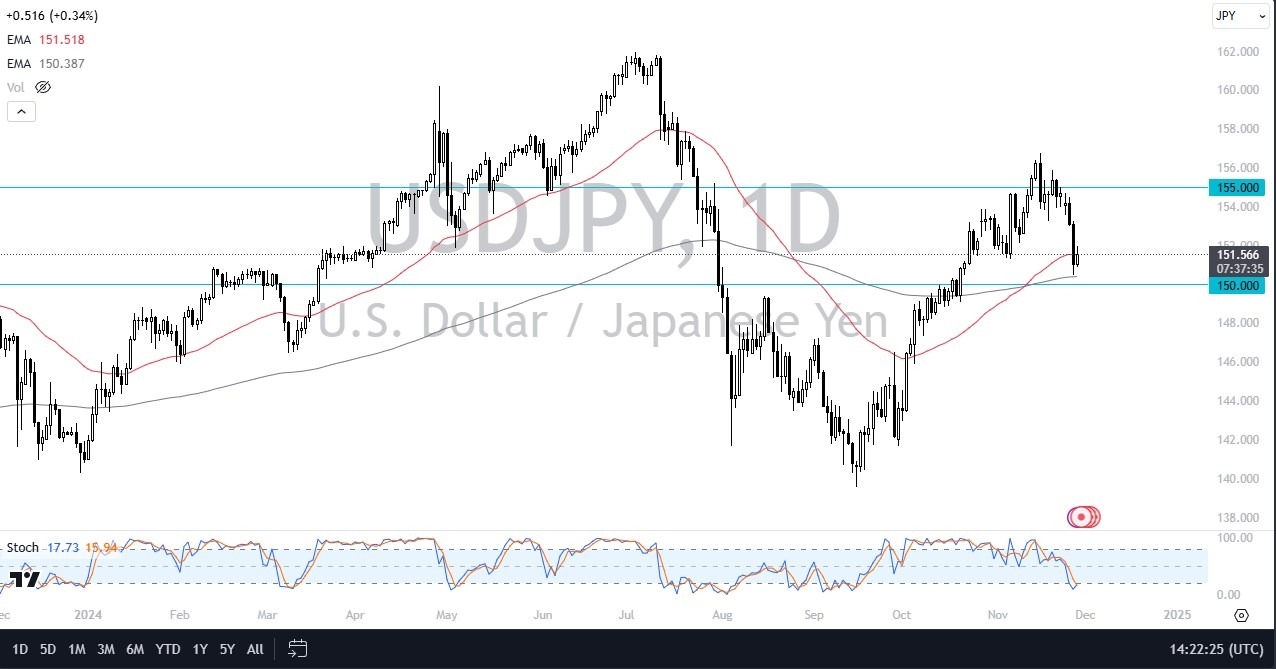
The US dollar has bounced a bit during the early hours on Thursday, to turn things around against the Japanese yen.
In my daily analysis of the USD/JPY pair, the first thing that comes to my attention is the fact that we had bounce from the 200 Day EMA from the previous session, which just happens to be right above the ¥150 level.
The ¥150 level of course is a large, round, psychologically significant figure, and it is an area that we had previously seen resistance at.
All things being equal, this is a very strong uptrend, and I think that probably continues to be the case over the longer term, because of a whole slew of fundamental reasons. With this, I think you got a situation where traders are taken advantage of the interest rate differential, in the so-called “carry trade.” The “carry trade” has lost its luster over the last couple of weeks, so what we need to see is a little bit of financial stability. There are a lot of questions as to whether or not the Bank of Japan will do something to stabilize the yen, but really at this point in time anything that the Bank of Japan does will more likely than not be somewhat lackluster.
Going Forward
Going forward, I think you’ve got a situation where a lot of traders will continue to look for an opportunity to take advantage of the interest rate differential, and of course try to find some type of support near the ¥150 level. The ¥150 level is a major spot on the chart, and therefore I think you’ve got a scenario where a lot of traders are going to be paying close attention to this region. You probably have a lot of options traders there as well, so that comes into the picture also.
The size of the candlestick during the trading session on Wednesday was rather brutal, but the question now is whether or not that was a bit of a “washout” for the sellers. After all, there may have been a couple of different things going on at the same time. Not only would you have people trying to take advantage of a weakening US dollar, but you might have had a lot of US-based traders just simply collecting profit before the holiday.
SUPPLEMENTS CAN HELP you reach your nutritional needs for putting on muscle mass and fill holes in your required vitamin intake. The goal should always be getting as many quality meals as possible. But in today’s busy environment, there are healthy, well-sourced products to turn to when you want to make the most out of your workouts and keep you on track while you’re on the move.
If you’ve tried to buy protein powder or creatine on a regular basis, to keep up with a consistent gym schedule, you know that it can get expensive. And there is nothing worse than running to the kitchen to make a healthy shake after a good pump to find sad, empty containers. I’m a creature of habit, and when I find a supplement that I like, I buy a lot. That’s one of the reasons that Black Friday is one of my favorite times to stock up.
Here are the best Black Friday protein powder and creatine deals that we’ve spotted. Keep checking back, as we will continue to update this list through the weekend.
Black Friday Protein Powder Deals
Transparent Labs Grass-Fed Whey Protein (35 oz)
Now 25% Off
Ascent Protein Native Fuel Whey Protein (32 oz)
Now 25% Off
Podium Isolate Whey Protein (28 oz)
Now 25% Off
Jocko Fuel Mölk Whey Protein (34.99 oz)
Now 30% Off
Optimum Nutrition Gold Standard Whey Protein
Now 29% Off
GNC Bulk 1340 (114.24 oz)
Now 15% Off
Black Friday Creatine Deals
What to Consider
There are plenty of great articles on Men’s Health that break down what makes a great protein powder or creatine supplement. The first element to consider is whether or not the item is certified by the NSF, a company that does independent testing of products to confirm they contain what is stated on the label and are safe to consume on a regular basis. If a product is not NSF-certified, the only other acceptable option is that it is third-party tested, meaning someone outside of the company was tasked with confirming these factors. Each of the items recommended here are either NSF-certified or third-party tested.
For protein powders, the other critical element to consider is what protein source you would prefer to consume. There are different types of protein powders—whey and casein, which are both made from dairy protein, or plant-based proteins, which can be made from legumes or seeds, like peas, rice, or hemp. I personally go back and forth between whey and plant-based proteins, depending on the products. As long as you are happy with the ingredient list and pick a flavor (or unflavored version) that you like, I’ve personally found the differences negligible.
For creatine, my favorite products are unflavored, and I’ll usually just mix it into my protein shake or a bottle of water after a workout. But there are a number of flavored options available if that helps make the drink more interesting. So we’ve shared a few of those options as well.
Technical analyst Ali Martinez has reminded market participants that while Dogecoin (DOGE) has promising prospects, the asset will test their patience on its path to higher price levels.
Martinez issued this warning in a Friday post on X, highlighting a fresh bearish signal on Dogecoin’s short-term price action. He noted that the TD Sequential indicator has flashed a sell signal for Dogecoin. This is coming at a time when the asset has only recently rebounded from a 23% dip.
Today, Dogecoin traded at $0.4200 after a 4% gain. The sell signal suggests the recently reclaimed $0.40 region could be lost again due to another incoming correction.
While this projected outcome could hurt those who entered the Dogecoin market at the top, Martinez reminded investors that these dips are normal and part of the journey toward unprecedented price territories. In the end, those who remain patient during downturns stand to be rewarded.
Historical Instances Where Dogecoin Rewarded Investors After Testing Their Patience
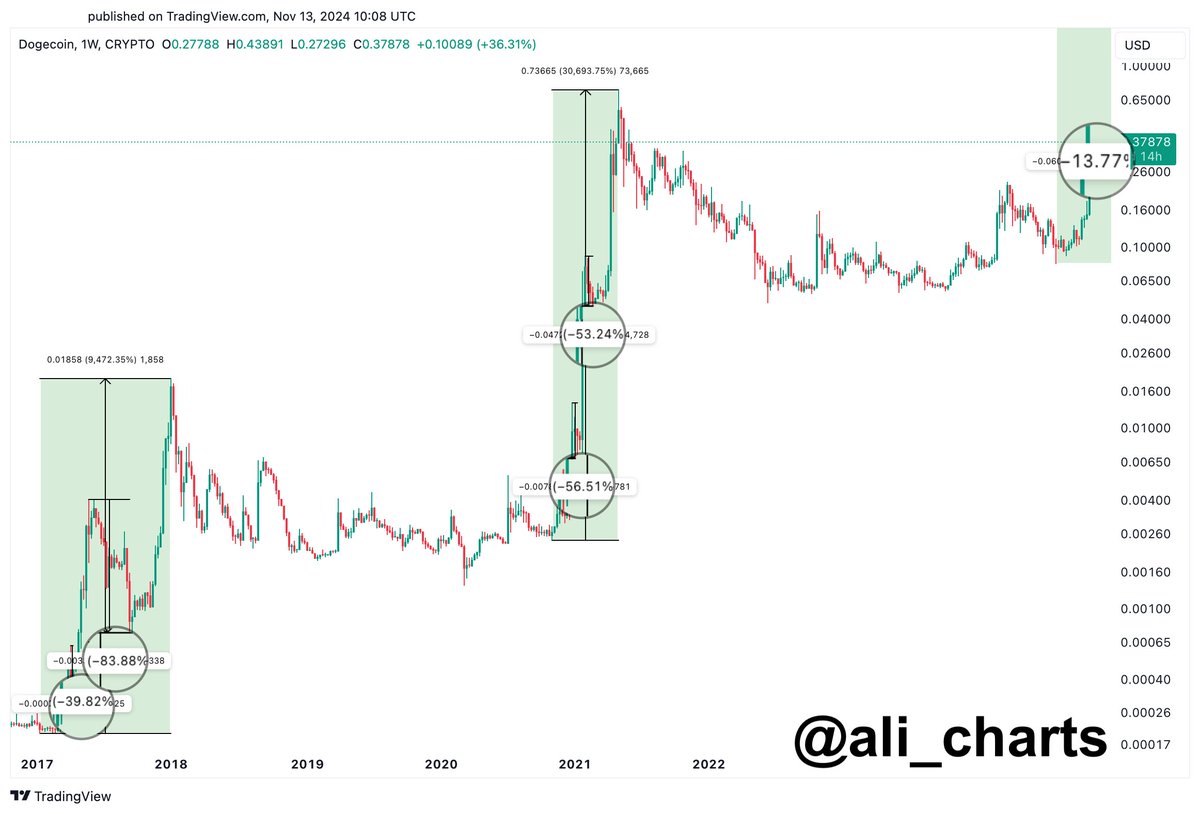
Martinez cited specific instances in Dogecoin’s history where major dips preceded the asset’s periodic parabolic runs.
For example, during the 2016/2017 cycle, Dogecoin experienced two major dips: a 39% and a massive 84% price drop. However, by the end of the cycle, Dogecoin’s total gains amounted to over 9,400%.
Similarly, in the 2020/2021 season, Dogecoin saw 56% and 53% corrections in its journey to an all-time high. However, its cumulative rise by the end of the season was around 31,000%.
Dogecoin Historical patterns
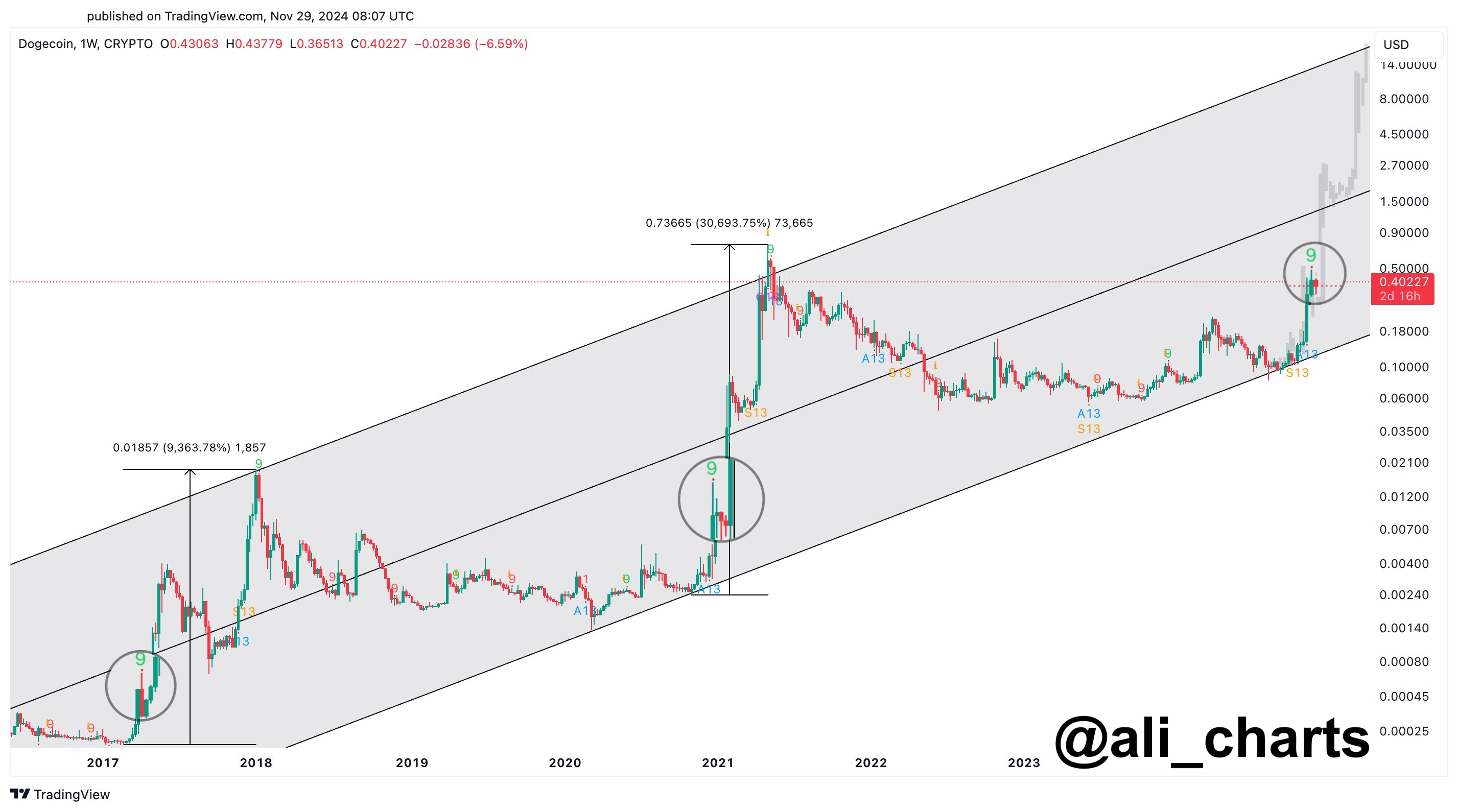
Now, Martinez has highlighted the possibility of Dogecoin soaring by 3,233% from its current position. An upsurge which could allow it to hit a new peak of $14. However, this target is overly ambitious, as it would lead to a DOGE market cap above $2 trillion, exceeding Bitcoin’s current valuation.
Notably, this price prediction suggests Dogecoin could mirror its historical patterns within an ascending price channel.
Chart showing Dogecoin $14 price forecast
Other Factors Suggesting a Double-Digit Price for DOGE
Other market watchers have argued for similar targets for Dogecoin using different tools to observe its historical patterns.
For instance, analyst Trader Tardigrade has pointed out that DOGE is currently testing the mid-band of the Gaussian channel, suggesting a potential rally toward $11, as seen in past surges in 2017 and 2020.
Meanwhile, based on Fibonacci retracement levels, Martinez has suggested Dogecoin could rally to $23, which would be consistent with the 2.272 Fibonacci level at which Dogecoin peaked during the 2020/2021 bull run.
Conservative Outlook for Dogecoin
While these are ambitious price forecasts for Dogecoin, some analysts have issued more conservative outlooks for the asset.
For instance, analysts Crypto Scolfeild and Ash Crypto have argued that Dogecoin could peak at $3 during this season, with Ash noting that the meme coin might reach this price level within the next six to twelve months.
DisClamier: This content is informational and should not be considered financial advice. The views expressed in this article may include the author’s personal opinions and do not reflect The Crypto Basic opinion. Readers are encouraged to do thorough research before making any investment decisions. The Crypto Basic is not responsible for any financial losses.
If you want a healthy gut, you need a healthy microbiome, the system of microbes that live in your intestines. You can use probiotic supplements to keep your microbiome in balance, or you could save some money and get probiotics from the foods you already eat.
“Probiotics are live microorganisms, often called ‘good bacteria,’ that help maintain a healthy balance in your gut by promoting the growth of beneficial bacteria and suppressing harmful ones,” says Gillean Barkyoumb, registered dietitian and nutrition expert at Plexus Worldwide (which sells dietary supplements).
“Probiotics are commonly found in fermented foods like yogurt, kefir and sauerkraut, as well as in dietary supplements,” she adds. “Regularly consuming probiotics can support digestion, boost your immune system and may even improve mood and overall well-being.”
Ultimately, probiotics contribute to your digestive health, which in turn can reduce depression, improve mental health, promote heart health, boost your immune system and give your skin a healthy glow. Good gut bacteria can also help promote a healthy metabolism, which can reduce the risks of disorders such as obesity and diabetes. If you want to boost your gut health naturally, always consult your doctor first.
What are the best probiotic foods to eat for a healthy gut?
From talking fridges to iPhones, our experts are here to help make the world a little less complicated.
If you want more probiotics in your diet, below are 12 excellent probiotic foods. In addition to these foods, you might also try probiotic supplements. Look for labeling that reads, “contains live cultures” or “contains active cultures” in these common probiotic foods.
1. Yogurt
A staple probiotic food, go for yogurt with live and active cultures. Some yogurts are specifically marketed for their probiotic content or to help improve digestion. Yogurt usually has L. acidophilus bacteria, which can promote the growth of good bacteria in your gut. Yogurt is a great option because it’s widely available, comes in a variety of flavors to suit your taste and can be eaten straight from the container.
2. Kimchi
Kimchi is a traditional Korean side dish made by fermenting vegetables with probiotic lactic acid bacteria. Kimchi can give you that probiotic punch, and it’s made with healthy ingredients like vegetables (most commonly Napa cabbage, carrots, scallions and radish), garlic, red pepper powder, ginger and other spices. It makes a wonderful side and is traditionally served with steamed rice. Kimchi is associated with research regarding anti-cancer, anti-obesity, colorectal health, cholesterol reduction, anti-aging, brain health, immune health and skin health properties.
3. Pickles
You might be surprised to learn that pickles can contain probiotics. You just have to make sure you buy fermented pickles, which are usually found in the refrigerated section of the health food aisle. Some brands even advertise probiotic content. They trend under the term “healthy pickles,” but be sure to read the labels to ensure they contain probiotics. You can even make them at home. Some people also drink or use the juice the pickles are fermented in. Note that jarred pickles tend to be high in sodium.
4. Sourdough
Sourdough starter contains lactic acid bacteria. The starter is the environment where yeast and good bacteria grow by consuming water and flour. Natural prebiotics and probiotics are listed in research as one of the benefits of sourdough bread. It’s also linked to better blood glucose control, reduced cholesterol, a lower risk of diabetes, reduced cardiovascular disease risk and improved weight control. Also, it makes a pretty good sandwich bread.
5. Kefir
Kefir is a fermented milk made using kefir grain. It starts as a normal cow’s or goat’s milk, and then a grain-like yeast and lactic acid bacterial colony called kefir is added to the milk. The mixture is left to ferment for around a day and then the milk is filtered from the grains, creating the kefir drink. The resulting drink is a powerful probiotic that actually packs more probiotics than yogurt.
6. Kombucha
Kombucha is “a go-to for fermented botanicals,” Barkyoumb says. “This magic potion has been dubbed the ‘immortal health elixir’ because of its ability to support whole-body health and wellness while preventing illnesses. High-quality kombucha is filled with probiotics and amino acids that will help your body digest sugar, and is also a great natural hangover cure.”
This drink is actually a fermented tea, so you’re getting the health benefits of tea with the probiotic boost of a fermented beverage. It’s made by adding strains of bacteria, yeast and sugar to either black or green tea, which leads to the drink’s probiotic-happy environment. It ferments for about a week or more until it grows a mushroom-type texture on top. The mushroom gets filtered out to make new kombucha.
7. Sauerkraut
This German comfort food is fermented cabbage made by lacto-fermenting the vegetable in its brine with salt. As part of the traditional fermentation process, probiotics are in the end product.
However, this is another product where you have to specifically buy probiotic sauerkraut or make your own. Many brands use vinegar and sugar or are pasteurized, which reduces the growth of bacteria and kills probiotics. Common canned sauerkraut is usually made with vinegar or it’s pasteurized (or both).
8. Miso soup
This Japanese food is served as a side to many meals. Miso is a paste typically made from fermented soybeans and works as a condiment to make sauces, spreads and soup stock. Miso soup uses this paste for the stock. Because miso is a fermented food, it packs the probiotic punch. Miso soup works great with larger meals but it also makes a nice, light lunch on its own.
9. Apple cider vinegar
Apple cider vinegar is twice-fermented apple juice. Apple cider vinegar has been making its rounds for years as a popular health supplement. It has natural probiotics from the fermentation process. Though its benefits need further research, many people also use it for everything from calming acid reflux to weight loss. It has a strong flavor, so if you don’t like taking it directly, add it to salad dressing, marinades or pickling liquid.
10. Some cheese
Certain types of cheese have probiotics. For instance, aged cheeses that are not heated afterward tend to have probiotics. Examples include Swiss, Gouda, cheddar, Edam, Gruyère, cottage cheese and provolone. The good news is that many popular cheese types have probiotics, including a healthy bowl of cottage cheese topped with fruit.
11. Pickled vegetables
Along the same lines as the kimchi and pickles above, you can also look for any pickled vegetables that specifically list having probiotics. One idea is to look into lacto-fermented escabeche, a pickled dish from Mexico that can contain a wide variety of vegetables. Or you can make a fermented giardiniera, an Italian pickle relish. Using fermented pickled vegetables is also a great way to shop locally and preserve vegetables for use out of season.
12. Buttermilk
Buttermilk may seem like a drink out of “Little House on the Prairie,” but traditional buttermilk can be an excellent source of probiotics. Buttermilk covers different types of fermented dairy beverages, but traditional buttermilk is the liquid skimmed out of the butter-making process. The trick is to avoid cultured buttermilk, which is the most common type in supermarkets and usually does not have probiotics.