About Editorial team of BIPNs

Main team of content of bipns.com. Any type of content should be approved by us.
28 11, 2024

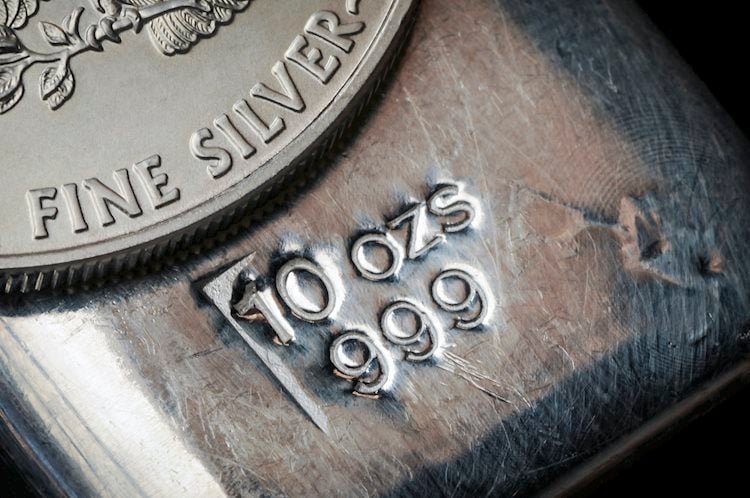
XAG/USD tests $30.00, next barrier appears at nine-day EMA

By |2024-11-28T16:09:32+02:00November 28, 2024|Forex News, News|0 Comments


  • Silver price tests a “throwback support” at the psychological level of $30.00.
  • The pair remains confined within a descending channel pattern, signaling a strong bearish bias.
  • A decisive break below the throwback support could drive the Silver price to approach its three-month low of $27.69.

Silver price (XAG/USD) extends its losses for the second successive day, trading around $30.00 per troy ounce during the European hours on Thursday. The daily chart analysis indicates a dominant bearish bias, with the pair consolidating within a descending channel pattern. Additionally, the 14-day Relative Strength Index (RSI) remains below the 50 mark, further supporting the bearish sentiment.

The XAG/USD pair continues to trade below the 14- and nine-day Exponential Moving Averages (EMA), reinforcing a bearish outlook and signaling weakening short-term price momentum. This points to limited buying interest and raises the likelihood of further price declines.

In terms of the upside, the Silver price finds a primary barrier around the nine-day Exponential Moving Average at $30.54, followed by the 14-day EMA at $30.78. Further resistance appears around the upper boundary of the descending channel at 31.20 level.

On the downside, the Silver price tests a “throwback support” at the psychological level of $30.00. A successful breach below this level could deepen bearish sentiment, potentially driving the asset price lower toward its three-month low of $27.69, followed by the descending channel’s lower boundary at $27.50.

XAG/USD: Daily Chart

Silver FAQs

Silver is a precious metal highly traded among investors. It has been historically used as a store of value and a medium of exchange. Although less popular than Gold, traders may turn to Silver to diversify their investment portfolio, for its intrinsic value or as a potential hedge during high-inflation periods. Investors can buy physical Silver, in coins or in bars, or trade it through vehicles such as Exchange Traded Funds, which track its price on international markets.

Silver prices can move due to a wide range of factors. Geopolitical instability or fears of a deep recession can make Silver price escalate due to its safe-haven status, although to a lesser extent than Gold’s. As a yieldless asset, Silver tends to rise with lower interest rates. Its moves also depend on how the US Dollar (USD) behaves as the asset is priced in dollars (XAG/USD). A strong Dollar tends to keep the price of Silver at bay, whereas a weaker Dollar is likely to propel prices up. Other factors such as investment demand, mining supply – Silver is much more abundant than Gold – and recycling rates can also affect prices.

Silver is widely used in industry, particularly in sectors such as electronics or solar energy, as it has one of the highest electric conductivity of all metals – more than Copper and Gold. A surge in demand can increase prices, while a decline tends to lower them. Dynamics in the US, Chinese and Indian economies can also contribute to price swings: for the US and particularly China, their big industrial sectors use Silver in various processes; in India, consumers’ demand for the precious metal for jewellery also plays a key role in setting prices.

Silver prices tend to follow Gold’s moves. When Gold prices rise, Silver typically follows suit, as their status as safe-haven assets is similar. The Gold/Silver ratio, which shows the number of ounces of Silver needed to equal the value of one ounce of Gold, may help to determine the relative valuation between both metals. Some investors may consider a high ratio as an indicator that Silver is undervalued, or Gold is overvalued. On the contrary, a low ratio might suggest that Gold is undervalued relative to Silver.


Source link

28 11, 2024

Gains Amid USD Weakness -Video

By |2024-11-28T14:50:12+02:00November 28, 2024|Forex News, News|0 Comments

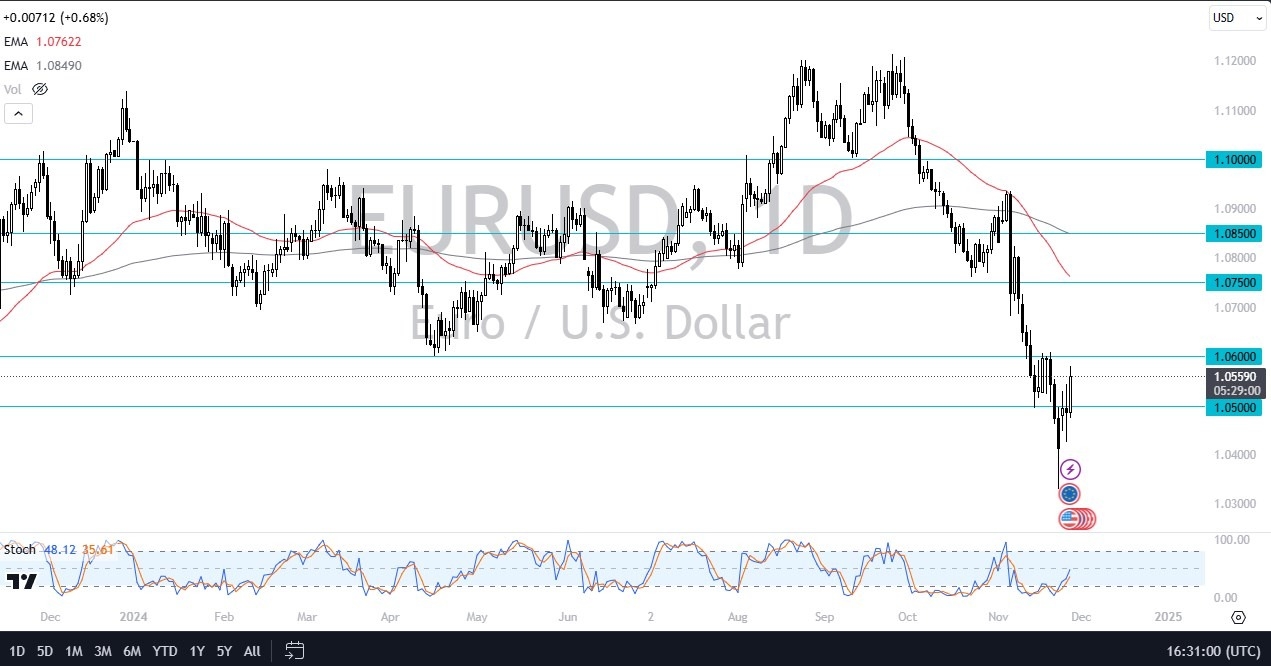
  • The Euro has rallied a bit during the early hours on Wednesday as we have seen the United States dollar give back some of its gains.
  • The US dollar was a little overbought.
  • So, it’s not a huge surprise to see that things are starting to shift in another direction.

That being said, I think you’ve got a scenario where the 1.05 level continues to be major support. The fact that the stochastic oscillator crossed in the oversold condition a few days ago probably has this EUR/USD market ready for a technical bounce. Whether or not this sticks is a completely different question, but keep in mind that the 1.06 level above is going to be a bit of a barrier. I’ll be watching that because if we can break above the 1.06 level, then we have further gains ahead.

Short Term Pullbacks

Short term pullbacks probably end up showing signs of support near the 1.05 level again. And anything below there I think probably has some issues. Fundamentally speaking, the United States came out with the PCE numbers on Wednesday exactly as expected, right along with preliminary GDP and weekly unemployment claims came within about 2000 jobs from expected numbers. So, with all of that being said, I think the market is probably seeing some short covering due to the Thanksgiving holiday as a lot of the major traders in New York at least won’t be at their desk tomorrow for Thanksgiving. And then again on Friday, because most Americans take both days off if they can.

What will be interesting is to see how this pair behaves next week. I think anything above 1.0750 could change the trend again, but right now, this looks like a market where you will probably be fading signs of exhaustion after rallies. At this point, although the euro looks like it wants to rally, the reality is that the upside is probably still somewhat limited.

Ready to trade our EUR/USD Forex analysis? We’ve made a list of the best forex demo accounts worth trading with. 

Source link

28 11, 2024

Gamma Linolenic Acid Market Size, Share

By |2024-11-28T14:48:39+02:00November 28, 2024|Dietary Supplements News, News|0 Comments


Report Overview

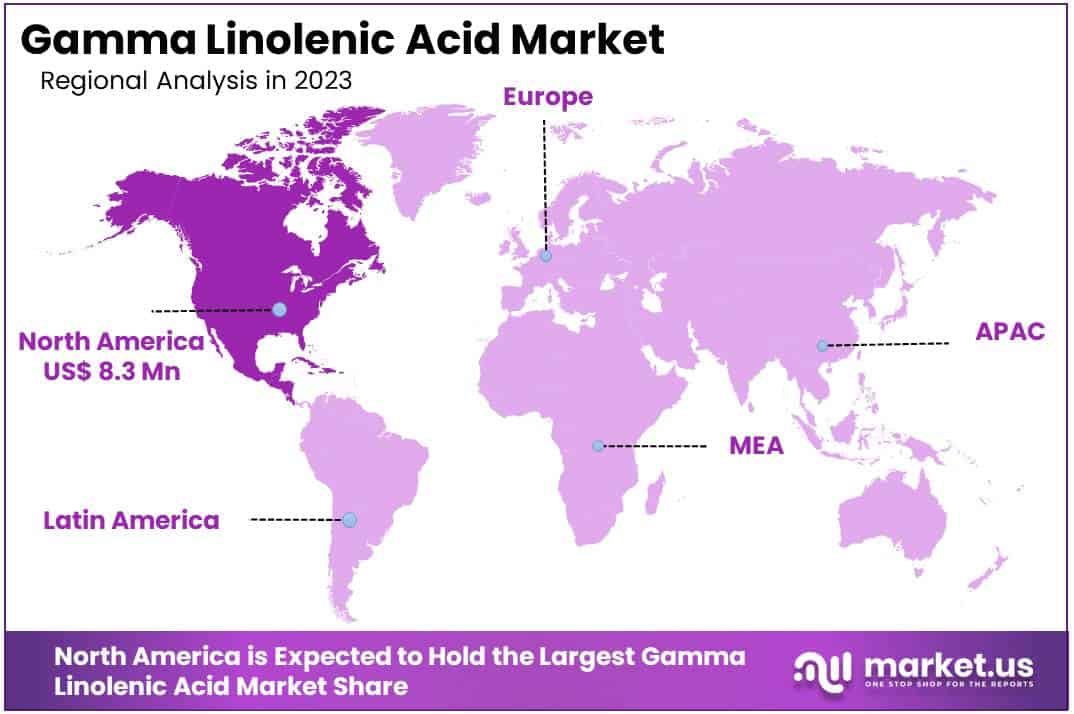
The Global Gamma Linolenic Acid Market Size is expected to be worth around US$ 33.2 Million by 2033, from US$ 20.8 Million in 2023, growing at a CAGR of 4.8% during the forecast period from 2024 to 2033. North America maintained a leading market position, securing over 39.8% of the market share and a market value of US$ 8.3 billion.

Growing consumer demand for natural and functional ingredients in dietary supplements and cosmetics is driving the expansion of the gamma linolenic acid (GLA) market. GLA, a fatty acid found in plant oils like evening primrose oil, borage oil, and black currant oil, offers numerous health benefits, including anti-inflammatory, skin health, and hormonal balance support.

As awareness of these benefits increases, more consumers are seeking GLA-based products to address conditions such as eczema, rheumatoid arthritis, and diabetic neuropathy. In addition, the cosmetic industry is adopting GLA for its potential to improve skin hydration, reduce the appearance of fine lines, and alleviate conditions like acne. In January 2022, Thermo Fisher Scientific Inc. completed its acquisition of Pepro Tech, Inc., a move that strengthens its portfolio in the life sciences sector.

This acquisition highlights the increasing interest in biologically active ingredients and their potential applications across multiple industries, including the GLA market. The rise of clean beauty products and the trend toward natural health solutions are creating new opportunities for GLA-based formulations in skincare.

Furthermore, research into the therapeutic uses of GLA continues to expand, driving innovation in supplements and treatments targeting inflammation, hormonal imbalances, and metabolic health. With growing investment in the natural health sector and a rising preference for plant-derived ingredients, the GLA market is poised for sustained growth.

Gamma Linolenic Acid Market Size, Share

Key Takeaways

  • In 2023, the market for gamma linolenic acid generated a revenue of US$ 20.8 million, with a CAGR of 4.8%, and is expected to reach US$ 33.2 million by the year 2033.
  • The nature segment is divided into conventional and organic, with conventional taking the lead in 2023 with a market share of 63.5%.
  • Considering form, the market is divided into liquid and powder. Among these, powder held a significant share of 58.7%.
  • Furthermore, concerning the end-use segment, the dietary supplements & functional foods sector stands out as the dominant player, holding the largest revenue share of 37.9% in the gamma linolenic acid market.
  • North America led the market by securing a market share of 39.8% in 2023.

Nature Analysis

The conventional segment led in 2023, claiming a market share of 63.5% owing to the continued demand for traditional sources of this fatty acid, particularly in the food and supplement industries. Conventional gamma linolenic acid, derived from sources such as evening primrose oil, black currant seed oil, and borage oil, is anticipated to maintain its dominant market share as it remains widely accessible and cost-effective.

The growing awareness of the health benefits associated with gamma linolenic acid, such as its anti-inflammatory and skin health properties, is likely to drive demand for conventional sources. Furthermore, the established infrastructure for production and distribution of conventional gamma linolenic acid is projected to contribute to the segment’s ongoing expansion, particularly in regions where demand for nutritional supplements is rising.

Form Analysis

The powder held a significant share of 58.7% due to the increasing preference for powder forms of supplements and functional ingredients in food and beverages. Powdered gamma linolenic acid offers enhanced stability and longer shelf life compared to liquid forms, making it ideal for use in a wide range of products.

Additionally, the ease of incorporating powdered gamma linolenic acid into dietary supplements, protein powders, and functional foods is likely to further contribute to the segment’s growth. The rise in demand for convenient, portable health products and the growing trend of online sales of supplements are expected to boost the popularity of powder formulations. As consumer preferences shift toward more versatile and easily consumable formats, the powder segment is anticipated to see continued expansion in the gamma linolenic acid market.

End-use Analysis

The dietary supplements & functional foods segment had a tremendous growth rate, with a revenue share of 37.9% owing to the increasing consumer demand for health-enhancing products. Gamma linolenic acid is widely used in dietary supplements due to its potential benefits, including its support for immune health, skin conditions, and inflammation management.

The rising trend of health-conscious consumers seeking natural solutions to enhance overall wellness is likely to boost demand for gamma linolenic acid-based supplements. Additionally, the growing incorporation of functional ingredients into foods and beverages, such as energy bars, smoothies, and dietary snacks, is projected to fuel market growth. As consumers become more focused on preventive healthcare and holistic wellness, the dietary supplements and functional foods segment is anticipated to continue its strong growth in the gamma linolenic acid market.

Gamma Linolenic Acid Market ShareGamma Linolenic Acid Market Share

Key Market Segments

By Nature

By Form

By End-use

  • Pharmaceutical Industry
  • Cosmetic & Personal Care
  • Food & Beverage
  • Dietary Supplements & Functional Foods
  • Animal Nutrition

Drivers

Rising Demand for Dietary Supplements

Consumer awareness of the health benefits associated with gamma linolenic acid (GLA) is driving its rising demand in dietary supplements. GLA, an omega-6 fatty acid found in plant-based oils like evening primrose and borage, is gaining attention for its anti-inflammatory properties. These benefits have led to its use in managing conditions such as eczema, rheumatoid arthritis, and other inflammatory disorders. As consumers increasingly seek natural remedies, the popularity of GLA-enriched supplements continues to grow, supporting its expanding presence in the market.

A recent study, published in the Journal of Clinical Nutrition in August 2024, has further fueled this trend. The research found that daily intake of GLA supplements significantly reduced symptoms of atopic dermatitis in participants. This evidence of GLA’s effectiveness in treating skin conditions is likely to increase consumer confidence in its benefits. As more studies highlight its health advantages, GLA-based products are expected to see sustained demand across the health and wellness sector.

The growing consumer preference for natural health products is expected to propel the gamma linolenic acid market forward in the coming years. As awareness of GLA’s therapeutic effects spreads, more consumers are turning to GLA supplements as part of their wellness routines. This trend is particularly strong among those looking for alternatives to pharmaceutical treatments. Given the increasing demand, the GLA market is poised for continued growth as it meets the needs of health-conscious consumers seeking natural solutions.

Restraints

Limited Scientific Evidence on Long-Term Efficacy

Despite its growing popularity, the gamma linolenic acid (GLA) market faces significant challenges due to limited scientific evidence supporting its long-term efficacy. GLA is often used for its potential health benefits, including skin care. However, comprehensive clinical studies that validate its effectiveness over extended periods are few. This lack of robust evidence may lead to hesitation among both consumers and health professionals, affecting market growth and acceptance.

A 2023 review in the International Journal of Dermatology highlighted GLA’s promise in treating various skin conditions. Yet, the study emphasized the need for more extensive research to confirm its long-term benefits. Without solid scientific backing, consumer confidence in GLA products could remain uncertain, ultimately hindering the market’s potential. Further research is crucial to establishing its true efficacy and ensuring sustained demand in the health and wellness sector.

Opportunities

Integration into Functional Foods

The incorporation of gamma linolenic acid (GLA) into functional foods presents a major opportunity for market growth. As consumers increasingly seek foods that provide benefits beyond basic nutrition, GLA has become a key ingredient in functional food products. Its anti-inflammatory properties are particularly appealing to health-conscious individuals. The demand for functional foods is on the rise, and GLA’s inclusion in these products helps cater to this growing market segment.

In July 2024, a leading food manufacturer launched a line of fortified beverages containing GLA. This product targets consumers looking to enhance their diet with natural anti-inflammatory benefits. The launch is in direct response to the rising consumer interest in health-boosting foods. As this trend continues, the demand for GLA is expected to increase, driving the market forward. This strategic move highlights the significant growth potential for GLA in the functional food industry.

Impact of Macroeconomic / Geopolitical Factors

Macroeconomic and geopolitical factors significantly influence the gamma linolenic acid market, shaping both production and consumption trends. Economic downturns typically lead to reduced consumer spending, which may impact demand for dietary supplements and functional foods that contain gamma linolenic acid, particularly in price-sensitive regions.

On the other hand, periods of economic growth can boost consumer purchasing power, driving demand for health-related products. Geopolitical factors, such as trade restrictions, tariffs, and regulatory changes, may disrupt the global supply chain, affecting the availability and cost of raw materials necessary for production. Additionally, political instability in key sourcing regions can lead to supply uncertainties.

However, the growing awareness of the benefits of gamma linolenic acid, particularly for inflammatory conditions, skin health, and hormonal balance, is positively influencing demand. Furthermore, increasing consumer interest in natural and plant-based supplements enhances the market’s growth prospects. As awareness and acceptance of its health benefits rise globally, the market for gamma linolenic acid is expected to experience continued expansion.

Trends

Advancements in Extraction and Purification Technologies

Advancements in extraction and purification technologies are driving growth in the gamma linolenic acid (GLA) market. In June 2024, a biotechnology firm unveiled a groundbreaking method for extracting GLA from borage oil. This new technique boosts yields while significantly reducing production costs. As a result, GLA becomes more affordable and accessible to manufacturers. This innovation is poised to make a substantial impact on various industries that rely on GLA, such as cosmetics, dietary supplements, and pharmaceuticals.

The improved extraction method is expected to enhance both the efficiency and scalability of GLA production. As production costs drop, more companies can enter the market, further fueling competition. The cost-effective nature of this technology could lead to increased demand for GLA-based products. This, in turn, is likely to contribute to the continued expansion of the GLA market. Ultimately, the market will see broader adoption and a wider range of applications across different sectors.

Regional Analysis

North America is leading the Gamma Linolenic Acid Market

North America dominated the market with the highest revenue share of 39.8% owing to increased consumer awareness of the health benefits of this essential fatty acid and its applications in dietary supplements, cosmetics, and pharmaceuticals. GLA, which is primarily derived from plant sources like borage oil and evening primrose oil, has gained popularity due to its anti-inflammatory properties and potential benefits for conditions such as rheumatoid arthritis and skin disorders.

The growing demand for natural and plant-based ingredients in the wellness and beauty industries has also contributed to the expansion of the GLA market. In January 2022, Cargill entered into a joint venture with HELM to establish a commercial-scale renewable BDO facility in the United States. While this initiative is not directly related to GLA, it reflects Cargill’s broader commitment to expanding its bio-industrial operations, which could influence its future involvement in natural product sectors like GLA. As more consumers seek natural solutions for health and wellness, the demand for GLA products in North America is projected to continue rising.

The Asia Pacific region is expected to experience the highest CAGR during the forecast period

Asia Pacific is expected to experience the fastest growth in the gamma linolenic acid (GLA) market, driven by increasing health consciousness and rising disposable incomes. As the middle class in the region expands, more consumers are looking for natural health products, particularly those targeting inflammatory conditions, skin health, and hormonal imbalances. This trend is fueling demand for natural ingredients in both the food and cosmetics sectors, positioning GLA as a key market beneficiary.

In September 2023, Bioriginal Food & Science Corp. made strategic acquisitions to strengthen its position in the region. The company acquired The Factory, a Dutch manufacturer of fat and oil-based pet supplements, and Cana Corporation, a distributor of natural health products across Asia Pacific. These acquisitions are expected to boost Bioriginal’s distribution capabilities for GLA products. With rising awareness of natural health benefits, the GLA market in the region is set to grow significantly.

Gamma Linolenic Acid Market RegionsGamma Linolenic Acid Market Regions

Key Regions and Countries

  • North America
  • Europe
    • Germany
    • France
    • The UK
    • Spain
    • Italy
    • Russia
    • Netherland
    • Rest of Europe
  • Asia Pacific
    • China
    • Japan
    • South Korea
    • India
    • Australia
    • New Zealand
    • Singapore
    • Thailand
    • Vietnam
    • Rest of APAC
  • Latin America
    • Brazil
    • Mexico
    • Rest of Latin America
  • Middle East & Africa
    • South Africa
    • Saudi Arabia
    • UAE
    • Rest of MEA

Key Players Analysis

The major players in the gamma linolenic acid market are actively engaged in the development and introduction of innovative products, as well as implementing strategic initiatives aimed at enhancing their competitive positioning. Key players in the gamma linolenic acid market focus on strategies such as product innovation, expanding distribution networks, and increasing awareness of its health benefits to fuel growth.

Companies prioritize the development of high-quality, plant-derived sources of gamma linolenic acid, tapping into the growing demand for natural and sustainable supplements. Strategic partnerships with health and wellness brands help broaden market reach, while investments in clinical research enhance the scientific credibility of their products. Additionally, players are expanding their presence in emerging markets where consumer interest in natural health products is rising. These companies also utilize digital marketing to engage health-conscious consumers and boost product visibility.

One of the key players in the market is Efamol, a leading supplier of essential fatty acids, including gamma linolenic acid derived from borage oil. Efamol’s growth strategy revolves around leveraging its expertise in the production of omega-6 fatty acids and expanding its portfolio of nutraceutical products. The company focuses on clinical research to substantiate the health benefits of its offerings, particularly in areas like skin health and inflammation. Efamol also collaborates with key players in the wellness industry to distribute its products globally and support its sustainability initiatives.

Top Key Players in the Gamma Linolenic Acid Market

  • Grontvedt Biotech
  • NaturesPlus
  • Natural Factors
  • Lemberg Pharma
  • Cypress Ingredients
  • Coyne Healthcare
  • Cargill
  • Life Extension
  • Avestia Pharma

Recent Developments

  • In March 2023: Life Extension launched a new product, Omega-3 Fish Oil Gummy Bites. These tropical fruit-flavored, sugar-free gummies offer a potent dose of omega-3, with each serving containing a high concentration of EPA and DHA fatty acids, recognized for their various health benefits.
  • In February 2023: Grontvedt Biotech introduced CETO3, a product rich in cetoleic acid and omega-3 fatty acids. Known as “omega-11,” cetoleic acid helps convert plant-based omega-3 alpha-lipoic acid (ALA) into EPA and DHA in liver cells, offering benefits for heart and skin health.

Report Scope


Source link

28 11, 2024

Can ADA Scale Past $1 Next Month?

By |2024-11-28T14:47:08+02:00November 28, 2024|Crypto News, News|0 Comments

Cardano is currently one of the most promising cryptocurrencies in the market. The fact that the token has briefly touched the $1 mark is indeed praise-worthy, considering ADA’s inability to break past the threshold in the early months of the year 2024. The token has certainly claimed a new milestone, but will it be able to hold its momentum next month? Let’s find out.

Also Read: VeChain: AI Predicts VET Price For December 1, 2024

Cardano Price Trajectory: Bullish Market Momentum and More

Can ADA Scale Past  Next Month?
Source – Zipmex

The current bull market is a result of a multitude of elements. For instance, the fact the US is all set to welcome a pro-crypto regime with Elon Musk and Donald Trump leading the way is a promising sign for the cryptocurrency realm. As the nation anticipates new elemental changes in the overall cryptocurrency domain, the optimism related to new crypto policies is also rising. Investors are hoping for the US to bring in regulatory clarity to help them explore a new domain without additional worries. As Trump is all set to take over the white house, Bitcoin has soared past the $95K domain to hit $99K but has recently returned to trade around $96K at press time.

Cardano, in the middle of this, seems to be reacting positively to this change. As Bitcoin soared to hover around the $100K mark, the crypto market optimism is further bolstering ADA. Per Santiment, the token has tripled its market cap as of late, with traders basking in the highest profit rates in the last 8 months.

“🤑 Cardano has tripled its market cap over the past 17 days, amazingly bringing it to the cusp of surpassing a $1.00 market value for the first time since April, 2022. Today was the highest day of trader realized ADA profits in 8 months, and social media discussions are currently at their highest level for the coin in 11 months.”

Also Read: Ripple: Will XRP Hit $2 In December 2024?

The Token’s Price Forecast For December 2024

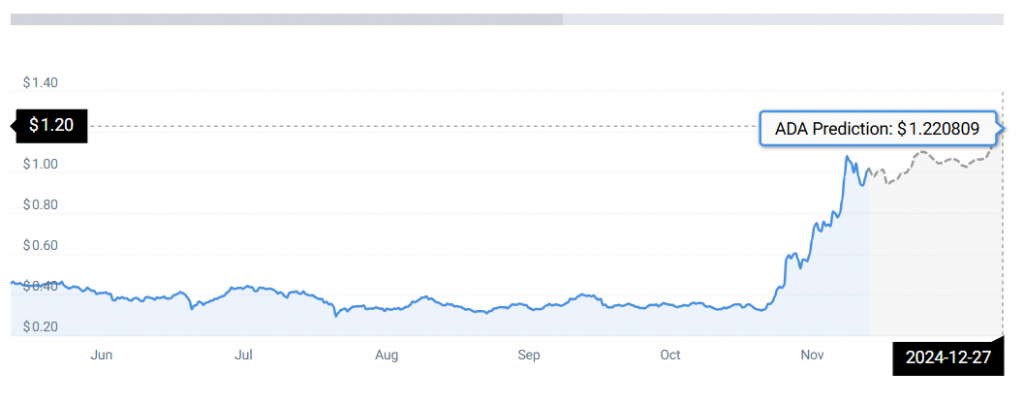
Per CoinCodex, Cardano is currently sitting at $1.02, up 5% in the last 24 hours. The token is all set to explore another high in December, possibly trading at a new price spot of $1.22 by December end of 2024.

Image: CoinCodex

“According to our current Cardano price prediction, the price of Cardano is predicted to rise by 19.29% and reach $ 1.220809 by December 27, 2024. Per our technical indicators, the current sentiment is Bullish while the Fear & Greed Index is showing 75 (Greed). Cardano recorded 21/30 (70%) green days with 40.29% price volatility over the last 30 days. Based on the Cardano forecast, it’s now a good time to buy Cardano.”

Also Read: Walmart Stock a Buy at ATH: Can WMT Build on 72% Surge?


Source link

28 11, 2024

GBP/USD Forecast Today 28/11: Tests Key Resistance (Video)

By |2024-11-28T12:49:18+02:00November 28, 2024|Forex News, News|0 Comments

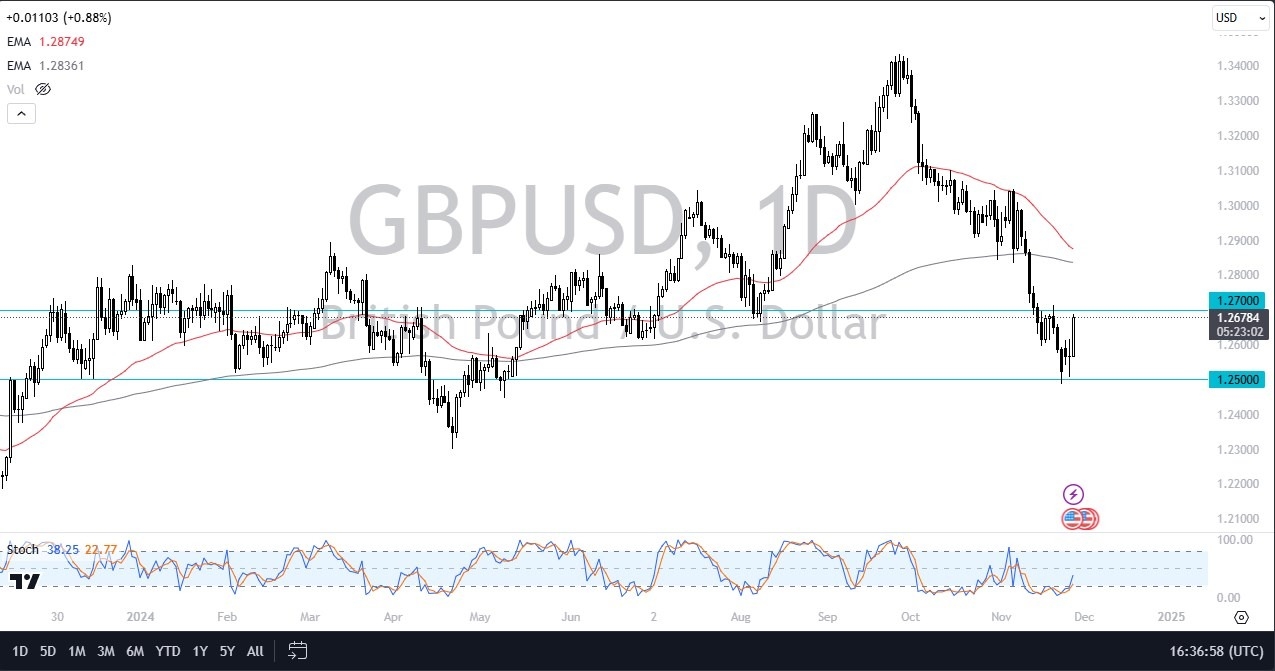
  • The British pound has rallied rather significantly during the day, gaining 0.9% by midday in North America.
  • It’ll be interesting to see what happens next because the 1.27 level above is what I consider to be a significant barrier.
  • If we can break above the 1.27 level, it’s very possible that this pair goes another 200 pips to the upside.

On the other hand, if we fail here, then I think we just say that we are in a basing pattern. The US dollar has given up quite a bit of its gains over the last couple of days against multiple currencies, but I think part of this is just simply profit taking. After all, it was just about six weeks ago that we were all the way up at 1.3450 and dropped drastically, roughly a thousand pips.

What I’m seeing with the US dollar is around the world. It’s not just in the British pound, but it’s also worth noting that the British pound for the longest time had fared better than many other currencies against the green bag.

Levels That Matter

The rubber meets the road here at the 1.27 level, so I will be watching it. And if we can get above there, then that 1.29 level comes into focus. But we also have the 200 day EMA and the 50 day EMA in that range offering a bit of resistance. If the market were to turn around and fall below the 1.25 level, then the 1.23 level gets targeted. But right now, that doesn’t look very likely. What will be interesting to see is how this GBP/USD market behaves on Thursday, as it is Thanksgiving in the United States.

That might be part of what we are seeing here is that New York traders are covering shorts so that they don’t get caught away from their desk with a big loser. So only time will tell on that, but I am watching these levels. There are some very clear levels in cable that will come to fruition here and influence where we go next. 

Ready to trade our daily GBP/USD Forex forecast? Here’s some of the best forex broker UK reviews to check out. 

Source link

28 11, 2024

Citicoline Supplement Market Size, Share

By |2024-11-28T12:47:25+02:00November 28, 2024|Dietary Supplements News, News|0 Comments


Citicoline Supplement, also known as CDP-choline, is a naturally occurring compound that plays a crucial role in supporting brain health and cognitive function. It is a precursor to acetylcholine, a neurotransmitter essential for memory, attention, and learning. Citicoline is also involved in the synthesis of phospholipids, which are key components of cell membranes, especially in brain cells.

The increasing demand for citicoline supplements is being supported by government initiatives focused on improving mental health and brain health. For instance, in 2022, the U.S. government allocated USD 8 billion for research on mental health and neurological disorders, including dementia and Alzheimer’s disease, through agencies like the National Institute on Aging (NIA).
Citicoline Supplement Market Size, Share

This funding has indirectly boosted the citicoline market, as research continues to explore its potential in neuroprotection and cognitive enhancement.

In addition, the citicoline market has benefited from mergers and acquisitions in the nutraceutical space. A notable example in 2023 was the acquisition of Cerebra, a company specializing in citicoline-based supplements, by Hollis Nutrition.

This move expanded Hollis Nutrition’s portfolio in the cognitive health market. Investments in R&D for cognitive health are projected to grow at a CAGR of 6.5% through 2024, further driving the development of new citicoline formulations and increasing availability across global markets.

Import-export activities have also facilitated market growth. From 2021 to 2023, the global export of citicoline from China increased by 8.3% annually, with the U.S. and Europe being the primary importers. This trend reflects the rising demand for citicoline supplements in these regions, where the mental health and wellness market continues to expand.

Key Takeaways

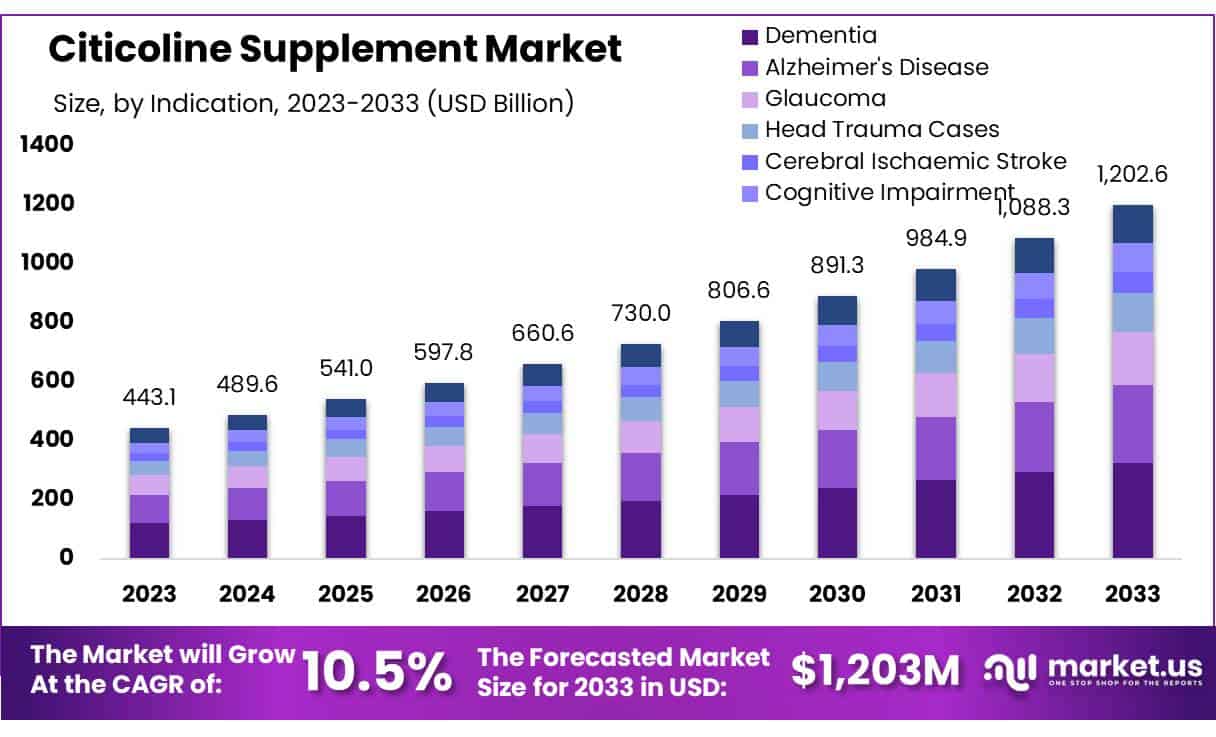
  • Citicoline Supplement Market size is expected to be worth around USD 1202.6 Mn by 2033, from USD 443.1 Mn in 2023, growing at a CAGR of 10.5%.
  • Alzheimer’s Disease held a dominant market position in the citicoline supplement sector, capturing more than a 27.8% share.
  • Oral administration held a dominant market position, capturing more than a 62.5% share.
  • Capsules held a dominant market position, capturing more than a 37.6% share of the citicoline supplement market.
  • Sodium Citicoline held a dominant market position, capturing more than a 58.6% share.
  • Adult held a dominant market position, capturing more than a 58.7% share of the citicoline supplement market.
  • Personal Wellness held a dominant market position, capturing more than a 28.6% share.
  • Retail Pharmacies/Drug Stores held a dominant market position, capturing more than a 43.4% share.
  • North America dominated the Citicoline Supplement market, capturing a significant 39.8% share, valued at approximately USD 172.8 million.

By Indication

In 2023, Alzheimer’s Disease held a dominant market position in the citicoline supplement sector, capturing more than a 27.8% share. This can be attributed to the growing prevalence of Alzheimer’s globally and the increasing demand for supplements that may help slow cognitive decline. Citicoline is widely recognized for its potential neuroprotective properties, and research has shown it can improve memory and cognitive function in patients with Alzheimer’s.

As of 2023, approximately 55 million people worldwide are living with dementia, with Alzheimer’s being the most common form, contributing to the high demand for treatments and supplements in this category.

Dementia also represents a significant portion of the market, driven by the aging population. With the number of people affected by dementia expected to double by 2050, citicoline’s role in supporting cognitive health has become increasingly important. Citicoline is believed to enhance neuronal communication and may help manage symptoms of dementia, contributing to its growing adoption.

Cognitive Impairment accounts for another large share of the market. This segment is expanding as awareness about early cognitive decline and memory-related issues rises, particularly in younger adults and those at risk of neurodegenerative conditions. Citicoline is commonly used to improve focus, attention, and memory, which is appealing to individuals seeking cognitive enhancement.

Head Trauma Cases and Cerebral Ischaemic Stroke are also key areas where citicoline has shown potential therapeutic benefits. Studies suggest that citicoline can aid in brain recovery and reduce the damage caused by brain trauma and ischemic strokes, contributing to its rising demand in neurorehabilitation. Glaucoma, while a smaller segment, is gaining attention due to citicoline’s potential role in protecting optic nerve health and preventing further vision loss.

By Route of Administration

In 2023, Oral administration held a dominant market position, capturing more than a 62.5% share of the citicoline supplement market. Oral supplements, typically in the form of capsules, tablets, or powders, are the most widely used method due to their convenience, ease of use, and widespread availability.

Consumers prefer oral citicoline supplements because they can be easily incorporated into daily health regimens without the need for medical supervision. As of 2023, the global popularity of oral cognitive health supplements has increased, driven by rising awareness about memory enhancement and neuroprotective benefits.

The Intravenous (IV) route of administration is less common but is used in specific medical settings, particularly for patients with severe neurological conditions or those recovering from stroke or head trauma. While this method is more invasive and typically administered in a healthcare facility, it is known to deliver citicoline directly into the bloodstream, offering rapid therapeutic effects. The demand for intravenous citicoline is expected to grow steadily, especially in hospitals and rehabilitation centers, though it remains a niche segment compared to oral supplements.

Intramuscular administration is also used in clinical settings, often as a way to deliver citicoline when oral consumption is not possible or practical. This route is primarily used for targeted therapeutic interventions, particularly in cases of cognitive impairment or neurological injury. However, this method represents a smaller share of the market compared to oral administration due to its need for medical supervision and specialized training.

Drops, typically used for ophthalmic purposes such as glaucoma treatment, make up a smaller portion of the market. This method allows citicoline to be delivered directly to the affected area, supporting optic nerve health and preventing further vision loss. The drops segment remains niche but is gaining attention in the medical community for specific applications related to vision and neurological health.

By Product

In 2023, Capsules held a dominant market position, capturing more than a 37.6% share of the citicoline supplement market. Capsules are the preferred form due to their convenience, easy dosage, and consumer familiarity.

They are widely available in pharmacies and health stores, making them the go-to choice for individuals looking to support cognitive function and brain health. The popularity of capsules is driven by their ease of use and the growing demand for nootropic supplements aimed at improving memory, focus, and overall mental clarity.

Tablets also make up a significant portion of the market, though they represent a slightly smaller share compared to capsules. Tablets are similarly convenient and easy to consume, though they often require larger packaging or multiple doses per day. The market for tablets is driven by consumer preferences for solid dosage forms that are portable and can be taken without the need for water or other aids.

The Powder segment is gaining traction due to its flexibility in dosage and the ability to be mixed with beverages or foods. While powder supplements generally hold a smaller share of the market compared to capsules and tablets, they appeal to a segment of consumers who prefer customizable dosages or those who may have difficulty swallowing pills. The powder format is also popular among athletes and health-conscious individuals who mix it with protein shakes or smoothies.

Eye Drops represent a niche product category, mainly used for ocular health, particularly in conditions like glaucoma. Citicoline eye drops are believed to support optic nerve function and may help in preventing further vision deterioration. Though the eye drop segment holds a smaller share of the market, it is growing due to increasing interest in citicoline’s benefits for eye care.

Finally, Injection forms of citicoline are used primarily in clinical settings, particularly for patients recovering from strokes, head trauma, or neurological conditions. This route of administration offers more immediate effects but is less common due to its need for medical supervision. As a result, injections account for a smaller portion of the overall market.

By Form

In 2023, Sodium Citicoline held a dominant market position, capturing more than a 58.6% share of the citicoline supplement market. Sodium citicoline, also known as disodium cytidine-5′-diphosphocholine, is a water-soluble form of citicoline that is commonly used in dietary supplements due to its superior bioavailability and effectiveness.

This form is widely preferred in both oral and intravenous formulations because it is more stable and easier to absorb into the bloodstream compared to other forms. The demand for sodium citicoline has been driven by its proven cognitive benefits, particularly in enhancing memory and supporting brain function, which has led to its increased use in supplements aimed at individuals with cognitive impairments and neurological conditions.

Citicoline Base, on the other hand, holds a smaller share of the market but remains relevant in specific applications. Citicoline base is the raw form of citicoline and is typically used in more specialized formulations, especially in research or pharmaceutical-grade products.

Although it is less commonly found in over-the-counter dietary supplements, citicoline base is valued for its pure, unaltered chemical structure, which can be important for medical and clinical use. However, due to its less favorable solubility and bioavailability compared to sodium citicoline, its use in consumer products is limited.

By Age Group

In 2023, Adult held a dominant market position, capturing more than a 58.7% share of the citicoline supplement market. This is primarily driven by the growing consumer interest in cognitive health and mental performance. Adults, particularly those in their 30s to 60s, are increasingly seeking supplements like citicoline to improve memory, focus, and overall brain function.

Additionally, the rising awareness of neurodegenerative conditions and the desire to enhance mental clarity in a fast-paced, stress-filled environment has further fueled the demand for citicoline among adults. This age group is also more likely to use citicoline as part of a broader wellness or nootropic regimen, contributing to its larger share of the market.

The Pediatric segment, while smaller, is also an important niche. Citicoline is sometimes used for children with cognitive development challenges, ADHD, or other neurological conditions under medical supervision. However, the use of citicoline in pediatric care is more restricted due to the need for careful dosage and monitoring, limiting its broader adoption in this age group. Despite this, the market for pediatric use is expected to see gradual growth as more research supports its safety and efficacy for cognitive enhancement in children.

The Geriatric segment is steadily growing, capturing a significant portion of the citicoline supplement market. As the global population ages, the demand for products that support cognitive function, memory, and neuroprotection increases.

Citicoline is particularly popular among older adults who are looking to combat age-related cognitive decline, Alzheimer’s, and dementia. This age group is expected to continue driving demand for citicoline supplements as concerns about cognitive health and mental aging rise.

By Application

In 2023, Personal Wellness held a dominant market position, capturing more than a 28.6% share of the citicoline supplement market. This can be attributed to the increasing consumer focus on mental health, cognitive performance, and overall brain function.

Citicoline is commonly used by individuals seeking to enhance memory, focus, and mental clarity, making it a popular choice for those looking to improve their cognitive abilities without prescription medication. The growing awareness of brain health and the rise in demand for nootropic supplements are key factors driving the significant share of the personal wellness segment.

Sports Nutrition is another important application segment for citicoline supplements, capturing a growing share of the market. Athletes and fitness enthusiasts use citicoline to support mental focus, improve endurance, and reduce mental fatigue during training or competition.

As a supplement, citicoline is believed to enhance cognitive performance, which can be particularly beneficial during intense physical activity. The global sports nutrition market is expanding, and as more athletes recognize the cognitive benefits of citicoline, its use in this sector is expected to continue growing.

In the Treatment segment, citicoline is widely used as a therapeutic option for various neurological conditions. Glaucoma, Stroke, and Alzheimer’s disease represent significant areas of application. For instance, citicoline has been found to help protect the optic nerve in glaucoma patients and support brain recovery after a stroke.

It also shows promise in slowing cognitive decline in Alzheimer’s disease, making it an important part of treatments for these conditions. As the global population ages, the demand for treatments addressing cognitive impairment and brain health will continue to drive the use of citicoline in medical settings.

Finally, Bipolar Depression and Other applications, including research purposes and general brain health, contribute to the overall growth of the market. Citicoline has been investigated for its potential benefits in managing mood disorders, particularly in bipolar depression, though more research is needed to fully confirm its effectiveness in this area.

Citicoline Supplement Market ShareCiticoline Supplement Market Share

By Distribution Channel

In 2023, Retail Pharmacies/Drug Stores held a dominant market position, capturing more than a 43.4% share of the citicoline supplement market. This segment continues to lead due to the widespread accessibility and convenience of retail pharmacies, which are typically the first point of contact for consumers seeking over-the-counter supplements.

Pharmacies and drugstores are well-established channels for purchasing health products, including cognitive health supplements like citicoline. The large presence of these outlets, combined with the trust consumers place in them for health-related products, contributes significantly to the growth of this distribution channel.

Online Sales have seen rapid growth in recent years, driven by the increasing popularity of e-commerce and consumer preference for shopping from home. This segment is expanding quickly and is expected to continue gaining market share as more consumers opt for the convenience of online shopping.

In 2023, online sales accounted for a significant portion of the market, offering consumers access to a wide range of citicoline supplements from various brands. The ease of purchasing, along with the ability to compare prices and read reviews, has made online retail a key channel for citicoline products.

Hospital Pharmacies play a crucial role in the distribution of citicoline, especially for patients seeking medical-grade supplements or those prescribed citicoline for conditions like stroke recovery or Alzheimer’s disease. While hospital pharmacies account for a smaller share compared to retail and online sales, they are essential in providing citicoline in clinical and medical settings. These pharmacies cater to specific patient needs, ensuring the safe use of citicoline under professional supervision.

Specialty Stores, including health food stores and nutrition shops, are also contributing to market growth, though their share remains smaller than that of pharmacies or online channels. These stores often focus on health and wellness products and are popular among consumers looking for targeted supplements. The growing demand for brain health supplements has made citicoline a key product in these specialty outlets.

Key Market Segments

By Indication

  • Dementia
  • Alzheimer’s disease
  • Glaucoma
  • Head Trauma Cases
  • Cerebral Ischaemic Stroke
  • Cognitive Impairment
  • Others

By Route of Administration

  • Oral
  • Intravenous
  • Intramuscular
  • Drops

By Product

  • Capsules
  • Tablets
  • Powder
  • Eye Drops
  • Injection

By Form

  • Citicoline Base
  • Sodium Citicoline

By Age Group

By Application

  • Sports Nutrition
  • Personal Wellness
  • Treatment
  • Glaucoma
  • Stroke
  • Alzheimer disease
  • Bipolar Depression
  • Others

By Distribution Channel

  • Retail Pharmacies/Drug Stores
  • Hospital Pharmacies
  • Specialty Stores
  • Online Sales
  • Others

Drivers

Growing Awareness of Cognitive Health and Brain Function

One of the major driving factors for the Citicoline Supplement market is the increasing global awareness of cognitive health and brain function. With a rapidly aging population and rising concerns over cognitive decline, mental health, and neurodegenerative diseases, citicoline has emerged as a popular supplement choice for improving brain health.

According to the World Health Organization (WHO), the global population aged 60 years and older is expected to increase from 1 billion in 2020 to 1.4 billion by 2030. As this demographic grows, so does the demand for products that support cognitive function and help manage conditions like Alzheimer’s disease, dementia, and age-related cognitive decline.

Citicoline, known for its neuroprotective properties, has gained traction among consumers looking for ways to enhance memory, focus, and mental clarity, contributing to its growing popularity.

Rising Prevalence of Neurological Disorders

The rise in neurological disorders such as Alzheimer’s disease, stroke, and Parkinson’s disease is also a key driver for the citicoline supplement market. The Alzheimer’s Association reports that approximately 6.7 million Americans aged 65 and older are living with Alzheimer’s, a number expected to increase to 12.7 million by 2050.

Citicoline has shown potential in supporting brain health and slowing cognitive decline, particularly in Alzheimer’s and stroke patients. Studies have demonstrated that citicoline supplementation can enhance brain function, improve memory retention, and aid in the recovery of cognitive functions post-stroke.

As more people look for natural ways to support brain health and manage neurological conditions, citicoline’s role in these therapeutic areas is likely to continue growing. This trend is supported by increasing research into citicoline’s effectiveness in treating various cognitive impairments.

Government Initiatives and Research Support

Government initiatives and increased funding for brain health research also play a significant role in driving the growth of the citicoline supplement market. For example, the National Institutes of Health (NIH) in the U.S. has been investing in research on cognitive health and neurodegenerative diseases, with annual funding reaching over $2.8 billion for Alzheimer’s disease research alone.

These efforts are driving greater awareness of supplements like citicoline as potential therapeutic options. Additionally, regulatory bodies in various regions are becoming more supportive of dietary supplements that promote brain health, leading to increased trust and adoption among consumers. Governments and public health organizations are also supporting the development of guidelines and recommendations for brain health, further fueling demand for citicoline-based products as part of an overall wellness routine.

Expansion of the Sports Nutrition

The expansion of the sports nutrition market is another significant driver for citicoline supplements. Athletes and fitness enthusiasts increasingly turn to cognitive enhancers to improve focus, memory, and mental clarity during physical activities. Citicoline, known for its ability to enhance mental performance and reduce mental fatigue, has become a popular ingredient in many sports supplements.

According to the International Sports Nutrition Society, the global sports nutrition market was valued at $46.5 billion in 2022, and is expected to grow at a compound annual growth rate (CAGR) of 8.4% from 2023 to 2030. Citicoline is often used in combination with other supplements to enhance cognitive function, offering a competitive edge to athletes. As the demand for sports and performance-enhancing supplements grows, citicoline’s popularity in this sector is likely to rise, further driving market growth.

Restraints

High Cost and Limited Accessibility

One of the major restraining factors for the Citicoline Supplement market is the high cost and limited accessibility of citicoline-based products. Despite the growing demand for cognitive health supplements, citicoline products are often priced higher than other common dietary supplements, such as vitamins and minerals.

According to data from the National Institutes of Health (NIH), the cost of cognitive enhancers like citicoline can range from $20 to $50 per bottle, depending on the brand, formulation, and dosage. For many consumers, particularly those in lower-income brackets, the relatively high cost of citicoline supplements limits their ability to purchase these products regularly. The price is particularly prohibitive in emerging markets, where disposable income is lower and consumers may prioritize basic needs over cognitive health supplements.

Moreover, in some regions, the availability of citicoline supplements remains limited. While they are widely available in developed countries like the United States and European nations, many developing regions lack easy access to such supplements.

A report by the World Bank indicates that nearly 40% of the global population lives on less than $5.50 per day, which means that many consumers cannot afford non-essential health supplements. This discrepancy in accessibility and affordability can slow the market’s growth, especially in developing regions like Latin America, parts of Asia, and Sub-Saharan Africa.

Lack of Consumer Awareness and Education

Another factor that restrains the market for citicoline supplements is the lack of consumer awareness about the benefits and uses of citicoline. While citicoline is recognized for its cognitive-enhancing properties, it is not as widely known as other supplements like omega-3 fatty acids, ginseng, or ginkgo biloba.

According to the National Institute on Aging (NIA), many consumers remain unaware of how citicoline can support brain health, enhance memory, and assist in recovering from stroke or other cognitive impairments. Despite growing awareness around cognitive health and mental wellness, citicoline still faces a significant knowledge gap among the general public.

In fact, only 30% of U.S. adults are aware of nootropic supplements like citicoline, according to a study published by the U.S. Food and Drug Administration (FDA). This limited awareness restricts consumer adoption, especially when competing with better-known supplements, such as caffeine or vitamins, which are seen as more accessible and effective.

Efforts to bridge this knowledge gap through marketing, educational campaigns, and public health initiatives could help drive growth in the market. However, until this barrier is addressed, the overall demand for citicoline supplements may remain limited to a smaller, more informed consumer base, hindering widespread adoption.

Regulatory and Safety Concerns

Regulatory concerns also present a challenge for the citicoline supplement market. While citicoline is generally recognized as safe (GRAS) by regulatory bodies such as the U.S. Food and Drug Administration (FDA), the lack of standardization in dosages and formulations can create consumer hesitation. Citicoline supplements vary widely in terms of concentration and effectiveness, leading to uncertainty regarding the optimal dosage and long-term safety.

Furthermore, certain countries have more stringent regulations when it comes to the approval and sale of dietary supplements. For example, in the European Union, the sale of citicoline supplements requires specific regulatory approval, which can be a lengthy and costly process. This can limit the ability of manufacturers to enter certain markets and restrict consumer access to citicoline-based products.

According to the European Medicines Agency (EMA), the approval process for novel supplements can take up to 2 to 3 years, during which time the product remains unavailable to potential consumers.

As a result, regulatory hurdles and safety concerns can slow market expansion, especially in regions with complex approval processes and conservative health policies. Manufacturers may also face higher production and marketing costs, which could further contribute to higher retail prices.

Competition from Other Cognitive Enhancers

The competition from other cognitive enhancers and natural supplements is another significant restraint for the citicoline supplement market. In the nootropic and cognitive health space, there are several alternatives to citicoline, such as ginkgo biloba, Panax ginseng, omega-3 fatty acids, and Bacopa monnieri. These alternatives are often marketed at lower price points and are more widely recognized by consumers.

For instance, the global market for ginkgo biloba, one of the most popular herbal supplements for cognitive function, was valued at $1.5 billion in 2021 and is expected to grow at a CAGR of 7.8% from 2022 to 2028.

This level of competition means that citicoline may struggle to maintain its market share, particularly in regions where consumers are more familiar with other supplements or are seeking cheaper alternatives. As more natural supplements enter the market, the presence of citicoline as a premium product may become less prominent, limiting its potential growth.

Opportunity

Increasing Demand for Cognitive Health and Brain-Enhancing Supplements

One of the major growth opportunities for the Citicoline Supplement market is the rising demand for cognitive health and brain-enhancing products. As the global population ages, the prevalence of cognitive disorders, such as Alzheimer’s disease, dementia, and age-related memory loss, is increasing, driving the need for supplements that support brain function.

According to the World Health Organization (WHO), the global population of people aged 60 and older is expected to nearly double, from 1 billion in 2020 to 1.4 billion by 2030. With this demographic shift, the demand for cognitive health supplements, including citicoline, is set to grow. Citicoline, known for its neuroprotective properties, is increasingly sought after for its potential benefits in supporting brain health, improving memory, and slowing the progression of cognitive decline.

In addition, rising public awareness of the importance of brain health and mental wellness has fueled the growth of the nootropic supplement market. Consumers are becoming more proactive about maintaining cognitive function throughout their lives, not just as they age.

According to the National Institute on Aging (NIA), approximately 5.8 million Americans aged 65 and older are living with Alzheimer’s disease, a number projected to reach 14 million by 2060. Citicoline’s growing recognition as an effective supplement to prevent or manage cognitive decline provides a significant growth opportunity for the market.

Expanding Applications in Sports Nutrition and Mental Performance

The sports nutrition market is another area where citicoline supplements are gaining momentum, offering a major growth opportunity. Citicoline is increasingly used by athletes and fitness enthusiasts to improve cognitive function, reduce mental fatigue, and enhance focus during physical activities.

Citicoline is being added to sports supplements to support mental clarity and cognitive performance, especially during demanding physical exercises. This growth is driven by a growing awareness of the importance of mental focus alongside physical performance in sports. As athletes and individuals in the fitness industry continue to recognize the benefits of citicoline, the demand for brain-boosting supplements in the sports nutrition space is expected to rise.

The mental performance benefits of citicoline have also attracted attention in high-performance settings, such as competitive gaming and eSports. With the growth of eSports as a global industry, the demand for supplements that enhance cognitive function, focus, and decision-making abilities is on the rise.

Government Initiatives and Support for Cognitive Health Research

Government initiatives and increasing funding for cognitive health research represent another significant opportunity for the citicoline supplement market. For instance, the U.S. National Institutes of Health (NIH) allocates a substantial portion of its budget to research on neurodegenerative diseases, including Alzheimer’s and Parkinson’s disease.

In 2022, the NIH invested over $2.8 billion in Alzheimer’s disease research alone, underscoring the growing focus on brain health. Citicoline, as a neuroprotective agent, has attracted attention in both academic and clinical research settings, where its potential to aid in stroke recovery, improve memory, and support brain health is being extensively studied. As government funding in this area continues to rise, the credibility and demand for citicoline supplements are likely to increase.

Trends

Rising Demand for Cognitive Health Supplements

One of the latest trends in the citicoline supplement market is the growing consumer focus on cognitive health and mental wellness. As the global population continues to age, cognitive decline and related conditions like Alzheimer’s disease and dementia are becoming significant public health concerns.

According to the World Health Organization (WHO), around 55 million people worldwide are living with dementia, and this number is expected to increase to 78 million by 2030. This growing health burden has spurred a surge in demand for supplements that support brain health, with citicoline emerging as one of the most recognized nootropics for improving memory and cognitive function.

Citicoline is increasingly being sought after not only by older adults looking to preserve their cognitive abilities but also by younger individuals interested in enhancing focus, concentration, and mental clarity. In response to this demand, citicoline-based supplements are becoming more widely available across various retail and online platforms.

Integration of Citicoline in Sports and Fitness Nutrition

Another emerging trend is the increasing integration of citicoline into the sports and fitness nutrition sector. Traditionally, cognitive enhancers like citicoline have been associated with improving brain health in older adults, but recent developments show a rising interest in mental performance among athletes and fitness enthusiasts.

The global sports nutrition market was valued at $46.5 billion in 2022 and is projected to grow at a CAGR of 8.4% by 2030. This market growth is driven by the increasing focus on optimizing physical performance through mental focus, improved decision-making, and enhanced cognitive clarity. Citicoline has been shown to support mental alertness and reduce fatigue, which makes it an attractive ingredient for supplements targeting athletes, particularly in endurance sports, gaming, and high-intensity training.

A study published in the Journal of the International Society of Sports Nutrition demonstrated that citicoline supplementation improved reaction time and cognitive processing during exercise, making it a popular choice among professional athletes. As the demand for mental clarity and cognitive support grows within the sports and fitness sector, citicoline’s role as a performance enhancer is becoming more established, presenting new opportunities for market expansion.

Shift Toward Natural and Plant-Based Supplements

A significant trend in the citicoline supplement market is the shift toward natural and plant-based ingredients, driven by consumer preference for more holistic, sustainable, and ethical products. There is an increasing consumer inclination toward supplements derived from natural sources, as opposed to synthetic alternatives.

Citicoline, being a naturally occurring compound in the body, fits well within this growing trend of natural cognitive enhancers. This demand for natural alternatives is particularly strong in regions like North America and Europe, where consumers are increasingly concerned about the sourcing and sustainability of the ingredients used in dietary supplements.

Additionally, as more people turn to plant-based diets and prioritize health-conscious choices, the appeal of natural supplements like citicoline increases. Manufacturers are responding to this trend by promoting citicoline supplements as a natural option for enhancing brain health, leveraging marketing strategies that emphasize the natural origin and benefits of the ingredient.

Increased Research and Clinical Trials Supporting Citicoline Efficacy

There is also a growing trend of clinical research and scientific validation supporting the benefits of citicoline for cognitive health, which is helping to drive its adoption across both medical and consumer markets.

Research institutions and pharmaceutical companies are increasingly investing in studies to explore the full potential of citicoline for treating a range of neurological conditions, including stroke recovery, cognitive impairment, and traumatic brain injury.

The National Institutes of Health (NIH) allocated $200 million in 2021 for research into Alzheimer’s and other cognitive diseases, with a portion of this funding supporting studies on citicoline’s efficacy in improving brain function.

Regional Analysis

In 2023, North America dominated the Citicoline Supplement market, capturing a significant 39.8% share, valued at approximately USD 172.8 million. This region’s strong market position is largely driven by the high prevalence of cognitive health issues, such as Alzheimer’s disease and dementia, particularly among the aging population.

The United States, in particular, holds the largest share of the market, with an increasing number of consumers turning to nootropic supplements to support cognitive function. Moreover, the presence of major supplement manufacturers and well-established healthcare infrastructure further contributes to North America’s dominance.

The market is projected to continue growing in this region due to rising consumer awareness, growing mental health concerns, and ongoing research into the effectiveness of citicoline for cognitive disorders.

In Europe, the Citicoline Supplement market is also experiencing robust growth, accounting for approximately 28.6% of the global market in 2023. The demand for cognitive health products is particularly high in countries such as the UK, Germany, and France, where aging populations are increasingly seeking natural supplements to improve brain function.

The European market benefits from strong healthcare regulations that support the use of supplements backed by scientific research. Additionally, government-funded initiatives focused on aging-related diseases like Alzheimer’s and dementia are contributing to the growth of the cognitive supplement market.

Asia Pacific is projected to be one of the fastest-growing regions, driven by the increasing adoption of health supplements and a rising middle class in countries like China, India, and Japan. The market share of this region is expected to rise significantly, with a growing focus on brain health and wellness, especially in Japan, where cognitive health concerns are more prominent.

Latin America and Middle East & Africa represent smaller but growing markets for citicoline supplements. Rising healthcare awareness and an increasing focus on wellness and preventive health are expected to boost the market in these regions over the coming years.

Citicoline Supplement Market Regional AnalysisCiticoline Supplement Market Regional Analysis

Key Regions and Countries

  • North America
  • Europe
    • Germany
    • France
    • The UK
    • Spain
    • Italy
    • Rest of Europe
  • Asia Pacific
    • China
    • Japan
    • South Korea
    • India
    • Australia
    • Rest of APAC
  • Latin America
    • Brazil
    • Mexico
    • Rest of Latin America
  • Middle East & Africa
    • South Africa
    • Saudi Arabia
    • UAE
    • Rest of MEA

Key Players Analysis

The Citicoline Supplement Market is highly competitive, with numerous key players contributing to its growth and innovation. Prominent companies such as Alfa Aesar, Biochemix Healthcare Pvt. Ltd., and Double Wood LLC are leading the market with a strong focus on product development and expansion. Alfa Aesar, known for its extensive portfolio of chemical and biochemical products, plays a critical role in providing high-quality citicoline for various supplements, supporting both consumer wellness and pharmaceutical applications.

Biochemix Healthcare and Double Wood LLC are increasingly popular among consumers, with their focus on enhancing cognitive health and memory improvement, further driving the market’s growth. EZ Melts and Jarrow Formulas, with their strong distribution networks, are expanding their citicoline supplement offerings in the growing nootropic and wellness categories.

Additionally, companies like Merck KGaA, Kyowa Hakko Bio Co., Ltd., and Life Extension are key players in the global citicoline supplement market, leveraging their strong research and development (R&D) capabilities. Merck KGaA, with a diversified portfolio, has made significant strides in cognitive health, providing citicoline as part of its broader health solutions.

Kyowa Hakko Bio, a leader in amino acids and other nutraceuticals, has enhanced the market’s potential by focusing on high-quality citicoline formulations. Life Extension and Piping Rock Health Products have built strong consumer trust by offering citicoline-based supplements known for their efficacy and quality.

The market also includes Jarrow Formulas, Swanson, and Vitabiotics Ltd., which are continuously innovating and expanding their product lines to cater to both mainstream consumers and niche markets, such as athletes and aging populations.

These companies, along with others like Grupo Ferrer Internacional, S.A. and NuerAxon Pharma Inc., play a pivotal role in shaping the future of the citicoline supplement industry by investing in R&D, strategic partnerships, and marketing efforts that ensure widespread adoption and consumer awareness of citicoline’s cognitive benefits.

Top Key Players in the Market

  • Alfa Aesar
  • Biochemix Healthcare Pvt. Ltd.
  • Century Pharma
  • Cepham, Inc.
  • CHEMO BIOLOGICAL
  • Double Wood LLC
  • EZ Melts
  • Grupo Ferrer Internacional, S.A
  • HARBIN PHARMACEUTICAL GROUP
  • Healthy Origins
  • HL-Pharma US
  • Instas Pharmaceuticals Ltd.
  • Invision Medi Sciences
  • Jarrow Formulas, Inc.
  • Kimia Biosciences
  • Kyowa Hakko Bio Co., Ltd
  • Life Extension
  • Merck KGaA
  • NuerAxon Pharma Inc.
  • Piping Rock Health Products, LLC
  • Rakshit Drugs Pvt. Ltd.
  • Relentless Improvement LLC
  • RPG Life Sciences Ltd
  • Swanson
  • UNION KOREA PHARM CO LTD
  • Vitabiotics Ltd
  • Wellona Pharma Private Limited

Recent Developments

As of 2023, Alfa Aesar reported revenues of USD 40 billion across all business segments under Thermo Fisher Scientific, with a notable increase in demand for nutraceutical ingredients such as citicoline, reflecting the growing global interest in cognitive health.

In 2023, Biochemix Healthcare recorded an estimated USD 15 million in revenues from its cognitive health products, with citicoline supplements representing a significant portion of this figure.

Report Scope


Source link

28 11, 2024

XRP Price of $20 Possible, Says Analyst, If XRP Reclaims Its 2017 Peak Against BTC

By |2024-11-28T12:45:41+02:00November 28, 2024|Crypto News, News|0 Comments

A notable analyst expects the XRP price to reach a two-digit figure if the altcoin recaptures its 2017 peak against Bitcoin.

The crypto market appears to be in a recovery phase, with XRP capitalizing on the ongoing rebound to reclaim pivotal support levels. After dropping to a low of $1.28 on Tuesday, XRP has since recovered the $1.3 and $1.4 psychological levels, now looking to solidify its position above $1.5.

XRP Breaches Descending Trendline Against Bitcoin 

Amid this push, the altcoin has sustained its upsurge against Bitcoin, a trend that began since Nov. 12, according to market data. Notably, this bullish trend has triggered optimism that XRP could outperform BTC in this bull run, with analyst CryptoBull predicting an ambitious price target if it can reclaim its 2017 BTC peak.

Data confirms that XRP had performed poorly against Bitcoin since January 2018, when it retraced from the $3.31 all-time high. The XRPBTC chart shows a descending trendline suggesting that XRP prices against Bitcoin plummeted rapidly over the past seven years.

XRP Price of  Possible, Says Analyst, If XRP Reclaims Its 2017 Peak Against BTC
XRP Price Against Bitcoin

An attempt to breach this trendline occurred last July, but XRP was unsuccessful due to the drop from the $0.93 high at the time. Now, XRP appears to have breached the trendline, having gained by a massive 111% against Bitcoin in November alone. 

However, XRP must close this month above the trendline to confirm the breakout. Meanwhile, despite the latest uptick, CryptoBull believes XRP still has further uptrend against Bitcoin. According to his latest analysis, the XRP market is still in the early phase of its bull run.

XRP Price Could Hit $20 if XRP Reclaims 2017 BTC Top

For context, despite the recent rally over Bitcoin, XRP still trades at a meager 0.00001544 BTC, miles below the peak price in early 2017. This is due to Bitcoin also witnessing an uptrend that recently saw it knock at the $100,000 price region.

CryptoBull expects XRP to continue in its uptrend until it reclaims the early 2017 peak. Notably, this peak stands at 0.0002454 BTC, a value XRP attained in May 2017 after months of underperformance. At its current price, XRP is still at least 1,500% away from this top.

If the altcoin records a similar rally to what the market witnessed in early 2017, CryptoBull’s analysis suggests that a push to the 0.0002454 BTC peak could bring XRP price to at least $20. Notably, with Bitcoin now trading for $95,800, a value of 0.00002454 BTC translates to $23 for the XRP price in dollar terms.

XRPBTC 1M Chart CryptoBullXRPBTC 1M Chart CryptoBull
XRPBTC 1M Chart | CryptoBull

Interestingly, the 2017 XRP price rally also began with a massive 308% gain against Bitcoin in March 2017. The XRP price sustained this push over the next three months. A repetition would see XRP outperform BTC in December 2024 and January 2025. At press time, XRP trades for $1.47, up 7% in the last 24 hours.

DisClamier: This content is informational and should not be considered financial advice. The views expressed in this article may include the author’s personal opinions and do not reflect The Crypto Basic opinion. Readers are encouraged to do thorough research before making any investment decisions. The Crypto Basic is not responsible for any financial losses.

Source link

28 11, 2024

Fashion Trends That Will Rule Winter 2024

By |2024-11-28T12:21:22+02:00November 28, 2024|Fitness News, News|0 Comments


As the countdown to Christmas and the New Year begins, it’s time to explore the exciting fashion trends that will dominate the 2024 Winter season. From cozy fabrics to bold makeup choices and chic hairstyles, here’s your guide to looking fabulous during the festive season and beyond.

1- Fabrics and Clothing Trends

This winter, fashion enthusiasts should keep an eye out for these key trends while shopping

Luxurious Textures

  • Velvet Revival: Expect to see velvet in rich jewel tones, perfect for holiday parties and elegant evenings out.
  • Chunky Knits: Oversized sweaters and cardigans in thick, cozy yarns will be essential for casual comfort.
  • Faux Fur Accents: Look for coats, jackets, and accessories featuring faux fur trims for a touch of luxury.
Fashion Trends That Will Rule Winter 2024

Sustainable Fashion

  • Recycled Fabrics: Eco-friendly materials made from recycled plastics and organic fibers will gain popularity.
  • Vintage-Inspired Pieces: Retro styles with a modern twist, emphasizing sustainability through second-hand and upcycled clothing.

Color Palette

  • Earthy Tones: Warm browns, deep greens, and muted oranges will dominate casual wear.
  • Metallic Shine: Silver, gold, and rose gold accents will add glamour to evening attire.
  • Winter Pastels: Soft pinks, baby blues, and lavenders will offer a fresh take on winter colors.

Key Pieces

  • Statement Coats: Bold, oversized coats in bright colors or interesting textures will be a must-have.
  • Layered Looks: Combining different textures and lengths for a sophisticated, multi-dimensional appearance.
  • Wide-Leg Trousers: A continuation of the trend, paired with fitted tops for balance.

Disclaimer
The Content is not intended to be a substitute for professional medical advice, diagnosis, or treatment. Always seek the advice of your physician or other qualified health provider with any questions you may have regarding a medical condition.


Source link

28 11, 2024

DeFi Derivatives Protocol Cega Acquired, Platform to Sunset by End of Year

By |2024-11-28T12:11:16+02:00November 28, 2024|News, NFT News|0 Comments


Cega Finance, a decentralized finance (DeFi) protocol specializing in structured investments and exotic options, has announced its acquisition by an undisclosed “leading platform.”

Launched in June 2022 on Solana and later expanding to Ethereum and Arbitrum, Cega was the first to introduce exotic options to the DeFi ecosystem. Unlike standard options, exotic options allow for tailored strategies with additional conditions, enabling more customized financial solutions. Over its three-year tenure, Cega processed over $500 million in transaction volume and maintained an impeccable record of user fund security, according to Cega’s website.

In March 2023, Cega raised $5 million in funding at a valuation exceeding $60 million. Despite the acquisition, the identity of the acquiring platform and financial terms remain undisclosed. Cega emphasized that the move aligns with its mission to advance the evolution of DeFi derivatives, and that its new owner will “continue driving this vision forward.”

With the acquisition, Cega said that its product suite would sunset by the end of 2024, assuring users that withdrawal operations would continue seamlessly and directing inquiries to its Discord community.

Cega co-founder and CEO Arisa Toyosaki expressed optimism about the transition, stating that while the protocol in its current form is ending, its mission to push the boundaries of DeFi derivatives lives on. “You may see us popping back up somewhere else,” Toyosaki said.

Toyosaki was recently featured on an episode of Blockhead’s weekly podcast, Blockcast, discussing building accessible, lower-risk structured products for retail investors and Japan’s evolving crypto landscape.

Blockcast 46 | Cega Co-Founder Arisa Toyosaki Talks User-Friendly DeFi Options

Arisa Toyosaki, co-founder of DeFi protocol Cega, discusses building accessible, lower-risk structured products for retail investors and Japan’s evolving crypto landscape in this Blockcast episode.


Source link

28 11, 2024

XAG/USD tests $30.00, next barrier appears at nine-day EMA: Analytics and Market news from 28 November 2024 09:15

By |2024-11-28T12:07:28+02:00November 28, 2024|Forex News, News|0 Comments


  • Silver price tests a “throwback support” at the psychological level of $30.00.
  • The pair remains confined within a descending channel pattern, signaling a strong bearish bias.
  • A decisive break below the throwback support could drive the Silver price to approach its three-month low of $27.69.

Silver price (XAG/USD) extends its losses for the second successive day, trading around $30.00 per troy ounce during the European hours on Thursday. The daily chart analysis indicates a dominant bearish bias, with the pair consolidating within a descending channel pattern. Additionally, the 14-day Relative Strength Index (RSI) remains below the 50 mark, further supporting the bearish sentiment.

The XAG/USD pair continues to trade below the 14- and nine-day Exponential Moving Averages (EMA), reinforcing a bearish outlook and signaling weakening short-term price momentum. This points to limited buying interest and raises the likelihood of further price declines.

In terms of the upside, the Silver price finds a primary barrier around the nine-day Exponential Moving Average at $30.54, followed by the 14-day EMA at $30.78. Further resistance appears around the upper boundary of the descending channel at 31.20 level.

On the downside, the Silver price tests a “throwback support” at the psychological level of $30.00. A successful breach below this level could deepen bearish sentiment, potentially driving the asset price lower toward its three-month low of $27.69, followed by the descending channel’s lower boundary at $27.50.

XAG/USD: Daily Chart

Silver FAQs

Silver is a precious metal highly traded among investors. It has been historically used as a store of value and a medium of exchange. Although less popular than Gold, traders may turn to Silver to diversify their investment portfolio, for its intrinsic value or as a potential hedge during high-inflation periods. Investors can buy physical Silver, in coins or in bars, or trade it through vehicles such as Exchange Traded Funds, which track its price on international markets.

Silver prices can move due to a wide range of factors. Geopolitical instability or fears of a deep recession can make Silver price escalate due to its safe-haven status, although to a lesser extent than Gold’s. As a yieldless asset, Silver tends to rise with lower interest rates. Its moves also depend on how the US Dollar (USD) behaves as the asset is priced in dollars (XAG/USD). A strong Dollar tends to keep the price of Silver at bay, whereas a weaker Dollar is likely to propel prices up. Other factors such as investment demand, mining supply – Silver is much more abundant than Gold – and recycling rates can also affect prices.

Silver is widely used in industry, particularly in sectors such as electronics or solar energy, as it has one of the highest electric conductivity of all metals – more than Copper and Gold. A surge in demand can increase prices, while a decline tends to lower them. Dynamics in the US, Chinese and Indian economies can also contribute to price swings: for the US and particularly China, their big industrial sectors use Silver in various processes; in India, consumers’ demand for the precious metal for jewellery also plays a key role in setting prices.

Silver prices tend to follow Gold’s moves. When Gold prices rise, Silver typically follows suit, as their status as safe-haven assets is similar. The Gold/Silver ratio, which shows the number of ounces of Silver needed to equal the value of one ounce of Gold, may help to determine the relative valuation between both metals. Some investors may consider a high ratio as an indicator that Silver is undervalued, or Gold is overvalued. On the contrary, a low ratio might suggest that Gold is undervalued relative to Silver.


Source link

Go to Top