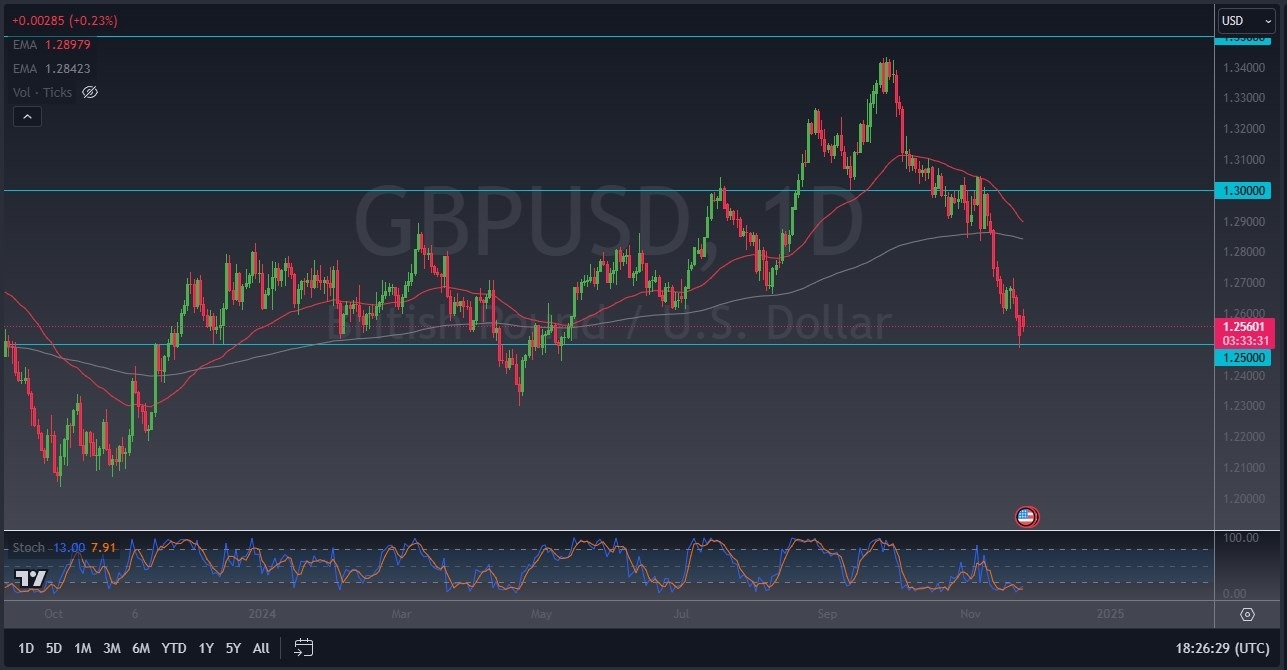
The British Pound has pulled back just a bit during the early hours on Monday as we continue to see a lot of noisy behavior.
With this being said, I think we’ve got a situation where the 1.25 level continues to offer significant support, an area that also has been very important multiple times.
If the GBP/USD market were to bounce from here again, then we could see a move to the 1.27 level, which is an area where we had bounced from and then came back below it, only to bounce back to the downside once we reached it again. In other words, there should be a lot of market memory in this area. If we can break the above there, then we have the possibility of going to look at the 200-day EMA.
On the Other Hand
On the other hand, if we were to break down below the 1.25 level, then it opens up the possibility of a move down to the 1.23 level, an area that I think will continue to be important as it also has a lot of market memory. All things being equal, the US dollar is by far one of the strongest currencies in the world right now. And while the British pound itself isn’t too bad, it’s not the US dollar.
So, I still think this is a market that rallies will get faded at the first signs of exhaustion, and therefore I’m looking for selling opportunities. If we do break above here, then I think we’ve got a lot of work to do to turn things around. This isn’t to say that we won’t get the bounce that looks like it’s trying to set up, because quite frankly, a little bit of profit taking might make a certain amount of sense. But nonetheless, at this point in time, I think you’ve got a lot of work to go before we can truly turn things around for a longer term move.
DELRAY BEACH, Fla., Nov. 26, 2024 /PRNewswire/ — The dietary supplements market is estimated at USD 179.53 billion in 2024 and is projected to reach USD 258.75 billion by 2029, at a CAGR of 7.6% from 2024 to 2029, according to a report published by MarketsandMarkets™.
MarketsandMarkets Logo
Dietary supplements are witnessing rapid growth, with several key factors driving the trend toward plant-based diets, health and wellness awareness, and the overall pervasiveness of social media. As more consumers choose plant-based lifestyles there will be a growing demand for supplements that reflect those values. Dairy and meat alternatives are gradually shaping the traditional food industry, and this shift is increasing the need for plant-based dietary supplements focusing on sustainability, cruelty-free, and a health-focused platform.
The growing awareness of wellness and health issues has been a key factor driving the increase in demand for vegan supplements. Consumers are becoming more aware of the impact their dietary habits have on their well-being in general. This awareness has now brought with it a high demand for supplements that are healthy nutrition enhancers, energy creators, and immunity boosters, which align with plant-based standards. For example, people using a vegan diet can face difficulties in meeting their protein or vitamin needs, which is why these individuals have started turning towards plant-based supplements in these areas.
In August 2023, Herbalife launched a new plant-based supplement range, Herbalife V, built according to the drive for plant-based alternatives including supplements. These contain products ranging from plant-based protein milkshakes, greens boosters, and products mainly aimed to support the immune and digestive systems. The launch further points to the growing trend toward plant-based supplements and the demand for quality and sustainability in nutrition.
Browse in-depth TOC on “Dietary Supplements Market“
339 – Tables 70 – Figures 442 – Pages
The adult target consumer dominates the dietary supplements market during the forecast period 2024-2029. As adults increasingly emphasize health and wellness, the degree to which they turn to dietary supplements to support various aspects of their well-being has expanded from simple nutritional gaps to specific health problems. This demography ranges in age from young adults looking to increase fitness levels and energy to the middle and older aged groups, which is aimed at managing chronic conditions and healthy aging. This population of adults is now better educated about the psychological components and dimensions needed for wholesome well-being. Supplements that focus on enhancement for improving cognitive processing, stress management, mood elevation, and sleeping hygiene are rising in demand.
As younger adults are more and more interested in exercise and wellness, the need for dietary supplements surges even further. Supplements geared toward bettering athletic performance, post-recovery support of muscles, or boosting energy levels are quite sought after. Protein powders, amino acids, creatine, and pre-workout formulas are popular among active individuals and those who enjoy a good amount of physical training and health for performance enhancement.
The sports nutrition sub-segment in the function segment has a significant share of the market. Within the dietary supplement market, sports nutrition has a significant market share based on increased fitness, athletic performance, and active lifestyles among diverse consumer demographics. With increased awareness of what a person requires to achieve fitness goals or boost physical performance, sports nutrition supplements become an integral part of an active lifestyle. Growth in this is driven by the increasing adoption of fitness-centric lifestyles, which is influenced by the general global increase in the number of people joining the gym, participating in endurance sports, and engaging in running, cycling, and strength training.
Consumers in this category require supplements that provide energy, enhance endurance, support muscle growth, and accelerate recovery post-workout. Most products would fall into the category of protein powders, branched-chain amino acids (BCAAs), creatine, and pre and post workout formulas. A more specific example of this category is whey protein supplements which are widely consumed for their role in muscle repair and growth, while creatine is popular for improving strength and performance during high-intensity exercises. With continuous innovation, tailored solutions, and growing awareness about the importance of nutrition in physical performance and recovery, the sports nutrition segment is poised for sustained growth in the years to come.
Based on region, Europe holds a significant market share in the dietary supplements market. The European market is highly regulated, which contributes to consumer trust and, in turn, supports market growth. The European Union (EU) has established stringent regulations governing the production, marketing, and sale of dietary supplements. These regulations ensure that products meet high safety, quality, and efficacy standards, which is crucial in a region where consumers are increasingly cautious about the ingredients and health claims made by supplement brands. For example, the EU’s Health Claims Regulation requires that any claims made on supplements must be substantiated by scientific evidence. This regulation plays a vital role in maintaining high product standards and protecting consumers from misleading or unproven claims. It has, however, also spurred innovation, as companies seek to differentiate themselves through the development of products backed by solid clinical research. The regulatory environment ensures that only high-quality, reliable supplements reach the market, building trust and encouraging higher adoption rates among consumers.
The report profiles key players such as Nestlé (Switzerland), Abbott (US), Amway Corp (US), Otsuka Holdings Co., Ltd (Japan), Glanbia PLC (Ireland), Bayer AG (Germany), Haleon Group of Companies (UK), Herbalife International of America, Inc. (US), Nature’s Sunshine Products, Inc (US), Bionova (India), Arkopharma (France), American Health (US), H&H Group (Hong Kong), Nu Skin (US), and Vitaco (New Zealand).
Personalized Nutrition Market by Product Type (Active Measurement and Standard Measurement), Application, End Use (Direct-to-Consumer, Wellness & Fitness Centers, Hospitals & Clinics, and Institutions), Form and Region – Global Forecast to 2027
Nutraceutical Products Market Size, Share & Trends Analysis Report by Type (Food, Beverages, Dietary Supplements), Source (Probiotics, Prebiotics, Vitamins, Minerals), Distribution Channel (Conventional Stores, Specialty Stores, Drugstores & Pharmacies), Region – Global Forecast to 2025
About MarketsandMarkets™
MarketsandMarkets™ has been recognized as one of America’s best management consulting firms by Forbes, as per their recent report.
MarketsandMarkets™ is a blue ocean alternative in growth consulting and program management, leveraging a man-machine offering to drive supernormal growth for progressive organizations in the B2B space. We have the widest lens on emerging technologies, making us proficient in co-creating supernormal growth for clients.
Earlier this year, we made a formal transformation into one of America’s best management consulting firms as per a survey conducted by Forbes.
The B2B economy is witnessing the emergence of $25 trillion of new revenue streams that are substituting existing revenue streams in this decade alone. We work with clients on growth programs, helping them monetize this $25 trillion opportunity through our service lines – TAM Expansion, Go-to-Market (GTM) Strategy to Execution, Market Share Gain, Account Enablement, and Thought Leadership Marketing.
Built on the ‘GIVE Growth’ principle, we work with several Forbes Global 2000 B2B companies – helping them stay relevant in a disruptive ecosystem. Our insights and strategies are molded by our industry experts, cutting-edge AI-powered Market Intelligence Cloud, and years of research. The KnowledgeStore™ (our Market Intelligence Cloud) integrates our research, facilitates an analysis of interconnections through a set of applications, helping clients look at the entire ecosystem and understand the revenue shifts happening in their industry.
The current bull market is thriving with new developments. The cryptocurrency market is buzzing with new activity as it welcomes new upgrades. The Solana meme coin BONK has received a major update in this wake. It is rumored that the coin will be listed on Robinhood for future trading. If this happens, the development may give the token a robust platform to seek an ambitious price mark.
At the same time, Dogecoin’s price activity also notes a significant price change, with market momentum stabilizing its price prospects. Will they both be able to scale a new ATH soon? Let’s find out.
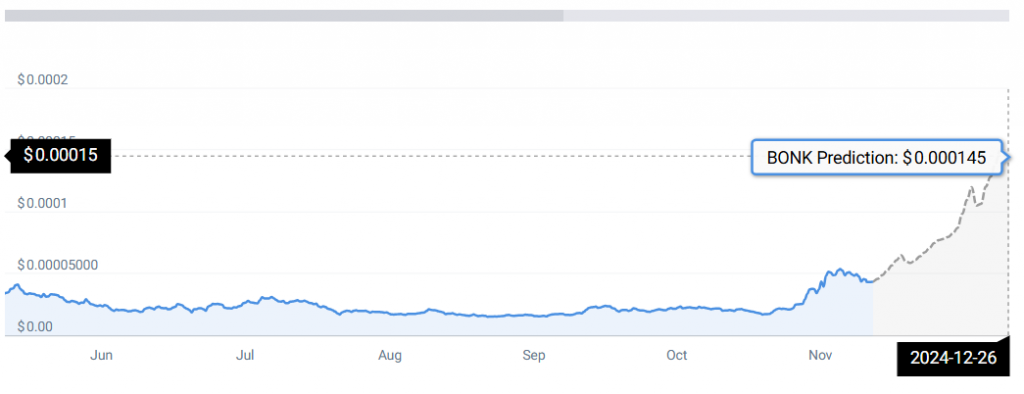
The speculatory bandwagon is currently running in turbo mode as rumors of Robinhood listing BONK continue to make rounds on the internet. In one such incident, Robinhood seems to have created a token account for BONK, giving more fodder to the rumor mill. BONK is currently one of the best-performing meme coins to interact with, which is up 108% in the last month. The token is presently sitting at $0.00004386.
As per CoinCodex, BONK is expected to surge by 228% to hit a new price mark of $0.000145 by the end of November to mid-December 2024.
Image: CoinCodex
“According to our current Bonk price prediction, the price of Bonk is predicted to rise by 228.46% and reach $0.000145 by December 26, 2024. Per our technical indicators, the current sentiment is bullish while the Fear & Greed Index is showing 79 (extreme greed). Bonk recorded 14/30 (47%) green days with 40.15% price volatility over the last 30 days. Based on the Bonk forecast, it’s now a good time to buy Bonk.”
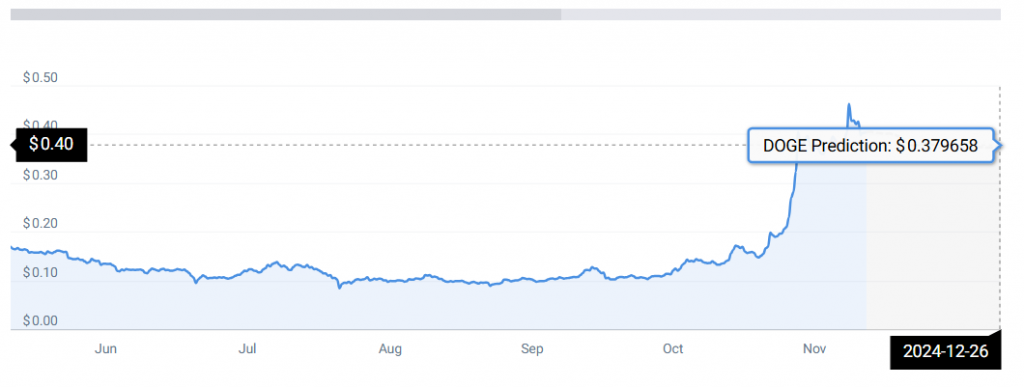
Dogecoin is also one of the trending crypto tokens of the current bull market. The fact that the Trump-Musk duo has selected DOGE as an acronym for their official administrative department has proven particularly lucrative for DOGE. Furthermore, Dogecoin’s association with Musk and the Tesla chief scoring a new position with the White House are also touted as favorable for Dogecoin in the long haul.
According to CoinCodex, Dogecoin may plummet by the end of November or mid-December to sit at a new price high of $0.37.
Image: CoinCodex
“According to our current Dogecoin price prediction, the price of Dogecoin is predicted to drop by -6.68% and reach $0.376008 by December 25, 2024. Per our technical indicators, the current sentiment is bullish while the Fear & Greed Index is showing 82 (extreme greed). Dogecoin recorded 20/30 (67%) green days with 40.27% price volatility over the last 30 days. Based on the Dogecoin forecast, it’s now a good time to buy Dogecoin.”
Charles Hoskinson, the prominent crypto entrepreneur behind Cardano, has said he wants to add decentralized finance (DeFi) features to Bitcoin. Looking back on his long history with Bitcoin and its foundational code, Hoskinson described his renewed focus on the cryptocurrency, viewing it as a chance to revisit its design and expand its potential.
Related
The idea is to create an ecosystem where users can interact with decentralized apps (dApps) by spending Bitcoin directly. Hoskinson thinks this could make things easier for users while also adding new features to Bitcoin’s existing setup.
Bitcoin + DeFi = Cardano?
One of the main things about this vision is using Cardano’s Babel fees, which let you pay transaction fees in different tokens. This could be the technical foundation to support hybrid apps powered by BTC.
Hoskinson stressed the need to make sure that the development of the ecosystem stays true to Bitcoin’s original ethos. He said he wants to work with the people who helped get Bitcoin off the ground and focus on new ideas that do not get bogged down by unnecessary distractions or misaligned motivations.
The aim is to create a seamless and efficient integration that aligns with both Bitcoin’s strengths and the broader blockchain landscape.
Related
New developments like Bitcoin’s Taproot upgrade were shown to be key steps in making it easier to use more advanced features. Taproot, which was adopted in 2021, improves privacy and scalability within the Bitcoin network, which is great for integrating new layers of innovation.
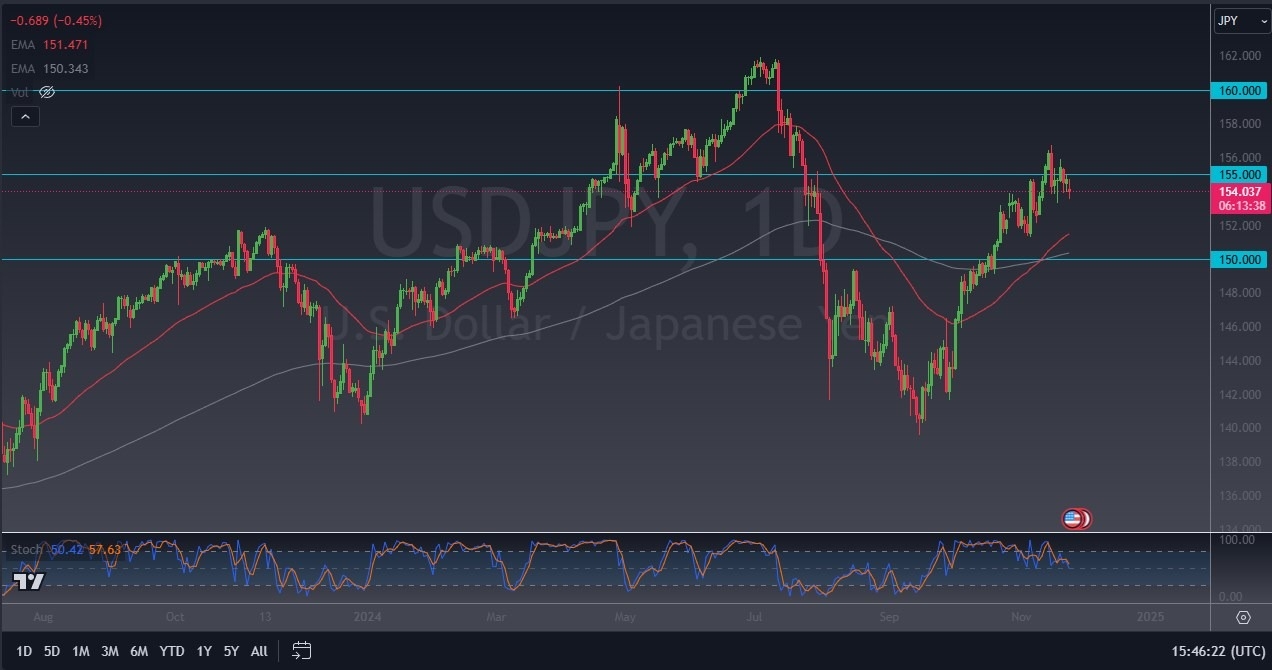
Dear my daily analysis of the USD/JPY pair, the market has shown itself to be rather flat, which is not overly surprising, considering that we had been consolidating for a couple of weeks previously.
The ¥155 level continues to be a bit of a barrier, but if we can break above there I think it will release quite a bit of kinetic energy in this pair.
Keep in mind that this is a market that still has a positive swap, and that will continue to be a major factor in how people approach it. After all, the Bank of Japan can do nothing to tighten monetary policy at this point, because quite frankly there is so much in the way of debt that is attached to the Japanese economy that it would completely implode domestic conditions if they approached to aggressively.
Technical Analysis
I believe that the ¥155 level is crucial, and if we can break above there could open up a move to the ¥160 level. The 50 Day EMA has recently broken above the 200 Day EMA, roughly at the ¥150 level, kicking off the so-called “golden cross” that a lot of longer-term traders pay close attention to. The market has been bouncing rather significantly over the last month or so, and we have seen the Japanese yen lose quite a bit of strength. Perhaps we are entering an area of digestion, which would make quite a bit of sense considering that we had reached the ¥150 level in rather short order.
Going forward, it does look like this is a “buy on the dips” type of market, with the 50 Day EMA offering potential support near the ¥151.50 level. After that, we have the 200 Day EMA sitting just above the ¥150 level, which of course is an area that would attract a lot of attention from a large, round, psychologically significant figure standpoint, and of course the same indicator that most trend followers pay close attention to over the longer term anyway. I remain bullish, but I recognize we may be a bit noisy in the short term.
The Cardano price prediction mirrored the early 2021 pattern.
Should the correlation hold, an extra 45% could be likely by the end of November.
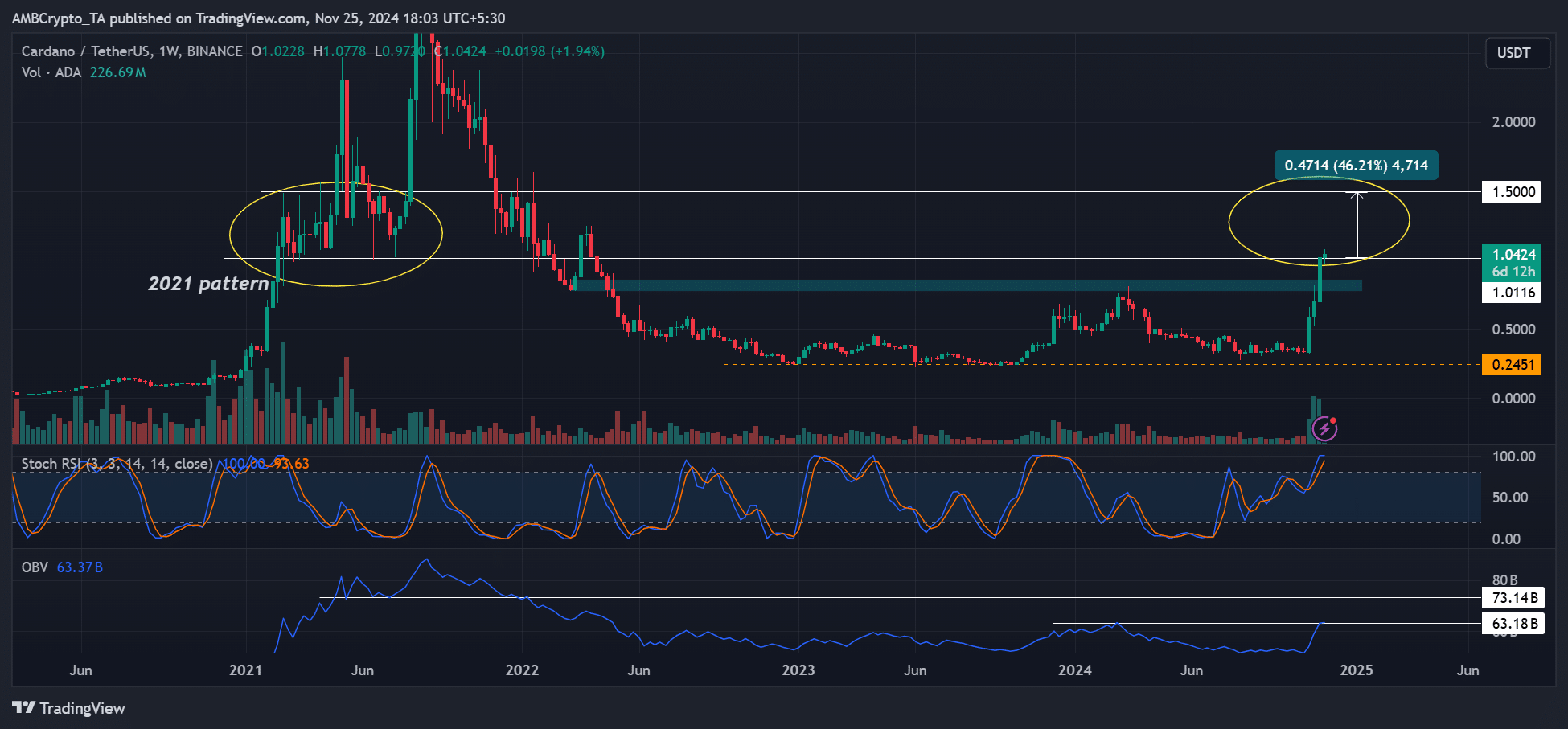
Cardano’s [ADA] price action mirrored the early 2021 pattern, which could yield over +45% if the trend plays out this week. The altcoin’s +200% upswing in the past three weeks has pushed it to $1, a level last seen in 2022.
Will ADA’s 2021 pattern extend?
When zoomed out on the weekly charts, ADA’s rally to the $1-$1.5 zone was similar to the 2021 price action.
In early 2021, ADA surged from $0.3 to $1 in three weeks, a period similar to that of its latest +200% rally.
Source: ADA/USDT, TradingView
In the 2021 pattern, ADA fronted an extra 45% rally to hit $1.5 before consolidating for three months, followed by a breakout to $2.4.
If the pattern correlation continues, ADA could surge +45% to $1.5 this week before entering a price consolidation.
As of press time, the weekly candlestick closed above $1, and the 2021 price range further emboldened the bullish inclination.
As per the Stochastic RSI reading, the strong price momentum also supported the bullish outlook.
Additionally, the OBV (On Balance Volume) corroborated the thesis, but had to clear above the March peak to reinforce more headroom for growth.
However, a break below $1 will invalidate the bullish thesis and could drag ADA to the lower support level at $0.7-$0.8 (bullish order block, cyan).
Mixed whale signals
Source: Santiment
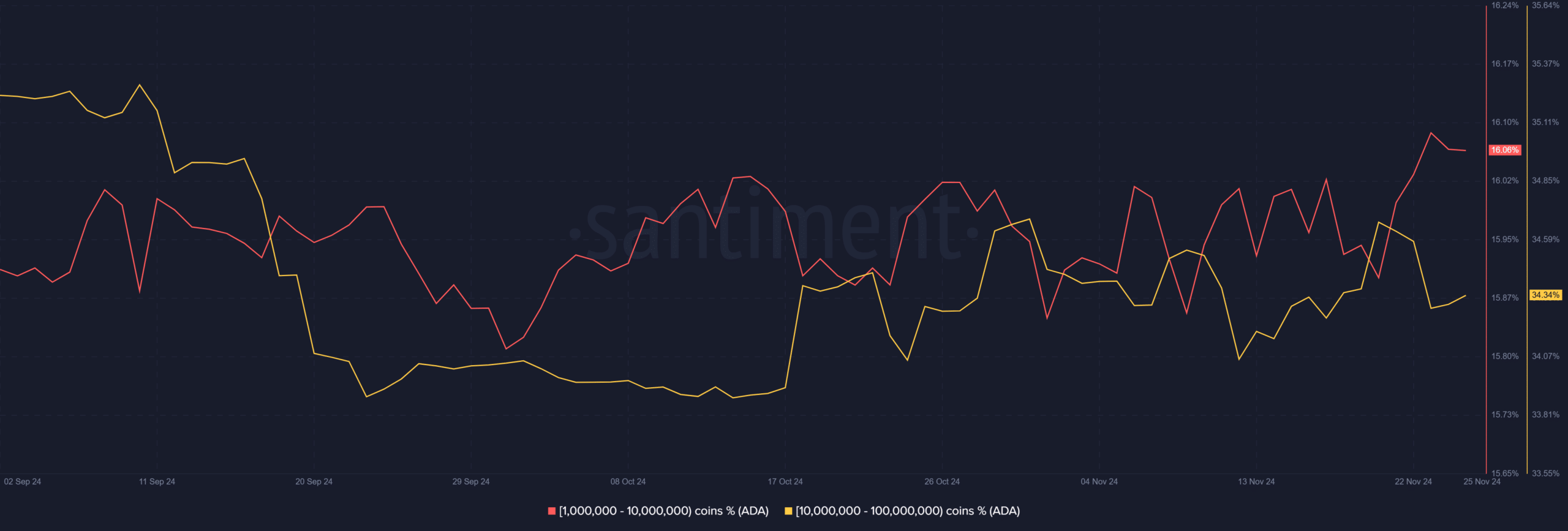
Two key whale cohorts, those holding 1M-10M ADA and 10M-100M ADA, showed mixed signals over the weekend.
The latter, with over 34% control (yellow), reduced exposure since the 20th of November. But they were back in accumulation mode, as seen by the slight uptick on the yellow line as of press time.
However, the former (1M-10M ADA) holders partially distributed after last week’s aggressive buying spree. This mixed signal from whales could bleak ADA’s next price direction.
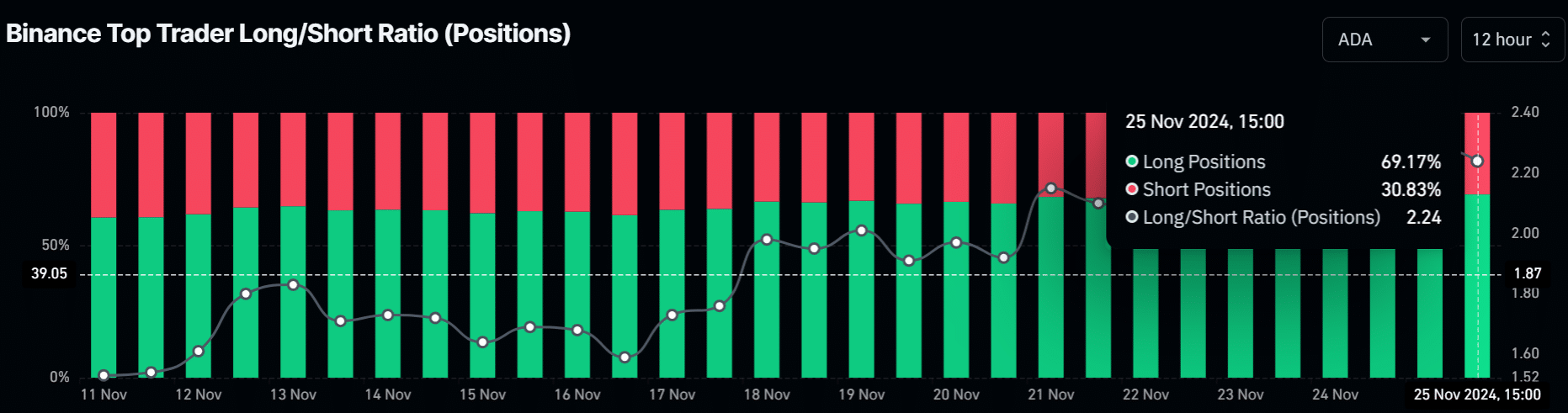
That said, traders remained uber-bullish on the altcoin, with Binance’s top traders dominating at nearly 70% in net long positions.
Source: Coinglass
The altcoin’s next price move could also be determined by Bitcoin’s [BTC] dominance. A surge in BTC dominance would fizzle ADA or trigger a pullback, while a decline in the king coin’s market share could be bullish.
Disclaimer: The information presented does not constitute financial, investment, trading, or other types of advice and is solely the writer’s opinion
Silver prices fell by nearly 3% on Monday following reports that Israel and Hezbollah are reaching a ceasefire agreement.
President-elect Donald Trump plans to impose tariffs on imports from Mexico, Canada and China.
The non-yielding Silver struggled due to bond market optimism following the selection of Scott Bessent as the US Treasury Secretary.
Silver price (XAG/USD) hovers around $30.40 per troy ounce during the Asian trading hours on Tuesday, following a nearly 3% drop in the previous session. This downside risk for safe-haven assets like Silver metal is linked to reports suggesting that Israel and Hezbollah are close to reaching a ceasefire agreement.
Additionally, the price of dollar-denominated Silver has been pressured by a stronger US dollar (USD) after President-elect Donald Trump announced plans to impose a 25% tariff on all imports from Mexico and Canada starting on his first day in office, alongside an additional 10% tariff on goods from China. A stronger US dollar makes precious metals more expensive for foreign buyers, negatively affecting Silver demand.
The non-yielding Silver faced downward pressure due to optimism in the bond market following the selection of Scott Bessent as US Treasury Secretary in the incoming administration. Bessent has advocated for a phased approach to trade restrictions and expressed a willingness to negotiate tariff levels in coordination with President-elect Donald Trump.
However, Tuesday’s less hawkish comments from Federal Reserve (Fed) officials may have offered some support for Silver prices. Chicago Fed President Austan Goolsbee suggested that the Fed is likely to continue lowering interest rates toward a neutral stance that neither stimulates nor restricts economic activity. Meanwhile, Minneapolis Fed President Neel Kashkari pointed out that another rate cut could be considered at the Fed’s December meeting, according to Bloomberg.
Investors are now focusing on the Federal Reserve’s November meeting minutes, set to be released later in the North American session. These minutes could offer crucial insights into the central bank’s direction on monetary policy.
Silver FAQs
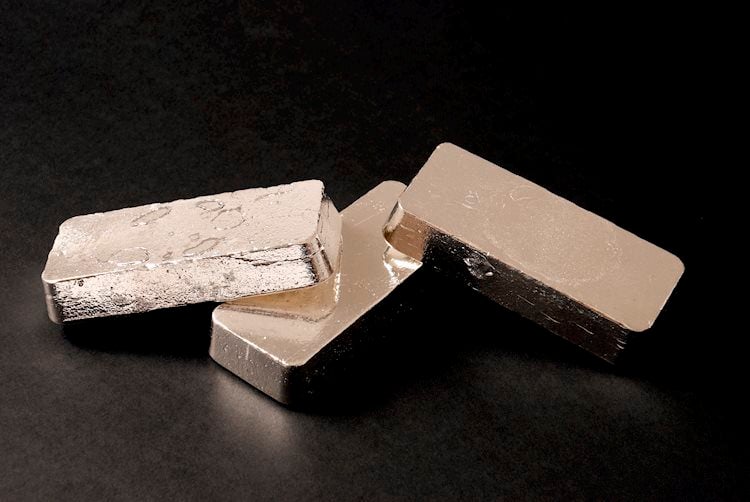
Silver is a precious metal highly traded among investors. It has been historically used as a store of value and a medium of exchange. Although less popular than Gold, traders may turn to Silver to diversify their investment portfolio, for its intrinsic value or as a potential hedge during high-inflation periods. Investors can buy physical Silver, in coins or in bars, or trade it through vehicles such as Exchange Traded Funds, which track its price on international markets.
Silver prices can move due to a wide range of factors. Geopolitical instability or fears of a deep recession can make Silver price escalate due to its safe-haven status, although to a lesser extent than Gold’s. As a yieldless asset, Silver tends to rise with lower interest rates. Its moves also depend on how the US Dollar (USD) behaves as the asset is priced in dollars (XAG/USD). A strong Dollar tends to keep the price of Silver at bay, whereas a weaker Dollar is likely to propel prices up. Other factors such as investment demand, mining supply – Silver is much more abundant than Gold – and recycling rates can also affect prices.
Silver is widely used in industry, particularly in sectors such as electronics or solar energy, as it has one of the highest electric conductivity of all metals – more than Copper and Gold. A surge in demand can increase prices, while a decline tends to lower them. Dynamics in the US, Chinese and Indian economies can also contribute to price swings: for the US and particularly China, their big industrial sectors use Silver in various processes; in India, consumers’ demand for the precious metal for jewellery also plays a key role in setting prices.
Silver prices tend to follow Gold’s moves. When Gold prices rise, Silver typically follows suit, as their status as safe-haven assets is similar. The Gold/Silver ratio, which shows the number of ounces of Silver needed to equal the value of one ounce of Gold, may help to determine the relative valuation between both metals. Some investors may consider a high ratio as an indicator that Silver is undervalued, or Gold is overvalued. On the contrary, a low ratio might suggest that Gold is undervalued relative to Silver.
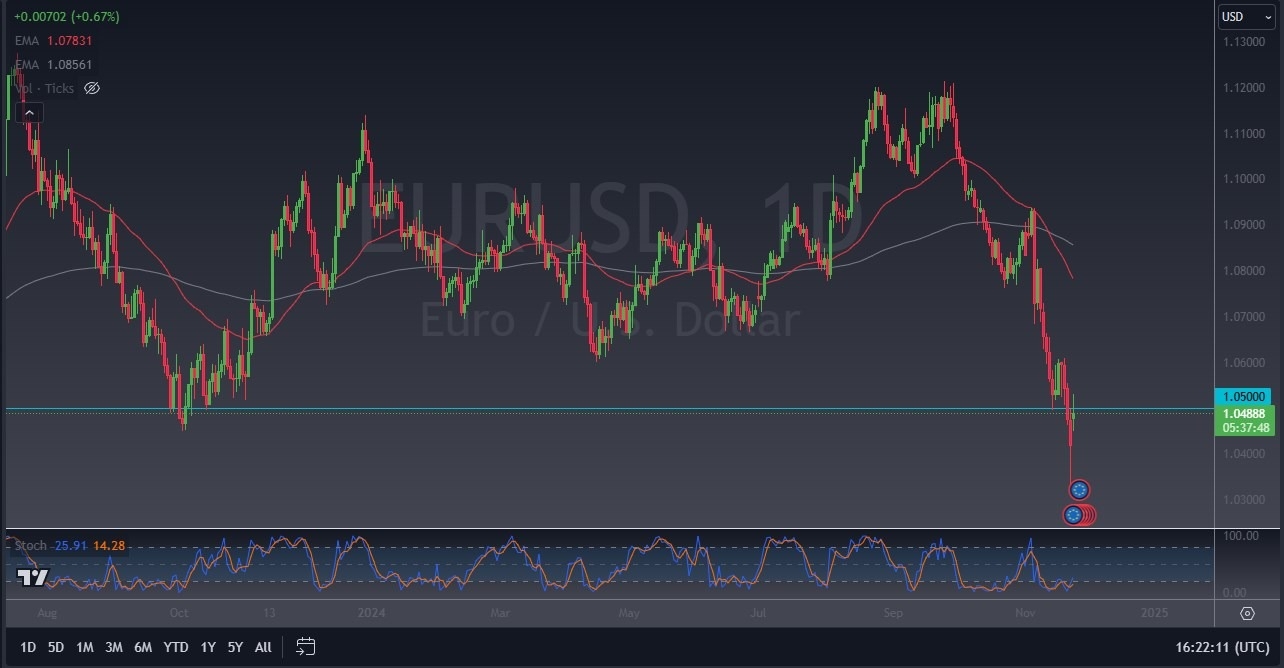
In my daily analysis of the EUR/USD pair, it looks like the euro is simply treading water, just below the crucial 1.05 level.
This is not much of a surprise, considering that we have plunged so drastically to the downside that the market is almost certainly oversold at this point.
This isn’t to say that I think we need to be buyers of this pair, just that I think a balance is probably more likely than not.
In fact, it’s probably worth noting that we initially tried to rally during the trading session on Monday but gave back those gains rather rapidly.
Because of this, I think you have got a situation where traders are going to continue to see a lot of volatility in this pair, and that does make a certain amount of sense considering that the European Union has a whole host of issues to worry about. After all, we’ve got a situation where there is a hot war on the continent that is only getting worse, so that in and of itself probably makes some traders a little bit cautious about being involved in the European Union.
US Elections
The US elections have been like a shot in the arm for the US dollar and US equities overall. I think that continues to be the case, but it’s also worth noting that the market is paying close attention to the interest rate situation in the United States, as they have been rising, despite the fact that the Federal Reserve has been cutting. With this being the case, think you get a situation where traders will continue to look at this through the interest rate differential argument, but then again you also have to keep in mind that the US is more likely to be business friendly than the European Union now that Donald Trump is taking over.
We also have the idea of safety as far as the US dollar is concerned, and I think that continues to be the case here. After all, the world is a somewhat scary place at the moment, and that means that the US dollar might be where people run to.
Companies that use paid endorsers or review sites in their advertising and marketing will want to review the validity of their product or service claims, following a Federal Trade Commission (FTC) lawsuit against a wellness brand, resulting in more than USD 536,000 in refunds to consumers deceived by false claims, fake endorsements, and deceptive advertisements.
On November 7, 2024, the FTC announced it will be sending refunds to 536,000 consumers deceived by Rejuvica’s and its owners’ unsupported claims that Sobrenix, a dietary supplement marketed and sold by Rejuvica, could reduce and eliminate alcohol cravings and consumption. In addition to the refunds, the FTC’s proposed order requests a permanent injunction and other relief due to violations under the FTC Act and the Opioid Addiction Recovery Fraud Prevention Act of 2018 (OARFPA).
The FTC filed its complaint on July 18, 2023, alleging that the defendants made numerous unsubstantiated and false claims about Sobrenix, used paid endorsers in deceptively formatted advertising, and published bogus review sites to deceive consumers about their products. As a result of the FTC’s suit, the defendants agreed to a proposed order that permanently bans them from making any unsubstantiated claims about health products or services and requires them to pay USD 650,000 to the FTC to refund consumers.
Section 12 of the FTC Act prohibits the dissemination of any false advertisement in or affecting commerce for the purpose of inducing, or which is likely to induce, the purchase of food, drugs, devices, services, or cosmetics. The OARFPA Act prohibits unfair or deceptive acts or practices specifically with respect to any substance use disorder treatment service or substance use disorder treatment product. The OARFPA Act applies to Sobrenix due to the defendants having marketed it as a substance use disorder treatment product.
The FTC alleged the defendants ran afoul of both the FTC and OARFPA Acts in respect of each of the charges below:
Deceptive Alcohol Cravings and Consumption Claims: The FTC alleged that Rejuvica and its owners violated both Acts by making false or misleading representations that Sobrenix: a) Reduces or eliminates cravings for alcohol; b) Enables users to substantially reduce or eliminate their consumption of alcohol; c) Assists users to regain control of their problematic drinking; and d) Treats alcohol use disorder or the symptoms of alcohol use disorder. In alleged violation of the FTC and the OARFPA Act, defendants represented that Sobrenix was proven to reduce alcohol cravings and consumption when, in reality, the defendants had no evidence to substantiate their claims.
Deceptively Formatted Advertising: Defendants engaged in false advertisements by representing statements about Sobrenix that were actually paid advertising as independent opinions by impartial experts. This occurred during a television appearance featuring two public figure health experts discussing Sobrenix that was portrayed as objective news content on local television and news stations. Neither Rejuvica nor the public figures disclosed they were paid by Rejuvica, and Rejuvica highlighted these appearances in their marketing materials as “news” coverage.
Deceptive Endorsements: The defendants represented that reviewing websites were independent organizations providing objective information when, in fact, the defendants themselves drafted the websites’ content and the products were not reviewed by anyone unconnected with Rejuvica. The review websites all contained identical badges stating the content was “expert review”, fictional names used by Rejuvica’s marketing staff, and content stating that Rejuvica product obtained the highest score of all products.
The FTC is actively expanding its regulation authority over false claims, deceptive advertisements, and non-disclosures of endorsements. We have been tracking the FTC’s long-term and consistent focus on fake reviews, endorsement advertising, and healthcare influencer disclosures.
Companies, especially those with health-related products or services, will want to review their marketing practices to ensure that: 1) all influencers’ disclosures regarding their relationship to the company are clear and conspicuous; 2) all health claims are supported by competent and reliable scientific evidence; and 3) advertisements are truthful and not misleading.
If you have any questions about your advertisement and marketing programs, please contact your Baker McKenzie attorney or the authors below.