About Editorial team of BIPNs

Main team of content of bipns.com. Any type of content should be approved by us.
10 12, 2025

Matcha made in heaven | Honolulu Star-Advertiser

By |2025-12-10T14:27:04+02:00December 10, 2025|Dietary Supplements News, News|0 Comments


1/4

Swipe or click to see more

Photo by Cassidy Apo

Hojicha Latte ($6.50)

Matcha made in heaven | Honolulu Star-Advertiser

2/4

Swipe or click to see more

Photo by Cassidy Apo

Matcha Kuromitsu Latte ($6.90); Matcha Soft Serve with Shiratama and Azuki ($7); Hojicha with Nama Chocolate ($7.50)

3/4

Swipe or click to see more

Photo by Cassidy Apo

Strawberry Matcha Milk ($7)

4/4

Swipe or click to see more

Photo by Cassidy Apo

Earl Grey ($9)


Source link

10 12, 2025

Weather-driven spike or onset of bullish trend — TradingView News

By |2025-12-10T13:04:02+02:00December 10, 2025|Forex News, News|0 Comments


On Tuesday, US natural gas price extended losses from the previous session in reaction to forecasts of warmer weather in most parts of the country. Near-record output and ample inventories have further fueled the pullback, even as the bulls remain in control. Meanwhile, European prices are under selling pressure as investors weigh the prospects of a peace deal and subsequent easing of Russian sanctions.

Europe Vs US natural gas prices: The paradox that lies within

This time of the year is usually marked by higher natural gas prices as investors price in increased warming demand during the Northern Hemisphere’s winter season. In fact, weather forecast is one of the bullish factors that bolstered US natural gas prices to a three-year high late last week. Besides, record LNG exports to Europe have fueled the months-long rally. 

While the short-term outlook remains positive, investors appear to weigh on whether the recent surge is the onset of a larger bullish trend or just a weather-driven spike that will soon fade. Indeed, this dilemma, coupled with the expected profit-booking, explains the pullback recorded since the start of the week.

According to the updated weather forecast, most parts of the US are expected to experience warmer temperatures in the near term. Atmospheric G2 has indicated that the eastern and southern US will be colder for the period between 18th and 22nd December, while other regions remain warmer.

In its latest weekly report, EIA highlighted a draw of 12 Bcf compared to the expected 15 Bcf. Subsequently, the surplus surged from 160 Bcf to 191 Bcf. In addition to the ample amount of natural gas in storage, the near-record output is weighing on the prices.

Nonetheless, steady LNG exports continue to offer support to US natural gas prices while exerting selling pressure in the European market. In the current month, the natural gas flows to the eight major LNG export plants within the US are averaging at 18.9 Bcf/per day compared to the monthly record high hit in November at 18.2 Bcf/per day.

 Meanwhile, prospects of a peace deal that could see the return of Russian gas have pushed the benchmark for European prices, Dutch TTF, to the lowest level since April 2024. 

US natural gas price technical analysis

Late last week, the Henry Hub natural gas futures rallied to a three-year high at $5.50 per MMBtu as it marked seven consecutive weeks of gains. Since late September, it has recorded higher highs and higher lows as a positive demand outlook fuels the bullish sentiment. 

On Tuesday, it extended losses from the previous session, having pulled back below the psychologically crucial zone of $5.00. At the time of writing, the US natural gas was trading at $4.81. 

Despite the pullback, the bulls are still in control as the asset continues to trade above the 25 and 50-day EMAs. Indeed, the decline can be perceived as a cool-off rather than trend reversal.

In the immediate term, the range between Monday’s intraday high of $5.20 and the resistance-turn-support zone of $4.70 will be worth watching. Below that zone, the bulls will be keen on defending the crucial support at $4.50 as they gather enough momentum for a rebound. On the flip side, a bounceback past the range’s upper limit will give buyers a chance to retest the 3-year high at $5.50.


Source link

10 12, 2025

USD/JPY Forecast: Markets Calm Under 157.00 Ahead of Fed

By |2025-12-10T12:32:04+02:00December 10, 2025|Forex News, News|0 Comments

  • USD/JPY forecast remains mildly soft ahead of the FOMC rate decision.
  • Next Fed Chair headlines keep the markets uncertain.
  • Technically, the price could test the 200-day moving average before accumulating sufficient buying.

The USD/JPY price traded with mild softness on Tuesday as the Dollar Index drifted lower following fresh headlines about the next Fed leadership. The US dollar also remains under pressure amid the looming Fed rate decision today. Meanwhile, the US JOLTS Job Openings data provided some relief to the pair.

If you are interested in automated forex trading, check our detailed guide-

The delayed data showed a slight improvement in the labor markets, but the figures are not strong enough to dispel the cooling signs. The job openings are drifting to multi-year lows, highlighting that the labor market conditions are easing rapidly than expected. The data holds more weight, as it is the final indicator before the Fed’s rate decision, with the November NFP data set scheduled for release next week. This cements the dovish Fed odds, with almost certain rate cut.

Political developments are also affecting the markets. According to the Wall Street Journal, the US President is preparing a final round of interviews with potential candidates to replace Fed Chair Powell. The news injected uncertainty into global markets, particularly regarding the Fed’s monetary policy path for 2026. Kevin Warsh, a potential candidate, is viewed as more hawkish than Kevin Hassett. Market participants remain sensitive to the leadership shift, as it could alter expectations for Fed policy.

From the Japanese side, the yen remains bid due to safe-haven flows as the global risk sentiment softened ahead of the key FOMC decision. The Bank of Japan continues to offer no new catalyst to the market, while its policy remains accommodative and yields are contained; the USD/JPY pair still depends on the Fed and US economic data.

USD/JPY Key Events Ahead

Today’s essential data ahead of the FOMC decision is the Employment Cost Index, which can provide a temporary impetus to the market. Overall, the pair remains vulnerable to further downside if US yields continue to ease after the soft JOLTS print.

Traders are now watching Powell’s press conference and the updated dot plot for clues on how aggressively the Fed intends to cut rates through 2025. Until then, USD/JPY is likely to trade with a mild bearish bias, lacking conviction to the upside.

USD/JPY Technical Forecast: Correction Before Upside

USD/JPY Forecast: Markets Calm Under 157.00 Ahead of Fed
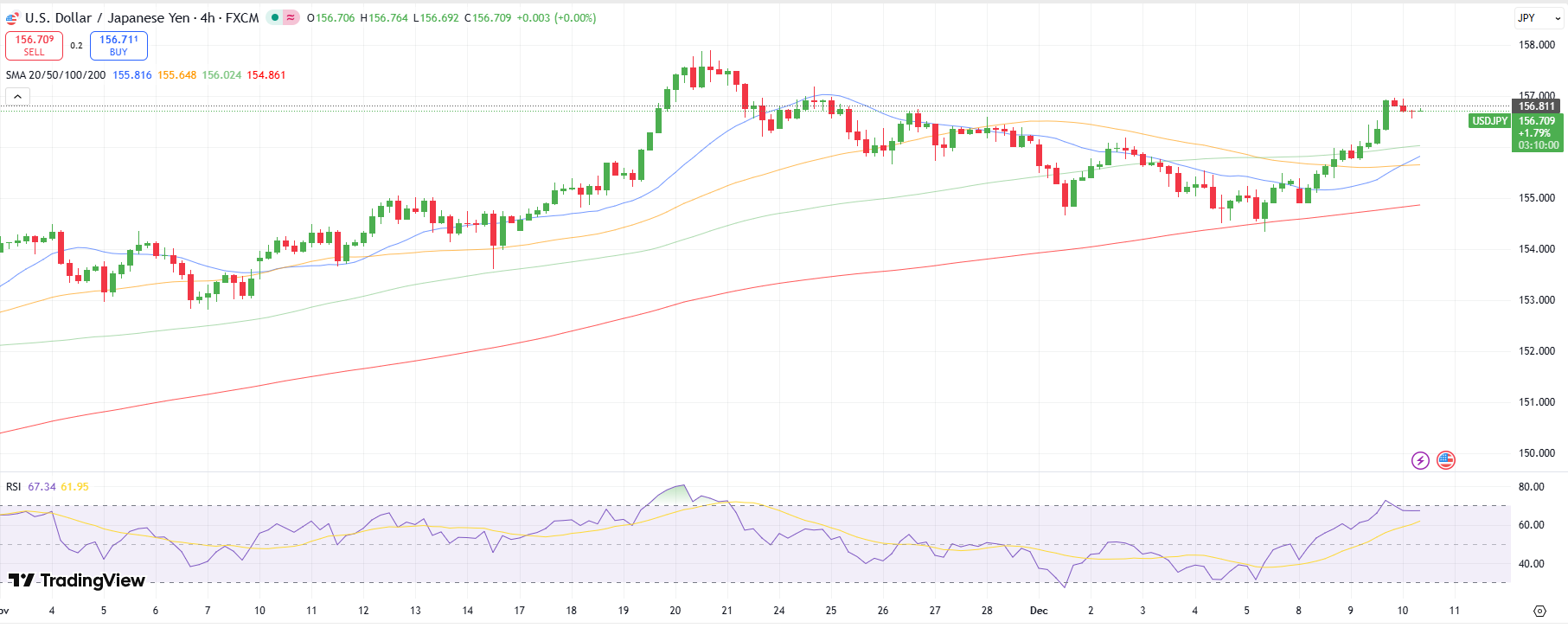
USD/JPY 4-hour chart

The 4-hour chart for USD/JPY shows a bullish crossover of 20- and 50-period MA. However, the 100- and 200-period MAs stay flat, pointing to a lack of market catalyst. Meanwhile, the RSI is flat near the overbought region. The conditions suggest a potential pullback to 156.00 before the upside continuation.

Are you interested to learn more about forex options trading? Check our detailed guide-

Conversely, moving below the 156.00 mark could augment selling pressure, moving to the 200-period MA and the demand zone near 155.00.

Looking to trade forex now? Invest at eToro!

68% of retail investor accounts lose money when trading CFDs with this provider. You should consider whether you can afford to take the high risk of losing your money.

Source link

10 12, 2025

Demand for Arabinoxylan Fiber in Japan | Global Market Analysis Report

By |2025-12-10T12:26:09+02:00December 10, 2025|Dietary Supplements News, News|0 Comments


Demand for Arabinoxylan Fiber in Japan Forecast and Outlook 2025 to 2035

Demand for arabinoxylan fiber in Japan is rising, with the industry valued at USD 68.4 million in 2025 and forecast to reach USD 119.9 million by 2035, reflecting a CAGR of 5.8%. Key sectors driving this growth include animal feed, dairy products, beverages, meat products, dietary supplements, and bakery & confectionery. Animal feed accounts for 27% of demand, while the powder form dominates at 44%, owing to its versatility, ease of use, and high concentration. The primary sources of arabinoxylan fiber are wheat, rye, corn, barley, rice, and sorghum, with wheat being the dominant contributor.

Kyushu & Okinawa leads with a 7.2% CAGR, driven by an increasing focus on digestive health and wellness, particularly in Okinawa’s aging population. Kanto follows with a 6.6% CAGR, buoyed by the large urban population and growing demand for functional foods. Kansai, with a 5.8% CAGR, benefits from its vibrant food culture and rising interest in dietary supplements. Chubu, Tohoku, and the Rest of Japan show more moderate growth at 5.1%, 4.5%, and 4.3%, respectively, with increasing consumer awareness about gut health and functional nutrition. The overall growth is further supported by the rising adoption of plant-based fibers, clean-label products, and innovations in extraction and processing methods, which are boosting the appeal of arabinoxylan fiber in Japan.

Quick Stats of the Demand for Arabinoxylan Fiber in Japan

  • Demand for Arabinoxylan Fiber in Japan Value (2025): USD 68.4 million
  • Demand for Arabinoxylan Fiber in Japan Forecast Value (2035): USD 119.9 million
  • Demand for Arabinoxylan Fiber in Japan Forecast CAGR (2025-2035): 5.8%
  • Demand for Arabinoxylan Fiber in Japan Leading Source: Wheat
  • Demand for Arabinoxylan Fiber in Japan Key Growth Regions: Kyushu & Okinawa, Kanto, Kansai, Chubu, Tohoku, Rest of Japan
  • Demand for Arabinoxylan Fiber in Japan Top Players: Acetar Bio-tech Inc., Antimex Pharmaceuticals & Chemicals Ltd., BioActor BV, Cargill, Comet Biorefining

Demand for Arabinoxylan Fiber in Japan Key Takeaways


Metric Value
Demand for Arabinoxylan Fiber in Japan Value (2025) USD 68.4 million
Demand for Arabinoxylan Fiber in Japan Forecast Value (2035) USD 119.9 million
Demand for Arabinoxylan Fiber in Japan Forecast CAGR (2025-2035) 5.8%

Why is the Demand for Arabinoxylan Fiber in Japan Growing?

The demand for arabinoxylan fiber in Japan is growing as consumers become more focused on digestive health and overall wellness. Arabinoxylan, a type of soluble fiber found in plant cell walls, is gaining attention for its potential health benefits, including improved digestion, enhanced gut health, and weight management. As Japan’s population becomes more health-conscious, there is a rising interest in functional ingredients like arabinoxylan that contribute to better digestion and general well-being.

A key driver of this growth is the increasing awareness of the importance of dietary fiber in maintaining a healthy gut microbiome. As more consumers adopt health-focused diets, arabinoxylan is seen as an effective and natural source of fiber, especially for those looking to manage cholesterol levels, blood sugar, and digestive health. Arabinoxylan fiber is also being integrated into functional foods and dietary supplements, making it easier for consumers to include it in their daily routines. The growing trend towards plant-based and natural food sources is boosting the appeal of arabinoxylan as a sustainable and plant-derived fiber.

The expanding availability of arabinoxylan fiber in food products, such as functional beverages, snacks, and supplements, is making it more accessible to a wider consumer base. With continued advancements in research on the health benefits of arabinoxylan and the growing demand for natural, functional ingredients, the demand for arabinoxylan fiber in Japan is expected to increase steadily through 2035.

What is the Segment-Wise Analysis of Demand for Arabinoxylan Fiber in Japan?

Demand for arabinoxylan fiber in Japan is segmented by application, form, source, and region. By application, demand is divided into animal feed, dairy products, beverages, meat products, dietary supplements, and bakery & confectionery, with animal feed leading at 27%. The demand is also segmented by form, including powder, liquid, granules, capsules, and tablets, with powder leading at 44%. The sources of arabinoxylan fiber include wheat, rye, corn, barley, rice, and sorghum. Regionally, demand is spread across Kyushu & Okinawa, Kanto, Kansai, Chubu, Tohoku, and the rest of Japan.

How Does Animal Feed Lead the Demand for Arabinoxylan Fiber in Japan?

Japan Arabinoxylan Fiber Market Analysis By Application

Animal feed accounts for 27% of the demand for arabinoxylan fiber in Japan, driven by its nutritional benefits and its key role in improving gut health for livestock. Arabinoxylan fiber is incorporated into animal feed to enhance digestion and support the overall health of farm animals, particularly in poultry, swine, and cattle. With increasing awareness about the importance of fiber-rich diets for livestock, arabinoxylan helps in promoting healthy digestion, better absorption of nutrients, and improved overall growth rates. This growing focus on high-quality animal feed, which enhances animal health and production, has significantly contributed to the increased use of arabinoxylan. Fiber is a cost-effective, natural ingredient that can improve feed efficiency while supporting sustainable farming practices. As demand for healthier, more sustainable animal products continues to grow, arabinoxylan fiber will remain an essential component in the animal feed industry in Japan, helping producers meet consumer demands for quality and sustainability.

Why Does Powder Form Lead the Demand for Arabinoxylan Fiber in Japan?

Japan Arabinoxylan Fiber Market Analysis By Form

Powder form accounts for 44% of the demand for arabinoxylan fiber in Japan, driven by its versatility, ease of use, and high concentration, making it the preferred form for a variety of applications. The powdered form is especially popular in the food and beverage industry, where it is used in products like dietary supplements, bakery items, and beverages, offering a convenient way to incorporate fiber without altering texture or flavor. It can easily be mixed into liquids or dry ingredients, providing flexibility for manufacturers to use it in a wide range of products. The powder form also allows for precise dosing, which is essential for ensuring consistent quality in functional foods and supplements. Its stable nature, long shelf life, and easy storage make it an ideal choice for both manufacturers and consumers. As demand for fiber-rich and functional food products increases, powdered arabinoxylan fiber is expected to remain the dominant form, thanks to its practical application and ease of use.

What are the Key Trends, Drivers, and Restraints in Demand for Arabinoxylan Fiber in Japan?

Demand for arabinoxylan fiber in Japan is rising as more consumers and manufacturers focus on digestive health, gut microbiome support, and overall wellness. Arabinoxylan, a plant‑derived dietary fiber found in cereals like wheat, rice, barley, and oats, is gaining popularity as a functional ingredient in foods, beverages, and supplements. As interest grows in fiber‑rich diets and functional foods emphasizing prebiotics and gut health, arabinoxylan is emerging as a valuable fiber option. At the same time, adoption is restrained by its relatively high production and processing costs compared with simpler fiber sources. Also, supply‑chain issues and variability in raw‑material quality due to different cereal sources pose challenges for consistent large‑scale use in food manufacturing.

Why is Demand for Arabinoxylan Fiber Growing in Japan?

Demand is growing because Japanese consumers increasingly value foods that support wellness, digestion, and preventive health especially as the population ages and lifestyle‑related health awareness rises. With growing knowledge about the role of dietary fiber and prebiotics in promoting gut health, blood sugar regulation, and general digestive wellness, arabinoxylan fits well with shifting dietary preferences. Food formulators and supplement manufacturers are responding by including arabinoxylan in fiber‑enhanced foods, such as baked goods, cereals, functional bars, and dietary supplements. The broader national trend toward functional foods, clean‑label ingredients, and fiber‑enriched products further boosts its demand.

How are Technological & Industry Innovations Driving Arabinoxylan Fiber Demand in Japan?

Technological advances in extraction and purification processes make arabinoxylan fiber more viable for food and supplement applications. Improved processing enables production of high‑purity arabinoxylan with consistent functional properties, such as solubility, viscosity, and prebiotic potential, which are suitable for incorporation into bakery items, cereals, beverages, and dietary supplements. As these technologies mature, manufacturers can deliver fiber‑enriched products with better taste, texture, and stability, making them more acceptable to consumers. As the global arabinoxylan fiber industry expands and supply becomes more reliable, Japanese producers and importers find it easier to source the ingredient, further facilitating its inclusion in functional‑food portfolios.

What are the Key Challenges and Risks That Could Limit Arabinoxylan Fiber Demand in Japan?

Despite its potential, several factors could limit broader uptake of arabinoxylan fiber in Japan. First, processing and extraction costs remain relatively high, making it more expensive than conventional fiber sources, which reduces competitiveness in price‑sensitive industrys. Second, variability in raw‑material sources and quality may lead to inconsistent functional performance across batches, complicating large‑scale food formulation. Third, competition from other established prebiotic fibers, such as inulin and FOS, which are often cheaper and well understood, can limit arabinoxylan’s industry share. Finally, regulatory and labeling requirements for functional ingredients can add complexity and cost for manufacturers aiming to industry fiber‑enriched products with health claims.

What is the Regional Demand Outlook for Arabinoxylan Fiber in Japan?

Japan Arabinoxylan Fiber Market Cagr Analysis By Country


Region CAGR (%)
Kyushu & Okinawa 7.2%
Kanto 6.6%
Kansai 5.8%
Chubu 5.1%
Tohoku 4.5%
Rest of Japan 4.3%

Demand for arabinoxylan fiber in Japan is growing steadily across all regions, with Kyushu & Okinawa leading at a 7.2% CAGR, driven by rising awareness of gut health and digestive wellness. Kanto follows with a 6.6% CAGR, supported by the region’s large urban population and increasing consumer focus on functional foods. Kansai shows a 5.8% CAGR, driven by the region’s vibrant food culture and a growing interest in dietary supplements. Chubu experiences a 5.1% CAGR, with demand rising as more consumers seek fiber-rich, health-boosting products. Tohoku and the Rest of Japan see moderate growth at 4.5% and 4.3%, respectively, reflecting a gradual shift towards health-conscious eating and the adoption of functional fibers.

How is Demand for Arabinoxylan Fiber Growing in Kyushu & Okinawa?

Kyushu & Okinawa leads the demand for arabinoxylan fiber, growing at a 7.2% CAGR. The region’s increasing interest in gut health and digestive wellness is a major driver, as consumers become more aware of the benefits of dietary fiber. Okinawa, known for its focus on longevity and healthy living, has seen a rise in the adoption of functional foods like arabinoxylan fiber. As the region’s population ages, there is growing demand for products that support digestive health and overall wellness. Local food manufacturers and health food retailers are expanding their offerings to include arabinoxylan fiber-based supplements and food products. With the region’s rising interest in plant-based nutrition, arabinoxylan fiber, derived from grains like wheat, aligns with the growing trend of natural, fiber-rich diets. As consumer awareness continues to grow, demand for arabinoxylan fiber in Kyushu & Okinawa is expected to remain strong.

Why is Demand for Arabinoxylan Fiber Rising in Kanto?

Japan Arabinoxylan Fiber Market Country Value Analysis

In Kanto, demand for arabinoxylan fiber is rising at a 6.6% CAGR. The region’s large urban population, particularly in Tokyo, is a key driver of this growth, as health-conscious consumers seek functional foods that support digestive health. With busy lifestyles and an increasing interest in wellness trends, many consumers in Kanto are turning to arabinoxylan fiber as a natural way to boost their fiber intake. The rise in interest for plant-based and dietary fiber-rich foods, combined with growing awareness of gut health, is fueling the demand for arabinoxylan fiber. The increasing availability of fiber-enriched food products in superindustrys and health food stores is making it easier for consumers to incorporate arabinoxylan fiber into their diets. As the demand for health supplements and functional foods grows, arabinoxylan fiber is expected to continue to see strong growth in Kanto.

How is Demand for Arabinoxylan Fiber Expanding in Kansai?

Japan Arabinoxylan Fiber Market Kansai Market Share Analysis By Source

Kansai shows steady demand for arabinoxylan fiber, with a 5.8% CAGR. The region’s vibrant food culture, particularly in cities like Osaka and Kyoto, has seen increasing interest in health-oriented food products. With growing consumer awareness about the importance of digestive health and overall wellness, arabinoxylan fiber is gaining popularity as a natural solution to improve fiber intake. As Kansai’s food and beverage industry continues to diversify, local producers and retailers are incorporating arabinoxylan fiber into functional food products, such as dietary supplements, baked goods, and snacks. The region’s growing focus on healthy eating, particularly among younger generations, is contributing to the rising demand for fiber-rich foods. As consumers continue to embrace healthier lifestyles, demand for arabinoxylan fiber in Kansai is expected to grow steadily, supporting the region’s position in the functional food industry.

Why is Demand for Arabinoxylan Fiber Growing in Chubu?

Japan Arabinoxylan Fiber Market Chubu Market Share Analysis By Application

Chubu is witnessing steady demand for arabinoxylan fiber, growing at a 5.1% CAGR. The region’s increasing focus on health and wellness is driving demand for functional foods that support digestive health and overall well-being. As more consumers in urban centers like Nagoya turn to dietary supplements and fiber-rich foods, arabinoxylan fiber is becoming a popular option. With rising awareness of the role of fiber in supporting digestive health, there is growing adoption of arabinoxylan fiber products, especially among those seeking natural and plant-based nutrition. Local retailers and food manufacturers in Chubu are expanding their product offerings to include arabinoxylan fiber-based products, such as supplements, snacks, and fortified foods. As the region’s consumers continue to prioritize healthy eating, the demand for arabinoxylan fiber is expected to rise steadily, further supported by the trend of clean-label and functional ingredients in food products.

How is Demand for Arabinoxylan Fiber Expanding in Tohoku?

Tohoku is seeing moderate growth in arabinoxylan fiber demand, with a 4.5% CAGR. Although the region’s consumption of functional foods is smaller compared to urban areas, there is a steady rise in interest as consumers become more health-conscious. As Tohoku’s food culture evolves, there is growing awareness of the benefits of fiber for digestive health and overall wellness, contributing to the adoption of arabinoxylan fiber. The availability of fiber-enriched products in local superindustrys and health food stores is helping to increase access to arabinoxylan fiber. As younger generations in Tohoku embrace healthier lifestyles and seek out natural solutions, demand for arabinoxylan fiber is expected to grow. Over time, with increased education around the benefits of functional nutrition, demand for arabinoxylan fiber in Tohoku is likely to rise, aligning with the broader trend toward health-focused food choices.

Why is Demand for Arabinoxylan Fiber Steady in the Rest of Japan?

The Rest of Japan is experiencing steady demand for arabinoxylan fiber, with a 4.3% CAGR. Although the demand is lower compared to urban regions, there is growing interest in health and wellness, particularly among older consumers. As more people in smaller towns and rural areas become aware of the health benefits of fiber and digestive health, the demand for arabinoxylan fiber is increasing. The availability of arabinoxylan fiber-based products, such as supplements and functional foods, is improving in these areas, further fueling adoption. The rising interest in plant-based diets and natural foods is also contributing to the growth in demand. As awareness spreads and access to these products improves through retail and online platforms, the Rest of Japan is expected to see steady growth in the adoption of arabinoxylan fiber, reflecting broader trends toward health-conscious eating and functional nutrition.

What is Driving the Demand for Arabinoxylan Fiber in Japan and Who Are the Key Players Shaping the Industry?

Japan Arabinoxylan Fiber Market Analysis By Company

The demand for arabinoxylan fiber in Japan is growing due to the increasing awareness of the health benefits of dietary fibers, particularly in supporting digestive health, gut microbiota balance, and overall wellness. Arabinoxylan, a plant-based fiber found in cereal grains such as wheat, is gaining popularity for its ability to promote regularity, reduce cholesterol, and improve gastrointestinal health. As Japanese consumers become more health-conscious and seek natural, plant-derived ingredients, the demand for functional fibers like arabinoxylan is increasing, particularly among those seeking solutions for weight management, gut health, and blood sugar regulation. The rising popularity of plant-based diets and clean-label products further boosts the industry for arabinoxylan fiber in Japan.

Key players shaping the arabinoxylan fiber industry in Japan include Acetar Bio-tech Inc., Antimex Pharmaceuticals & Chemicals Ltd., BioActor BV, Cargill, and Comet Biorefining. Acetar Bio-tech Inc. leads the industry with a share of 33.0%, offering high-quality arabinoxylan fiber products that cater to both the food and pharmaceutical industries. These companies focus on providing innovative, natural fiber solutions to meet the growing demand for dietary fibers with functional benefits. Their products are increasingly used in functional foods, dietary supplements, and nutraceuticals, supporting Japan’s trend toward healthier, more sustainable food ingredients.

The growth of the arabinoxylan fiber industry in Japan is further supported by increasing consumer demand for clean-label, plant-based, and health-enhancing food ingredients. As more consumers seek to improve their gut health and overall well-being, arabinoxylan fiber is expected to play an increasingly important role in Japan’s food and supplement industrys. With continued advancements in fiber technology and a greater focus on sustainable ingredients, the arabinoxylan fiber industry is poised for sustained growth in Japan.

Key Players in Japan Arabinoxylan Fiber Demand

  • Acetar Bio-tech Inc.
  • Antimex Pharmaceuticals & Chemicals Ltd.
  • BioActor BV
  • Cargill
  • Comet Biorefining

Scope of Report


Items Values
Quantitative Units (2025) USD million
Source Wheat, Rye, Corn, Barley, Rice, Sorghum
Application Animal Feed, Dairy Products, Beverages, Meat Products, Dietary Supplements, Bakery & Confectionery
Form Powder, Liquid, Granules, Capsules, Tablets
Region Kyushu & Okinawa, Kanto, Kansai, Chubu, Tohoku, Rest of Japan
Countries Covered Japan
Key Companies Profiled Acetar Bio-tech Inc., Antimex Pharmaceuticals & Chemicals Ltd., BioActor BV, Cargill, Comet Biorefining
Additional Attributes Dollar sales by source and application; regional CAGR and growth outlook; increasing adoption of plant-based fibers; rising demand for functional foods and dietary supplements; innovations in extraction and processing methods; distribution channels including retail and e-commerce.

Japan Arabinoxylan Fiber Demand by Key Segments

Source

  • Wheat
  • Rye
  • Corn
  • Barley
  • Rice
  • Sorghum

Application

  • Animal Feed
  • Dairy Products
  • Beverages
  • Meat Products
  • Dietary Supplements
  • Bakery & Confectionery

Form

  • Powder
  • Liquid
  • Granules
  • Capsules
  • Tablets

Region

  • Kyushu & Okinawa
  • Kanto
  • Kansai
  • Chubu
  • Tohoku
  • Rest of Japan

Frequently Asked Questions

How big is the demand for arabinoxylan fiber in Japan in 2025?

The demand for arabinoxylan fiber in Japan is estimated to be valued at USD 68.4 million in 2025.

What will be the size of arabinoxylan fiber in Japan in 2035?

The market size for the arabinoxylan fiber in Japan is projected to reach USD 119.9 million by 2035.

How much will be the demand for arabinoxylan fiber in Japan growth between 2025 and 2035?

The demand for arabinoxylan fiber in Japan is expected to grow at a 5.8% CAGR between 2025 and 2035.

What are the key product types in the arabinoxylan fiber in Japan?

The key product types in arabinoxylan fiber in Japan are wheat, rye, corn, barley, rice and sorghum.

Which application segment is expected to contribute significant share in the arabinoxylan fiber in Japan in 2025?

In terms of application, animal feed segment is expected to command 27.0% share in the arabinoxylan fiber in Japan in 2025.


Source link

10 12, 2025

Solana Price Prediction Signals a Possible Trend Reversal, While DeepSnitch AI Pumps 77%

By |2025-12-10T12:17:11+02:00December 10, 2025|Crypto News, News|0 Comments

Several news and upgrades are flooding the Solana ecosystem in December. Kalshi prediction markets are now tokenized on Solana, Revolut integrated SOL for its 65 million users, Vanguard unlocked SOL ETFs for its 50 million clients, and Base launched a bridge connecting the two blockchains. This makes Solana price prediction bullish for 2026.

DeepSnitch AI is the best presale to invest in now, with a live network, three more agents operating, and users impressed with the technology. The project also launched a bonus offer giving 50% to 100% more tokens to those who invest in the coming days. The numbers exploded, raising over $710,000, and the price pumped 77%.

Coinbase Blockchain launches a bridge to connect to Solana

Base (Coinbase’s blockchain), which functions as a Layer 2 for Ethereum, announced the first native bridge with Solana. This bridge will allow users to transfer SOL and SPL tokens between the two networks. While BASE currently has a TVL of approximately $15 billion, it now has direct access to Solana’s liquidity, which currently has a TVL of $29 billion.

This will allow users to trade any token on the SOL blockchain without having to leave the Base blockchain. Solana benefits by gaining direct access to Coinbase’s over 100 million users, as well as all the institutional liquidity of the Ethereum/Base ecosystem, without needing third-party wrappers or bridges.

This update should generate a large exchange of clients and users between the two networks, boosting TVL, DeFi, and the multichain narrative. A win-win for both sides, and bullish for Solana price prediction.

DeepSnitch AI: An undervalued project with 100x potential

DeepSnitch AI is an artificial intelligence project that aims to return investment power to traders and small investors. While for a long time only big funds and whales were able to achieve explosive gains and access insider information, now DSNT comes to democratize the entire crypto market.

This is because it offers an advanced platform with AI agents that can monitor several on-chain activities, generating reports and sending users the best information in real time. This helps traders understand each market moment, as well as having access to advanced information that can help when making important investment decisions.


But there is another important detail: reports from Bank of America and major research firms like Gartner indicate that the AI ​​sector should be the fastest-growing in 2026, with expectations of growing by 25x by 2030.

So, projects like DeepSnitch AI, which are still in presale, can offer investors a real opportunity for 100x returns.

This can be even more possible with the new bonus offer, which gives investors a chance to earn 50% to 100% more tokens and multiply their bag even more. To do so, those who invest over $2,000 need to enter the code DSNTVIP50 to earn 50% more tokens. Or those who invest over $5,000 need to enter the code DSNTVIP100 to earn 100% more tokens.

Solana price prediction: $200 it’s a key price to be reached

With so much news, Solana is laying the groundwork for 2026, full of demand and use cases. This could be excellent for the token, leaving SOL investor sentiment optimistic for the coming year, and that’s why it’s one of the best cryptos to invest in 2026.

Looking at the weekly chart, SOL shows one of its best moments in recent months. The $130 region was defended, an important move because this is a price that acts as support and has held for almost 18 months. This would be one of the best risk-reward ratios for those who want to invest in SOL.

Meanwhile, the RSI is indicating exhausted selling, forming a potential double bottom, causing the MACD to signal a possible trend reversal. This could cause the Solana price prediction to bounce and test its strongest resistance at the moment, at $200. This is a psychological price that needs to be overcome for SOL to start aiming for a new ATH.

Ethereum exchanges’ balances fell to the lowest level ever

Ethereum is quietly entering its lowest market supply level ever. ETH exchange balances have just fallen below 9% of total supply, a level we’ve apparently never seen before. For comparison, BTC is still sitting near 14.8%.

While one reason for this “disappearing” supply is ETFs, other factors include staking, restaking, L2 activity, collateral loops, and long-term custody.

As a result, the Ethereum supply is becoming more restricted each day, while the price continues to fluctuate between $2,900 and $3,200. With a potential supply shock approaching, it’s possible to see ETH above $4,000 by early 2026.

Conclusion

Solana price prediction has been performing well after defending an important region at $130. Traders are targeting $200 as the next target, but the gain here would only be 55%.

For those seeking more significant gains, presales like DeepSnitch AI are the big event in the crypto market right now. With its bonus offer, investors can earn 50% more tokens using the code DSNTVIP50 or 100% more tokens using the code DSNTVIP100. This will maximize your potential gains, making this the investment with the most upside at the moment.

Visit the official website for more information, and join X and Telegram for community updates.

FAQs

Why are investors excited about DeepSnitch AI? 

DeepSnitch AI offers advanced real-time market analytics, a fast-growing presale, and bonuses of 50% to 100% extra tokens. Its early-stage pricing and strong AI narrative make it a high-upside opportunity.

What are the main Solana adoption trends right now? 

Solana adoption is accelerating thanks to several news and upgrades, including Kalshi markets on SOL, Revolut integration, SOL ETFs via Vanguard, and a new Base and Solana bridge boosting liquidity and user flow.

What supports Solana’s bullish trajectory for the coming years? 

Solana’s bullish trajectory is reinforced by defending the key $130 support zone while momentum indicators point to a trend reversal. Many traders see a potential move toward.

Source link

10 12, 2025

Platinum price reaches the barrier– Forecast today – 10-12-2025

By |2025-12-10T11:03:03+02:00December 10, 2025|Forex News, News|0 Comments


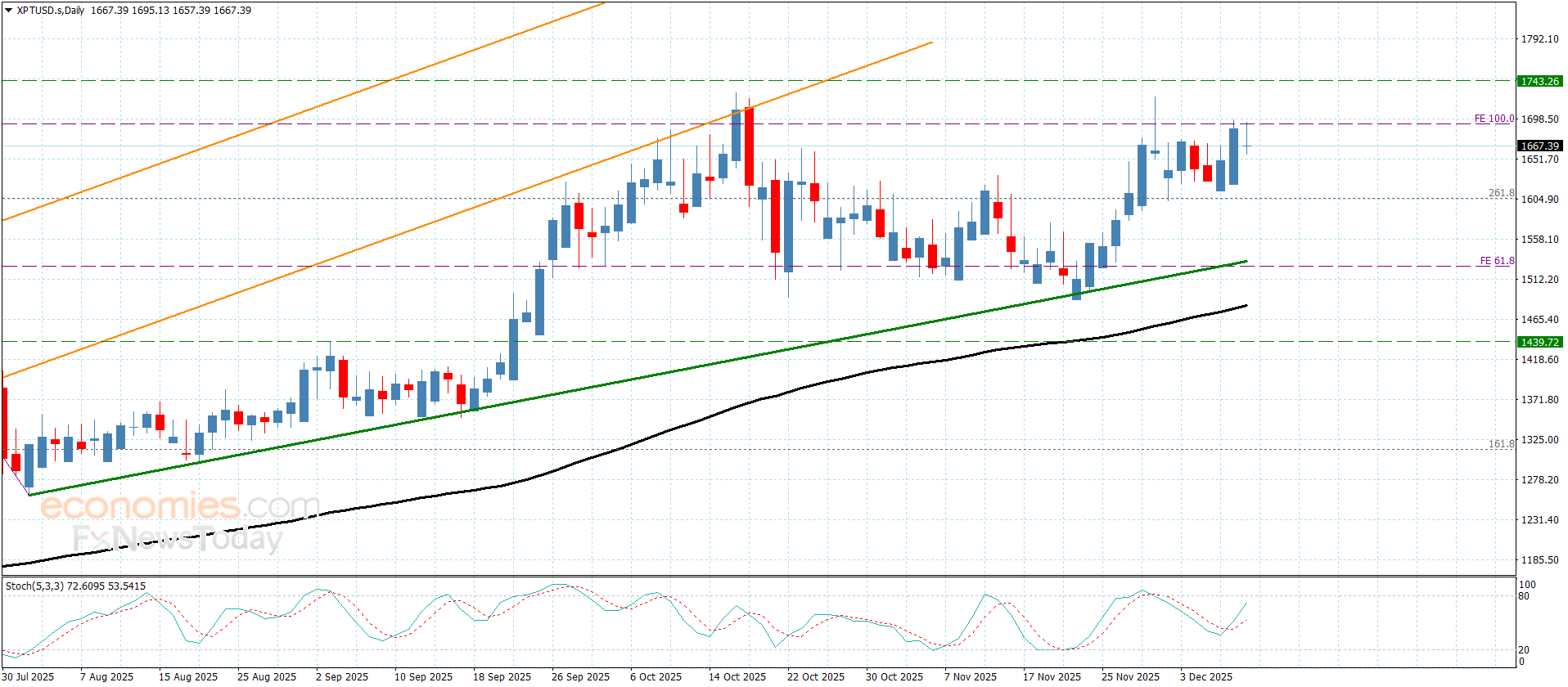
There is no change on copper price, despite forming mixed trading due to its stability above the extra support near $5.1300, increasing the chances of its activation with the positivity of the main indicators.


Stochastic stability within the overbought level will provide new positive momentum to ease the mission of resuming the bullish attack, reminding you that the stability of the next main target near $5.5000, while the decline below the current support might force it to form temporary corrective trading, and there is a chance for the decline towards $4.9500 reaching the main support near $4.7500.


The expected trading range for today is between $5.1850 and $5.5000


Trend forecast: Bullish


Source link

10 12, 2025

The GBPJPY reaches the initial extra target– Forecast today – 10-12-2025

By |2025-12-10T10:31:04+02:00December 10, 2025|Forex News, News|0 Comments

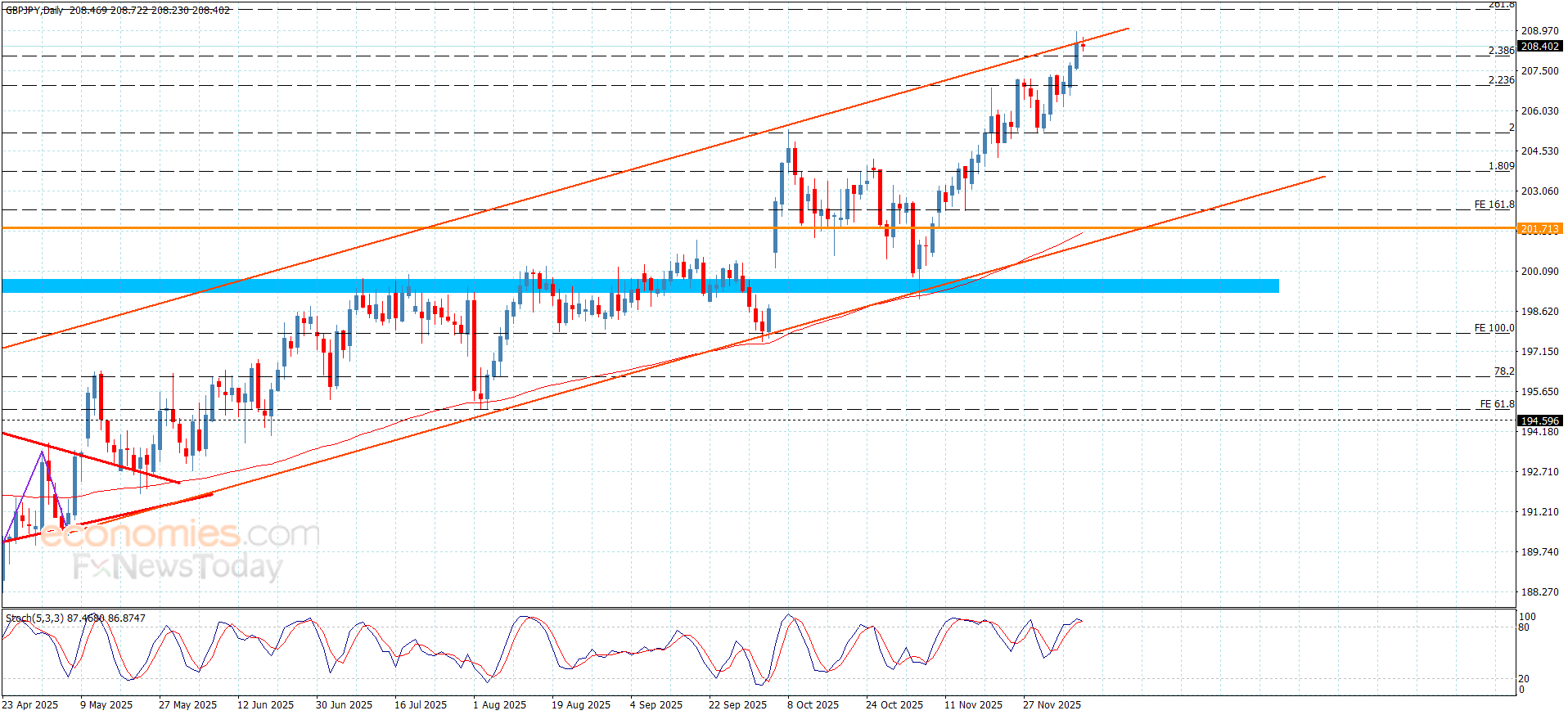
There is no change on copper price, despite forming mixed trading due to its stability above the extra support near $5.1300, increasing the chances of its activation with the positivity of the main indicators.


Stochastic stability within the overbought level will provide new positive momentum to ease the mission of resuming the bullish attack, reminding you that the stability of the next main target near $5.5000, while the decline below the current support might force it to form temporary corrective trading, and there is a chance for the decline towards $4.9500 reaching the main support near $4.7500.


The expected trading range for today is between $5.1850 and $5.5000


Trend forecast: Bullish


Source link

10 12, 2025

XAG/USD refreshes record high, around $61.00

By |2025-12-10T09:02:04+02:00December 10, 2025|Forex News, News|0 Comments


Silver (XAG/USD) enters a bullish consolidation phase during the Asian session and oscillates in a narrow range near the all-time peak, around the $61.00 neighborhood, touched this Wednesday. Meanwhile, the broader technical setup suggests that the path of least resistance for the white metal remains to the upside.

The overnight breakout through the monthly trading range hurdle, around the $58.80-$58.85 region, was seen as a fresh trigger for the XAG/USD bulls. However, the Relative Strength Index (RSI) is flashing overbought conditions on 4-hour/daily charts, which, in turn, is holding back traders from placing fresh bullish bets. Hence, it will be prudent to wait for some near-term consolidation or a modest pullback before positioning for a further appreciating move.

Meanwhile, any corrective slide below the $60.30-$60.20 immediate support could attract fresh buyers and find decent support near the $60.00 psychological mark. A convincing break below the said handle, however, might prompt some long-unwinding and drag the XAG/USD towards the trading range resistance breakpoint, around the $58.80-$58.85 region. The latter should act as a key pivotal point, which, if broken, could pave the way for further losses.

On the flip side, momentum above the $61.00 mark will reaffirm the near-term constructive outlook and set the stage for an extension of the XAG/USD’s recent strong move up from the vicinity of mid-$45.00s, or late October swing low.

Silver 4-hour chart

Silver FAQs

Silver is a precious metal highly traded among investors. It has been historically used as a store of value and a medium of exchange. Although less popular than Gold, traders may turn to Silver to diversify their investment portfolio, for its intrinsic value or as a potential hedge during high-inflation periods. Investors can buy physical Silver, in coins or in bars, or trade it through vehicles such as Exchange Traded Funds, which track its price on international markets.

Silver prices can move due to a wide range of factors. Geopolitical instability or fears of a deep recession can make Silver price escalate due to its safe-haven status, although to a lesser extent than Gold’s. As a yieldless asset, Silver tends to rise with lower interest rates. Its moves also depend on how the US Dollar (USD) behaves as the asset is priced in dollars (XAG/USD). A strong Dollar tends to keep the price of Silver at bay, whereas a weaker Dollar is likely to propel prices up. Other factors such as investment demand, mining supply – Silver is much more abundant than Gold – and recycling rates can also affect prices.

Silver is widely used in industry, particularly in sectors such as electronics or solar energy, as it has one of the highest electric conductivity of all metals – more than Copper and Gold. A surge in demand can increase prices, while a decline tends to lower them. Dynamics in the US, Chinese and Indian economies can also contribute to price swings: for the US and particularly China, their big industrial sectors use Silver in various processes; in India, consumers’ demand for the precious metal for jewellery also plays a key role in setting prices.

Silver prices tend to follow Gold’s moves. When Gold prices rise, Silver typically follows suit, as their status as safe-haven assets is similar. The Gold/Silver ratio, which shows the number of ounces of Silver needed to equal the value of one ounce of Gold, may help to determine the relative valuation between both metals. Some investors may consider a high ratio as an indicator that Silver is undervalued, or Gold is overvalued. On the contrary, a low ratio might suggest that Gold is undervalued relative to Silver.


Source link

10 12, 2025

The EURJPY steps above the barrier– Forecast today – 10-12-2025

By |2025-12-10T08:30:02+02:00December 10, 2025|Forex News, News|0 Comments

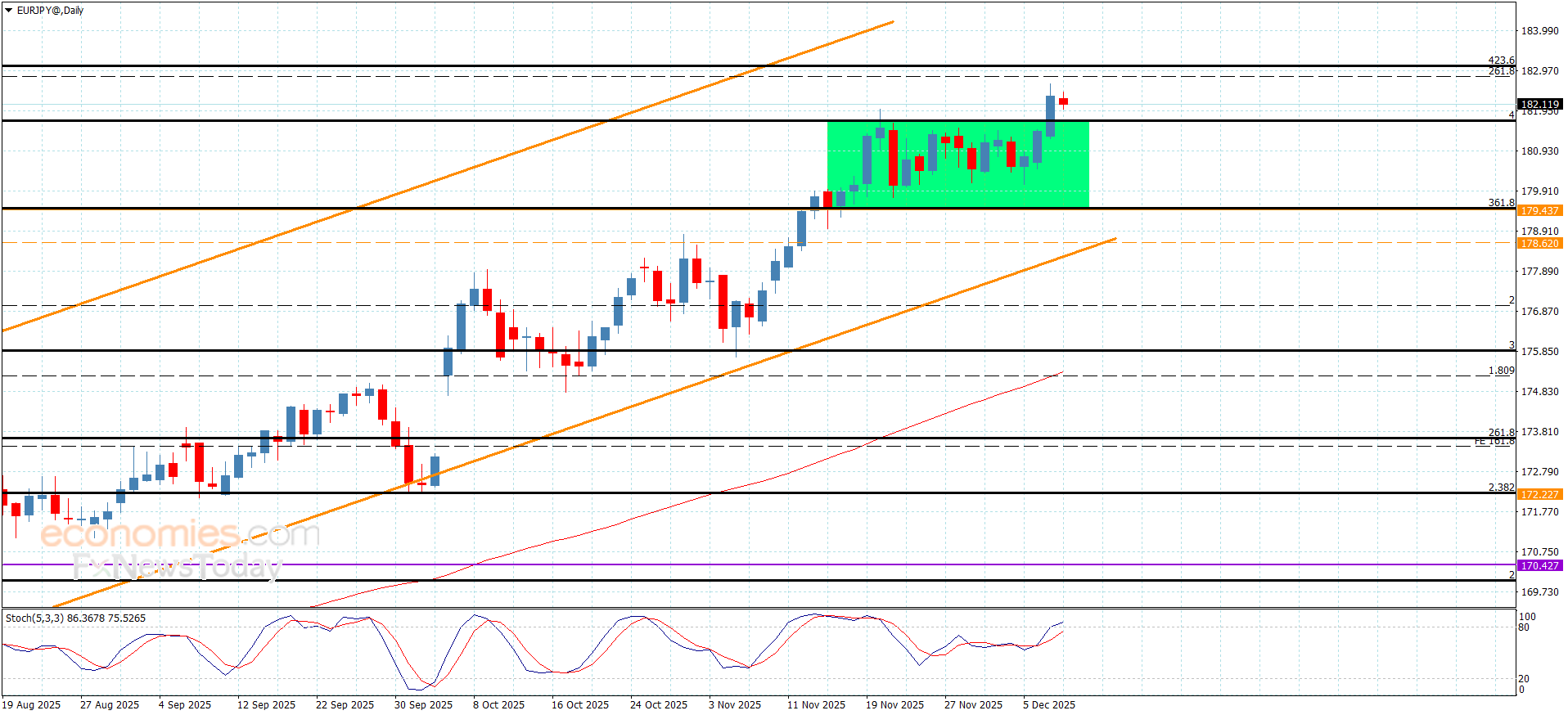
There is no change on copper price, despite forming mixed trading due to its stability above the extra support near $5.1300, increasing the chances of its activation with the positivity of the main indicators.


Stochastic stability within the overbought level will provide new positive momentum to ease the mission of resuming the bullish attack, reminding you that the stability of the next main target near $5.5000, while the decline below the current support might force it to form temporary corrective trading, and there is a chance for the decline towards $4.9500 reaching the main support near $4.7500.


The expected trading range for today is between $5.1850 and $5.5000


Trend forecast: Bullish


Source link

10 12, 2025

Demand for Vitamin and Mineral Supplement in USA | Global Market Analysis Report

By |2025-12-10T08:24:03+02:00December 10, 2025|Dietary Supplements News, News|0 Comments


Demand for Vitamin and Mineral Supplement in USA Forecast and Outlook 2025 to 2035

The demand for vitamin and mineral supplements in the USA is projected to grow from USD 21.3 billion in 2025 to USD 35.1 billion by 2035, reflecting a compound annual growth rate (CAGR) of 5.1%. As consumers become more health-conscious and seek to fill nutritional gaps through supplements, the demand for vitamins and minerals is expected to rise. The growing focus on preventative healthcare, aging populations, and the increasing awareness of the benefits of supplementation in maintaining health and well-being will support this growth.

The market will experience steady growth, starting at USD 21.3 billion in 2025 and rising to USD 22.4 billion in 2026, USD 23.5 billion in 2027, and USD 24.8 billion in 2028. By 2029, the market will reach USD 26.0 billion, continuing its upward trajectory through the 2030s. By 2035, the demand for vitamin and mineral supplements is projected to reach USD 35.1 billion, driven by an increase in health awareness and demand for natural, preventative health products.

Quick Stats of the Demand for Vitamin and Mineral Supplement in USA

  • Demand for Vitamin and Mineral Supplement in USA Value (2025): USD 21.3 billion
  • Demand for Vitamin and Mineral Supplement in USA Forecast Value (2035): USD 35.1 billion
  • Demand for Vitamin and Mineral Supplement in USA Forecast CAGR (2025-2035): 5.1%
  • Demand for Vitamin and Mineral Supplement in USA Key Product: 58% Vitamins
  • Demand for Vitamin and Mineral Supplement in USA Key Growth Regions: West USA, South USA, Northeast USA, Midwest USA
  • Demand for Vitamin and Mineral Supplement in USA Key Players: Amway Corporation, Herbalife Nutrition Ltd., Bayer AG, Pfizer Inc.

What is the Growth Forecast for the Vitamin and Mineral Supplement Industry in USA through 2035?

The early growth curve (2025–2029) for vitamin and mineral supplements shows a strong and steady increase in demand. During this period, the market will see incremental yearly growth, reflecting rising consumer awareness of the importance of nutritional balance and the increasing availability of supplements in a variety of forms (e.g., tablets, gummies, liquids). Early growth is driven by the increasing adoption of supplements in everyday health routines, the aging population’s desire for preventative care, and the ongoing popularity of health-conscious lifestyles.

By contrast, the late growth curve (2029–2035) will show a more stabilized but still positive increase in demand. Although growth continues, the rate of increase may begin to decelerate slightly as the market matures and more consumers integrate supplements into their daily lives. The late curve will likely reflect a more mature phase in the market, where consumers shift from initial adoption to long-term use, with greater competition and a wider range of supplement options available. While the early growth phase is characterized by quicker adoption and an expanding consumer base, the later years will see more sustained, consistent growth driven by an established market foundation.

USA Vitamin and Mineral Supplement Industry Key Takeaways


Metric Value
Industry Sales Value (2025) USD 21.3 billion
Industry Forecast Value (2035) USD 35.1 billion
Industry Forecast CAGR (2025-2035) 5.1%

Why is the Demand for Vitamin and Mineral Supplements in USA Growing?

Demand for vitamin and mineral supplements in the USA is rising as a growing proportion of consumers adopt preventive health and wellness practices. Many individuals now view daily supplementation as a way to fill nutritional gaps that may arise from busy lifestyles, limited diet variety, stress, or aging. Older adults in particular rely on vitamins and minerals to support bone health, immune function, energy levels, and overall vitality. As chronic health conditions, metabolic disorders, and dietary insufficiencies become more common, supplement use becomes an attractive option to support long term health and manage risk factors.

At the same time structural shifts in consumer behavior and market access support expansion of this demand. Wider availability of supplements through online retail makes purchasing easier and more convenient. Innovation in formats, such as gummies, chewables, powders or fortified functional foods, broadens appeal beyond traditional pill taking demographics. Rising interest in personalized nutrition, wellness, and health conscious lifestyles also drives uptake, with consumers seeking products tailored to age, dietary habits or health goals. As awareness of preventive health grows and supplement formulations evolve, demand for vitamin and mineral supplements in the USA is likely to keep increasing over coming years.

What Is the Current State of the Demand for Vitamin and Mineral Supplements in the USA in Terms of Product and Form?

The demand for vitamin and mineral supplements in the USA is largely defined by product composition and form preference. The leading product group is vitamins, holding 58% of market share, while tablets lead in form usage at 35%. Consumers across age groups use supplements to support nutritional intake, general wellness, and specific health concerns. The supplement market remains shaped by habitual consumption patterns, clinical recommendations, and the accessibility of retail and online distribution channels. As product formats diversify, vitamins and tablet-based formulations continue to serve as primary choices for routine supplementation.

How Are Vitamins Leading the Product Demand for Vitamin and Mineral Supplements in the USA?

Usa Vitamin And Mineral Supplement Market Analysis By Product

Vitamins account for 58% of the supplement product demand in the USA. This category includes essential micronutrients such as Vitamin D, Vitamin C, B-complex blends, and multivitamin formulations commonly taken for immune support, nervous system health, and metabolic function. High adoption rates can be observed in adults managing lifestyle-linked deficiencies, individuals with dietary restrictions, and the elderly who often require long-term nutritional support. The broad applicability of vitamins across demographics reinforces consistent daily intake, making vitamins a staple in preventive health and maintenance routines.

Growth in this segment is also influenced by increased public awareness regarding micronutrient insufficiency. Vitamins serve multiple preventive and corrective roles, and users often prefer direct supplementation over dietary adjustments when attempting to maintain recommended levels. Retail and e-commerce availability further encourages regular purchase cycles, while multivitamins simplify adherence by combining daily requirements in a single dose. Continuous usage behavior and long-term supplementation needs suggest that vitamins will remain the dominant category within the broader US supplement market.

How Are Tablets Leading the Form Demand for Vitamin and Mineral Supplements in the USA?

Usa Vitamin And Mineral Supplement Market Analysis By Form

Tablets, holding 35% market share, remain the most widely adopted form of vitamin and mineral supplements in the USA. Tablets offer precise dosing, long shelf-stability, and ease of mass-production, making them accessible across pharmacies, retail outlets, and online stores. For many users, tablets present a familiar and convenient format suited to daily intake regimens. They are commonly purchased by individuals who value portability, consistent dosage control, and cost efficiency. This form is widely used for multivitamins, single-nutrient supplements, and combination blends targeting specific health needs.

Preference for tablet supplements also reflects consumer expectations of simplicity and routine. Individuals managing chronic deficiencies or following physician-directed supplementation programs lean toward tablets due to dosing accuracy and widespread clinical recommendation. Effervescent powders, gummies, and soft-capsules continue to grow, yet tablets maintain strong retention among regular supplement users, especially older consumers and those prioritizing value over specialty formats. With durable packaging, long storage life, and straightforward administration, tablets are positioned to remain the leading format within the US vitamin and mineral supplement market.

What is the Demand Outlook for Vitamin and Mineral Supplements in the USA?

Demand for vitamin and mineral supplements in the USA continues to grow as consumers increasingly prioritize health, wellness, and preventive care. Many people use these supplements to address nutritional gaps, support immune function, or improve overall health. With greater awareness of the role of vitamins and minerals in maintaining well-being, supplements have become a common part of many households’ health routines. The market for vitamin and mineral supplements remains strong, driven by widespread use across various demographics and a broader focus on health.

What are the Drivers of Demand for Vitamin and Mineral Supplements in the USA?

Several factors are driving the demand for vitamin and mineral supplements. Growing health consciousness and a focus on preventive healthcare encourage people to take supplements to support immunity, energy levels, and bone health. An aging population increases demand, as older adults often require supplements to compensate for dietary insufficiencies or reduced nutrient absorption. Additionally, lifestyle factors such as busy schedules, dietary restrictions, and limited time for balanced meals lead consumers to choose convenient supplement options. Product innovation, such as different supplement formats and formulations tailored to specific health needs, further drives market growth.

What are the Restraints on Demand for Vitamin and Mineral Supplements in the USA?

Despite strong demand, several challenges limit growth. Some consumers are skeptical about the effectiveness of supplements and may prefer to obtain nutrients from food rather than pills. Concerns about overconsumption or side effects can also deter some individuals. Furthermore, quality control and regulatory oversight issues, such as variability in potency or ingredient transparency, may reduce consumer trust. For those with balanced diets, the need for supplements may seem unnecessary. Additionally, the cost of premium or specialized supplements may deter price-sensitive consumers or those who cannot afford long-term use.

What are the Key Trends Influencing Demand for Vitamin and Mineral Supplements in the USA?

Key trends influencing demand include a growing focus on personalized nutrition, where individuals seek supplements tailored to their specific health needs, age, or lifestyle. The popularity of alternative supplement formats, such as gummies, powders, and liquids, is also increasing, particularly among younger consumers who prefer more convenient options. There is also a rising trend in using supplements for preventive health and chronic disease risk management. Online retail and digital health platforms are expanding the availability and accessibility of supplements, further increasing consumer reach. As dietary patterns and health priorities evolve, the demand for supplements to fill nutritional gaps is expected to continue growing.

What is the Regional Demand Outlook for Vitamin and Mineral Supplements in the USA?

The demand for vitamin and mineral supplements in the USA is projected to grow across all regions. The West USA leads with a CAGR of 5.9%. The South USA follows with 5.3%. The Northeast USA shows a CAGR of 4.7% and the Midwest USA 4.1%. These regional differences reflect variation in consumer health awareness, demographic trends, access to retail and health food outlets, and lifestyle factors, including diet and preventive health habits. Growing interest in wellness, immune support, aging-related nutrition, and preventive healthcare drives the supplement market nationwide.

Usa Vitamin And Mineral Supplement Market Cagr Analysis By Country


Region CAGR (%)
West USA 5.9
South USA 5.3
Northeast USA 4.7
Midwest USA 4.1

What drives demand for vitamin and mineral supplements in the West USA?

Usa Vitamin And Mineral Supplement Market West Usa Market Share Analysis By Product

In the West USA, the 5.9% annual growth in demand for vitamin and mineral supplements is fueled by a consumer base that places high value on wellness, preventive health, and nutritional balance. The region has a large population of health-conscious individuals who are often early adopters of dietary supplements. Lifestyle trends such as fitness, organic food consumption, vegetarian and vegan diets, and interest in longevity support increased use of multivitamins, mineral supplements, and specialized nutrient formulas. Retail availability-via health food stores, pharmacies, wellness outlets and online platforms-ensures that supplements are accessible. Moreover, awareness about micronutrient deficiencies and the desire to support immune health, energy, bone health and general well being encourage regular supplement use. These factors combine to make the West a leading market for vitamin and mineral supplements.

Why is demand rising in the South USA?

Usa Vitamin And Mineral Supplement Market Country Value Analysis

In the South USA, the projected 5.3% CAGR reflects growing consumer awareness of diet and lifestyle related health needs. As populations age or deal with chronic health concerns, many individuals turn to supplementation to support nutritional gaps, especially when diet alone does not meet their needs. The prevalence of diet related health issues or lifestyle conditions creates demand for vitamins, minerals, and complementary nutrients. In addition, increasing availability of supplements through pharmacies, supermarkets, and online retail expands access for a wide range of consumers. Rising interest in preventive care and wellness routines also contributes to adoption. Over time, as more people prioritize health maintenance and nutrient sufficiency, demand for supplements steadily increases across households and demographics in the South region.

What supports growing supplement demand in the Northeast USA?

Usa Vitamin And Mineral Supplement Market Northeast Usa Market Share Analysis By Form

In the Northeast USA, the 4.7% forecast reflects moderate yet stable growth in demand for vitamin and mineral supplements. The region includes densely populated urban areas with diverse demographics and relatively high levels of health literacy. Consumers in the Northeast often have access to nutritional advice, health care providers, pharmacies, and wellness markets where supplements are easily available. Many individuals use supplements to complement busy lifestyles, compensate for nutritional imbalances, or support long term health goals such as bone strength, cardiovascular health, and metabolic balance. Seasonal climate changes that affect diet and lifestyle may also drive supplement use, especially for nutrients like vitamin D or multivitamins. As public awareness about the role of micronutrients in health spreads, supplement demand remains consistent and gradually increases.

How is demand for vitamin and mineral supplements evolving in the Midwest USA?

In the Midwest USA, the 4.1% CAGR indicates steady but slower growth compared with coastal or more urbanized regions. Nevertheless, demand continues to rise as consumers become more aware of nutrition and preventive health practices. Rural and suburban populations increasingly turn to supplements to fill dietary gaps, support overall health, or address specific needs such as joint health, bone health, and immunity. As retail access improves-through pharmacies, supermarkets, and e commerce-supplement adoption becomes more widespread. Economic considerations and varying levels of health awareness can influence uptake, but growing recognition of the benefits of preventive nutrition and sustained marketing of supplements help maintain gradual growth. Over time, increasing health consciousness and easier access to products support steady expansion of supplement demand in the Midwest.

What is the Competitive Landscape for the Vitamin and Mineral Supplement Market in the USA?

Usa Vitamin And Mineral Supplement Market Analysis By Company

Demand for vitamin and mineral supplements in the USA is rising steadily as consumers increasingly prioritize preventive health, wellness, and nutritional balance. The broader dietary supplements market in the USA was estimated at about USD 64 billion in 2024. Vitamins accounted for roughly 37.5 % of that segment. Growth is driven by concerns over nutrient deficiencies, ageing population, busy lifestyles, and growing interest in maintaining general health and immunity. Public interest in supplements for energy, immune support, bone health and overall wellness supports this demand.

In that environment several firms compete for market share. According to your data, Amway Corporation holds about 18.2 % share. Other significant players include Herbalife Nutrition Ltd., Bayer AG, Pfizer Inc. and a group of smaller companies combined. These firms differentiate through formulation types, product positioning, brand reputation, and distribution networks. Some focus on multivitamins and comprehensive nutrient blends; others target specific needs such as joint health, energy, or immune support. Product portfolios vary with offering of tablets, capsules, softgels or gummies. Suppliers emphasize quality, ingredient transparency, and ease of absorption to attract health conscious consumers. Retail reach, including online channels and wellness store presence, also shapes competitive advantage. As supplement consumption becomes more mainstream, competition remains strong. Firms continually adapt formulations, marketing strategies, and distribution to address evolving consumer health priorities.

Key Players of the Vitamin and Mineral Supplement Industry in USA

  • Amway Corporation
  • Herbalife Nutrition Ltd.
  • Bayer AG
  • Pfizer Inc.
  • Other Companies (combined)

Scope of the Report


Items Details
Quantitative Units USD Billion
Regions Covered USA
Product Vitamins, Minerals
Form Tablets, Capsules, Powders, Others
Distribution Channel Pharmacies & Drug Stores, Hypermarkets and Supermarkets, Others
Key Companies Profiled Amway Corporation, Herbalife Nutrition Ltd., Bayer AG, Pfizer Inc., Other Companies (combined)
Additional Attributes Dollar sales by product, form, and distribution channel show strong demand for vitamin supplements, particularly in tablet and capsule forms. Pharmacies and drug stores lead the distribution channels, with hypermarkets and supermarkets also contributing significantly. Vitamins continue to dominate, with minerals gaining in popularity for specific health needs. Leading companies like Amway, Herbalife, and Bayer offer a wide range of products. The market is expected to grow due to increasing awareness of health and wellness, with an emphasis on preventive care and nutritional supplementation.

Key Segments in the Demand for Vitamin and Mineral Supplement in USA

Product

Form

  • Tablets
  • Capsules
  • Powders
  • Others

Distribution Channel

  • Pharmacies & Drug Stores
  • Hypermarkets and Supermarkets
  • Others

Region

  • Northeast USA
  • West USA
  • Midwest USA
  • South USA

Frequently Asked Questions

How big is the demand for vitamin and mineral supplement in USA in 2025?

The demand for vitamin and mineral supplement in USA is estimated to be valued at USD 21.3 billion in 2025.

What will be the size of vitamin and mineral supplement in USA in 2035?

The market size for the vitamin and mineral supplement in USA is projected to reach USD 35.1 billion by 2035.

How much will be the demand for vitamin and mineral supplement in USA growth between 2025 and 2035?

The demand for vitamin and mineral supplement in USA is expected to grow at a 5.1% CAGR between 2025 and 2035.

What are the key product types in the vitamin and mineral supplement in USA?

The key product types in vitamin and mineral supplement in USA are vitamins and minerals.

Which form segment is expected to contribute significant share in the vitamin and mineral supplement in USA in 2025?

In terms of form, tablets segment is expected to command 35.0% share in the vitamin and mineral supplement in USA in 2025.


Source link

Go to Top