About Editorial team of BIPNs

Main team of content of bipns.com. Any type of content should be approved by us.
16 10, 2024

Breastfeeding and Breast Cancer – HealthyWomen

By |2024-10-16T18:58:00+03:00October 16, 2024|Fitness News, News|0 Comments


Laurel Post always knew she wanted to breastfeed.

But her plan to nurse her son for at least two years was derailed after 15 months when she was diagnosed with an aggressive form of breast cancer. If she’d had time to prepare, Laurel could have pumped and stored her own milk. But she needed to start chemotherapy, followed by a double mastectomy, as soon as possible.

Just like many other women, Post had to adapt and change her plans because of breast cancer. Unlike Post’s baby, though, some infants still require the bulk of their nutrition from breast milk or formula. So, what happens if you’re breastfeeding while you’re diagnosed with cancer or if you want to breastfeed after treatment?

All is not lost.

Yes, breast cancer may alter your plans to breastfeed. But in many cases, depending on your treatment plan, you can still breastfeed, though it might be different from what you had originally envisioned.

Breastfeeding is a journey of ups and downs for many women — even without a complication like a cancer diagnosis, said Kathleen Dudley, CRNP-PC, IBCLC, a pediatric nurse practitioner and lactation consultant and member of HealthyWomen’s Women’s Health Advisory Council. But you need not feel alone. “Your medical team and lactation consultant can help you make a plan to fit your and your baby’s needs for your specific situation,” she said.

Here’s what you need to know about breastfeeding during and after a breast cancer diagnosis and treatment.

Breastfeeding after surgery without further treatment

Sometimes surgery is the only treatment needed to treat breast cancer. In that case, you may be able to pump and freeze a supply of breast milk before your surgery and resume once you heal and all the medicine is out of your system.

Anesthesia and some pain medications (like narcotics) can transfer to breast milk, so make sure to ask your healthcare team how long to wait for the medicine to clear from your body.

If you’re considering taking herbs or other medication to stimulate milk production if your milk supply is low after taking a break, make sure to first consult with your healthcare provider (HCP).

Breastfeeding during chemotherapy

Chemotherapy drugs can pass through a mother’s body and into her breast milk, so women undergoing this type of treatment are advised against breastfeeding.

If you’re breastfeeding but must wean your baby to receive chemo, you can continue to pump to keep up your milk supply. However, that milk must be discarded. Some women may be able to resume nursing after their HCP says it’s safe.

One thing you should know is that studies show that chemotherapy can negatively impact the ability to produce milk (or halt it altogether) for some women.

Breastfeeding while taking hormone-blocking drugs

Breastfeeding and Breast Cancer – HealthyWomen

Hormone-blocking drugs like tamoxifen and aromatase inhibitors are commonly used to help reduce breast cancer recurrence. They work by blocking estrogen and are usually taken for at least five years following surgery.

Dudley advised against breastfeeding while taking a hormone-blocking drug, since the drug can be passed to the baby through breast milk.

A recent trial of women who paused their hormone therapy for up to two years to become pregnant and then breastfeed suggests that some women may be able to safely take a break from hormone-blocking drugs, depending on their treatment stage and other factors.

Breastfeeding and lumpectomy

It’s often possible to breastfeed after a lumpectomy (also called a partial mastectomy), which removes a tumor and healthy tissue surrounding it. However, because nerves and milk ducts are often disrupted, the treated breast may not produce enough milk.

Breastfeeding after radiation

You can breastfeed after radiation, which is given to most women after a lumpectomy. However, radiation may make your skin tender and painful to touch, like a bad sunburn or scalding to the area, or its elasticity could be compromised, making it difficult for the baby to latch. Talk to your HCP or radiographer about how to treat an irritated breast. Options include special creams and pads, mild over-the-counter pain relievers, and hot or cold compresses.

Radiation may also make milk appear darker and thicker — but that’s not dangerous. Even so, you might be more comfortable not breastfeeding from the radiated breast. And that’s OK. One breast is often able to produce enough milk to feed a baby — even twins!

If inadequate milk supply is a concern, using a breast pump in between feedings can often help with milk flow. Keeping an eye on your infant’s weight can help you know if the baby is getting enough milk from one breast. If not, you can supplement with formula or use a milk bank, where you can obtain pasteurized donor human milk.

Breastfeeding and the fear of cancer recurrence

The fear of cancer returning is an extremely common and normal concern among survivors, and some women might fear that breastfeeding could cause their cancer to recur. However, there is no evidence that breastfeeding will cause your cancer to come back. In fact, breastfeeding lowers your risk of getting breast cancer in the first place, although there is less research about the connection between breastfeeding and a recurrence of breast cancer.

Fed is best

Fed is best

While it’s common knowledge that breastfeeding can benefit both baby and mother, not every woman can, or wishes to, breastfeed. For some, bottle feeding may be more convenient, or there may be a lack of support in the workplace.

Whatever your decision or circumstances, there’s no need for guilt. Some research, including this study, has found “no significant difference” in health or intellect between breastfed and formula-fed babies.

Though the memory still stings for Post, she felt fortunate that her son was old enough to receive the bulk of his nutrition from solid foods when she was forced to quit breastfeeding. “There are so many other ways to bond with your infant,” she said.

Dudley reassures all mothers in a similar circumstance with this advice: “If you have to take a break from breastfeeding during certain phases of your treatment, or you have to cut your breastfeeding journey short to ensure you receive proper care — it’s OK. Your baby is lucky to have a mom working so hard to take care of them while also making sure she cares for herself!”

This educational resource was created with support from Daiichi Sankyo and Merck.

From Your Site Articles

Related Articles Around the Web


Source link

16 10, 2024

Sparkling Tea Market Current Scenario and Future Prospects 2032

By |2024-10-16T17:43:17+03:00October 16, 2024|Dietary Supplements News, News|0 Comments


Sparkling Tea Market Overview

The Sparkling Tea Market Industry is expected to grow from 5.97(USD Billion) in 2024 to 10.5 (USD Billion) by 2032 and CAGR (growth rate) is expected to be around 7.3% during the forecast period (2024 – 2032).

The global sparkling tea market has witnessed significant growth over the past few years and is expected to continue expanding through 203Sparkling tea, a carbonated tea beverage, combines the benefits of traditional tea with the effervescence of sparkling drinks. It is perceived as a healthier alternative to sugary carbonated soft drinks, contributing to its increasing popularity among health-conscious consumers. The market’s rapid expansion can be attributed to the growing demand for functional beverages, the rising trend of wellness and healthy living, and the increasing preference for natural, organic ingredients.

Access Full Report Now @ https://www.wiseguyreports.com/reports/sparkling-tea-market

Consumers are increasingly looking for beverages that offer not only refreshment but also health benefits. Sparkling tea fits this profile, as it is often made with natural flavors, is low in calories, and contains antioxidants and other beneficial compounds found in tea. Additionally, the variety of flavors available, including traditional tea flavors like green and black tea, as well as more exotic blends like hibiscus, chamomile, and matcha, has helped attract a diverse customer base.

The market’s growth is also being driven by innovations in product offerings, such as the introduction of organic, unsweetened, and low-sugar varieties. As the trend toward reduced sugar consumption continues, many sparkling tea manufacturers are focusing on creating beverages that are both refreshing and health-conscious. Moreover, the beverage is gaining popularity not only as a non-alcoholic alternative but also as a mixer in cocktails, further expanding its market reach.

Competitive Landscape

The sparkling tea market is highly competitive, with several key players driving innovation and product diversification. Major companies are focusing on expanding their product portfolios and improving their distribution channels to meet the growing demand for healthier beverage options.

Key Players in the Market

Nongfu Spring ,Xingchen ,Red Bull ,Hangzhou Wahaha Group ,Meiji Holdings ,Unilever ,Pokka Sapporo Food & Beverage ,Ito En ,Danone ,Tingyi Holding Corporation ,PepsiCo ,Keurig Dr Pepper ,Monster Beverage ,The CocaCola Company ,Nestle

Strategic Developments

The competitive landscape is marked by continuous innovation as companies strive to differentiate their products and meet evolving consumer demands. Some of the key strategies adopted by major players include:

Product Innovation: Companies are constantly experimenting with new flavors and ingredients, such as organic herbs, botanical extracts, and exotic teas. This diversification of product offerings is helping to attract a wider range of consumers.

Sustainability Initiatives: Many sparkling tea brands are focusing on sustainable sourcing of ingredients and eco-friendly packaging solutions to align with the growing consumer preference for environmentally responsible products.

Collaborations and Partnerships: To expand their market presence, companies are forming strategic partnerships with retailers, foodservice providers, and online platforms. This approach helps them reach a broader customer base and enhance their distribution networks.

Geographical Expansion: Companies are expanding their operations into new markets, particularly in Asia-Pacific and North America, to tap into the growing demand for healthy and functional beverages.

Request Free Sample Report @ https://www.wiseguyreports.com/sample-request?id=593426

Market Segmentation

The sparkling tea market can be segmented based on product type, flavor, distribution channel, and region. Each segment has distinct growth drivers and trends that contribute to the overall market dynamics.

By Product Type

Organic Sparkling Tea

Organic sparkling teas are gaining traction among consumers who prioritize health and wellness. These beverages are made using organically grown tea leaves and natural ingredients, without synthetic pesticides or chemicals. The demand for organic products is particularly strong in North America and Europe, where consumers are more aware of the benefits of organic certification.

Non-Organic Sparkling Tea

Non-organic sparkling tea, while still health-conscious, is produced using conventional farming methods. These products are often more affordable and accessible to a broader consumer base, particularly in emerging markets where cost-consciousness is a key factor.

By Flavor

Black Tea

Black tea-based sparkling beverages are among the most popular, offering a robust flavor profile that appeals to tea traditionalists. Black tea contains higher caffeine levels compared to other types of tea, making it a preferred choice for consumers seeking a refreshing yet energizing beverage.

Green Tea

Green tea-based sparkling drinks are known for their lighter, more delicate flavors and health benefits, including high antioxidant content. This type of sparkling tea is particularly popular among health-conscious consumers looking for a low-caffeine option with functional benefits.

Herbal Tea

Herbal teas such as chamomile, hibiscus, and rooibos are increasingly being used in sparkling tea formulations. These caffeine-free options are particularly attractive to consumers seeking a relaxing, non-stimulant beverage.

Fruit-Infused Tea

Fruit-infused sparkling teas, such as those with flavors like lemon, peach, or berries, appeal to consumers who prefer a sweeter, more refreshing drink. These beverages often contain natural fruit extracts and are popular among younger consumers and those looking for more exciting flavor combinations.

By Distribution Channel

Store-Based

The majority of sparkling tea sales occur through store-based channels, including supermarkets, hypermarkets, convenience stores, and specialty health food stores. In-store promotions, product displays, and sampling events play a key role in attracting new customers.

Online

The online distribution channel is rapidly gaining importance, especially with the rise of e-commerce platforms and direct-to-consumer brands. Online shopping offers convenience, a wider selection of products, and the ability to compare prices easily, contributing to its growing popularity. This trend has been accelerated by the COVID-19 pandemic, which has led to increased online purchasing of groceries and beverages.

By Packaging

Cans

Cans are the most common packaging format for sparkling tea due to their convenience, portability, and recyclability. They are particularly popular for on-the-go consumption and are a preferred choice for environmentally conscious consumers.

Bottles

Bottled sparkling tea is often perceived as a premium option and is commonly found in specialty stores and health food outlets. Glass bottles, in particular, are favored by consumers who prioritize aesthetics and sustainability.

Regional Analysis

The sparkling tea market is experiencing growth across multiple regions, each with unique market dynamics and consumer preferences.

North America

North America is one of the largest markets for sparkling tea, driven by growing consumer awareness of health and wellness. The U.S., in particular, has seen a surge in demand for low-calorie, functional beverages, and sparkling tea fits well within this trend. The increasing popularity of organic and natural products has also contributed to the market’s growth. The region is home to several key players who are continuously innovating to meet consumer demand for clean-label and plant-based beverages.

Europe

Europe is another major market for sparkling tea, with strong demand in countries like the UK, Germany, and France. European consumers are highly conscious of sustainability and health, driving demand for organic and eco-friendly products. The trend toward sugar reduction in beverages has further boosted the market for sparkling tea as a healthier alternative to sugary sodas and energy drinks. The presence of established brands and the expansion of niche, artisanal sparkling tea producers have further enhanced the market’s growth potential.

Asia-Pacific

Asia-Pacific is emerging as a rapidly growing market for sparkling tea, driven by rising disposable incomes, urbanization, and a shift in consumer preferences toward healthier beverages. The region, particularly China, Japan, and South Korea, has a long-standing tea culture, which provides a strong foundation for the adoption of sparkling tea. In recent years, the increasing awareness of the health benefits of tea and the influence of Western health trends have led to a growing interest in sparkling tea in this region.

Latin America

Latin America is a relatively smaller but growing market for sparkling tea. The region is witnessing an increasing interest in functional and wellness beverages, particularly in countries like Brazil and Mexico. As disposable incomes rise and consumers become more health-conscious, the demand for sparkling tea is expected to grow. However, price sensitivity remains a key factor in this market, and companies will need to focus on affordability to capture a larger share.

Middle East & Africa

The Middle East & Africa region is also seeing gradual growth in the sparkling tea market, particularly in the affluent markets of the UAE, Saudi Arabia, and South Africa. Consumers in this region are increasingly looking for healthier beverage options as part of a broader trend toward wellness and fitness. The market is expected to see steady growth as companies expand their distribution networks and introduce new products tailored to local tastes.

Key Questions Answered in this Report

What are the challenges to market growth?

Who are the key vendors in this market space?

What will the market size be in 20242032 and what will the growth rate be?

What are the key market trends? What is driving this market?

What are the market opportunities and threats faced by the key vendors?

What are the strengths and weaknesses of the key vendors?

Table of Contents :

Section I : Industry Overview

Section II: Scoping, Methodology And Market Structure

Section Iii: Qualitative Analysis

Section IV: Quantitative Analysis

Section V: Competitive Analysis …

Grab More Report:

Mango Premix Market : https://www.wiseguyreports.com/reports/mango-premix-market

Shelf Life And Stability Testing Market : https://www.wiseguyreports.com/reports/shelf-life-and-stability-testing-market

Iqf Blackberry Market : https://www.wiseguyreports.com/reports/iqf-blackberry-market

Natural No Added Citrus Oils Market : https://www.wiseguyreports.com/reports/natural-no-added-citrus-oils-market

Frozen Toothfish Market : https://www.wiseguyreports.com/reports/frozen-toothfish-market

Hummingbirds Feed Market : https://www.wiseguyreports.com/reports/hummingbirds-feed-market

Concentrated Mango Juice Market : https://www.wiseguyreports.com/reports/concentrated-mango-juice-market

Baby Rice Flour And Baby Rice Cereal Market : https://www.wiseguyreports.com/reports/baby-rice-flour-and-baby-rice-cereal-market

Maltosyltrehalose Syrup Market : https://www.wiseguyreports.com/reports/maltosyltrehalose-syrup-market

Bakery Grade Whipping Cream Market : https://www.wiseguyreports.com/reports/bakery-grade-whipping-cream-market

Contact Us

WISEGUY RESEARCH CONSULTANTS PVT LTD

Office No. 528, Amanora Chambers Pune – 411028 Maharashtra, India 411028

Sales +91 20 6912 2998

About WiseGuy Reports

We Are One Of The World’s Largest Premium Market Research & Statistical Reports Centre

Wise Guy Reports is pleased to introduce itself as a leading provider of insightful market research solutions that adapt to the ever-changing demands of businesses around the globe. By offering comprehensive market intelligence, our company enables corporate organizations to make informed choices, drive growth, and stay ahead in competitive markets.

Integrity and ethical conduct are at the core of everything done within Wise Guy Reports. We ensure transparency, fairness, and integrity in all aspects of our business operations, including interactions with clients, partners, and stakeholders, by abiding by the highest ethical standards.

This release was published on openPR.


Source link

16 10, 2024

Pound Sterling looks to extend losses after UK inflation data

By |2024-10-16T17:14:38+03:00October 16, 2024|Forex News, News|0 Comments

  • GBP/USD touched its lowest level in nearly two months below 1.3000 on Wednesday.
  • Annual CPI inflation in the UK softened to 1.7% in September.
  • The near-term technical outlook suggests that the bearish bias remains intact.

Following a consolidation phase near 1.3100 in the Asian session on Wednesday, GBP/USD turned south and touched its lowest level since August 20 below 1.3000. The pair could continue to stretch lower in the near term, with markets reassessing the Bank of England’s (BoE) policy outlook after soft inflation readings.

The UK’s Office for National Statistics (ONS) reported that annual inflation in the UK, as measured by the change in the Consumer Price Index (CPI), softened to 1.7% in September from 2.2% in August. This reading came in below the market expectation of 1.9%. Additionally, the Producer Price Index (PPI) – Input declined by 2.3% on a yearly basis. Finally, the Retail Price Index rose 2.7% (YoY), down sharply from the 3.5% increase recorded in August.

According to Reuters, markets are currently pricing in a 70% probability of the BoE opting for two consecutive 25 basis points (bps) rate cuts in November and December, compared to a less-than-50% probability ahead of the release of the UK inflation data.

The US economic calendar will not feature any data releases that could influence the US Dollar’s (USD) valuation in the second half of the day. Hence, the negative impact of the UK inflation data on Pound Sterling could continue to dominate GBP/USD’s action.

GBP/USD Technical Analysis

The Relative Strength Index (RSI) on the 4-hour chart edged slightly higher after testing 30 when GBP/USD dropped below 1.3000. This technical development suggests that the pair’s bearish bias remains intact while investors allow for a technical correction before the next leg lower.

Once 1.3000 (round level, static level) is confirmed as resistance, 1.2940 (static level) and 1.2900 (static level, round level) could be seen as next support levels. If the pair stabilizes above 1.3000, resistance levels could be spotted at 1.3050 (static level) and 1.3080 (50-period Simple Moving Average).

Pound Sterling FAQs

The Pound Sterling (GBP) is the oldest currency in the world (886 AD) and the official currency of the United Kingdom. It is the fourth most traded unit for foreign exchange (FX) in the world, accounting for 12% of all transactions, averaging $630 billion a day, according to 2022 data. Its key trading pairs are GBP/USD, also known as ‘Cable’, which accounts for 11% of FX, GBP/JPY, or the ‘Dragon’ as it is known by traders (3%), and EUR/GBP (2%). The Pound Sterling is issued by the Bank of England (BoE).

The single most important factor influencing the value of the Pound Sterling is monetary policy decided by the Bank of England. The BoE bases its decisions on whether it has achieved its primary goal of “price stability” – a steady inflation rate of around 2%. Its primary tool for achieving this is the adjustment of interest rates. When inflation is too high, the BoE will try to rein it in by raising interest rates, making it more expensive for people and businesses to access credit. This is generally positive for GBP, as higher interest rates make the UK a more attractive place for global investors to park their money. When inflation falls too low it is a sign economic growth is slowing. In this scenario, the BoE will consider lowering interest rates to cheapen credit so businesses will borrow more to invest in growth-generating projects.

Data releases gauge the health of the economy and can impact the value of the Pound Sterling. Indicators such as GDP, Manufacturing and Services PMIs, and employment can all influence the direction of the GBP. A strong economy is good for Sterling. Not only does it attract more foreign investment but it may encourage the BoE to put up interest rates, which will directly strengthen GBP. Otherwise, if economic data is weak, the Pound Sterling is likely to fall.

Another significant data release for the Pound Sterling is the Trade Balance. This indicator measures the difference between what a country earns from its exports and what it spends on imports over a given period. If a country produces highly sought-after exports, its currency will benefit purely from the extra demand created from foreign buyers seeking to purchase these goods. Therefore, a positive net Trade Balance strengthens a currency and vice versa for a negative balance.


Source link

16 10, 2024

Analyst Predicts an 8,032% Surge in Dogecoin Price to $10

By |2024-10-16T17:12:14+03:00October 16, 2024|Crypto News, News|0 Comments

Seasoned market analyst Ali Martinez has asserted that Dogecoin will surge substantially, predicting the leading meme coin would trade at a two-digit price.

In today’s Dogecoin news, crypto expert Ali Martinez maintains that the $18 billion market-capped meme coin will surge extensively. This time, Martinez asserted that DOGE would trade at $10.

In a tweet on Tuesday, Martinez implied that a Dogecoin price uptick to double figures was possible, attaching an accompanying chart to back his assertions. Notably, a surge to $10 from the current market price would mean DOGE would grow 8,032%.

A Realistic Price Call?

Per the accompanying chart, Martinez based his $10 price speculation on Dogecoin’s price uptick from the base of its rising wedge on the 1-week timeframe. The analyst speculated that a move from the lower range to the tip of the wedge would translate to an exponential growth above $10.

Analyst Predicts an 8,032% Surge in Dogecoin Price to
Dogecoin Price Prediction per Ali Martinez

However, the price call was met with pessimism, especially from commenters. Several users questioned the practicality of the price speculation, citing different theories to their argument.

A user drew Martinez’s attention to Dogecoin’s potential market cap if it trades at $10. From calculations, Dogecoin would have a cap of $1.48 trillion, surpassing Bitcoin’s. Notably, Bitcoin has a market cap of $1.33 trillion.

While a few others believed it could be possible, they believed it would take multiple bull cycles and huge fund injections to achieve the $10 and $1.48 trillion price and market cap.

It bears mentioning that the $10 speculation was one of Martinez’s lofty Dogecoin price calls. Besides this, the analyst argued in February that the memecoin market leader would surge by 28,770% to $24.

Holders Dump Dogecoin Amidst Price Underperformance

Meanwhile, the number of wallets holding DOGE has reduced considerably as the meme coin’s price has failed to meet expectations. Data from Santiment shows that non-empty DOGE wallet addresses dropped to 6.62 million, the lowest since April 25.

The chart shows that the number of Dogecoin holders was on the rise from April to October 2024, reaching 6.74 million earlier this month. Notably, an earlier report where 19,630 new addresses were created on the Dogecoin ecosystem in one day backed this surge.

However, Santiment’s data on Tuesday shows a sharp decline by 106,600 addresses after the peak earlier in the month. The crypto data intelligence platform cited frustration over DOGE’s recent performance as the reason behind the dip, asserting that traders moved to other assets with quicker price pumps.

Nevertheless, DOGE has increased over 8% in the past 24 hours amidst a broader market uptrend. The meme coin trades at $0.1252 at the time of writing.

DisClamier: This content is informational and should not be considered financial advice. The views expressed in this article may include the author’s personal opinions and do not reflect The Crypto Basic opinion. Readers are encouraged to do thorough research before making any investment decisions. The Crypto Basic is not responsible for any financial losses.

Source link

16 10, 2024

The Osteoporosis and Depression Connection

By |2024-10-16T16:57:19+03:00October 16, 2024|Fitness News, News|0 Comments

October 20, 2024, is World Osteoporosis Day.

As the old saying goes, sticks and stones may break your bones but neglecting your bone health will hurt you.

If it’s been awhile since you thought about your bones, we get it. Bone health is underrated. But it’s also really important. Let’s put it this way: You can’t do much without a skeleton.

It’s especially important for women and people assigned female at birth to be proactive about bone health because osteoporosis, a disease that makes bones weak and brittle, affects 10 million people in the U.S. and 8 out of 10 of those are women.

The physical consequences of osteoporosis can be life-changing. A simple stretch, bend — even a cough — can result in a fracture or broken bone if you have osteoporosis. In fact, about half of all women over age 50 will break a bone at some point because of the disease.

Beyond breaks, osteoporosis can also have a significant impact on your mental health.

Osteoporosis and depression

In addition to physical problems, osteoporosis has been linked to serious mental health issues. Research shows people with osteoporosis are more likely to have depression compared to people who don’t have osteoporosis. In one 2022 study of mostly women, a majority of participants with osteoporosis had depression (86.9%) compared to 15.4% of the group who didn’t have osteoporosis.

Deborah T. Gold, Ph.D., professor emerita in psychiatry and behavioral sciences at Duke University Medical Center, has studied the connection between osteoporosis and depression for years. “When I started doing the research, we found that people [with osteoporosis] who got a fracture were limited in what they could do. It made them feel old — and it hurt — and that led to depression,” Gold said. “I do think in most cases depression is a result of the disease.”

Gold recalled a time when a study participant started sobbing as she filled out her osteoporosis questionnaire. “It just suggests how strongly it can affect you,” she said.

Watch: What You Need to Know About Osteoporosis >>

Depression and osteoporosis

Some researchers think the connection between osteoporosis and depression can go both ways. As in, depression can also be a risk factor for osteoporosis.

For one, research shows depression can increase cortisol (the stress hormone) in the body, which can lead to bone loss.

Treatment for depression may also affect bone health. Some antidepressants have been linked to an increase in bone loss and greater risk of fracture. One review found serotonin reuptake inhibitors (SSRIs) were associated with a decrease of bone mineral density. And an analysis of 23 studies found that depression was significantly associated with bone loss and an increased risk of fractures.

Gold noted that risk factors such as smoking, sedentary lifestyle and poor diet can also contribute to both depression and osteoporosis.

Postmenopausal osteoporosis and depression

Although osteoporosis is a disease that can happen at any age, people who are postmenopausal are at high risk.

Estrogen — and a lack of estrogen — has an impact on your bones because estrogen plays a big role in maintaining bone structure. During menopause, when estrogen levels decline, your bones become weaker. You’re most at risk for osteoporosis after menopause when estrogen levels stay consistently low.

Fluctuating estrogen levels that occur during the menopausal transition (perimenopause) also have an effect on the brain. In addition to mood changes, research shows a decline in estrogen affects serotonin levels — the feel good hormones — which can lead to depression.

Read: In an Aging America, Osteoporosis Is a Looming Public Health Crisis >>

Prevention and osteoporosis self-care

The connection between depression and osteoporosis is like the chicken or the egg debate. While research is ongoing, it’s a good idea to tell your healthcare provider about your risk factors for both conditions — especially if you’re going through menopause.

“[Osteoporosis and depression] are both diseases, and they both can be treated,” Gold said. “I think, however, that for people without depression now, getting control over osteoporosis will help them avoid depression in the future because osteoporosis makes you feel like you have no control anymore. And that’s the kind of thing that can lead to depression.”

One way to keep osteoporosis at bay is through diet and getting the right amount of calcium and vitamin D. (Note: If you’re taking a calcium supplement, take vitamin D along with it because your body needs vitamin D to absorb calcium.)

Weight-bearing exercise (low-impact aerobics, dancing, walking, etc.) is also crucial for healthy bones and muscle strength. “Some people hate it, but if you understand how much it can help, you might invest in it more,” Gold said. Per science, one review found that exercise was an effective way to improve bone mineral density in people with osteoporosis.

In addition to a healthy diet and exercise, self-care options for osteoporosis can include:

  • Quitting smoking
  • Limiting alcohol
  • Taking prescribed medications for bone health
  • Safeguarding your home to prevent falls
  • Maintaining an active social life

Watch: How to Avoid Falls in Your Home >>

Both osteoporosis and depression should be evaluated separately by different healthcare providers. Talk to your provider about getting a bone density test (DEXA scan) to check your bones and how to get screened for depression if you’ve noticed changes in your mood.

“You know, like any other disease, it’s up to the individual to take responsibility,” Gold said. “And if women don’t take responsibility for themselves and their problems — nobody else will.”

From Your Site Articles

Related Articles Around the Web



Source link

16 10, 2024

Play unveils Build Play development platform for Web3 games

By |2024-10-16T16:53:53+03:00October 16, 2024|News, NFT News|0 Comments


Play, formerly known as ReadyGG, has launched the Build Play development platform to expand access to Web3 technologies for gaming.

To add some cred to this, Play is also announcing a partnership with TapNation, a mobile game company that will use Play’s platform to integrate Web3 technologies into its games. This partnership will expand the PLAY ecosystem by integrating blockchain features into TapNation’s well-known mobile games, beginning with Rock Crawling: Racing Games 3D.

The platform that provides full access to Play’s tech stack. Until now, these tools were reserved for midcore to major studios, but Play (spelled PLAY by the company) is opening the doors to anyone and everyone ready to build on Web3. The features include the its Play Hub comprising tools like the Play ID, a community-driven marketplace, and the $PLAY token.

In an interview with GamesBeat, Christina Macedo, CEO of Play, said, “We did a rebrand and built a lot of technology for B2C clients. We changed to Play and the $PLAY token to make things very easy to understand and we created our podcast” featuring Play adviser Shawn Layden.

“The message is to build games that players want to play, and Web 3 solves the ecosystem challenges, heightens your ownership, helps you obtain assets online, and lets you grow in transition from Web2 to Web3,” Macedo said.

Macedo and Layden, former chairman of Sony Interactive Entertainment Worldwide Studios, will be speakers at our GamesBeat Next 2024 event on October 28-29 in San Francisco. (You can use this code, gbn24dean, for 25% off tickets; agenda here).

“For us, the Play Development Portal is another step forward in our mission to make Web3 game development accessible, regardless of your experience with blockchain,” Macedo said. “We’ve taken the same tools that helped major studios succeed, and made them available to everyone. It’s our way of saying ‘come as you are’ — whether you’re an indie studio or just starting out, you now have access to the tech and resources that were once only available to the big players. You can create the next big Web3 game, and you can start today.”

Build Play is a software-as-a-service (SaaS) platform, and it’s part of Play’s ongoing mission to democratize Web3 game development, lowering entry barriers and opening up Web3 technology access to the broader developer community. It integrates with Play’s full suite of B2B tools, offering powerful tools and enhanced features that streamline Web3 game development.

Now, developers of all levels – from solo creators to larger teams – gain access to proprietary APIs and SDKs that simplify the integration of blockchain functionalities into games.

The Build Play development platform

The Build Play development platform.

The Build Play platform enables multi-platform distribution, including Telegram game integration. Devs can build and distribute games on multiple platforms, including the rapidly growing Telegram platform that’s experiencing a major boom in user engagement, accessing a broad and active player base.

Devs can also deploy games on any blockchain without the need to understand the complexities of blockchain architecture. This flexibility is essential for scaling games globally and reaching diverse blockchain communities.

And the devs can mint and manage in-game assets as non-fungible tokens (NFTs) that can be traded or sold across multiple chains with additional customization options, enabling true ownership for players in line with Play’s commitment.

And devs can create in-game marketplaces where players can trade, buy, or sell in-game assets, facilitating peer-to-peer trading and allowing players to engage in unique game economies.

There are also data-driven analytics where devs can gain deep insights into player behavior, customizing game mechanics, improving engagement, and designing personalized experiences that keep players invested.

This platform is built to scale with the developer’s needs, offering a rich set of features designed to simplify the development process and open up new revenue streams.

Looking ahead

Play unveils Build Play development platform for Web3 games
Christina Macedo is CEO of Play.

As Play continues to bridge the gap between Web2 and Web3, the newly launched Build Play development platform is just the beginning. Play anticipates empowering thousands of developers to bring their creative visions to life on the blockchain, contributing to a future where Web3 games are as seamless and enjoyable as their Web2 counterparts.

As part of its broader mission, Play also launched PLAYground, a podcast and X Space (Twitter) series designed to share insights about the gaming ecosystem, discuss trending topics, and engage with the Web3 gaming community.

The first episode, “Build Games Players Want to Play”, aired on September 30, 2024, and featured Layden. During the debut episode, Layden discussed the importance of empowering developers.

“If we can get more people playing games, we need more people making games, and we have to give them tools and ideas and avenues to get out to the customer base,” Layden said.

TapNation partnership

Shawn Layden is former chairman of SIE Worldwide Studios.

With 60 million monthly active users and 1.4 billion downloads across more than 50 games, TapNation is set to deliver Web3 powered features using Play’s software development kit (SDK). With innovations like player-owned assets, NFTs, marketplace integration, and on-chain tournaments, players will soon enjoy deeper engagement and new ways to interact with their favorite games, unlocking new revenue opportunities for themselves and the broader gaming community, the companies said.

“This partnership exemplifies our dedication to continuous innovation and underscores our confidence in Web3 technology. Together with Play, we share a unified ambition: to pioneer tomorrow’s use cases and revolutionize the gaming industry,” said Hervé Montoute, CEO of TapNation, in a statement.

“Partnering with TapNation is a key part of this vision as they truly are leaders in their space,” Macedo said in a statement. “Mobile games have an incredible reach, especially in regions where access to traditional gaming hardware can be limited. By tapping into this, we’re bringing blockchain-powered games to millions of new players, many of whom will experience Web3 for the first time through their phones.”

The first game to showcase Web3 integration as part of this partnership will be Rock Crawling: Racing Games 3D, a highly rated mobile game that has surpassed 15 million downloads on major app stores.


Source link
16 10, 2024

XAU/USD Gold Price Analysis Today

By |2024-10-16T16:53:00+03:00October 16, 2024|Forex News, News|0 Comments


By Mahmoud Abdallah

Reviewer Adam Lemon

Fact-checker DailyForex.com Team

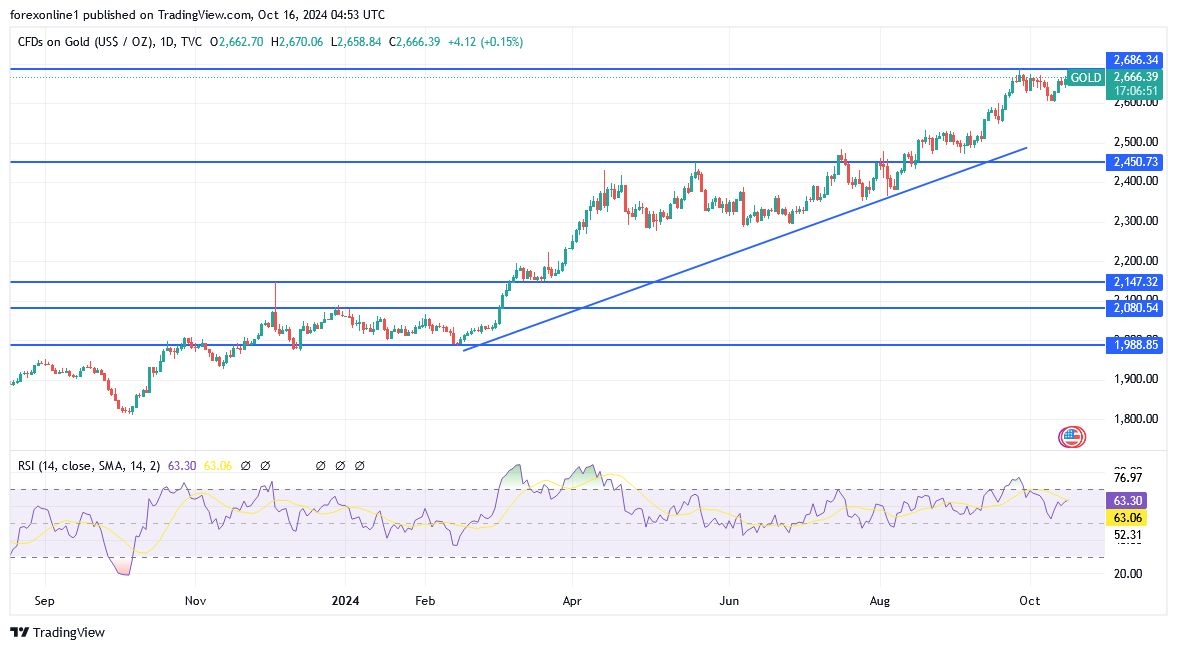
  • Currently, the price of gold is stabilizing around $2,667 per ounce at the time of writing, as global geopolitical tensions continue to support it.
  • As is well known, a stronger US dollar makes dollar-denominated commodities more expensive for holders of other currencies, affecting demand.

According to gold trading companies’ platforms, gold prices on the Comex exchange have been hovering around $2,600 per ounce during the past few sessions, with the upward movement pausing. 

Gold prices have been struggling to surpass their September peak, when prices rose to $2,696.90 per ounce. Recently, the US dollar has risen sharply over the past few sessions as investors expect the US Federal Reserve to not cut interest rates by a larger amount like its previous meeting. In the United States, rising inflation and a resilient Labor market have reduced bets on further cuts in interest rates by the Federal Reserve. 

Now, investors expect the Fed to cut US interest rates by 25 basis points at its November meeting. In September, the US central bank cut rates by 50 basis points, surprising financial and commodity markets. The US dollar extended its gains the previous week, hitting its highest level in more than two months, after Federal Reserve Governor Christopher Waller urged “more caution” about future rate cuts, citing recent economic data. Waller added: “Whatever happens in the near term, my baseline continues to call for gradual rate cuts over the next year.” 

Also, gold bulls are facing some pressure from easing tensions in the Middle East as the world awaits Israel’s response to Iran after the latter attacked Tel Aviv on October 1st. As a result, gold prices are likely to face some headwinds after the Washington Post reported that Israeli Prime Minister Benjamin Netanyahu told the United States that Israel would target the Iranian military, not nuclear or oil facilities. Furthermore, the report indicates that there will be a more limited counterstrike aimed at preventing a wider war. However, there has been no escalation so far since Iran launched ballistic missiles towards Israel on October 1st. Ultimately, this has somewhat eased tensions in the region. 

According to gold analysts today, gold prices enjoy support above the 21-day simple moving average (SMA) at $2,635 per ounce for the rest of this week. The 14-day Relative Strength Index (RSI) is flat, indicating that any decline in prices may be a good buying opportunity for traders. 

If gold prices rebound from their current slumber, the next target could be around $2,700 per ounce. Conversely, immediate support is seen at the 21-day simple moving average at $2,632, which will test the three-week low near the $2600 threshold below. Overall, a sustained break below the latter could extend to the downside towards the September 20 low of $2585 per ounce. 

Ready to trade today’s Gold Analysis? Here are the best brokers for Gold Trading to choose from.


Source link

16 10, 2024

Fish Oil Alternatives Market Report 2024

By |2024-10-16T15:42:21+03:00October 16, 2024|Dietary Supplements News, News|0 Comments


Dublin, Oct. 16, 2024 (GLOBE NEWSWIRE) — The “Fish Oil Alternatives Market Report 2024” has been added to ResearchAndMarkets.com’s offering.

The fish oil alternatives market size has grown strongly in recent years from $2.49 billion in 2023 to $2.68 billion in 2024 at a compound annual growth rate (CAGR) of 7.7%. The growth during the historic period can be linked to several factors, heightened awareness about contaminants in fish oil, a rising incidence of fish allergies, an increase in vegetarian and vegan populations, the recognized health benefits of omega-3 fatty acids, and a growing demand for dietary supplements.

The fish oil alternatives market size is expected to see strong growth in the next few years. It will grow to $3.62 billion in 2028 at a compound annual growth rate (CAGR) of 7.8%. The projected growth during the forecast period can be attributed to several factors, rising health and wellness trends, increased demand for clean-label products, regulatory pressure for sustainability, a growing market for vegan supplements, and heightened awareness of the health benefits of omega-3 fatty acids.

Key trends expected to drive this growth include greater investment in algae farming, advancements in oil extraction technologies, the expansion of vegan product lines, enhanced regulatory support for sustainable alternatives, and further technological improvements in oil extraction processes.

The rise in popularity of vegan food is expected to drive growth in the fish oil alternatives market. This increase in popularity is due to heightened health awareness, environmental concerns, and ethical considerations regarding animal welfare. Vegan alternatives to fish oil, such as algae oil and flaxseed oil, offer essential omega-3 fatty acids without using animal sources. These alternatives are beneficial for cardiovascular health and provide environmentally sustainable options for vegans. For example, the International Food Information Council, a US-based nonprofit supported by the food, beverage, and agricultural industries, reported in May 2023 that the percentage of people following a vegan diet rose to 52% in 2022, up from 39% in 2021. The vegan population also increased to 2% compared to the previous year. Thus, the growing interest in vegan food is fueling the expansion of the fish oil alternatives market.

Leading companies in the fish oil alternatives market are focusing on developing innovative products, such as plant-based supplements that deliver omega-3 fatty acids without the environmental impact of fish oil. These supplements are derived from plants and provide essential nutrients, including omega-3 fatty acids, which are important for overall health. For instance, in June 2024, MegaFood, a US-based dietary supplement company, introduced the Omega 3-6-9 Supplement. This product features sustainably sourced ahiflower and fish-free algae oil, improved taste, and reduced burps thanks to careful processing and delayed-release capsules. It offers a comprehensive nutrient profile with omega-3, omega-6, and omega-9 fatty acids, providing a more eco-friendly, palatable, and holistic option in the fish oil alternatives market.

Major companies operating in the fish oil alternatives market are Cargill, Archer Daniels Midland Company (ADM), BASF, Wilmar International, CHS, Dupont De Nemours, Koninklijke DSM, Croda International, Corbion, Pelagia, Omega Protein Corporation, Olvea Group, Connoils, Sonic Biochem, TerraVia Holdings, Bioway Organic Group, Veramaris, AlgiSys BioSciences, GC Rieber Oils and Medix Laboratoires.

The report covers market characteristics, size and growth, segmentation, regional and country breakdowns, competitive landscape, market shares, trends and strategies for this market. It traces the market’s historic and forecast market growth by geography.

Report Scope

Markets Covered:

1) By Product Type: Chia Seed Oil; Soybean Oil; Canola Oil; Hemp Seed Oil; Algae Oil; Walnut Oil; Flaxseed Oil; Other Product Types
2) By Species: Anchovy; Cod Liver; Menhaden; Tuna; Sardine; Salmon; Other Species
3) By Application: Food And Beverage Industry; Cosmetics And Personal Care; Animal Feed; Pet Food Additive; Pharmaceuticals; Nutraceuticals; Bio Fuels; Other Applications

Key Companies Mentioned: Cargill Inc.; Archer Daniels Midland Company (ADM); BASF SE; Wilmar International; CHS Inc.

Countries: Australia; Brazil; China; France; Germany; India; Indonesia; Japan; Russia; South Korea; UK; USA; Canada; Italy; Spain

Regions: Asia-Pacific; Western Europe; Eastern Europe; North America; South America; Middle East; Africa

Time Series: Five years historic and ten years forecast.

Data: Ratios of market size and growth to related markets, GDP proportions, expenditure per capita.

Data Segmentation: Country and regional historic and forecast data, market share of competitors, market segments.

Key Attributes:

Report Attribute Details
No. of Pages 175
Forecast Period 2024 – 2028
Estimated Market Value (USD) in 2024 $2.68 Billion
Forecasted Market Value (USD) by 2028 $3.62 Billion
Compound Annual Growth Rate 7.8%
Regions Covered Global

Key Topics Covered:

1. Executive Summary

2. Fish Oil Alternatives Market Characteristics

3. Fish Oil Alternatives Market Trends and Strategies

4. Fish Oil Alternatives Market – Macro Economic Scenario

5. Global Fish Oil Alternatives Market Size and Growth
5.1. Global Fish Oil Alternatives Market Drivers and Restraints
5.2. Global Fish Oil Alternatives Historic Market Size and Growth, 2018 – 2023, Value ($ Billion)
5.3. Global Fish Oil Alternatives Forecast Market Size and Growth, 2023 – 2028, 2033F, Value ($ Billion)

6. Fish Oil Alternatives Market Segmentation
6.1. Global Fish Oil Alternatives Market, Segmentation by Product Type, Historic and Forecast, 2018-2023, 2023-2028F, 2033F, $ Billion

  • Chia Seed Oil
  • Soybean Oil
  • Canola Oil
  • Hemp Seed Oil
  • Algae Oil
  • Walnut Oil
  • Flaxseed Oil
  • Other Product Types

6.2. Global Fish Oil Alternatives Market, Segmentation by Species, Historic and Forecast, 2018-2023, 2023-2028F, 2033F, $ Billion

  • Anchovy
  • Cod Liver
  • Menhaden
  • Tuna
  • Sardine
  • Salmon
  • Other Species

6.3. Global Fish Oil Alternatives Market, Segmentation by Application, Historic and Forecast, 2018-2023, 2023-2028F, 2033F, $ Billion

  • Food and Beverage Industry
  • Cosmetics and Personal Care
  • Animal Feed
  • Pet Food Additive
  • Pharmaceuticals
  • Nutraceuticals
  • Bio Fuels
  • Other Applications

7. Fish Oil Alternatives Market Regional and Country Analysis
7.1. Global Fish Oil Alternatives Market, Split by Region, Historic and Forecast, 2018-2023, 2023-2028F, 2033F, $ Billion
7.2. Global Fish Oil Alternatives Market, Split by Country, Historic and Forecast, 2018-2023, 2023-2028F, 2033F, $ Billion

8. Asia-Pacific Fish Oil Alternatives Market

9. China Fish Oil Alternatives Market

10. India Fish Oil Alternatives Market

11. Japan Fish Oil Alternatives Market

12. Australia Fish Oil Alternatives Market

13. Indonesia Fish Oil Alternatives Market

14. South Korea Fish Oil Alternatives Market

15. Western Europe Fish Oil Alternatives Market

16. UK Fish Oil Alternatives Market

17. Germany Fish Oil Alternatives Market

18. France Fish Oil Alternatives Market

19. Italy Fish Oil Alternatives Market

20. Spain Fish Oil Alternatives Market

21. Eastern Europe Fish Oil Alternatives Market

22. Russia Fish Oil Alternatives Market

23. North America Fish Oil Alternatives Market

24. USA Fish Oil Alternatives Market

25. Canada Fish Oil Alternatives Market

26. South America Fish Oil Alternatives Market

27. Brazil Fish Oil Alternatives Market

28. Middle East Fish Oil Alternatives Market

29. Africa Fish Oil Alternatives Market

30. Fish Oil Alternatives Market Competitive Landscape and Company Profiles
30.1. Fish Oil Alternatives Market Competitive Landscape
30.2. Fish Oil Alternatives Market Company Profiles

  • Cargill
  • Archer Daniels Midland Company (ADM)
  • BASF
  • Wilmar International
  • CHS

31. Fish Oil Alternatives Market Other Major and Innovative Companies

  • Dupont De Nemours
  • Koninklijke DSM
  • Croda International
  • Corbion
  • Pelagia
  • Omega Protein Corporation
  • Olvea Group
  • Connoils LLC
  • Sonic Biochem
  • TerraVia Holdings
  • Bioway Organic Group Limited
  • Veramaris
  • AlgiSys BioSciences Inc.
  • GC Rieber Oils
  • Medix Laboratoires

32. Global Fish Oil Alternatives Market Competitive Benchmarking

33. Global Fish Oil Alternatives Market Competitive Dashboard

34. Key Mergers and Acquisitions in the Fish Oil Alternatives Market

35. Fish Oil Alternatives Market Future Outlook and Potential Analysis
35.1 Fish Oil Alternatives Market in 2028 – Countries Offering Most New Opportunities
35.2 Fish Oil Alternatives Market in 2028 – Segments Offering Most New Opportunities
35.3 Fish Oil Alternatives Market in 2028 – Growth Strategies

For more information about this report visit https://www.researchandmarkets.com/r/fyz0dm

About ResearchAndMarkets.com
ResearchAndMarkets.com is the world’s leading source for international market research reports and market data. We provide you with the latest data on international and regional markets, key industries, the top companies, new products and the latest trends.


Source link

16 10, 2024

USD/JPY Analysis Today – 16/10: Momentum Strongly (Chart)

By |2024-10-16T15:13:57+03:00October 16, 2024|Forex News, News|0 Comments

By Mahmoud Abdallah

Reviewer Adam Lemon

Fact-checker DailyForex.com Team

  • The US dollar hit a peak not seen in more than two months against several major currencies on Tuesday, driven by growing speculation that the Federal Reserve will soon implement moderate US interest rate cuts.
  • Meanwhile, the Japanese yen approached the critical 150 threshold against the US dollar.
  • In early Asian trading, the euro remained steady but remained close to its lowest level since August 8, which it reached on Monday.
  • This comes ahead of the European Central Bank’s policy meeting scheduled for Thursday, where expectations are leaning towards another rate cut. Recent US economic indicators point to resilience, with a modest slowdown observed.

In addition, September inflation slightly beat expectations, prompting traders to scale back their expectations for a significant rate cut by the Federal Reserve. Recently, the US Fed began its easing cycle with an aggressive 50 basis point cut at its September meeting. Markets are currently pricing in an 89% chance of a 25-basis point rate cut in November, with a total of 45 basis points of easing expected for the rest of the year.

According to forex trading, the US dollar index, which measures the greenback against six other currencies, was last at 103.18, just below Monday’s peak of 103.36 – its highest since August 8. The index has risen 2.5% and looks poised to end a three-month slide.

The boost for the US dollar came after comments from Federal Reserve Governor Christopher Waller on Monday, who urged a cautious approach to future interest rate cuts, citing recent economic data. Waller stated, “Whatever happens in the near term, my baseline is still for a gradual reduction in the federal funds rate over the next year.” Waller also noted that recent hurricanes and the Boeing strike could complicate job market data, potentially reducing October’s monthly job gains by more than 100,000 jobs. Moreover, the next non-farm payrolls report is scheduled for early November.
Commenting on this, Chris Weston, head of research at Pepperstone, said: “Most people were aware that the recent disruptions would mess up the US non-farm payrolls print, but Waller’s comment goes a long way in defining the type of disruption we can expect. Basically, with the next non-farm payrolls data distorted, markets won’t have the same level of pricing risk control going into the November FOMC meeting.”

Overall, the recent rise in the US dollar has been negative for the Japanese yen, especially after the dovish turn from Bank of Japan Governor Kazuo Ueda and the unexpected resistance to further interest rate hikes from new Prime Minister Shigeru Ishiba. Also, these developments have raised questions about the timing of future policy tightening by the BOJ.

In early trade, the yen was at 149.55 yen per dollar, after hitting a two-and-a-half-month high of 149.98 yen on Monday, a day when Japan was closed for a holiday. Furthermore, the yen last touched 150 yen on Aug. 1. Meanwhile, China’s offshore yuan was little changed at 7.0935 dollars, after a report by Caixin Global suggested China could issue an additional 6 trillion yuan (about $850 billion) in treasury bonds over the next three years to stimulate its slowing economy. 

USD/JPY Technical analysis and Expectations Today:

Today, the upward shift in the USD/JPY price is still ongoing and breaking the psychological resistance 150.00 confirms the bulls’ strong control over the trend. After that, the technical indicators will move towards strong overbought levels if the bulls succeed in moving strongly towards the resistance levels 150.85 and 151.60 respectively. Technically, the trend will remain upward until the support 146.50 is successfully broken.

 Ready to trade our USD/JPY forex forecast? Here are the best forex brokers in Japan to choose from. 

Source link

16 10, 2024

Gummy Supplements Market Insights on Share Dynamics, Key Growth

By |2024-10-16T13:41:33+03:00October 16, 2024|Dietary Supplements News, News|0 Comments


Gummy Supplements Market

The global gummy supplements market is estimated to be valued at USD 28.14 Bn in 2024 and is expected to reach USD 72.17 Bn by 2031, growing at a compound annual growth rate (CAGR) of 14.4% from 2024 to 2031.

The latest market intelligence report published by CMI with the title “Global Gummy Supplements Market 2024, Growth Opportunities, and Forecast” provides actionable insights on Food and Beverages industry. The report provides demand analysis, industry insights, competitive intelligence, and customer database.

The Research report on Gummy Supplements Market presents a complete judgment of the market through strategic insights on future trends, growth factors, supplier landscape, demand landscape, Y-o-Y growth rate, CAGR, pricing analysis. It also provides and a lot of business matrices including Porters Five Forces Analysis, PESTLE Analysis, Value Chain Analysis, 4 Ps’ Analysis, Market Attractiveness Analysis, BPS Analysis, Ecosystem Analysis.

📌 Do you think, if this report could be of your interest? If yes, request Sample Copy of this Report: https://www.coherentmarketinsights.com/insight/request-sample/5103

*Note: Sample of the report provides details on the scope and coverage, table of contents, research methodology, and Sample Framework of the report. Actual report of 150+ is available for purchase to all the interested stakeholders.

Key takeaways Gummy Supplements Market

1. Rising Consumer Preference : Gummy supplements have gained popularity due to their appealing taste and ease of consumption, especially among those who find traditional pills or powders unpalatable. This trend is particularly strong among children and adults looking for convenient and enjoyable ways to take their vitamins and supplements.

2. Expansion of Health and Wellness Trends: With a growing focus on health and wellness, consumers are increasingly seeking dietary supplements that support immunity, digestion, and overall well-being. Gummy supplements are capitalizing on this trend by offering formulations that cater to specific health needs, such as vitamin C for immune support or probiotics for gut health.

3. Innovative Formulations and Ingredients: The market is witnessing a surge in innovation, with brands introducing that feature unique ingredients, such as plant-based and organic options, as well as functional ingredients like collagen, elderberry, and superfoods. This diversification helps brands cater to specific dietary preferences and health goals.

4. E-commerce Growth: The rise of online shopping has significantly impacted the gummy supplements market, with many consumers opting to purchase these products through e-commerce platforms. Brands are investing in digital marketing and direct-to-consumer channels to enhance their online presence and reach a broader audience.

5. Focus on Clean Label and Transparency: Consumers are increasingly demanding transparency regarding ingredient sourcing and product formulation. Gummy supplement brands are responding by emphasizing clean label practices, including the use of natural colors and flavors, non-GMO ingredients, and clear labeling of nutritional benefits. This focus on quality and transparency is critical for building consumer trust and loyalty.

📌 Want to access more insights? The journey starts from requesting Sample: https://www.coherentmarketinsights.com/insight/request-sample/5103

*Note: Sample of the report provides details on the scope and coverage, table of contents, research methodology, and Sample Framework of the report. Actual report of 150+ is available for purchase to all the interested stakeholders.

Detailed Segmentation and Classification of the report (Market Size and Forecast – 2031, Y-o-Y growth rate, and CAGR):

• By Type:

Vitamin

Omega-3 fatty acid

Collagen

Others

• By End User:

Children

Adults

• By Distribution Channel:

Hypermarket/Supermarket

Convenience Store

Pharmacies and Drug Stores

Online Channel

Other

• By Regions and Countries

o North America

o Europe

o Asia-Pacific

o South America

o Middle East & Africa

Following are the players analyzed in the report:

• Amapharm

• Procaps Group

• Vitakem Nutraceutical Inc.

• Santa Cruz Nutritionals

• Herbaland Canada

• Allseps Pty. Ltd.

• Vitux AS

• Boscogen Inc.

• Bettera Brands LLC

• NutraStar Manufacturing Ltd.

• Better Nutritionals

• Prime Health Ltd.

• AJES Pharmaceuticals LLC

• Lactonova

• SMPNutra.com

• Lexicare Pharma Pvt. Ltd.

• Superior Supplement Manufacturing

• Well Aliments

• Supplement Factory Ltd.

✅Grab the Deal! Up to 25% OFF Purchase this Complete Market Report: https://www.coherentmarketinsights.com/insight/buy-now/5103

Deep-dive Analysis:

The Report provides deep-dive qualitative and quantitative analysis on Gummy Supplements Market for all the regions and countries covered below:

• North America (the United States, Canada, and Mexico)

• Europe (Germany, France, Italy, United Kingdom, SCANDIVAN, Benelux, Russia, and Rest of Europe)

• Asia-Pacific (Japan, South Korea, India, China, Southeast Asia, and Australia)

• South America (Brazil, Argentina, and Rest of South America)

• Middle East & Africa (Saudi Arabia, UAE, Israel, South Africa, and Rest of the Middle East & Africa)

• Each Country is covered in detail, and report provides qualitative and quantitative analysis on Gummy Supplements Market on each country.

The research provides answers to the following key questions:

1. What is the estimated growth rate of the market for the forecast period 2024-2031? What will be the market size during the estimated period?

2. What are the key driving forces responsible for shaping the fate of the Gummy Supplements market during the forecast period?

3. Who are the major market vendors and what are the winning strategies that have helped them occupy a strong foothold in the Gummy Supplements market?

4. What are the prominent market trends influencing the development of the Gummy Supplements market across different regions?

5. What are the major threats and challenges likely to act as a barrier in the growth of the Gummy Supplements market?

6. What are the major opportunities the market leaders can rely on to gain success and profitability?

Key insights provided by the report that could help you take critical strategic decisions?

• Regional report analysis highlighting the consumption of products/services in a region also shows the factors that influence the market in each region.

• Reports provide opportunities and threats faced by suppliers in the Gummy Supplements and tubes industry around the world.

• The report shows regions and sectors with the fastest growth potential.

• A competitive environment that includes market rankings of major companies, along with new product launches, partnerships, business expansions, and acquisitions.

• The report provides an extensive corporate profile consisting of company overviews, company insights, product benchmarks, and SWOT analysis for key market participants.

• This report provides the industry’s current and future market outlook on the recent development, growth opportunities, drivers, challenges, and two regional constraints emerging in advanced regions.

Author of this marketing PR:

Priya Pandey is a dynamic and passionate PR writer with over three years of expertise in content writing and proofreading. Holding a bachelor’s degree in biotechnology, Priya has a knack for making the content engaging. Her diverse portfolio includes writing contents and documents across different industries, including food and beverages, information and technology, healthcare, chemical and materials, etc. Priya’s meticulous attention to detail and commitment to excellence make her an invaluable asset in the world of content creation and refinement.

☎ Contact Us:

Mr. Shah

Senior Client Partner – Business Development

Coherent Market Insights

Phone:

US: +1-206-701-6702

UK: +44-020-8133-4027

Australia: +61-2-4786-0457

India: +91-848-285-0837

Email: sales@coherentmarketinsights.com

Website: https://www.coherentmarketinsights.com

Follow Us: LinkedIn | Twitter

About Us:

Coherent Market Insights is a global market intelligence and consulting organization that provides syndicated research reports, customized research reports, and consulting services. We are known for our actionable insights and authentic reports in various domains including aerospace and defense, agriculture, food and beverages, automotive, chemicals and materials, and virtually all domains and an exhaustive list of sub-domains under the sun. We create value for clients through our highly reliable and accurate reports. We are also committed in playing a leading role in offering insights in various sectors post-COVID-19 and continue to deliver measurable, sustainable results for our clients.

This release was published on openPR.


Source link

Go to Top