About Editorial team of BIPNs

Main team of content of bipns.com. Any type of content should be approved by us.
14 10, 2024

Euro sets trading range before next breakout

By |2024-10-14T16:48:16+03:00October 14, 2024|Forex News, News|0 Comments

  • EUR/USD trades in a tight range below 1.0950 to start the new week.
  • European Central Bank (ECB) will announce monetary policy decisions on Thursday.
  • The pair’s action is likely to remain subdued in the near term.

EUR/USD moves up and down in a narrow range below 1.0950 in the European session on Monday after posting marginal losses in the previous week. The near-term technical outlook suggests that the bearish bias remains intact but the pair could have a difficult time gathering directional momentum.

Euro PRICE Last 7 days

The table below shows the percentage change of Euro (EUR) against listed major currencies last 7 days. Euro was the weakest against the US Dollar.

  USD EUR GBP JPY CAD AUD NZD CHF
USD   0.41% 0.41% 0.46% 1.59% 0.99% 1.21% 0.12%
EUR -0.41%   0.07% 0.08% 1.22% 0.56% 0.79% -0.31%
GBP -0.41% -0.07%   -0.02% 1.16% 0.49% 0.76% -0.26%
JPY -0.46% -0.08% 0.02%   1.12% 0.51% 0.68% -0.31%
CAD -1.59% -1.22% -1.16% -1.12%   -0.57% -0.38% -1.45%
AUD -0.99% -0.56% -0.49% -0.51% 0.57%   0.27% -0.83%
NZD -1.21% -0.79% -0.76% -0.68% 0.38% -0.27%   -1.04%
CHF -0.12% 0.31% 0.26% 0.31% 1.45% 0.83% 1.04%  

The heat map shows percentage changes of major currencies against each other. The base currency is picked from the left column, while the quote currency is picked from the top row. For example, if you pick the Euro from the left column and move along the horizontal line to the US Dollar, the percentage change displayed in the box will represent EUR (base)/USD (quote).

Mixed macroeconomic data releases from the US made it difficult for the US Dollar (USD) to preserve its bullish momentum last week, allowing EUR/USD to hold its ground. Although the Consumer Price Index and Producer Price Index figures for September arrived slightly above analysts’ estimates, the disappointing Initial Jobless Claims data revived concerns over a further softening of labor market conditions.

The economic calendar will not feature any high-tier data releases on Monday. Additionally, bond markets in the US will remain closed in observance of the Columbus Day holiday. Hence, EUR/USD is likely to extend its sideways grind in the second half of the day.

On Thursday, the European Central Bank (ECB) will announce monetary policy decisions. Investors could refrain from taking large positions ahead of this key event.

EUR/USD Technical Analysis

The Relative Strength Index (RSI) indicator on the 4-hour chart stays flat below 50, suggesting that the pair struggles to attract buyers, while consolidating the recent losses.

EUR/USD faces a pivot point at 1.0950, where Fibonacci 61.8% retracement of the latest uptrend is located. Once this level is confirmed as support, 1.1000 (Fibonacci 50% retracement) and 1.1050 (Fibonacci 38.2% retracement) could be seen as next resistance levels.

In case EUR/USD fails to reclaim 1.0950 and continues to use this level as resistance, supports could be spotted at 1.0900 (round level), 1.0870 (Fibonacci 78.6% retracement) and 1.0800 (round level).

Euro FAQs

The Euro is the currency for the 19 European Union countries that belong to the Eurozone. It is the second most heavily traded currency in the world behind the US Dollar. In 2022, it accounted for 31% of all foreign exchange transactions, with an average daily turnover of over $2.2 trillion a day. EUR/USD is the most heavily traded currency pair in the world, accounting for an estimated 30% off all transactions, followed by EUR/JPY (4%), EUR/GBP (3%) and EUR/AUD (2%).

The European Central Bank (ECB) in Frankfurt, Germany, is the reserve bank for the Eurozone. The ECB sets interest rates and manages monetary policy. The ECB’s primary mandate is to maintain price stability, which means either controlling inflation or stimulating growth. Its primary tool is the raising or lowering of interest rates. Relatively high interest rates – or the expectation of higher rates – will usually benefit the Euro and vice versa. The ECB Governing Council makes monetary policy decisions at meetings held eight times a year. Decisions are made by heads of the Eurozone national banks and six permanent members, including the President of the ECB, Christine Lagarde.

Eurozone inflation data, measured by the Harmonized Index of Consumer Prices (HICP), is an important econometric for the Euro. If inflation rises more than expected, especially if above the ECB’s 2% target, it obliges the ECB to raise interest rates to bring it back under control. Relatively high interest rates compared to its counterparts will usually benefit the Euro, as it makes the region more attractive as a place for global investors to park their money.

Data releases gauge the health of the economy and can impact on the Euro. Indicators such as GDP, Manufacturing and Services PMIs, employment, and consumer sentiment surveys can all influence the direction of the single currency. A strong economy is good for the Euro. Not only does it attract more foreign investment but it may encourage the ECB to put up interest rates, which will directly strengthen the Euro. Otherwise, if economic data is weak, the Euro is likely to fall. Economic data for the four largest economies in the euro area (Germany, France, Italy and Spain) are especially significant, as they account for 75% of the Eurozone’s economy.

Another significant data release for the Euro is the Trade Balance. This indicator measures the difference between what a country earns from its exports and what it spends on imports over a given period. If a country produces highly sought after exports then its currency will gain in value purely from the extra demand created from foreign buyers seeking to purchase these goods. Therefore, a positive net Trade Balance strengthens a currency and vice versa for a negative balance.

 

Source link

14 10, 2024

Shiba Inu (SHIB) & Dogecoin (DOGE) Price Analysis For October End

By |2024-10-14T16:43:56+03:00October 14, 2024|Crypto News, News|0 Comments

Shiba Inu and Dogecoin are the two leading meme coins in the cryptocurrency domain. Both tokens have had remarkable price runs, establishing independent price reputations in their respective spaces.

However, 2024 has proven to be quite a mellow year for both tokens. Doge and SHIB have yet to note a “surprising” price rally, the one that helps give investors the returns they are looking forward to accumulating and building on. Will a new ATH hit Shiba Inu and Dogecoin by the end of this month? Let’s find out.

Also Read: Solana: Here’s How High SOL Can Peak In October 2024

Shiba Inu Price Prediction

Shiba Inu (SHIB) & Dogecoin (DOGE) Price Analysis For October End
Source – Token Metrics

Shiba Inu has long established its independent reputation and is now consistently working on expanding its ecosystem. With the news of a Shiba Inu stablecoin official under construction, the token is bound to receive additional investor support, as the market is always looking forward to embracing new elements of change.

According to CoinCodex, SHIB may note a modest price peak by the end of this month, 2024. The token is currently sitting at $0.00001784.

Image: CoinCodex

“According to our current Shiba Inu price prediction, the price of Shiba Inu is predicted to rise by 0.68% and reach $0.00001758 by November 13, 2024. Per our technical indicators, the current sentiment is bullish, while the Fear & Greed Index is showing 48 (neutral). Shiba Inu recorded 14/30 (47%) green days with 12.32% price volatility over the last 30 days. Based on the Shiba Inu forecast, it’s now a good time to buy Shiba Inu.”

Also Read: VeChain Weekly Price Prediction: Can VET Hit $0.03 This Week?

Dogecoin Price Prediction

DogecoinDogecoin
Source – Decrypt

Dogecoin is another crucial meme coin, often mentioned as the leading meme coin governing the cryptocurrency space. 2024 has been quite bearish for Doge, with the token encountering most of its days trending in red rather than documenting new price hikes.

Amid the recent Doge downturns, leading crypto analyst Ali shared how, despite the low Doge momentum, Dogecoin active addresses have managed to peak at 133,880, signaling strong user support.

According to CoinCodex, Doge may decline further by the end of October 2024. The token may experience a 13% downturn to a low price mark of $0.94. It’s currently trading at $0.1118.

Image: CoinCodex

“According to our current Dogecoin price prediction, the price of Dogecoin is predicted to drop by -13.53% and reach $0.094601 by November 13, 2024. Per our technical indicators, the current sentiment is neutral, while the Fear & Greed Index is showing 48 (neutral). Dogecoin recorded 16/30 (53%) green days with 6.00% price volatility over the last 30 days. Based on the Dogecoin forecast, it’s now a good time to buy Dogecoin.”

Also Read: Dogecoin May Break Yearly Highs “Any Moment Now”-Per Analyst

Source link

14 10, 2024

How To Choose The Perfect Toppings For Your Boba Tea

By |2024-10-14T15:14:14+03:00October 14, 2024|Dietary Supplements News, News|0 Comments


By

Deepali Verma

Updated:Oct 14, 2024

The unique variety of toppings in bubble tea means that you literally can have the whole world in a cup. From tapioca pearls to fruit balls popping with juice, there’s absolutely perfect for every type of drink. Here’s your guide to finding the best boba tea. 

How To Choose The Perfect Toppings For Your Boba Tea

Bubble tea, or boba tea, has become a global sensation, loved for its fun textures and customisable flavours. With its chewy tapioca pearls and sweet, refreshing base, choosing the right toppings can enhance the experience. Be it a bubble tea lover or a beginner, it’s easy to get lost in all the choices when it comes to boba toppings, which is rather exciting. Everything from chewy pearls to jelly-filled popping boba and jelly bits, the toppings can take your boba drink to a whole new level. Sahil Arya, Co-founder and Director, Fat Tiger shares an insight into how to make the most of your boba tea toppings.  

Understanding the Basics of Boba Tea 

If you are to discuss the toppings one just has to examine the main components of bubble tea first. In most cases, bubble tea is made from brewed tea like black tea, green tea, or oolong, plus milk or fruit flavouring, sweetener, and ice. The real fun begins when you throw in edible pearls or fruity jelly in the mix so that instead of just a drink you are getting a treat for your mouth too. Such adaptability also helps boba tea be an essential beverage for everyone and under any circumstances. 

When to Choose Tapioca Pearls: 

– If you love chewy textures. 

– Perfect for milk teas and traditional boba drinks. 

– Best for classic flavours like black tea, brown sugar, or taro milk tea. 

Popping Boba 

Popping bobas are a modern invention of everyone’s favourite tapioca pearls. They are pearls filled with juice and when bitten they burst in the mouth giving a fruity flavour. They are mostly found in lychee, mango, strawberry and blueberry flavours. 

When to Choose Popping Boba: 

– If you love a burst of flavour with every sip. 

– Ideal for fruit teas or slushes. 

– Great for adding a fruity twist to your drink, especially in mango or passion fruit teas. 

When to Choose Jelly Toppings: 

– If you want a refreshing texture that’s not as chewy as pearls. 

– Pairs well with fruit teas or green tea-based drinks. 

– Perfect for those who enjoy tropical or herbal notes in their boba. 

Aloe Vera Cubes 

Aloe vera is a health-conscious choice for boba lovers who prefer a light, refreshing texture with hydrating properties. These translucent cubes add a subtle crunch and are often unsweetened, making them a versatile addition to both milk teas and fruit-based drinks. 

When to Choose Aloe Vera: 

– If you’re looking for a low-calorie, light topping. 

– Great with herbal teas or floral flavours like jasmine and rose. 

– Ideal for health-conscious boba drinkers. 

When to Choose Pudding: 

– If you love creamy, rich textures. 

– Perfect for pairing with milk teas or brown sugar boba drinks. 

– Great for those looking for a dessert-like experience. 

Red Bean 

For those who enjoy traditional Asian flavours, red bean is a slightly sweet, grainy topping that adds richness to your boba tea. It’s commonly used in desserts across Asia and adds a subtle, earthy sweetness to the drink. 

When to Choose Red Bean: 

– If you enjoy traditional or unique flavours. 

– Best paired with milk tea or matcha-based drinks. 

– Ideal for an authentic and filling boba experience. 

Cheese Foam 

These are like popping boba but more interesting as they are filled with juice but the taste is more of the lychee’s floral, tropical flavour. They’re great for adding a sweet and fragrant addition to your bubble tea 

When to Choose Cheese Foam: 

– If you love contrasting flavours of sweet and salty. 

– Great with fruit teas, oolong teas, or black tea. 

– Ideal for an adventurous boba drinker who loves bold, rich flavours. 

Lychee Pearls 

Similar to popping boba, lychee pearls are juice-filled but with a distinct floral, tropical flavour of lychee. They’re perfect for adding a sweet, fragrant note to your bubble tea. 

When to Choose Lychee Pearls: 

– If you’re looking for a tropical and fragrant flavour. 

– Perfect for green teas or lychee-flavoured drinks. 

– Ideal for adding a fresh, floral touch to your drink. 

Be more creative regarding any of the toppings you would like to add as enhancements! Use bursting boba in a combination of chewy tapioca pearls or pudding and jelly to create a dessert sensation throughout the boba. 


Source link

14 10, 2024

GBP/JPY Forecast Today 14/10: Tests Key Level (Video)

By |2024-10-14T14:47:01+03:00October 14, 2024|Forex News, News|0 Comments

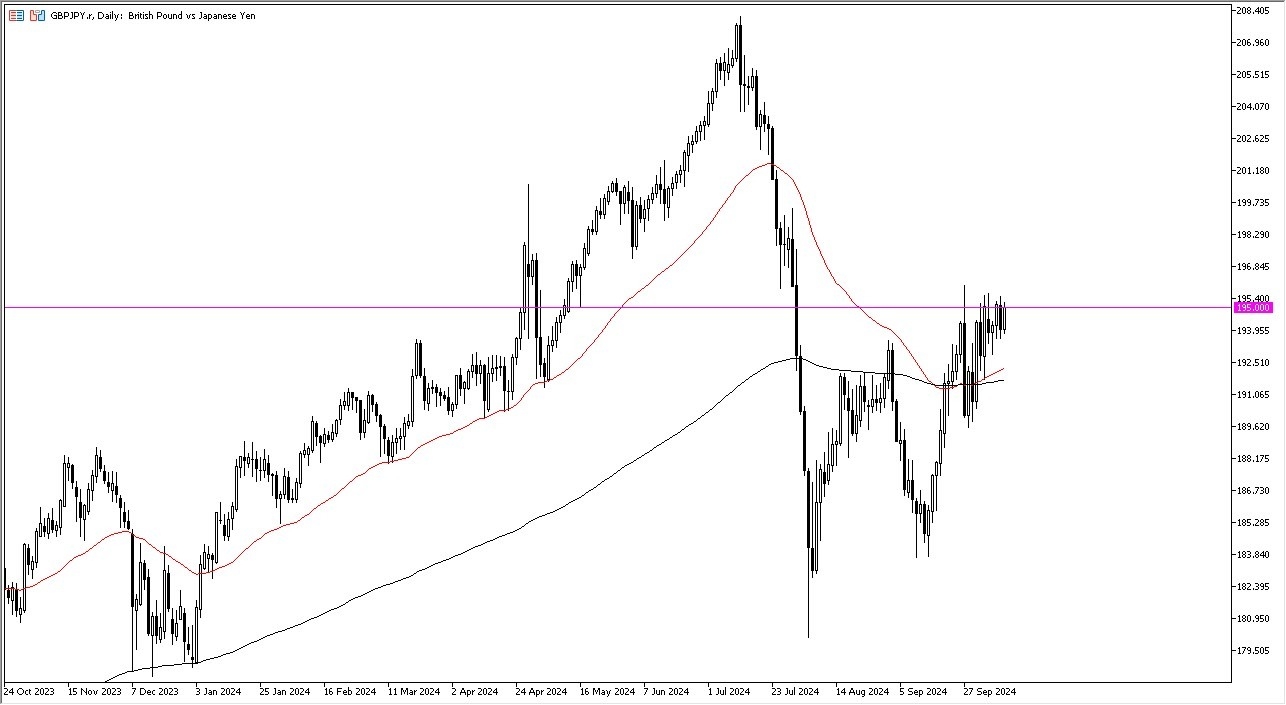
  • The British pound has rallied a bit against the Japanese yen during the trading session on Friday as we continue to threaten the 195 yen level, an area that’s been important a couple of times in the past.
  • So, I think ultimately, we need to see whether or not this pair can actually stick above the 195 yen level to get overly bullish in the short term.
  • It looks like every time we dip a bit, buyers are willing to step in and pick up a little bit of value as it appears.

But really at this point in time, I think it is a little bit difficult to get overly aggressive at least until we clear this hurdle. That being said, if we do break above that hurdle, I think a lot of people will be paying close attention to this pair. I also believe it would have more to do with the Japanese yen than anything else as you would more likely than not see other yen related pairs skyrocketing.

On that breakout

If and when we do, then the market could very well run up to the 198 yen level, an area that has been important previously. With all of that being said, I think we have a situation where traders continue to see the potential for the carry trade to come back. This is especially true now that the Bank of Japan has finally come out recently and just admitted that, hey, there’s nothing we can do here as far as tightening monetary policy is concerned. So, with that being said, I think you have a situation where you’re buying dips and if we can finally get that move above 195 with a clean break to the upside, you start to chase that as well. I have no interest whatsoever in shorting this pair. The interest rate differential will continue to keep me long of this market going forward as I get paid at the end of every day.

Ready to trade our Forex daily forecast? We’ve shortlisted the best forex broker list for you to check out

Source link

14 10, 2024

ADA Whales Lose Confidence, Turn To Rival Altcoin Set for 3,900% Rally

By |2024-10-14T14:42:27+03:00October 14, 2024|Crypto News, News|0 Comments

Rexas Finance Revolutionizing Asset Tokenization

In contrast to Cardano’s uncertain future, Rexas Finance (RXS) is quickly gaining traction, presenting an opportunity that ADA whales can no longer ignore. Rexas Finance is a project that has seamlessly bridged the gap between real-world assets and blockchain technology, offering investors unprecedented access to industries like real estate, commodities, and even art through tokenization. The real estate market, valued in the trillions, becomes more accessible to everyday investors, who can now own fractions of properties anywhere in the world. Through the Rexas Token Builder, users can tokenize any asset, whether real estate or gold, bringing liquidity and flexibility to previously rigid markets. The platform’s launchpad also allows projects to raise funds, with investors eager to capitalize on early opportunities. Rexas Finance is not just a promising crypto project; it is changing how investors interact with tangible assets. The platform allows users to tokenize anything from real estate to commodities like gold, bringing massive markets into the blockchain sphere. Investors can now own fractions of a real estate portfolio in another country with just a few clicks, dramatically lowering the barriers to entry. The platform’s QuickMint Bot makes asset tokenization even simpler, allowing users to mint tokens directly through Telegram or Discord. With tools like GenAI and AI Shield adding further utility, Rexas Finance is evolving as a comprehensive solution for managing and tokenizing real-world assets.

Source link

14 10, 2024

Digestive Health Supplements Market Comprehensive Report:

By |2024-10-14T13:13:20+03:00October 14, 2024|Dietary Supplements News, News|0 Comments


Digestive Health Supplements Market

DataM Intelligence has released a new research report on the Digestive Health Supplements market. The report provides a detailed analysis of current and emerging trends, offering insights into the market dynamics. It utilizes Porter’s Five Forces model to assess key factors such as supplier and customer relationships, risks from various agents, competitive intensity, and opportunities for new entrants. The study also includes research data from various companies, analyzing factors like benefits, gross margins, and strategic decisions in the global market. The report is enriched with tables, charts, and infographics for a clear presentation of the findings.

The Global Digestive Health Supplements Market is expected to grow at a CAGR of 6.92% during the forecasting period (2024-2031).

Get a Free Sample Research PDF – https://datamintelligence.com/download-sample/digestive-health-supplements-market

Digestive health supplements are dietary products designed to support and enhance the functioning of the digestive system. They typically contain ingredients such as probiotics, prebiotics, enzymes, and fiber, which promote gut health and aid in digestion. These supplements aim to alleviate common digestive issues like bloating, gas, and irregular bowel movements. By balancing gut microbiota, they can improve nutrient absorption and overall gastrointestinal function. Many digestive health supplements are formulated for specific populations, such as individuals with lactose intolerance or irritable bowel syndrome (IBS). They are available in various forms, including capsules, powders making them convenient for daily use.

List of the Key Players in the Digestive Health Supplements Market:

Amway, Bayer, Herbalife, Pfizer, NOW Foods, and Royal DSM.

Key Developments:

As gastrointestinal issues rise due to unhealthy lifestyles and the daily consumption of junk food, the demand for digestive health supplements has surged significantly. According to the National Institute of Diabetes and Digestive and Kidney Diseases (NIDDK), approximately 60 to 70 million Americans suffer from gastrointestinal problems, leading to nearly 250,000 deaths each year. These conditions account for around 50 million hospital visits and 21.7 million admissions annually, as reported by the NIDDK. This alarming situation has heightened public awareness of the importance of digestive health supplements, prompting many to seek solutions for better gastrointestinal health.

Research Process:

Both primary and secondary data sources have been used in the global Digestive Health Supplements Market research report. During the research process, a wide range of industry-affecting factors are examined, including governmental regulations, market conditions, competitive levels, historical data, market situation, technological advancements, upcoming developments, in related businesses, as well as market volatility, prospects, potential barriers, and challenges.

Segment Covered in the Digestive Health Supplements Market:

By Type: Probiotics, Prebiotics, Enzymes, Fulvic Acid, Others

By Product Form: Powder, Tablet, Capsules, Liquid, Others

By Distribution Channel: Pharmaceuticals/Drug Stores, Speciality Stores, Supermarkets/Hypermarkets, Online Sales, Others

Get Customization in the report as per your requirements: https://datamintelligence.com/customize/digestive-health-supplements-market

Regional Analysis:

➣ North America (US, Canada, Mexico)

➣ Europe (Germany, Russia, UK, France, Italy, Spain, Rest of Europe)

➣ Asia-Pacific (China, India, Japan, Australia, Rest of Asia Pacific)

➣ South America (Brazil, Argentina, Rest of South America)

➣ Middle East and Africa

**The full version of the report includes an in-depth analysis of emerging players and startups, which will provide valuable insights into the evolving market landscape and key strategies being adopted**

Chapter Outline:

⏩ Market Overview: It contains five chapters, as well as information about the research scope, major manufacturers covered, market segments, Digestive Health Supplements market segments, study objectives, and years considered.

⏩ Market Landscape: The competition in the Global Digestive Health Supplements Market is evaluated here in terms of value, turnover, revenues, and market share by organization, as well as market rate, competitive landscape, and recent developments, transaction, growth, sale, and market shares of top companies.

⏩ Companies Profiles: The global Digestive Health Supplements market’s leading players are studied based on sales, main products, gross profit margin, revenue, price, and growth production.

⏩ Market Outlook by Region: The report goes through gross margin, sales, income, supply, market share, CAGR, and market size by region in this segment. North America, Europe, Asia Pacific, Middle East & Africa, and South America are among the regions and countries studied in depth in this study.

⏩ Market Segments: It contains the deep research study which interprets how different end-user/application/type segments contribute to the Digestive Health Supplements Market.

⏩ Market Forecast: Production Side: In this part of the report, the authors have focused on production and production value forecast, key producers forecast, and production and production value forecast by type.

⏩ Research Findings: This section of the report showcases the findings and analysis of the report.

⏩ Conclusion: This portion of the report is the last section of the report where the conclusion of the research study is provided.

Have any Query? Talk to our Expert @ https://www.datamintelligence.com/enquiry/digestive-health-supplements-market

The Research Report Offers Answers To The Following Questions:

☛ What is the expected growth rate of the global market for the forecast period?

☛ What are the key driving factors that are responsible to shape the fate of the Digestive Health Supplements market during the forecast period?

☛ What will be the overall size of the market during the analysis period?

☛ What are the prominent market trends which influence the development of the Digestive Health Supplements market across various regions?

☛ Who are the key market players and the market strategies that have helped them to secure the leading position in the global market?

☛ What are the challenges and threats that are likely to act as a barrier to the growth of the Digestive Health Supplements market?

☛ What are the major opportunities that the companies can get to attain success in the world?

Contact Us –

Company Name: DataM Intelligence

Contact Person: Sai Kiran

Email: Sai.k@datamintelligence.com

Phone: +1 877 441 4866

Website: https://www.datamintelligence.com

About Us –

DataM Intelligence is a Market Research and Consulting firm that provides end-to-end business solutions to organizations from Research to Consulting. We, at DataM Intelligence, leverage our top trademark trends, insights and developments to emancipate swift and astute solutions to clients like you. We encompass a multitude of syndicate reports and customized reports with a robust methodology.

Our research database features countless statistics and in-depth analyses across a wide range of 6300+ reports in 40+ domains creating business solutions for more than 200+ companies across 50+ countries; catering to the key business research needs that influence the growth trajectory of our vast clientele.

This release was published on openPR.


Source link

14 10, 2024

Pound Sterling stays in consolidation ahead of key data releases

By |2024-10-14T12:45:16+03:00October 14, 2024|Forex News, News|0 Comments

  • GBP/USD continues to move sideways below 1.3100 on Monday.
  • UK data on Tuesday and Wednesday could influence Pound Sterling’s performance.
  • The near-term technical picture fails to provide a directional clue.

Following the bearish action seen in the first half of the previous week, GBP/USD went into a consolidation phase. After closing virtually unchanged on Thursday and Friday, the pair continues to move sideways below 1.3100 to begin the new week.

British Pound PRICE Last 7 days

The table below shows the percentage change of British Pound (GBP) against listed major currencies last 7 days. British Pound was the weakest against the US Dollar.

  USD EUR GBP JPY CAD AUD NZD CHF
USD   0.39% 0.43% 0.46% 1.59% 0.97% 1.19% 0.12%
EUR -0.39%   0.10% 0.11% 1.23% 0.55% 0.79% -0.30%
GBP -0.43% -0.10%   -0.04% 1.14% 0.45% 0.72% -0.28%
JPY -0.46% -0.11% 0.04%   1.11% 0.47% 0.65% -0.32%
CAD -1.59% -1.23% -1.14% -1.11%   -0.59% -0.40% -1.45%
AUD -0.97% -0.55% -0.45% -0.47% 0.59%   0.29% -0.80%
NZD -1.19% -0.79% -0.72% -0.65% 0.40% -0.29%   -1.03%
CHF -0.12% 0.30% 0.28% 0.32% 1.45% 0.80% 1.03%  

The heat map shows percentage changes of major currencies against each other. The base currency is picked from the left column, while the quote currency is picked from the top row. For example, if you pick the British Pound from the left column and move along the horizontal line to the US Dollar, the percentage change displayed in the box will represent GBP (base)/USD (quote).

Upbeat macroeconomic data releases from the UK helped Pound Sterling stay resilient against its rivals on Friday. The cautious market mood, however, made it difficult for GBP/USD to gather bullish momentum heading into the weekend. Meanwhile, the data from the US showed that the Producer Price Index (PPI) for final demand rose 1.8% on a yearly basis in September, coming in above the market expectation of 1.6% and supporting the USD.

Bond markets in the US will remain closed in observance of the Columbus Day holiday on Monday. As a result, thin trading conditions could limit GBP/USD’s volatility during the American trading hours on Monday.

On Tuesday, the UK’s Office for National Statistics will release labor market data, which will include wage inflation readings. On Wednesday, the UK Consumer Price Index (CPI) figures for September will be scrutinized by market participants.

GBP/USD Technical Analysis

GBP/USD needs to break out of the 1.3000-1.3100 trading range to gather directional momentum. 

In case GBP/USD rises above 1.3100 (Fibonacci 78.6% retracement level of the latest uptrend) and starts using this level as support, 1.3170 (Fibonacci 61.8% retracement) and 1.3200 (200-period Simple Moving Average (SMA), round level) could be seen as next resistance levels.

On the downside, an extended slide toward 1.2940 (static level) could be seen if 1.3000 (round level, static level) support fails.

Pound Sterling FAQs

The Pound Sterling (GBP) is the oldest currency in the world (886 AD) and the official currency of the United Kingdom. It is the fourth most traded unit for foreign exchange (FX) in the world, accounting for 12% of all transactions, averaging $630 billion a day, according to 2022 data. Its key trading pairs are GBP/USD, also known as ‘Cable’, which accounts for 11% of FX, GBP/JPY, or the ‘Dragon’ as it is known by traders (3%), and EUR/GBP (2%). The Pound Sterling is issued by the Bank of England (BoE).

The single most important factor influencing the value of the Pound Sterling is monetary policy decided by the Bank of England. The BoE bases its decisions on whether it has achieved its primary goal of “price stability” – a steady inflation rate of around 2%. Its primary tool for achieving this is the adjustment of interest rates. When inflation is too high, the BoE will try to rein it in by raising interest rates, making it more expensive for people and businesses to access credit. This is generally positive for GBP, as higher interest rates make the UK a more attractive place for global investors to park their money. When inflation falls too low it is a sign economic growth is slowing. In this scenario, the BoE will consider lowering interest rates to cheapen credit so businesses will borrow more to invest in growth-generating projects.

Data releases gauge the health of the economy and can impact the value of the Pound Sterling. Indicators such as GDP, Manufacturing and Services PMIs, and employment can all influence the direction of the GBP. A strong economy is good for Sterling. Not only does it attract more foreign investment but it may encourage the BoE to put up interest rates, which will directly strengthen GBP. Otherwise, if economic data is weak, the Pound Sterling is likely to fall.

Another significant data release for the Pound Sterling is the Trade Balance. This indicator measures the difference between what a country earns from its exports and what it spends on imports over a given period. If a country produces highly sought-after exports, its currency will benefit purely from the extra demand created from foreign buyers seeking to purchase these goods. Therefore, a positive net Trade Balance strengthens a currency and vice versa for a negative balance.


Source link

14 10, 2024

Expert Explains Why XRP Isn’t Moving, Reigniting Discussions Around the $500 Price

By |2024-10-14T12:41:44+03:00October 14, 2024|Crypto News, News|0 Comments

Crypto Tank, an XRP community figure, recently responded to inquiries on why XRP has not moved favorably in recent times, spotlighting its potential utility in payments.

In his latest news on XRP, Crypto Tank confirmed that he had received multiple questions about why the XRP price was not moving. His commentary suggests a lack of utility, especially from major financial institutions, could be responsible for hampering XRP’s upward growth.

XRP Projected Growth

In his recent commentary, Crypto Tank discussed XRP’s utility. Interestingly, he outlined the mechanisms within the XRP Ledger (XRPL) that, in his view, make higher prices achievable. 

He centered his argument on the idea that XRP’s price comes from dividing the value and volume of transactions on the ledger by the circulating supply. While the general consensus is that XRP’s circulating supply is around 56 billion tokens, he suggests this figure is inaccurate.

According to Crypto Tank, the market does not actively use much of the circulating supply, as private wallets from whales and exchanges hold most of it. He estimates that only the market only uses around 20% of the supply, or roughly 10 billion tokens, in transactions on a daily basis. 

Role of Financial Institutions and Liquidity Pools

The core of Crypto Tank’s prediction rests on XRP’s potential to become the primary token for settlement by banks and financial institutions. 

He outlined how banks will eventually use their own tokens, such as Central Bank Digital Currencies (CBDCs), paired with the Ripple stablecoin RLUSD in Automated Market Maker (AMM) pools. XRP, being the default settlement token on the XRPL, will play a major role in this process.

To give a sense of the scale, Crypto Tank pointed out that major institutions like SWIFT, SBI Japan, Bank of America, and J.P. Morgan handle trillions of dollars in settlements daily. 

He suggested that if just 10% of the XRPL processed just 10% of these transactions, that would amount to $2.5 trillion in daily volume. To ensure smooth operations without failed transactions, he argued that the liquidity pools would need to be double that value—around $5 trillion.

Notably, this massive influx of volume would require a deep pool of liquidity, and based on his calculations, XRP would need to trade at $500 per token to provide the necessary liquidity for these transactions. 

XRP to $500 Comes Into Focus

He further speculated that as more assets, such as tokenized real estate and tokenized debt, are introduced onto the XRPL, the demand for XRP will increase, potentially driving its price even higher. Crypto Tank argued that market cap discussions are irrelevant.

However, despite not directly predicting a price rise to $500, Crypto Tank’s recent commentary has reignited discussions around this level. Notably, market participants had previously dismissed it as wishful thinking.

With XRP currently trading for $0.5371, it would need to spike 92,992% to reach $500. If XRP were to achieve this milestone, its market cap would skyrocket to $28.3 trillion, dwarfing the entire crypto market valuation. This has contributed to skepticism.

Note: This article was reviewed at 9:02 UTC to reflect the fact that Crypto Tank did not in fact directly predict an XRP price of $500. The previous version had suggested otherwise.

DisClamier: This content is informational and should not be considered financial advice. The views expressed in this article may include the author’s personal opinions and do not reflect The Crypto Basic opinion. Readers are encouraged to do thorough research before making any investment decisions. The Crypto Basic is not responsible for any financial losses.


Source link

14 10, 2024

dApp volumes declining, but the price of Binance’s crypto holds

By |2024-10-14T12:19:55+03:00October 14, 2024|News, NFT News|0 Comments


BNB, currently the third crypto by market cap, has recorded a decrease in dApp volumes on BNB Chain by 32% in the last week. Nevertheless, the price of the token used on Binance, BNB remains at $580.

BNB: decline in dApp volumes but the price of Binance’s crypto holds 

BNB, the native token of the BNB Chain, has recorded a 32% drop in the total volumes of dApps on its network in the last seven days. 

According to what is reported by DappRadar, the BNB Chain is in first place for the number of dApps developed on its blockchain. In fact, there are currently 5510 dApps on BNB Chain, 6 more than last week. In contrast, Ethereum is the base of 4,787 dApps.

Nevertheless, currently the total volumes of dApps on BNB Chain are 6.92 billion dollars, compared to 10.79 billion dollars of Ethereum. 

This drop in volumes in DeFi, however, is not affecting the price of the BNB crypto which, on the contrary, seems to hold up. 

At the time of writing, BNB is worth $580, in a pump of +1.21% in the last 24 hours. Not only that, in the last month, BNB has reached price highs of $613 and lows of $530.

The price of BNB somehow reflects both the activity of its network in the DeFi sector, but also the offerings of the crypto-exchange of Binance. In fact, here, BNB remains the exclusive token used for certain services such as exclusive access to the launchpad and discounts on trading fees.

BNB: the dApp, the DeFi but also the activities on Binance determine the price of the crypto

In this 2024, the price of BNB has started to flourish from March, like the rest of the crypto, in a wider range of $420 and $700. Specifically, from June to today, the price range for BNB has narrowed to $490-$610. 

These fairly stable price performances of the last few months could reflect a sort of equilibrium that the crypto experiences in the various sectors of its use. 

In fact, BNB is widely used in the decentralized applications of the ecosystem (dApps) for trading, staking, yield farming, real-world assets (RWA), lending, launchpads, gaming, and derivatives markets.

For example, for Binance Launchpad, there have recently been criticisms about its performance, with analysts seeing a way of acting by the platform worsened compared to when CZ was CEO. 

I don’t want to lie, after @cz_binance was replaced as CEO, @binance turned into a lower quality exchange, listing everything that pays a listing fee without thorough research. This is not the Binance we know and not what CZ wanted it to be.

In DeFi, however, concerns can also arise from the market situation and competitor blockchains. For example, at the time of writing, the TVL of BNB Chain is 4.5 billion dollars, right in between the 6 billion dollars TVL of Solana and the 2.4 billion dollars TVL of Base. 

The latest news in casa BNB Chain

In the last month, the BNB Chain network has not stood still watching its volumes. On the contrary, there have been some developments. 

Among others, there was the introduction of stablecoin transfer without gas fees on the chain. This is a strategic move aimed at improving cross-chain liquidity and increasing the network’s functionality. 

Speaking instead of dApp, then, there was the launch of GraFun, the new launchpad for memecoin on BNB Chain. The next-generation platform was supported by Floki, DWF Labs, DeXe Protocol, and HOT Protocol. 

And what if we looked at Binance and its history, last month the date of September 29 was awaited for the release from prison of CZ, former CEO and founder of the crypto-exchange. 

In this regard, CZ himself has promised his followers that he will be present at the Binance Blockchain Week in Dubai, on October 30 and 31. 

“I will participate in a personal capacity at the Binance Blockchain Week in Dubai from October 30 to 31. It is one of the biggest web3 events of the year. See you there”


Source link

14 10, 2024

Do beautiful twentysomethings really need collagen?

By |2024-10-14T11:12:53+03:00October 14, 2024|Dietary Supplements News, News|0 Comments


[Editor’s note: This article is the Viewpoint in the new SupplySide Supplement Journal digital magazine on nutricosmetics — your toolbox for better business. Download the free issue here and discover formulation advice, science analysis, and the best ways to market your products to your target audience.]

Collagen — grande dame of the nutricosmetic set — is a curious ingredient. It’s unlike most other nutrients. Normally, you consume a nutrient, it goes where it’s needed, and your blood or tissue levels of said ingredient increase. But not so with collagen. 

You already know collagen is the most abundant type of protein in the body. But the collagen taken in supplements is typically collagen peptides. These are fragments of protein’s amino acids. Typically, when protein degrades into peptides fragments, the body takes notice and produces more.

So when a person supplements with collagen peptides, it’s not that they are putting more collagen to the body’s tissues and plasma; it’s that the circulating protein fragments are alerting the body that a lot of collagen seems to be breaking down in the body, so it’s time to ramp up endogenous collagen production. 

Sneaky! 

Also possibly sneaky is the marketing of collagen, which invariably pictures glowing 20-somethings with impeccable facial complexions. The idea of collagen is to improve skin firmness, suppleness and moisture content. Studies show some collagen peptides also can help with wrinkles, dry skin and aging skin. Do these picture-perfect youngsters actually need to be taking collagen?  

Related:Glow up with nutricosmetics – digital magazine

When does a body really need collagen? 

Researchers in Spain back in 1994 measured skin collagen content in 76 women between age 20 and 60. They found that collagen decreased significantly with age — after the 40s and after menopause, which is typically between 45 and 55 years old. 

After menopause in particular is when women’s collagen stores really begin a precipitous decline. 

So do the collagen marketers have it all wrong, to sell collagen to 20-somethings who, let’s face it, have pretty lustrous skin at that age already? 

Well, not so fast. Researchers at the University of California, San Diego, and University Hospital, detailed all of the age-related changes that occur. They noted that “beginning in the fourth decade [when you are in your 30s], there is a linear decline in bone mass at a rate of about 10% per decade for women and 5% per decade for men. Thus, by the eighth and ninth decades [your 70s and 80s] 30% to 50% of the skeletal mass may be lost.” 

Related:11 hot nutribeauty trends

Researchers at the University of Michigan confirmed collagen drops between two very different age groups — women ages 18-29 and those older than age 80. They found collagen synthesis decreased by 68% between the two groups. But when exactly does collagen begin to decrease? 

Sign of the times — I turned to AI. ChatGPT told me that natural collagen production decreases starting around the age of 25, by about 1% a year. “The decline becomes more noticeable in the late 30s and 40s,” ChatGPT advised, with an “even more significant reduction in collagen production” after menopause. 

Google’s Bard AI bot largely agreed, saying collagen production begins to decline around the age of 25 — and by age 40, women may have lost 10-20% of their collagen. 

What to make of all this? 

I guess it’s fair to start taking collagen in morning smoothies around age 25 — and yes, sure, go ahead and market your collagen supplements with lustrous young 20-somethings. 


Source link

Go to Top