About Editorial team of BIPNs

Main team of content of bipns.com. Any type of content should be approved by us.
9 10, 2024

Solana Price Prediction: This Altcoin Emerges as a Superior Choice To SOL – Whales Dive In

By |2024-10-09T01:15:17+03:00October 9, 2024|Crypto News, News|0 Comments

Lunex Network is one of the platforms you should monitor in the always-shifting DeFi terrain if you’re looking for a next-generation solution with performance and value.

Solana has captured the DeFi market’s attention with its speed and scalability, but Lunex Network is emerging as a superior choice for transactions. While Solana’s price predictions and TON’s recovery spark investor interest, Lunex Newtork offers a seamless, secure, and cost-effective trading experience.

Lunex Network: A Great Solution Right Within the Decentralized Finance Scene

Unlike the unstable Solana price predictions, Lunex Network stands out as a consistent and innovative player in decentralized finance. Currently trading at $0.0013 in its second presale phase, Lunex Network offers a unique, multi-chain, non-custodial decentralized exchange with the speed and efficiency traders often seek on centralized platforms.

Unlike conventional DEXs, Lunex uses on-chain and off-chain features to provide institutional-grade liquidity. It allows users to trade over 50,000 currency pairings without connecting their wallets.

Lunex Networks’s transactions are done quickly using a hybrid order book technique without breaching security or privacy. While Solana’s systems still struggle to maintain constant network performance, Lunex’s on-chain, real-time transactions provide a more reliable trading environment.

Lunex Network’s presale offers traders and investors looking for advanced distributed financial solutions outside the traditional financial system an opportunity. It helps engage with a next-generation trading system designed for efficiency, security, and control.

Will the once-promising giant find its feet once more? Solana’s challenges

Over the last year, The Solana (SOL) Price has witnessed notable highs and lows. Currently fluctuating between $135 and $151,The Solana (SOL) Price has significantly recovered from its previous lows of about $110 but remains well below its peak of $260.

Thes Solana SOL price in the past dropped due to network disruptions, security concerns, and the collapse of FTX. These issues triggered a massive sell-off and cast doubt over SOL’s reliability, creating a volatile atmosphere for investors and a drop in confidence for what was once one of the most promising players in the crypto space.

Though Solana price predictions speculate a potential positive run soon, SOL still faces hurdles in regaining investor trust. The fluctuations continue, and market competitors provide innovative solutions with faster transactions and reduced fees. The pressure is on Solana to stabilize its network and stand out again. Whether SOL can fully bounce back and reclaim its market dominance remains to be seen as the decentralized finance landscape grows increasingly competitive.

Can TON overcome its current challenges? Riding a turbulent roller coaster

Following the arrest of Telegram’s CEO, Pavel Durov, Toncoin (TON) suffered significantly as it saw a four-month low in September. TON has since risen slightly, yet concerns about TON growth outside the Telegram surroundings remain. Durov’s arrest on allegations of illicit activity on Telegram’s platform put further pressure on TON, clouding its future and generating investor doubt.

Besides the legal problems, TON’s network was disturbed by a meme currency based on dogs, which stopped block production for over three hours and compromised its infrastructure’s reliability. Again, bouncing back, block production began to restart briefly, and the TON price showed some resilience despite the challenges. Still, over seventy percent of TON investors reportedly lose money as the token battles to maintain a steady path over these challenges.

You can find more information about Lunex Network (LNEX) here:

Website: https://lunexnetwork.com
Socials: https://linktr.ee/lunexnetwork


This is a sponsored article. Opinions expressed are solely those of the sponsor and readers should conduct their own due diligence before taking any action based on information presented in this article.

Source link

9 10, 2024

GR1D Network Brings Web3 Gaming Credits to Amazon

By |2024-10-09T00:54:47+03:00October 9, 2024|News, NFT News|0 Comments


Want more? Connect with NFT Plazas

Join the Weekly Newsletter
Join our Telegram
Follow us on X
Like us on Facebook

*All investment/financial opinions expressed by NFT Plazas are from the personal research and experience of our site moderators and are intended as educational material only. Individuals are required to fully research any product prior to making any kind of investment.


Source link

9 10, 2024

EIA reduces crude oil price forecast through end-2025 on lower demand

By |2024-10-09T00:49:50+03:00October 9, 2024|Forex News, News|0 Comments


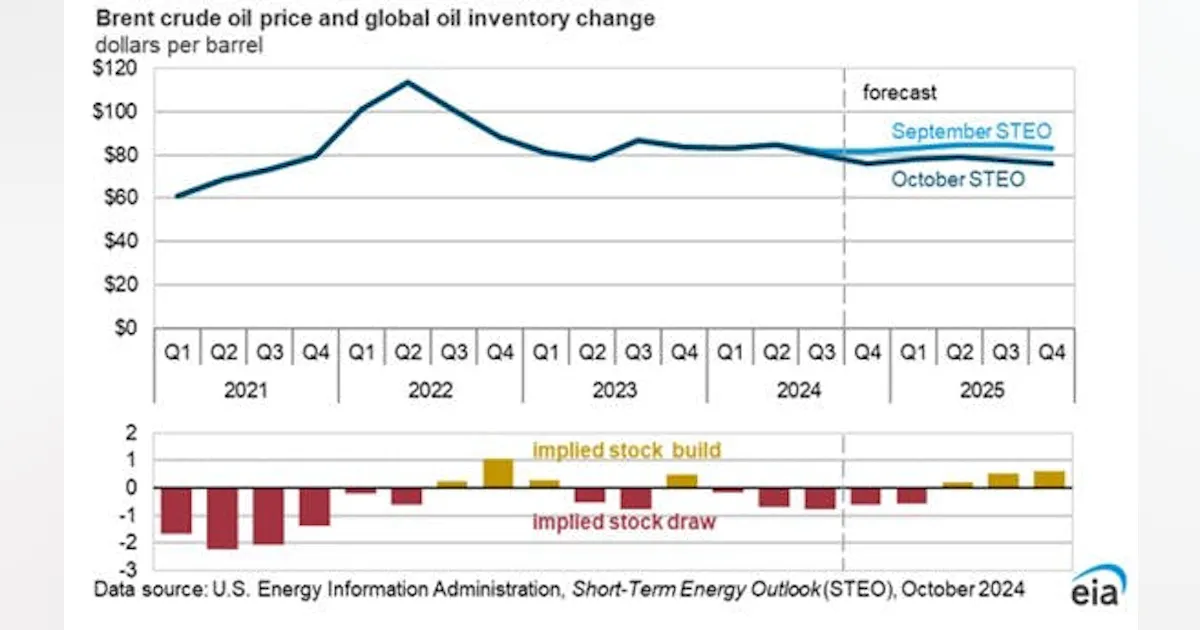
In the October Short-Term Energy Outlook (STEO), the US Energy Information Administration (EIA) lowered its Brent crude oil spot price forecast through end-2025.

The latest outlook predicts an average Brent price of $78/bbl in 2025, $7/bbl less than last month’s forecast. Lower crude oil prices largely reflect a reduction for global oil demand growth in 2025, according to EIA.

“We forecast that global consumption of liquid fuels will increase by 900,000 b/d in 2024 and 1.3 million b/d in 2025. Our 2024 forecast is down from last month due to downward revisions to demand in China and our 2025 forecast is down primarily because of downward revisions to demand in OECD countries,” EIA said.

“We reduced our forecast for China’s liquid fuels consumption in 2024 because of continued declines in the country’s crude oil imports and refinery runs in third quarter 2024. Although the Chinese government recently announced monetary stimulus measures that could result in higher economic growth and petroleum consumption in 2025, we have kept our forecast 2025 growth rate largely unchanged. We forecast China’s petroleum and liquid fuels consumption will grow by about 100,000 b/d in 2024 and 300,000 b/d in 2025,” the report continued. 

“We reduced our forecast of total OECD oil consumption by 200,000 b/d in 2025 compared with last month’s STEO as a result of weaker expectations for industrial production and manufacturing growth in the US and Canada.”

Most of EIA’s expected global liquid fuels demand growth is from non-OECD countries where liquid fuels consumption increases by 1 million b/d in 2024 and 1.2 million b/d in 2025, in contrast to consumption in OECD countries, which falls by 100,000 b/d in 2024 before increasing by a similar amount in 2025.

“Although we reduced our crude oil price forecast, crude oil prices have risen in recent days because of escalating conflict in the Middle East, raising the possibility of oil supply disruptions and further crude oil price increases,” EIA noted.

The Brent crude oil spot price averaged $74/bbl in September, a decrease of $6/bbl from August. Prices dropped as concerns over global oil demand growth outweighed reductions in oil inventories and OPEC+ members’ decision to delay production increases until December 2024. However, after recent military actions involving Israel, Lebanon, and Iran, the Brent spot price increased to $79/bbl on Oct. 4, up 11% from the previous week.

“The potential for further escalation– such as an Israeli response to Iran’s missile attack on October 1– have injected significant uncertainty and volatility into oil markets in recent days. Following the September drop in prices and our expectation that oil demand growth will be lower next year than we had previously forecast, we have lowered our forecast for crude oil prices despite increasing oil prices in early October. We now expect Brent will average $78/b in 2025, $7/bbl less than our forecast from last month,” EIA said.

Global oil production

EIA anticipates that production growth outside of OPEC+ will remain strong over the forecast period, and as a result OPEC+ producers will likely keep production less than their recently announced targets for much of next year.

EIA expects that global production of petroleum and other liquid fuels will increase by 2 million b/d in 2025, up from growth of just 500,000 b/d this year. Countries outside of OPEC+ are expected to increase production by 1.4 million b/d next year, while OPEC+ production will increase by 700,000 b/d, after the voluntary cuts reduced OPEC+ production by 1.3 million b/d this year.

“In addition to voluntary cuts to OPEC+ production, a force majeure in Libya in August and September reduced oil production. We estimate Libya’s crude oil production fell to 400,000 b/d in September 2024 from nearly 1.2 million b/d in July 2024 before the disruptions began,” EIA said.

“As of early October, it appears the cause of the disruption has come to a resolution, with affected production potentially restarting in October. We assume Libya’s oil production will average 600,000 b/d for the rest of this year.”

EIA also revised its estimate of Iraq’s crude oil production, including historical production, up by an average of 200,000 b/d in 2024 to account for assessment that more crude oil is being used in new refining capacity in Iraq than the agency had previously determined.

“Although we raised our assessment of Iraq’s oil production, we still estimate that Iraq cut its crude oil production by 300,000 b/d from July through September 2024 to comply with OPEC+ production quotas.”

In this month’s outlook, EIA educed its 2025 forecast for US Lower 48 states (L48) crude oil production from last month by 1% to 11.3 million b/d. This reduction reflects a downward revision to EIA’s West Texas Intermediate (WTI) crude oil price forecast.

EIA now expects WTI will average $72/bbl in fourth-quarter 2024, about $6/bbl lower than last month’s forecast. Because there is about a 6-month lag between price changes and producer activity, the recent price declines will begin reducing US crude oil production in mid-2025. By December 2025, US L48 crude oil production will be 11.4 million b/d, 2% lower than EIA’s September STEO forecast.


Source link

8 10, 2024

Cardano Price Prediction: How Does ADA Compare to Avalanche AVAX and RollBlock RBLK in 2024

By |2024-10-08T23:14:19+03:00October 8, 2024|Crypto News, News|0 Comments

The platform is currently in presale and has accumulated over $4 million, with the project set to experience massive rallies in the coming months. Many experts have speculated a 50x return, so let’s investigate!

Among the cryptocurrencies vying for attention in recent times, ADA, AVAX, and RollBlock have witnessed unmatched growth of more than 200%. Since 2024 was an eventful year, it is necessary to assess each of these cryptocurrencies in terms of price trajectory and market sentiment – particularly the RollBlock (RBLK) token.

Analyzing Cardino’s (ADA) price trends

Cardino is not your regular cryptocurrency project. Compared to other projects in the industry, its ICO offerings were considered a success after accumulating $62 million. Currently, the platform has expanded to third-generation technology, hosting several dApps.

Based on real-time reports from Coinbase, the current price update is pegged at $0.33 – boasting a 100% return since inception. Despite this, several Cardano price predictions have forecast a -0.07 decrease in price before the year runs out.

ADA and AVAX unique utilities may save AVAX from a downward trend

Some holders may fear for the volatility of AVAX tokens since these platforms have similar price movement patterns. In general, these coins are popular due to their scalability, energy efficiency, and security. AVAX is also backed by strong industry platforms as well as holders that earn passive income from them.

However, AVAX is better than ADA in terms of utility. On the other hand, ADA is more recognized and used in transactions than AVAX. This could change with time, especially with the Cardano price prediction. However, analysts believe that ADA has more potential in the crypto space.

Rollblock (RBLK), with its unique features, could out outpace ADA and AVAX

Rollblock is currently in the 7th stage of its ongoing presale. The price is still pegged at a bargain $0.03, but the platform’s vision could make this token soar above ADA and AVAX.

Disrupting the GambleFi sector

The gambling sector has seen a lot of modification in recent times, but the most revolutionary is cryptocurrency. Rollblock pushes these frontiers a little further by redefining users’ experience in digital casinos. With a no-KYC policy in place, the anonymity of gamers is safeguarded. Players can also play with comfort, since all transactions are recorded immutably on the blockchain, removing any chance of foul play. Finally, gamers are encouraged to play more thanks to the revenue sharing system for gamers and holders.

Deflationary tokenomics with a revolutionary sharing model

The aforementioned revenue sharing model of this platform is also one of its unique selling points. The model is unique and ensures that a percentage of the platform’s daily earnings are distributed equitably to token holders. This allows investors to earn passive income and be part owners in the platform’s future endeavors. A portion of the remaining profits is used to buy back tokens on the open market to be burned or distributed as rewards to holders.

Conclusion

It remains to be seen what the future holds for ADA, AVAX, and Rollblock. Rollblock is already catching up with market giants ADA and AVAX. With 7000+ games, no KYC, and blockchain security, it is set to improve the GambleFi sector. Buy RBLK now for $0.03 in the 7th stage of its presale.

Discover the Exciting Opportunities of the Rollblock (RBLK) Presale Today!

Website: https://presale.rollblock.io/
Socials: https://linktr.ee/rollblockcasino


This is a sponsored article. Opinions expressed are solely those of the sponsor and readers should conduct their own due diligence before taking any action based on information presented in this article.

Source link

8 10, 2024

Arabica Coffee Bean Prices: In-depth analysis and forecast

By |2024-10-08T22:49:19+03:00October 8, 2024|Forex News, News|0 Comments


The Arabica coffee bean prices is not merely a simple figure; it results from the complex interplay of numerous natural, economic, market, and geopolitical factors. This article delves into the analysis of the factors influencing the price of Arabica coffee beans, offering an overview of historical price fluctuations and providing forecasts for future price trends. By thoroughly understanding the drivers behind Arabica price volatility, we can better assess its impact on the coffee industry as a whole and the livelihoods of millions of people involved in the coffee value chain.

The importance of Arabica Coffee Bean Prices

Arabica coffee accounts for about 60-70% of global coffee production and is considered the highest-quality coffee. Its price has far-reaching effects for several reasons:

  1. Global Supply Chain: Arabica prices directly affect the income of millions of coffee farmers in developing countries such as Brazil, Colombia, Ethiopia, and Vietnam. Price fluctuations can significantly impact their livelihoods.

  2. Market Benchmarking: Arabica prices are often used as a benchmark for pricing other coffee varieties, including Robusta. Hence, it indirectly influences the entire coffee market.

  3. Impact on Consumers: When Arabica prices rise, roasters and retailers often have to increase the prices of their final products, directly affecting the cost for consumers enjoying their coffee.

  4. Economic Impact: For major coffee-exporting countries, Arabica price volatility can significantly influence GDP and the trade balance.

  5. Product Quality and Diversity: Pricing affects the ability of farmers and producers to invest in quality and innovation, which, in turn, influences the diversity and quality of coffee products in the market.

Factors influencing Arabica Coffee Bean Prices

Natural factors

a) Climate:

  • Drought: Causes water shortages, reducing both yield and quality. For example, severe droughts in Brazil in 2021 caused Arabica prices to spike.
  • Storms: Excessive rainfall can lead to flooding, damaging coffee trees and fruits. Major storms can devastate entire coffee-growing regions.
  • Pests and Diseases: Coffee leaf rust is one of the most significant threats, capable of substantially reducing yields.

b) Soil Conditions:

  • Fertile, mineral-rich soil, such as that in Colombia’s volcanic regions, produces high-quality coffee, positively impacting prices.
  • Altitude (typically 1000-2000m) affects coffee flavor and quality, which in turn influences pricing.

Economic factors

a) Supply and demand:

  • Production: Good crop forecasts generally drive prices down, while poor forecasts push prices up.
  • Consumption Demand: Rising coffee consumption in emerging markets, such as China, can drive prices higher.

b) Production costs:

  • Increasing costs for fertilizers and pesticides raise production expenses, indirectly affecting prices.
  • Rising labor costs in key coffee-producing nations also contribute to higher prices.

c) Government policies:

  • Government programs supporting farmers (e.g., subsidies, crop insurance) can influence production and pricing.
  • Export policies in major producing countries, like Brazil, can significantly impact global prices.

Market factors

a) Futures trading:

  • Arabica prices are often referenced from futures contracts on the ICE (Intercontinental Exchange).
  • Activity by investment funds and speculators can cause significant short-term price volatility.

b) Speculation:

  • Speculative activities, particularly during periods of high market volatility, can exacerbate price swings.

c) Consumer trends:

  • The rising demand for specialty and organic coffee has created a premium market segment with higher prices.
  • Trends toward sustainable and responsible consumption also affect price structures.

Arabica Coffee Bean Prices: In-depth analysis and forecast

Chart of Price Fluctuations for Robusta and Arabica Coffee Each Year

Geopolitical factors

a) Wars and conflicts:

Conflicts in major coffee-producing countries can disrupt supply chains and drive prices higher.

b) Economic crises:

Global economic downturns can reduce coffee consumption, impacting prices.

c) Trade policies:

Trade agreements or barriers (such as tariffs) can affect the flow of coffee on the international market, influencing prices.

Historical price fluctuations

Key phases and causes

2000-2005: Period of low prices

  • Main Cause: Oversupply due to the expansion of coffee-growing areas in major producing countries such as Brazil and Vietnam in the 1990s.
  • Impact: Arabica prices fell to record lows, around 45-50 cents per pound in 2001-2002.
  • Consequence: Many small farmers abandoned coffee cultivation, leading to a global coffee crisis.

2006-2011: Period of strong price growth

Supply shortages due to severe droughts in Brazil (2007-2008) and heavy rains in Colombia (2009-2010).

Strong market speculation due to the 2008 financial crisis.

Growth of the specialty coffee industry, increasing demand for high-quality Arabica.

  • Peak: Prices reached a record high of $3.09 per pound in May 2011.

Giá hạt cà phê Arabica: Phân tích chuyên sâu và dự báo xu hướng

High profits for farmers, but also creates challenges for roasters and retailers in maintaining profit margins

2012-2019: Period of price decline and relative stability

Strong production recovery, particularly in Brazil, thanks to investment in farming technologies and new coffee varieties.

Growth of Vietnam’s coffee industry, primarily Robusta, but also influencing overall supply-demand dynamics.

Depreciation of the Brazilian real against the USD, encouraging exports and lowering global coffee prices.

  • Impact: Prices fell from their peak to around $1 per pound in 2019, creating significant pressure on farmers in smaller producing countries like Colombia and Ethiopia.

2020-2023: Period of extreme volatility due to pandemic and climate extremes

2020: The COVID-19 pandemic caused initial price declines due to demand concerns, followed by price increases due to supply chain disruptions.

2021: Severe frost in Brazil (July 2021) destroyed around 20% of the crop, pushing prices to a seven-year high.

2022-2023: Global inflation and ongoing supply chain disruptions continued to cause price volatility.

Impact: Rising costs across the coffee value chain, from farmers to end consumers.

In-depth analysis of impact factors

Brazil’s role

  • Brazil accounts for about 35-40% of global Arabica production.
  • Any changes in weather or policies in Brazil have a strong influence on global prices.
  • Example: The 2021 frost in Brazil drove Arabica prices up nearly 30% in just a few weeks.

Climate change impact

  • Increasing frequency and intensity of extreme weather events.
  • Shifting rainfall and temperature patterns affect both yield and quality.
  • Forecast: By 2050, the land suitable for Arabica cultivation could shrink by 50% due to climate change.

Growth of the specialty coffee market

  • Increasing demand for high-quality Arabica, particularly in developed markets.
  • Creates a premium price segment that is less susceptible to standard commodity price fluctuations.
  • Encourages investment in quality and traceability.

Financial speculation impact

  • Coffee is one of the most heavily traded commodities.
  • Activities by investment funds and speculators can cause short-term price volatility unrelated to fundamental supply-demand factors.
  • Example: Speculation during the 2008-2011 period contributed to record-high coffee prices.

Forecasting Arabica Coffee Price Trends

Factors influencing future trends

Climate change

  • Impact: A projected decline in suitable land for growing Arabica, particularly in traditional regions.
  • Consequence: This could lead to scarcity and long-term price increases.
  • Potential Solutions: Developing heat- and drought-resistant varieties, moving plantations to higher altitudes or closer to the poles.

Consumption demand

  • Trend: Strong growth in emerging markets like China and India.
  • Challenge: Balancing rising demand with supply constraints due to climate change.
  • Opportunity: Growth in the specialty coffee market, adding value for farmers.

Farming technology

  • Advances: Use of AI and IoT for farm management and pest forecasting.
  • Impact: Stabilizing production and reducing price volatility from weather factors.
  • Challenge: Ensuring widespread adoption, not just in large-scale farms.

Environmental and sustainability policies

  • Trend: Increasing sustainable standards in coffee production.
  • Impact: Short-term production costs may rise, but long-term industry sustainability is ensured.
  • Opportunity: Added value through sustainability certification and traceability.

Potential scenarios

Price increase scenario

  • Conditions: Severe climate change impacts on major growing regions, especially Brazil.
  • Consequence: Prices may soar, surpassing the historical peak of $3.09/lb.
  • Impact: Significant pressure on the supply chain, possibly leading to industry restructuring.

Price decrease scenario

  • Conditions: Significant yield improvements through farming technology and successful expansion of new growing areas.
  • Outcome: Prices may fall below $1/lb.
  • Impact: Beneficial for consumers but putting pressure on smallholder farmers.

Stable price scenario

  • Conditions: Balance between supply and demand, with effective policy intervention and technological progress.
  • Outcome: Prices remain within a range of $1.5-2.5/lb.
  • Impact: Stability across the industry, encouraging long-term investment.

Risk warnings

Extreme climate risk

Increasing likelihood of abnormal weather events (e.g., El Niño, La Niña), which could cause unexpected supply shocks, leading to significant price volatility.

Giá hạt cà phê Arabica: Phân tích chuyên sâu và dự báo xu hướng

Climate change is one of the top issues in the coffee industry as a whole.

Geopolitical risks

  • Political instability in major producing countries (e.g., conflicts in Ethiopia, a key Arabica producer) could disrupt supply.
  • Changes in trade policies (e.g., tariffs, quotas) could affect global coffee flows.

Macroeconomic risks

  • Currency fluctuations, particularly between the Brazilian real and USD, could have a strong impact on coffee prices.
  • Global inflation could influence production costs and retail prices.

Pandemic risks

  • Events like COVID-19 could cause sudden disruptions in supply chains and consumption patterns.
  • Future crisis management plans are needed to mitigate similar impacts.

Conclusion:

Arabica coffee prices are complex, reflecting interactions among various natural, economic, political, and social factors. As climate change and global challenges intensify, accurately forecasting Arabica coffee price trends has become more difficult than ever. However, by thoroughly understanding the influencing factors and analyzing historical trends, we can make reasonable predictions about the future of Arabica coffee prices.

Related questions (FAQs)

1. Why is Arabica Coffee More Expensive than Robusta?

Arabica coffee is typically more expensive than Robusta for several reasons:

  • Quality: Arabica has a more refined flavor, less bitterness, and is generally considered a higher-quality coffee.
  • Growing Conditions: Arabica is harder to grow, requiring specific climate and altitude conditions, which increases production costs.
  • Yield: Arabica plants produce lower yields compared to Robusta, leading to a more limited supply.
  • Demand: There is higher demand for Arabica in the specialty coffee industry and premium coffee chains.

2. How Do Fluctuations in Arabica Coffee Prices Affect Coffee Shop Prices?

Fluctuations in Arabica coffee prices affect coffee shop prices in various ways:

  • Direct Impact: When raw material prices increase, the input costs for coffee shops rise.
  • Lag Effect: There is often a 3-6 month lag between fluctuations in coffee bean prices and retail prices due to pre-purchased contracts and inventory.
  • Business Strategy: Larger chains can better absorb short-term price fluctuations compared to smaller shops.
  • Market Segment: Premium coffee shops are less affected due to their ability to pass on costs to consumers.

3. Is All Arabica Coffee of the Same Quality?

No, Arabica coffee quality can vary significantly:

  • Geographical Factors: Climate, altitude, and soil conditions of the growing region greatly influence quality.
  • Processing Methods: Wet processing generally yields higher quality compared to dry processing.
  • Harvesting Methods: Hand-picking, which selects ripe beans, typically results in better quality than mechanical harvesting.
  • Grading: Coffee is classified based on bean size, number of defects.
  • Cupping Score: Specialty coffee is often rated by cupping scores, with scores above 80 considered high quality.

4. How Can Consumers Manage Rising Arabica Coffee Prices?

Consumers can manage rising Arabica coffee prices by:

  • Switching to Blends: Using coffee blends of Arabica and Robusta can reduce costs.
  • Buying in Bulk: Taking advantage of discounts by buying and storing coffee in larger quantities.
  • Investing in Home Brewing Equipment: Saving costs in the long run compared to buying coffee at cafés.
  • Exploring Specialty Coffee: Using less coffee but of higher quality can provide a good experience at a reasonable cost.
  • Watching for Promotions: Many coffee chains frequently offer discounts.

5. How Will Climate Change Affect the Future of Arabica Coffee?

Climate change may severely impact the future of Arabica coffee:

  • Reduced Growing Areas: Rising temperatures could reduce suitable land for Arabica cultivation by up to 50% by 2050.
  • Increased Pest Risks: Warmer temperatures facilitate pest proliferation, especially coffee rust.
  • Quality Changes: Higher temperatures and erratic rainfall can affect coffee cherry development, altering flavor profiles.
  • Shifting Growing Areas: Farmers may need to move cultivation to higher altitudes or towards the poles.
  • Research Needs: Investment in developing more heat- and drought-resistant coffee varieties is necessary.

These challenges may lead to scarcity and higher prices for Arabica coffee in the future, driving the need for innovation in the global coffee industry.


Source link

8 10, 2024

Green tea scam: Weight loss miracle or myth?

By |2024-10-08T21:51:28+03:00October 8, 2024|Dietary Supplements News, News|0 Comments


We’ve all heard it: “Drink green tea, lose weight, easy peasy!” But is it really that simple? Surprise! The truth behind green tea’s weight loss claims is murky, misleading, and overhyped. Time to bust the bubble and expose the wellness industry’s exaggerations. The real tea? Green tea isn’t the magic solution you’ve been sold. Watch to know all about it.


Source link

8 10, 2024

GBP/USD Analysis Today 08/10: Limited Rebound (Chart)

By |2024-10-08T21:15:16+03:00October 8, 2024|Forex News, News|0 Comments

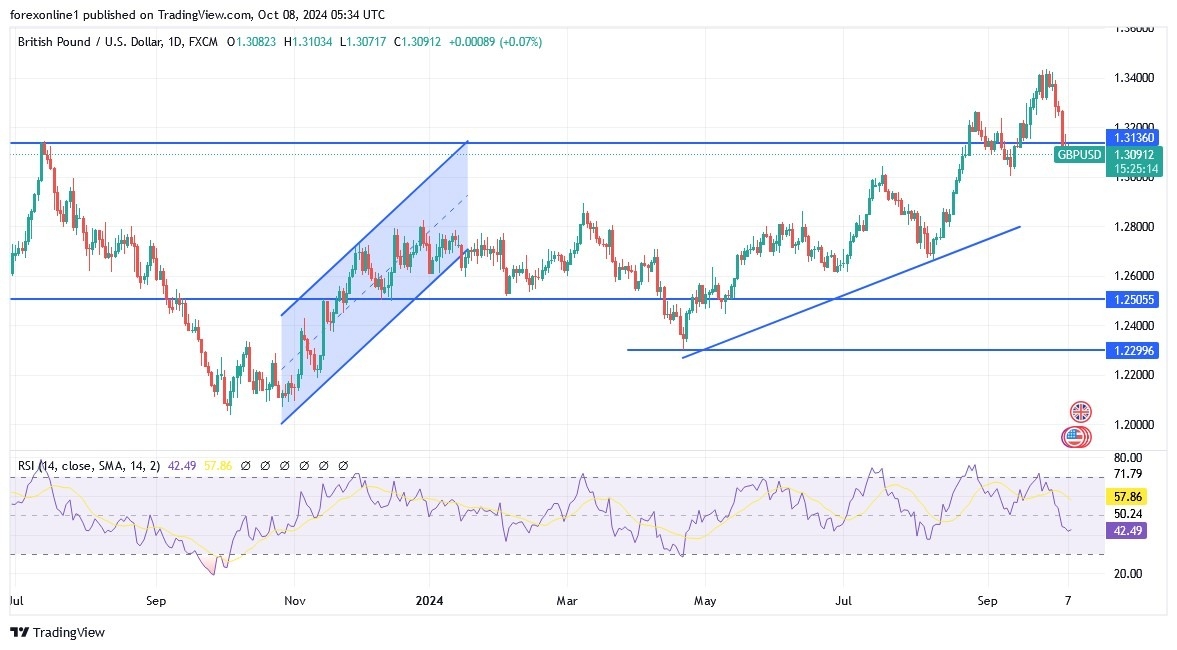
  • According to recent trades, the GBP/USD exchange rate has declined by 2.0% last week and still appears strong, but a limited rebound is possible in the coming days.
  • Recently, Sterling losses reached the support level of 1.3060, the lowest in three weeks.
  • Furthermore, the decline in the exchange rate comes amid a reassessment of how quickly the Federal Reserve can cut US interest rates in the future, given the strengthening of the US economy.
  • Commenting on the performance of the forex market, Francesco Pesole, a forex analyst at ING Bank, said: “The foreign exchange market has undergone a difficult readjustment as the idea of an easy Federal Reserve has now evaporated.

The most important data of the month came on Friday in the form of the US Non-Farm Payrolls report, which showed an unexpected improvement in the employment situation in the United States. 254,000 jobs were created in September, beating expectations of a reading of 147,000. Any hopes of a 50bp rate cut by the US before the end of the year have been dealt a major blow by this data, with investors wondering whether they will succeed in cutting rates by 25bps twice. In fact, a 25bp rate cut by the US is not out of the realm of reality.

Therefore, there has been a significant adjustment in expectations, and with a weekly decline of 2.0% in the rearview mirror, it is possible to buy some dips in the GBP/USD pair. According to reliable trading platforms, the GBP/USD pair has now retreated to its 50-day moving average at 1.3078, which provided support on Friday. Concurrently, this forms a near-term support level to watch this week and some pullback from the strong selling around these levels could occur.

Technical forecasts for the GBP/USD pair today:

Technically, I would caution that any confirmed break below the 50-day moving average at any point in the coming days could represent a more determined breakdown underway that could risk turning GBP/USD from a medium-term uptrend to a downtrend. Downside risks also come in the form of ongoing geopolitical concerns cantered around the Middle East. Overall, the GBP/USD rally will be contained below the 2024 highs (1.34) and it will take signs of renewed slowdown in the US economy to drive the next phase of GBP/USD’s rally.

We will not get any chance of the data needed to drive this narrative until later. According to the economic calendar, the US inflation report on Thursday is the highlight of the week, as it will determine how market sentiment evolves in line with expectations of interest rate cuts by the Federal Reserve. Therefore, a reading below expectations would boost hopes that the Federal Reserve will cut interest rates twice more in 2024, which could strengthen the pound sterling against the euro and the US dollar.

For now, the market is looking for a reading of 2.3% on an annual basis and 0.1% monthly. Ultimately, anything higher could push back expectations of interest rate cuts further and could cause the pound sterling to suffer until the end of the week.

Ready to trade our GBP/USD Forex analysis? We’ve made this UK forex brokers list for you to check out. 

Source link

8 10, 2024

Solana (SOL) Price Prediction for October 8

By |2024-10-08T21:13:45+03:00October 8, 2024|Crypto News, News|0 Comments

Cover image via U.Today

Disclaimer: The opinions expressed by our writers are their own and do not represent the views of U.Today. The financial and market information provided on U.Today is intended for informational purposes only. U.Today is not liable for any financial losses incurred while trading cryptocurrencies. Conduct your own research by contacting financial experts before making any investment decisions. We believe that all content is accurate as of the date of publication, but certain offers mentioned may no longer be available.

The growth has not lasted long, as most of the coins are again in the red zone, according to CoinMarketCap.

Article image
Top coins by CoinMarketCap

SOL/USD

The rate of Solana (SOL) has fallen by 5.12% over the last 24 hours.

Article image
Image by TradingView

On the hourly chart, the price of SOL is breaking the local support level of $142.73. If it happens and the daily bar closes below it, the decline is likely to continue to the $141 range shortly.

Article image
Image by TradingView

On the bigger time frame, the situation is also rather more bearish than bullish. If buyers lose the interim level of $142, the accumulated energy might be enough for a test of the $140 zone. 

Related

BTC, ETH and XRP Price Prediction for October 7

Such a scenario is relevant until the end of the week.

Article image
Image by TradingView

From the midterm point of view, there are no reversal signals yet. If the weekly candle closes around current prices, traders may witness an ongoing drop to the $130-$135 range.

SOL is trading at $143.48 at press time.

Source link

8 10, 2024

Where Do Kamala Harris and Donald Trump Stand on Women’s Health Issues?

By |2024-10-08T21:03:28+03:00October 8, 2024|Fitness News, News|0 Comments

There’s a lot at stake in this presidential election, and women’s health policy will be impacted by our new commander in chief and their administration, no matter who wins. So, as the 2024 presidential election fast approaches, make sure you know where Kamala Harris and Donald Trump stand on important issues related to women’s health and healthcare.

You can do a deep dive on each candidate’s stances on their websites (do your research at
KamalaHarris.com and DonaldJTrump.com) but here’s a quick snapshot of some of the key issues affecting the health of women and people assigned female at birth.

Health Insurance

Affordable Care Act (ACA)

Trump

Donald Trump wants to replace the ACA with “much better healthcare.” During the debate, he mentioned that he has a “concept of a plan” for healthcare reform but has not issued specifics.

Trump campaigned in 2016 on repealing and replacing the ACA. Though that effort failed, his administration made other changes, including zeroing out the penalty for not having insurance, ending certain subsidies, and reducing funding for outreach and enrollment support.

Medicaid

Trump

Trump’s platform makes no mention of Medicaid.

As President, Trump allowed states to require people to work in order to qualify for Medicaid. His failed efforts to repeal the ACA would have reversed Medicaid expansion. He also proposed restructuring Medicaid payments to the states using block grants or per person spending caps.

Harris

Harris has said she will protect Medicare by taxing millionaires and billionaires and closing tax loopholes.

As vice president, Harris cast the tie-breaking vote for the Inflation Reduction Act, which contained provisions to lower Medicare prescription prices.

The Harris-Biden administration expanded coverage for mental health services and extended coverage for telehealth through December 2024.

Trump

Trump has said he will make no cuts to Medicare and will not change the retirement age, although no specific policies have been shared.

As president, Trump enacted tax reductions that sped up the depletion of the Medicare Part A Trust Fund and repealed a federal board that was intended to slow Medicare spending. He increased Medicare premiums for higher-income beneficiaries. He also relaxed Medicare telehealth rules to make remote care more accessible during the Covid pandemic.

Child tax credits and childcare

Harris

Harris supports a $6,000 tax credit for parents of newborns and enhanced child tax credits ($3,600 for children under 6 and $3,000 for older children).

Harris supports creating federal paid family and medical leave (the current Family and Medical Leave Act guarantees unpaid leave) and enhanced funding for childcare providers. She proposes a cap on childcare costs to no more than 7% of a family’s income

.

Trump

Trump has not issued specific policy proposals, but at a New York Economic Club event, Trump stated that his proposals to increase tariffs on foreign imports would reduce the costs of childcare. He also said of childcare, “You have to have it.” Trump’s running mate, JD Vance, has said he supports a $5,000 child tax credit. A more modest proposal failed to pass in the Senate due to Republican opposition.

LGBTQ Health

Harris

Harris has made a campaign commitment to pass the Equality Act, which protects LGBTQ+ people from discrimination.

The Biden-Harris administration reinstated Section 1557 of the ACA, which provides the broadest protections to date for healthcare based on gender identity and sexual orientation, for transgender people, and for gender-affirming care.

Trump

Trump has pledged to prohibit gender-affirming care for young people and block the use of federal funds for gender-affirming care.

Trump has also pledged to “Keep men out of women’s sports” as part of the 2024 Republican pledge to “end left-wing gender insanity.”

As president, Trump created the Division of Conscience and Religious Freedom at HHS and issued final conscience regulation expanded religious protections, which created opportunities for LGBTQ-based discrimination in certain circumstances.

Prescription drug prices

Harris

Harris supports expanding the number of drugs that the government can negotiate and extending the $35 insulin cap for Medicare recipients to all Americans.

Harris cast the tie-breaking vote to pass the Inflation Reduction Act (IRA), which requires the government to negotiate drug prices on certain drugs, caps out-of-pocket drug costs and limits insulin costs to $35 per month for Medicare enrollees.

Trump

The Trump administration created a voluntary model for Medicare prescription plans to limit insulin costs to $35 per month and allowed states to import medicines from Canada; however that was later rescinded. Trump initially supported creating a “Most Favored Nation” status for Medicare to limit government spending on certain drugs but has since backed away from that position.

Reproductive health

Abortion access

Trump

Trump has taken credit for the Supreme Court’s decision to overturn Roe v. Wade, which removed the constitutional right to abortion. He favors letting states decide their own abortion laws, and he personally supports exceptions to abortion bans in cases of rape, incest, and threats to the mother’s life.

Although Trump has held a variety of positions on abortion rights over the years. Recently, he said that laws banning abortion after six weeks go too far, but later stated that he plans to vote for such a measure in Florida, his home state. Trump previously would not commit to vetoing a federal abortion ban if Congress passes one, but more recently posted on social media that he would veto such a ban.

Medication abortion

Harris

Harris supports the FDA decision to improve access to medication abortion pills by allowing them to be mailed.

The Biden-Harris administration opposes the interpretation and enforcement of the Comstock Act to prevent sending abortion medication through the mail.

Trump

Trump has suggested he would block availability of medication abortion pills at times and suggested that he would not block them at other times. Support for leaving abortion policy to the states allows states to block access to all abortion, including medication abortion pills.

Trump has not publicly spoken on his position on the Comstock Act, but many Republican leaders, including his running mate JD Vance, have called for the enforcement of the Comstock Act to prohibit the mailing of medication abortion pills.

Access to contraception

Harris

Harris supports the proposed Right to Contraception Act, which protects the right to contraceptives.

The Biden-Harris administration is fighting a federal lawsuit that challenges ACA requirements to cover preventive services (including contraceptives). The administration has issued executive orders in support of contraception.

Trump

Earlier in the 2024 campaign, Trump said he was open to restrictions on contraceptives but later promised never to ban birth control.

Trump administration policies paved the way for employers with religious objections to exclude birth control from employee health plans. Most Republican members of Congress, including Vance, opposed the Right to Contraception Act.

Fertility treatment/in vitro fertilization (IVF)

Harris

Harris supports guaranteed rights to IVF and supports the ACA, which includes access to coverage before, during and after childbirth. She advocated against a ruling from the Alabama Supreme Court that embryos are children, and therefore cannot be destroyed.

She took a stand against Republicans blocking a bill that would have protected IVF.

Trump

Trump supports access to IVF and said he would require insurance companies to cover the costs but did not detail how he would implement such a requirement.

The Republican platform opposes research using embryonic stem cells (which can be derived from the IVF process).

Maternal health/maternity care

Paid family and medical leave

Harris

In the past, Harris supported 12 weeks of paid leave for most workers, including new parents, caregivers and victims of intimate partner violence. During her presidential run, she has expressed support for paid family and medical leave but has not shared details.


Source link

8 10, 2024

Unlocking New DeFi Opportunities for BNB Holders

By |2024-10-08T20:53:30+03:00October 8, 2024|News, NFT News|0 Comments


52 mins ago – Around 5 mins mins to read

Toronto, Ontario, October 8th, 2024, Chainwire

clisBNB, developed by Lista DAO, is an innovative tool that offers BNB holders greater flexibility and control over their assets. Now available through BNB.xyz, a one-stop on-chain platform for BNB, primarily designed to bridge the gap between CeFi and DeFi. clisBNB offers BNB holders a new way to access Binance launchpool and Lista DAO CDP.

What is BNB.xyz?

With BNB Chain, ListaDAO, and Pancakeswap as core contributors, BNB.XYZ is a one-stop staking platform on the BNB chain, bridging the gap between DeFi and CeFi. The platform offers users competitive APRs, enhanced security, and exclusive features like strategic APY comparisons, Binance Launchpool reminders, and potential integrations with major platforms like Binance.com.

What is clisBNB?

clisBNB is a certificate token issued when users deposit BNB into a Collateralized Debt Position (CDP) on ListaDAO. Each clisBNB is pegged 1:1 to the amount of BNB deposited, maintaining a clear link between the token and the staked BNB. This innovative solution allows users to retain control of their BNB collateral while accessing a wide range of DeFi opportunities.

What Can clisBNB Do?

The primary function of clisBNB is to allow users to borrow lisUSD against their BNB collateral on ListaDAO, and still be able to participate in Binance launchpool using clisBNB. Users who hold clisBNB in their Binance Web3 MPC wallet can leverage their BNB to join exclusive token launch events, earning new tokens without having to close their debt positions on Lista DAO.

This powerful combination of borrowing and participation in Binance Launchpool gives users more utility and flexibility with their BNB holdings, all through one seamless product.

Key Features of clisBNB:

clisBNB comes with several features that distinguishes it from other tokens, providing users with focused utility while maintaining control over their assets:

1. 1:1 Ratio with BNB

When users deposit BNB into a CDP on Lista DAO, they are issued clisBNB at a 1:1 ratio. This direct relationship ensures that for every BNB deposited, one clisBNB is created, maintaining a seamless link between the deposit and the certificate.

2. Non-transferable Token

One important feature of clisBNB is that it is non-transferable. Once issued, clisBNB cannot be moved between wallets or users. It is solely linked to the user’s BNB deposit and exists only within the context of the Lista DAO platform, ensuring its security and focused usage.

3. Automatic burn upon withdrawal

clisBNB is automatically burnt or destroyed when users withdraw their BNB or the corresponding slisBNB from Lista DAO’s CDP. This mechanism ensures that clisBNB always accurately represents the amount of BNB in the user’s position. Once the underlying BNB is withdrawn, the associated clisBNB is removed from the system to prevent any mismatches in value.

4. Minting clisBNB to Another Address

clisBNB offers users a unique feature: When depositing BNB into a CDP, they have the option to mint clisBNB to another address. However, once this address has been chosen and the clisBNB has been sent over, it will no longer be transferable to any other wallet. Having this function enables greater flexibility, especially for users who may want to delegate certain actions related to another wallet, such as the accumulation of stardust points.

However, this flexibility comes with some key restrictions:

  • Only one address can be specified to receive clisBNB at the time of deposit.
  • If the underlying BNB or slisBNB is withdrawn, any clisBNB minted to the secondary address is automatically destroyed.

How to Obtain clisBNB

Accessing clisBNB is a straightforward process. Users can visit ListaDAO’s deposit page, where they can deposit their BNB into a Collateralized Debt Position (CDP), and automatically receive clisBNB in return. From there, clisBNB can be used to participate in Binance Launchpool events via the Binance Web3 MPC wallet.

To ensure participation in Binance Launchpool events, it’s important that users utilize the Binance Web3 MPC wallet, which supports smooth interaction between the staked BNB and launch events.

clisBNB: Unlocking BNB Liquidity

clisBNB offers BNB holders a powerful new way to unlock liquidity, borrow lisUSD, and participate in Binance Launchpool events without losing access to their collateral. By enhancing the utility and flexibility of staked BNB, clisBNB represents a significant advancement in DeFi solutions for BNB users.

With the introduction of clisBNB, BNB holders now have a seamless tool for managing collateral, participating in Binance launchpools and accessing DeFi opportunities, all within a simple and secure process.

About BNB XYZ

BNB XYZ is a One-Stop on Chain Staking Platform for BNB, designed to bridge the gap between BNB CeFi and DeFi. It offers seamless staking solutions and optimizes the utility of both CeFi BNB and DeFi BNB, making it the go-to resource for all BNB users to maximize their potential earnings. Core contributors of BNB XYZ include PancakeSwap, Lista DAO, and BNB Chain.

Website: https://BNB.xyz

X (Twitter): https://x.com/BNBxyz

Core contributors: PancakeSwap, Lista DAO, BNB chain

Contact

Marketing team
BNB.xyz
[email protected]


Source link

Go to Top