About Editorial team of BIPNs

Main team of content of bipns.com. Any type of content should be approved by us.
2 12, 2025

Forecast update for EURUSD -02-12-2025.

By |2025-12-02T17:26:04+02:00December 2, 2025|Forex News, News|0 Comments


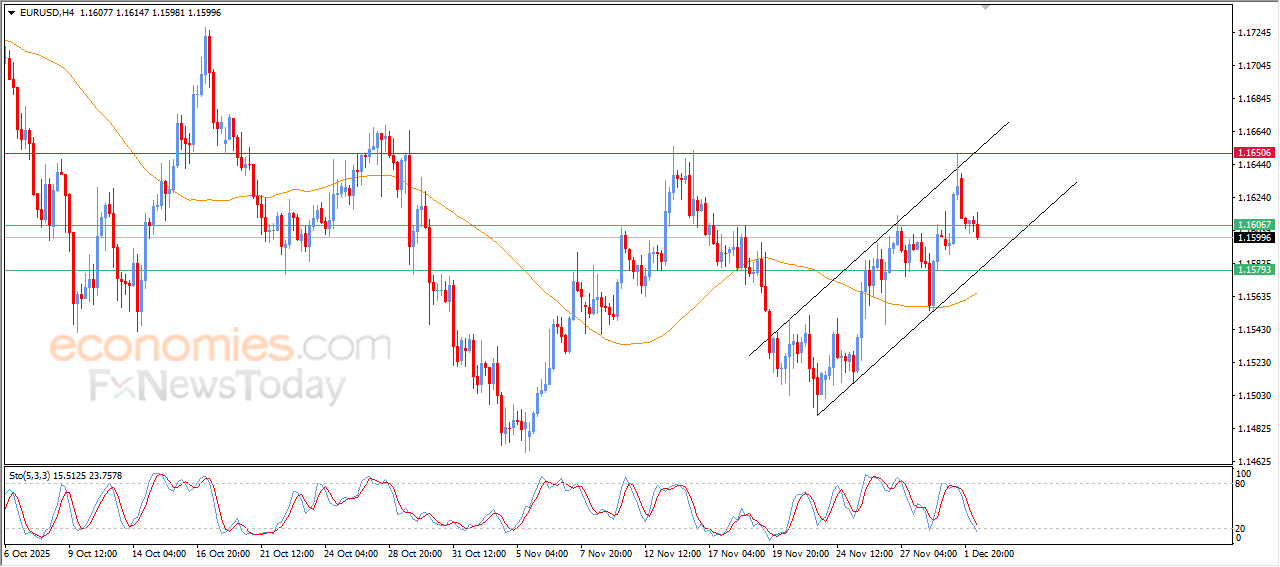
The EURJPY pair remains affected by the negative pressure, which forces it to delay the attempts to resume the main bullish trend by its stability below 181.75 barrier, activating with stochastic negativity yesterday at 180.10 level.


We expect to renew the corrective attempts to target 179.40 support, then monitor its behavior due to the importance of this level to detect the expected trend in the upcoming trading, while breaching 181.75 level and providing positive close will ease the mission of recording new gains, to expect its rally towards 182.35 and 182.80 initially.


The expected trading range for today is between 179.40 and 181.00


Trend forecast: Bearish


Source link

2 12, 2025

USD/JPY Forecast 02/12: Long-Term Uptrend Holds (Video)

By |2025-12-02T16:58:09+02:00December 2, 2025|Forex News, News|0 Comments

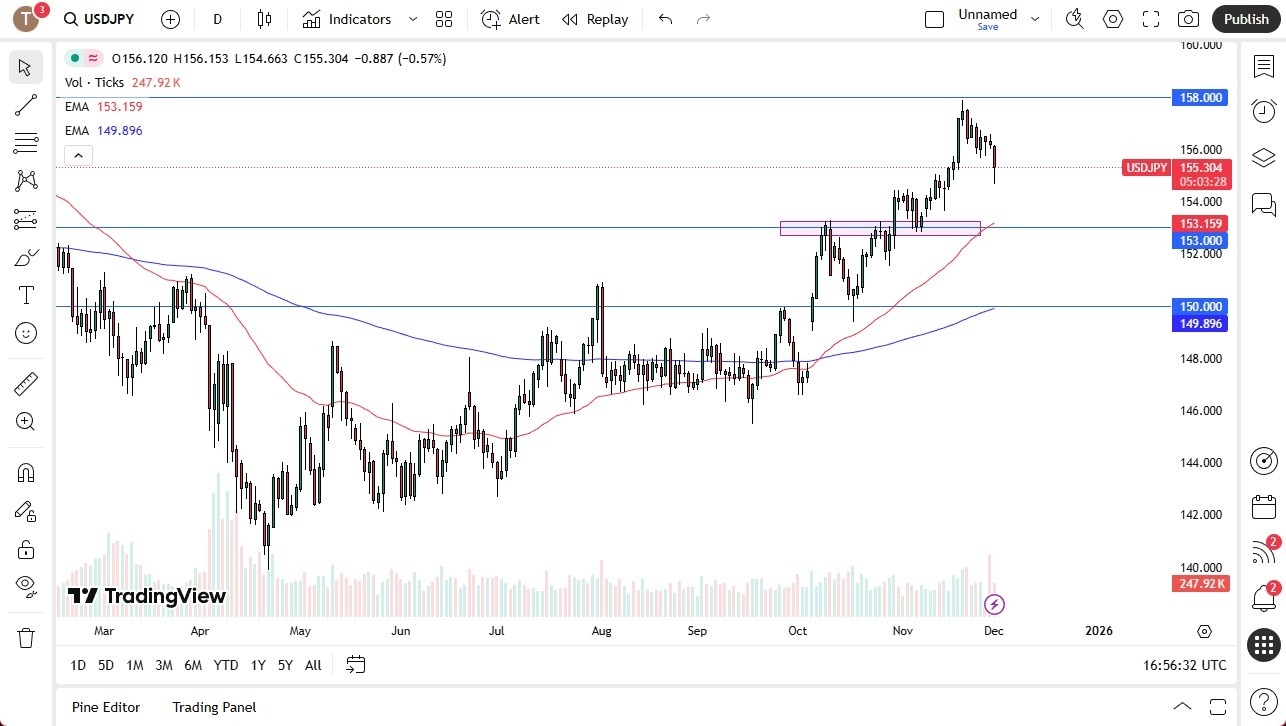
  • US dollar/yen trading shows a sharp Monday pullback, but support near ¥155 has prompted attempts to recover.
  • Despite volatility and hesitation, the long-term uptrend remains intact as the interest-rate differential continues to favor the United States.

The US dollar has fallen quite a bit against the Japanese yen during trading here on Monday, but has shown signs of trying to recover as the 155 yen level has offered a bit of support. This is a market that’s been in an uptrend for quite some time, and I don’t think that changes overall, but I do recognize that there is a certain amount of volatility and a certain amount of hesitation to own the dollar, but over the longer term, the interest rate differential will continue to favor the United States. And I just don’t see how that changes. After all, even if the Federal Reserve decides to cut rates, the reality is that the interest rate differential continues to just favor the Americans. The Bank of Japan is nowhere near being able to tighten monetary policy. And therefore, you get paid to hang on to this pair even though on a day like Monday, it’s a little tough.

I Remain Long

For the last several months, I’ve had a position favoring the US dollar in this pair, and that hasn’t changed despite the sharp pullback. And I do think that we will eventually try to get back to the 158 yen level, but we probably have some work to do to get there. The next Federal Reserve interest rate decision is in about nine days, so we’ll have to watch that.

Between now and then, there’s probably a lot of conjecture as to what happens and a lot of nonsensical handwringing and talking online that will perhaps influence a little bit of the trading, but over the longer term, this is still a trade that I do think eventually finds buyers looking to take advantage of value.

Want to trade our USD/JPY forex analysis and predictions? Here’s a list of forex brokers in Japan to check out.

Christopher Lewis has been trading Forex and has over 20 years experience in financial markets. Chris has been a regular contributor to Daily Forex since the early days of the site. He writes about Forex for several online publications, including FX Empire, Investing.com, and his own site, aptly named The Trader Guy. Chris favours technical analysis methods to identify his trades and likes to trade equity indices and commodities as well as Forex. He favours a longer-term trading style, and his trades often last for days or weeks.

Source link

2 12, 2025

Matcha popularity projected to decline

By |2025-12-02T16:51:15+02:00December 2, 2025|Dietary Supplements News, News|0 Comments


Matcha quality decline summary and key market implications

  • Japanese matcha exports tripled from 2010 to 2023 as demand surged
  • Authentic Japanese matcha now accounts for only half the market share
  • Lower grade matcha alternatives are growing by 10 percent annually
  • Climate pressures have cut Japanese matcha yields by up to 60 percent
  • Lower quality matcha risks bitter taste and reduced health benefits

Headline: Matcha quality decline: Is it a ‘victim of its own success’?

Matcha has taken the world by storm. The green flavour has, in a short time, gone from relative obscurity to omnipresence. Identified by its bright green hue, it can be found not just in teas and lattes but as an ingredient in ice-cream, chocolate and even bread.

Yet the popularity of the drink could be under threat. Supplies were already being challenged earlier this year, and now, lower quality powders are entering the market, their share increasing every year.

What is matcha?

Matcha is a finely ground powder, made of shade-grown green tea originating from Japan.

Unlike ordinary green teas, matcha involves consuming the entire leaf – in powdered form. After harvesting, stems and veins are removed and the leaves are ground down, giving it its distinctive green colour.

It has been linked to health benefits such as improving focus, helping metabolism, improving skin health, reducing inflammation and making sleep quality better (one health outcome which many consumers desire).

According to Japan’s agricultural ministry, matcha exports tripled between 2010 and 2023 as global popularity ballooned. In 2023, sales of matcha in Western markets rose by around 200%.

Why is matcha quality declining?

For the past several years, matcha’s popularity has been nearly unmatched, driven by social media frenzy and health trends. Because of this, demand has been straining supply.

According to Alice Pilkington, principal analyst at marketing intelligence company Mintel, high demand has meant that lower quality powders have been “flooding” the market.

Such powders could lead to the “cheapening” of a traditionally revered tea ceremony, explains Pilkington.

“Authentic high grade Japanese matcha has come under attack from cheaper alternatives,“ agrees Jordan Kear-Nash, principal consultant at supply chain consultancy Proxima.

“Many cafés and brands are substituting culinary‑grade matcha, intended for baking or blending, in place of ceremonial‑grade matcha, traditionally used for drinking.”

Also read → Matcha trend sends sales skyrocketing but threatens supply

This substitution has been found to be widespread in Western markets.

Moreover, alternatives are coming not from Japan but from other tea markets, such as China, India and Kenya.

All this has meant that classic matcha now only makes up around half the market, and the share of “culinary grade” replacements is growing by 10% a year.

While popularity is the main driver of the supply-demand mismatch, there are other factors at play. Japan has limited production regions of the crop, and this combined with climate pressures have reduced yields by up to 60%.

Combined, all these factors have led to the price of matcha nearly tripling.

Could this affect consumer demand?

The big question is, could such replacements actually affect demand from consumers?

If consumers notice a decline in matcha quality, the viral ingredient could be a “victim of its own success”, says Mintel’s Pilkington. In short, a decline could be the very consequence of such high demand.

Lower quality matcha could be noticeable to consumers, suggests Proxima’s Kear-Nash.

“Typically, cheaper alternatives will come from inferior leaves and will produce a lower grade which, in layman’s terms, may mean that it tastes grassy or bitter, has a duller colour, and delivers fewer antioxidants and amino acids. This can reduce both taste appeal and perceived health benefits.”

However, the impact of this on demand can be mitigated, as long as consumers are not misled.

Trust in the food industry in general is already declining. It is important for the continued popularity of matcha, suggests Kear-Nash, that suppliers are transparent. Different strains should be labelled, and there should be visibility in supply chains.

“What’s important here is that consumers understand exactly what constitutes premium compared with everyday matcha, and what they are paying for.”


Source link

2 12, 2025

DOGE Struggles to Rebound as

By |2025-12-02T16:46:00+02:00December 2, 2025|Crypto News, News|0 Comments

DOGE stalls near $0.14 as AlphaPepe gathers momentum with whales and 100+ new holders daily.

The broader crypto market remains cautious as December 2025 unfolds, with global macro uncertainty and uneven liquidity flows causing pressure across altcoins. Bitcoin continues to dominate institutional inflows, leaving smaller and speculative assets with limited momentum. Within this environment, Dogecoin (DOGE) has struggled to ignite a meaningful rebound and remains trapped in a range dictated by weak demand and fragile sentiment.

At the same time, early-stage projects are beginning to absorb some of the speculative attention that historically rotated into DOGE during rally periods. Among them, AlphaPepe (ALPE) https://alphapepe.io/ is increasingly visible, supported by steady presale growth, strong token mechanics, and consistent community expansion – even at a time when the wider market has been subdued.

DOGE Price Today: Market Snapshot and Challenges

DOGE is currently trading around the mid-$0.14 range https://coinmarketcap.com/currencies/dogecoin/, reflecting a broader period of consolidation after failing to establish a sustained breakout. Technical indicators continue to skew bearish, with the token trading below its key EMAs, signalling continued downside pressure. Momentum indicators such as the RSI reflect neutral-to-weak demand, while MACD readings suggest fading bullish attempts.

The sentiment surrounding DOGE has also weakened as retail participation remains uneven. With liquidity flowing disproportionately into major assets, high-beta meme coins like DOGE have seen their speculative power diminish. Ongoing inflation from Dogecoin’s unlimited supply model adds gradual but constant dilution, making it harder for the token to gain sustained traction without robust demand. Market watchers continue to identify the $0.13-$0.14 region as a crucial support range; failure to defend it could invite further consolidation toward lower levels.

Outlook and Potential Scenarios for DOGE

Short-term forecasts suggest DOGE may remain range-bound between approximately $0.13 and $0.15 unless broader market conditions improve. A rebound toward $0.16-$0.17 remains within reach, but only if sentiment shifts positively and retail inflows return. Without a notable external catalyst, upward momentum appears limited.

If market conditions remain defensive, DOGE could retest lower supports around $0.12 as traders seek more dynamic opportunities elsewhere. Despite these challenges, the medium-term picture is not entirely bleak. A recovery to the high-teen cent levels is possible over several months if macro conditions stabilise and risk appetite returns. Still, the inflationary nature of DOGE’s supply and the absence of strong utility continue to cap more ambitious bullish scenarios.

Why Some Traders Are Looking Elsewhere – Enter AlphaPepe

As DOGE lingers under pressure, traders seeking early-stage opportunities are increasingly turning to alternatives like AlphaPepe. The project has demonstrated an unusual level of resilience throughout 2025, with more than 4,000 holders participating to date and, notably, over 100 new holders joining daily despite broader bear-market conditions. This includes growing whale participation, a sign that larger speculative players are positioning early in anticipation of potential upside.

AlphaPepe https://alphapepe.io/ is built on BNB Chain and differentiates itself through transparency and structural mechanics uncommon in meme-coin presales. Token buyers receive their ALPE instantly after purchase, a feature that has been interpreted as a strong trust signal in a market historically dominated by delayed unlocks. Staking is live during the presale, allowing holders to earn yield before listing, and the project’s USDT reward pool has already executed multiple distribution cycles on-chain. The smart-contract audit scored 10/10, and liquidity is set to be locked at launch, reducing common presale concerns.

The project recently released its V2 website, featuring a cleaner interface, improved UX, and multilingual support aimed at international expansion. With weekly presale price increases and growing buzz around potential future exchange listings – including unconfirmed chatter about Binance due to the token’s BNB Chain alignment – AlphaPepe is increasingly being positioned as one of the standout speculative bets of late 2025.

How DOGE and AlphaPepe Could Coexist in a Portfolio

From a portfolio strategy perspective, DOGE continues to serve as a large-cap, high-liquidity meme-coin anchor. Its long-standing presence and broad recognition make it suitable for traders who want meme-coin exposure without venturing entirely into early-stage risk.

AlphaPepe, on the other hand, offers a high-beta opportunity designed for those seeking early-phase momentum. Its strong community growth, presale mechanics, and whale interest make it an attractive satellite allocation for speculative traders. Balancing a core position in DOGE with a smaller, higher-upside allocation to AlphaPepe allows investors to engage both stability and growth narratives within the meme-coin sector.

Conclusion

DOGE remains in a difficult position as it trades around $0.14 with declining momentum and limited catalysts. Structural supply inflation and subdued demand continue to suppress bullish follow-through, leaving the token reliant on broader market improvements to break out of its consolidation phase. While moderate recovery remains possible in the medium term, the immediate outlook leans cautious.

In contrast, AlphaPepe is gaining accelerating attention as a next-wave speculative candidate. With over 100 new holders joining daily, whales entering the presale, instant token delivery, staking, reward pools, a top audit score, locked liquidity, and a global-focused V2 platform, AlphaPepe stands out as a structurally robust meme-coin play. As traders reassess where the next major narrative could emerge, AlphaPepe is increasingly becoming a key watchlist asset for those positioning ahead of potential shifts in market sentiment.

Website: https://alphapepe.io/

Telegram: https://t.me/alphapepejoin

X: https://x.com/alphapepebsc

Frequently Asked Questions (FAQs)

What is causing DOGE to struggle despite wider market activity?

DOGE is weighed down by weak retail participation, macro uncertainty, and its inflationary supply model, which requires strong demand to offset ongoing dilution.

Can DOGE recover in the medium term?

A moderate recovery is possible if market sentiment improves, but without catalysts or increased buying pressure, any rebound may remain limited.

Why is AlphaPepe gaining holders during a bear market?

AlphaPepe’s mechanics – including instant delivery, staking, and transparent tokenomics – have attracted steady organic growth, with over 100 new holders joining daily and increasing whale participation.

How does AlphaPepe differ from other meme-coin presales?

AlphaPepe offers structural advantages such as live staking during presale, USDT reward cycles, a 10/10 audit, locked liquidity, and a weekly price-increase model, making it more robust than typical hype-driven presales.

Can DOGE and AlphaPepe both have a place in a portfolio?

Yes. DOGE can act as a stable, large-cap meme-coin anchor, while AlphaPepe serves as a high-beta speculative allocation for traders seeking early-stage upside.

AFFILIATE AVENUE LTD

128 City Road, London, England, EC1V 2NX

cs@coinfunnel.io

Jack Duffy

At CoinFunnel, we help blockchain projects and crypto startups grow their audience, increase adoption, and build community through strategic marketing.

This release was published on openPR.

Source link

2 12, 2025

Cervical Cancer Healthcare Access in Rural Communities

By |2025-12-02T16:25:19+02:00December 2, 2025|Fitness News, News|0 Comments


When Claudia Perez-Favela, a mother of two in California, experienced irregular periods and heavy bleeding, she was concerned that these could be symptoms of cancer.

She knew there was a history of reproductive cancer in her family, but she couldn’t see the doctor right away because she was uninsured. After she got health insurance, she tried to set up an appointment with a gynecologist, but there were a limited number of providers in her town, and she had to wait several more months to be seen.

After she finally saw a healthcare provider and had several tests done, Perez-Favela said she was diagnosed with cervical dysplasia (a precancerous condition where abnormal cells develop on the cervix) from an aggressive strain of human papillomavirus (HPV). Because of her family history and the dysplasia diagnosis, Perez-Favela had a hysterectomy.

Perez-Favela said accessing medical care is challenging in rural areas. “Preventative screenings are very important. But in small towns there are not a lot of doctors and specialists — and the wait times for getting an appointment can be several months. If there had been any further delays in seeing the doctor, my condition could have developed into something much worse.”

Perez-Favela is not alone.

Healthcare deserts present challenges for preventive care

Healthcare deserts — geographical areas where there is limited access to medical care — impact millions of Americans. Limited medical facilities, financial hardship and a lack of health insurance and transportation to medical appointments compound the problem.

Cancer prevention screenings can also be a significant challenge in rural areas. The Centers for Disease Control and Prevention reports that nearly 93% of cervical cancers are preventable with Pap and HPV tests and HPV vaccinations. But for rural patients with limited access to screenings, there can be serious ramifications — including higher death rates from preventable cancers.

“Providing care in rural communities comes with unique challenges. Many patients live significant distances from clinics or hospitals, meaning preventive care (Pap tests and HPV testing) is often delayed or skipped altogether. Transportation barriers, limited appointment availability and fewer providers in these regions make it difficult for patients to get timely screenings,” said Michael Schifano, D.O., a board-certified OB-GYN at Heartland Women’s Healthcare of Advantia, in Illinois.

Hospital closures and Medicaid exclusions impact rural communities

iStock.com/Wackerhausen

Experts report that several factors within the last decade — hospital closures, budget cuts, lack of specialists and post-pandemic staffing shortages — have made things much worse in rural areas.

Obstetric and gynecological care has been particularly impacted — 267 rural hospitals stopped providing obstetric care between 2011 and 2021 — and nearly 100 rural hospitals reduced services or shut down, impacting over 16 million people, in the past decade.

“The shortage of OB-GYNs limits both screening and prevention. Without enough providers, patients not only miss routine Pap and HPV tests but also opportunities to receive HPV vaccination, which is a proven way to prevent cervical cancer before it starts,” Schifano said.

Marginalized communities experience healthcare disparities at higher rates

Researchers at the University of Chicago found that hospital closures disproportionately impact Black communities. Rural Black women are also at increased risk for cervical cancer. Research shows that Black women in the Mississippi Delta face significant barriers in accessing cervical cancer screenings and are at higher risk of dying from this disease.

Some states have also made it more challenging for marginalized communities to get health insurance. Under the Affordable Care Act, states were allowed to expand Medicaid coverage to adults with incomes up to 138% of the federal poverty level. Ten states (Alabama, Florida, Georgia, Kansas, Mississippi, South Carolina, Tennessee, Texas, Wisconsin and Wyoming) refused the expansion, leaving around 1.6 million people — mostly Black and Latinx Americans — without access to insurance.

Clinics that operate in small towns are also losing funding. In 2018, Republican South Carolina governor, Henry McMaster, issued an executive order barring Planned Parenthood from the state’s Medicaid provider list. Planned Parenthood — who reports that 76% of its clinics are located in underserved areas — filed a lawsuit challenging the order.

While some Planned Parenthood clinics provide early terminations (abortion is banned in South Carolina at six weeks), abortions were never covered by Medicaid. Planned Parenthood does provide numerous other medical services, including cancer prevention screenings (Pap tests, breast exams), but the state blocked funding to Planned Parenthood for all medical services.

On June 26, 2025, the Supreme Court ruled 6-3 to uphold South Carolina’s order to exclude Planned Parenthood from Medicaid. Experts report this ruling could have far reaching consequences for clinics across the country.

“Removing funding for clinics that provide preventive screenings is dangerous,” said Heather Bartos, M.D., a board certified OB-GYN in Texas and a member of HealthyWomen’s Women’s Health Advisory Council.

Imminent federal budget cuts will significantly impact access to care

H.R.1 — the federal spending bill signed into law by President Trump on July 4, 2025 — cuts billions in Medicaid funding and critical health programs. Medical centers, hospitals and mobile clinics that serve rural communities could be hit the hardest.

“The federal budget cuts under H.R.1 will make things exponentially worse for rural patients. These areas already struggle and now with billions being cut, it raises serious concerns,” Bartos warned.

Telemedicine can be an important tool to increase access, but a lack of funding for telehealth programs and limited high speed internet in some rural areas prevents patients from participating in virtual appointments.

Bartos said providers should offer telehealth appointments whenever possible. “Some medical appointments need to be in-person, but oftentimes follow-up appointments can be virtual. If the only way a patient can be seen is virtually — and the alternative is that they won’t be seen at all — then a telehealth visit should be done.”

After cancer treatment ends, rural patients experience challenges with follow-up care

Emily Hoffman, a cervical cancer survivor in Iowa, said that after her cancer treatment ended, access to quality care became an even bigger problem.

Hoffman lives in a small town and already had to travel about 45 minutes each way to her cancer treatment appointments. But after her treatment ended and Hoffman was cancer-free, she felt sicker than she did during treatment.

Hoffman developed severe pain in her intestines and was diagnosed with radiation enteritis, inflammation of the intestine as a result of radiation. She was referred to a local gastroenterologist, but the providers in her community did not have experience treating her condition.

“Cancer doesn’t end when treatment ends. I spent four years being tossed around to different gastrointestinal doctors. I went from doctor to doctor trying to get help and spent a lot of my thirties sick in bed,” Hoffman said.

After four years, she was finally referred to the Mayo clinic. At Mayo, Hoffman tried different things to treat her condition and eventually began IV feeding, and her symptoms improved significantly. Hoffman adds that she is doing better and now works as a patient advocate, but the limitations she experienced in getting the care she needed had a huge impact on the quality of her life.

As for Perez-Favela, she has been advocating for cancer patients, especially in rural communities. “I continue to fight for people to have access to better healthcare and speak out against budget cuts that will harm patients. Cancer does not discriminate — it can impact anyone,” she said.

This educational resource was created with support from Merck.

From Your Site Articles

Related Articles Around the Web


Source link

2 12, 2025

01 Quantum Files US Patent Application for Its Quantum DeFi Wrapper (QDW) Technology to Protect DeFi Operations from Quantum Computer Attacks

By |2025-12-02T15:30:04+02:00December 2, 2025|News, NFT News|0 Comments


New QDW technology acts as a “quantum circuit breaker,” safeguarding DeFi operations and custodian wallets from post-quantum threats.

Toronto, Ontario–(Newsfile Corp. – December 2, 2025) – 01 Quantum Inc. ONE (OTCQB: OONEF), one of the first-to-market, enterprise level cybersecurity providers for the quantum computing era, today announced the filing of a U.S. patent application for its Quantum DeFi Wrapper (QDW) technology.

This innovation is designed to safeguard decentralized finance (DeFi) operations against the potential cybersecurity threat posed by the advent of quantum computers. DeFi underpins nearly all operational aspects of the digital asset ecosystem, from lending and borrowing to trading and staking, across major Layer 1 blockchains such as Bitcoin, Ethereum, Solana, and Hyperliquid. QDW enables these activities to remain secure in a post-quantum world without requiring changes to the existing blockchain infrastructure. In addition, QDW extends protection to custodian wallets, ensuring that underlying tokens are shielded from quantum-based vulnerabilities.

At the core of QDW is a Post-Quantum Cryptography (PQC) binding mechanism integrated into smart contracts. Acting as a “quantum circuit breaker,” the system halts operations if PQC authentication requirements are not met, thereby preventing unauthorized access through quantum-enabled key extraction.

Market Context

According to CoinMarketCap, the global crypto market is valued at $3.1 trillion (including stablecoins). With regulators accelerating timelines for quantum-resistant financial infrastructure, long-term digital asset security is becoming a critical priority. The urgency is underscored by the GENIUS Act, passed in July 2025 in the U.S., which requires stablecoins to be backed 1-for-1 with cash or short-term debt, helping to make them a major source of demand for U.S. Treasuries. Despite this maturity, the industry remains exposed due to reliance on classical cryptographic algorithms such as ECDSA. QDW addresses this gap by providing broad-spectrum protection without sacrificing interoperability or performance.

Technical Highlights

  • Patent-pending method (US #19/396,202): Implementation of PQC circuit breaker.
  • Performance optimization: Compatible with existing Layer 1 chains.
  • Scalable toolkit: Includes support for custodian wallets and existing post-quantum stablecoins.

Executive Commentary

“Combining years of experience in post-quantum cybersecurity, collaboration with NIST, and commercial software engineering, we are excited to unveil our QDW technology for custodian wallets and DeFi operations for the crypto industry including stablecoins,” said Andrew Cheung, CEO of 01 Quantum. “Our mission is to give the crypto and stablecoin industries the confidence that digital assets can remain secure not just today, but in the quantum era ahead. It is important to understand that encrypted data being harvested today can be stored with the intent to decrypt it once quantum capabilities mature. Without proactive defenses, today’s assets could be compromised tomorrow.”

The Quantum Threat

The arrival of Q-Day, the moment when it is anticipated quantum computers will be capable of breaking widely used encryption, represents a looming threat to digital security. Compounding this is the growing risk presented by “harvest now, decrypt later” attacks where adversaries stockpile encrypted data for future quantum decryption. While technology leaders are beginning to adopt post-quantum cryptographic methods, most public blockchains remain vulnerable. QDW offers a practical, scalable solution to close this critical gap.

About 01 Quantum Inc.

01 Quantum Inc., formerly 01 Communique Laboratory Inc., ONE (OTCQB: OONEF), is known for its innovative work in post-quantum cybersecurity and remote access solutions. The Company’s cyber security business unit focuses on post-quantum cybersecurity with the development of its IronCAP™ product line. IronCAP‘s technologies are patent-protected in the U.S.A. by its patents #11,271,715 and #11,669,833. The Company’s remote access business unit provides its customers with a suite of secure remote access services and products under its I’m InTouch and I’m OnCall product offerings. The remote access offerings are protected in the U.S.A. by its patents #6,928,479 / #6,938,076 / #8,234,701; in Canada by its patents #2,309,398 / #2,524,039 and in Japan by its patent #4,875,094. For more information, visit the Company’s web site https://01quantuminc.com | https://01com.com and follow us on our blog at https://blog.01com.com/wp.

Cautionary Note Regarding Forward-looking Statements.

Certain statements in this news release may constitute “forward-looking” statements which involve known and unknown risks, uncertainties and other factors which may cause the actual results, performance or achievements of 01 Quantum to be materially different from any future results, performance or achievements expressed or implied by such forward-looking statements. When used in this news release, such statements use such words as “may”, “will”, “expect”, “believe”, “feel”, “plan”, “intend”, “are confident” and other similar terminology. Such statements include statements regarding the use of proceeds of the Offering. These statements speak only as of the date of this news release. Forward-looking statements involve significant risks and uncertainties, should not be read as guarantees of future performance or results, and will not necessarily be accurate indications of whether or not such results will be achieved. A number of factors could cause actual results to differ materially from the results discussed in the forward-looking statements, including, but not limited to, developments that may impact the how the proceeds of the Offering are used, as well as the factors discussed under “Risk and Uncertainties” in 01 Quantum’s Management, Discussion and Analysis document filed on SEDAR+. Although the forward-looking statements contained in this news release are based upon what management of 01 Quantum believes are reasonable assumptions, 01 Quantum cannot assure investors that actual results will be consistent with these forward-looking statements. These forward-looking statements are made as of the date of this news release, and 01 Quantum does not assume any obligation to update or revise them to reflect new events or circumstances, except as required by applicable laws.

Neither TSX Venture Exchange (“TSX-V”) nor its Regulation Services Provider (as that term is defined in the policies of the TSX Venture Exchange) accepts responsibility for the adequacy or accuracy of this release.

INVESTOR CONTACT:

Brian Stringer

Chief Financial Officer

01 Quantum Inc.

(905) 795-2888 x204

Brian.stringer@01com.com

#

To view the source version of this press release, please visit https://www.newsfilecorp.com/release/276515


Source link

2 12, 2025

ANTO) Share Price & Outlook – Latest News, Broker Targets and Copper Market Forecasts as of 2 December 2025

By |2025-12-02T15:25:04+02:00December 2, 2025|Forex News, News|0 Comments


Antofagasta plc, the FTSE 100 copper miner with all of its producing assets in Chile, is trading close to record highs as investors lean into the global copper story – electrification, AI data centres and grid upgrades – while watching costs, capex and Chilean risk very closely.

This article pulls together the latest price moves, company results, broker forecasts and copper market outlooks available up to 2 December 2025, to give a structured view of where Antofagasta stock stands now and what could drive it into 2026.

Disclaimer: This article is for information and general commentary only. It is not investment advice or a recommendation to buy or sell any security.


Where the Antofagasta share price stands on 2 December 2025

On the morning of 2 December 2025, Antofagasta’s own investor website showed the share price fluctuating around 2,805–2,820p, with a modest intraday decline of around 0.5% at 10:22 UK time after a strong run the previous day. [1]

Key near-term context:

  • On Monday 1 December, the share was among the top FTSE 100 risers, trading around 2,833p, up roughly 2.5% intraday as copper prices moved higher and the broader index drifted lower. [2]
  • Over the last 12 months the stock has traded between roughly 1,278p and 2,877p, meaning it currently sits well over 100% above its 52‑week low and close to its record high zone. [3]

Short‑term technical commentary from trading site StockInvest notes:

  • Close on 1 December 2025 at 2,820p, up 2.25% on the day.
  • 52‑week range 1,278–2,877p and a 30‑day range of 2,496–2,838p, underscoring elevated volatility near the top of the range.
  • Their model currently flags the stock as short‑term “sell” on overbought technicals, with an expectation of a possible pullback from these levels. [4]

From a valuation angle, a recent analyst consensus snapshot compiled by DirectorsTalk at the end of November showed:

  • Average 12‑month target price: ~2,631.6p
  • Share price at that time: ~2,577p
  • Implied upside: just over 2% then – but now the stock is trading above that average target. [5]

The same data set pointed to:

  • Trailing P/E: ~23x
  • Forward P/E: ~16.5x
  • Dividend yield: ~1.2%, with a payout ratio of about 29%. [6]

In other words: Antofagasta is being valued as a high‑quality growth copper producer rather than a deep‑value cyclical.


Earnings momentum: H1 2025 results were exceptionally strong

Antofagasta’s 2025 Half Year Results, published on 14 August 2025, marked one of its strongest interim performances in years. [7]

Headline numbers for the six months to 30 June 2025:

  • Revenue: rose 29% year‑on‑year to $3.80bn (from $2.96bn).
  • EBITDA: jumped 60% to $2.23bn (from $1.39bn).
  • EBITDA margin: expanded from 47.2% to 58.8%, putting Antofagasta at the upper end of global pure‑play copper producers by margin. [8]
  • Profit before tax: up 63% to $1.16bn. [9]
  • Underlying EPS: more than doubled to 47.4 cents (from 22.4 cents). [10]
  • Operating cash flow: up 22% to $1.81bn. [11]
  • Interim dividend:16.6 cents per share, up 110% versus 2024’s 7.9 cents, keeping payout consistent with their capital allocation framework. [12]

Operational drivers:

  • H1 2025 copper production reached 314,900 tonnes, up 11% year‑on‑year, mainly from higher output at the big concentrators (Los Pelambres and Centinela Concentrates). [13]
  • Cash costs before by‑product credits fell 12% to $2.32/lb, while net cash costs dropped 32% to $1.32/lb, thanks to higher volumes and stronger by‑product contributions. [14]

Reuters summarised the half‑year as a roughly 60% surge in core earnings, highlighting the company’s outperformance versus other FTSE 100 miners that were reporting weaker results. Analysts at RBC called the numbers unusually “clean”, and the interim dividend more than doubled year‑on‑year. [15]

Management reiterated that Antofagasta is on track to deliver over 30% growth in copper output in the medium term, driven primarily by:

  • The Centinela Second Concentrator project.
  • Growth‑enabling projects at Los Pelambres (pipeline replacement and desalination expansion). [16]

Q3 2025: production steady, costs lower, guidance fine‑tuned

The Q3 2025 Production Report (23 October 2025) confirms that the strong first half was not a fluke. [17]

Key Q3 and year‑to‑date figures:

  • Q3 copper production:161,800 tonnes, up 1% quarter‑on‑quarter.
  • 9M 2025 copper production:476,600 tonnes, 2.8–3% higher than the same period in 2024. [18]
  • Gold production: 145,000 ounces year‑to‑date, up 22% year‑on‑year, with Q3 gold up 12% quarter‑on‑quarter. [19]
  • Molybdenum production: 11,400 tonnes in 9M, up 44% year‑on‑year, although Q3 output dipped versus Q2 on lower grades. [20]

Costs and guidance:

  • Cash costs before by‑product credits in 9M were about $2.35/lb, down around 7% vs 2024. [21]
  • Net cash costs year‑to‑date:$1.24/lb; in Q3 alone, net cash costs were even lower at $1.07/lb, thanks largely to record by‑product credits of $1.35/lb (driven by higher gold output and favourable pricing). [22]

Guidance tweaks:

  • 2025 copper production: management now expects to land at the lower end of the original 660,000–700,000 tonne range. [23]
  • Net cash cost guidance for 2025 has been cut from $1.45–1.65/lb to $1.20–1.30/lb – a meaningful improvement, reflecting very strong by‑product markets and ongoing cost discipline. [24]
  • 2025 capex guidance has been reduced from $3.9bn to $3.6bn, primarily due to the depreciation of the Chilean peso rather than project cancellations. Citi interprets the lower 2025 capex as partly a deferral into 2026 rather than a fundamental cut. [25]
  • 2026 copper production guidance has been set at 650,000–700,000 tonnes, still implying robust levels of output despite a tight global copper concentrate market. [26]

Project pipeline and labour:

  • Major growth projects at Centinela and Los Pelambres remain on track and on budget, including assembly of high‑pressure grinding rolls, progress on desalination facilities and replacement of the concentrate pipeline. [27]
  • The group has concluded several key three‑year labour agreements at Los Pelambres, Antucoya and Zaldívar, with only one remaining negotiation scheduled in 2025 – reducing near‑term labour disruption risk. [28]

Copper market squeeze: why the macro backdrop matters so much

Antofagasta is effectively a leveraged play on copper, so global copper fundamentals are crucial.

Several recent pieces of research and newsflow paint a consistent picture of a tightening copper market out to 2026:

Treatment charges collapsing, sign of a concentrate shortage

  • In June 2025, Reuters reported that some Chinese smelters agreed to process Antofagasta’s copper concentrate at $0 per tonne and 0 cents per pound in treatment and refining charges (TC/RCs), a shocking benchmark that underscores how scarce concentrate has become. [29]
  • That deal contrasts sharply with the 2025 annual benchmark TC/RCs of $21.25/t and 2.125c/lb that Antofagasta agreed with Jiangxi Copper, as highlighted later by Fastmarkets. [30]
  • Fastmarkets notes that spot TC indices in Asia are deeply negative, and that 2026 negotiations are likely to be the “toughest year yet”, with traders bidding aggressively for concentrate and smelters relying heavily on by‑product revenues (notably gold and sulfuric acid) just to break even. [31]

Forecast concentrate deficits:

  • Consultancy estimates cited by Reuters put the global copper concentrate deficit at around 1.1 million tonnes in 2025 and 2.6 million tonnes in 2026. [32]
  • Fastmarkets panelists expect a 300,000–500,000 tonne deficit in 2026, with mine production not keeping pace with electrification and AI‑driven demand. [33]

Price forecasts out to 2026

  • Deutsche Bank, in a late‑November outlook, raised its 2026 copper price forecast to $10,600 per tonne, with peak prices expected to exceed $11,000/t in the first half of that year. [34]
  • The bank expects mine supply to fall in 2025 and increase only about 1% in 2026, reinforcing a market in sustained deficit. [35]
  • Fastmarkets’ 2026 webinar recap suggests a base‑case range of $10,000–$11,000/t, with bear‑case scenarios around $8,000 and bull cases at $12,000 or higher if disruptions continue and policy shocks (like tariffs) tighten trade flows. [36]

Citi’s view, quoted in Reuters’ Q3 coverage, is that Antofagasta’s relatively conservative 2026 production guidance at one of the “best‑run” copper operations is another sign of a supply‑constrained global copper market. [37]

All of this matters for Antofagasta because:

  • Its costs (especially net cash costs) are now solidly in the lowest third of the cost curve once by‑products are considered. [38]
  • Its medium‑term growth (+30% output) is timing into a period when multiple analysts expect structural deficits and incentive‑level prices.

If copper holds anywhere near the $10k–$11k/t band, Antofagasta’s margins and cash generation could remain very strong. On the flip side, any macro shock that knocks copper down towards the $8k/t bear‑case would hit earnings hard.


Broker ratings and valuation snapshot: what are analysts saying?

Recent broker and market‑data snippets provide a mixed but generally constructive picture.

Deutsche Bank

Deutsche Bank’s late‑November copper sector note:

  • Maintains “Hold” on Antofagasta.
  • Raises the target price from 2,300p to 2,400p. [39]

Given that the stock is now around 2,800p, the new DB target implies downside from current levels, signalling that the bank sees much of the copper bull case as already in the price.

Consensus and fundamentals

The DirectorsTalk aggregation shows:

  • Consensus target: ~2,632p.
  • Current trading: above that consensus, signalling limited short‑term upside in broker models at today’s price. [40]
  • Forward P/E around 16–17x and EV/EBITDA around 9–10x, measured when the share price was lower than today, suggest the market is happy to pay a growth multiple for high‑margin copper exposure. [41]

Short‑term trading services:

  • StockInvest currently classifies the stock as a short‑term sell based on overbought technical indicators near the top of its trading channel, even as the medium‑term trend remains positive. [42]
  • MarketsMojo commentary in late November highlighted multiple intraday surges of 3–5% in the stock, and at least one piece of their templated analysis tagged Antofagasta as a “Strong Buy” within their style‑based framework, though the underlying metrics are paywalled. [43]

In summary:
Fundamental brokers seem to see Antofagasta as fully valued to slightly rich at current prices, while momentum‑oriented services still highlight strong trend strength but warn about short‑term overheating.


ESG, growth projects and long‑term positioning

Antofagasta has been trying to position itself not just as a copper producer, but as a low‑carbon, infrastructure‑ready supplier to the energy transition.

Recent developments include:

  • Hydrogen locomotive pilot: In late November, Antofagasta’s transport division FCAB launched Latin America’s first hydrogen‑powered freight locomotive, using hydrogen produced from renewable sources in a hybrid fuel‑cell and battery system. The locomotive delivers about 1,000 kW of power while being roughly 30 tonnes lighter than a comparable diesel unit. [44]
  • The pilot forms part of a broader decarbonisation strategy, including:
    • A target to cut Scope 1 and 2 emissions by 50% by 2035;
    • A long‑term goal of carbon neutrality by 2050 across mining and transport operations. [45]

On the mining side, structural growth is anchored by:

  • Centinela Second Concentrator – now in its second year of full construction, designed to materially increase sulphide processing capacity and by‑product output (notably gold and molybdenum). [46]
  • Los Pelambres desalination plant expansion and new concentrate pipeline, both advancing through civil and installation works and aimed at improving water security and logistics resilience. [47]
  • Zaldívar Environmental Impact Assessment (EIA) approval earlier in 2025, which allows the mine life to be extended to 2051, securing a significant portion of the group’s long‑term production base. [48]

These projects underpin management’s guidance of +30% medium‑term production growth and help support the company’s premium valuation relative to many diversified miners. [49]


Recent market behaviour: miners riding copper and UK macro news

In the final week of November and into December, Antofagasta has tended to move in step with the broader mining complex and copper price:

  • On 26 November, UK equities rallied after Finance Minister Rachel Reeves’ tax‑raising but market‑soothing budget.
    • The FTSE 100 closed up 0.9%.
    • Industrial miners gained about 1.5%.
    • Antofagasta rose around 2.1%, alongside Anglo American’s 3.2% gain, as copper prices strengthened. [50]
  • On 1 December, London South East’s “FTSE 100 movers” column again listed Antofagasta among the top risers, with the stock up 2.5% intraday to 2,833p, in tandem with metals prices while defence names lagged. [51]

This pattern – outperforming on days when copper is strong and underperforming when macro sentiment sours – is classic high‑beta commodity behaviour and emphasises that the stock is tightly coupled to copper and risk sentiment, even more so now that it trades at elevated multiples.


Key risks investors need to weigh

Even with strong fundamentals, Antofagasta is far from risk‑free. The main risk buckets look something like this:

  1. Copper price volatility
    • Earnings and free cash flow are highly sensitive to copper prices. A move from a $10–11k/t scenario toward the $8k/t bear‑case discussed by Fastmarkets’ panel would significantly dent margins and returns, even with lower net cash costs. [52]
  2. Project execution and capex creep
    • While management insists that Centinela and Los Pelambres projects are on budget and on schedule, large‑scale projects always face risks around cost inflation, delays and technical issues.
    • The shift in 2025 capex guidance from $3.9bn to $3.6bn is presented as FX‑driven deferral, but the true spend and timing will only become clear in 2026. [53]
  3. Chile‑specific regulatory and political risk
    • All of Antofagasta’s operating mines are in Chile, concentrating exposure to that country’s tax, royalty and environmental regimes.
    • While recent years have seen more clarity on mining royalties, longer‑term political shifts could still affect profitability.
  4. Water, climate and environmental constraints
    • Operations such as Los Pelambres are in areas where water management is structurally challenging. The desalination projects are designed to mitigate this, but also increase capital intensity and operating complexity. [54]
  5. Labour and social licence to operate
    • Although multiple three‑year labour agreements were recently concluded, one negotiation remains for 2025, and future bargaining rounds always carry strike risk. [55]
    • The company’s long‑term success also depends on stable community relations and environmental compliance, particularly with more ambitious decarbonisation goals.

Is Antofagasta stock a buy, hold or sell going into 2026?

Framed in general, not personal terms, the investment case as of 2 December 2025 looks like this:

Positives

  • Exceptional recent financial performance, with EBITDA up 60% and margins near 60%, supported by higher production, lower costs and strong by‑product markets. [56]
  • Improving cost profile, with net cash costs lowered to $1.24/lb year‑to‑date and guidance for the full year cut to $1.20–1.30/lb. [57]
  • Medium‑term volume growth of ~30%, backed by fully funded projects already under construction and a mine‑life extension at Zaldívar. [58]
  • Structural copper tailwinds, with major banks and market analysts expecting deficits and base‑case prices around $10,000–$11,000/t in 2026. [59]
  • A strengthening ESG story, including pioneering hydrogen freight locomotives and robust decarbonisation commitments, which may support demand from ESG‑mandated investors. [60]

Cautions

  • The share price is near its all‑time high, with the stock trading above both Deutsche Bank’s raised 2,400p target and the consensus target around 2,630p. [61]
  • Valuation multiples (low‑ to mid‑20s trailing P/E, high‑teens forward P/E, EV/EBITDA around 9–10x) leave less margin of safety if copper prices wobble or projects slip. [62]
  • Short‑term technical indicators flag overbought conditions and the possibility of a pullback after a strong run. [63]
  • Single‑country concentration in Chile and a fully copper‑centric portfolio mean little diversification if sentiment turns against either copper or the Chilean mining regime.

For long‑term, high‑risk‑tolerant investors who are bullish on copper through the rest of the decade, Antofagasta currently represents a high‑quality but not obviously cheap way to gain leveraged exposure to that theme.

References

1. www.antofagasta.co.uk, 2. www.lse.co.uk, 3. www.antofagasta.co.uk, 4. stockinvest.us, 5. www.directorstalkinterviews.com, 6. www.directorstalkinterviews.com, 7. www.antofagasta.co.uk, 8. www.antofagasta.co.uk, 9. www.antofagasta.co.uk, 10. www.antofagasta.co.uk, 11. www.antofagasta.co.uk, 12. www.antofagasta.co.uk, 13. www.antofagasta.co.uk, 14. www.antofagasta.co.uk, 15. www.reuters.com, 16. www.antofagasta.co.uk, 17. www.antofagasta.co.uk, 18. www.antofagasta.co.uk, 19. www.antofagasta.co.uk, 20. www.antofagasta.co.uk, 21. www.antofagasta.co.uk, 22. www.antofagasta.co.uk, 23. www.antofagasta.co.uk, 24. www.antofagasta.co.uk, 25. www.antofagasta.co.uk, 26. www.antofagasta.co.uk, 27. www.antofagasta.co.uk, 28. www.antofagasta.co.uk, 29. www.reuters.com, 30. www.fastmarkets.com, 31. www.fastmarkets.com, 32. www.reuters.com, 33. www.fastmarkets.com, 34. www.investing.com, 35. www.investing.com, 36. www.fastmarkets.com, 37. www.reuters.com, 38. www.antofagasta.co.uk, 39. www.investing.com, 40. www.directorstalkinterviews.com, 41. www.directorstalkinterviews.com, 42. stockinvest.us, 43. www.marketsmojo.com, 44. www.mining.com, 45. www.mining.com, 46. www.antofagasta.co.uk, 47. www.antofagasta.co.uk, 48. www.antofagasta.co.uk, 49. www.antofagasta.co.uk, 50. www.reuters.com, 51. www.lse.co.uk, 52. www.fastmarkets.com, 53. www.antofagasta.co.uk, 54. www.antofagasta.co.uk, 55. www.antofagasta.co.uk, 56. www.antofagasta.co.uk, 57. www.antofagasta.co.uk, 58. www.antofagasta.co.uk, 59. www.investing.com, 60. www.mining.com, 61. www.investing.com, 62. www.directorstalkinterviews.com, 63. stockinvest.us

Source link

2 12, 2025

EUR/USD Analysis Today 02/12: Euro Trading Higher (Chart)

By |2025-12-02T14:57:10+02:00December 2, 2025|Forex News, News|0 Comments

EUR/USD Analysis Summary Today

  • Overall Trend: : Neutral.
  • Support Levels for EUR/USD Today: 1.1565 – 1.1480 – 1.1400
  • Resistance Levels for EUR/USD Today: : 1.1670 – 1.1740 – 1.1830

EUR/USD Trading Signals:

  • Buy EUR/USD from the support level of 1.1520 with a target of 1.1700 and a stop-loss at 1.1460.
  • Sell EUR/USD from the resistance level of 1.1720 with a target of 1.1500 and a stop-loss at 1.1800.

Technical Analysis of EUR/USD Today:

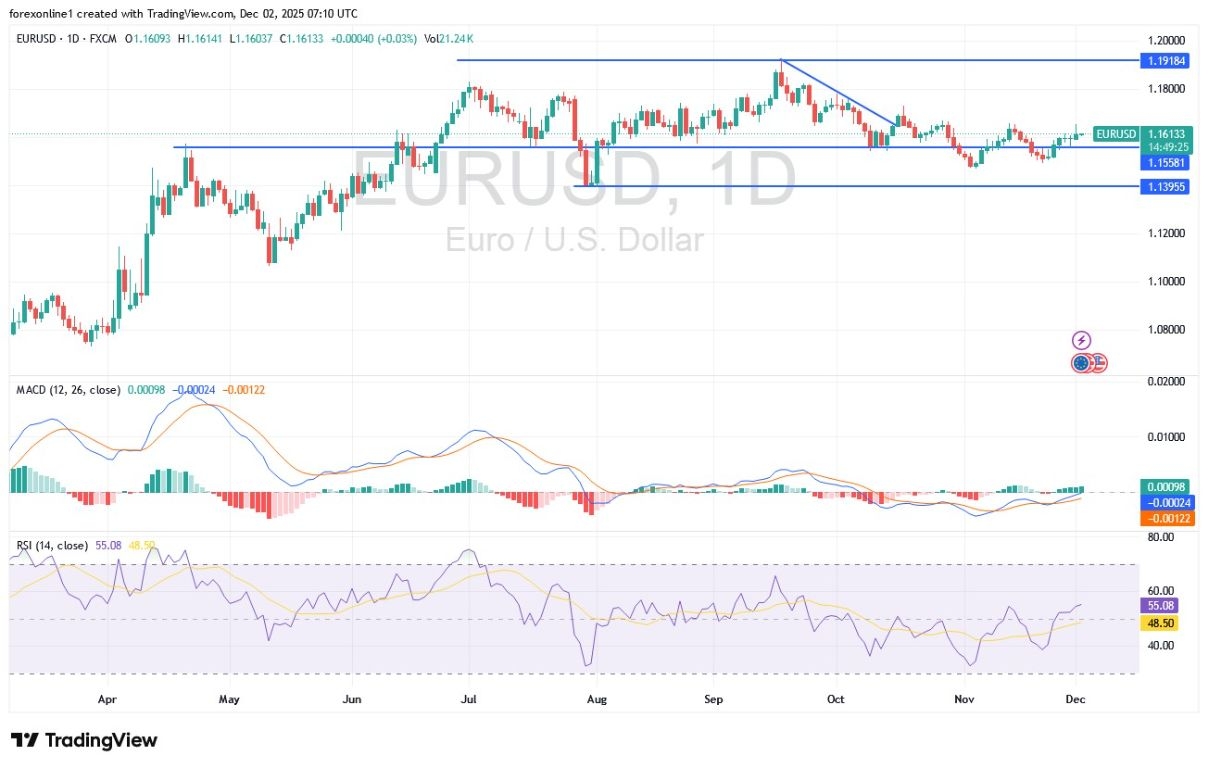
Based on recent trades, the EUR/USD price has seen stability within a symmetrical triangle pattern over the past few weeks, with trend lines converging by connecting higher lows and lower highs. The currency pair is currently trading around the key psychological level of 1.1600 and appears ready to test the upper boundary of the triangle, which may determine its next direction.

Technically, a break above the resistance trend line at 1.1650 would confirm an upward breakout and could trigger a rally as high as the widest part of the triangle pattern. Concequently, this would put the EUR/USD on track to test higher levels near or beyond 1.1700. However, if the resistance holds, the EUR/USD pair could retrace towards the triangle’s support at the psychological level of 1.1500, where the ascending trend line has provided support since late November. This area also coincides with the 100-period simple moving average, which has acted as dynamic support throughout the period of neutrality.

The 100-period simple moving average (SMA) is currently above the 200-period SMA, suggesting that the stronger trend has shifted to bullish or that an upward breakout is likely to gain momentum. The narrowing gap between the moving averages reflects continued neutrality, although the overall technical structure still favors buyers. Meanwhile, the Stochastic oscillator is hovering near its midpoint after pulling back from overbought territory, indicating that momentum is relatively neutral at present. The oscillator has room to move in either direction, so a break above resistance could push it back to overbought levels, while a rejection could lead to a decline.

At the same time, the Relative Strength Index (RSI) is hovering near the 50 level, indicating a balance between bulls and bears. The oscillator’s neutral stance suggests that the direction of the breakout could be decisive once the price breaks out of the triangle’s boundaries.

Trading Tips:

Please be aware that the EUR/USD exchange rate may be affected by upcoming economic data and central bank comments, particularly any shifts in expectations regarding the European Central Bank’s (ECB) policy or the US Federal Reserve’s (Fed) actions, which could impact the dollar.

Factors Affecting EUR/USD Trading Today

Amid attempts to bounce higher, and according to forex currency market trades, the EUR/USD path today, Tuesday, December 2, 2025, will be affected by anticipated remarks from US Federal Reserve Chair Jerome Powell. Economically, it will be influenced by the announcement of the Eurozone Consumer Price Index (CPI) reading, along with the announcement of the bloc’s unemployment rate, which will be released at 12:00 PM Egypt time.

On the front of global central bank policies, expectations suggest that the US Federal Reserve will cut interest rates again on December 17, and several times next year. In contrast, the European Central Bank (ECB) will keep interest rates unchanged for the foreseeable future due to increasing economic recovery and improving inflation dynamics.

Recently, the Harmonized Consumer Price Index (HICP) in Germany saw a notable acceleration in November, rising from 2.3% in October to 2.6% in November (consensus was 2.4%). Meanwhile, the ECB’s October survey showed a slight increase in one-year inflation expectations from 2.7% to 2.8%, reinforcing the view that the ECB is unlikely to cut rates in December. With the ECB having no justification to move, and the US Federal Reserve likely cutting rates in December, the divergence in interest rate policy between the EU and the US is expected to provide a continuous fundamental source for the EUR/USD price to rise.

Ready to trade our EUR/USD daily forecast? Here’s a list of some of the top forex brokers in Europe to check out.

Source link

2 12, 2025

Your browser is not supported

By |2025-12-02T14:50:02+02:00December 2, 2025|Dietary Supplements News, News|0 Comments


Your browser is not supported | usatoday.com

usatoday.com wants to ensure the best experience for all of our readers, so we built our site to take advantage of the latest technology, making it faster and easier to use.

Unfortunately, your browser is not supported. Please download one of these browsers for the best experience on usatoday.com


Source link

2 12, 2025

Cardano Price Prediction Turns Bullish As PepeNode Surges Past

By |2025-12-02T14:45:02+02:00December 2, 2025|Crypto News, News|0 Comments

Cardano Price Prediction

The crypto market is shifting this week because one small but crucial pressure point just eased. CoinTelegraph reports that liquidation fears around MicroStrategy are dropping, which calms the system and gives order books room to breathe. With less panic in the background, the focus flips back to real utility and liquidity. Cardano forecasts start coming from actual setups again instead of emergency playbooks. That is why watchlists are drifting toward testable presales like Pepenode (https://pepenode.io/), while ADA benefits from tighter spreads, deeper books, and more predictable risk during active sessions.

Gamified Mining, Clear Feedback Loops, Cardano Friendly Vibes

Pepenode turns mining into a web app experience, not a hardware grind with rigs and cables. Users interact with virtual miner nodes, upgrades, and leaderboards inside a clean dashboard. The whitepaper outlines how utility should kick in after TGE, with staking and a sense of progress that rewards almost every click. These kinds of feedback loops shine in markets that prefer structure over chaos. That is exactly where ADA sits right now. Spreads are getting cleaner, depth returns during peak sessions, and side risk moves into transparent, trackable mechanics. The real edge is repeatability. Small daily actions keep traders engaged without forcing leverage. For ADA traders, Pepenode becomes a companion project that makes a calm market phase productive, not just noisy. Anyone who reads risk rotation as a pattern will see the logic behind a testable loop like PEPENODE (https://pepenode.io/).

Pepenode Presale Numbers, Why The Timing Lines Up

The Pepenode presale reports more than 2.12 million USD raised, with the token currently priced at 0.0011454 USD. The offer includes 628 % staking rewards, a clear signal that early phase incentives are meant to capture attention and kickstart engagement. Project materials show that the price ladder started at 0.0010 USD. Buy and stake is built directly into the purchase flow, while the core gameplay features unlock with the TGE. In crypto, interpretation beats raw number spam. A fast raise hints at working distribution and a sales funnel that actually converts. The current price, only slightly above the starting level, points to sustained demand without vertical blow-off action. Outlets like Bitcoinist flag growing appetite for high beta stories. That gives presales a tailwind as long as order books hold up during peak hours. For traders who already track ADA closely, this time window is surprisingly aligned. Enter with a plan, put Pepenode on the checklist.

Cardano Setup, Liquidity Signals, And Rotating Risk

Cardano forecasts tend to behave more rationally when the overall market structure looks balanced. In those phases, ADA order books act more disciplined. Spreads tighten during active periods, depth refills quickly after dips, and funding noise stays muted. This environment favors setups that traders can manage step by step instead of lottery style tickets. In that kind of backdrop, side risk often rotates into projects that show visible activity, clear user paths, and measurable progress. PEPENODE (https://pepenode.io/) fits that profile because every node, every facility upgrade, and every mining loop generates instant feedback. It gives users practical reasons to come back. The result is more predictable holding periods and cleaner exit points. For traders who treat ADA as a core position, a presale add-on like PEPENODE offers controlled extra beta without breaking the main thesis. The timing benefits from calm conditions, not from chaos. Keep ADA on the screen, ride along with Pepenode in a size that matches your risk rules.

Making Sense Of Tokenomics And Staking

High headline APYs grab attention, but they almost never describe a permanent yield reality. In early phases they are usually incentive design, a starter pack for network effects, not an endless payout guarantee. The key question is whether rewards support real activity, such as transactions, upgrades, and repeat sessions. Pepenode’s gamified mining answers that operationally, since progress is measurable and socially visible through leaderboards and on chain actions. Serious traders scale into positions gradually. They track conversion through the purchase funnel, churn, and session depth, not only the percentage reward. Discipline around position size, slippage during demand spikes, and a plan for post-TGE liquidity remain essential. If utility carries the story, the loop survives the marketing phase. That is when staking shifts from billboard to useful holding mechanic. Build exposure in stages, test Pepenode instead of going all in on day 1.

Roadmap, Risks, And What Should Stay On The Radar

Presales are never a walk in the park. They demand testing, comparison, and verification. The relevant questions stay the same. Does the team keep the release cadence. How fast does the dashboard scale under real user-load. Will liquidity on major exchanges be solid at launch. Are there clear communication windows for feature drops so users come back instead of logging in only once. Data sources like on-chain activity, funnel conversion, and recurring sessions separate substance from noise. The broader macro picture, with falling liquidation fear as reported by CoinTelegraph, provides a supportive backdrop, but volatility never disappears. Traders who accept that reality plan entries and exits pragmatically, not emotionally.

For market participants who respect ADA as a serious asset, PEPENODE (https://pepenode.io/) remains a tactical candidate as long as utility leads the narrative and order books confirm the move. Stick to the plan, keep Pepenode on the watchlist, and let the data decide whether it deserves more allocation.

Conclusion: Why This Setup Works For Cardano And Pepenode

The current environment benefits Cardano forecasts and well-structured presales at the same time. Systemic pressure is fading, spreads are calmer, and deep liquidity is returning more consistently during busy trading windows. In this kind of market, routine beats spectacle. Pepenode delivers exactly that. A clear mine to earn concept, visible progress steps, direct staking integration, and a dashboard that builds reasons to return. The numbers confirm interest, with more than 2.12 million USD raised in presale, a transparent price ladder, and strong yet clearly early-stage APYs.

For traders who hold ADA as a core position, PEPENODE (https://pepenode.io/) offers a tactical satellite that matches the current risk rotation, as long as team execution, roadmap delivery, and liquidity keep pace. Strict sizing remains non-negotiable, just like ongoing monitoring of on-chain signals and order book quality. That way, real utility carries the story, not only marketing slogans, and Pepenode can become a productive side play in a calmer Cardano market.

Buchenweg 15, Karlsruhe, Germany

For more information about Pepenode (PEPENODE) visit the links below:

Website: https://pepenode.io/

Whitepaper: https://pepenode.io/assets/documents/whitepaper.pdf

Telegram: https://t.me/pepe_node

Twitter/X: https://x.com/pepenode_io

Disclosure: Crypto is a high-risk asset class. This article is provided for informational purposes and does not constitute investment advice.

CryptoTimes24 is a digital media and analytics platform dedicated to providing timely, accurate, and insightful information about the cryptocurrency and blockchain industry. The enterprise focuses on delivering high-quality news coverage, market analysis, project reviews, and educational resources for both investors and enthusiasts. By combining data-driven journalism with expert commentary, CryptoTimes24 aims to become a trusted global source for emerging trends in decentralized finance (DeFi), NFTs, Web3 technologies, and digital asset markets.

This release was published on openPR.

Source link

Go to Top