About Editorial team of BIPNs

Main team of content of bipns.com. Any type of content should be approved by us.
20 11, 2025

WTI price bullish at European opening

By |2025-11-20T20:54:52+02:00November 20, 2025|Forex News, News|0 Comments


West Texas Intermediate (WTI) Oil price advances on Thursday, early in the European session. WTI trades at $58.46 per barrel, up from Wednesday’s close at $58.43.
Brent Oil Exchange Rate (Brent crude) is also up, advancing from the $62.52 price posted on Wednesday, and trading at $62.54.

WTI Oil FAQs

WTI Oil is a type of Crude Oil sold on international markets. The WTI stands for West Texas Intermediate, one of three major types including Brent and Dubai Crude. WTI is also referred to as “light” and “sweet” because of its relatively low gravity and sulfur content respectively. It is considered a high quality Oil that is easily refined. It is sourced in the United States and distributed via the Cushing hub, which is considered “The Pipeline Crossroads of the World”. It is a benchmark for the Oil market and WTI price is frequently quoted in the media.

Like all assets, supply and demand are the key drivers of WTI Oil price. As such, global growth can be a driver of increased demand and vice versa for weak global growth. Political instability, wars, and sanctions can disrupt supply and impact prices. The decisions of OPEC, a group of major Oil-producing countries, is another key driver of price. The value of the US Dollar influences the price of WTI Crude Oil, since Oil is predominantly traded in US Dollars, thus a weaker US Dollar can make Oil more affordable and vice versa.

The weekly Oil inventory reports published by the American Petroleum Institute (API) and the Energy Information Agency (EIA) impact the price of WTI Oil. Changes in inventories reflect fluctuating supply and demand. If the data shows a drop in inventories it can indicate increased demand, pushing up Oil price. Higher inventories can reflect increased supply, pushing down prices. API’s report is published every Tuesday and EIA’s the day after. Their results are usually similar, falling within 1% of each other 75% of the time. The EIA data is considered more reliable, since it is a government agency.

OPEC (Organization of the Petroleum Exporting Countries) is a group of 12 Oil-producing nations who collectively decide production quotas for member countries at twice-yearly meetings. Their decisions often impact WTI Oil prices. When OPEC decides to lower quotas, it can tighten supply, pushing up Oil prices. When OPEC increases production, it has the opposite effect. OPEC+ refers to an expanded group that includes ten extra non-OPEC members, the most notable of which is Russia.


Source link

20 11, 2025

GBP to USD Forecast: Pound Sterling Upside to be Limited Ahead of UK Budget

By |2025-11-20T20:36:59+02:00November 20, 2025|Forex News, News|0 Comments


– Written by

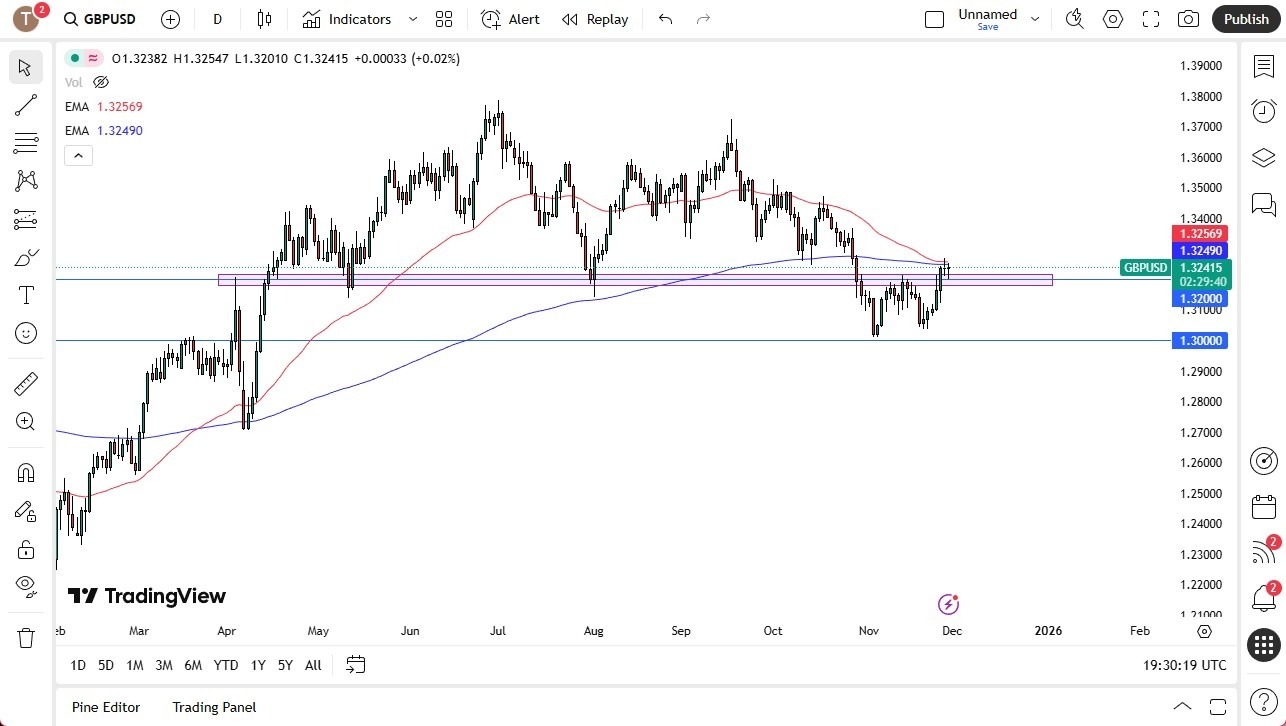
The Pound to US Dollar exchange rate (GBP/USD) pushed higher on Thursday as traders assessed the implications of the latest US non-farm payroll release.

At the time of writing, GBP/USD hovered around $1.3097, up roughly 0.3% from the day’s opening level.

The US Dollar (USD) edged lower on Thursday after September’s long-awaited payroll figures finally landed.

Fresh data from the Bureau of Labor Statistics revealed the US economy created 119,000 jobs in September, comfortably beating expectations for a modest 50,000 increase.

However, the upbeat headline was tempered by a significant downward revision to July’s figures, with payrolls now estimated to have fallen by 4,000 instead of rising by 22,000 as initially reported.

The mixed nature of the release prompted markets to reassess Federal Reserve rate expectations, triggering a modest dovish tilt, although not enough to revive the prospect of a December rate cut.

The Pound (GBP) managed to gain ground on Thursday, though upside momentum was limited as investors remained cautious ahead of the UK’s upcoming autumn budget.

Save on Your GBP/USD Transfer

Get better rates and lower fees on your next international money transfer.
Compare TorFX with top UK banks in seconds and see how much you could save.


Compare the Best GBP/USD Rates »

Chancellor Rachel Reeves is set to deliver the budget on 26 November, and uncertainty surrounding the scale and structure of potential tax increases or spending restraints is keeping investors on edge.

Concerns are growing that the measures required to stabilise the UK’s public finances could place further pressure on an already fragile economic backdrop.

Meanwhile, expectations that the Bank of England (BoE) will lower interest rates in December — reinforced by this week’s inflation data — continue to act as a cap on Sterling’s performance.

GBP/USD Forecast: Softer UK PMIs to Drag on Sterling?

Looking to Friday, the Pound to US Dollar exchange rate may soften as fresh UK PMI and retail sales figures are released.

Initial estimates for November suggest slower activity across the UK’s private sector, while retail sales for October are expected to stagnate — a combination that could deepen concerns around the UK’s economic outlook.

Later in the afternoon, the US will publish its own S&P PMI figures. While these are typically less market-moving than ISM surveys, any notable weakening may still inject volatility into USD trade.

Like this piece? Please share with your friends and colleagues:


International Money Transfer? Ask our resident FX expert a money transfer question or try John’s new, free, no-obligation personal service! ,where he helps every step of the way,
ensuring you get the best exchange rates on your currency requirements.

TAGS: Pound Dollar Forecasts

Source link

20 11, 2025

Form Following Function: Japanese Tea Boxes as Interior Decoration

By |2025-11-20T20:20:58+02:00November 20, 2025|Dietary Supplements News, News|0 Comments


The humble tea box got its start in the 1800s as a finely crafted container for storing and shipping green tea leaves. A century later these were discovered by people who decorated them with fine fabrics to make them enduringly fashionable parts of their homes’ interiors. A new book explores the art and history of the chabako.

A Colorful Twist on Tradition

In mid-October 2025, an event was held to launch a new book—Chabako (The Tea Box), by Masumi Pizer—at a gallery in Kyōbashi in central Tokyo. The Interior Chabako Club, led by Pizer and based in Tokyo’s Shinagawa, used the occasion to show off a variety of its stylish “interior tea boxes,” including a number of new pieces.


Masumi Pizer with a selection of chabako at the launch event for her new book on October 17, 2025, in Kyōbashi, Tokyo. (© Izumi Nobumichi)

The term Interior Chabako is a registered trademark belonging to the club. Chabako were originally tea chests used for storing and transporting tea leaves. The interior versions are an adaptation of these chests for modern use. The chests are wrapped in kimono or obi fabrics, woven fabrics from other parts of the world, and cushion materials, transforming them into decorative items for use in the home. As the book describes them, large chabako can be fitted with casters or wooden legs to become stools or benches, or topped with an acrylic sheet for use as tables or display surfaces. With creative ideas adapted to your lifestyle, chabako make the perfect interior pieces for any room.

Roots in Japan’s Expat Community

Chabako come in more than 20 different sizes, from large chests that can be used as furniture to smaller pieces ideal for use as table-top storage boxes. The concept originated in “fabric-covered chabako” created by foreign residents living in Japan, who wrapped the boxes in favorite fabrics and modified them for use as decorative and functional storage chests.

Pizer fell in love with fabric-covered chabako when she encountered them among Tokyo’s expat community in 1998. The following year, she started classes on decorative chabako, and in 2004, she founded the Interior Chabako Club as a limited company. In 2005 she began offering certified instructor courses. Today, the club has 125 classrooms around the country, with instructors in the United States and Germany.

The original fabric-covered chabako, made by foreigners with close connections to Japan, mostly used traditional Japanese fabrics intended for use in kimonos and obis. It is fair to say that interior chabako take the concept a step further, incorporating the standard Nishijin-ori and Yūzen options along with a variety of traditional fabrics from France, Italy, and beyond. Today, they are attracting growing interest overseas as practical and appealing works of art that can bring colorful accents to interiors.

The World’s Most Durable Storage Chests?

The book also touches on the history of the chabako themselves. The first export of Japanese tea is believed to date back to 1610, when the Dutch East India Company took a transport from Hirado, Nagasaki to Europe. But without durable tea chests, capable of keeping tea leaves fresh and transporting them safely across long and difficult voyages, it is likely that green tea would never have become established throughout Japan and the wider world.

The first chabako date to the Edo period (1603–1868). It was in the early Meiji period (1868–1912) that they reached their present form of a cedar box lined with tin. These modern chests offered vastly improved protection against moisture and insects. Skilled craftsmen produced boxes that were strong enough to last a century or more. By the late nineteenth century, chabako were being exported as desirable products in their own right.

Over time, however, cheap and convenient materials like cardboard and aluminum bags became popular as alternatives for transporting and storing tea, and threatened to make chabako obsolete. Demand plummeted and businesses struggled to find successors as the young generation looked for work elsewhere. One after another, specialist chabako makers closed down, until in 2024, just three remained.

Preserving the Craft for the Next Generation

The book rightly describes chabako, with their more than 150 years of history, as the crystallization of a number of different Japanese craft skills.

The cedar used for the outer frame is generally at least 30 years old. After being exposed to the elements for at least three months, the wood is weighted and dried thoroughly to prevent warping and distortion. Galvanized tin sheets are used for the lining, while corners, joins, and other areas vulnerable to damage are reinforced with thick strips of washi paper. All the materials used in the boxes are painstakingly produced by experienced craftsmen.

A look at the process of chabako creation by artisans in Kawane. (Courtesy Interior Chabako Club)

The Interior Chabako Club has worked hard to preserve these endangered skills and pass them on to the next generation. This book tells the story of this battle to save valuable traditions for the future.

Shizuoka Prefecture, one of Japan’s top tea regions alongside Uji (Kyoto and surrounding areas) and Sayama (Saitama), is home to Kawane Honchō, known for its famous tea. The club partnered with Maeda Seikanjo, a long-established maker of high-quality chabako, to preserve the craft. In 2010, they submitted a petition to the town’s mayor to keep the small industry of chabako alive and began training young craftspeople to carry the tradition into the future. Maeda Kōbō was established with local government support in 2016, and the company started operations from a new factory in 2020.

A Deluxe Bilingual, Full-Color Book

Pizer’s book features richly colorful photographs showing a diverse selection of interior chabako in all their glory. Many are collaborations with prominent designers and brands, both Japanese and international. The full-size photographic spreads give the book a striking visual impact and make it a joy to look at.

The book also contains seven engaging and informative columns examining the boxes and the culture that has grown up around them, including “Starting a Legacy,” “A Tradition to Enjoy,” and “The Prayer of Pope Francis.”

The author spent her childhood living with her family in London. She later worked for Mitsubishi Corporation and Citibank NA in Tokyo. This book reflects more than 25 years of her passion for chabako and is presented in both Japanese and English text.

Chabako

By Masumi Pizer
Published by Daiwa Shobō in 2025
ISBN: 978-4-479-88049-3

(Originally published in Japanese. Banner photo © Daiwa Shobō.)


Source link

20 11, 2025

XRP at crossroads as support weakens amid ETF inflows

By |2025-11-20T20:19:55+02:00November 20, 2025|Crypto News, News|0 Comments

Ripple (XRP) steadies above the critical $2.00 level on Thursday, as bulls push to regain control as volatility and bearish sentiment persist across the crypto market.

XRP needs the support of institutional investors through the recently launched Exchange Traded Funds (ETFs) and other related investment products to ensure stability above $2.00 support and sustain its recovery in the fourth quarter.

XRP ETF demand signals institutional appetite

XRP spot ETFs extended their inflow streak with nearly $16 million streaming in on Wednesday. There are two XRP ETFs listed in the United States (US): Canary Capital’s XRPC and Bitwise XRP. Combined, they have a total net inflow of approximately $293 million, with net assets averaging $268 million.

Since their October 28 debut, XRP ETFs have not experienced outflows, underscoring the growing risk appetite in altcoin-related investment products. 

On the other hand, the XRP derivatives market has remained relatively muted since the October 10 flash crash. The futures Open Interest (OI) averages $3.79 billion on Thursday, down from Wednesday’s $3.85 billion, according to CoinGlass data.

OI is a measure of the notional value of outstanding futures contracts; hence, a steady rise is required to support an XRP rebound in the near term.

Technical outlook: XRP seeks stability amid downward pressure

XRP holds above its short-term support at $2.00 on Thursday, as bulls strive to shape the trend in upcoming sessions. The cross-border remittance token remains below the 50-day Exponential Moving Average (EMA), the 100- and 200-day EMAs at $2.45, $2.57 and $2.54, respectively, with all three sloping lower.
The 50-day EMA running beneath the 200-day EMA highlights a Death Cross pattern, which reinforces a bearish setup. At the same time, the Moving Average Convergence Divergence (MACD) indicator remains below its signal and under the zero line, with the negative histogram slightly widening, suggesting strengthening bearish momentum.
The Relative Strength Index (RSI) at 37 stays under the midline, indicating sellers have the upper hand. A descending trend line from $3.66, XRP’s record high reached on July 18, caps rebounds, with resistance seen near $2.72.

XRP/USDT daily chart

Overhead, the SuperTrend indicator descends near $2.58, aligning with the 200- and 100-day EMAs to form a heavy resistance band at $2.54-$2.57. The moving averages continue to roll over, so any bounce would face the first cap at the 50-day EMA at $2.45, and a daily close above that barrier could ease downside pressure.
The MACD indicator’s stance beneath zero reinforces a bearish bias. Beneath these trend filters, bears remain in control; a break above $2.72 would be needed to improve the tone. Holding below the cited averages keeps risk skewed lower.

(The technical analysis of this story was written with the help of an AI tool)

Source link

20 11, 2025

Why must truly successful Web3 games break free from the “short-term player mindset”?The next generation of Web3 gaming ecosystems begins with PumpGame.

By |2025-11-20T18:55:54+02:00November 20, 2025|News, NFT News|0 Comments


The future of Web3 games won’t belong to short-term thinking
Looking back over the past few years, many GameFi projects appeared like shooting stars and disappeared just as quickly. On the surface, it seemed like market cooling and capital withdrawal were to blame. But the deeper reason is that many projects assumed from the start that players were only there to “speculate,” not to “stay.”

Three fatal flaws caused by short-term thinking
1. Extremely short user lifecycles
Many projects treat “new user deposits” as the core KPI. Once the token stops rising, players leave, and the game loses its meaning.

2. Economy dependent on external input
When rewards rely on new user contributions, any slowdown in funding causes the system to collapse.

3. Lack of long-term motivation
Players neither retain assets nor build content, achievements, or identity. Switching to another game comes at virtually no cost.

This isn’t a failure of GameFi—it’s a failure to distinguish “speculation” from “gaming.”

Truly sustainable Web3 games treat players as users, not miners
A sustainable Web3 game should:
Allow players’ “character growth” to persist on-chain
Not only assets, but also effort, skill, and identity should be tradable.

Generate rewards from “participation value,” not “pool injections”

Make players want to return, rather than just cash out and leave

This approach builds from the essence of gaming, not from a “financial arbitrage logic.”

Pump.Game is following this long-term path
Pump.Game does not lure miners with high APRs. Instead, it delivers value through:

Multi-chain NFT ecosystem

Caesar character progression system

True in-game closed-loop economy

X402 AI modules for intelligent operations

Every player contribution—whether time, effort, or assets—can accumulate on-chain, becoming a “player capital” that grows, circulates, and compounds.

In other words:
Pump.Game doesn’t teach players how to mine—it empowers them to truly own their gaming life.

Conclusion
Short-term thinking only produces short-lived projects.
Long-term value is what drives a genuine Web3 gaming revolution.

If you’re tired of the “mine-and-run” model,
Pump.Game shows a longer, steadier, and more worthwhile path to follow.

If you want, I can also craft a more marketing-friendly version that’s punchier and better suited for a global Web3 audience. Do you want me to do that?

Website: https://pump.game

Feed. Grow. Earn.
The next generation of Web3 gaming starts with Pump.Game.

Disclaimer: All news, information, and other content published on this website are provided by third-party brands or individuals and are for reference and informational purposes only. They do not constitute any investment advice or other commercial advice. For matters involving investment, finance, or digital assets, readers should make their own judgments and assume all risks. This website and its operators shall not be liable for any direct or indirect losses arising from reliance on or use of the content published herein.


Source link

20 11, 2025

Gold (XAUUSD) Price Forecast: Dollar Strength Caps Gold Price as Traders Await NFP

By |2025-11-20T18:54:08+02:00November 20, 2025|Forex News, News|0 Comments


At 13:08 GMT, XAUUSD is trading $4090.32, up $12.47 or +0.31%.

Gold Market Pullback as Dollar Firms Ahead of Jobs Data

Gold is down more than 1% on Thursday, driven by a firmer dollar and a sharp drop in expectations for a December rate cut. The dollar index sits near a two-week high, and that strength continues to pressure XAU/USD. Traders are dealing with typical year-end two-way flow, with profit-taking meeting fresh positioning.

The Fed minutes didn’t help the bullish side either: officials cut in October but warned that easing too fast risks sticky inflation and credibility concerns. Rate-cut pricing for December has fallen to roughly 34%, down from 49% just a day earlier.

Jobs Report Delay Keeps Fed Outlook Uncertain

Today’s September payrolls print—delayed by the shutdown—lands at 13:30 GMT, and expectations sit near 50,000 jobs versus August’s 22,000. It’s an old data set, but the Fed meets December 10 without the next jobs report until December 16, so this release still matters.

Deutsche Bank notes that a December cut basically requires a weak number, and traders know it. Treasury yields are inching higher ahead of the release, with the 10-year around 4.146% and the 2-year at 3.61%, keeping pressure on non-yielding gold.

Dollar Rally Extends as Fed Minutes Slash Cut Odds

Across FX, the dollar is pushing higher after the Fed minutes showed “many” officials opposing a December cut. The yen slid toward 158 per dollar before stabilizing, with traders openly debating whether Japan steps in around 160.


Source link

20 11, 2025

British Pound to Dollar Forecast: GBP Holds 1.30 as Tech Jitters, CPI Shape Outlook

By |2025-11-20T18:35:56+02:00November 20, 2025|Forex News, News|0 Comments


– Written by

The Pound to Dollar exchange rate (GBP/USD) struggled for momentum on Wednesday, edging lower to around 1.3120 following the release of the UK’s latest inflation figures.

According to UoB, “a breach of 1.3105 would indicate that GBP is more likely to range-trade rather than head higher to test 1.3240.” Scotiabank also warns that a break below 1.3100 could pave the way for deeper losses. Danske Bank maintains a one-month GBP/USD target of 1.31, rising to 1.33 over six months as the dollar gradually softens.

Domestic developments were influential, although global risk sentiment remained a major driver. Fragile risk appetite, driven by weaker equities, continued to weigh on Sterling, while the US Dollar saw a mixed reaction.

UK inflation slowed in October, with headline CPI easing from 3.8% to 3.6% and core inflation slipping from 3.5% to 3.4% — both in line with expectations. Softer energy base effects helped pull the annual rate lower.

The figures did little to shift market pricing for the Bank of England, with traders maintaining around an 80% probability of a December rate cut. Paul Dales, chief UK economist at Capital Economics, noted: “The fall in CPI inflation… could well prompt the Governor of the Bank of England to put on a red suit and white beard and cut interest rates from 4pc to 3.75pc on December 18.”

US equity markets weakened again on Tuesday, with the Nasdaq falling 1.2%. Investors are now awaiting Nvidia’s latest earnings, due overnight, which could have a significant influence on broader risk sentiment. ING warned of vulnerabilities in tech-heavy markets, commenting: “The understandable fear is that this is a very crowded trade and that a casual walk to the exit could turn into something less orderly should cause be found.”

MUFG added that given the current positive correlation between equities and the dollar, “a bad earnings report this evening could drive the dollar weaker.”

Save on Your GBP/USD Transfer

Get better rates and lower fees on your next international money transfer.
Compare TorFX with top UK banks in seconds and see how much you could save.


Compare the Best GBP/USD Rates »

Attention will also turn to Thursday’s delayed US non-farm payrolls report for September. Consensus forecasts point to a 55,000 increase in jobs and an unemployment rate steady at 4.3%.

MUFG emphasised: “The focus will then quickly shift back to the economy and it is the jobs market that will ultimately determine dollar direction into year-end.”

Like this piece? Please share with your friends and colleagues:


International Money Transfer? Ask our resident FX expert a money transfer question or try John’s new, free, no-obligation personal service! ,where he helps every step of the way,
ensuring you get the best exchange rates on your currency requirements.

TAGS: Pound Dollar Forecasts

Source link

20 11, 2025

10 winter vegetables in your kitchen melt belly fat faster than any workout

By |2025-11-20T18:20:17+02:00November 20, 2025|Dietary Supplements News, News|0 Comments


Your refrigerator hums quietly this November evening. Inside, under that familiar light, ten winter vegetables wait in the crisper drawer. Most Americans spend $200 monthly on specialty keto foods and fat-burning supplements. Meanwhile, $12 worth of seasonal vegetables sits unused, wilting slightly. Recent Stanford research tracking 500 participants revealed these forgotten kitchen staples activate metabolic pathways exercise cannot reach. Winter vegetables don’t just support weight loss. They melt belly fat faster than expensive alternatives.

Why your kitchen already holds 10 fat-melting allies

Americans invest heavily in grass-fed butter at $8 per pound for ketogenic diets. They subscribe to probiotic supplements costing $45 monthly. Yet $1.20 per pound carrots remain untouched in vegetable drawers. Winter vegetables average $1 to $4 per pound versus specialty diet foods.

Stanford University’s 8-week intervention study demonstrated remarkable results. Participants consuming cruciferous and root vegetable-rich diets experienced 34% abdominal inflammation reduction. The mechanism involves multiple pathways working simultaneously. Fiber triggers satiety hormones while glucosinolates support fat metabolism.

Dietary nitrates enhance metabolic rate by 15 to 20% according to recent clinical findings. These compounds exist abundantly in winter beets and turnips. The transformation mindset shifts from “what expensive products to buy” to “what powerful ingredients to recognize.” Your kitchen already contains the tools.

The science behind winter vegetables’ fat-burning power

Cruciferous compounds that target visceral fat

Broccoli, Brussels sprouts, and cabbage contain glucosinolates that directly impact fat storage. These compounds activate Phase II detoxification enzymes processing excess hormones. Hormonal imbalances contribute significantly to abdominal fat accumulation.

Clinical nutritionists specializing in metabolic health confirm cruciferous vegetables reduce visceral fat markers measurably. Brussels sprouts deliver 3.4 grams protein per 100 grams alongside sulforaphane compounds. Research published in the Journal of Nutrition demonstrates higher cruciferous vegetable intake correlates with lower visceral fat levels.

Root vegetables’ fiber strategy for satiety

Carrots, parsnips, and turnips provide complex fiber stabilizing blood glucose levels. Parsnips contain 13 grams carbohydrates per 100 grams, primarily complex carbohydrates that prevent fat storage signaling. This fiber undergoes bacterial breakdown in the colon.

Harvard’s 2025 metabolism review tracked 300 participants over 12 weeks. High-fiber vegetable consumption produced 5 to 10% decreases in visceral fat area. The mechanism involves prolonged satiety periods preventing caloric surplus. Spinach specifically silences hunger hormones through thylakoid compounds.

Your 10 winter kitchen transformation vegetables

The cruciferous power trio

Brussels sprouts cost approximately $3.75 per pound and provide visceral fat-fighting sulforaphane plus carotenoids. Steam for 8 to 10 minutes to preserve maximum glucosinolate content. Broccoli contains fewer than 100 calories per cup while delivering compounds that regulate 200 protective genes.

Cabbage provides anthocyanins that lower systemic inflammation significantly. Purple varieties contain higher concentrations of these beneficial compounds. Research demonstrates anthocyanins create metabolic environments favorable to fat burning processes.

Root vegetables for blood sugar control

Carrots at $1.20 per pound deliver complex fiber supporting glucose stability throughout winter months. Parsnips cost approximately $2 per pound and provide minimal starch content despite their sweet flavor profile. Root vegetables feed gut bacteria more effectively than expensive probiotics.

Beets priced around $2.20 per pound contain dietary nitrates improving metabolic rate substantially. Turnips provide low-calorie volume supporting satiety without caloric density. These vegetables store well throughout winter months in cool conditions.

Winter squash and leafy greens

Butternut squash costs approximately $1.80 per pound and offers low net carbohydrates plus essential vitamins A and C. Kale at $2.50 per pound delivers quercetin and kaempferol supporting fat oxidation processes. Research confirms these vegetables reduce inflammation by measurable percentages.

Spinach contains thylakoids reducing hunger and cravings by up to 95% according to studies published in Appetite journal. Weekly vegetable costs range $12 to $18 compared to $200 monthly for keto specialty products.

Three kitchen transformations that melted belly fat

Personal coaching programs document remarkable client transformations using accessible winter vegetables. One participant lost 12 pounds of belly fat within 6 weeks integrating Brussels sprouts and winter squash daily. Energy levels increased while hunger decreased naturally.

Nutrition clinic case studies show 3-inch waist circumference reduction over 2 months with daily parsnip, kale, and beet consumption. Kitchen vegetables proved superior to expensive supplement alternatives. Results appeared within 3 weeks when replacing carb-heavy sides with roasted root vegetables.

Success stories emphasize simple swaps rather than extreme dietary restrictions. Participants report sustainable habits forming naturally. Emotional eating decreased as vegetable-based meals provided lasting satisfaction without energy crashes.

Your questions about 10 winter vegetables that melt belly fat faster than any workout answered

How quickly can I expect results from eating these winter vegetables?

Naturopaths with decades of clinical experience confirm measurable inflammation reduction within 2 to 3 weeks of consistent consumption. Visible body composition changes typically occur by weeks 6 to 8. Consistency matters more than perfection. Aim for 3 to 4 servings daily of mixed cruciferous and root vegetables for optimal results.

Can I cook these vegetables or does heat destroy fat-burning compounds?

Light steaming or roasting under 400°F preserves most beneficial glucosinolates and antioxidants effectively. Avoid overcooking which destroys sensitive nutrients completely. Specialists in plant-based nutrition recommend 8 to 12 minute steam times for cruciferous vegetables. Half-cooked or raw preparations retain maximum phytochemical content.

Are frozen winter vegetables as effective as fresh vegetables?

Frozen vegetables undergo flash-freezing at peak ripeness, often retaining higher nutrient density than transported fresh varieties. Frozen Brussels sprouts and winter squash offer identical fiber and beneficial compound profiles. Purchase organic frozen options when fresh seasonal vegetables become unavailable or expensive during winter months.

Steam rises from your cutting board as purple beet juice stains your fingers. The familiar kitchen transforms into your personal fat-loss laboratory. Ten winter allies wait patiently in your refrigerator, ready to activate metabolic pathways no expensive supplement can match.


Source link

20 11, 2025

Can SOL extend recovery on steady ETF inflows?

By |2025-11-20T18:19:08+02:00November 20, 2025|Crypto News, News|0 Comments

Solana (SOL) is trading above $141 at the time of writing on Thursday. The general outlook remains bearish despite a knee-jerk recovery from $130, which marked the previous day’s low.

Solana extends ETF inflows 

Solana is experiencing steady inflows into Exchange Traded Funds (ETFs). According to SoSo data, US-listed SOL ETFs recorded inflows of nearly $56 million on Wednesday, bringing cumulative net inflows to $476 million.

Bitwise’s BSOL ETF was the best-performing product, with approximately $36 million in inflows, followed by Grayscale’s GSOL with nearly $13 million and Fidelity’s FSOL with $5 million.

Solana ETFs have not experienced outflows since their October 28 debut, underscoring the growing interest in altcoin investment products. 

Solana ETF stats | Source: CoinGlass

On the other hand, retail demand has not picked up since mid-October, when the cryptocurrency market experienced one of its largest single-day liquidation events.

CoinGlass data shows Solana’s futures Open Interest (OI) averaging $7.2 billion, down from $10 billion on November 1. The OI sits significantly below its $17 billion record peak achieved on September 19.

Since OI reflects the notional value of outstanding futures contracts, a steady increase is needed to support a near-term rebound. However, if risk-off sentiment persists and OI continues to decline in the coming days, the likelihood of Solana falling below $130 will increase.

Solana Open Interest | Source: CoinGlass

Technical outlook: Solana bulls eye steady recovery 

Solana hovers above $141 on the daily chart at the time of writing on Thursday. The token also sits well below falling moving averages, with the 50-day Exponential Moving Average (EMA) at $173 and the 200-day EMA at $180 capping rebounds. The Moving Average Convergence Divergence (MACD) indicator remains in negative territory and has been improving toward the zero line, suggesting fading bearish pressure.
The Relative Strength Index (RSI) at 38 reflects subdued momentum beneath the 50 midline. However, a steady rebound into the bullish region would indicate that bullish is increasing and bolster the uptrend above the 50- and 200-day EMAs.

SOL/USD daily chart

Still, the descending trend line from $261 limits the upside, with resistance seen near $166. Furthermore, the prior rising support from $125 was broken around $149, reinforcing the bearish tone.
A break above $160 round-number resistance could open a recovery above the 100-day EMA at $182, whereas failure to reclaim the broken support would keep sellers in control and maintain pressure under the moving average cluster.

Crypto ETF FAQs

An Exchange-Traded Fund (ETF) is an investment vehicle or an index that tracks the price of an underlying asset. ETFs can not only track a single asset, but a group of assets and sectors. For example, a Bitcoin ETF tracks Bitcoin’s price. ETF is a tool used by investors to gain exposure to a certain asset.

Yes. The first Bitcoin futures ETF in the US was approved by the US Securities & Exchange Commission in October 2021. A total of seven Bitcoin futures ETFs have been approved, with more than 20 still waiting for the regulator’s permission. The SEC says that the cryptocurrency industry is new and subject to manipulation, which is why it has been delaying crypto-related futures ETFs for the last few years.

Yes. The SEC approved in January 2024 the listing and trading of several Bitcoin spot Exchange-Traded Funds, opening the door to institutional capital and mainstream investors to trade the main crypto currency. The decision was hailed by the industry as a game changer.

The main advantage of crypto ETFs is the possibility of gaining exposure to a cryptocurrency without ownership, reducing the risk and cost of holding the asset. Other pros are a lower learning curve and higher security for investors since ETFs take charge of securing the underlying asset holdings. As for the main drawbacks, the main one is that as an investor you can’t have direct ownership of the asset, or, as they say in crypto, “not your keys, not your coins.” Other disadvantages are higher costs associated with holding crypto since ETFs charge fees for active management. Finally, even though investing in ETFs reduces the risk of holding an asset, price swings in the underlying cryptocurrency are likely to be reflected in the investment vehicle too.

(The technical analysis of this story was written with the help of an AI tool)

Source link

20 11, 2025

Ripple Explores Staking for XRPL as DeFi Demand Grows — TradingView News

By |2025-11-20T16:55:03+02:00November 20, 2025|News, NFT News|0 Comments


Ripple is now exploring whether staking, a feature used in many major blockchains, could eventually be introduced to the XRP Ledger (XRPL). The idea came into focus after RippleX engineering head J. Ayo Akinyele explained how staking might strengthen network security and give XRP more real-world utility as global DeFi activity grows. Ripple says nothing is confirmed yet, but it is actively studying how staking could fit into the XRPL’s long-term development.

Why Ripple Is Considering Staking

According to Akinyele, staking could help the XRPL grow by encouraging more people to take part in validating and securing the network. Currently, XRP transaction fees are burned instead of being shared with participants. While this keeps the supply slightly deflationary, it does not reward those who support the ledger. Staking could change this by offering incentives, similar to what users see on networks like Ethereum, Solana, and Cosmos.

Ripple also wants the XRPL to stay competitive as more companies begin using XRP for treasury management and investment products. Adding a staking model would show that the network is adapting to a market where rewards, incentives, and token participation are becoming standard across DeFi.

Early Concepts, No Final Decision Yet

Ripple CTO David Schwartz shared two early concepts for how staking might work, but emphasized that both ideas are still in the research phase. One idea involves a two-layer structure where a smaller validator group receives staking rewards while the larger validator set continues managing the network. 

The second idea keeps the current consensus system in place but uses network fees to support “zero-knowledge proofs,” allowing participants to verify activity without revealing private information.

Schwartz made it clear that both options would require major changes and extensive testing. Because of this, staking will not be coming to the XRPL anytime soon.

Ripple Supports Moves to Modernize U.S. Crypto Payments

As Ripple studies staking, it’s also monitoring regulatory developments in the U.S. Earlier this month, Federal Reserve Governor Christopher Waller suggested that crypto firms, including stablecoin issuers, should get direct access to the Fed’s payment systems. Ripple welcomed the suggestion, saying it would reduce banking delays and improve stability for its stablecoin, RLUSD.

Ripple’s chief legal officer, Stu Alderoty, noted that direct access could help RLUSD compete with leading stablecoins like USDT and USDC by improving settlement speeds and redemption reliability. He also said that avoiding traditional banking intermediaries would make it easier to move between U.S. Treasuries and dollars.

XRP ETF Update

The staking discussion comes at a time when interest in XRP is picking up following the launch of Canary Capital’s spot XRP ETF, which has attracted more than $257 million since November 13. Despite this momentum, XRP is still down 13% over the past month as the market reacts to the recent U.S. government shutdown and uncertainty around upcoming Fed decisions.

Meanwhile, several third-party platforms are already offering staking-style rewards for XRP, showing that utility and demand may continue growing even without immediate changes to the XRPL.

FAQs

Is staking coming to the XRP Ledger?

Yes, Ripple is actively exploring staking for XRPL, but it’s still in the early research phase with no final decision or timeline yet.

Why is Ripple considering adding staking to XRP?

Staking would reward validators, boost network security, increase XRP’s real-world utility, and keep XRPL competitive in DeFi, where rewards are now standard.

When will staking be available on the XRP Ledger?

Not anytime soon—both proposed models require major changes and extensive testing; implementation is likely still years away.

How might staking actually work on XRPL?

Two early ideas: 1) A smaller rewarded validator tier on top of the current system, or 2) Using burned fees to fund zero-knowledge proof verification rewards while keeping consensus unchanged.

Can I already stake XRP and earn rewards today?

Yes—several trusted platforms (like Uphold, Nexo, and Binance) already offer staking-style yield on XRP through lending or wrapped versions, even without native XRPL staking.


Source link

Go to Top