About Editorial team of BIPNs

Main team of content of bipns.com. Any type of content should be approved by us.
1 12, 2025

Bitcoin Drops to $87K Amid Yearn’s yETH Exploit

By |2025-12-01T05:12:05+02:00December 1, 2025|News, NFT News|0 Comments


Bitcoin , ether and other major tokens slipped early Monday, extending a bruising November close amid fresh panic from DeFi platform Yearn Finance.

BTC, the leading cryptocurrency by market value, fell over 3% to nearly $87,000 during the early Asian trading hours. Ethereum’s native token ETH fell 5% while SOL, DOGE, XRP fell over 4%, according to CoinDesk data.

The sell-off accelerated hours after Yearn’s X alert flagged an “incident” in the yETH liquidity pool while mentioning that its V2 and V3 Vaults remain secure and unaffected.

Social media chatter suggested that the attacker exploited a vulnerability to mint vast amounts of yETH in a single transaction, draining the liquidity pool and making off with around 1,000 ETH ($3 million), which was routed through mixers. YETH is a user-governed liquidity pool token consisting of various Ethereum Liquid Staking Derivatives (LSTs).

The protocol lost $9 million in the exploit, with 1,000 ETH transferred to mixer Tornado Cash. The attacker’s address (0xa80d…c822) retained approximately $6 million in tokens, per blockchain security firm PeckShield.

Yearn’s issue comes days after leading Korean exchange Upbit suffered a multi-million dollar hack and underscores how institutional inflows have bloated crypto market valuations without fortifying the security infrastructure.

The early Asian session sell-off triggered liquidations exceeding $400 million in leveraged crypto futures, primarily affecting long positions, according to data source Coinglass. This indicates that many traders were betting on a price rebound and were caught off guard by the sudden downturn.

Bitcoin ended November (UTC) with a 17.5% loss, the biggest since March, even though prices recovered from nearly $80,000 to over $90,000 in the final week of the month. Ether fell 22%, registering its worst performance since February.

The dour performance came as institutional demand weakened significantly. The U.S.-listed spot BTC ETFs bled $3.48 billion in net outflows in November, the second-largest redemption on record, per data source SoSoValue. Ether ETFs lost a record $1.42 billion in outflows.

1:29 UTC: Adds commentary on liquidations, November performance and ETFs.


Source link

1 12, 2025

Japanese Yen Forecast: Pair Weakens Ahead of Powell and BoJ Updates

By |2025-12-01T04:41:09+02:00December 1, 2025|Forex News, News|0 Comments

USDJPY – 5 Minute Chart – 011225

Will BoJ Governor Ueda Greenlight a Hike?

Later this morning, BoJ Governor Kazuo Ueda could greenlight a December hike, potentially kick-starting a USD/JPY bearish-trend reversal.

USD/JPY has soared 5.63% in the fourth quarter, fueled by Prime Minister Sanae Takaichi’s support for ultra-loose monetary policy and fiscal stimulus policies. Previously fading bets on a December rate cut contributed to the fourth quarter rally.

However, growing concerns about the weaker yen pushing import prices higher and eroding Japanese households’ purchasing power have added to the chances of a BoJ hike.

I expect USD/JPY to drop sharply if Governor Ueda focuses on elevated import prices while talking optimistically about wage growth. Markets would likely view such comments as a green light for a rate hike at the December meeting.

Economists continue to flag the weaker yen as a BoJ focal point, aligning with my bearish stance on USD/JPY.

East Asia Econ commented on October’s national inflation figures, stating:

“Headline SPPI inflation was stable in October, but weak for high labor-intensive sectors, while part-time wages were strong, likely on the back of the minimum wage hike. That’s an unclear picture. But right now, with JPY so weak, the BoJ will focus more on headline CPI than these messy details.”

US PMI Data and Fed Speakers to Impact US Dollar Demand

While BoJ Governor Ueda will take center stage in the Asian session, US data and Fed speakers are in focus later on Monday.

Economists forecast the ISM Manufacturing PMI to fall from 48.7 in October to 48.6 in November. A more marked contraction across the manufacturing sector and softer prices would raise expectations of a December Fed rate cut.

November’s data will come ahead of a Fed Chair Powell speech after the market close on Monday, December 1.

Powell’s support for a December rate cut, coupled with a hawkish BoJ Governor, would likely send USD/JPY toward 150, setting up a sharper fall to 140 later in the month.

According to the CME FedWatch Tool, the probability of a December cut jumped from 39.1% on November 20 to 86.4% on November 28. Meanwhile, November’s Reuters poll showed a majority of economists predicting a December BoJ rate hike. All panelists expecting a policy adjustment by March 2026.

Technical Outlook: USD/JPY Faces Three-Day Losing Streak

Looking at the daily chart, USD/JPY remained above the 50-day and 200-day Exponential Moving Averages (EMAs), affirming a bullish bias. However, fundamentals have started to shift from the technical trend, supporting a bearish outlook.

A break below the 155 support level would pave the way to the 50-day EMA and the 153 support level. If breached, the 200-day EMA and 150 would be the next key support levels. Crucially, a break below the 50-day EMA would indicate a bearish trend reversal, signaling a drop toward 140.

Source link

1 12, 2025

Nutrition expert suggests how to take Berberine supplements to lower blood sugar levels

By |2025-12-01T04:34:04+02:00December 1, 2025|Dietary Supplements News, News|0 Comments


Berberine is a naturally occurring supplement, extracted from plants such as goldenseal and barberry, has emerged as one of the leading natural aids to maintaining blood sugar and metabolic health. Whole-food nutrition coach Jose Tejero emphasizes the need to understand not only the benefits but also the correct way to use berberine for effectiveness and safety.

Evidence-based dosage and timing

Nutrition expert suggests how to take Berberine supplements to lower blood sugar levels

Extensive clinical-research has demonstrated that a daily dose of about 1200 milligrams of berberine is effective in improving insulin sensitivity and lowering blood glucose levels in people with type 2 diabetes and prediabetes. What differentiates expert advice, however, is the focus on dosing intervals. Since berberine has a short half-life-meaning it remains active in the blood for about six to eight hours-splitting the day’s dose into two or three parts can help maintain steady blood levels throughout the day.Jose Tejero recommends 600-mg of berberine taken twice a day, best with meals. Taking berberine with food supports better intake and helps mitigate potential gastrointestinal discomfort, which some users experience. For those who are on intermittent fasting or skip breakfast, the doses can be adjusted to lunch and dinner.The mechanisms by which berberine exerts its benefits in blood sugar management are multifold-it enhances insulin sensitivity, increases uptake of glucose by muscles, decreases liver glucose production, and promotes the growth of gut-friendly bacteria. Additionally, its ability to improve lipid metabolism and vascular health adds cardiovascular protection, which is particularly relevant because diabetes and metabolic syndrome increase heart disease risk.

Additional benefits of berberine

Nutrition expert suggests how to take Berberine supplements to lower blood sugar levels

Supports heart health: Berberine may help reduce cholesterol levels (LDL) and triglycerides, improving overall cardiovascular health.Enhances metabolic health: Improves insulin sensitivity, and helps regulate blood sugar levels.Supports gut health: Exhibits antimicrobial effects that help balance gut microbiota.Anti-inflammatory and antioxidant effectsIt helps to reduce systemic inflammation, which may benefit chronic conditions.Berberine-clinical evidence supporting its usageThe efficiency of berberine has been documented by studies for over 20-years. In one of the most famous trials, patients with poorly managed type 2 diabetes taking about 1200 milligrams daily for three months significantly reduced their fasting blood sugar, post-meal blood sugar spikes, and HbA1c, a measure of long-term glucose management. Astonishingly, the outcomes were similar to conventional diabetic drugs like metformin but with less side effects.More recent meta-analyses and clinical guides confirm that berberine lowers fasting blood sugar on average by 10–20%, reduces HbA1c about 0.7–1.0%, and improves markers of insulin resistance. Mild gastrointestinal symptoms, such as diarrhea or constipation, are the most common reported adverse effects, often resolving with continued use or dose adjustment.

Practical recommendations

Nutrition expert suggests how to take Berberine supplements to lower blood sugar levels

Jose Tejero recommends that people weighing the pros and cons of using berberine supplements do the following:Dosage: Start with 600 mg twice daily with food.Be consistent; benefits often take weeks to months to appear.Monitor blood sugar regularly in collaboration with health professionals. Consider berberine in the context of a comprehensive approach that includes whole-food nutrition, physical activity, and other lifestyle modifications. Treatment with berberine should be supervised by a healthcare professional to avoid potential interactions with medications, including blood thinners or diabetes drugs.Berberine-according to Jose Tejero, supplements like berberine complement but do not replace a diet rich in whole foods, including vegetables, fruits, nuts, legumes, and whole grains. Such dietary patterns naturally support stable blood sugars and reduce the risk of metabolic diseases. Berberine can act as an additional tool, particularly for those already diagnosed with insulin resistance or type 2 diabetes. Berberine is a scientifically established agent with several modes of action on blood sugar management.According to specialists like Jose Tejero, the-dosing strategy is important for maximizing benefits and reducing side effects, dividing the total daily intake into multiple small amounts taken during meal times. With the ongoing accumulation of supporting research for its efficacy, berberine is becoming an important adjunctive agent to conventional treatments and lifestyle interventions used to improve metabolic health.


Source link

1 12, 2025

Dogecoin (DOGE) Price Prediction: Dogecoin’s Triple Accumulation Pattern Hints at a Possible Surge Toward $0.80

By |2025-12-01T02:26:16+02:00December 1, 2025|Crypto News, News|0 Comments

Dogecoin’s weekly chart is flashing renewed interest as long-running consolidation zones resurface, prompting traders to revisit whether the meme coin’s historical accumulation cycles still carry meaningful technical significance

According to chart observers who track Dogecoin price cycles, previous accumulation phases were followed by notable expansions, though outcomes have varied. The most recent analysis suggests that, in an optimistic scenario, Dogecoin—currently trading near $0.15—could revisit the upper technical range around $0.80. This figure reflects a pattern-based projection rather than a baseline expectation.

Market researchers note that such structural repeats can offer helpful context but should not be interpreted as predictive on their own. Cryptocurrency markets, especially meme-driven assets such as Dogecoin, often respond more strongly to liquidity shifts, macro sentiment, and social activity than to technical cycles alone.

Mixed Market Signals as ETF Inflows Rise but Key Support Weakens

Recent Dogecoin news reflects both encouraging and cautionary developments. According to U.S. digital asset ETF flow trackers, spot Dogecoin products saw roughly $2 million in inflows in late November 2025, suggesting sustained institutional curiosity. However, blockchain analytics platforms monitoring large-wallet activity reported an uptick in whale distribution during the same period, placing additional selling pressure on the market.

Dogecoin’s weekly structure suggests a bullish continuation pattern, with repeated accumulation phases potentially setting the stage for a move toward the $0.80 all-time high. Source: @Bitcoinsensus via X

DOGE’s brief drop below the $0.152 technical support level also weighed on sentiment, and several multi-asset performance trackers noted that Dogecoin lagged behind major cryptocurrencies during recent corrections. The combination of ETF flows, whale movement, and softening support illustrates why short-term dogecoin price analysis remains difficult: these factors often diverge, making the overall trend more uncertain.

Reliability of Historical Patterns Remains Limited, Research Shows

The appeal of a triple-accumulation structure has sparked discussion across Dogecoin prediction communities. Yet academic literature encourages caution. A peer-reviewed study in the Journal of Behavioral and Experimental Finance analyzed the reliability of historical pattern-recognition models in extremely volatile assets and found that their predictive accuracy typically hovers around 55%.

Dogecoin (DOGE) Price Prediction: Dogecoin’s Triple Accumulation Pattern Hints at a Possible Surge Toward alt=

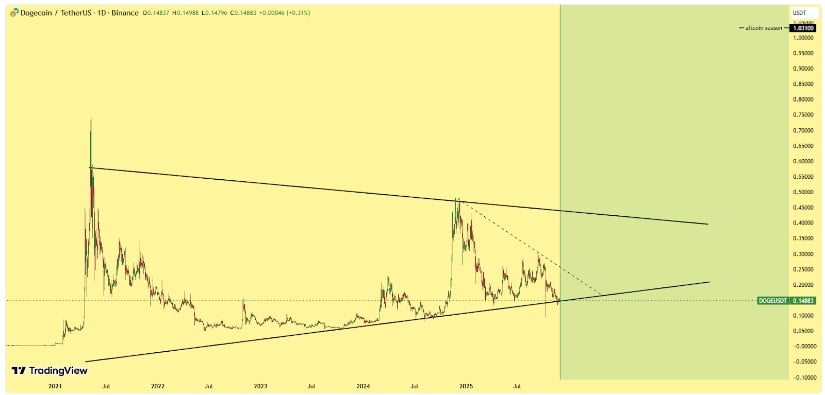
Dogecoin’s chart displays a falling wedge and consolidation, suggesting that rising momentum and institutional interest could drive a breakout toward $0.40 within the next 120 days. Source: BandForBands on TradingView

Researchers in the study noted that technical cycles can offer useful reference points but become less dependable when external variables—such as social-media-driven volatility or news-driven inflows—play a significant role. This is especially true for assets where community sentiment and speculative trading can outweigh traditional valuation metrics.

For those monitoring Dogecoin price prediction 2025 ranges, analysts recommend viewing these patterns as scenario frameworks rather than forecasts, and weighing broader macro factors such as liquidity, regulatory developments, and Bitcoin’s volatility.

Short-Term Chart Shows Rebound Attempts Following Trendline Breakdown

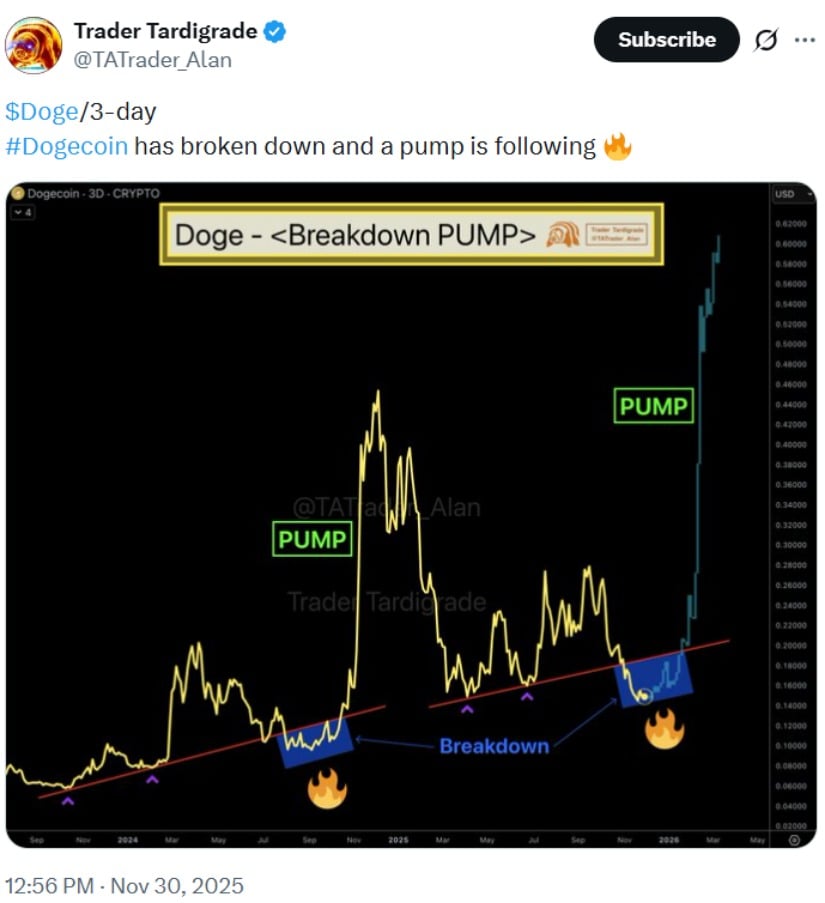
A separate three-day Dogecoin chart review, posted on November 30, 2025, highlighted notable short-term volatility. The analysis identified a descending trendline from late October near $0.18, drawn using lower-high pivot points common in multi-day trend mapping. After briefly breaking below the line, DOGE rebounded and reclaimed the $0.15 support area.

Short-Term Chart Shows Rebound Attempts Following Trendline Breakdown

Dogecoin’s 3-day chart shows a breakdown followed by a rebound, indicating a short-term corrective pump in price action. Source: @TATrader_Alan via X

Some traders interpreted the sharp recovery as a potential sign of strengthening momentum, though alternative readings suggest it may simply reflect short-covering behavior—a common characteristic in Dogecoin’s historical price action. The rebound coincided with Bitcoin stabilizing above $90,000, which often influences liquidity conditions in the wider altcoin market.

Community commentary showed interest in a possible retest of the $0.20 resistance zone, a level frequently mentioned in doge price prediction discussions. Even so, analysts point out that resistance tests in meme-driven assets can fail quickly if broader market liquidity weakens.

Current Price Trends Show Bearish Pressure Despite Short-Term Recovery

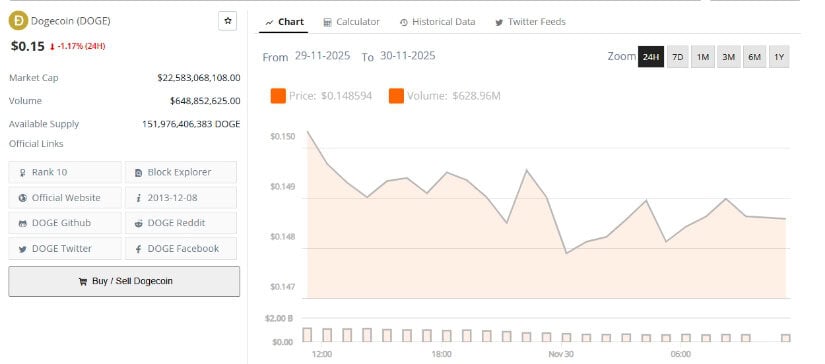
As of November 30, 2025, aggregated data from major crypto price trackers shows Dogecoin price today around $0.15, with modest intraday changes. Broader performance metrics indicate:

  • Weekly: +6% to +9%

  • Monthly: −22%

  • Yearly: −60%

Several moving-average systems, including the 50-day, 100-day, and 200-day SMAs, show DOGE trading below key trend levels—typically viewed as a bearish structure. Support zones appear around $0.150, $0.147, and $0.145, while resistance remains near $0.154, $0.157, and $0.160.

Sentiment indicators also signal caution. The widely referenced Fear & Greed Index, compiled using market volatility, trading volume, and social metrics, registered a score of 28 (“Fear”). Analysts note that while DOGE often tracks Bitcoin’s broader movement, meme-coin volatility can amplify market reactions—positively or negatively.

Dogecoin’s sensitivity to social commentary persists as well. Public-figure influence, including commentary from Elon Musk, has historically affected Dogecoin’s value, making sentiment an especially important factor in short-term movements.

Long-Term Forecasts Range Widely, With $1 Still a Community Target

Long-term Dogecoin price forecasts vary significantly due to uncertainties around adoption, utility, and market regulation. Analyst ranges commonly referenced by research desks include:

  • 2025: $0.168 to $0.20, depending on liquidity conditions

  • 2030: $0.75 to $0.85 on average, with some speculative outlier models suggesting higher valuations under aggressive adoption scenarios

The long-standing question—“Will Dogecoin reach $1?”—remains heavily debated. Experts emphasize that achieving this milestone would require sustained utility growth, stronger merchant integration, and consistent on-chain activity, factors that extend beyond technical patterns or short-term rallies.

Long-Term Forecasts Range Widely, With $1 Still a Community Target

Dogecoin was trading at around $0.15, down 1.17% in the last 24 hours. Source: Brave New Coin

While community enthusiasm remains a defining characteristic of the cryptocurrency Dogecoin, analysts caution that long-term projections should be weighed against risks such as regulatory uncertainty, liquidity shifts, and changing investor behavior.

Source link

1 12, 2025

Recovers After Initial Dip (Chart)

By |2025-12-01T00:39:04+02:00December 1, 2025|Forex News, News|0 Comments

  • The British pound extended its broader bullish tone against the yen, with recent sessions confirming strong upward momentum.
  • Support and resistance levels remain well-defined, while interest rate differentials and risk appetite continue to underpin longer-term upside bias.

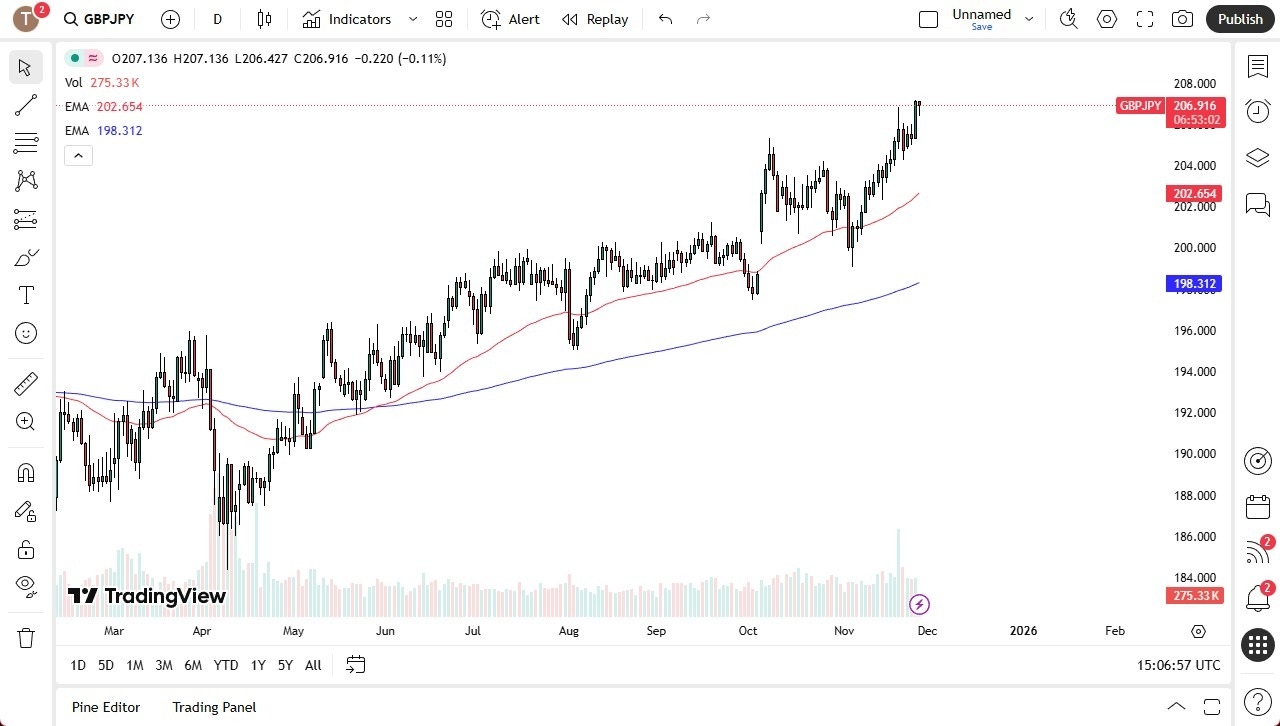
The British pound initially fell against the Japanese yen during the trading session here on Thursday but at this point it looks as if it is a market that continues to see a lot of upward trajectory and of course we need to keep in mind that the Wednesday session was a big huge victory for the British pound and it looks like we tried to roll that back but then turned around to show a confirmation of the strength.

If we can break above the high of both Wednesday and Thursday, then we have the British pound reaching towards the 210 yen level over the longer term. If we break it down, I think the 205 yen level will end up being a significant support level, as it was previous resistance. All things being equal, you do get paid at the end of every day to hang on to this pair. So, I think the interest rate differential continues to be a major factor.

Interest Rate Dynamics and Long-Term Bias

Especially as the Bank of Japan has almost no real serious possibility of tightening monetary policy of any significant note, while the British pound, despite the fact that the Bank of England came very close to cutting rates, still has a larger interest rate behind it. And therefore, I think you’ve got a situation where over the longer term, we should continue to just levitate here. Furthermore, you also have to keep in mind that there is a risk appetite factor here, and traders typically will buy this pair when they feel more risk on than risk-averse, and of course vice versa. I like buying dips here. I think we go higher.

Begin trading our daily forecasts and analysis. Here is a list of Forex brokers in Japan to work with.

Christopher Lewis has been trading Forex and has over 20 years experience in financial markets. Chris has been a regular contributor to Daily Forex since the early days of the site. He writes about Forex for several online publications, including FX Empire, Investing.com, and his own site, aptly named The Trader Guy. Chris favours technical analysis methods to identify his trades and likes to trade equity indices and commodities as well as Forex. He favours a longer-term trading style, and his trades often last for days or weeks.

Source link

1 12, 2025

$100K+ by Year-End Despite 20% S&P Warning

By |2025-12-01T00:25:15+02:00December 1, 2025|Crypto News, News|0 Comments

Key Insights

  • As per Bitcoin (BTC USD) price prediction by Tom Lee, it can still break $100K by year-end despite the October crash.
  • Lee warns the S&P 500 may drop 20% in 2026 due to policy risks.
  • His calls are 70% directionally accurate, but timing is correct only about 50% of the time.

Tom Lee, Fundstrat’s well-known strategist, gave a bold outlook on CNBC Closing Bell recently. He sees hope for the crypto market even after October’s crash. 

Source: X

His latest Bitcoin (BTC USD) price prediction is clear: Bitcoin can still break above $100,000 before December 31, 2025.

At the same time, he warned of a possible 20% drop in the S&P 500 during 2026.

Bitcoin Price Prediction: Bottom Is In, $100K+ Still Coming

Tom Lee said the October 10–11 crash was the worst event in Bitcoin’s 15-year history. Nearly two million leveraged accounts were wiped out.

About one-third of crypto market makers went bankrupt. He called it an “Armageddon-style leverage flush-out.”

Yet he sees this as a reset. “We are near the crypto market bottom,” Lee explained. His Bitcoin (BTC USD) price prediction remains bullish.

He believes Bitcoin can still break $100,000 by year-end. He added that the best trading days are ahead.

Bitcoin Price Prediction for 2026: AI Leads, Crypto Follows

Looking into 2026, Tom Lee expects AI stocks to lead. The crypto market will play catch-up. He lowered his S&P 500 year-end 2025 target to around 7,000.

He warned of a possible 20% policy-driven correction next year. Still, he believes rebounds will be quick after any shock.

For Bitcoin, he stays positive in the medium term. Institutional adoption remains strong. Halving cycles are intact. These factors support long-term growth.

Tom Lee Track Record: Hits, Misses, and Lessons

Tom Lee has a strong long-term record. But his timing is often wrong. He correctly called the 2023 and 2024 stock rallies when many feared a recession.

His Bitcoin (BTC USD) price prediction of $100,000 was first made in 2018. It finally arrived in 2024, six years late.

In 2021, he predicted $100,000 by year-end. Bitcoin peaked at $69,000 instead. In 2025, he first aimed for $200K–$250K. After the October crash, he adjusted lower.

Overall, his directional calls on the crypto market are right more than 70% of the time. But exact prices and dates are correct only about 50% of the time.

As of November 30, 2025, Bitcoin was trading at $91,480. The S&P 500 sits at 6,847. Tom Lee’s Bitcoin price prediction offers hope for crypto bulls.

He believes the worst of the leverage wipe-out is over. A fast move above $100,000 is still possible before 2026 begins.

At the same time, he urges caution on stocks. Policy risks could trigger sharp drops in 2026.

Investors watching the crypto market and the ongoing Bitcoin price prediction debates will keep a close eye on Tom Lee’s next updates.

The post Bitcoin Price Prediction: $100K+ by Year-End Despite 20% S&P Warning appeared first on The Coin Republic.

Source link

30 11, 2025

6 Health Conditions That May Benefit From a Daily Dose of Vitamin C

By |2025-11-30T22:31:05+02:00November 30, 2025|Dietary Supplements News, News|0 Comments


Vitamin C does a lot more than keep colds at bay. This nutrient strengthens your immune system, fights off cell damage with its antioxidant effects, and even helps your body make collagen—the protein that keeps your skin and bones strong. It can help you manage several ailments.

Vitamin C doesn’t prevent colds in everyone, but research suggests it may be of particular benefit to people under heavy physical stress, like athletes. A daily supplement of 250 milligrams to 1 gram of vitamin C may reduce the risk of colds by half in this group.

Taking daily vitamin C as a preventive measure can help you recover quicker when you do catch a cold. Research shows it can reduce cold length by 8% in adults and 14% in children if taken before the onset of symptoms.

When you have a wound from an injury, surgery, or ulcer, your body works to repair the damaged tissue. Vitamin C supports this healing process by helping your body produce collagen, a protein that helps rebuild tissue. It also helps form new blood vessels and reduces inflammation.

Studies suggest vitamin C can help wounds heal faster. For example, some research shows that taking 600 milligrams of vitamin C daily after a tooth extraction led to significantly smaller wounds within one week. Participants also reported less pain.

Case reports also suggest that a daily dose of 1,000 milligrams of vitamin C may improve healing in people with slow-healing surgical wounds and skin ulcers. However, these are individual cases, not large clinical trials, and more evidence is needed.

Feeling tired, weak, and short of breath could be signs of iron deficiency anemia. This condition can develop when your body lacks the iron it needs to produce hemoglobin. Hemoglobin is the protein in red blood cells that carries oxygen.

Vitamin C helps your body absorb iron from plant-based foods and supplements. It works by converting iron into a form that your intestines can absorb more easily.

A 2024 review of multiple studies found that adding vitamin C to iron supplements slightly increased the levels of hemoglobin and ferritin—and iron-storing protein—in the body.

Having high blood pressure (hypertension) means the force of blood against your artery walls is consistently too high. Over time, this can damage your blood vessels and increase your risk of heart disease and stroke.

Vitamin C may help lower high blood pressure by protecting and relaxing your blood vessels. It reduces damage from free radicals and increases nitric oxide, which helps blood vessels widen, allowing blood to flow more easily.

Vitamin C may help protect your heart by reducing inflammation, supporting healthy blood vessels, and improving cholesterol levels. As an antioxidant, it fights free radicals that damage artery walls and contribute to fatty plaque buildup.

Higher vitamin C levels are linked to better blood vessel function and a lower risk of stroke.

By keeping vessels flexible and reducing oxidative stress, vitamin C helps improve circulation and may slow the processes that lead to heart disease.

Gout is a painful form of arthritis that happens when uric acid builds up in your blood. The excess uric acid forms sharp crystals in your joints, causing sudden, severe pain and swelling.

Vitamin C may help lower the risk of gout by reducing uric acid levels. Studies show that taking around 500 milligrams daily can modestly decrease the chance of developing gout by around 12%. More research is needed to understand how vitamin C may affect people who already have gout.


Source link

30 11, 2025

Dogecoin Price Prediction: Can DOGE Price Surge Past $0.20 Amid a Bullish Reversal From a Strong Weekly Support Zone?

By |2025-11-30T20:23:22+02:00November 30, 2025|Crypto News, News|0 Comments

Dogecoin (DOGE) is showing renewed momentum, as traders closely watch key support levels for potential bullish reversals that could push the popular meme cryptocurrency past $0.20.

The cryptocurrency market has witnessed increased interest in DOGE, driven by a combination of technical support, historical price patterns, and active community engagement. As of November 29, 2025, Dogecoin trades near $0.149, reflecting a 9.5% weekly gain and maintaining a market capitalization of $22.5 billion. Analysts suggest that strategic positions around key support zones may offer opportunities for short-term gains while monitoring broader market trends.

Strong Support Zone Underpins Dogecoin Price

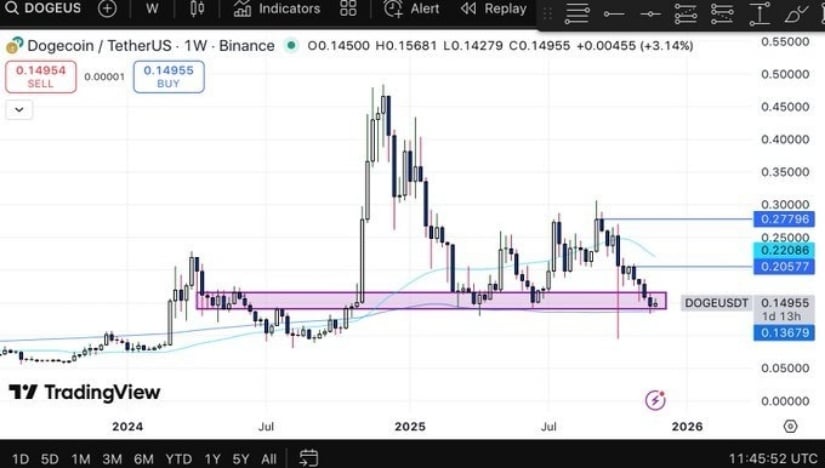
Recent market data highlights a strong support level near $0.08, forming a weekly demand zone that has historically acted as a price floor for Dogecoin. Blockchain analyst Ali (@ali_charts), who tracks DOGE trading patterns daily, noted, “A dense red cluster around $0.08 holds over 27 billion DOGE, suggesting long-term holder support, while resistance near $0.20-0.204 may cap short-term gains.”

Dogecoin trades with key support at $0.08 and resistance at $0.20, signaling potential short-term price moves. Source: @ali_charts via X

This support, coupled with Dogecoin’s proximity to its 200-period moving average (MA200), creates a favorable entry point for bullish traders. The MA200 is a widely followed technical indicator used to identify long-term market trends, with prices above the MA200 typically indicating bullish momentum.

Technical Outlook: Targets and Resistance Levels

According to TurboBullCapital (@TurboBull21), Dogecoin could initially target $0.205. If this level is successfully reclaimed, the next short-term resistance may be $0.27, while a long-term bullish scenario projects a potential rise toward $1. These projections are based on historical price patterns and technical indicators, suggesting that Dogecoin’s support zones may provide opportunities for traders seeking short-term gains.

Dogecoin Price Prediction: Can DOGE Price Surge Past alt=

Dogecoin ($DOGE) eyes a bullish rebound from strong weekly support, targeting $0.205 initially, with potential moves to $0.27 and a long-term $1. Source: @TurboBull21 via X

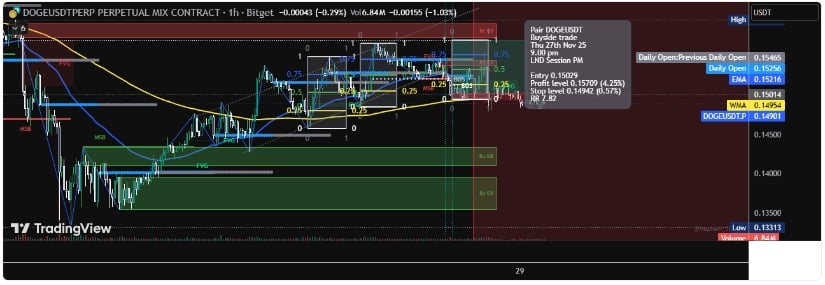
TradingView analyst Davidjulien369 provided additional insights on short-term trading dynamics. A recent buy-side trade setup for DOGE/USDT involved an entry at $0.15039, a take profit at $0.15979 (+6.25%), and a stop loss at $0.14842 (−1.31%). The trade followed an ICT liquidity cycle, a technical strategy that considers market liquidity and smart money behavior.

This cycle includes a sell-side sweep, an inducement layer (local double bottom), displacement through resistance, rebalance and entry, and execution via a bullish order block, indicating strategic positioning by institutional traders, while retail investors may face stop hunts at lower levels.

Market Sentiment, Community Reactions, and Future Outlook

Dogecoin’s community shows a mix of optimism and caution. Enthusiasts note its resilience with comments like “DOGE always wakes up” and “HODL or buy the dip?” Some traders remain skeptical due to whale outflows and minor bearish support breaks. Despite this, Dogecoin’s weekly gains have outperformed broader crypto benchmarks, signaling potential for short-term rallies.

Market Sentiment, Community Reactions, and Future Outlook

Dogecoin saw a strategic buyside trade at $0.150, targeting $0.1597 with smart money following an ICT liquidity cycle for optimal entry. Source: davidjulien369 on TradingView

Looking ahead, bullish forecasts suggest Dogecoin could reach $1, but analysts warn that volatility, Bitcoin’s performance, and macroeconomic factors will heavily influence its trajectory. Current technical structure and historical support zones provide a foundation for upward momentum, though investors should remain cautious.

Dogecoin Price Prediction 2025: Key Considerations

Several factors are likely to influence Dogecoin’s trajectory throughout 2025:

  • Support and Resistance: $0.08 remains a crucial support level, while $0.20–$0.205 forms the immediate resistance zone.

  • Technical Indicators: MA200 support, liquidity pools, and bullish order block formations suggest upward potential if Dogecoin maintains current levels.

  • Market Activity: ETF inflows, whale movements, and broader cryptocurrency trends may impact DOGE price action and can provide verified context.

  • Community Engagement: Long-term holder behavior and social sentiment often correlate with short-term price resilience.

Final Thoughts

Dogecoin’s recent price action signals a potential bullish reversal from a strong weekly support zone. With the current price near $0.15 and key resistance at $0.20, traders may identify opportunities for short-term gains. While achieving $1 remains a long-term target, Dogecoin price prediction for 2025 indicates strategic positions near support levels could be favorable for market participants.

Dogecoin Price Prediction 2025: Key Considerations

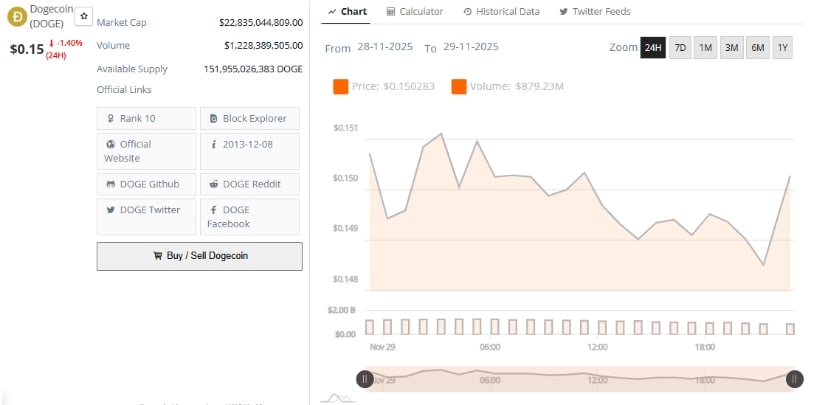
Dogecoin was trading at around $0.15, down 1.40% in the last 24 hours. Source: Brave New Coin

Investors are advised to conduct comprehensive research and employ risk management strategies before entering cryptocurrency positions. Verified sources such as Glassnode and Brave New Coin are recommended for real-time data and historical price charts.

Source link

30 11, 2025

Bullish outlook prevails above 181.00

By |2025-11-30T18:36:18+02:00November 30, 2025|Forex News, News|0 Comments

The EUR/JPY cross trades in negative territory near 181.05 during the early European session in Friday. The Japanese Yen (JPY) edges higher against the Euro (EUR) amid some verbal intervention from Japanese authorities. Traders brace for the release of Germany’s Retail Sales and Consumer Price Index (CPI) inflation data, which will be released later on Friday.

In the daily chart, EUR/JPY trades at 181.04. Price holds well above the rising 100-EMA at 174.71, sustaining the medium-term uptrend. The slope of the average has steepened in recent weeks, reinforcing bullish control. RSI at 63.77 is firm but not overbought, easing from 65.56 and indicating momentum has cooled slightly.

Price trades above the middle Bollinger Band and leans toward the upper band at 182.67, while the bands widen, signaling persistent bullish pressure and elevated volatility. A daily close through the upper band could extend the advance, whereas a pullback under 179.41 would expose a support range at 176.15–174.71.

(The technical analysis of this story was written with the help of an AI tool)

Japanese Yen FAQs

The Japanese Yen (JPY) is one of the world’s most traded currencies. Its value is broadly determined by the performance of the Japanese economy, but more specifically by the Bank of Japan’s policy, the differential between Japanese and US bond yields, or risk sentiment among traders, among other factors.

One of the Bank of Japan’s mandates is currency control, so its moves are key for the Yen. The BoJ has directly intervened in currency markets sometimes, generally to lower the value of the Yen, although it refrains from doing it often due to political concerns of its main trading partners. The BoJ ultra-loose monetary policy between 2013 and 2024 caused the Yen to depreciate against its main currency peers due to an increasing policy divergence between the Bank of Japan and other main central banks. More recently, the gradually unwinding of this ultra-loose policy has given some support to the Yen.

Over the last decade, the BoJ’s stance of sticking to ultra-loose monetary policy has led to a widening policy divergence with other central banks, particularly with the US Federal Reserve. This supported a widening of the differential between the 10-year US and Japanese bonds, which favored the US Dollar against the Japanese Yen. The BoJ decision in 2024 to gradually abandon the ultra-loose policy, coupled with interest-rate cuts in other major central banks, is narrowing this differential.

The Japanese Yen is often seen as a safe-haven investment. This means that in times of market stress, investors are more likely to put their money in the Japanese currency due to its supposed reliability and stability. Turbulent times are likely to strengthen the Yen’s value against other currencies seen as more risky to invest in.

Source link

30 11, 2025

Which Is Better for Building Muscle Over 50?

By |2025-11-30T18:29:07+02:00November 30, 2025|Dietary Supplements News, News|0 Comments


It’s hard to go online right now without seeing yet another reminder that you’re not having enough protein in your diet to support muscle strength and recovery, especially if you’re a woman over 50. But there is also an arsenal of commentary to suggest that you should be taking a creatine supplement for that same reason, too. As a result, you (and many others) are left wondering creatine vs. protein: Which is better for muscle strength and recovery?

It’s important to stress this upfront: It’s best to consult with a healthcare provider before putting yourself on any kind of supplement. But there is data to support taking in plenty of protein and creatine, making it more than fair to be confused.

Meet the experts: Kenton Fibel, M.D., primary care sports medicine specialist at Cedars-Sinai Orthopaedics in Los Angeles, CA; Albert Matheny, R.D., C.S.C.S., a co-founder of SoHo Strength Lab; Jillian Chaney, R.D.N., dietitian for the Anaheim Ducks; Steven K. Malin, Ph.D., an associate professor and researcher in the Department of Kinesiology and Health at Rutgers Robert Wood Johnson Medical School

Each nutrient has its value, but is one better than the other for muscle strength and recovery? And is it OK to take them both or should you choose one over the other? We tapped sports medicine physicians and dietitians for more.

Dietary supplements are products intended to supplement the diet. They are not medicines and are not intended to treat, diagnose, mitigate, prevent, or cure diseases. Be cautious about taking dietary supplements if you are pregnant or nursing. Also, be careful about giving supplements to a child, unless recommended by their healthcare provider.

Benefits of creatine for muscle strength and recovery

Creatine is a compound that’s typically found in your muscles and brain, according to the Mayo Clinic. Your body naturally makes creatine—your liver, pancreas, and kidneys make about a gram of creatine a day. But you can also get creatine from eating seafood and meat, or through a creatine supplement.

Creatine helps to make energy for muscles, explains Albert Matheny, R.D., C.S.C.S., a co-founder of SoHo Strength Lab. It’s especially helpful with short-term, power-based activities. “Creatine can help with your muscle strength, but it can also help with your recovery,” Matheny says.

Creatine is stored in your muscles as phosphocreatine, explains Steven K. Malin, Ph.D., an associate professor and researcher in the Department of Kinesiology and Health at Rutgers Robert Wood Johnson Medical School. When your muscles contract, they break down adenosine triphosphate (ATP). But for your muscles to keep contracting, you need to keep having ATP at the ready, Malin says.

When creatine is converted to phosphocreatine, it can increase and store ATP in your muscles, giving you stores for when you need it, Malin says. (Creatine supplements can help increase those stores, he says.)

As a whole, creatine seems to help with high-power, strength-training moves to build muscle, Malin says. There is data to support this. A Current Developments in Nutrition study published in February 2025 found that cyclists who took creatine had better sprint performance. And a 2022 scientific review published in the Journal of the International Society of Sports Nutrition found that taking creatine helped to support performance in older adults.

Potential downsides to creatine

Creatine is typically considered a safe supplement when you take it as recommended. It may cause some water retention, along with dehydration, bloating, diarrhea, stomach cramps, and muscle cramps, per Malin. (But these are often temporary.) Jillian Chaney, R.D.N., dietitian for the Anaheim Ducks, says you’re more likely to have these side effects if you do what’s called a “loading phase,” where you take higher amounts of creatine to start and then taper off. “If people take the recommended amount—which is usually about 5 grams a day—the bloating doesn’t happen generally,” she says.

Creatine also may not be safe for people with kidney disease, Matheny says, so you’ll want to consult with your healthcare provider before taking a creatine supplement.

Benefits of protein for muscle strength and recovery

Protein is a crucial nutrient to build and repair muscle tissue, Matheny points out. You need amino acids, which are the building blocks of protein, for muscle health. “Protein helps with recovery and strength,” Matheny says. “But this also requires training. Typically, you’re not going to see big changes if you just eat a bunch of protein.”

Chaney points out that protein needs increase slightly as you age to lower the risk of muscle loss. “Your protein needs in general do increase—that’s important to know,” she says.

Of course, there’s more than just your strong biceps to consider. Having enough protein (and muscle) can help you live a longer, healthier life. Case in point: One scientific analysis published in Annals of Internal Medicine found that patients who had less muscle mass had more health complications, stayed in the hospital longer, and had lower survival rates compared to their more muscled counterparts.

Another study published in the American Journal of Clinical Nutrition determined that taking in enough protein was linked to higher odds of healthy aging in midlife women.

Potential downsides to protein

Given how filling protein is, it’s hard to overdo it on this macronutrient from food, Matheny points out. But, when you take in more protein than your body needs, it’s converted into fat and stored, leading to weight gain, he says.

With protein supplements, additives like sugar alcohols may cause digestive issues, Matheny says. If you have an allergy or intolerance to dairy, it’s also important to choose a plant-based protein or you may end up with uncomfortable side effects or even health issues, Matheny points out.

Creatine vs. protein: Which is better for muscle strength and recovery?

This is tricky. Your body benefits from both creatine and protein, and Matheny points out that you’ll often find these together in nature. “Animal proteins like beef will contain creatine and protein,” he points out.

Matheny also notes that these nutrients do different things in the body. “It’s not comparing apples to apples—it’s apples to oranges,” he says. “You should have some of each.” Chaney agrees. “Both can be good,” she says. “You don’t necessarily need to choose between them.”

Matheny recommends doing what you can to get both creatine and protein in your diet and taking things from there. “If your diet is low in them, then I would suggest taking protein and creatine,” he says.

Matheny points out that most people don’t get enough protein. “Because protein is with creatine, and you’re probably also not getting enough creatine, I think most people would benefit from creatine and protein supplements,” he says. Matheny says that most women over 50 would be fine to have 3 to 5 grams of a creatine supplement a day, but it’s best to consult with a healthcare professional first. For protein, Matheny says it’s important to consider your intake from your diet and round things out from there.

The RDA for protein hasn’t changed for 30 years from 0.8 grams per kilogram, but many in the nutrition science community recommend that active people have 1.2 to 1.5 grams per kilogram of protein to support tissue growth.

What to do if you’re interested in these supplements

This is a lot to navigate, and it’s still best to contact a healthcare provider or dietitian before putting yourself on a creatine or protein supplement, says Kenton Fibel, M.D., primary care sports medicine specialist at Cedars-Sinai Orthopaedics in Los Angeles, CA. “There are so many supplements out there, and quality can vary,” he says. (While creatine and protein are largely considered safe supplements, Chaney says that your doctor can also help you navigate if there are any potential interactions with medications or other supplements you’re taking.)

Your healthcare provider can also help you figure out the best dosing for you, Dr. Fibel points out.

But Matheny stresses that you don’t necessarily need to choose between having creatine and protein. “Both are helpful,” he says.




Source link

Go to Top