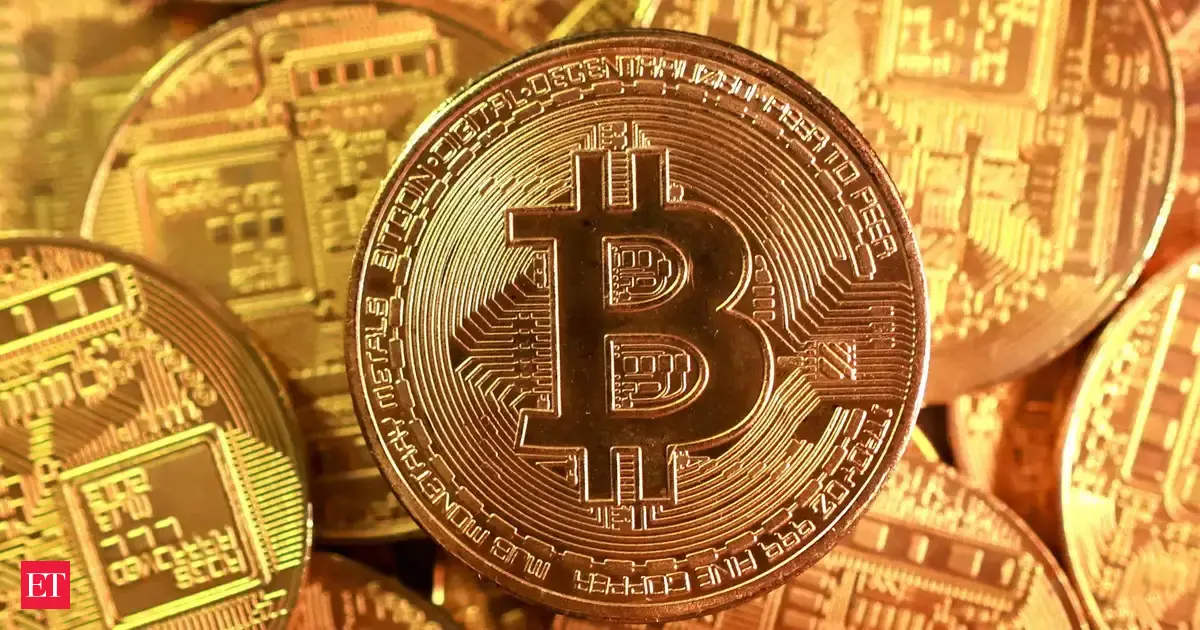
Ether held firm on Tuesday as the market tried to settle after a rough November shaped by derivatives resets, collapsing gas fees, and the build-up to a new US futures launch next month.
Ethereum (ETH), the second-largest crypto asset, traded near $2,920 in the afternoon.
As per Coingecko data, the price was up about +4% in the past 24 hours as traders looked for signs of stability after weeks of heavy pressure.
The latest move comes as funding rates and open interest calm down following a sharp unwind earlier in the month.
And in the background, Cboe is preparing a “perpetual-style” ether futures product set to roll out in mid-December, giving US traders another way to hedge or gain exposure.
The broader market struggled for most of November. Bitcoin slid to a seven-month low last week, and ether dropped alongside it.
BTC has started to edge higher again, while ETH’s rise today marks a small break after several sessions of liquidations and risk-off sentiment.
Liquidity on Ethereum improved as the market bounced back. Average L1 gas briefly slipped to about 0.085 gwei late Tuesday morning. That’s one of the lowest levels of the year, and it made on-chain activity cheaper for users.
At the same time, DEX volume hit roughly $2.04Bn in the past 24 hours.
As per DefiLlama data, the network handled around 1.5M transactions and about 464,000 active addresses. These numbers show steady participation even after the recent pullback.
CoinGlass data shows that ETH open interest is near $35.84Bn, and futures volume over the past day is around $88Bn.
Positioning has grown again, but it hasn’t moved into heavy-leverage territory. Spot volume is still lighter than futures.
One structural event to watch in December is the launch of Cboe’s new ether “Continuous Futures” on December 15.
These US-regulated contracts aim to mirror perpetual futures, with daily cash adjustments and a listed term of up to 10 years.
Cboe’s Rob Hocking said perpetual futures were “historically traded offshore,” and noted that the exchange’s new structure is meant to offer “a controlled way to gain some leveraged exposure” under a US system.
Kaiko, Cboe’s index partner, said the products fill “a real need for institutional investors” who want efficient, long-term exposure without relying on unregulated venues.
Ethereum is also drawing attention in the market. Analyst Michaël van de Poppe says the ETH/BTC pair looks “eager to break to the upside” in the coming days. His chart shows the pair holding firm above a key support zone between 0.02920 and 0.03200 BTC, a level that has served as a steady demand area for months.
ETH/BTC is holding in a tight range, and Michaël van de Poppe thinks the move is close. “Probably 1–2 more days and then $ETH will break through the trend and outperform Bitcoin,” he said.
The pair has spent months correcting from its yearly high at 0.08556 BTC. Since then, it has moved sideways with narrow candles, showing how much volatility has compressed.
It is now pushing against a descending trendline that has capped every rally since late summer. That pressure hints at a possible breakout attempt.
The 50-day moving average on the daily chart is flattening just above current levels. ETH has also tested this area several times, leaving higher wicks that point to steady buying.
The RSI is climbing out of oversold territory, matching the stabilisation in price.
Van de Poppe calls this support area the “ideal zone for buys,” noting strong defence with repeated long lower wicks.
If ETH breaks the trendline, he sees targets near 0.036–0.038 BTC and later 0.042 BTC. If it fails, the pair could slip back toward 0.030 BTC.
For now, traders are watching to see if ETH can finally shift momentum after a long stretch of underperformance.
This is the third consecutive week of consolidation near the recent trend high of $4.68. The prior two weeks closed in the top half of their ranges, indicating buyers have retained underlying control. Resistance continues near the 88.6% Fibonacci retracement at $4.64. A daily close below $4.44 would confirm short-term weakness and a three-day breakdown. Until a decisive breakout above $4.69 occurs, risk of continued consolidation or a deeper bearish correction remains. Below the recent $4.24 swing high lies the June $4.15 swing high, then the 38.2% retracement at $4.00 and 50% level at $3.79.
Overextended Advance
Although buyers have kept a degree of control in recent weeks, the sharp slope of the advance since the October interim swing low—up as much as $1.80 or 62.1% to the recent high—matches the 63.9% gain from the January $2.99 low to the March $4.90 peak, which was followed by a multi-month correction. The RSI has begun retreating from overbought territory, leaving natural gas vulnerable to a corrective pullback.
Outlook
The 20-day average at $4.37 is the critical pivot. Holding above it keeps upside potential alive toward $4.69 and higher; a decisive drop below opens $4.24–$4.15 initially, with deeper support at the measured retracements. Until the $4.69 high is cleared, consolidation or correction risk stays elevated.
For a look at all of today’s economic events, check out our economic calendar.
Two boxes of ‘Artri Ajo King,’ a supplement that the Food and Drug Administration has warned against people consuming, sits at the counter inside a local produce store on Mission, in San Francisco, Calif., on Sept. 17, 2025. Photo: Pablo Unzueta for El Tecolote/CatchLight Local
When Gloria Caballero, 52, started experiencing knee pain four years ago, her sister in Los Angeles suggested a natural remedy that a coworker had sworn by: a supplement called Artri King. Following her advice, Gloria started buying the yellow-and-blue pills in Los Angeles and bringing them up to her home in San Francisco, where she started taking them twice a day, every day.
The change, Caballero said, was dramatic. She could walk without pain again. After long days cleaning houses, she woke up energized. But as time passed, her face started to swell. Bruises appeared all over her body, so many that she started wearing long sleeves to cover them. Amid the stress of juggling multiple gigs to afford San Francisco’s high rent, the house cleaner didn’t think much of her symptoms.
Then, during a routine check-up this May at a community clinic, her nurse practitioner asked about what medicines and supplements she was taking, and she mentioned Artri Ajo King. When he looked up the supplement online, he told her she would have to stop. The pills, it turned out, have been found to contain hidden prescription drugs. They were responsible for her bruises and her swelling, and for other worrying changes she hadn’t yet noticed in her body.
In San Francisco, a growing number of Latinos who work physically demanding jobs are turning to supplements like Artri Ajo King and related supplements, such as Artri King, AK Forte and Ortiga Ajo Rey to relieve chronic pain. The supplements are marketed as natural remedies for pain relief. But there’s a dark side to the pills that has doctors in the city worried. They contain hidden pharmaceuticals that can lead to serious medical conditions, including liver toxicity and death. Quitting them abruptly can also be very dangerous. And though the Food and Drug Administration (FDA) has asked people to avoid them, the message of their harms doesn’t seem to be getting across to Spanish speaking immigrants, or to the many small businesses in the Mission District that cater to them.
The supplements’ labels, written fully in Spanish, say the product is made in Mexico, and list ingredients like Vitamin C and collagen. However, FDA laboratory analyses have found they also contain powerful hidden drugs like diclofenac, dexamethasone and methocarbamol, which are used to treat a number of health conditions, but require a doctor’s prescription to avoid severe side effects.
A box of ‘Artri Ajo King,’ a supplement that the Food and Drug Administration has warned against people consuming, sits at the counter inside a local produce store on Mission, in San Francisco, Calif., on Sept. 17, 2025. Photo: Pablo Unzueta for El Tecolote/CatchLight Local
“The tricky part is, patients actually feel better because the high-dose steroids treat arthritis pain,” said Elizabeth Murphy, chief of the Endocrinology and Metabolism Division at the San Francisco General Hospital. “The problem is, it’s just not a safe treatment for joint pain. And because it’s not a listed ingredient, you don’t even know how much of these steroids is in the medication. You don’t even know which steroid it is.”
San Francisco cases on the rise
Over the past few years, Murphy said she has seen a number of patients in San Francisco with complications linked to Artri Ajo King and its derivatives.
“It’s unfortunately very common.” she said. “And we’re seeing more and more (cases).”
Sometimes, she said, patients are referred to her because the hidden steroids have disrupted their hormone production, causing them to develop severe osteoporosis and broken bones — Murphy said she’s had patients who had to have both hips replaced. Others gain weight, develop diabetes, or show other symptoms of Cushing’s syndrome, which is typically caused by rare tumors in the adrenal glands, but can also be triggered by steroid use.
Given the risk of severe side effects, Murphy has also been educating fellow S.F. providers to ask about supplements during intake, helping doctors catch the issue before conditions worsen.
Still, though practitioners have been able to catch cases earlier on, she said, use of Artri Ajo King in San Francisco’s Latino community has increased, mirroring medical reports of their rising popularity in the U.S. In the last six months alone, Murphy said she saw three patients with complications derived from Artri Ajo King usage in the city. She suspects there are many more people with symptoms that haven’t been linked to the supplement.
Leiner, the nurse practitioner that treated Caballero, said it’s hard for doctors to identify Artri Ajo King usage because people won’t feel bad taking them until “something major happens,” like an infection that pushes them into shock, or a broken bone that reveals osteoporosis.
Boxes of ‘Artri Ajo King,’ a supplement that the Food and Drug Administration has warned against people consuming, sits on the top shelf inside a local produce store on Mission, in San Francisco, Calif., on Sept. 17, 2025. Photo: Pablo Unzueta for El Tecolote/CatchLight Local
“A lot of the symptoms would be subtle,” said Leiner, who works at the Mission Neighborhood Health Center (MNHC). “I didn’t even make the connection when I first saw my patient [Gloria]. She had bruises on her skin. That’s not unusual for 50-year-old women.”
Caballero’s bruises were caused by thinned skin, a hallmark of Cushing’s syndrome. Blood tests showed her natural cortisol levels neared zero. Another patient of Leiner’s, who had only taken the pills for three months, also showed alarmingly low cortisol levels.
These hormonal imbalances caused by Artri Ajo King also complicate people’s ability to stop taking the supplement safely. Long-term use shuts down the body’s natural production of cortisol, Leiner explained, so people need to contact their medical provider to be successfully weaned off the medication. Depending on how long a patient has been taking the supplements, the process “might take years.”
“If you bring usage down too quickly, the body is not going to be able to generate its own cortisol in the event of a major injury,” said Leiner. “If these patients were to have had a bad fever or a major car accident, they’d go into shock and they could die.”
Easy to find, easy to buy
After receiving FDA warning letters in 2022, big retailers like Walmart and Amazon issued voluntary recalls, pulling Artri Ajo King and Artri King from their shelves. The supplements are now on the FDA’s “red list” of import alerts and Customs and Border Protection (CBP) has also seized shipments of Artri King at U.S. ports of entry. But in San Francisco stores catering to Latin American, Spanish-speaking consumers, the supplement is still popular and readily accessible.
On a walk through the Mission District, El Tecolote found 12 small stores, including a Latino pharmacy, that sold Artri King or close derivatives. Most were along two of the neighborhood’s business corridors: Mission Street and 24th Street. Often, the bottle was displayed near low-grade pain medication like Tylenol or next to other supplements advertised as natural remedies. They retailed for $20 to $40 a box.
People shop for produce outside of one of the few stores around Mission Street that sells a supplement that the Food and Drug Administration has warned against people consuming, in San Francisco, Calif., on Sept. 17, 2025. Photo: Pablo Unzueta for El Tecolote/CatchLight Local
El Tecolotebought two boxes at a small grocery store specializing in Latin American products. Inside each box was a QR code to a Google Drive PDF claiming to “authenticate” the product. The outside label instructed consumers to take two pills, three times a day, never mentioning the hidden steroids. In italics, one line read:
“Taking this product is the responsibility of whoever takes it, and whoever recommends it.”
Clerks in several stores said that the supplements were popular among older Latino men and women seeking pain relief, who had heard about it through word-of-mouth recommendations. At the stores, consumers don’t need a prescription to buy the supplement.
Clerks and managers said they were unaware of the FDA warnings and the impact of the hidden ingredients. They were skeptical of the product’s harm, and said that Artri King was just one of many medications they received in bulk from their suppliers.
One store manager said he gives the supplement to his mother, and takes it himself occasionally. At another store, a clerk said she started using the pills after customers recommended them. She reported selling three to four boxes a day. Sometimes, a single customer buys out the entire stock.
The problem with alternatives
At Mission Street’s Milagros de México, a large herbal store specializing in Latin American supplements, pharmacy worker Consuelo Hernández said they stopped selling Artri King after the FDA issued warnings. When customers ask for it, she steers them towards the store’s other pain-relief products, including derivatives with similar branding.
Many health providers, however, warn against taking one of these derivatives, since there’s no guarantee they’re not just a repackaged version of the Artri Ajo King formula.
Because products like Artri Ajo King are marketed as supplements, and not medications, the FDA cannot regulate their ingredients before they hit the market. Rather, the labeling responsibilities fall on the manufacturer. The FDA only steps in to test and recall products after they receive multiple reports of harm.
‘Ortiga Ajo Rey,’ a supplement that the Food and Drug Administration has warned against people consuming, sits at the counter inside a local produce store on Mission, in San Francisco, Calif., on Sept. 17, 2025. Photo: Pablo Unzueta for El Tecolote/CatchLight Local
“There’s no way to distinguish legitimate supplements from illegal supplements,” said Pieter Cohen, an associate professor of Medicine at Harvard Medical School who researches supplement safety.
Although he regularly recommends vitamins and mineral supplements to his patients, Cohen advises them to avoid ones that claim to offer pain relief, since they often contain “powerful prescription drugs.” Any supplement that provides immediate results, he added, probably contains something beyond legal ingredients.
“There might be some real misleading advertising going on,” he said.
Getting the message across
Artri Ajo King has no official website, and Mexican doctors have warned that it is made in “hidden laboratories” and is “not regulated at the local level,” with “chameleon-like” industries that are good at evading public health regulations. Though its label says it is made in Mexico, the box doesn’t provide any contact information for the supplement’s supposed manufacturer, listing only an address in a residential neighborhood in Mexico City.
But despite government warnings in multiple countries over Artri King’s hidden ingredients, the supplement remains popular across the U.S. and in Latin America.
Cohen, who has studied how similar supplements impact Boston’s Brazilian community, said FDA warnings rarely change consumer behavior, particularly among lower-income, immigrant populations who may not know about or understand them.
“I think people should be really concerned,” Cohen said, adding that lack of health insurance in immigrant communities makes it “really common to turn to other solutions.”
Mayra Moreno-Arnaiz, a senior health educator at MNHC, echoed that concern. She said many patients assume the pills are “natural” or similar to traditional remedies passed down in Latino families. In reality, they are factory-made and unregulated.
Pills of a supplement that the Food and Drug Administration has warned against people consuming in San Francisco, Calif., on Sept. 29, 2025. Photo: Pablo Unzueta for El Tecolote/CatchLight Local
Moreno-Arnaiz designed flyers warning patients of the risks, now posted in the clinic. But getting the message across has proven to be difficult. Some people don’t trust the medical system and decide to self-medicate their chronic pain. Long wait times for medical appointments might discourage people who do have Medi-Cal from seeking help for less serious conditions.
There’s also the fact that, as Cohen noted in one of his studies, small stores might be “legitimizing these products” by continuing to sell them, “providing a false sense of security to prospective consumers.”
“The FDA might test the products (and) identify the active agents to talk about the risks but the FDA is not going to go into these stores and stop the delivery,” Cohen told El Tecolote.
El Tecolote reached out to the San Francisco Department of Public Health (SFDPH). Though they acknowledged they had received our inquiry, they did not respond to questions about whether they were aware of the sale of Artri King in the city.
Living with chronic pain
Four months after quitting Artri King, Caballero is taking ibuprofen and other lower-grade pain medications prescribed for her arthritis. The side effects from the supplement have waned, she said, but her knee pain is back — and debilitating. It now hurts to walk. She continues to work as a house cleaner, pushing through the pain to “not end up on the street.”
Her doctor has acknowledged that, barring surgery, there really is no cure to the pain she feels. It’s something she’ll probably have to live with for the rest of her life. Gloria admits she still has Arti Ajo King pills in her house.
To her, Artri Ajo King is like every other painkiller: it’s “really good,” but harmful in high doses. In the years that she took it, she emphasized, it made a difference in her quality of life. She remembers them warmly.
Chely, 46, who lives in San Francisco and asked to go by her nickname, wasn’t surprised to learn the pills contained hidden ingredients. When she first started taking Artri King, she said, the effect she felt was so intense that she decided to lower her dosage to one pill per day. The pills help her treat persistent pain in the soles of her feet that she’s had since a fall two years ago. They also give her a rush of energy in the mornings that help her wake up early for work and to walk her dog.
The Mexican house cleaner has been taking the pills since May, but talking to El Tecolote was the first time she learned about the potential side effects. She wondered if her recent hair loss was connected to it. Chely said she planned on looking into the supplements more to decide whether she would keep taking them or not, but didn’t trust a doctor would give her an honest answer.
Still, she didn’t understand why stores would keep selling them if they were so dangerous. “It’s not fair to harm your people,” she said.
Chely said she first came across the supplement at Farmacia Internacional on Mission Street, seeking something that could help her alleviate her pain. Walking through the aisles, a dark blue and yellow box caught her eye. It had a picture of part of a skeleton’s hands, with shining orange orbs around the joints.
When she brought it to the counter, the pharmacist told her to adjust the dosage to whatever felt comfortable. Later, she sought the advice of friends, and even a nurse in her Mexican hometown. They all said it would help.
This story was co-published with El Tecolote and was made possible by the USC Annenberg Center for Health Journalism‘s “Healing California” initiative, a yearlong Ethnic Media Collaborative with print, online and broadcast outlets across California.
Bitcoin BTC USD price recovery prediction: The cryptocurrency market continues to face uncertainty as the latest Crypto Fear & Greed Index showed a modest rise to 20, up from 19 the previous day. While this marks a slight improvement, the reading keeps the market firmly in the ‘extreme fear’ zone, which highlights the ongoing investor anxiety.
What is the Crypto Fear & Greed Index
The Crypto Fear & Greed Index tracks market sentiment on a scale from 0 to 100, where 0 indicates maximum fear and 100 represents extreme greed, as per a report. It analyzes six key components: volatility (25%), market volume (25%), social media mentions (15%), investor surveys (15%), Bitcoin dominance (10%), and Google Trends (10%), as per a Bitcoin World report. This combination provides a detailed picture of market psychology.
Extreme Fear in Crypto Markets: What It Means for Investors
According to the Bitcoin World report, extreme fear in the market can signal potential buying opportunities for long-term investors, while extreme greed often points to market tops and the current 20 reading suggests that while fear persists, there are slight improvements in investor confidence.
Bitget CEO Says Crypto Sentiment Stabilizing Amid Extreme Fear
Bitget CEO, Gracy Chen, told The Economic Times that, “We view the sharp rebound in the Crypto Fear and Greed Index to 20 as an early sign that sentiment is beginning to stabilize after a period of intense volatility.” She explained that, “Extreme fear appears to be bottoming out, creating the conditions for renewed investor confidence as markets recalibrate,” as per the emailed statement.
December Fed Rate Cut Expectations Could Boost CryptoChen also told The Economic Times that expectations for a December Fed rate cut, now priced above 80%, create a dovish macro backdrop and that this shift could provide liquidity to risk assets, lower borrowing costs, and potentially spark a broader risk-on rally across crypto and traditional markets.
Key Market Signals Bitcoin Traders Must Watch in the Coming Weeks
The CEO even highlighted that, “Key signals to monitor over the coming weeks include Bitcoin dominance, changes in altcoin trading volumes, and major macro indicators such as CPI releases. These data points will help confirm whether the dovish macro shift has staying power and, in turn, whether the market is primed for a more decisive recovery,” as per the emailed statement to The Economic Times.
BTC USD Price Today and Altcoin Price Movements
The CoinDCX Research Team told The Economic Times that Bitcoin continues to consolidate around its gains, failing to reach the critical $90,000 resistance. Other major altcoins, including Ethereum, XRP, Tron, Dogecoin, and Cardano, saw small bullish moves but remain below their price targets. The day’s top performers included Bonk (+12.3%), Kaspa (+11.45%), and Sui (+10.19%), while Zcash dropped over 12.5%, with Memecore, MYX Finance, and Hedera down over 4% each, CoinDCX Research Team wrote in an emailed statement to The Economic Times.
Bitcoin Open Interest Shows Major Market Reset
CoinDCX Research Team told The Economic Times that Bitcoin open interest experienced one of the sharpest 30-day declines since 2022, indicating a major market reset that often precedes bottom formation. Regulatory developments in Japan will require crypto exchanges to maintain liability reserves to compensate users in case of hacks or security breaches, as per the emailed statement.
Spot Altcoin ETFs and BlackRock Buying BTC & ETH Signal Growing Market Interest
The research team added that, “Five spot altcoin ETFs will be listed in the next six days, which could give the required boost to the markets. In the meantime, BlackRock adds 2,269 BTC and 10,629 ETH to its wallet, signalling the rise in institutional and retail buying.”
FAQs
How is the Crypto Fear & Greed Index calculated?
It combines volatility, market volume, social media mentions, surveys, Bitcoin dominance, and Google Trends.
Which cryptocurrencies are showing gains today?
Bonk (+12.3%), Kaspa (+11.45%), and Sui (+10.19%) are the top gainers.
No, this isn’t a Goop editorial, but we can see why you’d mistake it for one. The idea of using an estrogen cream, historically used to restore vaginal tissue, on your face isn’t quite as wild sounding as, say, using bee venom to treat scarring, which Goop founder Gwyneth Paltrow described as “pretty incredible”, but it’s a bit out there. And, as more and more beauty influencers endorse vaginal estrogen cream as an anti-aging go-to, it’s gaining steam as a trend, typically targeting menopausal and postmenopausal women.
But is putting estrogen cream on your face beneficial? To back up a bit: Is it safe? What are the pros and cons? The truths and myths? The accessibility and cost?
HealthyWomen talked to two dermatologists to get the lowdown on the latest glow up sensation.
The powers of estrogen cream for vaginal rejuvenation in menopause
Vaginal estrogen cream has long been prescribed to menopausal women to treat vaginal dryness, thinning vaginal skin, itching and burning, which are extremely common symptoms of menopause — and it can work wonders.
“I’m 48 and entering the perimenopausal sphere,” said Melanie Palm, M.D., board-certified dermatologist and cosmetic surgeon at Art of Skin MD. “And I see how vaginal estrogen cream transforms patients’ bodies.”
Vaginal estrogen cream helps rejuvenate vaginal skin and improve dryness by feeding the skin estrogen, which permanently drops in menopause.
“When we stop having monthly periods, it affects the estrogen receptors on our skin,” Palm said. “We lose collagen. Areas that are estrogen dependent, like genitals, change a lot. These creams help with that.”
Vaginal estrogen cream can also help prevent UTIs, which Palm pointed out is a leading reason for acute care needs in older women.
“UTIs can lead to sepsis, which is common in elderly patients, particularly those suffering from dementia or urinary incontinence,” Palm said.
Facial skin is very different from vaginal skin
If estrogen cream is so effective in rejuvenating vaginal skin, why wouldn’t it also do wonders for the skin on our face when it too dries with age? This is the line of thought that’s led to some skincare enthusiasts turning to estrogen cream as an anti-wrinkle agent. But it’s really not that simple because the skin on the face just isn’t the same as the skin down there.
In 2025, the Journal of the American Academy of Dermatology published research about the use of estrogen cream for facial rejuvenation. The study found that estrogen creams provide anti-inflammatory measures and support your blood vessels and collagen production. But it found it only did so in areas not exposed to sunlight.
“With photoexposed areas of the skin — areas that see the sun — estrogen had no effect,” Palm said.
Scientific research on using vaginal estrogen on your face is weak and mixed
Now, can we say that this one study proved once and for all that it’s a waste of time to apply estrogen cream to your face for anti-aging effects? Not quite, because this study, like every other study done on estrogen creams as facial skincare products to date, was small.
“The challenge is that these are all small studies with mixed results,” Palm said. “Some studies show mild effects. But nothing huge.”
If you’re the right candidate, it’s not a bad idea to try it
Though we don’t have enough data to prove any clear benefits, facial estrogen creams (which typically use estriol, the gentlest form of estrogen) could still play a role in your nightly skincare routine, provided you’re a candidate (we’ll get to that in a bit).
“There is an argument for using it, if appropriately selected one, as of the items in your skincare regimen,” Palm said. “There’s a case to be made that estrogen creams restore tissue. We see these effects when it is applied to the genital area. And we know that the skin on your face becomes dryer as it ages.”
It’s possible that estrogen cream could help make your skin a bit fuller and softer too.
“We can infer, based on what we know from what it does to mucosa in the vaginal area and based on the science behind hormones, that if you’re applying estriol directly to your face you could get smoother skin, possibly,” said Hannah Kopelman, D.O., dermatologist at Kopelman Aesthetic Surgery. “It could look more hydrated and plumper, but we can’t yet say for sure.”
Who can use estrogen facial cream — and who must avoid it
iStock.com/bojanstory
Estrogen cream products are a no-no for women with any history of estrogen-dependent cancers or a history or risk of blood clots.
“The theoretical risk is this would be like putting gasoline on a potential fire,” Palm said.
And though you can technically use facial estrogen cream if you’re nowhere near perimenopause or menopause, it would be a total waste.
“If you’re adequately making estrogen, you do not need estrogen creams,” Palm said.
This stuff isn’t cheap — and you need a prescription
A few things to know if you’re thinking about trying an estrogen cream for your face:
You can only get authentic and safe estrogen creams by prescription from a healthcare provider (consult with an educated and open-minded dermatologist who knows your history)
Absolutely do not use an estrogen cream prescribed for vaginal use on your face (remember, different types of skin!)
Be ready to shell out some cash
“It’s like $340-$450 for brand name estrogen cream,” Palm said. “Maybe $35-$100 for generic. I am a little picky with some products like retinoids … but with this, you don’t have to get the brand name. That said, don’t get the worst of the worst generics, either.”
Vaginal estrogen face cream is not a miracle product — and we know other stuff works better
There may be no reason not to explore facial estrogen creams as prescribed by your dermatologist, but consider this fact for both your time and your wallet: We know other tried and true skincare products work better.
“There is stronger evidence that topical retinoids, ascorbic acids, alpha hydroxy acids and small proteins have a more rejuvenative effect on the face,” Palm said, adding that the best skincare ingredient is something we should all be using every day, no matter your age or sex: sunscreen.
“Broad spectrum against UVA and UVB sunscreen 30 or above is fine,” Palm said. “I like a physical sunscreen agent. I favor zinc oxide and titanium oxide. It’s not sexy, but wearing sunscreen is your No. 1 anti-aging tip.”
What would Goop’s Gwyneth say about all this? Well, she’s said in the past that she only uses mineral sunscreen “kind of on my nose and the area where the sun really hits,” which is definitely not the right way to do it. You have to slather it all over and reapply throughout the day, so maybe it’s best we listen to the experts — and not the beauty influencers — on this one.
Los Angeles, CA, USA, November 25th, 2025, Chainwire
Doma Protocol, the first DNS-compliant blockchain for domain tokenization, today launched mainnet, moving domain assets from testnet to a live economy where users can tokenize, fractionalize, and trade premium domains as ERC-20 tokens using real cryptocurrency. The launch brings DeFi liquidity infrastructure to the $360 billion domain aftermarket, enabling 24/7 trading of fractional ownership in domains onchain.
From Illiquid Assets to 24/7 Trading
The mainnet launch concludes Doma’s testnet phase, allowing users to transact with real value through stablecoins like USDC and USDT alongside native domain tokens. Premium domains that previously required six-figure purchases and weeks-long escrow processes can now be fractionalized and traded continuously through integrated decentralized exchanges.
“Doma mainnet is a major step in our vision to bridge the $360+ billion domain industry with Web3’s programmable future,” said Fred Hsu, CEO & Co-Founder at D3. “Tokenized trading of assets like software.ai and brag.com prove that premium domains can transition from illiquid assets to modern financial instruments onchain without compromising their underlying utility and value. By partnering with registrars managing over 30 million domains and integrating with top blockchains serving over 150 million users, we’re ushering a new era of how the internet is owned and traded.”
Users can now discover and tokenize traditional domains (.com, .ai, .xyz), trade and swap fractional domain tokens on DEXs, and potentially earn yield by providing liquidity to domain token pairs. The infrastructure transforms domains from static digital real estate into programmable assets compatible with existing DeFi protocols.
Ecosystem Coverage and Technical Infrastructure
Doma launches with partnerships spanning the domain supply chain. Registrar partners, including InterNetX, NicNames, Rumahweb, and EnCirca, provide access to over 30 million existing domains available for tokenization. Integration with Base, Avalanche, Solana, and Ethereum Name Service extends functionality across networks serving 150 million users.
“Our partnership with D3 represents our commitment to staying at the cutting edge of digital innovation,” said Elias Rendon Benger, CEO at InterNetX. “By integrating Web3 capabilities like Doma Protocol, we’re not just offering our customers new services – we’re unlocking new market opportunities and fundamentally transforming how domains can be utilized in the digital economy.”
“Domain names were the first form of digital identity. ENS has always believed in the vision of one world, one Internet, and the responsible integration of the worlds of Web2 and Web3. This integration with Doma enables DNS domains to work seamlessly across the Ethereum blockchain, side by side with .eth domains. This partnership invites the DNS community to help shape a unified reality – one where sovereignty, opportunity, and innovation flourish, and where the internet’s next chapter is written by its users.” — Alex Urbelis, CISO of ENS Labs
The protocol’s technical architecture leverages LayerZero for cross-chain interoperability and Celestia for data availability – ensuring domains tokenized on one network remain accessible across others without wrapped assets or bridges.
Market Implications for Domain Investors and DeFi Users
The launch addresses fundamental liquidity problems in the domain aftermarket, where assets worth hundreds of thousands can take months to sell. Fractional tokenization enables price discovery through continuous trading while allowing smaller investors to gain exposure to premium domain portfolios previously accessible only to institutional buyers.
“The domain aftermarket has been stuck in a 1990s auction model—opaque, slow, and accessible only to those who can afford six-figure purchases. Doma mainnet changes that by bringing Wall Street-style liquidity to internet real estate. Now you can own a fraction of software.ai as easily as you trade any other token,” said Michael Ho, CBO & Co-founder of D3.
Domain owners can now unlock liquidity without selling entire assets, while DeFi users gain access to a new yield-generating asset class backed by functional internet infrastructure rather than speculative tokens.
Mainnet access is live at app.doma.xyz with technical documentation at docs.doma.xyz.
About Doma Protocol
Doma Protocol is the first DNS-compliant blockchain for domain tokenization, enabling fractional ownership, DeFi liquidity, and cross-chain interoperability for traditional and Web3 domains across major networks.
About D3 Global
D3 Global builds DomainFi infrastructure to tokenize over 362 million existing and future domains as real-world assets, backed by Paradigm and led by domain industry veterans with decades of experience in monetization and TLD operations.
Contact
Media Rep Jamie Kingsley D3 j.kingsley@theprgenius.com
Gold (XAU/USD) is trading practically flat on Tuesday, holding most of the gains taken on Monday. Price action remains capped below the $4,150 area, yet with downside attempts contained above a previous resistance, at $4,100, as growing hopes that the Federal Reserve will cut interest rates in December are hurting the USD.
Fed Governor Christopher Waller called for an interest rate cut in December at a Fox Interview on Monday, echoing Friday’s comments by the New York Fed President John Williams, who said that a December rate cut was possible. This has increased pressure on US Treasury yields, acting as a headwind for US Dollar rallies.
Technical Analysis: A break of $4,150 confirms a trend shift
XAU/USD 4-Hour Chart
Gold is consolidating gains above a previous resistance area at $4,100 on Tuesday, after bouncing from the 78.6% Fibonacci retracement of the early November rally, near $4,000, a common target for corrective moves.
The 4-Hour Relative Strength Index (RSI) is consolidating above the 60 level, and the Moving Average Convergence Divergence (MACD) has crossed above the 0 level and is printing green bars on the histogram, revealing a moderate bullish momentum.
A break above the mentioned $4.150 area (Intraday high, November 13 low), would confirm that the correction from the $4,250 area has completed, and bring the November 14 high, at $4,210, to the focus, ahead of the mentioned November peak, at $4,245.
A bearish reaction below $4,100, on the contrary, might increase pressure towards the November 21 and 24 lows, in the area between $4,020 and $4,040 ahead of the November 18 and the, $4,000 psychological level.
Gold FAQs
Gold has played a key role in human’s history as it has been widely used as a store of value and medium of exchange. Currently, apart from its shine and usage for jewelry, the precious metal is widely seen as a safe-haven asset, meaning that it is considered a good investment during turbulent times. Gold is also widely seen as a hedge against inflation and against depreciating currencies as it doesn’t rely on any specific issuer or government.
Central banks are the biggest Gold holders. In their aim to support their currencies in turbulent times, central banks tend to diversify their reserves and buy Gold to improve the perceived strength of the economy and the currency. High Gold reserves can be a source of trust for a country’s solvency. Central banks added 1,136 tonnes of Gold worth around $70 billion to their reserves in 2022, according to data from the World Gold Council. This is the highest yearly purchase since records began. Central banks from emerging economies such as China, India and Turkey are quickly increasing their Gold reserves.
Gold has an inverse correlation with the US Dollar and US Treasuries, which are both major reserve and safe-haven assets. When the Dollar depreciates, Gold tends to rise, enabling investors and central banks to diversify their assets in turbulent times. Gold is also inversely correlated with risk assets. A rally in the stock market tends to weaken Gold price, while sell-offs in riskier markets tend to favor the precious metal.
The price can move due to a wide range of factors. Geopolitical instability or fears of a deep recession can quickly make Gold price escalate due to its safe-haven status. As a yield-less asset, Gold tends to rise with lower interest rates, while higher cost of money usually weighs down on the yellow metal. Still, most moves depend on how the US Dollar (USD) behaves as the asset is priced in dollars (XAU/USD). A strong Dollar tends to keep the price of Gold controlled, whereas a weaker Dollar is likely to push Gold prices up.
EUR/USD moves higher on Tuesday, gaining 0.40% on the day to trade near 1.1570 at the time of writing, supported by persistent buying interest following US data releases. The move higher reflects a macroeconomic backdrop increasingly favorable to the Euro (EUR), as newly released US data reinforces the narrative of a cooling US economy and a forthcoming shift toward monetary easing by the Federal Reserve (Fed).
Euro Price Today
The table below shows the percentage change of Euro (EUR) against listed major currencies today. Euro was the strongest against the Australian Dollar.
USD
EUR
GBP
JPY
CAD
AUD
NZD
CHF
USD
-0.32%
-0.44%
-0.41%
-0.02%
0.17%
0.15%
0.05%
EUR
0.32%
-0.12%
-0.11%
0.30%
0.48%
0.46%
0.37%
GBP
0.44%
0.12%
0.02%
0.43%
0.61%
0.59%
0.49%
JPY
0.41%
0.11%
-0.02%
0.38%
0.57%
0.53%
0.44%
CAD
0.02%
-0.30%
-0.43%
-0.38%
0.19%
0.16%
0.06%
AUD
-0.17%
-0.48%
-0.61%
-0.57%
-0.19%
-0.02%
-0.13%
NZD
-0.15%
-0.46%
-0.59%
-0.53%
-0.16%
0.02%
-0.10%
CHF
-0.05%
-0.37%
-0.49%
-0.44%
-0.06%
0.13%
0.10%
The heat map shows percentage changes of major currencies against each other. The base currency is picked from the left column, while the quote currency is picked from the top row. For example, if you pick the Euro from the left column and move along the horizontal line to the US Dollar, the percentage change displayed in the box will represent EUR (base)/USD (quote).
The latest ADP figures showed that private employers shed an average of 13,500 jobs per week over the four weeks ending November 8, signaling a labor market losing momentum. ADP’s chief economist Nela Richardson noted that consumer strength “remains in question heading into the holiday hiring season”, echoing the recent slowdown in hiring dynamics.
Fresh Producer Price Index (PPI) data added to this picture. Headline PPI rose 2.7% YoY, in line with expectations. Core PPI slowed down to 2.6%, revealing some disinflationary developments, though not enough to alter the broader policy outlook. On a monthly basis, headline PPI printed at 0.3%, while core PPI registered 0.1%, a benign reading for most market participants.
Meanwhile, US Retail Sales disappointed with a 0.2% monthly increase in September, well below expectations of 0.4%. The slowdown comes after a strong August but reinforces the view of a more cautious consumer, adding to the expectation of softer growth in the fourth quarter.
These data points were accompanied by strongly accommodative comments from Fed Governor Stephen Miran, who stated that “the economy calls for large interest rate cuts” and argued that rising unemployment is the result of monetary policy being “too tight.” Miran also said he hopes the weakness in job figures will “convince” other policymakers to support a rate cut in December. His tone adds weight to already elevated expectations of at least a 25-basis-point reduction at the December meeting.
Against this backdrop, the Euro (EUR) remains supported by expectations of stable monetary policy in the Eurozone and by a global environment increasingly tilting future rate differentials in favor of the EUR.
Market attention will continue to focus on upcoming remarks from European Central Bank (ECB) policymakers, although the US macroeconomic cycle remains the key driver for the pair.
EUR/USD therefore remains firmly biased to the upside as long as investors anticipate faster monetary easing in the United States (US) than in the Eurozone, potentially opening the door to further gains should US data continue to soften.
EUR/USD Technical Analysis
In the 4-hour chart, EUR/USD trades at 1.1558. The 100-period Simple Moving Average (SMA) edges lower near 1.1554, keeping broader pressure in place, while price has reclaimed the SMA and attempts to stabilize above it. A sustained hold over the average would firm the near-term tone. The Relative Strength Index (RSI) rises to 58, indicating improving upside momentum after a sharp rebound from sub-30 readings.
The descending trend line from 1.1817 caps the upside, with resistance at 1.1622, followed by 1.1820. On the downside, the break of the earlier descending line from 1.1654 at 1.1533 establishes initial support, ahead of 1.1500. A 4-hour close above the trend-line barrier would extend the recovery toward the next resistance, while loss of the newly formed floor would bring the next support into view.
(The technical analysis of this story was written with the help of an AI tool)
usatoday.com wants to ensure the best experience for all of our readers, so we built our site to take advantage of the latest technology, making it faster and easier to use.
Unfortunately, your browser is not supported. Please download one of these browsers for the best experience on usatoday.com
The recent crypto market update shows how fragile momentum can be. Since the October 10 pullback, liquidations wiped more than $1 trillion from market capitalization and pushed investor sentiment to multi-month lows. Total crypto market capitalization sits near $2.87 trillion on the one-week chart (TradingView TOTAL), and many altcoins have seen their Q3 gains erased.
Industry voices like Nic Carter of Castle Island Ventures say the market has matured and “derisked,” reducing token-driven chaos. Altcoin Sherpa argues the old long accumulation phases are gone, replaced by shorter, faster cycles that can both accelerate gains and end projects quickly. That shift matters for any Polygon (MATIC) price prediction and the broader MATIC outlook.
At the same time, traders are showing renewed PEPENODE (https://pepenode.io/) interest. New presales and memecoin-style launches offer gamified utilities and flexible payment methods, and PEPENODE’s presale details – a 210 billion total supply on Ethereum with staking and burns planned – attract speculative capital. This dynamic underpins the current altcoin sentiment and frames the trade-off between established layer tokens like MATIC and small-cap, high-upside tokens.
Polygon (MATIC) Price Prediction
A broad macro backdrop is guiding MATIC more than isolated events. The October pullback erased over $1 trillion from crypto, leaving total market cap around $2.87 trillion and showing how the crypto market cap impact on MATIC ties price moves to bitcoin-led cycles. Nic Carter and market commentators note a structural derisking of crypto that shifts returns toward institutional utility and away from long, euphoric altseasons.
Lower liquidity and faster cycles mean traders will treat short pumps differently. Altcoin Sherpa’s view of a hyper-accelerated regime implies MATIC macro factors now include rapid rallies and sharper corrections that last weeks to months. Watch broad liquidity, BTC momentum, and rotation into presales when judging directional risk.
MATIC technical analysis should focus on defined levels and trend confirmation. Classical Polygon support resistance zones from Q3 breakout points remain key. Early Q4 peaks set short-term resistance while Q3 breakout areas act as critical support to watch.
Use moving averages and volume to filter noise. Daily and weekly MATIC moving averages that align with support levels can indicate whether the recent slowdown is consolidation or the start of a longer downtrend. Traders should seek multiple timeframe confluence to avoid false signals in this faster regime.
Ichimoku-style crossovers can flag aggressive moves. A price-to-Tenkan-sen bearish cross, seen in other altcoins, often precedes quick sell-offs. Monitor daily Tenkan/Kijun interactions and weekly trend bias for more reliable signals under volatile conditions.
MATIC sentiment has cooled since October, reflecting a broader altcoin narrative change. Retail interest is lower and capital often shifts to presales or meme projects during bouts of risk-seeking. That rotation can create temporary outflows and pressure on price.
On-chain metrics Polygon users should monitor include active addresses, transaction volume, staking flows, bridge activity, and large transfers. Rising exchange inflows or reduced DEX liquidity offer early warning that technical supports may fail. Strong on-chain activity would support a recovery signal.
Volume-based confirmation matters when capital chases presales like PEPENODE. If significant funds leave Polygon for new token sales, short-term demand for MATIC may weaken. Watch exchange flow metrics and liquidity pool depth to confirm whether technical support holds under selling pressure.
PEPENODE (PEPENODE) Interest and Short-term Catalysts
PEPENODE (https://pepenode.io/) has drawn attention as traders hunt for quick gains after large market drawdowns. The project markets itself as a gamified mining token that lets users buy and upgrade miner nodes with PEPENODE. Promises such as planned token burns, referral bonuses, and payouts in popular meme coins create a compact narrative that can fuel short-term flows during risk-on crypto trading windows.
PEPENODE project overview and utility
PEPENODE tokenomics list a total supply of 210 billion on the Ethereum network, with common wallet integrations like MetaMask, Trust Wallet, and Coinbase Wallet accepted for the PEPENODE presale. Core utility centers on node ownership, incremental upgrades, and staking pools that claim passive rewards. Reserved powerful nodes for early buyers and a 2% referral bonus add incentives for early participation.
Why traders shift from established chains to meme or presale tokens
After a steep market wipeout, many traders chase outsized returns in short windows. Meme coin rotation happens when capital chases strong narratives instead of long-term fundamentals. A presale trading strategy focused on concentrated, time-limited plays can outperform slow-moving layer-one exposure if momentum aligns with broader risk appetite.
Risks and responsible due diligence for PEPENODE interest
PEPENODE risks include liquidity fragility, concentrated token ownership, and aggressive vesting schedules that may prompt sudden sell pressure. Smart contract audits, on-chain distribution checks, and verified team transparency must be part of presale due diligence before committing funds.
Position sizing remains critical. Traders should limit allocations, set clear stop-loss and profit-taking rules, and track token unlock calendars to avoid being caught in dumps. Watching community activity and third-party audit status helps flag meme token red flags early.
For those considering PEPENODE staking or the PEPENODE presale, align moves with a robust presale trading strategy. Treat gains as short-term, maintain tight risk controls, and plan exits around expected listing and unlock events to manage exposure in fast-moving meme coin rotation cycles.
Market Strategy: Balancing MATIC Exposure with Emerging Tokens like PEPENODE
Crafting a clear MATIC allocation strategy helps investors stay disciplined as markets rotate. A sensible crypto portfolio split often places a core holding in established layer tokens like Polygon while allocating a small, predefined tranche to presales and meme-assets. For many investors, presale allocation guidelines suggest 1-5% of total capital for high-risk opportunities such as PEPENODE (https://pepenode.io/), with the remainder reserved for blue-chip exposure and cash reserves.
Strategic allocation and rebalancing triggers
Set explicit rebalancing triggers tied to cycle signals. Exit or trim presale positions after a 1-3 month hyper-pump or when indicators show entry into a 2-6 month downtrend. Major macro events-Bitcoin breaking to new highs or a liquidity shock-should also prompt reassessment. A disciplined crypto stop-loss strategy and profit-taking ladder for presales locks gains and limits emotional reactions.
Risk management – stop-losses, position sizing, and monitoring
Adopt MATIC risk controls by using technical stops at key support or moving-average levels and scale into positions when on-chain metrics confirm accumulation. For presales, enforce strict presale risk management: tiny position sizes, short profit timelines, and immediate partial profit-taking on listing. Use alerts and indicators-volume spikes, channel breaches, and Ichimoku crosses-to monitor momentum and trigger stop-losses fast.
Bull and bear scenarios for MATIC and PEPENODE
The MATIC bull case depends on a broader market recovery, increased on-chain activity, and renewed institutional flow. Under that scenario, a medium/long-term core holding could outperform. The PEPENODE (https://pepenode.io/) bull case requires strong presale uptake, solid staking or burn mechanics, transparent execution, and audited contracts to sustain short-term rallies.
On the flip side, crypto bear scenarios include prolonged macro weakness that drags MATIC lower and rotation into smaller tokens. PEPENODE faces classic presale hazards: low post-listing liquidity, concentrated token holdings, or smart-contract issues that can prompt rapid dumps. A balanced approach-diversified sizing, defined rebalances, and continuous monitoring of on-chain and macro signals-lets investors tilt exposure between MATIC and presales without overcommitting to either side.
Buchenweg 15, Karlsruhe, Germany
For more information about Pepenode (PEPENODE) visit the links below:
Disclosure: Crypto is a high-risk asset class. This article is provided for informational purposes and does not constitute investment advice.
CryptoTimes24 is a digital media and analytics platform dedicated to providing timely, accurate, and insightful information about the cryptocurrency and blockchain industry. The enterprise focuses on delivering high-quality news coverage, market analysis, project reviews, and educational resources for both investors and enthusiasts. By combining data-driven journalism with expert commentary, CryptoTimes24 aims to become a trusted global source for emerging trends in decentralized finance (DeFi), NFTs, Web3 technologies, and digital asset markets.