XRP is back in focus as mounting selling pressure pushes key momentum indicators into oversold territory, raising fresh debate over whether the market is nearing a short-term turning point.
XRP is drawing renewed attention from market participants as market structure and momentum metrics indicate the asset may be approaching a critical inflection point. After a steady decline over the past week, XRP is trading near $1.88, reflecting a 1.41% daily drop, while maintaining strong liquidity with more than $3.5 billion in 24-hour trading volume.
XRP RSI Hits Oversold Territory as Price Tests Key Support
Crypto analyst Good Evening Crypto (@AbsGMCrypto) highlighted the oversold condition in a recent post, stating, “BREAKING: $XRP WEEKLY RSI HITS 33! Could see a large bounce from these ranges…”
XRP weekly RSI hits 33, signaling a potential bounce from oversold levels. Source: @AbsGMCrypto via X
According to commonly observed TradingView market data trends, similar weekly RSI levels have marked key turning points during prior cycles. During the 2017–2018 bull run, XRP advanced from approximately $0.20 to $3.40 after extended periods of oversold conditions. A comparable setup appeared in November 2024, when subdued momentum preceded a 580% rally that peaked in early 2025.
While historical patterns can provide context, they do not guarantee similar outcomes. Nevertheless, the recurrence of these signals has kept XRP under close observation among technically focused traders.
Analysts Identify $1.83–$1.90 as a Crucial XRP Support Zone
Short-term market behavior indicates XRP is attempting to stabilize above a well-defined technical area. The asset recently dipped into the $1.83–$1.87 range, a zone that has attracted consistent buying interest in recent sessions.
XRP shows a bullish reaction from key support, with momentum favoring an upside move toward near-term technical targets. Source: ExpertTraderASK on TradingView
TradingView analyst ExpertTraderASK described the setup as constructive on lower timeframes: “Price is showing a strong bullish reaction from a critical support zone; momentum favors the upside on the 15M timeframe.”
The analyst outlined near-term technical targets at $1.8830, $1.8990, and $1.9230, while emphasizing the importance of disciplined position sizing and stop-loss management. This intraday optimism contrasts with higher-timeframe structures that continue to point toward consolidation rather than a confirmed trend reversal.
Long-Term Chart Signals Mixed Outlook for XRP
From a broader perspective, crypto strategist EGRAG CRYPTO (@egragcrypto) shared a long-term weekly chart showing XRP trading within a multi-year descending triangle that has been developing since the 2018 peak. The descending resistance trendline, referred to as the “Line of Hestia,” continues to limit upside attempts.
XRP tests key support inside a long-term descending triangle, capped by the “Line of Hestia” resistance. Source: @egragcrypto via X
The chart suggests XRP is once again testing triangle support, an area where historical probability models often favor upward resolution. According to technical pattern studies, descending triangles resolve to the upside approximately 70% of the time, although the projected resolution window in this case extends as far as 2027, drawing skepticism from parts of the trading community.
This longer-term structure highlights the contrast between short-term momentum signals and broader cyclical consolidation, underscoring the complexity of XRP’s current market position.
Final Thoughts
XRP currently sits at a pivotal juncture, where short-term technical signals suggest potential stabilization, yet broader market structure continues to warrant caution. Holding the $1.83–$1.90 support zone remains critical, as sustained defense could open the door to a modest recovery, while a breakdown may invite further downside pressure.
XRP was trading at around 1.87, down 1.41% in the last 24 hours at press time. Source: XRP price via Brave New Coin
As momentum indicators, volume trends, and overall market sentiment evolve, traders are advised to remain patient and disciplined. While oversold conditions may offer tactical opportunities, unresolved risks underscore the importance of prudent risk management. These insights reflect prevailing market dynamics and do not constitute investment advice.
Gold prices are consolidating near record territory on Thursday, December 18, 2025, as traders juggle two powerful forces pulling in opposite directions: a still-resilient U.S. dollar and the renewed case for lower U.S. interest rates after a cooler-than-expected inflation reading.
In early trading, spot gold was around the $4,330-per-ounce area, modestly lower on the day after a strong prior-session move, while U.S. gold futures were also fractionally softer. [1]
But the bigger story for bullion today is macro: U.S. CPI cooled to 2.7% year-on-year in November, under the 3.1% consensus forecast in a Reuters poll—fuel for the “rates can fall further” narrative that has helped propel gold’s historic 2025 rally. [2]
Gold price snapshot around today’s 09:55 update
Gold’s headline price action on Dec. 18 is best described as steady-to-soft, not a collapse—more like a market taking a breath near all-time highs after an extraordinary year.
Spot gold: roughly $4,330/oz (slightly down on the session) [3]
U.S. gold futures: roughly $4,360/oz (also slightly lower) [4]
A later read from Reuters showed spot gold down 0.4% to $4,323.57/oz (as of 12:10 GMT) with U.S. futures down 0.4% to $4,356.10, underscoring the day’s “small dip” tone rather than any trend break. [5]
Investing.com, meanwhile, cited spot gold at $4,336.54/oz at 09:15 ET (14:15 GMT), with February gold futures at $4,370.30/oz—again consistent with a narrow, high-level range. [6]
What’s driving gold today: dollar strength vs. rate-cut optimism
1) The U.S. dollar was a near-term headwind—until CPI hit
One of the simplest relationships in commodities is also one of the most reliable: a stronger dollar can pressure gold, because it makes dollar-priced bullion more expensive for overseas buyers.
Reuters noted the dollar index edged up after touching a near one-week high the prior session, a factor weighing on gold as traders positioned cautiously ahead of inflation data. [7]
But CPI shifted the balance.
After the data, Reuters reported the dollar index weakened (down 0.12% to 98.25 in that update) and Treasury yields fell, an environment that typically improves gold’s appeal. [8]
2) U.S. inflation surprised lower: CPI 2.7% vs. 3.1% expected
The headline macro catalyst today is the CPI undershoot:
Headline CPI:+2.7% YoY in November
Core CPI (ex food & energy):+2.6% YoY
Consensus forecast:+3.1% YoY for headline CPI (Reuters poll) [9]
There’s an important nuance: Reuters reported the CPI release was affected by a 43-day government shutdown, and the Bureau of Labor Statistics did not publish month-to-month CPI changes because October data collection was disrupted. That “data quality caveat” is a big reason why markets may be hesitant to chase gold aggressively higher on a single print. [10]
Even so, softer inflation tends to push investors toward the view that real yields can fall, which is a structural positive for non-yielding assets like gold. [11]
The Fed narrative: rate cuts, politics, and the next chair question
Gold’s 2025 surge has been tightly linked to the belief that the U.S. is in, or nearing, a lower-rate regime. Today’s flow of Fed-related headlines reinforced that debate.
Reuters highlighted that:
Markets were pricing two additional 25-basis-point rate cuts next year in the update it cited. [12]
Fed Governor Christopher Waller said the central bank still has room to cut amid rising job market weakness. [13]
U.S. President Donald Trump said the next Fed chair will be someone who believes in lower interest rates “by a lot,” and that a successor to Fed Chair Jerome Powell would be announced early next year. [14]
For bullion investors, this mix matters because gold can react to two things at once:
Actual policy expectations (rate cuts = supportive), and
Perceived institutional risk (concerns about independence or political pressure can support safe-haven demand).
Reuters’ broader gold-forecast reporting this week explicitly included worries about Fed independence among the factors analysts see supporting bullion into 2026. [15]
Central bank day in Europe adds context: BoE cuts, ECB holds, BoJ next
Dec. 18 isn’t only about the Fed. It’s also a heavyweight central-bank week globally, and those decisions feed into FX and bond-market moves that spill over into gold.
Investing.com reported:
The Bank of England cut rates by 25 bps
The European Central Bank held rates steady
The Bank of Japan decision is due Friday, with markets widely pricing a 25 bps hike[16]
That mix matters for gold in two ways:
Currency channels: The more global central banks diverge, the more volatile FX can become—often boosting demand for hard assets as portfolio stabilizers.
Global real-rate expectations: If major central banks lean easier (or if easing cycles broaden), it can reinforce the long-run case for holding gold.
Silver, platinum, palladium: the broader precious-metals complex is still “hot”
Gold isn’t moving in isolation. On Dec. 18, Reuters and Investing.com both highlighted unusual strength across precious metals:
Silver hovered close to its record highs after a huge year-to-date surge, supported by industrial demand and a supply deficit. [17]
Reuters cited silver’s record high at $66.88/oz in the prior session and noted the metal had risen ~129% year-to-date in that report. [18]
Platinum and palladium also pushed to multi-year highs in Reuters’ update, reflecting a broad “metals bid,” not just a gold-only trade. [19]
Why this matters for gold: when the whole complex runs together, positioning risk rises—profit-taking in one metal can spill into others, even if gold’s fundamentals remain bullish.
Regional news that matters: Thailand targets gold-trade flows, Australia posts a “gold bonanza”
Thailand: central bank calls for tighter gold-trade controls
One of today’s most striking region-specific stories comes from Thailand, where policymakers are explicitly linking gold trading to currency-market stress.
Reuters reported the Thai central bank is urging the finance ministry to regulate gold trading after a surge in transactions helped push the baht higher, with the governor saying that on days of sharp baht strength, gold transactions can account for about half of the flows driving the move. [20]
For global gold readers, the takeaway is bigger than Thailand: it’s a real-time example of how active gold trading and cross-border flows can become macro-relevant, affecting currencies, policy debates, and potentially even local market access and liquidity.
Australia: higher export earnings, gold becomes a top-tier export
Australia’s government-linked commodity outlook also underscored how gold’s high price level is reshaping the real economy.
Reuters reported Australia revised expected resource export earnings up 4% to A$383 billion for the current financial year, pointing to record gold prices as a key contributor. It also said gold is set to become Australia’s second most valuable resource export (after iron ore) in the 2025–26 financial year. [21]
Notably, that report included a forward-looking anchor: it said gold prices are likely to remain strong at around $4,000/oz over 2026 before falling in 2027 (in that outlook). [22]
That matters for the “forecast” question investors keep asking: even more cautious government-linked assumptions are now using $4,000 gold as a baseline for next year—a remarkable reset compared with the pre-2024 era.
Gold forecast 2026: why $5,000 is on the table—and why the rally could cool
A day before today’s CPI-driven headlines, Reuters published one of the most comprehensive roundups of the market’s 2026 gold forecasts—and the range is wide.
Key points from that Reuters analysis:
Gold is up ~64% in 2025 and hit a record $4,381/oz in October. [23]
Analysts at JPMorgan, Bank of America, and Metals Focus see bullion reaching $5,000/oz in 2026. [24]
Morgan Stanley forecast gold at $4,500/oz by mid-2026, while JPMorgan projected averages above $4,600 in Q2 and more than $5,000 in Q4, and Metals Focus saw $5,000 by end-2026. [25]
More conservative, Macquarie projected an average of $4,225 in 2026, describing a world that may “stabilise a bit,” with growth improving and real rates staying relatively high. [26]
The structural pillars bulls keep citing
The same Reuters report laid out why strategists believe this cycle has different “supports” than older gold booms:
Central-bank reserve diversification is expected (for a fifth consecutive year) to underpin demand. [27]
JPMorgan’s metals strategy team estimated that to keep prices flat, quarterly central bank + investment demand of about 350 metric tons is needed—and forecast buying could average 585 tons per quarter in 2026. [28]
Investor gold holdings as a share of total assets under management rose to 2.8% from pre-2022 levels of 1.5% (per JPMorgan’s commentary in that report), indicating a bigger strategic allocation pool than in prior cycles. [29]
The risks: corrections, forced selling, and “bubble” talk
Even in a bullish framework, the risks are real:
Reuters reported the BIS warned this month that gold and share prices soaring together is a phenomenon not seen in at least half a century, raising questions about potential bubbles. [30]
Analysts noted that sharp equity drawdowns can sometimes force liquidation of even safe-haven holdings—meaning gold can dip in a broader de-risking event. [31]
The same Reuters piece flagged that jewelry demand fell 23% in Q3, and that central bank purchases and ETF inflows could slow in 2026—implying the rally may persist, but with less explosive momentum. [32]
Analysis: why gold is “pausing” today, not reversing
Thursday’s price action fits a common late-cycle pattern in strong bull markets:
Macro news turns favorable (cooler CPI, more rate-cut odds)
Gold does not instantly surge because traders had already positioned for the theme—or because they’re waiting for confirmation amid data noise
The market consolidates at a high level, letting other metals (silver/platinum) absorb more of the speculative heat
Investing.com explicitly described profit-taking after a sharp rally over the past week, while still pointing to “structural support” from central-bank buying and de-dollarisation themes. [33]
And Reuters captured the same cautious tone ahead of CPI, quoting UBS strategist Giovanni Staunovo on investors preferring not to head into the inflation report with open risk. [34]
What to watch next for the gold price
Gold’s next decisive move is likely to come from a combination of policy confirmation and liquidity:
December inflation data (released mid-January): Reuters noted some strategists see the November CPI as unusually noisy because of shutdown-related collection issues—making the next CPI prints critical for rate-cut conviction. [35]
Fed January meeting expectations: The market is already debating how soon cuts resume, and CPI has nudged that conversation. [36]
Bank of Japan decision Friday: If the BoJ surprises, it can drive yen moves and global bond-market repricing, with knock-on effects for gold. [37]
Whether the dollar trend breaks: Today’s post-CPI dip in the dollar index matters if it becomes persistent rather than a one-session reaction. [38]
Bottom line: Gold’s 2025 bull market remains intact—and the 2026 debate is now about “how high,” not “whether”
As of today’s 09:55 update on December 18, 2025, gold remains firmly parked near the $4,330/oz region, reflecting a market that is digesting softer U.S. inflation while still respecting short-term dollar strength and profit-taking near records. [39]
The most important shift in today’s news flow is not the day’s small price dip. It’s the macro narrative reset: with CPI at 2.7% YoY versus 3.1% expected, the case for further easing in 2026 looks stronger—exactly the environment where gold has historically done well. [40]
And with major banks now openly discussing $4,500 to $5,000 gold scenarios in 2026—alongside more conservative forecasts that still sit above $4,200—the metal enters year-end not as a fringe hedge, but as a core macro asset class that’s forcing governments, central banks, and investors to adapt. [41]
Buy EUR/USD from the support level of 1.1640 with a target of 1.1820 and a stop-loss at 1.1570.
Sell EUR/USD from the resistance level of 1.1810 with a target of 1.1500 and a stop-loss at 1.1900.
Technical Analysis of EUR/USD Today:
Amidst an upward technical correction, the EUR/USD pair jumped to its highest level in two months, briefly testing the psychological resistance level of 1.1800. This followed a widely expected US Federal Reserve interest rate cut, which simultaneously revealed deep internal divisions within the bank. Markets interpreted the split vote and Jerome Powell’s data-dependent remarks as bearish for the US Dollar against other major currencies, providing support for the Euro. Focus is now shifting to the Fed’s path for 2026 and the uncertainty surrounding the selection of Powell’s successor.
For his part, US Federal Reserve Chairman Jerome Powell emphasized the difficulty of formulating monetary policy in the face of high inflation and weak job prospects. He insisted that monetary policy would be data-driven. According to the latest updates, the median forecast points to a further rate cut in 2026, although there is considerable variation in expectations.
Overall, Fed policy will remain a core factor in 2026, especially as Powell’s term ends in May, adding to the climate of uncertainty.
EUR/USD levels confirm the upward trend.
According to reliable trading platforms and based on the daily chart, technical indicators support an upward technical correction for the EUR/USD pair. As previously mentioned, breaking the psychological resistance level of 1.1800 will be crucial for strengthening the bulls’ control and preparing for significant upward breakouts, followed by the psychological peak of 1.2000, the most prominent target for the EUR/USD in the new year. Currently, the 14-day Relative Strength Index (RSI) is near the overbought level of 70, and unless it gains new positive momentum, expect profit-taking. Simultaneously, the MACD indicator has crossed into overbought territory.
The Bearish Scenario: For the pair to return to a downward trajectory on the daily timeframe, it would require a retreat back toward the 1.1500 support level. The EUR/USD pair will be influenced today by the European Central Bank’s policy announcement, with expectations that interest rates will remain unchanged. The bank’s announcement will be at 3:15 PM Egypt time, followed by a statement from ECB President Lagarde at 3:45 PM Egypt time. On the US side, the focus will be on the weekly US jobless claims report and the Philadelphia Fed Manufacturing Index, both due at 3:30 PM Egypt time.
Trading Advice:
Be cautious. If the EUR/USD fails to break above the 1.1800 level, profit-taking may begin. Never take unnecessary risks.
EUR/USD Forecast for 2026
According to forex trading experts, Scotiabank predicts that the EUR/USD exchange rate will rise to the 1.22 resistance level by the end of 2026, with a further increase to 1.24 the following year. In the same vein, Société Générale sees the possibility of the euro/dollar exchange rate rising to the psychological resistance level of 1.20 by early 2026, but expects a gradual decline to 1.14 by the end of 2026.
Mizuho also predicted that the EUR/USD exchange rate would reach the resistance level of 1.22 by the end of 2026, noting that “Federal Reserve cuts, German fiscal spending, and increased hedging against US dollar exchange rate risks will lead to a repeat of the 2017 scenario in 2025 and 2026, but it is difficult to predict beyond that.”
Green tea is a top mood booster. Its amino acids (l-theanine and arginine) and antioxidants (like EGCG) support brain and gut health, reduce inflammation, and may help improve mood and lower anxiety.
Peppermint, chamomile, and lavender teas can lift your mood, promote relaxation, and reduce stress, making them ideal for evening routines.
The ritual matters as much as the tea. Simply brewing and sipping a warm cup provides hydration, a soothing sensory experience, and a mental reset that can improve overall well-being.
When a bad mood strikes—or when you’ve been in a slump for a few days—it’s easy to fall back on less-than-healthy habits, whether that’s scrolling, reaching for indulgent snacks, or being sassy towards loved ones. However, there are plenty of healthier activities, foods, and beverages that can help turn your bad mood on its head—and one of them is simply brewing a warm cup of tea. “The act of making tea can be as beneficial as the tea itself,” says Rachelle Robinett, registered herbalist and author of Naturally, The Herbalist’s Guide to Health and Transformation. That said, the type of tea in your mug can have positive impacts on your mood, too.
While there are several mood-boosting teas to choose from, some stand out above the rest for their accessibility and research backing. Here we’ll tease out one of the best (and a few runners-up), so the next time you’re feeling grumpy, you can reach for a warm cup of tea to elevate your mood.
The Best Mood-Boosting Tea
But of all the tea varieties, which is the best for mood-boosting? While several will help you turn that frown upside down, green tea ranks high on the list. “Green tea is a great option to support your brain health and may even help slow down aging of the brain thanks to the stress-reducing impact of the amino acids l-theanine and arginine,” says Maxine Yeung, RD CPT NBHWC, dietitian and founder of The Wellness Whisk, LLC. “It’s loaded with antioxidant catechins, particularly EGCG (epigallocatechin gallate), which help reduce inflammation, have neuroprotective properties, and are linked with a lower risk for Alzheimer’s and Parkinson’s diseases. Green tea may also have a positive impact on gut microbiota.”
Outside of boosting brain and gut health—inadvertently supporting mood—the high concentration of EGCG in green tea also offers research-backed mood benefits. “Polyphenols, like EGCG, help to raise your mood by influencing mood-related neurotransmitters, reducing inflammation, regulating the stress response, and supporting the gut-brain axis,” Yeung adds.
The amino acid l-theanine in this popular tea has also been shown to reduce symptoms of anxiety and promote feelings of relaxation. “Additionally, some clinical trials have found that bioactive compounds in green tea may improve mood by lowering inflammation and improving sleep quality,” says registered dietitian Kerry Hackworth, MS, RD, LDN. Research has even found the aroma of green tea alone to elicit positive emotions.
However, green tea does contain caffeine, which—while providing an energy boost, potentially benefiting mood in some—isn’t ideal for those sensitive to the stimulant or those needing support during the later hours of the day or night. You can find decaffeinated green tea, but the decaffeination process may reduce its mood-boosting polyphenol content. This is where an herbal tea could be a better choice.
Just one delicious, mood-boosting option is mint—or peppermint—tea. “Mint or peppermint is a caffeine-free and calming bedtime beverage,” Hackworth says. “Mint tea and honey makes an excellent sick-day pick-me-up for me personally.”
Yeung agrees, adding, “I love reaching for mint tea when I need a little pick-me-up. The menthol aroma instantly helps wake me up, clear my mind, and boost my energy.” Research backs this, showing the brain health, relaxation, and anxiety-reduction benefits of mint tea. Robinett and these RDs also mention chamomile and lavender as equally delicious and effective mood-supportive alternatives.
So the next time you’re feeling anxious, down, or irritable, try brewing any one of these teas for a natural and comforting mood boost! While green, mint, chamomile, and lavender are all excellent options, choosing a variety you personally love can boost your mood simply because you enjoy the taste and sensory experience. “It’s worth taking a moment to consider what teas are most enjoyable for us personally,” Robinett suggests.
The Benefits of Drinking Tea for a Better Mood
There are countless varieties of tea—which generally fit into two categories: tea and tisane (better known as herbal tea). “Tea is, as we know, a water-based infusion (or extract) wherein plant-based benefits seep out of herbs and into our cup, and we toss the spent remnants and sip the benefits,” Robinett says. “Technically, though, all tea isn’t tea—only infusions made from the tea plant, Camellia sinensis, are tea; everything else is a tisane.” Common Camellia sinensis teas include black, green, white, red, oolong, and yellow teas—the most popular teas nationwide. Tisane, or herbal tea, is a more unfamiliar territory for many of us, and there are countless herbs that can be brewed into tea.
Regardless of which variety you gravitate towards, tea’s far-reaching health benefits can usually be traced back to a specific type of nutrient. “Camellia sinensis and herbal teas are rich in antioxidants, particularly polyphenols and flavonoids, which promote multiple health benefits from heart health to metabolic health to brain health,” Yeung says. In fact, polyphenols in tea may help reduce the risk of cardiovascular disease, lower cholesterol and triglyceride levels, improve blood sugar control, and lower cancer risk.
These antioxidants may also boost mood and brain health, depending on the variety. Other elements of the tea-drinking experience, like boosting fluid intake, also bode well for mental health. “Tea is also a good way to hydrate, providing minimal calories in exchange for fluid and healthy compounds,” Hackworth adds. Proper hydration benefits nearly every body system—including the brain and gut—both of which have a significant impact on our mood.
Plus, the act of drinking tea alone can lift your spirits. “Simply sipping a warm cup of tea can feel incredibly calming. It’s a soothing ritual that fits perfectly into an evening wind-down routine, or even works as a quick stress relief strategy whenever you need to pause and reset,” Yeung offers.
Crypto treasury companies may have to sell off $15B in cryptocurrencies if the MSCI excludes them from its index.
While the list includes 39 companies, Strategy alone could lose $2.8B.
As the “battle with the MSCI” continues, altcoins entered into a deeper correction. With the Solana price prediction entering bear territory, many traders are switching to presales to avoid some of the volatility.
DeepSnitch AI capitalized on these rotations, surging past $830K as retail investors recognized the project’s long-term potential.
Along with the entry of $0.02846 and AI agent deployment, DeepSnitch AI announced exclusive presale codes that could unlock bonuses as high as 100%.
MSCI objections are growing
According to the BitcoinForCorporations group, crypto treasury companies could be forced to sell off massive amounts of cryptocurrencies if they get excluded from MSCI indexes.
The group projects that the outflows could reach a figure of $15B based on the list of 39 companies that will fall under the exclusion rule.
This could put significant pressure on the market, as companies like Strategy alone could see over $2.8B in outflows.
Objections against the proposal are growing, though, as multiple large companies voice their displeasure, which, as of recently, includes Nasdaq-listed Strive.
As retail traders rally against MSCI, they are also looking at Solana price prediction as a metric of potential market recovery. Yet, as short-term prospects are uncertain for most majors, early-stage presales could provide a viable (and more rewarding) alternative.
DeepSnitch AI raised $830K by December 17, which is much more impressive when you consider that the rest of the market is in the phase of heavy correction.
The lead contributor to bullish performance is the utility itself. DeepSnitch AI is building a sophisticated analytics and prediction suite that leverages five AI agents to predict not only FUD storms, but also the tiniest sentiment shifts, among other things.
DeepSnitch AI is past the idea stage, as the team has announced that the first three AI agents are fully operational and will be made available to early investors soon.
The price of $0.02846 itself also contributes to the 100x narrative suggested by the community. When you put all the fundamentals together, the upside potential is quite high, possibly dwarfing the returns you can achieve with majors (even in the case the Solana price prediction sees a new ATH).
One of the key reasons why the DeepSnitch AI presale snowballed recently is also the exclusive codes valid until January 1 that unlock bonuses between 50 and 100% on large investments.
Solana price prediction: Is a bullish reversal possible in December?
According to CoinMarketCap, Solana traded in the $122 area on December 17, indicating that the overall Solana investor sentiment is bearish.
The 20-day EMA of $133 in a heavy downslope and RSI declining below 39 are further proof of SOL momentum outlook being dominated by bears.
Analysts warn that a dip below the current support line will extend the downward move, making a plunge to $110 followed by closing around $95 likely.
However, once the Solana market indicators start favoring buyers, SOL will likely push beyond the 20-day EMA and pump to $172.
BNB price prediction: Can BNB regain $1K?
On December 17, BNB declined to the $830 level, according to CoinMarketCap.
While it’s significantly more bullish than the Solana price prediction, BNB also failed to regain its 20-day EMA. Thus, analysts believe that the test of the $791 is the next logical move, and if this line breaks, a decline toward $730 is a possibility.
Alternatively, buyers will likely push toward the 20-day EMA of $883 with a successful close, opening the door to a rally toward $1K.
Final words: Bonuses galore
The recent Solana price prediction is a sign of a wider correction. Thus, it’s much safer to dip your toes into brand-new projects, at least until a bullish reversal finally happens.
Raising $830K (and counting), DeepSnitch AI is an outlier in a slow market, which significantly boosts its chances of success and strengthens the popular 100x DSNT narrative.
To take full advantage of the presale, the latest discount codes provide a bonus of 50% for investments above $2K (DSNTVIP50) or 100% for investments above $5K (DSNTVIP100), which is an incredible value for a project already highlighted for its upside potential.
The codes are valid until January 1, so reserve your spot in the DeepSnitch AI presale ASAP. If you’re looking for community updates, feel free to go through X and Telegram.
FAQs
What is the current Solana price prediction?
With SOL trading below $130, the current Solana price prediction remains bearish. If support breaks, analysts warn of a drop toward $110 or even $95 before a potential recovery.
Why is DeepSnitch AI gaining traction during the correction?
DeepSnitch AI raised over $830K despite market volatility, driven by its AI-powered trading and analytics suite, early deployment of live AI agents, and strong 100x upside projections.
What bonuses are available in the DeepSnitch AI presale?
Investors can apply DSNTVIP50 to receive a 50% bonus on investments above $2K, or DSNTVIP100 for a 100% bonus on purchases over $5K. Both bonuses expire on January 1.
Disclaimer: This is a Press Release provided by a third party who is responsible for the content. Please conduct your own research before taking any action based on the content.
Polly has a notebook in front of her and she has a pen in her hand.
Polly: We’ve got your list of medications and medical records in the binder. Now let’s write down any questions we have about your prostate cancer diagnosis for your appointment.
Pete: OK, good idea.
Notebook page with questions on it
Questions caregivers may want to ask the HCP:
What treatments are available?
What side effects can we expect?
Can Pete work during treatment?
How do we contact you if we have questions?
Will I be able to care for Pete or will we need in-home help?
SUPER: The next day …
Pete and Polly are sitting in the doctor’s office across from a desk. Polly has the notebook in her lap and her smartphone. They are enjoying each other’s company.
Pete: Thanks for coming with me, Polly. What would I do without you?
Polly: You wouldn’t have remembered the notebook, that’s for sure.
The doctor enters the room and shakes hands.
Doctor: Nice to meet you both.
Pete: I’m Pete.
Polly: I’m Polly, Pete’s partner.
Doctor’s office
Polly: Do you mind if I record our conversation? I know we’ll be going over a lot of important details, and I don’t want to miss anything.
Doctor: Sure! That’s fine with me.
Doctor’s office
Doctor: Pete, I see that we found your prostate cancer during a routine screening. Tell me, are you experiencing any symptoms like frequent urination?
Pete: I don’t think so.
Thought bubbles over Polly of Pete getting up to go to the bathroom during the night (or maybe light under the door of the bathroom?)
Polly: Well, you have been getting up during the night lately.
Pete: Oh you’re right … I didn’t think about nighttime.
Doctor’s office
Doctor: It’s always good when the people around us notice things we don’t, so I’m glad you’re both here and we can work together as a team. Now, let’s go over your treatment plan.
Pete: Great! We also brought a list of questions we have for you.
SUPER: A week later …
Polly and Pete’s house: Polly and Pete are sitting on the couch. The binder and the phone are on the coffee table.
Polly: I updated your medication list with room to jot down any symptoms.
How are you feeling today after treatment?
Pete: I’m really tired. Do you think I should be concerned?
Polly looks at her smartphone.
I think I remember the doctor talking about fatigue … let’s check the recording.
Smartphone playing a voice memo
“Fatigue is a common side effect of the treatment …”
Polly and Pete at the table
Pete: Thanks, that makes me feel better.
Polly: I’ll write it down, and we can bring it up with the doctor if it continues.
A week later …
Doctor’s office
Doctor: How are you feeling, Pete?
Pete: I’ve been really tired since I started treatment.
Doctor: Well, feeling tired is a common side effect.
Doctor’s office
Pete: Polly kept a log and found the fatigue lasts most of the day but is most intense in the afternoon. I’m still exercising and eating — but the fatigue is really affecting my ability to work.
Doctor: Ah, I see. Thanks for letting me know that it’s impacting your everyday life. Let’s try adjusting your medication, and if that doesn’t work, we can try a new one.
Doctor’s office
Pete: That sounds good to me.
Polly: Thank you for listening to our concerns.
Doctor’s office
Doctor: Of course! Good communication helps me help you.
End bar
Caregiver Communication Tips:
Write down questions you have before the appointment.
Take notes or record the office visit.
Be clear and concise about your concerns.
Ask the HCP to clarify anything you don’t understand.
Record and share all physical and mental side effects of treatment.
Establish contacts for follow-up questions and emergency situations.
For more information, please visit HealthyWomen.org
Top 5 Crypto Token Listings Today: VOOI, BOIL, MOZ, WECAN, JSK Go Live
Key Highlights
Five crypto coins are going live on big exchanges today and it creates new trading possibilities.
Categories include DeFi, Web3 gaming, EnergyFi, infrastructure, and enterprise blockchain.
The current listings are characterized by multiple exchanges, airdrops, and powerful token utilities.
Few Hours Left For Best 5 Crypto Token Listings Today
On December 18, there are several key crypto listings on Binance Alpha, MEXC, BitMart, Gate.io, KuCoin, and Azbit. In the current day, the DeFi trading, Web3 gaming, and real-yield EnergyFi are receiving high demand in the market.
Overview of 5 Crypto Tokens
VOOI is an everlasting DEX aggregator that enables dealers to get leveraged trading in several decentralized markets through a single interface to enhance liquidity access, execution effectiveness, and the general trading experience.
BoilToken is an EnergyFi project that bridges real-world energy revenues with blockchain, providing staking, governance, and transparent allocation of real yields in a non-inflationary token structure.
Lumoz is a Web3 infrastructure protocol that offers AI computing, zero-knowledge services, scalable decentralized applications, node rewards, and advanced blockchain computation across ecosystems.
Wecan ($WECAN) is a Swiss blockchain platform that aims at secure data sharing, compliance, identity verification, and regulated digital transactions among banks, enterprises, and financial institutions across the globe.
Joysticklabs (JSK) is a Web3 gaming platform that assists developers to create, launch, and scale blockchain games with simple-to-use tools, reward systems, NFTs, and community-driven game economies.
VOOI is launched on four large platforms at the same time with a high level of initial demand and volatile volatility in the short term.
2. BoilToken ($BOIL) Listing Details
The listing of BOIL is correlated with its presale valuation, providing spot trading to the verified Azbit users with liquidity support and emphasis on the long-term exposure to real yields.
Although the listing price is not disclosed, the BitMart launch will provide an important upgrade of MOZ liquidity and global access to users of AI and zero-knowledge infrastructure.
The list enhances the regulated blockchain presence of Wecan after previous Bitstamp and MEXC integrations, which intensify enterprise-level adoption.
5. Joysticklabs ($JSK) Listing Details
The listing price is not announced, but the MEXC launch will increase the visibility, liquidity, and access of Web3 gaming enthusiasts and developers across the globe.
Tokenomics and Roadmap of 5 Tokens.
1. VOOI Tokenomics and Roadmap
The total supply of VOOI is 1 billion tokens, and 244.21 million are in circulation during its launch. The distribution consists of 31% to the foundation, 27.82% to community growth, 17% to contributors, 13.65% to investors, and 10.53% to airdrops and community sales.
Source: Website
The roadmap is dedicated to platform upgrades, more intensive liquidity aggregation, governance tools, ecosystem growth, and performance optimization, in order to make perpetual trading more accessible and capital-efficient in decentralized markets.
2. BoilToken (BOIL) Tokenomics and Roadmap.
There are 25 billion tokens that are fixed on the BASE network of BOIL. Distribution is comprised of presale (15%), staking and yield reserves (25%), ecosystem growth (20%), team (10%), treasury and buyback (10%), liquidity (10%) and community incentives (5%).
Source: Website
The roadmap involves presale finish, TGE, Azbit and mid-tier CEX listing, staking activation, real-yield payouts, DAO governance rollout and long-term expansion to institutional EnergyFi partnerships.
3. Lumoz ($MOZ) Roadmap & Tokenomics.
There are 10 billion MOZ tokens in total supply of Lumoz. The allocation consists of 25 percent compute and verifier rewards, 18 percent investors, 16 percent contributors, 10 percent ecosystem growth and 6 percent community incentives.
Source: Website
MOZ is applied to transaction fees, AI services, zero-knowledge applications, staking and governance through esMOZ. The roadmap has the staking features, NFT integration, launching of the mobile wallet in 2025, expansion of AI ecosystem, and the global partnerships.
4. Wecan ($WECAN) Tokenomics & Roadmap.
WECAN is fixed to 6 billion tokens that are used in blockchain anchoring fees, data hash storage, and validation of transactions on Wecan Chain. A part of all transactions is burnt, which forms a deflationary model.
Source: Website
Wecan was established in 2015 and released its blockchain and token in 2022, achieving a big listing, and keeps growing internationally. The BitMart listing of 2025 is in favor of enterprise adoption, compliance partnerships, and regulated blockchain developments.
5. Joysticklabs ($JSK) Tokenomics & Roadmap.
The total supply of Joysticklabs is 4 billion JSK tokens distributed in the public sale, team, advisors, ecosystem rewards, staking, treasury, marketing, liquidity, and partnerships. Public sale tokens are unlocked at TGE and other allocations are vested over 1% monthly.
The roadmap includes the development of the platform, the launch of the MVP, general testing, NFT tools, cross-chain integration, the integration of staking, and the features of the game aimed at mass adoption of Web3 gaming.
Which Token could Be Successful After Listing?
Opinion: VOOI and Joysticklabs are the best in terms of momentum today. VOOI enjoys the advantage of multi-exchange exposure and the active trading demand, whereas Joysticklabs accesses the rapidly expanding Web3 gaming market. In the short run, it should be volatile, but in the long run, it will be a matter of adoption, utility, and execution.
Conclusion
The current crypto listings are a good indication of high diversity in sectors. Since trading infrastructure to gaming and real-yield assets, December 18 provides traders and investors with new opportunities supported by real use cases.
Disclaimer: This is not financial advice. Please DYOR before investing. CoinGabbar is not responsible for any financial losses. Crypto assets are highly volatile, and you can lose your entire investment.
XRP’s USD price (XRP-USD) is trading around $1.90–$1.91 on Thursday, December 18, 2025, after another volatile session that briefly pushed the token down toward the mid‑$1.80s and up toward the high‑$1.90s. Across major market trackers, XRP’s 24-hour range has been roughly $1.83 to $1.98—a swing of nearly 8% from low to high, underscoring how jumpy risk assets remain into year‑end. [1]
That volatility is showing up in the broader tape too: bitcoin is still struggling to regain consistent upside traction, while altcoins like XRP are reacting to macro data, ETF flows, and shifting risk appetite almost tick-for-tick. [2]
Below is what’s driving XRP price today, what the latest news and analysis is highlighting on Dec. 18, 2025, and the forecast scenarios traders and investors are watching next.
XRP price today: where XRP-USD stands on Dec. 18, 2025
As of Dec. 18, XRP is quoted near $1.90–$1.91, with notable intraday markers around:
24H low: about $1.83
24H high: about $1.98
24H trading volume (spot): about $3.9B (tracker estimate)
All-time high reference: about $3.65, leaving XRP roughly 48% below that peak [3]
The headline level traders keep circling is psychological as much as technical: $2.00. Multiple market reads published today frame the area just below $2 as an “inflection” zone—where rebounds keep failing and where sellers appear to defend exits. [4]
Why XRP is moving today: macro news meets crypto structure
1) Inflation surprise and rate-cut expectations
A major macro catalyst on Dec. 18 has been the latest U.S. inflation read. Reports covering Thursday’s data pointed to cooler-than-expected CPI, which can loosen financial conditions by pulling forward expectations for future rate cuts. In crypto, that often translates into short bursts of relief—especially when positioning is already leaning bearish. [5]
That said, the same coverage also noted uncertainty around the data due to recent disruptions, which helps explain why “good news” hasn’t automatically produced a clean, sustained risk-on rally. [6]
2) Risk appetite is still fragile
Even with pockets of optimism, several analyses argue crypto is trading like a high-beta extension of broader risk markets right now—meaning when investors de-risk (or even hesitate), altcoins tend to feel it first. One market note published this week described XRP as stuck between nearby support and overhead resistance while the wider market remains choppy. [7]
3) Retail participation is weaker, derivatives activity is lighter
One forecast published today emphasized that retail demand has faded, pointing to declining futures open interest as evidence that speculative positioning has cooled compared with earlier in the year. The implication: XRP can still bounce, but sustained rallies may struggle without broader participation returning. [8]
One of the most important structural stories for XRP in late 2025 is the emergence of U.S.-listed spot XRP ETFs—and the market is now watching whether those flows can eventually overpower short-term risk-off behavior.
What today’s reports say about ETF flows
Multiple reports published around Dec. 18 cite steady inflows into U.S.-listed XRP spot ETFs:
Roughly $18–$19 million of net inflows reported for Wednesday (Dec. 17, U.S. time)
A separate analysis this week argued that spot XRP ETFs had built ~$1.01B in net inflows in their early weeks, but still represent a relatively small slice of XRP’s overall market cap—suggesting more “room” for institutional allocation if the category keeps maturing. [10]
Which products are in the mix
One of the clearest, primary-source confirmations comes from Bitwise, which announced its Bitwise XRP ETF would start trading on NYSE on Nov. 20, 2025 under ticker XRP, holding spot XRP and charging a stated management fee (with an initial waiver structure described in the release). [11]
Separately, reports around the broader ETF rollout noted earlier launches and additional listings, including an initial U.S. spot XRP ETF approval and trading start in mid‑November. [12]
Why this matters for price forecasts: ETF flows can be supportive over time, but they don’t guarantee a straight-line move. In the short run, macro risk, profit-taking, and technical breaks can outweigh steady inflows—especially if the market is leaning defensive into year-end.
XRP’s market narrative is tightly linked to Ripple (the company), even though XRP trades freely on exchanges and is not “a Ripple stock.” On Dec. 18, two notable Ripple-related headlines added to the institutional backdrop:
Ripple expands partnership with TJM
Ripple announced an expanded partnership with TJM Investments / TJM Institutional Services, describing infrastructure support for execution and clearing services and stating Ripple has invested in TJM. The release frames this as part of Ripple Prime’s institutional push (including expectations of expanded digital-asset coverage). [13]
VivoPower’s Ripple-share deal pitched as “indirect XRP exposure”
Decrypt reported that VivoPower plans to originate up to $300 million in Ripple Labs shares for an investment vehicle, pitching that equity exposure as implying indirect exposure to roughly 450 million XRP at current prices (valued around $900 million in the article’s framing). [14]
These kinds of stories don’t automatically move XRP day-to-day—but they contribute to the broader theme that more vehicles are being built to express XRP-related exposure through regulated or traditional wrappers.
Regulation watch: OCC trust bank approval is a real catalyst—still pending final sign-off
One of the most consequential regulatory developments in December is that the U.S. Office of the Comptroller of the Currency (OCC) granted conditional approval for Ripple (and other crypto firms) to establish a national trust bank. Importantly, Reuters notes these charters still require final approval before the trust banks can operate, and they do not allow deposit-taking or lending like a full commercial bank. [15]
For XRP market participants, the key signal isn’t “banking magic,” it’s the direction of travel: deeper integration of crypto infrastructure into the regulated financial system—paired with ongoing political and industry debate about standards and risk. [16]
XRP-USD technical outlook: the levels analysts are watching now
Across today’s forecast notes and analyses, the market is converging around a few key zones.
Immediate support: $1.90, then ~$1.82
Several analyses describe $1.90 as the near-term “line in the sand” during recent consolidation.
A widely cited next support sits around $1.82, which has been described as a key level holding the structure together. [17]
Downside targets if $1.82 fails
Different analyses cite different downside waypoints, but the recurring idea is simple: a clean break below $1.82 increases the odds of a deeper flush.
One market note cited a potential extension toward the mid‑$1.60s (with specific downside markers discussed around ~$1.64). [18]
Another market update suggested the trend could stretch toward $1.61 in a bearish continuation scenario. [19]
Resistance: $2.00 first, then $2.20–$2.30
On the upside, the “prove it” level remains $2.00. Analysts broadly frame a reclaim-and-hold above $2 as the first step toward stabilizing.
Above that, one analysis highlights a heavier resistance zone around $2.20–$2.30, describing XRP as having spent weeks trapped beneath it. [20]
XRP price forecast: scenarios for the days and weeks ahead
Because crypto markets can pivot hard on macro headlines (and XRP can overshoot in either direction), the most responsible forecast is scenario-based. Here’s what today’s reports imply.
Scenario A: Base case (range-bound with a bearish lean)
If broader risk appetite remains fragile into late December, XRP may continue chopping between roughly $1.82 and $2.00, with rallies selling off near resistance and buyers defending the lower band. This aligns with commentary emphasizing weakened retail participation and the market’s difficulty turning ETF inflows into immediate upside. [21]
Scenario B: Bear case (breakdown below $1.82)
If XRP loses ~$1.82 decisively—especially on rising volatility—several analyses suggest the market could probe lower into the $1.60s. In this path, ETF inflows may slow the decline but not necessarily stop it if macro conditions worsen or bitcoin sells off further. [22]
Scenario C: Bull case (reclaim $2.00 and build above it)
A bullish reversal likely requires a combination of:
Improving macro sentiment (e.g., rate-cut expectations strengthening after softer inflation),
Sustained ETF inflows, and
A clean reclaim of $2.00, followed by pressure on the $2.20–$2.30 zone.
This is the “prove the bottom” scenario: if it happens, today’s analysis suggests XRP could transition from “damage control” into a more constructive recovery phase. [23]
What to watch next (the catalysts that can move XRP-USD)
Looking beyond the next candle, XRP traders are likely to keep focusing on:
On Dec. 18, 2025, XRP price today (XRP-USD) is hovering near $1.90, still struggling to reclaim $2.00 even as the institutional “plumbing” around XRP appears to be expanding—via spot XRP ETFs with roughly ~$1B+ in cumulative net inflows and a drumbeat of Ripple institutional announcements. [28]
The near-term forecast comes down to a simple battle: hold $1.82–$1.90 support or risk a deeper slide, versus reclaim $2.00 and build a base strong enough to challenge the next resistance band. [29]
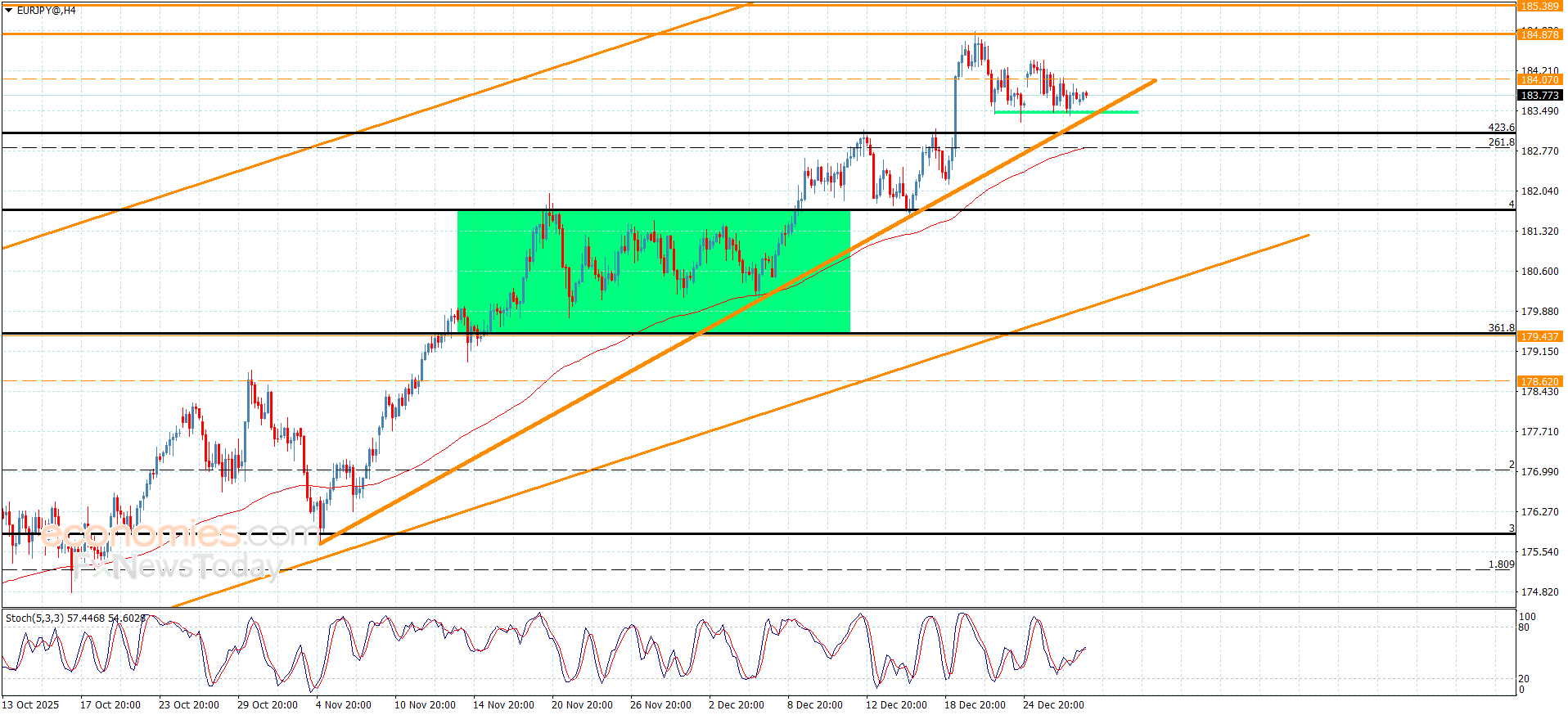
EUR/JPY remains in a strong uptrend, but near-term caution is warranted with ECB and BOJ decisions ahead.
Central bank commentary is key, while structural Japanese constraints continue to favor carry trades against the yen.
The euro has risen quite nicely against the Japanese yen in what would be a continuation of a very strong trend anyway. But one thing that I am worried about is the fact that we have both of these central banks in the next 36 hours or so coming out with interest rate decisions. While the interest rate decisions themselves probably don’t make the headlines, what will make the headlines will be the comments coming out of central bank governors, especially during the press conference.
So, with that being said, even though this is obviously a very bullish market, and I do want to be a buyer, not a seller, the reality is you have to be very cautious over the next couple of days. With that, I’ve noticed a pattern here of about every 200 pips, there is support and resistance. So, if I get a little bit of a pullback here, perhaps down to the 180 yen level, I’ll become very interested. Once we get through both the European Central Bank and the Bank of Japan, then things will be quite a bit clearer.
Why the Carry Trade Still Favors EUR/JPY
Nonetheless, I know what I’m not going to do here. And what I’m not going to do is buy the Japanese yen. I will be buying the euro against the Japanese yen. And I do think that the carry trade continues because no matter what Japan does, they have massive debt problems, where if they raise the rates too much, that causes a real issue. The last 25 years or so of ultra-loose monetary policy have done a real number on the Japanese situation. A collapsing demographic and a high debt level mean they can’t afford higher interest rates for very long.
I think the market knows this, and that’s exactly what it’s sniffing out here. I don’t even necessarily think that the euro is the best currency to trade against the yen. I just think it’s one of many that you can buy in place of it.
Christopher Lewis has been trading Forex and has over 20 years experience in financial markets. Chris has been a regular contributor to Daily Forex since the early days of the site. He writes about Forex for several online publications, including FX Empire, Investing.com, and his own site, aptly named The Trader Guy. Chris favours technical analysis methods to identify his trades and likes to trade equity indices and commodities as well as Forex. He favours a longer-term trading style, and his trades often last for days or weeks.
Finding supplements that feel truly clean and effective can take time. Many that I have come across in the past, rely on synthetic isolates or heavy marketing that promises big changes but rarely delivers in everyday life, or at least none that I have noticed, personally.
Over the years, I’ve tested plenty of wellness supplements, keeping only the ones that integrate easily and actually move the needle on how I feel; Fatty15 (review here), AG1 (review here), Momentous, and now Pure Synergy.
Pure Synergy stands out for its commitment to whole-food sourcing and organic ingredients. The brand combines potent plants, fruits, and herbs in ways that preserve natural synergy, avoiding artificial additives or fillers entirely.
Everything is USDA organic where possible, non-GMO, vegan, and made in a certified facility focused on purity.
I’ve been testing seven of their products over recent months: Organic Beet Juice Powder, Super B-Complex, Berry Power, Pure Radiance C Powder, Eye Protector, zinc complex, and Cell Protector.
A few have become daily essentials; others provide reliable support when needed. Overall, these Pure Synergy supplements have earned real trustfrom me, for their thoughtful formulation and quality.
Cold-juiced from certified organic beets grown near Germany’s Black Forest and gently dried to concentrate nutrients, one scoop dissolves into a vibrant, naturally sweet drink with no added anything.
This beet Juice powder taste so delicious that I had to actively search around to see if any kind of sweetner had been added, but no, it’s just pure beets!
After consistent use before cardio sessions, longer efforts have been feeling smoother, with less early fatigue and quicker recovery afterward. I feel like my aerobic capacity is greater.
The natural nitrates supporting blood flow and oxygen delivery seem to translate directly to steadier performance, especially helpful on colder days when everything feels tighter.
This 100% natural vitamin C comes from organic camu camu berries (one of the world’s richest sources), acerola cherries, amla, dragon fruit, baobab, and an antioxidant-rich berry blend including blueberry and rose hips.
After about 30 days of half a teaspoon scoop daily mixed into water, my skin looks noticeably clearer, smoother, and more even, with reduced winter dryness.
It’s gentle on the stomach too, unlike some synthetic forms.
It combines over 20 organic extracts, including broccoli sprouts rich in glucosinolates and myrosinase for DNA protection, turmeric, milk thistle for liver support, schizandra, and detoxifying plants like cilantro and dandelion.
The formula promotes glutathione regeneration, cellular renewal, and resilience against environmental stressors.
I take it most days, especially during busier training or travel periods, and feel more steady overall.
I also take Fatty15 daily which is another form of protecting my cellular health with the fatty acid called C15:0.
With lutein and zeaxanthin from marigold flowers, astaxanthin from algae, crocins from saffron, lycopene, anthocyanins from bilberry and black currant, and protective enzymes like superoxide dismutase, it targets comprehensive vision health.
On heavy screen days or long drives, it reduces that strained feeling by evening without any adjustment period.
The reliable supporting options in my testing
Super B-Complex and Berry Power fill gaps well when needed.
The Super B-Complex delivers all eight essential B vitamins in fermented, whole-food forms with cofactors for better absorption, supporting energy, nervous system balance, and stress response.
It provides a clean lift without jitters on lower-energy weeks.
Berry Power concentrates 20 organic superfruits like acai, maqui, wild blueberry, elderberry, and pomegranate into a tart-sweet powder rich in antioxidants and natural vitamin C.
It boosts immunity and cellular support nicely, though I use it less regularly since fresh berries are often available in our household. I tend to use this one most as an addition to fruit smoothies to reduce inflammation and oxidants.
What sets Pure Synergy apart
The brand’s whole-food philosophy means nutrients come with their natural co-factors for better synergy and absorption.
Ingredients are sourced thoughtfully, often from small organic farms or native regions, harvested at peak, and processed gently to preserve potency. Third-party testing for contaminants and active compounds adds reassurance.
Packaging is simple and sustainable, and the lack of fillers or artificial flavors makes me super happy.
Pricing and where to buy
Pure Synergy supplements are readily available at their Amazon store, where the products I tested typically range from $36 to $44 for a month’s supply (or equivalent sizing, like 60 capsules or a 5–6 oz powder).
Many are Prime-eligible for fast, free shipping, and some offer Subscribe & Save for extra discounts, making it convenient and often the best deal.
Pure Synergy supplements have earned real loyalty from me. The beet juice powder for smoother cardio, Pure Radiance C for clearer skin, and the protector formulas for daily resilience stand out most.
They complement a whole-food diet perfectly without feeling forced, and I have found the powders mix very well with water, taste great and help me get more water in my diet.
If you’re seeking clean, thoughtful nutrition rooted in organic quality, these deserve a try
Which Pure Synergy product intrigues you most, or have you tried any already? Share your experience in the comments, I’d love to hear all about it.