The latest Solana price prediction has sparked widespread attention after analysts suggested SOL could either stabilize above $150 or correct sharply toward $104 in the coming weeks.
Market volatility remains high, but many investors are now diversifying into projects with stronger real-world use cases. One of them is Remittix (RTX) https://remittix.io, a PayFi solution that bridges crypto with traditional banking systems.
Remittix has already raised over $28 million in private funding, positioning itself as a “perfect hedge” against market swings in major tokens like Solana.
Solana Price Prediction: Key Levels To Watch
Solana is selling at $158.52 following a significant gain of about 4.04% in the last 24 hours, with a market capitalization of about $88.93 billion, with trading volume rising 15.25% to $6.33 billion.
If Solana continues to have momentum above $150, then a retest at $175 might be likely. However, if there is increased selling pressure, the Solana price prediction models indicate a potential decline towards $104, a level that has acted as long-term support in the past.
The token continues to have significant relevance in both DeFi and NFT ecosystems, but faces increasing competition from low-gas-fee crypto alternatives that might cap upside in the near future.
Why Investors Are Turning Toward Remittix
In contrast to Solana’s volatile short-term outlook, Remittix (RTX) https://remittix.io has emerged as a steady growth story built around real-world functionality. Priced at $0.1166 per token, Remittix allows users to send crypto directly to traditional bank accounts in over 30 countries, giving it significant real-world utility.
The project has sold over 684 million tokens to date, a figure supported by strong investor confidence and growing community involvement. The Remittix team has been verified by CertiK, earning the #1 ranking for pre-launch tokens on CertiK Skynet. Its Wallet Beta Testing Program is now open to more iOS users, allowing hands-on testing of payment features.
The platform has also launched a $250,000 giveaway to reward its growing community and reintroduced a 50% bonus reward as it nears the $30M funding milestone.
Why Remittix Is Gaining Ground
● Verified and ranked #1 by CertiK
● Over $28M raised from private funding
● Global reach: direct crypto-to-bank payments in 30+ countries
● Wallet Beta Testing is expanding across iOS
● $250,000 community giveaway is currently live
Hedge Against Market Volatility
According to analysts, a combination of high-growth tokens like Solana with practical utility projects such as Remittix https://remittix.io would effectively balance the strategy in 2025.
Developers and institutions continue to be drawn towards Solana, but its price fluctuates wildly at times. Remittix, through its PayFi infrastructure, allows exposure to a crypto with real-world use and less speculative risk.
As investors evaluate the Solana price prediction heading into 2025, many now see Remittix as the perfect hedge, a project blending real utility, strong funding, and verified security to withstand market uncertainty.
Discover the future of PayFi with Remittix by checking out their project here:
Disclaimer: This article is for informational purposes only and does not constitute financial advice. Cryptocurrency investments carry risk, including total loss of capital. Readers should conduct independent research and consult licensed advisors before making any financial decisions.
Crypto Press Release Distribution by https://btcpresswire.com
2025 price forecast: The average year-end prediction for Ether is $5,034.
Peak and trough predictions: The rest of 2025 could be rocky, with the average high prediction for ETH being $5,572, while the average low point is forecast at just $3,516.
Long-term projections: The panel sees ETH reaching new heights and being worth $10,980 by 2030 and $19,017 by 2035.
Time to buy ETH: Around two-fifths of our panel (42%) say ETH is a buy right now.
ETH is underpriced: Over half of the panel (53%) sees Ether as underpriced.
Disclaimer: This information should not be interpreted as an endorsement of cryptocurrency or any specific
provider, service or offering. It is not a recommendation to trade.
Finder analyses expert price predictions each quarter. We surveyed 19 crypto industry specialists in October 2025 to get their thoughts on how Ether (ETH) will perform through 2035.
All prices mentioned in this report are denominated in US dollars.
On average, our panel thinks Ether will be worth $5,034 by the end of 2025 before rising to $10,980 by year-end 2030 and then $19,017 by 2035.
Ether (ETH) price predictions for 2025, 2030 and 2035
ETH’s price is expected to rise to $5,034 by year-end 2025, according to the average prediction from Finder’s panellists. This prediction is a little more bullish than their end-of-2025 prediction of $4,308 in the July 2025 report.
The panellists also predict ETH will hit $10,980 by 2030 and $19,017 by 2035. The panel is slightly more bullish than their average predictions from our July 2025 survey over the next five years, when they projected ETH to reach $10,882 by 2030, but has a more tepid view for ETH’s price by 2035 ($22,374).
Johnny Gabriele, founder of Daedalus, is one of our more bullish panel members, predicting ETH to hit $8,000 in 2025 on the back of “momentum, increased interest, institutional adoption.”
Mitesh Shah, the founder and CEO of Omnia Markets, is also bullish on ETH’s price in 2025, saying it’ll end the year at $7,450.
My forecast for Ethereum is based on its position at a pivotal moment of technological maturation and accelerating institutional integration. The rationale is built upon three core pillars: the Pectra upgrade’s role as an institutional catalyst, Ethereum’s entrenched dominance in high-value ecosystems and its successful execution of a modular scaling strategy.
Sathvik Vishwanath, the CEO of Unocoin Technologies, is also on the high side of the panel at $7,000 based on “Ethereum’s technical upgrades (layer-2 scaling, Pectra, rollups), growing institutional interest, DeFi expansion and macroeconomic trends.”
At the other end of the spectrum is John Murillo, the chief business officer of B2BROKER, whose prediction is the lowest of the panel at $2,700 and “is grounded in a sober assessment of Ethereum’s evolving role in the digital asset ecosystem.”
While Ethereum remains the foundational layer for decentralised finance and smart contracts, its long-term price trajectory is shaped less by hype and more by structural realities. That said, Ethereum’s roadmap — particularly upgrades like Pectra, advancements in account abstraction and ongoing rollup-centric scaling — is likely set to boost usability and network efficiency. These technical milestones are likely to support moderate price increases, but we shouldn’t expect any explosive growth.
How high and low will Ether (ETH) go in 2025?
Our panellists predict that ETH’s average peak price in 2025 will be $5,572, with some predicting it will climb as high as $9,999.
Over two-fifths (44%) of our panellists feel that ETH’s price will be in the $4,000 to $4,999 range at its highest before the close of 2025, while a fifth (22%) either say ETH’s price will pop at a range of either $5,000 to $5,999 or $7,000 to $7,999.
Nicole DeCicco, the CEO of CryptoConsultz, provides a max prediction of $7,500 in 2025 for ETH for its role in real-world asset tokenisation.
Ethereum is no longer just a platform for experimentation. It’s become essential infrastructure for the tokenisation of real-world assets, stablecoins and DeFi, all sectors that are seeing renewed institutional interest. Ethereum’s upside is capped in the short term by macro uncertainty and potential competition, but its growing treasury, ecosystem maturity and centrality to tokenised finance keep the long-term view strong.
Josh Fraser, cofounder of Origin Protocol, sees ETH hitting $6,600, as it has more growth runway than BTC.
Ethereum’s value is still underpriced relative to its fundamentals — unlike Bitcoin, it captures both monetary premium and real economic activity across DeFi, stablecoins and staking. With scaling and restaking driving new demand, ETH has more growth runway than BTC, and at a Bitcoin-level market cap, ETH would trade above $50,000.
Low-end predictions
The lowest price our panellists predict that ETH will hit in 2025 is $3,516 on average, with some individual panellists forecasting it will fall as low as $1,482.
The majority of the panel (83%) think ETH’s price bottom for the remainder of the year is somewhere between $3,000 and $3,999 in 2025.
Shubham Munde, senior research analyst at the Market Research Future, provides the highest bottom prediction for ETH for the remainder of 2025 at $4,200:
ETH is expected to grow due to wider adoption of DeFi and smart contracts, ongoing network upgrades improving scalability and increasing institutional investment.
While John Hawkins, Head of the Canberra School of Government at the University of Canberra, predicts ETH will bottom out at $3,500 (in line with the average low prediction). He says ETH remains a speculative bubble and predicts ETH could drop to $3,500 before the year is out.
Like bitcoin, whose price movements it tends to mirror, Ether has failed to become a significant payment instrument and failed to become a reliable store of value. It remains a speculative bubble, and while I have no idea when it will burst, its lack of any underlying value means price falls are more likely than rises.
Kadan Stadelmann, CTO of Komodo Platform, says ETH’s price bottom sits around $2,000 as ETH is still an altcoin.
Despite the progress and growth the market has seen in the last few years, Ether is still an altcoin that largely follows bitcoin. Exchange-traded fund (ETF) news and institutional interest in Ethereum will continue to drive market activity up as we enter the final phase of this bull run.
Is now the time to buy, hold or sell Ether (ETH)?
ETH is trading above the lows of April 2025, which is probably why only 42% of the panel say it’s time to buy ether, with 32% saying it’s a hold and 26% believing it’s a good time to sell.
Ben Ritchie, managing director of Alpha Node Global, says ETH is a buy off the back of strong staking demand.
Ethereum’s outlook reflects its role as a yield-bearing asset and leading smart contract platform. A 2025 target of $6,000 is supported by ETF inflows, strong staking demand and low net issuance from fee burns. With 29% of supply staked and growing institutional use in tokenisation and regulated DeFi, supply remains tight.
Joseph Raczynski, a futurist at JT Consulting & Media, says ETH is a hold as “It’s all about the institutions. In my meetings, nearly every institution is testing or about to use Ether.”
Daniel Keller, the CEO of InFlux Technologies, is also in the hold camp saying:
Ethereum’s price hasn’t fluctuated beyond a range of a few hundred dollars up or down in recent months as investors fear rising inflation and can’t afford Ethereum gas fees. Ethereum’s price is staggered, hence why my predictions aren’t massive leaps in gains or significant drops.
Alexander Kuptsikevich, chief market analyst at FxPro, says ETH is a sell as it’s not a great time to be investing in the token.
Ethereum is a risky bet that suffers in times of deleverage and back-to-the-basics, which is around the corner.
Is Ether (ETH) overpriced, underpriced or priced fairly?
A little over half the panel (53%) say that Ether is currently underpriced, with the remaining panel members either saying it’s fairly priced (26%) or overpriced (21%).
Ruadhan O, the founder of Seasonal Tokens, says that ETH’s price is undervalued and will continue to benefit from BTC’s bull run.
Ether will benefit if the bitcoin bull run continues due to price correlation, while the regulatory clarity regarding stablecoins and greater institutional adoption will probably bring money into the Ethereum ecosystem and support the ETH price independently of the broader crypto market.
Ruslan Lienkha, the chief of markets at YouHodler, says that ETH is fairly priced as we’re nearing the end of the bull cycle:
I don’t expect any major changes from regulators, new technologies or adoption trends by the end of this year. At the same time, I believe we are approaching the end of the bullish phase in the broader markets. As a result, concerns about further growth potential are likely to increase in the coming months, and we may see rising macroeconomic pressure across all markets, including crypto. This could hinder the continuation of the current growth trend.
Desmond Marshall, the managing director of Rouge International & Rouge Ventures, says that ETH is overpriced and suffers from market manipulation:
I’ve said many times that ETH is HEAVILY MANIPULATED by tech updates, which is NOT a favourable process. ETH is lucky that it remains 2nd on the list and that the Treasury and institutions will HAVE to use/buy it for diversification from the very get-go. But the continuous tech manipulation is a turnoff for many long-term investors. The reduced popularity of blockchain projects (in favour of AI projects) does not help ETH in such a way, which actually makes it more questionable: why the constant tech updates to it?
When asked what our panel sees as the most important factor for ETH’s price outlook through the end of 2025, the majority of the panel (63%) said ETH’s price will be most heavily impacted by institutional inflows (ETFs, treasuries, staking products).
Will ETH lose its dominance in 2025?
The majority of the panel (58%) don’t see it as likely that Ethereum will lose market share to competing Layer-1 blockchains in the next year, with 42% saying it is somewhat unlikely and 16% saying it’s very unlikely.
What is stopping ETH from going to $7,000
Weak institutional inflows (53%) are the number one factor cited by the panel stopping ETH from breaking through the $7,000 barrier.
Will ETH continue to be the crypto of choice for diversified treasury management?
Ethereum treasury holdings have surpassed $18 billion, and the overwhelming majority of the panel (83%) think ETH will continue to be the cryptocurrency of choice for diversified treasury management.
Meet the panel
Prediction
$4,800
Buy/sell/hold
Holdback_hand
ETH is expected to grow due to wider adoption of DeFi and smart contracts, ongoing network upgrades improving scalability and increasing institutional investment.
Prediction
$4,400
Buy/sell/hold
Buyshopping_basket
Ethereum will benefit if the bitcoin bull run continues due to price correlation, while the regulatory clarity regarding stablecoins and greater institutional adoption will probably bring money into the Ethereum ecosystem and support the ETH price independently of the broader crypto market.
Prediction
$7,450
Buy/sell/hold
Buyshopping_basket
My forecast for Ethereum is based on its position at a pivotal moment of technological maturation and accelerating institutional integration. The rationale is built upon three core pillars: the Pectra upgrade’s role as an institutional catalyst, Ethereum’s entrenched dominance in high-value ecosystems and its successful execution of a modular scaling strategy.
Prediction
$4,100
Buy/sell/hold
Sellsell
The week of October 13 made people aware (AGAIN!) that cryptos can drop significantly in a short period, but it also gives an indication of how strong a particular token can rebound. BTC showed this, but ETH did not. For long-term investors like us, we’ve seen this many times. Institutional investors are running up new products like ETFs and are FORCED to diversify into ETH. I’m sure if they had a choice, they would pour everything into BTC. But they couldn’t. I’ve said many times that ETH is HEAVILY MANIPULATED by tech updates, which is NOT a favourable process. ETH is lucky that it remains 2nd on the list and that the Treasury and institutions will HAVE to use/buy it for diversification from the very get-go. But the continuous tech manipulation is a turnoff for many long-term investors. The reduced popularity of blockchain projects (in favour of AI projects) does not help ETH in such a way, which actually makes it more questionable why the constant tech update to it.
Prediction
$6,000
Buy/sell/hold
Buyshopping_basket
Ethereum’s outlook reflects its role as a yield-bearing asset and leading smart contract platform. A 2025 target of $6,000 is supported by ETF inflows, strong staking demand and low net issuance from fee burns. With 29% of supply staked and growing institutional use in tokenisation and regulated DeFi, supply remains tight. By 2030, we see $12,000 as Ethereum anchors DeFi and scaling solutions, rising to $20,000 by 2035 as it evolves into a global settlement layer for finance.
Prediction
$4,000
Buy/sell/hold
Holdback_hand
I don’t expect any major changes from regulators, new technologies or adoption trends by the end of this year. At the same time, I believe we are approaching the end of the bullish phase in the broader markets. As a result, concerns about further growth potential are likely to increase in the coming months, and we may see rising macroeconomic pressure across all markets, including crypto. This could hinder the continuation of the current growth trend.
Prediction
$2,700
Buy/sell/hold
Sellsell
My Ethereum price forecast — $2,700 by the end of 2025, rising modestly to $3,500 by 2030 and $3,750 by 2035 — is grounded in a sober assessment of Ethereum’s evolving role in the digital asset ecosystem. While Ethereum remains the foundational layer for decentralised finance and smart contracts, its long-term price trajectory is shaped less by hype and more by structural realities. First, Ethereum is not a deflationary asset in practice. Despite the introduction of EIP-1559 and periodic token burns, issuance continues through staking rewards. The net supply may fluctuate, but it does not consistently contract. This undermines the ultrasound money narrative and places Ethereum in a different category than Bitcoin, whose capped supply creates a stronger scarcity premium. Second, Ethereum faces growing competition from Layer-2 (L2) ecosystems. Rollups like Arbitrum, Optimism and Base are siphoning off user activity, while alternative L2 tokens increasingly capture value that once accrued to ETH itself. As these ecosystems mature, they may dilute Ethereum’s fee revenue and reduce its dominance in transaction settlement. That said, Ethereum’s roadmap — particularly upgrades like Pectra, advancements in account abstraction and ongoing rollup-centric scaling — is likely set to boost usability and network efficiency. These technical milestones are likely to support moderate price increases, but we shouldn’t expect any explosive growth.
Ethereum is no longer just a platform for experimentation. It’s become essential infrastructure for the tokenisation of real-world assets, stablecoins and DeFi, all sectors that are seeing renewed institutional interest. At CryptoConsultz, we’re watching financial firms, fintechs and even traditional corporations quietly build on Ethereum or its Layer-2s. This isn’t speculative adoption; it’s strategic and long-term. The GENIUS Act, combined with global regulatory tailwinds, will likely bring more legitimacy to Ethereum’s role in compliant DeFi and stablecoin frameworks. Technical upgrades like Pectra and the continued expansion of rollups are also reducing prior bottlenecks. While other Layer-1s are gaining traction, Ethereum still benefits from the deepest liquidity, developer network and integration across financial products. My price outlook reflects a balance of realistic optimism. Ethereum’s upside is capped in the short term by macro uncertainty and potential competition, but its growing treasury, ecosystem maturity and centrality to tokenised finance keep the long-term view strong.
Prediction
$6,400
Buy/sell/hold
Buyshopping_basket
Ethereum’s value is still underpriced relative to its fundamentals—unlike Bitcoin, it captures both monetary premium and real economic activity across DeFi, stablecoins and staking. With scaling and restaking driving new demand, ETH has more growth runway than BTC, and at a Bitcoin-level market cap, ETH would trade above $50,000.
Prediction
$3,800
Buy/sell/hold
Holdback_hand
Ethereum’s price hasn’t fluctuated beyond a range of a few hundred dollars up or down in recent months as investors fear rising inflation and can’t afford Ethereum gas fees. Ethereum’s price is staggered, hence why my predictions aren’t massive leaps in gains or significant drops.
Prediction
$7,000
Buy/sell/hold
Holdback_hand
Predictions are based on Ethereum’s technical upgrades (layer-2 scaling, Pectra, rollups), growing institutional interest, DeFi expansion and macroeconomic trends. ETH’s current price reflects its fair value relative to adoption, utility in smart contracts and network effects, with upside potential tied to upcoming upgrades and wider DeFi integration.
Prediction
$4,500
Buy/sell/hold
Buyshopping_basket
Despite the progress and growth the market has seen in the last few years, Ether is still an altcoin that largely follows bitcoin. ETF news and institutional interest in Ethereum will continue to drive market activity up as we enter the final phase of this bull run.
Prediction
$3,500
Buy/sell/hold
Sellsell
Like bitcoin, whose price movements it tends to mirror, Ether has failed to become a significant payment instrument and failed to become a reliable store of value. It remains a speculative bubble, and while I have no idea when it will burst, its lack of any underlying value means price falls are more likely than rises.
Prediction
$3,000
Buy/sell/hold
Sellsell
Ethereum is a risky bet that suffers in times of deleverage and back-to-the-basics, which is around the corner.
Prediction
$5,500
Buy/sell/hold
Holdback_hand
Prediction
$5,300
Buy/sell/hold
Holdback_hand
It’s all about the institutions. In my meetings, nearly every institution is testing or about to use ether.
Prediction
N/A
Buy/sell/hold
Buyshopping_basket
Prediction
N/A
Buy/sell/hold
Prediction
N/A
Buy/sell/hold
Prediction
N/A
Buy/sell/hold
Thank you for your feedback!
Richard Laycock is Finder’s insights editor after spending the last five years writing and editing articles about insurance. His musings can be found across the web including on MoneyMag, Yahoo Finance and Travel Weekly. Richard studied Media at Macquarie University and The Missouri School of Journalism and has a Tier 1 Certification in General Advice for Life Insurance. See full bio
XAU/USD Near $3,978 as Gold’s Third-Strongest Rally in 50 Years Redefines Global Monetary Confidence
Gold (XAU/USD) remains the dominant asset in global markets, trading near $3,978 per ounce after setting an all-time high of $4,381.21 on October 20 2025. The metal’s surge from $1,617 in October 2022 marks a 170% gain in just three years, ranking as the third-strongest rally in half a century. While its magnitude trails the historic explosions of 643% (2001–2011) and 518% (1976–1980), the structure of today’s advance is fundamentally different. Rather than speculative fervor, this rally is anchored in structural demand from central banks, fiscal stress in the United States, and a shift in the balance of global reserve power. These forces suggest the current uptrend in XAU/USD is more resilient and durable than any speculative spike of the past.
Historical Perspective and Comparative Cycles
Between July 1976 and February 1980, gold soared from $134 to $692, delivering a 518% rise during an era defined by inflation above 13%, oil embargoes, and the collapse of Bretton Woods. The subsequent twenty-year correction drove the metal down 63% to $256 by 2001, but gold’s monetary role endured.
The next super-cycle began in February 2001 and peaked in September 2011, climbing from $256 to $1,902, a 643% increase. The dot-com collapse, the 9/11 attacks, and the Federal Reserve’s quantitative easing created a decade of fear that drove gold to new prominence. Even after falling 44% to $1,052 in 2015, its floor remained multiple times higher than in the prior century.
Today’s move from $1,617 to $4,381 since late 2022—though smaller in percentage terms—reflects an entirely different foundation: institutional accumulation, reserve diversification, and distrust of fiat credibility. It is a rally powered not by panic but by policy evolution.
Central Bank Accumulation Redefining XAU/USD
The structural engine of this bull market is relentless central-bank accumulation. Since 2022, official institutions have bought more than 1,000 metric tons annually, maintaining a fourth consecutive record year. The World Gold Council’s Q3 2025 data confirm 220 tons added in the quarter, up 28% from Q2 and 47% above the same period in 2024. Nations such as China, India, Turkey, Singapore, and Poland are reshaping reserve composition by reducing exposure to U.S. Treasuries.
Quarterly purchasing patterns illustrate this transformation: 2022 — 1,087 t, 2023 — 958 t, 2024 — ≈1,043 t, and 2025 — on pace for 1,080 t. Such persistence at record price levels underscores a strategic shift away from dollar reliance. The result is a structural floor in XAU/USD unseen in previous cycles.
Investment Demand and Behavioral Shift
Institutional and retail investment behavior in 2025 has diverged from historic norms. Instead of tapering as prices rose, investment demand accelerated. Physical and ETF holdings expanded to 220 tons in Q3 2025, while jewelry consumption fell 19% to 371 tons. Investors now view gold as systemic insurance against sovereign debt excess, not merely a hedge against inflation.
Institutional portfolios treat gold as protection against U.S. fiscal fragility and potential political interference with the Federal Reserve. Retail enthusiasm, particularly among high-net-worth investors in Europe and the Middle East, has intensified, with allocations exceeding 10% of assets. Physical premiums in Asia continue to widen, reflecting a tight global supply chain.
Regional Divergence Between Consumption and Investment
India’s market, historically the world’s largest consumer of physical gold, faces pronounced price sensitivity. With spot prices above $4,000, jewelry demand has weakened sharply, festival-season sales have diminished, and consumers are turning toward lighter ornaments and gold-plated substitutes.
China exhibits a contrasting pattern. Jewelry sales have softened, yet investment gold bars and coins are selling briskly, supported by the yuan’s depreciation and state narratives promoting gold as a defensive reserve. These dual dynamics—soft retail but strong institutional buying—define the present rally’s balance.
Technical Configuration of XAU/USD
Technically, XAU/USD trades within an orderly bullish structure. The 200-day moving average near $3,650 acts as structural support, while the upper resistance band lies between $4,400 and $4,500. Momentum oscillators remain stretched but not extreme, confirming controlled strength. Daily volatility averages 1.1%, far below the 4% swings typical of 1979, indicating that the rally is institutionally guided rather than speculative.
Support levels cluster at $3,800–$3,900, deeper demand zones around $3,600–$3,700, and potential breakout resistance near $4,800 if momentum resumes. This tight, disciplined structure mirrors the liquidity and algorithmic order of modern ETF trading, not the chaos of earlier booms.
Institutional Forecast Landscape
Forecasts for gold’s trajectory diverge widely among global banks. The bullish cohort, targeting $4,500–$6,000, anticipates persistent central-bank purchases above 1,000 tons yearly and continued fiscal deterioration in the United States. The moderate group, clustered around $3,800–$4,500, expects normalization of ETF flows and a gradual easing of U.S. rates through 2026. The conservative camp, projecting $3,200–$4,000, warns of potential demand destruction in Asia and speculative profit-taking.
Across these perspectives, consensus emerges around a structural support floor at $3,500, reflecting conviction that gold’s retracements will remain shallow unless monetary policy shifts sharply.
Macro Catalysts and Policy Undercurrents
The Trump administration’s $2 trillion fiscal stimulus and renewed tariff policy are inflating expectations for sustained deficit spending. Annual U.S. interest payments exceeding $1 trillion—now larger than the defense budget—highlight systemic debt fragility. Simultaneously, fears over political interference in Federal Reserve operations are reviving long-dormant credibility concerns.
Foreign holdings of U.S. Treasuries have dropped to a twelve-year low as central banks pivot toward bullion. In parallel, BRICS nations advance alternative settlement systems using gold-linked instruments, a development that could redefine international liquidity flows and maintain elevated structural demand for XAU/USD well into the decade.
Comparative Performance Across Assets
Gold’s ~50% year-to-date gain represents its strongest annual performance since 1979, easily outperforming the S&P 500’s 18% and the NASDAQ’s 21% advances. Adjusted for inflation, equities deliver negative real returns, while gold preserves purchasing power. The correlation between XAU/USD and the U.S. Dollar Index has fallen to -0.78, emphasizing gold’s hedge role. Silver trades near $48.40, platinum around $1,391, and palladium at $1,193, leaving gold the undisputed leader among precious metals in 2025.
Potential Reversal Drivers and Structural Risks
Two risks could interrupt the uptrend. A decisive Federal Reserve pivot to hawkishness could lift real yields and strengthen the dollar, pressuring gold. Additionally, Asian jewelry demand erosion could deepen if prices remain above $4,000. ETF liquidations during equity corrections might create short-term volatility, though such dips are typically absorbed by central-bank buying. Historical analogues show that drawdowns in similar phases averaged -13% before trend resumption, underscoring resilience rather than reversal.
Strategic Investment Positioning
Conservative portfolios may maintain 5–10% exposure through physical or low-cost ETFs. Aggressive investors can pursue leveraged strategies in miners or derivatives, targeting the $4,800–$5,000 band over the next twelve months. Accumulation zones remain between $3,800–$3,850, with profit-taking advised above $4,400–$4,500. Monitoring real yields, Treasury spreads, and dollar strength remains critical for timing re-entries.
Structural Evolution and Monetary Transition
This rally is not a speculative anomaly but part of a global monetary re-architecture. Central banks are re-monetizing gold as neutral collateral in an era of fragmented geopolitics and escalating fiscal imbalance. Mine production growth of only 1.2% year-over-year fails to meet this new structural demand. The era of surplus supply has ended, replaced by systemic scarcity reinforced by policy realignment.
Verdict on XAU/USD
All quantitative and structural indicators point to continued strength in XAU/USD. The asset retains firm support around $3,600–$3,700, with potential to challenge $4,500–$4,800 and possibly $5,000 during 2026 if fiscal and monetary instability persist.
This is not the speculative fever of 1980 nor the liquidity panic of 2008—it is a calculated, institution-driven reallocation of global capital. Based on fundamentals, technical resilience, and geopolitical currents, the stance on XAU/USD remains BUY (Medium-Term Bias – Bullish).
After trading to a new all-time high at $1,375, BNB price saw a major downside correction, following Bitcoin. There was a move below $1,250 and $1,120. However, the bulls remained active above the $1,000 pivot level and the 50-day simple moving average (blue).
A low was formed at $1,020, and the price is now moving higher. There was a move above $1,080 and $1,120. The price surpassed the 23.6% Fib retracement level of the downward move from the $1,375 swing high to the $1,020 low.
BNB is now trading well above the $1,000 pivot level and the 50-day simple moving average (blue). There is also a key bullish trend line in place with support at $1,030 on the daily chart. The last two daily candles show positive signs.
If BNB remains stable above $1,050, there could be a fresh increase. Immediate hurdle sits near the $1,160 level. A clear move and close above the $1,160 resistance could open the doors for a move toward $1,200 and the 50% Fib retracement level of the downward move from the $1,375 swing high to the $1,020 low.
The next major resistance could be near the $1,240 zone and a connecting bearish trend line on the same chart. If there is a close above the $1,240 resistance, the price might gain bullish momentum. In the stated case, the price might rally to $1,350 or even to a new all-time high above $1,375.
More Range Moves?
If BNB fails to clear $1,200 or $1,240, there could be another pullback. Immediate support is near $1,085. A downside break below the $1,085 level could spark bearish moves.
The first major support is now forming near the $1,020 low, the 50-day simple moving average (blue), and the highlighted bullish trend line. If the bulls fail to protect the $1,020 support, the price could drop to $900.
The next area of interest for the bulls could be $820. The main support is $730. A daily close below $730 could increase selling pressure. In the stated scenario, BNB price might dive and revisit the $600 support.
Overall, BNB price is showing signs of a fresh increase above $1,085. To continue higher, it must settle above $1,200 and $1,240. If not, the bears could attempt a downside break below $1,020.
Real world applications could drive XRP’s price higher during the next market cycle.
Ripple(XRP+2.74%) was one of the earliest adopters of the blockchain idea outlined in the Bitcoin(BTC+2.24%)whitepaper. But instead of just building a digital currency, the founders sought to use the technology to support faster and cheaper cross-border transactions.
Unfortunately, Ripple faced some major headwinds since its founding, which kept the value of its cryptocurrency, XRP, from keeping up with the soaring prices of Bitcoin. But it got a major boost over the past year with a friendly administration and a positive court ruling. That has sent the price of XRP up roughly 340% since last year’s election (as of this writing).
But there are several reasons to think XRP will continue to climb through the end of the decade, and it could surge in price during the next market cycle (which occurs about every four years).
Image source: Getty Images.
Ripple’s big overhang has been lifted
Ripple has been battling a lawsuit brought by the SEC since late 2020, when it was accused of selling XRP as an unregistered security. Ultimately, the courts determined that only sales of XRP to institutional investors violated the law and ordered Ripple to pay a $125 million fine and issued a permanent injunction against institutional XRP sales. While both sides filed appeals, they finally withdrew them in August of this year, ending a nearly 5-year overhang that weighed heavily on XRP.
On top of that, the current administration has been quite friendly toward cryptocurrency, providing new laws and regulations that should support its adoption. Congress passed the GENIUS Act, providing a regulatory framework for stablecoins. It also repealed laws barring commercial banks from developing digital asset custody services.
The current SEC is also much friendlier toward crypto. Chairman Paul Atkins wants to develop clear guidelines that determine whether a crypto asset is a security (preventing another years-long case like Ripple’s). He also wants to provide a framework for using blockchain technology in financial markets, which could be very beneficial for Ripple and XRP.
The path is clear for institutional adoption
Ripple cannot sell XRP directly to institutions, but institutional investors can still buy the cryptocurrency on the open market. And it’s about to get a lot easier. Another friendly SEC policy has been the approval of new exchange-traded funds that track the spot price of cryptocurrencies, including XRP.
The SEC is currently reviewing XRP ETF applications from seven institutions. The first group is expected to launch in mid-November.
Widely available XRP ETFs should fuel adoption among institutional investors looking for exposure to the crypto asset class. The XRP futures contracts launched by CME Group have seen significant trading volume since launching in May, suggesting the demand is there. While XRP doesn’t have the same supply-side forces as Bitcoin, the surge in demand should prop up the price of the cryptocurrency.
Today’s Change
(2.74%) $0.06
Current Price
$2.32
Key Data Points
Market Cap
$139B
Day’s Range
$2.25 – $2.32
52wk Range
$0.55 – $3.65
Volume
2.1B
Avg Vol
0
Gross Margin
0.00%
Dividend Yield
N/A
An asset with real world use cases
The thing that separates XRP from Bitcoin is that Ripple is building financial technology with real world use cases. Its RippleNet aims to take on the SWIFT network for international money transfers. A SWIFT transfer often involves multiple intermediaries for sending payments, which can cause the cost of the transaction to increase while slowing it down. RippleNet uses its own blockchain-based ledger to confirm transactions in seconds.
What’s more, RippleNet uses XRP as a bridge currency to convert one currency to another with a feature called On-Demand Liquidity. While a sender doesn’t need to hold XRP, there does need to be ample liquidity available from somewhere. If transaction volume on RippleNet increases, the market cap of XRP will necessarily grow to support it. Several financial institutions have already started testing using RippleNet, including Santander, PNC, and American Express.
Other use cases for the XRP ledger exist as well. Real-world asset tokenization, which allows people to easily move asset ownership on the blockchain, could be backed by XRP. Ripple’s RLUSD stablecoin transactions settle on the XRP ledger, requiring gas payments in XRP. Ripple is also seeing momentum in its efforts to bring more decentralized finance services to its blockchain.
Ultimately, however, XRP’s price is heavily dependent on the adoption and use of RippleNet and On-Demand Liquidity. Combined with growing adoption of XRP as an investment holding, which may not be held on chain (reducing liquidity), the price of XRP should climb considerably during the next market cycle now that the big regulatory overhang is out of the way and the government is actively pushing more blockchain and cryptocurrency adoption.
As a result, it’s not unreasonable to expect XRP to climb past $10 by 2029, near the height of the next cryptocurrency market cycle. Granted, that requires broad adoption by both financial institutions and investors, and that’s far from guaranteed. But it might be worth taking a chance on XRP, as one of a handful of cryptocurrencies with real traction in building practical blockchain technology. As always, keep your own risk tolerance in mind.
To stay healthy, it’s important to include a variety of vegetables in your diet. Dark leafy greens, including spinach, kale, and chard, are nutrient-dense options. Other great choices include cousins to kale, such as broccoli and cabbage. All of these veggies can be part of the Mediterranean diet, a diet with many health benefits.
Plateresca / Getty Images
Broccoli is a versatile vegetable that can be enjoyed raw or cooked in various ways, including stir-frying, roasting, or steaming. It packs in nutrients like vitamins A and C, which help boost immunity and protect your skin. It’s also a source of calcium, which protects bones, and vitamin K, which helps with blood-clotting.
One cup (76 grams) of raw broccoli provides:
Water: 68 g
Calories: 24
Protein: 2 g
Total fat: 0.25 g
Carbohydrates: 5 g
Fiber: 2 g
Vitamin C: 69 mg, or 77% of the DV
Vitamin K: 78 mcg, or 65% of the DV
Lilechka75 / Getty Images
One cup of raw baby spinach contains nearly 50% of the recommended daily amount of vitamin C. It’s also high in water and low in calories, making it ideal for weight management.
Spinach is rich in a wide range of vitamins, minerals, and antioxidant nutrients that boost your immunity and reduce inflammation, which help maintain brain and vision health, as well as overall heart protection.
A half cup (about 100 grams) of cooked baby spinach provides:
Water: 92.5 g
Calories: 27
Protein: 2.85 g
Total fat: 0.6 g
Carbohydrates: 2.4 g
Fiber: 1.6 g
Vitamin C: 27 mg, or 45% of the DV
Vitamin B6: 0.2 g, or 12% of the DV
Wavebreakmedia / Getty Images
Kale is a dark, sturdy leafy green that holds its own amongst your healthiest greens. It has nutrients that support health and immunity, including vitamin C, vitamin E, and antioxidants. Antioxidants are substances that lower inflammation and protect against cell damage and certain types of cancers.
One cup (20.6 grams) of raw kale provides:
Water: 18.5 g
Calories: 7
Protein: 0.6 grams (g)
Total fat: 0.3 g
Carbohydrates: 0.9 g
Fiber: 0.9 g
Vitamin C: 19 mg, or 21% of the DV
Achmad Wahyudi / Getty Images
Mustard greens are a nutritional powerhouse worth adding to your plate. With their bold, peppery flavor, they pair beautifully with naturally sweet root vegetables like sweet potatoes and beets. Mustard greens are low in calories but rich in nutrients, such as vitamins A and C, which can support your immune system and energy levels.
One cup (56 grams) of mustard greens provides:
Water: 50 g
Calories: 15
Protein: 1.6 g
Total fat: 0.24 g
Carbohydrates: 2.6 g
Fiber: 1.8 g
Vitamin C: 39 mg, or 43% of the DV
Vitamin A: 85 mcg, or 9% of the DV
BorisVasilenko / Getty Images
Arugula is an aromatic, slightly bitter leafy green. It may look more delicate with its small, uniquely shaped leaves. But it packs in a nutritional punch with nutrients that protect your bones, eyes, and lungs. These nutrients include vitamins A, C, and K. It is also a good source of folate, which benefits brain health.
Five cups (100 grams) of arugula provide:
Water: 90 g
Calories: 26
Protein: 1.7 g
Total fat: 0.32 g
Carbohydrates: 5 g
Fiber: 2 g
Vitamin C: 101 mg, or 112% of the DV
Folate: 149 mcg, or 37% of the DV
alvarez / Getty Images
Like other dark, leafy greens, chard is packed with nutrients that contain beneficial antioxidants and have anti-inflammatory effects. More specifically, Swiss chard’s health-promoting compounds support healthy blood sugars and protect your heart.
One cup (36 grams) of Swiss chard provides:
Water: 34 g
Calories: 7
Protein: 0.65 g
Total fat: 0.07 g
Carbohydrates: 1.4 g
Fiber: 0.6 g
Vitamin C: 11 mg, or 12% of the DV
Vitamin A: 110 mcg, or 12% of the DV
AtlasStudio / Getty Images
Cabbage has traditionally been used to relieve stomach discomfort and gastrointestinal (GI) conditions, such as irritable bowel syndrome (IBS). It’s rich in nutrients, includingantioxidants, protein, and vitamins C and E. Newer research suggests that cabbage’s unique nutrient profile may also help protect against certain cancers, liver conditions, and high cholesterol.
One and a quarter cup (100 grams) of raw cabbage provides:
Water: 92 g
Calories: 28
Protein: 1 g
Total fat: 0.2 g
Carbohydrates: 6 g
Fiber: — g
Vitamin C: 40 mg, or 44% of the DV
Vitamin K: 59 mcg, or 49% of the DV
Kinga Krzeminska / Getty Images
The leafy tops of beets can be prepared like other leafy greens—sautéed or added to soups or salads. Eating beet greens can reduce waste and add a nutritional boost to your meals. Beet greens are low in calories, high in water, and a good source of vitamin C and other antioxidant nutrients.
According to a 2024 study, research found that dehydrated beet greens contained as much as 30 grams of protein per 100 grams, which is more than the same amount of dehydrated spinach. These leaves were also found to be high in beneficial minerals the body needs, like potassium and iron.
One cup (38 grams) of beet greens provides:
Water: 35 g
Calories: 8
Protein: 0.8 grams (g)
Total fat: 0.049 g
Carbohydrates: 1.6 g
Fiber: 1.4 g
Vitamin C:11.4 mg, or 45% of the DV
To get the most out of your vegetables—in terms of flavor and nutrition—it’s best to choose and cook them wisely. Here are some practical tips to keep in mind:
Buy in season: In-season vegetables are fresher, more flavorful, and often more affordable since they don’t have to travel far.
Pick quality produce: Look for vibrant, uniform colors. They should be firm, but not rigid. Avoid ones that are wilted or with brown spots.
Fresh or frozen: Frozen vegetables are typically picked at peak ripeness and frozen within hours to preserve nutrients and taste.
Store them well: Keep fresh veggies in the crisper drawer in your refrigerator to help control moisture. Line them with paper towels or use perforated bags (with small holes to let it breathe) to help prevent excess moisture and spoilage.
Use healthier cooking methods: Try steaming, roasting, or lightly sautéing instead of frying to stay heart-healthy.
Let the natural flavors shine: Use minimal salt and seasoning to enhance—rather than overpower—the natural taste of your vegetables.
The newest wellness trend that has everyone—from your pilates instructor to your brother-in-law—obsessing? Creatine. The best creatine supplements, however, aren’t just for athletes, bodybuilders, or major fitness enthusiasts. “Anyone who exercises regularly, wants to support healthy aging, or is interested in cognitive performance can benefit from a creatine supplement,” says Abbie Smith-Ryan, PhD, who serves as a scientific advisor for Create Wellness and Alzchem.
Creatine is a naturally occurring compound found in your muscles and brain. “Your body makes it from amino acids from the food you eat like red meat, pork, seafood, and smaller amounts of dairy and eggs,” explains registered dietician and founder of Real Nutrition Amy Shapiro MS, RD. While it’s shown to boost strength, power, and endurance for exercise performance, it can also help aid in recovery, brain health, cognition, mood, and overall energy. “Creatine is foundational for energy production, supplying ATP in muscle and brain tissue, for daily activities, and during exercise,” says Smith-Ryan.
However, lifestyle, age, and diet can all determine your natural stores of creatine. “Anyone who strength trains regularly, women in perimenopause or menopause who want to support muscle maintenance and bone health, and people who eat mostly plant-based diets (since they naturally consume less creatine) are great candidates for a creatine supplement,” says nutritionist Mia Rigden, MS. “Supplementing with creatine helps increase your body’s baseline stores, allowing you to replenish energy more quickly.”
The benefits of creatine are many, and below, top dieticians and nutritionists weigh in on the best creatine supplements, what to look for, and how to incorporate them into your routine.
In This Story
Best Creatine Monohydrate Overall: Thorne Creatine Monohydrate Powder
Why We Love It: Clean, effective, and backed by clinical testing, both Rigden and Shapiro praise Thorne’s micronized creatine monohydrate powder, earning it the top spot on our list. “Thorne is my go-to because it’s a single-ingredient creatine monohydrate formula that carries the NSF Certified for Sport certification, which gives full confidence in quality, and offers stringent third-party testing,” says Shapiro. The finely-milled powder dissolves into liquid instantly, making it simple to add to your daily routine, and can help support muscle overall. “Creatine is one of the most effective supplements for strength, energy, muscle maintenance, and healthy aging, especially for women,” says nutritionist Mia Ridgen. “Muscle is a metabolically active organ and increasing healthy muscle mass is one of the best things you can do for your current and future health.”
Key Ingredients: Creatine monohydrate
Creatine Per Serving: 5 grams
Flavor: Strawberry
Dosage: One scoop (6.2 grams)
Best Tasting Creatine Monohydrate: Create Creatine Monohydrate Gummies
Create
Creatine Monohydrate Gummies
Why We Love It: When it comes to the best creatine supplement, Smith-Ryan says timing matters less than regularity. “The key to seeing results with any dosage of creatine is taking it consistently,” she says. These delicious bite-sized gummies come in six different flavors which makes choosing one to take daily easy and simple—no weird textures or clumpy powders. It also features a patented, clinically-tested form of creatine called Creapure. “Creapure creatine monohydrate is the gold standard and the most extensively studied form of a creatine supplement,” says Smith-Ryan. “Decades of research show it’s safe, effective, and easily absorbed.” Beyond the power-packed formula, the brand uses rigorous standards to ensure safety and efficacy. “I’m a big believer in simplicity and transparency and this creatine monohydrate is my go-to,” adds Smith-Ryan. “These gummies use pure Creapure® creatine monohydrate, are NSF certified, third-party tested, taste great, and support daily creatine intake on the go.”
Key Ingredients: Creatine monohydrate
Creatine Per Serving: 1.5 grams
Flavor: Sour cherry, sour green apple, sour peach, blue raspberry, orange, watermelon
Dosage: 3 gummies (1.5 grams per gummy)
Best Unflavored Creatine Monohydrate Supplement: ProMix Nutrition Creatine Monohydrate
Promix
Creatine Micronized Monohydrate
Why We Love It: Creatine can help supercharge your workout, as it helps aid muscle recovery and strength. “We naturally start to lose muscle mass after the age of 30 if we are not actively working to preserve or build it,” says Ridgen. “Creatine has been shown to increase strength and power, support lean muscle development, improve recovery, and potentially benefit cognitive function and mood (exciting research is in development).” Free of refined sugar, gluten, soy, GMOs, artificial sweeteners, and more, this unflavored creatine monohydrate is the best pre-workout with creatine because it’s unflavored, mixes easily into a protein drink or smoothie, and come in individual sachets with pre-measured, precise doses that can conveniently be stashed in your gym bag, purse, or work tote to be taken on the go for whenever you need a boost. “This creatine supplement is just one ingredient, creatine monohydrate, micronized for better absorption, and third-party tested,” says Shapiro.
Key Ingredients: Creatine monohydrate
Creatine Per Serving: 5 grams
Flavor: Unflavored
Dosage: 1 packet (5 grams)
Best Vegan Creatine Monohydrate Supplement: Momentous Creatine Monohydrate Powder
Momentous
Creatine Monohydrate Powder
Why We Love It: Another top choice of Rigden’s, this unflavored powder dissolves instantly into liquid, thanks to Creapure’s micronized creatine monohydrate formula. “Momentous is a reputable brand with strong testing standards,” says Ridgen. “This is a great, reliable option that uses creatine monohydrate.” It’s also vegan, which is perfect for those following plant-based diets. “A creatine supplement is especially valuable for vegetarians and vegans, who tend to have lower baseline creatine levels since dietary sources mainly come from meat and fish,” says Smith-Ryan. “Creatine helps fill that nutritional gap and supports both mental and physical energy.”
Key Ingredients: Creatine monohydrate
Creatine Per Serving: 1 gram
Flavor: Unflavored
Dosage: 1 scoop (5 grams)
Best Creatine Gummies: Arrae Tone Creatine Body Composition Gummies
Arrae
Tone Creatine Body Composition Gummies
Why We Love It: When it comes to the best creatine supplement for women, there actually isn’t a specific type of creatine that’s different or better for women versus men. “Creatine is creatine,” says Smith-Ryan. “However, since women tend to have lower amounts of muscle mass and may eat less dietary animal protein, they often have lower natural stores of creatine, which may enhance their effects when starting creatine supplementation.” Creatine can be helpful for women as it supports muscle maintenance and bone health. Vegan, non-GMO, and delicious, these creatine gummies are a fantastic way to ease into taking creatine supplements without having to worry about mixing powders.
“Creatine is a naturally occurring compound found in our bodies (in the liver, kidneys and pancreas),” says Shapiro. “We get small amounts from certain foods including red meat, pork, seafood and more. We primarily store creatine in our muscles and it helps regenerate energy during short bursts of high-intensity activity.” [These] supplements can help increase the amount of creatine stored in our muscles. “This can help improve performance, cellular hydration, and metabolism,” adds Shapiro.
What are the benefits of creatine?
The benefits of creatine are many and creatine supplementation has been studied scientifically for decades. “Evidence demonstrates an improvement in exercise performance—strength, power, and endurance—as well as increases in training volume, which supports improvements in muscle mass,” says Smith-Ryan. “More recently, creatine benefits have been shown in recovery, brain health, cognition, and mood, and overall energy.” Creatine is most effective when used in a routine of strength training and eating adequate protein. “These are the main pillars of building muscle,” says Rigden. “Think of creatine as a little extra boost if you’re already doing those things.”
What to Look for in a Creatine Supplement
Form: In terms of effectiveness, you’ll want to choose a creatine supplement formula that’s called creatine monohydrate. “Creatine monohydrate is the most researched and effective form,” says Rigden. “It is generally well-tolerated, widely available, and consistently shown to deliver results.”
Dosage: When it comes to dosages, there’s a few factors to consider. “The recommended dosage is three to five grams per day,” says Ridgen. You may have heard of a “loading phase” in which individuals take a large amount of creatine all at once to quickly build up their stores. “A loading phase is not necessary, but you should take it everyday (not just post-workout),” says Rigden. Shapiro echoes that statement, noting that some people report “stomach discomfort, bloating and diarrhea” if they choose to do a loading phase.
Creatine per Serving: Smith-Ryan, Ridgen, and Shapiro all agree: the optimal dose of creatine is 3–5 grams per day for overall benefits. “Newer research indicates that higher doses—8–20 grams daily—may enhance cognitive function, particularly in situations involving sleep deprivation or high mental stress,” adds Smith-Ryan.
Third-Party Testing: “Third‐party testing is a marker of trustworthiness,” says Shapiro. “It verifies that the product contains exactly what’s on the label.” Beyond getting your money’s worth, (who wants to pay for 5 grams of creatine only to get 2 grams?) testing can reduce risks. “Testing ensures the supplement is screened against potentially harmful contaminants like heavy metals, banned substances (important if the user is an athlete/competing), and other mislabeled ingredients,” adds Shapiro. “Having lab-verified brands means fewer unknowns and more confidence in quality.”
How much creatine should women take per day?
According to Smith-Ryan, there is no specific creatine for women. However, the one caveat is that, depending on lifestyle factors, women tend to have lower amounts of muscle mass and may eat less dietary animal protein which can mean they have lower natural stores of creatine. “Both men and women produce and use creatine in similar ways, so the recommended daily dose is the same: 3–5 grams per day,” she says. “If women are searching for the brain and cognitive benefits, they may need a higher daily dose—about 10 grams—per day.”
Should you take creatine supplements?
You can take creatine supplements based on your concerns, your goals, your health, and your lifestyle. “Generally speaking, anyone who is not expecting it to substitute for foundational healthy behaviors can benefit from creatine,” says Shapiro. Of course, it’s important to talk to your doctor before starting a new supplement. “For otherwise healthy adults, creatine is one of the safest and most effective supplements you can take—it’s supported by decades of research and real-world evidence,” says Smith-Ryan. “However, creatine is not a magic panacea, and thus may not be the first step for individuals with some chronic diseases such as kidney disease.”
When we test and review a product, we take a holistic approach to deliver well-rounded product recommendations. First, we lean on Vogue‘s vast network of experts—from board-certified dermatologists to celebrity estheticians—to gain professional acumen on the industry’s standout products, ones these specialists would actually use on their clients. We pair their expertise with our editorial best practices to curate the thoughtful edits you read on our site.
As it relates to creatine supplements, we selected the best based on the following characteristics: ingredients composition (i.e. the type of creatine featured), form, dosage, clinical studies, certifications, and the body and wellbeing concerns they address. To do this, we paired our own personal tests of each formula with expert guidance and reviewer insights to determine which we would recommend to you.
Amy Shapiro MS, RD, CND is a registered dietician, nutritionist and founder of Real Nutrition.
Mia Rigden, MS, CNS, is a Los Angeles-based nutritionist, chef, and author.
Dr. Abbie Smith-Ryan, MS, PhD is professor of Exercise Physiology and Nutrition in the Department of Exercise and Sport Science, and Co-Director of the Applied Physiology Laboratory, and Human Performance Center at the University of North Carolina Chapel Hill. She is also on the scientific advisory board for Create.
XRP price prediction is back in the spotlight after a sharp shakeout in 2025. A fast selloff dragged Bitcoin and leading altcoins lower, and XRP is now bouncing from support while fresh inflows hit centralized exchanges.
Many investors are asking not only where the next XRP Price Prediction lands, but also what the best crypto to buy now is. Research notes already hint that part of the answer may sit with a particular PayFi token, which turns bank-style payments into a live product. Find out more in this article.
XRP Price Prediction: Inflows Rise As Whales Crowd The Exits
On chain trackers show whales recently moved about 94 million XRP, worth more than $200 million, into major centralized exchanges. XRP trades around $2.30 after rebounding from support near $2.20, still below recent highs and boxed inside a $2.10 to $2.60 band. A loss of $2.20 while inflows stay heavy would make a slide toward $1.80 a real risk.
The latest drop has pushed many holders to search for high growth crypto ideas, and desks that publish regular XRP Price Prediction updates now report funds rotating from older meme names into upcoming crypto projects in the PayFi niche. These reports highlight tokens that send value directly into bank accounts and place Remittix on shortlists of top crypto under $1.
Remittix: The PayFi Altcoin Standing Beside XRP
Remittix is a PayFi-focused DeFi project on Ethereum that already lets users send crypto straight into bank accounts in over 30 countries with real-time FX conversion. While traders argue over the next XRP price prediction, early-stage crypto investment hunters are quietly locking in RTX at a fraction of the price of older payment coins.
They see it as a low gas fee crypto bridge between Web3 wallets and everyday finance. The team confirms that Remittix has raised over $28 million so far, with over 684 million RTX already held by more than 30,000 investors. The token currently sits near $0.1166, and supply at this level is thinning as demand builds ahead of wider exposure.
Once the current allocation sells through, late buyers are likely to face a higher line for entry. The project has been fully checked by security firm CertiK, and RTX holds the top slot on its leaderboard for pre launch tokens. The PayFi wallet beta is live with community testers, while listings on BitMart and LBank plus a third centralized exchange in progress, mean liquidity is forming.
Why RTX Is Stealing Attention From XRP
The wallet sends crypto into bank accounts in over 30 countries.
Support for over 40 cryptocurrencies and over 30 fiat currencies turns Remittix into a single payments hub.
Analysts already put RTX on upcoming crypto projects’ lists for its live PayFi rails.
CertiK verification, live beta usage, and incoming exchange liquidity give Remittix a clear edge today.
For investors who track every new XRP, the takeaway is simple. XRP still matters for global settlements, but the chance to secure a live PayFi network at a sub $1 price does not stay open forever, and ignoring RTX now could be costly.
Discover the future of PayFi with Remittix by checking out their project here:
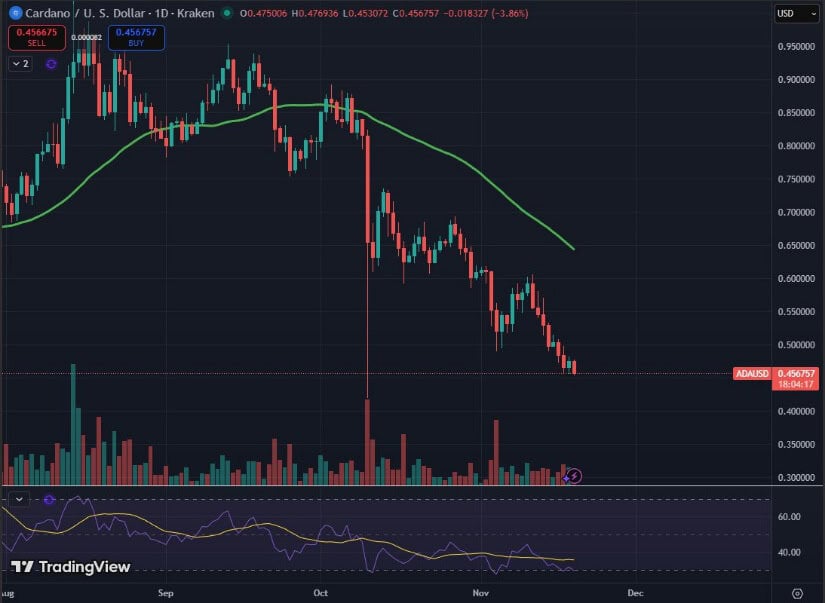
Cardano price is showing renewed strength as rising search trends and technical breakouts hint at a potential bullish reversal.
Cardano’s momentum is picking up again as participants and community members grow increasingly optimistic. After weeks of quiet consolidation, new interest across social platforms and Google trends suggests fresh energy is building behind ADA.
Rising Search Trends Signal Growing ADA Momentum
Interest around Cardano is picking up speed again, as TapTools highlights a surge in Google searches for phrases like “will Cardano go up” and “Cardano news now.” This growing curiosity often precedes periods of renewed volatility and upside activity, showing that retail sentiment is shifting towards optimism. The stronger the community narrative becomes, the more it reinforces confidence among long-term holders, often leading to increased inflows and liquidity around key support zones.
Cardano price sees a sharp rise in global search activity, signaling renewed retail interest and growing bullish sentiment across the community. Source: TapTools via X
Historically, such spikes in search volume have coincided with early phases of accumulation before broader rallies take shape. If momentum continues building across social channels and market sentiment remains positive.
Cardano Price Prediction: Technicals Confirm a Bullish Flip
Cardano price has just reclaimed one of its most crucial resistance levels at $0.58, a zone that has repeatedly rejected upward attempts in recent months. This breakout, as Alts King points out, represents a strong structural shift from distribution to accumulation.
Cardano’s breakout above $0.58 signals a major technical shift, with bulls eyeing $1.20 to $2.00 as the next key upside targets. Source: Alts King via X
With weekly momentum now turning upward, the next logical targets emerge around $1.20 and $2.00, aligning with key Fibonacci extensions from the previous cycle’s retracement. The chart also shows consistent volume expansion during this reclaim, suggesting active participation.
Retail Strength Returns as Accumulation Resumes
The latest update from Jack paints a constructive picture for ADA’s short-term outlook. While whales recently distributed around 4 million ADA, the data indicates that retail accumulation and rising taker buy dominance are offsetting that pressure. Cardano Price structure shows a potential recovery leg towards the $1 mark, with notable support levels forming at $0.51 and $0.44.
Retail accumulation strengthens as buying pressure builds, hinting at a potential recovery leg towards the $1 mark for ADA. Source: Jack via X
Momentum indicators are also aligning with this rebound scenario. RSI is trending upwards from oversold levels, and open interest is expanding alongside bullish funding rates. If Cardano price maintains its footing above $0.55, it could trigger a swift continuation towards the $0.85 to $1.00 range.
Bullish Continuation Builds at Multi-Year Support
ADA’s longer-term technical landscape remains favorable for the bulls. As Kamran Asghar highlights, the asset is currently back-testing a multi-year support zone between $0.38 and $0.44, a region that has repeatedly acted as a launchpad during past market cycles. The ongoing defense of this level strengthens the narrative that a new macro cycle could be forming beneath the surface.
Cardano continues to defend its multi-year support zone, hinting at the early stages of a new macro bullish cycle. Source: Kamran Asghar via X
Price compression within this range also mirrors historical bottoming patterns, where extended consolidation preceded impulsive rallies. With resistance trendlines gradually flattening and weekly candle closes tightening, any decisive breakout above $0.60 could confirm the start of ADA’s next bullish expansion phase, potentially setting the stage for a return towards $1.20+ in the coming quarters.
Final Thoughts
Cardano’s broader landscape continues to improve across both technical and social dimensions. Rising search interest, strengthening community engagement, and consistent support defense all point towards growing confidence. The combination of retail accumulation and expanding network fundamentals provides a strong foundation for a potential sustained recovery.
If Cardano price holds above the $0.50 to $0.55 region and confirms further momentum beyond $0.60, the probability of revisiting $0.85 to $1.20 in the near term increases sharply. From sentiment to structure, the setup is evolving in favor of the bulls, signaling that Cardano price prediction may finally be preparing for its next major breakout phase.
One of crypto’s top decentralized trading platforms is making a bet that the Trump administration’s friendlier stance toward digital assets has finally opened the door for sophisticated derivatives trading in the U.S.—and it’s willing to cut fees drastically to prove it.
DYdX, a San Francisco-based exchange that specializes in perpetual contracts and has processed over $1.5 trillion in total trading volume since launch, plans to enter the U.S. market by year-end with spot trading on Solana and other linked cryptocurrencies, President Eddie Zhangtold Reuters in an interview published on Oct. 30.
Don’t Miss:
The move marks a significant shift for the platform, which has historically been unavailable to American traders due to regulatory uncertainty around crypto derivatives. Unlike centralized exchanges like Coinbase Global Inc. (NASDAQ:COIN) and Kraken that act as intermediaries between buyers and sellers, decentralized platforms like dYdX aim to eliminate the middleman entirely, allowing users to transact directly on blockchain networks.
To sweeten its U.S. debut, dYdX plans to slash trading fees by as much as half across the board, bringing costs down to between 50 and 65 basis points, according to Zhang.
That aggressive pricing strategy signals just how badly major crypto platforms want access to American retail and institutional traders. The U.S. has long represented the holy grail for crypto exchanges—a massive pool of sophisticated investors who’ve been largely locked out of advanced trading products available to users in other jurisdictions.
“It’s very important for us as a platform to have something available in the United States, because I think it represents, hopefully, the direction we’re trying to move in,” Zhang told Reuters.
Perpetual contracts, the derivatives product that made dYdX famous, won’t be available in the U.S. initially. These instruments let traders speculate on asset prices without actually owning them and, unlike traditional futures, don’t have expiration dates.
But that could change. The Securities and Exchange Commission and the Commodity Futures Trading Commission indicated in a joint statement last month that they would consider allowing crypto perpetual contracts to trade across regulated platforms in the U.S.
Zhang told Reuters that dYdX is optimistic U.S. regulators will eventually provide guidance for decentralized platforms to offer those products.
DYdX’s move follows President Donald Trump’s embrace of the cryptocurrency sector this year, which has led to the dismissal of multiple lawsuits against prominent crypto platforms and a shift by financial regulators toward creating specialized rules to accommodate digital assets, Reuters reported.
That regulatory thaw has unleashed a wave of crypto companies either entering or expanding in the U.S. market. The question now is whether the infrastructure and regulatory framework can keep pace with the flood of new platforms seeking American users.
For dYdX, the stakes are enormous. The platform has built its reputation on offering sophisticated trading tools to experienced crypto traders globally. Successfully navigating U.S. regulations while maintaining that edge could position it as a major player in what remains the world’s largest and most liquid financial market.
Read Next: Missed Nvidia and Tesla? RAD Intel Could Be the Next AI Powerhouse — Just $0.81 a Share
Image: Shutterstock
UNLOCKED: 5 NEW TRADES EVERY WEEK. Click now to get top trade ideas daily, plus unlimited access to cutting-edge tools and strategies to gain an edge in the markets.