About Editorial team of BIPNs

Main team of content of bipns.com. Any type of content should be approved by us.
21 01, 2026

GBP/USD Forecast: Pound Sterling Advances as Dollar Falters on Tariff Threats

By |2026-01-21T02:47:05+02:00January 21, 2026|Forex News, News|0 Comments


– Written by

The Pound to US Dollar exchange rate (GBP/USD) pushed higher on Tuesday, touching a one-week peak amid escalating tariff concerns linked to Greenland and a mixed UK labour market report.

At the time of writing, GBP/USD was trading at $1.3450, up approximately 0.2% on the session, although it had slipped back slightly from earlier highs.

The US Dollar (USD) struggled to find support as renewed tariff warnings from President Donald Trump weighed on the American currency.

Trump signalled his intention to impose new trade levies on eight European countries opposing his proposed acquisition of Greenland, sharpening tensions between the US and several long-standing allies.

The prospect of a broader US-EU trade dispute unsettled markets, with investors increasingly uneasy about the potential drag on US growth and the risk that European governments could curb their holdings of US Treasuries.

These concerns lingered into the session as Trump doubled down on his position, brushing aside diplomatic criticism from European leaders and keeping the ‘Greenback’ under pressure.

Meanwhile, the Pound (GBP) advanced against the US Dollar as markets took a broadly constructive view of the UK’s latest labour market data, despite the figures offering a mixed picture.

Save on Your GBP/USD Transfer

Get better rates and lower fees on your next international money transfer.
Compare TorFX with top UK banks in seconds and see how much you could save.


Compare the Best GBP/USD Rates »

Employment rose by 82,000 in the three months to November, comfortably beating expectations for a 27,000 increase. However, the unemployment rate remained stuck at a multi-year high of 5.1%.

Wage growth continued to cool, although pay increases still outpaced inflation.

Taken together, the data proved sufficient to underpin Sterling on Tuesday, allowing the Pound to gain ground against a weaker US Dollar.

GBP/USD Outlook: UK Inflation Data in Focus

Looking ahead, attention is likely to turn to the UK’s forthcoming consumer price index release, which could shape near-term direction in the Pound to US Dollar exchange rate.

Markets expect headline inflation to have edged higher in December, rising from 3.2% to 3.3%, while core inflation is forecast to have held steady at 3.2%.

If inflation proves stubborn, traders may scale back expectations for a near-term Bank of England rate cut, potentially offering Sterling further support. Conversely, any downside surprise could revive dovish expectations and place the Pound under renewed pressure.

For the US Dollar, the data calendar remains light, leaving USD sentiment closely tied to political developments.

Continued focus on President Trump’s tariff threats and rhetoric surrounding Greenland may sustain a broader ‘sell-America’ tone, keeping the ‘Greenback’ on the defensive.

Like this piece? Please share with your friends and colleagues:


International Money Transfer? Ask our resident FX expert a money transfer question or try John’s new, free, no-obligation personal service! ,where he helps every step of the way,
ensuring you get the best exchange rates on your currency requirements.

TAGS: Pound Dollar Forecasts
Source link

20 01, 2026

The GBPJPY confirms the positivity– Forecast today – 20-1-2026

By |2026-01-20T22:53:38+02:00January 20, 2026|Forex News, News|0 Comments


No change for copper price attempts to activate the bearish corrective scenario due to the stability below the barrier at $5.9700 in the last trading, and stochastic exit from overbought level confirms facing intraday bearish pressures, keeping our expectations of targeting $5.6500 level reaching $5.5100 support.


While the price return to settle above the barrier and providing positive close will reinforce the chances of resuming the main bullish movement by its rally towards $6.1900 directly, to face the resistance of the bullish channel’s resistance, to monitor its behavior to detect the expected trend in the upcoming trading.


The expected trading range for today is between $5.7500 and $5.9500


Trend forecast: Bearish


Source link

20 01, 2026

Recovers After Selling Pressures (Video)

By |2026-01-20T22:46:30+02:00January 20, 2026|Forex News, News|0 Comments

The US dollar initially fell against the Japanese yen on Monday as traders ran to safety during Asian trading. However, cooler heads have prevailed.

The US dollar initially fell against the Japanese yen on Monday as everybody lost their minds about the latest comments coming out of Donald Trump and the European Union, suggesting that the trade deal between the US and the EU was over.

This had people running to safety. The US dollar sold off against multiple currencies around the world, and it does make a certain amount of sense that people ran to the Yen, but the reality is this is an ongoing game that we’ve been playing for months, and I think traders have realized that this is just more of the same. Nothing has actually changed. So what if there’s no trade agreement between the United States and the European Union? That was how we functioned for several months, and the world didn’t fall apart.

The Bank of Japan does have a meeting this week, and that’s something to pay attention to, but at the end of the day, the Japanese can only raise rates so high. Their bond market is already doing it for them, and it’s causing some pain. The Yen could very well find its way to the 160 level against the US dollar, maybe even higher than that. In fact, some pundits that I know are calling for something like 250 before this is all said and done.

Buyers Are Returning

Now that doesn’t mean it happens overnight, obviously it wouldn’t, but this little consolidation area that we had been in, we had broken out of, we pulled back to 158, and it looks like the buyers are returning.

Because of this, I like the idea of buying this pair. I think the 50-day EMA also confirms that there is support underneath. As far as this pair is concerned, you get paid at the end of every day, so you get to collect that interest rate differential and continue to ride the wave higher.

Want to trade our USD/JPY forex analysis and predictions? Here’s a list of forex brokers in Japan to check out.

Source link

20 01, 2026

Natural gas price keeps rising– Forecast today – 20-1-2026

By |2026-01-20T18:52:41+02:00January 20, 2026|Forex News, News|0 Comments


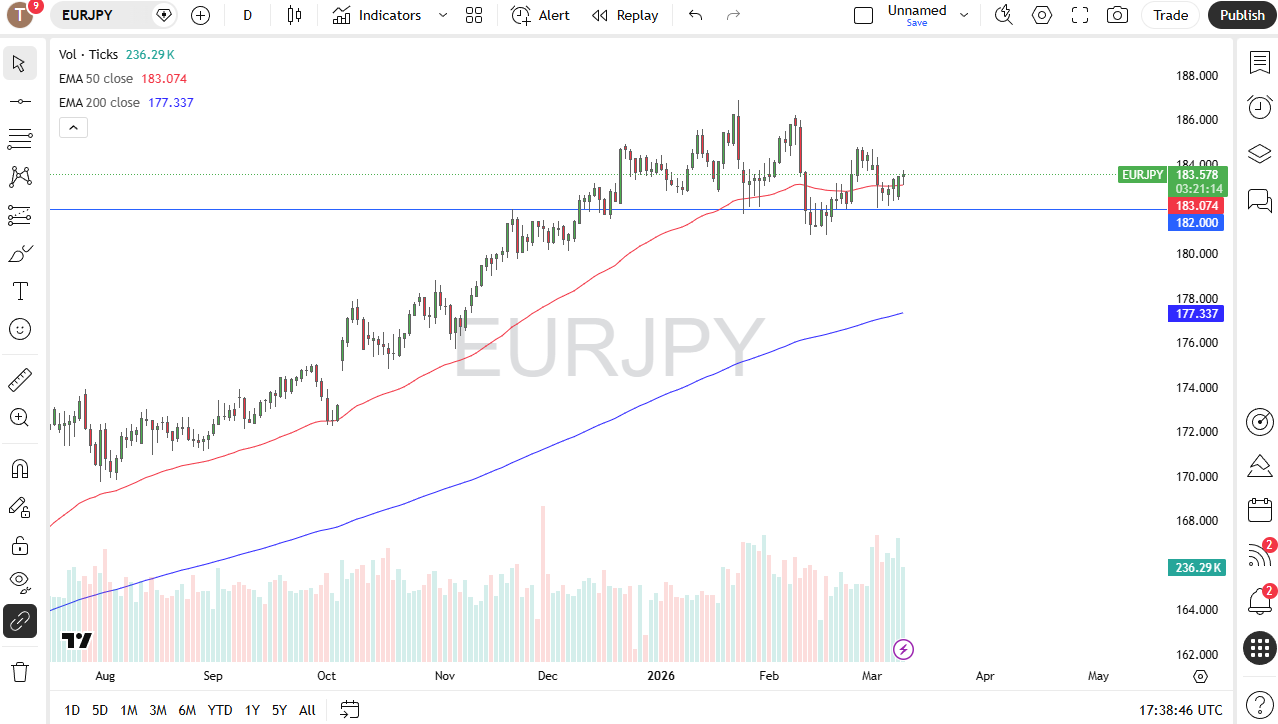
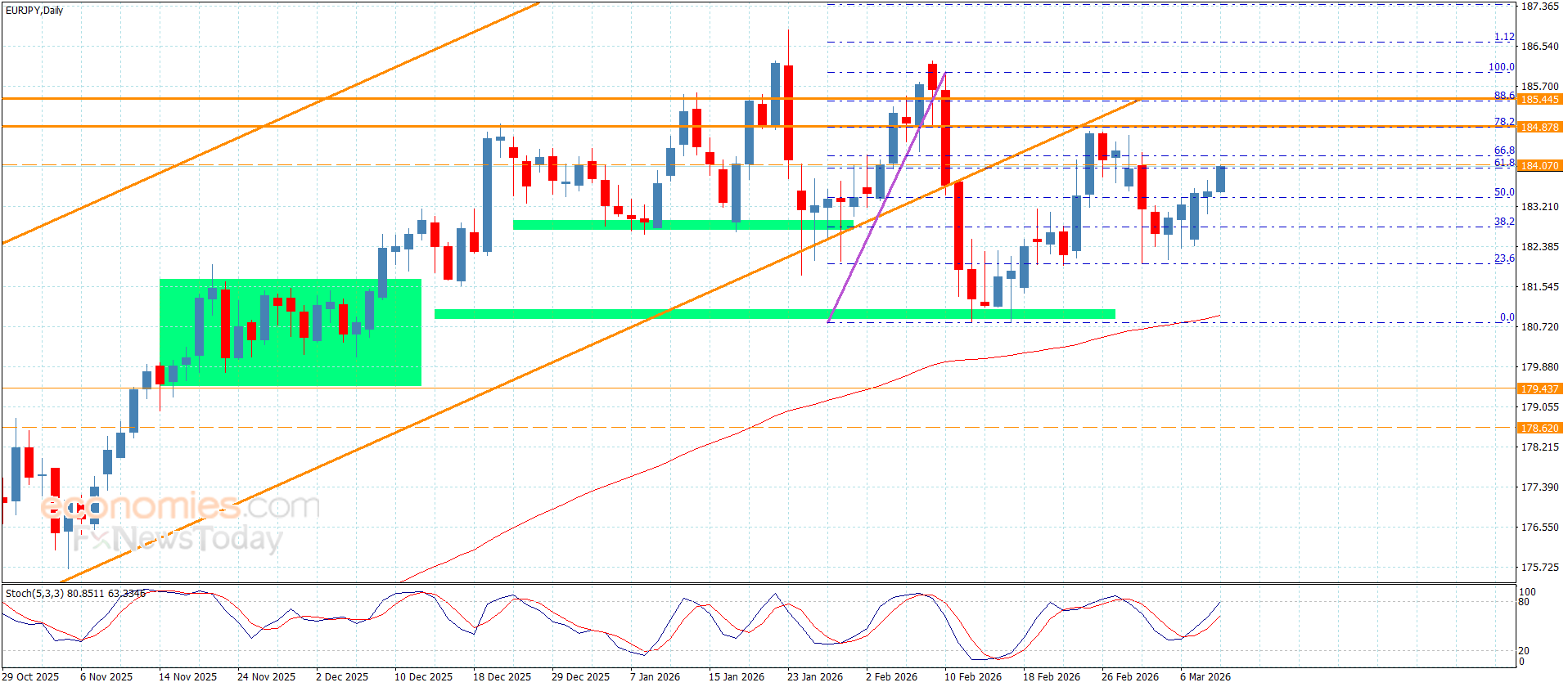
The EURJPY pair settled above the moving average 55, which forms extra support at 183.65 level, to notice its rally strongly to surpass the initial target at 184.10, announcing the continuation of the previously suggested bullish scenario.


The price might face difficulty in surpassing the barrier at 184.55 level, to expect forming intraday sideways trading, to wait for gathering positive momentum to ease the mission of resuming the rise and reaching towards 184.85 and 185.20.


The expected trading range for today is between 183.90 and 184.85


Trend forecast: Bullish


Source link

20 01, 2026

EUR/USD Analysis 20/01: Selling Pressure Mounts (Chart)

By |2026-01-20T18:45:50+02:00January 20, 2026|Forex News, News|0 Comments

EUR/USD Analysis Summary Today

  • Overall Trend: Bearish.
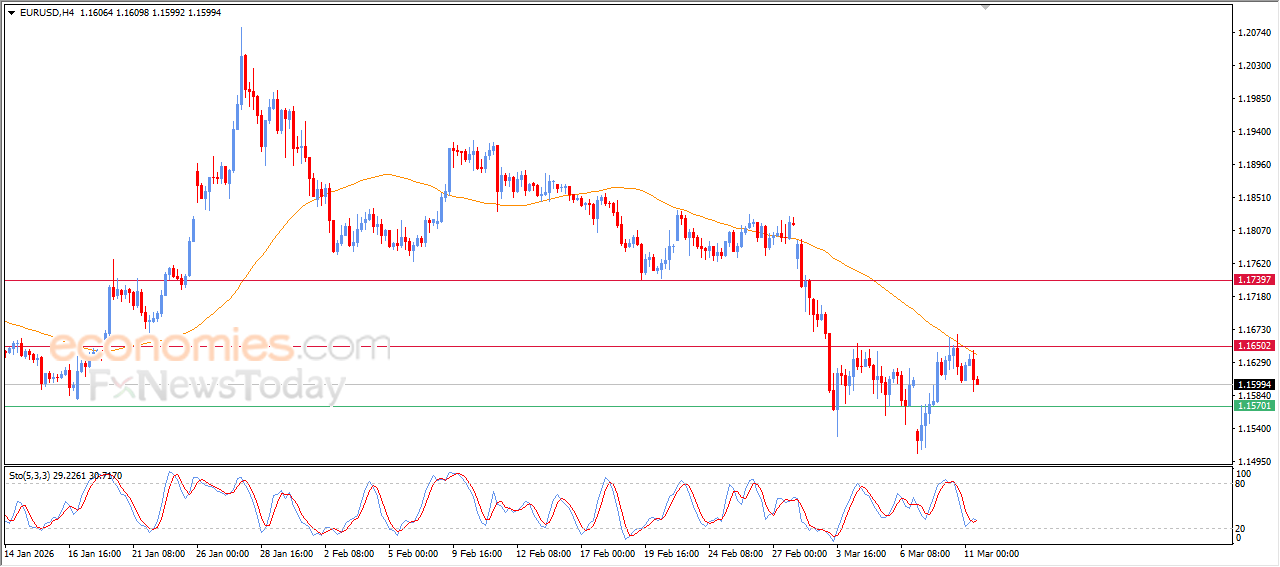
  • Support Levels for EUR/USD Today: 1.1580 – 1.1520 – 1.1440.
  • Resistance Levels for EUR/USD Today: 1.1680 – 1.1740 – 1.1800.

EUR/USD Trading Signals:

  • Buy EUR/USD from the support level of 1.1560 with a target of 1.1800 and a stop-loss at 1.1470.
  • Sell EUR/USD from the resistance level of 1.1730 with a target of 1.1500 and a stop-loss at 1.1800.

Technical Analysis of EUR/USD Today:

Concerns regarding Greenland have dominated Euro trading against other major currencies. This follows recent market anxiety over the future of U.S. Federal Reserve policies. According to performance data from trusted trading platforms, the EUR/USD price plummeted at the start of the trading week to the support level of 1.1576—the pair’s lowest level in nearly two months—before quickly rebounding to settle around the 1.1645 resistance level at the time of writing.

From a technical perspective, the EUR/USD bias remains bearish. It could quickly drop toward the psychological support level of 1.1500 in the coming days if fears of a persistent conflict between the U.S. and Europe intensify, especially following mutual threats of imposing tariffs. The 14-day RSI is reading around 45, supporting “bear” control, while the MACD signal lines remain steadily downward. Conversely, the psychological resistance at 1.1800 remains the key target to confirm a shift to a bullish trend.

For economic calender today, The euro’s price will be affected today by the release of the German Producer Price Index (PPI) at 9:00 AM Egypt time, followed by the Eurozone current account figures at 11:00 AM Egypt time. An hour later, the German ZEW index will be released. No major economic releases are expected from the US.

EUR/USD Exchange Rate and the Future of Fed Policies

The EUR/USD exchange rate has retreated from its recent highs, falling back toward 1.16 as investors grow cautious about the timing and scale of Fed interest rate cuts. While some banks still see room for the Euro to rise in the medium term, strong U.S. economic data and a strengthening Dollar have capped these gains for now. Increasingly, markets are focused on the Fed’s credibility and whether U.S. rates could remain high well into 2026.

EUR/USD Forecast for the Coming Days

In this regard, RBC Capital Markets expects the EUR/USD exchange rate to strengthen in 2026, but has lowered its year-end forecast to 1.20 from 1.24, now anticipating it will reach that level by the end of 2024. However, after a slight initial shift, ING still supports a rise to 1.22 by the end of 2026, driven by continued US interest rate hikes.

Overall, markets anticipate two US interest rate cuts by the Federal Reserve in 2026. Crédit Agricole expects the euro to depreciate further as the Fed resists further rate cuts: “We still expect interest rates to remain unchanged in January. After that, our current baseline forecast suggests the pause will extend throughout 2026, subject to the stability of the labor market in upcoming reports. Weaker-than-expected data would increase the risk of a shorter pause and/or greater monetary easing than we currently anticipate.”

Meanwhile, the independence of the US Federal Reserve will remain a pivotal issue for currency exchange rates.

Earlier this week, the Justice Department issued subpoenas against the Federal Reserve and its chairman, Jerome Powell, for alleged misconduct related to renovations at the Fed headquarters. Powell strongly rejected the move and defended the bank. MUFG commented on the development, stating, “The continued attacks on the Fed’s independence, in response to President Trump’s desire to lower interest rates, pose a downside risk to the US dollar and support our expectations of a decline.” The bank added, “However, this could backfire on President Trump if Fed officials maintain their stance and keep US interest rates unchanged, challenging the Fed’s continued independence in setting monetary policy.”

RBC Bank, for its part, still anticipates net losses for the dollar against the euro for three reasons: lower interest rates between the two countries, increased hedging against US assets, and a shift towards European assets and stronger growth in the Eurozone. RBC remains cautious about the potential for significant gains.

Trading advice:

We advise waiting for upcoming selling pressure on the EUR/USD. Obvioulsy, this will allow for “Buy” positions from the lowest possible prices. However, we strongly advise against over-leveraging or taking unnecessary risks.

Ready to trade our daily Forex analysis? We’ve made this forex brokers list for you to check out.

Source link

20 01, 2026

XAG/USD hovers around $94.50 after pulling back from fresh highs

By |2026-01-20T14:51:33+02:00January 20, 2026|Forex News, News|0 Comments


Silver price (XAG/USD) inches lower after hitting a fresh record high of $94.76, currently trading around $94.20 per troy ounce during the European hours on Tuesday. Daily chart technical analysis shows the precious metal trading higher within an ascending channel, signaling a sustained bullish bias.

The 14-day Relative Strength Index (RSI) at 72.81 is overbought, flagging stretched momentum that could prompt consolidation. Additionally, the nine-day Exponential Moving Average (EMA) rises steeply and sits below the price, providing initial support. The 50-day EMA trends higher, reinforcing the medium-term uptrend.

Stability above the short- and medium-term averages would keep the bullish sequence intact and lead the Silver price to test the upper boundary of the ascending channel around $96.90, followed by the psychological level of $97.00

Above the rising nine-day EMA at $88.59, the bias stays higher, though near-term rallies could stall until momentum resets. A pullback would be expected to hold above the lower ascending channel boundary around $80.10. A break beneath the channel could shift risk toward a broader correction around the 50-day EMA at $70.23.

XAG/USD: Daily Chart

(The technical analysis of this story was written with the help of an AI tool.)

Silver FAQs

Silver is a precious metal highly traded among investors. It has been historically used as a store of value and a medium of exchange. Although less popular than Gold, traders may turn to Silver to diversify their investment portfolio, for its intrinsic value or as a potential hedge during high-inflation periods. Investors can buy physical Silver, in coins or in bars, or trade it through vehicles such as Exchange Traded Funds, which track its price on international markets.

Silver prices can move due to a wide range of factors. Geopolitical instability or fears of a deep recession can make Silver price escalate due to its safe-haven status, although to a lesser extent than Gold’s. As a yieldless asset, Silver tends to rise with lower interest rates. Its moves also depend on how the US Dollar (USD) behaves as the asset is priced in dollars (XAG/USD). A strong Dollar tends to keep the price of Silver at bay, whereas a weaker Dollar is likely to propel prices up. Other factors such as investment demand, mining supply – Silver is much more abundant than Gold – and recycling rates can also affect prices.

Silver is widely used in industry, particularly in sectors such as electronics or solar energy, as it has one of the highest electric conductivity of all metals – more than Copper and Gold. A surge in demand can increase prices, while a decline tends to lower them. Dynamics in the US, Chinese and Indian economies can also contribute to price swings: for the US and particularly China, their big industrial sectors use Silver in various processes; in India, consumers’ demand for the precious metal for jewellery also plays a key role in setting prices.

Silver prices tend to follow Gold’s moves. When Gold prices rise, Silver typically follows suit, as their status as safe-haven assets is similar. The Gold/Silver ratio, which shows the number of ounces of Silver needed to equal the value of one ounce of Gold, may help to determine the relative valuation between both metals. Some investors may consider a high ratio as an indicator that Silver is undervalued, or Gold is overvalued. On the contrary, a low ratio might suggest that Gold is undervalued relative to Silver.


Source link

20 01, 2026

Pound is looking for direction around  213.00 

By |2026-01-20T14:43:58+02:00January 20, 2026|Forex News, News|0 Comments

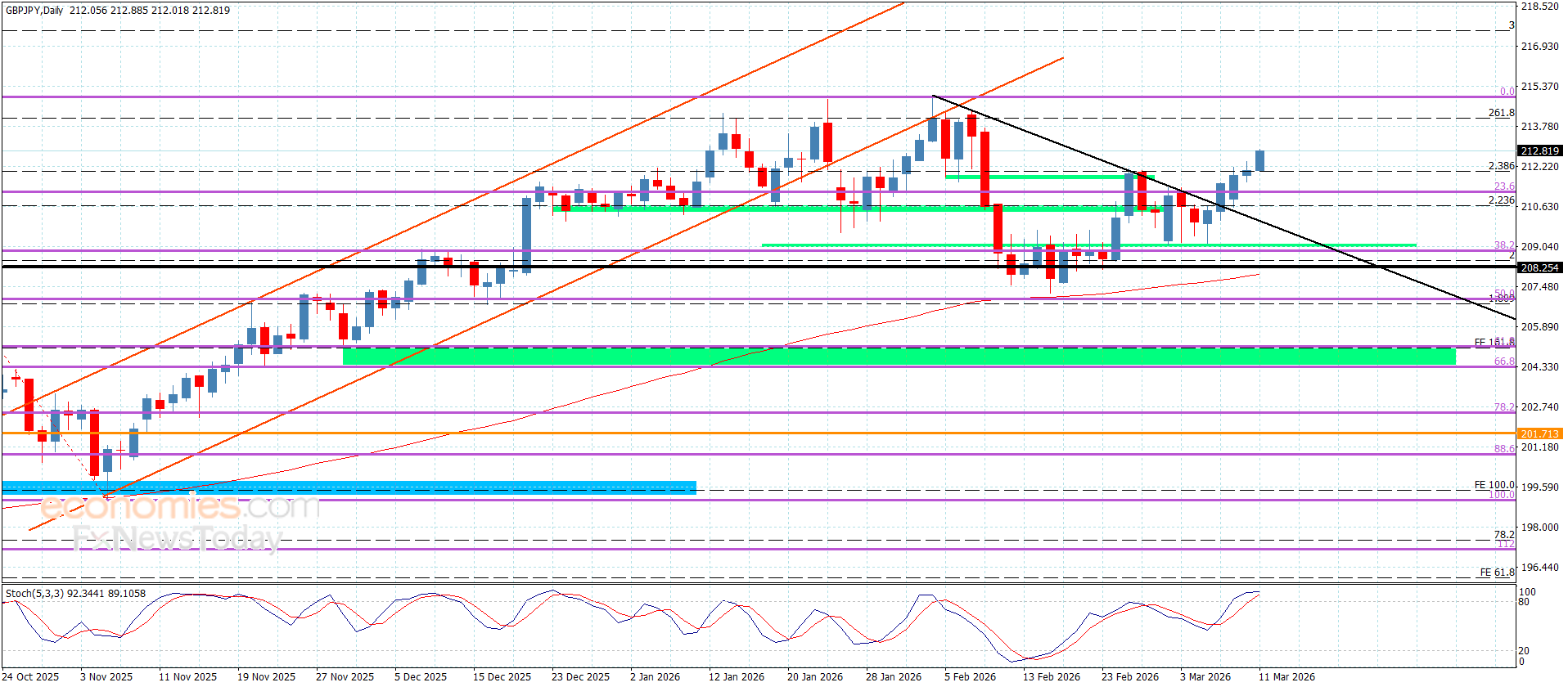
The Pound pulled back from session highs at the 213.50 area against the Japanese Yen on Tuesday, following mixed UK employment figures. Still, downside attempts remain contained above 212.30, leaving the pair in no man’s land.

Net employment increased by 82K in the UK in the three months to December, following a 17K contraction in November. Wage growth remained at strong levels while claimants for unemployment benefits grew less than expected. On the negative side, the jobless rate remained steady at 5.1% against market expectations of a slight decline to 5%.

The pair, however, remains supported by Yen weakness, amid growing fiscal concerns following Prime Minister Sanae Takaichi’s decision to call snap elections as well as her plans to suspend the 8% food tax for two years.

Technical Analysis: Potential Head and Shoulders formation in progress

GBP/JPY trades at 212.75. The Bullish engulfing candle printed in the daily chat on Monday suggests a strong support in the 210.30 area, but the pair’s rejection at 213.50 might print the right shoulder of a H&S formation, a bearish sign.

Technical indicators are positive. The 4-Hour Moving Average Convergence Divergence (MACD) line stands above the Signal line and slightly above zero, with a widening positive histogram that suggests strengthening bullish momentum. The Relative Strength Index (RSI) remains above 50, but is pulling down from higher levels.

Bulls would have to breach session highs at 213.40 to clear the path towards the long-term highs at 214.30. On the downside, key support is at the 210.30 area, the late December and early January lows, and the neckline of the mentioned H&S. Further down, the December 10 lows, near 208.90 w

(The technical analysis of this story was written with the help of an AI tool.)

Japanese Yen Price Today

The table below shows the percentage change of Japanese Yen (JPY) against listed major currencies today. Japanese Yen was the strongest against the US Dollar.

USD EUR GBP JPY CAD AUD NZD CHF
USD -0.73% -0.35% -0.19% -0.32% -0.25% -0.75% -1.03%
EUR 0.73% 0.38% 0.54% 0.42% 0.49% -0.02% -0.29%
GBP 0.35% -0.38% 0.17% 0.04% 0.11% -0.39% -0.67%
JPY 0.19% -0.54% -0.17% -0.12% -0.06% -0.56% -0.83%
CAD 0.32% -0.42% -0.04% 0.12% 0.07% -0.44% -0.71%
AUD 0.25% -0.49% -0.11% 0.06% -0.07% -0.50% -0.76%
NZD 0.75% 0.02% 0.39% 0.56% 0.44% 0.50% -0.28%
CHF 1.03% 0.29% 0.67% 0.83% 0.71% 0.76% 0.28%

The heat map shows percentage changes of major currencies against each other. The base currency is picked from the left column, while the quote currency is picked from the top row. For example, if you pick the Japanese Yen from the left column and move along the horizontal line to the US Dollar, the percentage change displayed in the box will represent JPY (base)/USD (quote).

Source link

20 01, 2026

Crude Oil Price Risk spikes today as WTI, Brent swing on fresh supply shocks

By |2026-01-20T10:50:49+02:00January 20, 2026|Forex News, News|0 Comments


On January 20, 2026, crude oil trades nervously as WTI and Brent react to fresh geopolitical tensions and supply signals, sharpening Crude Oil Price Risk.

As of today, January 20, 2026, we are seeing… crude markets once again reminding traders how violent Crude Oil Price Risk can be. Live quotes show both WTI and Brent fluctuating intraday rather than trending smoothly, with prices reacting sharply to the latest supply headlines and geopolitical signals. Even modest percentage moves today are coming through fast spikes and reversals, underlining the danger for overleveraged energy traders.

In early European and US trading, major benchmarks are oscillating rather than trending, with WTI and Brent both struggling to hold clear direction. This choppy tape means that a trader who is “right” on the bigger picture can still be forced out by intraday volatility if position size and margin are not handled with extreme discipline.

For risk-takers: Trade Oil volatility now

Why today matters for Crude Oil Price Risk

Todays oil market tone is being driven primarily by fresh news flow around supply expectations and geopolitical risk. Market participants are dissecting the latest indications from OPEC+ members about their production discipline and output plans, while also watching for any surprise commentary that could shift the balance between tightness and surplus in the months ahead. Even when there is no formal OPEC+ meeting, off-the-cuff remarks from key producers can move prices quickly as algorithms instantly re-price forward supply curves.

At the same time, traders are bracing for the next round of US inventory data, particularly crude and gasoline stockpile figures. Recent weeks have shown that surprise builds can rapidly cap rallies, while unexpected draws reignite fears of undersupply. That dynamic is visible again today in options pricing and intraday spreads: the market is clearly positioned for volatility around the next inventory release, and that uncertainty is feeding directly into intraday swings in both WTI and Brent.

Layered on top are ongoing geopolitical tensions in key producing and transit regions. Even without a fresh headline shock today, the risk premium from earlier disruptions and security concerns remains embedded in prices, keeping traders on edge. Shipping routes, infrastructure security, and sanctions policy are all under continuous scrutiny, and markets know that a single unexpected event can add dollars to the barrel price within minutes.

From Oil Price Forecasts to real-time risk

Many traders come into days like this armed with an Oil Price Forecast based on macro data, central bank expectations, and seasonal demand patterns. However, today underlines how fragile those forecasts can be when they meet real-time order flow, OPEC+ comments, and inventory surprises. A forecast that looked sensible yesterday evening can be out of date within hours if the next headline shifts expectations for supply or demand.

Energy Trading desks are therefore focusing less on fixed directional calls and more on risk management and scenario planning. Key questions include: how will prices react if US stockpiles show a larger-than-expected build, or if a major producer signals discomfort with current price levels? What happens to spread relationships between WTI and Brent if regional disruptions hit one benchmark harder than the other? The answers will not just move outright prices; they will also ripple through refining margins, crack spreads, and correlated assets such as energy equities and high-yield credit.

For those looking to Buy WTI Oil or trade Brent Price Live, today is an object lesson that direction alone is not enough. Volatility itself has become the core product, and effective participation requires precise control of leverage, stop-loss discipline, and realistic expectations about intraday drawdowns.

Ignore warning & trade Oil

Geopolitics, gaps, and the risk of total loss

Crude oil is structurally exposed to sudden, binary geopolitical events. Attacks on infrastructure, unexpected sanctions decisions, or abrupt policy shifts by key producers can all trigger market gaps price jumps that occur between sessions or across illiquid periods, offering no chance to exit at intermediate levels. In such conditions, stops may fill far worse than expected, or not at all at the desired price, especially in highly leveraged CFD or derivative positions.

That gap risk is a central feature of Crude Oil Price Risk, not a rare exception. Even on a day like today, when markets may appear merely choppy rather than outright panicked, traders are effectively sitting on optionality: the constant possibility that a headline emerging from the Middle East, Eastern Europe, or a key shipping chokepoint could instantly reprice both WTI and Brent. This is doubly relevant for Energy Trading strategies that are heavily margined or concentrated in a single direction.

Because CFDs and other leveraged products magnify both gains and losses, a relatively modest adverse move in the underlying can wipe out the entire margin posted for the position. In volatile days, that margin can be consumed in minutes. Traders who ignore position sizing, correlation risk, and basic scenario analysis are effectively exposed to the possibility of a Total Loss of their invested capital.

Prudent participants therefore treat todays environment with caution: they stress-test positions against sudden $3$5 moves in crude, consider the impact of overnight gaps, and avoid assuming that current liquidity conditions will always allow a smooth exit. For those who instead want to embrace the turbulence, the key is to recognize that this is not a normal equity swing; crude oil is a globally strategic commodity whose price can be repriced by politics as quickly as by economics.

Ultimately, the combination of uncertain OPEC+ supply signals, upcoming inventory data, and ever-present geopolitical fragility means that Crude Oil Price Risk is elevated today, even if spot moves over the session end up looking modest on a percentage basis. The real story is the path, not just the destination and that path is jagged.


Risk Warning: Financial instruments, especially commodity CFDs, are complex and come with a high risk of losing money rapidly due to leverage. You should consider whether you understand how these instruments work and whether you can afford to take the high risk of losing your money. This content is for informational purposes only and does not constitute investment advice.


Source link

20 01, 2026

Trade Tensions Spark Selloff (Video)

By |2026-01-20T10:43:11+02:00January 20, 2026|Forex News, News|0 Comments

The Euro recovers against the Japanese yen after opening drama and noise about trade agreements.

The Euro has gapped lower against the Japanese yen at the open on Monday, only to turn around and recapture that, as well as grind even higher. We are above the 184 yen level as I record this, which is a good sign. That being said, we need to take a look at what’s going on to understand why the 183 yen level offered support.

There was quite a bit of noise over the weekend as far as the US and the European Union busting up trade agreements, and of course, the first thing that traders do is panic. That being said, those who are not weak or drama-filled typically will look at these movements as an opportunity. And that’s exactly what we’ve seen here.

Interest Rate Outlook

The European Central Bank is still stable in its interest rate outlook, and that’s not going to change whether or not Trump and Macron or whoever start getting into arguments through the press. The reality is that the European economy is about where the ECB needs it to be, while the Bank of Japan has the problem of dealing with the idea of massive amounts of debt and their rates skyrocketing, which generally would be good for the yen, but the problem is it’s not in a controlled manner.

There is a Bank of Japan meeting later this week that will come into play, but at this point, the Euro has just offered a buying opportunity against the Japanese yen, as you have seen. This remains a bullish pair. It will remain a bullish pair for quite some time. Markets do not turn on a dime, especially when it’s a repeated headline of trade tensions. We’ve been going through this for a year now. All things being equal, we continue to grind to the upside, and I think we will go looking to 186 yen sooner or later.

Begin trading our daily forecasts and analysis. Here is a list of Forex brokers in Japan to work with.

Christopher Lewis has been trading Forex and has over 20 years experience in financial markets. Chris has been a regular contributor to Daily Forex since the early days of the site. He writes about Forex for several online publications, including FX Empire, Investing.com, and his own site, aptly named The Trader Guy. Chris favours technical analysis methods to identify his trades and likes to trade equity indices and commodities as well as Forex. He favours a longer-term trading style, and his trades often last for days or weeks.

Source link

20 01, 2026

Crude Oil Price Risk spikes today as WTI and Brent swing on fresh market shocks

By |2026-01-20T06:49:25+02:00January 20, 2026|Forex News, News|0 Comments


On January 20, 2026, crude oil trades choppy as WTI and Brent react to today’s news, highlighting elevated Crude Oil Price Risk for active traders.

As of today, January 20, 2026, we are seeing Crude Oil Price Risk dominate market sentiment as WTI and Brent prices trade in a choppy, directionless range, with only modest intraday moves and no clear breakout so far. Live market data today show that both major benchmarks are fluctuating within relatively tight bands, underscoring that even when headline prices appear stable, underlying volatility and gap risk for energy traders remain acute.

While the latest ticks in WTI and Brent futures do not yet show an explosive move in percentage terms, the balance between supply headlines, macro uncertainty, and positioning risk is extremely fragile. This is precisely the type of environment in which Crude Oil Price Risk can suddenly reprice within minutes if a new OPEC+ headline, a surprise inventory report, or an unexpected geopolitical escalation hits the tape.

For risk-takers: Trade Oil volatility now

Why today matters: the trigger behind the current oil market tension
Even though today’s live quotes for WTI and Brent have not (yet) produced a dramatic percentage change, the news flow hitting the crude complex is highly sensitive. Fresh intraday commentary from OPEC+ members, combined with updated analysis of recent U.S. inventory patterns and ongoing geopolitical friction in key producing regions, is keeping traders on edge. Market participants are intensely focused on whether OPEC+ will stick to existing output levels or adjust supply guidance in response to demand signals from major consumers, including the United States, Europe, and China.

At the same time, today’s oil market coverage continues to parse the implications of the latest U.S. inventory data released in recent days. Traders are recalibrating positions around expectations for the next Energy Information Administration (EIA) and American Petroleum Institute (API) stock reports. Even in the absence of a specific shock from today’s numbers, the market is acutely aware that any surprise drawdown in crude or gasoline stocks could quickly tighten the outlook, while a larger-than-expected build might fuel a short-term pullback. This tug-of-war between anticipated demand and actual supply is precisely what keeps Crude Oil Price Risk elevated, even when intraday charts look deceptively calm.

Geopolitical risks remain front and center as well. Ongoing tensions in key producing and transit regions continue to threaten supply routes, insurance costs, and shipping logistics. A single headline about disruptions to production, export terminals, or maritime chokepoints can rapidly change the Oil Price Forecast for both WTI and Brent. Traders watching Brent Price Live feeds are aware that the seaborne nature of Brent-linked crude leaves it especially exposed to shipping and geopolitical risks, while WTI reacts strongly to inland logistics, U.S. production, and storage dynamics at hubs such as Cushing.

Flat price does not mean flat risk
For active traders looking to Buy WTI Oil or express a macro view through Brent or WTI contracts, the key message today is that a relatively flat tape can hide substantial latent volatility. Options markets, positioning data, and recent price behavior all underline how quickly energy markets can move once a catalyst appears. Energy Trading desks know that a period of range-bound price action often precedes a breakout, and today’s combination of OPEC+ uncertainty, inventory sensitivity, and geopolitical tension creates the preconditions for exactly that type of move.

Crude Oil Price Risk is also being shaped by wider macro factors: shifting expectations for global growth, central bank rate paths, and currency moves. A change in the U.S. dollar trajectory or a surprise in Chinese demand indicators can have an outsized impact on oil, even if supply headlines remain muted. Traders following an Oil Price Forecast must therefore integrate macro data, not just barrels and shipping news. A stronger dollar can cap upside in nominal prices, while improving risk sentiment and stronger industrial activity can suddenly tighten the demand outlook, lifting both WTI and Brent despite a seemingly steady news flow.

Why leveraged traders should be extremely cautious today
Because crude oil is traded heavily via leveraged derivatives, today’s apparently modest intraday moves can translate into oversized swings in account equity. A 1–2% move in the underlying, triggered by a surprise OPEC+ comment or an unexpected inventory print, can rapidly magnify into double-digit percentage changes in a CFD or futures-based account, especially for short-term intraday strategies. Stop-loss orders can be skipped over in fast markets, and slippage can turn a manageable loss into a far larger one. This is the essence of Crude Oil Price Risk: not just where prices are, but how violently they can move when new information hits.

Oil is highly sensitive to geopolitical news, macro data, and physical market disruptions. Prices can gap significantly at the open after weekend or overnight developments, and even intraday gaps can occur around data releases or sudden headlines. Traders engaging in Energy Trading through leveraged products must be prepared for the possibility of rapid, adverse moves that exceed their initial risk calculations. It is entirely possible to suffer a Total Loss of the capital allocated to a position, and in some structures, losses can even exceed the amount initially invested if risk is not strictly controlled.

Ignore warning & trade Oil

Before taking any directional view to Buy WTI Oil or trade around Brent Price Live levels, traders should stress-test their positions for adverse gaps, review margin requirements, and ensure they fully understand how leveraged products amplify both gains and losses. In an environment where today’s calm can turn into tomorrow’s breakout, disciplined risk management is not optional; it is the only realistic defense against the full force of Crude Oil Price Risk.


Risk Warning: Financial instruments, especially commodity CFDs, are complex and come with a high risk of losing money rapidly due to leverage. You should consider whether you understand how these instruments work and whether you can afford to take the high risk of losing your money. This content is for informational purposes only and does not constitute investment advice.


Source link

Go to Top