About Editorial team of BIPNs

Main team of content of bipns.com. Any type of content should be approved by us.
19 11, 2025

Aave targets mainstream users with DeFi’s first bank-like app

By |2025-11-19T04:35:32+02:00November 19, 2025|News, NFT News|0 Comments


For more than a decade, the DeFi sector has operated on a fractured promise. The theoretical pitch of a fairer, more accessible global financial system has consistently crashed against the rocks of practical reality.

In practice, DeFi has delivered a user experience defined by hostility of confusing interfaces, punitive gas fees, risky workflows, and the terrified clutching of seed phrases. It created a system where only the technically literate or those willing to take risks dared to tread, leaving the vast majority of the world’s savers on the sidelines.

But the launch of Aave’s new mobile savings application marks a distinct departure from this exclusionary history.

By radically re-engineering the user journey to mimic the seamlessness of modern fintech, Aave is making a strategic wager that the path to onboarding a billion users isn’t about teaching them to navigate the blockchain, but about making the blockchain entirely invisible.

The end of the “Tech Tax”

The most formidable barrier to DeFi adoption has never been the lack of yield; it has been the abundance of friction.

The “tech tax” of the ecosystem, requiring users to manage browser extensions like MetaMask, navigate complex signing pop-ups, and calculate gas fees in Ethereum, effectively capped the market size at power users.

The Aave App represents a fundamental break with this pattern. Leveraging advanced account abstraction, the application removes the vestiges of crypto’s technical burden.

There are no ledger devices to connect, no hexadecimal wallet addresses to copy and paste, and no manual bridging of assets between disparate chains. The interface simply asks the user to save.

This way, users can deposit euros, dollars, or connect debit cards, and the protocol handles the backend complexity of converting fiat into yield-bearing stablecoins.

By stripping away the “crypto” aesthetics and presenting itself as a clean, neo-banking interface, Aave is targeting the demographic that Revolut and Chime captured: digital natives who want utility without technical overhead.

A bank-like experience

The structural ambition of the app is to function as a bank in the front and a decentralized liquidity engine in the back.

This is not a trivial pivot. Aave currently manages over $50 billion in assets through smart contracts. If structured as a traditional financial institution, its balance sheet would rank it among the top 50 banks in the United States.

Total Value of Assets Locked on Aave (Source: DeFiLlama)

However, unlike traditional banks, where liquidity is often opaque, Aave’s ledger is transparent and auditable 24/7.

To operationalize this for the mass market, Aave Labs’ subsidiary recently secured authorization as a Virtual Asset Service Provider (VASP) under Europe’s comprehensive MiCA (Markets in Crypto-Assets) framework.

This regulatory milestone is the linchpin of the strategy. It provides the app with a legally recognized gateway into the traditional SEPA banking system, enabling compliant and regulated fiat on-and-off ramps.

This moves Aave out of the “shadow banking” categorization and into a recognized tier of financial service providers, granting it the legitimacy required to court mainstream depositors who would otherwise never touch a DeFi protocol.

The $1 Million protection

If complexity is the first barrier to entry, trust is the second.

Numerous exploits, bridge hacks, and governance failures mark the history of DeFi. For the average saver, the fear of total loss outweighs the allure of high returns. No amount of yield is worth the risk of a drained wallet.

Aave is attempting to shatter this ceiling by introducing a balance protection mechanism of up to $1 million per user. This figure quadruples the standard $250,000 insurance limit for FDIC-insured accounts in the US.

While this protection is protocol-native rather than government-backed, the psychological impact is profound. It signals a shift in responsibility from the retail user to the protocol. In doing so, Aave is repositioning DeFi from a “buyer beware” frontier experiment into a product with institutional-grade safety rails.

For a middle-class saver in Europe or Asia, this reframes the proposition from “speculating on crypto” to “saving with better insurance than my local bank.”

The yield advantage

While protection solves the trust deficit, yield solves the incentive problem.

The macroeconomic timing of Aave’s rollout is fortuitous. As central banks globally, including the Federal Reserve and the ECB, begin to cut rates, traditional savings yields are projected to compress back toward the low single digits.

Aave’s yield engine, however, operates on a different fundamental driver.

According to analytics from SeaLaunch, Aave’s stablecoin APY (denominated in USD and EUR) has consistently outperformed risk-free instruments, such as US Treasury bills. This is because the yield is derived from on-chain borrowing demand rather than central bank policy.

This creates a persistent premium. As traditional rates fall, the spread between a bank savings account (offering perhaps 3%) and Aave (offering 5–9%) widens.

Aave targets mainstream users with DeFi’s first bank-like appAave targets mainstream users with DeFi’s first bank-like app
Aave Stablecoins vs US Treasury (Source: SeaLaunch)

For global users, particularly in developing economies with unstable banking sectors or high inflation, this access to dollar-denominated, high-yield savings is a necessary financial lifeline and not just a luxury.

The distribution engine

Ultimately, the most understated component of Aave’s strategy is distribution.

By launching on the Apple iOS App Store, Aave is attaching its decentralized rails to the world’s largest fintech distribution engine. In 2024, the App Store received 813 million weekly visitors across 175 markets, according to Apple.

Considering this, Sebastian Pulido, Aave’s Director of Institutional & DeFi Business, captured it perfectly by describing the new application as “DeFi’s iPhone moment” because the platform will “abstract away all complexity and friction around getting access to defi yields.”

Essentially, just as the browser made the internet accessible to non-coders, the App Store makes DeFi accessible to non-traders.

Aave is tapping into the same infrastructure that scaled PayPal, Cash App, and Nubank to global dominance.

So, for the first time, a user in Lagos, Mumbai, or Berlin can onboard into DeFi with the same simplicity as downloading a game. There are no barriers, no distinct “crypto” learning curve, and no friction.

Essentially, if DeFi is ever to reach a billion users, it will not happen through browser extensions or technical whitepapers. It will happen through an app that looks like a bank, protects like an insurer, and pays like a hedge fund.


Source link

19 11, 2025

Copper Price Forecast 2025: Market Outlook & Analysis

By |2025-11-19T04:29:38+02:00November 19, 2025|Forex News, News|0 Comments


The Structural Transformation of Global Commodity Markets

Industrial commodity markets are experiencing a paradigm shift driven by technological advancement and energy system transformation. Investors now closely monitor the copper price forecast as a critical market indicator. The convergence of electrification mandates, infrastructure modernisation programmes, and supply chain realignments is reshaping fundamental market dynamics across base metals.

This transformation extends beyond cyclical demand patterns. It reflects permanent structural changes in how economies consume raw materials. In addition, the evolving market environment has inspired many to seek further copper price insights into these emerging trends.

Within this broader context, copper markets represent a microcosm of larger forces at play. The metal’s unique position as both an industrial input and economic indicator places it at the intersection of multiple macro trends. Consequently, understanding these dynamics becomes essential for investors, policymakers, and industry participants navigating an increasingly complex commodity landscape.

What Drives Copper’s Strategic Value in Global Markets?

The Economic Foundation of Copper Demand

Copper’s designation as “Dr. Copper” reflects decades of empirical correlation between its price movements and broader economic activity. This relationship stems from the metal’s widespread industrial applications. For instance, its excellent conductivity makes it irreplaceable in electrical applications, creating inelastic demand across sectors.

Over recent years, manufacturing patterns have shifted towards more copper-intensive production processes. Infrastructure investment priorities now favour electrification and grid modernisation projects. Furthermore, the economic foundation supporting copper demand has evolved significantly since 2020. These changes are structural, suggesting sustained growth independent of traditional cycles.

A recent market event highlighted this transformation as copper reached $11,200 per tonne in November 2025. This new record, driven by supply constraints and demand acceleration, underlines the metal’s expanding role beyond a mere economic indicator.

Electrification Megatrend Impact Assessment

The global transition towards electrification is the most significant structural demand driver for copper in modern history. This shift encompasses diverse sectors including transportation electrification, renewable energy deployment, and power grid modernisation. In addition, it spans various geographic regions and policy frameworks.

Electric vehicle adoption creates particularly intense copper demand. Each electric vehicle requires approximately 83 kilograms of copper compared to 23 kilograms for conventional vehicles – a 3.6-fold increase in intensity. With global EV sales projected to reach 30 million units by 2030, this application alone could generate over 2 million tonnes of additional annual copper demand.

Moreover, renewable energy infrastructure adds complexity. Wind power installations require 4–5 tonnes of copper per megawatt, while solar setups demand similar quantities for transmission and distribution infrastructure. The International Energy Agency’s capacity targets suggest these projects could consume 3–4 million tonnes annually.

Energy consumption patterns and grid modernisation further underline copper’s strategic value. As ageing infrastructure is replaced by higher-capacity systems, the demand for this versatile metal remains robust.

How Tight Are Global Copper Supply Fundamentals?

Mine Development Timeline Constraints

The copper mining industry now faces unprecedented supply challenges. On average, it takes around 17 years to develop a copper mine from discovery to production. For instance, historical underinvestment has exacerbated these delays. In fact, experts argue that projects should have begun around 2015 to meet current demand.

Furthermore, permitting complexity is a major hindrance. Environmental assessments, community engagement and regulatory processes now require years to complete. Even projects with proven ore bodies face uncertainty during approvals. Such mining permitting challenges have added layers of risk to future supply.

Historical gaps in investment have left the sector short of shovel-ready projects. In addition, delays from the COVID-19 pandemic have further disrupted development pipelines. Analysts highlight that these constraints could postpone new production for years, even as demand accelerates.

Current Production Landscape Analysis

Global copper mine production reached around 22.1 million tonnes in 2024, with modest supply increases of 2.8% annually through 2027. However, smelter capacity has grown faster––an 8.5% recent increase––suggesting a disconnect between raw material availability and refining capability. This discrepancy is highlighted in the global copper supply forecast.

Ore grade decline remains another critical factor. As higher-grade ores deplete, extraction costs rise and yields drop. Consequently, maintaining stable production volumes demands more resource inputs and increased capital expenditure.

Inventory dynamics compound these challenges. Global copper stocks have dwindled to levels representing only 11 days of global consumption. For instance, London Metal Exchange warehouses hold roughly 660,000 tonnes. Such low levels magnify the market’s vulnerability to supply disruptions.

Trade policies are also distorting inventory distribution. U.S. tariff policies, for example, have led to strategic accumulation. As noted by industry insiders, these measures have inadvertently created a concentrated reserve. This phenomenon is further examined within the context of the US–china trade impact.

Inventory Vulnerability Factors:

• LME warehouse holdings below 660,000 tonnes
• Approximately 11 days of consumption coverage
• Single-mine disruptions triggering price spikes
• Geographic inventory concentration risks
• Trade policy-driven distortions

What Are the Price Trajectory Scenarios for 2025–2030?

Short-Term Price Dynamics (2025)

Forecast models for 2025 adopt a range of scenarios underpinned by supply constraints and accelerating demand. Analysts predict prices will generally remain above $10,000 per tonne. In addition, institutional forecasts range from $8,300 to $10,265 per tonne. This dynamic has contributed to a volatile market with widening bid-ask spreads.

Moreover, the short-term copper market analysis indicates that even minor supply or demand shifts can cause sharp price changes. Analysts note that the copper price forecast remains an important metric to consider in these conditions.

Chinese economic recovery is set to play a significant role in 2025 pricing. Although property sector challenges persist, infrastructure investments and manufacturing support policies provide demand stability. This interplay reinforces the theme of a persistent copper price forecast as markets adjust to new realities.

Medium-Term Structural Bull Market (2026–2027)

The period from 2026 to 2027 is expected to amplify supply–demand imbalances. Investment banks now project prices reaching between $11,000 and $13,500 per tonne, reflecting genuine shortages rather than speculative premiums. Additionally, historical ratio analysis supports this outlook, pointing to copper’s undervaluation relative to gold.

Key assumptions for scenario modelling include:

• Conservative: $11,000 per tonne in 2026 and $12,500 in 2027
• Bull Case: $12,000 in 2026 and $15,000 in 2027
• Extreme Bull: $14,000 in 2026 and $18,000 in 2027

Even if prices exceed $12,000 per tonne and stimulate new projects, the lengthy development cycle means additional supply may not arrive until the early 2030s. This situation reinforces the medium-term importance of the copper price forecast.

Long-Term Market Equilibrium (2028–2030)

Long-term projections depend on supply response timing and sustained electrification demand. Conservative estimates point to prices around $13,000 per tonne by 2030, while bull cases suggest they could reach $17,000 per tonne. In these scenarios, the copper price forecast remains a central guide, especially as new mine developments take decades to materialise.

Market equilibrium may ultimately be restored through demand moderation and new supply. However, even very high prices might prompt research into alternative materials that slightly reduce copper reliance. Despite this, copper’s unique properties ensure its enduring value in critical infrastructure.

Which Geographic Regions Drive Copper Market Dynamics?

China’s Consumption Dominance

China accounts for approximately 54% of global copper consumption. Recent shifts in policy have steered investment towards infrastructure and renewable projects rather than solely property development. This realignment ensures a stable, long-term demand profile for copper.

China’s manufacturing competitiveness initiatives also bolster the metal’s use in high-technology sectors. For example, electric vehicle production, battery manufacturing, and renewable energy equipment all rely heavily on copper. Such trends, combined with ongoing copper exploration analysis, underline the sustained relevance of copper.

North American Market Transformation

The North American copper market has been reshaped by evolving U.S. trade policies. Tariff-driven inventory accumulation and supply chain adjustments have redefined regional dynamics. In addition, friend-shoring initiatives and domestic manufacturing support are further altering trade flows. These measures illustrate significant US–china trade impact on copper availability within the region.

Infrastructure investments in the United States and Canada also support robust copper demand. Grid modernisation and renewable deployments, underpinned by key legislation, promise to sustain growth despite global supply challenges.

European Energy Transition Impact

The European Union’s Green Deal mandates are among the most ambitious global infrastructure programmes. With a €584 billion investment allocated to grid modernisation, Europe is set to drive significant copper demand. Renewable energy targets, such as achieving 1,236 gigawatts by 2030, further fuel copper consumption in wind turbines, solar arrays, and transmission networks.

In addition, plans to establish 3.5 million EV charging points across the EU underscore copper’s indispensability. These policy directives ensure that regional demand remains robust during economic uncertainties.

How Do Macroeconomic Factors Influence Copper Pricing?

Interest Rate Environment Effects

Copper prices have a strong inverse correlation with real interest rates. Lower rates reduce the opportunity cost of holding non-yielding commodities while bolstering economic activity. Moreover, central bank policies that promote accommodative conditions provide indirect support to copper markets. Many market observers also refer to external sources such as copper trends for further context.

This interplay between monetary policy, currency values, and investment flows enhances the overall dynamics surrounding commodity pricing. The resulting environment plays a significant role in shaping the copper price forecast as well.

Currency Impact Analysis

Dollar strength significantly influences copper’s USD-denominated prices. For instance, historical data suggests that a 10% appreciation of the dollar can lead to an 8–12% decline in copper prices. Consequently, shifts in exchange rates affect inventory management, hedging decisions, and overall market sentiment.

Furthermore, rising hedging costs can prompt adjustments in purchasing patterns, contributing to short-term volatility. As such, traders remain attentive to currency movements when evaluating the copper price forecast.

Inflation Hedge Characteristics

Copper’s performance during inflationary periods bolsters its role as a portfolio diversifier. The metal has delivered positive real returns during 73% of inflationary episodes since the 1970s. Investors recognise copper’s dual function as both an industrial input and a store of value, leading to significant capital flows during inflationary periods.

This inflation hedge characteristic adds yet another layer of strategic importance to tracking the copper price forecast in today’s complex economic environment.

What Investment Strategies Align with Copper Market Outlook?

Direct Exposure Mechanisms

Investors seeking exposure to copper have several avenues available. For example, futures contracts offer direct tracking of price movements. However, they require active management due to rollover and margin complexities. In contrast, exchange-traded funds and exchange-traded commodities provide simpler access to the market.

Other investment options include mining equities and physical copper ownership, each carrying distinct risk profiles. These methods allow investors to capitalise on potential price movements and supply constraints, while the ongoing emphasis on a robust copper price forecast guides long-term strategies.

Risk Management Considerations

Copper investments, while promising, entail several risk factors that require careful management. Key risks include:

• Demand shock: Rapid economic downturns that reduce industrial copper use
• Supply response: Delays in mine development leading to prolonged shortages
• Substitution: The emergence of alternative materials
• Geopolitical: Unpredictable trade policies and regulatory changes
• Operational: Mining accidents and production disruptions
• Financial: Currency fluctuations and interest rate shifts

These risks highlight the need for balanced portfolios and tactical flexibility. Investors are advised to monitor both micro and macroeconomic indicators while keeping an eye on the copper price forecast.

Market Psychology and Strategic Positioning

Investor Sentiment Dynamics

Investor sentiment in copper markets often amplifies inherent supply–demand imbalances. As copper earned its nickname “Dr. Copper”, market participants have come to view its price signals as reflections of broader economic health. Speculative flows and hedge fund positions can create short-term momentum that diverges from fundamental trends.

Such behavioural factors, in combination with restrained supply growth, support the notion that the copper price forecast remains a key barometer for both short-term trades and long-term investment decisions.

Strategic Positioning for the Copper Supercycle

The convergence of structural supply constraints, accelerating electrification, and supportive macroeconomic conditions suggests that copper is entering a prolonged appreciation cycle. Price forecasts point to levels above $15,000 per tonne by 2027, reflecting genuine market imbalances rather than mere speculation.

In summary, while volatility is likely to persist, a balanced approach to risk management and forward-thinking investment strategies is essential. Market participants must weigh both short-term challenges and long-term opportunities, with the copper price forecast serving as a critical guidepost in navigating the complexities of global commodity markets.

Ready to Capitalise on the Next Major Copper Discovery?

Discovery Alert’s proprietary Discovery IQ model delivers real-time alerts on significant ASX mineral discoveries, instantly empowering subscribers to identify actionable opportunities ahead of the broader market. Understand why historic discoveries can generate substantial returns by visiting Discovery Alert’s dedicated discoveries page, and begin your 30-day free trial today to position yourself ahead of the market.



Source link

19 11, 2025

XRP, Cardano & Bitcoin – American Wrap 18 November

By |2025-11-19T03:55:32+02:00November 19, 2025|Crypto News, News|0 Comments

Ripple (XRP) is trading above its short-term support at $2.10 at the time of writing on Tuesday as uncertainty takes root in the broader cryptocurrency market. 

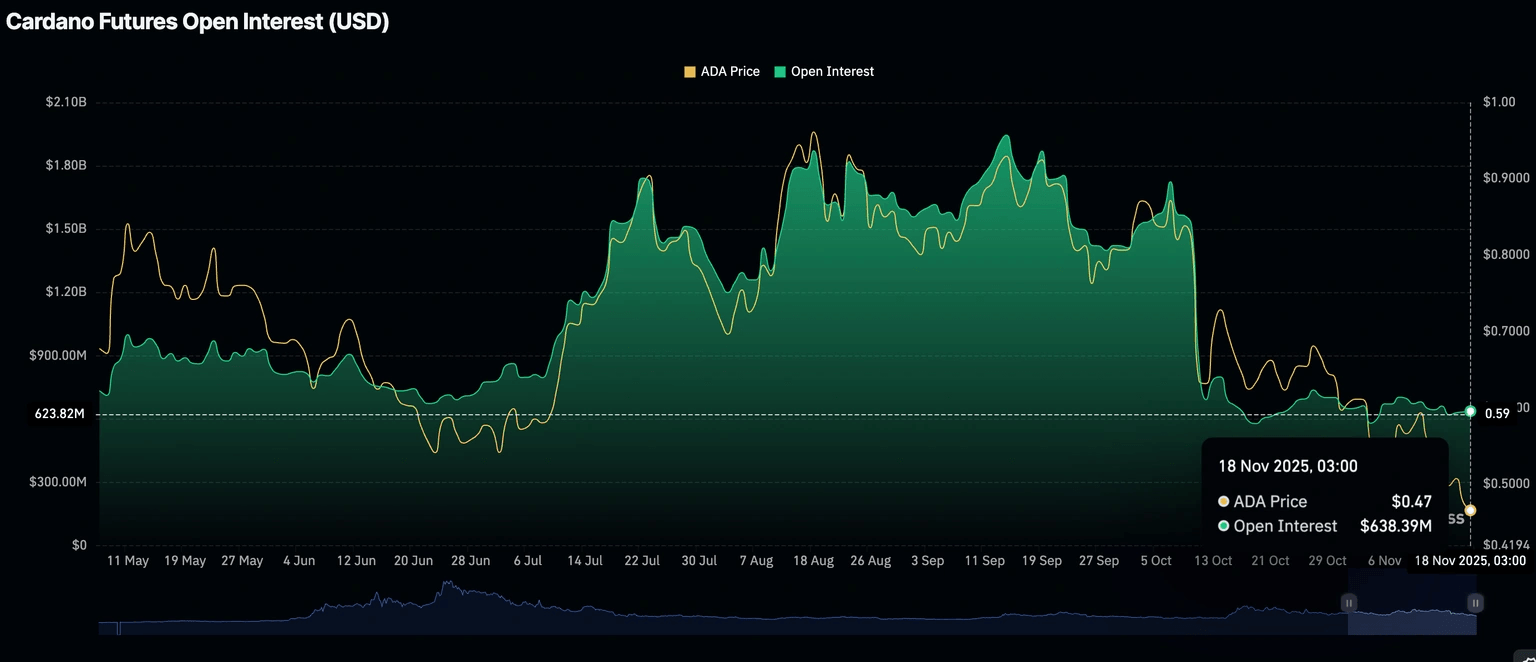
Cardano (ADA) is largely in bearish hands, trading above support at $0.45 at the time of writing on Tuesday. The downtrend builds on a bearish outlook that has weighed on the smart contracts token since July, when ADA peaked at $1.02.

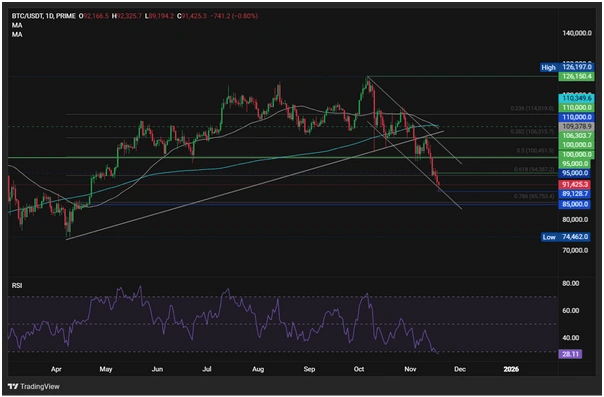
Bitcoin’s falling further, down 25% from its record high of 126.2k at the start of October, dropping to a low of 89.1k today, a level last seen in April. The largest cryptocurrency has fallen in seven of the past eight sessions, a losing streak that has left it trading in the red for 2025.

Source link

19 11, 2025

Roblox Onchain Migration Could Unlock $10B+ Yearly Web3 Gaming Economy, @0xferg Says | Flash News Detail

By |2025-11-19T02:34:36+02:00November 19, 2025|News, NFT News|0 Comments


The recent tweet from Robbie Ferguson, co-founder of Immutable, has sparked significant interest in the cryptocurrency community, highlighting the massive potential of onchain gaming. According to Ferguson, when platforms like Roblox transition to blockchain technology, they could generate over $10 billion in annual economic activity. This projection underscores how these virtual economies already rival the GDPs of small countries, and their migration to onchain systems promises a transformative shift in the gaming and crypto sectors. As an expert in cryptocurrency markets, this development points to lucrative trading opportunities in gaming-related tokens, particularly those facilitating blockchain integration in games.

Potential Impact on Gaming Cryptocurrencies Like IMX

Robbie Ferguson’s insights, shared on November 18, 2025, emphasize the breathtaking scale of this migration. Immutable, the company behind the IMX token, is at the forefront of blockchain gaming with its layer-2 scaling solution for Ethereum. Traders should note that IMX has shown resilience in volatile markets, often correlating with broader Ethereum ecosystem trends. For instance, if Roblox’s move onchain materializes, it could drive substantial on-chain activity, boosting transaction volumes and token utility. Historical data from similar gaming blockchain adoptions, such as those seen in projects like Axie Infinity during its peak in 2021, demonstrated price surges exceeding 500% in short periods. Currently, without real-time data, market sentiment around IMX remains bullish, with analysts predicting support levels around $1.50 and resistance at $2.50 based on recent trading patterns. Integrating such news into trading strategies involves monitoring Ethereum gas fees and NFT marketplace volumes, as increased gaming activity could propel ETH prices upward, indirectly benefiting IMX holders.

Trading Strategies for Onchain Gaming Boom

To capitalize on this narrative, traders might consider long positions in IMX and related tokens like MANA or SAND, which power decentralized virtual worlds. A detailed analysis reveals that on-chain metrics, such as daily active users in blockchain games, have been climbing steadily, with a 15% month-over-month increase reported in Q3 2025 from various blockchain analytics sources. This correlates with rising trading volumes; for example, IMX’s 24-hour volume often spikes during positive gaming news, sometimes reaching $100 million. Risk management is crucial—set stop-loss orders below key support levels to mitigate downside from market corrections. Additionally, watch for institutional flows into gaming cryptos, as venture capital investments in web3 gaming hit $2 billion in 2025 alone, signaling strong long-term potential. Pair trading with ETH could hedge against volatility, given IMX’s dependency on Ethereum’s network health.

Beyond immediate trades, the broader implications for the crypto market are profound. Ferguson’s vision of onchain economies exceeding $10 billion annually could attract mainstream adoption, driving liquidity into the sector. This might influence cross-market dynamics, such as correlations with tech stocks like those of Roblox Corporation (RBLX), where positive blockchain news could lift share prices and, in turn, boost crypto sentiment. For diversified portfolios, allocating 10-15% to gaming tokens offers exposure to this growth narrative. As the migration unfolds, keep an eye on key indicators like total value locked (TVL) in gaming protocols, which stood at $5 billion across major platforms as of late 2025. In summary, this development not only highlights explosive growth potential but also presents actionable trading insights for savvy investors navigating the intersection of gaming and blockchain.

Overall, the tweet serves as a catalyst for reevaluating positions in the gaming crypto niche. With no current real-time data to contradict the optimistic outlook, traders are advised to stay informed on upcoming announcements from Immutable and similar projects. This could lead to short-term volatility trading opportunities, where scalpers target 5-10% intraday moves following social media buzz. Long-term holders might benefit from compounding gains as onchain gaming matures, potentially mirroring the DeFi boom of 2020-2021. Remember, while the projections are exciting, base decisions on verified on-chain data and market trends to avoid speculative pitfalls.


Source link

19 11, 2025

Gold (XAU/USD) Price Forecast: $3,998 Tests Trendline – Recovers 20-Day Support

By |2025-11-19T02:29:02+02:00November 19, 2025|Forex News, News|0 Comments


61.8% Retracement Finished

The decline from the $4,245 lower swing high from last week delivered a textbook 61.8% Fibonacci retracement, aligned with an uptrend line. Today’s rapid recovery of all key dynamic levels indicates the minor pullback has likely exhausted itself, with the uptrend line freshly validated as the primary bull-market defense.

Bullish Confirmation Level

After today’s session, a sustained advance and close above today’s $4,082 high is required to officially confirm a bullish reversal and declare the correction finished. Without that follow-through, risk remains of another leg lower to retest the trendline or deeper supports, or a consolidation phase.

Deeper Support Cluster

A decisive close below the uptrend line shifts attention to the rising 50-day average at $3,955, closely aligned with the 78.6% retracement at $3,963. The 50-day carries significant weight, having gone untested as support since its August reclaim—making the first approach a high-probability bounce zone, if it reached.

Trendline Reliability

Isolated trendline breaks often prove false without accompanying confirmation. Even if the line is violated, holding the 50-day would keep the larger uptrend intact and it is not much lower. True bearish conviction requires a drop below the interim higher swing low at $3,929.

Weekly Inside Week Setup

The weekly chart remains on track for an inside week, with the 10-week average at $3,987 supplying additional dynamic backing. Last week’s $3,997 low sits comfortably above the daily $3,929 swing low—meaning any weekly close beneath $3,929 would deliver a strong bearish one-week reversal.

Outlook

Gold’s aggressive defense of the uptrend line and recapture of the 20-day average strongly favors buyers. A convincing push above $4,082 targets fresh record territory; failure invites a deeper test of the 50-day confluence near $3,955. Until a weekly close below $3,929 emerges, all pullbacks remain buyable within the structural bull market.


Source link

19 11, 2025

GBP to USD Forecast: Pound Sterling Weakens on Equity Selloff, Safe-Haven Demand

By |2025-11-19T02:13:37+02:00November 19, 2025|Forex News, News|0 Comments


– Written by

The Pound to US Dollar exchange rate (GBP/USD) softened on Tuesday as a sharp equity selloff unsettled investors and pushed demand back toward safer assets.

At the time of writing, GBP/USD was trading around $1.3141, down almost 0.2% from the start of the session.

The US Dollar (USD) inched higher on Tuesday, with risk-off sentiment driving flows into the safe-haven currency.

Mounting concerns over overstretched valuations in AI-linked stocks sparked a wave of caution across global markets, with analysts increasingly warning that the sector may be entering bubble territory.

The mood was further underpinned by a hawkish repricing of Federal Reserve interest rate cut expectations, keeping USD supported through the session.

Sterling struggled to gain traction on Tuesday as investors remained hesitant ahead of next week’s tightly watched autumn budget.

Recent reports have raised more questions than answers regarding Chancellor Rachel Reeves’s fiscal plans. Most notably, Reeves appeared to drop her consideration of an income tax rise, viewed by many economists as the most efficient way to raise revenue and close the estimated £20bn fiscal gap.

Save on Your GBP/USD Transfer

Get better rates and lower fees on your next international money transfer.
Compare TorFX with top UK banks in seconds and see how much you could save.


Compare the Best GBP/USD Rates »

Without that lever, Reeves may be forced to rely on a mosaic of smaller tax hikes.

GBP investors fear this approach risks complicating the tax landscape while doing little to revive the UK’s fragile growth outlook.

GBP/USD Forecasts: Soft UK Inflation to Reinforce BoE Rate Cut Bets?

Looking ahead, the Pound to US Dollar exchange rate looks vulnerable on Wednesday as markets brace for the UK’s latest consumer price index.

Economists expect headline inflation to ease from 3.8% to 3.6% in October—the first cooling of prices since May.

A softer reading would likely cement expectations that the Bank of England (BoE) will restart its rate-cutting cycle in December, which could weigh on Sterling.

Also on the radar are the Federal Reserve’s latest meeting minutes. Should the minutes strike a hawkish tone or cast doubt on a December rate cut, the US Dollar may find fresh support.

Like this piece? Please share with your friends and colleagues:


International Money Transfer? Ask our resident FX expert a money transfer question or try John’s new, free, no-obligation personal service! ,where he helps every step of the way,
ensuring you get the best exchange rates on your currency requirements.

TAGS: Pound Dollar Forecasts

Source link

19 11, 2025

Busan International Tea & Craft Fair Nov. 20-23

By |2025-11-19T02:00:33+02:00November 19, 2025|Dietary Supplements News, News|0 Comments


(Photo courtesy of haps Magazine Korea)


For lovers of tea and crafts, the 2025 Busan International Tea & Craft Fair allows guests to experience various teas and tea utensils such as green tea, and black tea.

In addition, you can meet craft works such as pottery, woodcraft, metal craft, and textile crafts.

The event takes place from Thursday through Sunday from 10 a.m. to 6 p.m. daily. at BEXCO.


Source link

19 11, 2025

Solana Price Prediction: SOL at Risk of Sliding to $120 Downside

By |2025-11-19T01:54:40+02:00November 19, 2025|Crypto News, News|0 Comments

Solana price drops to a 5-month low of $138, testing key support with risks of sliding to $120 if the level breaks.


Solana (SOL) is currently at a critical juncture, with the price hovering around a significant support zone.

After a sharp decline, the cryptocurrency has reached a fresh 5-month low, leading many traders and analysts to closely monitor whether SOL will break down further or experience a short-term rebound. 

As of now, Solana is trading near $138, with the key support zone between $134 and $140. The next few days are crucial, as a breach of this level could open the door for further downside movement, possibly pushing the price towards $120.

Solana Faces Critical Support Test

Solana’s recent price movement has raised concerns among traders. After months of gradual decline from highs near $210, SOL now finds itself at a critical support zone. 

The price has been consistently forming lower highs and lower lows, signaling weakening momentum in the market. The $135–$138 range is an important level for Solana, as it has previously served as a key support zone.

Traders are focused on how the cryptocurrency reacts to this level. If the price holds above this support, a potential rebound to $165–$175 could occur. 

However, a breakdown below $134 would suggest further downside, with targets near $120. These levels could see increased selling pressure, especially with SOL’s volume thinning out, which is a typical sign of reduced buying interest.

As the price tests these levels, Solana’s fate will depend on whether buyers can defend the support zone or if sellers will take control and push the price lower. This key moment could define the next major movement in SOL’s price.

Bullish Divergence Signals Possible Rebound

Despite the bearish trend, lower timeframes are showing signs of potential reversal. On both the 4-hour and daily Relative Strength Index (RSI), bullish divergences are beginning to appear. This suggests that selling pressure may be slowing, even though the price is still near key support.

If these bullish signals hold, there could be a short-term rebound. The price may attempt to move upwards towards $150, with potential resistance at $168.

However, traders remain cautious, as these divergences need confirmation. If SOL fails to hold above the support, the bullish setup could be invalidated, and the price may resume its downward trajectory.

For now, the appearance of bullish divergence on lower timeframes offers some hope for a reversal, but caution is necessary given the broader downtrend. A sustained rebound or further decline will depend on how the support zone holds up in the coming days.

Related Reading: Fidelity Advances Solana Spot ETF Plan as SOL Tests Key Price Levels

TD Sequential Signals a Potential Bottom

In addition to the bullish divergences, a TD Sequential “1” buy signal has appeared on Solana’s chart, which typically indicates a potential short-term bottom. This signal often shows up after a series of consecutive down candles, suggesting that selling momentum may be fading.

The buy signal on the TD Sequential indicator comes after a prolonged period of decline, with SOL testing the $138–$142 range.

If this signal holds, a short-term rally could occur, with targets near $150 to $155. However, it’s important to note that the broader trend remains fragile, and this counter-trend signal requires confirmation.

If the TD Sequential setup plays out as expected, it could provide some relief to traders, but the overall market structure will determine how sustainable any price recovery will be.

A strong reaction from the support zone is essential for SOL to regain its footing and avoid further declines.


Source link

19 11, 2025

XAG/USD recovers above $50 while investors await US NFP data

By |2025-11-19T00:27:35+02:00November 19, 2025|Forex News, News|0 Comments


Silver price (XAG/USD) claws back its early losses and turns slightly positive to near $50.30 during the European trading session on Tuesday. The white metal attracts bids as investors turn cautious ahead of the United States (US) Nonfarm Payrolls (NFP) data for September, which will be releasing on Thursday.

Investors await the US NFP data to get fresh cues on the current status of the labor market. Financial market participants lack information regarding the job market status as major economic releases were halted in last almost seven weeks due to federal shutdown.

Meanwhile, the market sentiment remains risk-averse amid receding speculation favoring further interest rate cuts by the Federal Reserve (Fed) this year. At the press time, S&P 500 futures trade 0.25% lower, exhibiting a risk-off mood.

According to the CME FedWatch tool, the probability of the Fed to cut interest rates by 25 basis points (bps) to 3.50%-3.75% in the December meeting has diminished to 43% from 62.4% seen a week ago.

Technically, the scenario of easing Fed dovish bets is unfavourable for the Silver price, given that a pause in the Fed’s monetary easing campaign bodes poorly for non-yielding assets.

Silver technical analysis

Silver price finds cushion after correcting to near the 20-day Exponential Moving Average (EMA) around $49.70.

The 14-day Relative Strength Index (RSI) returns inside the 40.00-60.00 range, suggesting indecisiveness among investors about the near-term outlook.

Looking down, the September 23 high of $44.47 would remain a key support. On the upside, the all-time high of $54.50 might act as key barrier.

Silver daily chart

Silver FAQs

Silver is a precious metal highly traded among investors. It has been historically used as a store of value and a medium of exchange. Although less popular than Gold, traders may turn to Silver to diversify their investment portfolio, for its intrinsic value or as a potential hedge during high-inflation periods. Investors can buy physical Silver, in coins or in bars, or trade it through vehicles such as Exchange Traded Funds, which track its price on international markets.

Silver prices can move due to a wide range of factors. Geopolitical instability or fears of a deep recession can make Silver price escalate due to its safe-haven status, although to a lesser extent than Gold’s. As a yieldless asset, Silver tends to rise with lower interest rates. Its moves also depend on how the US Dollar (USD) behaves as the asset is priced in dollars (XAG/USD). A strong Dollar tends to keep the price of Silver at bay, whereas a weaker Dollar is likely to propel prices up. Other factors such as investment demand, mining supply – Silver is much more abundant than Gold – and recycling rates can also affect prices.

Silver is widely used in industry, particularly in sectors such as electronics or solar energy, as it has one of the highest electric conductivity of all metals – more than Copper and Gold. A surge in demand can increase prices, while a decline tends to lower them. Dynamics in the US, Chinese and Indian economies can also contribute to price swings: for the US and particularly China, their big industrial sectors use Silver in various processes; in India, consumers’ demand for the precious metal for jewellery also plays a key role in setting prices.

Silver prices tend to follow Gold’s moves. When Gold prices rise, Silver typically follows suit, as their status as safe-haven assets is similar. The Gold/Silver ratio, which shows the number of ounces of Silver needed to equal the value of one ounce of Gold, may help to determine the relative valuation between both metals. Some investors may consider a high ratio as an indicator that Silver is undervalued, or Gold is overvalued. On the contrary, a low ratio might suggest that Gold is undervalued relative to Silver.


Source link

18 11, 2025

10 Fruits To Eat for Stronger, Healthier Hair

By |2025-11-18T23:59:27+02:00November 18, 2025|Dietary Supplements News, News|0 Comments


Your hair needs vitamins, minerals, and antioxidants to stay strong and keep growing. Fruits cannot fix all hair problems. But eating a variety of fruits can help prevent nutrient deficiencies that may cause hair thinning or slow growth.

A 2018 study found strong evidence that the Annurca apple from Southern Italy can support hair growth. It contains procyanidin B2, an antioxidant that:

  • Boosts keratin (the protein that forms hair strands)
  • Keeps your hair strong and thick
  • Helps your hair stay in the growth phase longer 

Berries help hair growth because they give you: 

  • Antioxidants (anthocyanins, flavonoids, and polyphenols)
  • Vitamin C
  • Folate (strawberries are a rich source)

Vitamin C helps your body make collagen, a protein that keeps hair strands strong. It also helps your body absorb iron, improving blood and oxygen to your hair roots.

Combined, the nutrients in berries:

  • Help your hair stay in the growth phase longer
  • Reduce hair breakage and thinning
  • Reduce shedding due to low iron

Avocados contain many beneficial compounds that support hair health, such as:

  • Amino acids (cysteine and proline): Amino acids are the building blocks of protein. Amino acids found in avocados help build up keratin and collagen around hair roots.
  • B vitamins (folate and pantothenic acid): B vitamins support hair follicles during the growth phase and help your body make keratin. 
  • Healthy fats (oleic acid): Fats from avocados help moisturize your scalp and improve vitamin absorption. 
  • Vitamin E: This acts as an antioxidant, protecting against oxidative stress. 

Eat avocados fresh or use them as a scalp mask for direct hair and scalp nourishment.

Guava is a tropical fruit with green or yellow skin and pink or white flesh filled with tiny edible seeds.

Guava contains nearly five times the vitamin C of an orange. Vitamin C helps your body make collagen and absorb iron, lowering the risk of breakage and iron-deficiency hair shedding (telogen effluvium).

Guava also has antioxidants like: 

  • Beta-carotene and lycopene (these give pink guava its color)
  • Quercetin 
  • Rutin

You can eat the skin, flesh, and seeds, or slice it like an apple. Some people also use guava leaves in scalp rinses or masks.

Kiwi provides several compounds that can benefit hair health, including: 

  • Antioxidants: Beta-carotene, lutein, and polyphenols help protect your hair from oxidative stress.
  • Folate: Gold and green kiwifruit are both rich in folate, which helps your body make new hair cells.
  • Vitamin C: Kiwi gives you more vitamin C than oranges. This helps your body make collagen and absorb iron, which strengthens hair strands, improves blood flow, and reduces shedding.

Papaya stands out for hair health because it is rich in:

  • Antioxidants (lycopene, quercetin, and rutin)
  • Beta carotene (a pigment that gives papaya its orange or yellow color)
  • Folate (vitamin B9) 
  • Papain enzyme 
  • Vitamin A
  • Vitamin C

Papaya is one of the richest fruit sources of folate. Folate helps your body make new hair cells, promoting hair growth and reducing shedding.

Vitamin A helps your scalp produce natural oils, keeping it moisturized. Your body can also convert beta carotene from papaya into vitamin A when it needs to.

Papain is an enzyme unique to papaya, but it works best for hair health when applied to your scalp. It breaks down dead skin and excess oil, keeping your scalp clean and your follicles clear. This makes it easier for your hair to grow and stay thick.

Citrus fruits like oranges, lemons, and grapefruits stand out for their folate and vitamin C content. These nutrients help with hair growth because:

  • Folate helps support new hair growth
  • Vitamin C helps build collagen, keeping your hair strong
  • Vitamin C increases iron absorption, reducing the risk of hair shedding 
  • Vitamin C acts as an antioxidant, protecting hair follicles from oxidative stress

Pomegranates are red fruits with arils (seeds) that you can eat by themselves or add to salads and yogurt bowls. They are rich in antioxidants like:

  • Anthocyanins (give pomegranates their red color)
  • Ellagitannins
  • Punicalagins

Together, the antioxidants in pomegranates help hair growth by:

  • Helping your hair stay in the growth phase longer
  • Reducing damage linked to thinning
  • Supporting healthy blood flow to your scalp and hair follicles

Bananas provide a small amount of biotin, a vitamin your body uses to make keratin. Low biotin levels can cause thinning or shedding, so even small dietary sources help. Foods like eggs and beef liver offer more biotin, but bananas can contribute to your intake and are an easy addition.

Mangosteen has a deep purple shell with white segments inside. These white parts are rich in xanthone antioxidants, which have anti-inflammatory properties that can soothe the scalp and protect against damage.

Since mangosteen is native to Southeast Asia, it may be easier to find it frozen or in powder form to add to your smoothies.

Fruits do not cure hair loss, but eating two to three servings of a variety of fruits each day gives you nutrients that help your hair stay in the growth cycle longer. 

Experts recommend a food-first approach rather than supplements unless your provider confirms you have a nutrient deficiency. Taking too many supplements, especially vitamin A, may cause hair loss.

Try to choose fresh or frozen fruits whenever possible. Dried and juiced fruits often have more sugar, and fruits that are overly cooked can lose important nutrients.

Hair grows slowly, about half an inch each month. It may take three to six months to notice changes. See a healthcare provider if it persists despite dietary changes or if you have fatigue, scalp irritation, or period changes. They can help you identify any underlying genetic or medical causes.


Source link

Go to Top