About Editorial team of BIPNs

Main team of content of bipns.com. Any type of content should be approved by us.
17 11, 2025

Upside bias holds as 21-day SMA cushions declines

By |2025-11-17T07:52:35+02:00November 17, 2025|Forex News, News|0 Comments

The British Pound (GBP) trades on the back foot against the Japanese Yen (JPY) on Friday after the Pound weakened broadly following a Financial Times report that Prime Minister Keir Starmer and Chancellor Rachel Reeves have abandoned plans to raise income-tax rates ahead of the November 26 budget.

At the time of writing, GBP/JPY is trading around 203.00, down nearly 0.30%, after rebounding from an intraday low of 202.34.

From a technical perspective, the daily chart continues to show an overall uptrend, with prices holding comfortably above both short-term and long-term moving averages.

On the downside, the 21-day Simple Moving Average (SMA) at 202.49 is acting as immediate support. A deeper pullback would expose the 50-day SMA near 201.43, followed by a strong confluence zone around the 100-day SMA at 199.97 and the psychological 200.00 level, which also aligns with the horizontal floor of the previous consolidation phase.

Holding above this region keeps the broader bias constructive, while a decisive break below 200.00 could hand near-term control to sellers and open the door for a deeper retracement toward 199.00 and 198.50.

On the upside, the 204.00 area, near this week’s highs, marks immediate resistance. A decisive break above that threshold would likely propel GBP/JPY toward fresh year-to-date highs above 205.33.

Momentum indicators reflect a pause in trend strength. The Relative Strength Index (RSI) is neutral around 54, and the Average Directional Index (ADX) remains subdued, suggesting a brief consolidation phase may unfold before the next directional move.

Pound Sterling FAQs

The Pound Sterling (GBP) is the oldest currency in the world (886 AD) and the official currency of the United Kingdom. It is the fourth most traded unit for foreign exchange (FX) in the world, accounting for 12% of all transactions, averaging $630 billion a day, according to 2022 data.
Its key trading pairs are GBP/USD, also known as ‘Cable’, which accounts for 11% of FX, GBP/JPY, or the ‘Dragon’ as it is known by traders (3%), and EUR/GBP (2%). The Pound Sterling is issued by the Bank of England (BoE).

The single most important factor influencing the value of the Pound Sterling is monetary policy decided by the Bank of England. The BoE bases its decisions on whether it has achieved its primary goal of “price stability” – a steady inflation rate of around 2%. Its primary tool for achieving this is the adjustment of interest rates.
When inflation is too high, the BoE will try to rein it in by raising interest rates, making it more expensive for people and businesses to access credit. This is generally positive for GBP, as higher interest rates make the UK a more attractive place for global investors to park their money.
When inflation falls too low it is a sign economic growth is slowing. In this scenario, the BoE will consider lowering interest rates to cheapen credit so businesses will borrow more to invest in growth-generating projects.

Data releases gauge the health of the economy and can impact the value of the Pound Sterling. Indicators such as GDP, Manufacturing and Services PMIs, and employment can all influence the direction of the GBP.
A strong economy is good for Sterling. Not only does it attract more foreign investment but it may encourage the BoE to put up interest rates, which will directly strengthen GBP. Otherwise, if economic data is weak, the Pound Sterling is likely to fall.

Another significant data release for the Pound Sterling is the Trade Balance. This indicator measures the difference between what a country earns from its exports and what it spends on imports over a given period.
If a country produces highly sought-after exports, its currency will benefit purely from the extra demand created from foreign buyers seeking to purchase these goods. Therefore, a positive net Trade Balance strengthens a currency and vice versa for a negative balance.

Source link

17 11, 2025

Driving Health, Nutrition, and Wellness

By |2025-11-17T07:39:18+02:00November 17, 2025|Dietary Supplements News, News|0 Comments


The global omega-3 market is experiencing vigorous growth as demand increases in various sectors such as pharmaceutical, food, health, and cosmetics. Rising consumer awareness of the health benefits, like enhancing brain function, supporting cardiovascular health, and decreasing inflammation, is driving market expansion. Omega-3, which is said to be one of the essential fatty acids for the body, is obtained from krill oil, algae oil, fish oil, and plant-based options, making it highly demanded in healthcare products, households, and dietary supplements.

According to 6Wresearch, the Global Omega-3 Market is projected to grow strongly at a compound annual growth rate (CAGR) of 5.60% between 2025 and 2031. Major factors driving the global omega-3 market growth include urbanization, rising disposable incomes, growing demand for preventive healthcare, and the expansion of international trade. Furthermore, consumer preferences for natural, plant-based, and sustainable omega-3 products are reshaping the industry. The rising popularity of functional foods, the health and wellness trend, and innovations in supplement delivery systems are also contributing to strong market growth worldwide.

Request Sample Page: https://www.6wresearch.com/industry-report/global-omega-3-market

Regional Insights:

• North America: The U.S. and Canada are experiencing strong demand due to rising health awareness and widespread consumption of dietary supplements.

• Europe: Europe is a key market driven by consumer awareness of preventive healthcare.

• Asia-Pacific: Rapid growth is observed as consumers in China, India, and Southeast Asia adopt healthier diets.

• Latin America: Countries like Brazil and Mexico are experiencing growing demand due to lifestyle changes and increasing health concerns.

• Middle East & Africa: Rising health awareness, growing disposable incomes, and increasing urbanization are supporting market expansion.

Applications of Omega-3:

• Food & Beverages: Used in fortified dairy, bakery, infant formulas, and health drinks.

• Dietary Supplements: Widely consumed for heart, brain, eye, and joint health.

• Pharmaceuticals: Incorporated in medicines for cardiovascular, neurological, and inflammatory conditions.

• Cosmetics & Personal Care: Used in skin and haircare products for anti-aging and moisturizing benefits.

Market Segmentation

• By Source: Fish Oil, Krill Oil, Algae Oil, and Plant-Based Sources (like flaxseed, chia, and walnut).

• By Application: Food & Beverages, Dietary Supplements, Pharmaceuticals, Animal Nutrition, and Cosmetics.

• By End User: Households, Healthcare Companies, Food & Beverage Manufacturers, Animal Feed Companies, and Cosmetic/Pharma Companies.

• By Region: North America, Europe, Asia-Pacific, Latin America, Middle East & Africa.

Challenges and Opportunities

Even though the market is experiencing steady growth, there are still significant challenges that hinder its progress. Concerns about sustainability issues, overfishing, counterfeit or low-quality items, and stringent global quality standards act as barriers. Lack of awareness in evolving markets and high price fluctuations in raw materials also impact development.

However, the industry offers promising prospects. The rising exports, growing demand for sustainable and plant-based omega-3 options, and growing use in pharmaceuticals and cosmetics are enhancing the sector’s potential. Eco-friendly packaging innovations, sustainability-focused production, and the expansion of fortified foods and preventive healthcare are opening new growth avenues.

Conclusion

The global omega-3 market is set for robust development. Factors driving market expansion include rising global trade, increasing adoption of health-conscious diets, and consumer demand for sustainable and premium-quality products. Ongoing advancements in biotechnology, sustainable sourcing, and value-added omega-3 products are shaping market dynamics. Finally, the global omega-3 market is positioned to grow steadily, providing healthcare providers, exporters, manufacturers, and investors globally.

Related Topics:

https://www.6wresearch.com/industry-report/russia-omega-3-market

https://www.6wresearch.com/industry-report/north-america-omega-3-market

https://www.6wresearch.com/industry-report/middle-east-omega-3-market

https://www.6wresearch.com/industry-report/united-arab-emirates-uae-omega-3-market

About Us-

6Wresearch is the premier, one stop market intelligence and advisory centre, known for its best in class business research and consulting activity. We provide industry research reports and consulting service across different industries and geographies which provide industry players an in-depth coverage and help them in decision making before investing or enter into a particular geography.

Contact Us: Phone: +911143024305 | Email Id: sales@6wresearch.com

Address: 3rd Floor, Pearls Omaxe Tower, 4-5-6, Netaji Subhash Place, Pitampura, New Delhi, 110034

This release was published on openPR.


Source link

17 11, 2025

Solana Price Prediction: SOL Faces Make-or-Break Test at $150 as Macro Pattern Signals Major Move Ahead

By |2025-11-17T07:33:45+02:00November 17, 2025|Crypto News, News|0 Comments

SOL Solana price sits at a pivotal zone between macro strength and short-term weakness, with participants watching the $144–$150 region closely to see whether a breakout forms or deeper downside opens.

The Solana price is entering a tense phase where both bulls and bears are engaging in a fight. Although the price has cooled off recently, the bigger picture still leans bullish, with a long consolidation forming right under major resistance. Participants now want to know whether this pause is just a shakeout or the final squeeze before a much larger breakout.

Macro Pattern Still Intact Despite Short-Term Dip Risk

Solana continues to hold a broader bullish structure on the macro chart, where a clear rounded-base formation is developing beneath a long-standing resistance band. Price has repeatedly tested the same supply zone, showing compression that typically precedes a major breakout. The longer this consolidation stretches under the ceiling, the more energy builds for the next impulsive leg higher.

Solana holds a firm macro structure with a rounded-base setup despite short-term pullbacks. Source: Jesse Peralta via X

Short-term, however, Jesse Peralta’s chart leaves room for dips. Structure has pulled back from the upper resistance line, and a retest of the rising trendline or mid-range levels can still unfold before any macro continuation. Even with these near-term fluctuations, the underlying setup remains constructive as analyst highlights that prolonged consolidation here would translate into a stronger breakout when it finally triggers.

Liquidity Map Highlights $150 as the Key Battleground

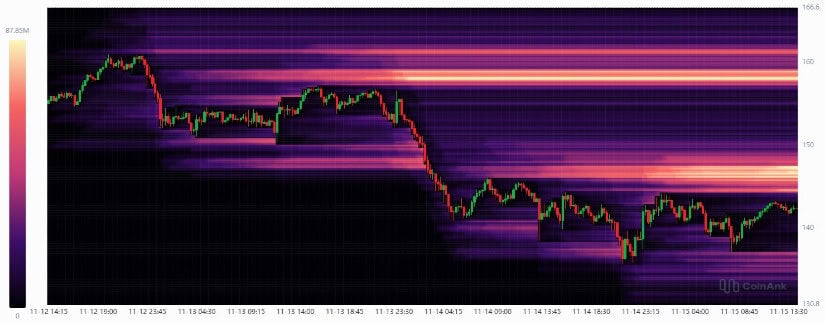
Solana’s liquidity data paints a straightforward picture: heavy short positioning is stacked around the $150 zone, creating a wall that continues to cap upside attempts. Solana Price has been grinding just below this block, with visible liquidity clusters waiting to be taken if buyers manage to push through. These pockets often act as magnets, setting up a high-probability reclaim if momentum returns.

Solana Price Prediction: SOL Faces Make-or-Break Test at 0 as Macro Pattern Signals Major Move Ahead

Liquidity shows heavy short positioning around $150, creating a major resistance wall for SOL. Source: CW8900 via X

Below current price, liquidity thins quickly, leaving only light absorption zones and suggesting that most of the battle is above, not below. A clean sweep of the $150 level could force short closures and accelerate the price back towards previous ranges. Until then, Solana remains pinned under one of its most important short-term resistance areas.

Contrary View: On-Chain Data Warns of a Demand Gap

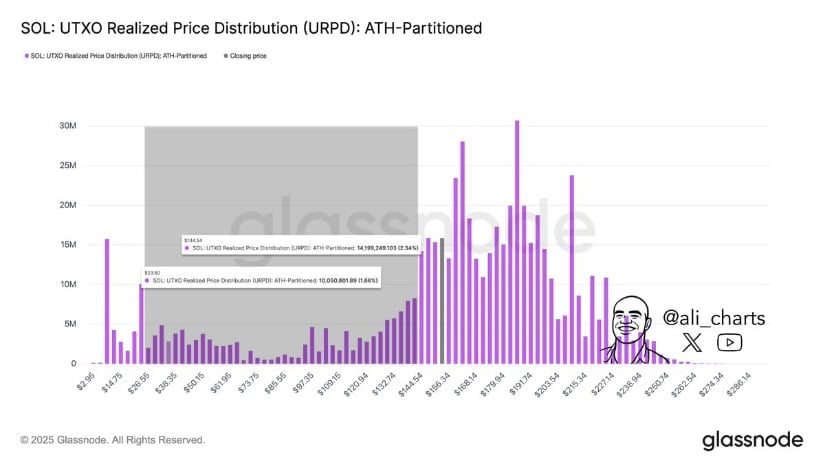
Ali Martinez’s shared Solana on-chain realized distribution exposes a concerning gap beneath $144, where very little historical demand sits. If price loses this level decisively, the SOL chart opens into a low-volume zone that stretches far lower, with the next meaningful concentration of buyers not appearing until much deeper levels. This makes the $144–$150 region more critical than it initially appears.

Contrary View: On-Chain Data Warns of a Demand Gap

On-chain data reveals a demand gap below $144, making current support levels crucial for SOL. Source: Ali Martinez via X

Despite this bearish perspective, strong inflow periods earlier in the cycle still support the idea that Solana has retained committed holders above key levels. But the on-chain void cannot be ignored, it simply means defending current support becomes absolutely necessary to avoid a momentum vacuum to the downside.

Solana Price Prediction: Bearish Momentum Targeting $95

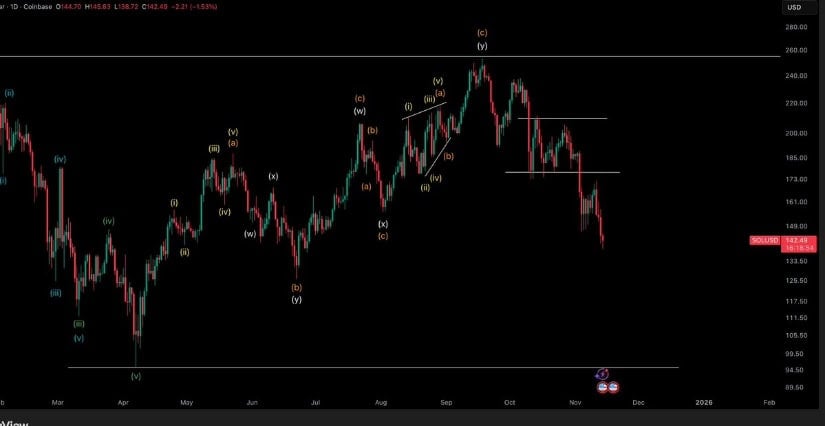
Solana price continues to move inside a corrective wave structure, with lower highs and steady rejections confirming the downward bias. The push towards the mid-$130s keeps the chart vulnerable, especially while price struggles to reclaim overhead resistance aligning around the $160 to $177 range. This ceiling has repeatedly shut down bullish attempts and remains the line that must break to neutralize the downtrend.

Solana Price Prediction: Bearish Momentum Targeting $95

Corrective structure and lower highs keep bearish pressure intact for SOL, with $95 still on the table. Source: Crypto Tony via X

With SOL’s downside targets still open, a grind towards the $95 zone remains possible if selling pressure persists. Support tests continue to weaken, and until the trendline breaks upward or structure confirms a higher low, rallies are likely to face heavy supply. Reclaiming $177 flips momentum; anything below it keeps the bearish scenario active.

Final Thoughts

Solana price now sits at a decisive point where macro strength meets short-term pressure. Liquidity dynamics, on-chain gaps, and corrective patterns all introduce caution, yet the larger structure still hints at a powerful breakout once consolidation resolves. The next major reaction around $144 to $150 will determine whether SOL stabilizes for continuation or sinks into a deeper retracement.


Source link

17 11, 2025

JPMorgan Forecasts Bitcoin Bottom, Anticipates $28.3 Trillion Challenge To Gold By 2026

By |2025-11-17T05:33:12+02:00November 17, 2025|Crypto News, News|0 Comments

Analysts at JPMorgan have pinpointed the lowest point of the ongoing Bitcoin (CRYPTO: BTC) price fall and also projected a substantial challenge to gold’s market capitalization by 2026.

What Happened: Bitcoin’s price experienced a steep decline to slightly above $94,000 per Bitcoin this week from a peak of $126,000 in October.

Nonetheless, analysts at the JPMorgan have determined the Bitcoin price floor, asserting that a $94,000 production cost suggests a very limited downside to the current Bitcoin price.

In addition, a team of JPMorgan analysts, headed by managing director Nikolaos Panigirtzoglou, restated a 2026 Bitcoin price forecast that could witness Bitcoin posing a challenge to gold’s $28.3 trillion market cap, reports the Forbes.

They highlighted that the Bitcoin-to-gold volatility ratio has trended downwards, indicating a potential Bitcoin price of nearly $170,000 in 2026.

This year, gold has soared to a market cap of $28.3 trillion, significantly outperforming Bitcoin’s $1.9 trillion. However, JPMorgan analysts are of the view that this signifies a considerable upside for Bitcoin in the coming 6-12 months.

Also Read: Bitcoin Tumbles Deeper Into Bear Territory, Hard-Won Rally Could Be On Verge Of Vanishing

Despite the recent fluctuations in Bitcoin’s price, several Bitcoin and crypto market observers continue to hold a positive outlook.

As per the outlet, Zhong Yang Chan, the head of research at CoinGecko, cited encouraging factors such as the expansion of Bitcoin and ETFs, crypto treasury companies, adoption of stablecoins, and Wall Street’s drive towards asset tokenization as bolstering the Bitcoin price.

Why It Matters: The prediction from JPMorgan analysts comes at a time when Bitcoin and other cryptocurrencies are increasingly being recognized as legitimate forms of investment. The potential challenge to gold’s market cap underscores the growing acceptance and adoption of Bitcoin and other digital assets.

With the increasing integration of cryptocurrencies into mainstream finance, the predicted price surge could significantly impact the global financial landscape.

Read Next

Robert Kiyosaki Predicts Bitcoin Will Soar to $250,000

Up Next: Transform your trading with Benzinga Edge’s one-of-a-kind market trade ideas and tools. Click now to access unique insights that can set you ahead in today’s competitive market.

This article JPMorgan Forecasts Bitcoin Bottom, Anticipates $28.3 Trillion Challenge To Gold By 2026 originally appeared on Benzinga.com

© 2025 Benzinga.com. Benzinga does not provide investment advice. All rights reserved.

Source link

17 11, 2025

XAU/USD recovers above $4,100, hawkish Fed might cap gains

By |2025-11-17T04:05:19+02:00November 17, 2025|Forex News, News|0 Comments


Gold price (XAU/USD) recovers some lost ground to near $4,105, snapping the two-day losing streak during the early European session on Friday. The precious metal edges higher on the softer US Dollar (USD).  Traders will take more cues from the Fedspeak later on Monday. The Fed’s John Williams, Philip Jefferson, Neel Kashkari and Christopher Waller are set to speak. 

Improved market sentiment after the federal government reopened undermined the safe-haven assets, such as the Gold price. The US government has reopened after US President Donald Trump signed a funding bill into law last week, ending the longest shutdown in US history, which lasted 43 days. Federal employees were directed to return to work on Thursday. 

However, investors continue to grapple with uncertainty over the release of delayed economic data following the record-long shutdown. Analysts believe that the resumption of US economic data will show job market weakness and a potential slowdown. This, in turn, could weigh on the Greenback and lift the USD-denominated commodity price. Non-yielding yellow metal tends to perform well during periods of economic uncertainty and in a low-interest-rate environment.

The upside for the yellow metal might be limited due to hawkish remarks from US Federal Reserve (Fed) officials, dimming hopes for a December interest rate cut. Kansas City Fed President Jeffery Schmid said on Friday that monetary policy should “lean against demand growth,” adding that current Fed policy is “modestly restrictive,” which he believes is appropriate. 

Financial markets are now pricing in a nearly 54% chance that the Fed will cut its benchmark overnight borrowing rate by 25 basis points (bps) at its December meeting, down from 62.9% probability that markets priced in earlier last week, according to the CME FedWatch Tool.

Gold FAQs

Gold has played a key role in human’s history as it has been widely used as a store of value and medium of exchange. Currently, apart from its shine and usage for jewelry, the precious metal is widely seen as a safe-haven asset, meaning that it is considered a good investment during turbulent times. Gold is also widely seen as a hedge against inflation and against depreciating currencies as it doesn’t rely on any specific issuer or government.

Central banks are the biggest Gold holders. In their aim to support their currencies in turbulent times, central banks tend to diversify their reserves and buy Gold to improve the perceived strength of the economy and the currency. High Gold reserves can be a source of trust for a country’s solvency. Central banks added 1,136 tonnes of Gold worth around $70 billion to their reserves in 2022, according to data from the World Gold Council. This is the highest yearly purchase since records began. Central banks from emerging economies such as China, India and Turkey are quickly increasing their Gold reserves.

Gold has an inverse correlation with the US Dollar and US Treasuries, which are both major reserve and safe-haven assets. When the Dollar depreciates, Gold tends to rise, enabling investors and central banks to diversify their assets in turbulent times. Gold is also inversely correlated with risk assets. A rally in the stock market tends to weaken Gold price, while sell-offs in riskier markets tend to favor the precious metal.

The price can move due to a wide range of factors. Geopolitical instability or fears of a deep recession can quickly make Gold price escalate due to its safe-haven status. As a yield-less asset, Gold tends to rise with lower interest rates, while higher cost of money usually weighs down on the yellow metal. Still, most moves depend on how the US Dollar (USD) behaves as the asset is priced in dollars (XAU/USD). A strong Dollar tends to keep the price of Gold controlled, whereas a weaker Dollar is likely to push Gold prices up.


Source link

17 11, 2025

Japanese Yen Forecast: USD/JPY Rises as Weak GDP Hits Rate Hike Bets

By |2025-11-17T03:50:32+02:00November 17, 2025|Forex News, News|0 Comments

East Asia Econ – PPI and Import Price Trends

This combination of Prime Minister Takaichi’s policy goals, economic data, and uncertainty about a BoJ rate hike has pushed USD/JPY higher.

Traders may also question the lasting effectiveness of further yen intervention threats, given Takaichi’s support for ultra-loose policy and fiscal stimulus plans. Significantly, the third quarter GDP numbers call for both, fiscal stimulus and a more dovish BoJ Policy stance.

US Economic Data and the Fed Outlook

While Japanese data weighs on BoJ rate hike bets, US economic indicators and Fed speakers will influence US dollar demand later on Monday.

Economists expect the NY Empire State Manufacturing Index to drop from 10.7 in October to 6.1 in November. A larger-than-expected drop toward 0 could raise fears of a US recession, weighing on the US dollar. However, the numbers are unlikely to affect the Fed’s policy stance. US inflation and jobs data remain the Fed’s focal points as policymakers await delayed data following the US government reopening.

Meanwhile, hawkish Fed speeches may send USD/JPY higher during the US session. FOMC members Jefferson and Williams are due to speak. Rising Fed focus on inflation over jobs data could further temper bets on a December Fed rate cut. A less dovish Fed policy stance may send USD/JPY above the November 12 high of 155.044.

The key question remains whether concerns about elevated inflation override weaker labor market signals at the December FOMC meeting.

USD/JPY Scenarios: Diverging Monetary Policies

  • Bearish USD/JPY Scenario: Hawkish BoJ comments, intervention threats, weak US data, and dovish Fed rhetoric could drag USD/JPY toward 150.
  • Bullish USD/JPY Scenario: Dovish BoJ signals, strong US data, and hawkish Fed rhetoric could send USD/JPY toward 157.

Source link

17 11, 2025

Asia Pacific Emerges as the Fastest-Growing Hub for Omega-3

By |2025-11-17T03:37:14+02:00November 17, 2025|Dietary Supplements News, News|0 Comments


Delray Beach, FL, Nov. 16, 2025 (GLOBE NEWSWIRE) — According to MarketsandMarkets™, The global omega-3 market is estimated to be USD 4,362.2 million in 2025 and is projected to reach USD 7,756.4 million by 2030, at a CAGR of 12.2% from 2025 to 2030.

What’s behind this momentum? A powerful mix of rising health awareness, innovation in sustainable sourcing, and a growing preference for preventive nutrition. Let’s explore how omega-3s are transforming the global health and wellness landscape.

Why Is Omega-3 Becoming a Must-Have for Modern Consumers?

Omega-3 fatty acids have evolved from being a niche supplement to a cornerstone of daily wellness routines. Consumers are increasingly aware of their proven benefits for heart, brain, and joint health, and are integrating omega-3-rich foods and supplements into their diets.

This trend is reinforced by the rising prevalence of chronic diseases such as cardiovascular disorders, cognitive decline, and arthritis. Omega-3s are perceived not just as nutritional aids but as preventive and therapeutic tools—helping consumers take charge of long-term health in a world shifting toward proactive wellness.

How Are Plant-Based and Algae-Derived Omega-3s Disrupting the Market?

The omega-3 industry is undergoing a sustainability revolution. Once dominated by fish and krill oil, the market is now embracing vegan and vegetarian sources like algae and flaxseed oils. This shift is being fueled by:

  • The rise of plant-based diets and ethical consumption.
  • Environmental concerns over marine resource depletion.
  • Advancements in extraction and stabilization technologies that improve purity and shelf life.

As a result, consumers can now find omega-3s in fortified foods, beverages, and functional nutrition products—all without compromising on ethics or taste. Manufacturers are also enhancing product performance through microencapsulation, improving stability and masking odor or flavor challenges.

Request Specialized Data to Suit Your Business Requirements

Why Is Asia Pacific the Next Hotspot for Omega-3 Growth?

The Asia Pacific region is poised to be the fastest-growing market for omega-3s through 2030. Key drivers include:

  • Growing health consciousness and spending on supplements.
  • A rapidly aging population seeking preventive healthcare.
  • Expansion of the infant nutrition sector, where omega-3s are vital for brain development.
  • Government initiatives promoting nutritional health awareness.

Manufacturers are capitalizing on these trends by developing ready-to-go functional foods and beverages infused with omega-3s. The region’s rising demand for algae-based and plant-derived omega-3s also aligns with sustainability goals and vegan lifestyles, creating new growth avenues for both established brands and new entrants.

Who’s Leading the Omega-3 Revolution?

The global omega-3 industry is powered by key players such as BASF SE (Germany), Cargill (US), dsm-firmenich (Netherlands), ADM (US), Aker BioMarine (Norway), and Corbion (Netherlands). These companies are setting benchmarks in:

  • Sustainable sourcing and production.
  • Clinical validation of health benefits.
  • Diversification into pharmaceuticals, pet nutrition, and cosmetics.

By focusing on innovation and transparency, these leaders are turning omega-3s into a multi-sector growth engine — extending far beyond traditional dietary supplements.

What’s New in Omega-3 Innovation?

Recent developments highlight the industry’s focus on cutting-edge science and global expansion:

  • Corbion (July 2025) gained regulatory approval in China for its algae-based omega-3 line — a major step in sustainable nutrition.
  • Epax (April 2025) introduced EPAX Evolve 05, the first commercial VLC-PUFA product for healthy aging, vision, and bone health.
  • Aker BioMarine & Nordmann (March 2025) joined forces to distribute krill and algae oils across Central Europe.
  • Brenntag (May 2024) partnered with Aker BioMarine to expand omega-3 access across Southeast Asia.
  • Bioriginal (February 2024) acquired POS Biosciences, strengthening its portfolio in natural oils and proteins.

Make an Inquiry to Address your Specific Business Needs


Source link

17 11, 2025

Dogecoin Price Prediction: DOGE Steadies at $0.16 With Signs of a Potential Trend Reversal

By |2025-11-17T03:31:16+02:00November 17, 2025|Crypto News, News|0 Comments

Dogecoin (DOGE) is once again in the spotlight, drawing attention from traders and investors curious whether this meme-driven cryptocurrency can sustain gains amid a cautious market recovery.

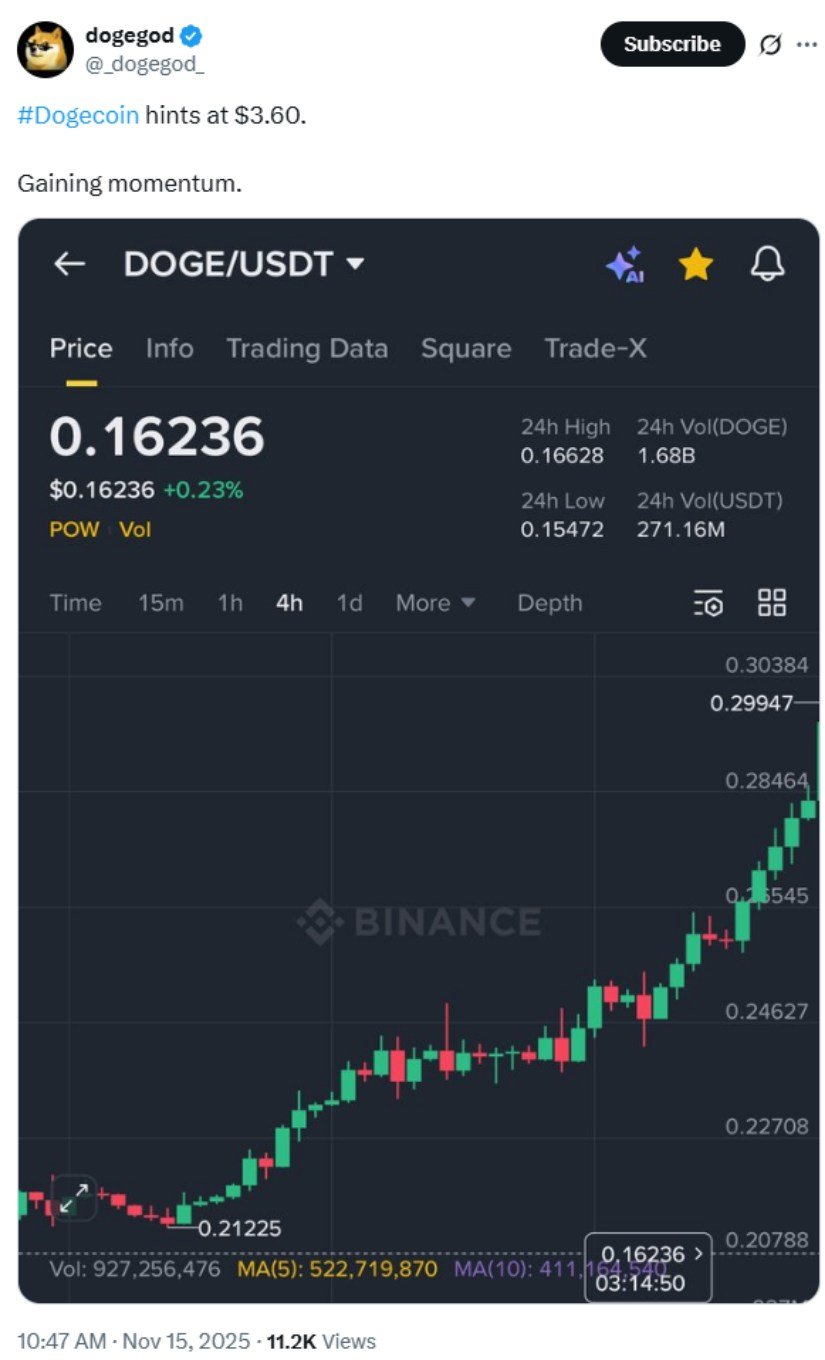
As of November 16, 2025, TradingView data shows DOGE trading around $0.16 with rising daily volume. While some speculation mentions a surge to $3.60, current technical indicators and historical patterns suggest such levels are highly unlikely without major market catalysts. Investors are focusing on verifiable trends, including support and resistance levels, momentum indicators, and community activity, to navigate the cryptocurrency’s inherent volatility responsibly.

Dogecoin Price Stabilizes Above Key Support Levels

Recent market charts from TradingView indicate Dogecoin has maintained support above $0.164, reclaiming a previously descending trendline that may suggest the early stages of a bullish reversal.

Dogecoin is currently showing a weekly sell signal, and bullish momentum is needed to reach the $1.00+ target. Source: @Shan_Specter via X

Shan Specter, a crypto market analyst active since 2016 and contributor to CoinMetrics research, notes:

“DOGE could approach $1 if sustained trading interest and community engagement continue. Short-term fluctuations are expected, but support levels around $0.16 remain critical for maintaining stability.”

Technical tools support this cautious outlook. A bullish Relative Strength Index (RSI) divergence—where DOGE price forms lower lows while RSI forms higher lows—signals reduced selling pressure and potential accumulation. The Gaussian Channel (3-day) indicates that dips below the lower band historically precede short-to-medium-term recoveries. A confirmed upward move would require a breakout above $0.168. Conversely, a failure to hold $0.16 could trigger sharp retracements toward historically lower liquidity zones.

Mixed Sentiment in the Dogecoin Community

Community sentiment remains polarized. Optimists point to historical endorsements from public figures and potential platform integrations, such as X, as reasons for bullish expectations. Skeptics caution that extreme price targets, like $3.60, are unrealistic without unprecedented market catalysts.

Dogecoin Price Prediction: DOGE Steadies at alt=

Dogecoin is showing upward momentum, with speculative talk of reaching $3.60.Source: @_dogegod_ via X

Retail activity continues to drive short-term volatility. Data from CoinGecko shows trading volume often spikes in tandem with social media trends, illustrating how sentiment can generate rapid but transient price swings. Analysts emphasize that recognizing this interplay between social engagement and technical fundamentals is crucial for responsible trading.

Risks and Volatility

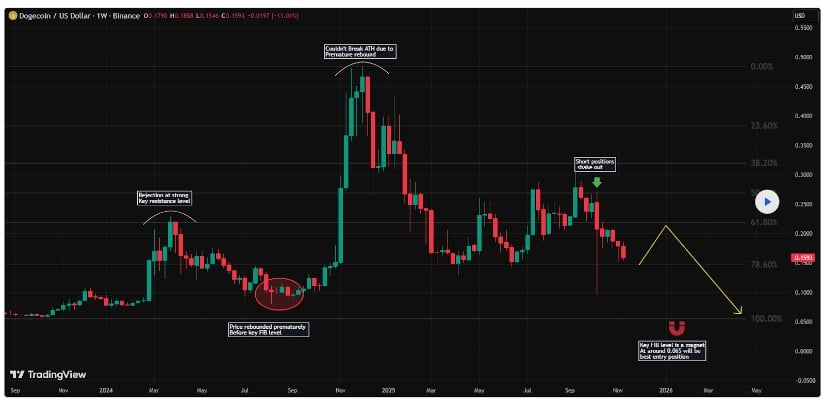
Despite early bullish signs, risks remain significant. Ali Charts, a crypto research platform, notes that support below $0.16 is thin, with a liquidity gap extending toward $0.073. Loss of momentum in this zone could trigger sharp declines. Additionally, Dogecoin’s price frequently mirrors broader cryptocurrency trends, especially Bitcoin’s performance, due to the predominance of retail traders.

Risks and Volatility

Dogecoin may experience a short-term rise, but a key Fibonacci level at $0.06 is considered the safest entry before any significant upward move. Source: Crypto-Shrimp on Tradingview

Investors must consider macro factors—such as BTC price movements, global market sentiment, and potential regulatory shifts—when evaluating DOGE risk. Technical signals are conditional and cannot guarantee outcomes; all projections should be treated as probabilistic, not definitive.

Outlook for Dogecoin Price in 2025

For the remainder of 2025, analysts recommend focusing on realistic technical and market indicators rather than sensationalized price targets. Short-term resistance near $0.18 aligns with recovery trends, while extreme projections like $3.60 remain highly unlikely without major catalysts.

Key factors to monitor in the next 1–2 weeks include:

  • Support levels: Holding $0.16 is crucial to prevent sharp corrections.

  • Trading volume: Sustained buying interest can validate recovery patterns.

  • Community sentiment: Positive engagement may influence short-term momentum but remains volatile.

Risks and Volatility

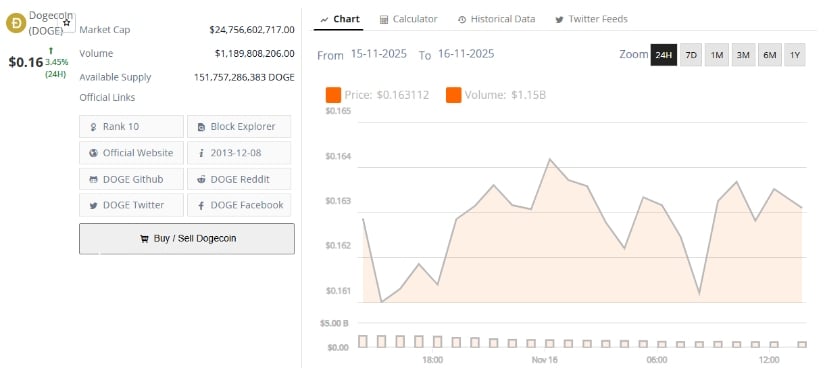
Dogecoin was trading at around $0.16, up 3.45% in the last 24 hours. Source: Brave New Coin

Final Thoughts

Dogecoin continues to generate market attention, but its trajectory is best understood through a combination of technical analysis, trading activity, and market fundamentals. Informed strategies and risk management remain essential when navigating this highly speculative, sentiment-driven cryptocurrency.

Source link

17 11, 2025

Harvard-trained doctor issues important health warning to people who drink tea – Health – News

By |2025-11-17T01:36:26+02:00November 17, 2025|Dietary Supplements News, News|0 Comments


A Harvard-trained gastroenterologist has warned people to examine their tea drinking habits, as it could have harmful effects on your gut and liver.

Tea is a relaxing drink served in many forms, whether you drink it with your breakfast or before going to bed. While it can be good for your health in some aspects, like helping with digestion, a doctor is now warning of potential health issues that come with drinking the liquid.

Harvard-trained gastroenterologist Dr Saurabh Sethi took to his  Instagram account to warn his 1.3 million followers to examine their tea drinking habits, to make sure it’s not harming their health.

“I’m a board certified gastroenterologist and here are [the] seven worst tea habits wrecking your gut + liver,” he wrote at the start of the post.

1. Drinking tea on empty stomach

For his first point, Dr Sethi warned people not to have a cup of tea on an empty stomach, but to make sure to eat something before or while enjoying your cuppa.

He went on to explain that drinking tea on an empty stomach will irritate the stomach lining due to its acidity and compounds like caffeine and tannins.

This can later lead to acid reflux, nausea, and general discomfort. It can also cause dehydration because tea is a diuretic and may interfere with iron absorption, particularly for those with anemia.

2. Sweetened teas

Following this, Dr Sethi proceeded to caution people about consuming excessive amounts of iced teas or milk teas, citing their elevated sugar levels.

He informed his followers: “Iced teas or milk teas can pack 30 – 40 grams of sugar.”

This indicates that regularly consuming these types of sweetened teas can elevate someone’s chances of developing conditions such as non-alcoholic fatty liver disease, or diabetes.

3. ‘Detox’ or Slimming teas

For his third observation, Dr Sethi disclosed that detox teas, or ‘slimming’ teas may not deliver the benefits they promise in advertisements. While they could potentially work for you, the doctor proceeded to explain that the ‘slimming’ component in these teas typically consists of some form of laxatives.

Consuming these tea ‘laxatives’ excessively can result in overall dehydration, electrolyte imbalance, as well as intestinal damage.

Due to this risk, it’s crucial to never consume more than what’s recommended, and you should also consult the NHS’ guidelines on laxatives to avoid any permanent harm to your body.

4. Overdoing green tea extracts

While consuming green tea is commonly recognized as a superior and healthier option compared to your standard black tea, it’s equally important not to go overboard.

If you dislike the flavor of green tea, then green tea supplements have emerged as a popular method to still obtain the advantages of green tea, such as the antioxidants and polyphenols, without needing to drink it. However, Dr. Sethi cautioned against over-reliance on these supplements, citing a rare but real risk of liver toxicity.

5. Sipping too hot tea

While many of us pour boiling water directly onto our teabag, Dr. Sethi advises waiting until the water cools below 65C before drinking. He explained that regularly consuming tea hotter than 65C can increase the risk of esophageal cancer.

A 2020 Chinese study found a significant link between drinking tea hotter than 150°F and Esophageal squamous cell carcinoma, a type of cancer that begins in the flat squamous cells lining the esophagus, the tube connecting the throat and stomach.

6. Consuming caffeinated teas late at night

Although tea generally contains less caffeine than coffee, it’s still crucial to recognize its presence. For this reason, Dr. Sethi recommends avoiding chai and green teas late at night.

He further explained that caffeine lingers in our bodies, potentially disrupting sleep.

This disruption can hinder your body’s ability to repair itself overnight, including vital organs like your liver or gut.

7. Overindulging in boba or bubble teas

Dr. Sethi issued a warning to bubble tea enthusiasts, cautioning them about the high sugar content and ‘hidden calories’ in their favorite drinks.

He explained that the combination of sugar and starchy boba pearls, made from tapioca, can lead to an intake of hidden calories that drinkers may not be aware of.

This could potentially result in insulin resistance and non-alcoholic fatty liver disease. To avoid these health issues, Dr. Sethi advises maintaining a healthy lifestyle and diet.


Source link

17 11, 2025

XRP Price Prediction: 716 Whale Transfers and $768M Accumulation Push XRP Toward a Potential Breakout

By |2025-11-17T01:30:16+02:00November 17, 2025|Crypto News, News|0 Comments

XRP whale activity has surged to a four-month high, signaling growing institutional interest and hinting at potential market movements that could influence XRP price and trading sentiment.

Recent data shows 716 XRP transactions exceeding $1 million alongside a $768 million accumulation by large holders, highlighting strategic positioning in the market. Analysts suggest that such concentrated activity often precedes short-term volatility, making XRP one of the most closely monitored cryptocurrencies this week.

XRP Price Today: Market Overview

XRP price has dipped slightly, trading at $2.24 as of November 15, 2025, down 1.61% over the past 24 hours. According to CoinMarketCap data, XRP’s market capitalization stands at $135.33 billion, while trading volume has declined to $3.26 billion, a 56.5% drop from previous periods.

$2.26 (−0.61%), Market Cap $136.3, 24h Volume $3.02B, 489K holders, Supply 99.98B/100B XRP. Source: CoinMarketCap

Despite this downturn, analysts point to short-term bullish signals that could influence XRP’s trajectory. A TD Buy signal recently appeared on the XRP chart, suggesting a potential rebound as the weekend approaches. While the market remains in a consolidation phase, the signal hints at an opportunity for upward movement if support levels hold.

XRP Whale Activity Hits a Four-Month High

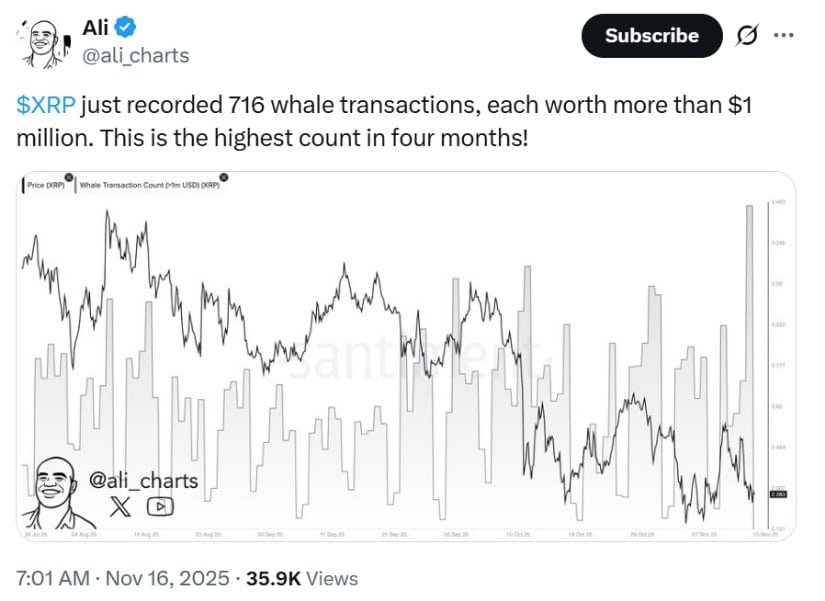
A notable development in XRP news today is the surge in whale activity. Data from Santiment, highlighted by analyst Ali Charts, shows 716 XRP transactions exceeding $1 million, marking a four-month peak. This spike in large transactions corresponds with market stability around $2.20, suggesting strategic positioning by institutional and high-net-worth holders.

XRP Price Prediction: 716 Whale Transfers and 8M Accumulation Push XRP Toward a Potential Breakout

XRP has hit a four-month high with 716 whale transactions exceeding $1 million each, signaling heightened institutional activity. Source: Ali Martinez via X

BeInCrypto reports that these whales have collectively accumulated $768 million worth of XRP over the past four days. While this accumulation could point to potential upside, analysts caution that simultaneous inflows to exchanges may indicate distribution risks.

Technical Signals Suggest Potential Upside

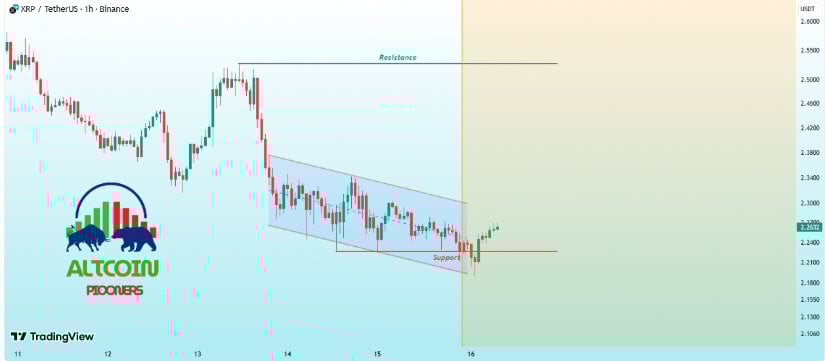
From a technical perspective, XRP remains in a descending channel, currently testing support around $2.43. Price recently pulled back from resistance at $2.55, forming a consolidation pattern that may indicate pent-up buying pressure. Analysts tracking moving averages and Fibonacci retracement levels highlight several bullish indicators:

  • Blue moving average above red: Suggesting a continuation of an upward trend.

  • Fibonacci retracement at 38.2%: Price rebounded from this support level, a common zone for trend reversals.

  • MACD above zero: Indicating stronger buyer momentum.

Technical Signals Suggest Potential Upside

XRP tests $2.43 support in a descending channel; holding may spark a bounce to $2.52–$2.65; a breach risks $2.35. Source: AltcoinPiooners on TradingView

Should the weekly candle close above the green support zone, XRP could see an upside move toward $2.52, with potential resistance levels at $3.66, $4.12, and $4.71 based on Fibonacci extensions and higher-timeframe structure.

Analysts remain cautiously optimistic about XRP’s near-term prospects. While short-term volatility is possible, the combination of whale accumulation, technical support, and TD Buy signals presents a favorable setup for potential upside.

Final Thoughts

XRP’s recent whale activity and accumulation trends indicate growing institutional interest, making it one of the most closely watched cryptocurrencies this week. While the market has experienced short-term weakness, the combination of TD Buy signals, technical support levels, and large whale movements suggests that XRP may be poised for a rebound.

Technical Signals Suggest Potential Upside

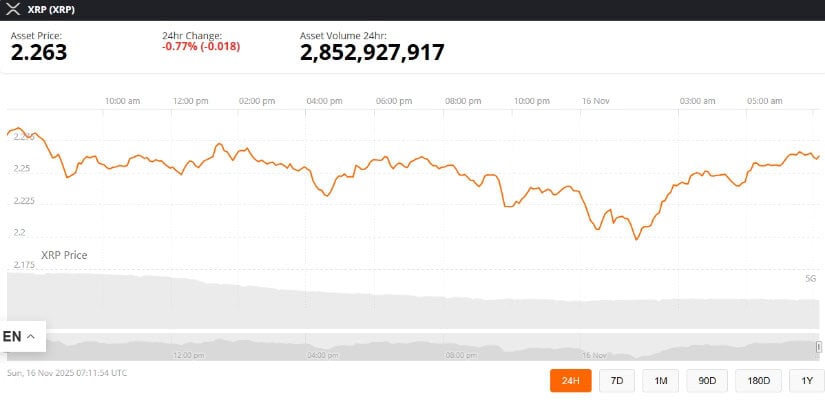
XRP was trading at around 2.26, down 0.77% in the last 24 hours at press time. Source: XRP price via Brave New Coin

Investors should remain cautious and monitor both the XRP price today and regulatory developments, including any updates related to the XRP SEC case, as these factors could significantly influence the token’s trajectory.

Overall, the current market conditions highlight the potential for XRP price growth but also emphasize the importance of risk management given ongoing volatility. Traders and long-term holders alike may find opportunities in XRP’s near-term consolidation and possible breakout scenarios.

Source link

Go to Top