About Editorial team of BIPNs

Main team of content of bipns.com. Any type of content should be approved by us.
24 10, 2025

Platinum price prefers the bullish trend– Forecast today – 24-10-2025

By |2025-10-24T14:12:32+03:00October 24, 2025|Forex News, News|0 Comments


Platinum price attempted to settle above $1605.00 level, to notice recording some gains by hitting $1665.00 level, providing weak sideways trading by its stability near $1620.00.


Confirming that holding above $1605.00 level is important, which forms an important extra support to reinforce the chances of gathering the positive momentum, then attack the next barrier near $1695.00, while breaking the current support will force the price to provide new corrective trading, which forces it to suffer some losses by reaching $1565.00 and $1525.00.


The expected trading range for today is between $1600.00 and $1695.00


Trend forecast: Bullish


Source link

24 10, 2025

Euro to Dollar Rate Calm Before CPI, Sanctions Stir Oil Markets

By |2025-10-24T14:01:31+03:00October 24, 2025|Forex News, News|0 Comments


– Written by

The Euro to US Dollar exchange rate (EUR/USD) held close to 1.1600 on Thursday as calm prevailed ahead of crucial US data. A spike in oil prices following new sanctions on Russian energy firms limited euro gains.

EUR/USD Forecasts: Held Near 1.1600

The Euro to Dollar (EUR/USD) exchange rate found support just above 1.1580 on Thursday and traded just above 1.1600 as tight ranges prevailed. US economic uncertainty hampered the dollar with key data releases due on Friday while higher oil prices tended to undermine the Euro.

Currency ranges were relatively narrow, but there was further volatility in energy and metals. Rabobank warns that further volatility is inevitable amid a new world order; “there is a very high probability that the whirlwind of crazy headlines so far in 2025 have just been a warm-up for what is yet to come. After all, the Trump admin is still laying the foundations for a new US and global economy.”

UoB commented; “The rebound from oversold conditions suggests that instead of weakening, EUR is more likely to range-trade today, expected to be between 1.1585 and 1.1625.”

ING is not convinced that ranges will break in the near term; “EUR/USD is hovering around 1.160, a level that, in our view, can work as an anchor again today and possibly for a few more days should US CPI fail to add much to the dollar narrative.”

ING maintains a year-end EUR/USD target of 1.20.

Save on Your EUR/USD Transfer

Get better rates and lower fees on your next international money transfer.
Compare TorFX with top UK banks in seconds and see how much you could save.


Compare the Best EUR/USD Rates »

Energy prices will be important with Brent jumping close to 5% on Thursday and posting a 2-week high as the US targeted Russian oil companies.

Danske Bank commented; “In the Ukraine war, the US hit Russia with sanctions on Rosneft and Lukoil, two of Russia’s largest oil companies.”

There were also reports that China would suspend Russian seaborne oil purchases.

Danske added; “Oil prices rose immediately following the announcement. This move is adding fuel to the fire and comes just after the EU approving the 19th package of sanctions, which include a ban on Russian liquefied natural gas imports.”

The US data releases will be a key element late in the week, especially given that the government shutdown has prevented the release of most official data.

The latest inflation data, as well as the PMI business confidence data will be released on Friday.

Within the PMI data, the headline figures as well as evidence of prices and jobs will be scrutinised closely.

Markets remain extremely confident that the Fed will cut rates this month with over a 90% chance of a further move in December.

According to Danske; “With two Fed cuts already fully priced – leaving limited room for further dovish repricing – we think the balance of risks remains tilted toward a tactically stronger USD.”

Like this piece? Please share with your friends and colleagues:


International Money Transfer? Ask our resident FX expert a money transfer question or try John’s new, free, no-obligation personal service! ,where he helps every step of the way,
ensuring you get the best exchange rates on your currency requirements.

TAGS: Euro Dollar Forecasts

Source link

24 10, 2025

Probiotic Dietary Supplement Market Size

By |2025-10-24T13:51:01+03:00October 24, 2025|Dietary Supplements News, News|0 Comments


Report Overview

The Global Probiotic Dietary Supplement Market size is expected to be worth around USD 88.0 Billion by 2034, from USD 25.7 Billion in 2024, growing at a CAGR of 13.1% during the forecast period from 2025 to 2034. In 2024 North America held a dominant market position, capturing more than a 43.7% share, holding USD 11.2 Billion in revenue.

Probiotic dietary supplements are products containing “live microorganisms that, when administered in adequate amounts, confer a health benefit on the host,” per the joint FAO/WHO working definition that still anchors modern guidance. They are supplied chiefly as capsules, powders, and functional blends using Lactobacillus and Bifidobacterium strains, among others.

  • In the U.S., probiotics ranked among the most commonly used non-vitamin/mineral supplements; the National Health Interview Survey reported about 4 million adults (1.6%) used probiotics or prebiotics in the prior 30 days in 2012, with usage quadrupling versus 2007—signaling durable consumer interest in microbiome-supporting formats.

Probiotic Dietary Supplement Market Size

The industrial scenario is shaped by converging public-health and regulatory priorities. Antimicrobial resistance (AMR) intensifies demand for non-antibiotic approaches to gut health and infection risk reduction: WHO estimates 1.27 million deaths were directly attributable to bacterial AMR in 2019 and 4.95 million deaths were associated with AMR globally. In the U.S., Clostridioides difficile remains a major burden, with CDC estimating 223,900 cases in hospitalized patients and 12,800 deaths in 2017, a key clinical context where microbiome strategies are studied.

Key demand drivers include persistent gastrointestinal disease burdens, high antibiotic use, and wider awareness of microbiome health. UNICEF reports that diarrhoea still accounted for about 9% of all under-5 deaths in 2021—roughly 1,200 deaths per day—highlighting a continuing global health need alongside oral rehydration and vaccination programs.

Within OECD/EU countries, community antibiotic consumption averaged 17.0 defined daily doses (DDD) per 1,000 inhabitants per day in 2022, while one in five bacterial infections in OECD countries are now resistant, contributing to ~79,000 deaths annually across OECD and EU/EEA—macro trends that sustain interest in microbiome-supportive strategies. U.S. survey data show probiotics/prebiotics were among the most commonly used non-vitamin/mineral supplements, reflecting mainstream adoption that industry must meet with quality and evidence.

Key Takeaways

  • Probiotic Dietary Supplement Market size is expected to be worth around USD 88.0 Billion by 2034, from USD 25.7 Billion in 2024, growing at a CAGR of 13.1%.
  • Capsules held a dominant market position, capturing more than a 33.80% share in the global probiotic dietary supplement market.
  • Adults held a dominant market position, capturing more than a 67.30% share in the global probiotic dietary supplement market.
  • North America region held a dominant position in the global probiotic dietary supplement market, capturing approximately a 43.7% share, corresponding to an estimated value of USD 11.2 billion.

By Form Analysis

Capsules dominate with 33.80% share owing to their convenience and high consumer trust

In 2024, Capsules held a dominant market position, capturing more than a 33.80% share in the global probiotic dietary supplement market. The capsule form has remained the most preferred delivery format due to its ease of consumption, longer shelf stability, and effective protection of live probiotic strains from stomach acids. Consumers increasingly favor capsules for their accurate dosage, portability, and compatibility with daily supplement routines. This format also supports sustained release, ensuring probiotics reach the intestine effectively, which enhances their therapeutic benefits.

The demand for capsule-based probiotic supplements is expected to continue expanding, driven by the growing health-conscious population and rising adoption of preventive healthcare practices. Manufacturers are focusing on innovative capsule technologies such as delayed-release and enteric-coated forms to improve strain survivability and absorption rates. The rise of vegan capsules made from plant-derived cellulose further aligns with the global trend toward clean-label and natural products.

By End-use Analysis

Adults dominate with 67.30% share driven by rising awareness of digestive and immune health

In 2024, Adults held a dominant market position, capturing more than a 67.30% share in the global probiotic dietary supplement market. The strong demand among adults is primarily driven by the growing focus on gut health, immune system support, and overall wellness management. Increasing lifestyle-related digestive disorders and stress-induced health issues have encouraged adults to incorporate probiotic supplements as part of their daily routine. This segment has also benefited from higher disposable incomes and greater health awareness, particularly in urban populations.

The adoption of probiotic supplements among adults is expected to rise steadily, supported by expanding retail availability and product diversification across dosage forms. Many adults prefer capsules and tablets due to their convenience, while others opt for powders or functional beverages for easier integration into diets. Marketing efforts emphasizing natural wellness, preventive health, and scientifically backed probiotic strains have further strengthened consumer confidence in this segment.

Probiotic Dietary Supplement Market ShareProbiotic Dietary Supplement Market Share

Key Market Segments

By Form

  • Chewables & Gummies
  • Capsules
  • Powders
  • Tablets & Softgels
  • Others

By End-use

Emerging Trends

Generic Probiotics” to Harmonized, Strain-Verified, Fiber-Paired Products

Across the category, one clear trend is a shift from broad “probiotic” messaging to rigorously defined, strain-verified supplements that align with emerging international guidance—and that increasingly pair with dietary fiber (synbiotics) to support efficacy. In the 2024 discussion, an electronic working group with 38 Member countries and 14 Observers participated—an unusually broad coalition for a technical topic—showing regulators’ and governments’ shared interest in clarity.

National rules are moving in the same direction. India’s regulator, FSSAI, already requires that probiotic foods/supplements deliver a minimum viable count of ≥10⁸ CFU per recommended daily serving. This numeric threshold pushes brands to validate manufacturing, stability, and label claims through a product’s shelf life—exactly the kind of discipline that Codex harmonization would encourage globally.

At the same time, product design is shifting toward synbiotics—pairing live microbes with fibers that help them thrive—because typical diets fall short on fiber. The World Health Organization recommends adults consume at least 25 g/day of naturally occurring dietary fiber as part of healthy carbohydrate patterns. Many populations undershoot this, making fiber-paired probiotic formats a logical step for real-world effectiveness.

Healthcare system realities are also shaping this trend. Community antibiotic exposure—often disruptive to the gut microbiome—remains substantial in high-income regions. The EU/EEA population-weighted mean antibiotic consumption in the community was 17.0 defined daily doses (DDD) per 1,000 inhabitants per day in 2022, underscoring demand for products that are positioned for use during or after necessary antibiotic courses.

Drivers

Growing Need for Gut Health Support Amid High Infectious-Disease Burden

One major driving factor for the demand for probiotic dietary supplements is the persistent high burden of gastrointestinal infections—particularly diarrhoeal diseases—globally, which creates heightened consumer and healthcare interest in gut microbiome support. According to UNICEF data, diarrhoea accounted for approximately 9% of all deaths among children under five years of age in 2021. This translates to over 1,200 children dying per day, or about 444,000 children a year, despite effective and low-cost treatments being available.

Furthermore, high antibiotic usage and rising antimicrobial resistance (AMR) are linked with disruptions in the gut microbiome, increasing the interest in gut-health management. WHO estimates that bacterial antimicrobial resistance was directly responsible for 1.27 million deaths in 2019 and contributed to nearly 4.95 million deaths overall.

Government and global health initiatives further underscore this trend. UNICEF’s work on water, sanitation and hygiene (WASH) indicates that roughly 400,000 children under the age of five die annually due to inadequate WASH services, which increase susceptibility to diarrhoeal and gut-related diseases. The double burden of infectious disease and compromised gut health means that more families and healthcare systems are looking for preventive interventions—including dietary supplementation—to fill gaps that infrastructure alone cannot immediately address.

Restraints

Regulatory And ­Scientific Evidence Barriers

One of the major restraining factors in the growth of the probiotic dietary supplement category lies in the significant regulatory and scientific-evidence hurdles that accompany claims of health benefit. In the European Union, the European Food Safety Authority (EFSA) has consistently rejected health-claim applications for probiotics: for example, the terminology “probiotic” is itself treated as an implied health claim under Regulation (EC) 1924/2006, leading to a prohibition on products being marketed with that term unless the claim is authorised.

According to analysis of the EFSA claims database covering 2005-2013, although approximately 78% of analyzed claims related to gut-health or probiotic foods were judged by the EFSA panel to be “(possibly) beneficial,” they nevertheless failed to satisfy EFSA’s criteria for official approval.

A related issue is the quality and consistency of human evidence. EFSA and other regulators emphasise the need for well-conducted human trials in the relevant target population with clearly defined endpoints that reflect maintenance or improvement of normal physiological functions, rather than therapeutic claims of disease treatment. Many probiotic submissions have suffered from insufficient strain characterisation, inadequate human trial design, or poorly defined functional endpoints such as “supports immunity” without measurable outcome.

Another dimension is regulatory safety oversight. In the United States, the Food and Drug Administration (FDA) has issued formal warnings concerning probiotic products in vulnerable populations. For example, the FDA reported that a preterm infant administered a probiotic product developed invasive sepsis and died. The agency noted “more than two dozen other reported adverse events in the United States since 2018” linked to probiotic use in hospitalized infants.

Opportunity

Probiotics aligned to child-gut health and AMR strategies

A powerful growth opportunity for probiotic dietary supplements is to design, test, and position strain-specific products that sit alongside child-gut health and antimicrobial-resistance (AMR) strategies in primary care and maternal-child health programs. The public-health burden remains large. UNICEF estimates diarrhoea caused about 9% of all under-5 deaths in 2021—over 1,200 child deaths every day—despite low-cost treatments being available. That is roughly 444,000 deaths a year, highlighting persistent gut vulnerability and the need for supportive nutrition solutions families can actually access.

The World Health Organization (WHO) adds that diarrhoeal disease kills around 443,832 children under 5 each year and causes nearly 1.7 billion childhood cases annually, numbers that keep gut health on the policy agenda in low- and middle-income settings.

AMR intensifies this opportunity. Disrupted microbiomes after antibiotic courses are common, and the scale of AMR is sobering: WHO estimates 1.27 million deaths directly attributable to bacterial AMR in 2019, contributing to 4.95 million deaths overall. OECD reports that one in five bacterial infections in OECD countries are resistant, with about 79,000 deaths each year across OECD and EU/EEA; most AMR deaths are linked to healthcare-acquired resistant infections.

Antibiotic exposure in the community remains substantial too; in the EU/EEA the mean human antibiotic consumption was 16.4 defined daily doses (DDD) per 1,000 inhabitants per day (2020), and around 90% of use occurs in the community—right where consumer health products operate.

On the policy side, international standard-setting is moving—another growth tailwind. Codex Alimentarius (FAO/WHO) has been considering harmonized probiotic guidelines for foods and dietary supplements, an effort discussed through the Codex Committee on Nutrition and Foods for Special Dietary Uses. Clearer, internationally referenced guidance on definitions, labeling, and evidence would lower regulatory ambiguity and facilitate cross-border trade for well-documented strains.

Regional Insights

North America dominates with 43.70% share (USD 11.2 billion) due to mature healthcare infrastructure and high consumer wellness focus

In 2024, the North America region held a dominant position in the global probiotic dietary supplement market, capturing approximately a 43.70% share, corresponding to an estimated value of USD 11.2 billion in that year. This strong regional performance is underpinned by high supplement usage among adults, advanced retail and omnichannel distribution networks, and a long-established culture of preventive healthcare. The region benefits from comprehensive regulatory frameworks that support dietary-supplement innovation, alongside a highly educated consumer base that readily adopts evidence-based functional health products.

The value captured reflects not only strong consumer demand but also premium pricing of probiotic supplements, development of technologically advanced strain formulations, and the significant presence of key market players headquartered in North America.

Probiotic Dietary Supplement Market Regional AnalysisProbiotic Dietary Supplement Market Regional Analysis

Key Regions and Countries Insights

  • North America
  • Europe
    • Germany
    • France
    • The UK
    • Spain
    • Italy
    • Rest of Europe
  • Asia Pacific
    • China
    • Japan
    • South Korea
    • India
    • Australia
    • Rest of APAC
  • Latin America
    • Brazil
    • Mexico
    • Rest of Latin America
  • Middle East & Africa
    • GCC
    • South Africa
    • Rest of MEA

Key Players Analysis

Vitakem Nutraceuticals Inc: A U.S.-based contract manufacturer and private-label specialist in nutraceuticals, Vitakem offers full turnkey services under GMP certification. It lists a range of probiotic/gut-health products (for example, a “30 Billion-Biotic” delivering 30 billion CFU per serving) on its site. The company emphasizes speed, small-batch flexibility (minimums of ~144 bottles for some stock items) and supports export/fulfilment for e-commerce brands.

Lesaffre: A French-origin fermentation and yeast-science company with ~170 years of heritage, Lesaffre develops live yeast, yeast fractions and microbial ingredients for human health, nutrition and probiotics. Its offering includes patented yeast probiotic strain S. cerevisiae CNCM I-3856 (ibSium®) noted for gut resilience during antibiotic therapy. Lesaffre’s strength lies in microbial ingredient innovation rather than consumer-facing supplement branding.

H&H Group: A Hong Kong-listed nutrition & wellness company with a portfolio covering infant formulas, adult nutrition, probiotic and nutritional supplements, and pet nutrition. In its 2024 annual report it noted revenue from “paediatric probiotic & nutritional supplements” in mainland China of RMB 805.8 million, down 32.9 % year-on-year. The company is focusing on premiumisation, channel optimisation and consumer health trends in China and other Asia markets.

Top Key Players Outlook

  • Vitakem Nutraceuticals Inc
  • Lesaffre
  • DuPont de Nemours, Inc.
  • H&H Group
  • Symrise
  • ProbioFerm
  • Dietary Pros, Inc.
  • Dr. Joseph Mercola (Mercola Market)
  • BASF SE
  • ADM

Recent Industry Developments

In the 2024, Symrise achieved € 4 999 million in total revenues, with organic growth of 8.7%, and a segment-level performance of over € 3 091 million in the Taste, Nutrition & Health arm. Its EBITDA reached € 1 033 million, marking a margin of 20.7%.

In 2024 DuPont de Nemours, Inc. recorded USD 12.39 billion in net sales, representing an approximate 2.6 % increase over the previous year.

Report Scope


Source link

24 10, 2025

Bitcoin Price Prediction Today Ahead of U.S CPI Data Release — TradingView News

By |2025-10-24T13:28:48+03:00October 24, 2025|Crypto News, News|0 Comments

Bitcoin Price today is trading near $110,479 as investors remain cautious ahead of two major macroeconomic events: the U.S. October Consumer Price Index (CPI) report and next week’s Federal Reserve policy meeting. These events could determine whether inflation has cooled enough to trigger the much-anticipated interest rate cuts, potentially setting the stage for Bitcoin’s next significant move.

Bitcoin Price Prediction Ahead of CPI Report Release 

Bitcoin’s price remains closely tied to today’s CPI data. A softer-than-expected reading could act as a bullish trigger, potentially propelling Bitcoin past $112K. Conversely, a higher-than-expected CPI may temporarily weigh on the market, pushing prices back toward support levels around $107K.

Several traders have highlighted key intraday levels for potential trades. A dip near $110,200 could offer a buying opportunity, while a turnaround around $109,700 may serve as an additional entry point. Short-term positions may need to be adjusted if Bitcoin falls below $109,300, but the overall outlook remains cautiously bullish if key resistance levels are broken.

BTC Price Analysis Today

For nearly six months, Bitcoin has remained range-bound between $100,000 and $120,000. Crypto analyst Michael van de Poppe suggests this period of low volatility may be coming to an end. He noted that Bitcoin is “nearing a big volatile move” as economic conditions begin to shift. 

Comparing the current market to 2021, he highlighted that Bitcoin now trades at $110K while interest rates are around 4–4.5%, unlike 2021 when Bitcoin hit $69K with near-zero rates. If rates fall, Van de Poppe believes Bitcoin could see a strong upward impulse.

Technically, Bitcoin’s relative strength index (RSI) sits around 43, signaling room for growth, while low trading volumes suggest a potential buildup ahead of a breakout. Analysts identify $107K as key support and $112K as the resistance level to watch in the coming days.

Market observers highlight $112K as the critical breakout level. The 150-day exponential moving average (EMA), a long-standing trend indicator, continues to provide support for bullish sentiment. As long as Bitcoin stays above $107K, a big move up becomes more likely.

On-Chain Data Signals BTC Price Pullback

Analyst Ali Martinez pointed out that Bitcoin recently dropped below its Short-Term Holder (STH) Realized Price, a metric that often precedes deeper corrections. If history repeats, Bitcoin could briefly dip toward the Long-Term Holder (LTH) Realized Price near $37,000 before recovering.

FAQs

What affects Bitcoin’s price ahead of the CPI report?

Bitcoin’s price often reacts to U.S. inflation data, as a lower CPI boosts rate-cut hopes, driving buying pressure, while a higher CPI can cause short-term dips.

Is now a good time to buy Bitcoin before the CPI release?

Traders see dips near $110,200 or $109,700 as potential entries, but short-term volatility around the CPI report makes careful risk management essential.

Could Bitcoin’s price drop before moving higher?

Yes. On-chain data shows short-term holders under pressure, hinting at a possible pullback before a recovery toward long-term bullish targets.

Source link

24 10, 2025

Coffee price attempts to form positive pattern – Forecast today – 24-10-2025

By |2025-10-24T12:11:28+03:00October 24, 2025|Forex News, News|0 Comments


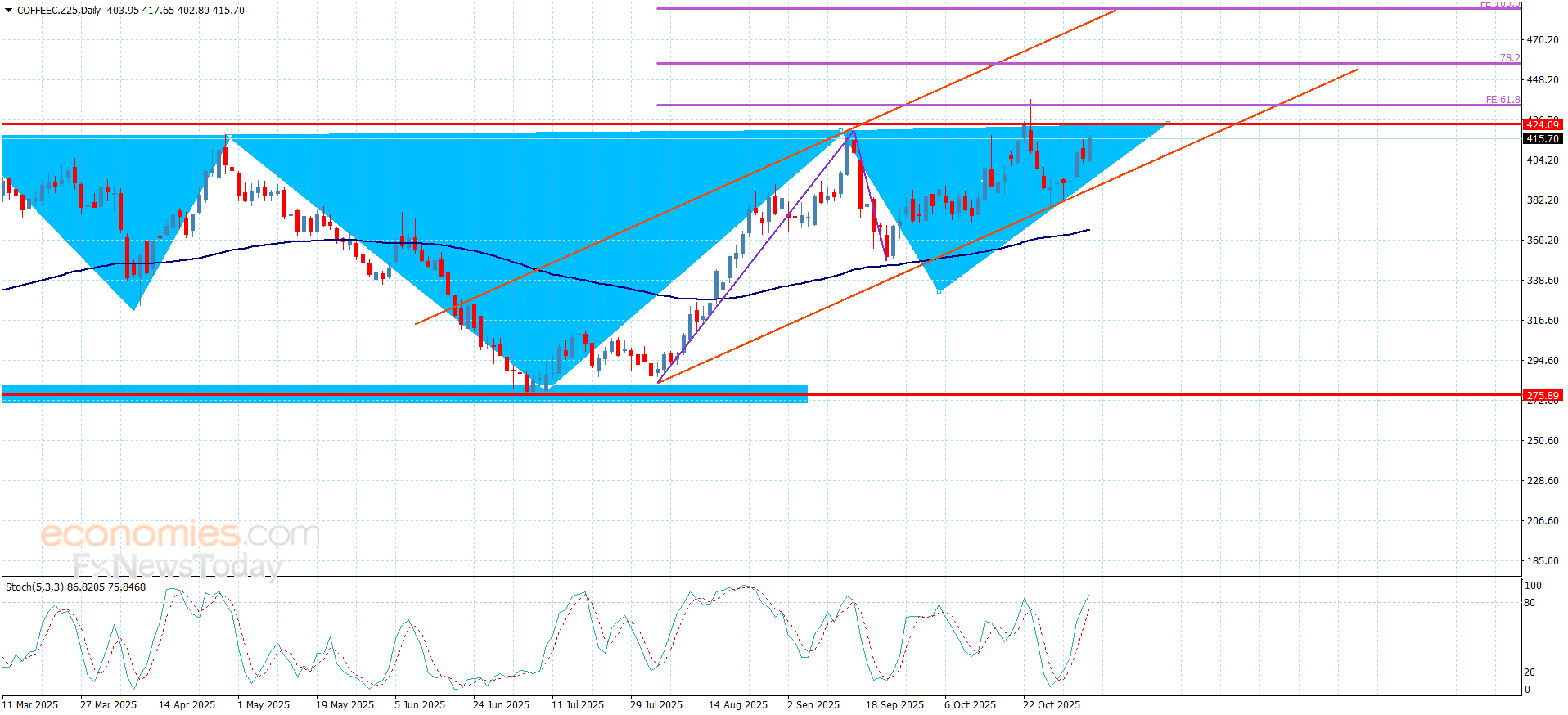
Coffee price formed the inverted head and shoulders pattern in its last trading, and 424.20 level forms the main neckline as appears in the above image, noticing the attempt to surpass the neckline at 437.40 in yesterday trading, to bounce quickly towards 410.00.


The price needs new positive momentum that allows it to settle above extra support towards 393.25, then wait for breaching 424.20 level, to confirm activating the bullish pattern, to target 457.50 and 486.00 level.


The expected trading range for today is between 400.50 and 457.50


Trend forecast: Bullish


Source link

24 10, 2025

The GBPJPY is waiting for surpassing the barrier– Forecast today – 24-10-2025

By |2025-10-24T12:01:03+03:00October 24, 2025|Forex News, News|0 Comments

Platinum price attempted to settle above $1605.00 level, to notice recording some gains by hitting $1665.00 level, providing weak sideways trading by its stability near $1620.00.


Confirming that holding above $1605.00 level is important, which forms an important extra support to reinforce the chances of gathering the positive momentum, then attack the next barrier near $1695.00, while breaking the current support will force the price to provide new corrective trading, which forces it to suffer some losses by reaching $1565.00 and $1525.00.


The expected trading range for today is between $1600.00 and $1695.00


Trend forecast: Bullish


Source link

24 10, 2025

Melatonin Supplement Manufacturing Plant Setup in Saudi Arabia

By |2025-10-24T11:49:47+03:00October 24, 2025|Dietary Supplements News, News|0 Comments


IMARC Group’s report, “Melatonin Supplement Manufacturing Plant Setup in Saudi Arabia 2025: Industry Trends, Plant Setup, Machinery, Raw Materials, Investment Opportunities, Cost and Revenue,” offers a comprehensive guide for establishing a manufacturing plant. The melatonin supplement manufacturing plant setup in Saudi Arabia report offers insights into the manufacturing process, financials, capital investment, expenses, ROI, and more for informed business decisions.

Melatonin Supplement Manufacturing Plant Setup in Saudi Arabia Summary

• Comprehensive guide for setting up a melatonin supplement manufacturing plant in Saudi Arabia

• Covers market trends and industry outlook for 2025 specific to the Saudi Arabian market

• Detailed project setup, including unit operations and processes

• Raw material and utility requirements

• Infrastructure and machinery specifications

• Workforce and staffing requirements

• Packaging and transportation details

• Financial aspects: investment opportunities, cost analysis, and revenue projections

• Regional considerations for Saudi Arabia’s Vision 2030 alignment.

Saudi Arabia’s Vision on Melatonin Supplement Manufacturing

Saudi Arabia’s Vision 2030 emphasizes industrial diversification, with a strong focus on pharmaceutical and nutraceutical manufacturing as part of its strategy to reduce dependence on oil and promote healthcare self-sufficiency. The government aims to position the Kingdom as a leading nutraceutical hub in the Middle East by developing advanced manufacturing facilities, investing in health technologies, and supporting innovation-driven partnerships with global pharmaceutical leaders.

The establishment of a melatonin supplement manufacturing plant aligns with national goals to localize production, generate employment, and enhance technological capabilities. Initiatives such as the Saudi Food and Drug Authority’s (SFDA) regulatory framework modernization and the creation of specialized pharmaceutical manufacturing zones demonstrate a clear commitment to healthcare advancement and economic transformation through industrial growth.

Why Invest in Saudi Arabia’s Melatonin Supplement Manufacturing

Investing in Saudi Arabia’s melatonin supplement manufacturing sector offers immense potential driven by the Kingdom’s Vision 2030, which promotes healthcare innovation, industrial diversification, and pharmaceutical self-sufficiency. With significant government incentives, robust infrastructure, and growing healthcare expenditure, the country is positioning itself as a regional nutraceutical hub. Strategic initiatives like specialized pharmaceutical zones and the Saudi Health Sector Transformation Program further boost investor confidence.

Moreover, Saudi Arabia’s central location provides access to major global markets across Asia, Europe, and Africa. Growing domestic demand for dietary supplements, supported by favorable policies such as reduced import duties on raw materials and localization targets, ensures long-term growth. The presence of strategic partners, technological collaborations, and strong logistics networks enhances profitability and scalability for supplement manufacturers.

Buy Now: https://www.imarcgroup.com/checkout?id=9610&method=1911

Market Trends and Drivers in Saudi Arabia

The Saudi Arabian melatonin supplement market is experiencing transformative growth, driven by the Kingdom’s Vision 2030 initiative and its commitment to healthcare advancement and wellness sector development. As part of its ambitious plan to improve public health outcomes and reduce healthcare imports, Saudi Arabia is actively investing in pharmaceutical and nutraceutical manufacturing capabilities. The government has announced significant incentives for local production, including subsidies, tax exemptions, and streamlined SFDA approval processes.

Key Trends Shaping the Saudi Melatonin Supplement Manufacturing Landscape Include:

Strategic Government Initiatives: The Ministry of Investment (MISA) and the Saudi Food and Drug Authority have established favorable frameworks for supplement manufacturing, representing a major commitment to localizing pharmaceutical production and creating a new healthcare ecosystem in the Kingdom.

Investment in Healthcare Infrastructure: Saudi Arabia is rapidly expanding its pharmaceutical manufacturing zones, with plans to establish world-class facilities across major industrial cities by 2030. This infrastructure development is essential for supporting both domestic supplement production and export growth.

Regional Manufacturing Hub Ambitions: The Kingdom aims to position itself as a regional manufacturing hub for nutraceuticals, leveraging its strategic location, access to capital, and growing technical expertise. Special economic zones and pharmaceutical cities are being developed to attract international supplement manufacturers and suppliers.

Growing Health Awareness: With increasing prevalence of sleep disorders and wellness consciousness among Saudi consumers, the demand for melatonin supplements is rising significantly. The shift toward preventive healthcare and natural sleep aids is driving market expansion.

Regional Market Access: Saudi Arabia’s membership in the GCC provides access to a broader regional market of over 50 million consumers, making it an attractive base for supplement manufacturers targeting Middle Eastern and North African markets.

These trends are not only accelerating the growth of melatonin supplement manufacturing in Saudi Arabia but also positioning the Kingdom as a potential leader in pharmaceutical and nutraceutical production in the Middle East region.

Request for a Sample Report: https://www.imarcgroup.com/melatonin-supplement-manufacturing-plant-project-report/requestsample

Key Insights Covered in the Melatonin Supplement Manufacturing Plant Report

Market Coverage:

• Market Trends: Analysis of current and emerging trends in the Saudi Arabian melatonin supplement market

• Market Segmentation: Breakdown of the market by product forms (tablets, capsules, liquid), dosage strengths, and distribution channels

• Regional Analysis: Distribution and performance of the market across Saudi regions and GCC countries

• Price Analysis: Evaluation of pricing trends for melatonin supplements in the Saudi market

• Regulatory Environment: Examination of SFDA regulations, GMP requirements, and Vision 2030 alignment

• Market Forecast: Outlook and projections for the Saudi melatonin supplement industry through 2030.

Key Aspects Required for Setting Up a Melatonin Supplement Manufacturing Plant in Saudi Arabia

Detailed Process Flow:

• Product Overview: Comprehensive description of melatonin supplement products, formulations, and their characteristics

• Unit Operations Involved: Step-by-step breakdown of the various operations in the production process including ingredient mixing, granulation, tablet compression/encapsulation, coating, and final packaging

• Mass Balance and Raw Material Requirements: Calculations for material inputs and outputs, along with required quantities of raw materials including pharmaceutical-grade melatonin powder, excipients, binders, fillers, and coating materials

• Quality Assurance Criteria: Standards and procedures to ensure the quality of the final product, meeting international pharmaceutical GMP standards and SFDA requirements

• Technical Tests: Essential tests and evaluations including potency testing, dissolution testing, microbial testing, and stability studies to maintain product consistency and compliance

Project Details, Requirements, and Costs Involved

• Land, Location, and Site Development: Assessment of land requirements in Saudi pharmaceutical zones (such as King Abdullah Economic City, Riyadh pharmaceutical cluster, or Jeddah industrial zones), optimal location selection considering logistics and workforce availability, and site development costs.

• Plant Layout: Design and layout planning for efficient plant operations, incorporating GMP-compliant pharmaceutical manufacturing principles.

• Machinery Requirements and Costs: Identification of specialized machinery needed including mixing equipment, granulators, tablet presses, encapsulation machines, coating systems, blister packaging lines, bottling equipment, and associated costs.

• Raw Material Requirements and Costs: Determination of the types and quantities of raw materials required (pharmaceutical-grade melatonin, microcrystalline cellulose, magnesium stearate, gelatin capsules, packaging materials) and their costs, including import considerations.

• Transportation Requirements and Costs: Logistics planning and cost estimation for the transportation of raw materials and finished products, considering Saudi Arabia’s port access and cold chain requirements.

• Utility Requirements and Costs: Analysis of utility needs including electricity for manufacturing equipment, HVAC for controlled environments, purified water systems, and their associated costs.

• Human Resource Requirements and Costs: Workforce planning, including staffing needs for pharmacists, quality control specialists, production technicians, packaging operators, and management, with consideration for Saudi nationalization requirements (Nitaqat program).

Ask Analyst for Customization: https://www.imarcgroup.com/request?type=report&id=9610&flag=C

Project Economics

• Capital Investments: Initial costs required for setting up the melatonin supplement manufacturing plant, including land acquisition in pharmaceutical zones, GMP-compliant equipment, clean room facilities, quality control laboratories, and infrastructure.

• Expenditure Projections: Detailed forecasts of all costs over the short and long term, considering Saudi market conditions and currency stability.

• Revenue Projections: Expected income generated from the sale of melatonin supplements in domestic and regional markets, including potential export opportunities.

• Government Incentives: Analysis of available Saudi government incentives, tax benefits, and Vision 2030 program support for pharmaceutical manufacturers.

• Profit Projections: Estimated profitability based on costs, revenues, Saudi market conditions, and regional expansion potential.

• Financial Analysis: Comprehensive evaluation of the plant’s financial viability, including cash flow analysis, return on investment (ROI), break-even point, and sensitivity analysis for the Saudi and GCC markets.

Customization Options Available:

• Plant Location: Selection of optimal location within Saudi Arabia (pharmaceutical zones in Riyadh, Jeddah, Dammam, or other strategic areas)

• Plant Capacity: Customization based on desired production capacity aligned with Saudi market demand and regional export targets

• Machinery: Choice between fully automated, semi-automated production lines based on budget and production volume

• Product Mix: Customization for different dosage forms (tablets, capsules, liquid), strengths, and combination formulations

• Local Content: Strategies for maximizing local content to meet Saudi industrial development goals and Nitaqat requirements

• List of Machinery Providers: Identification of suitable international and regional pharmaceutical equipment suppliers with Saudi presence

• Partnership Models: Options for joint ventures, technology transfer agreements, and strategic partnerships with global pharmaceutical companies.

Key Questions Addressed in This Report:

• How has the Saudi Arabian melatonin supplement market performed and what are the growth projections through 2030?

• What are the price trends and cost structures for melatonin supplements in the Saudi market?

• How does Vision 2030 impact the nutraceutical manufacturing sector?

• What are the various unit operations involved in a melatonin supplement manufacturing plant?

• What is the total size of land required for setting up a supplement plant in Saudi Arabia?

• What is the optimal plant layout for GMP-compliant supplement manufacturing in the Saudi context?

• What are the raw material requirements and supply chain considerations for Saudi supplement manufacturing?

• What are the SFDA regulatory requirements for melatonin supplement production and marketing?

• How can manufacturers achieve GMP compliance and international quality certifications?

• And more…

How IMARC Can Help?

IMARC Group is a global management consulting firm that helps the world’s most ambitious changemakers to create a lasting impact. The company provides a comprehensive suite of market entry and expansion services specifically tailored for the Saudi Arabian market and Vision 2030 initiatives. IMARC offerings include thorough market assessment, feasibility studies, company incorporation assistance in Saudi Arabia, factory setup support, regulatory approvals and licensing navigation within the Saudi legal framework (SFDA, MISA, pharmaceutical licensing), branding, marketing and sales strategies for the GCC region, competitive landscape and benchmarking analyses, pricing and cost research, and procurement research including local content optimization.

Services:

• Plant Setup and Pharmaceutical Zone Selection in Saudi Arabia

• Factory Auditing and GMP Compliance with Saudi Standards

• Regulatory Approvals and Licensing (SFDA, MISA, MODON, and relevant authorities)

• Company Incorporation and Saudi Partnership Structuring

• Incubation Services aligned with Vision 2030 goals

• Recruitment Services and Saudi Nationalization Strategy (Nitaqat)

• Marketing and Sales Strategy for Saudi and GCC Markets

• Supply Chain Localization and Vendor Development

• Government Incentive Navigation and Application Support.

About Us:

IMARC is a global market research company offering comprehensive services to support businesses at every stage of growth, including market entry, competitive intelligence, procurement research, regulatory approvals, factory setup, company incorporation, and recruitment. Specializing in factory setup solutions, we provide detailed financial cost modelling to assess the feasibility and financial viability of establishing new manufacturing plants globally. Our models cover capital expenditure (CAPEX) for land acquisition, infrastructure, and equipment installation while also evaluating factory layout and design’s impact on operational efficiency, energy use, and productivity. Our holistic approach offers valuable insights into industry trends, competitor strategies, and emerging technologies, enabling businesses to optimize operations, control costs, and drive long-term growth.

Contact Us:

IMARC Group

134 N 4th St. Brooklyn, NY 11249, USA

Email: sales@imarcgroup.com

Tel No:(D) +91 120 433 0800

United States: (+1-201971-6302)

This release was published on openPR.


Source link

24 10, 2025

Shocking Prediction: Dogecoin (DOGE) Price Will Break $3.25!

By |2025-10-24T11:28:09+03:00October 24, 2025|Crypto News, News|0 Comments

Jakarta, Pintu News – A crypto analyst, Anthony, recently made a surprising prediction about the future of Dogecoin (DOGE). According to him, the price of Dogecoin (DOGE) will reach $3.25 in the next three months. If this prediction comes true, it will be a new record high for the meme currency, which previously had a high of $0.73.

The Right Time for Dogecoin (DOGE) Price Increase

Anthony didn’t specifically explain what would be the catalyst for this price spike. However, in a post on X, he mentioned that Tesla, led by Elon Musk, will start accepting Dogecoin (DOGE) as a form of payment. This is expected to push the price of Dogecoin (DOGE) up to 20 times its current price.

Despite this, there has been no official confirmation from Elon Musk or Tesla regarding the acceptance of Dogecoin (DOGE). Since leaving the DOGE agency, Musk has been quite silent about this coin. In addition, there is no further information regarding the integration of Dogecoin (DOGE) payments on Musk’s X platform, which could also have a positive impact on the coin’s price.

Also Read: 5 Shocking Facts: Prediction Market Volume Explodes 5-Fold, Reaching IDR 49.9 Trillion!

Other Potential Catalysts

Besides the potential support from Tesla, the launch of the Dogecoin ETF (DOGE) could also be another important catalyst. With the US government shutdown over, it is expected that the SEC will approve this ETF. The Dogecoin (DOGE) ETF is expected to attract new fund flows from institutional investors into the Dogecoin (DOGE) ecosystem, which will support the price increase.

Meanwhile, another crypto analyst, Ether, observed that Dogecoin (DOGE) is gathering strength for an uptrend. Dogecoin (DOGE) managed to maintain support at the 25MA and has managed to break out of the descending channel pattern and retest. This pattern is similar to what happened in the previous two cycles, where Dogecoin (DOGE) went through an accumulation phase before surging parabolically.

Short and Medium Term Analysis

In the short term, crypto analyst Crypto Kaleo predicts that the Dogecoin (DOGE) price will return to $0.25. This is based on the analysis that there is still a lot of empty space to be filled after the crypto market crashed a few weeks ago, which was triggered by Trump’s announcement of 100% tariffs against China.

Currently, the Dogecoin (DOGE) price is hovering around $0.19, declining in the last 24 hours according to data from CoinMarketCap. However, with various potential catalysts and technical analysis in favor, Dogecoin (DOGE) seems to be gearing up for a major rally.

Conclusion

With multiple factors potentially driving the price of Dogecoin (DOGE), investors and crypto enthusiasts will need to keep an eye out for further developments. Will Anthony’s prediction be proven? Only time will tell.

Also Read: Top 2 Trending Crypto Before November 2025: Widely Watched by Whale!

Follow us on Google News to get the latest information about the world of crypto and blockchain technology. Check todays bitcoin price, today’s solana price, pepe coin and other crypto asset prices through Pintu Market.

Enjoy an easy and secure crypto trading experience by downloading Pintu crypto app via Google Play Store or App Store now. Also, get a web trading experience with various advanced trading tools such as pro charting, various types of order types, and portfolio tracker only at Pintu Pro.

*Disclaimer

This content aims to enrich readers’ information. Pintu collects this information from various relevant sources and is not influenced by outside parties. Note that an asset’s past performance does not determine its projected future performance. Crypto trading activities are subject to high risk and volatility, always do your own research and use cold hard cash before investing. All activities of buying andselling Bitcoin and other crypto asset investments are the responsibility of the reader.

Reference

Source link

24 10, 2025

AAVE V4 Launch Sparks Market Momentum as DeFi Adoption Gains Speed

By |2025-10-24T10:15:58+03:00October 24, 2025|News, NFT News|0 Comments


Jakarta, Pintu News – After years of establishing its dominance in the decentralized financial lending [DeFi] space, Aave is now entering a growth phase that could be its most rapid so far.

Through the launch of Version 4 (V4), a $50 million token buyback program, and an ambitious expansion into real-world assets (RWA), Aave has further strengthened its position as a leader in the industry.

V4 – Strategic Milestones that Define Aave’s Future

Data shows that Aave (AAVE) currently controls around 82% of total loan debt on the Ethereum (ETH) network, the highest figure in its history. This market share has grown steadily over the past four years, surpassing competitors such as Morpho, Spark, and Compound (COMP).

Read also: BNB Price Poised for $1,500 Rally as Coinbase and Robinhood Listings Boost Market Confidence

In addition, the protocol currently supports around 1,000 unique borrowers every day and manages around $25 billion in active loans. Aave’s trading volume over the past 30 days has also reached around $226 billion.

According to data from DefiLlama, Aave remains the largest lending protocol in the DeFi world, with Total Value Locked (TVL) reaching approximately $36.5 billion.

Source: DeFiLlama

The upcoming launch of Aave V4 is seen as a revolutionary major upgrade. This version introduces the Unified Liquidity Layer – a unified liquidity layer that optimizes capital efficiency across multi-chains while lowering transaction costs.

Aave is also working to deepen the integration of its own stablecoin, GHO, to improve internal liquidity flows and reduce reliance on external liquidity.

Meanwhile, Aave continues to expand its influence through initiatives such as Aave Horizon, a specially licensed RWA (Real-World Assets) marketplace aimed at institutional investors. In addition, a $100 million restructuring plan is also geared towards strengthening the GHO ecosystem.

This series of strategic moves reflects Aave’s determination to bring together the advantages of DeFi with traditional finance. This brings Aave closer to its long-term goal: to become the global liquidity bank for the Web3 era. Today, Aave even ranks among the 40 largest banks in the US by asset size.

$50 Million Annual Buyback: AAVE Momentum Driver

The community is currently scrutinizing the $50 million annual buyback proposal recently introduced by the Aave DAO. This initiative is designed to support the AAVE token price as well as reinvest funds into the DAO’s coffers, thus strengthening the financial resilience and long-term sustainability of the Aave ecosystem.

Read also: HBAR Crypto Still Standing: A Glimmer of Optimism Amid Widespread Market Pessimism

Previously, Aave routinely bought back about $1 million worth of tokens per week. If the new proposal is approved, the buying pressure could double to around $2 million per week.

According to market analyst Ali Charts, the $135 price level is now a kind of “price magnet” for AAVE, reflecting the increasing bullish sentiment after a series of positive updates.

However, not all analysts believe that the growth path ahead will be smooth. Some technical experts warn that AAVE’s current chart pattern resembles a distribution phase, which is often a sign of a price correction before the next big run-up.

“Be careful when trying to buy on dips or when prices sweep support-the distribution phase usually ends with a long-term downward trend,” said one analyst.

That’s the latest information about crypto. Follow us on Google News to get the latest crypto news about crypto projects and blockchain technology. Also, learn crypto from scratch with complete discussion through Pintu Academy and stay up-to-date with the latest crypto market such as bitcoin price today, xrp coin price today, dogecoin and other crypto asset prices through Pintu Market.

Enjoy an easy and secure crypto trading experience by downloading Pintu crypto app via Google Play Store or App Store now. Also, get a web trading experience with various advanced trading tools such as pro charting, various types of order types, and portfolio tracker only at Pintu Pro.


*Disclaimer

This content aims to enrich readers’ information. Pintu collects this information from various relevant sources and is not influenced by outside parties. Note that an asset’s past performance does not determine its projected future performance. Crypto trading activities have high risk and volatility, always do your own research and use cold cash before investing. All activities of buying and selling bitcoin and other crypto asset investments are the responsibility of the reader.

Reference:


Source link

24 10, 2025

XAU/USD eyes US-China trade talks, US CPI for fresh direction

By |2025-10-24T10:10:51+03:00October 24, 2025|Forex News, News|0 Comments


Gold has entered a phase of consolidation near $4,100 on Friday, following the volatility seen earlier in the week. Traders now eagerly await the US-China trade talks and US Consumer Price Index (CPI) data for a clear directional impetus.

Gold trades with caution ahead of key event risks

Gold stalls its previous recovery momentum as the US Dollar (USD) gains ground in tandem with US Treasury bond yields.

Despite easing US-China trade worries, US Treasury bond yields advance on growing inflationary and growth fears, especially in light of the recent rise in Oil prices after the United States (US) imposed sanctions on Russian oil companies, escalating geopolitical tensions.

That said, the next direction in Gold price will be determined by the outcome of the US-China trade talks and the September US inflation report.

Top Chinese and US officials are meeting in Malaysia for their fifth round of trade talks to de-escalate renewed US-Sino trade conflict over rare earth metals and softwares, and hence, prepare for a potential Xi-Trump APEC meeting.

Meanwhile, the US annual CPI is seen rising by 3.1% in September, against a 2.9% growth reported in August. The core CPI inflation is expected to remain steady at 3.1% year-over-year (YoY) in the same period.

Hotter-than-expected US inflation readings could psuh back against expectations of another 25 basis points (bps) interest rate cut by the Federal Reserve (Fed) in December, following the expected October rate reduction.

In such a case, the US Dollar recovery could find additional legs at the expense of the non-yielding Gold.

On the contrary, softer US CPI data would affirm bets for two rate cuts this year, reviving the Gold’s record-setting rally. The bullion tends to benefit in a low-interest rate environment.

Further, Gold could initiate a fresh upside if US-China trade talks emerge inconclusive or falter. In case of some progress in the trade discussions, the Gold correction could regain traction.  

Gold price technical analysis: Daily chart

Gold is at a critical juncture on the daily chart, after having failed to close above the key 23.6% Fibonacci Retracement (August 19 low to October 20 high) support-turned-resistance at $4,129 on Thursday.

However, the bullish 14-day Relative Strength Index (RSI) and 21-day Simple Moving Average (SMA), now at $4,043, continue to keep buyers hopeful.

On softer US CPI data or disappointing US-Sino talks, buyers will look to gain acceptance above the aforesaid 23.6% Fibo resistance.

The next topside hurdle is seen at the $4,300 round level, followed by the all-time highs of $4,382.

The upside surprise in US inflation figures or US-China trade optimism could trigger a fresh correction in Gold, threatening the critical 21-day SMA support.

 If selling pressure intensifies, he 38.2% Fibo level at $3,972 will be challenged.  

A steeper correction could unfold on a failure to resist above the latter, opening doors toward the 50% Fibo level at $3,847.

Economic Indicator

Consumer Price Index (YoY)

Inflationary or deflationary tendencies are measured by periodically summing the prices of a basket of representative goods and services and presenting the data as The Consumer Price Index (CPI). CPI data is compiled on a monthly basis and released by the US Department of Labor Statistics. The YoY reading compares the prices of goods in the reference month to the same month a year earlier.The CPI is a key indicator to measure inflation and changes in purchasing trends. Generally speaking, a high reading is seen as bullish for the US Dollar (USD), while a low reading is seen as bearish.


Read more.


Source link

Go to Top