Europe Dietary Supplements Market Size and Analysis, 2033
Europe Dietary Supplements Market Size
The Europe dietary supplements market size was valued at USD 7.98 billion in 2024 and is projected to reach USD 16.07 billion by 2033 from USD 8.63 billion in 2025, growing at a CAGR of 8.09%.
Dietary supplements are a diverse array of orally consumed products, including vitamins minerals herbal extracts and amino acids that are intended to complement daily nutritional intake and support specific health outcomes. Unlike pharmaceuticals these products are regulated under food law frameworks and are not intended to diagnose treat or cure diseases. Consumer interest in preventive health and wellness has intensified across the region driven by aging demographics rising chronic disease prevalence and heightened awareness of micronutrient gaps in modern diets. According to reports, a majority of adults in the European Union have insufficient vitamin D intake, especially in regions with limited winter sunlight. According to Eurostat, approximately 21% of the European Union’s population was aged 65 or older in 2023, which is fuelling amplifying demand for bone, joint and cognitive-health products. As per the European Commission, health claims on supplements are regulated under EU law (Regulation 1924/2006) to ensure scientific substantiation before claims may be made. According to WHO Europe, non-communicable diseases are responsible for nearly 90% of deaths in the European Region, which is creating a policy environment that increasingly emphasises nutritional prevention. These demographic, regulatory and public-health dynamics have been significantly contributing to the growth of the European dietary-supplements market.
MARKET DRIVERS
Rising Prevalence of Micronutrient Deficiencies Across European Populations
Micronutrient inadequacies, particularly in vitamin D, magnesium, and B vitamins have emerged as a critical public health concern, which is one of the major factors propelling the growth of the dietary supplements market in Europe. For instance, a large proportion of adolescents and adults in northern and central Europe have inadequate vitamin D status during autumn and winter months and linked to limited UV-B exposure and insufficient dietary sources. Similarly, as per the nutrition surveys, a substantial share of adults in Germany, France and Italy have magnesium intakes below recommended levels that may correlate with elevated cardiovascular and metabolic risk. According to WHO data, anaemia continues to be common among women of reproductive age in the European region, which is contributing to ongoing concerns around iron-deficiency and related health issues. These gaps are exacerbated by dietary shifts toward ultra-processed foods, which in several European countries now account for a substantial share of daily energy intake. Public health agencies have responded with targeted guidance. For instance, the UK’s National Health Service recommends daily vitamin D supplementation from October to March for all residents. Such institutional recognition of nutritional shortfalls legitimizes supplement use and embeds it within routine preventive-health behaviour, which is further fuelling consistent consumer uptake across age and socioeconomic groups.
Growing Integration of Supplements into Preventive Healthcare Policies
European governments and healthcare systems are increasingly incorporating dietary supplements into national preventive health strategies, transforming them from discretionary wellness products into policy endorsed interventions and this factor is likely to drive the European dietary supplements market over the forecast period. According to the European Commission’s chronic-disease-prevention update, several EU member states now include micronutrient supplementation recommendations in national dietary guidelines for at-risk groups, such as the elderly, pregnant women and children. As per the National Institute for Health and Welfare recommendations, folic acid supplementation for women planning pregnancy is a measure credited with reducing the occurrence of neural tube defects. Germany’s statutory health insurance system permits reimbursement for certain evidence-based supplements in cases of diagnosed deficiency, which is setting a precedent for medical integration. According to clinical-nutrition research, a majority of hospitals in Western Europe routinely administer oral nutritional supplements to elderly patients to combat sarcopenia and malnutrition during recovery. According to WHO data, non-communicable diseases account for nearly 90% of deaths in the European region, which is prompting policymakers to view targeted supplementation as a cost-effective lever to reduce long-term healthcare burdens, thereby embedding supplements into public-health infrastructure and driving structural demand beyond retail consumer trends.
MARKET RESTRAINTS
Stringent and Fragmented Regulatory Frameworks Across Member States
The absence of a fully harmonized regulatory system that result in divergent national rules that complicate product formulation, labeling, and market access is one of the major restraints to the growth of the European dietary supplements market. Although the European Union established a baseline through Directive 2002/46/EC, individual member states retain authority to impose additional restrictions on ingredients, dosage limits, and health claims. According to the European Commission, as of 2023, 14 EU countries maintain national positive lists of permitted vitamins and minerals, with notable discrepancies. For example, Germany allows higher daily doses of vitamin B6 than France, while Italy prohibits certain botanical extracts permitted in Spain. According to the European Food Safety Authority, it has evaluated over 2,758 health-claims since 2008. As per the European Specialist Sports Nutrition Alliance, nearly 60% of supplement manufacturers report delays of six to eighteen months in launching new products due to varying national compliance requirements. According to the Confederation of the Food and Drink Industries of the EU, this regulatory fragmentation increases compliance costs by an estimated 15% to 25% for multinational companies. Consequently, innovation is stifled, smaller players are disadvantaged, and consumers face inconsistent product availability across borders, which is further undermining the single market principle and limiting market responsiveness to emerging health trends.
Consumer Skepticism and Misinformation Regarding Efficacy and Safety
Persistent public uncertainty about the scientific validity and safety of dietary supplements is further hindering the growth of the European dietary supplements market. Despite widespread usage, a 2023 survey of EU citizens found that a large portion express doubt about whether supplements deliver tangible health benefits, while a significant number worry about potential interactions with medications. This skepticism is amplified by inconsistent media narratives and the proliferation of unverified wellness content online. According to the European Medicines Agency, adverse reaction reports linked to supplements have been recorded, especially involving undeclared pharmaceutical adulterants in weight-loss and sports-performance products sourced from non-compliant suppliers. Furthermore, as per the WHO European Regional Office, many adults struggle to distinguish between a food supplement and a medicinal product, which can lead to misuse and eroded trust. National health authorities often refrain from endorsing supplements outside specific deficiency contexts, which is reinforcing a perception of marginal utility. This climate of caution suppresses trial among new users and limits category expansion beyond core demographics are restraining the regional market growth.
MARKET OPPORTUNITIES
Expansion of Personalized Nutrition Enabled by Digital Health Technologies
The convergence of genomics, digital health platforms and artificial intelligence is unlocking a new frontier in personalized dietary supplementation across Europe and generating many growth opportunities for the European dietary supplements market. Advances in at home genetic testing and microbiome analysis now allow consumers to receive tailored nutrient recommendations based on individual metabolic profiles. According to the European Federation of Biotechnology, a growing number of Europeans used direct-to-consumer nutrigenomic services in 2023, which is reflecting a sharp increase from 2020. Companies are integrating these insights with wearable data, such as sleep quality, activity levels, and heart rate variability to formulate dynamic supplement regimens. According to the European Commission’s 2023 Digital Health Action Plan, personalized nutrition is identified as a priority area for public-private collaboration, with pilot programs in the Netherlands and Sweden demonstrating higher adherence rates to supplement protocols when tailored. Furthermore, the European Food Safety Authority has initiated a scientific review pathway for health claims based on subpopulation responses, which is potentially enabling targeted labeling by 2026. According to the European Consumer Organisation, many adults aged 25 to 45 express willingness to pay a premium for supplements customized to their biological data. This shift from one-size-fits-all to precision nutrition not only enhances perceived efficacy but also aligns with Europe’s broader preventive healthcare agenda, which is offering manufacturers a differentiated, science-backed value proposition in an otherwise saturated market.
Growing Demand for Sustainable and Clean Label Formulations
European consumers are increasingly prioritizing environmental and ethical attributes in their supplement choices, which is driving a structural shift toward clean label, traceable, and eco conscious products and likely to create growth possibilities for the regional market. According to the European Commission’s 2023 Special Eurobarometer on Food Sustainability, a majority of EU citizens consider the environmental impact of food and supplement production when making purchases, while many prefer products with minimal and recognizable ingredients. This sentiment is particularly strong among younger demographics. As per a 2024 study by the European Youth Forum, most consumers aged 18 to 34 avoid supplements containing synthetic additives or non-recyclable packaging. In response, manufacturers are reformulating products using organic-certified botanicals, algae-based omega-3s, and fermentation-derived vitamins. According to the Soil Association, certified organic supplement sales in the UK grew significantly in 2023 outpacing conventional categories. Additionally, the EU’s Green Claims Directive is expected to take full effect in 2026 and this will mandate third-party verification for sustainability assertions, which is raising the bar for authenticity. Companies investing in transparent supply chains such as blockchain-enabled traceability from farm to capsule are gaining consumer trust and retailer shelf space, which is turning sustainability from a niche preference into a mainstream competitive necessity and opening avenues for premiumization and brand loyalty.
MARKET CHALLENGES
Proliferation of Unregulated Online Sales and Cross Border E Commerce Risks
The rapid growth of digital retail channels has introduced significant quality control and compliance vulnerabilities in the Europe dietary supplements market, which has become a notable challenge to the European dietary supplements market. According to the European Commission’s 2023 Market Surveillance Report, many dietary supplements purchased online from non-EU-based vendors failed to meet EU safety or labeling requirements, with several found to contain undeclared pharmaceutical substances such as sibutramine or sildenafil. The ease of cross-border e-commerce under the Digital Single Market framework allows third-country sellers to bypass national pre-market controls, which is creating enforcement gaps. According to Europol’s Operation Pangea XVI in 2023, millions of illicit health products were seized across Europe with weight-loss and sports supplements representing the largest category. According to the European Alliance for Access to Safe Medicines, a significant share of online supplement transactions in the EU originate from platforms not registered with national competent authorities, which is limiting traceability. National food safety agencies, including Germany’s BVL and France’s DGCCRF have reported a sharp year-over-year increase in consumer complaints related to online supplement purchases since 2021. This unregulated influx not only poses health risks but also distorts market competition as compliant manufacturers bear higher compliance costs while illicit operators undercut prices. Without coordinated digital enforcement and mandatory platform accountability, the integrity of the European supplement supply chain remains at risk.
Scientific Ambiguity and Evolving Evidence on Long Term Health Outcomes
Despite widespread consumption, the scientific community continues to debate the long term clinical benefits and potential risks of routine dietary supplement use in generally healthy populations, which is further challenging the growth of the European dietary supplements market. According to a 2023 consensus review published by the European Society for Clinical Nutrition and Metabolism, high-dose antioxidant supplementation, such as vitamin E and beta carotene showed no cardiovascular benefit in large cohort studies and may increase mortality risk in certain subgroups. Similarly, according to the Cochrane Collaboration’s 2022 meta-analysis of 84 trials, multivitamin use does not reduce the incidence of cancer or cognitive decline in older adults. These findings contrast with strong consumer perceptions of universal benefit, which is leading to a credibility gap. According to the European Food Safety Authority, most submitted health claims have been rejected due to insufficient evidence and restricting marketing flexibility. According to the European Public Health Association, few national health systems include supplement guidance in preventive care protocols outside of documented deficiencies. This evidentiary ambiguity discourages healthcare professional endorsement and limits integration into public health strategies, which is leaving the market reliant on self-directed consumer behavior that is susceptible to trend volatility and misinformation. Thereby constraining sustainable and science-anchored growth of the regional market.
REPORT COVERAGE
|
REPORT METRIC |
DETAILS |
|
Market Size Available |
2024 to 2033 |
|
Base Year |
2024 |
|
Forecast Period |
2025 to 2033 |
|
CAGR |
8.09% |
|
Segments Covered |
By Type, Form, and Region |
|
Various Analyses Covered |
Global, Regional, & Country Level Analysis; Segment-Level Analysis; DROC, PESTLE Analysis; Porter’s Five Forces Analysis; Competitive Landscape; Analyst Overview of Investment Opportunities |
|
Regions Covered |
UK, France, Spain, Germany, Italy, Russia, Sweden, Denmark, Switzerland, Netherlands, Turkey, and the Czech Republic |
|
Market Leaders Profiled |
Abbott Laboratories, Amway Corporation, Archer Daniels Midland Company, GlaxoSmithKline plc, Glanbia Nutritionals, Herbalife Nutrition Ltd., Nestlé S.A., Danone S.A., Pfizer Inc., Suntory Holdings Ltd., and Bayer AG |
SEGMENTAL ANALYSIS
By Type Insights
The vitamins segment dominated the market by holding 41.7% of the Europe dietary supplements market share in 2024. The dominance of the vitamins segment in the European market is attributed to the decades of public health endorsement, widespread consumer familiarity, and robust scientific backing for essential micronutrient roles in immunity, energy metabolism, and cellular function. According to the European Food Safety Authority, a large share of the EU population exhibits insufficient vitamin D levels during winter months, which is prompting national health agencies in Germany, the UK, and Nordic countries to issue routine supplementation advisories. Similarly, B complex vitamins are widely used to combat fatigue and support neurological health with the European Commission noting that vitamin B12 deficiency is common among older adults. According to the European Consumer Organisation’s 2023 survey, multivitamin formulations remain the most purchased supplement category across all age groups, with many regular supplement users including a multivitamin in their regimen. According to the European Food Safety Authority, vitamins are among the most extensively evaluated ingredients under the EU’s health claims framework with more authorized claims than any other supplement type. This combination of physiological necessity, institutional validation, and regulatory acceptance is boosting the growth of the vitamins segment in the European market.
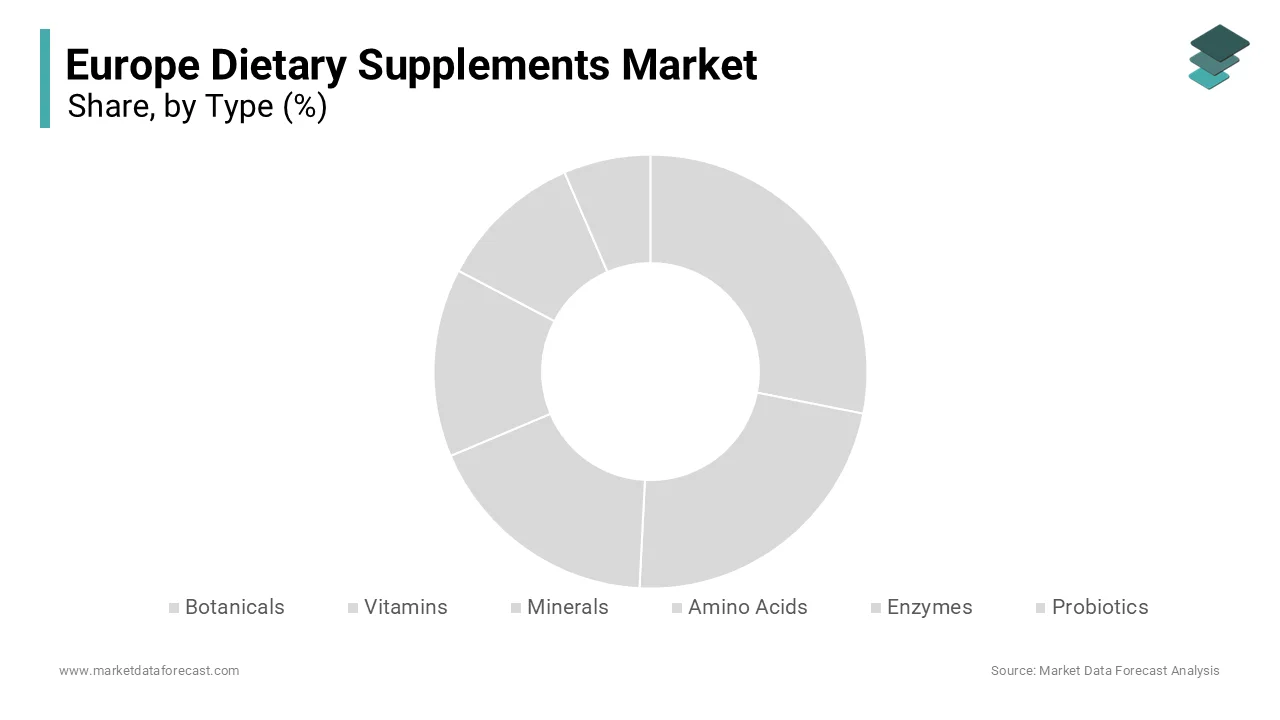
The probiotics segment is on the rise and is estimated to exhibit the fastest CAGR of 9.01% over the forecast period owing to the mounting scientific evidence linking gut microbiota to systemic health outcomes, including immune regulation, mental well-being, and metabolic function. According to the European Society for Clinical Nutrition and Metabolism, many clinical trials on gut health published between 2020 and 2023 have demonstrated measurable benefits from specific probiotic strains in managing irritable bowel syndrome and antibiotic-associated diarrhea. According to a 2023 survey by the European Commission, consumer awareness has surged in parallel and resulted in a growing share of EU adults now associate gut health with overall wellness compared to 2018. Regulatory progress has also been pivotal and the European Food Safety Authority recently issued qualified guidance for strain-specific health claims to enable clearer product differentiation. Additionally, as per the World Health Organization’s European Office, digestive disorders affect a significant portion of the region’s population, which is creating a large addressable base. Innovations such as multi-strain formulations, shelf-stable delivery systems, and synbiotic combinations with prebiotics are further enhancing efficacy and convenience and this is driving adoption beyond traditional digestive health into immunity, dermatology, and cognitive support domains.
By Form Insights
The tablets segment held the major share of 49.4% of the regional market share in 2024. The leading position of tablets segment in the European market is driven by from their cost efficiency, dosage precision, and long-established consumer trust across all age demographics. The manufacturing process for tablets allows high throughput and extended shelf stability, which is making them the preferred format for mass market multivitamins and single nutrient products such as vitamin C and zinc. According to the European Federation of Pharmaceutical Industries and Associations, a large share of supplement manufacturers in Germany, France, and Italy utilize tablet presses capable of producing high volumes per day, which is indicating that economies of scale that keep retail prices accessible. Additionally, regulatory agencies including the European Medicines Agency recognize tablets as a well-characterized delivery system with predictable dissolution profiles to facilitate compliance with EU food supplement directives. According to the European Consumer Organisation, many adults aged 45 and above prefer tablets due to familiarity and ease of integration into daily medication routines. The format’s compatibility with enteric coatings and timed-release technologies also enables targeted delivery for sensitive ingredients like iron or B vitamins, which is minimizing gastrointestinal discomfort. These functional, economic, and behavioral advantages collectively are driving the expansion of the tablets segment in the European market.
The gummies and chewables segment is anticipated to witness the fastest CAGR of 12.8% over the forecast period owing to the shifting consumer preferences toward palatable, convenient, and non pill formats, particularly among children, adolescents, and adults averse to swallowing traditional tablets. According to the European Food Safety Authority, gummy supplements have become a major segment of pediatric vitamin sales in the EU, which is reflecting strong parental adoption due to improved compliance and taste masking. According to a 2023 Eurobarometer survey, the appeal of gummies and chewable format extends to younger adults and many consumers aged 18 to 34 consider taste and texture critical factors in supplement selection with gummies rated highest for sensory experience. Technological advances have also addressed earlier limitations. Modern gummy formulations now achieve stability for heat-sensitive nutrients like vitamin C and probiotics through microencapsulation, as confirmed by the European Specialist Sports Nutrition Alliance. Retailers further amplify growth with major pharmacy chains in the UK, Spain, and the Netherlands reporting gummy category sales outpacing overall supplement growth. With manufacturers increasingly using plant-based pectin instead of gelatin to meet vegetarian and clean-label demands, the gummies and chewables segment is evolving from a novelty into a mainstream, high-performance delivery system aligned with Europe’s wellness and sensory expectations.
REGIONAL ANALYSIS
Germany Market Analysis
Germany dominated the market and accounted for 18.8% of the regional market share in 2024. The domination of Germany in the European market is attributed to the Germany’s robust regulatory framework, high health consciousness, and advanced retail infrastructure. The strong demand for evidence-based formulations, particularly vitamins D and B12 due to the growing aging population is also driving the growth of the German dietary supplements market. According to Eurostat, 22% of Germans were aged 65 or older in 2023. Germany’s Federal Institute for Risk Assessment maintains strict oversight, permitting only scientifically substantiated health claims that fosters consumer trust in compliant products. The statutory health insurance discussions around preventive nutrition, with pilot programs in Bavaria integrating supplements for elderly care are further boosting the German market growth. According to the German Nutrition Society, a majority of adults use dietary supplements regularly, which is representing one of the highest rates in Western Europe. According to the German Pharmaceutical Association, pharmacies dominate distribution and account for most of the sales to ensure professional guidance and product credibility. This blend of regulatory rigor, demographic pressure, and trusted retail channels are also contributing to the domination of Germany in the European market.
United Kingdom Market Analysis
The United Kingdom occupied a substantial share of the European market in 2024. The mature wellness culture and proactive public health messaging in the UK are propelling the dietary supplements market growth in the UK. The post Brexit regulatory autonomy that allows faster adoption of novel ingredients while maintaining alignment with EU safety standards is also favouring the UK market growth. According to the UK’s National Diet and Nutrition Survey, a significant share of adults have inadequate vitamin D levels during winter, which is prompting Public Health England to recommend daily supplementation, which is a policy that drives consistent year-round demand. The market is highly digitized and a large portion of supplement purchases occurred online in 2023 in the UK, which is the highest in Europe. Additionally, the National Health Service increasingly acknowledges the role of micronutrients in managing chronic conditions, indirectly validating supplement use. Retail diversity fuels accessibility while consumer interest in gut health and immunity post-pandemic sustains innovation in probiotics and botanicals.
France Market Analysis
France is expected to account for a prominent share of the European dietary supplements market over the forecast period owing to its preference for natural and plant-based solutions rooted in a long tradition of phytotherapy. The growing acceptance of supplements that are regulated under the Public Health Code which permits only vitamins and minerals unless botanicals receive specific ministerial authorization is also contributing to the French market growth. According to Santé Publique France, nearly half of adults used dietary supplements in 2023 with magnesium and vitamin C due to stress and immune concerns. The strong pharmacy network of France ensures professional dispensing with pharmacists legally required to advise on interactions, which is further enhancing safety perception. As per the reports of the French Agency for Food Environmental and Occupational Health and Safety, an increase was noticed in authorized botanical dossiers since 2020, which is signaling regulatory openness. Additionally, the rise of “nutricosmetics” targeting skin and hair health that support by brands like Arkopharma and aligns with French beauty wellness integration is also creating a unique growth vector distinct from other European markets.
Italy Market Analysis
Italy is predicted to register a notable CAGR in the European dietary supplements market over the forecast period owing to the aging demographic and deep cultural emphasis on preventive health through nutrition. The high supplement penetration among seniors with a significant portion of the population aged 65 or older, and strong regional variation in usage, with northern regions showing higher adoption in Italy are also boosting the Italian market growth. According to the Italian Ministry of Health, a large share of adults take supplements regularly that are primarily multivitamins, omega-3, and coenzyme Q10 for cardiovascular support. Italy enforces stringent labeling rules under Legislative Decree 169/2004 that require all supplements to be notified to the Ministry before sale. This ensures product safety but slows innovation. Nevertheless, the market in Italy thrives on trusted domestic brands like Aboca that blends traditional herbal knowledge with clinical validation. According to the National Institute of Health, rising interest in gut microbiome health, with probiotic sales showing consistent year-over-year growth. This fusion of tradition, regulation, and demographic need are a few of the major factors propelling the dietary supplements market growth in Italy.
Spain Market Analysis
Spain is estimated to witness a healthy CAGR in the Europe dietary supplements market over the forecast period owing to the with growth accelerated by rising health awareness and expanding retail modernization. The market status of Spain is evolving from historically low supplement use to one of the fastest adoption rates in Western Europe, particularly among urban millennials. According to Spain’s National Statistics Institute, supplement consumption has increased significantly between 2020 and 2023 due to the digital wellness influencers and e-commerce expansion. As per the reports of the Spanish Agency for Food Safety and Nutrition, vitamin D deficiency remains common during winter, which is creating a strong seasonal demand driver. Pharmacies remain central and account for a major share of sales but supermarkets and online platforms are gaining share rapidly. Additionally, Spain’s focus on sports nutrition is notable and the Royal Spanish Football Federation’s endorsement of targeted supplementation for amateur athletes has normalized use beyond clinical contexts. With regulatory alignment to EU standards and a young, digitally engaged consumer base, the dietary supplements market in Spain is emerging as a dynamic growth market in Southern Europe.
COMPETITIVE LANDSCAPE
KEY MARKET PLAYERS
Some of the notable key players in the Europe dietary supplements market are
- Abbott Laboratories (U.S.)
- Amway Corporation (U.S.)
- Archer Daniels Midland Company (U.S.)
- GlaxoSmithKline plc (U.K.)
- Glanbia Nutritionals (U.S.)
- Herbalife Nutrition Ltd. (U.S.)
- Nestle S.A. (Switzerland)
- Danone S.A. (France)
- Pfizer Inc. (U.S.)
- Suntory Holdings Ltd. (Japan)
- Bayer AG (Germany)
TOP STRATEGIES USED BY THE KEY MARKET PLAYERS
Key players in the Europe dietary supplements market employ a multifaceted strategic approach centered on scientific validation product differentiation and regulatory compliance. Companies prioritize clinical substantiation by investing in human trials to support health claims permissible under EFSA guidelines thereby enhancing credibility with healthcare professionals and consumers. Formulation innovation focuses on clean label ingredients plant based actives and advanced delivery systems such as microencapsulated probiotics and gummy formats to improve palatability and compliance. Strategic partnerships with pharmacies universities and digital health platforms enable targeted consumer engagement and personalized nutrition offerings. Sustainability is increasingly integrated through eco friendly packaging traceable sourcing and carbon footprint reduction initiatives aligning with EU Green Deal objectives. Digital transformation drives direct to consumer growth via subscription models AI powered recommendation engines and omnichannel retail integration. Additionally firms actively monitor national regulatory nuances to navigate fragmented approval processes and expedite market entry. Portfolio expansion into high growth niches like gut brain axis support sports nutrition and nutricosmetics further diversifies revenue streams. These strategies collectively reflect a shift from mass market supplementation toward precision wellness grounded in science sustainability and seamless consumer experience.
COMPETITION OVERVIEW
Competition in the Europe dietary supplements market is intense and multidimensional featuring global consumer health giants regional specialists and agile direct to consumer brands. The landscape is shaped by stringent EU regulations that act as both a barrier to entry and a differentiator for compliant players. Large corporations leverage pharmaceutical heritage scientific backing and extensive pharmacy distribution to maintain trust while digital natives compete on personalization convenience and social media driven branding. Price competition is moderate as brands increasingly compete on formulation quality transparency and sustainability rather than cost alone. National regulatory disparities create uneven playing fields favoring companies with local expertise and regulatory agility. Private label offerings from major retailers add pressure particularly in mass market categories like multivitamins. Innovation cycles are accelerating with rapid adoption of novel ingredients delivery formats and digital health integrations. Consumer skepticism necessitates robust evidence generation and clear communication further raising the bar for market participation. Ultimately success hinges on balancing scientific rigor with consumer centric design across a complex and evolving regulatory and cultural mosaic.
TOP PLAYERS IN THE MARKET
- Bayer AG is a leading player in the Europe dietary supplements market through its well established One A Day and Berocca brands which emphasize scientifically backed formulations for energy immunity and cognitive health. The company leverages its pharmaceutical heritage to position supplements as part of integrated consumer health solutions. In early 2024 Bayer expanded its portfolio with a new line of probiotic gummies developed in collaboration with European gut health researchers and compliant with EFSA labeling guidelines. The company also enhanced digital engagement through a personalized nutrition platform launched in Germany and France enabling consumers to receive tailored supplement recommendations based on lifestyle inputs. These initiatives reinforce Bayer’s strategy of blending medical credibility with consumer convenience to strengthen its presence across European wellness channels.
- Haleon operates as a major force in the Europe dietary supplements sector with iconic brands such as Centrum and Caltrate which are widely distributed across pharmacies and retail chains. The company focuses on evidence based nutrition targeting bone health immunity and daily wellness. In November 2023 Haleon introduced a reformulated Centrum line across the UK and Italy featuring higher bioavailability forms of vitamin D3 and B12 aligned with updated EFSA intake recommendations. The company also partnered with European pharmacy associations to launch in store health assessment kiosks that recommend personalized supplement regimens. By integrating clinical insights with accessible retail touchpoints Haleon strengthens consumer trust and deepens its integration into everyday preventive health routines across the region.
- Nestlé Health Science plays a pivotal role in the Europe dietary supplements market through its science driven brands including Vital Proteins and Garden of Life which cater to specialized nutritional needs such as gut health active aging and plant based wellness. The company capitalizes on its global R&D infrastructure to adapt formulations to European regulatory and taste preferences. In March 2024 Nestlé Health Science launched a clinically tested probiotic powder range in Germany and Sweden targeting digestive comfort and immune resilience with strains validated under EU Novel Food regulations. It also expanded its e commerce direct to consumer platform across Western Europe offering subscription based personalized supplement plans. These actions underscore its commitment to merging clinical nutrition with digital innovation to capture evolving consumer demand for targeted and transparent wellness solutions.
Europe Dietary Supplements Market News
- In March 2024 Bayer AG launched a new line of probiotic gummies developed with European gut health researchers and compliant with EFSA labeling guidelines to strengthen the Europe dietary supplements market presence
- In November 2023 Haleon introduced a reformulated Centrum range across the UK and Italy featuring enhanced bioavailability forms of vitamin D3 and B12 aligned with updated EFSA intake recommendations to strengthen the Europe dietary supplements market presence
- In January 2024 Nestlé Health Science expanded its direct to consumer e commerce platform across Western Europe offering personalized supplement subscription plans to strengthen the Europe dietary supplements market presence
- In September 2023 Aboca partnered with Italian and German pharmacies to roll out in store digital health kiosks that provide tailored botanical supplement recommendations based on lifestyle assessments to strengthen the Europe dietary supplements market presence
- In May 2024 Orkla Health acquired a leading French plant based supplement brand to broaden its clean label portfolio and enhance distribution in Southern Europe to strengthen the Europe dietary supplements market presence
MARKET SEGMENTATION
This research report on the Europe dietary supplements market has been segmented and sub-segmented based on categories.
By Type
- Botanicals
- Vitamins
- Minerals
- Amino Acids
- Enzymes
- Probiotics
By Form
- Tablets
- Capsules
- Liquid
- Powder
- Gummies/Chewables
By Country
- UK
- France
- Spain
- Germany
- Italy
- Russia
- Sweden
- Denmark
- Switzerland
- Netherlands
- Turkey
- Czech Republic
- Rest of Europe