Green tea supports heart health. Its antioxidants, especially EGCG, help lower inflammation and may reduce the risk of heart disease.
It can improve cholesterol balance. Regular green tea drinkers may see lower LDL (“bad”) cholesterol and higher HDL (“good”) cholesterol.
Two to four cups a day can make a difference. Swapping sugary drinks for unsweetened green tea offers both heart and energy benefits.
Drinking tea can offer multiple benefits when it comes to gut health, inflammation, and even longevity. What’s even more, it can also be a major aid to heart health—specifically green tea. “Green tea would be my choice as a good choice for heart health,” says registered dietitian Dawn Menning, MS, RD. “It’s rich in antioxidants, especially one called EGCG, that can help decrease inflammation which may reduce the risk of heart disease.” To help encourage you to drink more tea, plus inform you about green tea’s impressive health benefits, we asked Menning to break down the link between green tea and improved heart health.
Why Green Tea Can Boost Heart Health
“Some studies have shown that green tea may be associated with lower LDL cholesterol levels, reduced blood pressure, and improved blood vessel function,” Menning explains. LDL cholesterol—also known as “bad” cholesterol—can cause plaque in the arteries and, as a result, can increase the risk of heart disease and other cardiovascular conditions. Drinking more green tea can help curb LDL cholesterol while boosting HDL cholesterol, also known as “good” cholesterol.
Additionally, “green tea contains an antioxidant called epigallocatechin gallate (EGCG), which can help reduce oxidative stress that can potentially damage blood vessels and may contribute to heart disease,” Menning says. “Chronic inflammation plays a role in heart disease, and green tea has anti-inflammatory effects that may help reduce inflammatory markers.” Oxidative stress creates an imbalance in the body’s natural ability to neutralize antioxidants, a necessary compound that delays oxidation. By drinking more green tea, you can help regulate the free radicals that cause oxidative stress to begin with—and feel healthier overall.
Plus, drinking multiple cups of green tea isn’t just healthy—it’s also encouraged by nutrition experts. “Most studies suggest two to four cups of green tea per day may provide benefits,” Menning says. “Unsweetened green tea can be a healthy habit, especially if it’s a replacement for sugary drinks.” When you’re itching for a caffeinated drink, green tea can provide a quick energy boost without the added sugar from coffee creamers and other artificial sweeteners. So the next time you’ve reached your daily coffee limit, reach for a cup of green tea.
XRP is turning heads once again as a powerful multi-year breakout pattern emerges on its long-term chart, hinting at the potential beginning of a historic bull run toward the $10 mark.
The cryptocurrency, which has spent nearly a decade trapped inside a descending channel, is flashing a technical signal rarely seen in traditional or digital markets. With institutional momentum rising and technical indicators aligning, market sentiment is quietly shifting toward a major breakout phase that could redefine the XRP price prediction narrative.
Peter Brandt Highlights Rare XRP Breakout Pattern
Veteran classical chartist Peter Brandt has pointed to XRP’s multi-year logarithmic chart, describing it as a “textbook breakout” from a descending channel spanning back to 2014. Brandt, who has over five decades of trading experience, compared the structure to historical commodity bull runs that preceded explosive price movements.
Veteran chartist Peter Brandt identifies XRP’s breakout from a decade-long descending channel, signaling a potential rally beyond $10 from $2.50 support. Source: Peter Brandt via X
“XRP is showing a clean breakout from a multi-year downtrend. Patterns like this don’t appear often, and when they do, they tend to lead to strong upside,” Brandt noted in his analysis.
The breakout is occurring with XRP trading around $2.50, well below its all-time high near $3.84. If the resistance levels continue to hold, Brandt’s chart geometry suggests a potential rally that could carry the price of XRP beyond the $10 mark. This would represent a significant multi-fold increase from the current XRP price and could signal the beginning of a new long-term uptrend.
Institutional Demand Rises With CME XRP Options Launch
Adding to the bullish backdrop, CME Group has expanded its crypto derivatives lineup to include regulated options on XRP futures. This move follows the earlier introduction of XRP futures in April 2025, shortly after Ripple Labs reached a settlement in its long-running legal battle with the U.S. Securities and Exchange Commission.
CME launches options trading on Solana and XRP, signaling growing institutional interest in altcoin derivatives. Source: Whale Insider via X
CME’s decision to roll out XRP options aligns with increasing institutional demand and growing regulatory clarity in the U.S. The launch on October 13, 2025, comes as policymakers move closer to designating the CFTC as the primary crypto regulator, a shift that could further boost market confidence.
Analysts believe that physically settled contracts for XRP will appeal to both institutional and retail investors, broadening the asset’s market reach. This heightened participation could also fuel momentum for the next phase of the rally.
Oversold Conditions Fuel Recovery Expectations
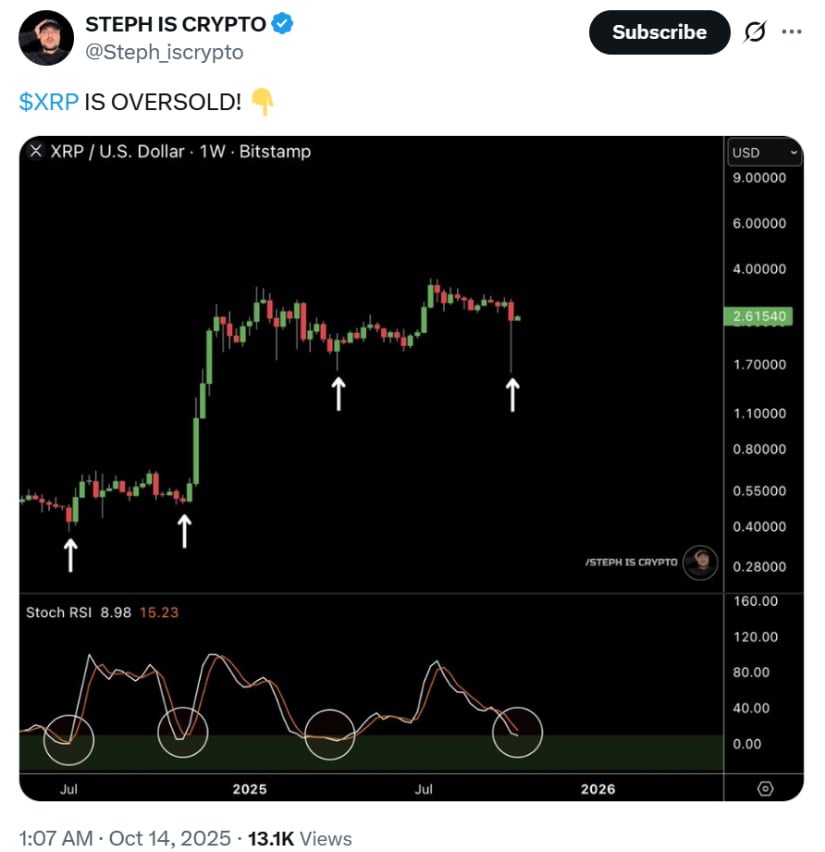
On the technical front, XRP’s recent price action shows signs of resilience. Despite a sharp 41% flash crash earlier in the week that briefly sent the token down to $1.52, XRP has rebounded strongly, trading back around $2.50. A Stochastic RSI reading of 8.98 on the weekly chart signals deep oversold territory—a zone that historically coincides with major reversals.
XRP is oversold based on a weekly chart with a Stochastic RSI of 8.98, prompting mixed community reactions amid recent price volatility and ETF speculation. Source: @Steph_iscrypto via X
Previous rebounds from similar conditions have often preceded extended rallies. The recent bounce from the $2.37 area, coupled with improving derivatives stability, suggests the market could be laying the foundation for a broader bullish structure.
Derivatives Market Stabilizes as Leverage Unwinds
Ripple XRP derivatives data indicate that excessive leverage was flushed out during last week’s sell-off, leaving the market in a healthier state. Open Interest (OI) currently averages $4.34 billion, slightly higher than Sunday’s four-month low. This stabilization could pave the way for renewed participation from traders and investors.
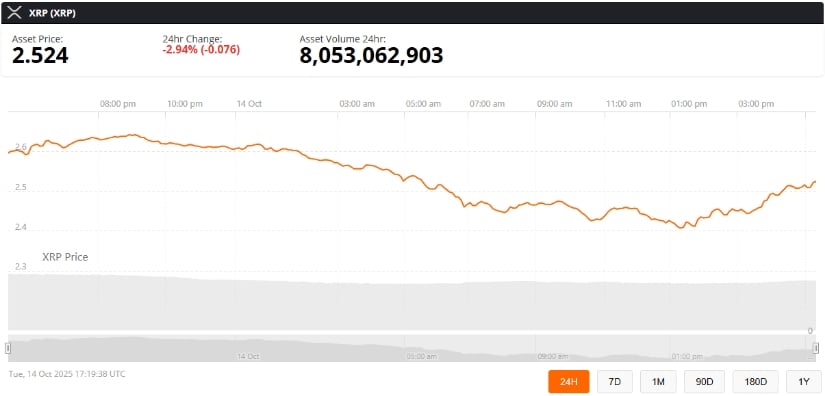
XRP was trading at around $2.52, down 2.94% in the last 24 hours at press time. Source: XRP price via Brave New Coin
“With excessive leverage purged and structural risks reduced, the market setup now looks far healthier. We view the coming weeks as an opportune window for capital deployment,” noted K33 Research in its latest report.
However, short-term momentum remains fragile. The Relative Strength Index (RSI) hovers around 35, signaling weak upside conviction. To confirm a stronger breakout, traders are watching for a decisive move above the 200-day Exponential Moving Average at $2.63. Clearing this level could open the door for a test of the $3.00 psychological barrier.
$10 Target Gains Traction Among Analysts
While near-term volatility may persist, the technical and fundamental signals surrounding XRP price have grown increasingly constructive. The breakout from a decade-long descending channel, rising institutional participation through regulated derivatives, and oversold technical conditions all point toward a potentially transformative phase for the cryptocurrency.
If these trends continue, analysts believe XRP could set its sights on the $10 price target, a level not seen before. The next few weeks may prove crucial in determining whether this pattern develops into a full-fledged bull run or faces renewed resistance.
For now, XRP remains above the key $2.50 support, and traders are closely monitoring whether this momentum can turn into the breakout that many have anticipated for years.
Federal Reserve Chair Jerome Powell delivered some dovish remarks, weighing on the US Dollar.
The United States government shutdown and China-US trade tensions undermine the mood.
XAU/USD met intraday buyers around $4,090, gears up for higher highs.
Spot Gold reached $4,179.76 a troy ounce on Tuesday, a fresh record high. The XAU/USD pair currently hovers in the 4,140 region, holding on to solid intraday gains amid risk aversion taking over financial boards. Concerns revolve around the United States (US), as on the one hand, the federal government remains shut down amid the lack of funding. On the other hand, fresh trade tensions between the US and China seem to have been interrupted, and threats of reciprocal levies resumed.
The US Dollar (USD) was able to advance throughout the first half of the day, but not versus the bright metal. It changed course after Wall Street’s opening, as US indexes trade in positive territory, shrugging off concerns and limiting Gold’s gains.
Meanwhile, Federal Reserve (Fed) Chairman Jerome Powell spoke about the economic outlook and monetary policy at the National Association for Business Economics (NABE) conference in Philadelphia, adding to the USD weakness in the American session.
Among other things, Powell noted that right now there is no risk-free path for monetary policy and that decisions will be driven by data and risk assessments. Additionally, he said that there is a risk that the slow pass-through of tariffs starts to look like persistent inflation, and that the labour market has demonstrated significant downside risk.
XAU/USD short-term technical outlook
The XAU/USD pair is extremely overbought in the daily chart, but still bullish. Technical indicators maintain their strong upward slopes within overbought levels, without signs of exhaustion. At the same time, the pair advances far beyond bullish moving averages, which reflect the ongoing persistent demand. The 20 Simple Moving Average (SMA) currently stands at $3,863.90.
In the near term, and according to the 4-hour chart, XAU/USD has scope to extend its advance. The pair met intraday buyers in the $4,090 area, while developing above all bullish moving averages. At the same time, the Momentum indicator resumed its advance after correcting extreme readings, while the Relative Strength Index (RSI) indicator currently consolidates around 66, also supporting the bullish case.
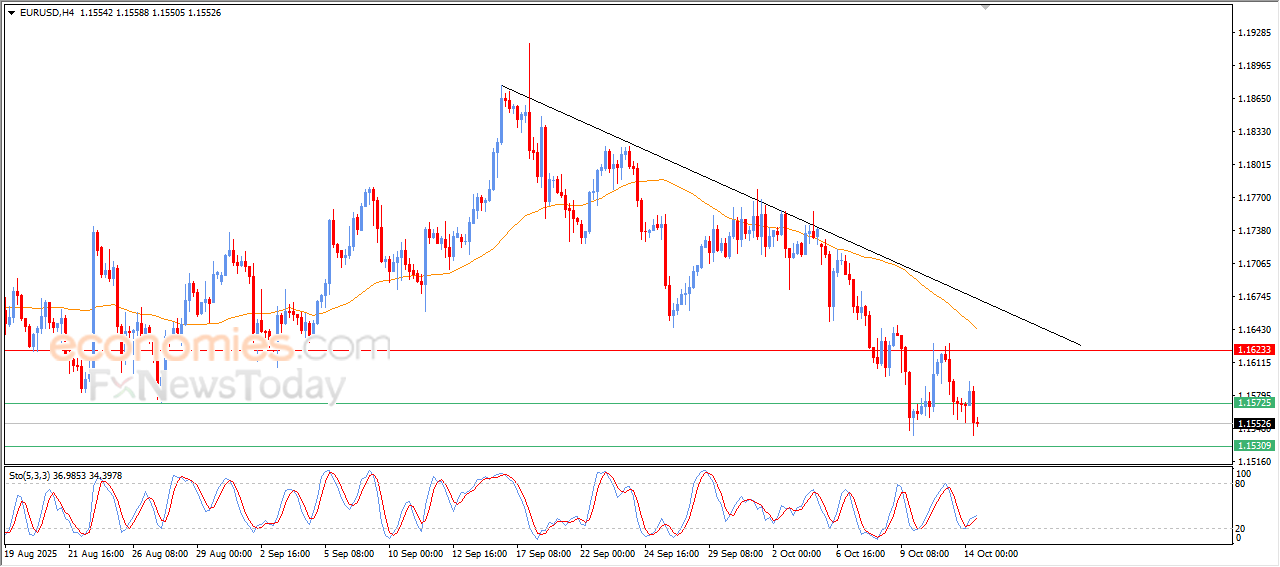
The EURJPY pair continued providing temporary trading, affected by the stability of the barrier at 177.05 to reach 175.95 again, to announce delaying the bullish attack in the current period.
Stochastic reach below 50 level might force the price to provide more of the corrective trading, to test the extra support at 175.20 to confirm monitoring the price behavior, as monitoring the price behavior is important due to the importance of the support by detecting the expected targets in the near and medium period trading.
The expected trading range for today is between 175.20 and 176.50
Trend forecast: Fluctuated within the bullish track
The best ashwagandha supplements for executives and business professionals in 2025 deliver more than basic stress relief—they leverage cutting-edge research to help optimize energy, resilience, cognitive performance, and sustained focus for demanding workdays. Whether leading organizations or navigating high-stakes projects, today’s leaders are turning to ashwagandha as a strategic addition to their daily routines, supporting peak capacity amid pressure and rapid change.
With input from a certified nutrition coach and the feedback of Fortune’s testers, we’ve curated our top ashwagandha picks of the year. These standout products feature clinically validated root extracts, third-party testing, and innovative blends—some paired with magnesium or adaptogens, others formulated for maximum stress reduction and enhanced mental clarity. As with the best greens powders or creatine supplements, each supplement on our list is designed for professionals who demand clear, sustained performance without compromise.
Best Ashwagandha Supplements of 2025
Best Ashwagandha Supplements Comparison Table
Best Ashwagandha Supplement Overall: Transparent Labs KSM-66
Transparent Labs KSM-66
A pure supplement with no unnecessary fillers or artificial additives
Our Thoughts on Transparent Labs KSM-66
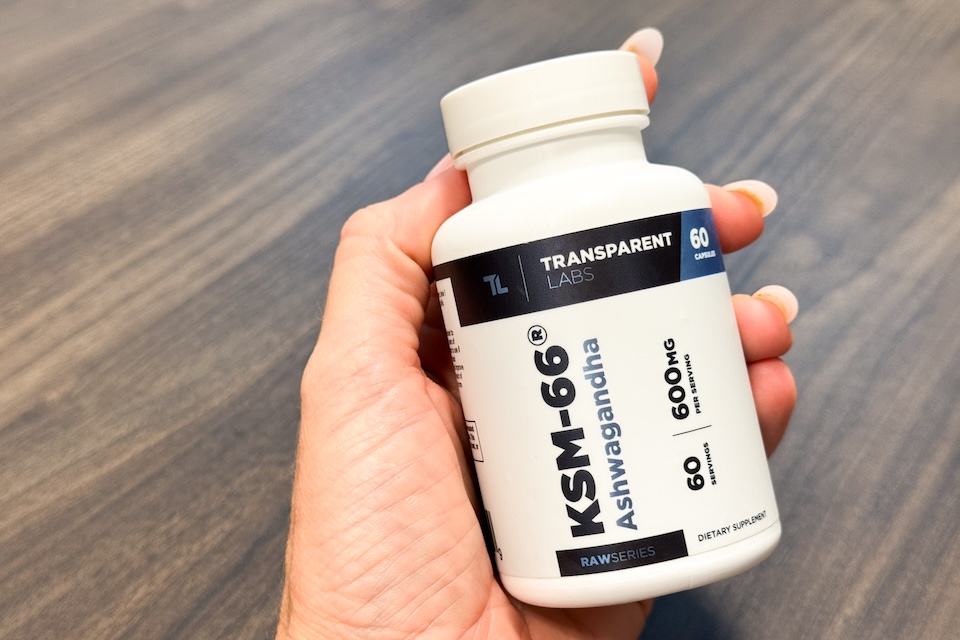
Transparent Labs KSM-66 is our pick for the best overall ashwagandha supplement because it combines a clinically validated dose of the most researched ashwagandha extract with third-party testing and transparent labeling. Users can trust they’re getting a pure and potent product with a simple, effective formula.
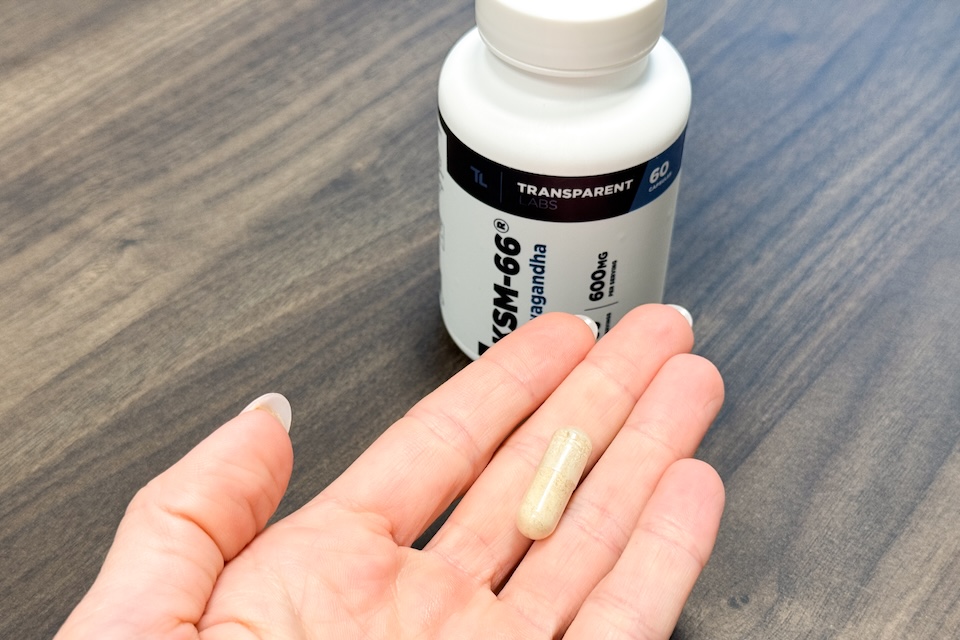
Kayla tested this supplement, rating it a 5 out of 5 for her first impressions. “The bottle looks like a typical capsule container, it’s neither huge nor too small. It seems portable enough to toss in a gym bag or travel kit without being too bulky,” she said. The lid is screw cap, which Kayla had no issues opening or closing. “Transparent Labs is great about keeping their packaging simple and readable,” she added. Kayla rated the ease of instruction as a 5 out of 5, too.
The serving size is one capsule daily. “They look to be standard capsules in terms of size and construction,” Kayla said. “The gelatin capsule is a little harder, so definitely need to take this with water,” she noted, rating it a 3 out of 5 for swallowability. Kayla didn’t notice any taste or smell with this product, and noticed no digestive issue after testing it.
Overall, Kayla likes that Transparent Labs uses KSM-66 in their product, since it’s a well-studied, root-only extract with good clinical backing, which gives her confidence in the formulation. She also appreciated the low capsule count per serving, and the lack of stimulants in this product.
Best Ashwagandha Supplement for Weight Loss: Hunter Evolve Focus
Hunter Evolve Focus
Provides focus, stress relief, and potential metabolic support in one formula
Our thoughts: This one includes caffeine, unlike most ashwagandha supplements
Ashwagandha per serving: 300 mg
Additional ingredients: Lion’s Mane, Citicoline, Bacopa, L-Theanine, Ginko Biloba, and more
Who it’s for: Folks looking to support focus, energy, and stress resilience
What makes it different: Includes clinically dosed nootropics, adaptogens, and metabolic support compounds, with acetyl-L-carnitine for weight management
Pros
Multifunctional blend supporting mental focus, stress, and energy
Contains acetyl-L-carnitine
Transparent labeling and third-party testing
Cons
Lower ashwagandha dose compared to other products on our list
High number of ingredients may not suit supplement minimalists
More expensive than other options on our list
Our Thoughts on Hunter Evolve Focus
Hunter Evolve Focus earns our pick for the best ashwagandha supplement for weight loss because of the addition of acetyl-L-carnitine, as recent studies show L-carnitine supplementation may help support weight, BMI, and waist circumference reduction when combined with lifestyle changes. However, it’s important to note: While L-carnitine has potential as an tool for weight management (though more research is needed), ashwagandha supplements are not directly designed or widely backed as weight-loss products.
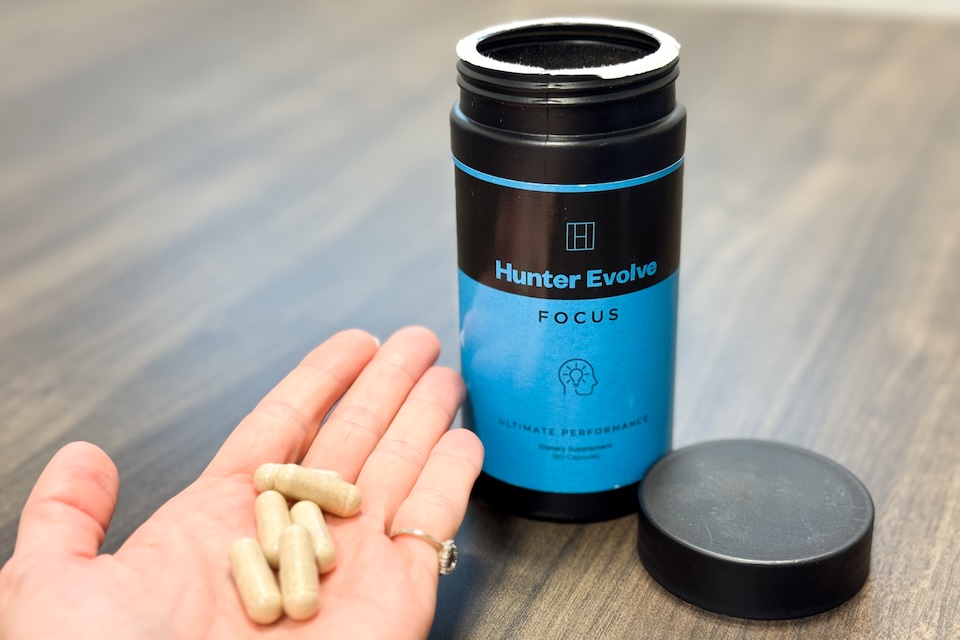
“When I first saw the Hunter Evolve Focus packaging, I sensed a premium, modern-nootropic vibe because of its sleek, dark labels, and clean fonts,” Kayla said. “Their website is a little basic, and it feels like a smaller brand. When purchasing, I might be a little skeptical at first,” she added. “The packaging is a little large overall, but since each serving size is six capsules, I can see why it’s so big,” Kayla said, rating this product a 3 out of 5 for her first impression.
“The directions state to take two capsules three times daily with a glass of water and food. For optimum results, take daily and consistently. It also includes a warning label that says do not exceed dose and it’s for adults only. Also, this formula does have 100 mg of caffeine (for the full six capsules) so keep this in mind if you are caffeine sensitive,” Kayla said. She rated ease of understanding and following the instructions a 3 out of 5.
Kayla rated the swallowability of the capsules a 3 out of 5. “Taking six capsules daily or two capsules three times daily seems a little excessive. However, if you are a coffee drinker and use that to stay focused, it’s not really different than having two or more cups of coffee. I don’t know if this would work for my lifestyle per se, as I’m not great at eating three square meals daily but if it’s something you want to prioritize, I think the two capsules are doable per meal,” Kayla explained. “They aren’t large and have a gelatin shell which is typically easier to swallow.”
While the product had an earthy smell, it didn’t have any noticeable flavor and was easy to swallow. Kayla gave side effects a rating of 5 out of 5, saying, “I didn’t notice anything after taking this product. It states to take it consistently to start seeing results. I am not caffeine sensitive, so I think the biggest thing users want to watch out for is a jittery feeling from that added ingredient.” This product probably isn’t ideal for those who are sensitive to caffeine. In that case, we recommend Transparent Labs KSM-66.
Best Budget Ashwagandha Supplement: Nutricost Ashwagandha
Nutricost Ashwagandha
An affordable, yet potent ashwagandha supplement
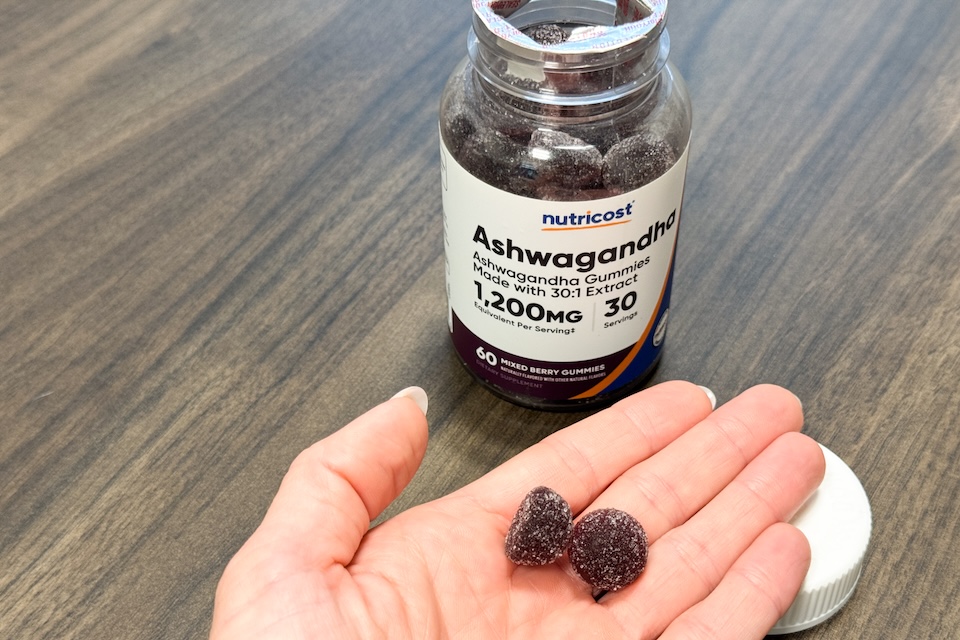
Our Thoughts on Nutricost Ashwagandha
Nutricost Ashwagandha is our selection for the best budget ashwagandha supplement because it delivers a potent daily dose, clear ingredient labeling, and third-party testing for an impressively low price of 14 cents per serving. For professionals seeking stress relief and focus without extra costs or complicated blends, Nutricost’s straightforward formulation stands out.
Kayla tested Nutricost Ashwagandha Gummies, giving them a 5 out of 5 for first impressions. “When I first received the bottle, I liked the simple, clean aesthetic. The container is a fairly typical plastic jar, with a screw-top lid and clear labeling. It doesn’t feel premium or luxe. I also like how the dosage info is easy to spot. It’s compact enough to throw in a gym bag or a travel toiletry kit. The bottle is not overly bulky,” she said.
She rated the ease of understanding the instructions a 5 out of 5. “The dosing instructions are straightforward: ‘Take two gummies daily or as directed by your healthcare professional.’”
The gummies earned a 5 out of 5 for swallowability. “I like that the serving is modest with only two gummies,” Kayla wrote. “The size of the gummies are small and they have a nice texture. The gummy isn’t sticky or tough!”
“The gummy tastes like candy in a good way. I don’t taste a supplement or medicine in it at all,” she said. “Just a slightly sweet, soft, chewable gummy.” She rated the taste a 5 out of 5.
In terms of side effects, Kayla rated her experience a 5 out of 5, saying, “I did feel a little more relaxed after taking the gummies. I didn’t feel sleepy or drowsy, just more calm overall.”
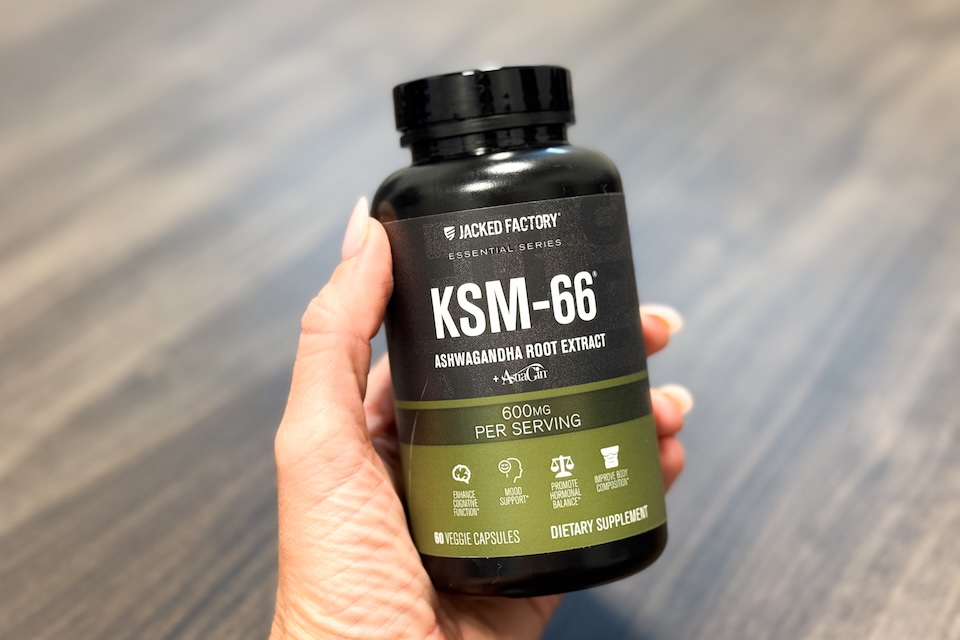
Best Ashwagandha Supplement for Sleep: Jacked Factory KSM-66
Jacked Factory KSM-66
A potent formula for unwinding after a busy day
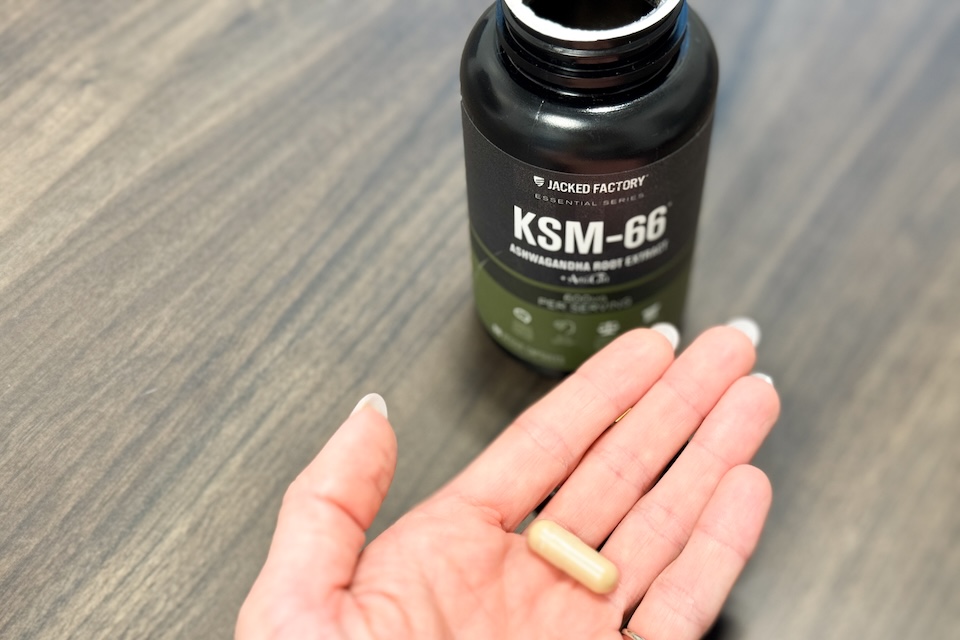
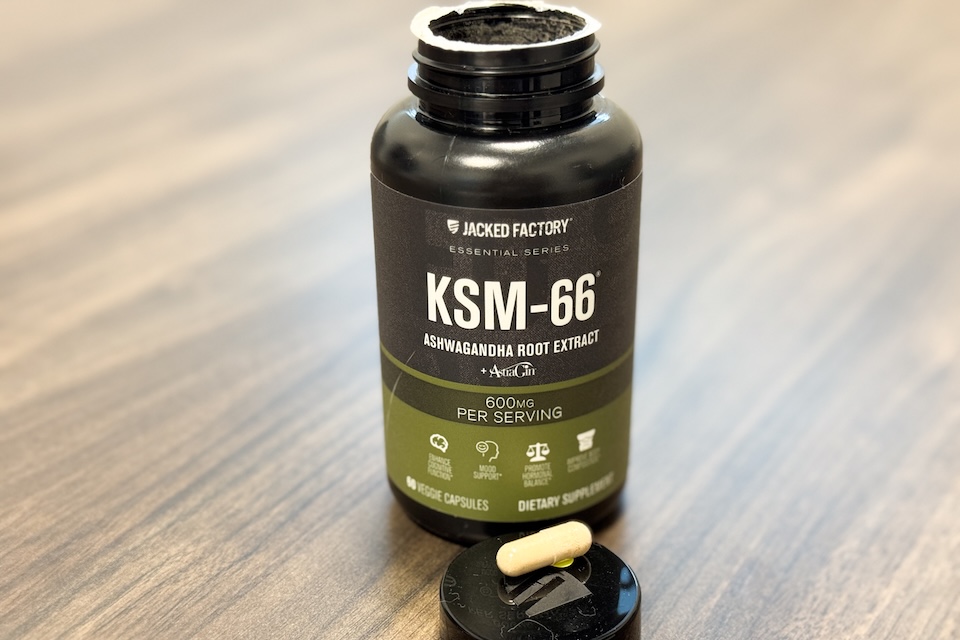
Our Thoughts on Jacked Factory KSM-66
Jacked Factory KSM-66 is our pick for the best ashwagandha supplement for sleep because it uses a high-quality, research-backed dose of KSM-66, which has been shown to potentially help improve sleep quality and reduce stress. In a 2020 clinical study, adults supplementing with KSM-66 experienced significant improvements in overall sleep quality and mental alertness upon waking compared to placebo.
Kayla rated this product a 5 out of 5 for first impressions. She liked Jacked Factory’s sleek bottle and metallic label, noting it had a clean and professional look. This one also comes with an easy-to-use screw top, though the container is a bit larger than some of the others on this list.
“The recommended dosage is one capsule per day, providing 600 milligrams of KSM-66 Ashwagandha. The directions were written pretty small on the label and I struggled for a second to find and read them,” Kayla said. “However, I looked again and they also had a little picture diagram above the directions of one capsule and one glass of water.” Thanks to the addition of the diagram to assist users in understanding the directions, our tester gave a 5 out of 5 score in this area.
Kayla rated swallowability of this product a 5 out of 5. One capsule is very managable, according to Kayla, especially considering they’re fairly standard pill size. She also gave the taste a 5 out of 5, saying, “The product has zero taste, but it does smell slightly sweet and slightly bitter. I can’t quite put my finger on what it smells like, but overall, it does not impact the taste.”
“I didn’t notice any major side effects or results from this product,” Kayla said. “I may have felt slightly more relaxed overall, but maybe a little more sleepy feeling as well. I think overall the ashwagandha did have an effect on me, but think with a caffeine additive it would be better to create more energy and focus.” We suggest folks seeking a great ashwagandha supplement with caffein in the mix take a look at Hunter Evolve Focus instead.
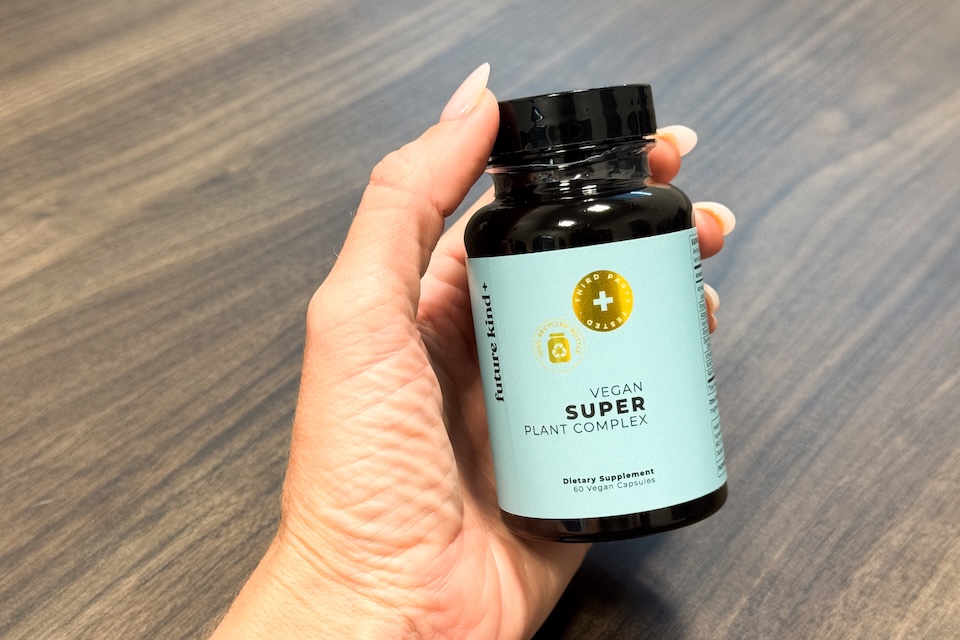
Best Vegan Ashwagandha Supplement: Future Kind Super Plant Complex
Future Kind Super Plant Complex
A holistic, all-in-one adaptogen formula
Our Thoughts on Future Kind Super Plant Complex
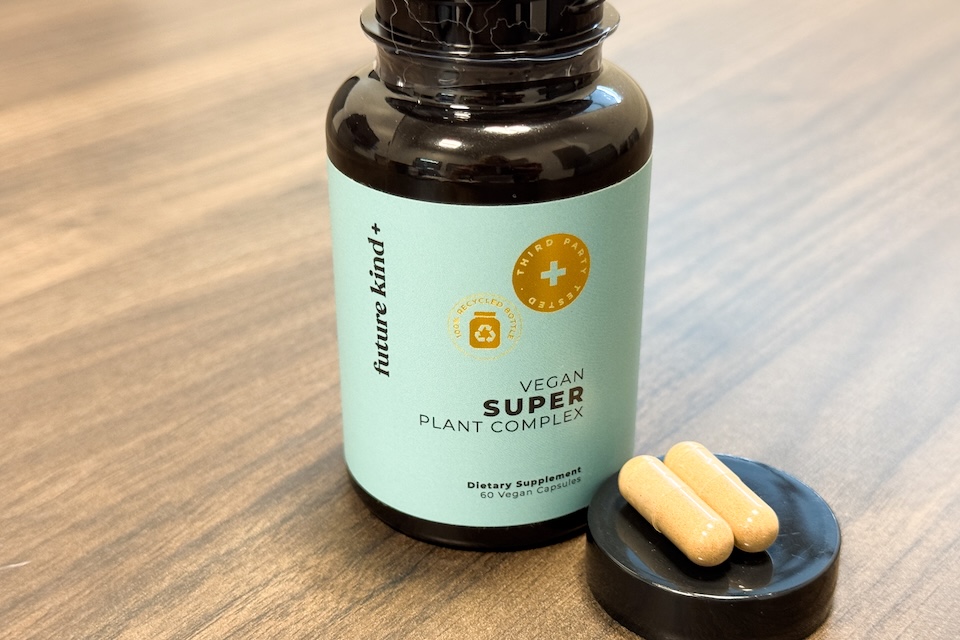
We chose Future Kind Super Plant Complex as the best vegan ashwagandha supplement because it blends potent adaptogens with transparent vegan sourcing labelling. The formula aims to support mood, energy, and overall resilience.
Kayla gave this supplement a 5 out of 5 for first impressions. “I was immediately impressed by the sleek, eco-friendly packaging. The bottle is compact and lightweight, making it convenient for on the go use,” she said. She also loved that the label advertises the third-party testing. This gives the appearance of a quality brand focused on wellness and transparency.
“The supplement comes with straightforward instructions,” Kayla noted, rating it a 5 out of 5 in this category. “The recommended dosage is two capsules per day with a meal, which is easy to remember and incorporate into a daily routine.”
When it comes to capsule size and swallowability, Kayla gave this product a 5 out of 5. Each capsule contains a blend of nine clinically researched herbs, including Ashwagandha, Rhodiola, and Astralagus root. The capsules are of standard size, making them easy to swallow, Kayla described. The serving size is one capsule per day, which she found to be convenient and manageable.
“There was no aftertaste or digestive discomfort after taking the capsule, which is a testament to the quality of the product. I didn’t notice any changes in mood or negative effects from this product. If anything, I felt a little sleepy,” Kayla said.
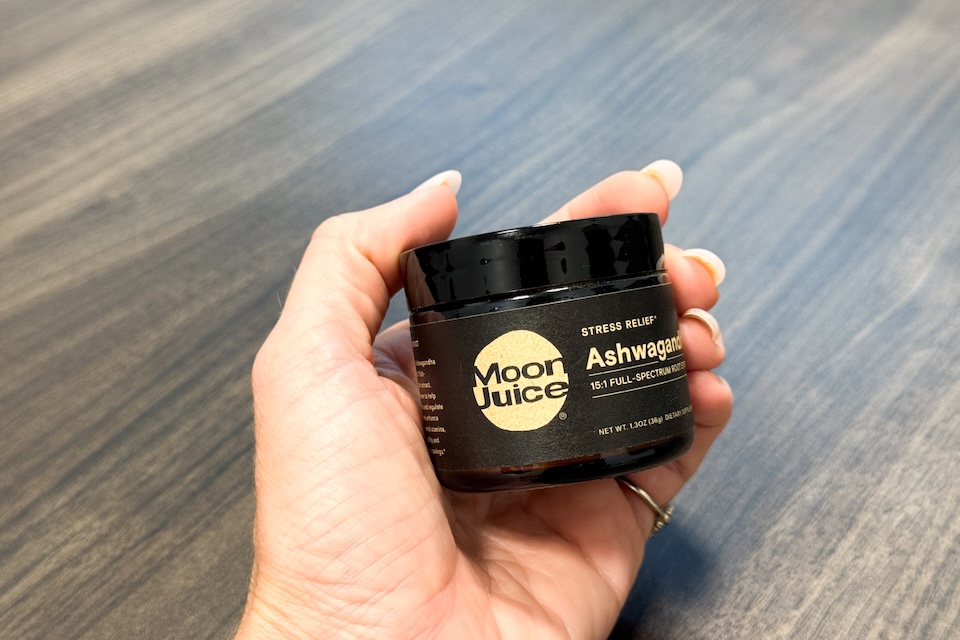
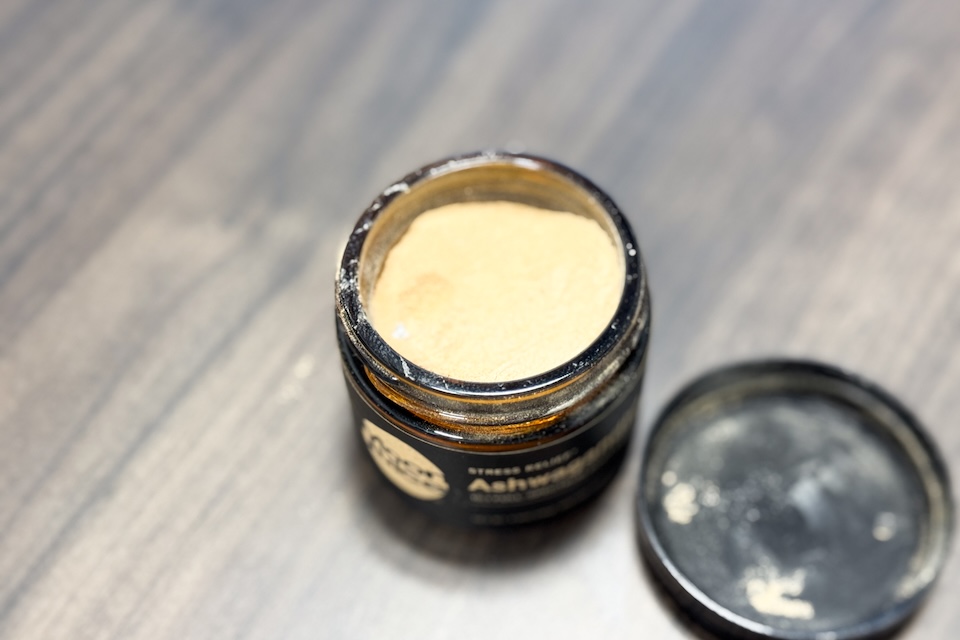
Best Powder Ashwagandha Supplement: Moon Juice Ashwagandha
Moon Juice Ashwagandha
An organic full-spectrum ashwagandha extract in easy-to-mix powder form
Our Thoughts on Moon Juice Ashwagandha
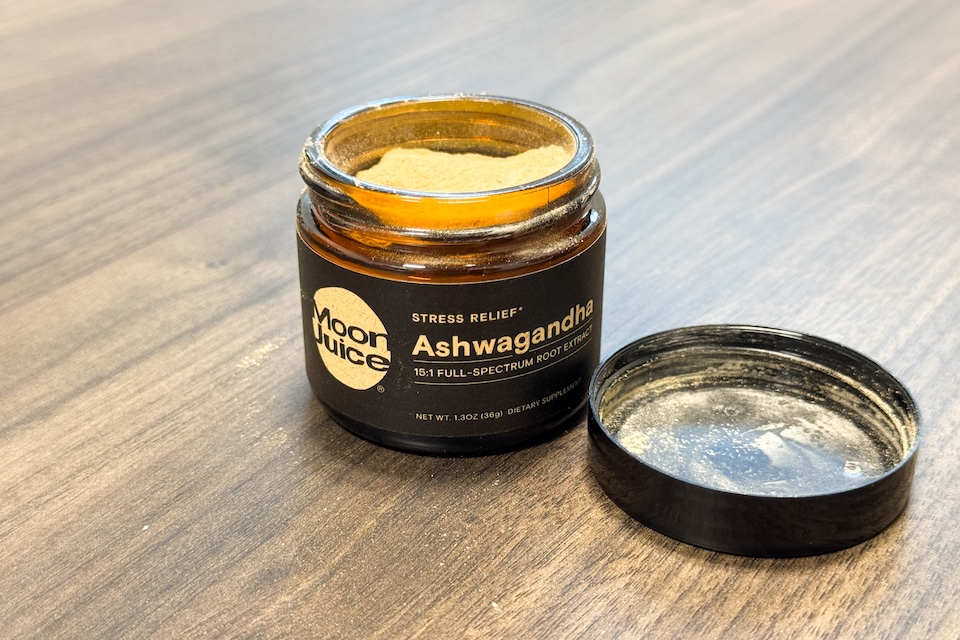
Moon Juice Ashwagandha is our pick for the best powder form of ashwagandha because it offers a high-potency, full-spectrum root extract that allows you to dose and mix it to meet your preferences. We also like that it has an organic certification and no added fillers.
Kayla rated her first impression of this product as a 3 out of 5. She loved the tiny glass bottle, giving the product a premium feel. “My only downside to this product is that it is a powder supplement, but it does not come with a scoop,” she said. “I don’t think it’s very transportable with it being glass and not providing that measuring scoop. I think this would be best used at home or you would need to bring a scoop with you everywhere to accurately measure it.”
When dosing this product, Kayla said, “The instructions are a little unclear because it just says blend 1/4 teaspoon. Is it best in water? In coffee? Can you dry scoop it?” She rated the ease of understanding and following the instructions a 3 out of 5. That said, the serving size is small and incredibly easy to consume.
Kayla rated the taste of this product a 3 out of 5. “The product says it has an earthy and bitter feel. I put mine in coffee and I could not taste it at all. I think possibly in water you could taste it, but I’m not an earthy taste fan so I’d rather find a base to mask the flavor,” Kayla said.
What is Ashwagandha?
Ashwagandha is a small shrub known in Ayurvedic medicine as an adaptogen—a substance thought to potentially help the body resist physical and mental stress. The root and leaves of ashwagandha contain bioactive compounds, most notably steroidal lactones called withanolides, which have shown broad biologic activity in laboratory and animal studies. Traditionally, ashwagandha has been used to support energy, enhance resilience, and improve overall health.
Current research on ashwagandha suggests it may help lower cortisol (the body’s main stress hormone), improve sleep quality, support cognitive function, and provide mild anxiolytic effects for stress and anxiety management. Many people take ashwagandha supplements hoping to reduce stress, boost mental performance, and promote restful sleep.
How We Tested and Selected the Best Ashwagandha Supplements
We tested and evaluated ashwagandha supplements and scored them on a scale of 1-5 for factors such as first impressions, easy-to-follow directions, swallowability, side effects, and value. Our testers evaluate the products based on their own individual experiences and preferences. We then review their testing feedback and data to share our findings and recommendations with you.
Formula
When selecting and testing ashwagandha supplements, we worked with a certified nutrition coach to ensure each formula meets the highest standards for efficacy and safety. Our evaluation process focuses on clinically supported dosages that reflect current research, seeking products that deliver the optimal amounts shown in peer-reviewed studies. Ingredient quality and transparency are top priorities, and we favored ashwagandha supplements made in GMP-certified facilities, with third-party testing, and free of unnecessary additives.
Taste and Texture
Flavor is a big part of our testing process. We ask our testers to provide feedback on the taste, aftertaste, and swallowability of the ashwagandha supplements.
Third-Party Testing
We selected ashwagandha supplements that have been verified through third-party testing for safety, purity, and label accuracy. This process also screens for harmful substances like heavy metals and pesticides.
For athletes, third-party testing is crucial to confirm there are no banned substances—products should be sport certified. Since the FDA does not regulate supplements, independent verification is essential for safety, accuracy, and consumer trust.
Value
When considering value, we place a higher value on brands that source their ingredients in America and have certifications, such as Informed Choice.
How to Find the Best Ashwagandha Supplements for You
Ashwagandha supplement needs vary based on your age, lifestyle, and any specific health goals you may have related to energy or mood support.
Consider these factors when choosing the best ashwagandha supplement for you.
Your Body’s Needs
When considering ashwagandha, it’s important to recognize that everyone’s health goals and needs are unique—especially among athletes and high-performing professionals. Some people try ashwagandha to target specific issues such as stress management, improved sleep, or athletic recovery.
While ashwagandha is safe for most people to take, it can interact with other medications or supplements. So, before you start taking ashwagandha regularly, we recommend speaking with a medical professional.
Flavors and Form
Most ashwagandha supplements come in capsule form, and sometimes as gummies. Occasionally it’s available in powder form. In any case, be sure to choose the form you enjoy taking, and if it’s a powder, look for a flavor that you enjoy.
Formula
Everyone has different dietary needs, so it’s worth checking the ingredient list before purchasing. Some formulas of ashwagandha include stimulants like caffeine, so be sure to check for your preference ahead of purchasing. If a supplement includes additional nutrients, compare them with your recommended daily values (RDVs) to avoid excess intake.
Cost
Ashwagandha supplements are typically taken every day, and can be pricey, so you may want to consider your budget before purchasing. Cleaner formulations, meaning those without artificial sweeteners or additives, may cost more because of their higher quality and ingredient sourcing.
Third-Party Testing
Because the FDA does not regulate supplements, third-party testing provides independent verification of an ashwagandha supplement’s safety, purity, and label accuracy. This process protects against risks like mislabeling, contamination, or banned substances, giving you confidence in the products you choose. Independent testing is crucial for ensuring both product quality and safety.
Benefits of Ashwagandha
Like multivitamins,protein powders, and probiotics, ashwagandha supplements can offer an array of health benefits, potentially helping your mood and sleep. Here are some of those benefits:
Stress and anxiety reduction: Regular use of ashwagandha may help lower cortisol levels and help relieve symptoms of stress and anxiety by calming the brain and allowing for more relaxation
Sleep improvement: Ashwagandha may support better sleep quality and help with insomnia, making it easier to fall and stay asleep
Enhanced energy and athletic performance: Studies suggest ashwagandha boosts energy levels, improves endurance, and can help with athletic recovery
How to Take Ashwagandha Supplements
Ashwagandha supplements come in various forms, such as capsules, powders, gummies, and more, allowing for flexibility based on your preferences. It is important to read and follow the instructions on the product label, as each form may have different concentrations and dosing recommendations to ensure safety and maximize its benefits. Talking with your doctor or other healthcare provider before starting an ashwagandha supplement can help you choose a form that suits your health and dietary goals best.
How Much Ashwagandha Should I Take?
There is not currently a standardized dose for ashwagandha, as the optimal amount can depend on individual needs and the specific supplement form. However, clinical research commonly tests doses ranging from 250 to 600 milligrams per day, with the most effective results often observed at 500–600 milligrams daily taken consistently for at least one to two months.
What is the Best Time to Take Ashwagandha?
The best time to take ashwagandha is up to you and your health goals: it can be taken in the morning for energy and stress support, or in the evening to promote relaxation and better sleep. What matters the most is taking the supplement consistently and choosing a time that fits your daily routine.
What to Avoid in Ashwagandha Supplements
While ashwagandha supplements offer health benefits, it’s important to be cautious and minimize health risks when starting a new supplement. Always check labels for quality, third-party testing, and avoid products with unnecessary additives or fillers. Do not use ashwagandha if you’re pregnant or breastfeeding. Avoid ashwagandha if you have autoimmune conditions, thyroid disorders, hormone-sensitive cancers, or liver disease, or if you take medications such as sedatives, immunosuppressants, or drugs for diabetes and blood pressure, due to possible interactions and adverse effects.
Frequently asked questions
What form of ashwagandha is most effective?
Capsules containing standardized root extracts like KSM-66 have consistent dosing and potency, which makes them convenient and reliable. Ashwagandha is also effective in gummy and powder form.
Is KSM-66 ashwagandha the best?
KSM-66 ashwagandha is considered one of the best formulations of ashwagandha due to its high concentration, and clinically studied dosages. It has been researched for stress reduction, cognitive performance, and physical benefits.
What is the most trusted brand of ashwagandha?
We selected Transparent Labs KSM-66 for our pick as the best overall ashwagandha supplement because it combines a clinically validated dose of the most researched ashwagandha extract with third-party testing and transparent labeling. Users can trust they’re getting a pure and potent product with a simple, yet effective, formula.
Bitcoin (BTC) price trades below $112,000 at the time of writing on Tuesday as it struggles around a key resistance zone. Weakness in BTC comes amid the rising US-China trade conflict, which further supports a bearish view and triggers a risk-off sentiment in the market. Moreover, the spot Bitcoin Exchange Traded Funds (ETFs) recorded an outflow of over $320 million on Monday, signaling cautious sentiment among institutional investors. Market participants now turn their focus to Federal Reserve (Fed) Chair Jerome Powell’s speech, which could spark fresh volatility across risk assets, such as Bitcoin.
Solana (SOL) price trades below $200 at the time of writing on Tuesday, after facing rejection from the key resistance zone. The broader crypto market came under pressure as escalating US-China trade tensions fueled risk aversion among investors. Technical indicators for SOL hint at a possible short-term correction, with price action suggesting that a dead-cat bounce scenario may be unfolding.
Bitcoin (BTC) faces increasing volatility, falling below $112,000 on Tuesday. Altcoins, including Ethereum (ETH) and Ripple (XRP), are extending losses alongside BTC, with ETH trading around the $4,000 level and XRP below the $2.50 short-term resistance.
Sun screen, big hats, UPF clothing – you probably know how to protect yourself from harmful sun rays that can cause skin cancer. You may have even heard of melanoma and know that it’s the most dangerous form of skin cancer. But did you know that melanoma can spread to parts of the body other than the skin?
Melanoma is cancer that happens when the melanocytes (cells that make color, called melanin) grow abnormally and out of control. One of the reasons melanoma is so dangerous is because it grows fast and can easily spread to other parts of the body.
Here’s what you need to know about metastatic melanoma.
What is metastatic melanoma?
Metastatic melanoma is when the cancer spreads to other parts of the body. When cancer is metastatic, it’s considered more advanced and more difficult to treat.
Melanoma can spread to:
Other parts of the skin
Eyes
Brain
Lymph nodes
Lungs
Liver
Abdomen
Bones
How does melanoma spread?
Melanoma cells typically spread by entering the bloodstream then passing to other parts of the body. Sometimes melanoma cells first pass through the lymphatic system, which is the tissues and organs that help your body fight disease. When this happens, it’s easier for the melanoma cells to enter into the bloodstream and spread more quickly.
There aren’t clear signs if or when melanoma will spread to other parts of the body. Catching melanoma early is the best way to prevent it from spreading. When it does spread, it’s harder to treat. And melanoma isn’t diagnosed early at the same rates for everyone. About 1 in 3 Black patients are diagnosed at an advanced or metastatic stage (stage 3 or 4) compared to just over 1 in 10 white patients.
What are the risk factors for metastatic melanoma?
Certain factors can put you at higher risk of developing metastatic melanoma:
Having a close family member like a parent, child or sibling who has had the disease
Having one or more severe, blistering sunburns in your lifetime
Being exposed to ultraviolet (UV) light from the sun or tanning beds
Having more than 50 moles on your body
Living close to the equator or at higher elevations
Having light colored skin or eyes or blonde or red hair
Getting freckles or sunburns easily
Having a weakened immune system from a condition or medication
What are the symptoms of metastatic melanoma?
As many as 8 out of 10 melanomas happen on normal-looking skin, so it can be difficult to find. Understanding the symptoms of melanoma and getting regular skin checks from a dermatology provider can lead to an earlier stage diagnosis before the melanoma spreads.
D – Moles or growths with a diameter larger than a pencil eraser
E – Moles or growths that have evolved to a bigger size or thickness
Melanoma might show up differently in people with darker skin. Remember CUBED for parts of your skin that don’t typically see the sun:
C – Colored growths on parts of the skin where there isn’t usually color
U – There’s an uncertain diagnosis for any growth on the skin
B – The growth or lesion is bleeding or leaking fluid
E – The spot is growing or evolving in size and shape
D – There’s a delay in healing. The growth takes longer than two months to heal.
When melanoma spreads to other parts of the body, additional symptoms might include:
Swollen lymph nodes
Bone pain
Bloody poop
Shortness of breath
Seizures
What are the treatment options available?
Treatment for melanoma depends on your individual health, type of tumor and how far and where the cancer has spread. Your healthcare provider might recommend surgery to remove the original tumor and any tumors in the lymph nodes. Radiation therapy to shrink the tumors is sometimes done either on its own or in combination with surgery. Chemotherapy is also a treatment option, though it’s not typically used as the first choice for melanoma.
Another treatment option is immunotherapy. This treatment style involves oral or intravenous (through a vein) medications that work with your immune system to target and kill cancer cells. There are a few different kinds of immunotherapies. The one you received will depend on the type of tumor you have and whether there are any genetic mutations in your tumor.
Prevention is key
You can’t change the genes you’re born with, but you can prevent other risk factors. Eating a healthy diet, avoiding tobacco and alcohol (which can weaken your immune system), practicing strict sun protection, and getting annual skin exams can help decrease your risk of developing melanoma.
This educational resource was created with support from Merck.
Copper Price Forecast: Will Prices Hit $12,000 Per Ton in 2025-2026?
The copper market is approaching a critical juncture as prices hover near record territory in October 2025. Currently trading around $10,900 per ton, copper has demonstrated remarkable resilience despite global economic uncertainties, gaining over 15% year-over-year. This comprehensive analysis examines whether copper will break through to new all-time highs in the coming months, potentially reaching the $12,000 per ton threshold that leading industry experts are forecasting.
Current Market Dynamics
Copper’s impressive performance comes amid a complex interplay of supply constraints and growing demand from the energy transition sector. The metal has surged toward all-time highs primarily due to widespread supply disruptions, with prices recently coming within $600 of breaking the record high of approximately $11,100 per ton set earlier in 2025.
Market volatility has increased in recent weeks, particularly after President Trump announced potential additional 100% tariff impacts on copper in early October. Despite this temporary cooling effect, copper prices have maintained their elevated position, reflecting the market’s focus on fundamental supply tightness rather than short-term policy fluctuations.
Supply Disruptions Creating Market Tightness
The copper market has experienced significant supply-side challenges throughout 2025. A wave of accidents and operational issues at major mines in Chile, the Democratic Republic of Congo (DRC), and Indonesia has severely constrained global output at critical moments.
These disruptions have prevented the market from building anticipated inventories, effectively offsetting what analysts had previously forecasted as a potential surplus year. The persistence of these operational challenges suggests that supply constraints may continue to provide price support through early 2026.
In Chile, which accounts for approximately 28% of global copper supply forecast, labor disputes and technical difficulties at several major operations have reduced output expectations. Similar issues in the DRC and Indonesia have compounded the global supply shortfall, with mining companies struggling to meet production targets despite high price incentives.
What Are Expert Price Predictions for Copper Through 2026?
Bullish Forecasts from Industry Veterans
Leading industry figures have presented decidedly optimistic outlooks for copper prices through the end of 2025 and into 2026.
Kenny Ives, chief commercial officer at Chinese copper and cobalt producer CMOC Group and CEO of its trading arm IXM, projects copper prices potentially reaching $11,000-$12,000 per ton before the end of 2025. During the London Metal Exchange (LME) Week summit in October 2025, Ives described himself as “nice and bullish” on copper’s prospects.
This positive sentiment carries particular weight as Ives, once a contender for the top position at Glencore Plc, rarely offers public market views. His optimistic stance signals confidence despite recent price volatility stemming from escalating U.S.-China trade tensions.
Nick Snowdon, head of metals research at Mercuria Energy Group and a well-known copper bull, has echoed this positive stance. Speaking at the same industry event, Snowdon suggested prices could “quite easily” reach $12,000 per ton, representing a potential 10% increase from current levels.
Institutional Analyst Projections
Financial institutions present a somewhat more measured outlook, though forecasts have been trending higher throughout 2025:
BMI (Fitch Solutions): Recently raised its 2025 average copper price forecast to $9,650 per ton, up from its previous estimate of $9,500, citing resilient demand and persistent supply disruptions
Trading Economics: Projects copper prices to reach approximately $11,900 per ton by late 2026
Investment Banks: Several major banks maintain price targets in the $9,000-$10,000 range for 2025-2026, with bull case scenarios extending to $15,000 if supply constraints persist and energy transition demand accelerates
The disparity between bullish industry insiders and more conservative bank analysts highlights the uncertainty surrounding both supply recovery timelines and the pace of demand growth.
Long-Term Price Trajectory
The consensus among analysts points to sustained strength in copper prices through 2026, with most forecasts placing the metal in the $10,000-$12,000 per ton range. The potential for new record highs remains contingent on several factors:
The severity and duration of ongoing supply disruptions
The pace of energy transition investments globally
China’s economic performance and infrastructure spending
The evolution of U.S.-China trade relations under the Trump administration
Notably, even the more conservative copper price insights represent historically strong levels for copper, suggesting widespread agreement that structural support for prices will persist.
How Are Global Supply Dynamics Shaping the Market?
Mine Production Challenges
Despite projections of increased global copper output at the beginning of 2025, actual production has consistently underperformed expectations throughout the year. Several factors contribute to this underperformance:
Declining ore grades at mature mining operations, particularly in Chile and Peru
Technical difficulties at major projects, resulting in unplanned maintenance shutdowns
Regulatory hurdles and community opposition delaying new developments
Weather-related disruptions affecting production schedules
Labor disputes at key operations in South America
CMOC Group, which operates two copper-cobalt mines in the DRC, has firsthand experience with the operational challenges facing producers. The fact that Kenny Ives maintains a bullish outlook despite CMOC’s exposure to disrupted regions suggests the company views supply constraints as likely to persist.
Processing Capacity Expansions
While mine supply has faced constraints, refined copper production capacity has expanded, particularly in China. New smelters and refineries have increased global processing capabilities, though their utilization depends on concentrate availability.
This dynamic creates periods where refined copper markets can quickly shift between surplus and deficit conditions based on concentrate flow disruptions. Treatment charges, which miners pay smelters to process their concentrate, have fluctuated significantly throughout 2025, reflecting this tension between processing capacity and mine output.
Strategic Reserves and Inventory Management
Copper inventories on major exchanges have fluctuated significantly throughout 2025. Low visible inventory levels have periodically triggered price spikes, while strategic releases from China’s State Reserve Bureau have occasionally tempered rallies.
This inventory management aspect adds another layer of complexity to price forecasting, as government policy decisions regarding strategic reserves can temporarily offset physical market tightness. However, with exchange inventories generally remaining below historical averages, the market remains vulnerable to supply shocks.
What Role Does China Play in Copper’s Price Direction?
Manufacturing and Construction Demand
China remains the dominant force in global copper consumption, accounting for over 50% of worldwide demand. The country’s manufacturing sector, particularly in electronics and electrical equipment, continues to drive substantial copper usage despite economic headwinds.
Chinese copper consumption patterns provide critical signals for global price direction. While overall economic growth has moderated, copper-intensive sectors have shown resilience, particularly those aligned with strategic priorities like renewable energy and electric transportation.
Infrastructure Investment Initiatives
China’s ongoing infrastructure development programs, including renewable energy projects and grid modernization, create significant copper demand. Policy shifts toward greater infrastructure spending have historically correlated with copper price rallies.
Recent government announcements regarding infrastructure investment have supported copper prices despite concerns about the broader Chinese economy. These targeted spending programs often prioritize electricity transmission, renewable energy, and transportation—all copper-intensive sectors.
Property Sector Influence
The troubled Chinese property sector has been a counterbalancing force to otherwise strong copper demand. Housing construction activities, a major source of copper consumption, have remained subdued in 2025.
Any policy-driven revival in this sector could significantly boost copper demand and prices. Analysts closely monitor policy announcements related to property market support, as these could signal additional copper demand not currently factored into price forecasts.
Import Patterns and Premiums
Chinese copper import premiums—the additional amount buyers are willing to pay above exchange prices—serve as a key indicator of real demand. These premiums have shown strength in late 2025, suggesting robust physical market conditions despite macroeconomic concerns.
The persistence of high import premiums indicates that Chinese consumers are actively securing physical metal, potentially in anticipation of future supply constraints or price increases. This behavior supports the bullish case for copper price forecast through 2026.
How Is the Energy Transition Reshaping Copper Demand?
Electric Vehicle Manufacturing Requirements
The accelerating production of electric vehicles represents a structural shift in copper demand. Each electric vehicle requires substantially more copper than conventional vehicles:
Average internal combustion engine vehicle: 20-25 kg of copper
Average battery electric vehicle: 60-80 kg of copper
Electric buses and commercial vehicles: Up to 370 kg of copper
This intensity differential means that even modest EV market share gains translate into significant additional copper demand. With major automotive manufacturers accelerating their electrification timelines, this demand growth appears increasingly structural rather than cyclical.
Renewable Energy Infrastructure
Wind and solar power installations continue to drive copper demand growth:
Offshore wind farms require up to 9.5 tons of copper per megawatt
Solar photovoltaic systems use approximately 5 tons of copper per megawatt
Associated transmission infrastructure adds further copper requirements
Global renewable capacity additions have consistently exceeded forecasts in recent years, creating additional copper demand beyond what was projected in earlier market analyses. This trend appears likely to continue as renewable energy economics improve and policy support strengthens.
Grid Modernization Projects
The global push to upgrade aging electrical grids and expand capacity to accommodate renewable energy sources creates additional copper demand. Smart grid technologies, energy storage systems, and charging infrastructure all require significant copper inputs.
In mature economies, grid infrastructure replacement and upgrades represent a major source of copper demand. Meanwhile, in developing economies, the expansion of basic electricity access creates new copper consumption that may persist for decades.
The global shift to electrifying copper demand is set to underpin rising copper prices—triggering forecasts of looming shortages later this decade. This structural demand growth occurs independently of typical economic cycles, potentially changing copper’s traditional role as a purely cyclical commodity.
What Geopolitical Factors Could Impact Copper Prices?
Trade Tensions and Tariffs
Escalating trade disputes, particularly between the United States and China, pose risks to copper prices. Recent threats by President Trump of additional 100% tariffs on Chinese goods have temporarily dampened price momentum, highlighting the market’s sensitivity to trade policy developments.
Trade friction can impact copper through multiple channels:
Reduced economic growth and manufacturing activity
Disrupted supply chains for copper-intensive products
Changed trade flows and inventory positioning
Increased hedging and speculative positioning
The market’s reaction to the October 2025 tariff threat demonstrates that geopolitical developments can create short-term price volatility, even amid tight supply fundamentals.
Resource Nationalism Trends
Producer countries are increasingly seeking greater control and benefits from their mineral resources. This trend manifests in higher taxation, stricter environmental regulations, and requirements for local processing—all factors that can constrain supply and support prices.
Recent policy changes in Latin American copper-producing countries have created additional uncertainty about future supply growth. These measures range from increased royalties to more stringent permitting requirements, potentially extending development timelines and raising production costs.
Regional Production Risks
Political instability in key copper-producing regions creates periodic supply concerns:
Chile: Labor disputes and water access issues continue to challenge operations
DRC: Governance challenges and infrastructure limitations constrain production potential
Peru: Community opposition to mining projects has delayed several major developments
Indonesia: Evolving export and processing regulations have created uncertainty for producers
These regional risks tend to be priced into the market inconsistently, creating potential opportunities for traders who closely monitor political and operational developments in key producing regions.
What Technical Indicators Are Copper Traders Watching?
Price Support and Resistance Levels
Technical analysts identify several key price levels that could influence copper’s trajectory:
Major resistance around $11,100 per ton (the all-time high set earlier in 2025)
Support established near $9,800-$10,000 per ton
Secondary support around $9,500 per ton
The metal’s repeated approaches toward record territory in 2025 have established a clear resistance zone that many traders believe will eventually be broken if fundamental supply constraints persist.
Market Positioning and Sentiment
Speculative positioning in copper futures provides insights into market sentiment. Recent data shows hedge funds and other financial investors maintaining substantial long positions, reflecting confidence in copper’s upward potential despite short-term volatility.
The current positioning suggests that many financial participants share the bullish outlook expressed by industry veterans like Ives and Snowdon. However, this positioning also creates risk of short-term liquidation should economic data disappoint or supply conditions unexpectedly improve.
Correlation With Other Assets
Copper’s traditional correlation with equity markets and risk assets has evolved in 2025, with the metal occasionally demonstrating independent strength during broader market downturns. This changing correlation pattern reflects copper’s dual role as both an economic barometer and a critical energy transition metal.
The partial decoupling from traditional correlations suggests growing recognition of copper’s structural demand story, potentially providing support during economic slowdowns that would historically have pressured prices more significantly.
How Might Supply-Demand Balances Evolve Through 2026?
Short-Term Market Balance Projections
Industry forecasts for the copper market balance show divergent views:
The International Copper Study Group (ICSG) projects a potential surplus of 289,000 tons in 2025
Several investment banks anticipate a more balanced market or slight deficit due to ongoing supply disruptions
The consensus view suggests any surplus will be smaller than initially expected
These divergent forecasts reflect the uncertainty surrounding both production recovery timelines and the pace of demand growth. The actual balance outcome will significantly influence price direction in early 2026.
Medium-Term Deficit Concerns
Looking toward 2026 and beyond, structural supply challenges become more pronounced:
Few major new mining projects scheduled to enter production
Declining ore grades at existing operations
Growing demand from energy transition applications
Limited exploration success in recent years
This combination of factors has led many industry observers to predict a sustained period of market deficits beginning in 2026 or 2027, providing fundamental support for elevated price levels.
Inventory Cycle Implications
Copper inventory cycles typically influence price movements. The projected path suggests:
Current low inventory levels supporting prices through early 2026
Potential inventory rebuilding phase if production normalizes
Long-term inventory constraints as structural deficits emerge
Historical analysis suggests that sustained price rallies often coincide with inventory drawdowns, while periods of inventory rebuilding can temporarily pressure prices even in structurally tight markets.
What Are the Key Price Risks and Opportunities for Investors?
Downside Risks to Monitor
Several factors could pressure copper prices below current forecasts:
Global economic slowdown reducing industrial demand
Chinese property sector deterioration
Faster-than-expected resolution of mining disruptions
Trade tensions escalating into broader economic impacts
A severe global recession would likely trigger at least a temporary price correction, though energy transition demand might provide a higher floor than in previous economic downturns.
Upside Catalysts
Conversely, several developments could drive prices toward or beyond record levels:
Accelerated energy transition investments
Sustained production disruptions at major mines
Chinese stimulus measures boosting infrastructure spending
Stronger-than-expected global manufacturing recovery
The combination of persistent supply constraints and accelerated energy transition spending could create conditions for a significant price rally, potentially pushing copper well beyond the $12,000 per ton level suggested by industry veterans.
Investment Implications
For investors considering exposure to copper:
Mining equities offer leveraged exposure to price movements
ETFs tracking copper prices provide more direct commodity exposure
Futures contracts allow sophisticated investors to implement specific strategies
Downstream manufacturers face margin pressures from sustained high prices
The optimal approach depends on investor risk tolerance, time horizon, and views on both copper price direction and broader market conditions.
What Long-Term Structural Changes Are Reshaping the Copper Market?
Resource Depletion Concerns
The copper industry faces long-term challenges in replacing depleted reserves:
Average ore grades have declined from approximately 1.6% to 0.7% over the past century
Discoveries of high-quality deposits have become increasingly rare
Development timelines for new mines have extended to 15+ years in many jurisdictions
These structural challenges suggest that even if copper prices incentivize new exploration and development, the supply response may be both slower and smaller than in previous price cycles.
Technological Innovation in Mining
Technological advancements are helping address some supply challenges:
Advanced processing techniques enabling extraction from lower-grade ores
Leaching technologies expanding to primary sulfide ores
Digital optimization reducing operational disruptions
While these innovations can incrementally improve existing operations, they are unlikely to fully offset the challenges of declining grades and increasingly complex ore bodies without significantly higher prices.
Recycling’s Growing Importance
Secondary copper production from recycled sources is gaining prominence:
Currently accounts for approximately 30% of global copper supply
Technical limitations on increasing this percentage in the short term
Improving collection systems gradually expanding the recycling contribution
Recycling will likely play an increasingly important role in the copper market, but technical constraints and the long lifecycle of many copper applications limit its ability to fully address potential primary supply shortfalls.
FAQ: Copper Price Forecast and Market Outlook
Will copper prices reach new all-time highs in 2026?
Many analysts believe copper has a strong chance of setting new price records by 2026, potentially exceeding $12,000 per ton if supply disruptions persist and energy transition demand accelerates. However, this outcome depends on global economic conditions remaining supportive and Chinese demand maintaining strength.
The bullish case is supported by ongoing supply disruptions and structural demand growth from energy transition applications. The bearish case centers on potential economic slowdowns and faster-than-expected supply recovery.
How does copper price volatility impact mining investments?
Price volatility creates both challenges and opportunities for mining investments. While higher average prices improve project economics, volatility complicates investment decisions and financing arrangements. Companies with low-cost operations and strong balance sheets are better positioned to weather price fluctuations.
Mining companies must evaluate projects against a range of potential price scenarios, with most now using conservative long-term price assumptions while recognizing the potential upside from structural demand growth.
What role does copper play in the global energy transition?
Copper is essential to virtually all aspects of the energy transition, from renewable generation to electrified transportation and grid modernization. The International Energy Agency estimates that achieving net-zero emissions targets would require copper demand for clean energy technologies to more than double by 2040.
This growing role in the energy transition may fundamentally change copper’s market dynamics, with demand becoming less cyclical and more driven by policy and climate goals than traditional economic cycles.
How do copper futures markets influence physical metal prices?
Futures markets provide price discovery and risk management tools for the copper industry. While speculative activity can temporarily drive price movements, physical market fundamentals ultimately determine sustainable price levels. The relationship between futures and physical premiums offers insights into real supply-demand conditions.
Changes in futures market regulations, participant behavior, or exchange rules can influence short-term price discovery, but lasting price trends reflect underlying physical market conditions.
What impact would a global recession have on copper prices?
A global recession would likely pressure copper prices downward in the short term as industrial demand contracts. However, the magnitude of decline might be less severe than in previous downturns due to structural support from energy transition applications.
Government infrastructure stimulus programs often target copper-intensive sectors during economic recoveries, potentially creating a faster rebound than in previous cycles. The growing portion of demand tied to energy transition may also provide support during economic weakness.
Ready to Capitalise on the Next Mineral Discovery?
Discovery Alert’s proprietary Discovery IQ model delivers instant notifications on significant ASX mineral discoveries, offering investors an immediate edge in markets like copper. Explore historic returns from major mineral discoveries on our dedicated discoveries page and position yourself ahead of the market.
GBP/USD Forecast: Could test sub-1.3200 levels/200-day SMA; focus shifts to Fed’s Powell
The GBP/USD pair attracts heavy selling during the early part of the European session on Tuesday and drops to mid-1.3200s, or its lowest level since early August, in reaction to the disappointing UK labor market report. Data published by the Office for National Statistics (ONS) showed that the UK ILO Unemployment Rate edged up to 4.8% in the three months to August, compared to 4.7% recorded in the previous month and consensus estimates. Further details revealed that the number of people claiming jobless benefits rose 25.8K in September, against a revised fall of 2.0K in August.
Meanwhile, Average Earnings, including Bonus, increased by 5.0% during the quarter through August, beating expectations and the previous reading of 4.7%. That said, regular pay growth, excluding Bonus, eased to 4.7% during the reported period, down slightly from 4.8% previously and marking the weakest pace since March–May 2022. The data fuels speculations that the Bank of England (BoE) could continue cutting interest rates gradually and weighs heavily on the British Pound (GBP). This, along with renewed US Dollar (USD) buying, is seen exerting pressure on the GBP/USD pair. Read more…
GBP/USD is under pressure after labour data
GBP/USD is diving toward the two-month low of 1.3260 following the release of disappointing UK labor market figures. The unemployment rate unexpectedly rose to 4.8% in the three months to August, up from 4.7% in the previous quarter, while employment levels declined, adding pressure to the British pound.
The pair is nearing a medium-term ascending trendline, which may act as a support level. A potential rebound from this area could shift attention toward the 23.6% Fibonacci retracement level at 1.3370, followed by resistance at the mid-level of the Bollinger Band and the 50-day simple moving average (SMA) in the 1.3435–1.3475 zone. Read more…
Kylie Jenner, seemingly flush with nostalgia (or capitalistic drive), is reliving the mid-2010s with gusto. In a bid to sell the Kylie Cosmetics Lip Kits that ruled the era, Jenner gave her “King Kylie” era a 2025 update. After making her foray into music, featuring on the Terror Jr song “Fourth Strike” (the video for which featured lingering shots of her lip kits), Jenner celebrated in true 2010s fashion at the Melrose Urth Caffé, joined by Hailey Bieber.
She didn’t only revive her lip kits: Jenner brought back her teal-tipped hair, which she first debuted at the 2014 Billboard Music Awards. She matched the vibe with a darker look, wearing a black leather bra with low-slung pants, pointy-toe heels, and, naturally, a green boba in hand. Bieber, meanwhile, kept her look au courant, pairing a white tank top with black trousers, black pointy-toe cross-strap shoes, a black leather blazer, and carrying the restaurant’s signature green tea boba.
While Kylie Jenner’s music career is uncertain, we know one thing for sure: this photo would’ve done numbers on Tumblr.

:max_bytes(150000):strip_icc()/GettyImages-1470609470-ef43f3684d5541baa87911943707c096.jpg "The #1 Tea for a Healthier Heart, According to a Dietitian")