About Editorial team of BIPNs

Main team of content of bipns.com. Any type of content should be approved by us.
12 10, 2025

Millions in DOGE Leaving Exchanges, Is Price Pump Imminent?

By |2025-10-12T06:40:08+03:00October 12, 2025|Crypto News, News|0 Comments

After outperforming many rivals over the week, Dogecoin (DOGE) is now under pressure, dipping by 21% today. Crashing to $0.11 during the market-wide dip on October 10th, DOGE managed to close the day at $0.1932.

Fueling the rapid price swings is a surge in DOGE’s daily trading volume, which exploded by 300%, reaching $12 billion. Despite the volatility, many analysts remain bullish, especially since DOGE’s momentum isn’t broken, as it continues to create higher lows.

The activities of whales and institutions are bolstering the optimistic sentiment surrounding DOGE. Millions of DOGE have been withdrawn from exchanges following the broader dip, easing selling pressure and signaling confidence from holders.

Big Holders Appear to Be Bracing for Another Rally as DOGE Disappears From Exchanges

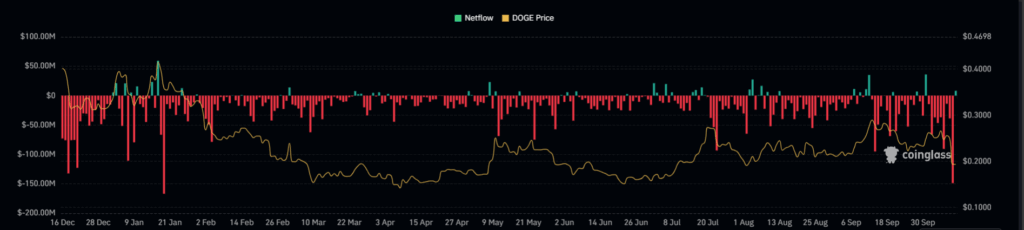
The immediate reaction to the recent price shock by whales was to pull their DOGE from exchanges into private wallets. As a result, nearly $149 million has been shifted out of trading platforms over the past 24 hours.

This withdrawal doesn’t just reduce tokens available for quick trading, but signals increasing conviction among large players. With the backdrop of waning interest in rival meme assets such as dogwifhat (WIF), whales seem to be choosing long-term DOGE holding rather than rotating.
Millions in DOGE Leaving Exchanges, Is Price Pump Imminent?

At the same time, Wall Street remains interested in DOGE. The 21Shares DOGE ETF is a step closer to launching, as it recently appeared on the DTCC pre-launch list. Combined, the shrinking exchange liquidity and growing institutional interest could see DOGE explode once demand returns.

A Cross Above $0.24 Could Set DOGE on a Path to $1

Holding at $0.1940 today, DOGE has erased much of its October 10th losses. Traders seem confident that it will continue growing, as suggested by its 3.3 long/short ratio.

Now, all eyes are on the $0.24 mark, which marks DOGE’s nearest resistance level and its 50-day Simple Moving Average (SMA). Surpassing this resistance would reinforce a series of higher lows, signaling sustained buying interest.

Such a breakout could spark renewed momentum and pave the way for DOGE to clear resistance zones around $0.3. If successful, the leading meme coin could deliver tremendous gains, potentially targeting $1 and replicating its 2021 upward trajectory.

Maxi Doge Emerges as Potentially Better Option Than Dogecoin: Presale Hits $3.5M

Although DOGE’s explosive potential in this cycle shouldn’t be overlooked, analysts are showing increasing interest in its top alternatives. Among them, Maxi Doge (MAXI), a new dog-themed meme coin in presale, is dominating the headlines.

Alessandro De Crypto, a meme coin expert, says that’s because the token is yet to have its first big pump. Unlike DOGE, which has a market cap of $29 billion, MAXI will join the potentially bullish market as a micro-cap meme coin.

Plus, it isn’t yet another plain copy of DOGE, but a token that seems perfectly made for the current market. Aiming to unite its community around high-leverage trading, it combines community-driven enthusiasm with utility. For example, those holding MAXI will have access to various trading competitions and receive rewards based on their trading performance.

Beyond an exciting long-term vision, MAXI’s early adoption rates fuel the bullish outlook many analysts share. So far, it has raised over $3.5 million, adding $1 million to the counter over the past 10 days. Those joining the presale now stand to secure MAXI at a discount and take advantage of its 85% staking APY.

With DOGE appearing ready to make a strong upward move, a new meme coin season may be around the corner. MAXI seems ready to thrive in those conditions, leaving newcomers with little time to act to secure the best returns.

Nikolay is a cryptocurrency analyst and market writer with years of experience tracking digital asset trends and emerging blockchain technologies. A long-time crypto enthusiast, he actively trades across major exchanges and specializes in identifying early-stage projects and meme tokens. His analysis combines technical insight with a strategic, long-term investment perspective.


TelegramTelegram

Source link

12 10, 2025

Global Market Predictions for 2025

By |2025-10-12T05:09:49+03:00October 12, 2025|Forex News, News|0 Comments


The Coming Oil Price Crisis: Analyzing Predictions for 2025-2026

Recent data shows a potential downturn in global oil markets, with current prices indicating early warning signs of a significant shift. As of October 2025, WTI Crude trades at $61.70 and Brent Crude at $65.47, reflecting a market that appears precariously balanced before an anticipated decline.

Market analysts suggest the industry is approaching a pivotal moment where supply growth will substantially outpace demand recovery, potentially creating a significant oil price crisis prediction by 2026. This looming imbalance represents a dramatic reversal from the price peaks seen in recent years.

What Factors Are Driving the Next Oil Price Collapse?

Several converging factors are creating the conditions for a potential oil price crisis. The fundamental supply-demand dynamics that have historically governed oil markets are showing signs of significant imbalance that could accelerate in coming months.

Current projections from multiple financial institutions suggest Brent crude could fall to between $50-60 per barrel by early 2026—levels not seen consistently since before the pandemic. This decline stems primarily from structural changes in both production capacity and consumption patterns.

Market Fundamentals Pointing to Oversupply

The anticipated price collapse is primarily driven by production growth outpacing demand. Several key dynamics are creating this imbalance:

  • Accelerated unwinding of OPEC global influence production cuts, as evidenced by recent headlines about “modest output hikes”

  • Robust non-OPEC production growth, particularly in North American shale basins

  • Slower-than-expected demand recovery in key consumption markets

  • Macroeconomic headwinds affecting global energy consumption patterns, including persistent high interest rates

Recent news that “high interest rates could turn next oil glut into a crisis” further underscores how financial conditions might exacerbate the market imbalance by reducing investment in production cuts that could otherwise help balance the market.

How Do Current Price Projections Compare to Historical Patterns?

The oil industry has historically moved in cycles of boom and bust, with periods of underinvestment leading to price spikes, followed by overproduction and subsequent crashes. The current trajectory follows this pattern but with unique characteristics.

The Dramatic Shift from Recent Price Peaks

Current prices represent a significant moderation from recent highs, and analysts predict further declines ahead. This downward trajectory follows a familiar pattern in oil market cycles, where periods of high prices stimulate investment and production growth that eventually overwhelms demand, leading to price corrections.

Industry veterans note that while price cycles are normal, the projected speed and magnitude of the coming decline are notable compared to historical patterns. The transition from the current balanced market to a potential oversupply situation could occur more rapidly than in previous cycles due to advancements in production technology and changing demand patterns.

Which Institutions Are Forecasting the Oil Price Crisis?

Major financial institutions and energy agencies have been revising their oil price forecasts downward in recent months, signaling growing consensus around the likelihood of lower prices ahead.

Consensus Building Among Market Analysts

While specific institutional forecasts require verification from primary sources, recent market commentary indicates growing agreement that oil markets face significant headwinds. Headlines from industry publications show increasing attention to supply-side factors that could pressure prices.

The direction of these forecasts aligns with visible market developments, including OPEC+ production increases and ongoing concerns about demand growth in key economies, particularly as renewable energy trends continue to gain momentum.

What Role Will OPEC+ Play in the Coming Crisis?

OPEC+ faces a critical dilemma as the market heads toward potential oversupply. Recent headlines indicate that the producer group is already adjusting output levels, with “Oil Prices Climbing After OPEC+ Announces Modest Output Hike” showing their continued market management efforts.

The Balancing Act Facing Oil Producers

OPEC+ producers confront multiple challenges in addressing market imbalances:

  • Production Strategy Challenges: The cartel must decide whether to extend production cuts to support prices or increase output to maintain market share.

  • Internal Cohesion Concerns: Divergent financial needs among member countries create tension between price and volume priorities.

  • Response Limitations: Even with coordinated action, OPEC+ may lack sufficient capacity to counter projected supply growth from non-member producers.

  • Market Share Considerations: Maintaining artificially high prices risks accelerating market share losses to competitors and alternative energy sources.

Headlines indicating “Middle East Oil Producers Follow Saudi Pricing Lead” suggest the continued coordination within the group, though internal tensions may increase if prices fall significantly.

How Will U.S. Production Impact Global Oil Prices?

The United States continues to play a pivotal role in global oil market dynamics, with its production capabilities serving as a key factor in the supply equation. Headlines about pipeline proposals and continued investment in oil infrastructure suggest ongoing commitment to production growth.

America’s Continued Production Resilience

Despite previous predictions of production plateaus, U.S. oil output continues to show remarkable adaptability:

  • Efficiency Gains: Technological improvements and operational efficiencies have lowered break-even costs across major basins

  • Infrastructure Development: Headlines like “Alberta Proposes New Oil Pipeline” highlight continued investment in transportation capacity

  • Export Capabilities: Expanded infrastructure has allowed more North American crude to reach global markets

  • Investment Patterns: Capital discipline has improved economics, enabling production growth even at lower price points

This sustained production capacity, further enhanced by recent US drilling policy shift, represents a significant contributor to the projected global supply growth and corresponding price pressure.

What Economic Impacts Could Result From Lower Oil Prices?

The anticipated oil price decline will create distinct economic impacts across different stakeholders, creating winners and losers throughout the global economy.

Winners and Losers in a Low-Price Environment

Lower oil prices produce asymmetric effects across sectors and regions:

Positive Impacts

  • Consumer Benefits: Lower fuel and energy costs for households and transportation sectors
  • Inflation Relief: Reduced energy prices helping central banks manage persistent inflation
  • Manufacturing Advantage: Lower input costs for petrochemicals and energy-intensive industries
  • Transportation Sector: Improved margins for airlines, shipping, and logistics companies

Negative Impacts

  • Oil-Dependent Economies: Headlines like “Saudi Arabia’s Spending Spree Meets Oil Price Reality” highlight the fiscal challenges for nations heavily reliant on oil revenue
  • Energy Investment: Potential reduction in upstream oil and gas capital expenditure
  • Regional Economic Stress: Job losses and economic contraction in oil-producing regions
  • Energy Transition Complexity: Possible slowing of renewable energy adoption as fossil fuels become more cost-competitive

Could Geopolitical Factors Prevent the Price Collapse?

While the fundamental outlook points toward lower prices, geopolitical developments could alter this trajectory. Recent headlines reveal ongoing tensions that could disrupt oil markets.

Potential Disruption Scenarios

Several geopolitical factors could temporarily interrupt the projected price decline:

  • Middle East Tensions: Headlines like “Ukraine Claims Strike on Oil Terminal in Crimea” demonstrate ongoing conflicts that threaten energy infrastructure

  • Production Disruptions: “Key Russian Refinery Unit Halted After Strike” shows how technical failures or attacks can remove supply from the market

  • Policy Shifts: “Oil Prices Rise on Russian Sanctions Risk” highlights how international relations continue to impact energy markets

  • Infrastructure Vulnerabilities: Recent maritime shipping disruptions in key waterways demonstrate ongoing threats to global oil transport

While these factors could create temporary price spikes, most analysts believe they would only delay rather than prevent the broader downward trend unless they result in sustained production losses.

How Might the Energy Transition Influence Oil Price Dynamics?

The ongoing energy transition adds complexity to oil market forecasts. Headlines about battery storage, solar expansion, and policy shifts show how alternative energy sources continue to develop alongside traditional fossil fuels.

Long-Term Structural Changes

The energy landscape is evolving in ways that will influence oil demand:

  • Technology Advancement: Headlines about battery storage systems demonstrate the continued evolution of alternatives to fossil fuels

  • Policy Impacts: News about legislation like the “One, Big, Beautiful Bill Act” shows how government policy can significantly influence energy investment

  • Investment Patterns: Reports that solar and battery storage account for “81% of new power additions to the grid” highlight the changing electricity generation mix

  • Infrastructure Development: The announcement that “Solar Could Help Iraq Boost Oil Exports by 250,000 Bpd” demonstrates how renewable energy can even support oil production by freeing up domestic consumption

These structural factors create additional complexity for oil price forecasting beyond immediate supply-demand balances.

What Are the Warning Signs That the Crisis Has Begun?

Several key indicators will signal the onset of the projected price crisis. Market participants should monitor these carefully for early warnings of accelerating price declines.

Market Indicators to Monitor

Key signs that the oil price downturn is accelerating include:

  • Inventory Builds: Consistent increases in global crude and product inventories

  • Forward Curve Structure: Shift from backwardation to contango in futures markets

  • Refining Margins: Compression of crack spreads as product markets weaken

  • Producer Behavior: Headlines like “OPEC+: Reuters Leaks on Oil Plans Again” show potential for production surprises

  • Price Volatility: Headlines such as “Crude Oil Plummets to Lowest Since June” demonstrate increased downside moves

  • Regional Pricing Spreads: Widening or narrowing differentials between key benchmarks can signal changing market dynamics

How Should Different Stakeholders Prepare for Lower Oil Prices?

Different market participants can take specific actions to navigate the projected price environment. Strategic planning now can help mitigate risks and potentially capture opportunities.

Strategic Responses to Market Changes

Preparation strategies vary by stakeholder type:

For Producing Countries

  • Accelerate economic diversification initiatives
  • Implement fiscal reforms to reduce oil revenue dependency
  • Optimize production costs and efficiency
  • Consider strategic hedging programs

For Energy Companies

  • Stress-test portfolios against lower price scenarios
  • Prioritize low-breakeven projects
  • Maintain capital discipline and operational efficiency
  • Evaluate strategic positioning across the energy value chain

For Investors

  • Reassess exposure to oil-sensitive equities and debt
  • Consider implications for related sectors (services, transportation)
  • Evaluate opportunities in consumer sectors benefiting from lower energy costs
  • Monitor potential trade war effects on oil that could affect market dynamics

What Could Prevent or Reverse the Projected Price Decline?

While the consensus points toward lower prices, several factors could mitigate or reverse this trend. Understanding these potential counterbalancing forces provides a more complete picture of market risks.

Counterbalancing Factors

Several developments could support oil prices:

  • Field Depletion Acceleration: Faster-than-expected depletion of existing oil fields could require increased investment

  • Investment Shortfalls: Prolonged underinvestment in new production capacity could create supply constraints that emerge later

  • Demand Resilience: Oil consumption could prove more resilient than expected, particularly in developing economies

  • OPEC+ Discipline: More aggressive and sustained production cuts could rebalance the market more quickly

  • Geopolitical Premium: Headlines like “Putin: Oil Prices Could Soar Past $100 Without Russian Crude” highlight how supply disruptions could dramatically impact prices

  • Market Disruption: Growing tensions from oil price trade war could create volatility that temporarily supports prices

FAQ: Oil Price Crisis Predictions

What is the expected low point for oil prices in the coming crisis?

Most forecasts suggest Brent crude could fall to around $50-60 per barrel by early 2026, with some analysts suggesting prices could temporarily drop even lower during periods of acute oversupply, according to the EIA’s Short-Term Energy Outlook.

How long is the oil price downturn expected to last?

Current projections indicate the period of significantly depressed prices could extend throughout 2026, with recovery dependent on market rebalancing through production adjustments and demand growth.

Will gasoline prices fall proportionally with crude oil?

While gasoline prices typically follow crude oil trends, the relationship isn’t always proportional due to refining constraints, taxes, and regional market factors. Consumers should expect lower fuel prices but not necessarily by the same percentage as crude oil declines.

How will natural gas prices be affected by the oil market downturn?

Natural gas markets have increasingly decoupled from oil in many regions, but lower oil prices can still impact gas markets through competition in certain applications and through associated gas production economics.

Could the price crisis accelerate or delay peak oil demand?

Lower oil prices typically stimulate consumption, potentially delaying peak demand. However, structural factors like electrification and climate policies may continue to constrain long-term demand growth regardless of price levels, as detailed in JP Morgan’s oil price forecast analysis.

Disclaimer

This analysis is based on current market data and projections. Oil markets are inherently volatile and subject to rapid changes due to geopolitical events, policy shifts, and technological developments. Readers should consult with financial advisors before making investment decisions based on oil price forecasts.

Ready to Stay Ahead of Oil Market Shifts?

Get real-time alerts on ASX companies benefiting from oil price movements with Discovery Alert’s proprietary Discovery IQ model, offering actionable insights for both short-term traders and long-term investors. Explore how major discoveries create exceptional returns by visiting our dedicated discoveries page.


Source link

12 10, 2025

Cardano Price Prediction: ADA Battles Heavy Sell-Off as Traders Eye $0.60 Rebound Zone

By |2025-10-12T04:37:39+03:00October 12, 2025|Crypto News, News|0 Comments

Cardano price faces intense selling pressure after a sharp drop, with participants closely watching key support levels to gauge the next market move.

Cardano price just saw a sharp drop that caught many participants off guard. After holding strong for weeks, the sudden fall has left investors wondering if this is just a quick shakeout or the start of a bigger correction.

Heavy Downside Pressure Hits Cardano

Cardano price faced a sharp sell-off, with the price dropping over 21% in the past 24 hours to around $0.64. The move erased multiple support layers, slicing through both the $0.72 and $0.68 zones in a matter of hours. Volume spiked past $4.6B, signaling panic exits and liquidation cascades across leveraged positions.

Cardano price is trading around $0.64, down -21.76% in the last 24 hours. Source: Brave New Coin

From a technical standpoint, ADA Cardano price now sits in oversold territory on the 4H RSI, with a potential stabilization area near $0.60 to $0.58. While short-term bias remains bearish, this kind of flush-out often marks exhaustion phases before a sharp rebound attempt, provided the market finds footing above the $0.60 floor.

Will Cardano Price Recover?

The recent breakdown has pushed Cardano price below its short-term EMA cluster, but buyers are beginning to eye key retracement levels. The $0.67 to $0.70 band remains the first resistance zone to reclaim, followed by a stronger recovery ceiling near $0.75. If bulls regain control here, the technical setup could shift back into a mid-range accumulation phase.

Conversely, failure to rebound from current levels risks a deeper downside, potentially reaching the $0.58 to $0.55 range, where high-volume nodes from earlier consolidations are located. Cardano’s structure, however, still remains encouraging on the higher-time frame.

Sentiment Remains Resilient Among Holders

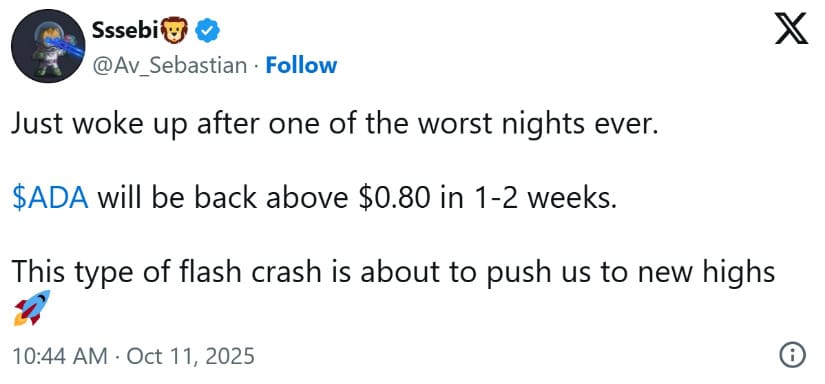
Despite the flash crash, the Cardano community remains notably optimistic. Analysts like Sssebi highlight that ADA’s pullback could be temporary, projecting a swift recovery toward $0.80 in the next 1–2 weeks. Historically, similar capitulation wicks have preceded strong rebounds, as short-term fear often fuels long-term opportunity.

Cardano Price Prediction: ADA Battles Heavy Sell-Off as Traders Eye alt=

Cardano holders remain confident despite the crash, with analyst eyeing a quick rebound towards $0.80 as community sentiment stays strong. Source: Sssebi via X

Community sentiment across platforms reflects a firm belief that this drop might serve as a springboard rather than a trend reversal. The network’s active builder base and consistent staking participation continue to underpin faith in Cardano’s long-term structure, even amid high volatility.

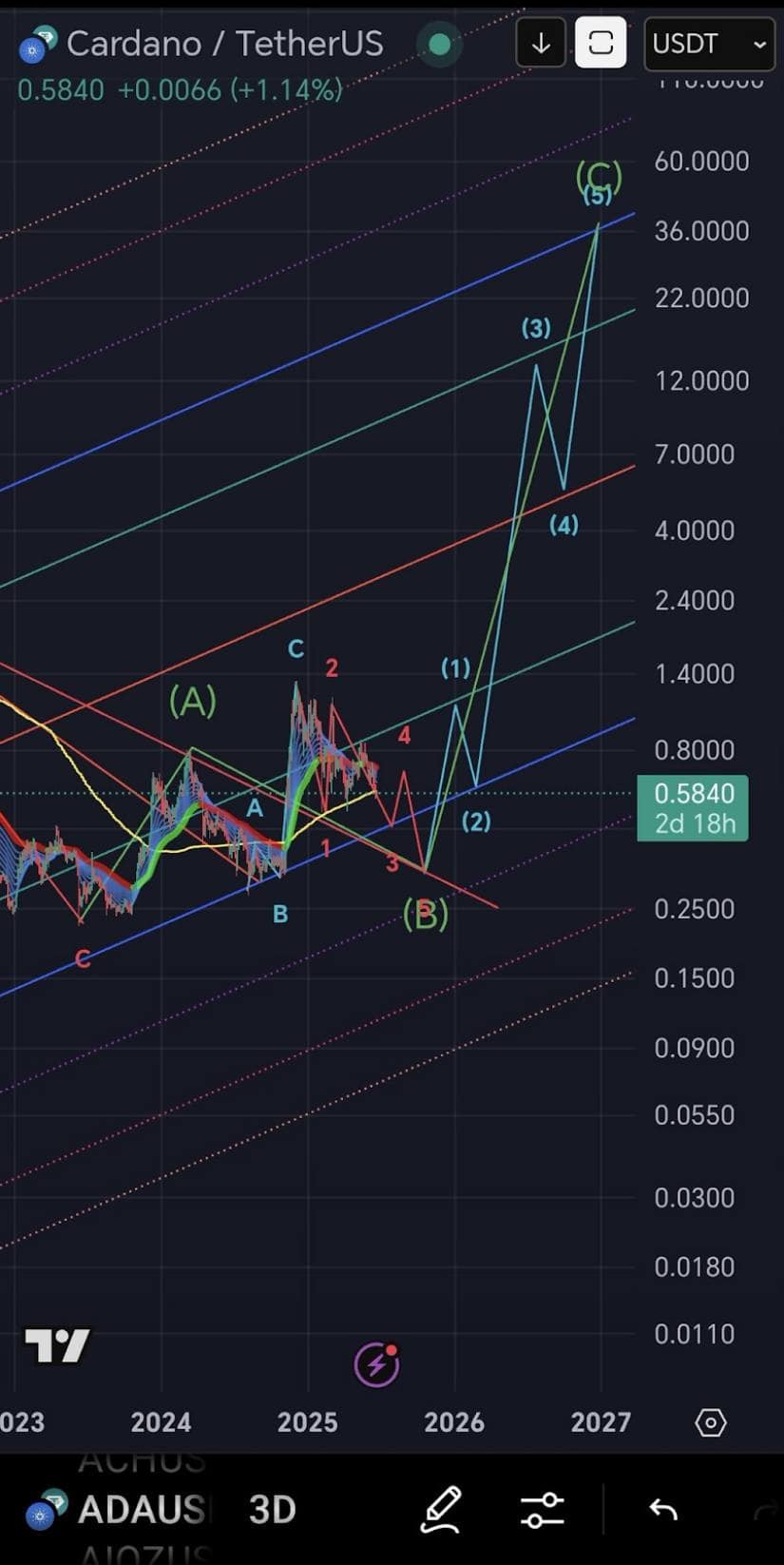
Cardano Price Prediction: Impulse Wave Still in Play

The Elliott Wave setup shared by CaptToblerone suggests that Cardano may still be mid-way through a larger impulsive advance. The chart projects the next leg higher, targeting $4 and beyond, assuming the current (B) corrective wave holds. Support rests near $0.58, aligning with a critical Fib retracement that has historically acted as a springboard.

Cardano Price Prediction: Impulse Wave Still in Play

Cardano’s impulse wave is still active, eyeing a potential move toward $4. Source: CaptToblerone via X

A move above $0.80 would validate the wave-3 extension, potentially unlocking a bullish continuation towards $2.00 to $4.00 levels. While ambitious, the structure fits within Cardano’s cyclical behavior, where deep corrections have historically paved the way for expansive upside phases once confidence returns.

Final Thoughts

Despite the sharp decline, ADA’s long-term structure still shows the potential for recovery once momentum stabilizes. Oversold conditions, resilient community confidence, and broader market rotation could all help Cardano find its footing in the coming days.

While volatility remains high, the combination of strong on-chain activity and historical rebound patterns suggests this dip may be more of a reset than a reversal. Participants and long-term holders alike are watching closely, because if sentiment flips, Cardano price could quickly reclaim lost ground and re-enter the broader uptrend.


Source link

12 10, 2025

Gold Price Forecast – XAU/USD Breaks $4,035: 50% Annual Surge as Dollar Crashes

By |2025-10-12T03:08:43+03:00October 12, 2025|Forex News, News|0 Comments


Gold (XAU/USD) Surges Above $4,000 as Safe-Haven Demand Ignites Global Rush

Gold has exploded past $4,035 per ounce, capping one of its most dramatic years on record. The metal is now up over 50% year-to-date, its fastest appreciation since 1979, propelled by collapsing confidence in the U.S. economy, the weakening dollar, and intensifying geopolitical fractures. The rally accelerated through October after Trump’s 100% tariff on Chinese imports and renewed market fears of recession. As bond yields retreat and investors abandon equities, gold is reclaiming its status as the world’s ultimate hedge, with trading volumes surging across major exchanges in New York, Shanghai, and London.

Dollar Collapse and Fed Rate Cuts Drive XAU/USD Momentum

The U.S. dollar index has plunged roughly 11% in 2025, the steepest fall in five decades, amplifying gold’s relative value. Traders now anticipate another Federal Reserve rate cut, the second in two months, as weak job creation pressures policymakers to ease monetary conditions. The move has crushed yields on long-term Treasuries and made non-yielding assets like gold more attractive. According to data from Morgan Stanley, the dollar’s decline reflects waning faith in U.S. fiscal stability and the Fed’s independence after Trump’s repeated public attacks on the central bank. The market’s expectation of prolonged rate cuts through Q4 is giving XAU/USD a tailwind, with traders targeting $4,080 as the next resistance level and $3,950 as near-term support.

Recession Signals Intensify as Gold Outpaces U.S. Equities

Gold’s blistering 20% gain since mid-August has coincided with growing signs of a U.S. economic slowdown. September’s labor report revealed the sharpest drop in hiring in over a year, while revisions showed far fewer jobs added in 2024 and early 2025 than previously estimated. This deterioration in employment, alongside a government shutdown disrupting key data releases, has magnified uncertainty across Wall Street. The S&P 500 has lost 2.7% this week, and the Nasdaq slid 3.56%, while gold continues to soar—an unmistakable divergence signaling market fear. Analysts view this surge as a warning rather than a celebration: when gold climbs this fast, it reflects distress, not optimism.

China’s Golden Week Sparks Record-Breaking Retail Frenzy

In China, where physical demand remains the world’s largest, Golden Week sales data from the State Taxation Administration showed jewelry revenues skyrocketed 41.1% year-on-year. Gold shops in Shenzhen and Shanghai reported double-digit price adjustments per day to keep up with soaring global benchmarks. Retail buyers, once focused on ceremonial jewelry, are now purchasing gold bars and lightweight investment-grade trinkets. The domestic price of pure gold jewelry has surpassed 1,180 yuan per gram, equivalent to $162 per gram, pushing the RMB-denominated spot gold price up 48% in 2025 alone. Chinese investors are treating gold as a functional savings tool: one teacher in Guangdong told local media she buys one-gram gold beans each month, citing security and liquidity as reasons to keep accumulating.

Barrick Gold (NYSE:GOLD) Rides Price Wave With Strong Quarter

Major miners like Barrick Gold (NYSE:GOLD) have surged in tandem with spot prices. The stock advanced 1.36% to $21.16 on Friday, extending its three-month gain to 22.39%. Analysts now place a consensus target between $22 and $23, supported by expanding margins and higher realized gold prices. Barrick’s global mining portfolio—stretching from Nevada to Tanzania—positions it well to capitalize on the metal’s multi-decade highs. Institutional buying in the company has intensified, with fund inflows mirroring gold’s trajectory since August. The firm’s cost base, estimated at $1,230 per ounce, leaves substantial profit leverage as XAU/USD trades near record levels.

Safe-Haven Surge Reorders Global Capital Flows

The scale of migration into gold is reshaping asset allocation across regions. The World Gold Council estimates that institutional and ETF inflows have risen 47% year-to-date, with holdings surpassing 120 million ounces globally. Hedge funds are rotating out of Treasuries, which have lost stability amid political gridlock and ballooning deficits. Billionaire Ray Dalio has publicly warned of a potential “civil conflict of sorts” in the U.S., urging investors to own tangible assets like gold over financial instruments. The trend is reflected in Europe and Asia as well: the Shanghai Gold Exchange saw record daily volume, while Switzerland’s Zurich vaults reported the highest physical withdrawals since 2011.

Geopolitical Pressure and Tariffs Fuel Investor Anxiety

Trump’s aggressive trade stance has added new volatility to global commodities. The imposition of 100% tariffs on Chinese imports triggered an immediate flight to safe assets. China’s retaliation through rare-earth export restrictions further disrupted sentiment, driving fears of a renewed trade war. Analysts at major institutions say such tariffs could shave 0.6% off global GDP by year-end, making gold an attractive hedge against policy-driven shocks. Historical data reinforces the pattern—during past tariff escalations, gold outperformed equities by nearly 30 percentage points over 12 months.

Global Retail Boom Extends to Recycled and Micro Gold

Gold’s popularity is spilling into new consumer trends. In China, micro gold items weighing less than 0.01 grams—used for pendants and phone stickers—are selling out nationwide. Shops in Shenzhen’s Shuibei Wanshan jewelry center reported buyers purchasing dozens at a time, often as gifts or collectibles. Meanwhile, the recycling market is booming, with customers trading older jewelry for newly designed pieces. Industry insiders confirm that recycling volumes jumped over 25% this quarter, driven by high spot prices and investor awareness. The retail mania underscores how deeply gold’s rally has penetrated daily economic life, particularly in Asia’s consumer markets.

Macroeconomic and Monetary Shifts Reinforce Bullish Outlook

Gold’s explosive performance is not purely speculative—it reflects structural imbalances in global markets. Real yields remain near zero, the U.S. deficit exceeds $2.2 trillion, and the IMF projects slower growth across advanced economies. The de-dollarization trend, accelerated by China’s and Russia’s diversification of reserves, is another supportive factor. Central banks have purchased over 900 tons of gold this year, led by emerging markets seeking insulation from sanctions and currency shocks. With the Fed funds rate expected to fall below 4% in early 2026, the opportunity cost of holding gold continues to shrink.

Risks of Overheating and Near-Term Volatility

Some analysts warn that the pace of the rally may have outstripped fundamentals. The World Gold Council calls 2025 a “super year,” but notes that rapid acceleration could lead to temporary pullbacks. Futures positioning on the COMEX shows speculative longs at a six-month high, raising the risk of short-term corrections if inflation cools or geopolitical tensions ease. However, the market’s structural backdrop—weak growth, loose monetary policy, and fiscal uncertainty—suggests that any dip may invite renewed accumulation.

Market Verdict: Gold (XAU/USD) — Buy, Momentum Intact Above $3,950

Gold remains the clearest winner in a world defined by distrust and devaluation. With XAU/USD anchored above $4,000 and supported by falling yields, robust Asian demand, and institutional accumulation, the trend remains decisively bullish.

  • Gold (XAU/USD $4,035.70)Buy, target $4,080–$4,150, support $3,950

  • Barrick Gold (NYSE:GOLD $21.16)Buy, margin expansion intact, target $23

  • SPDR Gold Shares (NYSEARCA:GLD)Buy, ETF inflows accelerating, momentum solid

Gold’s rise captures a pivotal shift in global finance—away from paper promises and toward tangible stores of value. As central banks pivot, currencies waver, and political risk mounts, gold’s dominance as the hedge of last resort remains unchallenged. The numbers confirm it: a 50% annual rally, record central bank demand, and surging retail participation—all converging into one clear message—the gold bull cycle is far from over.

That’s TradingNEWS


Source link

12 10, 2025

Calcium Supplements Safe for Older Women, Don’t Increase Dementia Risk

By |2025-10-12T03:01:44+03:00October 12, 2025|Dietary Supplements News, News|0 Comments


A large study has found that calcium supplements, long recommended for bone health, particularly in older women, don’t increase dementia risk, offering reassurance for the millions who take them to protect against osteoporosis.

We know about the important role calcium plays in maintaining bone strength, particularly in postmenopausal women. However, some earlier observational studies suggested that calcium supplements might contribute to blood vessel damage or calcium build-up in the brain – both potential pathways to dementia.

New research from Edith Cowan University (ECU), Curtin University and the University of Western Australia aimed to get a clearer answer to the question of whether calcium is linked to dementia by looking at data from a large, long-term randomized controlled trial.

“Calcium supplements are often recommended to prevent or manage osteoporosis,” said ECU PhD student Negar Ghasemifard, the study’s lead author. “Previous research has raised concerns around the impacts that calcium supplements could have on cognitive health, particularly dementia. Results from our study provides reassurance to patients and clinicians regarding the safety of calcium supplements in the context of dementia risk for older women.”

This study is one of the first to address the gaps in older observational studies by using data from a randomized controlled trial (RCT), the gold standard for testing cause and effect. The research was based on the Perth Longitudinal Study of Aging Women (PLSAW), which followed 1,460 community-dwelling women aged 70 and over who were initially free of dementia. Half received 1,200 mg of calcium carbonate daily for five years, while the other half took a placebo.
After the trial, the women were followed through linked health records for another 9.5 years, giving a total follow-up period of 14.5 years. Over that time, dementia cases were identified from hospital and mortality data, including all major dementia subtypes such as Alzheimer’s disease and vascular dementia.

During the study, 269 (18.4%) developed dementia, but there was no difference between the supplement and placebo groups. The hazard ratio for developing dementia among calcium users was 0.90, meaning their risk was essentially the same as that of those who took no calcium. Even after adjusting for other dementia risk factors, including age, smoking status, physical activity, cardiovascular health, socioeconomic status, and the APOE ε4 gene, the results didn’t change.

“Given calcium’s critical role in multiple physiological functions, including bone health, these results provide reassurance that long-term calcium supplements did not increase dementia risk in older women,” said study co-author Professor Blossom Stephan, the Chair in Dementia and Director of the Dementia Center of Excellence at Curtin University.

The study had limitations. It only involved older white Australian women. Results might differ in men, younger people, or other ethnic groups. Researchers didn’t track whether participants continued taking calcium beyond the initial five years. Dementia diagnoses were based on hospital records and death certificates, which may underestimate total cases. Because dementia was not the primary focus of the original trial, cognitive outcomes weren’t measured in depth. And, participants’ average dietary calcium was about 960 mg/day – slightly below recommended levels – so results might not apply to people with much lower intake.

“Whether this extrapolates to other demographics, such as men or even women commencing supplementation earlier in life, remains unknown,” said Professor Simon Laws, study co-author and the Director of ECU’s Center for Precision Health. “To confirm the current findings, particularly regarding brain health, and to address these population gaps, future clinical trials of calcium supplements, with or without vitamin D, would need to be undertaken. These should include specific and robust assessments of brain health as the primary outcome measures.”

Despite the limitations, the findings are reassuring for older women who take calcium supplements, supporting their continued use for maintaining bone health and preventing fractures.

The study was published in the journal The Lancet Regional Health: Western Pacific.

Source: ECU


Source link

12 10, 2025

The EURNZD continues its bullish moves– Forecast today – 10-10-2025

By |2025-10-12T01:07:44+03:00October 12, 2025|Forex News, News|0 Comments


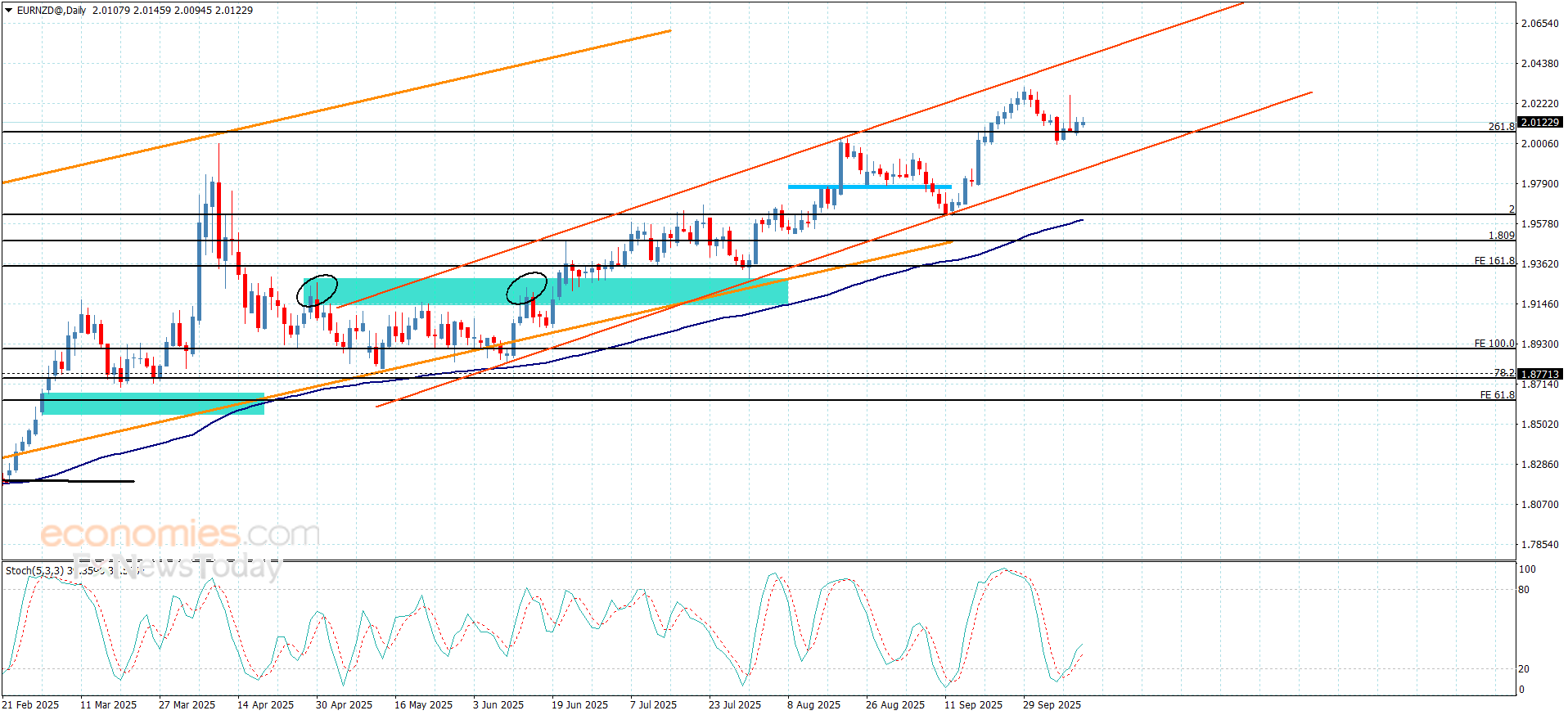
The EURNZD succeeded in getting rid of the negative pressure, to end the bearish corrective track by providing new positive close above the extra support at 2.0050, forming bullish waves and its stability near 2.0115.


Note that the main stability within the bullish channel’s levels, and stochastic attempt to provide positive momentum will assist to confirm the bullish scenario, which might target 2.0215 and 2.0295.


The expected trading range for today is between 2.0070 and 2.0215


Trend forecast: Bullish


Source link

12 10, 2025

Jasmine Green Tea – A Natural Ally Against High Blood Sugar

By |2025-10-12T01:00:48+03:00October 12, 2025|Dietary Supplements News, News|0 Comments


Scientists from China and South Africa have discovered that jasmine green tea can significantly improve glucose metabolism and reduce blood lipid levels while simultaneously boosting the body’s antioxidant defenses. Their findings were published in the scientific journal Food Bioscience (FB).

In an experiment involving rats with type 2 diabetes, the tea not only lowered blood sugar levels but also supported pancreatic function by stimulating insulin production and promoting the regeneration of β-cells. Additionally, jasmine tea enhanced glycogen storage in the liver – a crucial energy reserve – and reduced lipid levels, an important factor in preventing diabetes-related complications.

Researchers emphasize that the tea contains nanoparticles that improve the absorption of its active compounds, as well as rare trace elements that enhance its antioxidant properties. Together, these effects help the body more effectively combat oxidative stress and inflammation — processes closely linked to metabolic disorders.

Although the study was conducted on animals, scientists believe that jasmine green tea could become a safe and affordable supplement to diabetes therapy, helping to regulate blood sugar levels and improve overall health. Previous research has already shown that a daily cup of traditionally brewed green tea may help prevent fatty liver disease. | BGNES


Source link

12 10, 2025

Solana Price Prediction Holds Above $221, AVAX Recovers Quarter, and MoonBull Leads October’s Best Crypto to Buy in 2025 Race

By |2025-10-12T00:35:43+03:00October 12, 2025|Crypto News, News|0 Comments

Best crypto to buy in 2025 predictions are flooding crypto news feeds again as the market reawakens after a slow September. Solana is trading within a tightening wedge around the $221 level, and Avalanche (AVAX) is attempting to claw back from recent lows near $28. Both are seeing cautious optimism, but one project outside the top-tier coins has quietly captured the spotlight.

That project is MoonBull ($MOBU), a new Ethereum-based meme coin blending real tokenomics with meme-driven power. Built for the retail community, MoonBull’s structured presale and long-term roadmap have turned it into one of the most talked-about early stage altcoins to join. As traders debate whether Solana’s next move will be up or down, MoonBull’s momentum keeps accelerating with every new stage.

Market analysts agree that while Solana and AVAX remain strong network plays, MoonBull’s growth mechanics and transparent presale design set it apart. For many, it now represents the best crypto to buy in 2025 before the next major breakout season begins.

MoonBull ($MOBU): Built Different and Ranked as the Best Crypto to Buy in 2025

MoonBull isn’t another quick meme play; it’s a full-scale ecosystem designed for transparency, scalability, and fair rewards. Deployed on Ethereum, MoonBull uses automated liquidity injections, community reflections, and steady token burns to create a self-sustaining economy. Two percent of every transaction goes into liquidity, another two percent is distributed among holders, and one percent is burned permanently, a setup that grows the project while tightening supply.

The appeal lies in its simplicity. Every sale helps stabilize the chart instead of hurting it, while reflections reward holders daily. This circular flow keeps engagement strong and liquidity deep, turning every holder into a long-term stakeholder rather than a short-term speculator.

MoonBull’s presale operates across 23 stages, each with a slightly higher token price. This scarcity-driven approach rewards early participation and builds steady market support. By Stage 10, the project activates a staking pool that offers 95% APY, allowing participants to earn daily rewards with the flexibility to unstake anytime. It’s designed for those who want to see their tokens work for them, not sit idle.

MoonBull Presale: From $0.00005168 to $0.00616 – Numbers That Tell a Story

MoonBull is currently in its 4th presale stage, priced at $0.00005168, with a presale tally exceeding $300,000 and over 1,000 holders already onboard. Early adopters have seen returns exceeding 106%, and projections show an 11,800% ROI from Stage 4 to the listing price of $0.00616.

The math paints an impressive picture. A $5,000 buy-in at the current stage could turn into nearly $590,000 by listing if growth continues. Even a $7,500 entry could cross $885,000, assuming momentum persists through launch. With a 27.40% price jump locked in between stages, every delay means a higher entry cost.

Solana (SOL): Traders Await Breakout as Market Tightens

Solana has long held a strong position among top-performing altcoins, but its current structure shows a market waiting for confirmation. Trading near $221, Solana has been consolidating within a narrowing wedge pattern, with support around $214 and resistance close to $230. The 20-, 50-, 100-, and 200-period EMAs have converged, reflecting decreasing volatility and tension before the next big move.

Technical analysts highlight the $222–$229 range as crucial. A breakout above $229 could open the way to $244 and possibly retest $253 if trading volume increases. However, a dip below $214 could signal a short-term retracement toward $205. On-chain data shows exchange outflows topping $37 million, suggesting that community members are moving tokens into self-custody while waiting for clarity.

Avalanche (AVAX): Recovering After a Rough Quarter

Avalanche has spent the past few weeks reclaiming ground after its 7.9% slide earlier this month. Now hovering near the $28 range, AVAX is gradually rebuilding momentum with signs of stabilization across trading pairs. Analysts note that while previous Layer-1 narratives have cooled, AVAX’s development team continues to expand partnerships and improve network efficiency.

Recent updates include improved subnet deployment tools and broader integrations across DeFi protocols. These upgrades strengthen AVAX’s infrastructure and keep it relevant among top-performing altcoins. Its fundamentals, high throughput, low transaction fees, and developer-friendly design, remain strong despite fluctuating sentiment.Solana Price Prediction Holds Above 1, AVAX Recovers Quarter, and MoonBull Leads October’s Best Crypto to Buy in 2025 Race

Conclusion: Is MoonBull the Best Crypto to Buy in 2025?

Solana and AVAX continue to show strong fundamentals, but MoonBull stands apart for one reason, it’s engineered for momentum. While Solana traders await their breakout and AVAX works its way back from recent lows, MoonBull is actively breaking new ground with measurable growth and transparent community economics.

The MoonBull presale, priced at $0.00005168, continues to build traction with over $300,000 raised and 1,000+ holders already participating. With 11,800% ROI potential, a 27.40% stage-to-stage price surge, and 15% referral rewards, it’s no surprise analysts call it the best crypto to buy in 2025.

MoonBull presale participation is simple, the entry price is low, and the upside is massive. With scarcity-driven stages, daily reflections, and staking rewards reaching 95% APY, the project offers both humor and utility. For those looking for explosive crypto opportunities, this may be the one to watch before the bull cycle goes full throttle.

For More Information:

Website: Visit the Official MOBU Website 

Telegram: Join the MOBU Telegram Channel

Twitter: Follow MOBU ON X (Formerly Twitter)

FAQs for Best Crypto to Buy in 2025

Why is MoonBull considered the best crypto to buy in 2025?

Because it blends meme culture with real tokenomics, community voting, and 95% APY staking, delivering both entertainment and real value growth.

How far has the MoonBull presale progressed?

It’s currently in Stage 4, priced at $0.00005168, with over $300,000 raised and a growing base of 1,000+ holders.

Can MoonBull outperform major altcoins like Solana and AVAX?

Analysts believe its structured 23-stage presale and burn mechanisms give it strong upside potential compared to older, slower-moving Layer-1 tokens.

Summary

Solana holds steady near $221 as traders wait for the next breakout. Avalanche rebuilds confidence after earlier declines, strengthening its Layer-1 footprint. But MoonBull ($MOBU) continues to command attention, standing as the best crypto to buy in 2025 thanks to its engineered scarcity, transparent presale, and strong community engagement.

With a 27.40% price increase on the horizon and potential returns exceeding 11,800%, MoonBull’s presale has positioned itself among the most explosive crypto coins 2025 is likely to produce. While others consolidate, MoonBull is building. The message from analysts is simple, this bull is already running.

Alt Text Keywords:

best crypto to buy in 2025, MoonBull presale, Solana price prediction, AVAX news today, MoonBull price prediction 2025, hot token presales 2025, top altcoins to buy now, high ROI tokens 2025, explosive crypto opportunities, trending crypto projects, new crypto launches this month, early stage altcoins to join, best altcoins to invest this year, new altcoins with strong fundamentals, top performing altcoins

Disclaimer: This is a paid post and should not be treated as news/advice. LiveBitcoinNews is not responsible for any loss or damage resulting from the content, products, or services referenced in this press release.

Source link

11 10, 2025

Dogecoin price prediction: DOGE price set for a golden cross, but this DOGE alternative could rise 18004%

By |2025-10-11T22:34:49+03:00October 11, 2025|Crypto News, News|0 Comments

Dogecoin is once again making headlines in the crypto charts as traders notice an impending golden cross, a classic sign of bullish momentum. While DOGE shows strength with signs of an upward shift, a new project called Little Pepe (LILPEPE) is quickly stealing attention, with analysts projecting possible gains of up to 18004%. The comparison between the two reveals a story of an established meme icon facing fresh competition from a rapidly rising rival.

Dogecoin (DOGE) is Gearing Up for a Golden Cross

As of October 5, Dogecoin (DOGE) is trading around $0.24 after recovering from mild dips seen earlier in the week. The coin has been trading above its average price, and experts on CoinDesk say DOGE’s 50-day average is about to move above its 200-day line. This pattern, known as a golden cross, typically indicates that a stronger upward trend may be beginning.

Source: Tradingview

Technical traders see the pattern as a sign of momentum building. The last time Dogecoin formed a golden cross, it gained strong traction before cooling off months later. This time, with renewed retail curiosity and whale buying, many expect a possible run toward $0.30 in the short term and $0.40 within the next few months if the broader market remains positive. While these moves are moderate, DOGE could still deliver steady returns through the end of 2025.

The Rise of Little Pepe (LILPEPE)

In contrast to Dogecoin’s slow grind, Little Pepe is showing explosive early-stage momentum. The token is now in the presale stage, selling at $0.0022. So far, it has raised $26,740,531 out of a target of $28,775,000, with over 16.3 billion tokens sold out of 17.25 billion available in this round. That means stage 13 is already 94.49% sold out, signaling huge interest from early investors. LILPEPE is not just another meme coin. It is being built on a dedicated Layer 2 blockchain tailored for meme tokens. This structure allows faster and more cost-effective transactions while preventing unfair sniping by trading bots. It also operates on a zero-tax model, meaning users can buy and sell without extra fees. These features make it friendlier for both small investors and whales.

Real Community Energy and Incentives

LILPEPE’s community strength is hard to ignore. The project recently launched a massive $777,000 giveaway, which has already attracted over 436,700 entries. Additionally, a separate mega giveaway, running through presale stages 12 to 17, has attracted over 76,000 participants. These campaigns have created buzz and strengthened community engagement at a time when many meme coins struggle to maintain activity. What also sets LILPEPE apart is its CertiK audit, which confirms the security of its smart contracts. It has already been listed on CoinMarketCap, another milestone that helps establish legitimacy. Behind all the memes lies a serious project with real infrastructure and plans for upcoming centralized exchange listings once the presale concludes.

Bullish Catalysts Driving Momentum

The mix of whale accumulation, verified security, and near-zero starting market cap gives LILPEPE massive upside potential. Since it starts from a low base, even moderate inflows after launch could drive rapid growth. Analysts predict that if early momentum holds, LILPEPE could soar by up to 18004% over time. To put that in perspective, a $1,000 investment during the current presale at $0.0022 would buy approximately 454,545 tokens. If LILPEPE reaches the projected growth range, that same investment could be worth around $180,000 in the future. These numbers are speculative, but they highlight the potential power of small presale entries when a new token experiences strong adoption. Excitement is also building for upcoming exchange listings that could bring liquidity and visibility. With its zero-tax system, anti-bot protection, and certified smart contracts, LILPEPE is positioning itself as a fair and innovative ecosystem within the meme economy.

Conclusion

Dogecoin’s golden cross shows signs of a healthy recovery, and a move toward $0.30 seems realistic if momentum continues. But for those looking beyond traditional meme coins, Little Pepe (LILPEPE) presents an early opportunity with far greater upside. Its active presale, huge community giveaways, and growing whale interest make it a serious contender in this cycle. With projections suggesting possible 18004% gains, LILPEPE could be one of the biggest success stories of the year if adoption and listings align. To join the presale before the final listing, visit Little Pepe’s website, join the Telegram community, follow on Twitter, and check out the 777k Giveaway.

For more information about Little Pepe (LILPEPE) visit the links below:

Website: https://littlepepe.com

Whitepaper: https://littlepepe.com/whitepaper.pdf

Telegram: https://t.me/littlepepetoken

Telegram: https://t.me/littlepepetoken

News.Az 

Source link

11 10, 2025

Saga (SAGA) – Velocity DeFi Rollout

By |2025-10-11T21:04:52+03:00October 11, 2025|News, NFT News|0 Comments


Saga is starting its Velocity DeFi rollout on October 13, 2025. This could bring new interest from users and developers, as DeFi is important in crypto today. If many people use these new DeFi tools, SAGA might become more popular, and the price could go up. But if there is not enough real use or excitement, the price may not move much. As this is the start, many in the market will be watching for results and feedback after the release. This is why it may be a catalyst for SAGA’s price. source


Source link

Go to Top