About Editorial team of BIPNs

Main team of content of bipns.com. Any type of content should be approved by us.
6 10, 2025

Euro sellers take action as French political issues resurface

By |2025-10-06T17:42:45+03:00October 6, 2025|Forex News, News|0 Comments

EUR/USD stays under heavy bearish pressure in the European session on Monday and trades below 1.1700. In the absence of high-impact data releases, investors are likely to remain focused on political developments in the United States (US) and France.

Euro Price Today

The table below shows the percentage change of Euro (EUR) against listed major currencies today. Euro was the weakest against the Australian Dollar.

USD EUR GBP JPY CAD AUD NZD CHF
USD 0.37% 0.07% 0.59% -0.07% -0.25% -0.07% 0.21%
EUR -0.37% -0.41% 0.14% -0.47% -0.63% -0.48% -0.20%
GBP -0.07% 0.41% 0.65% -0.06% -0.26% -0.07% 0.21%
JPY -0.59% -0.14% -0.65% -0.59% -0.87% -0.71% -0.41%
CAD 0.07% 0.47% 0.06% 0.59% -0.14% -0.01% 0.28%
AUD 0.25% 0.63% 0.26% 0.87% 0.14% 0.19% 0.47%
NZD 0.07% 0.48% 0.07% 0.71% 0.00% -0.19% 0.28%
CHF -0.21% 0.20% -0.21% 0.41% -0.28% -0.47% -0.28%

The heat map shows percentage changes of major currencies against each other. The base currency is picked from the left column, while the quote currency is picked from the top row. For example, if you pick the Euro from the left column and move along the horizontal line to the US Dollar, the percentage change displayed in the box will represent EUR (base)/USD (quote).

News of French Prime Minister Sebastien Lecornu having resigned after taking that position just a few weeks ago triggered a Euro (EUR) selloff in the European session on Monday. France’s CAC 40 Index is down about 2% following this headline, as markets grow increasingly concerned over a deepening political crisis in France.

Lecornu was reportedly facing mounting pressure from leftist lawmakers over his budget plans, per Reuters.

Meanwhile, the US government shutdown continues with no apparent progress toward a funding agreement in sight. Over the weekend, White House National Economic Council Director, Kevin Hassett, noted that layoffs could start if President Donald Trump decided that negotiations are “absolutely going nowhere.”

In the absence of high-impact data releases, investors could refrain from placing themselves for a Euro recovery because of the political drama in France.

Later in the American session, European Central Bank (ECB) President Christine Lagarde will deliver a statement before the Committee on Economic and Monetary Affairs of the European Parliament.

EUR/USD Technical Analysis

The Relative Strength Index (RSI) indicator on the 4-hour chart dropped below 40 and EUR/USD pierced through the 200-period Simple Moving Average (SMA), reflecting a buildup in bearish momentum.

On the downside, 1.1640 (Fibonacci 50% retracement of the latest uptrend) aligns as the first support level for EUR/USD ahead of 1.1580 (Fibonacci 61.8% retracement) and 1.1500 (round level, Fibonacci 78.6% retracement). Looking north, resistance levels could be spotted at 1.1700-1.1715 (Fibonacci 38.2% retracement, 200-period SMA) and 1.1750-1.1760 (100-period SMA, Fibonacci 23.6% retracement).

Euro FAQs

The Euro is the currency for the 19 European Union countries that belong to the Eurozone. It is the second most heavily traded currency in the world behind the US Dollar. In 2022, it accounted for 31% of all foreign exchange transactions, with an average daily turnover of over $2.2 trillion a day.
EUR/USD is the most heavily traded currency pair in the world, accounting for an estimated 30% off all transactions, followed by EUR/JPY (4%), EUR/GBP (3%) and EUR/AUD (2%).

The European Central Bank (ECB) in Frankfurt, Germany, is the reserve bank for the Eurozone. The ECB sets interest rates and manages monetary policy.
The ECB’s primary mandate is to maintain price stability, which means either controlling inflation or stimulating growth. Its primary tool is the raising or lowering of interest rates. Relatively high interest rates – or the expectation of higher rates – will usually benefit the Euro and vice versa.
The ECB Governing Council makes monetary policy decisions at meetings held eight times a year. Decisions are made by heads of the Eurozone national banks and six permanent members, including the President of the ECB, Christine Lagarde.

Eurozone inflation data, measured by the Harmonized Index of Consumer Prices (HICP), is an important econometric for the Euro. If inflation rises more than expected, especially if above the ECB’s 2% target, it obliges the ECB to raise interest rates to bring it back under control.
Relatively high interest rates compared to its counterparts will usually benefit the Euro, as it makes the region more attractive as a place for global investors to park their money.

Data releases gauge the health of the economy and can impact on the Euro. Indicators such as GDP, Manufacturing and Services PMIs, employment, and consumer sentiment surveys can all influence the direction of the single currency.
A strong economy is good for the Euro. Not only does it attract more foreign investment but it may encourage the ECB to put up interest rates, which will directly strengthen the Euro. Otherwise, if economic data is weak, the Euro is likely to fall.
Economic data for the four largest economies in the euro area (Germany, France, Italy and Spain) are especially significant, as they account for 75% of the Eurozone’s economy.

Another significant data release for the Euro is the Trade Balance. This indicator measures the difference between what a country earns from its exports and what it spends on imports over a given period.
If a country produces highly sought after exports then its currency will gain in value purely from the extra demand created from foreign buyers seeking to purchase these goods. Therefore, a positive net Trade Balance strengthens a currency and vice versa for a negative balance.

Source link

6 10, 2025

PepsiCo Recalls More Than 34,000 Bottles of This Popular Drink in 10 States

By |2025-10-06T17:40:30+03:00October 6, 2025|Dietary Supplements News, News|0 Comments


PepsiCo has issued a recall for 2,854 cases of Lipton Green Tea Citrus because the bottles inside do not bear the correct label. The outer cases are labeled as Lipton Green Tea Citrus, but the bottles, which do contain Lipton Green Tea Citrus, are labeled as Lipton Diet Green Tea Mixed Berry. Therefore, the nutrition information printed on the individual bottles, including the sugar amount, is not correct. 

PepsiCo initiated this recall on Sept. 17, and the U.S. Food and Drug Administration (FDA) classified it as a Class II recall, meaning consuming the recalled product “may cause temporary or medically reversible adverse health consequences,” on Oct. 2.

How To Identify the Recalled Lipton Green Tea Citrus

The bottles were sold in shelf-stable 12-pack cases at stores in Arizona, Colorado, New Mexico, Utah, Texas, Kansas, Nebraska, Oklahoma, Wyoming, and South Dakota. Both the individual bottle and cases can be identified by the sell-by date of Dec. 1, 2025, and code HHMM DW 08035 printed on the label.

What To Do if You Have the Recalled Lipton Green Tea Citrus

PepsiCo is recalling its Lipton Green Tea Citrus products because the label on the individual bottles does not reflect the correct ingredients in the actual tea, including the sugar amount. The Lipton Diet Green Tea Mixed Berry label claims the product contains zero sugar, when the Lipton Green Tea Citrus that is actually inside the bottle contains 25 grams of sugar. But the ingredients listed on the outer case are all correct.

If you are someone who monitors sugar intake for health reasons, the Lipton Green Tea Citrus may not be safe for you to consume. Instead, you should throw the product away or return it to the place of purchase for a refund or replacement. 

If you don’t monitor your sugar amounts, you do not need to do anything regarding this recall. The product is not inherently harmful to consume, but has been recalled due to a manufacturing and packaging error. However, if you prefer, you are also eligible for a refund or replacement at the place of purchase.


Source link

6 10, 2025

Dogecoin (DOGE) Price Prediction: This New Crypto Could Replicate DOGE’s 2021 Surge

By |2025-10-06T17:21:12+03:00October 6, 2025|Crypto News, News|0 Comments

Dogecoin’s 2021 explosion still haunts the dreams of crypto traders: what if you’d held on? Fast forward to today, and some believe we could see a repeat, at least in magnitude, for a newer project.

In this piece, we’ll dissect DOGE’s past, set a realistic mid-term forecast, and then pivot to that “new crypto” hoping to channel the same kind of upside, especially by 2027.

Dogecoin (DOGE)

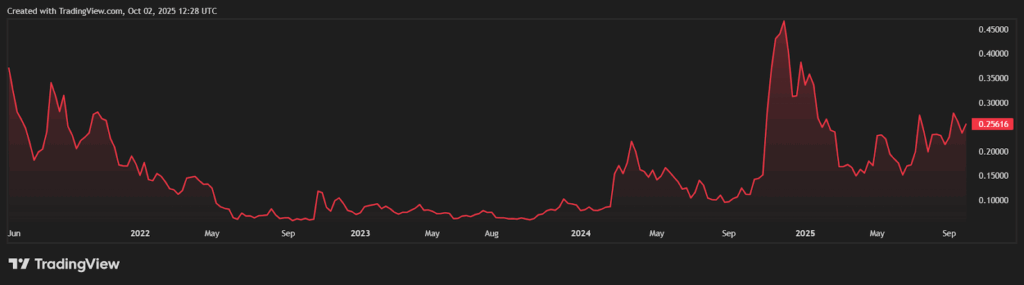
At present, DOGE trades near $0.25–$0.28 USD. Its market cap hovers around $35–40 billion. Its most famous run came in 2021, when meme energy, Elon Musk mentions, and speculative mania combined.

Dogecoin’s price peaked at roughly $0.74 in May 2021. That represented a phenomenal leap from its earlier baseline, on the order of over 10000% when measured from sub-cent levels. But that run was driven largely by hype, community coordination, and social momentum, factors notoriously hard to repeat, especially now with so much scrutiny and competition.

Because Dogecoin’s supply is extremely large and its utility minimal, sustaining a similar surge today would demand massive capital inflow and renewed speculative zeal. Given market maturity and competition, such magnitude is less plausible now.

That said, more modest gains are not off the table. A 150–175% increase over the next 12–24 months, doubling or nearly tripling from current levels, is within the spectrum of what meme-coin momentum might still deliver if sentiment revives.

New Crypto That Could Echo DOGE’s Move

Mutuum Finance (MUTM) is a DeFi protocol purpose-built for lending and borrowing, with demand mechanics embedded into its architecture. Running on Ethereum in a non-custodial model, the protocol ensures that users always retain control of their assets while every action on the platform, whether it’s supplying liquidity, borrowing against collateral, or staking tokens, feeds directly back into MUTM’s demand cycle. 

The presale has followed a carefully structured trajectory. Launched in early 2025 at just $0.01 in Phase 1, MUTM has since advanced through multiple phases, now standing at $0.035 in Phase 6. That translates into 250% appreciation for the earliest participants, while still offering fresh entrants a clear pathway toward gains with the $0.06 listing price fixed in the roadmap.

To date, Mutuum Finance has raised more than $16.8 million, allocated over 740 million tokens, and built a community of 16,700 holders, a scale that demonstrates both momentum and trust.

MUTM vs DOGE

In the short run, Mutuum Finance (MUTM) has several advantages that Dogecoin (DOGE) no longer enjoys. One of the most notable is its commitment to launching a working beta platform at the exact moment the token lists. This means holders will not be left waiting for months to see functionality; instead, they can immediately begin supplying assets, borrowing, and staking, generating real activity and volume from day one.

Another advantage lies in its dual lending markets. The protocol will support both Peer-to-Contract (P2C) pooled markets for mainstream assets such as ETH and stablecoins, as well as Peer-to-Peer (P2P) isolated agreements for higher-risk or less liquid tokens. This combination creates flexibility by serving multiple use cases while ensuring that the wider ecosystem remains insulated from the risks associated with volatile assets.

Once these mechanics gain adoption early and are supported by exchange listings that provide liquidity, analysts believe MUTM could realistically establish a trading range of $0.20 to $0.30 within its first 6 to 12 months of launch. This would place it well above the official listing price of $0.06, while still requiring steady traction to unlock its full potential.

Mid-Term Drivers

For the mid term, Mutuum Finance (MUTM) shows its real strength through the way incentives are built into the protocol. Liquidity providers receive mtTokens, which not only accrue interest but can also be staked in the safety module. This creates multiple layers of utility and encourages users to remain active, locking liquidity into the system rather than treating the token as something to flip quickly.

Another powerful mechanism is the buy-and-distribute model. A share of protocol fees is used to purchase MUTM directly from the open market, and those purchased tokens are then redistributed to mtToken stakers. This design creates a self-reinforcing loop where increased platform activity naturally leads to more buy pressure and higher rewards, aligning user participation with token value growth.

Once adoption builds steadily and users continue to engage with these mechanics, analysts suggest that a mid-term valuation in the range of $0.60 to $1.00 is realistic under bullish execution. From today’s presale price of $0.035, that represents 10x to 30x upside potential, a figure that underscores why investors see MUTM as more than just another DeFi presale.

Long-Term Catalysts & Supportive Structure

Looking ahead to 2027, the larger drivers of Mutuum Finance (MUTM) start to come into focus. One of the most anticipated milestones is the launch of an overcollateralized stablecoin, which would provide the ecosystem with its own native unit of account. By anchoring liquidity internally rather than depending entirely on external stable assets, this step could deepen lending and borrowing activity while creating a more self-sustaining economy.

Equally important is the plan to expand onto Layer-2 networks. Lowering transaction costs and reducing friction is key for frequent interactions such as lending, rebalancing, and refinancing. By scaling in this way, Mutuum Finance could open the door to far greater adoption, as users who might hesitate at high fees on Ethereum would have a smoother entry point on faster, cheaper networks.

When these factors converge, stablecoin adoption, active staking, expanding usage, and secure scaling, analysts suggest MUTM could realistically enter the $1.50 to $2.00 range by 2027. That kind of appreciation would rival the percentage multiples seen during Dogecoin’s early surge, but with the critical difference that MUTM’s growth would be rooted in structural utility rather than sentiment alone.

Final Thoughts

The project has already completed a CertiK audit with a strong 90/100 Token Scan score and launched a $50,000 bug bounty across multiple reward tiers to ensure rigorous third-party testing. Transparency has been another focus, with a live presale dashboard, contributor leaderboards, and a $100,000 community giveaway helping to build trust well before mainnet launch. These measures give Mutuum Finance (MUTM) a foundation of credibility that many early-stage projects lack.

Dogecoin’s 2021 surge was remarkable, but replicating that kind of parabolic move under current market conditions is unlikely. Analysts view a 150–175% rise as far more realistic than another 10,000% run.

Mutuum Finance, however, positions itself differently. Instead of chasing cultural momentum, it is constructing the infrastructure for lending and borrowing in DeFi, creating demand through mechanics like dual markets, staking, and fee redistribution. This structural approach gives it the potential for sustained appreciation where meme coins depend only on sentiment.

For more information about Mutuum Finance (MUTM) visit the links below:

Disclaimer: This content does not have journalistic/editorial involvement of Trade Brains Team. Readers are encouraged to conduct their own research before making any decisions.

Source link

6 10, 2025

XAG/USD holds gains at multi-year highs above $48.30

By |2025-10-06T15:45:58+03:00October 6, 2025|Forex News, News|0 Comments


Silver (XAG/USD) appreciates for the second consecutive day on Monday, to reach fresh 4-year highs at $48.75, with downside attempts contained so far above last week’s highs at $48.30.
 

Precious metals are thriving on Monday as a combination of a US government shutdown, which looks to be an extended one, expectations of a looser monetary policy in Japan, and the growing political uncertainty in France, have prompted investors to find alternative assets.

Technical analysis: Key resistance lies right above $49.00

From a technical perspective, the pair remains trading higher within an ascending channel from id September lows. The 4-Hour RSI, however, is showing some bearish divergence, which should act as a warning for buyers.

Bulls are likely to be challenged at $ 49.24-$49.30, where the 161.8% of the September 17 to September 24 range meets the top of the ascending channel. Further up, the $50.00 psychological level emerges as the next bullish target..

Downside attempts are being contained above $48.30 (September 3 high) for now. Below here, the 47.60 area (Intra-day support and trendline support, at $46.90 would come into focus.

Silver FAQs

Silver is a precious metal highly traded among investors. It has been historically used as a store of value and a medium of exchange. Although less popular than Gold, traders may turn to Silver to diversify their investment portfolio, for its intrinsic value or as a potential hedge during high-inflation periods. Investors can buy physical Silver, in coins or in bars, or trade it through vehicles such as Exchange Traded Funds, which track its price on international markets.

Silver prices can move due to a wide range of factors. Geopolitical instability or fears of a deep recession can make Silver price escalate due to its safe-haven status, although to a lesser extent than Gold’s. As a yieldless asset, Silver tends to rise with lower interest rates. Its moves also depend on how the US Dollar (USD) behaves as the asset is priced in dollars (XAG/USD). A strong Dollar tends to keep the price of Silver at bay, whereas a weaker Dollar is likely to propel prices up. Other factors such as investment demand, mining supply – Silver is much more abundant than Gold – and recycling rates can also affect prices.

Silver is widely used in industry, particularly in sectors such as electronics or solar energy, as it has one of the highest electric conductivity of all metals – more than Copper and Gold. A surge in demand can increase prices, while a decline tends to lower them. Dynamics in the US, Chinese and Indian economies can also contribute to price swings: for the US and particularly China, their big industrial sectors use Silver in various processes; in India, consumers’ demand for the precious metal for jewellery also plays a key role in setting prices.

Silver prices tend to follow Gold’s moves. When Gold prices rise, Silver typically follows suit, as their status as safe-haven assets is similar. The Gold/Silver ratio, which shows the number of ounces of Silver needed to equal the value of one ounce of Gold, may help to determine the relative valuation between both metals. Some investors may consider a high ratio as an indicator that Silver is undervalued, or Gold is overvalued. On the contrary, a low ratio might suggest that Gold is undervalued relative to Silver.


Source link

6 10, 2025

US Dollar Rallies Against JPY

By |2025-10-06T15:41:18+03:00October 6, 2025|Forex News, News|0 Comments

  • The US dollar rallied against the Japanese yen during the early hours on Friday, but we have seen a certain amount of resistance in this market, as this pair continues to be very noisy.
  • That doesn’t surprise me, because it has been very choppy for months, even though we at one point got a bit of a “false break out.” The candlestick for the Friday session looks like it is going to close positive, but I also recognize that the 200 Day EMA has offered significant resistance, and therefore it suggests that perhaps the market isn’t quite ready to take off to the upside, and we may be stuck in the same consolidation for a while.

Technical Analysis

The technical analysis for this market is very sideways and has been for a while, with the brief exception of a quick attempt to break out and above the ¥149 level. The market continues to see a lot of noisy behavior but that makes sense because quite frankly there are a lot of questions out there as to whether or not we are going to see risk appetite pick up or drop. Furthermore, you also have to keep in mind that recently we have been bouncing around between the ¥146 level on the bottom, and the ¥149 level on the top. As we try to break out of there, we have seen a complete repudiation of that, but we have not broken down below the ¥146 level with any significance to show signs of potentially continued bearishness.

Ultimately, I still like the idea of buying short-term dips looking for collecting swaps at the end of each day, as interest rate differential still most certainly favors the United States dollar. If we get any type of “risk on move” in the overall markets, then it’s likely that this pair will rally as well. I still favor the upside but I fully admit that this is a very noisy and choppy market.

Want to trade our USD/JPY forex analysis and predictions? Here’s a list of forex brokers in Japan to check out.

Christopher Lewis has been trading Forex and has over 20 years experience in financial markets. Chris has been a regular contributor to Daily Forex since the early days of the site. He writes about Forex for several online publications, including FX Empire, Investing.com, and his own site, aptly named The Trader Guy. Chris favours technical analysis methods to identify his trades and likes to trade equity indices and commodities as well as Forex. He favours a longer-term trading style, and his trades often last for days or weeks.

Source link

6 10, 2025

Vitamin B12 Ingredient Market | Global Market Analysis Report

By |2025-10-06T15:39:51+03:00October 6, 2025|Dietary Supplements News, News|0 Comments


Vitamin B12 Ingredient Market Size and Share Forecast Outlook 2025 to 2035

The global vitamin B12 ingredient market is projected at USD 0.3 million in 2025 and is anticipated to reach USD 0.5 million by 2035, expanding at a CAGR of 5.8% over the forecast period. A breakpoint analysis highlights key inflection points where market growth experiences noticeable shifts, reflecting both demand surges and periods of relative stabilization. In the initial phase, from USD 0.2 million to USD 0.3 million, the market shows steady gains driven by early adoption in dietary supplements, fortified foods, and nutraceutical applications. This stage represents the first breakpoint, marking the transition from niche utilization to broader incorporation in health-oriented formulations.

As the market progresses from USD 0.3 million to USD 0.4 million, incremental growth reflects rising consumer awareness about vitamin B12’s role in energy metabolism, neurological health, and vegetarian or vegan dietary needs, establishing the second breakpoint where adoption accelerates slightly. In the later phase, from USD 0.4 million to USD 0.5 million, the market reaches maturity, with adoption stabilized across supplements, functional beverages, and specialized health products, reflecting consistent demand but limited scope for sudden spikes. Overall, the breakpoint analysis demonstrates that the vitamin B12 ingredient market experiences measured growth punctuated by identifiable adoption points, emphasizing the gradual shift from early-stage acceptance to steady integration into mainstream nutritional products.

Quick Stats for Vitamin B12 Ingredient Market

  • Vitamin B12 Ingredient Market Value (2025): USD 0.3 million
  • Vitamin B12 Ingredient Market Forecast Value (2035): USD 0.5 million
  • Vitamin B12 Ingredient Market Forecast CAGR: 5.8%
  • Leading Segment in Vitamin B12 Ingredient Market in 2025: Cyanocobalamin (39.7%)
  • Key Growth Regions in Vitamin B12 Ingredient Market: North America, Asia-Pacific, Europe
  • Top Key Players in Vitamin B12 Ingredient Market: Adisseo, BASF SE, DSM Nutritional Products, Gnosis by Lesaffre, Jubilant Life Sciences, Lonza, Merck KGaA, NOW Foods, NutraGenesis, Nutrilo, Pharmavit, Rousselot, Spectrum Chemical Manufacturing, Thermo Fisher Scientific, Zhejiang Shengda Bio-Pharm

Vitamin B12 Ingredient Market Key Takeaways


Metric Value
Vitamin B12 Ingredient Market Estimated Value in (2025 E) USD 0.3 million
Vitamin B12 Ingredient Market Forecast Value in (2035 F) USD 0.5 million
Forecast CAGR (2025 to 2035) 5.8%

The vitamin B12 ingredient market is closely influenced by five interconnected parent markets that collectively drive its adoption and long-term growth. The largest contributor is the dietary supplements and nutraceuticals market, which accounts for about 40% share, as vitamin B12 is widely used in capsules, tablets, powders, and liquid formulations targeting energy support, cognitive health, and anemia prevention. The functional food and beverage sector contributes around 25%, driven by the fortification of products such as energy drinks, breakfast cereals, dairy alternatives, and meal replacements to meet increasing consumer demand for health-promoting ingredients. The pharmaceutical and clinical nutrition market holds close to 15% influence, supported by prescription and over-the-counter formulations that utilize vitamin B12 for treating deficiency-related conditions and supporting metabolic functions.

The animal feed and pet nutrition industry adds nearly 12%, as vitamin B12 is incorporated into livestock and companion animal feed to ensure proper growth, reproduction, and overall health. The biotechnology and fermentation technology sector contributes close to 8%, as advanced microbial fermentation processes are employed to produce high-purity, bioavailable vitamin B12 ingredients efficiently. The distribution of market influence shows that dietary supplements and functional foods form the backbone of this market, while pharmaceutical, animal nutrition, and biotech innovations continue to expand its commercial relevance.

Why is the Vitamin B12 Ingredient Market Growing?

The vitamin B12 ingredient market is witnessing steady expansion, driven by rising consumer awareness regarding micronutrient deficiencies and their impact on metabolic and neurological health. The current landscape reflects a growing incorporation of vitamin B12 in fortified foods, dietary supplements, and clinical nutrition, spurred by an aging population and the increasing prevalence of vegan and vegetarian diets that typically lack sufficient cobalamin intake.

Regulatory frameworks and nutritional guidelines recommending regular B12 intake have further supported market penetration, particularly in pharmaceutical and nutraceutical formulations. Moreover, the scalability of vitamin B12 production through both biosynthetic and chemical synthesis methods has contributed to improved availability and cost efficiency across regions.

Future market growth is expected to be underpinned by enhanced clinical research, continued product innovation, and strategic investments by ingredient manufacturers in high-purity and bioavailable B12 variants. As global health initiatives continue emphasizing preventative nutrition, the vitamin B12 ingredient market is projected to evolve as a vital component of the broader health and wellness ecosystem.

Segmental Analysis

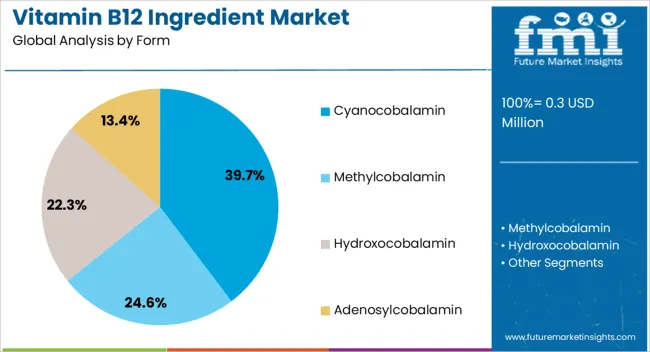
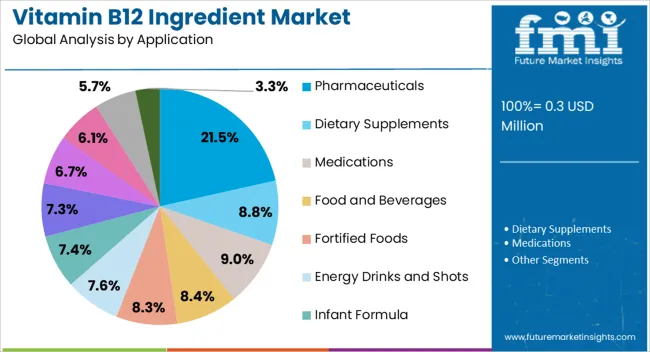
The vitamin b12 ingredient market is segmented by form, source, application, end use, and geographic regions. By form, vitamin b12 ingredient market is divided into Cyanocobalamin, Methylcobalamin, Hydroxocobalamin, and Adenosylcobalamin. In terms of source, vitamin b12 ingredient market is classified into Animal-Based and Plant-Based. Based on application, vitamin b12 ingredient market is segmented into Pharmaceuticals, Dietary Supplements, Medications, Food and Beverages, Fortified Foods, Energy Drinks and Shots, Infant Formula, Cosmetics and Personal Care, Skin Care Products, Hair Care Products, Oral Care Products, and Animal Feed and Nutrition. By end use, vitamin b12 ingredient market is segmented into Human Nutrition and Animal Nutrition. Regionally, the vitamin b12 ingredient industry is classified into North America, Latin America, Western Europe, Eastern Europe, Balkan & Baltic Countries, Russia & Belarus, Central Asia, East Asia, South Asia & Pacific, and the Middle East & Africa.

Insights into the Cyanocobalamin Segment

Vitamin B12 Ingredient Market Analysis By Form

The cyanocobalamin segment leads the form category within the vitamin B12 ingredient market, contributing approximately 39.7% to the overall share. Its dominance is attributed to widespread industrial preference due to its chemical stability, long shelf life, and compatibility with multiple delivery formats such as tablets, capsules, and injectables.

Cyanocobalamin is the most commonly used synthetic form of vitamin B12 in fortified foods and supplements, favored for its cost-effectiveness and ease of mass production. Despite emerging interest in alternative bioactive forms like methylcobalamin, cyanocobalamin continues to outperform in terms of commercial scalability and regulatory acceptance across key markets.

Its reliable absorption and proven efficacy in treating B12 deficiency further reinforce its position in both therapeutic and preventive health segments. As innovation in formulation and delivery systems advances, the segment is expected to sustain its leadership, driven by persistent demand from manufacturers prioritizing formulation stability and affordability.

Insights into the Animal-Based Segment

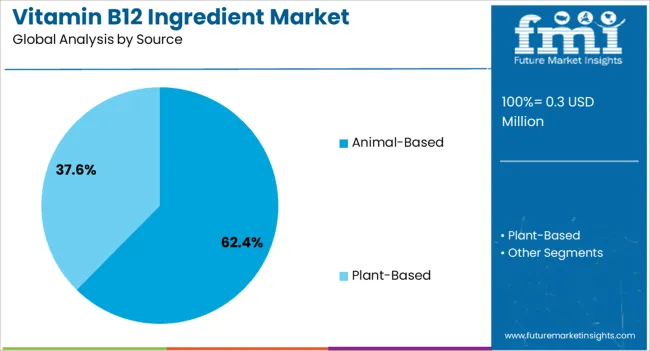
Vitamin B12 Ingredient Market Analysis By Source

The animal-based segment dominates the source category, accounting for approximately 62.4% of the total vitamin B12 ingredient market. This leadership is primarily supported by the historically established extraction processes from animal tissues and the high bioavailability associated with naturally derived B12 compounds.

The segment benefits from regulatory trust and consumer confidence in the efficacy of animal-origin ingredients, particularly within clinical and pharmaceutical applications. Moreover, established supply chains and processing infrastructure contribute to the cost-effectiveness and consistent quality of animal-based B12 production.

Despite the rise of fermentation-derived and plant-based alternatives targeting vegan demographics, animal-derived sources continue to lead due to their compatibility with high-potency formulations and extensive clinical validation. Given their established usage and superior efficacy in critical deficiency treatments, animal-based vitamin B12 ingredients are anticipated to maintain a dominant share, particularly in applications where therapeutic precision and proven absorption rates are essential.

Insights into the Pharmaceuticals Segment

Vitamin B12 Ingredient Market Analysis By Application

The pharmaceuticals segment leads the application category in the vitamin B12 ingredient market, holding a share of approximately 21.5%. This prominence stems from the essential role of vitamin B12 in treating conditions such as pernicious anemia, neuropathy, and other B12-deficiency-related disorders.

Pharmaceutical-grade B12 is utilized in various delivery forms including injectables, oral tablets, and sublingual formulations, driven by strong clinical demand and reimbursement support in several countries. The segment also benefits from a steady increase in chronic disease incidence, aging populations, and heightened awareness among healthcare professionals about the neurological implications of prolonged B12 deficiency.

Rigorous regulatory standards and high product purity requirements further reinforce the segment’s reliance on well-established, bioavailable B12 compounds. As global healthcare systems continue prioritizing early diagnosis and micronutrient supplementation, the pharmaceutical segment is expected to retain its leading market share, supported by continuous clinical research and therapeutic innovation.

What are the Drivers, Restraints, and Key Trends of the Vitamin B12 Ingredient Market?

The Vitamin B12 ingredient market is shaped by rising demand from dietary supplements, expansion in functional foods and fortified beverages, advances in production and formulation technologies, and regional market growth supported by consumer awareness. Increasing prevalence of B12 deficiency, interest in preventive healthcare, and adoption of plant-based diets are driving ingredient adoption. Enhanced delivery systems and stable formulations are improving product effectiveness and versatility. Retail, e-commerce, and regional partnerships are ensuring accessibility and market penetration. Together, these dynamics are fostering steady growth, expanding applications across nutraceutical, food, and beverage sectors, and strengthening the role of Vitamin B12 as a critical nutritional ingredient globally.

Growing Demand from Nutraceutical and Dietary Supplements

The market is witnessing growth due to rising consumer interest in dietary supplements and nutraceutical products. Vitamin B12 is essential for nerve function, red blood cell formation, and energy metabolism, making it a key ingredient in multivitamins, fortified foods, and beverages. Increasing awareness of deficiency-related health issues, particularly among vegetarians, vegans, and aging populations, is driving adoption. Manufacturers of dietary supplements are incorporating B12 in tablets, capsules, gummies, and liquid formulations to meet diverse consumer needs. The growth of preventive healthcare and wellness-oriented products is creating consistent demand, supporting market expansion globally.

Expansion in Functional Foods and Fortified Beverages

Vitamin B12 is being increasingly added to functional foods, fortified beverages, and plant-based alternatives to enhance nutritional value. Breakfast cereals, energy drinks, protein powders, and dairy substitutes are commonly enriched with B12 to meet daily dietary requirements. Food and beverage manufacturers are leveraging consumer demand for convenient nutrition solutions that support energy, immunity, and overall wellness. Regulatory guidelines for fortification and labeling are being followed to ensure quality and consumer trust. The incorporation of B12 in diverse product categories is broadening its application base and driving ingredient adoption across health-focused food and beverage segments worldwide.

Advances in Production and Formulation Technologies

Market players are investing in advanced production and formulation techniques to improve stability, bioavailability, and compatibility of Vitamin B12 ingredients. Microencapsulation, powder formulations, and liquid delivery systems are enhancing shelf life and absorption efficiency. Fermentation-based and synthetic production methods are being optimized to meet large-scale demand while maintaining cost-effectiveness. Ingredient manufacturers are focusing on consistency, purity, and regulatory compliance to appeal to nutraceutical, food, and beverage sectors. Technological improvements in formulation and delivery mechanisms are expanding the versatility of B12 applications and supporting wider adoption in both mainstream and specialty product segments.

Regional Market Expansion and Consumer Awareness

The Vitamin B12 ingredient market is growing across North America, Europe, and Asia-Pacific due to increasing health awareness and nutritional supplementation trends. Rising incidence of B12 deficiency and adoption of plant-based diets in urban populations are encouraging fortification and supplementation. Regional manufacturers and distributors are partnering with global ingredient suppliers to improve availability and reduce lead times. Retail expansion, online sales, and e-commerce platforms are enhancing consumer access to B12-enriched products. Educational campaigns and promotional activities are increasing awareness of the health benefits of B12, driving adoption and reinforcing the market’s growth trajectory across multiple regions.

Analysis of Vitamin B12 Ingredient Market By Key Countries

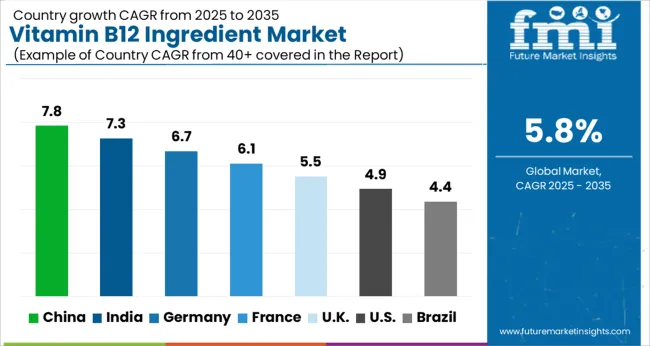
Vitamin B12 Ingredient Market Cagr Analysis By Country


Country CAGR
China 7.8%
India 7.3%
Germany 6.7%
France 6.1%
UK 5.5%
USA 4.9%
Brazil 4.4%

The global vitamin B12 ingredient market is projected to grow at a CAGR of 5.8% from 2025 to 2035. China leads with 7.8%, followed by India at 7.3%, Germany at 6.7%, the UK at 5.5%, and the USA at 4.9%. Growth is driven by increasing demand for dietary supplements, fortified foods, and functional beverages, alongside rising consumer awareness of vitamin deficiencies. BRICS countries, particularly China and India, are scaling fermentation production, ingredient standardization, and distribution networks to meet domestic and export demand. OECD nations such as Germany, the UK, and the USA emphasize quality control, regulatory compliance, and formulation innovations to enhance efficacy and market penetration. The analysis spans over 40+ countries, with the leading markets detailed below.

Growth Analysis of Vitamin B12 Ingredient Market in China

The vitamin B12 ingredient market in China is projected to grow at a CAGR of 7.8% from 2025 to 2035, driven by increasing demand for fortified foods, dietary supplements, and functional beverages. Rising awareness about vitamin deficiencies, particularly among aging populations and urban consumers, supports the adoption of B12-enriched products. Nutraceutical and pharmaceutical companies are incorporating vitamin B12 in formulations targeting energy metabolism, cognitive health, and overall wellness. Growth in e-commerce and modern retail channels enhances accessibility for consumers. Government regulations on nutrient fortification and food safety further strengthen market adoption and drive product innovation.

  • Fortified foods and dietary supplements boosting demand
  • Consumer awareness about vitamin deficiencies driving adoption
  • Regulatory support encouraging product innovation and fortification

Sales Outlook of Vitamin B12 Ingredient Market in India

The vitamin B12 ingredient market in India is expected to grow at a CAGR of 7.3% from 2025 to 2035, supported by rising health consciousness and increased consumption of fortified foods and dietary supplements. The vegetarian population in India creates higher demand for B12-fortified products, as natural sources are limited. Pharmaceutical and nutraceutical manufacturers are incorporating vitamin B12 in energy boosters, cognitive health supplements, and functional beverages. Growth in e-commerce platforms and modern retail stores enhances product availability across urban and semi-urban regions. Government initiatives promoting nutritional awareness and food fortification further support market growth.

  • High vegetarian population increasing B12-fortified product demand
  • Fortified foods and supplements supporting health-conscious consumers
  • E-commerce and retail expansion enhancing market accessibility

Growth Analysis of Vitamin B12 Ingredient Market in Germany

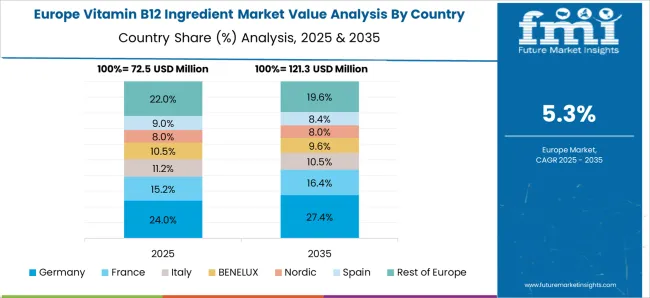
Vitamin B12 Ingredient Market Europe Country Market Share Analysis, 2025 & 2035

The vitamin B12 ingredient market in Germany is projected to grow at a CAGR of 6.7% from 2025 to 2035, driven by strong demand for dietary supplements, functional foods, and nutraceutical products. Aging population and growing awareness of vitamin deficiencies encourage consumption of B12-enriched formulations. The pharmaceutical and food industries are actively incorporating vitamin B12 in capsules, beverages, and fortified snacks. Regulatory compliance with EU food fortification standards ensures product safety and quality, fostering consumer confidence. Trends toward vegan and vegetarian diets further increase reliance on fortified products, strengthening market adoption.

  • Dietary supplements and functional foods driving growth
  • Aging population increasing vitamin B12 consumption
  • Vegan and vegetarian trends boosting fortified product demand

Demand Prospects of Vitamin B12 Ingredient Market in the United Kingdom

The vitamin B12 ingredient market in the UK is expected to grow at a CAGR of 5.5% from 2025 to 2035, supported by increasing interest in dietary supplements, fortified foods, and functional beverages. Consumer awareness about energy metabolism, cognitive health, and nutritional deficiencies drives adoption. Pharmaceutical and nutraceutical companies are incorporating vitamin B12 in energy boosters, wellness products, and specialized formulations for targeted health benefits. Retail expansion, e-commerce growth, and health-focused marketing campaigns enhance product accessibility. Government regulations on food fortification, labeling, and supplement quality further encourage safe and effective usage.

  • Dietary supplements and fortified foods boosting adoption
  • Consumer awareness about cognitive and energy health
  • Retail and e-commerce growth improving product availability

Future Insights into Vitamin B12 Ingredient Market in the United States

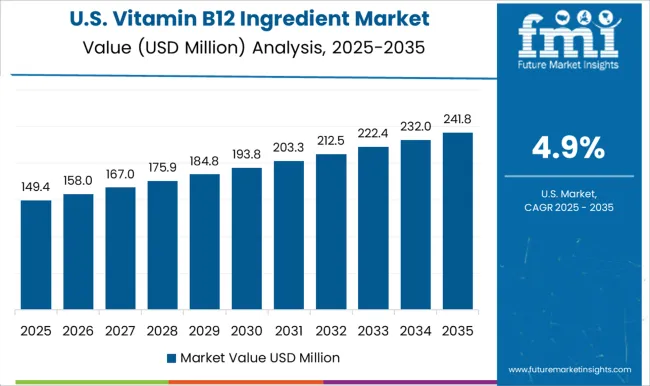
Vitamin B12 Ingredient Market Country Value Analysis

The vitamin B12 ingredient market in the USA is projected to grow at a CAGR of 4.9% from 2025 to 2035, driven by high demand for dietary supplements, functional beverages, and fortified foods. Consumers increasingly focus on energy support, cognitive function, and overall wellness, creating strong adoption of B12-enriched products. Nutraceutical and pharmaceutical companies are innovating with capsule, powder, and beverage formulations to cater to diverse consumer needs. Expansion of online retail and health-focused stores enhances accessibility nationwide. Regulatory standards ensuring safety, quality, and accurate labeling strengthen consumer trust and drive market expansion.

  • High consumer demand for supplements and functional foods
  • Focus on energy and cognitive health driving B12 adoption
  • Retail and online channels expanding accessibility nationwide

Competitive Landscape of Vitamin B12 Ingredient Market

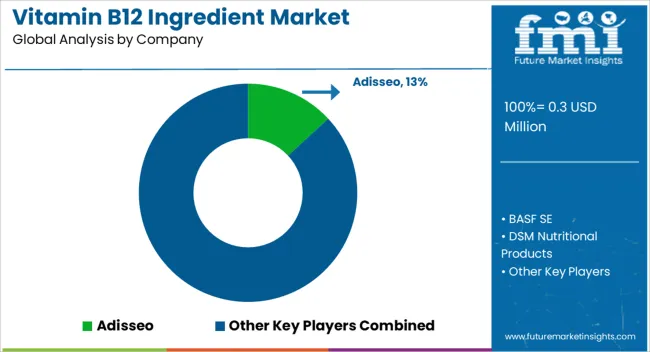
Vitamin B12 Ingredient Market Analysis By Company

Competition in the vitamin B12 ingredient market is shaped by production technology, purity standards, and application versatility. Adisseo, BASF SE, DSM Nutritional Products, Gnosis by Lesaffre, Jubilant Life Sciences, Lonza, Merck KGaA, NOW Foods, NutraGenesis, Nutrilo, Pharmavit, Rousselot, Spectrum Chemical Manufacturing, Thermo Fisher Scientific, and Zhejiang Shengda Bio-Pharm lead by offering high-purity cyanocobalamin, methylcobalamin, and adenosylcobalamin for use in dietary supplements, fortified foods, beverages, and pharmaceutical applications. Product differentiation is achieved through fermentation-based or chemical synthesis methods, advanced encapsulation technologies, stability enhancement, and compliance with global quality standards such as USP, FCC, and ISO. Mid-tier and regional players focus on customized formulations, small-batch production, and rapid delivery services for nutraceutical and functional food manufacturers, catering to demand for personalized nutrition solutions.

Strategies across leading companies emphasize research-driven product innovation, regulatory compliance, and diversified application portfolios. Microencapsulation, slow-release technologies, and co-formulation with other vitamins and minerals are leveraged as critical differentiators to enhance bioavailability, stability, and consumer appeal. Differentiation is further strengthened through proprietary production methods, supply chain transparency, and tailored ingredient solutions for food, beverage, and supplement manufacturers. Companies strive to strike a balance between cost efficiency and high-quality standards, ensuring consistent potency, safety, and stability while meeting regulatory requirements across multiple regions. The market reflects strong competition based on purity, bioavailability, and versatility, where global and regional players maintain leadership by delivering high-quality vitamin B12 ingredients with reliable supply chains and application support. Continuous innovation in fermentation, synthesis, and delivery systems drives growth, while customer-centric strategies, customized solutions, and regulatory expertise reinforce competitive positioning. The vitamin B12 ingredient market exhibits a dynamic landscape characterized by technological advancements, product differentiation, and growing demand for nutraceuticals and fortified foods.

Key Players in the Vitamin B12 Ingredient Market

  • Adisseo
  • BASF SE
  • DSM Nutritional Products
  • Gnosis by Lesaffre
  • Jubilant Life Sciences
  • Lonza
  • Merck KGaA
  • NOW Foods
  • NutraGenesis
  • Nutrilo
  • Pharmavit
  • Rousselot
  • Spectrum Chemical Manufacturing
  • Thermo Fisher Scientific
  • Zhejiang Shengda Bio-Pharm

Scope of the Report


Item Value
Quantitative Units USD 0.3 Million
Form Cyanocobalamin, Methylcobalamin, Hydroxocobalamin, and Adenosylcobalamin
Source Animal-Based and Plant-Based
Application Pharmaceuticals, Dietary Supplements, Medications, Food and Beverages, Fortified Foods, Energy Drinks and Shots, Infant Formula, Cosmetics and Personal Care, Skin Care Products, Hair Care Products, Oral Care Products, and Animal Feed and Nutrition
End Use Human Nutrition and Animal Nutrition
Regions Covered North America, Europe, Asia-Pacific, Latin America, Middle East & Africa
Country Covered United States, Canada, Germany, France, United Kingdom, China, Japan, India, Brazil, South Africa
Key Companies Profiled Adisseo, BASF SE, DSM Nutritional Products, Gnosis by Lesaffre, Jubilant Life Sciences, Lonza, Merck KGaA, NOW Foods, NutraGenesis, Nutrilo, Pharmavit, Rousselot, Spectrum Chemical Manufacturing, Thermo Fisher Scientific, and Zhejiang Shengda Bio-Pharm
Additional Attributes Dollar sales, share, form demand (capsule, powder, liquid), regional adoption, end-use segments, competitor landscape, pricing trends, fortification and supplementation trends, bioavailability focus, regulatory compliance, functional food applications, nutraceutical growth.


Source link

6 10, 2025

Which Is Tipped As The Best Crypto Investment To Make In October

By |2025-10-06T15:20:38+03:00October 6, 2025|Crypto News, News|0 Comments

The next phase of the trading cycle in the crypto market promises to be a roller-coaster ride. Traders, investors, and crypto whales anticipate what’s next for most of the top altcoins, especially the Cardano price. 

Word on the street says Cardano is done. The charts and analysts say otherwise, and there’s yet another token lining up to upset the biggest DeFi projects.

ADA could spring a surprise, but the new token is one to watch for top gains too. 

Which Is Tipped As The Best Crypto Investment To Make In OctoberCardano Price Updates: Analysts Back ADA For Q4 Gains 

It didn’t look likely for a while, but the Cardano price is on track for a big spike later this year. At least, the analysts think so, as traders and investors have begun to accumulate.

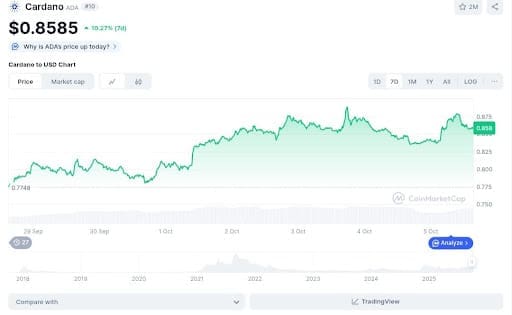
ADA tokens could be a good place to start Q4 trading, as they are holding support between $0.80 and $0.85. According to analysts, the Cardano price could surge to $3.30 in an incoming Elliot wave pattern.

The $3.30 target will be realized in the third wave of the pattern. Now, all traders want to do is sit back and watch the Cardano token move according to its predictions.

ADA is on track for a price comeback, even while a new token threatens to jump Cardano this year. Remittix has laid out the groundwork; the RTX tokens are gradually becoming the most desirable.

Remittix: Presale Potential Plus Referral Earnings

Like every other DeFi token, the Remittix project is launching with significant utility. But the token will be combining hype with its real-world usage–and the presale buyers will be direct beneficiaries.

First, the presale price has the potential to go 25x in the next few months, notably after launch. Early buyers are at the biggest advantage here; they will have the biggest ROIs when Remittix begins to surge.

But the presale potential will only start to roll in after a few months. Right now, Remittix buyers can start earning from the presale; they earn 15% of their referrals’ RTX purchases when they share their Remittix referral links.

The next step is simple: get your Remittix tokens today, before they cost more.

Remittix Coins Are Going For $0.113 Each

That’s your best bargain in the crypto market this year. Sure, there are other altcoins with some potential, but none sport RTX’s 25x potential gains.

Discover the future of PayFi with Remittix by checking out their project here:

Source link

6 10, 2025

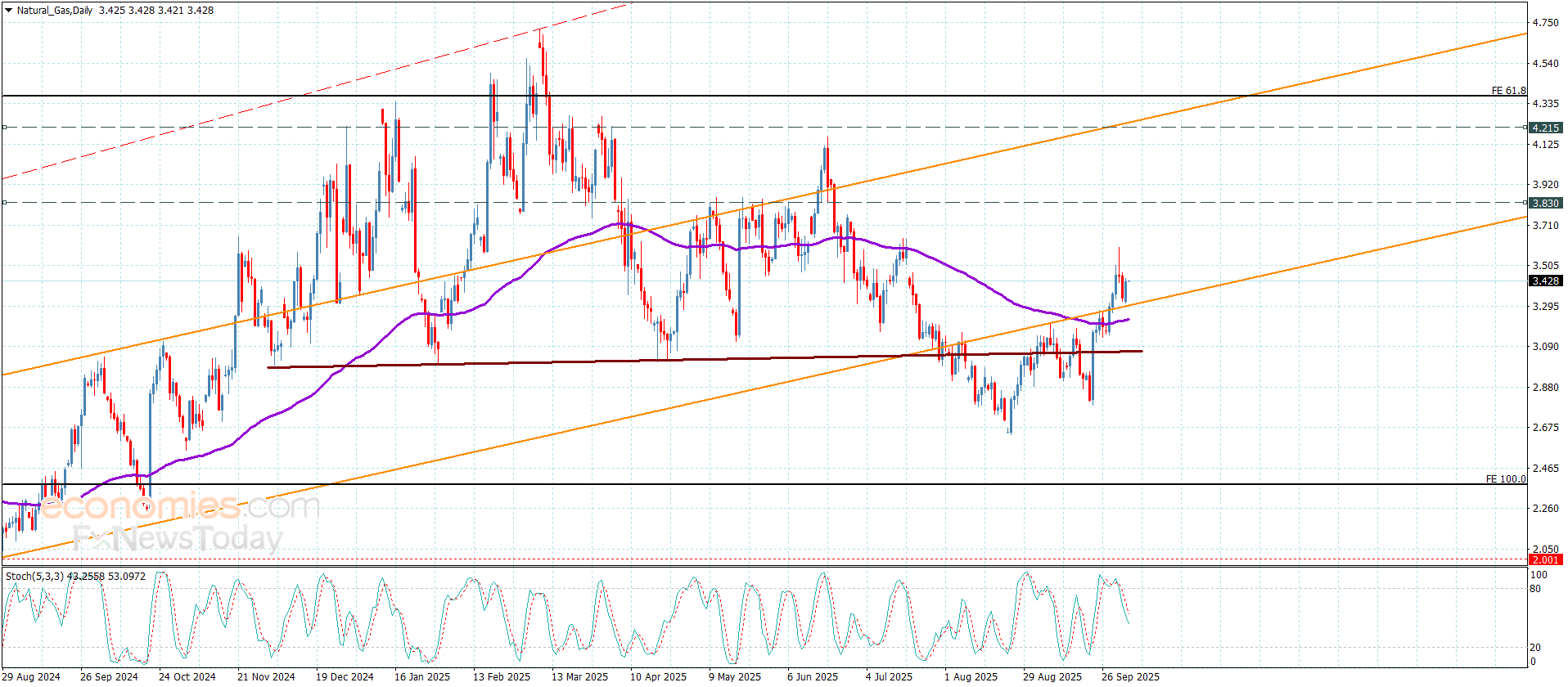
Natural gas price tests the support– Forecast today – 6-10-2025

By |2025-10-06T13:45:09+03:00October 6, 2025|Forex News, News|0 Comments


The GBPJPY pair opened today’s trading with a big price gap, to settle above the barrier at 200.45, recording big gains by its rally towards 202.10, approaching the initial main target at 202.40, forming 161.8%Fibonacci extension level that appears in the above image.


And that confirms the price surrender to the bullish bias dominance, by providing extra positive momentum by the main indicators, which increase the chances of surpassing 202.40 level, to begin achieving extra gains by its rally towards 202.85 reaching 1.809% Fibonacci extension level near 203.85.


The expected trading range for today is between 200.60 and 202.80


Trend forecast: Bullish


Source link

6 10, 2025

EURUSD Forecast Today – 06/10: Euro Continues

By |2025-10-06T13:39:40+03:00October 6, 2025|Forex News, News|0 Comments

  • The Euro continues to try to rally against the US dollar, but at this point in time, it’s likely that the market continues to see selling pressure just above. And quite frankly, this has been a very lackluster week for the Euro. We are approaching an area that I think we have to make a decision with the uptrend line that’s coming into the picture. The 50-day EMA sitting just below the current area offers a bit of support as well. So, I’m paying close attention to this.
  • The euro is going to have to basically put up or shut up pretty soon with threats against the U S dollar. One thing is for sure that since we have seen the FOMC press conference or the statement, you know, we just, we’ve seen the market do nothing but fall since then.

A Lot of Factors to Consider

Whether or not that remains the case, you’ll have to wait and see. All things being equal, this is a market that may have to think about the fact that maybe the economy is slowing down if that’s the case that drives a demand for the US dollar. If we break through the 50 day EMA, the uptrend line as well, then we start to target 1.16. Anything below there, then I think the euro is in trouble. To the upside, the 1.18 level continues to be resistant. Breaking above that is a very bullish sign and probably has the euro testing the highs during the FOMC press conference, is right around the 1.19 level. We are still in an uptrend that has not changed, but what we are starting to see is a serious lack of momentum. We have to ask the question, are we just working off some of the excess froth or are we looking at an area between 1.18 and 1.20 that was very influential multiple times going back about eight years. Have we gone too far? If we get more risk off, the answer will be obvious.

Ready to trade our daily Forex forecast? Here’s a list of some of the best regulated forex brokers to check out.

Christopher Lewis has been trading Forex and has over 20 years experience in financial markets. Chris has been a regular contributor to Daily Forex since the early days of the site. He writes about Forex for several online publications, including FX Empire, Investing.com, and his own site, aptly named The Trader Guy. Chris favours technical analysis methods to identify his trades and likes to trade equity indices and commodities as well as Forex. He favours a longer-term trading style, and his trades often last for days or weeks.

Source link

6 10, 2025

I swapped my morning coffee for these 3 refreshing vegan drinks

By |2025-10-06T13:38:30+03:00October 6, 2025|Dietary Supplements News, News|0 Comments


Coffee and I have history. We’ve shared quiet dawns, marathon writing sessions, and more than a few late-night deadlines that blurred into sunrise.

But somewhere along the line, that deep brown comfort started feeling less like ritual and more like a crutch.

Every morning, I’d brew my usual pour-over—a dark roast strong enough to wake the neighbors—and by 10 a.m., I was buzzing. By noon, I was crashing. By two, I was bargaining with myself about a second cup.

It wasn’t that I wanted to quit coffee entirely. I just wanted to feel good again—to start my mornings with something hydrating, grounding, and energizing without the rollercoaster effect.

So I decided to try a little experiment: three weeks, three vegan drinks, no coffee.

Each week, I’d test one plant-based alternative and see if it could hold its own against my beloved caffeine ritual.

The results? Let’s just say I didn’t miss the French press nearly as much as I expected.

1. Creamy oat milk matcha latte

The story:
If coffee is bold and brash, matcha is calm and composed—the kind of quiet confidence that sneaks up on you. I started my first week with matcha because it felt like a natural bridge: still caffeinated, but in a gentler, slower way.

At first, I was skeptical. Could a green powder really replace the complexity of roasted beans? But the first morning I whisked it, something shifted. The vivid emerald foam, the nutty aroma of steamed oat milk—it was less about replacing coffee and more about rediscovering ritual.

Ingredients (serves 1)

  • 1 teaspoon ceremonial-grade matcha powder 
  • 2 ounces hot water (about 175°F, not boiling) 
  • 6 ounces oat milk 
  • 1 teaspoon maple syrup or agave nectar (optional) 
  • Pinch of sea salt

Directions

  1. Sift the matcha into a bowl or mug to remove clumps. 
  2. Add hot water and whisk briskly with a bamboo whisk or small frother until smooth and lightly frothy. 
  3. Warm or steam the oat milk until hot but not boiling. 
  4. Pour the milk over the matcha base, stir in maple syrup if desired, and finish with a pinch of sea salt.

Why it works

Matcha contains caffeine, but it’s balanced by L-theanine, an amino acid that slows absorption and promotes focus. The result? Calm alertness that lasts for hours without the spike-and-crash of coffee.

The oat milk brings creaminess and a touch of sweetness, while that tiny bit of salt rounds the flavor beautifully. Each sip tastes intentional—like a moment you made for yourself rather than something you grabbed to survive the morning.

By the end of week one, my energy felt smoother, my focus sharper. And as someone who’s used to tasting menus and espresso pairings, I’ll admit it: matcha has complexity, too—it’s just quieter about it.

2. Iced golden turmeric latte

The story:
Week two, I went in a completely different direction. No caffeine, no green tea—just golden milk, a centuries-old Ayurvedic drink built around turmeric. I’d had it before in wellness cafés, but I’d never made it at home.

The first attempt was too earthy. The second—too spicy. By the third, I’d found my groove: a chilled, golden-hued latte that somehow tasted like comfort and clarity at once. It’s rich, smooth, and surprisingly decadent for something so simple.

This became my mid-morning savior. The ritual of heating, whisking, chilling, and pouring felt almost therapeutic. It reminded me that energy doesn’t always come from stimulation—it can come from nourishment, too.

Ingredients (serves 2)

  • 2 cups unsweetened coconut milk (from a carton, not canned) 
  • 1 teaspoon ground turmeric 
  • ½ teaspoon ground cinnamon 
  • 1 teaspoon freshly grated ginger (or ¼ teaspoon ground ginger) 
  • Pinch of black pepper (enhances turmeric’s absorption) 
  • 1–2 teaspoons maple syrup or date syrup 
  • ½ teaspoon vanilla extract 
  • Ice cubes

Directions

  1. In a small saucepan, whisk together coconut milk, turmeric, cinnamon, ginger, black pepper, and sweetener. 
  2. Heat gently over low heat for 3–5 minutes, stirring often, until fragrant and lightly golden. 
  3. Remove from heat and stir in vanilla extract. 
  4. Allow to cool, then pour over ice in two glasses. 
  5. Optional: sprinkle a little cinnamon on top or garnish with a twist of orange peel for a café-style finish.

Why it works

Turmeric is the star here. Its active compound, curcumin, is a natural anti-inflammatory that supports joint health and focus—but it needs a bit of black pepper and fat (like coconut milk) to be absorbed effectively.

The cinnamon adds warmth and sweetness, while the ginger brings that sharp, wake-you-up edge. And the best part? You can drink this hot or iced depending on your mood.

Golden milk doesn’t try to mimic coffee—it does its own thing entirely. It’s for the mornings when you want calm instead of adrenaline, presence instead of productivity.

By the end of week two, I noticed I wasn’t missing caffeine as much as I thought I would. My mornings felt slower in the best way—like I’d replaced rush with ritual.

3. Sparkling yerba maté citrus spritz

The story:
By week three, I was craving something with a little more bite. That’s when yerba maté came in—South America’s beloved energy brew, traditionally sipped from a gourd and shared among friends.

I’d tasted it in Buenos Aires years ago, but never thought to bring it home. Turns out, it’s a perfect coffee substitute for people who love the buzz but not the burnout. Yerba maté has caffeine, yes, but it also has theobromine (the same compound in chocolate) and antioxidants that give you smooth energy with a clearer head.

I decided to turn it into a spritz—a light, sparkling morning drink that bridges the gap between iced tea and mocktail. It’s refreshing, herbal, and a little addictive in the best way.

Ingredients (serves 2)

  • 2 yerba maté tea bags (or 2 tablespoons loose-leaf yerba maté) 
  • 1 cup hot water 
  • 1 cup sparkling water 
  • 2 tablespoons fresh grapefruit juice (or lemon/lime) 
  • 1 teaspoon agave syrup (optional) 
  • Fresh mint leaves and citrus slices for garnish

Directions

  1. Steep yerba maté in hot water for 5 minutes, then remove tea bags or strain leaves. 
  2. Chill completely—either refrigerate for 30 minutes or pour over ice to speed it up. 
  3. In glasses filled with ice, pour the chilled maté halfway up. 
  4. Add sparkling water, grapefruit juice, and agave if desired. Stir gently. 
  5. Garnish with mint and a slice of citrus.

Why it works

This drink checks all the boxes: hydrating, invigorating, and beautifully balanced. The sparkling water lightens the earthy flavor of the maté, while the grapefruit juice cuts through with brightness and just the right hint of bitterness.

It’s essentially a “wake-up spritz”—something you can sip during a slow morning walk or an afternoon lull. And compared to my old coffee routine, it leaves me feeling refreshed, not depleted.

By the final week, this became my favorite. Not because it replaced coffee—but because it didn’t need to. It created its own space in my day.

The verdict: what I’ll actually keep drinking

After three weeks, here’s where I landed:

  • Matcha latte for focus and ritual. 
  • Golden milk for rest days or gentle mornings. 
  • Yerba maté spritz when I want a clean, sparkling lift.

I realized that what I missed about coffee wasn’t caffeine—it was ritual. The process of making something warm (or cold), aromatic, and intentional. Each of these drinks gives me that same sense of ceremony without the spike-and-crash cycle that used to define my mornings.

And in the process, something else happened: I became more mindful of how I start my day. Less autopilot, more appreciation. My energy stayed even, my hydration improved, and I stopped depending on caffeine to feel “on.”

The bigger “why” behind the switch

Yes, the personal benefits were immediate—more stable energy, better sleep—but there’s a broader reason this experiment stuck with me.

Coffee, for all its beauty, has a heavy environmental footprint. It’s water-intensive, often grown in deforested regions, and subject to volatile climate impacts that threaten farmers’ livelihoods. By exploring plant-based alternatives like matcha, turmeric, and yerba maté, I discovered not just variety—but resilience.

Each of these ingredients represents a different part of the planet’s agricultural story:

  • Matcha from Japan’s shaded tea fields, cultivated with care and precision. 
  • Turmeric from India and Southeast Asia, supporting small spice farmers. 
  • Yerba maté from South America’s subtropical forests, where sustainable harvesting supports local communities.

Shifting even a few cups a week toward these alternatives can diversify what we support as consumers. It’s not about giving up coffee entirely—it’s about broadening the menu.

And from a health perspective, reducing caffeine intake can balance cortisol levels, improve digestion, and support hydration—all things that quietly impact how you feel day to day.

Final sip: what I learned by ditching the daily grind

Three weeks, three drinks, zero regrets.

The biggest surprise wasn’t that I found coffee replacements—it’s that I stopped needing one. When I broke the autopilot habit of “wake up, caffeinate, repeat,” I started tasting my mornings again.

Now, my rotation looks like this: matcha on writing days, golden milk on recovery mornings, and maté spritz when the sun’s out and I want something crisp. I still have coffee now and then, but it feels like a choice—not a dependency.

Change, I’ve learned, doesn’t always mean giving something up. Sometimes it’s just about expanding your flavor palette—and finding a little more balance in the process.

What’s Your Plant-Powered Archetype?

Ever wonder what your everyday habits say about your deeper purpose—and how they ripple out to impact the planet?

This 90-second quiz reveals the plant-powered role you’re here to play, and the tiny shift that makes it even more powerful.

12 fun questions. Instant results. Surprisingly accurate.


Source link

Go to Top