About Editorial team of BIPNs

Main team of content of bipns.com. Any type of content should be approved by us.
8 01, 2026

Goldman Sachs raises first-half copper price forecast — TradingView News

By |2026-01-08T17:02:53+02:00January 8, 2026|Forex News, News|0 Comments


Source link

8 01, 2026

Oil, EUR/USD Forecast: 2 Trades to Watch

By |2026-01-08T16:28:41+02:00January 8, 2026|Forex News, News|0 Comments

Oil Steadies After Recent Declines, with Geopolitical Tensions and Data Still in Focus

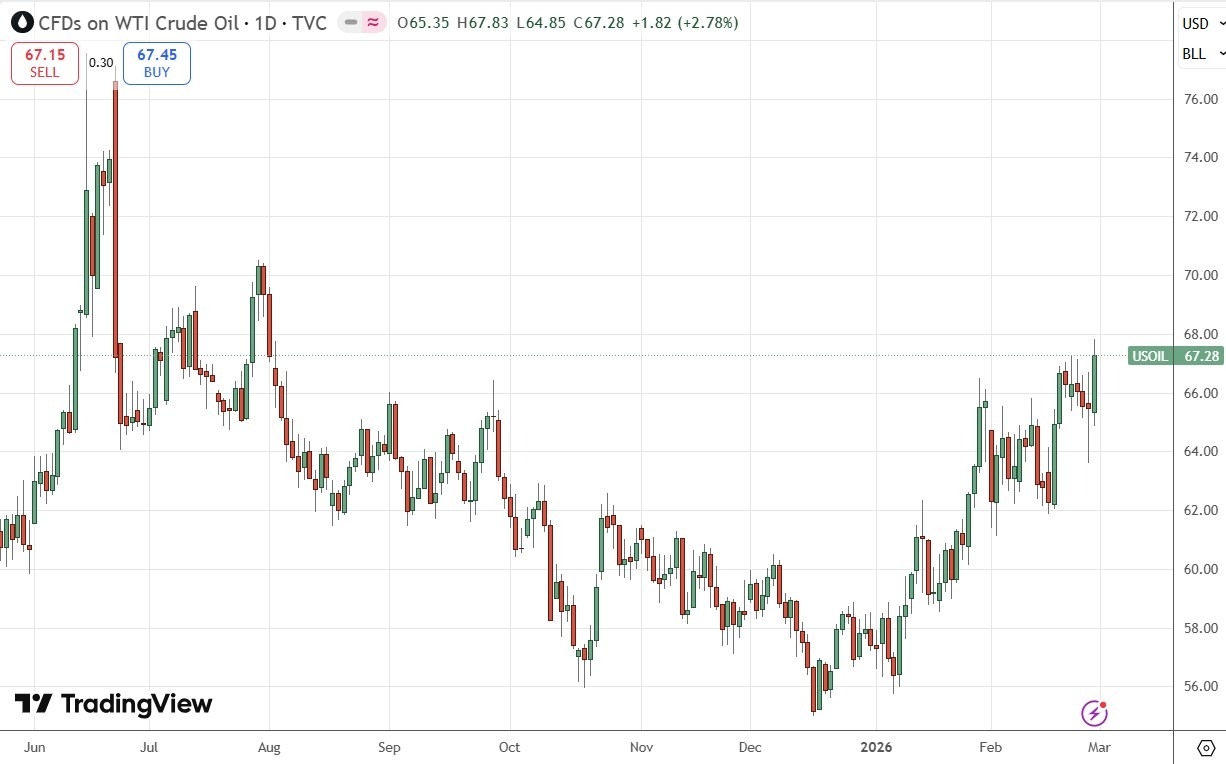
has steadied around 56.00 after two days of declines. Oil prices have fallen 2% so far this week as Venezuela’s supply weighs on the market and investors digest recent data.

Oil has been under pressure following the U.S. announcement of plans to import 50 million barrels of Venezuelan crude oil, raising concerns about oversupply.  While typical geopolitical tensions in an oil-producing region can lift oil prices. This isn’t the case here as the prospect of increased supply keeps prices under pressure.

There have been some supportive developments that have helped stem the selloff.

US crude stockpiles fell by more than expected, an indication of demand strength, which, together with a stronger-than-expected , helped to support prices for now. Attention will turn to US and Chinese inflation data.

Investors will continue to monitor geopolitical developments, particularly reports in the Wall Street Journal that Trump plans to assume long-term control of Venezuela’s oil to bring prices down to $50 per barrel.

Oil Forecast- Technical Analysis

Oil trades in a multi-month descending channel. Recent failure to rise above the 50 SMA, combined with the RSI below 50, keeps sellers hopeful of further declines.

After rejection at the 50 SMA, the price rebounded lower and is testing support at 56.00, the October low. Sellers will look to take out this level, opening the door to 55.00, the 2025 low. Below here, attention turns to 50.00, a level last seen in 2021.

On the upside, resistance is seen at 58.70, the 50 SMA, and the upper band of the falling channel. A rise above here creates a higher high and brings 60.00, the round number, into focus. A rise above here exposes the 200 SMA at 62.50.

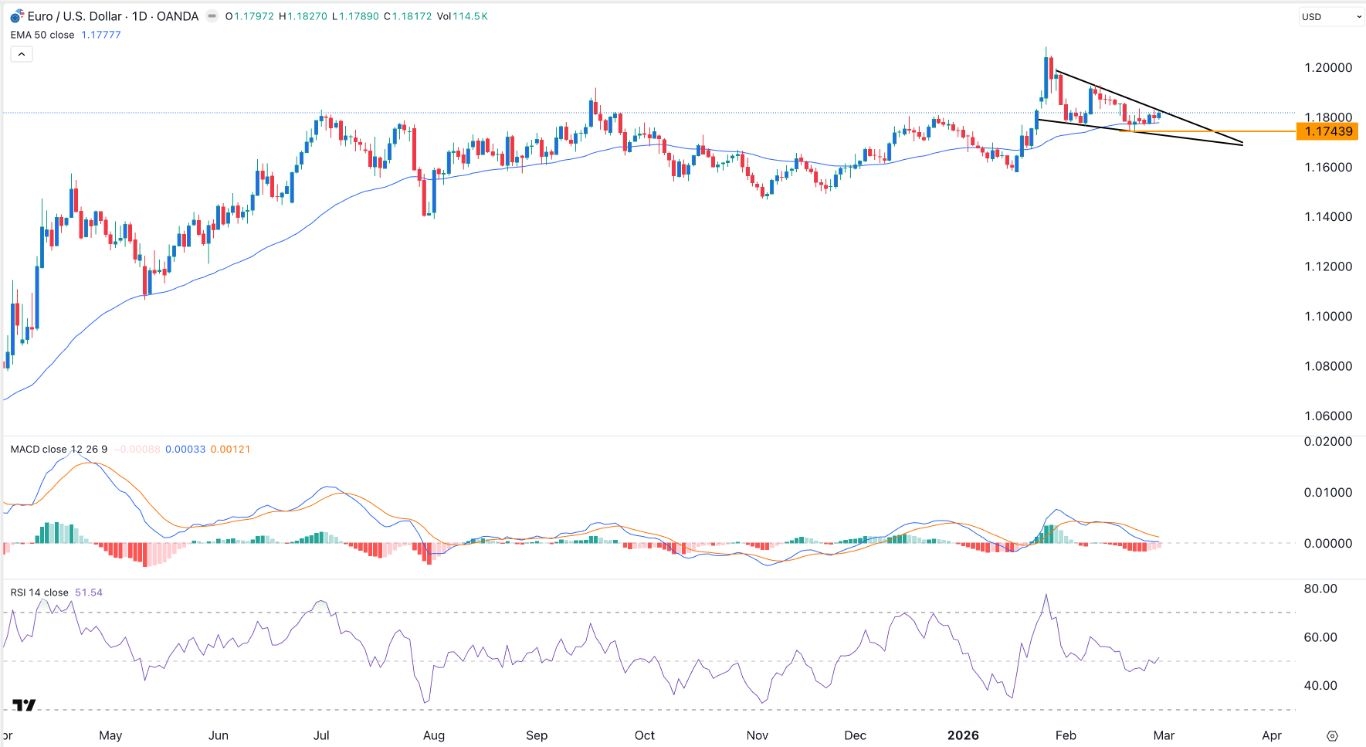
EUR/USD Holds Steady Ahead of US Data

is holding steady for a second day following mixed data yesterday and ahead of further US figures today.

The pair is so far on track for a small decline at the start of 2026, following a 13.5% jump last year.

The EUR is looking ahead to consumer, business, and economic sentiment data for the region. This comes after yesterday’s inflation figures, which showed eased to 2% YoY, down from 2.1% in November and reaching the ECB’s target level for the first time since August. The data support the view that the ECB will not cut rates again this year, which could keep the EUR underpinned.

However, investors will closely monitor the Trump Greenland story. While this is not impacting the EUR for now, any sense that Trump could move forward with plans to acquire Greenland could pull the EUR lower.

The is calm on Thursday ahead of US jobless claims. Data on Wednesday showed that the US labour market was in a low-hiring, low-firing state, with job openings falling by more than forecast. However, the service sector unexpectedly ramped up in December, with the services PMI reaching a 14-month high. These data points present a mixed picture for the Federal Reserve, which could reinforce a cautious stance.

The market is pricing in two this year, compared with the Fed’s one. Policymakers are divided over the outlook, but no rate cut is expected this month.

EUR/USD Forecast- Technical Analysis

EUR/USD’s recovery from 1.15, the November low ran into resistance at 1.18 and rebounded lower. The price is testing the 1.1670 support zone.

Sellers supported by the RSI below 50 will look to break below this support zone and the 50 SMA at 1.1640. A break below here exposes the 200 SMA at 1.1560 before bringing the 1.15 level back into focus.

Should the 1.1670 support zone hold, buyers will look to rise above 1.17 before bringing 1.18 into play.EUR/USD-Daily Chart

Original Post


Source link

8 01, 2026

US and Canada Food Supplement Market to Grow at 7.40% CAGR, Led

By |2026-01-08T16:25:34+02:00January 8, 2026|Dietary Supplements News, News|0 Comments


US and Canada Food Supplement Market

Leander, Texas and TOKYO, Japan – Jan.08.2026 “The US and Canada Food Supplement Market reached US$ 41,294.93 million in 2023 and is expected to reach US$ 54,511.64 million by 2027, growing with a CAGR of 7.40% during the forecast period 2024-2027.”

The US and Canada Food Supplement Market is driven by rising health consciousness, preventive healthcare trends, aging populations, increasing prevalence of chronic diseases, and growing demand for plant-based and personalized nutrition. The shift toward veganism, clean-label products, and e-commerce accessibility is accelerating incorporation of vitamins, minerals, probiotics, botanicals, and specialty supplements into daily wellness routines across dietary supplements, functional foods, and targeted health applications.

➠ Download Your Sample Report Instantly – Corporate Email ID Required for Priority Access: https://www.datamintelligence.com/download-sample/us-and-canada-food-supplement-market?praneetha

☛ United States – Recent Industry Developments

✅ December 2025

GNC expanded its food supplement portfolio with clean label vitamins and mineral blends focused on immunity, energy, and active lifestyles. The launch supports rising consumer demand for transparency and science-backed nutrition.

✅ November 2025

Nature Made (Pharmavite) introduced new condition specific supplements targeting heart health and metabolic wellness. The development strengthens preventive healthcare offerings across U.S. retail and pharmacy channels.

✅ October 2025

Nestlé Health Science USA launched advanced nutritional supplements formulated for gut health and healthy aging. The expansion enhances the company’s position in personalized and functional nutrition.

☛ Canada – Recent Industry Developments

✅ December 2025

Jamieson Wellness launched plant-based and sugar free supplement Jelly chews tailored to Canadian consumer preferences. The introduction supports growing demand for vegan and clean-label supplement formats.

✅ November 2025

Herbaland Naturals expanded its functional gummy supplement range focused on immunity and digestive health. The development reflects strong growth in convenient and taste friendly nutrition solutions.

✅ October 2025

Organika Health Products introduced premium herbal and collagen based supplements designed for joint and skin health. The launch strengthens Canada’s position in natural and wellness focused supplementation.

☛ Core Catalysts Behind Market Growth:

Growing popularity of plant-based supplements driven by health consciousness, ethical considerations, environmental concerns, and preference for natural, clean-label products.

Rising aging population increasing demand for preventive healthcare supplements addressing chronic diseases, age related issues like osteoporosis, cardiovascular health, and cognitive decline.

Increasing focus on gut health, immunity, mental wellness, and personalized nutrition amid lifestyle changes and post pandemic health priorities.

Expansion of e-commerce and regulatory support enhancing accessibility, trust, and innovation in supplement formulations.

➠ Get Customization in the Report as per Your Requirements: https://www.datamintelligence.com/customize/us-and-canada-food-supplement-market?praneetha

☛ Market Segmentation :

By Ingredient :

Vitamins dominate the market with 32% share, driven by widespread use for immunity, energy, and general wellness across all age groups. Botanicals account for 18% share, supported by rising preference for natural and plant-based supplements such as turmeric, ginseng, and herbal extracts. Minerals hold 16% share, fueled by demand for calcium, magnesium, iron, and zinc supplements for bone and metabolic health. Protein and amino acids represent 14% share, driven by sports nutrition, muscle recovery, and active lifestyle trends. Omega fatty acids capture 12% share, supported by strong demand for heart, brain, and joint health supplements. Probiotics account for 6% share, benefiting from growing awareness of gut health and immune support. Other ingredients hold 2% share, including enzymes, fibers, and specialty nutraceutical compounds.

By Dosage :

Capsules lead with 34% share, preferred for ease of consumption, precise dosing, and better ingredient stability. Tablets follow with 28% share, driven by cost-effectiveness and widespread availability across retail channels. Liquid supplements hold 17% share, supported by faster absorption and higher adoption among children and seniors. Powders account for 15% share, favored in protein, electrolyte, and functional nutrition products for customizable dosing. Other dosage forms capture 6% share, including Jelly chews, chewables, soft gels, and sprays catering to taste and convenience-focused consumers.

By Application :

Gastrointestinal health dominates with 29% share, driven by increasing cases of digestive disorders, gut microbiome awareness, and probiotic supplementation. Bone and joint health holds 18% share, supported by aging populations and demand for calcium, vitamin D, and collagen supplements. Anti and healthy ageing accounts for 16% share, fueled by demand for antioxidants, cognitive health, and longevity-focused products. Allergies and asthma represent 11% share, driven by rising respiratory conditions and immune support supplements. Vaginal health captures 9% share, supported by growing awareness of women’s intimate health probiotics. Urinary tract health holds 8% share, driven by demand for cranberry based and antimicrobial supplements. Oral health and other applications collectively account for 9% share, including dental, skin, and general wellness supplements.

By Age :

Adults represent the largest segment with 46% share, driven by preventive healthcare adoption, stress management, and lifestyle related supplementation. Seniors account for 28% share, supported by demand for bone health, cardiovascular, immunity, and cognitive supplements. Children hold 18% share, driven by pediatric nutrition, immunity boosters, and flavored supplement formats. Infants account for 8% share, primarily focused on vitamin D, iron, and gut health formulations recommended for early development.

By Distribution Channel :

Pharmacies and drug stores dominate with 31% share, driven by consumer trust, professional recommendations, and wide product availability. Supermarkets and hypermarkets account for 27% share, supported by convenience and bulk purchasing behavior. Online retailers hold 26% share, rapidly expanding due to e-commerce growth, subscription models, and direct to consumer supplement brands. Convenience stores represent 9% share, driven by impulse purchases of energy and immunity supplements. Other distribution channels capture 7% share, including specialty nutrition stores, wellness clinics, and health food outlets.

☛ Competitive Landscape:

The market features intense competition among established multinational brands and specialized players focused on innovation, clean-label, and targeted health solutions.

Pharmavite LLC – Commands an estimated 12% share, leading with Nature Made brand in vitamins and minerals.

Amway (Nutrilite) – Holds about 10% market share, strong in direct-selling and plant-based supplements.

Herbalife – Captures around 9% share, prominent in weight management and nutrition companions.

Jamieson Wellness Inc. – Maintains approximately 8% share, key player in Canadian market with natural health products.

NOW Health Group, Inc. – Secures roughly 7% share through affordable, high quality offerings.

Other Key Players: Procter & Gamble, C&D Consumer Brands, Inc., PanTheryx, Inc., LoveBug Probiotics, Vital Nutrients, The Clorox Company, organika Health Products.

➠ Purchase this report before year-end and unlock an exclusive 30% discount :

Buy Now & Unlock 360° Market Intelligence: https://www.datamintelligence.com/buy-now-page?report=us-and-canada-food-supplement-market?praneetha

(Purchase 2 or more Reports and get 50% Discount)

☛ Regional Analysis:

United States:

The US leads the market with over 90% share, driven by high consumer spending, mature wellness culture, e-commerce penetration, and presence of major brands addressing preventive care and chronic conditions.

Canada:

Canada holds a growing share, supported by strict Natural Health Products Regulations building trust, rising vegan trends, and focus on natural/organic supplements in retail channels.

➠ Request for 2 Days FREE Trial Access: https://www.datamintelligence.com/reports-subscription

Power your decisions with real-time competitor tracking, strategic forecasts, and global investment insights all in one place.

✅ Competitive Landscape

✅ Sustainability Impact Analysis

✅ KOL / Stakeholder Insights

✅ Unmet Needs & Market Access Snapshots

✅ Emerging Risks & Market Volatility Analysis

✅ Quarterly Updated Reports

✅ Live Market & Pricing Trends

✅ Import-Export Data Monitoring

Company Name: DataM Intelligence 4Market Research LLP

Contact Person: Sai Kiran

Email: Sai.k@datamintelligence.com

Phone: +1 877 441 4866

Website: https://www.datamintelligence.com/

DataM Intelligence is a global Market Research and Consulting firm providing comprehensive business insights and end-to-end solutions from research to consulting. We deliver actionable intelligence across 6,300+ reports spanning 40+ domains, empowering over 200 companies in 50+ countries. Our focus is on enabling clients to make data-driven decisions through robust methodologies, strategic foresight, and real-time market intelligence.

This release was published on openPR.


Source link

8 01, 2026

Will Dogecoin Price Hit Under a Penny in 2026?

By |2026-01-08T16:14:38+02:00January 8, 2026|Crypto News, News|0 Comments

1. What is the current price range of Dogecoin in 2026?

Dogecoin trades near $0.14 to $0.15 at press time with daily volume near $1.4 billion.

2. Can Dogecoin really fall below one cent in 2026?

Yes, but it would need a severe crypto market crash and strong sell pressure across meme coins.

3. How does Dogecoin supply affect its price?

Dogecoin adds about 5 billion new coins each year, which increases pressure during weak markets.

4. Do ETF developments matter for Dogecoin?

Yes, ETF filings improve sentiment and keep institutional interest alive even without approval.

5. Does Dogecoin have real-world use?

Dogecoin sees limited utility but benefits from fast transfers, simplicity, and wide exchange support.

Source link

8 01, 2026

UNG ETF holds Wednesday’s jump as traders brace for the EIA storage report

By |2026-01-08T15:01:46+02:00January 8, 2026|Forex News, News|0 Comments


NEW YORK, Jan 8, 2026, 06:56 EST — Premarket

The United States Natural Gas Fund was flat at $11.78 in premarket trade, after jumping 4.4% on Wednesday. The ETF fell 3.0% on Tuesday as the gas market swung back and forth early in the new year. StockAnalysis

Benchmark Henry Hub natural gas was at $3.57 per million British thermal units (mmBtu), up 1.4% early Thursday, after trading between $3.55 and $3.63. The move comes with traders focused on fresh storage data rather than the last round of weather models. Businessinsider

UNG is built to mirror the day-to-day percentage moves in Henry Hub prices by holding short-dated natural gas futures, mainly on NYMEX and ICE. That structure can track fast moves closely, but it also means investors can get whipsawed when the fund rolls from one contract to the next.

Sprague Energy said the U.S. Energy Information Administration’s weekly storage report due later Thursday is expected to show a 108 billion cubic feet (Bcf) withdrawal for the week ended Jan. 2, versus a 40 Bcf pull a year ago and a five-year average draw of 66 Bcf. The firm also noted the February NYMEX contract settled at $3.350 on Tuesday after trading as low as $3.324. Sprague Energy

East Daley Analytics put the market’s expected withdrawal a bit higher, at 114 Bcf, and said that would leave inventories slightly above the newly recalculated five-year average while still below last year’s levels. The firm also flagged a dip in pipeline-sample volumes to an average 69.3 Bcf per day (bcfd) for the week ended Jan. 4, down 1.5% from the prior week. East Daley

The setup still looks two-sided. “Physical natural gas prices are crashing, with Henry Hub spot prices trading at a mere $2.86 per MMBtu,” Eli Rubin, an energy analyst at EBW Analytics Group, wrote in a report carried by Rigzone, while adding that “weather remains king.” Rubin also pointed to record LNG feedgas of 19.9 bcfd as a support point, but warned the February contract could slide toward $3.25 if warmth sticks. Rigzone

Moves in gas-linked equities were modest in early U.S. trading: EQT was up about 2%, Antero Resources gained about 1.8%, and LNG exporter Cheniere Energy added roughly 0.7%. Traders often treat the group as a higher-beta read on the same weather-and-storage tape that drives futures and UNG.

Weather remains the biggest unknown because it can change demand faster than production can. NOAA’s Climate Prediction Center said its Jan. 13–17 outlook starts with above-normal warmth across much of the Lower 48 before a colder trend shows up late in the period, a shift that can still leave net heating demand hard to pin down. Climate Prediction Center


Source link

8 01, 2026

The EURJPY is weak– Forecast today – 8-1-2026

By |2026-01-08T14:27:42+02:00January 8, 2026|Forex News, News|0 Comments

The EURJPY pair continued providing weak sideways trading, fluctuating near the extra support at 182.80, affected by the continuation of the main indicators besides forming extra obstacle at 183.50 level as appears in the above image.


Therefore, we will remain neutral until providing signal for detecting the main trend in the near and medium trading, while breaking the current support and providing negative close will confirm the bearish corrective trend, which might target 182.30 and 181.75 level initially, while breaching 183.50 level will ease the mission of detecting the bullish attempts, to expect its rally towards 183.85, to attack the broken channel’s support in order to find an exit for regaining the bullish trend again.


The expected trading range for today is between 182.80 and 183.50


Trend forecast: Neutral


Source link

8 01, 2026

Dietary Supplements Market Valuation Poised to Reach USD 253.7

By |2026-01-08T14:24:35+02:00January 8, 2026|Dietary Supplements News, News|0 Comments


Dietary Supplements Market

The global dietary supplements market continues to demonstrate steady expansion, supported by changing health perceptions, preventive healthcare trends, and increasing interest in functional nutrition. According to MRFR analysis, the market was valued at USD 180.5 billion in 2024 and is expected to rise from USD 186.17 billion in 2025 to USD 253.7 billion by 2035, reflecting a compound annual growth rate (CAGR) of 3.14 percent during the forecast period. Growth is shaped by evolving consumer lifestyles, aging demographics, and expanded product availability across retail and digital channels. The rise in chronic lifestyle disorders and a proactive approach toward health management are also encouraging regular supplementation as part of daily routines.

“Request Free Sample” – Obtain a complimentary sample of our report to assess its quality and relevance to your requirements https://www.marketresearchfuture.com/sample_request/1134

Market Overview

Dietary supplements encompass vitamins, minerals, herbal extracts, amino acids, probiotics, and other bioactive compounds intended to enhance nutritional intake and support overall well-being. The industry is influenced by the increasing alignment between food, nutrition, and medicine, with consumers turning toward self-directed health management. The global trend toward preventive healthcare has particularly accelerated after the pandemic, prompting consumers to focus on immunity, energy, cognitive health, and digestive wellness. E-commerce expansion has further transformed availability and purchasing behavior, allowing brands to reach consumers directly with personalized offerings and subscription-based models. At the same time, regulations governing product safety and health claims are becoming more stringent, compelling manufacturers to enhance transparency, quality standards, and clinically backed formulations.

Key Players

The market landscape is moderately consolidated with several major multinational corporations and a broad base of regional and niche brands. Prominent companies active in the dietary supplements market include Abbott Laboratories, Amway, Bayer AG, Herbalife Nutrition, Pfizer Inc., Nature’s Bounty (The Bountiful Company), Glanbia Plc, Nestlé Health Science, DSM, and GNC Holdings. These players are engaged in continuous product innovation, expansion of distribution channels, acquisitions, and partnerships to reinforce their portfolios. The competitive strategy increasingly centers on specialized supplements targeting specific benefits such as joint health, immunity, women’s health, sports nutrition, and healthy aging, as well as on clean-label, organic, and plant-based formulations.

Driving Factor Trends

Multiple demand drivers are shaping the market outlook. Increasing awareness of micronutrient deficiencies, sedentary lifestyles, and stress-related disorders has elevated consumer reliance on supplemental nutrition. Rising incidences of obesity, diabetes, cardiovascular issues, and other lifestyle-associated diseases encourage individuals to adopt preventive measures instead of relying solely on clinical treatment. The aging global population is another significant catalyst, as seniors increasingly utilize supplements for bone strength, cognitive support, eye health, and overall vitality. Digital health trends, including fitness apps, wearable devices, and personalized nutrition platforms, also play an important role by educating consumers and recommending tailored supplement regimes. Additionally, natural and plant-based ingredient preferences are accelerating demand for herbal and botanical supplements, reflecting a broader shift toward clean and sustainable wellness solutions.

“Proceed to Buy” – Move forward with your purchase and gain instant access to the complete report https://www.marketresearchfuture.com/checkout?currency=one_user-USD&report_id=1134

Important Segment Analysis

The dietary supplements market can be segmented by ingredient type, product form, consumer group, and distribution channel. Vitamins and minerals continue to dominate due to their essential role in maintaining overall health, while botanical and herbal supplements are gaining momentum owing to consumer preference for natural remedies. In terms of form, tablets and capsules remain widely used because of convenience and accurate dosing, although powders, and liquid formulations are expanding rapidly-particularly among younger consumers and those seeking ease of consumption. Adult consumers represent the largest user group, but pediatric and geriatric segments are witnessing growing adoption as awareness of preventive nutrition spreads. Distribution is transitioning from traditional brick-and-mortar outlets to online platforms, with e-commerce emerging as one of the fastest-growing channels because of product variety, consumer reviews, and subscription replenishment options.

Regional Analysis

North America holds a significant share of the dietary supplements market, driven by high consumer spending power, strong wellness culture, and widespread retail and online availability. The United States in particular shows strong penetration of multivitamins, sports nutrition products, and personalized supplement programs. Europe follows with increasing adoption of natural and organic supplements, reinforced by regulatory frameworks that emphasize product quality and safety. The Asia-Pacific region is projected to witness the fastest growth during the forecast period. Factors such as rising disposable incomes, large young populations, rapidly expanding urbanization, and cultural familiarity with herbal and traditional remedies support this momentum. Countries including China, India, Japan, and South Korea are key contributors, with expanding nutraceutical manufacturing bases and growing acceptance of Western-style dietary supplementation. Latin America and the Middle East & Africa are gradually emerging markets, supported by evolving retail infrastructures and rising healthcare awareness.

“Browse Report” – Explore the report’s contents, sections, and key insights by browsing through its detailed information https://www.marketresearchfuture.com/reports/dietary-supplements-market-1134

Industry Development

The dietary supplements industry is experiencing meaningful transformation through research-driven innovation, personalization, and technological integration. Companies are increasingly investing in clinical studies, bioavailability enhancement technologies, and novel delivery systems such as microencapsulation to improve efficacy. Personalized nutrition-supported by genetic testing kits, microbiome analysis, and AI-driven health assessments-is reshaping product development and marketing strategies, enabling tailored supplementation programs rather than generalized formulations. Sustainability is becoming a central theme as manufacturers shift toward eco-friendly packaging, responsibly sourced ingredients, and transparent supply chains. Strategic mergers and acquisitions continue to reshape the competitive environment, allowing firms to expand portfolios and geographic reach. Moreover, collaborations between nutraceutical companies and pharmaceutical or wellness technology firms are blurring boundaries between conventional health care and consumer-led wellness, reinforcing the long-term growth trajectory of the dietary supplements market.

This overall outlook suggests that while growth is steady rather than explosive, the dietary supplements sector is positioned for resilience over 2025-2035, supported by preventive health priorities, innovation, and expanding access across global regions.

Discover More Research Reports on Food, Beverages & Nutrition By Market Research Future:

Hydroponics Market Research Report – Forecast till 2030 https://www.marketresearchfuture.com/reports/hydroponics-market-2453

Chia seeds Market Research Report – Forecast till 2030 https://www.marketresearchfuture.com/reports/chia-seeds-market-4299

Vanilla Market Research Report Forecast till 2030 https://www.marketresearchfuture.com/reports/vanilla-market-7806

Probiotics Market Research Report – Forecast till 2030 https://www.marketresearchfuture.com/reports/probiotics-market-966

Craft Beer Market Research Report – Forecast till 2030 https://www.marketresearchfuture.com/reports/craft-beer-market-973

Contact us:

Market Research Future (part of Wantstats Research and Media Private Limited),

99 Hudson Street,5Th Floor, New York, New York 10013, United States of America

Contact Number:

+1 (855) 661-4441 (US)

+44 1720 412 167 (UK)

+91 2269738890 (APAC)

Email: info@marketresearchfuture.com

About Market Research Future:

At Market Research Future (MRFR), we enable our customers to unravel the complexity of various industries through our Cooked Research Report (CRR), Half-Cooked Research Reports (HCRR), Raw Research Reports (3R), Continuous-Feed Research (CFR), and Market Research & Consulting Services.

MRFR team have supreme objective to provide the optimum quality market research and intelligence services to our clients. Our market research studies by products, services, technologies, applications, end users, and market players for global, regional, and country level market segments, enable our clients to see more, know more, and do more, which help to answer all their most important questions.

This release was published on openPR.


Source link

8 01, 2026

Can the Token Rebound in 2026?

By |2026-01-08T14:13:38+02:00January 8, 2026|Crypto News, News|0 Comments

XRP began 2026 on a strong note but struggled to sustain its positive momentum over time. As of November 8, 2026, XRP has been weakening in the cryptocurrency market and trading below key levels. Ripple’s official cryptocurrency is down by more than 5% today and has experienced a 10.42% loss from its two-month high of $2.41 recorded on January 6, 2026. XRP’s price drop comes amid a 30-day streak of spot XRP ETF inflows above $1.25B and ahead of the revolutionary Market Structure bill, which will remove all regulatory uncertainties related to the digital asset. 

XRP is trading at $2.15, reportedly falling below its key moving averages and immediate support levels. According to the latest market data, XRP’s decline below $2.20 is primarily due to weakening network activity and whale dumps exceeding 200 million tokens. WisdomTree, a global financial innovator known for pioneering fundamentally weighted Exchange-Traded Funds, has officially withdrawn its XRP ETF filing via SEC Rule 477 on January 6, 2026, further catalyzing the price drop. Considering XRP’s historical performance and long-term outlook, a surge beyond $10 appears highly speculative, while a more measured climb toward the $5–$8 range in 2026 seems more realistic. 

XRP Current Market Scenario

According to the latest market data, XRP is in a short-term downtrend, with the digital asset’s candlestick chart showing a steady selling pressure driven by controlled profit-taking. XRP is mirroring the broader cryptocurrency market sentiment, as major assets such as BTC, ETH, SOL, and DOGE have all retreated below key support levels. XRP price today is $2.15, sliding below the $2.20 support level despite improved institutional interest and ETF inflows. XRP has closed in the green on 13 out of the past 30 sessions (43%), while the Fear and Greed Index currently stands at 28, signaling prevailing market fear. XRP’s immediate support level is identified at $2.12–$2.15, whereas it faces a strong resistance at $2.22–$2.27. A daily close above the resistance level could trigger bullish momentum and drive the digital asset price upward. 

XRP Price Forecast: Expert Views & Opinions  

Despite the short-term bearish sentiment, XRP holders and investors are strongly backing up its long-term capabilities. Ripple is planning to expand and offer multiple services that center on XRP, which is likely to improve the digital asset adoption. Crypto and XRP analyst JackTheRipper claimed that XRP activity was heating up, stating that starting January 9, RealFi would allow all XRP payments to earn cashback, enabling users to pay with XRP and receive cashback in Real Token. He described the development as extremely bullish, adding that it could open access to a $600+ trillion global market through Real Token on the XRPL, a move he said could drive Real Token’s value sharply higher.

TheCryptoBasic reported that, amid XRP’s ongoing recovery, a prominent market analyst and Elliott Wave specialist had explained why he still believed a rally to $20 remained possible. The analyst noted that XRP began 2026 with a strong rebound, rising 22.59% in the first seven days, following a sharp 35% decline in Q4 2025 that had pushed the price below the key $2 level. He urged investors not to dismiss the possibility of XRP reaching $5 or even $20 during the current cycle, stating that his outlook was based on daily analysis of price movements and their alignment with a broader Elliott Wave structure. According to him, this broader perspective suggested that XRP was trading within an unusually tight range, a pattern that diverged from its historical price behavior.

XRP Price Prediction Today: Can XRP Recover From Today’s Loss?

XRP suffered a notable loss of around 5% in the second week of January, marking its first significant price drop in 2026. Despite the extended bearish sentiment, XRP’s recovery appears likely in the short term. According to the digital asset’s previous trend, XRP could target $2.35 if volume expands. XRP can recover from today’s loss if its price holds between $2.12–$2.15. A clean reclaim of over $2.22 barrier would confirm strength. 

Here is the XRP price prediction for the next seven days.

Date Minimum Average Maximum
Jan 8 (Today) $2.13 $2.16 $2.21
Jan 9 $2.17 $2.29 $2.32
Jan 10 $2.17 $2.30 $2.33
Jan 11 $2.17 $2.32 $2.36
Jan 12 $2.20 $2.36 $2.40
Jan 13 $2.20 $2.36 $2.40
Jan 14 $2.17 $2.33 $2.38

Disclaimer: XRP price prediction data is subject to change based on the market dynamics. The table is based on predictive modeling and should not be considered financial advice. 

According to the price forecast, XRP can break above the $2.40 price point in the coming days, and the digital asset is expected to trade at an average price of $2.30. This trend shows that XRP will not break above the $3 psychological level before the Market Structure bill, which will be an additional boost for the digital asset. 

XRP Outlook: Can XRP Surge Past $10 In 2026?

Yes. XRP can break above $10 in 2026, but only if certain conditions are met and if there is an ideal regulatory environment. XRP’s market analysis and prior performances make it a realistic target. Industry experts believe that for XRP, 2026 will be a late bull or post-halving expansion phase. XRP could reach $10 if there is a strong bull market across crypto, massive XRPL usage growth, institutional adoption, and sustained trading above major resistance levels. Factors like weak macro liquidity, prolonged range-bound price action, and regulatory setbacks diminish the possibilities of breaking above $10.

Source link

8 01, 2026

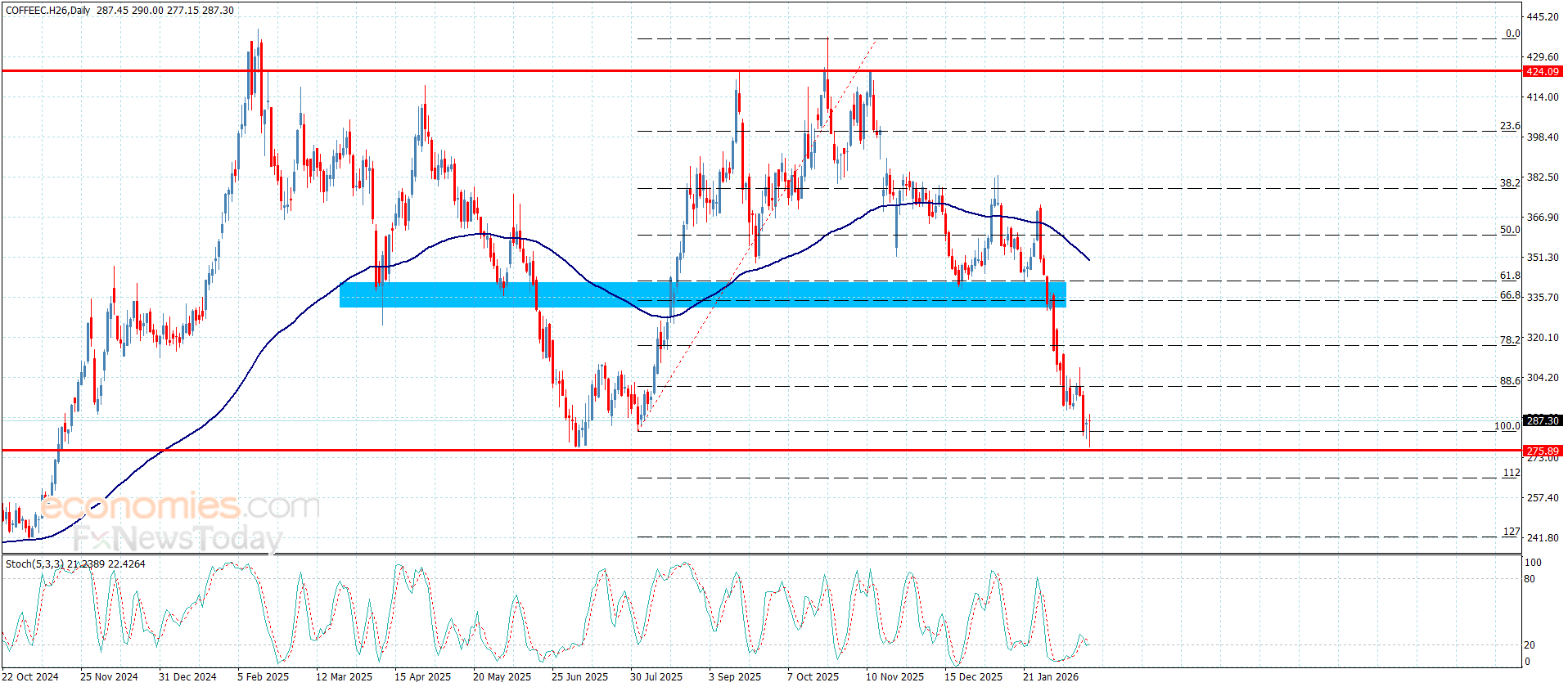
Track Coffee Price Index Historical and Forecast

By |2026-01-08T13:00:34+02:00January 8, 2026|Forex News, News|0 Comments


Executive Summary

The global coffee market experienced dynamic shifts across 2025, influenced by weather disruptions in major producing regions, fluctuating global demand, evolving trade policies, and rising production costs. For the quarter ending September 2025, North America and Europe saw moderate to strong upward price trends driven by tight supplies from Brazil and Vietnam, while Asia-Pacific markets, particularly Vietnam, recorded softer prices due to abundant harvests and steady domestic supply. South America, especially Brazil, exhibited price volatility influenced by harvest cycles, regulatory shifts, and currency fluctuations.

The market’s trajectory reflects ongoing sensitivity to climatic events, logistics challenges, and macroeconomic factors. Price forecasts for Q4 2025 indicate a continued upward bias in North America and Europe, whereas APAC markets are expected to remain stable, with regional factors such as policy adjustments and export demand shaping pricing dynamics. Understanding these trends is critical for buyers, roasters, and traders seeking to navigate global supply chains efficiently.

◼ Get Instant Access to Live Coffee Prices Today: https://www.chemanalyst.com/ChemAnalyst/PricingForm?Product=Coffee

Introduction

Coffee remains one of the most widely consumed commodities globally, with complex pricing dynamics driven by supply-demand imbalances, production costs, trade flows, and consumer behavior. The global coffee market, spanning Arabica and Robusta varieties, reflects regional disparities in supply, climate impact, and consumer preferences.

In 2025, the market has been shaped by several pivotal factors: adverse weather events in key producing countries, policy and trade uncertainties, evolving consumer trends toward specialty and sustainable brews, and rising production and logistics costs. These factors have led to volatility in both spot and futures prices, compelling buyers to strategically manage procurement, anticipate cost trends, and monitor supply disruptions.

This article provides a detailed PR-style overview of coffee price movements and forecasts across global regions-North America, APAC, and Europe-covering quarterly changes, production costs, procurement behavior, logistics, and trade-flow impacts, with historical context from previous quarters.

Global Coffee Price Overview

Global coffee prices have reflected the tension between tightening supply in key producing regions and varying demand across consumer markets. Arabica, the premium variety, has been particularly sensitive to adverse weather in Brazil and Colombia, while Robusta, largely consumed in Asia and industrial blends, experienced price moderation in certain APAC regions amid robust harvests.

Global supply constraints in Brazil and Vietnam contributed to rising spot prices in North America and Europe.

APAC supply abundance, especially in Vietnam, has softened prices, though currency fluctuations, logistics costs, and policy shifts influenced export margins.

Cost pressures, including labor, transportation, fertilizer, and energy expenses, have elevated production costs across major exporting countries, impacting margins for roasters and distributors globally.

Spot prices in Q3 2025 have generally trended upward in North America and Europe, while APAC markets, particularly Vietnam, have experienced price moderation due to ample harvests. The dynamics of global trade, including regulatory and tariff impacts, continue to influence price discovery and procurement behavior.

◼ Monitor Real-Time Coffee Price Swings and Stay Ahead of Competitors: https://www.chemanalyst.com/Pricing-data/coffee-1604

Regional Analysis

North America

Quarterly Price Movements

The North American Coffee Price Index exhibited a moderate upward trend during Q3 2025. Specialty coffee brands faced increasing cost pressures, while commercial blends remained relatively stable. Robusta prices, though comparatively lower, also saw upward movement, reflecting higher demand for cost-effective blends.

September 2025 highlights:

Price increases were driven primarily by global supply disruptions, particularly in Brazil and Indonesia, where adverse weather and El Niño effects reduced output.

Lower inventories and higher import costs pushed up spot prices across North American markets.

Production and Cost Trends

Production costs remained elevated due to rising labor, transportation, and logistics expenses in key exporting regions.

North American roasters and distributors partially passed these higher costs onto consumers, impacting retail prices, especially for specialty brews.

Demand and Procurement Behavior

Consumer demand remained strong, supported by seasonal consumption, café expansion, and rising interest in premium and specialty coffee.

Price sensitivity, particularly among lower-income segments, may temper growth, prompting retailers to adjust pricing strategies to balance margins with affordability.

Logistics and Trade-Flow Impacts

Higher freight costs and potential weather-related supply disruptions have created near-term procurement risks.

Forward buying and strategic inventory management have become key tools for buyers to mitigate volatility and ensure consistent supply.

◼ Track Daily Coffee Price Updates and Strengthen Your Procurement Decisions: https://www.chemanalyst.com/ChemAnalyst/PricingForm?Product=Coffee

Historical Context

Q2 2025: Prices softened due to improved harvests in Brazil and Vietnam, easing futures markets and dampening speculative rallies.

Q1 2025: Constrained imports from Brazil and Colombia, coupled with adverse weather, created tight supply conditions and elevated prices.

Q4 2024: A severe drought in Brazil and weather disruptions in Colombia contributed to a sharp price increase in North America.

Asia-Pacific (APAC)

Quarterly Price Movements

The APAC Coffee Price Index, particularly in Vietnam, fell by 7.9% quarter-over-quarter in Q3 2025, with the average coffee price approximately USD 4,212/MT. Spot prices softened as regional supplies remained abundant and demand cooled.

September 2025 highlights:

Favorable monsoon conditions and larger harvests in Vietnam contributed to increased supply and exerted downward pressure on prices.

Export activity remained robust, though domestic consumption showed signs of softening.

Currency volatility and rising freight costs influenced export margins, elevating perceived price risks for buyers.

Production and Cost Trends

Producers faced pressure from rising energy, fertilizer, and logistics costs, narrowing profit margins and impacting pricing strategies.

Policy changes, including VAT adjustments and trade regulations, affected supplier flexibility and overall market sentiment.

Demand and Procurement Behavior

Export momentum remains strong due to international demand, although Europe’s softer import appetite and sustainability rules shaped trade flows.

Domestic consumption in APAC is moderating, prompting cautious procurement behavior.

Logistics and Trade-Flow Impacts

Freight costs and port congestion influenced delivery timelines and contributed to perceived price volatility for buyers.

Exporters leveraged abundant harvests to fulfill international contracts, but strategic shipping schedules accounted for currency and policy uncertainties.

Historical Context

Q2 2025: Vietnam experienced a two-phase price trend-April saw price upticks due to global supply concerns, followed by declines in May and June as new crop arrivals increased supply.

Q1 2025: India faced supply-side constraints from erratic rainfall and high temperatures, pushing prices upward amid strong global demand.

Q4 2024: Vietnam’s coffee harvest was disrupted by tropical storms, delaying collection and affecting quality, which contributed to elevated prices in APAC markets.

Europe

Quarterly Price Movements

Europe saw an increase in the Coffee Price Index during Q3 2025, driven by tight global supply and sustained demand across both at-home and out-of-home consumption channels. Specialty grades were particularly affected due to higher input costs, influencing retail pricing strategies.

September 2025 highlights:

Weather-related disruptions in major producing regions-including hail in Brazil and drought in Southeast Asia-reduced export volumes and pushed up spot prices.

Q4 2025 forecasts suggest a continued upward bias, particularly if adverse weather persists.

Production and Cost Trends

European roasters faced elevated production costs, particularly for specialty Arabica grades.

Logistics and labor costs in exporting countries contributed to tighter margins and higher retail pricing pressures.

Demand and Procurement Behavior

Strong seasonal consumption and café expansion supported demand, while price sensitivity among lower-income segments limited growth.

Buyers maintained a cautious approach, balancing forward procurement with spot market purchases to mitigate volatility.

Logistics and Trade-Flow Impacts

Supply-side bottlenecks, especially from Brazil and Vietnam, influenced import timelines.

Regulatory compliance, including deforestation-free sourcing rules, added complexity and potential cost to procurement strategies.

◼ Unlock Live Pricing Dashboards for Accurate and Timely Insights: https://www.chemanalyst.com/ChemAnalyst/PricingForm?Product=Coffee

Historical Context

Q2 2025: Imported coffee spot prices softened, reflecting improved global supply and moderation in speculative futures activity.

Q1 2025: Adverse weather in Brazil constrained supply, but European domestic demand remained steady.

Q4 2024: Severe droughts and rainfall disruptions in Brazil and Vietnam created tight supply conditions and elevated price volatility.

South America

South American coffee markets, particularly Brazil, showed high volatility throughout 2025. Q3 2025 saw a decline in the Coffee Price Index by 10.13% quarter-over-quarter, reflecting increased harvest output and oversupply.

September 2025 highlights:

Abundant harvests pressured prices despite ongoing weather-related risks.

Tariff policy shifts and currency volatility constrained demand, limiting price support.

Logistics bottlenecks and export delays kept prompt buyers cautious.

Historical Context

Q2 2025: Prices began high in April due to weather concerns but declined through May and June as harvest activity increased supply.

Q1 2025: Brazil experienced moderate price rises due to drought and El Niño effects impacting Arabica yields, while Robusta volumes rose.

Q4 2024: Drought conditions and El Niño effects stressed coffee crops, pushing prices higher, while logistical challenges further pressured supply chains.

Production and Cost Structure Insights

Global coffee production costs have trended upward in 2025 due to:

Labor costs: Wage increases in major exporting countries.

Transportation and logistics: Freight rates and port congestion elevated shipping costs.

Energy and fertilizer costs: Rising input costs in Brazil, Vietnam, and India impacted overall margins.

Regulatory compliance: Sustainability certifications and traceability requirements added overhead for exporters and importers.

These factors collectively influenced retail pricing, particularly for specialty and premium segments, while moderating pressures on commercial blends in cost-sensitive markets.

Procurement Outlook

North America and Europe: Buyers are expected to maintain a cautious procurement approach, balancing spot market purchases with forward contracts to hedge against potential supply disruptions and price volatility.

APAC: Procurement strategies are likely to focus on export timing, currency risk management, and policy considerations, particularly amid stable domestic supply.

South America: Buyers face risks from logistics delays, regulatory uncertainty, and currency volatility, necessitating proactive planning and flexible contracts.

Forward buying, staggered shipments, and supplier diversification remain key strategies to mitigate risks and optimize costs.

◼ Stay Updated Each Day with Verified Coffee Price Movements: https://www.chemanalyst.com/ChemAnalyst/PricingForm?Product=Coffee

FAQ

Q: Why did coffee prices rise in North America in September 2025?

A: Prices increased due to global supply disruptions in Brazil and Indonesia caused by adverse weather and El Niño effects, reducing inventories and pushing up import costs.

Q: Why did coffee prices decline in APAC during Q3 2025?

A: Favorable harvests in Vietnam increased supply, while domestic demand softened and export margins were influenced by currency and freight costs.

Q: What factors influenced European coffee prices in Q3 2025?

A: Weather-related disruptions in Brazil and Southeast Asia, combined with elevated production costs and sustained demand, drove price increases.

Q: How do production costs affect global coffee pricing?

A: Rising labor, energy, transportation, and regulatory compliance costs in exporting regions elevate the cost base for roasters and distributors, influencing retail prices.

Q: What is the forecast for coffee prices in Q4 2025?

A: North America and Europe are expected to see continued upward price trends, particularly if adverse weather persists. APAC markets are expected to remain relatively stable, influenced by export demand and policy shifts.

How ChemAnalyst Supports Coffee Buyers

ChemAnalyst provides real-time market intelligence and actionable insights for coffee buyers, traders, and procurement teams:

Real-time pricing updates: Track spot prices and historical trends across North America, APAC, Europe, and South America.

Price forecasts: Anticipate market movements and optimize procurement strategies to achieve cost savings.

Supply-chain intelligence: Monitor plant shutdowns, logistical bottlenecks, and regulatory changes that could disrupt supply.

Expert analysis: ChemAnalyst’s team of chemical engineers and market experts offer insights into the reasons behind price movements and supply-demand dynamics.

Global coverage: With offices in Houston, Cologne, and New Delhi, and presence in 50+ major trading ports, ChemAnalyst ensures comprehensive, on-the-ground information for global coffee markets.

Contact Us:

UNITED STATES

Call +1 3322586602

420 Lexington Avenue, Suite 300, New York, NY,

United States, 10170

Germany

Call +49-221-6505-8833

S-01, 2.floor, Subbelrather Straße,

15a Cologne, 50823, Germany

Email: sales@chemanalyst.com

LinkedIn: https://www.linkedin.com/company/chemanalyst/

Facebook: https://www.facebook.com/ChemAnalysts/

Twitter: https://x.com/chemanalysts

YouTube: https://www.youtube.com/@chemanalyst

Instagram: https://www.instagram.com/chemanalyst_

Website: https://www.chemanalyst.com/

About Us:

Welcome to ChemAnalyst, a next-generation platform for chemical and petrochemical intelligence where innovation meets practical insight. Recognized as “Product Innovator of the Year 2023” and ranked among the “Top 100 Digital Procurement Solutions Companies,” we lead the digital transformation of the global chemical sector. Our online platform helps companies handle price volatility with structured analysis, real-time pricing, and reliable news and deal updates from across the world. Tracking over 500 chemical prices in more than 40 countries becomes simple and efficient with us.

This release was published on openPR.


Source link

8 01, 2026

The EURGBP begins bearish moves– Forecast today – 8-1-2026

By |2026-01-08T12:26:37+02:00January 8, 2026|Forex News, News|0 Comments

The EURJPY pair continued providing weak sideways trading, fluctuating near the extra support at 182.80, affected by the continuation of the main indicators besides forming extra obstacle at 183.50 level as appears in the above image.


Therefore, we will remain neutral until providing signal for detecting the main trend in the near and medium trading, while breaking the current support and providing negative close will confirm the bearish corrective trend, which might target 182.30 and 181.75 level initially, while breaching 183.50 level will ease the mission of detecting the bullish attempts, to expect its rally towards 183.85, to attack the broken channel’s support in order to find an exit for regaining the bullish trend again.


The expected trading range for today is between 182.80 and 183.50


Trend forecast: Neutral


Source link

Go to Top