About Editorial team of BIPNs

Main team of content of bipns.com. Any type of content should be approved by us.
20 10, 2025

Facts About the Musculoskeletal System

By |2025-10-20T20:17:43+03:00October 20, 2025|Fitness News, News|0 Comments


Your musculoskeletal system is everything. And we’re not exaggerating.

The musculoskeletal system consists of your bones, tendons, ligaments, muscles, joints, cartilage and other connective tissue.

Basically, it’s the foundation of your body and everything you need to move.

As you can probably imagine, it’s important to take care of your musculoskeletal system so you can do all the things you want to do, like stand upright and chase after an ice cream truck or a Harry Styles look-alike.

This means keeping up with your musculoskeletal strength. Everyone starts to lose bone density in their early 30s. But bone loss in women accelerates during perimenopause and menopause, which means your bones are more likely to fracture and break. And osteoporosis, a disease that weakens the bones, affects mostly women.

In addition to bone loss, age-related muscle loss (sarcopenia) can lead to life-threatening injuries and decrease quality of life.

But it’s not all doom and gloom — we promise. There are things you can do to increase your musculoskeletal strength starting today.

We reached out to Katherine J. Coyner, M.D., orthopedic surgeon at the UConn Musculoskeletal Institute and a team physician for the university, for her tips on how to strengthen your musculoskeletal system.

5 tips for strengthening your musculoskeletal system

1. Prioritize weight-bearing exercise. Weight-bearing exercise is basically any activity where you carry your body weight and work against gravity. For example, hiking, running and walking are all forms of weight-bearing exercise that help strengthen bones.

Non-weight-bearing exercises like swimming and cycling don’t have the same benefit because you’re not supporting your body weight in the water or on a bike.

2. Embrace resistance training. Resistance training is anything that challenges your muscles. This can mean lifting weights or using a machine — but you don’t have to be a gym person to get the benefits of resistance. Your own body can be used to challenge your muscles (think push-ups, pull-ups, squats, etc.) and increase both muscle and bone strength. “Two to three days a week is ideal, and not necessarily focusing on the amount of weight but the quality of the exercise and body weights can be just as effective,” Coyner said.

iStock.com/piotr_malczyk

3. Get enough protein. If it seems like protein is everywhere these days — it is. Literally. Protein is in every cell of your body, including your bones. It’s also important for repairing and maintaining muscle and being able to build strength.

How do you know if you’re getting enough protein? The recommended daily amount is 0.4 grams per pound. So, a person who weighs 140 pounds should consume about 60 grams of protein a day. Foods like lean meats, fish, dairy, legumes and soy are all good sources of protein

4. Check your calcium and vitamin D intake. Calcium and vitamin D are like the Laverne and Shirley of bone health. They work together to prevent bone loss, strengthen bones and support strong muscles.

Women 50 years and younger should get 1,000 milligrams (mg) of calcium a day, and 1,200 mg for women over 50. For vitamin D, the recommended daily intake is 600 international units (IU).

You can get both calcium and vitamin D from salmon, tuna and some fortified products.

Read: 10 Things You Need to Know About Vitamin D >>

5. Make healthy lifestyle choices. Try to ensure that everything you put in your body is good for it. For example, smoking can have a negative effect on your musculoskeletal system by reducing your bone density and decreasing your ability to absorb calcium. And drinking alcohol harms your musculoskeletal system by increasing inflammation, increasing your risk of injury and interfering with your body’s ability to build muscle. “Making better choices on a day-to-day basis [can be] really helpful,” Coyner said.

6. Manage your stress. When you’re stressed, your muscles tense up, which can affect your entire body and lead to painful chronic conditions that affect your musculoskeletal system. To reduce stress, try incorporating regular exercise (at least 30 minutes of walking a day), getting plenty of sleep and practicing breathing exercises to keep calm and carry on strong.

Musculoskeletal health matters

Sitting less and moving more is important to your overall musculoskeletal health. So, if you’re not into running or jogging or other conventional cardio exercises — think outside the box. Coyner suggested that people try different activities, like yoga, Pilates or Zumba, to find what they like.

At the end of the day, you have to make yourself — and your musculoskeletal system — a priority. Coyner said to think of it like a retirement savings plan. “So that when you’re older you have appropriate strengths and hopefully don’t suffer a devastating fracture.”

It’s just like the old saying goes: Happy musculoskeletal system, happy life.

Related Articles Around the Web


Source link

20 10, 2025

Solana Ecosystem Grows, Driving $5B in Annual On-Chain Fees

By |2025-10-20T19:21:44+03:00October 20, 2025|News, NFT News|0 Comments


Solana continues to solidify its dominance as a preferred blockchain for decentralized applications, with Grayscale’s latest report emphasizing its growing role in the global crypto ecosystem. 

The network has evolved into a central hosting platform for major decentralized projects like Raydium, Pump.fun, and Helium, attracting both developers and investors seeking scalable blockchain solutions. Its ability to process high transaction volumes at a low cost has become one of its defining strengths.

Expanding Ecosystem and Developer Growth

Source: X

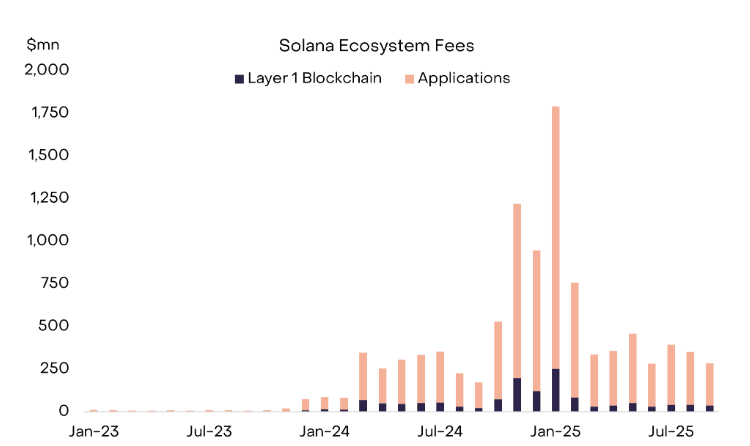
The Solana ecosystem generates approximately $425 million in monthly fees, translating to more than $5 billion annually. This strong revenue base demonstrates the network’s growing on-chain activity and adoption. Unlike other blockchains facing congestion and high fees, Solana’s average transaction cost remains around $0.02, making it appealing for both users and developers.

Besides its economic performance, Solana’s human capital continues to grow. The network now has more than 1,000 full-time developers, second only to Ethereum. This expanding developer base is fostering rapid innovation, with projects spanning DeFi, consumer apps, and digital infrastructure. 

Raydium operates as a decentralized exchange on Solana, while Pump.fun has become a key platform for consumer-focused blockchain activity. Helium, another prominent project, utilizes Solana for mobile hotspot networks. Together, these applications illustrate Solana’s versatility and strong developer engagement.

Technical Strength and Investor Appeal

Solana’s technical design remains one of the fastest among smart contract blockchains. New blocks are produced every 400 milliseconds, and transactions reach finality within 13 seconds. 

This combination of speed and reliability enhances user experience and supports broader adoption across industries. Consequently, the network’s consistent performance has helped it stand out in an increasingly competitive landscape.

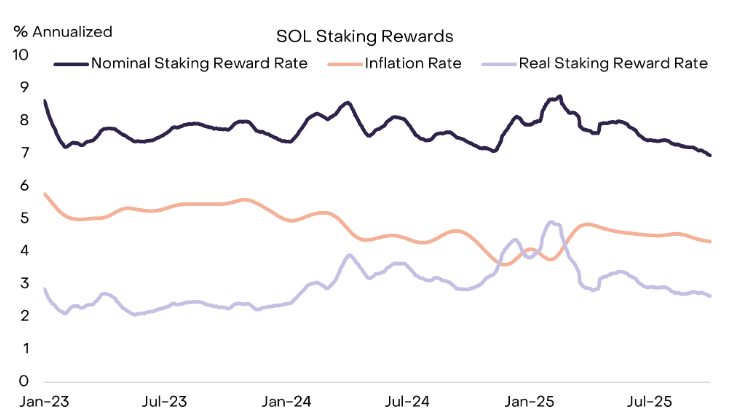
From an investment perspective, Solana’s tokenomics present an attractive balance between inflation and yield. The annual supply growth of SOL tokens stands between 4% and 4.5%, while staking rewards average about 7%. 

Source: X

Hence, investors who stake SOL earn real returns between 2.5% and 3%. These figures reflect a sustainable incentive model that encourages long-term participation in the network.


Source link

20 10, 2025

XAU/USD wobbles around $4,250, awaits fresh cues on US-China trade outlook

By |2025-10-20T19:20:54+03:00October 20, 2025|Forex News, News|0 Comments


Gold price (XAU/USD) trades in a tight range around $4,250.00 during the European trading session on Monday. The precious metal stabilizes after Friday’s corrective move, which pushed it lower from the all-time high of $4,380 to near $4,200.

The yellow faced intense selling pressure on Friday after comments from United States (US) President Donald Trump signaled that an additional 100% tariffs announced by Washington on imports from China will not be sustained for long.

The scenario of easing global trade tensions diminishes the appeal of safe-haven assets, such as Gold.

“High tariffs were not sustainable though it could stand,” Trump said in an interview with Fox Business over the weekend. Trump expressed optimism that he could reach a fair deal with Chinese leader Xi Jinping in the meeting scheduled later this month in October.

Broadly, the outlook of the Gold price is upbeat as traders remain highly confident that the Federal Reserve (Fed) will cut interest rates in the policy meeting later this month. According to the CME FedWatch tool, traders are almost certain that the Fed will reduce interest rates by 25 basis points (bps) to 3.75%-4.00% in the October policy meeting.

Ahead of the Fed’s policy meeting, investors will pay close attention to the US Consumer Price Index (CPI) data for September, which will be released on Friday.

Lower interest rates by the Fed bode well for non-yielding assets, such as Gold.

Gold technical analysis

Gold price corrects from its all-time high near $4,380 posted on Friday. The overall trend of the Gold price remains bullish as the 20-day Exponential Moving Average (EMA) slopes higher around $4,011.89. The upward-sloping trendline from the August 22 low around $3,321.50 will act as key support for the Gold price.

The 14-day Relative Strength Index (RSI) stays above 60.00 for a long period, suggesting a strong bullish momentum.

On the upside, the Gold price would struggle to extend its upside above the fresh all-time high of $4,380. Looking down, the psychological level of $4,000 would act as key support.

Gold daily chart

Gold FAQs

Gold has played a key role in human’s history as it has been widely used as a store of value and medium of exchange. Currently, apart from its shine and usage for jewelry, the precious metal is widely seen as a safe-haven asset, meaning that it is considered a good investment during turbulent times. Gold is also widely seen as a hedge against inflation and against depreciating currencies as it doesn’t rely on any specific issuer or government.

Central banks are the biggest Gold holders. In their aim to support their currencies in turbulent times, central banks tend to diversify their reserves and buy Gold to improve the perceived strength of the economy and the currency. High Gold reserves can be a source of trust for a country’s solvency. Central banks added 1,136 tonnes of Gold worth around $70 billion to their reserves in 2022, according to data from the World Gold Council. This is the highest yearly purchase since records began. Central banks from emerging economies such as China, India and Turkey are quickly increasing their Gold reserves.

Gold has an inverse correlation with the US Dollar and US Treasuries, which are both major reserve and safe-haven assets. When the Dollar depreciates, Gold tends to rise, enabling investors and central banks to diversify their assets in turbulent times. Gold is also inversely correlated with risk assets. A rally in the stock market tends to weaken Gold price, while sell-offs in riskier markets tend to favor the precious metal.

The price can move due to a wide range of factors. Geopolitical instability or fears of a deep recession can quickly make Gold price escalate due to its safe-haven status. As a yield-less asset, Gold tends to rise with lower interest rates, while higher cost of money usually weighs down on the yellow metal. Still, most moves depend on how the US Dollar (USD) behaves as the asset is priced in dollars (XAU/USD). A strong Dollar tends to keep the price of Gold controlled, whereas a weaker Dollar is likely to push Gold prices up.


Source link

20 10, 2025

EUR/USD, GBP/USD and EUR/GBP Forecast – Euro Mixed in Early Trading

By |2025-10-20T19:14:46+03:00October 20, 2025|Forex News, News|0 Comments

GBP/USD Technical Analysis

The British pound initially tried to rally during the trading session against the US dollar but then fell to reach the 1.34 level. If we break down below the 1.34 level, then the 200-day EMA could be targeted at the 1.3272 level. Short-term rallies, I think, ultimately are situations where you look to fade signs of exhaustion. The 1.35 level, of course, is an area that has been resistant recently. And if we can break above there, then the 1.36 level could be targeted. All things being equal, this is more or less a neutral and sideways market as far as I can see.

EUR/GBP Technical Analysis

And new for today, we’re going to start looking at the euro against the British pound. The euro has gone back and forth against the British pound as we are in a very tight and kind of neutral range of about 150 pips. We have 0.86 offering support and 0.8750 above offering resistance. We are sitting right here on the 50-day EMA.

So, I think this remains a market that trades roughly in about a 50 pip range between 0.8666 and 0.8730, give or take a few pips on each turn. So ultimately, if we get to the bottom of that range, I’m interested in short-term longs. If we get to the top of that range, I’m interested in short-term shorts. That being said, if we break out of the 150 pip range, then obviously a much bigger move would be at foot.

For a look at all of today’s economic events, check out our economic calendar.

Source link

20 10, 2025

Dietary fibre gummy market projected for significant global growth

By |2025-10-20T18:59:35+03:00October 20, 2025|Dietary Supplements News, News|0 Comments


Key growth in the functional gummy market for dietary fibres is projected to see the segment rise from $5.75billion to 3.4billion by 2032, according to industry studies, writes Neill Barston.

According to analysis from Credence Research, the anticipated 11.2% CAGR rate rise within the segment is primarily being driven by health concerns, along with consumer preferences for convenient health supplement formats.

As the organisation notes, the expansion reflects the growing recognition of fibre’s essential role in digestive wellness, weight management, cardiovascular health, and overall nutrition.

Moreover, the topic of gummies was a particularly relevant one at this year’s World Confectionery Conference, with companies including Alland & Robert devising market solutions to meet consumer demand for products with tangible health claims.

Notably dietary fibre gummies are said to offer a palatable alternative to traditional supplements, appealing particularly to consumers who struggle with fibre intake through dietary sources or find conventional supplements unpalatable.

The market encompasses various formulations including soluble and insoluble fibre types sourced from psyllium husk, inulin, chicory root, and pectin, often combined with vitamins and probiotics for enhanced functional benefits.

Modern dietary patterns characterised by processed foods, low fruit and vegetable consumption, and sedentary lifestyles contribute to widespread fibre deficiency and associated digestive complications.

Conditions including constipation, irregular bowel movements, irritable bowel syndrome, and inflammatory bowel disorders affect significant populations globally, driving demand for accessible fibre supplementation solutions.

Consequently, the study asserted that healthcare professionals increasingly recommend fibre supplements for managing chronic digestive conditions,

Another factor is that the palatability and convenience of gummy formats increase adherence compared to traditional powders or tablets, making them particularly effective for addressing chronic fibre deficiency challenges.

As the study noted, consumer preference for convenient and enjoyable Supplement Formats has become an increasing factor, as people seek out products that balance efficacy with a palatable taste.

For instance, fibre gummies appeal to adults who dislike conventional supplement formats and parents seeking child-friendly nutritional solutions. The confectionery-like appearance, fruit flavours, and chewable texture eliminate consumption barriers while maintaining therapeutic benefits.

Additionally, gummies offer portability for busy lifestyles, requiring no preparation or water, enabling consumption at work, during travel, or throughout daily activities. This format innovation transforms fibre supplementation from a medicinal routine into an enjoyable wellness habit, significantly expanding market accessibility.

Younger generations

Another key factor governing the segment is the rising health and wellness Awareness among Millennials and Gen Z, who have taken a strong approach to managing calorie and general dietary intake in many instances.

According to the study (which can be viewed further here at www.credenceresearch.com/report/dietary-fiber-gummies-market), a further core consideration is  according to the fresh study, dietary fiber gummies are able to command significantly higher prices per serving compared to traditional fibre supplements including powders, capsules, or whole food sources like fruits, vegetables, and whole grains.

Manufacturing processes, specialised ingredients, quality control requirements, and premium positioning contribute to elevated retail prices that may limit accessibility for price-sensitive consumers. For instance, budget-conscious shoppers often choose bulk fiber powder products offering substantially more servings at lower total cost despite less convenient consumption. 


Source link

20 10, 2025

Is the Trend Turning Long Again?

By |2025-10-20T18:36:46+03:00October 20, 2025|Crypto News, News|0 Comments

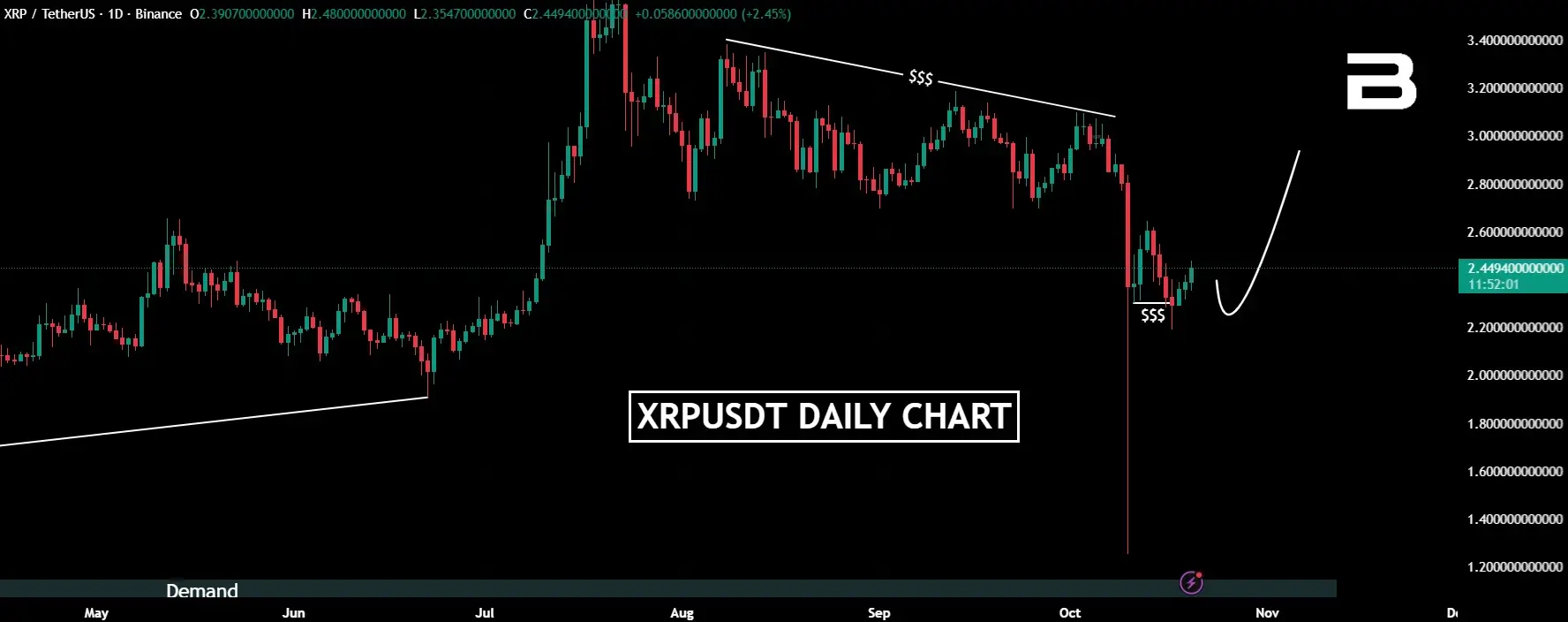
In my last XRP article, we talked about a possible liquidity grab below the previous low before a reversal. 

And guess what? That’s exactly what happened. Price swept that final low and started turning long. 

It’s one of those moves that, if you’ve been tracking the chart closely, just makes sense.

Right now, I genuinely think XRP looks ready to push higher. Maybe it won’t reach the upper liquidity level we mapped around 3.1, but seeing it climb toward 2.65 feels like a realistic short-term target. That’s the last high sitting in clear sight, and price often loves to revisit such levels before deciding what comes next.

It reminds me of those setups where everything aligns just right.

You’ve got structure, you’ve got liquidity, and you’ve got a clear path. Still, as traders, we both know the golden rule: nothing is ever certain. The market can surprise us at any time, even when it all looks obvious.

So while my bias leans long, I keep that open mindset. XRP might decide to move differently, take a detour, or just range for a bit. What matters is reading the intent behind each move, not forcing expectations on it.

For now, though, the chart looks solid. The sweep is done, the structure’s turning, and the momentum seems ready to build.

Source link

20 10, 2025

Crypto Executives Meet Senate Democrats to Discuss US DeFi Regulation Reform

By |2025-10-20T17:19:54+03:00October 20, 2025|News, NFT News|0 Comments


On Wednesday, the top crypto executives will meet senate democrats to talk about the future of the cryptocurrency market in the United States. The private roundtable will deal with revitalizing bipartisan discussions after the latest legislative failures, and will be under the chair of Senator Kirsten Gillibrand (D-NY).

include Coinbase CEO Brian Armstrong, Chainlink CEO Sergey Nazarov, Galaxy Digital CEO Mike Novogratz, Kraken CEO David Ripley, and Uniswap CEO Hayden Adams. Other participants include Ripple’s Chief Legal Officer Stuart Alderoty, Circle’s Chief Strategy Officer Dante Disparte, a16z Crypto General Counsel Miles Jennings, Jito CLO Rebecca Rettig, and Solana Policy Institute President Kristin Smith.

The summit will discuss the industry issues of ambiguous rules and varying applications. Lawmakers plan to gather direct feedback from these executives on how to create clear, workable frameworks for digital assets. Reports indicate that additional executives may join as discussions progress.


Source link

20 10, 2025

Natural gas price forms bullish price gap– Forecast today – 20-10-2025

By |2025-10-20T17:18:50+03:00October 20, 2025|Forex News, News|0 Comments


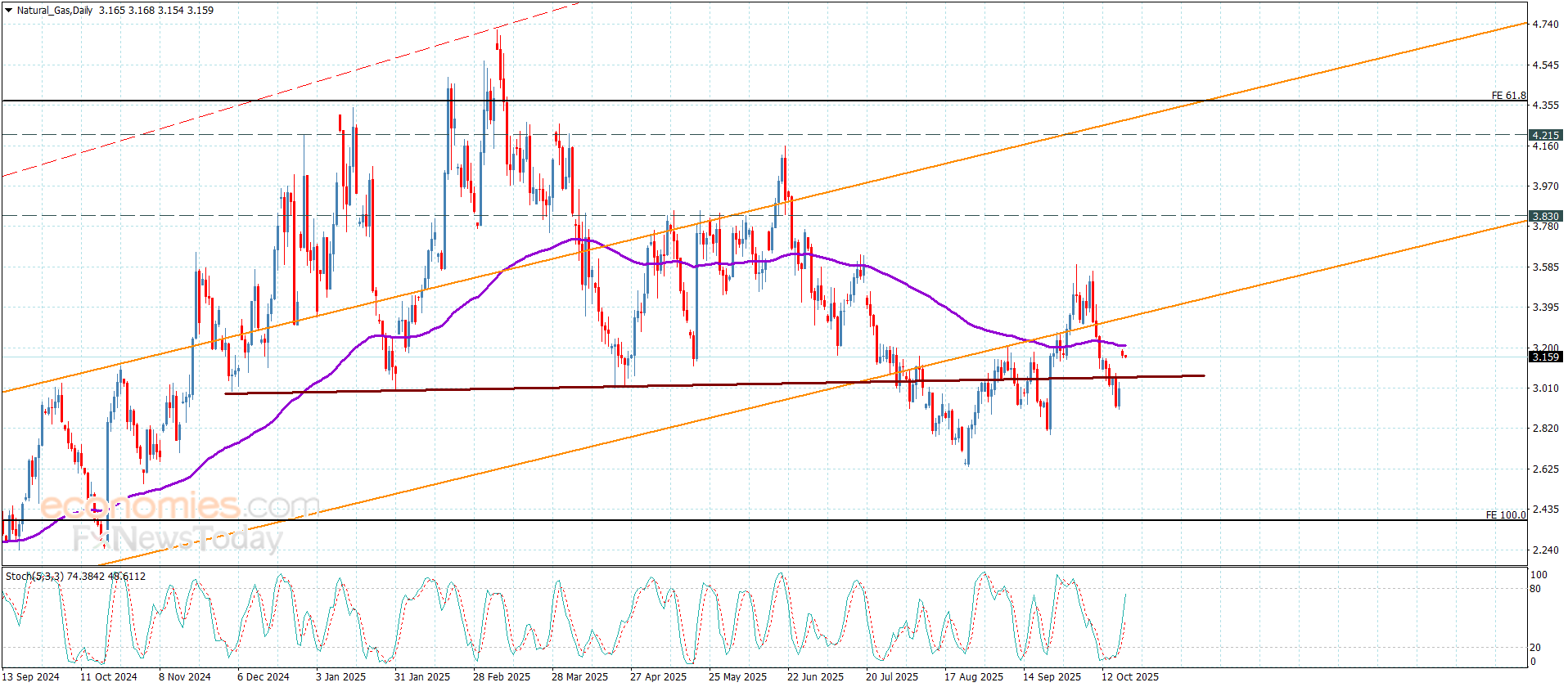
The GBPJPY pair is under strong bearish trading in Friday’s trading, suffering extra losses by its approach from the extra support at 200.45, forming quick bullish rebound, reaching 203.15 level, announcing its attempt to regain the bullish bias.


Note that the stability of the trading above 201.70 level is important to increase the chances of renewing the bullish attempts, repeating the pressure on 203.10 obstacle, and surpassing it will make it achieve extra gains by its rally towards 203.95, while the price return to settle below 201.70 will force it to form new bearish waves, waiting for attacking 200.45 level again.


The expected trading range for today is between 201.70 and 203.00


Trend forecast: Bullish


Source link

20 10, 2025

Pound to Dollar Week Ahead Forecast: Near-Term GBP/USD Rangebound

By |2025-10-20T17:13:45+03:00October 20, 2025|Forex News, News|0 Comments


– Written by

The Pound to Dollar exchange rate (GBP/USD) endured choppy trading through the week, supported by dollar weakness but capped by UK fiscal uncertainty.

Some analysts forecast a multi-year climb to 1.43 by 2026, while others expect the GBPUSD to stay trapped between 1.32 and 1.37 through next year.

GBP/USD Forecasts: Choppy waters

After initial losses, RBC Capital Markets forecasts that GBP/USD will strengthen to 1.43 by the end of 2026 on dollar losses.

ING, however, has a 12-month forecast of 1.36 even with a weaker US currency.

After sliding to 10-week lows near 1.3250 during the week, GBP/USD secured a net gain to 1.3430 in choppy trading.

Risk appetite dipped late in the week on US-China fears and a slide in US banking stocks with traders also having to contend with the on-going US government shutdown while gold surged to a fresh record high as risk conditions remained a key focus.

Save on Your GBP/USD Transfer

Get better rates and lower fees on your next international money transfer.
Compare TorFX with top UK banks in seconds and see how much you could save.


Compare the Best GBP/USD Rates »

Danske Bank commented on trade war fears; “The tariff escalation underscored two key points: first, that any renewed trade tensions under a Trump administration are unambiguously negative for the broad USD. Second, markets still view the announced measures largely as negotiation tactics rather than policy reality.”

Standard Chartered is relatively sanguine over the outlook; “We expect the US and China to reach a trade truce again as both sides have economic leverage to avoid a downward spiral.”

Rabobank noted a high degree of uncertainty over trade policy; “Whether both players have a full grasp of their own and their opponent’s tools and power(s) remains an open question.”

It also expects a radical shift in the global order which risks dramatic shifts and high volatility; “That said, it’s even harder to see the spirit going back into the bottle. In other words, the world is changing more rapidly and profoundly than many would have imagined only a few months ago.”

The debate over UK fiscal policy will continue to simmer.

According to ING; “The fiscal risks are more prevalent into the budget in November. We’re not looking for a gilt crisis, but the Chancellor is going to have to make some tough decisions on tax rises or spending cuts.”

It added; “Tighter fiscal and looser monetary policy should ultimately be a bit bearish for sterling – though GBP/USD should trade between 1.32-1.37.

According to RBC; “In the short-term, we think there is room for sterling to underperform, particularly against the USD where the strength in GBP over the last year looks overstretched.

It notes the importance of November’s budget; “Increasingly these announcements have had an FX impact, most notably in 2022. The Budget last year was poorly received by markets and sterling considerably weakened in the weeks that followed.”

RBC, however, expects a multi-year dollar downtrend which will underpin GBP/USD.

It noted; “These long-term trends are rooted in structural asset allocation shifts rather than short-term market fluctuations, reinforcing the idea that the USD’s depreciation is a multi-year process driven by fundamental factors.”

At this stage, markets are still backing very cautious Bank of England rate cuts.

In contrast, traders have fully priced in two further Fed rate cuts before the end of 2025.

Standard Chartered commented; “Over the next three to six months, we continue to expect the USD to weaken, due to a cooling U.S. labour market, slower wage growth, and a more dovish Federal Reserve stance.”

Like this piece? Please share with your friends and colleagues:


International Money Transfer? Ask our resident FX expert a money transfer question or try John’s new, free, no-obligation personal service! ,where he helps every step of the way,
ensuring you get the best exchange rates on your currency requirements.

TAGS: Pound Dollar Forecasts

Source link

20 10, 2025

CDC firings put future of NHANES at risk

By |2025-10-20T16:58:58+03:00October 20, 2025|Dietary Supplements News, News|0 Comments


On Oct. 10, more than a thousand employees at the CDC received reduction-in-force notices, coinciding with the government shutdown that began earlier in the month. The Department of Health and Human Services reinstated 600 staff within 24 hours, citing “data discrepancies and processing errors,” but the planning division responsible for designing and coordinating the National Health and Nutrition Examination Surveys (NHANES) remained furloughed.

“The recent layoffs of the entire Planning Branch within CDC’s Division of Health and Nutrition Examination Surveys threaten future NHANES cycles and the nation’s ability to monitor and understand critical health and nutrition trends,” the American Society for Nutrition (ASN) shared in a statement following the layoffs. “Without them, this foundational resource and the evidence it provides for science, policy and public health are at risk.”

ASN has called on the administration to immediately rescind the firing of the CDC National Center for Health Statistics (NCHS) employees, stressing that “NHANES is essential to the nation’s health and nutrition research enterprise.”

Since the Trump administration took office in January, the CDC has lost around 3,000 employees, equivalent to approximately a quarter of its staff.

The contributions of NHANES

Launched in the early 1970s, NHANES grew out of earlier NCHS efforts to assess the health of the U.S. population. It is now a cornerstone of U.S. public health infrastructure—used to evaluate the evolving health and nutritional status of adults and children across decades and the nation through a combination of interviews, physical examinations and lab tests conducted at mobile examination centers.

“NHANES data are used to guide federal policymaking in areas including food labeling, food fortification, food safety, dietary guidance, tracking progress toward national nutrition and health objectives and establishing nutrition research priorities,” the ASN noted. “The survey influences billions of dollars in federal investments and is essential to nutrition and health research, policy and programs.”

The growing sophistication of survey data—through genetic information, advanced biomarkers and targeted sampling of underrepresented groups—continues to deepen research and inform hot-button policy issues including obesity, diabetes, heart disease, nutrient intake and deficiencies, and exposure to toxins like heavy metals, pesticides and forever chemicals.

“NHANES is foundational to understanding the relationship of the U.S. diet to health and disease,” said Connie Weaver, distinguished research professor of nutrition science at San Diego State University, California. “It is the basis for determining What We Eat in America that is used as a milestone for evaluating how well Americans are following the Dietary Guidelines for Americans—this gives guidance to food programs and health care professionals for deciding nutrients of public health concern to emphasize or limit.”

In her own research, she has collaborated with NHANES experts to study nutrient intake from processed foods and dietary supplements, the effects of diet on bone health, blood pressure and hypokalemia, and more recently, trends in calcium bioavailability and osteoporosis as U.S. diets become more plant forward.

Sergej Ostojic, PhD, a leading biomedical scientist and head of the Applied Bioenergetics Lab at Novi Sad University in Serbia, has used NHANES as essential data source, particularly in linking dietary creatine intake to health and establishing reference intakes across ages and demographics.

“By integrating NHANES analyses with experimental trials, my research demonstrates how large-scale survey data can guide hypothesis generation, contextualize intervention outcomes and inform nutritional policy related to human metabolism and healthy aging,” he said.

Examples of how NHANES data are used

  • Identifying food, nutrition, and health needs to support longevity and reduce chronic diseases among the U.S. population.
  • Characterizing eating patterns, food preferences and dietary intake for use by public health officials, commodity groups, infant formula manufacturers and researchers.
  • Informing national nutrition policy, including the Dietary Guidelines for Americans and Dietary Reference Intakes.
  • Supporting numerous applications beyond nutrition, including the development of medications and growth charts.

– Source: American Society of Nutritionists

The consequences of a model lost

Notwithstanding the impact of broader reductions in CDC force on the nation’s capacity to respond to public health emergencies, for nutrition scientists and supplement industry trade organizations consulted, the elimination of the NHANES planning division undermines evidence-based policy and rolls back decades of progress towards understanding the link between diet and health.

“NHANES data is the sole source of information needed to keep everything from the U.S. dietary guidelines to pesticide tolerances up to date,” said Robert Marriott, vice president of regulatory & government affairs at the American Herbal Products Association (AHPA). “Other research and federal data systems depend on fresh NHANES numbers to function. Without new NHANES data, we stop knowing what policy should be or what effects it is having.”

He added that the survey—arguably the most robust source of data on the relationship of food and human health—is uniquely well-suited to track diet and childhood chronic disease, and that without it, it would be “extremely challenging to accurately document the successes of the MAHA strategy.”

Dr. Weaver also commented that NHANES has served as the model for the world, providing a benchmark for public health data collection that supports both national and international policy development.

“Many researchers from other countries ask questions about diet and disease relationship on these U.S. data because they lack their own surveys,” she said. “I would despair if we fell from being the model for the world to no better at understanding what our citizens eat than developing countries.”

Dr. Ostojic echoed these sentiments, noting that the loss of the only longitudinal, nationally representative dataset of this kind would severely restrict evidence-based policymaking, disease surveillance and the evaluation of nutrition programs in the U.S., while also disrupting international comparability.

“Losing it would substantially weaken the foundations of nutrition research and public health monitoring worldwide,” he said. “I hope this will never happen and that this invaluable database will remain accessible to all scientists interested in advancing populational health.”

The Council for Responsible Nutrition (CRN) highlighted that the survey has historically provided crucial information on nutrient intake and nutrient status, and how dietary supplements contribute to these measures.

“Any disruptions to NHANES could have a negative impact on public health and the ability to assess nutrient status, healthy eating patterns and supplement use,” said Andrea Wong, PhD, senior vice president of scientific & regulatory affairs at CRN. “At a time when the country is focused on improving overall health and nutrition, policy makers and researchers will have to rely on other, less credible and less objective measures to ascertain this data.”


Source link

Go to Top